Showing posts with label 1924. Show all posts

Wednesday, March 11, 2026

March 11, 1996: The Montreal Forum Closes

Five Montreal Canadiens legends. Left to right:
Guy Carbonneau, Guy Lafleur, Jean Béliveau,
Maurice Richard and Pierre Turgeon.

March 11, 1996, 30 years ago: The last hockey game is played at the Montreal Forum, the greatest of all hockey arenas.

It had opened on November 29, 1924. The Montreal Canadiens defeated the Toronto St. Patricks, the team that would become the Toronto Maple Leafs, 7-1. Billy Boucher scored the arena's 1st goal. He was 1 of 4 brothers in the NHL. Frank was the original star of the New York Rangers. Georges "Buck" Boucher starred for the Ottawa Senators. Frank and Buck both made the Hockey Hall of Fame. Billy was known for his rough play with the Canadiens, and Bobby Boucher (not to be confused with Adam Sandler's character in The Waterboy) barely played in the NHL, also for the Canadiens.
Originally, the Forum wasn't meant to be the Canadiens' home. It was meant to be the home of the Montreal Maroons, a newly-founded team, while the Canadiens continued to play home games at the Mount-Royal Arena. The Maroons' 1st game at the Forum came on December 3, but they lost to the Hamilton Tigers, 2-0.

The Maroons won the Stanley Cup in 1926. For the next season, the Canadiens moved in, and the Forum was busier than ever: Its 9,300 seats played host to the Canadiens or the Maroons every Thursday and Saturday, the Quebec Senior Hockey League on Wednesdays and Saturdays, the Quebec Junior Hockey League on Mondays, the Bank League on Tuesdays, and the Railways and Telephone League on Fridays.

The Canadiens' famed "CH" logo has confused people for over a century. It is short for the team's official name, le Club de hockey Canadien. Madison Square Garden president George "Tex" Rickard, boxing promoter and founder of the Rangers, probably without knowing the truth, told a reporter that the "H" stood for "Habitant," a term used to describe farmers in early Quebec. Ever since, the Canadiens have been known as Les Habitants, or the Habs for short. The chant became, "Go, Habs, go!"

The Canadiens won the Stanley Cup in 1916 and 1924, before the Forum opened. They won it in 1930 and 1931, led by Howie Morenz, the man eventually known as "the Babe Ruth of Hockey." In 1937, Morenz broke his leg during a game, was hospitalized, and died of a heart attack in the hospital. A benefit game was played at the Forum, between a combined team of Canadiens and Maroons against a team made up of players from the rest of the League. A few months later, at the end of the 1937-38 season, the Maroons went out of business, due to the Great Depression.

In 1942, Maurice Richard arrived on the Canadiens' roster. "The Rocket" led them to 8 Stanley Cups. In 1953, along came Jean Béliveau, and he led them to 10. Richard's last 5 and Béliveau's 1st 5, from 1956 to 1960, were the only instance ever of 5 straight Cup wins.

They followed the 1955 season, in which an incident in Boston led to Richard's suspension for the Playoffs, which led to a riot inside the Forum that spilled out into the streets. French-Canadians, for whom the Canadiens, and Richard in particular, were a point of pride were angry at Clarence Campbell, the NHL's Anglophone President, suspending him, thinking he was trying to fix the Cup for an Anglophone team. Richard went on radio and told the fans to stop, that he would take his punishment, support the team to win the Cup this time, and play to win it in the future.

They lost the Finals to the Detroit Red Wings, but with Richard joined by his brother Henri, Béliveau, defenseman Doug Harvey and goalie Jacques Plante, won those next 5 Cups. Henri actually topped his brother, and Béliveau, by being a member of 11 Cup-winning teams. In all of North American sports, only Bill Russell of the NBA's Boston Celtics matched Henri Richard's 11 World Championships.

In 1968, the Forum was seriously renovated, and expanded, to a seating capacity of 16,259, plus 1,700 in standing room, for a total of 17,959. The support poles were removed. One thing that was retained: Whereas most arenas used a horn to signal the end of a period, the Forum used a high-pitched siren, which was kept after the move to the Bell Centre.
In 1972, the Forum hosted the 1st game of the 8-game "Summit Series" between Canada and the Soviet Union, which the Soviets won in a 7-3 shocker. Canada would win the series with dramatic wins in Moscow in Games 6, 7 and 8.

From 1976 to 1979, the Canadiens had a run of 4 straight Cups, led by a slew of Hall-of-Famers: Forwards Guy Lafleur, Yvan Cournoyer, Steve Shutt and Jacques Lemaire; defensemen Larry Robinson, Serge Savard and Guy Lapointe; and goaltender Ken Dryden.

Between them, Morenz, Maurice Richard, Béliveau and Lafleur were, effectively, the Mount Rushmore of hockey. They were a foursome that could only be matched in North American sports by the Yankees' Babe Ruth, Lou Gehrig, Joe DiMaggio and Mickey Mantle. (The Celtics? Bill Russell and Larry Bird, but who are the other two? Bob Cousy and John Havlicek? Not the same. No football team can match it, either.)

From 1956 to 1979, the Canadiens won 15 of the 24 available Stanley Cups. Their 1979 Cup was their 22nd, matching the Yankees for the most World Championships in North American sports. They won a 23rd in 1986 and a 24th in 1993. The Yankees didn't win their 24th World Series until 1998, surpassing them with a 25th in 1999.

In the 1976 Olympics, the Forum hosted basketball, boxing, volleyball, handball, and gymnastics, including Nadia Comaneci registering the 1st perfect 10 in Olympic history -- 7 of them.

The Beatles played the Forum on September 8, 1964. Other notable concerts there included Bob Dylan's Rolling Thunder Revue in 1975, Bob Marley in 1978, and, all in separate shows in 1981, Rush, Queen, and the Jacksons.

But there was only so much that could be done with a 1924-built arena. So construction began on a new arena. And on March 11, 1996, the Forum's final game was played, against the Dallas Stars. They were chosen as the opponent because their Captain was a former Canadiens' Captain, Guy Carbonneau. Maurice Richard, Béliveau and Lafleur participated in a ceremonial puck-drop with Carbonneau and Canadiens Captain Pierre Turgeon.

Turgeon opened the scoring, Mark Recchi made it 2-0, Derian Hatcher got the Stars on the board, Saku Koivu scored, and the last goal at the shrine of hockey was scored by... Andrei Kovalenko, a Russian right wing of Ukrainian descent, at the 13:56 mark of the 3rd period. Final score: Canadiens 4, Stars 1.

In the Canadiens' locker room, replicated at the new arena, the lockers were topped by the faces of the team's members of the Hockey Hall of Fame. On each side, one in English and one in French, are words from Canadian Army doctor John McCrae's World War I poem In Flanders Fields: "To you from failing hands we throw the torch; be yours to hold it high." (En Francais: Nos bras meurtris vous tendent le flambeau; a vous toujours de la porter bien haut.)

After the last game at the Forum, a symbolic torch was passed from the earliest living Canadiens Captain, Butch Bouchard, to each succeeding Captain: Bouchard, Maurice Richard, Jean Béliveau, Henri Richard, Yvan Cournoyer, Serge Savard, Bob Gainey, Carbonneau, up to Turgeon. (Kirk Muller and Mike Keane, each serving as Captain between Carbonneau and Turgeon, were playing with other teams, and thus unavailable.)

When Rocket Richard, the most popular player in Canadien history, was introduced, he got a standing ovation that brought him to tears. Given the uniform number he made famous, it was appropriate that it lasted for 9 minutes.

The Canadiens played an away game on March 13, a 1-1 draw with the New Jersey Devils at the Meadowlands, before going back to Montreal to play the 1st game at the Molson Centre, since renamed the Bell Centre, about a mile to the east, in Centre-Ville (downtown). In a special pregame ceremony, Turgeon took the torch from the last game, and lit a new one inside the arena. With Vincent Damphousse scoring the 1st and 3rd goals in the new arena, the Canadiens beat the New York Rangers, 4-2.

Over the next 4 years, a construction company owned by 1950s Canadien Hall-of-Famer Dickie Moore converted the Forum into retail space, including a shopping mall and a movie theater. A small bleacher section, and a bench with a statue of Maurice Richard, are roughly where center ice was. 

The repurposing of the Forum helped to inspire a similar construction job at Maple Leaf Gardens in Toronto, after it closed in 1999. Those arenas still stand, unlike the other "Original Six" arenas: The old Madison Square Garden was torn down in 1968, the Olympia Stadium in Detroit in 1986, the Chicago Stadium in 1995, and the Boston Garden in 1998.

Monday, December 23, 2024

December 23, 1924: Basketball's 1st Big Man Is Born

December 23, 1924, 100 years ago: Robert Albert Kurland is born in St. Louis, and grows up in nearby Jennings, Missouri. He was considered basketball's first great "big man," standing 7 feet tall and weighing 220 pounds, and is the first player noted to have dunked in a collegiate game (if not the first to actually do it).

Bob "Foothills" Kurland led Oklahoma A&M to the National Championship in 1945 and 1946. (The school was renamed Oklahoma State in 1958.) His duels with George Mikan of DePaul, NIT Champions at the time (and thus, to many fans, the real "National Champions") became legend.

He never turned pro, instead working for Phillips Petroleum and playing for their company team, the Phillips 66ers, based in Bartlesville, Oklahoma. He led the U.S. team to Olympic Gold Medals in 1948 in London, and in 1952 in Helsinki, Finland.

He stayed with Phillips long after his basketball career ending in 1952, rising to become an executive. He was one of the earliest inductees into the Basketball Hall of Fame, in 1961. He died a year ago. 

Kurland died at his home on Sanibel Island in Florida, on September 29, 2013, at age 88. He was survived by his wife of 62 years, Barbara; their 4 children Alex, Ross, Dana, and Barbara; and 7 grandchildren.

Friday, November 29, 2024

November 29, 1924: The Montreal Forum Opens

November 29, 1924, 100 years ago: The Montreal Forum opens. The Montreal Canadiens, holders of the Stanley Cup, defeat the Toronto St. Patricks, 7-1. Billy Boucher scored the arena's 1st goal. And its 2nd. And its 3rd. In addition to this hat trick, Aurèle Joliat scored 2, and Sylvio Mantha and Howie Morenz each scored 1.

The only Toronto goal against the Canadiens' Georges Vézina was scored by Jack Adams, later to be the longtime head coach and general manager of the Detroit Red Wings. The St. Patricks wore green, but in 1927, they would be renamed the Toronto Maple Leafs, and switch to blue. They and the Canadiens have been the NHL's greatest rivalry ever since.

Originally, the Forum wasn't meant to be the Canadiens' home. It was meant to be the home of the Montreal Maroons, a newly-founded team, while the Canadiens continued to play home games at the Mount-Royal Arena. The Maroons' 1st game at the Forum came on December 3, but they lost to the Hamilton Tigers, 2-0.

The Maroons won the Stanley Cup in 1926. For the next season, the Canadiens moved in, and the Forum was busier than ever: Its 9,300 seats played host to the Canadiens or the Maroons every Thursday and Saturday, the Quebec Senior Hockey League on Wednesdays and Saturdays, the Quebec Junior Hockey League on Mondays, the Bank League on Tuesdays, and the Railways and Telephone League on Fridays.

The Canadiens' famed "CH" logo has confused people for over a century. It is short for the team's official name, le Club de hockey Canadien. Madison Square Garden president George "Tex" Rickard, boxing promoter and founder of the New York Rangers, probably without knowing the truth, told a reporter that the "H" stood for "Habitant," a term used to describe farmers in early Quebec. Ever since, the Canadiens have been known as Les Habitants, or the Habs for short. The chant became, "Go, Habs, go!"

The Canadiens won the Stanley Cup in 1916 and 1924, before the Forum opened. They won it in 1930 and 1931, led by Morenz, the man eventually known as "the Babe Ruth of Hockey." In 1937, Morenz broke his leg during a game, was hospitalized, and died of a heart attack in the hospital. A benefit game was played at the Forum, between a combined team of Canadiens and Maroons against a team made up of players from the rest of the League. A few months later, at the end of the 1937-38 season, the Maroons went out of business due to the Great Depression.

In 1942, Maurice Richard arrived on the Canadiens' roster. "The Rocket" led them to 8 Stanley Cups. In 1953, along came Jean Béliveau, and he led them to 10. Richard's last 5 and Béliveau's 1st 5, from 1956 to 1960, were the only instance ever of 5 straight Cup wins.

They followed the 1955 season, in which an incident in Boston led to Richard's suspension for the Playoffs, which led to a riot inside the Forum that spilled out into the streets. French-Canadians, for whom the Canadiens, and Richard in particular, were a point of pride were angry at Clarence Campbell, the NHL's Anglophone President, suspending him, thinking he was trying to fix the Cup for an Anglophone team. Richard went on radio and told the fans to stop, that he would take his punishment, support the team to win the Cup this time, and play to win it in the future.

They lost the Finals to the Detroit Red Wings, but with Richard joined by his brother Henri, Béliveau, defenseman Doug Harvey and goalie Jacques Plante, won those next 5 Cups. Henri actually topped his brother, and Béliveau, by being a member of 11 Cup-winning teams. In all of North American sports, only Bill Russell of the NBA's Boston Celtics matched Henri Richard's 11 World Championships.

In 1968, the Forum was seriously renovated, and expanded, to a seating capacity of 16,259, plus 1,700 in standing room, for a total of 17,959. The support poles were removed. One thing that was retained: Whereas most arenas used a horn to signal the end of a period, the Forum used a high-pitched siren, which was kept after the move to the Bell Centre.
In 1972, the Forum hosted the 1st game of the 8-game "Summit Series" between Canada and the Soviet Union, which the Soviets won in a 7-3 shocker. Canada would win the series with dramatic wins in Moscow in Games 6, 7 and 8.

From 1976 to 1979, the Canadiens had a run of 4 straight Cups, led by a slew of Hall-of-Famers: Forwards Guy Lafleur, Yvan Cournoyer, Steve Shutt and Jacques Lemaire; defensemen Larry Robinson, Serge Savard and Guy Lapointe; and goaltender Ken Dryden.

Between them, Morenz, Maurice Richard, Béliveau and Lafleur were, effectively, the Mount Rushmore of hockey. They were a foursome that could only be matched in North American sports by the Yankees' Babe Ruth, Lou Gehrig, Joe DiMaggio and Mickey Mantle. (The Celtics? Bill Russell and Larry Bird, but who are the other two? Bob Cousy and John Havlicek? Not the same. No football team can match it, either.)

From 1956 to 1979, the Canadiens won 15 of the 24 available Stanley Cups. Their 1979 Cup was their 22nd, matching the Yankees for the most World Championships in North American sports. They won a 23rd in 1986 and a 24th in 1993. The Yankees didn't win their 24th World Series until 1998, surpassing them with a 25th in 1999.

In the 1976 Olympics, the Forum hosted basketball, boxing, volleyball, handball, and gymnastics, including Nadia Comaneci registering the 1st perfect 10 in Olympic history -- 7 of them.

The Beatles played the Forum on September 8, 1964. Other notable concerts there included Bob Dylan's Rolling Thunder Revue in 1975, Bob Marley in 1978, and, all in separate shows in 1981, Rush, Queen, and the Jacksons.

But there was only so much that could be done with a 1924-built arena. So the Molson Centre, now the Bell Centre, was built a mile to the east, in Montreal's downtown (Centre-ville). On March 11, 1996, the Forum's final game was played, a 4-1 win over the Dallas Stars. They were chosen as the opponent because their Captain was as former Canadiens' Captain, Guy Carbonneau. Maurice Richard, Béliveau and Lafleur participated in a ceremonial puck-drop with Carbonneau and Canadiens Captain Pierre Turgeon.

In the Canadiens' locker room, replicated at the new arena, the lockers were topped by the faces of the team's members of the Hockey Hall of Fame. On each side, one in English and one in French, are words from Canadian Army doctor John McCrae's World War I poem In Flanders Fields: "To you from failing hands we throw the torch; be yours to hold it high." After the game, a symbolic torch was passed from the earliest living Canadiens Captain, Butch Bouchard, to each succeeding Captain, including both Richards, Béliveau and Carbonneau, up to Turgeon.

Over the next 4 years, a construction company owned by 1950s Canadien Hall-of-Famer Dickie Moore converted the building into retail space, including a shopping mall and a movie theater. A small bleacher section, and a bench with a statue of Maurice Richard, are roughly where center ice was. 
The Forum remains an entertainment destination at its Centennial. 

Friday, November 8, 2024

November 8, 1924: Texas' Memorial Stadium Opens

November 8, 1924, 100 years ago: War Memorial Stadium opens on the campus of the University of Texas in Austin. Surprisingly, the Longhorns lose to Baylor University, 28-10.

It was renamed simply Memorial Stadium in 1948, Texas Memorial Stadium in 1977, and Darrell K. Royal-Texas Memorial Stadium in 1995, after the coach who led the Longhorns to the 1963, 1969 and 1970 National Championships. It is known as "DKR" for short. Longhorn fans have not given it any other nicknames, either cutesy or tough.
It opened with a capacity of 27,000. It was raised to 40,000 in 1926, 60,000 in 1948, 66,000 in 1968, 78,000 in 1971, and its current 100,119 in 2009. On September 10, 2022, for Texas' 20-19 loss to Alabama, it attracted a record crowd of 105,213. The field was converted to AstroTurf in 1969, back to natural grass in 1996, and to FieldTurf in 2009.
Following the 3 National Championships won under Royal, the Longhorns won a 4th under Mack Brown in 2005. Since the stadium's opening, they've won 26 Conference Championships. In the old Southwest Conference, they won in 1928, '30, '42, '43, '45, '50, '52, '53, '59, '61, '62, '63, '68, '69, '70, '71, '72, '73, '75, '77, '83, '90, '94, '95 and '96. In the Big Twelve Conference, they've won in 2005 and 2009. (UPDATE: They won the Big 12 again in 2023, but are moving to the Southeastern Conference for 2024.)
They've had 2 Heisman Trophy winners: Running backs Earl Campbell in 1977 and Ricky Williams in 1998. Other notable Longhorns include 1940s quarterback Bobby Layne, 1960s linebacker Tommy Nobis, 1980s defensive tackle Kenneth Sims, and 2000s quarterbacks Vince Young and Colt McCoy.
In 1971, the Lyndon B. Johnson Presidential Library and Museum opened, almost right across Robert Dedman Drive from the stadium's east stand. Although he wasn't a UT graduate, it was pretty savvy of LBJ to put his Presidential Library across from, aside from the State Capitol, the Alamo and the Cotton Bowl, the most famous building in Texas.  

Monday, November 4, 2024

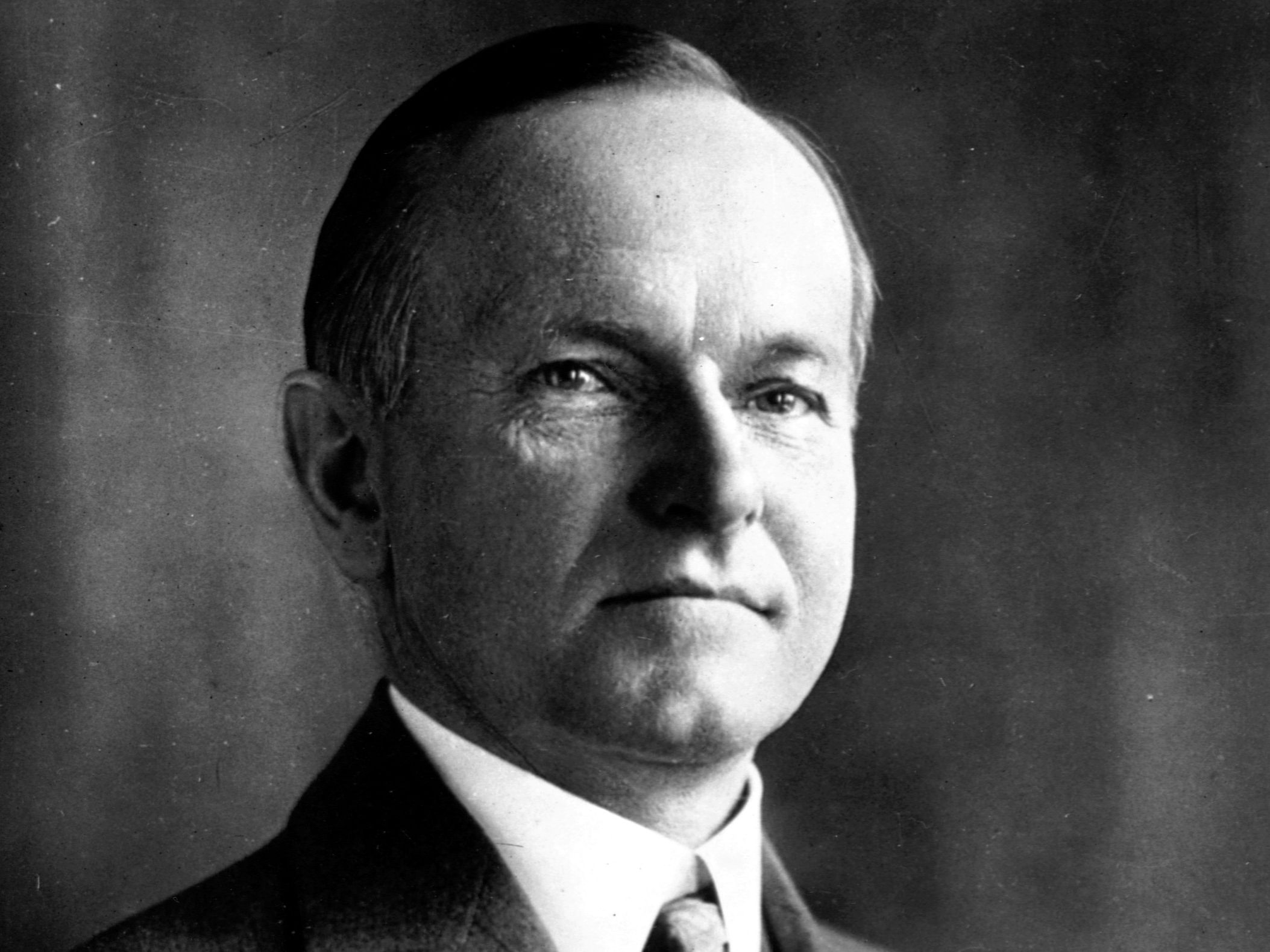
November 4, 1924: Keeping Cool With Coolidge

November 4, 1924, 100 years ago: President Calvin Coolidge, who took the office on the death of Warren Harding the year before, is elected to a full term in his own right. The Republican, who had been Governor of Massachusetts before being Vice President, took advantage of a split in the Democratic Party that nullified a split in the Republican ranks.

The slogan was "Keep Cool with Coolidge" -- alternately, "Keep Cool and Keep Coolidge" -- and the nation agreed. He won 382 Electoral Votes, and 54 percent of the popular vote. John W. Davis, a former Congressman from West Virginia and U.S. Ambassador to Britain, won 136 Electoral Votes, but his 29 percent represents the lowest popular-vote percentage in the history of the Democratic Party. Senator Robert La Follette of Wisconsin, formerly a Republican but now the leader of the Progressive Party, won his home State for 13 Electoral Votes, and took 16 percent of the vote.
Charles G. Dawes was elected to fill the vacancy in the Vice Presidency, caused by Coolidge's ascendancy. A Mayflower descendant, and also a descendant of William Dawes, one of Paul Revere's co-riders, a Chicago utilities executive who had served as Harding's Budget Director.
The following year, his Dawes Plan for easing the payment of war reparations won him the Nobel Peace Prize. He was also a musical composer, and his "Melody in A Major" became popular upon publication in 1912. In 1951, Carl Sigman added lyrics to it, and it became "It's All In the Game." In 1958, black singer Tommy Edwards had a Number 1 hit with it. Dawes is the highest-ranking government official ever to have had a Number 1 hit.
Coolidge had recently lost his 16-year-old son John to an infection that could have been easily treated had antibiotics been invented. He had also recently watched the Washington Senators win the World Series. He did not like baseball, but his wife Grace did.
He was known as "Silent Cal" for his reticence. Legend has it that 2 women, seeing him at a party, made a bet. So one walked up to him and said, "I made a bet with my friend that I could get you to say 3 words to me." And Coolidge said, "You lose."
Even when he decided not to run for a 2nd full term, he was brief: He told the press simply, "I do not choose to run for President in 1928," and walked away. He may have seen the Crash of 1929 coming, and didn't want to get blamed for it. He should be, but he left his successor, Herbert Hoover, holding the bag.
Interestingly, Coolidge and Dawes did not get along, and when it was suggested at the 1928 Republican Convention that Dawes be nominated for a 2nd term as Vice President, along with Hoover, Coolidge stepped in and prevented it, and Senator Charles Curtis of Kansas was nominated instead, a choice both Coolidge and Hoover could live with.
Charles G. Dawes
As a consolation prize, Hoover appointed Dawes to be U.S. Ambassador to Britain. He didn't get along well with King George V, but the Prince of Wales, later King Edward VIII and the Duke of Windsor, liked him. As the Depression kept going, Hoover asked Dawes to come home, and run the Reconstruction Finance Corporation (RFC), which he did for the remainder of the term. He was offered the Vice Presidential nomination in 1932 and the Presidential nomination in 1936, as a reminder of the "good" Coolidge years, but declined both times. He died in 1951.
Despite Coolidge's landslide, Nellie Tayloe Ross, a Democrat, was elected Governor of Wyoming, to replace her late husband, William B. Ross. She was the 1st woman elected Governor of any State.

Friday, October 25, 2024

October 25, 1924: Dr. Bobby Brown Is Born

October 25, 1924, 100 years ago: Robert William Brown is born in Seattle, and grows up in San Francisco. A 3rd baseman, he was signed by the Yankees, and manager Casey Stengel said, "Brown looks like a feller who's been hitting for 12 years and fielding for 1."

Nevertheless, he helped the Yankees win 4 World Series: 1947, 1949, 1950 and 1951. Then he was drafted into the Korean War, and by the time he returned in 1954, he'd lost his stuff.

That didn't matter, though, since he had another calling. He attended medical school during the off-season. On roadtrips, he roomed with Yogi Berra, a high school dropout, who, when asked how he liked school, said, "Closed." Legend has it that, one night, he finished his copy of Boyd's Pathology at the same time that Yogi finished one of the comic books he loved, and Yogi said, "Mine was good. How did yours turn out?"

It must have turned out well, because he moved to the Dallas area, and developed a cardiology practice. He gave it up in 1984, when he was elected President of the American League. He came to Old-Timers' Day at Yankee Stadium every year, but, since he was representing the entire AL, he always wore a suit, never a uniform.

He served in the post until 1994, and from then until 2019, he wore a Yankee uniform with his old Number 6 on it for Old-Timers' Day, even though it's now been retired for Joe Torre.
He was the last surviving member of the Yankees' 1947, 1949, 1950 and 1951 World Champions. COVID canceled the 2020 Old-Timers' Day, and Brown died on March 25, 2021, in Fort Worth, Texas, at age 96. 

Friday, October 18, 2024

October 18, 1924: Red Grange & the Four Horsemen

This photo of Red Grange is colorized, but is otherwise real.

October 18, 1924, 100 years ago today: Two of the most iconic games in the history of college football are played.

Harold Edward Grange was born on June 13, 1903, in Forksville, in the mining country of Northeastern Pennsylvania -- 6 days before Lou Gehrig was born 200 miles to the southeast in East Harlem, Manhattan. He was born 15 days after entertainer Bob Hope, 5 days before early film singer Jeannette MacDonald, 9 days before Baseball Hall of Fame pitcher Carl Hubbell and bank robber John Dillinger, and 12 days before British writer George Orwell.

His father was the foreman on a lumber camp, and eventually moved the family to Wheaton, Illinois, about 30 miles west of Chicago, where 4 of his brothers lived, and he became that small city's Chief of Police. His son Harold, nicknamed Red because of his hair, got a job delivering ice, a hard job because ice is heavy. (A gallon of water weighs over 8 pounds. Now imagine it hard as a rock.) It made him strong, and he was fast, too. He was nicknamed "The Wheaton Iceman" well before "The Galloping Ghost." He made $37.50 a week -- about $590 in today's money.

Red lettered in football, baseball, basketball and track at Wheaton High School, all 4 years, 16 varsity letters. He was a State Champion in the high jump, the long jump and the 100-yard dash.

The school is now known as Wheaton Warrenville South High School, and also counts astronomer Edwin Hubble, journalist Bob Woodward, and the comedian brothers John and Jim Belushi among its alumni. The colors are orange and black -- not quite the same colors as Red would wear for the Illini and the Bears, but close. The school's stadium is named Red Grange Field.

In his 1st game at the University of Illinois, in Champaign in the east-central part of the State, on October 6, 1923, Grange scored 3 touchdowns against Nebraska, a very strong team at the time. Coached by Bob Zuppke, Illinois went 8-0, beating teams by an average score of 17-3. After a 9-6 win away to Iowa, they didn't allow a point for the rest of the season.

The Helms Athletic Foundation awarded Illinois the National Championship. This notoriety allowed Illinois to raise the money to build a new stadium, as a memorial to the school's alumni who had fallen in World War I a few years earlier.

On October 18, 1924, Red Grange led the Illini onto the field at Memorial Stadium in Champaign for its dedication game against the University of Michigan. A player now largely forgotten outside Michigan, Bennie Oosterbaan, led the Wolverines, who were favored to win the National Championship. (Michigan and Notre Dame did not play each other that season. They have not always played, occasionally feuding, and this was during one of the feuds.)

Grange returned the opening kickoff 95 yards for a touchdown. He ran 67 yards for a touchdown. He ran 56 yards for a touchdown. He ran 44 yards for a touchdown.

All this was accomplished in the 1st 12 minutes of the ballgame.

He later passed for another touchdown, and returned a kick for another. He accounted for 6 touchdowns in Illinois' 39-14 victory.

Keep in mind: Michigan was already the most honored college football program west of the Ivy League. In spite of the achievements of Knute Rockne and George Gipp, Notre Dame was not yet Notre Dame. But Michigan, under the guidance of legendary coach Fielding Yost (and, this season, George Little, was already Michigan, which, despite their recent struggles to beat arch-rival Ohio State, remains the defining football school of that league.

*

Grange's performance is often called the best one-man game in college football history. But it wasn't even the most talked-about game played that day. There was another game that made this day, as far as college football was concerned, the peak of the "Roaring Twenties." Did I mention Notre Dame? Yes, yes, I did:

At the Polo Grounds in New York, the South Bend, Indiana-based University of Notre Dame beats Army -- the U.S. Military Academy at West Point, New York -- 13-7. The Fighting Irish were led by their 4-man backfield: Quarterback Harry Stuhldreher, left halfback Jim Crowley, right halfback Don Miller and fullback Elmer Layden. Layden scored a touchdown in the 2nd quarter, Crowley in the 3rd.

Army were favored to win, but there was precedent: Notre Dame had shocked them in 1913, with quarterback Gus Dorais and end Knute Rockne, for all intents and purposes, introducing the passing game to a wide audience, and making Notre Dame more than just what we would now call a "mid-major" Catholic school in the Midwest like DePaul or Marquette. Now, with Rockne as head coach, the Fighting Irish -- although Miller was of English descent, and Stuhldreher, German -- pulled off a much less surprising upset.

George Strickler, a Notre Dame student, was what we would now call a publicity director. At halftime, he mentioned Rudolph Valentino's 1921 silent film epic The Four Horsemen of the Apocalypse (although that term comes from the Bible's Book of Revelation), in the press box. The great syndicated sports columnist Grantland Rice, based out of the New York Herald Tribune, ran with it, and wrote this opening paragraph, the most famous piece of sportswriting ever:

Outlined against a blue-gray October sky, the Four Horsemen rode again. In dramatic lore their names are Death, Destruction, Pestilence, and Famine. But those are aliases. Their real names are: Stuhldreher, Crowley, Miller and Layden. They formed the crest of the South Bend cyclone before which another fighting Army team was swept over the precipice at the Polo Grounds this afternoon as 55,000 spectators peered down upon the bewildering panorama spread out upon the green plain below.

They don't write 'em like that anymore: Not only was the 1920s, as Rice himself later billed it, the Golden Age of Sports, it was the golden age of sportswriting, with Rice joined by such men as Ring Lardner, Paul Gallico, Jimmy Cannon and Damon Runyon.

To further plant the idea of the Four Horsemen in people's minds, the 4 of them were posed on horseback, wearing full uniforms and holding footballs. From left to right: Miller, Layden, Crowley, Stuhldreher. A set of statues representing that photo is now at Notre Dame's Guglielmo Athletic Complex.
(As far as I know, nobody ever asked Red Grange to pose as a ghost, or with a man dressed as a ghost, or on a galloping horse.) 

Over the Horsemen's 3 seasons -- freshmen were not eligible to play varsity football at the time -- Notre Dame won 27 games and lost only 2, both away to Nebraska, plus a tie in an earlier game with Army. They won the 1924 National Championship, defeating Ernie Nevers' Stanford squad in the 1925 Rose Bowl, with Layden returning 2 interceptions for touchdowns. (Notre Dame would then refuse all bowl invitations until the 1969 season.)

None of the Four Horsemen was over 6 feet tall, and none was listed as weighing more than 162 pounds. But this was typical of football players of the Roaring Twenties. And no one today can question their toughness: In their 30 games together, they played in primitive protective equipment, played offense and defense, excelling on both sides, and played all 60 minutes, with no substitutions. The offensive line that protected them was nicknamed the "Seven Mules," to emphasize their crucial but less glamorous function.

(The Mules didn't become famous in their own right, with one exception: The center, Adam Walsh, would go on to coach the Cleveland Rams to the 1945 NFL Championship, and then become their 1st head coach in Los Angeles the following season.)

It was the Four Horsemen, and Rockne's subsequent publicity campaigns through the beginnings of mass media in the 1920s, that made Notre Dame iconic. Even George Gipp wasn't as famous in life as the 1928 Notre Dame-Army game, in which Rockne made up the "Win one for the Gipper" story, and the later film Knute Rockne, All-American, with Pat O'Brien as Rockne and young Ronald Reagan as Gipp, would make him in death.

*

Having made legends out of the Four Horsemen, Grantland Rice took pen in hand (or, more likely, tapped out on his typewriter), and wrote this about Grange:

A streak of fire, a breath of flame
Eluding all who reach and clutch;
A gray ghost thrown into the game
That rival hands may never touch;
A rubber bounding, blasting soul
Whose destination is the goal

Red Grange of Illinois!

Although Rice had called Grange "a gray ghost" (and he certainly appears as such in the few surviving film clips of him playing, all black and white, of course), Warren Brown, writing for the Chicago American, gave him the nickname "the Galloping Ghost."

A year later, on Halloween, October 31, 1925, Illinois traveled to Philadelphia to play the University of Pennsylvania at Franklin Field. The playing surface was a muddy mess, and few expected Grange to move well on it. He did, scoring 3 touchdowns and setting up the Illini's other touchdown, in a 24-2 win. Rice covered this game as well, and wrote:

There are two shapes now moving
Two ghosts that drift and glide
And which of them to tackle
Each rival must decide.
They shift with spectral swiftness
Across the swarded range
And one of them's a shadow
And one of them is Grange.

Runyon added, "This man Red Grange of Illinois is three or four men and a horse rolled into one for football purposes. He is Jack Dempsey, Babe Ruth, Al Jolson, Paavo Nurmi and Man o' War. Put them all together, they spell Grange."

Zuppke would later say, "An All-American consists of a fast back, weak opposition, and a poet in the press box." But he also said, "I will never have another Grange, but neither will anyone else. They can argue all they like about the greatest football player who ever lived, but I was satisfied I had him when I had Red Grange." A statue of Grange now stands outside Memorial Stadium -- essentially, the house than Zuppke and Grange built.

Grange's 77 became the 1st celebrated uniform number in American sports -- especially since Major League Baseball wouldn't have uniform numbers until 1929, and the National Hockey League until 1926. When asked how he got the famous double-digit, he said, "The guy in front of me got 76, and the guy behind me got 78." It wasn't a choice, and it's not like Wheaton had uniform numbers at the time. (In case you're wondering about the Four Horsemen, I looked it up: Layden wore 5, Miller 16, Crowley 18 and Stuhldreher 32.)

*

How did the Four Horsemen do in the pros? Not especially well. Pro football was then still frowned upon, as a backwater game at best, and as outright dishonorable at worst. Zuppke himself was of two minds about it: George Halas, who had helped Illinois gain a share of the 1918 Big Ten title (before going into the U.S. Navy and helping the Chicago-based Great Lakes Naval Training Center team win the 1919 Rose Bowl), remembered him lamenting that players graduated just as they were really learning how to play. But Zuppke also stopped speaking to Halas and Grange for many years after they turned pro, eventually reconciling with both of them.

The Horsemen only played 1 professional game together, at the end of the 1925 season, for the Waterbury Blues against a team from Adams, Massachusetts, at Hartford, Connecticut (about halfway between), and won 34-0. (Imagine Patrick Mahomes passing to Stefon Diggs, with Derrick Henry and Dalvin Cook in his backfield, and the other 7 players on his own team and the 11 on the other side being college players, and you'll get the idea of what it was like.) The Horsemen were paid $5,000 apiece -- about $90,000 in today's money, for a little over 2 hours' performance. Then as now, nice work if you can get it.

Stuhldreher, from the football-crazy town of Massillon, Ohio (also hometown of Yankee Legend Tommy Henrich), and Layden, from Davenport, Iowa (part of the "Quad Cities" that were then represented in the NFL by Illinois' Rock Island Independents), had a team built around them and named for them, the Brooklyn Horsemen. They played in the original American Football League in 1926. When that league folded, the Brooklyn Horsemen were absorbed into the NFL, which still needed the publicity, and played 3 games in that league's '26 season.

Stuhldreher ended his playing career after that season, and was named head coach at Villanova, and later at the University of Wisconsin, managing a decent record but no conference titles in 24 years. He then worked for U.S. Steel, and wrote a couple of books about football. He died in 1965, only 63 years old.

Layden went on to be the head coach at Pittsburgh's Duquesne University, getting them into the 1934
Festival of Palms Bowl, the forerunner of Miami's Orange Bowl. He then became head coach at Notre Dame, and in 1941 was offered the post of Commissioner of the NFL, serving 5 seasons and guiding them through the difficulties caused by the manpower shortage from the World War II draft. He then went into business in Chicago, and died in 1973, age 70.

Miller, from Defiance, Ohio, about halfway between Toledo and Fort Wayne (and the only 1 of the 4 from anywhere near South Bend), coached at Georgia Tech, and then practiced law. He was appointed a U.S. Attorney for the Cleveland area by President Franklin D. Roosevelt, and died in 1979, age 77.

Crowley, from the football-crazy town of Green Bay, Wisconsin -- Packer co-founder Earl "Curly" Lambeau had played for Rockne at Notre Dame -- became an assistant coach at Georgia, and head coach at Michigan State and Fordham.

At Fordham, in The Bronx, he coached a team that challenged for the National Championship in 1937 and '38, with a line known as the Seven Blocks of Granite, including 2 future Pro Football Hall-of-Famers. Alex Wojciechowicz starred for the Philadelphia Eagles and the Detroit Lions. The other never played a down of pro ball, and is in the Hall as a coach: Vince Lombardi. (Longtime Giants owner Wellington Mara didn't play, but was also a student at Fordham at this time.)

Crowley enlisted in the Navy in World War II, and coached the Navy's renowned North Carolina Pre-Flight School team at Chapel Hill, with Paul "Bear" Bryant and Johnny Vaught, later to become coaching legends at Alabama and Mississippi, respectively, as assistant coaches.

Crowley then coached the Chicago Rockets of the All-America Football Conference, including receiving legend Elroy "Crazy Legs" Hirsch. He later became chairman of the Pennsylvania State Athletic Commission, and was the last survivor of the Four Horsemen, living until 1986, at the age of 83.

Grange played his last college game on November 21, 1925, a 14-9 Illinois win away to Ohio State. His collegiate obligation complete, he signed with Halas' Chicago Bears. At the time, there was no NFL Draft, nor any rule preventing it. Five days after his college finale, he suited up for the Bears against the Chicago Cardinals at Wrigley Field (in its last season under the name Cubs Park) on Thanksgiving Day, resulting in a 0-0 tie.

The Bears went to New York to play the Giants on December 6, and the gate receipts from that full house at the Polo Grounds -- New Yorkers coming to see Grange, not the home team -- may have saved the Giant franchise, and possibly even the League. He would play in the NFL until 1934, helping the Bears win the NFL Championship in 1932 and 1933, teaming with Bronislau "Bronko" Nagurski.

Grange became the template for the speedy halfback, Nagurski that for the big bruising fullback. Think of Grange's "descendants" as being Steve Van Buren, Doak Walker, Lenny Moore, Paul Hornung, Gale Sayers, Walter Payton, Barry Sanders and Christian McCaffrey; and Nagurski's as being Marion Motley, Tank Younger, Jim Brown, Jim Taylor, Larry Csonka, Franco Harris, John Riggins, Emmitt Smith, Terrell Davis, Jerome Bettis, Adrian Peterson and Derrick Henry.

Grange went on to become a broadcaster. In 1963, he was a charter inductee into the Pro Football Hall of Fame. He died on January 28, 1991, at the age of 87.

Thursday, October 10, 2024

October 10, 1924: The Washington Senators Win the World Series

October 10, 1924, 100 years ago: With the score tied at 3-3 and one out in the bottom of the 12th in Game 7 of the World Series at Griffith Stadium in Washington, Muddy Ruel, catcher for the Washington Senators, lifts a high catchable foul pop-up, which New York Giants catcher Hank Gowdy misses when he stumbles over his own mask.
Given a second chance, Ruel doubles. Earl McNeely then hits a grounder that strikes a pebble, and soars over the head of rookie Giant 3rd baseman Freddie Lindstrom, and drives home Ruel with the winning run making the Senators World Champions.
Walter Johnson, who had brilliantly toiled 18 seasons for a team known as "Washington: First in war, first in peace, and last in the American League," and had lost Games 1 and 4, pitched the 9th through 12th innings in relief, and not only had finally won a World Series game, but had won a World Series.
President Calvin Coolidge, running for a term in office in his own right after succeeding the late Warren Harding the year before, and his wife Grace were in attendance. He didn't like baseball, but Grace did.
The Senators had their 1st World Championship in 24 years of trying. Outfielder George "Showboat" Fisher was the last survivor of the 1924 Senators, living until 1994, age 95. It took 95 years for another Washington baseball team has won another postseason series, but Nationals, having squandered National League Eastern Division titles in 2012, '14, '16 and '17, won the 2019 World Series.
In 1981, baseball historian John Thorn published Baseball's 10 Greatest Games. He included this game as one of them.

Wednesday, October 9, 2024

October 9, 1924: Soldier Field Opens

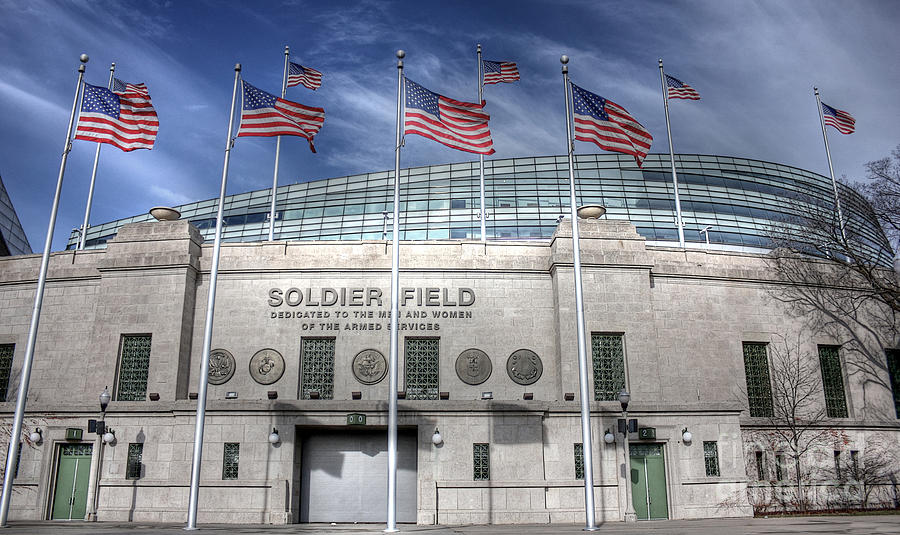
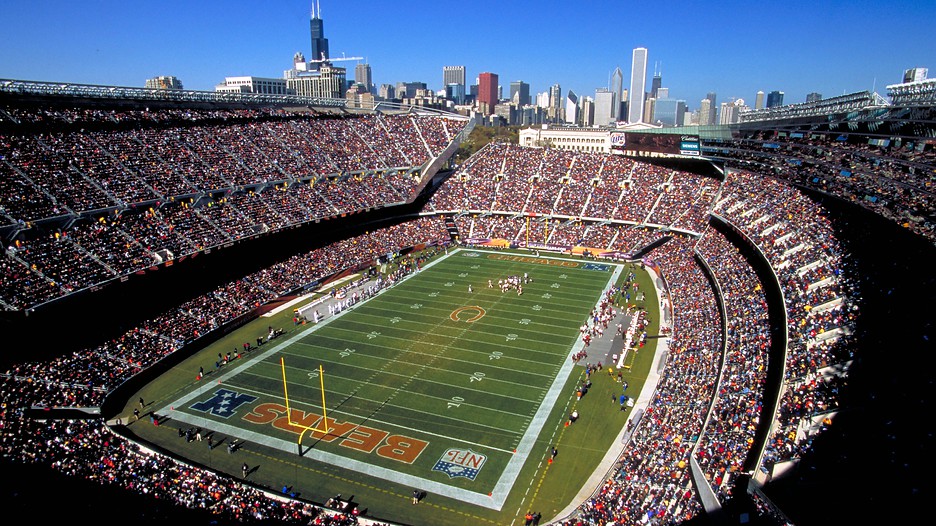
October 9, 1924, 100 years ago: Municipal Grant Park Stadium opens on Chicago's lakefront. It would be renamed Soldier Field the next year. It would host many big college football games, including the annual Chicago College All-Star Game between a team of recently graduated players and the defending NFL Champions (who nearly always won) from 1934 to 1976.

And the name is "Soldier" Field. Never "Soldiers" or "Soldiers' Field." There is a Soldiers Field in Boston, part of Harvard University's sports complex.

Its best-known event was the 2nd fight between Heavyweight Champion Gene Tunney and the man from whom he took the title, Jack Dempsey, on September 22, 1927. In the 7th round, Dempsey knocked Tunney down, but he forgot to obey a new rule (which he, himself, had demanded): The referee would not start the count until the standing fighter retreated to a neutral corner. This gave Tunney an extra 5 seconds to regain his bearings, and he got up at the count of 9 (14), and went on to beat Dempsey in a decision.

It became known as the Long Count Fight, and, to this day, some people think Dempsey was robbed. He wasn't: The film clearly shows Tunney watching the referee's count. He could have gotten up at the count of 4, which should have been 9. Dempsey wasn't robbed. He didn't even blow it. He got beat, fair and square. 
may have had what remains the greatest attendance ever for a U.S. sporting event, with figures ranging from 104,000 to 130,000, depending on who you believe.
It definitely was the site of the largest football crowd ever, 123,000, to see Notre Dame play USC a few weeks after the Long Count. That record stood until a 2016 Tennessee-Virginia game was staged at Bristol Motor Speedway in front of 156,990. The 1926 Army-Navy Game was played there, in front of over 100,000.
The original south side gate. Along with the columns,
it was the only thing saved from the original stadium.
The Chicago Rockets of the All-America Football Conference played at Soldier Field in 1946, '47 and '48, changing their name to the Chicago Hornets in '49. They were not admitted into the NFL with their AAFC brethren in Cleveland, San Francisco and Baltimore. The Chicago Cardinals played their last season there, in 1959, before moving to St. Louis. The Chicago Fire of the World Football League played there in 1974. And the Chicago Blitz of the United States Football League played there in 1983 and 1984.

Amazingly, the Chicago Bears played at Wrigley Field from 1921 to 1970, with the occasional single-game exception. The story I heard is that Bears founder-owner-coach George Halas was a good friend of both the Wrigley and Veeck families, and felt loyalty to them, and that's why he stayed at Wrigley even though it had just 47,000 seats for football.

But I heard another story that Halas was a Republican, and didn't like Chicago's Democratic Mayor, Richard J. Daley (whose son Richard M. later broke his father's record for longest-serving Mayor), and didn't want to pay the city Parks Department a lot of rent. This is believable, because Halas was known to be cheap. The real reason the Bears moved to Soldier Field in 1971 was Monday Night Football: Halas wanted the revenue, and Wrigley didn't have lights until 1988.
Games of the 1994 World Cup and the 1999 Women's World Cup were also held at the old Soldier Field. MLS' Chicago Fire made it their 1st home ground, playing at the old version from 1998 to 2001, and the new version from 2003 to 2005, and returning there starting in 2020.
Soldier Field during the 1994 World Cup

A 2002-03 renovation, during which the Bears played "home" games at the University of Illinois' Memorial Stadium in Champaign, demolished all but the south gate, and the iconic (if not Ionic, they're in the Doric style) Greek-style columns that used to hang over the stadium, and are now visible only from the outside. It doesn't look like "Soldier Field" anymore: One critic called it The Eyesore on the Lake Shore.
Capacity is now roughly what it was in the last few years prior to the renovation, 61,500. And while the Bears won 8 Championships while playing at Wrigley (it took the Cubs until 2016 to win even 1 title there), they've only won one more at Soldier Field, the 1985 title capped by Super Bowl XX. The Monsters of the Midway have been tremendous underachievers since leaving Wrigley, having been to only 1 of the last 38 Super Bowls, and losing it.
The reduced atmosphere, and thus the reduced home-field advantage, may be a part of that, much as similar reductions in atmosphere, passion and on-field performance has been blamed by Washington Redskins/Commanders fans on the 1997 move from the in-the-District Robert F. Kennedy Stadium to the suburban FedEx Field, Yankee Fans on the 2009 move from the old Yankee Stadium to the new one, and Arsenal fans on the 2006 move from Arsenal Stadium (a.k.a. "Highbury") to the Emirates Stadium.
In 2023, the Bears announced a plan to tear down the Arlington Park horse-racing track, 27 miles northwest of the Loop in Arlington Heights -- nearly twice as far from downtown as O'Hare International Airport -- and build a dome there, possibly groundsharing with baseball's White Sox. Nearly every Bears fan was against this.
So an alternative plan was drawn up, to build a stadium on the parkland just south of the current one, keeping the only parts that remained from the original stadium: The columns on each sideline, and the southern gate with its dedication to the military personnel.

Thursday, July 11, 2024

July 11, 1924: The True Story Behind "Chariots of Fire"

Eric Liddell

July 11, 1924, 100 years ago: Eric Liddell, a 22-year-old Scotsman, wins the Gold Medal in the 400 meters at the Olympic Games in Paris.

It was not originally his intention to compete in the 400. He had wanted to compete in the 100 meters. But he found out that the heats for them were going to be held on a Sunday. As a devout Christian -- perhaps excessively so -- he refused to compete on a Sunday, and chose to compete in the 400 instead.

Great Britain did win the 100, through Harold Abrahams, who was Jewish. Among the runners he defeated was Jackson Scholz, an American who also competed in the 200 meters, and won that.
Liddell had been born in China to Scottish missionaries. In 1925, he returned to China and went into the family business. He was captured by the Japanese during World War II, and died in an internment camp in 1945. He is often considered a martyr to his faith.

Abrahams became a lawyer, and a reporter on track and field events, both for print media and BBC Radio. He was present at Oxford University in 1954 when Roger Bannister became the 1st man to break the 4-minute mile. He also became President of the Jewish Athletic Association, and lived until 1978.

In 1981, the film Chariots of Fire was released, and would win the Academy Award for Best Picture. It is best remembered for its opening sequence, showing British runners on a beach, to the theme song written by Greek composer Vangelis. Despite being an instrumental, the song would hit Number 1 on the American charts the following year.

Ian Charleson played Liddell. Like Liddell, he was a Scot and a graduate of the University of Edinburgh. However, the film gets the facts wrong, saying that Liddell didn't find out that the heats for the 100 meters would be on a Sunday until he was about to board the boat that would take the British Olympic team across the English Channel, giving him very little time to prepare for the 400 instead. In reality, he found out months in advance, and was able to properly prepare for the 400.

The film also shows the Prince of Wales, later King Edward VIII and the Duke of Windsor, played by David Yelland, personally intervening to try to get Liddell to change his mind and race on Sunday. There is no evidence that this occurred. The film's portrayal of the religious struggles of Liddell and Abrahams were accurate, however, including Scholz handing Liddle a slip of paper with an encouraging verse of Scripture written on it.
Jackson Scholz

Abrahams was played by Ben Cross, and Scholz by Brad Davis. In 1984, in preparation for the Olympics in Los Angeles, Cross did an American Express "Do you know me?" commercial with the real Scholz, who lived another 2 years.
July 11, 1924 was a Friday -- not a Sunday. Actress Brett Somers, best known as a panelist on the TV show Match Game, was born. 

Tuesday, July 9, 2024

July 9, 1924: The Democrats Need 103 Ballots

John W. Davis

July 9, 1924, 100 years ago: The Democratic Party nominates a candidate for President -- on the 103rd ballot. That's right: One hundred and three ballots. To put that into proper perspective: Neither they nor the Republican Party have even needed a 2nd ballot since 1952.

In 1920, Senator Warren Harding of Ohio led a Republican landslide, and won the Presidency. In 1923, the Teapot Dome scandal broke out, and it looked like it might damage Harding as he ran for re-election. Shortly after it broke out, Harding died, and was replaced by his Vice President, Calvin Coolidge.

It soon became clear that Coolidge would run for a term of his own in 1924, and the Democrats were confident: Except for Theodore Roosevelt in 1904, no "accidental President" had gone on to be elected in his own right, and the Republicans were tarred with scandal.

But unlike Harding and a few members of his Cabinet, Coolidge was not involved in Teapot Dome, or in any other scandal. And, under Republican leadership, the economy had recovered from the post-World War I depression. The slogans for 1924 were "Coolidge Prosperity" and "Keep Cool and Keep Coolidge."

That's the uphill fight that the Democrats had as they gathered for their Convention at Madison Square Garden in New York. This was the 2nd building with the name, built in 1891. It would be replaced the following year by the building that would eventually be known as "the Old Garden." That one hosted many political events, but never the National Convention of either major party. It was replaced in 1968 by the current building bearing the name, which has hosted the Democratic Convention in 1976, 1980 and 1992; and the Republican Convention in 2004.
Madison Square Garden II

Unlike the Republican Party, which only required a majority of its Delegates to nominate candidates for President and Vice President, the Democratic Party needed a two-thirds supermajority. This enabled the Southern States, which made up about one-third of the Democratic Delegates, to effectively have a veto over any candidate they felt insufficiently conservative, or too favorable to civil rights.

As a result, even after the American Civil War, most Democratic nominees for President turned out to be not all that liberal. Grover Cleveland was nominated in 1884, 1888 and 1892, and would be considered conservative by post-New Deal standards. William Jennings Bryan was nominated in 1896, 1900 and 1908, and while he was liberal on many issues, his support for farmers and his silence on civil rights made him acceptable to the South.

Woodrow Wilson was nominated in 1912 and 1916, and while he was progressive on many issues and had been Governor of a Northern State, New Jersey, he was a Southern native, and turned out to be the most regressive President this nation has ever had on the issue of race. Even Donald Trump didn't end up going as far backward on that issue as Wilson.

But by 1924, the Democratic Party had changed. Its youth, its energy, and its ideas were coming from big cities, from the labor movement, and from Catholic voters and the candidates they were electing. One of these was the Governor of New York, Alfred Emanuel Smith. Going into the 1924 Convention, the 50-year-old Al Smith had the support of the Northeastern and Midwestern cities, both big ones like New York and Chicago and smaller ones like Scranton, Pennsylvania and Akron, Ohio.
Alfred E. Smith

He projected an image of joy and optimism. In giving the speech nominating him, a fellow New Yorker, Franklin D. Roosevelt, called him "The Happy Warrior of the Political Battlefield." A former State Senator, a former Assistant Secretary of the Navy, and the Party's 1920 nominee for Vice President, FDR had seemingly been taken out of the Party's line of succession due to contracting polio in 1921, and made his way to the podium on crutches on this occasion. (The term "Happy Warrior" would also be applied to a later Democratic nominee for President, Hubert Humphrey.)

But Smith was too progressive for the South's taste. He was connected with the Democratic machine in the State of New York, Tammany Hall, long considered one of the most corrupt political organizations in the country. He was in favor of repealing the 18th Amendment to the Constitution, making it once again legal to produce, transport, sell and buy alcoholic beverages in America. (Pro-Prohibition people, as most Southerners and most Republicans were at the time, were called "drys"; and pro-repeal people, as Smith and most Catholics were, were called "wets.")

Smith had worked with black leaders, and was favorable to civil rights. The Southern States' individual Democratic Parties -- and even the Republican Party in the Northern, but Southern-bordering, States of Indiana and Illinois -- were then dominated by the Ku Klux Klan.

Most people from the 1950s onward, hearing of the Klan, have tended to think of their hatred and persecution of black people. But in the 1920s, most of their actions seemed to be against Catholics, the argument being that they bowed to a "foreign dictator" -- which, by the definition of each word, the Pope was, and remains. The Klan were also terribly anti-Semitic, although Jews had yet to become a significant voting bloc in America.

At that point, the Klan had never been stronger: It had over 3 million members, and regularly had well-attended parades down Pennsylvania Avenue in Washington, D.C. So they could have prevented the North's candidate from being nominated.
Klan Rally, Washington, August 9, 1925

Their candidate was William Gibbs McAdoo. At 60, McAdoo was a Southerner, born in Georgia, raised in Tennessee. He had run the company that built what's now known as the PATH subway train system in New York City and New Jersey. He had married Wilson's daughter Eleanor, and had served as Wilson's Secretary of the Treasury. So, at the least, he was qualified.
William G. McAdoo

He was now based in California, so he seemed to have the support of both the South and the West. His name had been put in nomination at the 1920 Convention, where the nomination was won by Governor James M. Cox of Ohio, so he had a solid base of support. Cox had been clobbered by Harding in the general election, and was not seriously considered for a 2nd nomination. So, if there were a "line of succession," this would seem to have moved McAdoo up to 1st in it.

The 1924 Convention's 1st ballot was held on June 30. McAdoo got 39.4 percent of the Delegates, Smith 22.0 percent. Most of the remaining ballots went to various "favorite son" candidates put up by the State delegations.

Ballot after ballot was taken on that first day, until it reached a 15th ballot: McAdoo 43.6, Smith 27.8, with some of the favorite sons having drifted away, and their supporters having chosen McAdoo or Smith. Big demonstrations were held during the 10th ballot, when Governor Jonathan M. Davis of Kansas dropped out, freeing his delegation to vote for McAdoo; and Governor George Silzer of New Jersey dropped out, freeing his delegation to vote for Smith.

The prevailing belief among the delegates was that the impasse could only be broken by the elimination of both McAdoo and Smith, and the selection of one of the other contenders. McAdoo told his supporters that he was willing to drop the 2/3rds rule, but, being Protestant and South-heavy, they preferred to keep their veto over Smith. At no point in the balloting did Smith receive more than a single vote from the South, and scarcely more than 20 votes from the States west of the Mississippi River.

After 20 ballots, the vote was McAdoo 39.5, Smith 28.0. Coming in 3rd, with 11.3 percent of the Delegates, was John William Davis. At 51, he was a conservative lawyer for Wall Street firms. In 1910 and 1912, he was elected to Congress from West Virginia. In 1913, Wilson appointed him Solicitor General of the United States. In 1918, Wilson appointed him U.S. Ambassador to Britain. Certainly, he was qualified for the Presidency, but he was hardly a star, capable of generating big national support on his reputation alone. But, to an increasing number of Delegates, he seemed like a reasonable compromise candidate.

Through the next 10 ballots, the percentages for McAdoo, Smith and Davis didn't change much. Daniel C. Roper, a South Carolina Delegate and formerly the nation's Commissioner of Internal Revenue, went to FDR, to ask him to talk Smith into dropping out and accepting the Vice Presidential nomination on McAdoo's ticket.

The New York delegation, controlled by Tammany, tried what might be called a "dirty trick": They tried to prolong the convention until the hotel bills were beyond the means of the Delegates who had traveled to New York, thus giving the advantage to the pro-Smith Northeastern delegates. The Smith backers also attempted to stampede the Delegates by packing the galleries with noisy rooters, the idea being to fool the other Delegates into thinking Smith had more support than he actually did. This had worked at a Convention before, and would again.

To counter these tactics, McAdoo and Bryan, the latter booed by the New York delegation when he tried to speak on McAdoo's behalf, both tried unsuccessfully to adjourn and then reconvene in another city. The Democrats hadn't done that since 1860, and the result that time was a Party split 3 ways, and Abraham Lincoln being elected with a majority of the Electoral Votes, but only 39 percent of the popular vote, a record low for any Presidential election winner.

By the 42nd ballot, Davis had faded to 6 percent, and McAdoo was gaining support, leading Smith 45.7 to 28.9 -- but still not a majority, let alone 2/3rds. McAdoo supporters introduced a motion to eliminate one candidate on each ballot until only five remained, but Smith Delegates, and those still supporting the hopeless candidacies of favorite sons, voted this down.

Smith countered by suggesting that all Delegates be released from their pledges. McAdoo agreed to this, on the condition that the 2/3rds rule be eliminated, and Smith was fine with that. But, as before, McAdoo's own supporters balked at that idea.

Senator David Walsh of Massachusetts, Smith's fellow urban Irish Catholic, said, "We must continue to do all that we can to nominate Smith. If it should develop that he cannot be nominated, then McAdoo cannot have it, either." A record 61st ballot was held, and the tide had turned back: McAdoo 42.6, Smith 30.5, Davis down to 5.4, and everybody else combined at 21.5. McAdoo still had the Solid South and what political columnist William Safire would one day name the Winning West.

A new name was placed in nomination: Samuel Moffett Ralston, Senator and former Governor of Indiana. Bryan's brother, Charles Bryan, at this point Governor of Nebraska, had written, "Ralston is the most promising of the compromise candidates." In 1922, Ralston had written an attack on parochial schools, gaining some support from the KKK. And McAdoo had previously voiced appreciation for him. Furthermore, like Davis, Ralston seemed to have few enemies: Previous compromise choices, in both parties, had gotten the nomination not because they were loved by many, but because they were hated by few.
Samuel Ralston

It seemed possible that McAdoo might drop out, throw his support to Ralston, and then enough supporters of Smith, Davis and the favorite sons might draw upon their memories of the 3 Bryan campaigns to make the difference and nominate Ralston. On the 52nd ballot, Ralston passed Davis for 3rd place.

But still, the deadlock was not broken. Ralston had taken votes away from McAdoo. On July 8, the 87th ballot showed Smith back in the lead: 32.8 percent, to McAdoo's 30.3, Ralston's 18.0 and Davis' 6.0. Thomas Taggart, Chairman of the Democratic Party of Indiana, later said, "We would have nominated Senator Ralston if he had not withdrawn his name at the last minute. It was a near certainty as anything in politics could be. We had pledges of enough delegates that would shift to Ralston on a certain ballot to have nominated him."

But Ralston, 66, was over 300 pounds, and both his wife and his son were ill. He was not willing to leave their sides to campaign for the Presidency. He sent the Convention a telegram, saying that he would not accept the nomination. As it turned out, he would be dead within a year and a half.

However brief, Ralston's candidacy broke McAdoo's. On July 9, a 100th ballot was taken. Smith led with 32.4, Davis had jumped to 2nd with 18.7, and McAdoo had fallen to 17.5. At this point, both Smith and McAdoo dropped out, although they still held some Delegates. Davis took the lead on the 101st ballot, with 28.7. Finally, on the 103rd ballot, Davis got 844 of the 1,098 Delegates, or 76.8 percent. He was nominated. Charles Bryan was, considerably more easily, nominated for Vice President.

In his acceptance speech, Davis made the perfunctory statement that he would enforce the Prohibition laws, but his conservatism prejudiced him in favor of personal liberty and home rule, and he was frequently denounced as a wet. After the Convention, he tried to satisfy both factions of his party, but his support came principally from the same city elements that had backed Cox in 1920.

By taking 103 ballots, and picking the qualified but colorless Davis, the Democrats ended up looking like a gang that couldn't shoot straight. They had all those chances to pick somebody good, and they picked somebody who wouldn't even be thought of as a Democrat within 10 years.

Occasions like this made Will Rogers, America's leading humorist, to say, "I don't belong to any organized political party. I'm a Democrat."

Complicating things was a 3rd-party candidacy, that of Senator Robert M. La Follette of Wisconsin, a former Republican who was the nominee of the Progressive Party. He picked up a lot of votes that would have gone to Smith had he been nominated. Of course, had Smith been nominated, the South might have nominated their own 3rd-party candidate, in an attempt to sabotage the liberal Democratic nominee. (They would later try that against Harry Truman in 1948, unsuccessfully; and Hubert Humphrey in 1968, successfully.)

The general election was held on November 4, and it was no contest. Popular vote: Coolidge 54, Davis 29, La Follette 16. Davis' 29 percent remains the lowest any Democratic nominee for President has ever gotten. States won, out of the 48 then in the Union: Coolidge 35, Davis 12, all in the South; La Follette 1, his home State of Wisconsin. Electoral Votes: Coolidge 382, Davis 136, La Follette 13.

Garland S. Tucker III, an investment manager, published a book about this election in 2010, titling it The High Tide of American Conservatism. His point was that both major party candidates campaigned for limited government, reduced taxes, and less regulation. By contrast, La Follette called for the gradual nationalization of the railroads and increased taxes on the wealthy. And so, the 2 conservative candidates got 84 percent of the popular vote, 47 out of 48 States, and 518 out of 531 Electoral Votes. Oddly, the cover of the book has a bigger photograph of Davis than it does of Coolidge.
Coolidge served out his 1 full term, and, in 1927, famously told the press, "I do not choose to run for President in 1928." Smith tried again, and became the 1st Catholic nominated for President by a major party. But he got clobbered by the Republican nominee, Herbert Hoover, because the country wasn't ready to step away from the Republicans' policies that had brought prosperity, or to elect a Catholic President, or to elect a President who wanted to repeal Prohibition. Despite the Republican landslide of that year, Roosevelt was narrowly elected Governor of New York.

In 1929, the stock market crashed. "Republican prosperity" was no more, and their Party was blamed for the Great Depression. In 1932, Smith tried again, but Roosevelt was nominated on the Democratic Convention's 3rd ballot. He annihilated Hoover in November.

Then he had the Democratic National Committee do away with the 2/3rds rule. As a result of this, only once since have the Democrats needed a 2nd ballot, or more, to nominate a candidate for President: 1952, in Chicago, needing 3 ballots to nominate Adlai Stevenson. The Republicans last needed to do so in 1948, in Philadelphia, needing 3 ballots to nominate Thomas E. Dewey.

Like Samuel Ralston, "Fighting Bob" La Follette and William Jennings Bryan died in 1925. Charles Bryan left the Governorship of Nebraska that year, but was elected to it again in 1930. Calvin Coolidge died in 1933, 2 months before his 2nd full term, had he won it, would have ended. Upon being told that the famously taciturn and nap-taking Coolidge had died, writer Dorothy Parker said, "How can you tell?"

Al Smith became terribly embittered at his 1928 loss and his eclipse by Franklin Roosevelt as the Democrats' leading light. He nominated FDR's 1936 opponent, Alf Landon, to no avail, and died in 1944. Charles Bryan died the next year. A few weeks later, so did FDR.

William G. McAdoo was elected a U.S. Senator for California in FDR's 1932 landslide, but lost renomination for the office in 1938, and died in 1941. Charles Dawes, elected Vice President on Coolidge's ticket in 1924, lived until 1951.

John W. Davis went back to the practice of law, and became increasingly conservative, and the Democratic Party, fully in line with FDR's New Deal, turned its back on him, as a former nominee both hopelessly unsuccessful and out of step with where the Party had gone. It has been alleged that he -- and Smith as well -- was a participant in the "Business Plot" that sought a military coup that would have removed FDR from power and installed a fascist President.

He argued many cases before the Supreme Court of the United States. He had previously done so as Solicitor General. Unfortunately, his 140th and last such case was for the side of public school segregation in Brown v. Board of Education in 1954, which he deservedly lost. He died the next year.

The last major participant of the 1924 election was Burton Wheeler: As a Senator from Montana, he briefly left the Democratic Party to be La Follette's running mate, and lived until 1975.

In 1927, the Ku Klux Klan held a rally in Queens, New York City. The police broke it up, and arrested a few members. One of them was a 22-year-old aspiring real estate executive named Fred Trump, later to be the father of Donald Trump.

In 2016, the Southern Poverty Law Center estimated that the KKK's membership was between 3,000 and 8,000. Despite the Presidency of Donald Trump, and the growth of other hate groups, there is no reason to believe that the KKK's numbers have significantly increased.