Showing posts with label washington senators. Show all posts

Friday, April 24, 2026

April 24, 25 and 26, 1901: The American League's 1st Games

April 24, 1901, 125 years ago: The American League plays its 1st games. The National League had been playing this season's regular-season games since April 18, but the AL was now making its debut.

The AL had offered the NL a deal: Accept us as a full major league, and we will respect your contracts, and not take any of your players. The NL refused to accept them, and so, the AL "declared war." On January 27, Hugh Duffy "jumped" from the Boston Beaneaters to the Milwaukee Brewers. On February 8, Napoleon "Nap" Lajoie, Charles "Chick" Fraser and Bill Bernhard jumped from the Philadelphia Phillies to the Philadelphia Athletics.

On March 2, Jimmy Collins jumped from the Beaneaters to the Boston Americans. Sometime before March 11, John McGraw signed to manage, and play 3rd base, for an AL team with the same name as his now-defunct former NL team, the Baltimore Orioles. On March 19, Cy Young jumped from the St. Louis Cardinals to the Americans.

(Baseball-Reference.com says McGraw signed with the AL Orioles "Before 1901 Season." Nor does Wikipedia provide a definitive date. The reason we know it was before March 11, 1901 is that it has been established that, on that date, he signed Charlie Grant, a black player, and attempted to pass him off as a Cherokee Indian named Charlie Tokohoma. But, that day, the Orioles played a Spring Training game against the Chicago White Sox, whose owner, Charlie Comiskey, the AL's co-founder with League President Ban Johnson, and a former star 1st baseman for the team that became the Cardinals, recognized Grant, and told McGraw that he'd blow the whistle on him if he didn't dump Grant. McGraw guessed that Comiskey wasn't bluffing, which was probably true, and released Grant.)

The 1st AL game was played at South Side Park, at 38th Street and Princeton Avenue, in Chicago, about 4 blocks south of where the home team from that game would play for most of the 20th Century, and about 3 blocks south of where it plays now. The Chicago White Sox defeated the Cleveland Blues, 8-2. Attendance was listed as 9,000, at a ballpark that seated about 15,000.

The White Sox were managed by Clark Griffith, who was still an active pitcher. He had been an ace for the previous team known as the Chicago White Stockings, in the NL.

According to the account written many years later, in the visiting team's hometown newspaper, The Plain Dealer: 

The date was April 24, in Chicago's White Sox park, when Ollie Pickering stepped to the plate for the Cleveland Blues. Pickering, an outfielder, hit the second pitch from Chicago White Sox right-hander Roy Patterson to center field. William Hoy, a deaf-mute who was cruelly nicknamed Dummy, caught the routine fly, and with that the American League was officially underway.

Hoy, whose batting, baserunning and fielding skills have led later observers to suggest that he should be elected to the Baseball Hall of Fame, was long erroneously credited with being the source for umpires using their left hands to call balls and their right hands to call strikes, because he couldn't hear their verbal calls. Pickering is correctly credited with coining the term "Texas leaguer," a looping hit that falls between the infielders and the outfielders.

The White Sox scored 2 runs in the 1st inning, and 5 in the 2nd, and coasted the rest of the way, and won the game on this Wednesday, 8-2.

The next day, the White Sox beat the Blues again, 7-3. Erve Beck of the Blues hit the AL's 1st home run. In 1902, the Blues acquired star 2nd baseman Napoleon Lajoie, and named him their manager. For the 1903 season, they changed their name to honor him: The Cleveland Naps.

He left after the 1914 season, when the World Series was won by the Boston Braves. They'd used the Native American nickname for only 3 seasons. So the Naps then changed their name to the Cleveland Indians, and used that name until 2021, then becoming the Cleveland Guardians. The stories that they'd been named the Indians after tribesmen living on the shore of Lake Erie, and that they'd been named after the 1st Native American player in the majors, former Cleveland Spiders star Louis Sockalexis, have been proven incorrect.

One other game was played on Thursday, April 25: The Detroit Tigers beat the Milwaukee Brewers, 14-13 at Bennett Park in Detroit. The Brewers led 7-0 after just 3 innings, and 13-4 going into the bottom of the 9th. But the Tigers scored 10 runs to win it. And they did it without the benefit of a home run. (This was the Dead Ball Era.)

In 1912, a new ballpark would open on the site of Bennett Park, named Navin Field. It would be expanded and renamed Briggs Stadium in 1938, and renamed Tiger Stadium in 1961.

The Brewers would move after just 1 season, becoming the St. Louis Browns in 1902, and later the new major league version of the Baltimore Orioles in 1954. A new minor-league team would take up the Brewers name, before making way for the Boston Braves to become the Milwaukee Braves in 1953. They moved to Atlanta in 1966, making possible a new AL Milwaukee Brewers in 1970.

On Friday, April 26:

* The Washington Senators beat the Philadelphia Athletics, 5-1 at Columbia Park in Philadelphia. The Senators became the Minnesota Twins in 1961. They were replaced by an expansion team with the Senators name that year, but that team also moved, becoming the Texas Rangers in 1972. The Athletics moved to Kansas City in 1955, to Oakland in 1968, and to Sacramento in 2025, and hope to move to Las Vegas in 2028.

* The Baltimore Orioles beat the Boston Americans, 10-6 at Oriole Park in Baltimore. The Americans would change their name to the Boston Red Sox in 1908. The Orioles would break up in 1902, and a new franchise was created in its place for the 1903 season: The New York Highlanders, who, in 1913, officially changed their name to what people had been calling them for a few years already: The New York Yankees. (Research by Yankee historian Marty Appel has proven that the New York franchise of 1903 onward is not the Baltimore franchise of 1901 and '02.) A new minor-league team would take up the Orioles name.

* The Tigers beat the Brewers, 6-5 at Bennett Park.

And there were 3 games played in the National League that day: The New York Giants beat the Brooklyn Superbas, 5-3 at the Polo Grounds in New York; the Boston Beaneaters beat the Philadelphia Phillies, 4-3 at Baker Bowl in Philadelphia; and the Cincinnati Reds beat the Chicago Orphans, 8-7 in 12 innings at West Side Park in Chicago.

The Superbas became the Dodgers in 1911, changed their name to the Robins in honor of new manager Wilbert Robinson in 1914, and became the Dodgers again in 1932 after he was fired. They moved to Los Angeles in 1958. At the same time, the Giants moved to San Francisco.

The Beaneaters became the Braves in 1912, and, as I said, moved to Milwaukee in 1953, and to Atlanta in 1966. The former Chicago White Stockings had long been led by Adrian Constantine Anson, known as "Cap" for "captain," and "Pop" as he got older, and after his 1897 retirement, were known as "the Orphans, because they missed their Pop." They became the Cubs in 1903.

Wednesday, October 15, 2025

October 15, 1925: Walter Johnson's Rainy Last Stand

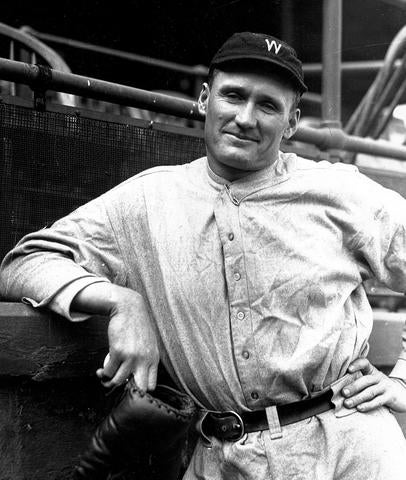
Walter Johnson

October 15, 1925, 100 years ago: The World Series comes to a soggy end at Forbes Field in Pittsburgh. It is one of the rare major league sports finals that is better remembered for the losing side, or for someone on it.

In the American League, the Washington Senators, winners of the previous season's World Series, won the Pennant again, by 8 1/2 games over the resurgent Philadelphia Athletics, getting into their 1st Pennant race in 11 years. Bucky Harris, their 28-year-old 2nd baseman and "Boy Manager," led a team highlighted by Walter Johnson, the "Big Train," one of the greatest pitchers who ever lived. The winningest pitcher in American League history finally became a World Series hero the year before, pitching innings 9 through 12 of Game 7 against the New York Giants.

The New York Yankees, who the Senators had edged the season before, and had won the previous 3 Pennants, fell apart: Babe Ruth developed a mysterious illness in Spring Training that kept him out for a month and a half, and several other established stars simply stopped hitting. They would be replaced by new players who would lead a new dynasty starting the next season, including Lou Gehrig.

In the National League, the Giants' 4-year run as Pennant winners came to an end, as they finished 8 1/2 games ahead of the Pittsburgh Pirates. Only pitcher Charles "Babe" Adams, now 43 but a rookie on their 1909 World Series winners, remained on that team. Their hitting stars included slick-fielding 3rd baseman Harold "Pie" Traynor, right fielder Hazen "Kiki" Cuyler, and speedy center fielder Max Carey, who was not well-known for his nickname, although it was "Scoops," which suggests he was a very good fielder.

*

October 7, 1925: Game 1 was played at Forbes Field. a Wednesday. Johnson started for the Senators, and he was aided by a home run by Joe Harris (no relation to Bucky), as the Senators win, 4-1. The only Pirate run came on a home run by Traynor. In the 5th inning, Peckinpaugh made an error, but it didn't amount to anything.

Late in the game, word reached the ballpark of the death that day of Christy Mathewson, the star pitcher for the Giants in the 1900s and 1910s. A series of lung ailments led to his death at the age of 45. The flag at Forbes Field was lowered to half-staff, and it remained so there and at Griffith Stadium in opposing Washington for the remainder of the Series. The Commissioner of Baseball, Kenesaw Mountain Landis, orders that black armbands be applied to both teams' uniforms, even though Mathewson had never been involved with either of the teams playing.

October 8, 1925: Game 2 was played at Forbes Field. Home runs were hit in the 2nd by the Senators' Joe Judge and in the 4th by the Pirates' Glenn Wright. In the 8th, Peckinpaugh made an error that did end up mattering, which that led to a home run by Cuyler. He made another error later in the inning, which did not matter. The Senators loaded the bases with nobody out in the top of the 9th, but they only got 1 run home, and the Senators won, 3-2. The Series was tied going to Washington.

*

October 10, 1925: Game 3 was played at Griffith Stadium. Peckinpaugh made his 4th error of the Series in the 6th, which led to an unearned run. Joe Harris singled home a run to put the Senators up 4-3 in the bottom of the 7th.

In the 8th, Earl Smith hit a drive to right-center field. Sam Rice leapt for it, and fell into the temporary stands that had been constructed. For a moment, a World Series crowd went silent, not knowing what had happened. Rice stood up, and held up the ball, indicating that he had made the catch. The umpires ruled the catch legal, and the Senators hung on to win, going up 2-1.
Sam Rice

Edgar Charles Rice (one of his minor-league managers changed his name to "Sam") is one of several great players virtually forgotten because their team no longer exists in its current form: They became the Minnesota Twins in 1961. And don't look for his retired uniform number anywhere: While he did last in the major leagues until 1934 and did wear numbers, none is retired for him, anywhere. If one was -- he wore 2 for the Senators in 1931 and 22 for them in 1932 and '33 -- he might be better remembered.

He might also be better remembered if he'd gotten into the 3,000 Hit Club. Instead, he fell just short: He collected 2,987 hits, the closest any player has gotten to 3,000 without getting it. (Unless you count Stan Ross, the Bernie Mac character in Mr. 3000.)

Rice later said, "The truth of the matter is, I did not even know how many hits I had. A couple of years after I quit, (Senators owner) Clark Griffith told me about it, and asked me if I'd care to have a comeback with the Senators and pick up those 13 hits. But I was out of shape, and didn't want to go through all that would have been necessary to make the effort. Nowadays, with radio and television announcers spouting records every time a player comes to bat, I would have known about my hits and probably would have stayed to make 3,000 of them."

He had a .322 lifetime batting average, a 112 OPS+, 498 doubles, 184 triples, and 351 stolen bases. He is in the Baseball Hall of Fame. But, today, when he is remembered at all, he is remembered for his 1925 World Series catch. Too bad there's no film of it: While a highlight film did capture some action in that Series, the catch is not part of it.

Also on October 10, the football team of the Olympic Club of San Francisco traveled across San Francisco Bay, and beat the University of California 15-0, in front of a crowd of 50,000 at California Memorial Stadium in Berkeley.

This ended a 50-game unbeaten streak for the Golden Bears, who had been 46-0-4. They hadn't lost since November 27, 1919, away to the University of Washington. The stadium was nicknamed "The House That Andy Built," as head coach Andy Smith made the team so good, ticket receipts alone covered the $1.4 million cost in 1923. It was seriously renovated in 2012.

Coaching took a severe toll on Smith, who went just 6-3 with Cal in 1925. On a visit to Philadelphia, where he had coached the University of Pennsylvania from 1909 to 1912, he was hospitalized with pneumonia, and died on January 8, 1926, only 49 years old. His career coaching record was 116-32-13, including 74-16-7 at Cal.

Also on this day, James Buchanan Duke died at his mansion at 1 East 78th Street, on 5th Avenue across from Central Park in New York. He was 68. "Buck" Duke is essentially the father of the American cigarette industry, and is thus responsible for the deaths of millions of people.

He's also responsible for the Duke Endowment, which contributed $40 million after his death (about $594 million in today's money) to Trinity College in his hometown of Durham, North Carolina. In his memory, it was renamed Duke University. So he's also responsible, if rather indirectly, for Coach K and the Cameron Crazies.

The James B. Duke House now hosts the New York University Institute of Fine Arts.
*

October 11, 1925: Game 4 was played at Griffith Stadium. Leon "Goose" Goslin, the greatest player ever to come from South Jersey -- he's in the Hall of Fame, and, as of the end of the 2025 regular season, Mike Trout does not yet have the career stats to get in -- and Joe Harris hit home runs. Johnson needed no more than that, as he pitched a 6-hit shutout. The Senators won, 4-0, and went up 3-1. Just 1 more win to go.

Washington baseball would not find that 1 more win for another 94 years.

On the same day, having already played some minor and semi-pro teams, the New York Giants football team plays its 1st game against an actual NFL team, although it's not one that most modern fans will recognize. At the Cycledrome in Providence, Rhode Island, a stadium built for bicycle racing (a big sport in the Roaring Twenties), they lose 14-0 to the Providence Steam Roller.

This team, officially having no S on the end, was no pushover, and deserves to be remembered today: It will win the NFL Championship in 1928 (73 years before the Patriots will win New England’s next NFL title), and host the NFL’s first night game in 1930 (5 years before Major League Baseball allows games to be played under lights), before the Great Depression put it out of business in 1931.

Although the Pawtucket Red Sox and the Providence Bruins are at the highest minor-league levels in their respective sports, the State of Rhode Island has never had another major league sports team: The closest they've come since is the Patriots, who since 1971 have played in stadiums in Foxboro, Massachusetts, 10 miles from the State Line, and closer to Kennedy Square in Providence than to Downtown Crossing in Boston.

Also on this day, Elmore John Leonard Jr. was born in New Orleans, but grew up in Detroit and was a hard-core Tigers fan. Or, perhaps I should say, "hard-boiled," as he was the writer of hard-boiled crime fiction.

Among his works that got turned into movies are Hombre (a Paul Newman film), 3:10 to Yuma
(made with Glenn Ford and Van Heflin in 1957, and Russell Crowe and Christian Bale in 2007), Mr. Majestyk (starring Charles Bronson), Get Shorty (with John Travolta), Out of Sight (in which George Clooney is a thief fooling around with the cop trying to catch him, played by Jennifer Lopez), and Rum Punch (which became the Quentin Tarantino film Jackie Brown starring Pam Grier). He is also responsible for the story that became the TV series Justified. He died in 2013.

*

October 12, 1925: The Senators wanted to wrap the Series up at home in Game 5. But the Pirates took a 2-1 lead in the 3rd, a 4-2 lead in the 7th, and won, 6-3, despite a 3rd homer in the Series by Joe Harris. Peckinpaugh made an error in the 6th inning, his 5th of the Series.

October 13, 1925: Game 6 was played back in Pittsburgh. Goslin hit a home run in the 1st inning, and the Senators made it 2-0 in the 2nd. But the Pirates tied the game in the 3rd, and Eddie Moore hit a home run in the 5th, giving the Pirates a 3-2 lead the held to the end, tying the Series. Peckinpaugh made his 6th error of the Series in the 7th inning.

Also on this day, Leonard Alfred Schneider was born in Mineola, Long Island, New York. We knew him as Lenny Bruce. According to sportswriter Dick Schaap, who collaborated with Lenny on his book Stamp Help Out!, Lenny attended only 1 Major League Baseball game in his short life (he died from drugs on August 3, 1966). It was as Schaap's guest, as a birthday present. It was October 13, 1960, and it was Game 7 of the World Series, the Bill Mazeroski Game, another World Series that the Pirates won in improbable fashion. Lenny wasn't a baseball fan, but he told Schaap he liked the drama.

Also on this day, Margaret Hilda Roberts was born in Grantham, Lincolnshire, England. How about that: Lenny Bruce and Margaret Thatcher were born on the exact same day. He didn't live long enough to have heard of her. If he had, with his sick sense of humor, I suspect there would have been a few jokes about her sex life (possibly suggesting that she had none), and about Bobby Sands (possibly, "For letting him starve, she can eat me!") and the Brighton Bombing.

One thing's for sure: In serving as Prime Minister of Britain, the 1st woman to do so, from 1979 to 1990, "The Iron Lady" treated all English soccer fans as if they were hooligans. She is widely believed to have been involved in the cover-up of the police's actions, both the negligent ones and the intentionally harmful ones, at the Hillsborough Stadium Disaster on April 15, 1989.

When her friend and fellow 1980s conservative icon, Ronald Reagan, died in 2004, most of his political opponents maintained a respectful silence. When the Iron Bitch died in 2013, a majority of Great Britain cheered, and was more than willing to say what a horrible person she was.

October 14, 1925: Game 7 was supposed to be played at Forbes Field, but the game was called off due to rain. They would have to try again tomorrow.

*

October 15, 1925: A steady downpour, continuing from the day before into this day, has left the field at Forbes Field a muddy mess, as Game 7 of the World Series is scheduled to be played. The weather forecast suggested rain for the next 3 days for both cities involved, Pittsburgh and Washington. So moving the game to Washington would have been pointless, and Commissioner Landis was anxious to get it over with. So, they would play through the rain.

I've never seen film of this game. I don't even know if any survives, although YouTube has footage from earlier in the Series, and of the Game 7s of 1924 and 1926. Maybe the film crews didn't want to risk getting electrocuted in the rain. At any rate, all we have to go on for the inclement weather are news reports.

On August 8, 2025, as commemorations for the 100th Anniversary of this Series began, I saw a photograph of a rather dubious method of drying the infield: Dousing it with gasoline and setting it on fire.
This insane tactic actually happened. It wasn't the only time, either.

But it would have been just plain wrong to play if the rain were as bad as what Philadelphia and Tampa Bay faced when Game 5 of the 2008 Series was suspended. There was a 6-day delay due to rain in 1911, and there were 3-day delays in 1962 and 1975. It could have been done again.

It was a short day for Pirate starter Vic Aldridge: 3 walks and 2 hits‚ and he was out of there with just 1 out in the 1st. Walter Johnson took a 4-0 lead to the mound. In what became known as "Johnson's Last Stand," the Bucs clobbered the 38-year-old Big Train for 15 hits‚ good for 24 total bases. Max Carey's 4-for-5 gave him a Series-high batting average of .458.

The Senators made the most of 7 hits‚ scoring 7 runs. But in the bottom of the 7th, Eddie Moore led off with a grounder to short, and Peckinpaugh made his 7th error. Carey doubled the run home. Cuyler bunted Carey over to 3rd base. Clyde Barnhart grounded out, and Carey couldn't score. But Traynor hit a triple down the right-field line, and that scored Carey. Traynor tried to stretch it into an inside-the-park home run, but was thrown out at the plate.

In the top of the 8th, Peckinpaugh hit a home run‚ the 12th homer of the Series by both teams combined‚ then a Series record, despite Forbes Field and Washington's Griffith Stadium both having some of the most distant fences in the game. That made it 7-6 Senators.

With the rain still coming down, Johnson got the 1st 2 outs in the bottom of the 8th. But Earl Smith doubled, and Pirate manager Owen "Donie" Bush sent Emil Yde (that's "EE-dee"), normally a pitcher, in to pinch-run for him. Johnson walked Moore. Carey grounded to short, and Peckinpaugh tried to turn a force play at 2nd. But he made a bad throw, his 8th error. The bases were loaded, and Cuyler cleared them with a double down the right field line. Red Oldham, in relief of Ray Kremer, got the Senators out 1-2-3 in the 9th, and the Pirates were 9-7 victors.
Roger Peckinpaugh

They became the 1st team to come from 3 games to 1 down to win a World Series. They would also be the 3rd and the 4th, in 1971 and 1979, respectively, both times against the Baltimore Orioles. The 2nd would be the 1958 Yankees, against the Milwaukee Braves.

Peckinpaugh's 8 errors are still a record for a single World Series. The rest of the Senators combined only made 1 error in the 7 games.

In the next day's New York Times, James Harrison wrote, "In a grave of mud was buried Walter Johnson's ambition to join the select panel of pitchers who have won three victories in one World Series. With mud shackling his ankles and water running down his neck, the grand old man of baseball succumbed to weariness, a sore leg, wretched support and the most miserable weather conditions that ever confronted a pitcher."

The last surviving member of the 1925 Pirates was shortstop Glenn Wright, who lived until 1984.

Monday, August 4, 2025

August 4, 1945: The Bert Shepard Game

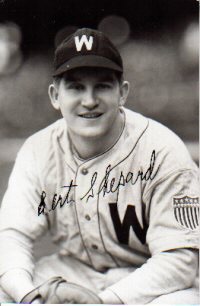
August 4, 1945, 80 years ago: Bert Shepard pitches in a game in what would later be called Major League Baseball. This was incredibly unlikely, because he had only one leg.

Bert Robert Shepard was born on June 28, 1920 in Dana, Indiana, hard by the Illinois State Line, and home to a museum dedicated to another native who became a hero of World War II, journalist Ernie Pyle. A lefthanded pitcher, Shepard grew up in nearby Clifton, Indiana, and made his professional debut in the Detroit Tigers' organization in 1939. But by the conclusion of the 1942 season, he hadn't risen above Class C ball (roughly equivalent to "Long A" today).

He enlisted in the U.S. Army Air Forces in World War II, became a pilot, and achieved the rank of 1st Lieutenant. On May 21, 1944, his fighter group was strafing a German airfield northwest of Berlin, when his plane, a Lockheed P-38 Lightning, was hit. He crashed, and was thrown clear, saving his life, as the plane exploded in flames.

He was found by 1st Lieutenant Ladislaus Loidl, an Austrian doctor in the Nazis' air force, the Luftwaffe. Although Shepard's right foot had already been severed, Loidl managed to save his life. Although the Nazis were the enemy, Shepard would always be grateful for the medical services the Germans provided him, even as he recovered in a prisoner-of-war camp.

He was released in a prisoner exchange in February 1945, and he was determined to resume his baseball career. Part of his rehabilitation was spent at the Walter Reed Army Medical Center in Washington. There, he met Under Secretary of War Robert Patterson, and told him of his desire to keep playing baseball despite needing an prosthesis for his right leg. Patterson told Clark Griffith, owner of the Washington Senators, and himself a Hall of Fame pitcher.

On March 29, Griffith signed Shepard, then only 24 years old, as a pitching coach, thinking it would be good publicity. All season long, with his prosthesis being the leg on which he landed in his pitching motion, he pitched batting practice, and visited veterans' hospitals, offering encouragement to other wounded soldiers. On July 10, he pitched 4 innings against the Brooklyn Dodgers in an exhibition game for the War Relief Fund.

However, the Senators couldn't simply put him in a game just for the publicity. Despite their reputation as legendary losers -- the saying was, "Washington: First in war, first in peace, and last in the American League" -- this was a rare season in which they were in the Pennant race. When dawn arrived on August 4, 1945, the Detroit Tigers led the American League, the Senators were only 3 games behind, the New York Yankees were 4 back, and every other team except the Philadelphia Athletics was within 9 1/2 games. The AL race was still anybody's ballgame, and the Senators had as good a chance at the Pennant as anybody.

But despite World War II winding down -- V-E Day was 3 months earlier, and, while no one yet knew it, V-J Day would come in 10 days -- wartime travel restrictions, designed to save fuel for the war effort, were very much in place, to the point where that season's All-Star Game had been canceled, the only time since the game was founded in 1933 that it happened until the COVID epidemic in 2020. This led to teams staying in place longer than usual.

And, in early August, the Senators had a run of 5 straight days of doubleheaders, with the 4th being the 4th of them. Throw in the war's "manpower drain," and finding "warm bodies" was difficult, especially to flesh out a pitching staff. Shepard's time had come.

The 1st game that day was a 4-0 Senators win over the Boston Red Sox. Wally Holborow did the best thing he could for his team: He went the distance, and allowed just 2 hits. In the 2nd game, the Senators wouldn't be so lucky: Even with such talent as Ted Williams, Bobby Doerr, Dom DiMaggio and Johnny Pesky all in the service, the Sox knocked starting pitcher Sandy Ullrich out of the box in the 4th inning.

Senators manager Ossie Bluege brought in Joe Cleary, who was another player who was only playing due to The War's manpower drain. It was his only big-league appearance as well, and he only got 1 batter out, allowing 7 runs on 5 hits and 3 walks. There are pitchers who allowed baserunners and didn't get anybody out, thus having an earned run average of infinity. Cleary has the highest career ERA of anybody who did actually get someone out: 189.00. The Red Sox scored 12 runs in the top of the 4th, and were up 14-2. Tom McBride tied a major league record for most RBIs in an inning: 6, in the 4th, all off Cleary.

So Bluege brought in Shepard, wearing Number 34. There is a sad connection here: Elmer Gedeon, 1 of the 2 MLB players who ended up being killed in World War II (Harry O'Neill of the 1939 Athletics was the other), had also worn 34 for the Senators, playing 5 games in the outfield in 1939. Shepard being assigned 34 was probably a coincidence.

The 1st batter that Shepard faced was George "Catfish" Metkovich, a center fielder who had a decent 10-season career in the majors. Shepard struck him out. He pitched the rest of the way, going 5 1/3rd innings, allowing 1 run on 3 hits, walking 1 and striking out 2. The Red Sox won, 15-4.

The Senators remained in the race until the final day of the season, and finished 1 game behind the Tigers, who then beat the Chicago Cubs to win the World Series. Bluege never brought Shepard into another game. Who knows, that may have cost the Senators the Pennant. They hadn't won one since 1933, they left town in 1971, and no Washington team would win another major league Pennant until the 2019 Nationals.

In 1946, the veteran players returned home, and, war hero or no, there was no place for Shepard on the major league roster. He pitched in the minors that season, and was released by the Senators afterward. He pitched semi-pro ball in 1947, but needed further surgery on his leg, causing him to miss the 1948 season. In 1949, he was a player-manager in Class B ball, going 5-6.

He became a typewriter salesman, making brief comebacks in 1952 and 1955. Then he got back into aeronautics, becoming a safety engineer for Hughes Aircraft, one of Howard Hughes' companies. He won competitions for amputees in both running and golf, even in his 70s.
In 1993, This Week In Baseball did a piece on him, nearly half a century after the fact, covering his trip back to Europe, following his return to the site of his crash, and to a reunion with Dr. Loidl again, where he thanked him for saving his life, and (if only for 1 game) his baseball career.

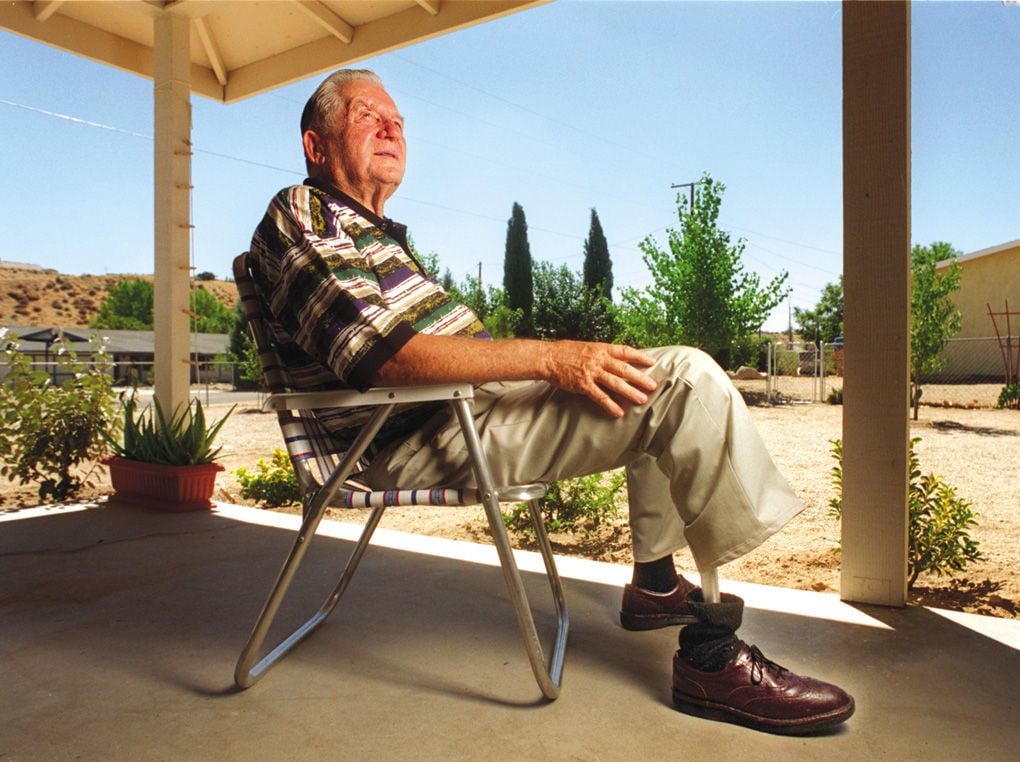
Bert Shepard died on June 16, 2008 in Highland, California, outside San Bernardino. He was 87 years old, and was survived by his wife and their 2 daughters. Senators center fielder José Zardón was the last surviving player from his lone big-league appearance, living until 2017. I can find no record of how long Loidl lived, beyond 1993. It is possible that he is still alive as of August 4, 2025.

Sunday, June 1, 2025

June 1, 1925: Lou Gehrig's Streak Begins

June 1, 1925, 100 years ago: The New York Yankees lose to the Washington Senators, 5-3 at Yankee Stadium. Walter Johnson outpitched Sad Sam Jones. Sam Rice, the Senators' center fielder and leadoff hitter, headed for the Hall of Fame, went 5-for-5.

Despite their frequent billing as "Washington: First in war, first in peace, and last in the American League," there was no shame, at that time, in losing to the Senators. They had won the World Series the year before, and would fall just 1 game short of doing it again. But after staying in the Pennant race late in 1919 and 1920, winning the American League Pennant in 1921 and 1922, winning the World Series in 1923, and finished only 2 games behind the Senators in 1924, the Yankees were a mess.

Babe Ruth had only recently made his season debut, after an illness that still baffles baseball historians to this day. And a bunch of the players who had helped them win those 3 straight Pennants simply weren't hitting: 1st baseman Wally Pipp was batting .244, 2nd baseman Aaron Ward was at .255, shortstop Everett Scott was at .224, center fielder Whitey Witt was at .194, and catcher Wally Schang was at .247.

Scott didn't play in this game. Paul "Pee Wee" Wanninger did. He was the 1st New York-based shortstop nicknamed Pee Wee, but he was no Harold "Pee Wee" Reese.

Pipp. Ward. Scott. Witt. Schang. All 5 of these players would be replaced as starters by the time the 1926 season began. And the players they got would help them win another 3 straight Pennants, losing the World Series in 1926, but sweeping it in 1927 and 1928.

Schang wasn't exactly replaced. The Yankees tried Benny Bengough, Mike Gazella and Pat Collins, but it would take until Bill Dickey became the starter in 1929 for them to again have an elite catcher. It is an oddity that the 1927 Yankees, known as "Murderers' Row," have often been considered the greatest team in baseball history without having a great catcher.

But Witt had already been replaced in center field by Earle Combs, who would go on to became a Hall-of-Famer. Ward was replaced at 2nd base by Tony Lazzeri, who also went to the Hall of Fame. Scott was replaced at shortstop by Mark Koenig, a decent player.

As for Pipp... He was batting .244 after going 1-for-4 in this game. That's why he was replaced. Yes, later in the year, he was hit in the head by a batting-practice pitch, as the myth says. But he had already been replaced as the starting 1st baseman by that point. It's also not true that Pipp never played again. He did play, and well -- but for teams other than the Yankees.

His replacement, who had previously made only 34 major league appearances, pinch-hit for Wanninger with 1 out in the bottom of the 8th inning. He flew out to left fielder Goose Goslin, and replaced Pipp at 1st base in the 9th inning.

The next day, he started at 1st base, going 3-for-5. Bob Meusel hit 2 home runs, and the Yankees beat the Senators, 8-5. It was the 2nd of what would turn out to be 2,130 consecutive games. His name was Lou Gehrig. He became the greatest first baseman in the history of baseball.

Friday, March 21, 2025

Notable Last Survivors -- 2025 Baseball Edition

Bobby Shantz

I first did this series in 2021, and again in 2023. Significant updates need to be made.

Notable last survivors of baseball occurrences:

* June 10, 1904: Walter T. Avery, 90, the last participant in what was long purported to be the 1st baseball game, and was definitely the 1st one played under what became known as the Knickerbocker Rules, at the Elysian Fields in Hoboken, New Jersey on June 19, 1846. 58 years.

* March 27, 1927: Joe Start, 84, the last survivor of the Brooklyn Atlantics team that gave the Cincinnati Red Stockings, the 1st openly professional baseball team, their 1st loss, on June 14, 1870. 57 years.

* August 21, 1937: George Wright, 90, the last survivor of the 1869 Cincinnati Red Stockings. 68 years.

* July 7, 1939: James "Deacon" White, 91, the last surviving player from the 1st Major League Baseball game, on May 4, 1871. 68 years. Playing for the Cleveland Forest Citys, he was the game's 1st batter, against the 1st pitcher (and thus the 1st MLB player), Bobby Matthews.

White, elected to the Baseball Hall of Fame in 2013, 74 years after his death, was also the last surviving player from that 1st professional league, the National Association, 1871 to 1875. 64 years.

* July 3, 1948: Charles Witherow, 96, the last living MLB player from the 1870s. 69 years. He pitched 1 game for the 1875 version of the Washington Nationals.

* July 27, 1948: Joe Tinker, 68, the last survivor of the 1906-10 Chicago Cubs double play combination immortalized in Franklin Pierce Adams' poem "Baseball's Sad Lexicon," a.k.a. "Tinker to Evers to Chance.

He was one of the best shortstops of his time, but let's not kid ourselves: Without that poem, neither he nor 2nd baseman Johnny Evers, who died the year before at 65, would ever have gotten into the Baseball Hall of Fame. Maybe 1st baseman Frank Chance does, since he was also the manager who got the Cubs to 4 Pennants (including 2 World Series wins) in 5 years. He died in 1924, only 47, due to heart disease. The 3rd baseman in that infield, Harry Steinfeldt, was not only an ordinary player, but died even sooner, in 1914, only 38, from a cerebral hemorrhage.

* May 3, 1958: Al Maul, 92, the last surviving player from the Union Association, a quasi-major league that played only the 1884 season, playing for the Philadelphia Keystones. 74 years. He led the National League in earned run average in 1895, with the NL version of the Washington Senators, and last played in the major leagues with the 1901 New York Giants.

* July 17, 1961: Ty Cobb, 75, the last survivor of the original 5 honorees by the Baseball Hall of Fame, January 16, 1936. 25 years. He played center field, mostly for the Detroit Tigers, from 1905 to 1928. Christy Mathewson died in 1925, before the Hall was established; Walter Johnson in 1946, Babe Ruth in 1948, Honus Wagner in 1955.

* December 15, 1961: William Elsworth Hoy, 99, the last surviving player from the Players' League of 1890. 71 years. Known as Billy, and as Dummy because he was deaf (although not mute, as "dumb" then meant), he was long erroneously believed to be the inspiration for umpires' hand signals, as he couldn't hear them yell, "Ball!" or "Strike!"

He was also the last surviving player from the 1880s. 72 years. He played from 1888 to 1902, batted .288 lifetime, collected 2,044 hits, stole 607 bases, led the National League in stolen bases in 1888, and won the 1st American League Pennant with the 1901 Chicago White Sox.

He died 2 months after throwing out the first ball at a World Series game hosted by one of his former teams, the Cincinnati Reds, and 5 months before he would have become the 1st former MLB player to reach a 100th birthday.

* July 17, 1962: Lewis "Sport" McAllister, 87, the last surviving player from the worst single-season team in MLB history, the 1899 Cleveland Spiders who went 20-134. 63 years. An outfielder, he was also an original Detroit Tiger in 1901.

* June 28, 1963: Frank "Home Run" Baker, 77, the last survivor of the Philadelphia Athletics' "$100,000 Infield" of 1910-14. 59 years. He was the 3rd baseman. 2nd baseman Eddie Collins died in 1951, 1st baseman John "Stuffy" McInnis in 1960, and shortstop Jack Barry in 1961.

* January 16, 1965: Jimmy Williams, 88, the last survivor of the 1903 New York Highlanders, the 1st season of the team that became the New York Yankees. 62 years. He was a 2nd baseman.

* January 23, 1969: Al Bridwell, 85, the last survivor of the Fred Merkle Game that cost the New York Giants the National League Pennant, and gave it to the Chicago Cubs, September 23, 1908. 61 years. He was a shortstop, and hit the ball that drove in the apparent winning run, before Merkle ran off the field without touching 2nd base. He later admitted that he wished he'd never gotten that hit, for what Merkle had to endure.

* November 7, 1972: Freddy Parent, 96, the last surviving member of the winning team in the 1st World Series, the 1903 Boston Americans. 69 years. The team changed its name to the Red Sox in 1907. Parent was also the last surviving player in the Jack Chesbro Game of October 10, 1904.

* March 26, 1973: George Sisler, 80, the last survivor of the group of members of the Baseball Hall of Fame honored at the Hall's opening in Cooperstown, New York, June 12, 1939. 34 years. He played 1st base, mostly for the St. Louis Browns, from 1915 to 1930.

* March 1, 1974: Larry Doyle, 87, the last survivor from the Playoff game between the Giants and the Cubs that was forced by the Merkle Game, won by the Cubs, October 8, 1908. 66 years. He was a 2nd baseman, who once proclaimed, "It's great to be young and a Giant."

* October 2, 1975: Charlie Emig, 100, the last surviving player from the 19th Century. 76 years. He appeared in 1 game in 1896 for the Louisville Colonels. He is also believed to have been the 1st MLB player to have lived to see a 100th birthday.

* October 13, 1975: Charles "Swede" Risberg, 81, the last survivor of the "Eight Men Out," the Chicago White Sox players who threw the World Series, losing it to the Cincinnati Reds on October 9, 1919. 56 years.

* September 7, 1984: Joe Cronin, 77, the last survivor of the 5 straight American League players struck out by National League and New York Giants pitcher Carl Hubbell in the 1934 All-Star Game at the Polo Grounds in New York. 50 years. In order: Babe Ruth died in 1948, Lou Gehrig in 1941, Jimmie Foxx in 1967, Al Simmons in 1956, and Cronin in 1984. Bill Dickey, who lived until 1993, then got a hit. Lefty Gomez, who lived until 1989, then struck out -- but while that was a 6th strikeout, it wasn't a 6th consecutive strikeout. Hubbell lived until 1988.

* October 7, 1984: Artie Butler, 96, the last surviving teammate of Cy Young, with the 1911 Boston Rustlers (who became the Braves the next season). 73 years. He was an infielder.

* July 27, 1985: Smoky Joe Wood, 95, the last surviving player from the Addie Joss Benefit Game, held to support the family of the Cleveland Indians pitcher who died of meningitis at the start of the season, July 24, 1911. 75 years.

A pitcher, Wood was also the last survivor of the 1912 and the 1915 World Champion Boston Red Sox. 73 and 71 years. That also made him the last surviving player from the Fred Snodgrass Game in the 1912 World Series. He was also the last surviving player from the 1900-09 decade. 76 years.

* December 6, 1985: Burleigh Grimes, 92, the last survivor of the 17 pitchers who were still allowed to throw one of the altered pitches that fell under the category of "spitball" after they were outlawed in 1920. 65 years. The Hall-of-Famer, who pitched most of his career with the St. Louis Cardinals, including winning the 1931 World Series, and won 270 games, was also the last active pitcher allowed to do it, retiring after the 1934 season.

* July 28, 1986: Joe Oeschger, 94, the last survivor from the longest game in MLB history, 26 innings, finally called due to darkness, with Oeschger going the distance for the Boston Braves, and Leon Cadore going the distance for the Brooklyn Dodgers. 66 years. Both pitchers missed a start, but still had good seasons after that. Cadore lived until 1958.

Oeschger was also the last living player from the Philadelphia Phillies' 1915 National League Pennant winners, and was invited to throw out a ceremonial first ball at the World Series when the Phillies won the Pennant in 1983.

* August 17, 1986: Sammy Vick, 91, the last surviving player from the game in which Ray Chapman became the 1st player to sustain a fatal injury in an MLB game, August 16, 1920. 66 years. Vick played for the Yankees against Chapman's Cleveland Indians, who won 4-3. Carl Mays hit Chapman in the head with a pitch -- unintentionally, Mays always insisted -- and Chapman died the next day.

* March 14, 1988: Zeb Terry, 96, the last surviving teammate of Shoeless Joe Jackson, who was banned from baseball in 1920. 68 years. An infielder, Terry was a teammate of Jackson on the 1917 World Champion Chicago White Sox, but was with Pittsburgh when Jackson was (accused of) throwing the 1919 World Series.

* March 21, 1988: Edd Roush, 94, the last surviving player from the Federal League of 1914 and 1915, having played for the Pennant-winning Indianapolis Hoosiers in 1914, and moved with them to become the Newark Bears in 1915. 73 years.

He was also the last survivor of the 1919 World Champion Cincinnati Reds. 69 years. He insisted to the end of his life that they would have won the World Series even if the Chicago White Sox had played to win all the way. He was also the last surviving teammate of Christy Mathewson, who closed his career with the Reds in 1916. 72 years. Roush also threw out the first ball before the last game at Cincinnati's Crosley Field in 1970.

With a .323 lifetime batting average, and one of the best outfield arms anyone had ever seen at that point, he was generally considered to be the Reds' greatest player ever before the Big Red Machine of the 1970s, and was elected to the Baseball Hall of Fame.

* July 14, 1988: Lawton "Whitey" Witt, 92, the last surviving player from the 1923 New York Yankees, meaning he was the last survivor of the 1st game at the original Yankee Stadium on April 18, and of the 1st Yankee team to win the World Series, on October 15. 65 years.

* January 9, 1989: Bill Terry, 90, the last surviving player mentioned in Ogden Nash's 1949 poem "Line-Up for Yesterday." 40 years. The Hall of Fame 1st baseman for the New York Giants (Nash's favorite team) was also the last player to bat .400 for a full season in the National League, in 1930.

* May 17, 1989: George "Specs" Toporcer, 90, the last surviving baseball player interviewed by Lawrence S. Ritter for his book The Glory of Their Times, published on September 26, 1966. 23 years. An infielder for the St. Louis Cardinals, he was the 1st player known to have worn glasses on the field, hence his nickname.

He was also the last surviving player from their 1926 team that won the World Series, which included Grover Cleveland Alexander's strikeout of Tony Lazzeri with the bases loaded in the 7th inning of Game 7. 63 years.

* February 3, 1990: Erv Kantlehner, 97, the last surviving teammate of Honus Wagner, who retired in 1917. 73 years. A pitcher, Kantlehner was with the Flying Dutchman on the Pittsburgh Pirates in 1914, '15 and '16.

* April 22, 1993: Mark Koenig, 88, the last surviving player from the 1927 World Champion New York Yankees, a.k.a. Murderers' Row, often called the greatest baseball team ever. 66 years. He was also the last surviving player from Game 7 of the 1926 World Series, the St. Louis Cardinals' 1st World Series win, featuring baseball's most famous strikeout (other than the fictional one of "the Mighty Casey"), Grover Cleveland Alexander fanning Tony Lazzeri with the bases loaded in the 7th inning and the Cards up 3-2. And he was the last survivor of the Yankees' 1928 World Series win, too.

* November 12, 1993: Bill Dickey, 86, the last surviving player to have played for the Yankees under manager Miller Huggins, in 1928 and 1929. 64 years.

* June 27, 1997: Ray Benge, 95, the last surviving teammate of Grover Cleveland Alexander, who retired in 1930. 67 years. Benge and Alexander both pitched on the 1930 Philadelphia Phillies.

* September 26, 1997: Elwood "Woody" English, 91, the last surviving player from the 1st Major League Baseball All-Star Game, at Comiskey Park in Chicago, July 6, 1933. 64 years. He was a shortstop for the Chicago Cubs. He was also the last surviving player from Game 3 of the 1932 World Series, which featured Babe Ruth's "Called Shot."

* September 17, 1998: Chet "Red" Hoff, 107, the last surviving Yankee to have played under the New York Highlanders name, 1912. 86 years. He was also the last surviving player from the 1910s, and thus the last surviving player from the Dead Ball Era. 79 years.

Despite being teammates on the 1915 St. Louis Browns, in George Sisler's rookie season, Hoff turned out to be Sisler's last surviving teammate. He is also believed to be the longest-lived MLB player ever.

* March 8, 1999: Joe DiMaggio, 84, the last surviving inductee into Monument Park at Yankee Stadium prior to its closing for renovation, September 30, 1973. 26 years. Miller Huggins died in 1929, Jacob Ruppert in 1939, Lou Gehrig in 1941, Babe Ruth in 1948, Ed Barrow in 1953, Pope Paul VI in 1978, and Mickey Mantle in 1995.

He was also the last surviving player from the "Greatest Players Ever" list chosen for the 100th Anniversary of professional baseball in 1969. He was chosen as the "Greatest Living Player," and he insisted upon being introduced as such for the rest of his life.

* April 1, 2001: Joe "Jo-Jo" Moore, 92, the last surviving player who had played for the New York Giants under manager John McGraw, who retired in 1932. 69 years. He was an outfielder, made 6 All-Star Games, and helped McGraw's successor, Bill Terry, win the 1933 World Series.

* March 7, 2002: Mickey Haslin, 92, the last surviving player from MLB's 1st night game, at Crosley Field in Cincinnati, May 24, 1935. 67 years. An infielder, he drove in the Phillies' run in a 2-1 loss to the Reds.

* April 3, 2002: Karl Swanson, 101, the last surviving player who had played for the Chicago White Sox under founding owner and ballpark namesake Charlie Comiskey, who died in 1931. 71 years. Swanson was a 2nd baseman, who had played for the Pale House in 1928 and '29.

* July 5, 2002: Ted Williams, 83, the last man to bat .400 for a full season in 1941. 61 years.

* September 25, 2002: Ray Hayworth, 98, the last surviving teammate of Ty Cobb, who retired in 1928. 74 years. A catcher, he was a rookie on the Detroit Tigers in 1926, Cobb's last season with them, before closing his career with 2 seasons with the Philadelphia Athletics.

* January 2, 2004: Paul Hopkins, 99, the last pitcher who gave up one of Babe Ruth's 60 home runs in the 1927 season. 76 years. At the time, he pitched for the Washington Senators. This also made him the last surviving teammate of Walter Johnson. Tris Speaker was also on that '27 Senators team, before closing his career with Cobb on the '28 A's, so Hopkins was also Speaker's last living teammate.

* October 30, 2005: Al López, 97, the last surviving player from the 1920s. 75 years.

* July 22, 2007: Rollie Stiles, 100, the last surviving teammate of Rogers Hornsby, who last played in 1937. 70 years. He pitched for player-manager Hornsby on the 1933 St. Louis Browns.

* January 22, 2009: Bill Werber, 100, the last surviving teammate of Babe Ruth, playing for the Yankees in the 1930 and 1933 seasons. Ruth played his last game on May 30, 1935, so, 74 years. Werber also won the 1940 World Series with the Cincinnati Reds.

* December 1, 2009: Tommy Henrich, 96, the last surviving player from, and the beneficiary of, The Mickey Owen Game, Game 4 of the World Series, October 5, 1941. 68 years. He was also the last survivor of the Yankees' 1937, 1938, 1939 and 1941 World Champions. This also made him the last surviving Yankee who had played for team owner Jacob Ruppert. And the last surviving teammate of Lou Gehrig.

* August 9, 2010: Gene Hermanski, 90, the last surviving player from Jackie Robinson's debut game, April 15, 1947. 63 years.

* December 15, 2010: Bob Feller, 92, the last pitcher to have given up a hit to Joe DiMaggio during his 56-game hitting streak in 1941. 69 years. He was probably the best pitcher in baseball at the time. He also turned out to be the last player interviewed for Chicago Daily News sports editor John P. Carmichael's 1945 book My Greatest Day In Baseball.

* February 18, 2011: Buddy Lewis, 94, the last surviving player from Lou Gehrig's last game, on April 30, 1939. 72 years. A 3rd baseman for the Washington Senators, he also turned out to be the last player in the doubleheader played on Lou Gehrig Day on July 4, 1939.

* February 2, 2014: Ralph Kiner, 91, the last survivor from the New York Mets' original broadcasting trio that lasted from 1962 to 1979. 48 years. Lindsey Nelson died in 1995, Bob Murphy in 2004. Kiner was also a Hall of Fame slugging outfielder for the Pittsburgh Pirates.

* May 8, 2014: Charlie Mead, 93, the last surviving teammate of Mel Ott, who last played in 1947. 67 years. They played together on the New York Giants in 1943, '44 and '45.

* September 22, 2015: Yogi Berra, 90, the last surviving player from Game 3 of the 1947 World Series, the Bill Bevens Game. 68 years. He caught Bevens in that near-no-hitter. Bobby Brown, the last survivor of the Al Gionfriddo Game, did not play in the Bill Bevens Game. He was also the last survivor of the game where the Dodgers won their only World Series, Game 7, October 4, 1955, the Johnny Podres Game. 60 years.

* January 11, 2016: Monte Irvin, 96, the last living player who was a player in the Negro Leagues and elected to the Baseball Hall of Fame, prior to the desegregation of the game in 1947. 69 years.

* November 23, 2016: Ralph Branca, 90, the last surviving member of the 1st desegregated Major League Baseball team, the 1947 Brooklyn Dodgers. 69 years.

* April 28, 2017: Luis Olmo, 97, the last surviving MLB player who "jumped" to the Mexican League in 1946, a.k.a. "the Mexican Jumping Beans." 71 years. One of the earliest Puerto Ricans in MLB, he had been a star outfielder for the Brooklyn Dodgers.

* November 13, 2017: Bobby Doerr, 99, the last surviving MLB player from the 1930s. 78 years. With the 1941 Boston Red Sox, he became the last player on the team for which Ted Williams batted .406, and the last surviving teammate of Lefty Grove. 76 years. With the 1945 Red Sox, he became the last surviving teammate of Jimmie Foxx. 72 years.

With the 1949 Red Sox, he became the last surviving player from the 1949 Pennant-decider against the Yankees. 68 years. For the moment, he is also the longest-lived member of the Baseball Hall of Fame.

* October 18, 2018: Dick Cole, 92, the last survivor of the Chicago Cubs' ill-fated "College of Coaches" experiment of the 1961 and 1962 seasons. 56 years.

* January 1, 2020: Don Larsen, 90, the last surviving player from the perfect game that he pitched for the Yankees against the Brooklyn Dodgers in Game 5 of the World Series, still the only no-hitter in World Series history, October 8, 1956. 63 years.

Larsen was also the last surviving player in the trade with the Kansas City Athletics that brought Roger Maris to the Yankees, on December 11, 1959. 60 years. He and Hank Bauer were the most prominent players going to Kansas City.

* October 8, 2020: Edward "Whitey" Ford, 92, the last surviving player among the Yankees who were involved in what became known as "The Copacabana Incident" at the Copacabana nightclub in Midtown Manhattan, May 16, 1957. 63 years.

Billy Martin died in 1989, Mickey Mantle in 1995, Hank Bauer in 2007, Johnny Kucks in 2013 and Yogi Berra in 2015. The wives of all except Martin, then between marriages, were also there, and Ford outlived all of them as well.

* March 25, 2021: Bobby Brown, 96, the last surviving teammate of Bill Dickey, debuting with the Yankees in Dickey's last season, 1946. 75 years. He was also the last surviving player in Game 6 of the 1947 World Series, the Al Gionfriddo Game; and the last surviving player on the Yankees' World Series winners of 1947, 1949, 1950 and 1951.

* May 5, 2021: Del Crandall, 91, the last surviving player from the Boston Braves, who played their last home game on September 21, 1952, 69 years, and then moved to Milwaukee. He was the catcher on their team that won the 1957 World Series. (There are 30 surviving players from the Braves' Milwaukee tenure, 1952 to 1965.)

* October 4, 2021: Eddie Robinson, 100, the last surviving player from the last World Series winner from Cleveland, the 1948 Indians. 73 years.

* January 8, 2022: Eddie Basinski, 99, the last surviving player from the "tricornered game" in which the Yankees, Brooklyn Dodgers and New York Giants each played 6 innings at the Polo Grounds, to raise money for war bonds, June 26, 1944. 77 years.

A Dodger infielder, Basinski was also the last survivor of the 1930s and '40s players mentioned in Dave Frishberg's song "Van Lingle Mungo." Playing for the Pittsburgh Pirates in 1947, Basinski was also the last surviving teammate of Hank Greenberg.

* December 13, 2022: Curt Simmons, 93, the last surviving player from the Philadelphia Phillies' 1950 Pennant-winning "Whiz Kids." 72 years.

* April 16, 2024: Carl Erskine, 96, the last survivor of the Brooklyn Dodger players Roger Kahn profiled in his book The Boys of Summer, having covered the team for the New York Herald Tribune in 1952 and '53. 71 years.

* June 18, 2024: Willie Mays, 93, the last surviving player from the game 1951 National League Playoff game where Bobby Thomson hit a Pennant-winning home run; and the last surviving player from the 1954 World Series game where he made the catch that became the most famous defensive play in sports history.

* December 10, 2024: Rocky Colavito, 91, the last surviving player from the baseball-themed game show Home Run Derby, which aired in syndication from January 9 to July 2, 1960, 65 years.

* December 27, 2024: Charlie Maxwell, 97, the last surviving player from 3 notable Yankee games in 1951. 74 years. An outfielder for the Boston Red Sox, he played on April 17, making him the last survivor from the 1st MLB game for Mickey Mantle, and the Yankees' 1st game with Bob Sheppard as the public address announcer at Yankee Stadium.

And on September 28, he played in a doubleheader. The opener was Allie Reynolds' 2nd no-hitter of the season. The nightcap was the Pennant clincher.

* January 15, 2025: Tommy Brown, 97, the last surviving player from the Dick Sisler Game, where Sisler's 10th inning home run against the Dodgers gave the Phillies the 1950 Pennant. 74 years. With some irony, Brown had been the 2nd-youngest player in MLB history, debuting at age 16 with the 1944 Dodgers.

* March 5, 2025: Art Schallock, 100, the last surviving teammate of Joe DiMaggio, who last played in 1951. 74 years. A pitcher, Schallock was also the last survivor of the Yankees' 1953 World Series winners. 72 years. He was not on the Series roster in 1951 or '52.

*

Alive as of March 21, 2025:

* There are believed to be only 2 former Negro League players still alive. Bill Greason, 100, who pitched 8 games with the 1948 Birmingham Black Barons, and thus was a teammate of Willie Mays, and then 3 games with the 1954 St. Louis Cardinals. He is now the oldest living former MLB player. And Ron Teasley, 98, who played 2 games in the outfield for the 1948 New York Cubans. (For many years, "Cuban" was code for "too dark-skinned to pass for white.")

UPDATE: Teasley died on February 3, 2026, just after his 99th birthday. This probably means Greason, at 101, is the last one.

* Bobby Shantz, 99, is the last surviving man who played in MLB in the 1940s, thus making him the earliest surviving former MLB player. He is also the last surviving man who played for the Philadelphia Athletics, thus making him the last surviving man who played for Connie Mack on the A's.

Despite being just 5-foot-6 and 140 pounds, the lefthanded pitcher was the American League Most Valuable Player in 1952, helped the Yankees win the 1958 World Series, was an original Houston Colt .45 (Astro) in 1962, was part of the trade that sent Lou Brock from the Chicago Cubs to the St. Louis Cardinals, and returned to Philadelphia (as a native of Pottstown, Pennsylvania, almost his hometown) to close his career with the ill-fated 1964 Phillies.

* There are 2 surviving men who are veterans of both World War II and MLB: Shantz and Ed Mickelson, 98, a 1st baseman for both the St. Louis Cardinals and the departed St. Louis Browns.

UPDATE: Mickelson died on June 27, 2025, leaving Shantz as the last surviving veteran of both WWII and MLB.

* There are 2 remaining players from the St. Louis Browns, who played their last game on September 27, 1953, 71 years, then moved to become the Baltimore Orioles: The aforementioned Ed Mickelson, also 96; and infielder Billy Hunter, about to turn 97.

Hunter is also the last surviving player from the biggest trade in baseball history, 17 players between the Baltimore Orioles and the Yankees, December 18, 1954. 70 years. Among the players joining Hunter in going from Venable Park to the South Bronx was Don Larsen. Hunter would later become known as the 3rd base coach for the 1966-71 quasi-dynasty on the Orioles, and briefly as the manager of the Texas Rangers.

UPDATE: As I said, Ed Mickelson died on June 27, 2025, leaving Billy Hunter as the last living former St. Louis Brown. He died just 7 days later, on July 3, 2025.

* Sandy Koufax, 89, the last surviving member of the 1955 Brooklyn Dodgers, is the earliest surviving World Series winner. He did not, however, appear in that World Series. Bobby Richardson is the last surviving member of the 1956 New York Yankees, but he did not appear in that World Series. He did appear in the 1957 World Series, as did John DeMerit of the Milwaukee Braves, who beat the Yankees in that Series, making DeMerit the earliest surviving player to play on a winning World Series team. Taylor Phillips, the other surviving member of the '57 Braves, did not play in the Series.

* Stan Pawloski, 93, is the last living former teammate of Bob Feller, who pitched his last game for the Cleveland Indians on September 30, 1956, 68 years. Pawloski was a 2nd baseman, who played 2 games at the close of the 1955 season.

* There are 4 surviving players from the Brooklyn Dodgers, who played their last game on September 24, 1957, 66 years, and were then moved to Los Angeles: Jim Gentile, Fred Kipp, Bob Aspromonte and Sandy Koufax.

Aspromonte, who lasted in the majors until 1970, and thus was the last active former Brooklyn Dodger, and Koufax are the last 2 surviving teammates of Jackie Robinson.

* There are 6 surviving players from the New York Giants, who played their last game on September 29, 1957, 67 years, and were then moved to San Francisco: Joey Amalfitano, Ray Crone, Jackie Brandt, Al Worthington, Joe Margoneri and Bill White. (UPDATE: Crone died on January 15, 2026, and Worthington died on June 16, 2026. That left 4 living New York Giants: Amalfitano, Brandt, Margoneri and White.)

* There are 4 surviving players from the American League Pennant-winning Chicago "Go-Go" White Sox of 1959: Luis Aparicio, Ken McBride, J.C. Martin and Claude Raymond.

* There are 5 surviving teammates of Ted Williams, who played his last game for the Boston Red Sox on September 26, 1960, 63 years: Marty Keough, Ted Bowsfield, Jerry Mallett, Jim Mahoney and Ted Wills.

* There are 6 surviving players from the "Old" Washington Senators, who played their last game on October 2, 1960, 64 years, and were then moved to become the Minnesota Twins: Bob Ross, Bob Oldis, Camilo Pascual, Pedro Ramos, Ken Aspromonte and Jim Kaat. (From the "New Senators," who played from 1961 to 1971, and were then moved to become the Texas Rangers, there are 83 living players, so, too many to list.)

* From the Bill Mazeroski Game, October 13, 1960, 64 years ago, there are 7 survivors. The Pittsburgh Pirates have 5: Mazeroski himself, Bob Skinner, Vernon Law and Roy Face. The Yankees have 3: Bobby Richardson, Tony Kubek and Bobby Shantz.

* There are 9 surviving players who played for Casey Stengel on the Yankees: Bobby Richardson, Billy Hunter, Bobby Shantz, Tony Kubek, Zach Monroe, Gary Blaylock, Fred Kipp, Hal Stowe and Johnny James. (UPDATE: Hunter's death leaves 8.)

* From the game where Roger Maris hit his 61st home run of the season, October 1, 1961, 63 years ago, there are 3 survivors: Yankees Bobby Richardson and Tony Kubek; and Red Sock Carl Yastrzemski.

* There are 4 surviving players from the New York Mets' 1st game, an 11-4 loss to the Cardinals at Sportsman's Park in St. Louis, April 11, 1962. 63 years. Both are from the Cardinals: Julián Javier and Bill White. Félix Mantilla was the last surviving Met from that game, dying on January 10, 2025.

* There are 7 surviving players from the original New York Mets of 1962: Craig Anderson, Galen Cisco, Cliff Cook, John DeMerit, Rick Herrscher, Jay Hook and Jim Marshall.

* There are 24 surviving Milwaukee Braves; 76 from the Kansas City Athletics; 20 from the Red Sox' 1967 "Impossible Dream" Pennant winners; and 29 from the ill-fated 1969 Seattle Pilots -- in each case, too many to list here.

* Denny McLain, about to turn 81, is the last surviving pitcher to have won 30 games in a season, going 31-6 to help the Detroit Tigers win the 1968 World Series. 55 years.

* The earliest living Met manager is Joe Torre, from 1977.

* The earliest living Yankee manager is Lou Piniella, from 1986.

* The earliest living manager of a World Series winner, or even a Pennant winner, is Davey Johnson, 82, of the 1986 Mets.

Tuesday, October 15, 2024

October 15, 1899: The End of the Line

October 15, 1899, 125 years ago: The Cincinnati Reds close out the season with 16-1 and 19-3 victories at League Park in Cincinnati, over the hapless Cleveland Spiders. John "Bid" McPhee‚ usually considered the best 2nd baseman of the 19th Century‚ plays in both games‚ the last of his career, with all 18 being spent with the Reds.

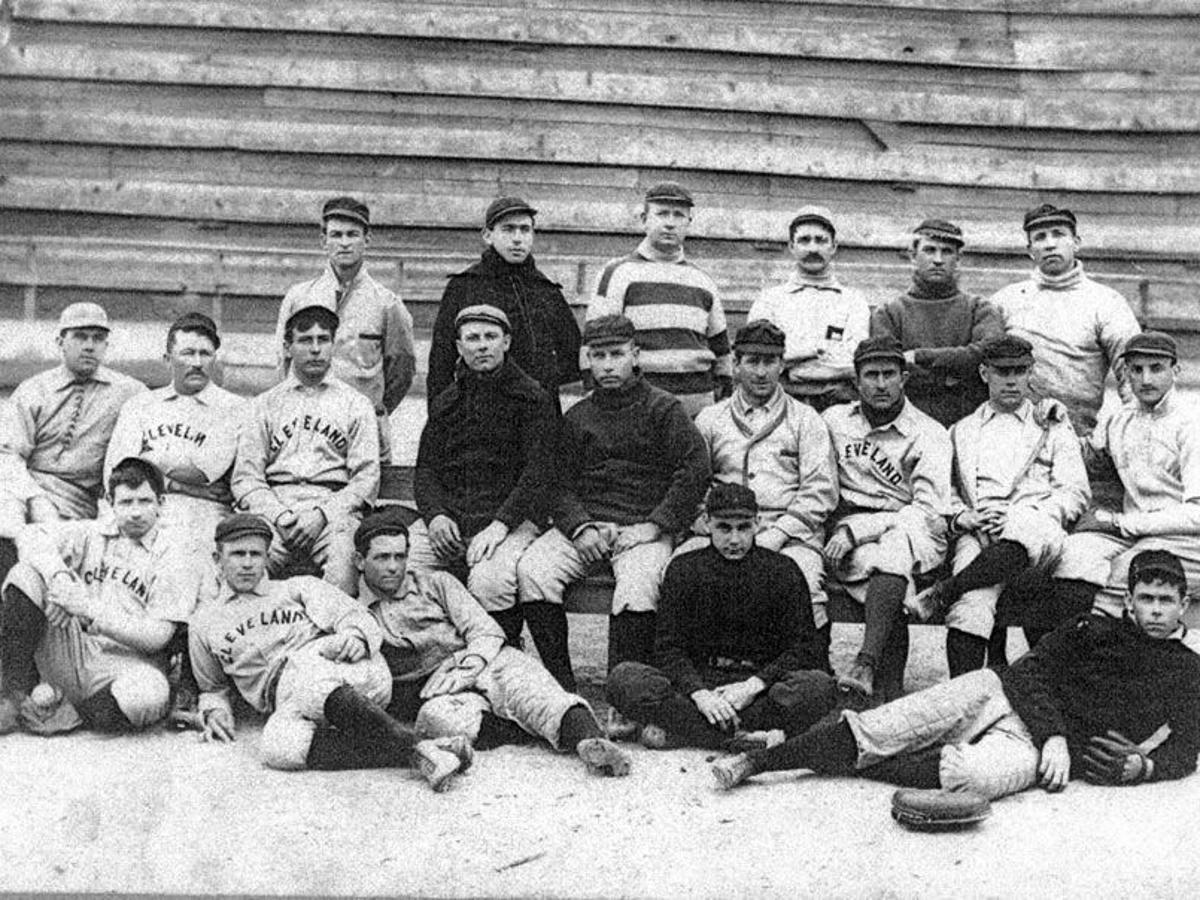
Cleveland finished with 20 wins and 134 losses‚ 84 games behind the Pennant-winning Brooklyn Superbas, and in the cellar, 12th place, by 35 games behind the next-worst team, the Washington Senators. They have a "winning percentage" of .149. And on their last day, they lost by an aggregate score of 35-4. They couldn't even die with dignity.

They also conclude a 36-game road trip (1-35) after setting a mark earlier this year with a 50-game road trip. They lost 24 straight at one point (the 2nd-worst ever, behind the 26 of the 1889 Louisville Colonels, the worst since being the 1961 Phillies with 23), and 40 out of their last 41. 

The reason for the Spiders' futility is that they were bought by the owners of the St. Louis team that would soon be renamed the Cardinals. This system, known as "syndicate baseball," was legal at the time. And, as St. Louis natives, the owners brought all of the good Cleveland players, including pitcher Cy Young – but not Louis Sockalexis, the once-powerful but now injured and alcoholic Penobscot tribesman who has been called "the original Cleveland Indian" – to St. Louis.

The result is a Cleveland team that may not even have been, by today's standards, Triple-A quality. True, the 2024 Chicago White Sox may have finished 41-121, with the most losses since the 1899 Spiders, and a winning percentage of .253, the lowest since the 1962 New York Mets finished 40-120 for .250. But they were not as bad as the Spiders.

*

On the same day, The Louisville Colonels beat the Chicago Orphans, 9-5 at the West Side Grounds in Chicago. The former Chicago White Stockings got this name because their longtime 1st baseman and manager, Adrian Anson, known as "Cap" (for "Captain") when he was younger and "Pop" as he got older, had retired, and "they missed their Pop."

The Orphans actually played 2 games against 2 different teams on this day. They also beat the St. Louis Perfectos, 7-0 at the West Side Grounds in Chicago. The Perfectos became the Cardinals in 1900, and the Orphans became the Cubs in 1903.

The Colonels' win over Chicago would be the last game they ever played, as they were absorbed by the Pittsburgh Pirates. Led by manager and left fielder Fred Clarke, and shortstop John "Honus" Wagner, they ended the season on this day in 9th place, at 75-77.

As part of the deal, Pirates owner Barney Dreyfuss negotiated the transfer of the best Louisville players, namely Wagner (himself a Pittsburgh native), Clarke, center fielder Tommy Leach, and pitchers Charles "Deacon" Phillippe and George "Rube" Waddell, to the Pirates.
Honus Wagner

The Colonels, the Spiders, the Baltimore Orioles and the Washington Nationals were contracted out of the National League within weeks, though this made the American League, and its franchises in Cleveland, Washington and, at least for two years, Baltimore, possible.

In their 13-season history, the Spiders were 827-938, a percentage of .4685. Minus that last season, they were 807-804, .5003. They deserved a better fate: They had on their roster, at one time or another, Hall-of-Famers Cy Young, John Clarkson, Buck Ewing, Bobby Wallace, George Davis and Jesse Burkett, plus Cupid Childs, Chief Zimmer, Patsy Tebeau, Lave Cross, Louis Sockalexis, Lou Criger, Kid Carsey and Jack O'Connor, any one of whom would have been an All-Star had there been an All-Star Game in the 1880s or 1890s.

They never won a Pennant, but finished 2nd in the NL in 1892, 1895 and 1896, and were 81-68 (5th out of 12) in 1898 before the syndicate broke them up. They were not a failed franchise: They got sabotaged.

The last surviving 1899 Cleveland Spider appears to have been right fielder Lewis "Sport" McAllister, who lived until 1962. I say, "appears to have been," because no date of death is known for pitcher Frank Bates, who went 3-19 that season, losing his last 14 decisions. The last record anyone has of him is his World War I draft registration form from 1918, showing him living in Cincinnati. He would have been 85 years old when McAllister died, so it is possible that he was the last survivor. But he does not appear in the 1920 Census. Since he is not listed among those killed in action in the war, he was likely a victim of the 1918-19 Spanish Flu epidemic.

No major league team, in any sport, has been called the Spiders since. The highest-ranking teams with the name, that I can think of, are those of the University of Richmond in Virginia. I don't even know of any soccer (football) teams in other countries with the nickname. With the Washington Football Team having dropped the name "Redskins," the Cleveland Indians announced that they would follow for the 2022 season. The hope was that they would call themselves the Cleveland Spiders. Instead, they chose to become the Cleveland Guardians.

As a result of the Pittsburgh-Louisville deal, the Pirates won 4 of the next 10 NL Pennants, and were at least in the race for most of the rest. With Wagner becoming the best player in baseball, the Pirates reached but lost the 1st World Series in 1903, and won the World Series in 1909.

The Colonels began in the American Association in 1882, won the Pennant in 1890, and transferred to the NL with the AA's demise after the 1891 season. But most ballparks at the time were made of wood, and their home field, Eclipse Park, burned down on September 27, 1892. It was rebuilt, but burned down again on August 12, 1899, while the team was on the road, and they finished the season on the road.

Given the team's struggles on the field since entering the NL, and the fact that the NL was determined to contract -- the Baltimore Orioles, the Cleveland Spiders and the Washington Senators were also eliminated -- it made more sense for the Colonels to be one of the teams that gave up.

Louisville has since been one of the top minor-league cities of the last 120 years, in terms of both competitiveness and attendance. But it has never returned to the major leagues, nor is it likely to, since the Louisville metropolitan area is home to only 1.4 million people, and the city is just 82 miles from Cincinnati, itself one of MLB's smallest markets. Louisville has been denied a team in every MLB expansion: 1961-62, 1969, 1977, 1993 and 1998.

In a new, Class AAA league called the American Association, the Louisville Colonels won Pennants in 1909, 1916, 1921, 1925, 1926, 1930, 1939, 1940, 1944, 1945, 1946, 1954, 1960, 1961 and 1962. That team was moved, due to stadium issues. A new Louisville Colonels played in the Class AAA International League from 1967 to 1972, winning no Pennants.

On January 6, 1964, Charlie Finley signed a 2-year pact to move the Athletics from Kansas City to Louisville, pending American League approval. He is later denied that approval, and the A's stay put in Kansas City until after the 1967 season, when they moved to Oakland. 

In 1982, the Louisville Redbirds began play in the IL, and won Pennants in 1984, 1985 and 1995. They were renamed the Louisville RiverBats in 1999, and won the Pennant in 2001. The name was shortened to the Louisville Bats in 2002, and, through the 2022 season, they have not won another Pennant, although they have won their Division as recently as 2010.

The name "Kentucky Colonels" was used by the Louisville-based team in the American Basketball Association. They were the only team to make the Playoffs in all 9 seasons of the ABA, losing the Finals in 1971 and 1973, before winning the title in 1975. They were not one of the teams absorbed into the NBA in 1976.

Charlie Emig, a lefthanded pitcher from Cincinnati, who started 1 game for the Colonels in 1896, was not only the club's last surviving player, but also the last surviving man who had played a Major League Baseball (as we would now call it) game in the 19th Century. He died on October 2, 1975, age 100.

Thursday, October 10, 2024

October 10, 1924: The Washington Senators Win the World Series

October 10, 1924, 100 years ago: With the score tied at 3-3 and one out in the bottom of the 12th in Game 7 of the World Series at Griffith Stadium in Washington, Muddy Ruel, catcher for the Washington Senators, lifts a high catchable foul pop-up, which New York Giants catcher Hank Gowdy misses when he stumbles over his own mask.
Given a second chance, Ruel doubles. Earl McNeely then hits a grounder that strikes a pebble, and soars over the head of rookie Giant 3rd baseman Freddie Lindstrom, and drives home Ruel with the winning run making the Senators World Champions.
Walter Johnson, who had brilliantly toiled 18 seasons for a team known as "Washington: First in war, first in peace, and last in the American League," and had lost Games 1 and 4, pitched the 9th through 12th innings in relief, and not only had finally won a World Series game, but had won a World Series.
President Calvin Coolidge, running for a term in office in his own right after succeeding the late Warren Harding the year before, and his wife Grace were in attendance. He didn't like baseball, but Grace did.
The Senators had their 1st World Championship in 24 years of trying. Outfielder George "Showboat" Fisher was the last survivor of the 1924 Senators, living until 1994, age 95. It took 95 years for another Washington baseball team has won another postseason series, but Nationals, having squandered National League Eastern Division titles in 2012, '14, '16 and '17, won the 2019 World Series.
In 1981, baseball historian John Thorn published Baseball's 10 Greatest Games. He included this game as one of them.

Saturday, April 20, 2024

April 20, 1944: Elmer Gedeon Is Killed In Action

April 20, 1944, 80 years ago: Elmer Gedeon dies in action in World War II. He was 1 of 2 Major League Baseball players lost in "The Big One."

Elmer John Gedeon was born on April 15, 1917 in Cleveland. At that city's West High School, he starred in baseball, football and track. His uncle, Joe Gedeon, was a major league 2nd baseman from 1913 to 1920, before he was banned from baseball for "having guilty knowledge" of the Black Sox Scandal.

Elmer would not be banned. He went to the University of Michigan, and kept going in all 3 sports, tying a world record in the high hurdles. Graduating in 1939, he was signed by the Washington Senators, and played 67 games as an outfielder for their farm team, the Orlando Senators of the Florida State League.

The Senators called him up in September, and he played 5 games, on September 18, 19, 20, 21 and 23: The 1st in right field, the rest in center field. He got 3 hits in 15 at-bats, none of them for extra bases.

He spent the 1940 season with the Charlotte Hornets -- which was the name of a minor-league baseball team before it was that of a World Football League team in the 1970s and an NBA team starting in 1988 -- batting .271 with 11 home runs. But that was his last professional season, as he was drafted by the U.S. Army, before the 1941 season started, let alone before the attack on Pearl Harbor.

On August 9, 1942, he was the navigator on a B-25 bomber which crashed into a swamp adjacent to an airport at Raleigh, North Carolina. He managed to get out of the burning plane, and, despite his own injuries, dragged another crewmate out, saving his life, although 2 others died. Gedeon was decorated for this, and was convinced he had used up his bad luck, and would return to baseball after the war.
But it was not to be. On April 20, 1944, Captain Elmer J. Gedeon took off flying a B-26 bomber from RAF Boreham, north of London, to attack a German position in Saint-Pol-sur-Ternoise in northern France. His plane was hit, and he was 1 of 6 crew members killed as it crashed. He was 27 years old, and was buried at Arlington National Cemetery.

Gedeon is the subject of 2 weird coincidences. Both MLB players who were killed in World War II, Gedeon and Harry O'Neill, and the one who was killed in the Korean War, Bob Neighbors, played in the majors only briefly, during the 1939 season. And Gedeon's uniform number with the Washington Senators was 34, which would be worn after the war by Bert Shepard, the only major league player to play with a prosthetic leg.