Saturday, October 31, 2026

October 31, 2001: Derek Jeter Becomes Mr. November

October 31, 2001, 25 years ago: Game 4 of the World Series. It's not just Halloween -- the 1st time a Major League Baseball game has been played on the day, due to the postponement of a week of games following the 9/11 attacks -- it's also a night of a Full Moon.

During batting practice at Yankee Stadium, Arizona Diamondbacks 1st baseman Mark Grace, who so long played for the Chicago Cubs without winning a Pennant and is enjoying his 1st World Series, could be seen on the official Series highlight film looking up, and saying, "Full Moon! You know what that means: Strange things happen!"

The Yankees trailed the Diamondbacks 3-1 in the bottom of the 9th, and were about to fall behind in the World Series by the same margin of games. This was due in large part to the fine pitching of Curt Schilling, who was asked about the "mystique" of Yankee Stadium. He said, "Mystique, Aura, those are dancers in a nightclub." Schilling had outpitched the Yankees' Orlando "El Duque" Hernandez. Grace had homered for the Snakes, Shane Spencer for the Yankees.

(Three years later, pitching for Boston, he would prove he was still not intimidated by Yankee Stadium, saying, "I can't think of anything better than making 55,000 Yankee fans shut up.") 

Byung-Hyun Kim, a "submarine" style pitcher from Korea, tried to close the Yankees out. But Paul O'Neill singled, and, after Bernie Williams struck out, Tino Martinez came to the plate as the Yankees' final hope. Tino electrified the crowd by slamming a drive toward the right-center-field Bleachers. The home run tied the game, and sent it into extra innings.


On the video, a fan in the front row of the Bleachers tried to catch the ball, but it bounced off his hand. Now, imagine you are that fan: Are you excited that the Yankees have come back in this World Series game, or are you mad that you were unable to catch this historic homer (and probably hurt your hand in the process)?


As the clock struck midnight, for the 1st time ever, a Major League Baseball game was played in the month of November. It was the bottom of the 10th, and Derek Jeter stepped to the plate against Kim. A fan held up a sign saying, "Mr. November."
Michael Kay, broadcasting this game for the Yankees on radio station WABC, later asked, "How did he know to hold up that sign for Jeter?" The answer is easy: He didn't hold it up specifically for Jeter. Jeter was just the batter when the clock struck 12, making him the first batter for whom it could be held up.

At 12:03 came a typical Jeter hit, an inside-out swing to right-center, and it just... barely... got over the fence for a game-winning home run. Kay yells out, "See ya! See ya! See ya!" Yankees 4, Diamondbacks 3. The Series was tied. The old ballyard was shaking. The "Yankee Mystique" had struck again. It was hits like this that got Jeter the nickname "Captain Clutch."


The next night, the 1st game to officially be played in the month of November, a fan made up a sign that said, "BASEBALL HISTORY MADE HERE" on what looked like an ancient scroll. Another fan made up a sign that said, "MYSTIQUE AND AURA APPEARING NIGHTLY." (Two years later, in what became known as the Aaron Boone Game, that same fan made up one that said, "MYSTIQUE DON’T FAIL ME NOW." It didn't.)

In 2022, Major League Baseball ranked its Top 20 Games of all time -- and by "all time," they meant games for which they had a complete record, so they could broadcast it in full. In other words, from about 1975 onward. This game ranked 12th.

The Yankees needed to win just 1 game in Arizona. They didn't. 

October 31, 1986: The East Brunswick-Stevens Halloween Bowl

Flynn's game-ending sack

October 31, 1986, 40 years ago: For the 5th time in 3 seasons, East Brunswick High School and John P. Stevens High School play each other in football, at John E. McGowan Memorial Stadium, on Stevens' campus on the north side of Edison, Middlesex County, New Jersey.

J.P. Stevens (or just "Stevens" for shorter) opened in 1964, and first played EB in 1969, and had usually beaten them. The Hawks' wins over the Bears in 1977 and 1978 were not only key to them winning the Middlesex County Athletic Conference and Central Jersey Group IV Championships, but also made the difference in keeping E.B. out of the Central Jersey Group IV Playoffs. Another loss to Stevens kept EB out in 1981. EB were only 3-6 in 1982, but Stevens' team that year won it all, going 11-0, and is regarded as one of the best teams in Middlesex County football history.

In 1983, Stevens beat EB and made the Playoffs. In 1984, EB went to Stevens and beat them in the regular season, going on to win the MCAC title, finish the regular season undefeated, and reach and host the Central Jersey Group IV Final. But running back George Boothe, a key player, injured for the regular-season game, was healthy again, and he scored 3 touchdowns as Stevens beat EB, 27-26. A failed 2-point conversion became a "cursed team" moment for EB. It was our "Black Saturday."

In 1985, Stevens again went undefeated, beating EB by 1 point, 18-17, and then beating us again in the Central Jersey title game, 19-7. That game was moved to Stevens' crosstown rivals, Edison High, due to snow rendering their field unplayable, but Edison's was okay -- not that we could run or pass on it.

So going into the 1986 season, both teams had heavy losses due to graduation, but had enough talent to go for Conference and Sectional honors again. The regular-season matchup was set for Stevens, on October 31, Halloween Night. Stevens came in with a 22-game winning streak, not having lost since the '84 defeat by EB, and not just the Number 1 ranking in the County according to The Home News, but the Number 4 ranking in the State according to The Star-Ledger, the Newark-based Statewide newspaper. It was also their Homecoming, a crowd of over 5,000 came in.

EB were 3-2-1, having had both our Playoff chances and our GMC Red Division chances taken away the previous Saturday, in a 20-17 loss at Perth Amboy, where the officiating was, to put it politely, highly questionable. I was there, and I'm still questioning it, 40 years later. So we had a lot of frustrations and who better to take them out on than the team that had ruined our State Championship hopes 2 years in a row.

Both The Home News and radio station WCTC named it their Game of the Week. Bruce Johnson broadcast the game for WCTC; John Meggiolaro, Jimmy Allinder and Phil Hill did so for local cable station EBTV. But because of CTC's setup and Edison Township's own cable coverage, EBTV couldn't get space in the press box above the home stands. They had to set up over the visitor's side, at the south end's 30-yard-line, making for an awkward angle. It also exposed them to the weather, and it was unusually cold for Halloween. Then again, that made them feel like regular fans.

Stevens, coached by Tony Simonelli, wore their plain white helmets, with their home dark green jerseys and gold pants; while EB, coached by Marcus Borden, and like Simonelli he had taken his job for the 1983 season, wore their white helmets with a green center stripe, a script "Bears" on each side, and paw-print stickers for big plays, to go with all-white uniforms with green trim. Stevens kicked off at 7:00 PM sharp.

Neither team could score on its opening possession. On their 2nd, EB got a 34-yard field goal from left-footed kicker Josh Miller, who went on to become an NFL punter. On the Hawks' next possession, the Bears forced a fumble and recovered it in Stevens' territory, but could not capitalize, and I thought we would end up paying for that. Sure enough, Ray Patricco threw a 63-yard touchdown pass to Curtis Sharp. But the extra point by Leon Theodorou, whose field goal won the regular-season game the season before, was wide right, and the 1st quarter ended 6-3 to Stevens.

Early in the 2nd quarter, Bryan Fortay, a sophomore but already one of the most heralded quarterbacks in the State, found a wide-open Bill Breunig in the west corner of the south end zone, capping a long drive with an 8-yard touchdown pass. Miller's extra point put EB up, 10-6. Stevens were driving as the clock ran out in the 1st half, but Ken Prus intercepted Patricco to end the threat and the half, with the score still 10-6.

In the middle of the 3rd quarter, Stevens had a 4th & 4 on EB's 33, and Patricco found Tony Mayers wide open. Had he caught the ball, he would have been unopposed for a touchdown, but he dropped the pass. But on their next possession, he didn't drop a pass, and took it 28 yards for a go-ahead touchdown. But when Stevens went for the two-point conversion, Mayers tripped in the end zone, leaving the score at Hawks 12, Bears 10.

Miller missed a 43-yard field goal attempt. A pass interference call wiped out an interception by Prus and gave Stevens a 1st down. But a strong defensive stand, led by linebacker Robb Schaffer, forced Stevens to punt. Breunig took Mayers' punt on his own 40, then handed it to Prus, who headed for the east sideline, and took off, untouched, and took it to the house. It was the kind of end-around play that Stevens, with the now-graduated George Boothe, had used so effectively against EB the preceding 2 years. Miller added the extra point, and the 3rd quarter ended Bears 17, Hawks 12.

In the 4th quarter, the Bears held the Hawks on one series, then another, holding them on 4th down by maybe 8 inches according to the officials' measurement, with 4:09 to go. A Fortay-to-Prus pass on 3rd & 10 gained a 1st down with 3:06 to go.

Stevens' defense held, but on Fortay's punt, Stevens went for the block, but, instead, were called for roughing the kicker, giving the Bears a new 1st down with 2:14 to go. It was the kind of penalty that usually happened against East Brunswick -- called correctly, or otherwise -- rather than in their favor.

With 1:03 to go, Fortay threw 31 yards to Prus for what could have been a touchdown, but the Bears were flagged for holding. Stevens got the ball back on their own 27 with 55 seconds to go, but a dropped pass, a completed pass for a 1st down, an incomplete pass to stop the clock, and a sack of Patricco by John Flynn, and the clock ran out: East Brunswick had won, 17-12, ending J.P. Stevens' winning streak; throwing E.B.'s fans, myself included, into ecstasy; and throwing both the Greater Middlesex Conference Red Division and the Central Jersey Group IV power point totals into chaos.

On EBTV, Phil Hill said, "J.P. Stevens has been tricked, and East Brunswick has been treated." And so it was true. That was a great night. Along with winning the Middlesex County baseball title the preceding June, and the County basketball title (also beating Stevens) the following February, one of the greatest nights I had as an EBHS student. We knew our chances of making the Playoffs or getting even a share of the Division title were slim, so this win made our season.

The game is on YouTube. I recently watched it for the first time since it happened. It felt great. Maybe not as great as it did that night, but still great after four decades.

The following Friday night, we beat Cedar Ridge of Old Bridge, 28-0. That was our 8th game, and thus the last one for which any "power points" we gained would count. (It's complicated, and I won't explain it here.) The Friday night after that, we beat Sayreville, 33-14, to finish with a record of 6-2-1.

A weird thing: In my father's senior year at Barringer High School in Newark, in my mother's senior year at Belleville High School, and in my senior year at East Brunswick High School, the football teams at each school ended up winning 6, losing 2, and tying 1. And none made the State Playoffs. Of course, Dad and Mom didn't have the State Playoffs to make, as the NJSIAA didn't start them until 1974. Even more unfortunately, when my sister was a senior at EBHS, the team didn't do nearly as well, breaking the pattern.

Under most circumstances, 6-2-1 would have been considered a really good season. But losing our 1st-ever home night game, 22-0 to Madison Central, and then getting hosed by the officials away to Perth Amboy left us feeling a bit under-satisfied.

Then came Thanksgiving Day, where, without our even playing, a combination of results left us with a share of the Division title. It was a weird occurrence in a season of weird occurrences, but it gave us a championship.

Another oddity: It was Josh Miller, our kicker, who became the only player in the 1st 60 years of EBHS football to play in the NFL -- and as a punter. He was an All-Pro with the Pittsburgh Steelers, and won a Super Bowl XXXIX ring with the New England Patriots. He is now a successful radio show host.
Fortay wasn't so lucky. Although he led us to another Conference Championship in 1987, we got wrecked by Madison Central in the Playoffs, and they did it to us again the next year, both in the regular season and in the Playoffs. He did, however, also help our basketball team win the Middlesex County Championship in 1987, and reach the Tournament Final again in 1989.

He was still recruited to play at the University of Miami, already a program producing a string of good quarterbacks (and receivers, and linebackers, and defensive backs), by head coach Jimmy Johnson. But Johnson got an offer he couldn't refuse: The head coaching job of the Dallas Cowboys.

Miami brought in Dennis Erickson, who had coached Timm Rosenbach at Washington State. But he was committed to other quarterbacks Miami already had: First, the unrelated Dennis Erickson, who led them to the National Championship in 1989; then, Gino Torretta. who led them to the National Championship in 1991, and nearly another in 1992, when he won the Heisman Trophy. Based on those results, it can hardly be said that he made the wrong decision.

Fortay transferred to Rutgers, leading them to a 6-5 season in 1991 and 7-4 in 1992, including another Halloween thriller, tossing a touchdown pass on the last play of the game to give RU a 50-49 Homecoming win over Virginia Tech. But a 26-24 loss to the University of Cincinnati the next week ended RU's bowl hopes.
Fortay went undrafted. His only pro football experience would be in 1995: First, in the World League of American Football, an NFL-sponsored league that played in the Spring, with the Frankfurt Galaxy in Germany; then, in the Fall, with the Miami Hooters of the Arena Football League. He had just turned 24, but his football career was over. He joined his father's business, training racehorses; and then went to law school, and has practiced law for insurance companies. He turns 55 in 2 days, and appears to have done well for himself.

I'm reminded of something the late British TV show host Clive James once said: "Achievement without fame can be a very rewarding life, while fame without achievement is no life at all."

As it turned out, though, the most famous member of the EBHS football teams of 1985, '86 and '87 was a linebacker, who had come to America from Türkiye with his family. He was a good player by high school standards. He went to the University of Pennsylvania, and Columbia University School of Law, became a radio talk show host, and created politically-themed program The Young Turks. His name is Cenk Uygur.
I knew Miller and Fortay, and spoke with them many times. I did not know Uygur well, and the only times we did talk, it was about the team, never about politics.

October 31, 1926: The Death of Harry Houdini

October 31, 1926, 100 years ago: Harry Houdini could escape from anything. Except death, the one thing from which no person escapes.

Erik Weisz was born on March 24, 1874 in Budapest, Hungary, then part of the Austrian Empire. When he was 4 years old, his family took him to America, to Appleton, Wisconsin. To fit in with the largely German population, his name was re-spelled Erich Weiss, although pronounced the same way.

The family moved to New York, where little Erich became a trapeze artist and a competitive cross-country runner. In 1890, he read The Memoirs of Robert-Houdin, by the Frenchman regarded as the master of modern magic, Jean-Eugène Robert-Houdin.

Incorrectly thinking that adding a letter I to the end of a French name meant "like," he wanted people to think he was "like Robert-Houdin." He also admired an American magician named Harry Kellar, and so he took the stage name "Harry Houdini."

By 1908, his own reputation solid, Harry had lost his respect for his forebear, believing him to have taken credit for others' innovations. Much like later magician James "The Amazing" Randi, he took to debunking famous people he considered frauds, especially in magic, and published The Unmasking of Robert-Houdin.

Although he mastered many magic tricks, he became best known as an escape artist. All over the world, over the 1st 2 decades of the 20th Century, he challenged police forces to keep him locked up. Soon, he extended his repertoire to include chains, ropes slung from skyscrapers, straitjackets, being locked in trunks, and having to escape from and hold his breath inside a sealed milk can with water in it.

In 1894, he married Wilhelmina Beatrice Rahner, a Brooklyn-born daughter of German immigrants. She became known as Bess Houdini, and assisted him in his act. They never had children, and Bess' niece, Marie Blood, believed that Bess had a medical condition that prevented it.

On October 22, 1926, before a show at the Princess Theatre in Montreal, Houdini was in his dressing room, with some students at nearby McGill University. One, Jocelyn Gordon Whitehead, asked Houdini if it was true that punches in the stomach did not hurt him. He said they didn't. However, this was only true if he was properly braced for them. He had recently broken an ankle, and was sitting down, and getting up would have been painful. Whitehead began punching Houdini, and did so several times before Houdini told him to stop.

The show went on as scheduled, but Houdini was in pain throughout. For the next 2 days, the pain was bad enough that he couldn't sleep. Finally, in Detroit for a show at the Garrick Theater, he saw a doctor, who diagnosed him with appendicitis and a fever, and told him to have immediate surgery. (With a fever, this would have been a bad idea.) He went onstage that night, anyway, and his fever reached 104, and he passed out. He was taken to Grace Hospital, and died there from peritonitis on October 31, at the age of 52.

Did he already have appendicitis before the punches? It's been suggested that he didn't take the pain as seriously as he should have, since he thought it was from the punches. But after taking statements from the other McGill students, his insurance company concluded that the death was due to the dressing-room incident, and paid Bess a double indemnity.

And so, the Master of Magic was dead -- perhaps appropriately, on Halloween. Bess operated a tea house until her own death, in 1943. Whitehead was not charged with any crime in connection with Houdini's death, and lived in obscurity and poverty until 1954.

To this day, when asked to perform a seemingly impossible task, some people ask, "What do you think I am, a magician?" Some take it a step further, and ask, "What am I, Houdini?" And any seemingly miraculous escape is called "pulling a Houdini" or "a Houdini act."

In a 2015 episode of the YouTube series Epic Rap Battles of History, "Epic" Lloyd Ahlquist played Houdini, while his wife Josie Ahlquist played Bess Houdini. His opponent, as played by "Nice" Peter Shukoff, was more recent magician David Copperfield.

October 31, 1926 was a Sunday. British entertainer Jimmy Savile was born. Meaning this day stunk in two ways: We lost the greatest magician of all time, and gained a cruel sex fiend.

Friday, October 30, 2026

World Series Legitimacy Tiers

World Series Legitimacy Tiers

Tier 4: Completely Illegitimate, because the winning team was exposed as a cheater
1997 Florida Marlins (Steroids: Gary Sheffield)
2001 Arizona Diamondbacks (Steroids: Luiz Gonzalez, Matt Williams)
2003 Florida Marlins (Steroids: Iván Rodríguez)
2004 Boston Red Sox (Steroids: David Ortiz, Manny Ramirez)
2007 Boston Red Sox (Steroids: David Ortiz, Manny Ramirez)
2013 Boston Red Sox (Steroids: David Ortiz)
2017 Houston Astros (Mechanics: Buzzers)
2018 Boston Red Sox (Mechanics: Apple Watches)
2022 Houston Astros (Mechanics: Buzzers)

Tier 3: Partly Legitimate, due to a shortened season (Less than 154 games)
1903 Boston Americans (Red Sox -- 138 games, seasons were 154 from 1904-61/62)
1918 Boston Red Sox (126 games, shortened at the end by World War I restrictions)
1919 Cincinnati Reds (140 games, shortened at the beginning by World War I restrictions)
1981 Los Angeles Dodgers 110 games, shortened in the middle by the Strike of '81)
1995 Atlanta Braves (144 games, shortened at the beginning by the Strike of '94)
2020 Los Angeles Dodgers (60 games, shortened by COVID restrictions)

Tier 2: Mostly Legitimate, but the opposing team had at least one significant injury
1904 Boston Americans (Red Sox)
1921 New York Giants (Yankees' Babe Ruth was injured in Game 2)
1925 Pittsburgh Pirates (Senators' Bucky Harris and Ossie Bluege both got hurt in the Series)
1941 New York Yankees (Dodgers' Freddie Fitzsimmons was injured in Game 3)
1942 St. Louis Cardinals (Yankees lost players due to the war effort)
1943 New York Yankees (Cardinals lost players due to the war effort)
1944 St. Louis Cardinals (Browns lost players due to the war effort)
1945 Detroit Tigers (Cubs lost players due to the war effort)
1946 St. Louis Cardinals (Red Sox' Dom DiMaggio was injured in Game 7)
1950 New York Yankees (Phillies lost Curt Simmons to Korean War)
1952 New York Yankees (Dodgers lost Don Newcombe to Korean War)
1953 New York Yankees (Dodgers lost Don Newcombe to Korean War)
1955 Brooklyn Dodgers (Yankees' Mickey Mantle was injured)
1964 St. Louis Cardinals (Yankees' Mel Stottlemyre was injured in Game 1)
1967 St. Louis Cardinals (Red Sox' Tony Conigliaro was injured)
1975 Cincinnati Reds (Red Sox' Jim Rice was injured)
1985 Kansas City Royals (Cardinals' Vince Coleman was injured)
1986 New York Mets (Red Sox' Bill Buckner was playing through injury)
1989 Oakland Athletics (Series disrupted by earthquake)
1996 New York Yankees (Braves' David Justice was injured)

Note: I'm counting 1904 in the "injury" category because the New York Giants basically forfeited. While no Giants were injured in the 1989 San Francisco earthquake, it's much easier to imagine them bouncing back without it happening than with it.

World War II did not affect the Yankees or the Cardinals much in either 1942 or 1943, the Cardinals or the Browns much in 1944, or the Tigers or the Cubs much in 1945. But it did affect their respective regular-season opponents, and thus their paths into the World Series, significantly. The Yankees were missing Tommy Henrich in '42; and missing him, Joe DiMaggio, Charlie Keller and Phil Rizzuto in '43.

It should be noted that the Yankees lost Whitey Ford to the Korean War in the 1951 and '52 seasons, but not '53. So both '52 teams lost a key pitcher, so that makes the Yankees' '52 title more legitimate than those they won in '50 and '53. But the Giants lost Willie Mays for '52 and '53 as well, so, given that they won the Pennant with Mays in '51 and '54, that also casts the Dodgers' Pennants for those seasons in doubt.

Tier 1: Completely Legitimate, as far as we know
1905 New York Giants
1906 Chicago White Sox
1907 Chicago Cubs
1908 Chicago Cubs
1909 Pittsburgh Pirates
1910 Philadelphia Athletics
1911 Philadelphia Athletics
1912 Boston Red Sox
1913 Philadelphia Athletics
1914 Boston Braves
1915 Boston Red Sox
1916 Boston Red Sox
1917 Chicago White Sox
1920 Cleveland Indians (Guardians)
1922 New York Giants
1923 New York Yankees
1924 Washington Senators
1926 St. Louis Cardinals
1927 New York Yankees
1928 New York Yankees
1929 Philadelphia Athletics
1930 Philadelphia Athletics
1931 St. Louis Cardinals
1932 New York Yankees
1933 New York Giants
1934 St. Louis Cardinals
1935 Detroit Tigers
1936 New York Yankees
1937 New York Yankees
1938 New York Yankees
1939 New York Yankees
1940 Cincinnati Reds
1942 St. Louis Cardinals
1947 New York Yankees
1948 Cleveland Indians (Guardians)
1949 New York Yankees
1954 New York Giants
1956 New York Yankees
1957 Milwaukee Braves
1958 New York Yankees
1959 Los Angeles Dodgers
1960 Pittsburgh Pirates
1961 New York Yankees
1962 New York Yankees
1963 Los Angeles Dodgers
1965 Los Angeles Dodgers
1966 Baltimore Orioles
1968 Detroit Tigers
1969 New York Mets
1970 Baltimore Orioles
1971 Pittsburgh Pirates
1972 Oakland Athletics
1973 Oakland Athletics
1974 Oakland Athletics
1976 Cincinnati Reds
1977 New York Yankees
1978 New York Yankees
1979 Pittsburgh Pirates
1980 Philadelphia Phillies
1982 St. Louis Cardinals
1983 Baltimore Orioles
1984 Detroit Tigers
1987 Minnesota Twins
1988 Los Angeles Dodgers
1990 Cincinnati Reds
1991 Minnesota Twins
1992 Toronto Blue Jays
1993 Toronto Blue Jays
1998 New York Yankees
1999 New York Yankees
2000 New York Yankees
2002 Anaheim Angels
2005 Chicago White Sox
2006 St. Louis Cardinals
2008 Philadelphia Phillies
2009 New York Yankees
2010 San Francisco Giants
2011 St. Louis Cardinals
2012 San Francisco Giants
2014 San Francisco Giants
2015 Kansas City Royals
2016 Chicago Cubs
2019 Washington Nationals
2021 Atlanta Braves
2023 Texas Rangers
2024 Los Angeles Dodgers
2025 Los Angeles Dodgers
2026 Milwaukee Brewers

Therefore, counting Completely Legitimate as 1.00, Mostly Legitimate as 0.75, Partly Legitimate as 0.50, and Completely Illegitimate as 0.00,  then, by this measure: New York Yankees, 24.50; St. Louis Cardinals, 10.75; Los Angeles Dodgers, 7.00; Philadelphia Athletics, 5.00; Boston Red Sox, 4.75; Pittsburgh Pirates, 4.75; Cincinnati Reds, 4.75; New York Giants, 4.75; Detroit Tigers, 3.75; Oakland Athletics, 3.75; Baltimore Orioles, 3.75; Chicago White Sox, 3.00; San Francisco Giants, 3.00; Chicago Cubs, 3.00; Cleveland Indians, 2.00; Minnesota Twins, 2.00; Toronto Blue Jays, 2.00; Philadelphia Phillies, 2.00; Kansas City Royals, 1.75; New York Mets, 1.75; Atlanta Braves, 1.50; Boston Braves, 1.00; Washington Senators, 1.00, Los Angeles Angels, 1.00; Washington Nationals, 1.00; Texas Rangers, 1.00; Milwaukee Brewers, 1.00; Brooklyn Dodgers, 0.75; all other teams, 0.00.

If you count moved teams as combined totals: New York Yankees, 24.50; St. Louis Cardinals, 10.75; New York/San Francisco Giants, 7.75; Brooklyn/Los Angeles Dodgers, 7.75; Philadelphia/Oakland Athletics, 8.75; Boston Red Sox, 4.75; Pittsburgh Pirates, 4.75; Cincinnati Reds, 4.75; Detroit Tigers, 3.75; Baltimore Orioles, 3.75; Washington Senators/Minnesota Twins, 3.00; Chicago White Sox, 3.00; Chicago Cubs, 3.00; Cleveland Indians, 2.00; Toronto Blue Jays, 2.00; Philadelphia Phillies, 2.00; Kansas City Royals, 1.75; New York Mets, 1.75; Atlanta Braves, 1.50; Boston Braves, 1.00; Los Angeles Angels, 1.00; Washington Nationals, 1.00; Texas Rangers, 1.00; Milwaukee Brewers, 1.00; all other teams, 0.00.

Major League Sports Team Rankings, 1871-2026 (If You Don't Count Moves)

Note: This includes Major League Baseball, the National Football League, the National Basketball Association, and the National Hockey League. If a team currently in one of those leagues won a title in a previous league, that gets counted as a trip to the Finals, but not as a World Championship. It does not include the Women's National Basketball Association, Major League Soccer, or the National Women's Soccer League.

It only counts teams in their current metropolitan areas. In other words, the Los Angeles Dodgers just won their 8th World Championship, not their 9th -- or, if you count 1890, 1899 and 1900, as you could if you counted teams in all their cities, their 12th.

Ties broken by titles won in another league (if any), then by most Finals appearances, then by Semifinals appearances, then by most recent World Championship.

The current titleholders are in bold.

1. New York Yankees, 27 World Series, all-time leader
2. Montreal Canadiens, 24 Stanley Cups, all-time leader
3. Boston Celtics, 18 NBA Championships, all-time leader
4. St. Louis Cardinals, 13 MLB Championships including 11 World Series, 23 Finals
5. Toronto Maple Leafs, 13 Stanley Cups, 21 Finals
6. Green Bay Packers, 13 NFL Championships, all-time leader, including 4 Super Bowls, 16 Finals
7. Los Angeles Lakers, 12 NBA Championships
8. Detroit Red Wings, 11 Stanley Cups
9. Boston Red Sox, 10 World Series
10. Chicago Bears, 9 NFL Championships including 1 Super Bowl
11. New York Giants, 8 NFL Championships including 4 Super Bowls, 20 Finals
12. Los Angeles Dodgers, 8 World Series, 14 Finals
13. Chicago Cubs, 7 MLB Championships including 3 World Series, 17 Finals
14. Pittsburgh Pirates, 7 MLB Championships including 5 World Series, 9 Finals
15. Boston Bruins, 6 Stanley Cups, 20 Finals
16. New England Patriots, 6 Super Bowls, joint all-time leader, 12 Finals
17. Chicago Blackhawks, 6 Stanley Cups, 12 Finals
18. Pittsburgh Steelers, 6 Super Bowls, joint all-time leader, 8 Finals
19. Chicago Bulls, 6 NBA Championships, 6 Finals
20. Cincinnati Reds, 5 World Series, 10 Finals, 13 Semifinals
21. Washington Commanders, 5 NFL Championships including 3 Super Bowls, 10 Finals, 12 Semifinals
22. Philadelphia Eagles, 5 NFL Championships including 2 Super Bowls, 9 Finals
23. Edmonton Oilers, 5 Stanley Cups, 9 Finals, 13 Semifinals
24. Golden State Warriors, 5 NBA Championships, 9 Finals, 12 Semifinals
25. Dallas Cowboys, 5 Super Bowls, 8 Finals
26. San Francisco 49ers, 5 Super Bowls, 7 Finals, 21 Semifinals
27. San Antonio Spurs, 5 NBA Championships, 7 Finals, 15 Semifinals
28. Pittsburgh Penguins, 5 Stanley Cups, 6 Finals, 10 Semifinals
29. Cleveland Browns, 4 NFL Championships, none of them Super Bowls, 12 Finals
30. New York Rangers, 4 Stanley Cups, 11 Finals
31. Detroit Tigers, 4 World Series, 7 Finals
32. Kansas City Chiefs, 4 Super Bowls, 6 Finals
33. New York Islanders, 4 Stanley Cups, 5 Finals, 7 Semifinals
34. Detroit Lions, 4 NFL Championships, none of them Super Bowls, 5 Finals, 7 Semifinals
35. Denver Broncos, 3 Super Bowls, 8 Finals
36. New York Knicks, 3 NBA Championships, 7 Finals, 16 Semifinals
37. Baltimore Orioles, 3 World Series, 6 Finals, 11 Semifinals
38. San Francisco Giants, 3 World Series, 6 Finals, 8 Semifinals
39. Miami Heat, 3 NBA Championships, 6 Finals, 8 Semifinals
40. Detroit Pistons, 3 NBA Championships, 5 Finals, 13 Semifinals
41. Chicago White Sox, 3 World Series, 5 Finals, 7 Semifinals
42. New Jersey Devils, 3 Stanley Cups, 5 Finals, 7 Semifinals
43. Tampa Bay Lightning, 3 Stanley Cups, 4 Finals
44. Colorado Avalanche, 3 Stanley Cups, 3 Finals
45. Philadelphia Flyers, 2 Stanley Cups, 8 Finals
46. Los Angeles Rams, 2 NFL Championships including 1 Super Bowl, 7 Finals, 15 Semifinals
47. Philadelphia Phillies, 2 World Series, 7 Finals, 12 Semifinals
48. Atlanta Braves, 2 World Series, 6 Finals, 13 Semifinals
49. Philadelphia 76ers, 2 NBA Championships, 6 Finals, 12 Semifinals
50. Cleveland Guardians, 2 World Series, 6 Finals, 10 Semifinals
51. Houston Astros, 2 World Series, 5 Finals, 11 Semifinals
52. New York Mets, 2 World Series, 5 Finals, 9 Semifinals
53. Miami Dolphins, 2 Super Bowls, 5 Finals, 7 Semifinals
54. Kansas City Royals, 2 World Series, 4 Finals, 8 Semifinals
55. Houston Rockets, 2 NBA Championships, 4 Finals, 8 Semifinals
56. Seattle Seahawks, 2 Super Bowls, 4 Finals, 5 Semifinals
57. Milwaukee Bucks, 2 NBA Championships, 3 Finals, 9 Semifinals
58. Toronto Blue Jays, 2 World Series, 3 Finals, 8 Semifinals
59. Carolina Hurricanes, 2 Stanley Cups, 3 Finals, 7 Semifinals
60. Minnesota Twins, 2 World Series, 3 Finals, 6 Semifinals
61. Los Angeles Kings, 2 Stanley Cups, 3 Finals, 5 Semifinals
62. Baltimore Ravens, 2 Super Bowls, 2 Finals, 5 Semifinals
63. Tampa Bay Buccaneers, 2 Super Bowls, 2 Finals, 4 Semifinals
64. Florida Panthers, 2 Stanley Cups, 3 Finals, 3 Semifinals
65. Miami Marlins, 2 World Series, 2 Finals, 2 Semifinals
66. St. Louis Blues, 1 Stanley Cup, 4 Finals, 8 Semifinals
67. Cleveland Cavaliers, 1 NBA Championship, 4 Finals, 5 Semifinals
68. Dallas Stars, 1 Stanley Cup, 3 Finals, 8 Semifinals
69. Portland Trail Blazers, 1 NBA Championship, 3 Finals, 7 Semifinals
70. Vegas Golden Knights, 1 Stanley Cup, 3 Finals, 5 Semifinals
71. Calgary Flames, 1 Stanley Cup, 3 Finals, 4 Semifinals
72. Washington Wizards, 1 NBA Championship, 3 Finals, 3 Semifinals
73. Texas Rangers, 1 World Series, 3 Finals, 3 Semifinals
74. Oklahoma City Thunder, 1 NBA Championship, 2 Finals, 6 Semifinals
75. Dallas Mavericks, 1 Super Bowl, 2 Finals, 5 Semifinals
76. Anaheim Ducks, 1 Stanley Cup, 2 Finals, 5 Semifinals
77. Indianapolis Colts, 1 Super Bowl, 2 Finals, 5 Semifinals
78. Milwaukee Brewers, 1 World Series, 2 Finals, 4 Semifinals, 9 Quarterfinals, 12 Playoff Berths
79. Arizona Diamondbacks, 1 World Series, 2 Finals, 3 Semifinals
80. Washington Capitals, 1 Stanley Cup, 2 Finals, 2 Semifinals
81. Denver Nuggets, 1 NBA Championship, 1 Final, 6 Semifinals
82. Los Angeles Angels, 1 World Series, 1 Final, 6 Semifinals
83. New York Jets, 1 Super Bowl, 1 Final, 6 Semifinals
84. New Orleans Saints, 1 Super Bowl, 1 Final, 3 Semifinals
85. Washington Nationals, 1 World Series, 1 Final, 1 Semifinal
86. Toronto Raptors, 1 NBA Championship, 1 Final, 1 Semifinal
87. Buffalo Bills, 6 Finals including 2 AFL Championships
88. Indiana Pacers, 5 Finals including 3 ABA Championships
89. Brooklyn Nets, 4 Finals including 2 ABA Championships
90. Minnesota Vikings, 4 Finals
91. Winnipeg Jets, 3 Finals including 3 WHA Championships
92. Phoenix Suns, 3 Finals, 10 Semifinals
93. Cincinnati Bengals, 3 Finals, 4 Semifinals
94. Tampa Bay Rays, 3 Finals, 3 Semifinals
95. Vancouver Canucks, 3 Finals, 3 Semifinals
96. Utah Jazz, 2 Finals, 6 Semifinals, 17 Quarterfinals
97. Buffalo Sabres, 2 Finals, 6 Semifinals, 15 Quarterfinals
98. Carolina Panthers, 2 Finals, 4 Semifinals, 7 Quarterfinals
99. Atlanta Falcons, 2 Finals, 4 Semifinals, 6 Quarterfinals
100. Orlando Magic, 2 Finals, 4 Semifinals, 5 Quarterfinals
101. San Diego Padres, 2 Finals, 3 Semifinals
102. San Jose Sharks, 1 Final, 4 Semifinals
103. Tennessee Titans, 1 Final, 3 Semifinals, 8 Quarterfinals
104. Ottawa Senators, 1 Final, 3 Semifinals, 7 Quarterfinals
105. Arizona Cardinals, 1 Final, 2 Semifinals
106. Nashville Predators, 1 Final, 1 Semifinal, 5 Quarterfinals
107. Colorado Rockies, 1 Final, 1 Semifinal, 4 Quarterfinals
108. Atlanta Hawks, 4 Semifinals, 20 Quarterfinals
109. Seattle Mariners, 4 Semifinals, 6 Quarterfinals
110. Jacksonville Jaguars, 3 Semifinals, 6 Quarterfinals
111. Minnesota Timberwolves, 3 Semifinals, 4 Quarterfinals
112. Los Angeles Clippers, 1 Semifinal, 6 Quarterfinals
113. Memphis Grizzlies, 1 Semifinal, 4 Quarterfinals, 14 Playoff berths
114. Sacramento Kings, 1 Semifinal, 4 Quarterfinals, 11 Playoff berths
115. Los Angeles Chargers, 1 Semifinal, 2 Quarterfinals
116. Houston Texans, 7 Quarterfinals
117. Charlotte Hornets, 3 Quarterfinals
118. New Orleans Pelicans, 2 Quarterfinals
119. Minnesota Wild, 1 Quarterfinal, 15 rounds of 16
120. Columbus Blue Jackets, 1 Quarterfinal, 6 rounds of 16
121. Seattle Kraken, 1 Quarterfinal, 1 round of 16
122. Las Vegas Raiders, 1 Playoff berth
123. Sacramento Athletics, no Playoff berths in 2 seasons
124. Utah Mammoth, no Playoff berths in 2 seasons

Thursday, October 29, 2026

October 29, 1956: "The Huntley-Brinkley Report" Premieres

Huntley (left) and Brinkley, covering a political convention together

October 29, 1956: NBC debuts its new evening news program, The Huntley-Brinkley Report. With the Suez Crisis beginning that day (I have a separate entry for that event), the Hungarian Revolution, and a Presidential election campaign entering its final stages, the timing was excellent.

NBC decided that Chet Huntley and David Brinkley had worked so well together at the recent Democratic National Convention in Chicago, and then at the Republican National Convention in San Francisco, that they should work together on the evening news.

Except they didn't actually work together -- at least, not at the same desk, or even in the same city: Huntley, a 44-year-old former radio announcer from Montana, reported from the NBC studios at the RCA Building at Rockefeller Center in New York, also used by WNBC-Channel 4 (then WRCA); while Brinkley, a 36-year-old North Carolinian who was a veteran of United Press International and NBC's White House correspondent, reported from the NBC studios in Northwest Washington, also used by WRC-Channel 4.

The Report is remembered for its signoff: Huntley saying, "Good night, David." And then Brinkley saying, "Good night, Chet." Brinkley later said, "We both despised it. Two grown men saying good night to each other on the air struck me as rather dubious." It became a national joke, though both men were highly respected.

And so, while ABC was frequently changing anchors, including taking on the man that Huntley and Brinkley replaced, John Cameron Swayze, NBC had Huntley-Brinkley (usually referred to with just the 2 men's names, not the full title), while CBS had Douglas Edwards until 1962, and then Walter Cronkite until 1981.

For 14 years, they covered every major news story, including 4 Presidential elections, civil rights milestones, the Cold War including the Vietnam War, political assassinations, urban riots, and the space race from the 1st satellite to "Man on the Moon." They remained together until Huntley's health began to fail, and their last broadcast together was on July 31, 1970.

The following Monday, August 3, the current NBC Nightly News format began. John Chancellor anchored it until 1982, then Tom Brokaw until 2005, then Brian Williams until 2015, then Lester Holt until 2025, and Tom Llamas since then.

Huntley died in 1974, from smoking-related cancer, only 62 years old. Brinkley remained with NBC until 1981, signing with ABC and taking over their Sunday morning news program. Formerly Issues and Answers, it was renamed This Week with David Brinkley, keeping the This Week name after he retired in 1996. He died in 2003, at 82.

From 1978 to 1983, ABC World News Tonight took the Huntley-Brinkley format one man and one place further: Frank Reynolds would be the main anchor, from their studio in Washington; Max Robinson, thus becoming the 1st black evening news co-anchor long before Holt could become the 1st black evening news solo anchor, manned "the national desk" in Chicago; and Peter Jennings was at "the foreign desk" in London. This format ended in 1983, when, like Huntley, Reynolds died from the effects of smoking. Robinson was also in failing health, and Jennings soon became the sole anchor. 

October 29, 1956: The Suez Crisis

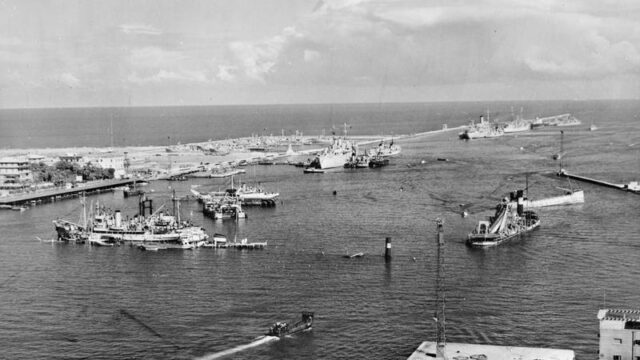
October 29, 1956, 70 years ago: On the orders of President Gamal Abdel Nasser, Egypt closes the Suez Canal, triggering a crisis that could have blown up into World War III.
Israel considered this an act of war, and invaded on October 29, with the primary objective of re-opening the Straits of Tiran and the Gulf of Aqaba. After issuing a joint ultimatum for a ceasefire, on October 31, Great Britain and France joined the Israelis in an attempt to depose the Egyptian dictator, and regain control of the Canal.
However, President Dwight D. Eisenhower refused to take sides, hoping that isolating Britain and France would prevent a wider war, which, at worst, bring the Soviet Union into it on Egypt's side, thus meaning World War III; and, at the least, would unduly affect Israel. "Ike" turned out to be right, and Britain and France withdrew on November 7, ending the crisis. The Canal reopened on April 24, 1957.
This is often seen as the end of Britain and France as true world powers. The Suez Crisis was a major factor in both Anthony Eden's resignation as Prime Minister of Britain, which occurred on January 9, 1957, a little over 2 months later; and in the fall of France's Fourth Republic, and its replacement with the Fifth Republic, in 1958.
But stuff like this is why the rest of the Middle East doesn't trust Israel. Since 1974, even though it is on the continent of Asia, Israel's national sports teams have been denied entry into Asian tournaments, because Muslim countries in Asia refuse to allow Israeli athletes onto their soil. Since 1992, they have competed in European tournaments.
The Suez Crisis was a huge regional boost for Nasser. A key figure in the coup that overthrew King Farouk in 1952, he set the standard for Middle East dictators to follow, with his cult of personality, his prominent mustache, and his willingness to wear whatever was required for the occasion, be it business suit, military uniform or religious attire.
But he lost the next war with Israel, the Six-Day War of June 1967. And his health was poor: He was a heavy smoker, and by this point had arteriosclerosis and diabetes. He died in 1970, only 52 years old. He was succeeded by his Vice President, Anwar Sadat, who would launch yet another war against Israel in 1973, lose it, and then do something unthinkable to Nasser: Make peace.
Also on this day, NBC debuts its new evening news program, The Huntley-Brinkley Report. With the Suez Crisis beginning that day, the Hungarian Revolution ongoing, and a Presidential election campaign entering its final stages, the timing was excellent. In other words, it could be said that this was one of those days where "everything happened."

Including the birth of Wilfredo Gómez. The Puerto Rican boxer known as "Bazooka" was the Super Bantamweight Champion from 1979 to 1983, the Featherweight Champion in 1984, and the Super Featherweight Champion in 1985 and 1986. He died on October 10, 15 days ago, at the age of 69.

How Long It's Been: Milwaukee Won a World Series

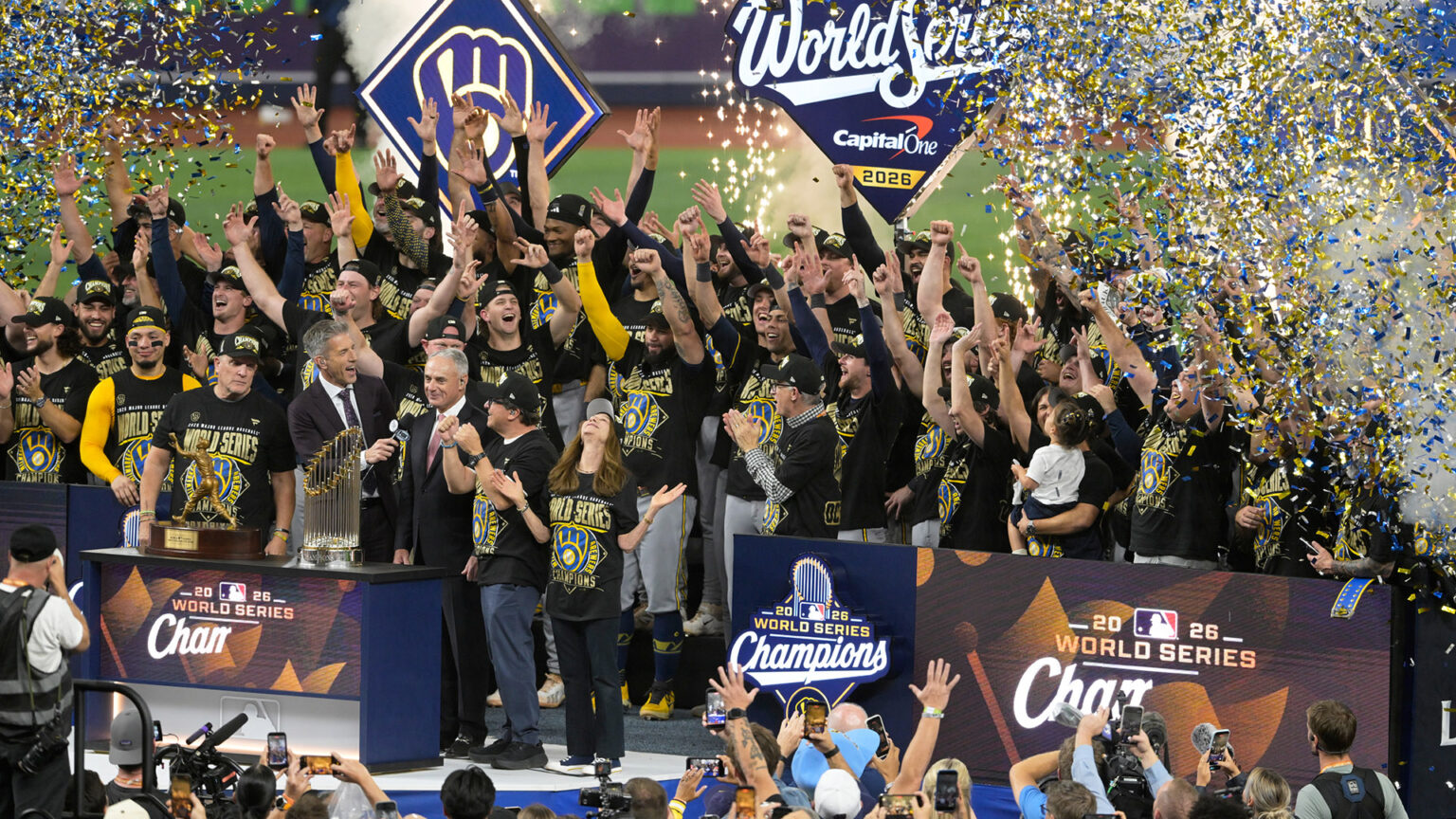
The Milwaukee Brewers have won the 2026 World Series. It seems beyond doubt that they were deserving, that they were the best team in baseball all season long.

It was the 1st World Series win in franchise history. They were founded in 1969 as the Seattle Pilots of the American League and its newly-created Western Division, were moved to Milwaukee during Spring Training 1970, were moved to the AL Eastern Division in 1972, won their only previous Pennant in the AL in 1982, were moved to the newly-created AL Central Division in 1994, were moved to the National League Central Division in 1998, and now have finally won the whole thing.

The Atlanta Braves played in Milwaukee from 1953 to 1965. They fell just short of an NL Pennant in 1956, won the World Series in 1957, won the Pennant but lost the Series in 7 games in 1958 (in both cases, against the Yankees), lost a Playoff for the Pennant in 1959, and had close calls in 1960, 1961 and 1964, before declining attendance led the, to seek allegedly greener pastures. The Chicago White Sox played a few "home games" at Milwaukee County Stadium in 1968 and 1969, before the Brewers arrived.

The last time Milwaukee won it all?

October 10, 1957: Game 7 of the World Series. Warren Spahn, the only remaining Brave from the 1948 Boston Pennant winners, is the intended starter for the Milwaukee Braves, but he's got the flu. So manager Fred Haney turns to Lew Burdette on 2 days' rest.

Lew comes through, notching his 3rd win and 2nd shutout of the Series, as the Braves beat the Yankees 5-0. A 4-run 3rd inning does the job, including a double by Eddie Mathews, followed by a single by Hank Aaron. The last out, in front of a stunned 61,207 at Yankee Stadium, is Skowron grounding to Mathews, who steps on 3rd base for a force play.

It was stunning because most people outside the Upper Midwest -- the Braves' "territory" at the time included Wisconsin, the Upper Peninsula of Michigan, and States that would later belong to the Twins, such as Minnesota, North Dakota, South Dakota and even northern Iowa -- didn't give the Braves a chance. Some Yankees had actually called Milwaukee "Bushville" for the way they'd reacted to their team, after having been a minor-league town for half a century.

Amazingly, considering how long their careers lasted, this was the only World Championship won by either Aaron or Spahn. But it was the 2nd for Red Schoendienst, Del Rice and Nippy Jones, who had been on the 1946 Cardinals. And Mathews would win another, closing his career with the 1968 Tigers.

There are 3 players still alive from the '57 Braves: Shortstop Félix Mantilla, outfielder John "Thumper" DeMerit, and pitcher Taylor "T-Bone" Phillips.

It took the City of Milwaukee 69 years, and 18 days, to win another World Series. How long has that been?

*

The Brooklyn Dodgers had just announced their move to Los Angeles; the New York Giants, to San Francisco. There were, as yet, no New York Jets, or Islanders, or New Jersey Devils, or Nets in any part of the Tri-State Area.

There was a Major League Baseball team in Kansas City, but it wasn't the Royals, it was the Athletics. Prior to that, there were no major league teams west of St. Louis -- the Dodgers and Giants were about to change that. There were still none south of St. Louis, Cincinnati and Washington. There was a baseball team in Washington, but it was in the American League and it wasn't the Nationals, it was the Senators. And, of course, there was a team in Milwaukee, and it was in the National League, but it wasn't the Brewers, it was the Braves.

Los Angeles, San Francisco, San Diego, Seattle, Dallas, Houston, Denver, Phoenix, Seattle, Toronto, Atlanta, Miami and Tampa were all still minor-league cities. So were Oakland and Montreal, for whom big-league ball has since come and gone.

Every Major League Baseball park had lights, except Wrigley Field in Chicago. But none of them had artificial turf, or a roof, retractable or otherwise. There was still an MLB team that had never played a black player, the Boston Red Sox.

Fenway Park in Boston and Wrigley Field in Chicago are the only 2 ballparks in use in 1957 that were still in use in 2026 -- or in 2000, for that matter. The only NFL stadium still in use is Lambeau Field in Green Bay, and it had just opened, 11 days earlier. And no NBA or NHL arena in use then is still used by the team that called it home in 1957-58, although a few are still standing.

And while the Cubs were already advertising their home ground as "Beautiful Wrigley Field," hardly anybody thought of Fenway as wonderful -- mainly because every team, except for Baltimore and Milwaukee, was playing in a stadium built before World War II. Having a ballpark that opened in 1913, as Ebbets Field had, was no big deal at that time: The Red Sox, Giants, Phillies, Senators, Tigers, Chicago White Sox, Cincinnati Reds and Pittsburgh Pirates were all then playing in ballparks built that year or earlier.

Ty Cobb, Tris Speaker, Nap Lajoie, and William Jones "Boileryard" Clarke of the 1890s Baltimore Orioles were still alive. So was at least 1 player from every team that had ever won the World Series, except for the 1905 New York Giants, whose last survivor, Bill Dahlen, had died in 1950. He, Hugh Duffy, Cy Young, Connie Mack and Honus Wagner had only been dead for a few years.

The defining baseball stars of my childhood? Carl Yastrzemski had just arrived at the University of Notre Dame. Pete Rose and Willie Stargell were in high school. Tom Seaver, Rod Carew and Steve Carlton were in junior high. Reggie Jackson, Thurman Munson, Johnny Bench, Nolan Ryan, Carlton Fisk and Mike Schmidt were in grade school. George Brett was in kindergarten.

None of the other New York Tri-State Area managers and head coaches had yet been born. Even among the teams' owners, the Mets' Steve Cohen was 1 year old, the Giants' John Mara was about to turn 3 and Steve Tisch was 8, the Jets' Woody Johnson was 10, the Knicks' and Rangers' James Dolan was 2, and the others weren't born yet.

There was an NFL team in Baltimore, but it wasn't the Ravens. It was the Colts, and they had yet to win a title. Few people outside Maryland had yet heard of their 2nd-year quarterback, Johnny Unitas. The NFL had already expanded to the West Coast, but not yet to the South, including Texas. Iconic teams such as the Dallas Cowboys, Oakland Raiders, Miami Dolphins and Denver Broncos did not yet exist. There were 2 teams in Chicago -- the Cardinals not yet having moved to St. Louis, let alone Arizona -- and, as I pointed out earlier, one in New York, the Giants.

The defending champions of the NFL were the Giants. The team that would win the NFL Championship in 1957 was the Detroit Lions -- who, since then, not only haven't won another title, but only once in those 55 years have they even gotten to the round of 4 (losing the 1991 NFC Championship Game 51-10 to the Washington Redskins).

In the NBA, the Boston Celtics had just won their 1st Championship. In the NHL, it was the Montreal Canadiens, and their star Maurice Richard was mere days away from becoming the 1st NHL player with 500 goals -- today, there are 42 players who have done that, 27 of them having exceeded the Rocket's former record of 544.

Wilt Chamberlain was starting his junior year at the University of Kansas, having gotten them to the National Championship game the previous spring, losing in triple overtime to North Carolina. Joe Namath had just started high school. Walt Frazier was in junior high school. Bobby Orr was in grade school. So was Kareem Abdul-Jabbar, and he was still Lew Alcindor. Lawrence Taylor, Magic Johnson, Larry Bird, Michael Jordan, Wayne Gretzky, Mario Lemieux, Patrick Roy, Steve Yzerman, Scott Stevens and Martin Brodeur weren't born yet.

The Heavyweight Champion of the World was Floyd Patterson. Two months earlier, he had defended his title at the Polo Grounds, knocking out Tommy Jackson. Muhammad Ali was 14 -- and he was still Cassius Clay. Mike Tyson, like Patterson a Brooklynite trained by Cus D'Amato, wasn't born yet.

The Olympic Games had never yet been broadcast on American television. They have since been held in America 5 times, Japan 4 times; Canada, France and Italy 3 times; twice each in Austria, Russia and Korea; and once each in Mexico, Germany, Bosnia, Spain, Norway, Australia, Greece, China and Britain.

Real Madrid of Spain had recently won the European Cup, beating Fiorentina of Florence, Italy, 2-0. The World Cup has since been held in Mexico and Germany twice, and once each in America, England, Sweden, Chile, Argentina, Spain, Italy, France, Japan, Korea and South Africa.

Manchester United, led by manager Matt Busby's "Busby Babes," won the Football League title, but were denied "The Double" in the FA Cup Final, when Birmingham-based Aston Villa beat them 2-1 when United goalkeeper Ray Wood was injured, and replaced by centreback Jackie Blanchflower, brother of Tottenham captain Danny. There were  no substitutions allowed in those days, so United played from the 6th minute on with 10 men, until Wood, broken cheekbone and all, returned to the goal for the last 7 minutes (which was allowed under the rules of the time).

Villa haven't won the Cup since. United would make it to the next season's Final, but only after the greatest tragedy any British soccer team has ever suffered to its organization. (Not to be confused with a disaster in the stands.)

There were only 48 States: Alaska and Hawaii were both within 2 years of Statehood. There were then 22 Amendments to the Constitution of the United States. The Civil Rights Act of 1957 had just been passed, but segregation and enforced prayer in public schools were still legal. There was no Voting Rights Act, no Medicare, no Medicaid, no Fair Housing Act, no Environmental Protection Agency, no Title IX, and no legalized abortion. Gay rights? Seriously? Rock Hudson, Montgomery Clift, Tab Hunter and Richard Chamberlain were jammed into the closet.

The President of the United States was Dwight D. Eisenhower. Richard Nixon was Ike's Vice President. Herbert Hoover, Harry Truman, and Eleanor Roosevelt were still alive -- Grace Coolidge had died a few weeks earlier. John F. Kennedy and Lyndon Johnson were in the U.S. Senate, and Gerald Ford was in the U.S. House of Representatives.

Jimmy Carter was running a peanut farm, George H.W. Bush an oil company, and the one and only film that co-starred Ronald Reagan and his wife, then still billed as Nancy Davis, had recently premiered: Hellcats of the Navy. Neither Carter, nor Reagan, nor Bush had ever yet run for office. Bush's son was 11. So was Bill Clinton. So was Donald Trump, and he hasn't matured since. Joe Biden was about to turn 15. Barack Obama wasn't born yet.

The Governor of the State in question, Wisconsin, was Vernon W. Thomson. The current Governor, Tony Evers, was about to turn 6. The Mayor of Milwaukee was Frank P. Ziedler -- a Socialist, elected and re-elected during the height of the Cold War. The current Mayor, Cavalier Johnson, wasn't even born yet the last time the Brewers won the Pennant. 

The Governor of the State of New York was Averell Harriman. The Governor of New Jersey, about to be re-elected was Robert Meyner. The Mayor of the City of New York was Robert F. Wagner Jr., who somehow got re-elected a few weeks later, despite losing 2 Major League Baseball teams.

Lester Pearson, Secretary of State of Canada, was just awarded the Nobel Peace Prize, for his efforts to end the previous year's Suez Canal crisis. In 1963, he would become his country's Prime Minister. The current Prime Minister was John Diefenbaker; of Britain, Harold Macmillan. Queen Elizabeth II was the monarch of both nations. She was only 31 years old at the time.

The Pope was Pius XII. The current Pope, Leo XIV, was then Robert Francis Prevost, and was 2 years old. There have since been 13 Presidents of the United States, 17 Prime Ministers and 2 monarchs of Britain, and 8 Popes.

There was some dispute as to whether, 92 years after the surrender at Appomattox Court House, there were still any surviving veterans of the American Civil War. Albert Woolson, the last Union veteran, had died in 1956. But so many Confederate records were lost, no one was sure how many of their veterans were left. John B. Salling and Walter W. Williams claimed to be surviving veterans, and when Williams died on December 19, 1959, 9 months after Salling, he was hailed as the last Civil War veteran. Who the last Confederate veteran was many never be known for sure.

There were surviving veterans of America's Indian Wars, the Anglo-Egyptian War of 1882, the Anglo-Afghan War of 1878-80, and the Mahdist War of 1882-99. Laura Bullion, a member of Butch Cassidy's Wild Bunch, was still alive. So was John Henry Turpin, the last survivor of the sinking of the USS Maine in 1898. So was Raymond Kaighn, who had played in the 1st basketball game in 1891.

Major novels of 1957 included Letter from Peking by Pearl S. Buck, The Wapshot Chronicle by John Cheever, The Guns of Navarone by Alistair MacLean, The Sandcastle by Iris Murdoch, Dr. Seuss' classics The Cat in the Hat and How the Grinch Stole Christmas, Ian Fleming's James Bond story From Russia with Love, and On the Road by Jack Kerouac, the defining novel of The Beat Generation. It had been published on September 5, 1957, just 35 days before the Milwaukee Braves' title win.

Howl and Other Poems by Allen Ginsberg, Kerouac's close friend and fellow Beat, had gone on trial for obscenity. I can see how it would be considered obscene. But, by far, the most obscene book of 1957 was Atlas Shrugged, published the exact same day the Braves won the Series, written by Ayn Rand. Who was an atheist, in case you didn't know. In fact, she despised Christianity, because of Jesus' message of helping the poor and the sick. Didn't stop her from accepting Social Security when she got old, though. "Who is John Galt"? An economic terrorist.

Only the preceding year had C.S. Lewis finished his Chronicles of Narnia series, and J.R.R. Tolkein his Lord of the Rings series. Ernest Hemingway, William Faulkner and John Steinbeck were still alive and writing novels. J.D. Salinger hadn't yet dropped out of the public eye, while Thomas Pynchon hadn't yet entered it or dropped out of it.

The fiction careers of Norman Mailer, James Baldwin, Kurt Vonnegut and Truman Capote were well underway. Joseph Heller had seen chapters of Catch-22 serialized, but the entire novel wouldn't be published until 1961. John Updike and Ken Kesey had not yet been published. Maya Angelou had just entered pop culture -- as a singer, having recorded her 1st album, a collection of calypso songs.

Anne Rice was in high school. Stephen King and Tom Clancy were 10 years old. George R.R. Martin was 9. John Grisham was 2. J.K. Rowling wasn't born yet.

No one had yet heard of Holly Golightly, Harry "Rabbit" Angstrom, Atticus Finch, John Yossarian, Jean Brodie, Alex Portnoy, John Rambo, Spenser: For Hire, George Smiley, the Punisher, Rocky Balboa, T.S. Garp, Arthur Dent, Jason Bourne, Hannibal Lecter, Celie Harris, Kinsey Millhone, Jack Ryan, Forrest Gump, John McClane, Alex Cross, Bridget Jones, Robert Langdon, Bella Swan, Lisbeth Salander or Katniss Everdeen.

The superhero genre had gotten a boost, with a new version of speedster The Flash. But Stan Lee had yet to begin his Marvel Comics revolution, so, as yet, there was no Fantastic Four, Spider-Man, Hulk, Thor, Iron Man, X-Men or Daredevil.

The year 1957 was a big year for movies. It began with the death of Humphrey Bogart and ended with that of French film pioneer Charles Pathé.  But it also featured the births of Mario Van Peebles, John Turturro, Spike Lee, Paul Reiser, Daniel Day-Lewis, Judge Reinhold, Frances McDormand, Kelly McGillis, Cameron Crowe, Melanie Griffith, Denis Leary, Stephen Fry, Daniel Stern, Rachel Ward, Ethan Coen, Dolph Lundrgen, Michael Clarke Duncan, and Steve Buscemi, who will be in the aforementioned production of On the Road (but not as Kerouac/Sal Paradise or Neal Cassady/Dean Moriarty).

Gregory Peck and Lauren Bacall starred in Designing Woman, her 1st film after losing Bogie, which had nothing to do with the later TV series of a similar title. Alec Guinness and William Holden starred in The Bridge on the River Kwai, with its whistled "Colonel Bogey March" -- "DA dum... da da da DA DA DA, da da... "; Cary Grant and Deborah Kerr in An Affair to Remember; Jerry Lewis in his 1st film without Dean Martin, The Delicate Delinquent; Spencer Tracy and Katharine Hepburn in Desk Set; Rock Hudson in a film version of Hemingway's A Farewell to Arms; Dorothy McGuire and Fess Parker in Old Yeller; Doris Day and John Raitt (Bonnie's father, who'd been in the original Broadway version) in The Pajama Game; and Grant, Frank Sinatra, and, in her big break as far as the U.S. was concerned, Sophia Loren in The Pride and the Passion.

Andy Griffith got his big break in A Face in the Crowd, in which he played the kind of character that Andy Taylor would have told Opie to stay away from -- and Ben Matlock never would have defended.

Gunfight at the O.K. Corral, a stylized version of the 1881 Arizona shootout with no pretense of accuracy, featured Burt Lancaster as Wyatt Earp, Kirk Douglas as Doc Holliday, future Star Trek doctor DeForest Kelley as Morgan Earp, Jack Elam as Tom McLowery, and a young Dennis Hopper as Billy Clanton.

Can you imagine Tony Randall and Jayne Mansfield together? In 1957, they were, in Will Success Spoil Rock Hunter? Baseball star Jimmy Piersall's book Fear Strikes Out was adapted into a film that launched Anthony Perkins to stardom -- but playing someone mentally disturbed may have typecast him.

James Cagney played Lon Chaney Sr. in The Man of a Thousand Faces. Jimmy Stewart played Charles Lindbergh in The Spirit of St. Louis. Joanne Woodward, soon to be Mrs. Paul Newman, was in The Three Faces of Eve, although the subject of the book and film, Chris Sizemore, relapsed and would have 23 different personalities until she was finally cured. Akira Kurosawa transplanted Shakespeare's Macbeth to Japan, calling it Throne of Blood, with Japan's most popular postwar actor, Toshiro Mifune, in the role of the Scottish warlord-turned-royal usurper.

Sinatra starred in The Joker Is Wild, as Joe E. Lewis, a singer whose voice is ruined when a Mob enforcer punches him in the throat, but finds a second career as a comedian. Elvis Presley starred in Loving You and Jailhouse Rock.

And Zero Hour! starred Dana Andrews, Sterling Hayden, Linda Darnell, and football legend Elroy "Crazylegs" Hirsch. This is the film, intended to be serious, upon which the disaster spoof Airplane! was based. ("Airplane? What is it?" It's a motorized conveyance for traveling quickly through the air, but that's not important now.)

TV shows debuting for the 1957-58 season included Perry Mason, Maverick, Leave It to Beaver, Zorro, Have Gun -- Will Travel, and, in what must have been shocking for the Ike Age, the 1st version of a show revived 1985-92 and again 1999-currently: Divorce Court. And NBC introduced its Peacock logo, designed to show that the program you were watching was in color. Fat lot of good that did, as it would be another 15 years before a majority of American homes had color TV sets.

Gene Roddenberry had already begun writing for television, including episodes of Have Gun -- Will Travel. George Lucas was 13 years old. Barry Nelson, on U.S. television in 1954, was still the only man to have played a live-action James Bond. George Reeves was starring in the TV series The Adventures of Superman. Robert Lowery was the most recent live-action Batman, and that was in the 1949 serial Batman and Robin. William Shatner, Sean Connery and Roger Moore were already acting. Adam West had just appeared in his 1st film, a Boris Karloff horror film titled Voodoo Island. 

Robert Kardashian was 13 years old. Bruce Jenner was about to turn 8. The woman each would end up marrying, then named Kristen Mary Houghton, was a toddler, about to turn 2.

The Number 1 song in America was "That'll Be the Day" by the Crickets, whose lead singer was Buddy Holly. The aforementioned Elvis Presley had dominated the year: By the time it was over, he would have 4 singles -- "Too Much," "All Shook Up," "(Let Me Be Your) Teddy Bear" and "Jailhouse Rock" -- that would hold the Number 1 spot for 33 of the calendar year's 52 weeks. John Lennon and Paul McCartney had just met in Liverpool. Bob Dylan was at Hibbing High School in northeastern Minnesota. Freddie Mercury was 12. David Bowie and Elton John were 10. Billy Joel and Bruce Springsteen were 8. Michael Jackson, Prince and Madonna were born the next year.

Inflation has been such that what $1.00 would buy then, $11.91 would buy now. A U.S. postage stamp cost 3 cents, and a Subway ride in New York was 15 cents. The average price of a gallon of gas was 28 cents, a cup of coffee 32 cents, a McDonald's meal (cheeseburger, fries, shake) 49 cents, a movie ticket 61 cents, a new car $2,100, and a new house $12,220. The Dow Jones Industrial Average closed that day at 462.87.

Telephone numbers were still based on "exchanges," based on the letters on a rotary dial. So a number that, today, would be (718) 293-6000 (this is the number for the Yankees' ticket office, so I’m not hurting anyone's privacy), would have been CYpress 3-6000. There were no ZIP Codes, either. They ended up being based on the old system: The old New York Daily News Building, at 220 East 42nd Street, was "New York 17, NY"; it became "New York, NY 10017."

Computers? Get outta here! They could take up the entire side of a building. And nobody expected them to get any smaller anytime soon. Steve Jobs, Bill Gates and Tim Berners-Lee were 2 years old. The tallest building in the world was the Empire State Building in Midtown Manhattan. The idea of a telephone that you could take with you was ridiculous. Commercial photocopying was not yet possible. There were no credit cards or automatic teller machines.

There were artificial kidneys, but no artificial hearts. Transplanting a kidney was possible, but not yet a heart, a lung or a liver. There was no birth-control pill, and no Viagra.

In the early Autumn of 1957, in addition to the events previously mentioned, the Space Age began when the Soviet Union launched the world's 1st artificial satellite, Sputnik 1, sending the free world into a panic over the possibility that the Commies could now bomb us from space. (It never happened, but we didn't know that at the time.) A little later, the Soviets launched Sputnik 2, containing the 1st living space traveler, a female part-husky/part-terrier dog named Laika. The capsule was too hot, and she died from heatstroke. She was doomed anyway, as they expected her oxygen to run out after 6 days, which is what they reported as happening.

Toyota began exporting cars to America. In an unrelated story, the Ford Motor Company introduced the Edsel. It was a flop. The Mackinac Bridge in Michigan and the 1st tube of the Hampton Roads Bridge-Tunnel in Virginia opened.

West Side Story debuted on Broadway. Just off Broadway, at the Park Sheraton Hotel (now the Park Central), where The Jackie Gleason Show (including his Honeymooners sketches) was filmed, America's biggest Mob boss, Albert Anastasia, was rubbed out.

King Haakon VII of Norway, and Christian Dior, and Louis B. Mayer died. Gloria Estefan, and Fran Drescher, and comedian and Mr. 3000 star Bernard "Bernie Mac" McCullough were born.

October 10, 1957. A Milwaukee team won the World Series.

It's been 69 years, but it has finally happened again.

Wednesday, October 28, 2026

October 28, 2016: James Comey Kneecaps Hillary Clinton

October 28, 2016, 10 years ago: James Comey, Director of the Federal Bureau of Investigation, sends a letter to members of Congress, advising them that the FBI was reviewing more emails written by, and to, the Democratic Party's nominee for President, former U.S. Secretary of State Hillary Clinton. Members of Congress revealed the information to the public within minutes.

Comey's boss, U.S. Attorney General Eric Holder, could have stepped in, and reminded the country that nothing in those emails revealed any criminal activity, committed by anyone, including Secretary Clinton. So could Holder's boss, President Barack Obama, leaving office the following January 20, as he was limited to 2 terms in office. But neither did, to avoid the appearance of trying to "fix" the election -- as if Comey hadn't already tried that.

And so, "the appearance of impropriety" fed into the myth of Mrs. Clinton, and of her husband, Bill Clinton, as unethical, which the Republican Party had been pushing since he began his 1st campaign for President, 25 years to the month earlier.

It may have made all the difference in the election, throwing it to the Republicans' nominee for President: A spectacularly failed businessman with no political experience, of malignant narcissism, of disgusting racism, of unacceptable misogyny, and compromised in disastrous ways. His name was Donald Trump.

Trump won 306 Electoral Votes, Clinton 232 -- although, with "faithless electors" kicking in, it turned out to be 304-227 in Trump's favor. Trump won Michigan by less than 11,000 votes, Wisconsin by less than 23,000, and Pennsylvania by less than 45,000. Had those 3 States gone the other way, presuming no faithless electors, the Electoral Vote would have been 278-260 in Clinton's favor.

To borrow a term Trump would appreciate, given his love of the Mob: Comey kneecapped Clinton.

And how did Trump thank Comey for this? By firing him. James Comey ended up as the one figure from the 2016 Presidential election who was hated by both sides -- although, in the Republicans' case, it was for what he did after it.

*

October 28, 2016 was a Friday. Game 3 of the World Series was played, the 1st World Series game played at Wrigley Field in 71 years. The Cleveland Indians beat the Chicago Cubs, 1-0. Coco Crisp singled Michael Martínez home with the game's only run in the top of the 7th inning. Josh Tomlin, Andrew Miller (winning pitcher), Bryan Shaw and Cody Allen combined on a 5-hit shutout. But the Cubs won the World Series in Game 7. 

October 28, 1956: Elvis Presley Gets the Polio Vaccine

October 28, 1956, 70 years ago: Millions of young people's fears over getting the recently-approved polio vaccine are wiped out: Their hero got it, and he got it on the biggest show on TV.

Ed Sullivan initially said he wouldn't put Elvis Presley on The Ed Sullivan Show, because of his sexually suggestive onstage moves. But after Ed's competitor, Steve Allen, brought Elvis on, and got huge ratings, Ed realized that could no longer ignore the appeal of the man already being called "The King of Rock and Roll." As the title of one of his greatest-hits albums said, Fifty Million Elvis Fans Can't Be Wrong.

Ed would end up putting Elvis on his show 3 times. It was only on the 3rd one, on January 6, 1957, that he was famously shown only from the waist up. I have a separate entry for that post.

The polio virus had been ravaging America for years, and approximately 60,000 children were infected annually. In 1955, hope arrived with the public announcement that Jonas Salk's vaccine had been declared safe for distribution to the public.

But despite the literally crippling effects of the virus, and the promising results of the vaccination, many Americans simply weren't getting vaccinated. In fact, when Elvis first appeared on The Ed Sullivan Show, immunization levels among American teenagers were at an abysmal 0.6 percent.

You might think that the threats of death and paralysis would be enough to motivate people to get vaccinated. Yet, convincing people to get a vaccine is a challenging endeavor, as the 2020-21 COVID pandemic would later prove. Intuitively, it seems like it would be wise to have doctors and other health officials communicate the need to receive the vaccine. Or, failing that, we might just need to give people more information about the effectiveness of the vaccine itself.

Those aren't winning strategies today, and they weren't back in 1956. What did prove successful was Elvis getting the vaccine in front of millions. In fact, after he publicly did so, vaccination rates among American youth skyrocketed to 80 percent after just six months. Kids all over America were answering the vaccine with impressions of Elvis: "Well, uh, uh-huh!"

Contracting poliomyelitis as an adult, like Franklin Roosevelt did before becoming President, had been rare. But so many kids got it that it became known as "infantile paralysis." John F. Collins got it in 1955, just as the vaccine was first being released to the public, during a campaign for City Council in Boston. Having to use a wheelchair didn't stop him from being elected Mayor in 1959 and 1963.

Prominent Canadian politicians Paul Martin Sr. and Paul Martin Jr. got it separately, and survived it, the latter serving as Prime Minister from 2003 to 2006. His predecessor, Jean Chrétien (1993-2003), has physical challenges that suggest he may also be a polio survivor, although he has never claimed to be one, attributing them instead to Bell's palsy.

Jerome Felder, a polio survivor, wrote songs under the name Doc Pomus, including several of Elvis' hits. His song "Save the Last Dance for Me" was based on reality: He was unable to dance with his wife, Willi Burke, so he would take her to dances, and let her dance with anyone, as long as she came home with him. She always did, from their marriage in 1957 until their divorce in 1966.

Bill Cullen, who, between serving as host and panelist, appeared on more TV game shows than anybody, was a polio survivor. Like Elvis in his 3rd Sullivan appearance, he was usually only shown from the waist up, because he was self-conscious about his limp. Hockey star Bill Gadsby contracted the disease in 1952, but it was during the off-season, and by the start of the next season, he had recovered, and went on to be elected to the Hockey Hall of Fame. Wilma Rudolph recovered from childhood polio to win 3 Gold Medals in sprinting at the 1960 Olympics in Rome.

In a weird coincidence, Donald Sutherland, who played Hawkeye Pierce in the film version of M*A*S*H, and Alan Alda, who played the character on TV, were both polio survivors. Alda became a close friend of violinist Itzhak Perlman, who contracted the disease at age 4, and, through his television appearances, is, as of October 28, 2022, the living celebrity most visibly affected by the nearly-eradicated disease.

Other celebrities, alive as of the abovementioned date, who survived polio as children include singers Joni Mitchell, Judy Collins, Donovan and Neil Young; actors Mia Farrow and Joe Bob Briggs, director Francis Ford Coppola and one of his Godfather actors, Gianni Russo; Senate Majority Leader Mitch McConnell; Olympic figure skating Gold Medalist Tenley Albright, golfer Jack Nicklaus, and Heisman Trophy winner and U.S. Army General Pete Dawkins.