
July 5, 1954, 70 years ago: Elvis Presley makes his 1st professional recording, a cover of "That's All Right" by Arthur "Big Boy" Crudup, at the Memphis Recording Service, home of Sun Records.
Yes, 70 years ago. A lifetime.
Top 10 Holiest Sites In Rock and Roll
Note that all but one of these sites is in the United States of America.
10. The Cleveland Arena, Cleveland, Ohio. Built in 1937, it was home to various professional sports teams, including serving as the original home of the NBA's Cleveland Cavaliers from 1970 to 1974.

On March 21, 1952, it was the site of the Moondog Coronation Ball, considered the first rock and roll concert, organized by disc jockey Alan Freed. The concert was shut down after the first song by fire authorities due to overcrowding. It was estimated 20,000 people were in the arena or trying to enter it, when the capacity was roughly half that.
Although the 1988 film Heartbreak Hotel, starring Keith David as Elvis, depicts a 1972 concert at the Cleveland Arena, Elvis never performed there. He did perform at the Public Auditorium, and at the Coliseum in suburban Richfield, but never at the Arena. Nor did The Beatles, who did also perform at the Public Auditorium.
The Arena was demolished in 1977. The headquarters of the Cleveland Chapter of the American Red Cross now occupies the site. 3717 Euclid Avenue, 2 miles east of Public Square. Local bus service is available.
Honorable Mention in the same city: Because of that first concert, the Rock and Roll Hall of Fame Foundation awarded Cleveland the site for its physical location and museum. 1100 East 9th Street. It is part of the lakefront entertainment district that also includes Cleveland Browns Stadium, which was built on the site of Cleveland Municipal Stadium, part of The Beatles' 1966 tour. 100 Alfred Lerner Way, 2 blocks west, with the Great Lakes Science Center in between. All reachable by bus, and the North Coast station of Cleveland's rapid-transit rail system.
WJW, with Freed from 1951 to 1954, operated out of what's now the National City Bank Building, 619 Euclid Avenue, downtown.
9. Yasgur's Farm, Bethel, New York. The dairy farm had a natural bowl, making it as close to an ideal amphitheatre location as the promoters of the Woodstock Music & Art Fair, already denied a permit by the Town of Woodstock itself, were going to get. The Museum at Bethel Woods is on the site, and pays tribute to the festival of August 15 to 18, 1969.

200 Hurd Road, 105 miles northwest of Midtown Manhattan. You'd have to drive: The closest public transportation is bus service to Monticello, 13 miles away. At least, unlike that weekend, the New York State Thruway is unlikely to be closed, man.
The actual Town of Woodstock is about 60 miles to the northeast. Another 5 miles to the northeast of that is "Big Pink," the house where Bob Dylan convalesced from his 1966 motorcycle crash, and where The Band recorded, both with and without him. 56 Parnassus Lane, Saugerties, New York, 108 miles north of Midtown Manhattan. Again, forget about public transit.
8. The Fillmore, San Francisco, California. There were 2 separate venues used by promoter Bill Graham to show off the psychedelic sound of the City By the Bay. The original, built in 1912 as Majestic Hall, became the Fillmore Auditorium in 1954. Graham staged shows there from December 1965 to July 1968.

He moved to the former El Patio Ballroom, because it was twice as large (3,000 seats) and, in his opinion, in a better neighborhood. He renamed it the Fillmore West, as he was now operating a Fillmore East in New York. He closed this venue on the 4th of July 1971, leading singer Don McLean to write, "I went down to the sacred store, where I'd heard the music years before, but the man there said the music wouldn't play."
Since 2007, the original Fillmore has been operated by Live Nation. 1805 Geary Blvd. The Fillmore West became an auto dealership, but was renovated in 2018 and turned back into a music venue. 10 South Van Ness Avenue.
Honorable Mention in the same metropolitan area: Golden Gate Park, on the west side of the city, was the home of the Human Be-In in 1967, and other Hippie-related events. The Park includes Kezar Stadium. Now a 10,000-seat high school football stadium, there was previously (1925-1989) a 60,000-seat stadium on the site. The original home of the NFL's San Francisco 49ers, it hosted the SNACK Benefit in 1975. 670 Stanyan Street.
Stanyan Street is the eastern edge of Golden Gate Park. Haight Street extends eastward from the park. Four blocks to the east is the intersection of Haight and Ashbury Street, which became the center of the Hippie community. 1500 Haight, and 600 Ashbury.
The Cow Palace, formerly a nickname for the Grand National Livestock Pavilion, has been the Bay Area's main concert venue since it opened in 1941. It's also a former home of the NBA's Golden State Warriors and the NHL's San Jose Sharks. 2600 Geneva Avenue in Daly City, just south of the City Line.
7. Gold Star Studios, Los Angeles, California. From 1950 to 1984, this place, owned by David S. Gold and Stan Ross -- named for GOLD and STA(n) R(oss) -- saw the recording of enough hit records to fill a jukebox.
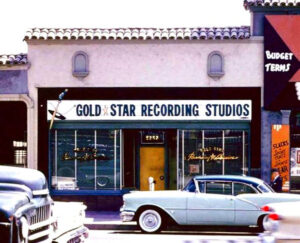
The studio was renowned for its unique custom-designed recording equipment and its echo chambers, all designed and built by Gold, utilized heavily by producers, most notably Phil Spector for his "Wall of Sound" (and, since Sonny Bono was one of his musicians, Sonny & Cher recorded there), and by Brian Wilson for the Beach Boys' hits. Also recorded there: "Summertime Blues" by Eddie Cochran; "Tequila" by The Champs, "The Chipmunk Song," "Windy" by The Association, and "Drift Away" by Dobie Gray. 6252 Santa Monica Boulevard, in the Hollywood area.
Honorable Mention in the same metropolitan area: I've got to mention the studios of the "Big Three" networks. NBC: 3000 W. Alameda Avenue, Burbank, home to Rowan & Martin's Laugh-In, Elvis Presley's 1968 "Comeback Special," and, from 1972 to 2014, The Tonight Show. CBS: 7800 Beverly Blvd., Hollywood. ABC: 4151 Prospect Avenue, Hollywood, home to American Bandstand from 1964 to 1989.
The Avalon Hollywood was known as the El Capitan Theatre in 1952, when Richard Nixon made his "Checkers Speech" there. From 1964 to 1970, it was known as the Hollywood Palace, and ABC taped The Hollywood Palace there, as their West Coast, Saturday night, previously-recorded answer to CBS' East Coast, Sunday night, live Ed Sullivan Show. 1735 N. Vine Street, just a mile south of the site of Gold Star.
The Hollywood Bowl has been a major concert venue since it opened in 1922, including The Beatles playing there in 1964 and 1965. 2301 N. Highland Avenue.
And speaking of Bandstand...
6. ABC Studio, Philadelphia, Pennsylvania. The Alphabet Network's ABC affiliate, Channel 6, WFIL from 1947 to 1971, and WPVI since, taped American Bandstand at this studio from 1952 to 1964, just a few weeks after moving from every Monday to Friday afternoon to Saturday afternoons. The building is still there, at 4548 Market Street, although Channel 6 has moved most of its operations out to City Line Avenue, near the campus of St. Joseph's University.

Honorable Mention in the same metropolitan area: Sigma Sound Studios was the home of "The Sound of Philadelphia," produced by Philadelphia International Records, the music empire built in the late 1960s and cranking out a bunch of hits in the 1970s, led by songwriters Kenny Gamble & Leon Huff. Opening in 1968, the building closed in 2014, and the current plan is to turn it into residential use. 212 N. 12th Street.
The Spectrum was the site of many big concerts from its 1967 opening until its 2010 closing. A smaller venue named Xfinity Live! is now on the site. 1100 Pattison Avenue, across from Citizens Bank Park.
The Convention Hall of the Philadelphia Civic Center, built in 1931, was home to the Philadelphia Warriors from 1952 to 1962, the 76ers from 1963 to 1967, several political conventions (Democratic and Republican), and a few major concerts, including both the Beatles and the Stones on early tours. Torn down in 2005, the Perelman Center for Advanced Medicine, part of the University of Pennsylvania Hospital complex, is on the site now. 3400 Civic Center Blvd.
John F. Kennedy Stadium, formerly Municipal Stadium, built in 1926, hosted The Beatles in 1966, the U.S. version of Live Aid in 1985, and many other concerts before it was closed for safety reasons in 1989, and demolished in 1992. The new arena for the 76ers and the Flyers, currently named the Wells Fargo Center, is on the site now. 3601 S. Broad Street. From 1971 to 1992, Veterans Stadium, The Spectrum and JFK Stadium were all in a line, north-to-south. All have since been replaced.
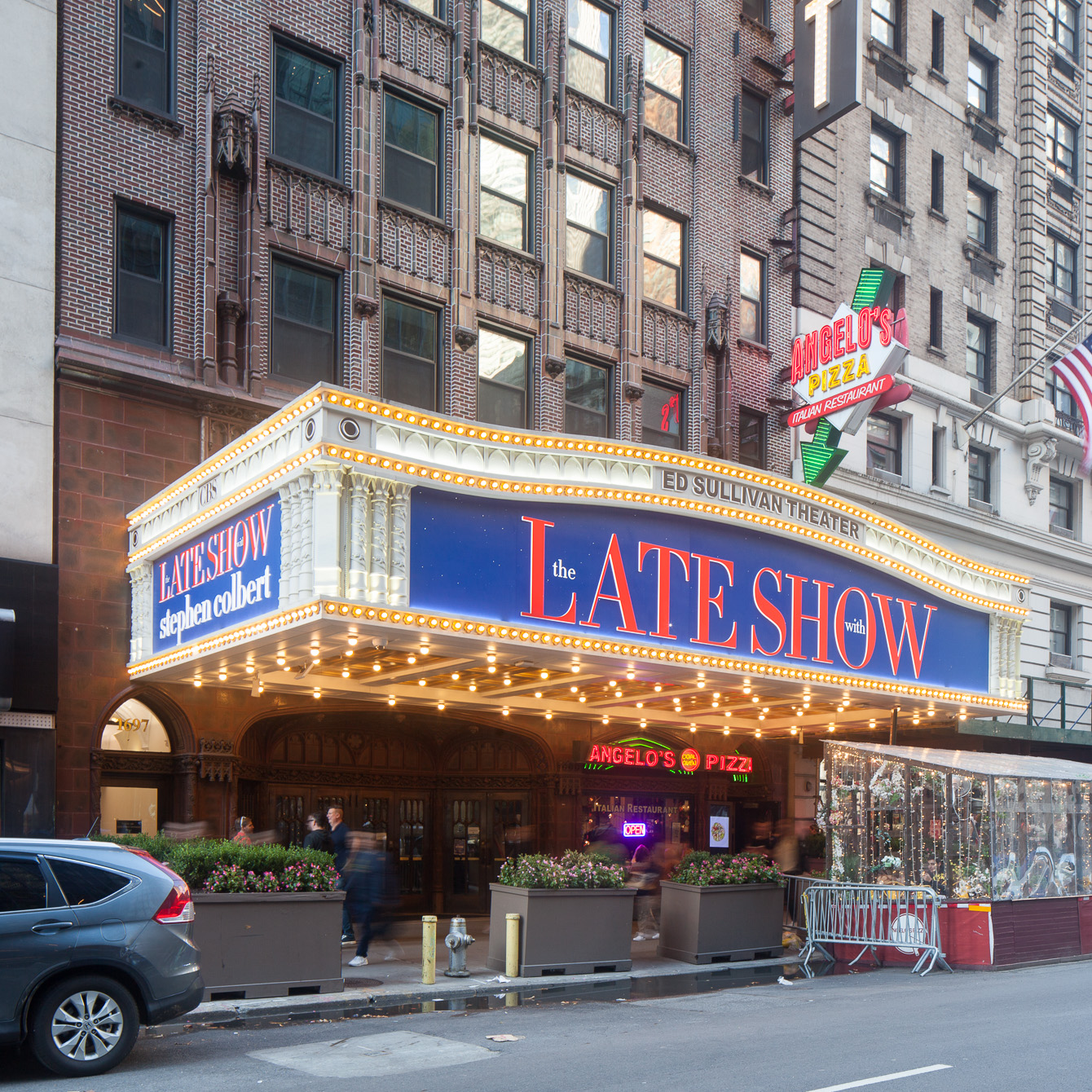
5. The Ed Sullivan Theater, New York, New York. The Ed Sullivan Show aired on CBS from 1948 to 1971, at the venue known as CBS Studio 50 until 1967. Ed was progressive in some ways, willing to air rock and roll acts, and black performers of all kinds, when most variety-show hosts wouldn't.
Ed would be best known for airing the 1st live U.S. performance of The Beatles on February 9, 1964. He also helped to humanize Elvis Presley in 1956 and 1957. Controversial performances would be put on by Bo Diddley in 1955, Buddy Holly in 1958, and The Rolling Stones and The Doors in 1967. 1697 Broadway, between 53rd and 54th Street in Midtown Manhattan. It now hosts The Late Show with Stephen Colbert.
Honorable Mention in the same city: RCA Studios, 155 East 24th Street, in the Gramercy Park neighborhood of Manhattan. Not only were some of Elvis Presley's earliest hits recorded here, but so were the following: The 1st jazz recording, "Livery Stable Blues" by The Original Dixieland Jazz Band in 1917; Hoagy Carmichael's original 1930 version of "Georgia On My Mind"; Artie Shaw's 1938 version of "Begin the Beguine"; Glenn Miller's recordings of "In the Mood" and "PEnnsylvania 6-5000"; and the Isley Brothers' original 1959 version of "Shout." A rather ordinary-looking apartment building is there now.
The Pythian Temple, at 135 West 70th Street, between Columbus (9th) Avenue and Broadway, on the Upper West Side of Manhattan, was where Bill Haley & His Comets recorded "Rock Around the Clock" for Decca Records in 1954. The building is still there, but has been converted into condominiums, as "The Pythian."
Columbia Studios, 799 7th Avenue at 52nd Street, in the Theater District. It was the recording site for Bob Dylan, Simon & Garfunkel, and Billy Joel. It was demolished in 1983, and the Equitable Building went up on the site.
The Apollo Theater, 253 West 125th Street, in Manhattan's Harlem. If James Brown's 1962 show, recorded for his album Live at the Apollo, was the only rock and roll (or rhythm & blues) show held there, that would be enough to include it here.
Shea Stadium, where stadium concerts as we know them were invented, by The Beatles, on August 15, 1965. Other notable shows: Grand Funk Railroad in 1971, The Who with The Clash as the opening act in 1982, The Police in 1983, The Rolling Stones in 1989, Elton John and Eric Clapton in 1992, and Billy Joel playing the last show there in 2008.
The Fillmore East, 105 2nd Avenue, at East 6th Street. Formerly part of the Yiddish theater circuit, Bill Graham staged concerts there from March 8, 1968 until June 27, 1971. A bank is on the site now.
4. Chess Records, 2120 South Michigan Avenue, Chicago, Illinois. Not just home to Chuck Berry and Bo Diddley laying a big part of the foundation of rock and roll, but also to blues legends Muddy Waters (McKinley Morganfield), Howlin' Wolf (Chester Burnett) and Willie Dixon. One of the Stones' early songs was an instrumental titled "2120 South Michigan Avenue."

Honorable Mention in the same city: The site of Comiskey Park, site of a 1965 Beatles concert, and "Disco Demolition Night" in 1979. 324 West 35th Street, across from the current home of the Chicago White Sox, now named Guaranteed Rate Field, at 333 West 35th.
3. Hitsville U.S.A., 2648 Berry Gordy Jr. Boulevard (West Grand Boulevard), Detroit, Michigan. It's where Gordy established "the Motown Sound." Now a museum.

Honorable Mention in the same city: Pretty much every place the NBA's Pistons and the NHL's Red Wings played hosted big concerts. The Olympia Stadium, at 5920 Grand River Avenue, is gone now. So is the Joe Louis Arena, 19 Steve Yzerman Drive, on the riverfront. But next-door to the site of The Joe, Cobo Hall, now Huntington Place, still stands, at 1 Washington Blvd. In suburban Royal Oak, the Royal Oak Music Theatre opened in 1928, and has been a rock landmark since 1976. 318 W. 4th Street.
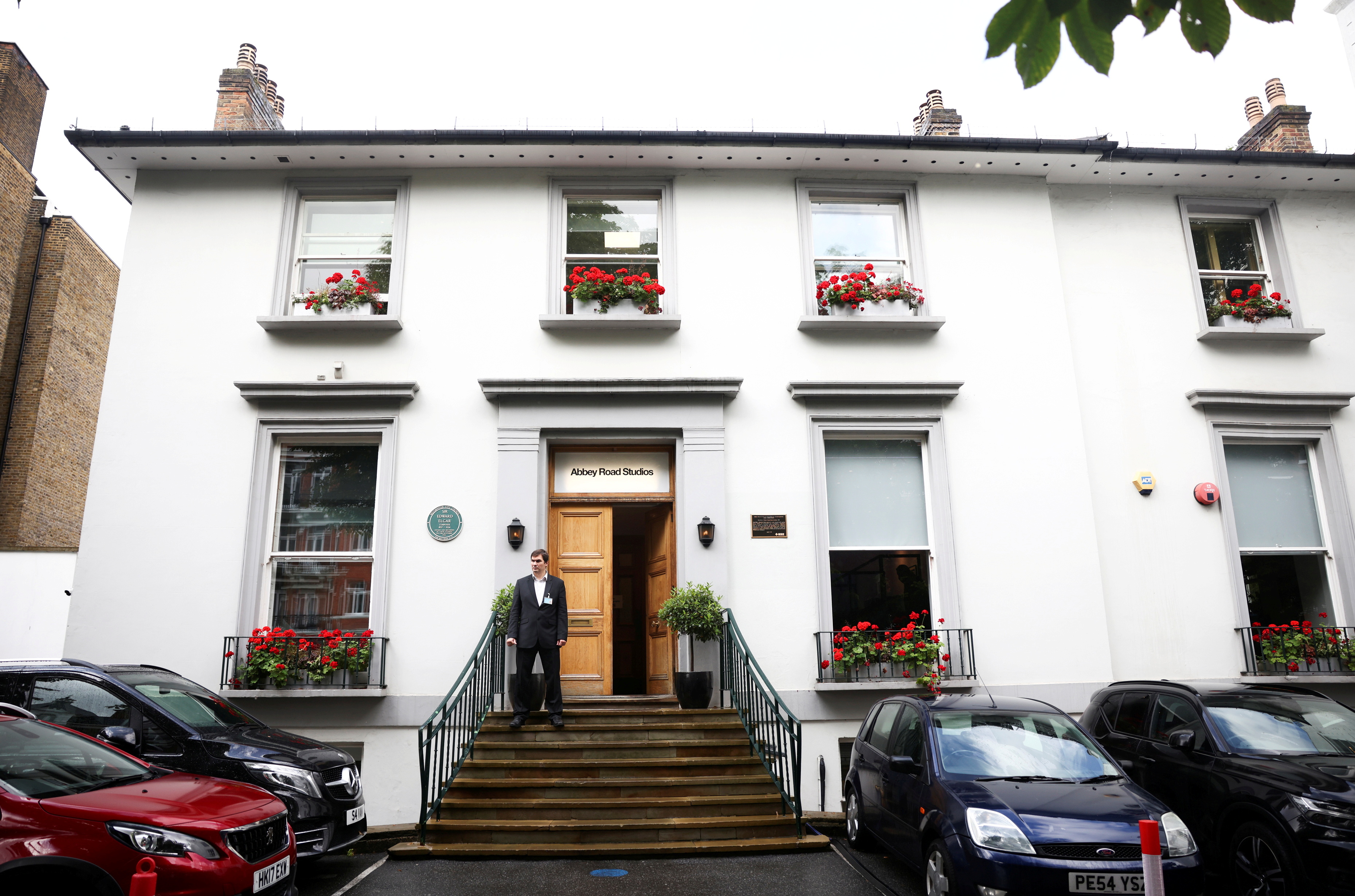
2. Abbey Road Studios, 3 Abbey Road, London, England. Where The Beatles recorded. The crosswalk from the cover of the Abbey Road album is right there, in front of Abbey House, at 1A Abbey Road.
Honorable Mention in the same city: Marylebone Station, where the opening scene of A Hard Day's Night was shot, Melcomb Place at Harewood Avenue; the Royal Albert Hall, Kensington Gore; Wembley Stadium. The Scala Theatre, site of the TV studio at the end of A Hard Day's Night, was at 21 Tottenham Street, but was demolished in 1969.
But rock and roll was invented in America, if not (quite) at the location I'm about to mention, so I had to choose an American location for Number 1:
1. Sun Records, 704 Union Avenue, Memphis, Tennessee. It's a museum now, and that's all right, now, mama, any way you do.
Honorable Mention in the same city: Graceland, Elvis' home, 3764 Elvis Presley Boulevard (Bellevue Boulevard until 1972), a.k.a. U.S. Route 51. It's in the Southaven section of town, south of downtown, actually closer to the Mississippi State Line than to downtown Memphis. Elvis bought it because it was set back from the road, into the woods, and thus isolated. It is not isolated anymore. The whole area has become like a Six Flags theme park.
American Sound Studios, 827 Thomas Street. Elvis went to this studio, run by Chips Moman, to record his big singles of his early Vegas years, including "Suspicious Minds." Others recording here include: Aretha Franklin, Bobby Womack, Wilson Pickett, Joe Tex, Merrilee Rush, The Box Tops, B.J. Thomas, and Dusty Springfield for her album Dusty In Memphis.


