Tuesday, June 30, 2026

Conservatism Is a Racist Ideology

Today, the Supreme Court of the United States upheld "birthright citizenship."

In a case abbreviated as Trump v. Barbara, the Court recognized that it is explicitly guaranteed to anyone born under the legal "jurisdiction" of the U.S. federal government by the Citizenship Clause of the 14th Amendment to the Constitution of the United States, adopted on July 9, 1868), which states: "All persons born or naturalized in the United States, and subject to the jurisdiction thereof, are citizens of the United States and of the State wherein they reside."

The vote was narrow as hell, though: 5-4. As expected, Associate Justices Sonia Sotomayor, Elena Kagan and Katanji Brown Jackson, liberals appointed by Presidents of the Democratic Party, supported birthright citizenship. But so did Chief Justice John Roberts and Associate Justice Amy Coney Barrett, both conservative Justices appointed by Presidents of the Republican Party -- including Barrett, appointed by Donald Trump.

The other four Associate Justices, all archconservatives appointed by Republican Presidents, voted against it: Clarence Thomas, Samuel Alito, Neil Gorsuch and Brett Kavanaugh.

Once again, the Supreme Court matters. Trump -- or, if something happens to him, Vice President JD Vance taking his place -- has two and a half years left in his term. And Thomas is 78 years old, Alito is 76, Sotomayor is 72, and Roberts is 71. There's a huge chance that whoever is President between now and January 20, 2029 will have to replace one of them, and a good chance that he'll have to replace at least two. The President elected on November 7, 2028 and taking office on January 20, 2029 will almost certainly inherit those new Justices, and, if not, have to replace them and the others.

Since taking office for a 2nd term as President on January 20, 2025, Donald Trump has demanded that the U.S. Supreme Court ignore this vital part of the Constitution, and declare that only children born to parents who are both citizens of the U.S. shall be recognized as citizens of the U.S.

This is anti-immigration rhetoric, aimed largely at black and Spanish-speaking people. It is racist. It is disgusting. It is immoral. It is un-American. And, while the 1st Amendment means that this shouldn't be an issue, so many people claiming it to be true also lie and say they follow Jesus, so I'm going to add this: It is un-Christian.

*

Conservatism is the ideology of racism. From 1837 onward, after the populist Andrew Jackson left office, the Democratic Party was the party of conservatism. Then, after the American Civil War, without Abraham Lincoln to keep an eye on them any longer, the members of the Republican Party saw how much money they'd made on railroads and armaments, and decided they didn't want to pay taxes on that income, and became conservative. This led to the Compromise of 1877, which ended Reconstruction, and thus ended the official move for civil rights in America, for black people and for women. (Hispanics weren't even being considered, although there were moves, even then, to limit immigration from Asia.)

So, at this point, we had two conservative parties, to the point where the Republicans threw former President Theodore Roosevelt out in 1912, when he campaigned to return to the office, on things like universal health coverage and old-age pensions -- essentially, what became Social Security.

Starting in 1932, with Franklin Roosevelt and the New Deal, the Democratic Party returned to liberalism, except for their Southern wing, which, while taking in the money from New Deal's liberal projects, remained racist and conservative.

In 1964, the outside-the-South Democrats joined with reasonable Republicans to pass the Civil Rights Act. The most conservative Republicans appealed to the Southern Democrats, and say, "You don't like it? Join us." And they did. And that's where we are now.

So when Republicans call the Democrats the party of racism and the party of the Ku Klux Klan, it's no more true today than the Republicans being the party of Lincoln. Today's racists are united in their support of the Republicans, and of Donald Trump.

And let's drop this myth of "Conservatism is opposed to big government." Conservatives have always believed in big government when it comes to fighting their enemies. Since World War II, they've never had a problem with expanding the Department of Defense, or the CIA, or the FBI. Because that involves spending taxpayers' money. The only time they want smaller government is when bigger government makes them spend more of their own money.

Monday, June 29, 2026

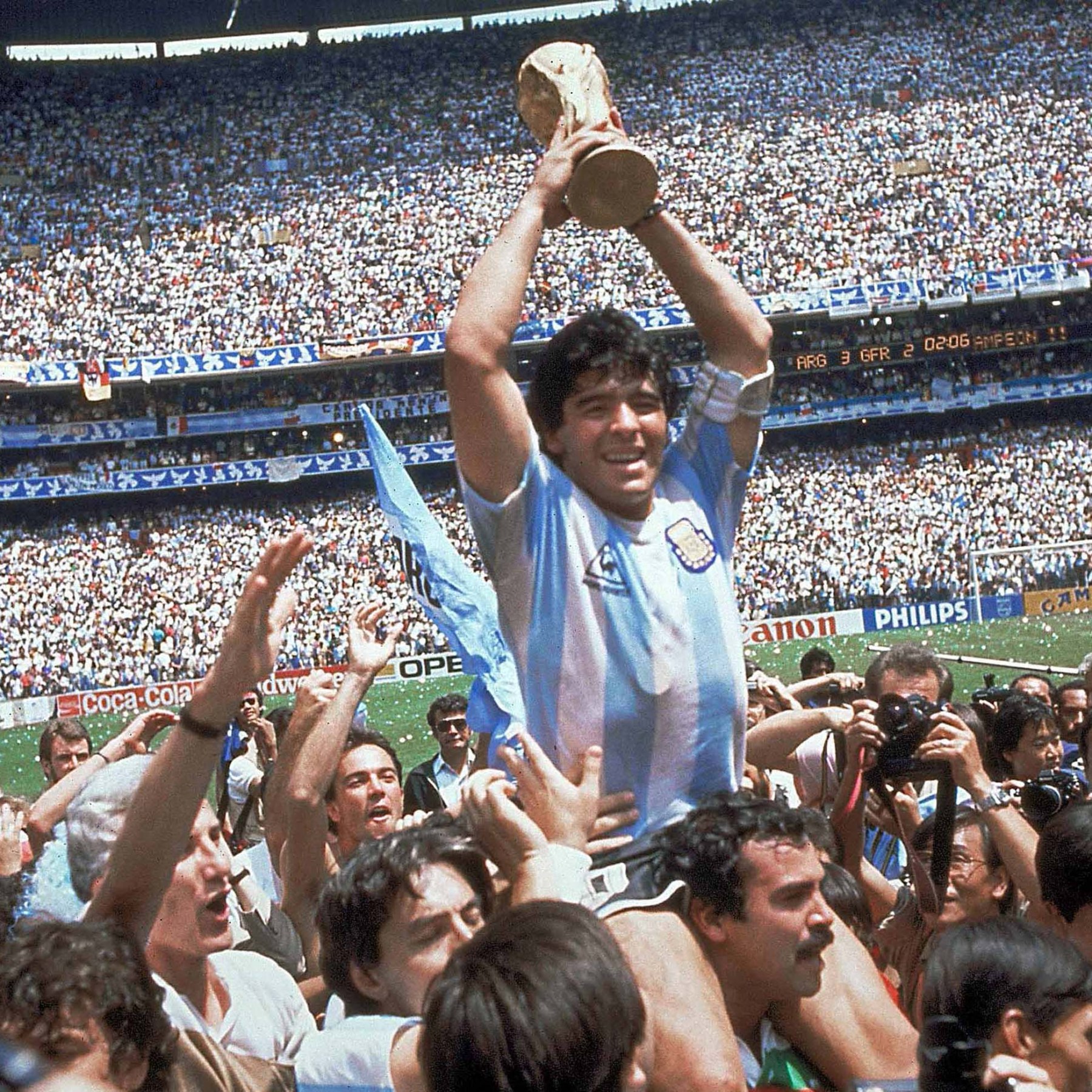
June 29, 1986: Argentina Win the World Cup Dubiously -- Again

June 29, 1986, 40 years ago: The World Cup Final is played at Estadio Azteca in Mexico City. It features perhaps the last 2 teams that most neutrals wanted to see: Argentina, 1978 winners of the World Cup and the team of Diego Maradona, whose handball gave them a win over England in the Quarterfinal; and West Germany, whose style of play is defensive-first and generally considered boring.

César Luis Menotti managed Argentina to that 1978 World Cup win. A Socialist, the opposite of his country's government at the time, he said:

There's a right-wing football and a left-wing football. Right-wing football wants to suggest that life is struggle. It demands sacrifices. We have to become of steel and win by any method... obey and function, that's what those with power want from the players. That's how they create retards, useful idiots that go with the system.

In contrast, by 1986, the ruling military junta was gone, and Argentina had a more liberal government. Its World Cup team was managed by Carlos Bilardo, a physician who had played as a midfielder who helped Estudiantes de La Plata win 3 straight Copas Libertadores (South America's version of the European Cup/UEFA Champions League) in 1968, '69 and '70. He had been a league winner with Estudiantes as a player in 1967, and as their manager in 1982.

Like Menotti, he believed in free-flowing football; and, in Maradona (who starred with Boca Juniors and Italian team Napoli), Jorge Valdano (a forward for Real Madrid, known as "The Philosopher of Football"), and Jorge Burruchaga (a midfielder who starred for Avellenada team Independiente, now with French team Nantes), he had the team for it.

Franz Beckenbauer had starred for Bayern Munich, and captained West Germany to the 1974 World Cup. Now, he was their manager, and they were not merely loaded, but fired up to win the World Cup, after losing the 1982 Final to Italy.

Bayern presented Die Mannschaft with midfielder Lothar Matthäus, and their former forward, Karl-Heinz Rummenigge, was now at Italy's Internazionale Milano, and served as the Captain. Werder Bremen produced forward Rudy Völler. Hamburger SV produced forward Felix Magath. And goalkeeper Harald Schumacher came from FC Köln in Cologne.

The Germans survived Group E, which also had Scotland, Denmark and Uruguay, whose manager, Omar Borrás, described it with a term used in the previous World Cup held in Mexico, in 1970: << Grupo de la muerte. >> "Group of Death."

NBC broadcast the game live in America. Argentina had taken a 2-0 2nd half lead, on goals by José Luis Brown of French club Stade Brestois in the 23rd, and Valdano in the 56th. Rummenigge scored in the 74th minute, and Völler scored in the 81st, and West Germany had tied the game.

No team had ever blown a 2-goal lead in a World Cup Final before, and it was just desserts for Argentina, due to Maradona's "Hand of God" in the Quarterfinal. But Burruchaga spared his homeland's blushes by scoring the winning goal in the 84th minute.

Argentina had now won 2 World Cups -- both under incredibly dubious circumstances. And least this one was won while they had a democratic government.

The teams played each other again in the 1990 Final, with Germany winning that one. It remains the only Final ever to be a rematch of the preceding World Cup's Final. A unified Germany faced Argentina in the 2014 Final, and Germany won.

Argentina won the World Cup for a 3rd time in 2022, beating France on penalties. 

June 29, 1956: The Interstate Highway System

June 29, 1956, 70 years ago: President Dwight D. Eisenhower signs the Federal-Aid Highway Act of 1956, creating the Interstate Highway System.

"Ike" had wanted such a highway system for America since the Summer of 1919, when, as a 28-year-old Lieutenant Colonel, he participated in the U.S. Army's first Transcontinental Motor Convoy across the country. The convoy left the Ellipse south of the White House in Washington on July 7, and went to Gettysburg, Pennsylvania. From there, it got on the Lincoln Highway, and went to San Francisco. But there were mudpatches that vehicles got stuck in, and bad bridges that the Army rebuilt. The convoy reached San Francisco on September 6 -- 61 days later. Ike thought that was unacceptable.

The Federal Highway System was begun in 1926, with proper paving. But Ike didn't think it was enough: He wanted highways without traffic lights, without having to go through big cities or small towns, rather providing access to local roads leading into them. As a General in World War II, he had seen the Germans' Autobahn system. In a book he wrote after leaving office, he said, "The old convoy had started me thinking about good, two-lane highways, but Germany had made me see the wisdom of broader ribbons across the land."

Ike got his bill, sponsored in the House of Representatives by George Fallon of Maryland, and in the Senate by Albert Gore of Tennessee, both Democrats.

Though Eisenhower is sometimes described as having advocated for the highways for the purpose of national defense, scholarship has shown that he said relatively little about national defense when actually advocating for the plan, instead emphasizing highway fatalities and the importance of transportation for the national economy. In the event of a ground invasion by a foreign power, the U.S. Army would need good highways to be able to transport troops and material across the country efficiently. Following the completion of the highways, the cross-country journey that took the convoy two months in 1919 was cut down to five days.

The numbered system followed a pattern: North-South highways would be odd-numbered, increasing the further East; while East-West highways would be even-numbered, increasing the further North. Thus, my home State of New Jersey has Interstates 76, 78, 80 and 95.

Three-digited highways have a system as well. If starting with an odd number, they are spurs to main highways: Thus, Interstate 195 extends east from I-95. If starting with an even number, they are "beltways," going around a major city. Thus, Interstate 278 forms the Belt Parkway around Brooklyn and Queens, with an extension into New Jersey; and Interstate 287 loops around New York City within New Jersey, before linking up with I-87, the New York State Thruway; and Interstate 295 loops around Trenton and Philadelphia.

The New Jersey Turnpike is bannered as I-95 from Exit 6 on north. But neither the Garden State Parkway nor the Atlantic City Expressway is part of the Interstate System.

While some older freeways were adopted into the system, most of the routes were completely new. In dense urban areas, the choice of routing destroyed many well-established neighborhoods, often intentionally as part of a program of "urban renewal." In the 20 years following the 1956 Highway Act, the construction of the freeways displaced over 1 million people. This resulted in new forms of racial segregation, as "the wrong side of the tracks" became "the wrong side of the freeway."

The Cross Bronx Expressway cut through Bronx neighborhoods, devastating the Borough. And the New Jersey Turnpike cut sections of Newark and Elizabeth off from the rest of those cities, hurting them badly. Both would become part of I-95. And I-676, the Vine Street Expressway, seriously messed with Center City Philadelphia.

Many of the Interstates paralleled older Federal highways. Examples: I-95, U.S. Route 1; I-87 in New York, U.S. Route 9; I-90 in New York and the Midwest, U.S. Route 20; I-84 in the Northeast, U.S. Route 6; I-5 in California, U.S. Route 101. The famous U.S. Route 66 was essentially replaced by I-10, I-15 and I-40 in California, I-40 from San Bernardino to Oklahoma City, I-44 from OKC to St. Louis, and I-55 from St. Louis to Chicago.

Many communities on Federal highways like Route 66 got bypassed, and suffered economically as a result, since people waited until the next big city to get off and eat and/or use the bathroom, or get a place to stay the night, instead of the next town coming up. Route 66 was decommissioned in 1985, although some States rebannered their sections as State Route 66. There is an Interstate 66, but it runs mainly in Washington, D.C. and its Virginia suburbs, and again from Kentucky west to Kansas.

*

June 29, 1956 was a Friday. Dominican baseball All-Star Pedro Guerrero was born. And actress Marilyn Monroe married playwright Arthur Miller. Each would end up married 3 times, and divorced 3 times. 

Yankees Swept 4 Straight In Boston

 
I was all set for a nice weekend. And then the sports happened.

The Yankees went into Fenway Park in Boston for a 4-game series. As Obi-Wan Kenobi would have said, "You will never find a more wretched hive of scum and villainy." The Yankees went in with the best record in the American League, while the Red Sox were in last place in the AL Eastern Division. Cliché Alert: In this rivalry, you can throw out the records.

On Thursday night, the Red Sox wore their usual home uniforms. Or, as Muhammad Ali would have said, "Ain't they ugly?"

It was a battle of phenom starters: Cam Schlittler for the Good Guys, Connelly Early for The Scum. Schlittler threw 92 pitches, 62 of them strikes, and got 9 strikeouts against 2 walks. And he got an RBI single from Jasson Domínguez in the 1st inning and a home run from José Caballero in the 4th, and led 2-0 going into the bottom of the 5th.

Then the game, and possibly the entire series, turned around. Cliché Alert: Walks can kill you, especially the leadoff variety. Schlittler walked Masataka Yoshida, then gave up a single to Ceddanne Rafaela. He struck Wilyer Abreu out. Then Willson Contreras hit a ball to 3rd baseman Amed Rosario, who threw it away allowing a run. Jarren Duran hit a sacrifice fly, for a 2nd run. And Caleb Durbin hit a home run, making it 4-2 Boston.

The Yankees pulled a run back in the 7th, but the Sox scored 2 more in the 8th. The Yankees made 4 errors in the game, and lost, 6-3. All 6 Boston runs were unearned.

On Friday night, the Red Sox wore their green jerseys, the same shade of green as the fencing around Fenway, including the Green Monster. It wouldn't have been so bad, if they didn't have "Red" in their name.

Will Warren started for the Yankees, and had nothing, allowing 5 runs in 5 2/3rds innings. And here are all the baserunners the Yankees got in the game: A single by Spencer Jones, that broke up a perfect game by Payton Tolle with 1 out in the 6th; back-to-back walks by Domínguez and Caballero with 2 out in the 7th; a leadoff double by Anthony Volpe, off former Yankee Tommy Kahnle, that was followed by groundouts by Jones and Austin Wells, to bring Volpe home in the 8th; and a double by Domínguez with 2 out in the 9th. Red Sox 6, Yankees 1. Pathetic.

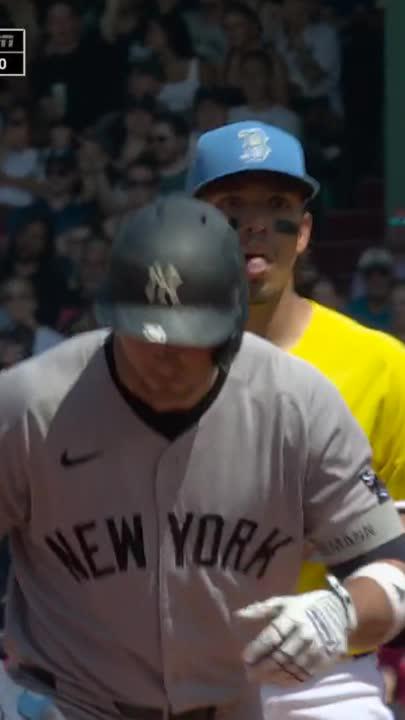
Saturday afternoon. The dreaded day game after a night game. The Red Sox wore yellow jerseys. Green, then yellow? I know the Sox played the Oakland Athletics in 3 AL Championship Series (winning in 1975, losing in 1988 and 1990), but I don't think they want to be the A's -- especially since the A's just moved again.

But the ugly uniforms worked for them. Gerrit Cole again looked like he'd been brought back from injury too soon, allowing 4 runs on 7 hits and a walk through 5 1/3rd innings. To give credit where it's due, Brent Headrick, Camilo Doval and Paul Blackburn went the remaining 3 2/3rds, allowing no runs, no hits, and just 1 walk.

Here's all the baserunners the Yankees got: A walk by Cody Bellinger to lead off the top of the 2nd; a home run by Max Schuemann, to break up a no-hitter by Jake Bennett, with 2 out in the top of the 5th; a walk by Paul Goldschmidt with 1 out in the 6th, subsequently eliminated by a double play; back-to-back singles by Rosario and Bellinger to lead off the 7th, followed by the Sox striking out the side; and a walk by Bellinger off former Yankee Aroldis Chapman with 2 out in the 9th. That's it: That's the list. Red Sox 4, Yankees 1.

The Yankees had more chances in the finale on Sunday night. Carlos Rodón started, and over 5 innings, allowed 2 runs, neither of them earned, on 1 hit and 4 walks, striking out 6. But he'd thrown 96 pitches, and, having his orders from Brian Cashman, Aaron Boone said, "Yes, sir, observing the limit, sir," and took him out. To be fair, Blackburn and David Bednar each pitched 2 scoreless innings, each allowing just 1 hit, neither allowing a walk.

But, as so often happens, a pitcher who pitched well before the Yankees, but not with them, pitched well against them. This time, it was Sonny Gray. Here's all the baserunners he allowed: A walk by Rosario, to break up a perfect game with 2 outs in the 5th; and a single by Rosario, to break up a no-hitter with 1 out in the 8th. That's when Gray was taken out: He'd thrown 97 pitches, 1 more than Rodón, and had lost the no-hitter.

So, in 3 straight games: The Yankees had no baserunners until the 6th, no hits until the 5th, and no baserunners until the 5th and no hits until the 8th. At Fenway Park. This is what happens when Aaron Judge, Giancarlo Stanton and Trent Grisham miss the series due to injury.

Finally, in the top of the 9th, with the Sox up, 2-0, Chapman did for the Red Sox what he did so often for the Yankees: He blew the save. Not that it was all his fault. Caballero singled to lead off, and stole 2nd. Chapman walked Volpe. Ben Rice flew out, and Caballero scored on a throwing error. Goldschmidt grounded into a fielder's choice, to score Volpe with the tying run. But Chapman struck Bellinger and Schuemann out to end the threat.

Top of the 10th. Ghost runner time, in this case Schumann. Rosario singled him home, and advanced to 2nd on another Sox throwing error. Oswaldo Cabrera bunted Rosario over to 3rd. Rosario scored on an Austin Wells groundout. Would 4-2 be enough to salvage the finale?

No. Boone brought Fernando Cruz in, and, Cliché Alert: He stunk up the joint. He allowed a single to Anthony Seigler, scoring ghost runner Durbin. Andruw Monasterio was sent in to pinch-run for Seigler. Yoshida hit a double to get him to 3rd. Tsung-Che Cheng hit a sacrifice fly to score the tying run. And then Duran singled Yoshida home with the tying run. Red Sox 5, Yankees 4.

Did Boone blow it by bringing Cruz in? Yes. Did he blow it by not relieving him in that inning? Probably.

But the Sox got the job done, and the Yankees didn't have the healthy hitters they needed.

*

Although the All-Star Game isn't for another 2 weeks, we are now at the halfway point of the regular season: 81 out of 162 games. The Yankees now trail the Tampa Bay Rays by 1 game in the AL East. The Toronto Blue Jays are 10 1/2 back, the Baltimore Orioles 11, and the Sox 12 1/2. Cliché Alert: In the all-important loss column, the Yankees trail by 2, the Jays by 10, and the O's and Sox each by 13.

The latest updates on major injuries:

* Trent Grisham: He is expected to get in some minor-league rehab games, and then to come back during the coming homestand, which starts tonight with 3 against the Detroit Tigers, then Thursday off, and then 3 against the Minnesota Twins. In other words, probably during the Twins half of the series, Friday through Sunday, July 3, 4 or 5.

* Ryan McMahon: Had a throat infection, and so was placed on the 10-Day Injured List. 10 days would be July 4.

* Clarke Schmidt: He "tossed a side session" on June 17. On June 19, Boone said he "is a couple of weeks away from facing live hitters." If Donald Trump had said, "in two weeks," we'd know it was full of shit. With Boone saying it, your guess is as good as his. Two weeks would be July 1. So, figure, after the All-Star Break, when the next game would be on July 19. But don't count on it.

* Aaron Judge: Boone says he "isn't expected to be ready for a re-evaluation later this week." In other words, don't expect him back before at least August 1.

* Luis Gil: Has resumed throwing, which is a good sign, but reports suggest he won't return before August 1.

* Max Fried: On June 20, Boone said  he "is expected to being facing hitters by late June or early July." Well, this is the end of June, and Fried has not begun facing any kind of hitters. This is not encouraging.

* Giancarlo Stanton: He reinjured his calf on June 11. Who knows.

June 29, 1776: The Presidio of San Francisco

The calendar year 1776 was a pivotal one on the Atlantic Coast of North America. Most Americans know that. What many may not be aware of is that it was also a pivotal year on the Pacific Coast.

June 29, 1776: El Presidio Real de San Francisco, or The Royal Fortress of Saint Francis, is established, marking the birth of what would become the City of San Francisco. It was named for St. Francis of Assisi, not St. Francis Xavier or any other St. Francis.

A "presidio," meaning a jail or a fortification, was a fortified base established by the Spanish Empire, mainly between the 16th and 18th Centuries in areas under their control or influence. The term is derived from the Latin word "praesidium," meaning protection or defenseThis may seem strange to people who think of St. Francis of Assisi as a pacifist.

In the Mediterranean Sea and the Philippines, the presidios were outposts of the Christian defense against Islamic raids. In the Americas, the fortresses were built to protect against raids by pirates, rival colonial powers, and Native Americans. Later, having gained their independence from Spain, the Mexicans garrisoned the Spanish presidios on their northern frontier, and followed the same pattern in unsettled frontier regions such as the Presidio de Sonoma in California, and the Presidio de Calabasas in Arizona.

The Presidio of San Francisco was a simple fort made of adobe, brush, and wood. It was often damaged by earthquakes or heavy rains. In 1783, its company had only 33 men. Presidio soldiers' duties were to support Mission Dolores by controlling Indian workers in the Mission and farming, ranching, and hunting to supply themselves and their families. Support from Spanish authorities in Mexico was minimal.

In 1821, Mexico became independent of Spain. The Presidio received even less support from Mexico. Residents of Alta California, which included the Presidio, debated separating from Mexico. In 1835, the Presidio garrison, led by Mariano Vallejo, relocated to Sonoma, 40 miles to the north.

In 1846, the Mexican-American War began. American settlers and adventurers in Sonoma staged the Bear Flag Revolt against Mexican rule. The U.S. Army occupied the Presidio, which began a long era of directing operations to control and protect Native Americans as headquarters for scattered Army units on the West Coast.

From 1898 to 1906, The Presidio became the nation's center for assembling, training, and shipping out forces to the Spanish-American War in the Philippine Islands and the subsequent Philippine Insurrection. President Theodore Roosevelt visited in 1903. Troops from there were instrumental in providing security and fighting fires following the earthquake of 1906.

From 1914 to 1916, General John J. Pershing served as commanding officer, a prelude to his leadership in World War I. For that war, The Presidio produced the 30th Infantry Regiment, which the French nicknamed "The Rock of the Marne" for its service at the pivotal Second Battle of the Marne in 1918.

U.S. Route 101 was extended through the Presidio with the opening of the Golden Gate Bridge in 1937 and the MacArthur Tunnel in 1940. Due to the Pacific Theater of World War II, The Presidio again became a major U.S. Army facility.

Afterward, it was responsible for all U.S. Army forces in the Western U.S., including training, supplies, and deployment. This went on to include supporting roles in the Korean, Vietnam and Persian Gulf Wars, and hosting the signing of the ANZUS Treaty between the U.S. and the Pacific nations of Australia and New Zealand. In 1994, the Army closed The Presidio, and transferred control of it to the National Park Service.

In the future imagined by the Star Trek franchise, The Presidio became the headquarters for the United Federation of Planets' Starfleet Command, including Starfleet Academy.

Also on June 29, 1776: The Battle of Turtle Gut Inlet was fought, off the coast of what is now Wildwood Crest, New Jersey. It was an important, early naval victory for the Continental Navy and the man who went on to become known as the "Father of the American Navy," Captain John Barry.

It was the first privateer battle of the War of the American Revolution, and turned out to be the only battle of that war fought in Cape May County, the southernmost County of New Jersey.

Sunday, June 28, 2026

June 28, 2001: The Kidd-Marbury Trade

June 28, 2001, 25 years ago: The New Jersey Nets trade Stephon Marbury to the Phoenix Suns for Jason Kidd. This is a classic "my headache for your headache" trade, as both had been divas unable to move their teams out of the dumps.

Marbury, the youngest of 5 brothers who had starred for Abraham Lincoln High School in the Coney Island section of Brooklyn, had played 1 season at Georgia Tech, turned pro, was drafted by the Milwaukee Bucks, and was immediately traded to the Minnesota Timberwolves. For 3 years, he underachieved with them, before being traded to the Nets. For 2 seasons at the Meadowlands, he was still an underachiever, and came to be regarded as a bad influence on the team, a "clubhouse cancer."

Kidd came out of Oakland, stayed local by going to the University of California, playing 2 years with them. He was drafted by the Dallas Mavericks, and was traded to the Suns after 2 years. He was a Rookie of the Year, an All-Star, and an NBA assists leader, but wasn't getting along with his teammates.

How did the players react to their respective changes of scenery? Marbury made an All-Star Game with the Suns, but they tired of his act after 3 lackluster seasons, and he went on to the Knicks, becoming one of the few players to mess up two teams in one market.

He last played in the NBA with the Boston Celtics in 2009 -- the year between NBA Finals appearances for them, winning in 2008 and losing in 2010. He was only 32 when he played his last NBA game. Of course, none of his highly-touted brothers played in the NBA, although a cousin, Sebastian Telfair, did. From 2010 to 2018, Marbury played in China's league, and went on to coach there.

In his 1st season with the Meadowlands team, Kidd led the Nets from a hopeless 26-56 to 52-30, their 1st Atlantic Division title, and their 1st NBA Finals. He got them another Division title and Finals berth the next season. He got them another Division title the next season. He got them to the Playoffs the next season. He got them another Division title the next season.

In other words, the Nets had done more in 5 seasons with Kidd than they had done in the previous 25 years without him. Never in the history of team sports has one man made that much difference that fast. So this may have been the most lopsided NBA trade since 1956, when the Boston Celtics traded Cliff Hagan and Ed Macauley to the St. Louis Hawks for the rights to Bill Russell.

After the 2008 season, the Nets, in the process of moving to Brooklyn, traded Kidd back to the Mavericks. Now a respected elder statesman among players, he helped them win their 1st NBA Championship in 2011. He played one more season with them, and then one last season with the Knicks, 2012-13.

He then retired, and crossed town to the Brooklyn Nets, coaching them for a season, then 4 with the Milwaukee Bucks. He won a 2nd ring as an assistant coach with the Los Angeles Lakers in 2020, and in 2021 was hired as head coach of the Mavericks. He got them to the Conference Finals in 2022 and the NBA Finals in 2024, but missed the Playoffs the last 2 years, and was fired a few days ago.

He was elected to the Basketball Hall of Fame, was named to the NBA's 75th Anniversary 75 Greatest Players, and had his Number 5 retired by the Nets.

June 28, 1976: The Mark Fidrych Game

Fidrych at Tiger Stadium, 1976.
The famous blue and orange seats
were installed the next season.

June 28, 1976, 50 years ago: America -- at least, that part of it outside the Detroit area -- gets its first good look at Mark Fidrych, on ABC Monday Night Baseball.

He took the American League by storm in 1976, and when he pitched, the Detroit Tigers, then an awful team in a suffering city, went from an average attendance of 14,000 at already-creaky Tiger Stadium to 40,000. His start on on June 28, in front of 47,855 paying customers, was a national phenomenon, and he beat the soon-to-be-Pennant-winning New York Yankees, 5-1.

He went the distance, advancing to 8-1 on the season, allowing 1 run on 7 hits. He only struck out 2 batters, but he didn't walk any. The only Yankee run came in the top of the 2nd inning, a home run by Elrod Hendricks, who was catching that day due to an injury to Thurman Munson.

The Tigers scored 2 in the 1st. Their other storybook player, the speedy ex-con Ron LeFlore, led off with a walk, and Rusty Staub hit a home run off Ken Holtzman. It was still only 2-1 Detroit into the 7th, when Aurelio Rodríguez homered. The Tigers iced the game with 2 runs in the 8th.

It wasn't just that he was talented. He was also a big character. He tried to explain that he would talk to himself on the mound, saying things like, "Settle down, you're getting too nervous." But somehow, it incorrectly got around that he was "talking to the ball," telling it where he wanted it to go, where in and around the strike zone, or, after being hit, to which fielder. He would smooth out the mound. He would walk over to an infielder who'd made a great play and shake his hand.

You see, in baseball, which has so often been culturally behind the times -- the world's 1970s were baseball's "Sixties" -- this was considered weird. What's wrong with thanking your fielder for making a great play, or fixing the mound the way you want it?

Fidrych finished the season 19-9. In all other games, the Tigers were 53-78. He led the AL with a 2.34 earned run average (ERA), and started for it in the All-Star Game at Veterans Stadium in Philadelphia, although he ended up as the losing pitcher. He was named the AL's Rookie of the Year, but finished 2nd in the Cy Young Award voting, to Jim Palmer of the Baltimore Orioles, who went 22-13 with a 2.51 ERA.

Fidrych was just 21 years old, from Northborough, Massachusetts, a town of 14,000 people, an hour's drive west of Boston, and he was as amazed by his sudden fame as anyone else. He seemed both goofy and cool at the same time. A Massachusetts "Park ya cah" accent, so often sounding obnoxious from some guys, sounded charming (or "chahming") coming from him. After the season, he dictated a quickie autobiography to sportswriter Tom Clark, choosing the title No Big Deal.

For all of this, he was making what was then the major league minimum salary of $19,000, although, through bonuses, the Tigers bumped it to $60,000.

In Spring Training the next season, Fidrych, known as "the Bird" because his curly blond hair reminded someone of the Sesame Street character Big Bird -- hurt his knee. Trying to favor it, he hurt his shoulder, tearing his rotator cuff. He wasn't the first pitcher to cause a new injury by favoring an old one, but he may have been the most costly. At least when Dizzy Dean, a great character from an earlier era of baseball, hurt his arm by changing his motion to favor a bad toe, he was at his peak, and had already (if just barely) won enough games to make the Hall of Fame. Fidrych was still near the beginning of his career.

The amazing thing is -- forgive me if this sounds like a Yogi Berra line -- when he could pitch, he could still pitch. He had a nine-strikeout, no-walk 2-1 win over the Yankees in that 1977 season. But he couldn't pitch without pain often enough, and that was his last season of any productiveness. After 1980, he was done, a nobody at 21, a superstar at 22, a has-been at 24.

The amazing thing about Fidrych is that he didn't look at his career as tragic. Even though he got hurt and left baseball before salaries really took off, he had the attitude of, "So what? It's not the end of the world. I've got another life." And for about 30 years, he did have another life, running a farm and a gas station in Northborough. He married in 1986, and had a daughter. He thought it was a good life, and who are we to doubt him?

Still, he accepted that baseball fans liked him, and participated in memorabilia shows, old-timers' games, the Tiger Stadium finale in 1999, things like that. I know this is going to sound like another Yogi-ism -- so what, Yogi was a character, too -- but it was good that the good things that happened to him happened to him.
Fidrych at the Tiger Stadium finale in 1999

On the morning of April 13, 2009, he was working on his farm, trying to fix his truck, and an accident with it brought his strange and amazing life to a painful close. He was 54 years old. He remains a cult figure in baseball, a symbol of an age of weirdness and wonder.

June 28, 1951: Everybody Turns On "Amos 'n' Andy" -- and Not In a Good Way

Top: Tim Moore as George "Kingfish" Stevens.
Bottom: Spencer Williams as Andy Brown (left)
and Alvin Childress as Amos Jones.

June 28, 1951, 75 years ago: After 23 years on radio, Amos 'n' Andy premieres on CBS' television network. When people heard white actors on radio, pretending to be black, they loved it. But when they saw the roles they thought they knew played by actual black actors -- Alvin Childress as Amos Jones, Spencer Williams as Andy Brown, Tim Moore as George "Kingfish" Stevens, and Ernestine Wade as Kingfish's wife Sapphire -- they didn't like it. The NAACP objected as well, saying it indulged in racial stereotypes.

A total of 78 half-hour episodes were eventually produced. Childress and Williams were instructed to keep their voices and speech patterns close as possible to those of the roles' originators, Freeman Gosden and Charles Correll, respectively. Nevertheless, the show was a bust, lasting just 2 seasons.

Even if the show had succeeded, they would have had to replace Moore after his death in 1958. Williams lived until 1969, Wade until 1983, and Childress until 1986. To the end, though, Childress said he never thought the show was a negative portrayal of black people, because it was the only television show of the time to show them as businessmen, policemen, judges and doctors, rather than in subservient roles such as maids and janitors.

Black actors Redd Foxx and Marla Gibbs, both of whom starred in later sitcoms, emphasized the importance of the show featuring black actors in lead roles and expressed disagreement with the NAACP's objections that had contributed to the program's downfall.

The shows were preserved, and have been released on DVD, so that current viewers may decide for themselves if the show indulged in stereotypes, or was just good clean fun.

Thursday, June 25, 2026

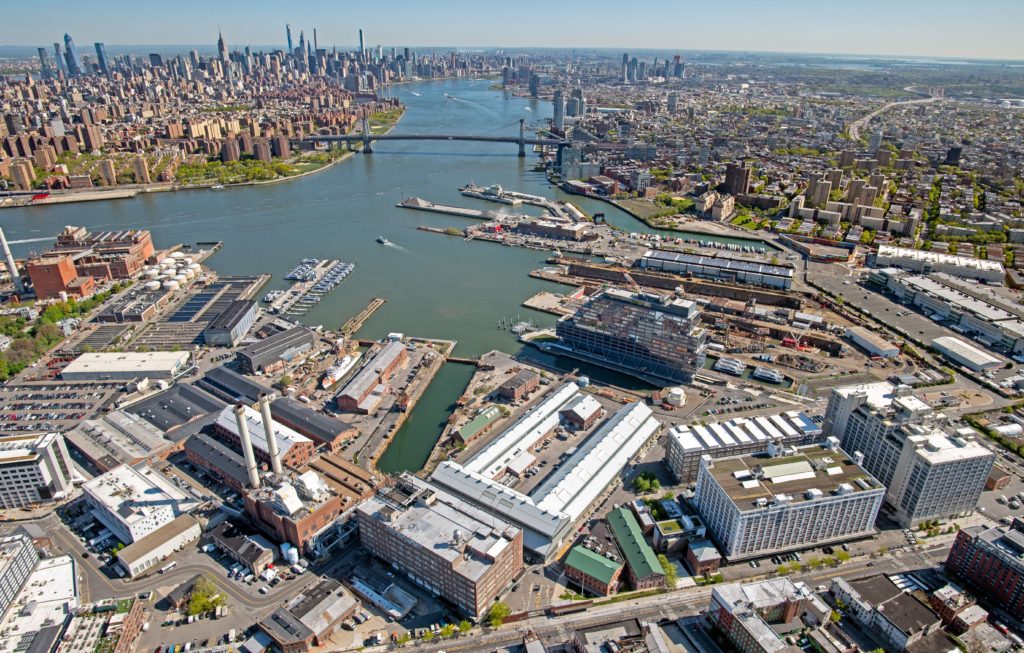
June 25, 1966: The Brooklyn Navy Yard Closes

A recent photo of the Navy Yard,
which has been redeveloped for residential and retail use.
The Williamsburg Bridge is in the background.

June 25, 1966, 60 years ago: The Brooklyn Navy Yard is closed, emblematic of New York City's loss of industry.

At the height of World War II production, what was officially named the New York Naval Shipyard had 75,000 people working there. In 1947, it was down to 10,000 workers. It doubled back up to 20,000 by the end of the Korean War in 1953, but after that war ended, it was back to 10,000 again.

In 1960, with the Yard's workforce 11,000 strong, the aircraft carrier USS Constellation was being built there, and an accident caused a fire that killed 49 people. The investigation showed that, although this fact was not responsible for the fire, the Yard was obsolete, especially since it was determined that, in order to reach the open sea, ships built there had to pass under the Manhattan Bridge and the Brooklyn Bridge; and ships going there for repairs also had to pass under those bridges -- and most new ones were too big. 

And so, on June 25, 1966, a closing ceremony was held at the Yard, with work stopping for good on June 30, and the last 9,500 workers were laid off.

This was symbolic of the loss of industry in New York City. The loss of jobs crushed the Borough economically, and was much more damaging to the communities of Brooklyn than the so-often-cited move of baseball's Brooklyn Dodgers in 1957 had been.

Indeed, it was crushing to the City as a whole. It wasn't the first time industry had been phased out: The Gashouse District, between 1st Avenue and the Hudson River, from 14th to 23rd Street, its name already appropriated for baseball's St. Louis Cardinals, "the Gashouse Gang," was torn down in World War II, to build the housing projects Stuyvesant Town and Peter Cooper Village.

*

June 25, 1966 was a Saturday. Basketball Hall-of-Famer Dikembe Mutombo was born on this day. 

Yanks Take 2 of 3 In Detroit, Head for Boston

"Who loves ya, baby?"

Since the 2006 American League Division Series, the Detroit Tigers have provided the Yankees with more difficulty than they had before it, including 3 postseason series wins. The Yankees went to Comerica Park for a 3-game series in the Motor City.

After a few years with the Houston Astros, including some postseason trouble for the Yankees, Framber Valdez signed as a free agent with the Tigers. Again, on Monday night, he gave the Yankees trouble, going 6 strong innings. In contrast, Gerrit Cole only pitched 4 1/3rd innings, allowing 5 runs on 9 hits. At least his control was good: Of 89 pitches, 62 were strikes, 1 walk, 5 strikeouts. Paul Blackburn and Ryan Yarbrough went the rest of the way, allowing just 2 baserunners, both walks by Yarbrough.

The Yankees stranded men on 1st & 2nd in the 1st inning. With 2 out in the 2nd, José Caballero walked and stole 2nd, and Ali Sánchez doubled him home. It was 1-0 Yankees. They stranded men on 1st & 2nd in the 3rd, and then fell 3-1 behind the Tigers, and then 4-1 behind in the 4th, and 5-1 in the 5th.

With 2 out in the 7th, Sánchez was hit by a pitch, and Amed Rosario hit a home run. But they could get no closer, again stranding men on 1st & 2nd in the 8th. Tigers 5, Yankees 3.

*

Carlos Rodón was a bit better on Tuesday night, allowing 3 runs over 5 1/3rd. The bullpen, with Fernando Cruz, Brent Headrick and David Bednar, was scoreless the rest of the way, allowing just 2 hits and a walk.

At one point, Jazz Chisholm went out to 2nd base with a green lollipop in his mouth. Aaron Boone got upset with that. What if he got hit with a line drive? Even if it wasn't in the mouth, having that lollipop would have been unsafe.

Well, in the top of the 6th, with the Tigers up, 2-1, Paul Goldschmidt singled, and Chisholm hit a home run. Getting back to the dugout, he held his bucket of lollipops up to the camera. As a great New Yorker, Telly Savalas, who was at the Chris Chambliss Game in 1976, would have said while sucking on a lollipop while starring on Kojak, "Who loves ya, baby?" After the game, Boone said he can have as many lollipops as he wants, just not on the field.

After the homer, Spencer Jones struck out, but Caballero singled, and Austin Wells doubled him home, making it 4-2 Yankees. The Tigers closed to within 4-3 in the bottom of the 6th, but that was as close as they got.

*

Last night, Goldschmidt led off the game with a home run. He hit another in the 3rd. Both were off Tarik Skubal, possibly the best pitcher in baseball right now, These homers were the 385th and 386th of his career, and, on the all-time list, he surpassed Dwight Evans and... Aaron Judge. He tied Aramis Ramírez. Next up for him: Johnny Bench, with 389.

Ryan Weathers started for the Yankees, and was strong: 6 innings, 2 runs, only 1 earned, 6 hits, 2 walks, 6 strikeouts. Camilo Doval, Cruz and Bednar went scoreless the rest of the way. Jasson Domínguez added a homer in the 6th, and the Yankees won, 4-2, to take the series.

Meanwhile, in a rain-forced doubleheader, the Mets got swept by the Chicago Cubs at Citi Field, 10-3 and 10-5. Twenty runs in one day? So much for "run prevention." And you thought Brazil beat Scotland badly.

*

The Yankees are 48-31, on a pace to go 98-64. They have the best record in the AL. They lead the Tampa Bay Rays by 3 games in the AL Eastern Division, though just 2 in the loss column, as the Rays have 2 games in hand.

Ryan McMahon has an infection, so he's been put on the Injured List. Oswaldo Cabrera has been called back up, having not played for the big club since May 12, 2025, though he was doing well at Class AAA Scranton/Wilkes-Barre this year. He hasn't been called up because Chisholm, Caballero and McMahon, and sometimes even Anthony Volpe, have been doing well at the positions he can play. There hasn't been a place for him. Now, there is.

And now... off to the Wretched Hive of Scum and Villainy, for 4 games. Fortunately, the Yankees did not follow the pattern of unloading a bunch of runs right before going to Boston, and then playing as if we'd used them all up, as has not always happened, but has happened often enough to stand out. Hopefully, this means we have a few runs to spare, to spread all over that little green pinball machine in the Back Bay.

I also hope, for our fans' sake, the Hub City has restocked the bars, now that the Tartan Army have gone down to Miami. Scotland fans took over Fenway Park last week, while their team was playing World Cup games in Foxborough, and made an appearance at Yankee Stadium II as well. They were certainly better behaved than most Red Sox fans. Better dressed, too.

Here's the pitching matchups:

Tonight, first pitch scheduled for 7:10 PM, on YES: Cam Schlittler vs. Connelly Early.

* Friday, 7:10, on YES: Will Warren vs. Payton Tolle.

* Saturday, 1:00, on ABC: Gerrit Cole vs. Jake Bennett.

* Sunday, 7:20, on NBC: Carlos Rodón vs. former Yankee Sonny Gray.

I must say, I'm liking MLB's return to the classic networks, NBC (Saturday Game of the Week) and ABC (Monday Night Baseball). If only we had This Week In Baseball as a pregame show. I can hear the opening theme now. And the closing theme... 

Anyway, BEAT THE SCUM!

June 25, 1876: The Battle of the Little Bighorn

June 25, 1876, 150 years ago: The Battle of the Little Bighorn is fought in the Montana Territory. The 7th Cavalry of the U.S. Army fights several tribes of Native Americans. The tribes win.

The main group of Natives was the Lakota Sioux, led by Sitting Bull and Crazy Horse. The Cavalry was led by Lieutenant Colonel George Armstrong Custer. He had graduated 35th and last in his class at the U.S. Military Academy at West Point in 1861. Because the Civil War was raging, he rose fast, and had the brevet (temporary) rank of Major General. After the war, his questionable actions led the Army to drop him back down to Lieutenant Colonel.
Custer had managed some victories against Natives in the intervening 11 years, and began to believe he was invincible. But on the Little Bighorn River, he found out otherwise. The legend that there were no U.S. Army survivors isn't even close to being true, but of the 700 men under Custer's command, 274, including Custer himself, a 36-year-old Ohioan, died. The Natives lost about half that many, out of around 2,500.

Reports of the battle began to reach the Eastern United States on Centennial Day, July 4, 1876. The anger of "the white man" toward "the red man" was stronger than ever. A year later, Crazy Horse was captured and executed. Sitting Bull, too, would eventually face what the white man would call "justice," in 1890, at Standing Rock, South Dakota, not long before the last major battle with the Natives, called Wounded Knee.
The most familiar photograph of Sitting Bull.
There is no known photograph of Crazy Horse,
due to a Native superstition about a camera "capturing the soul."

The battle was nicknamed Custer's Last Stand, and Custer was seen as a hero. In truth, he was an unearned egomaniac, and deserves to be ridiculed by history.

The site of the battle is now part of the Crow Indian Reservation, in the southeastern part of the State of Montana. The closest city is Billings, 60 miles to the northwest. The closest major league city is Denver, nearly 500 miles south -- unless you consider the Canadian Football League to be a "major league," in which case the closest is Regina, home of the Saskatchewan Roughriders, 460 miles northeast.

In 1960, novelty singer Larry Verne had a Number 1 hit with "Mr. Custer." Even by the standards of that time, in which Westerns dominated television and were still big in movies, it was racist as hell toward Natives. It also perpetuated the myth of the cavalry charge order, "Forward, ho!" No such order has ever existed in the U.S. Army.

Tuesday, June 23, 2026

June 23, 2016: The Brexit Referendum

June 23, 2016, 10 years ago: Voters in the United Kingdom of Great Britain and Northern Ireland vote to leave the European Union in a national referendum. It was called "Brexit," short for "British Exit," in the leadup to the vote.

Britain had been a member of the European Communities since 1973, and of its successor, the European Union, since 1993. But many of its citizens were angry about the E.U. dictating economic policy, especially trade policy. And many (with considerable overlap with the previous group) were angry about the E.U.'s immigration laws, making Europe as a whole, and Britain in particular, more black, brown, and Muslim -- and less white and Christian.

Some voters admitted that they didn't really want to separate from the European Union, they just wanted to "send a message" to them. The message they intended to send was, "Respect us more." The message the EU received was, "We don't want you, so we're fucking off." The final vote was 17,410,742 for "Leave," and 16,141,241 for "Remain." Percentage-wise, that's 51.9 to 48.1.

As with American national elections, the city vote and the country vote were very different. In England, the vote was 53.4 Leave, 46.6 Remain. Most of the cities, including London, Liverpool and Manchester, voted to Remain. But the suburbs and the countryside vote to Leave. Wales was 52.5 Leave, 47.5 Remain. But Scotland was 62.0 to 38.0 Remain. Northern Ireland was 55.8 to 44.2 Remain, with the Catholic precincts being largely Remain, but its Protestant precincts were largely Leave. (The Republic of Ireland is an E.U. member, and has no desire to change that.)

The result? Within hours, Britain's financial markets crashed. In 48 hours, the pound lost 1/5th of its value, although, within the week, it recovered to the point where the loss was "only" 1/8th of its value. Prime Minister David Cameron, Leader of the Conservative Party, was forced to resign both posts on July 13, 2016.

His successor, Theresa May, didn't complete the Leave process fast enough for the "Brexit Means Brexit" crowd, and she was forced out of office on July 24, 2019, giving the job to Boris Johnson, Britain's 1st openly bigoted Prime Minister since Margaret Thatcher was forced out in 1990.

Soon, the people behind a recent failed referendum on Scottish independence began talking about a new referendum, on whether Scotland should leave the U.K. and rejoin the E.U.

On June 3, 2026, nearly 10 years after the referendum, a poll by Statista Research Department showed that 57 percent of British citizens thought Leave was a mistake, while only 30 percent thought it was right -- a net shift of 13 points. Statista called it "Bregret."

A YouGov poll showed that thinking Leave was a mistake was an opinion held by 56 percent of people in England, 61 percent in Wales, and 75 percent in Scotland.

It may just be that, by the time the Duke of Cambridge becomes King William V, he will reign over "The United Kingdom of England-but-not-London-or-Merseyside and East Belfast," a stagnant country, while London, Liverpool, Wales, Scotland and a united Ireland are in a thriving European Union. And those left behind will have not buyer's remorse, but seller's remorse.

June 23, 1926: Aimee Semple McPherson Is Found

June 23, 1926, 100 years ago: Aimee Semple McPherson is found, safe and sound. Well, safe, anyway.

She was born as Aimee Elizabeth Kennedy on October 9, 1890 in Oxford, Ontario, Canada. Her mother worked with the poor in Salvation Army soup kitchens, and little Aimee preached sermons to her dolls, and then to her classmates. But she eventually deviated from this by reading novels and going to movies and dances.

In 1907, at age 17, she went to a revival meeting, where she met Robert J. Semple, a Pentecostal missionary from Ireland. She gave herself to him, body and soul, marrying him in a Salvation Army ceremony and preaching by his side.

But this marriage ended on a 1910 tour of China, when he died of dysentery, leaving her alone and pregnant, through no fault of either of them. Her daughter, Roberta Semple, was subsequently born in Hong Kong. Already well-known as "Sister Aimee," she ministered to her fellow passengers on the ship back to America.

She went back to working for her mother with the Salvation Army. In 1912, in New York, she met Harold McPherson, and married him. Their son, Rolf McPherson, was born the next year. After having her appendix taken out in 1914, she claimed to hear a voice telling her to go back to preaching. In 1915, she left Harold, took the children, went back to preaching, and, a few weeks later, sent him a note, asking him to join her.

He must have still loved her, because he sold their house, and they lived out of what they called their "Gospel Car," a series of vehicles that culminated in the most famous of these, a 1918 Oldsmobile. But, by 1918, he wanted a more stable life, and went back to Rhode Island, and sued for divorce, citing "abandonment."

Maybe he should have waited just a little longer. At this time, she settled in Los Angeles, and in 1923, opened the 5,300-seat Angelus Temple for her Foursquare Church. She got 40 million visitors within the 1st 7 years. She embraced the nascent medium of radio, and broadcast her Pentecostal sermons to the growing metropolis of Southern California. Her voice was one of those that made "The Roaring Twenties" roar.

Her politics were all over the place. She denounced Communism as "ruling without God," and denounced fascism as "wrongly stating to represent the power of God." She was among the earliest Americans to support a Jewish homeland in what was then called Palestine. In 1925, she broadcast her support of the prosecution of John T. Scopes in the Tennessee "monkey trial." But she also supported organized labor, saying, "A gangster's money is no more unclean than the dollars of the man who amasses his millions from underpaid factory workers."

On May 18, 1926, at the age of 35, and with her fame still rising, she went to Ocean Park Beach in Santa Monica. When she didn't return to her beach blanket, it was feared she had drowned. After a month of searching, including receiving fake leads, some of them ransom notes, and wild speculation from the tabloid journalism of the time, Mildred Kennedy, who had come to Los Angeles, decided that her daughter was dead, and held a memorial service at Angelus Temple on June 20.

But on June 23, Mrs. Kennedy got a phone call from Douglas, Arizona. Aimee was alive there, at a hospital. She said that, on the beach, she had been approached by a couple who wanted her to pray over their sick child. She went with them to their car, where she was knocked out by chloroform. She was taken to the Mexican desert, but escaped, walked for hours, collapsing in the border town of Agua Prieta, Sonora. She was taken across the border to Douglas, where she recuperated before returning to Los Angeles.

The newspaper barons smelled a rat, and contributed $500,000 to a grand jury investigation. It was determined that she had made the whole thing up. The story that was released was that she and a former employee, Kenneth Ormiston, had run off together, to a California resort town, and then to Mexico. He had gone along with her proposed story of a kidnapping, and dropped her off in Agua Prieta, where she walked not for 17 hours, but for one.

She stood by her story for the rest of her life, but on November 3, Aimee, her mother, Ormiston and others who assisted her were indicted for criminal conspiracy, perjury and obstruction of justice. Ormiston took a bullet for her by identifying another woman as the one who stayed with him. With the evidence against her falling apart, the charges were dismissed on January 10, 1927. 

Sister Aimee's disappearance may have inspired British mystery writer Agatha Christie to try the same thing, later in the year.

She had fallen out of favor with the press, and even with her mother. So she took to a new medium: Film. As we would say today, she glammed herself up, and became an early darling of the newsreels. She married for a 3rd time in 1932, to singer David Hutton. Despite her own previous hypocrisy, she was infuriated by his billing of himself as "Aimee's man" in his cabaret act, and was often photographed with scantily clad women. She divorced him in 1934.

When World War II began, she was fully supportive of the Allied effort: "It is the Bible against Mein Kampf. It is the Cross against the Swastika. It is God against the Antichrist of Japan... This is no time for pacifism." (Another cleric in mass communication, Bishop Fulton Sheen, also compared symbols with the Nazi Swastika, taking to the radio and calling World War II "the Cross against the Double Cross.")

In 1942, she sold $150,000 worth of war bonds in a single hour, and she matched this achievement in 1944. She collected 2,800 pints of blood for the Red Cross. She organized drives for rubber and gasoline, and instead of driving her latest Gospel Car to and from the Angelus Temple, she began driving a horse and buggy, to emphasize conservation for the war effort. Choosing to forget her indiscretion of 18 years earlier, Newsweek called her "The World's Greatest Living Minister."

She wasn't living for much longer. On September 26, 1944, she died from an overdose of sleeping pills, apparently a mistake, at a hotel in Oakland, where she had planned a revival. She was only 53 years old.

Aimee's mother, Mildred Kennedy, outlived her, lasting until 1947. Her daughter, Roberta Semple, married Harry Salter, a radio producer. Together, they went on to develop early TV game shows, including the original version of Name That Tune. She lived until 2007, at age 96. Her son, Dr. Rolf McPherson, led the Foursquare Church from then until his retirement in 1988. He lived until 2009, also 96.