Showing posts with label george w. bush. Show all posts

Sunday, June 28, 2026

June 28, 2001: The Kidd-Marbury Trade

June 28, 2001, 25 years ago: The New Jersey Nets trade Stephon Marbury to the Phoenix Suns for Jason Kidd. This is a classic "my headache for your headache" trade, as both had been divas unable to move their teams out of the dumps.

Marbury, the youngest of 5 brothers who had starred for Abraham Lincoln High School in the Coney Island section of Brooklyn, had played 1 season at Georgia Tech, turned pro, was drafted by the Milwaukee Bucks, and was immediately traded to the Minnesota Timberwolves. For 3 years, he underachieved with them, before being traded to the Nets. For 2 seasons at the Meadowlands, he was still an underachiever, and came to be regarded as a bad influence on the team, a "clubhouse cancer."

Kidd came out of Oakland, stayed local by going to the University of California, playing 2 years with them. He was drafted by the Dallas Mavericks, and was traded to the Suns after 2 years. He was a Rookie of the Year, an All-Star, and an NBA assists leader, but wasn't getting along with his teammates.

How did the players react to their respective changes of scenery? Marbury made an All-Star Game with the Suns, but they tired of his act after 3 lackluster seasons, and he went on to the Knicks, becoming one of the few players to mess up two teams in one market.

He last played in the NBA with the Boston Celtics in 2009 -- the year between NBA Finals appearances for them, winning in 2008 and losing in 2010. He was only 32 when he played his last NBA game. Of course, none of his highly-touted brothers played in the NBA, although a cousin, Sebastian Telfair, did. From 2010 to 2018, Marbury played in China's league, and went on to coach there.

In his 1st season with the Meadowlands team, Kidd led the Nets from a hopeless 26-56 to 52-30, their 1st Atlantic Division title, and their 1st NBA Finals. He got them another Division title and Finals berth the next season. He got them another Division title the next season. He got them to the Playoffs the next season. He got them another Division title the next season.

In other words, the Nets had done more in 5 seasons with Kidd than they had done in the previous 25 years without him. Never in the history of team sports has one man made that much difference that fast. So this may have been the most lopsided NBA trade since 1956, when the Boston Celtics traded Cliff Hagan and Ed Macauley to the St. Louis Hawks for the rights to Bill Russell.

After the 2008 season, the Nets, in the process of moving to Brooklyn, traded Kidd back to the Mavericks. Now a respected elder statesman among players, he helped them win their 1st NBA Championship in 2011. He played one more season with them, and then one last season with the Knicks, 2012-13.

He then retired, and crossed town to the Brooklyn Nets, coaching them for a season, then 4 with the Milwaukee Bucks. He won a 2nd ring as an assistant coach with the Los Angeles Lakers in 2020, and in 2021 was hired as head coach of the Mavericks. He got them to the Conference Finals in 2022 and the NBA Finals in 2024, but missed the Playoffs the last 2 years, and was fired a few days ago.

He was elected to the Basketball Hall of Fame, was named to the NBA's 75th Anniversary 75 Greatest Players, and had his Number 5 retired by the Nets.

Friday, December 12, 2025

December 12, 2000: Bush v. Gore

December 12, 2000, 25 years ago: The Supreme Court of the United States overrules the Supreme Court of the State of Florida. It is the case of Bush v. Gore.

In the Presidential election of November 7, the Democratic nominee for President of the United States, the then Vice President of the United States, Albert Arnold Gore Jr., got more popular votes than the Republican nominee, the Governor of Texas, George Walker Bush: Gore 50,999,897, Bush 50,456,002, a margin of 543,895 votesRalph Nader, famous as a consumer advocate since the 1960s, ran as the nominee of the Green Party. He got 2,882,955 votes. Gore got 48.4 percent of the popular vote; Bush, 47.9 percent, Nader, 2.7 percent.

Bush's brother, Governor John Ellis "Jeb" Bush of Florida, saw how close the vote was in his State, and tampered with the voting process, and that one State held everything up for 5 weeks. The best attempt at a recount, in downtown Miami, was interrupted on November 22 by what became known as the Brooks Brothers Riot. As a result, there were votes that were never counted. I don't mean they weren't recounted, I mean they were never counted, not even once.

On December 8, the Florida Supreme Court ruled that all 61,000 "undervotes" had to be counted. Had that happened, Gore surely would have won. The Bush campaign immediately appealed to the U.S. Supreme Court. SCOTUS ruled on December 12:

* Four Justices ruled that the recount had to go forward: John Paul Stevens, appointed by Republican President Gerald Ford; David Souter, appointed by Republican President George H.W. Bush, the current Republican nominee's father; Ruth Bader Ginsburg, appointed by the current President, Democrat Bill Clinton; and Stephen Breyer, also appointed by Clinton.

* Five Justices ruled that the recount had to stop immediately, all of them appointed by Republican Presidents: William Rehnquist, appointed by Richard Nixon, and promoted to Chief Justice by Ronald Reagan; Sandra Day O'Connor, appointed by Reagan; Antonin Scalia, appointed by Reagan; Anthony Kennedy, appointed by Reagan; and Clarence Thomas, appointed by the elder George Bush.

It was pretty easily guessed that all 4 Justices who voted to keep the recount going would do so; and that 3 Justices known for being archconservatives -- Rehnquist, Scalia and Thomas -- would vote to stop it.

The question marks were 2 moderates, both known as "swing votes": O'Connor and Kennedy. If either of them had voted to keep the recount going, it would have been kept going, and Gore would have won. Instead, both voted to stop it.

And so, in an election where over 104 million votes had been accepted as counted, only two votes ended up mattering: Those of O'Connor and Kennedy.

It may have been the ghastliest decision in the Court's history, aside from the 1857 decision in Dred Scott v. Sandford, that said that black people weren't citizens (a decision remedied by the 14th Amendment to the Constitution). It also marked perhaps the 1st time in the nation's history that political conservatives overruled a case based in part on a State's rights.

It may have been surpassed as the ghastliest decision in the Court's history by Trump v. United States in 2024, when the Court ruled that Presidents have immunity from criminal prosecution.

Gore conceded the election the next day, forever doomed to be "the 42nd 1/2 President of the United States" -- a President-elect, but never a President. On January 6, 2001, in his role as the outgoing Vice President, Gore properly read the Electoral Votes, including the 25 of the State of Florida. Whether those votes were properly arrived at is another matter. Congress then certified the Electoral Votes.

On that January 6, no Democrats stormed the U.S. Capitol Building in an attempt to stop that process.

Twenty years later, of course, when it was Republicans who didn't like the result, they did storm the Capitol, and attempt to stop the process. They only delayed the inevitable.

Rehnquist died in office in 2005. O'Connor retired right before that. Souter retired in 2009. Stevens retired in 2010, and died in 2019. Scalia died in office in 2016. Kennedy retired in 2018. Ginsburg died in office in 2020. Breyer retired in 2022. O'Connor died in 2023. Souter died in 2025. As of December 12, 2025, Kennedy, Thomas and Breyer are still alive; while Thomas is the only 1 of the 9 who is still on the Court.

Bush's 2 terms in office were an unmitigated disaster, both domestically (especially economically) and internationally. Had Gore been allowed to accept his victory, he would have governed completely differently, and most Americans, including the conservatives, would have been better off.

Saturday, November 22, 2025

November 22, 2000: The Brooks Brothers Riot

November 22, 2000, 25 years ago: An election that began to be stolen on Election Day itself, November 7, takes a big step closer to being stolen, with "The Brooks Brothers Riot."

The Republican nominee for President, Governor George W. Bush of Texas, lost the national popular vote to the Democratic nominee, Vice President Al Gore. But he appeared to have won enough Statewide popular votes to win 271 Electoral Votes to Gore's 269.

In dispute was the State of Florida, where Bush was originally certified to have won by 1,784 votes. It's important to note that the Governor of Florida was his brother, John Ellis "Jeb" Bush. Through his Secretary of State -- and, it was rumored, his mistress -- Katharine Harris, Jeb had the Florida vote fixed for his brother, including the deletion of the names of 55,000 people, nearly all black men, from the voter rolls.

In other words, if those 55,000 people were permitted to vote, even if less than half of them ended up voting at all, there was no way Gore wouldn't have gotten enough of those 55,000 votes to offset a 1,784-vote lead for "Dubya."

A clause in Florida's State Constitution mandated that, since the election was so close, a Statewide recount had to be done. The recount for Dade County, including the City of Miami, was done at the Stephen P. Clark Government Center, at 111 Northwest 1st Street in downtown Miami. (Clark was Mayor of Miami from 1967 to 1972, and again from 1993 to 1996.)
The Stephen P. Clark Government Center

The recount began, but Representative John E. Sweeney, then a freshman Congressman from New York's Capital Region, including the State capital of Albany, told an aide to "Shut it down." And so dozens of people, many of them wearing sharp suits typical of Republican staffers at the time -- hence the name of the demonstration, as Brooks Brothers is a popular store chain with them -- found their way into the building, and pounded on the doors of the room where the recount was being done, making it unsafe for the counters.

They got what they wanted. Bush's lead got down to 537 votes, when a local court ordered that the recount be stopped. In other words, some votes were never counted, not even once. The State Supreme Court ruled that the recount had to resume.

But on December 12, the U.S. Supreme Court ruled that the recount had to stop. And so, Bush's 537-vote win in Florida was certified by the State of Florida, and later by Congress.

Strange: For decades, conservatives -- first in the Democratic Party, then in the 1960s they began to shift to the Republican Party -- were in favor of States' rights over civil rights. But when States' rights and civil rights came together in Florida in 2000, the conservatives wanted the State of Florida to have no rights.

Did Democratic protestors try to stop Congress from certifying this apparently stolen election, as Republican ones tried 20 years later? No. Every Democratic demonstration, including outside Bush's Inauguration as the 43rd President of the United States on January 20, 2001, was peaceful.

But the Republicans have now tried this sort of thing twice in the 21st Century. Indeed, the Brooks Brothers Riot has been called a "dress rehearsal" for the Capitol Insurrection of January 6, 2021.

Many of the Miami demonstrators later took jobs in the Bush Administration. One of them was Roger Stone, a self-described "GOP Hitman," with a history of Republican dirty tricks going back to his work for Richard Nixon's Committee for the Re-Election of the President, the group behind the Watergate burglary of 1972.

Nobody was ever charged with a crime in connection with the Brooks Brothers Riot -- not with election fraud, not with property damage, not with assault, not even with trespassing, of which they were all guilty.

*

November 22, 2000 was a Wednesday, the day before Thanksgiving. As was tradition in my family, I spent Thanksgiving weekend at my grandmother's house, including the Thursday night with my parents and sister, and we sat transfixed at the TV, watching not football games -- the Detroit Lions beat the New England Patriots 34-9 at the Silverdome in suburban Pontiac, Michigan; while the Dallas Cowboys lost to the Minnesota Vikings, 27-15 at Texas Stadium in suburban Irving, Texas -- but footage of the Brooks Brothers Riot, on a seemingly endless loop, as talking heads on CNN and MSNBC tried to make sense of the most blatant election theft in American history.

Other Presidential elections have had accusations of fraud. But this was on television. Even the alleged theft of Illinois' votes by Mayor Richard J. Daley of Chicago in 1960 -- the overturning of which wouldn't have swung the election from John F. Kennedy to Nixon anyway -- wasn't caught by TV or film cameras. The Brooks Brothers Riot was, and the news networks were all too happy to show it over and over again, refusing to say that it was wrong.

The fact that Al Gore's rightly-won Presidency was being assassinated on November 22, the anniversary of the assassination of President John F. Kennedy in 1963, seemed not to have occurred to most people. Certainly, I didn't think of it at the time. With the chaos of the election, the JFK anniversary may have been mentioned less than on any November 22 since 1963. 

Friday, November 7, 2025

November 7, 2000: No One Is Elected President

November 7, 2000, 25 years ago: Election Day. The Democratic Party's nominee for President, Vice President of the United States, Albert Arnold Gore Jr., gets more votes than the Republican Party's nominee, the Governor of Texas, George Walker Bush: Gore 51.0 million, Bush 50.4 million. Gore gets 48.4 percent of the popular vote, Bush 47.9 percent.

Ralph Nader, famous as a consumer advocate since the 1960s, runs as the nominee of the Green Party. He gets 2.9 million votes, or 2.7 percent.

Bush's brother, Governor John E. "Jeb" Bush of Florida, sees how close the vote is in his State, and tampers with the voting process, and that one State holds everything up for 5 weeks.

The following Sunday, November 12, among the guests on NBC's Meet the Press is William Safire, longtime political columnist for The New York Times; before that, a speechwriter for President Richard Nixon. Host Tim Russert asks him, "What do we have here, Bill?" And Safire says, "We have a tie."

For all intents and purposes, he was correct. Both Bush and Gore had a base that thought their man would make a good President. Both of them had party regulars who might not have been happy that the party as a whole nominated the candidate that it did, but would vote for that party's nominee anyway, because that's what they always did. And then there were people who weren't members of either party, and didn't especially like either one, but decided one was worse, and voted for the other one.

It would have been so simple for Gore to win. All he had to do was ask the outgoing President, Bill Clinton, to do one rally for him in downtown Miami. It would, literally, have made all the difference in the world, because, in spite of his personal mistakes, Clinton was a very successful President, and still popular nationwide -- more so than Gore or Bush.

But Gore was terrified that Clinton's personal scandal, which led to his impeachment by a Republican-controlled U.S. House of Representatives, and then his acquittal by a Republican-controlled U.S. Senate, would attach itself to him. So, in his speech at the Democratic Convention at the Staples Center in Los Angeles, he tried to run on the Clinton economic record without the Clinton personal-conduct record, and said, "I stand here today as my own man."

Bush couldn't say that. Well, he could, but, like so many other things he said, it would have been a lie. The son of a President, he was a dimwitted hothead who had faked his way through life. Every time he failed -- in keeping out of military service, in business, and in a 1978 run for Congress -- his father's friends bailed him out.

But Texas evangelicals got him nominated for that State's Governor, an office where the only real requirement is make it easier for businessmen to make money. He got elected in 1994 and 1998. Jeb, considered the smart, level-headed one in the family -- often compared to Michael Corleone, to George's Sonny and father George's Don Vito -- lost in his 1st race for Governor, also in 1994, but won in 1998.

The media gave Bush the benefit of every doubt, and Gore the doubt of every benefit. Case in point: The 1st debate, on October 3, at the Boston campus of the University of Massachusetts. Bush, as he usually did, made himself look like he was not smart enough to be President. Gore was caught on camera sighing over some of Bush's dumb answers. The reaction of most of the American media was not that Bush was too dumb to be President, but that Gore was too rude to be President.

This was the problem: Bush, a known recovering alcoholic, was seen as "the kind of guy you'd like to have a beer with," while Gore was "stiff," "uptight," and "a know-it-all." As comedian Bill Maher put it, "God forbid, the President of the United States should be smarter than we are." But Maher also addressed Gore's image: "People like what he stands for. They just don't like him." And people did like Bush, even if they thought he was dumb.

And enough people didn't like Gore to throw Florida into doubt. Jeb Bush's Secretary of State, in charge of running elections, was Katherine Harris: Young (33 in 2000), attractive, every bit as committed to the conservative movement as the Bush brothers were, and, it was rumored at the time, Jeb's mistress. He put her in charge of ensuring that "Dubya" won in Florida.

Court-ordered recounts were undertaken, and "the Brooks Brothers Riot" in downtown Miami the day before Thanksgiving stopped the one in Dade County. When the U.S. Supreme Court finally ruled on December 12 that the recounts must stop, and Bush be accepted as the winner, it was the ghastliest decision in the Court's history, aside from the Dred Scott decision that said black people weren't citizens (a decision remedied by the 14th Amendment to the Constitution).

Nader, appealing to leftists who felt betrayed by Gore and President Bill Clinton over the last 8 years, won 97,488 votes in Florida. Bush's final lead in Florida was 537 votes. But Nader's voters wanted their "pure" candidate, and the result was the most un-Nader-like (and the most un-Gore-like) Administration anyone could have imagined.

Needless to say, New York's 2 major tabloid newspapers had differing opinions. The Daily News cared about journalism, and their headline was "TOO CLOSE." The Post cared about promoting the conservative candidate, and their headline was "BUSH WINS!"

The election of sitting First Lady Hillary Clinton to be a U.S. Senator from New York was almost unnoticed outside that State. More attention was paid in Missouri, where Governor Mel Carnahan was killed in a plane crash, too close to the election to be replaced on the ballot, and still won the election for Senator over the incumbent, former Governor John Ashcroft. His widow, Jean Carnahan, was appointed to replace him. Bush appointed Ashcroft to be his Attorney General.

Indeed, in connection with the Democratic nominee for President getting the most popular votes, the Democrats gained 4 seats in the Senate, forging a 50-50 tie, which went 51-49 in their favor the following June, when Jim Jeffords of Vermont switched to become an Independent caucusing with the Democrats. The Democrats only gained 1 seat in the House, not nearly enough to take control.

Friday, August 29, 2025

August 29, 2005: Hurricane Katrina

August 29, 2005, 20 years ago: Hurricane Katrina hits New Orleans, Louisiana, resulting in a broken levee that flooded the city, which was already below sea level. By nightfall, 80 percent of the Crescent City, and parts of neighboring areas, were flooded. Over 1,800 people were killed, and thousands were left homeless.

The Louisiana Superdome, home of the NFL's New Orleans Saints, was used as a shelter, topping out at 26,000 people. But because of the nature of the emergency, getting relief supplies into the city was incredibly difficult.

Although there had been devastating fires in Chicago and Boston in the 19th Century, and Baltimore and San Francisco in the early 20th Century, an earthquake in San Francisco in 1989 and Miami clobbered by Hurricane Andrew in 1992, Katrina was the first natural disaster that made Americans think that a great American city might actually be lost, ruined to the point where there would be no choice but to abandon it.

President George W. Bush was at his ranch outside Crawford, Texas, on vacation. He should have immediately flown back to Washington and coordinated the federal government's response. Instead, he stayed at his ranch for 5 days, doing nothing -- except for 1 trip to San Diego for a Republican Party fundraiser.

As a result, most of the goodwill he'd generated with his response to the 9/11 attacks and the early part of the Iraq War was gone. One political magazine showed a cover with a cartoon of Bush being poked with a fork, with the headline, "HE'S DONE," and a caption that he might have still been in office, "but the 9/11 Presidency is over."

Indeed, he had roughly 4 full years in which even Democrats who didn't like him, and thought he had cheated to win in 2000 (and maybe even in 2004), still accepted him as President: September 11, 2001 to September 12, 2005.

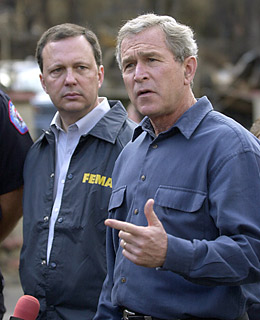
That was the day that Michael D. Brown resigned as Administrator of the Federal Emergency Management Agency (FEMA), which is in charge of responding to natural disasters. Bush was caught on camera telling him, "Heck of a job, Brownie." It wasn't sarcastic: Bush really believed that Brown was doing a good job.
"Brownie" and "Dubya"

At his best, Bush was a genial idiot. At his worst, he was a nasty right-winger. He was never competent enough to be President, and he appointed people he liked to posts for which they were not qualified and ill-suited, and Brown was one of them.

As late as 1950, New Orleans' population was 660,000, putting it in America's top 20 cities. White flight led to a drop to about 484,000 people within the city limits in the 2000 Census. After Hurricane Katrina, it dropped to 230,000, losing over half its people in one fell swoop. According to a recent estimate, it's back up to about 362,000, making it larger than such NFL cities as Tampa, St. Louis, Pittsburgh, Cincinnati and Buffalo (and, of course, Green Bay).

But the metropolitan area has just a shade over 1 million people, making it the smallest metro area in the NFL, ahead of only Buffalo (if Green Bay is included with Milwaukee and Niagara Falls is included with Buffalo). And the poverty issue, so pervasive before the hurricane, is worse. And crime is definitely an issue.

In 1940, the city was 70 percent white. As late as 1970, it was 51 percent white. By 1990, it was 62 percent black, and the proportions are roughly the same today: 61 percent black, 31 percent white, 5 percent Hispanic and 3 percent Asian. The further east you go, the greater the black percentage; the further west, the more white.

Both the dome and the arena were nearly ruined by Hurricane Katrina. Whatever had gone wrong on the inside of the Superdome, more noticeable was the outside, as the hurricane's winds had stripped the top of the dome, making it look like it had been sandblasted.

The Saints played their entire 2005 season on the road while the dome was refurbished. Next door, the Smoothie King Center, home of the NBA's New Orleans Hornets (since rebranded as the Pelicans), needed work, so the Hornets played most of the 2005-06 season in Oklahoma City, thus opening the door to a team for that city: In 2008, the Seattle SuperSonics became the Oklahoma City Thunder.

A relief concert was held at Madison Square Garden, "The Big Apple to the Big Easy," featuring performers from New Orleans, and others whose work was inspired by them. In 2012, the favor was returned after Hurricane Sandy became the 2nd-most-damaging storm in American history, behind Katrina.

The Superdome reopened for the 2006 season, and the Saints provided a lift to the devastated city. On February 7, 2010, the Saints won Super Bowl XLIV, beating the Indianapolis Colts 31-17 at Sun Life Stadium (now Hard Rock Stadium) in the Miami suburbs, for their 1st NFL Championship. It had been a little over 4 years since the hurricane, and it resulted in the biggest party in the history of America's greatest party city.
The Superdome was restored. But the city still needs help. Having lost so many former residents, whose houses could not be rebuilt, hurt its tax base. It's the same with businesses that never came back. In New Orleans, "back" is a relative term.

Thursday, May 22, 2025

How Long It's Been: Tottenham Hotspur Won a Trophy

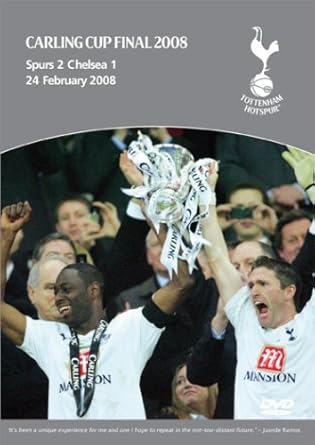
Of course, they released a DVD.

Note: This was first written on February 24, 2018, the 10th Anniversary of the previous occurrence, and has been updated.

Yesterday, May 21, 2025, a date which will live in infamy, Tottenham Hotspur won a trophy.

They won the Final of the UEFA Europa League -- a tournament known from 1958 to 1971 as the Inter-Cities Fairs Cup and 1971 to 2010 as the UEFA Cup -- at Estadio San Mamés, in Bilbao, in the Basque region of northern Spain, beating fellow English team Manchester United, 1-0. Brennan Johnson scored the only goal, in the 42nd minute.

These teams somehow got to the Final of this tournament, even though, out of 20 teams in the Premier League, Man United are 16th, and Tottenham, or "Spurs," are 17.

This season, the top 5 teams in the Premier League, and the winners of the Europa League if they are not among the preceding, qualify for the UEFA Champions League, the top European tournament. In this case, those 5 teams will be League Champions Liverpool FC, Spurs' North London arch-rivals Arsenal FC, United's intra-city arch-rivals Manchester City (winners of this season's FA Cup), and, with 1 game left to decide it, 2 of these 4 teams: Newcastle United (winner of this season's League Cup), West London team Chelsea, Birmingham team Aston Villa, and East Midlands team Nottingham Forest.

The bottom 3 teams get relegated to the 2nd division of English soccer, "The Championship," and replaced by the top 2 teams and the winner of a playoff of teams 3 through 6. So, the teams finishing 18th, 19th and 20th.

In the PL, a win is 3 points, and a draw is 1 point. Newcastle, Chelsea and Villa have 66 points. Spurs have 38 points. Leicester City, in 18th place, have 25. This means Spurs are twice as close to being relegated as they are to qualifying for the Champions League the usual way.

The English media have loved Tottenham for a long time, with their 1961 team becoming the 1st in the 20th Century to win both the English top flight, then called the Football League Division One, and the Football Association Cup in the same season. This is called "doing The Double," and the Baby Boomers in England loved them for it.

When Arsenal did the same in 1971, it was a different time. The Boomers had grown up, and this Arsenal side was a side for their kids, or maybe their younger brothers.

Unless you were raised in a family that loved Arsenal, you were raised to hate Arsenal - as if the two were the only teams in London. There are 12 League clubs within the M25, London's version of a road "beltway," and usually half of those are in the top flight, now called the Premier League.

When Arsenal had a run of success, 1987-94 (2 League titles, an FA Cup, 2 League Cups and the now-defunct European Cup Winners' Cup), they were not loved by the public outside North London as the 1981-84 "Spurs" side were (winning 2 FA Cups and a UEFA Cup).

When Arsenal became perhaps the greatest team in English history between 1998 and 2006 (3 League titles, 1 unbeaten, 4 Cups, 2 of them as part of Doubles), they gained admirers all over the world, thanks to the growth of satellite TV coverage. But, despite winning next to nothing, Spurs always got the more flattering coverage in the media.

As a result, when Arsenal lost the 2011 League Cup Final, that made it 6 years since they'd won a trophy. They won the 2005 FA Cup, but haven't won the League since, lost the UEFA Champions League in the 2006 Final and the 2009 Semifinal; lost the FA Cup in the 2009 Semifinal; and lost the League Cup in the Final in 2007 and 2011, and in the Semifinal in 2008 - which brings me to today's focus.

The League Cup is kind of a weird competition. All 92 clubs in the Football League, in all 4 divisions, are eligible for it. This makes it different from the FA Cup, where every Club in England, and, through an arrangement, a few teams in Wales, are eligible for it. That's over 700 teams.

Each round is a single match, with home field advantage chosen by a lottery, until the Semifinal. Then, it's 2 legs, home-and-home. The Final, as is that of the FA Cup, is held at Wembley Stadium in West London, England's national stadium.

The FA Cup was founded in 1871. The League Cup was not founded until 1960, and thus has considerably less prestige. For a club with the kind of support that Tottenham have, winning it would be huge. For a club with the kind of support that Arsenal have, winning it would be nice, but there are more important things, and they are - at least, theoretically - within reach.

This is not the case with Tottenham. They have not won the league, under any name, since that 1961 Double. They have had close calls the last 2 seasons, but blew it - or, as they say in England, "bottled it" - both times.

Indeed, late-season collapses have happened to Spurs several times in recent years. The template was 1987. When they took the field (or "the pitch") at their former home of White Hart Lane at a Semifinal replay of the League Cup on March 4, they had a chance at a unique domestic "Treble": Winning the League, the FA Cup, and the League Cup in the same season.

But Arsenal won that game, and the Final against Liverpool. Spurs fell apart in the League, and choked in the FA Cup Final. In a span of 73 days, they went from a good chance at a unique feat to having won nothing.

(Manchester United won a "European Treble" in 1999: The League, the FA Cup, and the Champions League. Others teams have done this in other countries, but not in England. Manchester City won a domestic Treble in 2021, and a European Treble in 2023.)

In 2006, 2012 and 2013, Spurs had a great chance to finish ahead of Arsenal. Each time, they were ahead going into the last game of the season. And, each time, the results didn't go their way. They did not finish ahead of Arsenal between 1995 and 2017. (The 2006 occurrence is the most notable. One does not simply discuss "The North London Derby" without mentioning that occurrence. It is folly.)

In 2007, the North London rivals met in the League Cup Semifinal. In the 1st leg, at The Lane, Spurs blew a 2-0 lead, and it ended 2-2. In the 2nd leg, at Arsenal's new Emirates Stadium, it was 1-1 after regulation. Away goals didn't matter, so extra time (we would say "overtime") was played, and Arsenal quickly scored twice to win 5-3 on aggregate.

In 2008, the situation was reversed. Until this season, Arsenal manager Arsène Wenger has played mainly reserves in the League Cup, trying to get them experience for more prestigious games. The 1st leg was at the Emirates, and it was a 1-1 draw. The 2nd leg, at The Lane, was no contest, as Tottenham, mainly starting their starters against "Arsène Wenger High School," won 5-1.

Spurs soon released a DVD of this game, titled The Perfect Game. A, It was starters against reserves. Big deal. B, How can it be "perfect" if you let in a goal? Morons.

February 24, 2008: Tottenham beat West London club Chelsea 2-1 to win the League Cup at Wembley Stadium. Although Didier Drogba, a.k.a. "Dogbreath," another of the most hated opponents Arsenal have ever had, due to his goals against them and his obvious and unrepentant diving, opened the scoring, Tottenham got a penalty that was buried by Dimitar Berbatov, the Vulgarian Bulgarian, and the game went to extra time. Jonathan Woodgate, a defender, scored the winner in the 94th minute.

Spurs fans acted like they'd won the League and the Cup - instead of just the League Cup. It was their 1st trophy of any kind since the 1999 League Cup. Those are the only 2 trophies they've won since their last FA Cup win in 1991, and they haven't even been to a Final in that tournament since, going 0-4 in Semis, including 0-2 against Arsenal. And that 1961 League title remains their last.

As Arsenal's trophy drought grew, to 7 years, 8 years, 9 years, before it finally ended at 9 with the 2014 FA Cup, the English media harped on it more and more. "Arsenal's trophy drought" became a catchphrase, a cliche, a meme.

Spurs have now surpassed that. But did anybody talk about "Spurs' trophy drought?"

No, because that only happens to big clubs. When Manchester United went 26 years without winning the League, from 1967 to 1993, it was talked about constantly. Liverpool went 30 years without winning the League, from 1990 to 2020, and it was talked about constantly.

And now that Arsenal have gone 21 years without winning the League, since 2004, it is talked about constantly. Just as it was from 1971 to 1989, when, to borrow the phrase of author and Arsenal fan Nick Hornby, it was "Eighteen fucking years!" And when Arsenal reached the climax of the 1971 season, before winning both the League and the FA Cup that year for "The Double," their last trophy was the 1953 League title, right before Queen Elizabeth II was crowned, and they said, "Arsenal haven't won a trophy since the Coronation."

So, big clubs get this treatment. Tottenham don't. That's because Tottenham are not a big club.

Oddly, it was their recent "world-class" striker, Harry Kane, who was mocked for not winning a trophy, for club or country. Even after he left for Bayern Munich, the biggest sports team in Germany, in his 1st season with Bayern, they didn't win a trophy. Finally, they won the Bundesliga this season, and so, like his former team, Kane finally won a trophy.

But Spurs are a club that didn't win a trophy for 18 years, 2 months and 25 days -- 6,296 days. How long has that been?

*

At the time, Molson Coors, which owns the London-based Carling brand of beer, held the naming rights to the tournament. From 2003 to 2012, it was known as the Carling Cup. Previously, another brewery had it 2004-12: The Worthington Cup. This was a far cry from 1982-86, when Britain's national Milk Marketing Board had it and it was the Milk Cup; or 1993-98, when it was the Coca-Cola Cup.

Betting company Littlewoods held it 1986-90, the now-defunct electronics company Rumbelows 1990-92, Capital One 2012-16, no sponsor last year (it was just "The EFL Cup," for "English Football League"), and now, Thai-based (but Brazilian-sounding) energy drink Carabao: The Carabao Cup.

Of the 16 players Tottenham named as possibilities for use in that game, only one ever won another trophy with an English team, Dimitar Berbatov with Man United. Most of the others, including "Spurs legends" Ledley King (nicknamed "Leadfoot Queen" by Arsenal fans), Tom Huddlestone (known as "Hundredstone" for his hefty weight), Robbie Keane, Jermaine Jenas and Aaron Lennon had long and frustrating careers. And manager Juande Ramos was fired early in the 2008-09 season.

Tottenham have since torn down White Hart Lane, and moved into a new stadium, still named Tottenham Hotspur Stadium. The joke is that, after years of playing in a stadium that Arsenal fans called "The Shithole," they built a stadium that actually looks like a toilet bowl.

On February 24, 2008, Manchester United were then the holders of the Premier League title, and were about to win it again. Chelsea were the holders of the FA Cup, and were about to be succeeded as such by Hampshire club Portsmouth. Man United would beat Chelsea in the Final of the UEFA Champions League -- which, like the Super Bowl, is selected in advance, in the hope of getting a neutral site. So these 2 big English clubs faced each other for the championship of Europe in... Moscow. Man U succeeded AC Milan.

Neymar and Kevin De Bruyne were 16 years old, Son Heung-min and Mohamed Salah were 15, Harry Kane and Paul Pogba were 14, Christian Pulisic and Declan Rice were 9, Gianluigi Donnarumma was about to turn 9, Ebereche Eze was 8, Erling Haaland was 7, Bukayo Saka was 6, and Myles Lewis-Skelly was a year and a half.

Current Tottenham manager Ange Postecoglu was managing Panachiki FC in Greece. Current New York Red Bulls manager Sandro Schwarz was playing for Wehen Wiesbaden in Germany. Current New York City FC manager Pascal Jensen was coaching with Sparta Rotterdam in the Netherlands.

Tom Tibodeau of the Knicks was an assistant coach for the Boston Celtics. Brian Daboll of the Giants was the quarterbacks coach for the Jets. Alain Vigneault of the Rangers was an assistant coach for the Tampa Bay Lightning. Patrick Roy, the legendary goaltender now the head coach of the Islanders, was head coach of the minor-league Quebec Ramparts. Sheldon Keefe of the Devils was head coach of the minor-league Pembroke Lumber Kings. Jordi Fernández of the Nets was working at a basketball academy in his native Spain. Aaron Glenn of the Jets was in his final season as a player, with the New Orleans Saints. Aaron Boone of the Yankees was playing for the Washington Nationals. And Carlos Mendoza of the Mets was playing for the Trenton Thunder, then the Class AA farm team of the Yankees.

In North American sports, the defending World Champions were the Spurs -- San Antonio, not Tottenham -- the New York Giants, the Boston Red Sox *, the Anaheim Ducks, and the Houston Dynamo were the holders of the MLS Cup. The Heavyweight Champion of the World, depending on who you believe, was either Ruslan Chagaev (recognized by the WBA), Oleg Maskaev (WBC), or Wladimir Klitschko (IBF).

The Olympic Games have since been held in Britain, Canada, Russia, Brazil, Korea, Japan, France, and China twice. The World Cup has since been held in South Africa, Brazil, Russia and Qatar.

The Mayor of London was Ken Livingstone. The Prime Minister was Gordon Brown. The current holders of those offices, Sadiq Khan and Theresa May, respectively, were both then serving in the House of Commons. Queen Elizabeth II was the monarch -- that hasn't changed.

The President of the United States was George W. Bush. Barack Obama was running to replace him. So was Joe Biden. The idea that Donald Trump could become President, or that any President would do the things he's done, and say the things he's said, was ridiculous -- and should have stayed that way.

The Governor of New York was Eliot Spitzer -- for another 22 days. Kathy Hochul was the Clerk of Erie County (which includes Buffalo). The Mayor of New York was Michael Bloomberg. Eric Adams was in the New York State Senate. The Governor of New Jersey was Jon Corzine. Phil Murphy was National Finance Chair of the Democratic National Committee.

The Pope was Benedict XVI. The current Pope, Leo XIV, was then Robert Francis Prevost, Prior General of the Order of Saint Augustine. The Prime Minister of Canada was Stephen Harper. The holder of the Nobel Peace Prize was former Vice President Al Gore, for his work to stop the ill effects of climate change -- which is one of several examples of the Nobel Committee showing the need for separate awards for Peace and Humanitarianism. While Gore certainly deserved an award, what he got this one for had nothing to do with either preventing or stopping a war. There have since been 4 Presidents of the United States, 7 Prime Ministers of Britain, and 3 Popes.

There were still living veterans of World War I; the subsequent civil wars in Germany, Poland, Russia and Finland; the Mexican Revolution, the Turkish War of Independence, Mussolini's March On Rome, and the Brazilian Revolution. There were still living people who had survived the sinkings of the RMS Titanic, the RMS Lusitania, the SS Morro Castle, the SS Eastland, the USS Panay, the HMS Hood and the USS Juneau.

All 7 of J.K. Rowling's Harry Potter books had been published, but only the 1st 5 films had been made. Later in the year, Suzanne Collins would publish The Hunger Games. George R.R. Martin had published the 1st 4 A Song of Ice and Fire books, but Game of Thrones had yet to debut on television. Same with The Walking Dead, which had, at that point, only existed in comic book form.

Films premiering in the late Winter of 2008 included Cloverfield, Mad Money, The Other Boleyn Girl, Will Ferrell's 1970s basketball film Semi-Pro, and the 4th (but not the last) Rambo film. Daniel Craig was James Bond, Brandon Routh was Superman, Christian Bale was Batman, and David Tennant was The Doctor.

Girlfriends aired its last first-run episode. Keeping Up with the KardashiansBreaking Bad and Terminator: The Sarah Connor Chronicles had recently debuted. No one had yet heard of Richard Castle. The Number 1 song in America was "Low" by Flo Rida (Tramar Lacel Dillard) and T-Pain (Faheem Rashad Najm). Michael Jackson was still alive.

Inflation was such that what $1.00 bought then, $1.52 would buy now -- or, more to the point of the country in question, £1.00 then is about £1.71 now. A U.S. postage stamp cost 41 cents, and a New York Subway ride $2.00. The average price of a gallon of gas was $3.32, a cup of coffee $2.45, a McDonald's meal (Big Mac, fries, shake) $6.39, a movie ticket $7.20, a new car $23,429, and a new house $290,400. The Dow Jones Industrial Average closed the preceding Friday at 12,381.02.

The tallest building in the world was Taipei 101 in Taiwan. The age of social media was well underway, but, as yet, there was no Pinterest, no Instagram, and no iPad. Sony PS3 and Wii were battling it out to be the leading home video game system.

In the Winter of 2008, Cyprus and Malta adopted the euro as their currency. The Kivu conflict in the Democratic Republic of the Congo was ended by a peace deal. Iran launched its 1st rocket into space; 18 years later, they have not yet had any manned missions. Kosovo declared independence from Serbia. Prime Minister Kevin Rudd of Australia issued a formal apology to the Stolen Generations, Aboriginal children taken from their families to be raised "white" for much of the 20th Century.

And the subprime mortgage crisis resulted in stock markets around the world crashing on January 21, and again on February 5. The Great Recession was underway, but few people suspected that it would get as bad as it did later in the year. Indeed, at this point in the 2008 Presidential election, both the Republican candidates, led by Senator John McCain of Arizona, and the Democratic candidates, led by Senators Hillary Clinton of New York and Barack Obama of Illinois, had foreign policy matters, especially the ridiculous Iraq War, as their main focus.

Mount Everest conqueror Sir Edmund Hillary, and chess legend turned conspiracy theorist Bobby Fischer, and 1950s FA Cup hero Jimmy Dugdale died.

Most of the famous people born in 2008, who turn 17 in 2025, are "stars" on YouTube and TikTok. Cameron Crovetti, who plays Ryan, Homelander's son on The Boys, was born on March 12. Iain Armitage (who played the title role in Young Sheldon) was born on July 15. Sunny Sandler, who has followed her father Adam into acting, was born on November 2.

February 24, 2008. Tottenham Hotspur won a trophy, the Football League Cup, then known as the Carling Cup, defeating Chelsea 2-1 at Wembley Stadium.

It took them 18 years and nearly 3 months to win another trophy. In the interim, arch-rivals Arsenal have won 4 FA Cups.

Tottenham are the biggest joke franchise in sports -- any sport, any country. Here's a joke:

A mistake was made, and a game against Tottenham was scheduled for the same day that Arsenal were away in the Champions League. Arsène Wenger tells his players, "Boys, go, and leave Tottenham to me. I will play them all by myself."

So the team goes to the Continent, and, at halftime, they check their phones, and see: "HT: Tottenham 0-1 Arsenal, 
Arsène Wenger 10'." That gives them the boost they need, and they win their game. But when they're done, they see "FT: Tottenham 1-1 Arsenal, Arsène Wenger 10', Aaron Lennon 90'+4."

The Gunners get back home, and they see Wenger, still in his kit, sitting on a bench, head in his hands. He looks up, and says, "Boys, I let you down." They say, "What are you talking about? You held them off for 93 minutes, all by yourself. Even at the end, they only managed a draw. You even scored in the 10th minute."

"Yes," Wenger says, "but I got sent off in the 12th."
Tottenham: A joke forever. 

Monday, April 14, 2025

April 14, 2005: Major League Baseball Returns to Washington

April 14, 2005, 20 years ago: Major League Baseball returns to Washington, D.C. after 33 seasons away. Ironically, the new home team is the Washington Nationals, who had been the Montreal Expos from 1969 to 2004, and played their 1st home game in Montreal exactly 36 years to the day before.

George W. Bush, former owner of the Texas Rangers, recently re-elected but not a particularly popular President, received a decent hand from the 45,596 fans at Robert F. Kennedy Memorial Stadium when he performed the usual Presidential duty of throwing out the ceremonial first ball. Presidents had done this in Baltimore, the next-closest MLB city to Washington, since Ronald Reagan restarted the tradition in 1984. William Howard Taft was the 1st President to do it, in 1910, but none had done it in Washington since Richard Nixon in 1969.

Also throwing out a "first ball" was Frank Howard, the former Los Angeles Dodgers and Washington Senators slugger, the Senators' most popular player in their last few years before they were moved to become the Rangers after the 1971 season, and the player who hit the last home in a regular-season game in Washington. (Exhibition games had been played there in the interim.)

When Nationals Park opened in 2008, there would be statues of Howard, early Senators pitching legend Walter Johnson, and Josh Gibson, Negro Leagues legend who had played home games in D.C. with the Homestead Grays (who split their games between D.C. and Pittsburgh).

The Nationals had a built-in Hall-of-Famer from the very start: The Expos' last manager, and thus the Nats' 1st manager, was Frank Robinson. Slugger of 586 home runs, the only player to win the Most Valuable Player award in both Leagues, and the 1st black manager in each League, he was winding down a half-century in professional baseball.
The Nats' opening opponents were the Arizona Diamondbacks. The game was scoreless until the bottom of the 4th. José Vidro led off with a double, José Guillén was hit with a pitch, Ryan Church popped up, Vinny Castilla tripled home Vidro and Guillén, and Brian Schneider hits a sacrifice fly to bring Castilla home. The Nats led, 3-0.

Castilla hit a home run in the bottom of the 6th, driving in Church, to make it 5-0. Liván Hernández pitched very well for 8 innings, but ran out of gas in the 9th, giving up a 3-run homer to Chad Tracy. Robinson brought Chad Cordero on to get the last 3 outs, and the Nats won, 5-3.
Castilla's home run

It would take the Nats until 2012 to make the Playoffs, and 2019 before they won a postseason series -- and then go all the way and win the World Series.

Sunday, February 16, 2025

February 16, 2005: The NHL Season Is Canceled

February 16, 2005, 20 years ago: National Hockey League Commissioner Gary Bettman cancels the 2004-05 season. In so doing, he becomes the 1st boss of any of North America's "Big Four" major sports leagues to cancel an entire season.

Previously:

* 1972: Major League Baseball players went on strike. It was quickly settled, but each team had its 1st few games of the regular season canceled, between 6 and 9.

* 1973: MLB team owners locked the players out, prior to the start of Spring Training. It was quickly settled, and no games were lost, not even Spring Training exhibition games.

* 1974: National Football League players went on strike. The team owners used all-rookie teams as replacement players, and then settle the strike. No regular-season games were lost.

* 1976: MLB team owners locked the players out during Spring Training. It was settled, and no regular-season games were lost.

* 1980: MLB players went on strike. The last week of Spring Training was canceled, but the strike was quickly settled, and no regular-season games were lost.

* 1981: MLB players went on strike in mid-season. It took 2 months to settle it, and each team lost between 51 and 59 regular-season games.

* 1982: NFL players went on strike. This time, 7 regular-season games were canceled before it was settled.

* 1985: MLB players went on strike in mid-season. The strike was settled in 3 days, and all but 2 of the postponed games were made up.

* 1987: NFL players went on strike. One regular-season game was canceled, and then the team owners used replacement players, or "scabs," for 2 weeks. The fans hated it, and the strike was settled.

* 1990: MLB team owners locked the players out in Spring Training. It was soon settled, and the regular season got pushed back a week, but all games were played.

* 1992: The NHL owners began their 1st lockout, late in the regular season, which ended up canceling 30 games, but was resolved in time to have a full Stanley Cup Playoffs.

* 1994: MLB players went on strike, and Commissioner Bud Selig ended up canceling the last 1/3rd of the regular season and the entire postseason. It was settled the following April, resulting in a delay of both Spring Training and the regular season, and the cancellation of the 1st 18 regular-season games.

* 1995: Another NHL lockout, before the start of the season, not resolved until the New Year, shortening the 82-game season to 44 games.

* 1995: National Basketball Association team owners locked out the players. It was settled before any regular-season games could be postponed.

* 1996: There was another NBA lockout, but it lasted only 2 hours. The regular season was not seriously threatened.

* 1998: There was another NBA lockout. This one lasted into the New Year, and turned the usual 82-game season into a 50-game season.

None of these was as damaging as baseball's Strike of '94, which canceled the postseason. But the 2004-05 NHL lockout was worse: It ended up canceling the entire season, something that had never happened in North American sports, and hasn't happened since.

Why did it happen? The team owners wanted a salary cap, and the NHL Players Association didn't. Their alternative was revenue sharing. The owners held firm: They would rather lose all the revenue of an entire season than give up on the salary cap.

Those owners included Wayne Gretzky, who from 2000 to 2009 was a 10 percent owner of the team then known as the Phoenix Coyotes; and Mario Lemieux, who, due to his contract making him the Pittsburgh Penguins' biggest creditor, was made that team's majority owner upon their bankruptcy declaration in 1999. Since Lemieux was now a team owner, he had to resign as a member of the NHLPA, due to the conflict of interest.

To their credit, both Gretzky and Lemieux -- arguably, 2 of the 5 greatest players who have ever played -- tried to settle the lockout peacefully, without looking like they were betraying the players. Gretzky didn't have his team's vote in the ownership meetings. Lemieux had his, and was willing to accept the salary cap, if it was structured like the one the NFL had adopted. In the end, though, both men gave in to the other owners. Today, Lemieux remains the Pens' majority owner. And, as far as I'm concerned, both men have a cloud over them.

The players did not lose much in the short term: Most of them went to play in the various European leagues: Russia, Finland, Sweden, the Czech Republic, Germany, Switzerland, France.

The lockout was settled on July 22, 2005, allowing the 2005-06 season, both pre- and regular, to begin on time. In the end, both ideas went into effect: The players caved and allowed the salary cap, and the owners, knowing they'd won, accepted the revenue sharing.

Bettman thus cemented himself as the worst Commissioner in sports history. True, in 1994, Bud Selig canceled a postseason, 1/3rd of a regular season, 1/9th of another, a Spring Training, and screwed up an All-Star Game that was played in the ballpark he himself got built. But he didn't cancel an entire season. Bettman did.

There has since been another lockout, with the 2005 CBA having run out, resulting in a new negotiation that delayed the opening of the 2012-13 regular season until January 13, and the season shortened to 48 games.

Friday, November 15, 2024

I Don't Want to Hear It

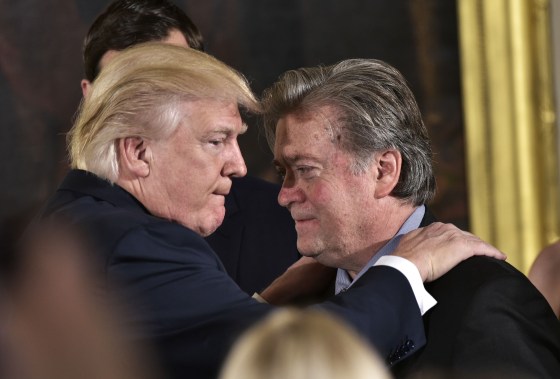
Donald Trump and Steve Bannon. Two adults for whom
character counts; and experience, the rule of law,
national security and the American Dream matter.

During the Bill Clinton era, January 1992 to January 2001, the Republican Party told us, "Character counts." They have since proven that they don't really believe that, with, among others, Newt Gingrich, George W. Bush and Donald Trump.

When they tried to remove Clinton in office over the Monica Lewinsky affair in 1998 and 1999, they argued that they were standing up for "the rule of law." Under Bush and Trump, they proved that they don't care about the rule of law.

When the Republicans ran Bush to succeed Clinton in 2000, and when they ran John McCain to oppose Barack Obama in 2008, they told us, "Experience matters." They have since proven that they don't really believe that, with, among others, Trump.

When the Republicans ran Bush to succeed Clinton in 2000, and when they ran Trump to succeed Obama in 2016, they told us, "The adults are going to be in charge again." They have since proven that they don't really know what an adult is.

From Bush's Inauguration in January 2001 until the conclusion of the McCain campaign in November 2008, the Republicans claimed that only they, not the Democratic Party, cared about "national security." They have long proven that they don't.

And when Trump ran for President in 2015 and 2016, he often told his audiences, "The American Dream is dead." What he didn't say was that people like him killed it.

I don't ever again want to hear a Republican say that character counts. Clearly, it doesn't.

I don't ever again want to hear a Republican say that experience matters. Clearly, it doesn't.

I don't ever again want to hear a Republican say that their people are "the adults." Clearly, they're not.

I don't ever again want to hear a Republican use the words "the rule of law," "national security," or "the American Dream." Clearly, they don't give a damn about any of those things.

As our outgoing President, Joe Biden, would say, "Will you shut up, man!"

Saturday, November 2, 2024

November 2, 2004: George W. Bush Is Re-Elected President

November 2, 2004, 20 years ago: George W. Bush achieves -- due to the appearance of shenanigans in Ohio, I won't say "wins" -- a 2nd term as President, defeating the Democratic nominee, Senator John F. Kerry of Massachusetts. Although Kerry was a rich liberal Catholic from Massachusetts with the initials JFK, and as a young man had met President John F. Kennedy, he was no Jack Kennedy.

Bush and Vice President Dick Cheney won 62 million popular votes, for 50.7 percent. Kerry and his running mate, Senator John Edwards of North Carolina, won 59 million, for 48.3 percent. This remains the only time between 1988 (when Bush's father did it) and 2020 that the Republican nominee for President got a majority of the popular vote.

Bush won 31 States for 286 Electoral Votes. Kerry won 19 States, plus the District of Columbia, for 251 EVs. One "faithless elector" from Minnesota voted for Edwards instead of Kerry.

Kerry got 49.2 percent of the vote in Iowa, and 49.0 percent in New Mexico. Had he won both of those States, that would not have been enough to swing the Electoral Vote in his favor: It would still have been 274-263 Bush.

The key State turned out to be Ohio: Kerry got 48.7 percent there, and it was still not called by 12:00 Noon, Eastern Time, on November 3. Switching its 20 Electoral Votes, and no others, would have given Kerry a 271-266 win. But, despite the various media outlets' refusal to call it for Bush, Bush's lead was such that, at 1:50 PM, Kerry began a press conference, and said, "I have come to the conclusion that we cannot win in Ohio," and announced that he had called Bush, and offered his concession. Bush's final margin in Ohio was 118,601.
Kerry's concession, at Faneuil Hall, Boston

As with Florida in 2000, there were rumors of Republican shenanigans in what turned out to be the decisive State. Kenneth Blackwell, Secretary of State for Ohio, and a former Mayor of Cincinnati, was accused of manipulating the vote. Blackwell has never won another election: He was the Republican nominee for Governor in 2006, but got clobbered by Democratic Congressman Ted Strickland. As of November 2, 2022, he works for the anti-choice, anti-gay Family Research Council.

During the campaign, Bush ran as the man who was fighting to avenge the 9/11 attacks, while his fellow Republicans mocked Kerry for saying that Democratic leadership could "reduce terrorism to the level of a nuisance."

After 4 more years, the economy was in tatters, and the Iraq War was no closer to being "won" than it was on this day.

By 2016, after 8 years of Barack Obama as President, 4 years of Hillary Clinton as Secretary of State, and 4 years of Kerry himself as Secretary of State, Kerry had been proven correct: They have reduced terrorism, at least against American targets, at home and abroad, to the level of a nuisance.

From January 20, 2021 to March 6, 2024, Kerry served as President Joe Biden's Special Presidential Envoy for Climate. And Bush has gotten a somewhat favorable reassessment: At least he wasn't as bad as Donald Trump.

Monday, May 1, 2023

May 1, 2003: "Mission Accomplished" In Iraq

May 1, 2003, 20 years ago: Just 41 days after sending American troops into Iraq to remove the government of dictator Saddam Hussein, President George W. Bush announces, "Major combat operations in Iraq have ended. In the battle of Iraq, the United States and our allies have prevailed."

At the time, it was a justifiable statement. What was not justified was the hoopla around it.

Bush had flown with the Texas Air National Guard in the closing months of the Vietnam War. On this day, Bush became the 1st sitting President to arrive in an "arrested landing" in a "fixed-wing aircraft" on an aircraft carrier, when he was flown (not as the pilot) onto the USS Abraham Lincoln in a Lockheed S-3 Viking, dubbed Navy Oneas the carrier lay just off the coast of San Diego, having returned from combat operations in the Persian Gulf.

(Ordinarily, any plane bearing the President of the United States carries the designation Air Force One, not just the jumbo jet that usually flies him where he needs to go. And any helicopter that carries the President is Marine One. This time, because it was a Navy jet, it got the designation Navy One.)

Bush posed for photographs with pilots and members of the ship's crew, while still wearing a flight suit that was necessary for travel aboard the fighter jet. A few hours later, he gave a speech announcing the end of major combat operations in the Iraq War. Behind and above him hung a banner that said "Mission Accomplished."

Bush was criticized for the historic jet landing on the carrier, as an overly theatrical and expensive stunt. For instance, it was pointed out that the carrier was well within range of Bush's helicopter, and that a jet landing was not needed. Originally, the White House had stated that the carrier was too far off the California coast for a helicopter landing, and a jet would be needed to reach it. On the day of the speech, the Lincoln was only 30 miles from shore, but the Administration still decided to go ahead with the jet landing.

The "Mission Accomplished" banner was a focal point of controversy and criticism. Navy Commander and Pentagon spokesman Conrad Chun said the banner referred specifically to the aircraft carrier's 10-month deployment, which was the longest deployment of a carrier since the Vietnam War, 30 years earlier; and not the war itself. Chun said, "It truly did signify a mission accomplished for the crew."

The White House claimed that the banner was requested by the crew of the ship, who did not have the facilities for producing such a banner. Afterward, the Administration and Navy sources stated that the banner was the Navy's idea, White House staff members made the banner, and it was hung by the U.S. Navy personnel.

Whether meant for the crew or not, the general impression created by the image of Bush under the banner was criticized as premature, especially later as the guerrilla war began. Subsequently, the White House released a statement saying that the sign and Bush's visit referred to the initial invasion of Iraq.

Secretary of Defense Donald Rumsfeld ordered any mention of "Mission Accomplished" removed from Bush's speech. Later, Rumsfeld told journalist Bob Woodward, "I was in Baghdad, and I was given a draft of that thing to look at. And I just died, and I said, 'My God, it's too conclusive.' And I fixed it, and sent it back... They fixed the speech, but not the sign."

Bush ran for re-election in 2004, in part, on the Iraq War. He won. The Republican Party went into the 2006 elections, in part, on the Iraq War. They lost both houses of Congress, and Rumsfeld resigned. 

Senator John McCain ran as the Republicans' nominee for President in 2008, with winning the Iraq War as a major part of his platform. He lost, because the American people didn't want to do what it would take to win the war. They just wanted it to be over.

Senator Barack Obama promised voters that, if they elected him, he would end the war, and they elected him. On December 31, 2011, President Barack Obama pulled the last remaining combat troops out of Iraq. A year later, he ran for re-election partly on that basis, and he won.

The "MISSION ACCOMPLISHED" banner is now in the collection of the George W. Bush Presidential Library and Museum, at Southern Methodist University in Dallas. It is not on display.

Monday, March 20, 2023

March 20, 2003: The Iraq War Begins

March 20, 2003, 20 years ago: President George W. Bush launches the Iraq War, to topple President Saddam Hussein of Iraq from power.

April 9, 2003: Saddam fled, his regime of nearly 34 years coming to an end.

May 1, 2003: Aboard the aircraft carrier USS Abraham Lincoln, beneath a huge banner reading "MISSION ACCOMPLISHED," Bush did not use those words himself, but he did say, "Major combat operations in Iraq have ended. In the battle of Iraq, the United States and our allies have prevailed."

To be fair, he added, "We have difficult work to do in Iraq. We are bringing order to parts of that country that remain dangerous. Our mission continues."

December 13, 2003: Allied forces captured Saddam. But this was not the end of the war, either.

September 30, 2004: With the war still going, with no end in sight, Bush was running for re-election, and debating the Democratic nominee for President, Senator John Kerry of Massachusetts, at the University of Miami in Coral Gables, Florida. Bush was asked why he started the war.

He said, "The enemy attacked us." This was part of his continuing telling of the story that Saddam was involved in the terrorist attacks on September 11, 2001, including the destruction of the World Trade Center in New York.

Kerry responded: "Saddam Hussein did not attack us on September 11, 2001. Osama bin Laden did."

Kerry was right. Bush was lying. That should have ended Bush's bid for a 2nd term right there.

November 2, 2004: By a margin of one State in the Electoral College -- and we may never know just how much the Republicans cheated in Ohio, possibly in other States -- Bush was re-elected.

May 16, 2006: The 3rd season finale of the military-themed drama NCIS airs. Special Agent Leroy Jethro Gibbs, played by Mark Harmon, was in an explosion, and when he emerges from his coma, he has no memory of anything that happened after a similar thing happened to him while he was serving in the original Iraq War of 1991.

Dr. Donald "Ducky" Mallard (David McCallum) meets with NCIS Director Jenny Shepard (Lauren Holly), who says that Gibbs now knows that 15 years have passed, but, seeing the images of the current war on ZNN, that world's fictionalized version of CNN, he says he wants to know why we're still at war in Iraq. Ducky says, "He's not the only one."

January 20, 2009: Bush left office as one of the most unpopular Presidents ever, and Barack Obama became President. He had been elected partly on a pledge to end the Iraq War, which was still going.

June 1, 2009: Dick Cheney, who from 2001 to 2009 had been Bush's Vice President, finally admitted the truth: "I do not believe and have never seen any evidence to confirm that [Hussein] was involved in 9/11. We had that reporting for a while, [but] eventually it turned out not to be true," Cheney conceded.

December 18, 2011: President Obama withdrew the last U.S. combat forces from Iraq, leaving behind only a token force in a defensive role. There were 4,507 American soldiers killed, among 32,000 wounded. Other countries' forces in support, including the new Iraqi army: 18,000. Pro-Saddam and later ISIS forces killed: Approximately 37,000. Iraqi civilians killed: Officially, over 110,000, but probably far more.

Benefits to Iraq: They traded one corrupt regime for another, with far fewer extrajudicial killings. In other words, things became better, but still not good.

Benefits to America: The Bush-Cheney Administration's friends, especially energy companies and defense contractors, made a lot of money, and... uh... well... America remembered that war is a bad thing, and that just because you spout slogans and wave flags doesn't make you more patriotic than the people who say that war is a bad thing. 

Wednesday, November 23, 2022

Top 10 Myths About the 2000s

The decade from January 1, 2000 to December 31, 2009. We still don't really know what to call it. Some call it "The 2000s," pronounced like "The Two Thousands." Some say "The Aughts." Some say "The Aughties." "The Oh-Ohs," as in "00's," never seemed to catch on with anyone.

Time magazine, noting the 9/11 attacks, the Iraq War, Hurricane Katrina, the Crash of 2008 and the ensuing recession, called it "The Decade From Hell." Their editors did not foresee what would happen from 2016 to 2019 -- or, so far, in the 2020s.

I did posts like this for the 1950s, the 1960s, the 1970s and the 1990s. I also did "Top 10 Reasons Why the 1980s Were the Worst Decade," tackling some of that decade's myths. Now, I move on to the 2000s, the name I'm going to use for simplicity's sake. After all, the nostalgia wave for that decade is already underway.

Top 10 Myths About the 2000s

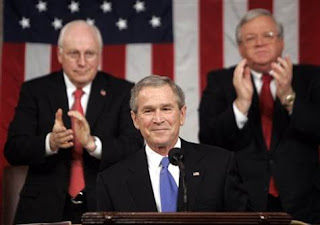
1. George W. Bush Wasn't So Bad. Compared to Donald Trump, sure, anybody wouldn't seem so bad. And, now, Dubya, who served as the 43rd President of the United States from January 20, 2001 to January 20, 2009, has the reputation of being a nice enough guy who wasn't very smart and was in over his head. Well, in this case, two out of three would have been bad enough.
Giving the 2002 State of the Union Address,
in front of Vice President Dick Cheney and
Speaker of the House Dennis Hastert.
Now that was an axis of evil.

But he wasn't a nice enough guy. He lied, cheated and stole to gain the Presidency. And he smeared anyone who got in his way, even after he got into office. He was a draft dodger who called people who opposed his war of choice unpatriotic. He presided over the release of the name of an undercover CIA agent, just because her husband had blown the whistle on one of his lies about that war.

2. The Period After the 9/11 Attacks Was a Time of Great National Unity. It was not. Sure, we were all united behind our troops. But there was no great unity behind the President and his team. Yes, Dubya had a 90 percent approval rating. But most Democrats knew that this guy was not going to be able to get the job done, we were just afraid to say so, and hoping we were wrong.

But the Republicans were already saying that former President Bill Clinton had let bin Laden get away, that he "let him slip through his fingers," or even that a foreign government "handed him bin Laden on a silver platter, and he refused it." This was a lie. As is usually the case when Republicans tell lies and get caught, they didn't care, and kept on lying.

Suppose Al Gore had been President at the time, and had been unable to stop the attacks. Think there would have been any national unity? Yeah, surrrre: The Republicans, in control of the House of Representatives, would have impeached him for not stopping them. They wouldn't have been able to get enough votes in the Senate to remove him, but it would have poisoned the rest of his term.

Even if he had gotten Osama bin Laden before Election Day 2002, that election would have been a bloodbath for the Democrats, and he would have been doomed for 2004.

3. Saddam Hussein Had to be Stopped At All Costs. How many dictators have the Republicans refused to stop? And how many of them killed more people in fewer years than Saddam did?
We will never know if the people of Iraq would have toppled him before he died of natural causes, because we'll never know when that would have been. What we do know is that it wasn't worth it for our country to topple him.

4. The Republicans Were Patriotic, the Democrats Were Not. This has been the conservative argument since 1948, and it has been a big fat lie the whole time. This was especially true in the Dubya Years.

Case in point from the decade in question: The U.S. Senate race in Georgia in 2002. Max Cleland came out of the Vietnam War with his left arm, but not his right, and neither of his legs. He was elected to the U.S. Senate from Georgia in 1996. He was defeated for re-election by Saxby Chambliss, a Congressman who hadn't served in Vietnam, and questioned Cleland's patriotism, because Cleland wasn't sufficiently supportive of Bush's proposed war in Iraq.

Bush never wanted to win the war. He only wanted to have the war, to use as a club over his opponents' patriotism. He still believes that his father's biggest mistake in the 1990-91 Persian Gulf War was ending it too soon, and not securing the patriotic vote for himself in his bid for re-election. Bush the son didn't just want the threat of war and terrorism for the Republicans to win in 2002, and the actual war and the threat of terrorism to win in 2004. He wanted it for 2006 and 2008, even though he would no longer be on the ballot in those elections.

Give John McCain credit: When he ran in 2008, he did say he wanted to end the war, by winning it. Whether he knew how, we'll never know. But at least he knew that it had to end, one way or another.

And speaking of the 2008 election:

5. Barack Obama Was Under-qualified for the Presidency. That argument has been completely shot to hell by the Republicans falling all over themselves to nominate Donald Trump. Obama also had more years in public service than the man the Republicans nominated to beat him in 2012, Mitt Romney, despite Romney being 14 years older.

Furthermore, length of experience isn't necessarily an indication of a good Presidency. George H.W. Bush probably had the most varied experience of any Presidential nominee ever, and he was not a good President. Better than his son, though. And, given the power of the Governor of Texas compared with most other Governors, George W. was less qualified in 2000 than was Obama in 2008.

When John McCain was the Republican nominee in 2008, he had a big edge over Obama on experience. The problem was, his experience was mostly in foreign policy and national security. He had hoped that those would be the most important issues in that election.

Instead, the economy went into the tank. He had having lived most of his life on the federal government's dime: A son of a naval officer, then a Naval Academy midshipman, then a naval officer himself, then a Congressman, then a Senator. Indeed, the most time he'd ever spent away from the federal government taking care of him was while he was a prisoner of war. His biggest experience in regard to the civilian economy and its difficulties was getting caught as one of the "Keating Five," in a banking scandal.
In contrast, Obama did have experience in dealing with the real civilian economy. He and his wife Michelle were still paying off their student debts in 2008. They understood the struggles of Americans who weren't rich. McCain, whatever his other virtues, didn't understand, because of, yes, his experience. When it came to handling the economy, Obama was qualified, and McCain was not -- and that's before we get into economic ideology.

6. Technological Deprivation. There is a perception that kids who grew up then were deprived when it came to technology. But there were already smartphones and Game Boys. At home, there were already laptops and Xboxes. Social media only started to blossom in 2006, but more than half of the things that kids can do with their phones in 2022, they could do in 2000.
The Xbox, introduced by Microsoft on November 15, 2001

7. It Was a Barren Time for Music. Yes, a lot of it was bad. Some of it was very, very bad. Most of that was the computerized stuff, like the monotonous Sean Paul; or attempts at being soulful that ended up sounding like whining, like James Blunt's "You're Beautiful" and Daniel Powter's "Bad Day." (Sad to say, those 2 songs and Sean Paul's "Temperature" were all big hits at the same time in early 2006. Talk about some bad days.)

But it was also the decade in which Eminem, Jay-Z and his eventual wife Beyoncé, Christina Aguilera, OutKast and Pharrell Williams released their best work. It was the decade when Mariah Carey and Mary J. Blige each fell off both commercially and in their private lives, but each made a fantastic comeback on both fronts
He's rich, he's accomplished, he's immensely respected in his field,
he gets to live in New York, and he gets to sleep with Beyoncé.
So why is it so hard to find a picture of Jay-Z looking happy?

It was the decade when the Dixie Chicks (as The Chicks were then known) pissed off conservatives, faced an ugly backlash, and received awards that proved they won that battle. And it was the decade when Pink, Alicia Keys, Norah Jones, Avril Lavigne, Kelly Clarkson and Amy Winehouse debuted, producing epic albums and stunning performances. So there was plenty of good music to go along with the crap that the music industry threw at us.

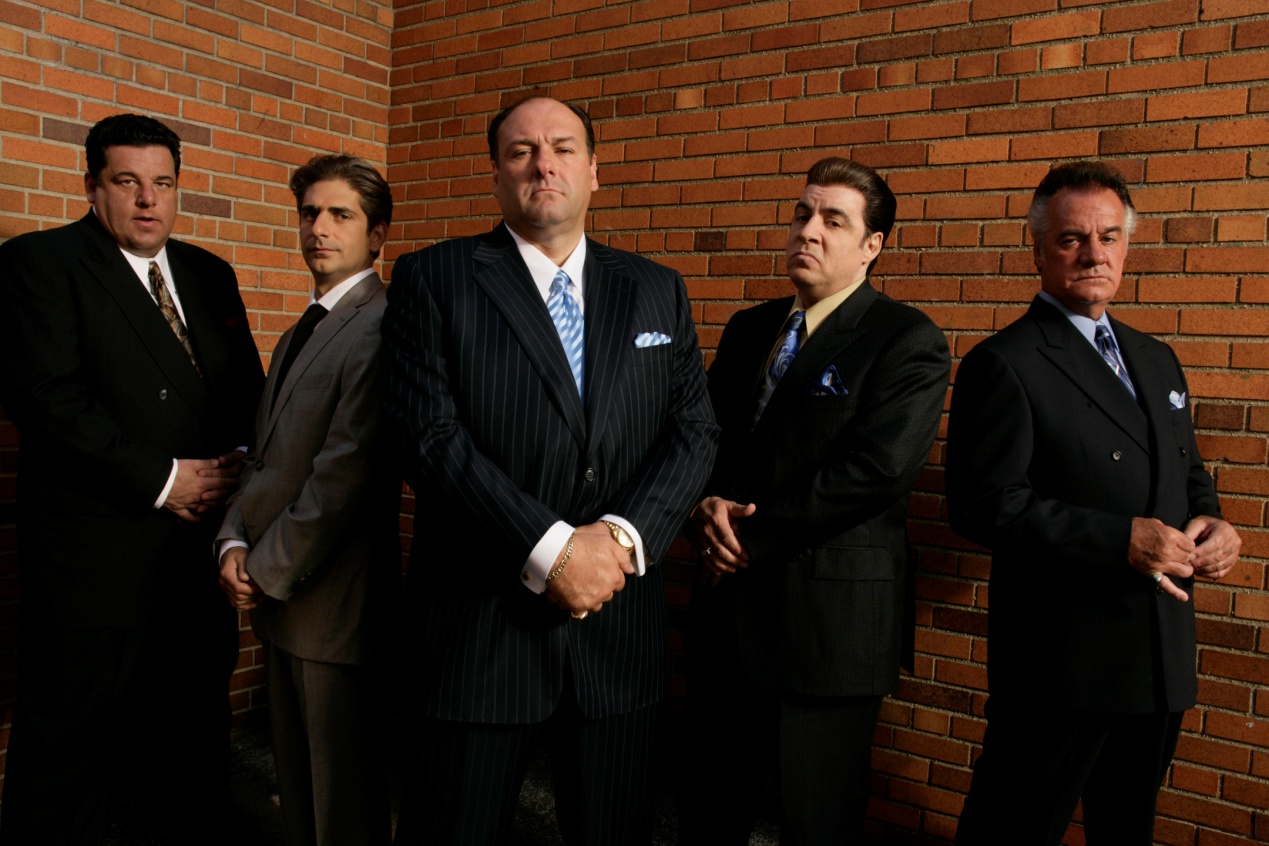
8. The Sopranos Was the Greatest TV Show of All Time. The 1990s began the format of "prestige television." The format really took off in the 2000s, led by The Sopranos, which ran from 1999 to 2007.

Look, as much as I would like a show set in my native North Jersey and in nearby New York City to be the greatest TV show of all time, The Sopranos ain't it.

Yes, it was a very well-written drama. Yes, it could also be funny at times. Yes, the acting was great. Yes, it had some classic moments. And, yes, it also made the point, very well, that the kind of lives that these "men of honor" were leading was dishonorable, often horrible, how their real families suffered because of their activities in "the family," and should not be emulated.

So, I'm not saying it was a bad show. Not by a long shot. I am saying that, like all shows in which criminals are the main characters, it was not for everyone. That's a matter of taste. For all the violence and the over-reliance on profanity, there is much to be said in the show's favor. It deserved most of the accolades it got. And I'm not objecting to the ending of the final episode, either. Once the shock wore off, I realized that it was wholly appropriate.
Left to right: Steve Schirippa, Michael Imperioli,
James Gandolfini, Steven Van Zandt and Tony Sirico

But I can name at least one show in every decade of the TV era that did those things better:

* 1950s: Bonanza. (Barely: It premiered on September 12, 1959.)
* 1960s: Star Trek. (The original series.)
* 1970s: M*A*S*H.
* 1980s: Hill Street Blues.
* 1990s: ER.
* 2000s: The West Wing.
* 2010s: Mad Men.
* 2020s: CBS' FBI Franchise.

9. The Kardashian-Jenner Sisters Were Talentless "Heirheads." No. They started out in their father Robert Kardashian's music agency, then built their respective fashion empires. Unlike a lot of rich people who claim it, they actually have been "job creators." Because of her makeup line, youngest sister Kylie Jenner became American's 1st billionaire under the age of 21.
Left to right: Kris, Kylie, Kourtney, Kim, Khloé and Kendall

Are they publicity-hungry? Yes. Are their love-lives complicated? Sure. Do they bring some of the vast criticism they receive on themselves? You bet. And did they have the advantage of starting out rich, making the funding of their "empires" possible? Of course. But they do have talent, and they're far from stupid.

10. The Yankees and Steroids. Yes, I know: I already addressed this one in my 1990s piece. But it gained more traction in the 2000s.

There is a perception that the New York Yankees were as guilty as any other team when it came to performance-enhancing drugs. This accusation is not merely false, it is really, really stupid. The Yankees most often cited are:

* Roger Clemens. Men tried to prove him guilty in court. They couldn't.
* Alex Rodriguez. The evidence that he used them as a Yankee is flimsy.
* Jason Giambi and...
* Gary Sheffield. Neither helped the Yankees win a World Series. Giambi only helped the Yankees win one Pennant, they lost the World Series, to another cheating team no less, and he was hardly among the team's most consequential players.
* Andy Pettitte. He used, one time, to come back from an injury. That's hardly the same as gaining an unfair advantage. And the Yankees didn't win the Pennant that season, so they didn't benefit from it.

In contrast, look at the Yankees' postseason opponents in the years from 1996 to 2007, which corresponds to Joe Torre's seasons as manager and also, roughly, to "The Steroid Era." In chronological order:

* The Texas Rangers, in the 1996, '98 and '99 American League Division Series. Iván Rodríguez. It didn't work.

* The Baltimore Orioles, in the 1996 AL Championship Series. Rafael Palmeiro, Brady Anderson, and possibly others. It didn't work. It did, however, work well enough for the Orioles to beat the Yankees out for the 1997 AL Eastern Division title.

* The Atlanta Braves, in the 1996 and 1999 World Series. As far as I know, they were clean. If they did use, it didn't work.

* The Cleveland Indians, in the 1997 ALDS and the 1998 ALCS. As far as I know, they were clean, although there has always been suspicion, if not evidence, against Jim Thome. If they did use, it worked in '97, but not in '98.

* The San Diego Padres, in the 1998 World Series. Ken Caminiti. Presuming he was their only steroid user, it didn't work, as he went 2-for-14 with 1 RBI.

* The Boston Red Sox, in the 1999 ALCS. as far as I know, this edition of the Sox was clean. The most prominent Sox player of the 1990s who got caught, Mo Vaughn, was already gone by this point. If they did use, it didn't work -- this time.

* The Oakland Athletics, in the 2000 and 2001 ALDS. Both Jason and Jeremy Giambi, and Miguel Tejada. It didn't work.

* The Seattle Mariners, in the 2000 and 2001 ALCS. As far as I know, they were clean, but I'm always going to have doubts about Jay Buhner. He went bald early, and his plate appearances went way down due to injuries after 1997. Suffice it to say, even as good as he was, the production he gave the Mariners at right field from 1988 to his retirement after the 2001 season did not match the production the Yankees got at that position over the same period, first from Jesse Barfield, then, starting in 1993, from Paul O'Neill. So let's stop pretending that trading Buhner away was a mistake. The Yankees were better without him than the Mariners were with him.

* The New York Mets, in the 2000 World Series: Mike Piazza. Come on, admit it: Piazza lost a lot more of his cool than Roger Clemens did. If anybody was in "roid rage," it was Piazza. And it didn't work.

* The Arizona Diamondbacks, in the 2001 World Series: Matt Williams confessed. Luis Gonzalez had a Brady Anderson-type career, with his 2001 season being his version of Anderson's 1996, so don't tell me he wasn't using. And can we really be sure that Curt Schilling wasn't using? He's certainly arrogant enough to believe he could use and get away with it.

* The team now known as the Los Angeles Angels, in the 2002 and 2005 ALDS. As far as I know, they were clean.

* The Minnesota Twins, in the 2003 and 2004 ALDS. As far as I know, they were clean. If they did use, it didn't work.

* The Boston Red Sox, in the 2003 and 2004 ALCS. David Ortiz got caught. Manny Ramirez got caught. Take those two off the Sox, and they don't even make the Playoffs, and they franchise is, most likely, still looking for their 1st World Championship since 1918. And they couldn't have been the only ones. Trot Nixon? Mark Bellhorn? Bill Mueller? Kevin Millar? Kevin Youkilis? And Schilling was on that team. I want the blood on that sock tested!
* The Florida Marlins, in the 2003 World Series. Iván Rodríguez again.

* The Detroit Tigers, in the 2006 ALDS. Iván Rodríguez again.

* The Cleveland Indians, in the 2007 ALDS. As far as I know, they were clean.

So, as you can see, no team has been hurt more by steroid use than the Yankees -- other teams', and, as little as there was, their own. If any team's titles -- Division, Pennant, World Series -- from that period are invalid, the Yankees are far from 1st on that list.

The 2000 to 2009 decade was full of myths, some of them exaggerations of the truth, and some of them outright lies, that have persisted to this day. It is time to accept the truth.