Showing posts with label dwight d. eisenhower. Show all posts

Saturday, July 25, 2026

July 25, 1956: The Andrea Doria Sinks

July 25, 1956, 70 years ago: The Italian cruiseliner SS Andrea Doria sinks off the coast of Nantucket.

Andrea Doria (1466-1560) was an admiral who reformed the Republic of Genoa, and a figure in what became known as the Italian Renaissance. Today, however, he is mainly remembered as the namesake of this ill-fated ship.

The Italian Line, now known as the Italia Line, launched the SS Andrea Doria in 1951, and it became its country's greatest cruise ship, a symbol of the national pride that had to be rebuilt after World War II and the Fascist dictatorship of Benito Mussolini. It rivaled Britain's RMS Queen Elizabeth, France's SS Île de France, and America's SS United States in transatlantic sea luxury.

On July 17, 1956, at 11:00 AM local time, Andrea Doria left Genoa, Italy's main western port and hometown of the ship's namesake, on its 51st western crossing of the Mediterranean Sea and the Atlantic Ocean.

Later that afternoon, it stopped at Cannes, on the French Riviera. Boarding there was Mike Stoller, who had written "Hound Dog" with Jerry Lieber. As recorded by Willie Mae "Big Mama" Thornton, it was the top rhythm & blues song of 1953. Also boarding there were Richardson Dilworth, then the Mayor of Philadelphia; and actress Ruth Roman and her 3-year-old son Richard; and actress Betsy Drake, then married to actor Cary Grant.

The ship then sailed southeast, arriving in Naples, Italy the next day, and that's where the majority of her passengers boarded. On July 20, she stopped at the British colony of Gibraltar on the coast of Spain, picked up a few more passengers, and headed across the Atlantic.

At midday on July 25, the MS Stockholm, a passenger liner of the Swedish American Line, left New York, heading for Gothenburg, Sweden. She was about half the size of Andrea Doria, and faster. There was fog off the coast of Nantucket, an island to the south of Massachusetts. Using radar, the 2 ships were aware of each other that night.

But they each made a critical mistake, independent of each other. Andrea Doria turned left, so that the ships would pass each other on their right, or "starboard" sides. But Stockholm turned right, so that they would pass each other on their left, or "port" sides. In other words, each ship was steered into the other's path. At 11:10 PM, Eastern Time, on July 25, both traveling at over 40 miles per hour, they collided.

Andrea Doria's generator room flooded, knocking out electrical power. Within 30 minutes, the decision was made to abandon ship. But the lifeboats were inaccessible due to the ship's listing: Those on the port side were too high in the air, and those on the starboard side were too low.

The crew and passengers did catch one lucky break: The Île de France had left New York the same day, and was only 44 miles away when her crew received the distress signal. She arrived 3 hours after receiving the signal, and, in another lucky break, the fog lifted.

Also having left New York that day, and nearby, were a U.S. Navy transport, the USNS Private William H. Thomas, and a destroyer, the USS Edward H. Allen. The Cape Ann, a freighter owned by the United Fruit Company, was also nearby. Each of these ships participated in the rescue. Even Stockholm, which was determined not to be in danger of sinking, participated in the rescue operations, launching its own lifeboats.

In all, 1,663 passengers and crew were rescued from Andrea Doria, including Stoller, Dilworth, Mrs. Grant and the Romans. But 46 people died. At 10:00 AM on July 26, the ship fell fully beneath the waves.
When the Stollers got back to New York, they were greeted by Lieber, who told them that "Hound Dog" had become a Number 1 hit for Elvis Presley. Having been in Europe most of the year, and unaware of goings-on back home in that pre-satellite TV, pre-social media world, Stoller said, "Elvis who?" Thanks to Elvis releasing that one recording, neither Lieber nor Stoller ever had to work another day in their lives. They went on to write several more hits, some specifically for Elvis, including "Jailhouse Rock"; plus most of The Coasters' hits, and several of The Drifters' hits.

The Captain of the doomed Italian liner was Piero Calamai, who had been decorated by his country in both World Wars. He retired after the rescue. To make matters worse, the following year, his brother Marco, also an Admiral, was lost at sea. Piero Calamai died in 1972, having said, "Before, I used to love the sea. Now, I hate it."

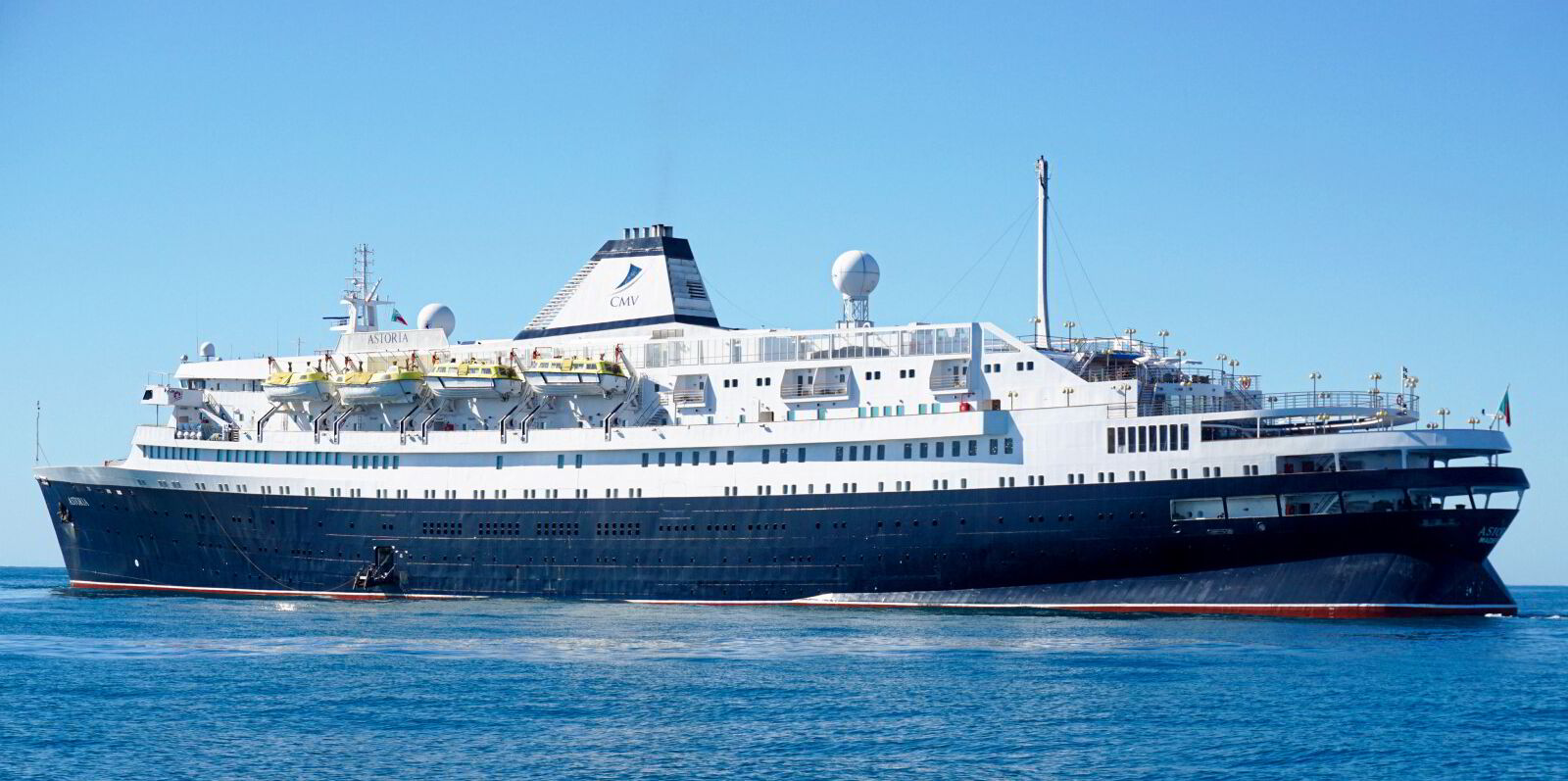
Stockholm underwent repairs, and returned to service. She was renamed several times, and last sailed in 2019, before COVID began shutting everything down, with cruise ships then being a major carrier of it. Her current name is MV Astoria, and, believed to be the oldest cruise ship afloat (launched in 1948), she is currently being retrofitted as a ferry between the Portuguese cities of Lisbon and Funchal.
But COVID hit the cruise industry hard. Stockholm/Astoria never returned to sea, and was scrapped in 2025.

It's not clear how many survivors of the Andrea Doria are still alive, but a few gathered today for a commemoration of the 70th Anniversary.

Monday, June 29, 2026

June 29, 1956: The Interstate Highway System

June 29, 1956, 70 years ago: President Dwight D. Eisenhower signs the Federal-Aid Highway Act of 1956, creating the Interstate Highway System.

"Ike" had wanted such a highway system for America since the Summer of 1919, when, as a 28-year-old Lieutenant Colonel, he participated in the U.S. Army's first Transcontinental Motor Convoy across the country. The convoy left the Ellipse south of the White House in Washington on July 7, and went to Gettysburg, Pennsylvania. From there, it got on the Lincoln Highway, and went to San Francisco. But there were mudpatches that vehicles got stuck in, and bad bridges that the Army rebuilt. The convoy reached San Francisco on September 6 -- 61 days later. Ike thought that was unacceptable.

The Federal Highway System was begun in 1926, with proper paving. But Ike didn't think it was enough: He wanted highways without traffic lights, without having to go through big cities or small towns, rather providing access to local roads leading into them. As a General in World War II, he had seen the Germans' Autobahn system. In a book he wrote after leaving office, he said, "The old convoy had started me thinking about good, two-lane highways, but Germany had made me see the wisdom of broader ribbons across the land."

Ike got his bill, sponsored in the House of Representatives by George Fallon of Maryland, and in the Senate by Albert Gore of Tennessee, both Democrats.

Though Eisenhower is sometimes described as having advocated for the highways for the purpose of national defense, scholarship has shown that he said relatively little about national defense when actually advocating for the plan, instead emphasizing highway fatalities and the importance of transportation for the national economy. In the event of a ground invasion by a foreign power, the U.S. Army would need good highways to be able to transport troops and material across the country efficiently. Following the completion of the highways, the cross-country journey that took the convoy two months in 1919 was cut down to five days.

The numbered system followed a pattern: North-South highways would be odd-numbered, increasing the further East; while East-West highways would be even-numbered, increasing the further North. Thus, my home State of New Jersey has Interstates 76, 78, 80 and 95.

Three-digited highways have a system as well. If starting with an odd number, they are spurs to main highways: Thus, Interstate 195 extends east from I-95. If starting with an even number, they are "beltways," going around a major city. Thus, Interstate 278 forms the Belt Parkway around Brooklyn and Queens, with an extension into New Jersey; and Interstate 287 loops around New York City within New Jersey, before linking up with I-87, the New York State Thruway; and Interstate 295 loops around Trenton and Philadelphia.

The New Jersey Turnpike is bannered as I-95 from Exit 6 on north. But neither the Garden State Parkway nor the Atlantic City Expressway is part of the Interstate System.

While some older freeways were adopted into the system, most of the routes were completely new. In dense urban areas, the choice of routing destroyed many well-established neighborhoods, often intentionally as part of a program of "urban renewal." In the 20 years following the 1956 Highway Act, the construction of the freeways displaced over 1 million people. This resulted in new forms of racial segregation, as "the wrong side of the tracks" became "the wrong side of the freeway."

The Cross Bronx Expressway cut through Bronx neighborhoods, devastating the Borough. And the New Jersey Turnpike cut sections of Newark and Elizabeth off from the rest of those cities, hurting them badly. Both would become part of I-95. And I-676, the Vine Street Expressway, seriously messed with Center City Philadelphia.

Many of the Interstates paralleled older Federal highways. Examples: I-95, U.S. Route 1; I-87 in New York, U.S. Route 9; I-90 in New York and the Midwest, U.S. Route 20; I-84 in the Northeast, U.S. Route 6; I-5 in California, U.S. Route 101. The famous U.S. Route 66 was essentially replaced by I-10, I-15 and I-40 in California, I-40 from San Bernardino to Oklahoma City, I-44 from OKC to St. Louis, and I-55 from St. Louis to Chicago.

Many communities on Federal highways like Route 66 got bypassed, and suffered economically as a result, since people waited until the next big city to get off and eat and/or use the bathroom, or get a place to stay the night, instead of the next town coming up. Route 66 was decommissioned in 1985, although some States rebannered their sections as State Route 66. There is an Interstate 66, but it runs mainly in Washington, D.C. and its Virginia suburbs, and again from Kentucky west to Kansas.

*

June 29, 1956 was a Friday. Dominican baseball All-Star Pedro Guerrero was born. And actress Marilyn Monroe married playwright Arthur Miller. Each would end up married 3 times, and divorced 3 times. 

Saturday, April 18, 2026

April 18, 1956: Grace Kelly Marries Prince Rainier III of Monaco

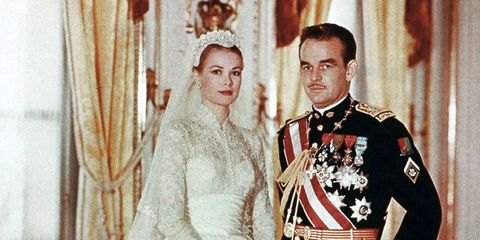
April 18, 1956, 70 years ago: Actress Grace Kelly marries Prince Rainier III, the monarch and dictator of the tiny nation of Monaco.

Grace Patricia Kelly was born on November 12, 1929 in Philadelphia. Her father, John B. Kelly Sr., won 2 Gold Medals in rowing at the 1920 Olympics in Antwerp, Belgium; and another in 1924 in Paris. Her brother, John B. Kelly Jr., a.k.a. Jack Kelly, never won more than a Bronze Medal -- in 1956, in Melbourne, Australia, a few months after his sister's royal wedding -- but later served as President of the U.S. Olympic Committee.

Grace began acting in a school play at age 12. By 1950, she was a star on Broadway. In 1952, she played the female lead opposite Gary Cooper in the classic Western High Noon.

If you remember the film Die Hard, Hans Gruber, played by Alan Rickman, tells John McClane, played by Bruce Willis, that he considers him "just another American cowboy." At the end, when it looks like Gruber has won, he tells McClane, prematurely as it turns out, "This time, John Wayne does not walk off into the sunset with Grace Kelly." And McClane tells him, "It was Gary Cooper, asshole!"

She starred opposite Clark Gable in John Ford's film Mogambo, Ray Milland in Alfred Hitchcock's Dial M for Murder, Jimmy Stewart in Hitchcock's Rear Window, and Cary Grant in Hitchcock's To Catch a Thief. She was heavily in demand: By directors, by would-be male leads, by the public, and by men in general.

She wasn't a "blonde bombshell" like Marilyn Monroe. Rather, the wealth and sophistication to which she was born gave her an onscreen persona that made her seem, well, graceful, and unattainable, but still very much desirable. In 2006, writing The Great Book of Philadelphia Sports Lists, with some lists having nothing to do with sports, the authors, radio talk-show hosts Big Daddy Graham and Glen Macnow, put her on top of their list of the most beautiful women ever to come from Philadelphia and environs.

(The remainder of their Top 10, in descending order: Dancer Lola Falana, model Gia Carangi, actress Maria Bello, actress-talk show host Kelly Ripa, actress Holly Robinson Peete, rapper Eve, actress Kim Delaney, and singers Lauren Hart and Pink.)

Oh, she was desired. And some of those desires came true. She had an affair with Cooper while filming, even though he was 28 years older. She had an affair with Gable while filming, even though he was also 28 years older. She had an affair with Milland while filming, even though he was 22 years older. She had an affair with Aly Khan, a notorious Pakistani prince who later married another of the era's leading actresses, Rita Hayworth; he was a mere 18 years older than Grace. (He was 7 years older than Rita.)

In 1954, she filmed The Country Girl, playing the wife of a character played by Bing Crosby -- and the mistress of a character played by William Holden. Holden, 11 years older, couldn't resist her, and rumors flew that he was going to leave his wife for her.

But she dumped him for Crosby, 26 years older. He was a strict Catholic with his family. With himself, not so much, although it should be pointed out that, at the time, he was widowed, not married. Grace and Der Bingle had an affair, and it was still ongoing on March 30, 1955, the night of the Academy Awards.

Many people thought the Oscar for Best Actress should go to Judy Garland, for her turn in the remake of A Star Is Born, because they were longtime fans of hers, and knew she had gone through a lot to get to that point. Others thought it should go to Dorothy Dandridge, for starring in Carmen Jones, which would have made her the 1st black actor of either gender to win an Oscar for a leading role.

Instead, it went to Kelly for The Country Girl. It was hardly her best work, and she was not better in it than Garland or Dandridge were in their nominated roles. Sidney Poitier won Best Actor in 1964, for Lilies of the Field. It would take until 2002 for a black woman to win Best Actress: Halle Berry, for playing the title role in Introducing Dorothy Dandridge. (Both Dandridge and Berry were natives of Cleveland.)

People began to ask questions like, "Who did Grace Kelly have to sleep with to get that Oscar?" It wasn't Bing Crosby: That night, he expected to, um, celebrate with her. But when he walked into her hotel room, she was, um, celebrating with the night's winner for Best Actor, for On the Waterfront: Marlon Brando. (He was only 5 years older.) In a weird twist of events, Kelly had been offered the female lead in that film, but turned it down. It went to Eva Marie Saint: It was her first film, and she won Best Supporting Actress for it.

Crosby dumped Kelly, but the affairs with him and Holden -- two co-stars in one film -- became the worst-kept secret in Hollywood: Nobody would report on it, but everybody seemed to know about it. She was branded a "homewrecker." 

Kelly had an affair with fashion designer Oleg Cassini, 16 years older. He proposed to her, and she accepted. But her parents said no, because he had been previously divorced. A rumor got out that she had gotten pregnant with Cassini's child, and had an abortion. Was it true? If so, did her parents know? Did these uber-Catholic Kellys arrange the abortion? We will never know: Some secrets were taken to the grave.

And John B. Kelly Sr. was a friend of another fabulously wealthy Irish-American, Joseph P. Kennedy. Maybe Joe's son, Senator John F. Kennedy, and Grace could have kept each other satisfied. But JFK married Jacqueline Bouvier in 1953. While hospitalized for back surgery the following year, Grace allegedly visited Jack, and... I'll let your imagination run wild, but the rumor of JFK and Grace is more likely to be true than the rumor of JFK and Marilyn Monroe.

Finally, the Kellys had had enough. It seemed like the only way to keep Grace out of Hollywood's bedrooms was to keep her out of Hollywood, and marry her off to someone far away -- and farther than Washington, D.C. They found someone: Rainier Louis Henri Maxence Bertrand Grimaldi, the Hereditary Prince of Monaco.

On April 18, 1956, 3 months before the release of her last film, High Society -- about rich Philadelphians like herself, and based on an earlier film titled The Philadelphia Story -- Grace and Rainier married in Monte Carlo, the capital of Monaco. She became Her Serene Highness, Princess Gracia Patricia.

Monaco is 2nd only to Vatican City as the world's smallest country by area: 2 1/2 miles long by 1 mile wide, surrounded on 3 sides by France and 1 by the Mediterranean Sea, and 8 miles from France's southeastern border with Italy. Then as now, it was home to less than 40,000 people, and is known for beaches, lax tax laws that allow rich people to keep much of what they have, and one of the world's foremost gambling casinos. It is ownership of Casino Monte Carlo that makes the House of Grimaldi, the royal family of Monaco, one of the richest families in the world.

The marriage meant the end of her film career, but it was hardly the end of her celebrity. She surpassed Eleanor Roosevelt as the most famous woman in the world. She became perhaps the world's leading charity fundraiser. And she gave the Prince 3 children: Caroline, Albert (now the monarch, Prince Albert II), and Stéphanie.

All 3 children have had complicated love-lives, with the media watching them much more than they watched Grace while she was acting. Albert is believed to have had at least 1 child out of wedlock, who is not in the line of succession. But Stéphanie was the real "wild child," having her mother's libido, but not nearly having her mother's sense of discretion.
Princess Grace, 1982

On September 13, 1982, with Stéphanie in the car, Princess Grace had a stroke while driving back to Monte Carlo from the Grimaldis' country home in Mont Agel, France. Stéphanie suffered a neck injury, but recovered. Grace did not, and died the next day. The following day, USA Today published its 1st edition, and its 1st headline was of an event from outside the U.S.A.: The death of Princess Grace, America's sweetheart and Monaco's. She was only 52 years old.

In his eulogy, Jimmy Stewart -- one of the few co-stars with whom Grace didn't have an affair -- said, "You know, I just love Grace Kelly. Not because she was a Princess, not because she was an actress, not because she was my friend, but because she was just about the nicest lady I ever met. Grace brought into my life, as she brought into yours, a soft, warm light, every time I saw her, and every time I saw her was a holiday of its own."

Prince Rainier never remarried, and lived until 2005.

Friday, April 10, 2026

April 10, 1956: Nat King Cole Is Assaulted Onstage In Birmingham

April 10, 1956, 70 years ago: Nat King Cole, one of the most popular singers in America, is assaulted in mid-concert.

America's favorite black singer -- white adults weren't ready to accept Chuck Berry, Fats Domino and Little Richard yet -- was playing piano and singing with the Ted Heath Orchestra at the Municipal Auditorium in Birmingham, Alabama.

Cole sat at his piano before 4,000 people -- all white, as State law required separate concerts for white and black audiences. Three songs in, three white men rushed the stage and attacked him. He fell backward. His suit was torn, and his body was bruised. The audience screamed as police flooded the stage in chaos. Behind the curtain, the orchestra played "God Save the Queen," a desperate attempt to restore order while one of the greatest voices in America lay shaken backstage.

When Cole finally returned to the microphone, the crowd rose as one. They applauded for 10 straight minutes. Many were crying. Quietly, calmly, he said, "I just came here to entertain you. That was what I thought you wanted. I was born in Alabama."

He couldn't finish the show. But later that night -- injured, shaken, and still sore -- Nat King Cole kept his promise: He returned to the theater, and performed for the black audience waiting for their edition of the segregated concert.

The next day, reporters asked how he felt. "I didn’t think I had an enemy in Alabama," he said. "I''m not mad at a soul."

That grace unsettled people. Some civil rights leaders wanted anger. They wanted fire. They wanted confrontation. Cole chose something else.

Six months later, he made history: On November 5, 1956, The Nat King Cole Show premiered on NBC. It was the first national television program hosted by a Black American. He performed alongside legends like Ella Fitzgerald and Harry Belafonte. He sang. He played. He smiled with dignity in living rooms that had never imagined a Black man at their center. The ratings were strong. The reviews were glowing.

And still, not one major advertiser would sponsor the show. Corporations feared backlash. Executives worried about Southern customers. So for 13 months, NBC paid for the program alone, hoping sponsors would eventually step forward. They never did.

When the show ended in December 1957, Cole finally named the truth: "Madison Avenue is afraid of the dark."

In 1965, Nat King Cole died of lung cancer, at only 45 years old. He had lived long enough to see the March On Washington and the Civil Rights Act of 1964, but not the Voting Rights Act of 1965.

He understood exactly what he had done: "For thirteen months, I was the Jackie Robinson of television."

The Municipal Auditorium, built in 1924, still stands, at 1930 Reverend Abraham Woods Jr. Boulevard, formerly 8th Avenue, facing Linn Park, and across Interstate 20/59 from the city's main arena, the Birmingham-Jefferson Civic Center.
It was renamed the Boutwell Auditorium, in memory of Albert Boutwell, elected Mayor in 1963 as a rejection of racist Police Commissioner Eugene "Bull" Connor. He had previously been Lieutenant Governor and a State Senator. He was defeated for re-election in 1967, and died in 1978.

*

That same night, April 10, 1956, the Montreal Canadiens won the Stanley Cup, beating the team that had beaten them in the last 2 Stanley Cup Finals, the Detroit Red Wings. The Habs won, 3-1 at the Montreal Forum, to win Game 5 and take the 1st of what turned out to be 5 straight Stanley Cups.

Three days earlier, on April 7, the Philadelphia Warriors won Game 5 of the NBA Finals, beating the Fort Wayne Pistons, to win the NBA Championship.

Thursday, March 12, 2026

March 12, 1956: The Southern Manifesto

Southern Senators, led by Strom Thurmond of South Carolina

March 12, 1956, 70 years ago: The Declaration of Constitutional Principles is signed, by 19 members of the U.S. Senate and 82 members of the U.S. House of Representatives, all from States that had been in the Confederate States of America.

Since there was not a goddamned thing about it that was constitutional, it became known as the Southern Manifesto, allowing people on the right side of the struggle for civil rights to do what these rednecks had been doing to them for years: Comparing them to Communists.

The main author was Senator Strom Thurmond of South Carolina. In 1948, as his State's Governor, he had briefly left the Democratic Party to run as the nominee for President of the States' Rights Party. From that point onward, Southern Democrats who opposed civil rights were known as "Dixiecrats."

It was written in response to the unanimous decision of the U.S. Supreme Court, 2 years earlier, in Brown v. Board of Education of Topeka, Kansas, declaring that racial segregation in public schools was unconstitutional.

The Declaration included these words: "The unwarranted decision of the Supreme Court in the public school cases is now bearing the fruit always produced when men substitute naked power for established law."

This was a bald-faced lie: The decision was warranted, and it was a strike against naked power, in the form of "Jim Crow" laws that overturned established law.

It also said: "The original Constitution does not mention education. Neither does the 14th Amendment nor any other amendment. The debates preceding the submission of the 14th Amendment clearly show that there was no intent that it should affect the system of education maintained by the States."

This was true, but it covered up the text of the 14th Amendment: "No State shall make or enforce any law which shall...deny to any person within its jurisdiction the equal protection of the laws." This is known as the Equal Protection Clause.

It also said: "This unwarranted exercise of power by the Court, contrary to the Constitution, is creating chaos and confusion in the States principally affected. It is destroying the amicable relations between the white and Negro races that have been created through 90 years of patient effort by the good people of both races. It has planted hatred and suspicion where there has been heretofore friendship and understanding."

This was a lie: There had not been friendship. And the Court's decision didn't create confusion; it clarified the law.

Three Democratic Senators from Southern States did not sign: Albert Gore and Estes Kefauver of Tennessee, and the Majority Leader, Lyndon Johnson of Texas. In the House, 16 of 21 Democrats from Texas refused to sign it, including the Speaker of the House, Sam Rayburn, and a future Speaker, Jim Wright. Also refusing to sign were 3 of the 11 Democrats from North Carolina; and 1 of the 7 from Florida, Dante Fascell.

The following year, Thurmond launched the longest filibuster the Senate had yet seen, in a vain attempt to stop the Civil Rights Act of 1957. When the Civil Rights Act of 1964 was passed, he became the 1st Dixiecrat to switch to the Republican Party. There would be many more.

Thurmond turned out to be the last-serving member who signed the Southern Manifesto, serving until 2003, shortly after his 100th birthday, and dying a few months later. The last surviving signer was Richard Poff of Virginia, who died in 2011.

The last-serving member who refused to sign was Jack Brooks of Texas, who served until 1994. The last surviving refuser was the aforementioned Jim Wright, who died in 2015.

Wednesday, February 25, 2026

February 25, 1956: Khrushchev's "De-Stalinization" Speech

February 25, 1956, 70 years ago: Nikita Khrushchev, General Secretary of the Communist Party of the Soviet Union, addresses the 20th Party Congress in Moscow. It had been less than 3 years since the death of Joseph Stalin, who had ruled the country with an iron fist for 30 years.

Khrushchev gives what became known as the "Secret Speech," laying out some of Stalin's crimes, and the "conditions of insecurity, fear, and even desperation" created by Stalin. He shocked his listeners by denouncing Stalin's dictatorial rule and his cult of personality, as inconsistent with Communism and with Party ideology. Among other points, he condemned the treatment of the Old Bolsheviks, people who had supported Communism before the Bolshevik Revolution of 1917, many of whom Stalin had executed as traitors.

The speech was shocking. There were reports that some of those present suffered heart attacks, and others later took their own lives, due to shock at the revelations of Stalin's use of terror. The ensuing confusion among many Soviet citizens, raised on permanent praise of the "genius" of Stalin, was especially apparent in Georgia, Stalin's homeland, where days of protests and rioting ended with a Soviet army crackdown on March 9.

In the West, the speech politically devastated organized Communists. The Communist Party USA lost more than 30,000 members within weeks of the speech's revelation to the West. The speech was also later cited as a cause of the Sino-Soviet split, as China's dictator Mao Zedong had been a committed supporter of Stalin.

Khrushchev did stay popular among the Soviet people, and without using cult-of-personality tactics. It could be argued that the country peaked in 1961, with the start of the space program, the building of the Berlin Wall, and their success in international sports. But by 1964, enough Politburo members had had enough of Khrushchev that he was removed from power. He lived in exile until 1971.
 

Monday, February 16, 2026

Yankees and Mets Under Presidents

April 17, 1956, Opening Day, Griffith Stadium in Washington:
President Dwight D. Eisenhower throws out the first ball,
as Yankee manager Casey Stengel and
Washington Senators owner Calvin Griffith look on.
The Yankees won, 10-4.

Today is Presidents Day. Or, as we should call it until we have a President again, the 3rd Monday in February.

The Curse of Ike? Since 1958, when Dwight D. Eisenhower was President, and the Yankees won the World Series:

Under Democratic Presidents, the Yankees have won 12 Pennants and 9 World Series.

Under Republican Presidents, the Yankees have won 5 Pennants and no World Series.

The Mets?

Under Republican Presidents, 5 postseason appearances (but none since 2006), 3 Pennants, 2 World Championships.

Under Democratic Presidents, 6 postseason appearances, 2 Pennants, no World Championships.

Make of this phenomenon what you want, but the facts are clear:

* If you want the Yankees to win, vote Democratic.

* If you want the Mets to win, vote Republican.

Actually, given economics, social policy, and foreign policy, the facts are clear:

* If you want Americans to be better off, vote Democratic.

* If you don't, vote Republican.

Tuesday, October 7, 2025

October 7, 1955: Allen Ginsberg Howls

October 7, 1955, 70 years ago: Allen Ginsberg gives the 1st public reading of his poem "Howl," at the Six Gallery in the North Beach section of San Francisco.

The poets reading that night were, in order: Philip Lamantia, Michael McClure, Philip Whalen, Ginsberg and Gary Snyder. The organizer was Kenneth Rexroth. They were introduced by Lawrence Ferlinghetti, who also owned the nearby City Lights Bookstore. Both Rexroth and Ferlinghetti were published poets, but neither read his work that night. Jack Kerouac, already a published novelist but 2 years away from his magnum opus On the Road being published, refused to read his own poetry, but cheered the other writers on, and passed a jug of wine around.

"Howl" is best remembered for its opening:

I saw the best minds of my generation destroyed by madness, starving hysterical naked,
dragging themselves through the negro streets at dawn looking for an angry fix,
angelheaded hipsters burning for the ancient heavenly connection to the starry dynamo in the machinery of night,
who poverty and tatters and hollow-eyed and high sat up smoking in the supernatural darkness of cold-water flats floating across the tops of cities contemplating jazz,
who bared their brains to Heaven under the El and saw Mohammedan angels staggering on tenement roofs illuminated,
who passed through universities with radiant cool eyes hallucinating Arkansas and Blake-light tragedy among the scholars of war,
who were expelled from the academies for crazy & publishing obscene odes on the windows of the skull,
who cowered in unshaven rooms in underwear, burning their money in wastebaskets and listening to the Terror through the wall...

And so on. But the part that sticks out to me is Part II, in which Ginsberg compares America's consumer culture to a Canaanite god, usually in the form of a giant bull and demanding the sacrifice of children, mentioned in the Old Testament as Molech (MOLL-ick) or Moloch (MOH-lock):

What sphinx of cement and aluminum bashed open their skulls and ate up their brains and imagination?

Moloch! Solitude! Filth! Ugliness! Ashcans and unobtainable dollars! Children screaming under the stairways! Boys sobbing in armies! Old men weeping in the parks!

Moloch! Moloch! Nightmare of Moloch! Moloch the loveless! Mental Moloch! Moloch the heavy judger of men!
Moloch the incomprehensible prison! Moloch the crossbone soulless jailhouse and Congress of sorrows! Moloch whose buildings are judgment! Moloch the vast stone of war! Moloch the stunned governments!
Moloch whose mind is pure machinery! Moloch whose blood is running money! Moloch whose fingers are ten armies! Moloch whose breast is a cannibal dynamo! Moloch whose ear is a smoking tomb!
Moloch whose eyes are a thousand blind windows! Moloch whose skyscrapers stand in the long streets like endless Jehovahs! Moloch whose factories dream and croak in the fog! Moloch whose smokestacks and antennae crown the cities!
Moloch whose love is endless oil and stone! Moloch whose soul is electricity and banks! Moloch whose poverty is the specter of genius! Moloch whose fate is a cloud of sexless hydrogen!...

Moloch! Moloch! Robot apartments! invisible suburbs! skeleton treasuries! blind capitals! demonic industries! spectral nations! invincible madhouses! granite cocks! monstrous bombs! 
They broke their backs lifting Moloch to Heaven!
Moloch in whom I sit lonely! Moloch in whom I dream angels! Crazy in Moloch!

Moloch had appeared in literature before. In his 1667 Paradise Lost, John Milton described him as a child-eating fallen angel, a "horrid king besmeared with blood / Of human sacrifice, and parents’ tears." Charles Dickens mentioned him in his 1848 novella The Haunted Man. In his 1862 novel Salammbô, set in Carthage during the Mercenary Revolt after the First Punic War in 237 BC, Gustauve Flaubert described Moloch as a god who represents the destructive power of the Sun.

"Howl" became the subject of an obscenity trial, for its profanity and sexual imagery, including the homosexual inferences made by Ginsberg, one of the few openly gay celebrities of the era. It was Ferlinghetti and his store, for selling the book, that were sued, not Ginsberg for writing it. On October 3, 1957, Judge Clayton W. Horn ruled that the poem was not obscene, and could be publicly sold.

As a native of Paterson, New Jersey and a New York resident for most of his life, he certainly had the opportunity to face sports. He was invited to read a poem and throw out a ceremonial first ball before a San Francisco Giants game on June 1, 1994. The Giants lost, 1-0 to the Atlanta Braves, in front of 28,808 fans, the biggest audience one of his readings had ever received. The poem was not well-received, but, 2 days short of his 68th birthday, he threw a strike from the mound.
Ginsberg admitted that day that he had never previously been inside a baseball stadium, except once for a Rolling Stones concert. "I'm just a four-eyed sissy," he remarked that day. In contrast, Kerouac was a star football player and track performer in high school, who washed out at Columbia University.

Certainly, the 1955 edition of Ginsberg wouldn't have been surprised at the move of the Brooklyn Dodgers to Los Angeles just 2 years later; at the corporations buying the naming rights to stadiums and arenas; or at the massive amounts of money that TV networks pay to televise sports, to the point where the NFL teams could lock their stadiums and not admit one single fan to a game, and not collect one single admission fee, and still make a profit.

Kerouac died in 1969, Ginsberg in 1997, Whalen in 2002, Lamantia in 2005, McClure in 2020, and Ferlinghett in 2021, at the age of 101. As of October 7, 2025, Snyder is the only reader from that night still alive.

October 7, 1955 was a Friday. Classical cellist Yo-Yo Ma was born.

Thursday, July 17, 2025

July 17, 1955: Disneyland Opens

July 17, 1955, 70 years ago: Disneyland opens in Anaheim, California, 26 miles southeast of Los Angeles.

Walt Disney, head of the film studio that bore his name, based it on Henry Ford's Museum and Greenfield Village, in the Detroit suburbs, having enjoyed its Main Street concept and steamboat rides. He had also been inspired by such places as Colonial Williamsburg in Virginia and the 1939-40 New York World's Fair.

The opening day was a disaster. It was open only to invited guests and the media, but about half of the 28,000 people there had bought counterfeit tickets or climbed over the fence. Traffic to get in was as bad as for a major sporting event.

And the temperature was 101 degrees. (Most of Southern California had been desert before L.A. was built on it and then expanded out, after all.) The local plumbers' union was on strike. As a result, the water pressure was such that Disney was given a choice of having working drinking fountains or working public toilets. He chose the toilets, which was unquestionably the right move. But since Pepsi-Cola was one of the sponsors, having non-working drinking fountains made it look like a cynical move to sell more Pepsi.

And the vendors didn't have enough food. The heat also meant that some of the asphalt that had just been poured didn't have time to fully cool, and some women's high heels sank into it, tripping them up and injuring some.

Usually being media-savvy, Disney wanted the events televised nationwide, and got ABC to broadcast it, with some of his conservative Hollywood friends like Art Linkletter, Bob Cummings and... Ronald Reagan. But many guests tripped over the large TV camera cables of the era. Cummings was caught kissing a dancer. Linkletter tried an "over to you" to Cummings over and over again, but a technical issue made it impossible, and he ended up looking very foolish on live TV. (It was Linkletter's birthday, too: He was 43.)

For the rest of his life, Disney referred to the day as "Black Sunday," and accepted the next day, July 18, as Disneyland's "official birthday." After his death, though, the park began to restore the July 17 birthday.

The original park had 5 main sections, which have since been added onto. Main Street, U.S.A. was patterned after a typical Midwest town of the early 20th Century -- specifically, the one Disney himself grew up in, during the 1900s and 1910s: Marceline, in north-central Missouri, which now has a museum in Disney's honor. 

Adventureland was "designed to recreate the feel of an exotic tropical place in a far-off region of the world," as Disney put it, "far from civilization, in the remote jungles of Asia and Africa." Being in the Western U.S., and this being the early days of television, when Western movies were big, there pretty much had to be a Wild West-themed place, and it was named Frontierland.

Fantasyland was inspired by such Disney cartoon classics as their versions of the stories of Snow White and the Seven Dwarfs, Cinderella, Alice in Wonderland and Peter Pan. Its centerpiece, and the park's symbol, is the 77-foot-high Sleeping Beauty Castle. And Tomorrowland was especially inspired by New York 1939, as an idea of what the future would look like -- keeping in mind that, in 1955, space travel was still just a concept.

All of which allowed Disneyland to rebound from the lousy Day One to become what it billed itself as: "The Happiest Place On Earth," one that denied the existence of the troubles of post-World War II America: The Cold War, smog, suburban banality... and racial strife. It would be a while before Disneyland's employee roster was desegregated, and even longer before there was enough of a black middle class in America to provide enough of a black customer base.

On October 1, 1955, 76 days after Disneyland opened, The Honeymooners premiered on CBS. Formerly a sketch on The Jackie Gleason Show, Gleason spun the show off as a half-hour sitcom. The premiere episode featured Gleason's Ralph Kramden facing the demand of his wife Alice, played by Audrey Meadows, for something they did not yet have, but most families now seemed to: A television set. But Ralph hadn't even gotten a telephone -- or, something that always bugged my mother, a kid at the time, curtains for the kitchen window, the only window visible on the stage set.

Ralph told Alice he worked hard for his money -- no question about that, he was a bus driver in New York -- and that she should be lucky to live the way she does, in their small apartment in Brooklyn, without modern amenities. Alice went along with it, in the most sarcastic of fashions: "It's a regular Disneyland!"

She pointed out the window, at the tenements, and the laundry lines between them: "That's my Fantasyland!" She turned on the faucet of the kitchen sink. What came out of it? Water? Nope, just a weird knocking sound. "I never know what's going to happen with it," she said. "That's my Adventureland. That stove and that icebox: That's Frontierland. The only thing missing, Ralph, is The World of Tomorrow. I have nothing in my Disneyland from The World of Tomorrow!"

Ralph: "You want The World of Tomorrow? I'll show you The World of Tomorrow: You're going to the Moon!"

In 1966, two and a half miles to the east, across Interstate 5, what is now Angel Stadium of Anaheim opened, as the home of the baseball team then known as the California Angels, but now again called, as they originally were, the Los Angeles Angels. Jokes about the Angels playing "at Disneyland" have abounded ever since. But, between them, the Angels and Mickey Mouse have made the City of Anaheim grow by leaps and bounds, to the point where it's no longer just a giant suburb of L.A., but a real city in its own right, of 350,000 people.

*

October 1, 1971: Walt Disney World opens in Bay Lake, Florida, 15 miles southwest of Orlando.

Okay, why a 2nd park? Was "Uncle Walt" simply greedy? No: By 1959, he was seeing figures showing that, at the time, 75 percent of America's population lived east of the Mississippi River, but only 5 percent of Disneyland's visitors came from there. And he didn't like some of the businesses that were sprouting up near Disneyland. So he wanted a place convenient to the East, but with more land, so he could control what went up around it. If there's one thing that a powerful person desires more than money, it's control.

He had an idea he called "EPCOT": Experimental Prototype Community Of Tomorrow. In other words, while there would be a Main Street, U.S.A., a Fantasyland and a Frontierland as with Anaheim, the place would be more about tomorrow than yesterday.

The project was barely in the planning stage when Disney died from cancer on December 15, 1966. His brother Roy Disney saw it through, but only the original part of the park, known as the Magic Kingdom, opened in 1971.

"The Most Magical Place On Earth" was built over a series of tunnels that allowed employees or guests to move through the park out of sight. As with its California counterpart, the centerpiece is a castle, this one named Cinderella Castle, and reaching a higher peak, 189 feet.

All the water in the park is kept moving. Not having standing water nearly -- but not completely, as nothing is 100 percent effective -- eliminates one of the biggest problems with being in Florida: Disney World has hardly any mosquitoes.

Disney's Contemporary Resort also opened on the Magic Kingdom's opening day. It is a hotel, and a terminus for the park's monorail system.

November 17, 1973: On vacation, trying to get away from the troubles of the Watergate scandal, and staying at the Contemporary Resort, President Richard Nixon decides to hold a press conference. He gets mad at the questions about his integrity, and finally says, "I welcome this sort of examination, because people have gotta know whether or not their President is a crook! Well, I'm not a crook! I've earned everything I've got!"

The line becomes remembered as "I am not a crook." And, technically speaking, he wasn't a "crook." He was an arch-criminal. His recently-resigned Vice President, Spiro Agnew, forced out over charges of bribery and tax evasion? He met the definition of a crook.

October 1, 1982: Epcot, as Walt imagined it, finally opened, crowned by a "Spaceship Earth." It included several sections devoted to various countries around the world, inspired by the Busch Gardens theme parks in nearby Tampa and in Williamsburg, Virginia.

March 8, 1983: Another Republican President took time off to go to Orlando -- although the speech in question was not given at the Disney World complex. Addressing the National Association of Evangelicals, 28 years after the former actor had helped open Disneyland, Ronald Reagan gave a speech appealing to the anti-atheist, and therefore anti-Communist, views of the attendees, attacking the Soviet Union -- not with bombs, but with words:

I urge you to beware the temptation of pride, the temptation of blithely declaring yourselves above it all and label both sides equally at fault, to ignore the facts of history and the aggressive impulses of an evil empire, to simply call the arms race a giant misunderstanding and thereby remove yourself from the struggle between right and wrong, and good and evil.

Uncle Walt would have approved.

November 4, 1986: I visited Disney World with my family. My parents had wanted to go for a long time, and could now afford it. I wasn't crazy about the idea, but my sister was then 7 years old, so it was more for her than for anything else.

The place quickly grew on me, and, despite the distaste I eventually developed for Disney the man, it was a great experience. At one point, I lost my wallet, and it was found and returned within 2 hours. At the time, I was relieved. As time went by, I become very impressed with the efficiency of the place.

My parents noticed just how much of it had been bought by Disney from the 1964-65 New York World's Fair. My grandmother was with us, and kept saying, "That wasn't the real World's Fair," remembering the 1939-40 edition, But she enjoyed it, too. (We also visited nearby Sea World, the John F. Kennedy Space Center at Cape Canaveral -- my father and I, both science fiction fans, insisted -- and, at the other end of Florida, a cousin of my father's outside Tampa. While some members of my family have been to California, none of us has ever visited Disneyland.)

January 26, 1987: The day after the New York Giants won Super Bowl XXI, a commercial began airing. To the tune of "When You Wish Upon a Star," from the 1940 Disney cartoon Pinocchio, highlights of the game were shown, mostly of the game's Most Valuable Player, Giant quarterback Phil Simms.

Halfway through, an unseen announcer said, "Phil Simms: You've just won the Super Bowl! Now, what are you going to do?" And Simms looked into the camera and said, "I'm going to Disney World!" Sure enough, Simms and his teammates attended a parade in their honor at Disney World, and a tradition was born: Not just for Super Bowl MVPs, but for other sports stars. (Mark McGwire did it after breaking * Roger Maris' home run record in 1998.)

What I didn't know for several years was that 2 versions had been filmed, one for the East, and one for the West, in which Simms said, "I'm going to Disneyland!" Since the game was played at the Rose Bowl, on the other side of Los Angeles, they went to Disneyland first.

May 1, 1989: Disney's Hollywood Studios opens on Disney World land, to compete with the nearby Universal Studios theme park.

June 1, 1989: Disney's Typhoon Lagoon, a water park, opens.

November 4, 1989: Orlando becomes a major league sports city, with the debut of an NBA team. It is named in honor of the Magic Kingdom: The Orlando Magic. The team has made the Playoffs 16 times in its 1st 32 seasons, including 2 trips to the NBA Finals. But it has never explained what "one Magic" is called. Then again, neither have their Florida arch-rivals, the Miami Heat.

April 1, 1995: Disney's Blizzard Beach, a water park with a contradictory name, opens.

April 22, 1998: Disney's Animal Kingdom opens, based on the safari at Six Flags Great Adventure in Jackson, New Jersey and the nearby Busch Gardens park in Tampa.

Wednesday, June 25, 2025

June 25, 1950: The Korean War Begins

June 25, 1950, 75 years ago: Troops of the Democratic People's Republic of Korea -- a.k.a. North Korea, a Communist nation, and by no means democratic or a republic -- cross the parallel of 38th degrees north latitude, and invade the Republic of Korea -- a.k.a. South Korea, which is capitalist, but hardly free.

Two days later, President Harry S Truman announced that American and other NATO forces would come to the aid of South Korea. The next day, North Korean troops took the South Korean capital of Seoul.

A total of 16 United Nations countries came to the South's aid: America, Canada, Britain, France, Belgium, the Netherlands, Luxembourg, Greece, Turkey, Colombia, Ethiopia, South Africa, the Philippines, Thailand, Australia and New Zealand. In addition, Norway, Sweden, Denmark, Italy and India provided medical and other support.

On September 15, Korea had its "D-Day," as General of the Army Douglas MacArthur, despite being 70 years old, personally led an amphibious landing at Inchon. Within weeks, not only was Seoul liberated, but the North's troops were backed up to the Yalu River, separating the Korean peninsula from the People's Republic of China.

That country then intervened on behalf of its Communist "little brother." The war became a stalemate, lasting 3 years. Truman ended up relieving MacArthur of duty in April 1951, for disobeying orders, replacing him with Matthew Ridgeway. He commanded UN troops in Korea until May 1952, when he was transferred to command U.S. troops in Europe. He was replaced as UN commander by Mark Clark, who held that role until the Armistice was signed on July 27, 1953, by which point Dwight D. Eisenhower was the President.

About 327,000 Americans served in the conflict, and 36,574 were killed, with another 103,000 wounded but surviving.

Kim Il-Sung, the founder of the DPRK, remained in power until his death in 1994. His son, Kim Jong-Il, was then in charge until his own death in 2011. And his son, Kim Jong-Un, is now in charge, and is every bit as bad as his father and his grandfather. The military is well-supplied, but the civilians are poor, and many are starving.

Not that Syngman Rhee, the founder of the ROK, was a saint. South Korea may have been capitalist, but it was hardly democratic. He remained in power until being deposed in 1960, and died in 1965. South Korea's path to democracy has been difficult, including the assassination of President Park Chung-hee over fears he was bringing dictatorship back in 1979; and the impeachment and removal of his daughter, President Park Geun-hye, on corruption charges in 2017.

MacArthur died in 1964, Eisenhower in 1969, Truman in 1972, Clark in 1984, and Ridgeway in 1993. South Korea's leading General, Chung Il-kwon, served as Prime Minister from 1964 to 1970, and lived until 1994. Kim Il-Sung operated as his own commanding General.

Coming between the epic of World War II and the more recent national trauma of the Vietnam War, Korea became "the forgotten war." Even the TV series M*A*S*H, running on CBS from 1972 to 1983, didn't help much, as details were frequently gotten wrong.
The Korean War Veterans Memorial, Washington

A memorial to the American troops of the Korean War opened in 1995 on the National Mall in Washington, across from a counterpart to the Vietnam War, between the Washington Monument and the Lincoln Memorial. Surviving veterans are now age 90 and up.

U.S. forces remain on South Korean soil. These included an engineering unit to which my father was assigned in 1967 and 1968.

Monday, April 14, 2025

April 14, 1955: The Yankees Finally Integrate

April 14, 1955, 70 years ago: The New York Yankees put a black man onto the field in a regular-season game for the first time -- 6 years after the New York Giants had done so, and 8 years after the Brooklyn Dodgers became the 1st Major League Baseball team to integrate.

The pioneer is Elston Howard, a 26-year-old native of St. Louis, who had previously played for the Kansas City Monarchs of the Negro Leagues. The Yankees are playing the Boston Red Sox at Fenway Park in Boston, and in the bottom of the 6th inning, Howard runs out to left field, replacing Irv Noren.

His 1st at-bat comes in the top of the 8th, and he singles home Mickey Mantle as the Yankees mount a comeback. It falls short, however, and the Red Sox win, 8-4.

Mantle went 1-for-2, with 2 walks. Ted Williams, the Red Sox' biggest star, did not play.

Howard would be the Yankees' starting left fielder through the 1959 season. In 1960, he switched positions with Yogi Berra, becoming the team's starting catcher until midway through 1967. He helped the Yankees win 9 American League Pennants, and 4 World Series: 1956, 1958, 1961 and 1962. In 1963, he became the 1st black man to be named the Most Valuable Player of the AL. (In the NL, the honor had already been received by Jackie Robinson, Roy Campanella 3 times, Willie Mays, Hank Aaron, Ernie Banks twice, Frank Robinson and Maury Wills.)

Howard won 1 more Pennant, in 1967 -- with some irony, with the Red Sox, who had been the last MLB team to integrate, in 1959. Howard would be one of a few black and Hispanic players who were critical to the Sox' success in that "Impossible Dream" season.

In 1969, the Yankees named Howard the AL's 1st black coach. He would be on the staff of their 1976 Pennant winners, and their 1977 and 1978 World Champions. He died of a heart ailment in 1980, only 51 years old. Had he lived, he might have been the 1st black manager of a New York team. Instead, that honor went to Willie Randolph, a former Yankee 2nd baseman who was hired as such by the New York Mets in 2005. Going into the 2025 season, the Yankees have still never had a black manager.

In 1984, the Yankees retired Howard's Number 32, and dedicated a plaque in his memory at Yankee Stadium's Monument Park.

*

April 14, 1955 was a Thursday. Back in New York, the Brooklyn Dodgers beat the New York Giants, 10-8 at the Polo Grounds. Don Newcombe was the winning pitcher, Sal Maglie the losing one. Newcombe himself hit 2 home runs, and was also backed by homers from Roy Campanella and Carl Furillo. Jackie Robinson went 2-for-3 with 2 walks. Hank Thompson and Bobby Hofman hit homers for the Giants, and Willie Mays went 1-for-4 with a walk.

The NFL was out of season. The NBA season ended 5 days earlier, when the Syracuse Nationals beat the Fort Wayne Pistons in Game 7 of the Finals.

On this night, the Detroit Red Wings beat the Montreal Canadiens, 3-1, in Game 7 of the Stanley Cup Finals, at the Olympia Stadium in Detroit. This made it back-to-back Cups for the Wings, 4 in the last 7 years, and 7 overall. Without the suspended Maurice "the Rocket" Richard, the Canadiens couldn't quite get the job done. With him, they won the next 5 Cups. The Wings would not win another Cup until 1997.

Saturday, April 12, 2025

April 12, 1945: President Franklin D. Roosevelt Dies

April 12, 1945, 80 years ago: Two of the U.S. Army's leading Generals meet to discuss how to make the final surge on Nazi Germany. The Supreme Commander of Allied forces, Dwight D. Eisenhower, suggests sending U.S. troops through the industrial heart of the nation, the south.

But George S. Patton suggests that the main U.S. force go right for the capital, Berlin, and continue to the river that was then the border between Germany and Poland: "And on to the Oder!" Patton was already thinking of the future, one where the Soviet Union might control Eastern Europe, including parts of Germany.

Eisenhower thought of Berlin, and asked Patton, "Who would want it?" Patton said, "I think history will answer that question for you, Ike."

But Eisenhower thought that, for all they suffered in World War II, the Soviets deserved to be the ones to take Berlin. Patton could have gone over Eisenhower's head, to the Commander-in-Chief, but he didn't.

It wouldn't have mattered if he had, because this was the day that President Franklin D. Roosevelt died.

At 1:00 PM, U.S. Eastern Time, he was at the "Southern White House" he had built at Warm Springs, Georgia, at the health spa where he had once tried in vain to recover from the effects of polio. He was posing for a portrait, being painted by Russian exile Elizabeth Shoumatoff, when he suddenly dropped the papers he was reading, put his hand to the back of his head, and said, "I have a terrific headache," and lost consciousness.

A doctor was retrieved. After 12 years and 1 month, the longest Presidency ever, of fighting the Great Depression, Nazi Fascism and Japanese imperialism, FDR's blood pressure (according to a document released on the 75th Anniversary by his Presidential Library) was 300 over 190. He had suffered a cerebral hemorrhage. Death came to him at 3:35 PM. He was 63 years old.

The portrait was never finished. It now hangs in the house at Warm Springs, next to an earlier portrait she had painted of him.
Vice President Harry S Truman was presiding over the U.S. Senate, and went to see the Speaker of the House, Sam Rayburn of Texas. As Rayburn began pouring drinks, he remembered that Stephen Early, the White House Press Secretary, had called, and asked to have Truman call him back. Why the Secret Service didn't immediately whisk Truman away is a question for them, not that their current counterparts would answer it now.

Truman called the White House, and Early told him, "Please come over here as quickly and as quietly as possible." In a letter to his mother, Martha Ellen Young, who lived another 2 years, Truman claimed that he had no idea of what this was about. Truman was what would now be called a "mama's boy," and I find it impossible to believe he would lie to his mother.

But there was a 3rd man in that room, Lewis Deschler, the House parliamentarian and a key aide to Rayburn. In his 1975 biography Sam Rayburn, Alfred Steinberg quoted Deschler, by then the last survivor, as saying that Truman yelled, "Holy General Jackson!" as if he knew exactly what the call meant.

In his 1992 Pulitzer Prize-winning biography Truman, David McCullough found Steinberg's notes, and realized that Steinberg had cleaned the words up for public consumption: According to Deschler, what Truman actually said was, "Jesus Christ and General Jackson!" As if he was putting the two of them on the same level.

Regardless of whether Truman or Deschler was telling the truth, Truman did as Early asked, and was taken to a room where First Lady Eleanor Roosevelt was sitting all alone. According to Truman, that's when he guessed. She said, "Harry, the President is dead." After pausing to collect himself, Truman asked, "Is there anything I can do for you?" Knowing that it was true, she said, "Is there anything we can do for you? For you are the one in trouble now."

His wife Bess and their daughter Margaret were called from their apartment on Connecticut Avenue, and brought to the White House. At 7:09 PM, 3 hours and 34 minutes after FDR's death, Harry S Truman was sworn in as the 33rd President of the United States.
The new President, his wife Bess, their daughter Margaret

You'll notice that there is no period after the S. When Truman was born, there was a disagreement over what his middle name should be. Traditionally, middle names were either the same as that of the boy's father -- (First Name) (Middle Name) (Last Name) (Jr., III, IV, and so on); or that of the mother's family, as with Franklin Delano Roosevelt; or there was no middle name at all.

When Truman was born on May 8, 1884 in Lamar, Missouri, outside Kansas City, he was named for a maternal uncle, Harrison "Harry" Young -- but his legal first name was Harry, not Harrison. One grandfather was Anderson Shipp Truman, and the other was Solomon Young. A compromise was reached, and "S" became his entire middle name, honoring both "Shipp" and "Solomon." A split down the middle that the original King Solomon might have appreciated.

Nevertheless, when the Chief Justice of the Supreme Court of the United States, Harlan Stone, recited the Oath of Office for Truman to repeat, he made a mistake, saying, "I, Harry Solomon Truman, do solemnly swear... " The new President, correctly, said, "I, Harry S Truman, do solemnly swear... " He did not hold it against Stone, who, most likely, had probably simply heard the story wrong.

Under the Presidential Succession Act of 1886, from FDR's death on April 12, 1945 until the passage of the next Presidential Succession Act on July 18, 1947, the man next in line for the Presidency was the Secretary of State, Edward Stettinius. The 1947 Act put the Speaker of the House of Representatives, and then the President Pro Tempore of the Senate, in the line of succession, between the Vice President and the Cabinet. So, from July 18, 1947 until January 3, 1949, the man next in line was Joseph W. Martin of Massachusetts, a Republican. From January 3 to 20, 1949, it was Sam Rayburn.

That night, Truman was told by a U.S. Army General that a powerful bomb was being developed, but got no details. It wasn't until the next day that he learned of the Manhattan Project. Unlike in more recent times, when the President keeps the Vice President in the loop about national security matters, in case of just such an emergency as his own death, FDR hadn't told Truman about the development of the atomic bomb.

The news is announced to the world at 5:50 PM, Eastern Time. In the shock and the sadness, with World War II still going -- and FDR knowing far better than the general public how close the Allies were to victory -- the question is asked, "What do we do now?" After all, the distribution of information wasn’t like today: Outside of Washington, D.C. and his native Missouri, not that many people knew much about Truman.

Graham Jackson, a black Chief Petty Officer in the U.S. Navy, played many instruments, and had performed for Franklin and Eleanor at Warm Springs a few times, becoming a friend. On April 13, as FDR's coffin was loaded onto a train to take it north to Washington, Jackson tearfully played "Goin' Home," a spiritual based on a tune by Antonin Dvořák, on his accordion. Life magazine photographer Ed Clark took a picture of this, and it not only appeared in the magazine, but won the Pulitzer Prize for Photography. Jackson lived until 1983, Clark until 2000.
On April 14, a state funeral was held in Washington. On April 16, FDR was laid to rest with a large but simple marble gravestone at his home and Presidential Library in Hyde Park, New York, on the Hudson River, 78 miles north of Midtown Manhattan, and 67 miles south of the State Capitol in Albany. His Scottish terrier, Fala, would join him there in 1952; and Eleanor would in 1962.
FDR's death plunged the nation into mourning, the kind unseen since the assassination of Abraham Lincoln at the close of the American Civil War, 80 years earlier. Adolf Hitler momentarily believed that FDR's death was a sign that Nazi Germany would somehow turn things around and win World War II. But he lived only 18 days after FDR. V-E Day, Victory in Europe, would come 26 days after FDR's death; V-J Day, Victory in Japan and the end of World War II, 124 days after.

In 1999, writing for Time, Walter Isaacson, the magazine's editor, said he chose Albert Einstein as the magazine's Person of the Century, because the century was driven more by science than, as he put it, "statecraft." But he acknowledged that, despite the magazine having chosen Winston Churchill as "Man of the Half-Century" in 1949 -- along with Life, it was then run by the archconservative Henry Luce, who once told FDR he was one of those "who hate your gaudy guts" -- the world at the end of the 20th Century much more closely resembled the vision of FDR than any of the other major players of World War II, including the not-as-democratic-as-he-then-appeared Churchill. Certainly, it was much more FDR's world than Hitler's, or Joseph Stalin's, or Hideki Tojo's.

And let's not forget, it was FDR who read Einstein's letter of 1939 and decided that America had to build an atomic bomb before the Nazis could -- and did. So if there is a Person of the Century for 1900 to 1999, it is Franklin Delano Roosevelt.