Showing posts with label massachusetts. Show all posts

Saturday, July 25, 2026

July 25, 1956: The Andrea Doria Sinks

July 25, 1956, 70 years ago: The Italian cruiseliner SS Andrea Doria sinks off the coast of Nantucket.

Andrea Doria (1466-1560) was an admiral who reformed the Republic of Genoa, and a figure in what became known as the Italian Renaissance. Today, however, he is mainly remembered as the namesake of this ill-fated ship.

The Italian Line, now known as the Italia Line, launched the SS Andrea Doria in 1951, and it became its country's greatest cruise ship, a symbol of the national pride that had to be rebuilt after World War II and the Fascist dictatorship of Benito Mussolini. It rivaled Britain's RMS Queen Elizabeth, France's SS Île de France, and America's SS United States in transatlantic sea luxury.

On July 17, 1956, at 11:00 AM local time, Andrea Doria left Genoa, Italy's main western port and hometown of the ship's namesake, on its 51st western crossing of the Mediterranean Sea and the Atlantic Ocean.

Later that afternoon, it stopped at Cannes, on the French Riviera. Boarding there was Mike Stoller, who had written "Hound Dog" with Jerry Lieber. As recorded by Willie Mae "Big Mama" Thornton, it was the top rhythm & blues song of 1953. Also boarding there were Richardson Dilworth, then the Mayor of Philadelphia; and actress Ruth Roman and her 3-year-old son Richard; and actress Betsy Drake, then married to actor Cary Grant.

The ship then sailed southeast, arriving in Naples, Italy the next day, and that's where the majority of her passengers boarded. On July 20, she stopped at the British colony of Gibraltar on the coast of Spain, picked up a few more passengers, and headed across the Atlantic.

At midday on July 25, the MS Stockholm, a passenger liner of the Swedish American Line, left New York, heading for Gothenburg, Sweden. She was about half the size of Andrea Doria, and faster. There was fog off the coast of Nantucket, an island to the south of Massachusetts. Using radar, the 2 ships were aware of each other that night.

But they each made a critical mistake, independent of each other. Andrea Doria turned left, so that the ships would pass each other on their right, or "starboard" sides. But Stockholm turned right, so that they would pass each other on their left, or "port" sides. In other words, each ship was steered into the other's path. At 11:10 PM, Eastern Time, on July 25, both traveling at over 40 miles per hour, they collided.

Andrea Doria's generator room flooded, knocking out electrical power. Within 30 minutes, the decision was made to abandon ship. But the lifeboats were inaccessible due to the ship's listing: Those on the port side were too high in the air, and those on the starboard side were too low.

The crew and passengers did catch one lucky break: The Île de France had left New York the same day, and was only 44 miles away when her crew received the distress signal. She arrived 3 hours after receiving the signal, and, in another lucky break, the fog lifted.

Also having left New York that day, and nearby, were a U.S. Navy transport, the USNS Private William H. Thomas, and a destroyer, the USS Edward H. Allen. The Cape Ann, a freighter owned by the United Fruit Company, was also nearby. Each of these ships participated in the rescue. Even Stockholm, which was determined not to be in danger of sinking, participated in the rescue operations, launching its own lifeboats.

In all, 1,663 passengers and crew were rescued from Andrea Doria, including Stoller, Dilworth, Mrs. Grant and the Romans. But 46 people died. At 10:00 AM on July 26, the ship fell fully beneath the waves.
When the Stollers got back to New York, they were greeted by Lieber, who told them that "Hound Dog" had become a Number 1 hit for Elvis Presley. Having been in Europe most of the year, and unaware of goings-on back home in that pre-satellite TV, pre-social media world, Stoller said, "Elvis who?" Thanks to Elvis releasing that one recording, neither Lieber nor Stoller ever had to work another day in their lives. They went on to write several more hits, some specifically for Elvis, including "Jailhouse Rock"; plus most of The Coasters' hits, and several of The Drifters' hits.

The Captain of the doomed Italian liner was Piero Calamai, who had been decorated by his country in both World Wars. He retired after the rescue. To make matters worse, the following year, his brother Marco, also an Admiral, was lost at sea. Piero Calamai died in 1972, having said, "Before, I used to love the sea. Now, I hate it."

Stockholm underwent repairs, and returned to service. She was renamed several times, and last sailed in 2019, before COVID began shutting everything down, with cruise ships then being a major carrier of it. Her current name is MV Astoria, and, believed to be the oldest cruise ship afloat (launched in 1948), she is currently being retrofitted as a ferry between the Portuguese cities of Lisbon and Funchal.
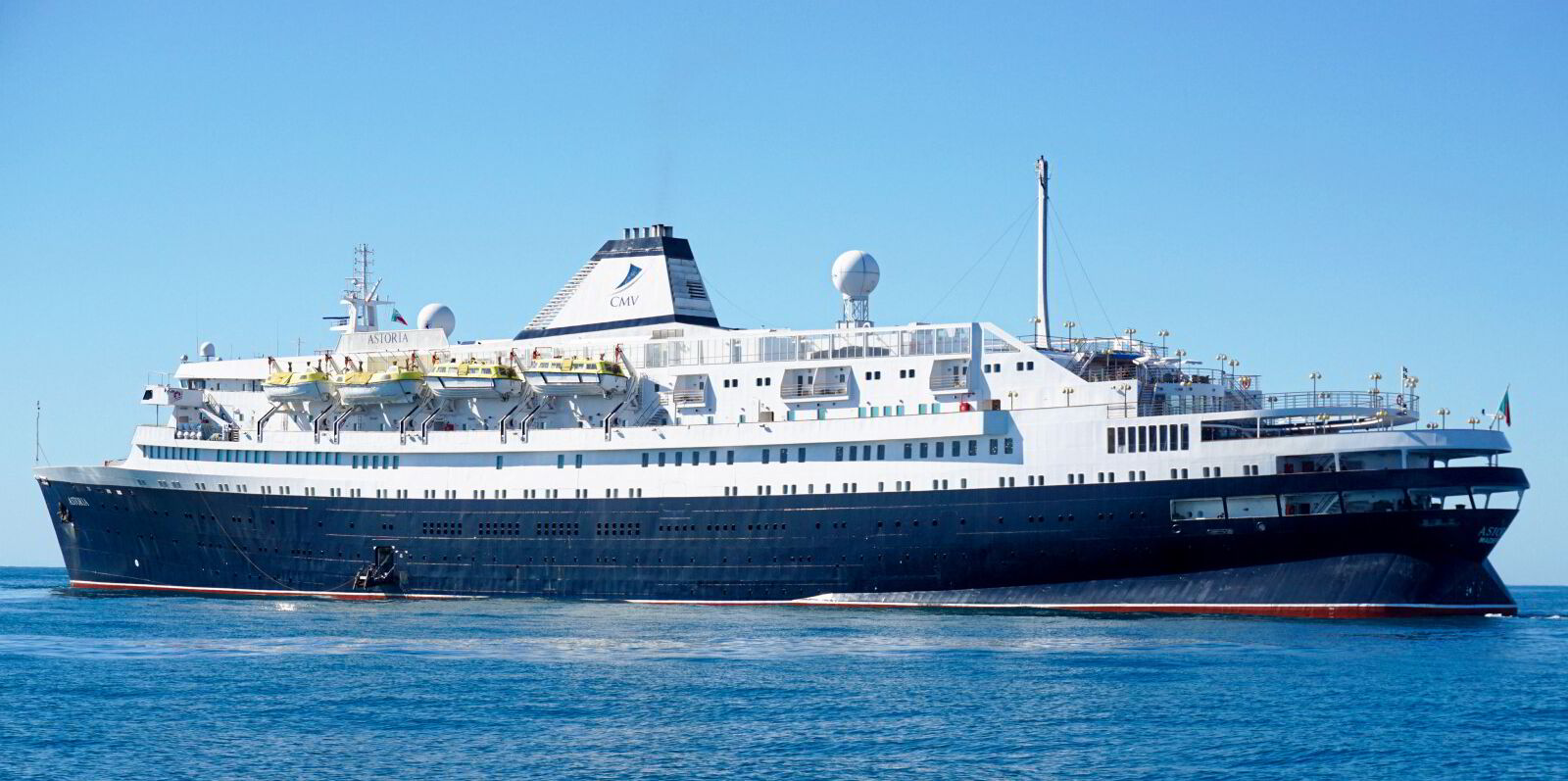
But COVID hit the cruise industry hard. Stockholm/Astoria never returned to sea, and was scrapped in 2025.

It's not clear how many survivors of the Andrea Doria are still alive, but a few gathered today for a commemoration of the 70th Anniversary.

Sunday, April 5, 2026

April 5, 1976: The Soiling of Old Glory

April 5, 1976, 50 years ago: A disgusting act of racism at City Hall in Boston, birthplace of the American Revolution, casts a shadow over the nation's Bicentennial celebrations.

The act occurs within a 2-minute walk of the Old State House, site of the Boston Massacre of 1770, which is generally considered to be the beginning of the Revolution, and a 3-minute walk of Faneuil Hall, another landmark of the Revolution. Within a 5-minute walk is the Old South Meeting House, where the Boston Tea Party got started in 1773. The Old City Hall, built in 1865, is also within a 5-minute walk.

Boston's new City Hall was built in 1969, and it has severely divided public opinion. Some people think it's wonderful. Others think it is so ugly. How ugly is it? In 2013, Paul McMorrow, a columnist for The Boston Globe, wrote:

City Hall is so ugly that its insane upside-down wedding-cake columns and windswept plaza distract from the building's true offense. Its great crime isn't being ugly; it's being anti-urban. The building and its plaza keep a crowded city at arm's length.

I have to agree. While the David D. Dinkins Municipal Building, the Beaux-Arts skyscraper a block away that serves as Manhattan's Borough Hall as well as space for various City offices, New York's City Hall, built in 1812, is short and easily accessible from street level. Philadelphia's, opening in 1901, has a clock tower that made it, for a few years, the tallest building in the world; but its ground level provides excellent access, and it even hosts the city's skating rink and Christmas market.

In contrast, to get to Boston's New City Hall, you have to climb steps, or use a handicap-accessible elevator. And there's a reason that style of architecture was, at the time, labeled "Brutalist."

But it will never be as ugly as the most famous event ever to happen there -- and I don't mean the "Yankees suck!" chant that goes up there every time a celebration is held for a Boston team winning its sport's World Championship, even if it's not the Red Sox.

In the years after the Revolution, Boston was the center of the American movement for the abolition of slavery. William Lloyd Garrison published his newspaper The Liberator at 21 Cornhill Street, espousing the cause of the abolition of slavery from 1831 until it happened in 1865. With some irony, the site of the building was wiped out to build New City Hall.

One of the most famous all-black units of the American Civil War was the 54th Massachusetts Infantry Regiment, whose memorial is across Beacon Street from the "new" State House. As recently as 1955, Boston had a role to play in the Civil Rights Movement: Martin Luther King Jr. earned his doctorate of divinity at Boston University.

But times changed. In the 1960s, fans jammed the Boston Garden to see the all-white Boston Bruins, no matter how bad they were; while the building was half-empty for the integrated Boston Celtics, until the Playoffs. Then, the Boston fans became front-runners as the Celtics won 11 NBA Championships in 13 years. Celtics star Bill Russell publicly described Boston as a "racist city."

The Boston Red Sox were the last Major League Baseball team to integrate, with Elijiah "Pumpsie" Green in 1959. The Bruins actually had a black player first, Willie O'Ree, in 1958. But the Red Sox also had Earl Wilson, the 1st black pitcher to pitch a no-hitter in the American League, in 1962; and Russell was named head coach in 1966, making him the 1st black head coach in major league sports (unless you count Fritz Pollard in the fledgling NFL in 1920). So the record is mixed.

On June 21, 1974, in the case of Morgan v. Hennigan, federal Judge W. Arthur Garrity Jr. ruled that Boston's public schools had to be desegregated. When the buses with black students arrived at previously all-white South Boston High School on September 12, white parents -- not kids, parents -- threw rocks at the buses.

The black kids were harassed both inside and outside the school. Finally, the black parents called on the one man they thought might have been able to reach the white people of "Southie": Senator Ted Kennedy, brother of a President and a Presidential candidate, both martyred, now the standard-bearer of Boston's, and America's, most famous Irish Catholic family.

But when he pleaded with them to leave the black students alone, they threw rocks at him. One woman yelled out, "You're a disgrace to the Irish!" Ted, for all his faults, had too much class to yell back, "You're a disgrace to the Americans!" The harassment continued into the 1975-76 schoolyear.

On April 5, 1976, Ted Landsmark, a 29-year-old civil rights attorney, born in Kansas City and raised in New York's famous black neighborhood of Harlem, went to City Hall to assist minority contractors in getting opportunities in the construction industry. He later said, "I had difficulty finding a parking space in downtown Boston, and I was running a few minutes late for the meeting in City Hall. So I was in a hurry and perhaps not paying as much attention as I might have as I approached a corner, where the young demonstrators were coming in the other direction. I did not see them until both they and I were at that corner."

There was a protest against the busing going on, and two of the white protestors saw Landsmark, knocked him down, and broke his nose.

However, what the picture seemed to show was not what was actually happening. One of the anti-busing protestors, James M. Kelly, a South Boston High School graduate, looked like he was holding Landsmark's arms to make him an easier target. In fact, he was helping Landsmark up.

The other major figure in the photo was Joseph Rakes. Looking more like a 1960s San Francisco hippie than a 1970s Boston racist, he had brought an American flag to the protest, and he was waving it. But the photo made it look like he was trying to stab Landsmark with the pointed end of the flag's pole.

Rakes later claimed he was simply waving the flag at Landsmark, and there is no video to either back up or dispute his claim. But even if this were true, it seemed to be sending a message: "This is my flag, and represents me and my people, not you and your people."

In 1824, a merchant seaman named William Driver commanded a ship on which he raised an American flag, telling his crew, "Behold, Old Glory." The flag has carried "Old Glory" as a nickname ever since, along with "The Stars & Stripes" and "The Star-Spangled Banner."

Stanley Forman of the Boston Herald American took the photograph that appeared to show Rakes trying to stab Landsmark, and it made the next day's front page. It became known as "The Soiling of Old Glory," and it took the sails out of the busing protests. These white Bostonians, so proud of their patriotism, began to see that they were taking it too far.
Stanley Forman, 2013

The image of the hippie-looking white kid appearing to assault the well-dressed black man with a flag was similar to a collegiate psychology experiment, in which a white guy with greasy hair, stubble, a T-shirt, jeans and a knife was shown holding that knife up to a black man in a nice suit, and then, at the end of the class, the professor asked the class whether the white man or the black man was holding the knife, and got a split answer.

Rakes was convicted of assault with a deadly weapon, and sentenced to two years' imprisonment and two years' probation. The jail sentence was suspended. In 1983, Rakes assaulted his sister's boyfriend, who later died from the injuries sustained in the attack. He fled prosecution, but returned in 1988 after the murder charge was dropped. Rakes carried the stigma of being known as "the flag kid," but eventually married and had children while laboring as a construction worker and later in hazardous waste.

James M. Kelly was not stigmatized by his presence in the photo. He was elected to the City Council in 1984, and was continually re-elected until his death in 2007.

Landsmark parlayed the attention to increase awareness on the racial unrest in Boston. He was later hired by Mayor Raymond Flynn -- another graduate of South Boston High -- to improve youth and workforce development in the city. He taught at Harvard University, the Massachusetts Institute of Technology (MIT), the Boston campus of the University of Massachusetts, and the Massachusetts College of Art. From 1997 to 2014, he was president of Boston Architectural College. He left that post when another Mayor, Marty Walsh, named him to the board of directors for the Boston Planning and Development Agency.
Ted Landsmark, 2024

As of April 5, 2026, Landsmark, Rakes and Forman are still alive. In a 2016 interview, Landsmark said that he and Rakes had never met again after the incident, the way some such meetings have been conducted, as with the Little Rock Nine and their tormentors after 1957 Arkansas, or the descendants of Homer Plessy and Judge John Ferguson to commemorate their court case.

Tuesday, March 17, 2026

March 17, 1776: The Siege of Boston

Henry Knox

March 17, 1776, 250 years ago: The Siege of Boston ends. No, this has nothing to do with the Yankees playing the Red Sox, or any other sporting event. It is the 1st great victory for the Continental Army in the War of the American Revolution.

The siege began on April 19, after the first battles of the war, at Lexington and Concord, Massachusetts, when Massachusetts militias blocked land access to Boston. The Continental Congress, meeting in Philadelphia, formed the Continental Army from the militias involved in the fighting, and appointed George Washington as commander in chief.

In June 1775, the British seized Bunker Hill and Breed's Hill, two Continental Army positions overlooking Boston. But their casualties proved heavy, and their gains were insufficient to break the Continental Army's encirclement.

After this, the Americans laid siege to Boston. No major battles were fought during this time, and the conflict was limited to occasional raids, minor skirmishes, and sniper fire. British efforts to supply their troops were significantly hindered by the smaller but more agile Continental Army and patriot forces operating on land and sea. The British suffered from a continual lack of food, fuel, and supplies.

In November 1775, General Washington sent General Henry Knox on a mission to bring the heavy artillery that had recently been captured at Fort Ticonderoga in Upstate New York. In a technically complex and demanding operation, Knox brought the cannons to Boston in January 1776, and this artillery fortified Dorchester Heights, which overlooked Boston Harbor.

This development threatened to cut off the British supply lifeline from the sea. The British commander, General Willie Howe, saw his position as indefensible, and he withdrew his forces from Boston to Halifax, Nova Scotia on March 17.

It has often been said that the American Revolution began in Boston on March 5, 1770, when British militia -- effectively, the first Boston Police -- fired on people throwing snowballs at them, killing 5 of them, the event that became known as the Boston Massacre. Six years later, the British bugged out of Boston. For what would eventually become known as the Hub City, the war was essentially over.

That would not be the case for points west and south: Connecticut, New York, New Jersey, Pennsylvania, Virginia, North Carolina, South Carolina and Georgia would all suffer terribly over the next 5 years.

When Washington became the 1st President of the United States, he appointed Knox to be the 1st Secretary of War, the post known since 1947 -- despite what Donald Trump and Pete Hegseth might now say -- as Secretary of Defense.

Wednesday, October 8, 2025

October 8, 1945: Patenting the Microwave Oven

Percy Spencer and the 1st Radarange

October 8, 1945, 80 years ago: The Raytheon Company, one of America's largest defense contractors, files an application for 2 U.S. patents: For a microwave cooking process, and an oven that heats food using microwave energy from a magnetron.

The process was one of many "great discoveries" that have been made by accident. Percy Spencer, a 51-year-old engineer, was employed by Raytheon, assigned to the Radiation Laboratory (or "Rad Lab") at the Massachusetts Institute of Technology (MIT) in Cambridge, Massachusetts, across the Charles River from Boston. He noticed that microwaves from an active radar set he was working on started to melt a Mr. Goodbar candy bar that he had in his pocket.

The first food deliberately cooked with Spencer's microwave oven was popcorn, and the second was an egg, which exploded in the face of one of the experimenters. However, the expression "egg on your face," meaning an embarrassment, had already been in wide use for about 50 years.

In 1947, Raytheon built the "Radarange," the 1st commercially available microwave oven. It was almost 6 feet tall, weighed 750 pounds, and cost about $5,000 -- about $89,000 in 2025 money. It consumed 3 kilowatts, about 3 times as much as today's microwave ovens, and was water-cooled. The name was the winning entry in an employee contest. As with every other new machine on the market, the device would eventually get smaller and cheaper, and sell better.

Percy Spencer lived until 1970, age 76. In 2020, The Raytheon Company changed its name to Raytheon Technologies Corporation. In 2023, they changed their name again, to RTX Corporation. They remain headquartered in Arlington, Virginia, across the Potomac River from Washington, D.C.

In 1985, Sid Caesar revived his "Professor" character to do a commercial for Saran Wrap. He said, "Saran Wrap was designed for the microwave!" The offscreen announcer said, "But Saran Wrap came before the microwave. How did they know?" Sid said, "I don't know, but they knew!" Technically, whoever wrote the commercial was right: Although S.C. Johnson & Son Co. discovered polyvinylidene chloride the material that became Saran Wrap -- also by accident -- in 1933, they didn't market it as Saran Wrap until 1949.

Similarly, in 2021, singer Paul Anka competed on the Fox TV series The Masked Singer as "Broccoli," and one of his clues was that he was, unlike most of the show's performers, older than the microwave oven. This was true: He was born in 1941.

Friday, June 27, 2025

June 27, 1955: The Death of Harry Agganis

June 27, 1955, 70 years ago: Harry Agganis dies, ending what had been one of the most promising sports careers just as it was getting started.

Aristotle George Agganis was born on April 20, 1929 in Lynn, Massachusetts, outside Boston. Harry (a variation of "Ari" for "Aristotle") starred in baseball and football at Lynn Classical High School, and at Boston University, becoming one of a few athletes known as "The Golden Greek."

Cleveland Browns coach Paul Brown was interested in him as a potential successor to his Hall of Fame quarterback Otto Graham, selecting him in the 1st round of the 1952 NFL Draft. But he preferred baseball, and signed with his hometown team, the Boston Red Sox, for $50,000 -- half of what Brown was offering him.

After a star 1953 season with the Sox' Class AAA team in Louisville, he was brought up to the Red Sox for the 1954 season. Red Sox general manager Joe Cronin said, "He's colorful. He's a good competitor. And being a local boy, he can be a great drawing card." Wearing Number 6 and playing 1st base, he batted .251 with 11 home runs and 57 RBIs. Years later, Sox star Ted Williams would say, "Harry Agganis was on the verge."

But in 1955, he struggled. He was hitting .313 with 10 RBIs, but no home runs, on June 2. He never played again. He was taken to Sancta Maria Hospital in Cambridge, across the Charles River from Boston, with pneumonia. He stayed for 2 weeks, rejoined the team for a week, and then was readmitted with a viral infection. His doctor blamed it on his trying to return too soon. He showed signs of improvement, but on July 27, he suffered a pulmonary embolism, and died. He was only 26 years old.
Agganis Arena

Agganis was elected to the College Football Hall of Fame in 1974. Gaffney Street, on one side of BU's Nickerson Field, was renamed Harry Agganis Way in 1995. On the other side of Agganis Way, BU's 7,200-seat Agganis Arena was opened in 2005, named for him although he hadn't played basketball or hockey.

Friday, June 20, 2025

June 20, 1975: "Jaws" Premieres

June 20, 1975, 50 years ago: Jaws premieres, turning Steven Spielberg into a star director, and inventing the "Summer blockbuster film."

It was based on the novel of the same title, by Peter Benchley, grandson of Robert Benchley of Algonquin Round Table fame. He later regretted writing the book, because the movie led people to go out and kill sharks who had done nothing wrong.

Steven Spielberg was only 27 years old during filming, but he was already a genius, capable of out-Hitching Alfred Hitchcock for fear, suspense and characterization.

The movie was filmed on Martha's Vineyard, off the coast of Massachusetts, and "The Vineyard" stood in for the fictional Amity Island.

Roy Scheider, having previously played a second banana in The French Connection, proved that you didn't have to look like Steve McQueen, Paul Newman or Robert Redford to be an action hero.

Richard Dreyfuss, having played teenagers in American Graffiti and The Apprenticeship of Duddy Kravitz, was so much better playing a young, thoughtful scientist like Hooper than being a rotten old man. It's one thing to play a mean old Republican, like he did in The American President and W., and he was damn good at both. It's another thing to be one.

English actor Robert Shaw played Quint, who became a shark-hunter after surviving the shark attack on the survivors of the Japanese attack on the USS Indianapolis in the waning days of World War II. Surviving a harrowing wartime experience should make a man less of a jerk, not more. Quint never figured this out.

Murray Hamilton played Mayor Larry Vaughn, a coward who pandered to local businesses. He would have made a great modern Southern Republican. In contrast, as Chief Brody, Scheider gives off serious "I'm a Republican of conscience, and that's why I'm now a guest on MSNBC at least 3 times a week" vibes.

Look, I get why some people root for the shark. Frankly, I wept not at all when it chomped Quint up. I would have cheered if it had gotten that useless Mayor, the real villain of the movie. But you're not supposed to root for the shark, any more than you root for the witch in The Wizard of Oz, or Barzini in The Godfather, or Darth Vader in Star Wars, or Thanos in the Marvel movies.

"Smile, you son of a bitch!" is a better "I'm about to kill you!" line than was ever delivered by John Wayne, and neither Clint Eastwood, nor Sylvester Stallone, nor Arnold Schwarzenegger, nor Bruce Willis has ever topped it, either. Nor will they, in whatever time is left to them.

There were 3 sequels by 1987. The less said about them, the better.

Shaw died in 1978, Hamilton in 1986, Scheider in 2008. As of June 20, 2022, Spielberg, Dreyfuss, and Lorraine Gary, who played Ellen Brody, the Chief's wife, are still alive.

I don't like horror movies, and Jaws has too much screaming for me to buy some people's argument that it's a "perfect movie." But it's a great movie, one proven by both the post-9/11 hysteria and COVID to have stood the test of time.

Tuesday, June 17, 2025

June 17, 1775: The Battle of Bunker Hill

Bunker Hill Monument

June 17, 1775. 250 years ago: The Battle of Bunker Hill is fought, the 1st battle of the War of the American Revolution after the opening battles of Lexington and Concord. It is remembered as a great heroic triumph for the American Patriots.

In fact, it was a case of "They lost the battle, but won the war." Or, as the ancient Greek King Pyrrhus of Epirus would have said, "If we are successful in one more battle with them, we shall be utterly ruined."

The battle isn't even correctly named. Although there is a Bunker Hill in Charlestown, across the Charles River from Boston and since incorporated as a neighborhood of the city proper, most of the action took place at adjacent Breed's Hill, a mile and a half from what's now known as Downtown Crossing.

On June 13, Colonel William Prescott took 1,200 colonial troops, and occupied both hills. On June 17, the British troops, under the command of General William Howe, became aware of the presence of colonial forces on the Peninsula, and mounted an attack against them. Two assaults on the colonial positions were repulsed with significant British casualties, but the redoubt was captured on their third assault, after the defenders ran out of ammunition. The colonists retreated over Bunker Hill, leaving the British in control of the Peninsula.
William Prescott

The battle was a tactical victory for the British, but it proved to be a sobering experience for them: They lost 226 men, while the colonials lost 115. The battle had demonstrated that inexperienced militia were able to stand up to regular army troops in battle.

The battle led the British to adopt a more cautious planning and maneuver execution in future engagements, which was evident in the subsequent New York and New Jersey campaign. The costly engagement also convinced the British of the need to hire substantial numbers of auxiliaries from the German province of Hesse -- the infamous Hessian mercenaries -- to bolster their strength in the face of the new and formidable Continental Army.

William Prescott served as part of the U.S. victory at the Battle of Saratoga in 1777. He lived on until 1795, at the age of 69. He has a statue on the grounds of the 221-foot-high Bunker Hill Monument, erected in 1843.

The colonials lost the battle because they ran out of ammunition. This supposedly led to the ammo-conserving order: "Don't shoot 'til you see the whites of their eyes!" But the available evidence shows that no one -- not Prescott, nor anyone else -- said this during the Battle of Bunker Hill. The saying goes back to Gustavus Adolphus, King of Sweden in the early 17th Century, at that country's peak of power.

Saturday, April 19, 2025

April 19, 1775: Paul Revere & the Battles of Lexington and Concord

Paul Revere

This coming Monday, April 21, the 6 New England States -- Massachusetts, Connecticut, Rhode Island, Vermont, New Hampshire and Maine -- will celebrate Patriot's Day, the 3rd Monday in April, a holiday in commemoration of the Battles of Lexington and Concord, which began the War of the American Revolution, on April 19, 1775.

The day is celebrated in Boston with the annual Boston Marathon. In order to reduce the effect on traffic -- and traffic in Boston is frequently ridiculous -- the Boston Red Sox always schedule an 11:00 AM (well, 11:10) hone game, Major League Baseball's only pre-noon (local time) game all season, so that Fenway Park will let out before the runners get to nearby Boylston Street, a block from Fenway. The Marathon's finish line is one mile east of the ballpark, across from the Central Library. 

The American Revolution is now 250 years old. A pity that we won't have a President who believes in democracy during the proceedings.

*

In 1860, with the Civil War inevitable, Boston-area poet Henry Wadsworth Longfellow was looking for an American hero that could only be claimed by the North, not the South. That let out such luminaries as Virginians, and slaveholders, George Washington, Thomas Jefferson, James Madison and Patrick Henry.

Massachusetts' John Adams, by his own admission, was "obnoxious." And Pennsylvania's Ben Franklin, well, let's just say he wasn't well-lined-up with Victorian morals, which America then shared with Britain. Same with Massachusetts' Samuel Adams and John Hancock, (the Boston Tea Party was basically a bunch of drunks pulling a prank) and New York's Alexander Hamilton (who was more affiliated with the post-Revolution, Constitution-establishing era, anyway).

Longfellow found another Massachusetts hero: Paul Revere. Born in 1735 in Boston, he was a metalsmith, and an artist: His woodcut of the Boston Massacre, of March 5, 1770, helped spark the Revolution. Longfellow began his poem:

Listen, my children, and you shall hear
Of the midnight ride of Paul Revere,
On the eighteenth of April, in Seventy-Five:
Hardly a man is now alive
Who remembers that famous day and year.

It had been 85 years. Such a man would have been at least 90 years old to have any clear memory of it. Longfellow went on:

He said to his friend, -- "If the British march
By land or sea from the town to-night,
Hang a lantern aloft in the belfry-arch
Of the North-Church-tower, as a signal-light, --
One if by land, and two if by sea;
And I on the opposite shore will be,
Ready to ride and spread the alarm
Through every Middlesex village and farm,
For the country-folk to be up and to arm."
Old North Church, with Revere's statue in front

As Joe Biden, not old enough to remember 1775 (though some have suggested otherwise), might say, "Longfellow, God love 'im, his heart was in the right place, but that poem is full of malarkey."

Robert Newman, the Sexton of the Old North Church, and John Pulling, a vestryman, hung the two lanterns in the steeple, just for a minute, just long enough for Revere to see, across the Charles River in Cambridge. But there was another man with Revere, Massachusetts militia officer William Dawes. Ever since, the joke has been that Longfellow used Revere's name, rather than Dawes', because it was easier to rhyme.
William Dawes

The image we have been given is of Revere riding through the night, yelling, "The British are coming! The British are coming!" And the poem does use the word "British." The Declaration of Independence was more than a year away, and no such declaration was even being considered. Revere, and every other "Patriot," still considered himself British. Part of the problem is that the Patriots thought that, back in London, Parliament had betrayed British values in oppressing their colonies in the Americas. And, certainly, Revere wouldn't have been yelling anything: It would have attracted too much attention.

Most of all, they wanted to reach John Hancock and Samuel Adams, Massachusetts' 2 biggest leaders of the Patriot cause, to get them to safety. So what did they actually say? "The regulars are out!" Regulars, as in "the regular army," not conscripts. These were professional soldiers, well-trained men who meant business, and were thus a threat to Hancock, Adams, and anybody else they could get their hands on.

Revere and Dawes got to Lexington, where Hancock and Adams were. They picked up a 3rd rider, Samuel Prescott, and the 3 of them rode to Concord. Between them, the 3 men knocked on the doors of 40 Patriots.

The poem doesn't mention that the riders got caught. A British patrol intercepted them in Lincoln. Prescott and Dawes got away, but Revere didn't. But he was lucky: They questioned him, and let him go. I guess they didn't know who, or what, they had. 

But the "Midnight Ride" got the "Minutemen" (said to be ready to fight at a minute's notice) ready for when the British attacked the next morning.

*

April 19, 1775, 250 years ago today: 

Lieutenant Colonel Francis Smith led 700 regulars, under orders to capture and destroy Colonial military supplies, believed to be stored by the Massachusetts Militia at Concord. 

About 80 militiamen stood on the Lexington Green, 11 miles northwest of downtown Boston. Their commander was Captain John Parker, a veteran of the French and Indian War, already stricken with tuberculosis.
Lexington Green

Parker told them, "Stand your ground. Don't fire unless fired upon. But if they mean to have a war, let it begin here." The line, "Don't shoot 'til you see the whites of their eyes," in order to conserve ammunition, is said to have originated 2 months later, at Bunker Hill, and that is also in dispute.

It was just after sunrise, around 6:00 AM. Both commanders told their men to hold their fire. Someone disobeyed, and fired what Ralph Waldo Emerson, in another poem based on the events, called "The Shot Heard 'Round the World." (That title would later be used to describe the Bobby Thomson home run of 1951.) Both sides generally agreed that the initial shot did not come from the men on the ground immediately facing each other. It may have been a Colonial from behind a hedge, or a Colonial from inside a tavern, or a mounted British officer; but no one has ever determined on which side the initial shooter was.

No British men were killed, and 8 Colonials were, before they dispersed. The idea of the Colonial men at Lexington was to stall the regulars, to buy time for the main force at Concord, 19 miles northwest of downtown Boston.

At North Bridge in Concord, it was the Colonials who had the advantage, 400 to 100. At about 11:00 AM, fire opened, and the British had to fall back, and head back toward Boston. They lost 73 men, while the Colonials lost 41.
North Bridge

A small force of barely-trained, barely-equipped men had knocked back the best army in the world -- at the least, the 2nd-best army, behind that of France. The War of the American Revolution was on.

John Parker fell victim to tuberculosis, and died on September 19, 1775. In 1900, a statue was erected at Lexington Green, sculpted by Henry Hudson Kitson, and known as The Lexington Minuteman. It has appeared on postage stamps, and on the back of Massachusetts' entry in the federal government's "State Quarters" series. It was not based on Parker's appearance, as no known likenesses of him survive today, and the figure is of a younger, healthy man, which Parker, at that point, was not. Nevertheless, it is said to depict Parker.
Francis Smith fought in several other battles in the war, rose to the rank of Major General, and lived util 1791.

History lost track of Samuel Prescott after the Midnight Ride. The best-known story says that he became a doctor in the Continental Army, was captured by the British, and died a prisoner of war in Halifax, Nova Scotia in 1777.

John Hancock became the President of the Continental Congress, including when the Declaration of Independence was approved. He was the only man who actually signed it on July 4, 1776 -- the rest of the Signers signed it later, most on August 2 -- and signed it so large that "John Hancock" has become slang for "signature" ever since. But the story that he signed it so large that, "George III can read that without his spectacles, and double the price on my head" is apocryphal.

When the Constitution of Massachusetts (written by John Adams) was approved in 1780, Hancock served as the 1st Governor. He served until 1785, returned to the post in 1787, and still held it when he died in 1793.

He was succeeded by Samuel Adams, John's cousin, who, like John, had also signed the Declaration. He served until 1797, and lived until 1803.

William Dawes never held public office, and lived until 1799. Paul Revere never served in public office, either, and lived on until 1818, making him one of the last surviving heroes of the American Revolution.

Tuesday, November 12, 2024

My Ranking of the States, 2024 Edition

I previously did this in 2015 and 2020. This time, I'm using different parameters. Or, rather, one parameter: How well did you oppose Fascism in the 2024 election? In other words: What percent of your popular vote went to Kamala Harris, instead of Donald Trump or any other candidate?

The Good

-. District of Columbia: 92.5
1. Vermont: 64.3
2. Maryland: 61.5
3. Massachusetts: 61.3
4. Hawaii: 60.6
5. California: 58.2
6. Washington: 58.0
7. Delaware: 56.6
8. Connecticut: 56.5
9. New York: 55.8
10. Oregon: 55.6
11. Rhode Island: 55.7
12. Colorado: 54.2
13. Illinois: 53.8
14. Maine: 52.2
15. Virginia: 51.8
16. New Mexico: 51.8
17. New Jersey: 51.7
18. Minnesota: 51.1
19. New Hampshire: 50.9

The Bad

20. Wisconsin: 48.9
21. Georgia: 48.5
22. Pennsylvania: 48.5
23. Michigan: 48.3
24. North Carolina: 47.7
26. Arizona: 46.5

Aside from North Carolina, each of those States went for Joe Biden last time, but flipped to Trump this time.

The Ugly

27. Ohio: 43.9
28. Florida: 43.0
29. Iowa: 42.7
30. Texas: 42.4
31. Kansas: 41.0
32. South Carolina: 40.4
33. Alaska: 40.4
34. Missouri: 40.1
35. Indiana: 39.7
36. Nebraska: 38.9
37. Montana: 38.4
38. Utah: 38.3
39. Louisiana: 38.2
40. Mississippi: 37.3
41. Tennessee: 34.5
42. Alabama: 34.2
43. South Dakota: 34.2
44. Kentucky: 33.9
45. Arkansas: 33.5
46. Oklahoma: 31.9
47. North Dakota: 30.8
48. Idaho: 30.4
49. West Virginia: 27.9
50. Wyoming: 26.1 (Gee, thanks, Liz Cheney.)

The last time each State voted for the Democratic Party's candidate for President:

* 2024, Kamala Harris: California, Colorado, Connecticut, Delaware, District of Columbia, Hawaii, Illinois, Maine, Maryland, Massachusetts, Minnesota, New Hampshire, New Jersey, New Mexico, New York, Oregon, Rhode Island, Vermont, Virginia, Washington.

* 2020, Joe Biden: Arizona, Georgia, Michigan, Nevada, Pennsylvania, Wisconsin.

* 2012, Barack Obama: Florida, Iowa, Ohio.

* 2008, Barack Obama: Indiana, North Carolina.

* 1996, Bill Clinton: Arkansas, Kentucky, Louisiana, Missouri, Tennessee, West Virginia. Clinton was a Southerner, but that didn't help Al Gore 4 years later. By that point, the South had stopped caring about geography, and cared more about religion, guns, and white supremacy.


* 1964, Lyndon Johnson: Alaska, Idaho, Kansas, Montana, Nebraska, North Dakota, Oklahoma, South Dakota, Utah, Wyoming. These are Western States with a libertarian streak.

Tuesday, July 16, 2024

July 16, 1999: The Death of John F. Kennedy Jr.

July 16, 1999, 25 years ago: John F. Kennedy Jr., son of the 35th President of the United States, and, fairly or not, heir to so many Americans' dreams, dies in a plane crash of the coast of Martha's Vineyard, Massachusetts. He was 38 years old. Lost along with him are his wife, Carolyn Bessette Kennedy, 36; and her sister, Lauren Bessette, 34.

John Fitzgerald Kennedy Jr. was born on November 25, 1960, in Washington, D.C., 17 days after his father was elected President. He and his sister, Caroline, 3 years older, became the first children to live in the White House since those of Theodore Roosevelt, over half a century earlier. Most Presidents are in their 50s or older, but JFK was 43, the youngest ever elected, and only TR ever took office younger; while his mother, formerly Jacqueline Bouvier, at 31, was the youngest First Lady since Frances Cleveland in the 1880s.

At one point, Jackie could be heard yelling at him, as a toddler, "John! John!" The media misunderstood this, and began calling him "John-John," a nickname that stuck with him for life, one he didn't like. As an adult, he always referred to himself as simply "John Kennedy," a common enough name without the middle initial that gave it away.

When interviewed by Oprah Winfrey in 1996, he said he didn't remember the picture of himself dancing with Caroline in the Oval Office while their father clapped along, or the picture of himself playing under the desk while his father worked, both taken mere days before JFK's assassination. He also said he didn't remember the salute he gave as his father's casket passed by during the funeral procession, on his 3rd birthday, November 25, 1963. "I remember he used to call me 'Sam,'" he said, "and I didn't like that. I said, 'My name's not Sam, it's John.' And he said, 'Okay, Sam.'"

In the one and only interview she gave after the assassination, to William Manchester a few days later, Jackie mentioned something a bit off-color: Once, JFK said good night to his son, and John said, "Good night, poo-poo-head!" and ran off. And JFK, laughing, said, "Come back here! You can't call the President of the United States a poo-poo-head!" If only he could have known what every President since him has been called, by people considerably older.

Jackie took John and Caroline back to New York. After marrying Greek shipping tycoon Aristotle Onassis, they divided their time between Jackie's apartment on 5th Avenue and Ari's private island, Skorpios. Jackie took them to the 1969 World Series at Shea Stadium.

He attended Phillips Academy in Andover, Massachusetts, which was attended by both Presidents George Bush -- but not his father, who had gone to Choate Rosemary Hall in Wallingford, Connecticut. Unlike his father, his grandfather and his 3 uncles, all Harvard men, he attended Brown University in Providence, Rhode Island, which would later be attended by his uncle Ted's son, Patrick. In 1988, he gave a speech at the Democratic National Convention in Atlanta, and it was well-received enough that people began to believe a political career was in his future.

He then attended New York University School of Law, but needed 3 tries to pass the New York State bar exam. He became a prosecutor in the Manhattan District Attorney's Office, lived in the Tribeca neighborhood, and rode a bicycle to work, even though the family fortune meant that he could have afforded a limousine.

Like his mother and his sister, he guarded his privacy intensely, and it was difficult to confirm stories about who America's most eligible bachelor was dating. Apparently, like his father and grandfather before him, he had a thing for actresses, including dating Brooke Shields, Sarah Jessica Parker, and, for 4 years, Daryl Hannah.

On September 21, 1996, a few weeks after founding George, a political magazine named after George Washington and aimed at younger readers, he married Carolyn Bessette, who worked in New York's fashion industry. This took many people by surprise: Not only was she not famous in her own right, but the general public didn't even know they were dating.

It was still believed that he would run for political office, as a stepping-stone to becoming President like his father. With the defeat of Governor Mario Cuomo -- whose son Andrew would one day be Governor, and had married Kerry Kennedy, daughter of John's uncle Robert F. Kennedy -- by Republican George Pataki in 1994, it was speculated that John would oppose Pataki in 1998. He chose not to.

When Senator Daniel Patrick Moynihan, a Democrat who had been a sub-Cabinet official under his father, announced his retirement rather than run in the 2000 election, the wide guess was that John would run for Moynihan's seat. He never publicly denied it, but there was no indication that he was making preparations to run for the seat, which ended up being won by First Lady Hillary Clinton.

But the spectre of tragedy has long hung over the Kennedy family. In addition to his father's assassination in 1963, his uncle Robert was assassinated while running for President in 1968. His uncle Ted (Edward M. Kennedy) was involved in a fatal car crash the following year. Joseph P. Kennedy Jr., the eldest brother of Jack, Bobby and Ted, was killed in service in World War II in 1944. One of their sisters, Kathleen, was killed in a plane crash in 1948. Another, Rosemary was left hopelessly disabled in 1940, in a surgical attempt to cure the apparent disability she already had.

Several of Bobby's kids had gotten involved in drugs, and it killed Bobby's son David in 1984. And Bobby's son Michael had been killed in a skiing accident in 1997. At the time, John was taking flying lessons, and he remembered that his mother, who died of cancer in 1994, was worried that he might die in a plane crash. He resumed his lessons, anyway.

On July 15, 1999, I attended the New York Yankees' game against the Atlanta Braves at the old Yankee Stadium, a 6-2 defeat. Unbeknownst to me until after the weekend, when the media showed footage of it on TV, John and Carolyn Kennedy had also attended the game. Despite the family's Boston roots making most of them Boston Red Sox fans, and the Shriver wing of the family coming from Baltimore and being Baltimore Orioles fans, JFK Jr. was, apparently, a Yankee fan.

The following day, John, Carolyn, and Carolyn's sister Lauren, who worked for brokerage firm Morgan Stanley Dean Witter, left New York for Essex County Airport in Fairfield, New Jersey. They were headed for the family home, known as the Kennedy Compound, in Hyannis Port, on Massachusetts' Cape Cod, for the wedding of Bobby's last child, Rory Kennedy, born 6 months after her father's assassination, to Mark Bailey. They had met through their work, as both are documentary filmmakers.

Traffic out of Manhattan, understandable due to it being evening rush hour on a Friday, was bad, and it wasn't until 8:38 PM that John was able to take off in the Piper Saratoga that he had bought 3 months earlier. The plan was to land at Martha's Vineyard Airport, on the island off the coast of Massachusetts, not far from another island, Nantucket; drop Lauren off there; and then take off again with Carolyn for Barnstable Airport on the mainland.

It was later determined that the plane hit the Atlantic Ocean at 9:41 PM, and that the most likely cause was spatial disorientation: As an under-experienced pilot, John may have been lower in the air than he realized.

At 2:15 AM on July 17, the Kennedy family notified Coast Guard Air Station Cape Cod that the plane had not arrived. I woke up Saturday morning to the news that the plane was missing. Knowing of the "Kennedy Curse," I was convinced he and whoever was with him on the plane were dead.

It was a weird, and very hot, weekend, which also included the perfect game pitched by David Cone of the Yankees: The plane and the bodies hadn't been found, so we didn't have confirmation that they were dead, so a small hope still lingered. The tent set up for the wedding became the focal point of the family's vigil.

But fragments of the plane were found on the 19th. Late at night on the 20th, the fuselage was found. On the afternoon of the 21st, the bodies were found, all still strapped into their seats. Autopsies proved that they died on impact. All 3 were cremated, and their ashes scattered at sea.

Even more than for his father, who had accomplished many things as President, the question of "What might have been" hangs over the memory of John F. Kennedy Jr. At the John F. Kennedy Museum in Hyannis Port, there is a statue of both of them as grown men, arms around each other. A copy is in Rapid City, South Dakota, along with statues of all the other Presidents at a public park.

The Kennedy-Bailey wedding was postponed to August 2. Rory and Mark have 2 daughters and a son. George magazine printed a memorial issue for John, and folded in 2001.

The psychotic QAnon movement believes that John will return from the dead and tell people to support Donald Trump, and save America from sin. I guess they forgot, or are too insane to consider, than John was a Democrat, and, like the rest of the Kennedy family, would oppose Trump. Indeed, given the legal pursuit of Trump, it's entirely possible that John Kennedy Jr., rather than Alvin Bragg, might be leading one of the prosecution teams against Trump.

In 2024, it is his cousin, Robert F. Kennedy Jr., who is running for President as a 3rd-party candidate.

Sunday, March 31, 2024

March 31, 1774: The Intolerable Acts

March 31, 1774, 250 years ago: In response to the Boston Tea Party, the British Parliament passes what the Patriot cause will label the Intolerable Acts. They were:

• The Boston Port Act, closing of the Port of Boston, effective until the destroyed tea was paid for.

• The Massachusetts Government Act, taking away the Colony’s charter and essentially putting it under British martial law.

• The Administration of Justice Act, which allowed the Royal Governor to order trials of accused royal officials to take place in Great Britain if he decided that the defendant could not get a fair trial in Massachusetts. George Washington called this the "Murder Act," because he believed that it allowed officials to harass colonists and then escape justice. And…

• The Quartering Act. While many sources claim that it allowed troops to be billeted in occupied private homes, a historian's 1974 study claimed that this is a myth, and that the act only permitted troops to be quartered in unoccupied buildings. It did, however, apply to all 13 Colonies, not just Massachusetts.

The Patriot cause labeled these new laws "the Intolerable Acts." Had the British government -- more the Prime Minister, Frederick, Lord North, than the man usually painted as the villain of the story, King George III -- only sought to arrest the men behind the Tea Party, John Hancock and Samuel Adams, and gone no further, things probably would not have escalated.

Instead of abusing British law, they would have been seen as upholding British law, which, for the most part, the people of "British America" had been fine with until now.

But North and Parliament did what tyrants tend to do: They overreacted, and colonists saw the government as betraying its ideals of freedom. And so, the American Revolution became inevitable.