Showing posts with label mexico. Show all posts

Tuesday, July 21, 2026

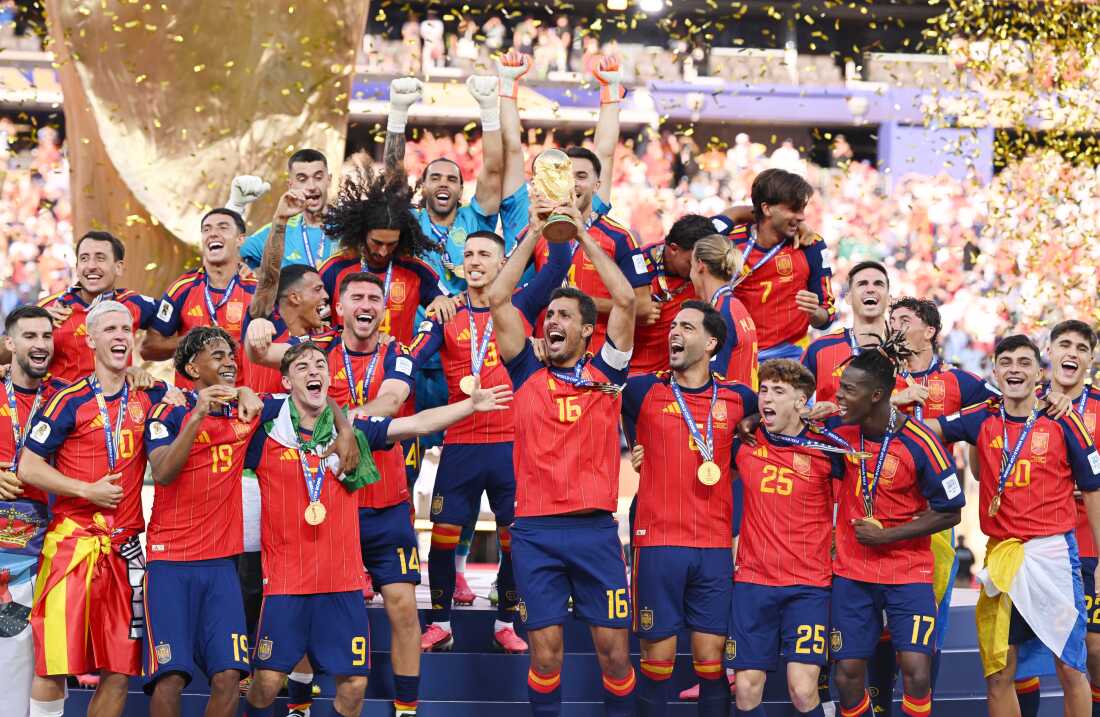
Top 10 Observations of the 2026 World Cup

10. The Hosting Went Okay. Sure, the ticket prices for the games, the parking, and (at least on New Jersey Transit) the trains were insane. But there were no complaints about the stadiums, no complaints about the amenities, no unpleasant situations between fans. Not in the U.S., not in Canada, not in Mexico. Everybody seemed to get along.

We welcomed people from all over the world:

* North America: Canada, Mexico, Panama, Haiti, Curaçao.

* South America: Brazil, Argentina, Colombia, Ecuador, Paraguay, Uruguay.

* Africa: Egypt, Tunisia, Algeria, Morocco, Ghana, the Democratic Republic of the Congo, Senegal, Côte d'Ivoire, South Africa, and Cabo Verde.

* Europe: England, Scotland, France, Spain, Portugal, Belgium, the Netherlands, Norway, Sweden, Switzerland, Germany, Austria, Czechia, Croatia, Bosnia and Herzegovina, and Türkiye.

* Asia: Japan, South Korea, Uzbekistan, Saudi Arabia, Jordan, Qatar, and, amazingly, visitors from Iran and Iraq were treated well, by the people if not by the government.

* Oceania: Australia and New Zealand.

And while there was certainly banter between fans of various countries, there were no unpleasant incidents. No fights. None of Mexican fans' tendency toward homophobic slurs, not even in the Azteca. No hooligans smashing up bars or store windows. Even the drunks were pleasant:

9. Scotland's Tartan Army and Norway's Rowing Fans. Scotland hadn't qualified since 1998, and hadn't won a World Cup match since 1990. I once read a book about soccer, by a Scotsman who lived in Mexico for a few years. He said that if the World Cup were decided by who had the most frustrated fans, the Final would be between Scotland and Mexico.

But the Scottish fans made the most of it, "drinking Boston dry," taking over Fenway Park, even filling a section at Yankee Stadium. They were a great contrast with the English and their arrogance of "We invented football" and "It's coming home." It's a shame their team couldn't advance to the Knockout Stage.
"Deep-fry yer lobsters, we're gonna deep-fry yer lobsters!"

And the Norway fans, also seeing their team in the World Cup for the 1st time in 28 years, wearing their horned helmets that Vikings never actually wore, and their synchronized air-rowing, delighted Americans all the way to the Quarterfinal. If only Erling Haaland didn't play for Manchester City...
"Rowing" in Times Square

8. It Was Good to See Arsène Wenger Again. Knowing that his protégé, Mikel Arteta, had finally managed Arsenal to the Premier League title, and that several current and former Arsenal players were playing, and that, in his official role with FIFA, he could watch the games without pressure, he looked happy. Older, but much more relaxed. Like a former President.
7. The Early Shocks. It just doesn't feel right to have a World Cup without Italy -- especially in the U.S., with New York, Philadelphia, Boston, Toronto and San Francisco all having a heavy paesano presence. And for major powers Germany and the Netherlands to be knocked out in the Round of 32, it just didn't make sense. Granted, they both lost to good teams, Paraguay and Morocco, respectively. And it's never a surprise to see the Dutch lose on penalties. But Ze Germans, losing on penalties? That was a bigger shock than Scotland making it and Italy not!

Once Die Mannschaft and De Oranje were out, it felt like it could be anybody's tournament. Maybe the U.S did have a chance. Maybe it really would be "coming home" to England. Maybe it would be somebody that nobody expected.

This was heightened by Brazil losing in the Quarterfinals. Just as Benjamin Franklin once said, "Every man has two countries: His own, and France," every soccer fan seems to have two countries: His own, and either the Netherlands or Brazil. The two most stylist "football nations," and each has lots of beautiful women in the stands.

This time, though, Brazil were dull. Defense-minded. Neymar being hurt made things worse, but it looked like Vinícius Júnior was carrying the attack. Watching Brazil "park the bus" is like watching Ozzy Osbourne sing "You Light Up My Life." It's just... it's just... it's just wrong-guh.

6. The Saga of Cabo Verde. Formerly known as Cape Verde, this chain-of-islands nation is about 430 air miles off the west coast of Africa, and over 1,800 from Portugal, the nation from which it gained its independence in 1975. It wasn't the smallest nation by population to qualify for the World Cup -- Curaçao is home to 156,000 people, roughly as many as Paterson, New Jersey -- but it does have only about 490,000 people, roughly as many as Staten Island. And, at 2,506 square miles, it's the smallest nation by land area ever to qualify.

They began the Group Stage by holding Spain, Champions in 2010 and one of the favorites this time, to a 0-0 draw. Then they held Uruguay, Quarterfinalists in 2018 and Semifinalists in 2010, to a 2-2 draw. Then they held Saudi Arabia to a 0-0 draw. To put that in perspective: As I said, Cabo Verde has less than half a million people; Spain, 50 million; Uruguay, 3.5 million; Saudi Arabia, 33 million. Population-wise, they should have been pounded. Instead, those 3 draws allowed them to finish 2nd to Spain in Group H, and advance, rather than sneaking in as 1 of the top 8 3rd-place teams.

Then came one of the greatest games in World Cup history, at the Miami Dolphins' stadium on July 3. They trailed Argentina, defending Champions, Finalists in 2014, and a nation of 46 million people, 1-0 until just before the hour, and tied it up. It ended 1-1, and it went to extra time.

Argentina seemed to end the dream in the 92nd, but Cabo Verde found another equalizer in the 103rd. All they had to do was hold that 2-2 score for another 20 minutes or so. With a 40-year-old goalkeeper. Against a team led by Lionel Messi. They couldn't do it, with the Albiceleste forcing an own goal in the 111th.
Saluting their fans after the game

As occasionally happens in soccer, one team won the game, while the other team won the hearts of the world. Unfortunately, as also occasionally happens, the officiating seemed to suggest an agenda. For all of Argentina's usual dirty play, they were only given 1 yellow card, and that in the 115th minute.

5. The U.S. Sabotaged by the Manager -- Again. You would think that, after the awful experience of having Jürgen Klinsmann, a lousy manager and a former Tottenham Hotspur player, the U.S. Soccer Federation wouldn't be dumb enough to hire another "Spurs" man in the job.

How dumb were they? They hired Mauricio Pochettino, a former Spurs manager. As manager at Paris Saint-Germain, whose financial advantages over the rest of France's Ligue 1 suggest that they should win every trophy, every season, he won the Coupe de France in 2021 and Ligue 1 in 2022 -- and that's it. Those are his only major trophies as a manager.

He lost in the Finals of the 2015 League Cup and the 2019 UEFA Champions League with Tottenham, of the 2024 League Cup with Chelsea, and of the 2025 CONCACAF Gold Cup with the U.S. And, famously, after challenging for the Premier League title with Spurs in 2015-16, he "finished 3rd in a 2-team race," behind Leicester City and Spurs' arch-rivals, Arsenal.

He was one Argentine who didn't do well at this tournament. The U.S. beat Paraguay, 4-1 at Los Angeles/Inglewood, and then beat Australia 2-0 at Seattle to assure Knockout Stage qualification. In the meaningless Group D finale, which should have told him which players should be played and in which positions, he lost 3-2 to Türkiye at L.A./Inglewood.

The U.S. failed to qualify in 2018; failed to get to the Knockout Stage in 1990, 1998 and 2006; got to the Round of 16 in 1994, 2010, 2014 and 2022; and got to the Quarterfinals in 2002. At this point in the program's development, and given home soil, getting to the Quarterfinals should have been the minimum for the World Cup run to be considered a success.

The U.S. beat Bosnia, 2-0 at San Francisco/Santa Clara. The controversy over the straight red card given to Falorin Balogun aside, the team should have played better in the Round of 16 against Belgium. Instead, they were dreadful, losing 4-1. Pochettino should have been fired before he even left the stadium.

It is true that the players simply aren't good enough. Christian Pulisic is never, ever, ever going to become our talismanic striker, no matter how much Fox and Men In Blazers' Roger Bennett try to promote him as "Captain America." And he's the best we've got.

It is also true that, whatever could be gotten out of these players, "Poch" wasn't going to be able to get it. You can take the idiot out of Tottenham, but you can't take the Tottenham out of the idiot.

4. England Trusted Arsenal... But Only So Far. Since winning the World Cup in 1966, with just 1 Arsenal player on the roster, George Eastham, and he didn't play a minute of it, England have avoided using Arsenal players. True, Arsenal have had a lot foreign players over the years: Scotsmen, Welshmen, "the Irish Connection" of the late 1970s, and Wenger's United Nations setup. But look:

* 1970: Arsenal had just won the Inter-Cities Fairs Cup. Arsenal players on the England team: None. Result: Quarterfinal, lost to Germany in extra time.

* 1974: In the interim, Arsenal had won the Premier League at the FA Cup in the same year, "doing The Double," reached another FA Cup Final, and had 2nd- and 3rd-place finishes. Arsenal players on the England team in 1973, as they attempted to qualify for the World Cup: None, although midfielder Peter Storey was sometimes a reserve. Result: They failed to qualify. Could they have used forwards Charlie George or John Radford? Midfielder Ray Kennedy? Winger George Armstrong? Left back Bob McNab? Yes.

* 1978: Arsenal were in a down period, so I can't blame England this time. Result: They failed to qualify.

* 1982: Arsenal had been to 4 cup finals, but won only 1, the 1979 FA Cup. They finished 3rd in 1981. So they had talent, although, as I pointed out, a lot of it was Irish, not English. Arsenal players on the England team: Left back Kenny Sansom and midfielder Graham Rix. Result: In a format not used since, England advanced to the 2nd Group Stage, making them one of the last 12 teams, but they did not finish 1st, and did not advance to the Final. Can't blame this one on not selecting Arsenal players.

* 1986: Arsenal were in a down period. Selected for the England team: Sansom and right back Viv Anderson. Result: Quarterfinal, England defeated by a cheating Argentina. It's hard to imagine that adding English players from Arsenal would have made the difference. That would not be the case the next time:

* 1990: Arsenal had won the 1987 League Cup and the 1989 Football League title. Players on the England team: None. Centerback and Captain Tony Adams was not selected, and would have had to be dropped anyway, due to his drunken-driving conviction which came after the selection. Result: England reached the Semifinal, and were defeated by Germany on penalties.

Would a sober and selected Adams have made a difference? By himself, probably not. Would having Lee Dixon at right back instead of Queens Park Rangers' Paul Parker, Nigel Winterburn at left back instead of Nottingham Forest's Stuart Pearce, David Rocastle on the right wing instead of former Tottenham star Chris Waddle, and Alan Smith up top along with Tottenham star Gary Lineker, instead of Aston Villa's David Platt in central midfield, have made a difference, first against Germany, and then against Argentina in the Final? Probably.

* 1994: Arsenal had won the 1991 League title, both domestic cups in 1993, and the European Cup Winners' Cup in 1994. This time, Arsenal players Adams, Dixon, goalkeeper David Seaman and forward Kevin Campbell were on the team, but it didn't qualify. Adding Smith and Winterburn would have helped.

* 1998: Arsenal had won The Double again. Players on the England team: Seaman, Adams, and centerback Martin Keown. Result: Quarterfinal, losing to Argentina on penalties. I'm not sure having Dixon instead of Gary Neville of Manchester United at right back would have made a difference, although Dixon was known as a good penalty-taker.

* 2002: Arsenal had won The Double again. Players on the England team: Seaman, Keown, centerback Sol Campbell (with Tottenham when he was selected for the 1998 squad), and left back Ashley Cole. Result: Quarterfinals, losing to eventual Champions Brazil. This is probably as good as it could have gotten, for both club and country.

* 2006: Arsenal had won the FA Cup in 2003 and 2005, had their "Invincible" Premier League title season in 2004, and reached the Champions League Final in 2006. Players on the England team: Campbell, Cole and Theo Walcott. This time, England made the opposite mistake: Walcott probably wasn't ready. Result: Quarterfinals, losing to Portugal on penalties.

* 2010: Arsenal had been good but not great in the interim. Players on the England team: None. Walcott was not selected. Jack Wilshere was injured, and would have been selected, but probably not chosen as a starter. Result: Round of 16, losing to Germany.

There was no other Arsenal player from England who could have made a difference. Still, by this point, I had become an Arsenal fan, and the idea of rooting for 4 Chelsea players (including the defected Cole), 3 Liverpool players, 2 Manchester United players, and 5 players for arch-rival Tottenham was sickening.

* 2014: Arsenal had been good but not great, but they had just won the FA Cup. Players on the England team: Wilshere and Alex Oxlade-Chamberlain. Result: England finished last in its group. Who could have made a difference? Walcott was injured, and might not have been selected, anyway. Right back Carl Jenkinson and left back Kieran Gibbs weren't selected, and shouldn't have been, anyway.

* 2018: Arsenal had finished 2nd in 2016, and won the FA Cup again in 2015 and 2017. Players on the England team: Forward Danny Welbeck. That's it. Wilshere was injured again. Walcott and Oxlade-Chamberlain was no longer starting for Arsenal, so he wasn't going to be selected for England. Nor were backup centerbacks Rob Holding and Calum Chambers.

Result: Semifinals, losing to Croatia in extra time. A healthy Wilshere could have helped, but would it have been enough to beat Croatia and then France in the Final? I don't think so. So, for the 6th World Cup in a row, this one doesn't fit the narrative.

* 2022: Arsenal had won the FA Cup again in 2020. Players on the England team: Forward Bukayo Saka, centerback Ben White, and goalkeeper Aaron Ramsdale. Result: Quarterfinals, losing to France -- with the winning goal scored by Olivier Giroud of AC Milan, formerly of Arsenal.

Would starting Ramsdale in goal instead of Jordan Pickford have made a difference? Would having Eddie Nketiah available as a forward? Would having Emile Smith-Rowe available as a midfielder? Put the three of them together, and they might have beaten France, who went on to lose the Final to Argentina on penalties.

* 2026: Arsenal had finished 3 years in a row, and finally won the Premier League. Players on the England team: Saka, midfielders Declan Rice and Eberechi Eze, and forward Noni Madueke. This was the most Arsenal-laden England team since the 1930s. And it was the England team least dependent upon Spurs, Chelsea, Liverpool and Man U in my lifetime.

Result: England reached the Semifinal against Argentina, including beating Mexico at the Azteca Stadium, which counts as a massive upset; and eliminating Norway in extra time in the Quarterfinal. But manager Thomas Tuchel refused to start any of them in the Semifinal against Argentina except Rice. Result: England led 1-0 in the 85th minute, and blew it, losing, 2-1. If Saka had started, who knows?

So: England would have done better with more Arsenal representation in 1970, 1974, 1990, 1994, 2022 and 2026; but probably not in 1978, 1982, 1986, 1998, 2002, 2006, 2010, 2014 or 2018.

3. The Other Arsenal Connections. Aside from the 4 players selected for England, these Gunners chosen by their national teams for the tournament: Backup goalkeeper David Raya, midfielder Mikel Moreno and midfielder Martin Zubimendi of Spain; centerback William Saliba of France; midfielder and Captain Martin Ødegaard of Norway; centerback Gabriel Magalhães and forward Gabriel Martinelli of Brazil; Forward Kai Havertz of Germany; forward Leandro Trossard of Belgium; forward Viktor Gyökeres of Sweden; and left back Piero Hincapié of Ecuador. And Argentina's goalie, Emiliano Martinez, used to play for Arsenal.

2. The Deserving Team Lost. Putting aside everything about the country itself, from its internal racism to its welcoming of surviving Nazi war criminals after World War II, from its "Dirty War" and the tens of thousands of people its Fascist government made to "disappear" to the fixing of the 1978 World Cup they hosted to the stupid invasion of the Falkland Islands in 1982: Historically, Argentina have been one of the dirtiest national teams in soccer.

Granted, Spain were no prize, either. But the world seemed to be divided into 2 camps going into the Final: People who were rooting not so much for Argentina but for Lionel Messi; and people who might not have liked Spain, but were rooting for them because they hated Argentina.

This included, outside of Argentina, pretty much every Spanish-speaking country on Earth, including those that had once been part of the Spanish Empire, which had devastated those lands' indigenous peoples, from the Tainos of Puerto Rico to the Aztecs and Mayans of Mexico, from the Incas of Peru to the natives of the Philippines.

And they were justified by Argentina's behavior in the Final. Only one of their players was sent off, Enzo Fernández, for two yellow cards, both late and dumb: One for dissent in the 85th minute, and one for a pointless foul in the 93rd, stoppage time. But they should have had at least two others sent off.

Martinez made 11 saves, a record for a World Cup Final. But Argentina had only 2 shots in 125 minutes, none of them on target. They seemed to determined to park the bus and play for penalties, which, despite the 3-3 result, was how they won the 2022 Final against France.

Unai Simón, of Athletic Bilbao, a goalie good enough to make Raya, the goalie of the Premier League Champions, his backup, led a defense that allowed just 1 goal in 7 games. Merino saved Spain with very late goals against Portugal in the Round of 16 and Belgium (the only team to score on Spain) in the Quarterfinal. Forward Lamine Yamal of Barcelona, only 19 years old, was Spain's breakout star. But it was another Barcelona player, substitute Ferran Torres (no relation to Fernando Torres), who broke the deadlock in the 106th minute.
After a career based on benefiting from his teammates cheating, both club and country, Lionel Messi was beaten, and beaten fairly. Did the team that deserved to win win? Yes. Even more so, the team that deserved to lose lost.
1. Trump Got Booed Like He Deserved. He can spin it however he wants, but did he really believe he could go into a stadium in New Jersey, close to New York, filled with Spanish-speaking people, most of them immigrants or at most 2 generations removed from immigrants, and not get booed?

The only sporting event he can go to now and not get booed is the Army-Navy Game, where everyone is under orders to cheer. He even got booed at a NASCAR event. There was an Iowa vs. Iowa State football game, in a State that he won with 51, 53 and 55 percent of the vote, increasing over time, and he got booed and had people giving him the finger. He's been booed at the Super Bowl in 2017, the World Series in 2019, and the NBA Finals and the World Cup this year.

But he's also a jinx. In 2019, he went to the World Series, hosted by the Washington Nationals, and they lost the game -- but won the Series. A month later, he went to the Alabama-LSU game, a home game for 'Bama at Tuscaloosa. 'Bama were ranked Number 3, LSU Number 2. LSU won, so it wasn't exactly an upset, but 'Bama should still have been able to defend their home field. Trump jinxed them.

This year, he went to Game 3 of the NBA Finals at Madison Square Garden, and it was the only game the Knicks lost in a 16-game Playoff stretch. Then he tried to intervene on the U.S. soccer team's behalf at the World Cup, and we got slaughtered in the next game. Then he said he was rooting for Argentina, because he sees Messi as "a winner," and because Argentina's President, a conservative named Javier Milei, has been friendly to him, while Spain's Prime Minister, Pedro Sánchez, a Socialist, has opposed him.

Yesterday afternoon, on Deadline White House on MS Now, host Nicolle Wallace, who had been White House Communications Director in George W. Bush's 2nd term, and a key adviser in both Bush's 2004 re-election campaign and John McCain's 2008 campaign, interviewed Kevin Blackistone and Pablo Torre, both veterans of the late, lamented Pardon the Interruption on ESPN. Referring to the Balogun situation, Blackistone, who is black, said, "Once again, Donald Trump trampled on the ethics of a particular institution, and this gentleman suffered the consequences."

She asked if FIFA's appeasement of Trump with the newly-made-up, and totally unearned "FIFA Peace Prize" had come back to bite them when Spain cropped Trump out of their official victory photo -- and then came back to bite Trump when FIFA, themselves, did the same with theirs. She said, "Appeasement never works out for the appeaser."

Torre, of Filipino and therefore also of Spanish descent, said, "FIFA is a bit of the apex predator when it comes to sports' corrupt governing bodies. So this, for them, I think, is almost literally the price of doing business." He then brought up Robert J. Hanlon's line, known as Hanlon's Razor: "Never ascribe to malice that which can be blamed on incompetence." He said, "At certain point, your incompetence becomes malice, because you are the literal President." He went on:

I like to imagine how the athletes that Trump has publicly picked and rooted for have felt over the last year. Because we have seen the New York Knicks, Nicole, when he showed up to that game, lose the one Playoff game in their entire magical run. That was the game that he attended. We have seen him mention that he played, I believe it was golf with England's Harry Kane. England loses. We have seen him say that he's going to pick Leo Messi and Argentina, and Argentina loses. It's just a bit of a running joke in sports.

So, once again, what former Republican strategist turned anti-Trump crusader Rick Wilson titled his book has come true: "Everything Trump Touches Dies."

Monday, June 29, 2026

June 29, 1986: Argentina Win the World Cup Dubiously -- Again

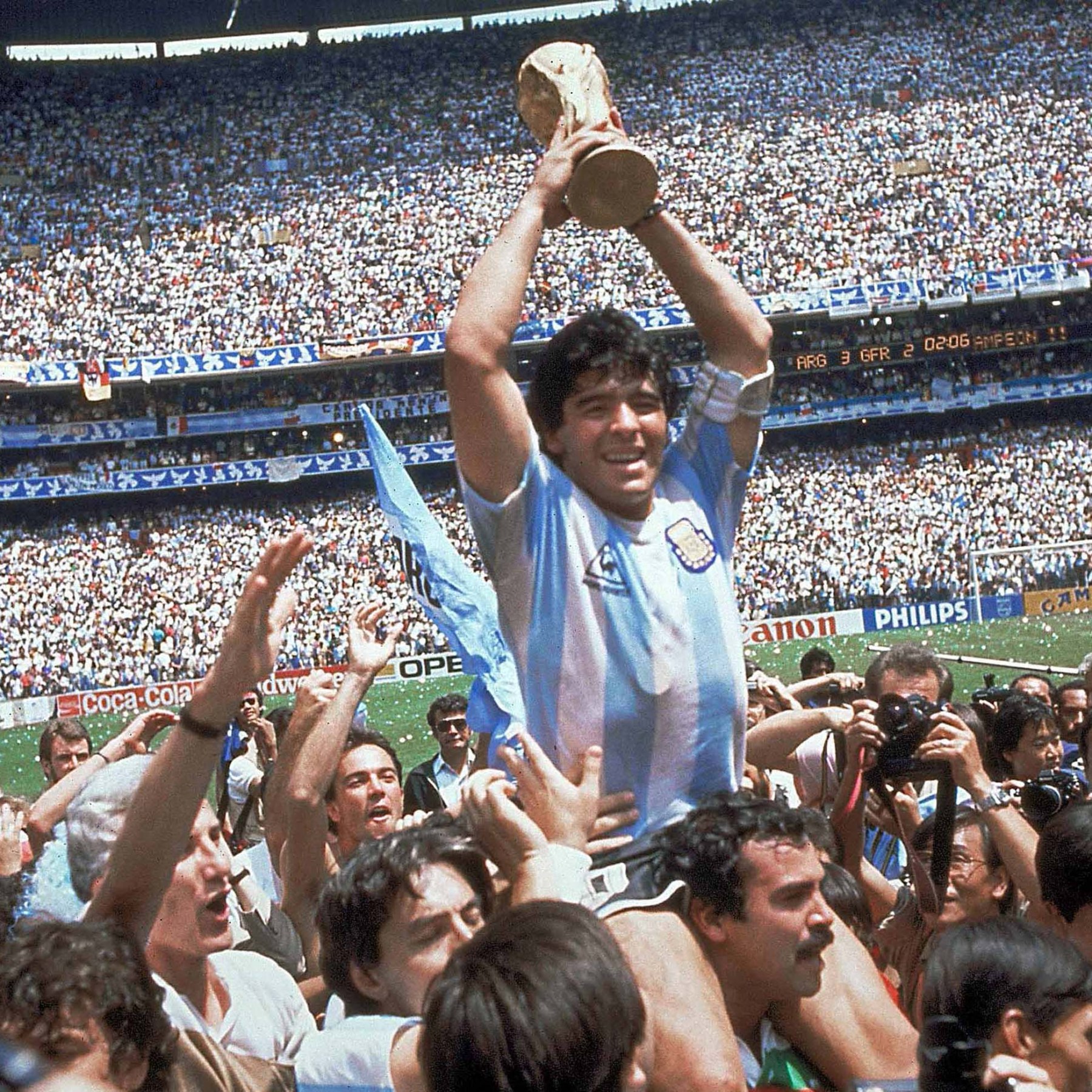
June 29, 1986, 40 years ago: The World Cup Final is played at Estadio Azteca in Mexico City. It features perhaps the last 2 teams that most neutrals wanted to see: Argentina, 1978 winners of the World Cup and the team of Diego Maradona, whose handball gave them a win over England in the Quarterfinal; and West Germany, whose style of play is defensive-first and generally considered boring.

César Luis Menotti managed Argentina to that 1978 World Cup win. A Socialist, the opposite of his country's government at the time, he said:

There's a right-wing football and a left-wing football. Right-wing football wants to suggest that life is struggle. It demands sacrifices. We have to become of steel and win by any method... obey and function, that's what those with power want from the players. That's how they create retards, useful idiots that go with the system.

In contrast, by 1986, the ruling military junta was gone, and Argentina had a more liberal government. Its World Cup team was managed by Carlos Bilardo, a physician who had played as a midfielder who helped Estudiantes de La Plata win 3 straight Copas Libertadores (South America's version of the European Cup/UEFA Champions League) in 1968, '69 and '70. He had been a league winner with Estudiantes as a player in 1967, and as their manager in 1982.

Like Menotti, he believed in free-flowing football; and, in Maradona (who starred with Boca Juniors and Italian team Napoli), Jorge Valdano (a forward for Real Madrid, known as "The Philosopher of Football"), and Jorge Burruchaga (a midfielder who starred for Avellenada team Independiente, now with French team Nantes), he had the team for it.

Franz Beckenbauer had starred for Bayern Munich, and captained West Germany to the 1974 World Cup. Now, he was their manager, and they were not merely loaded, but fired up to win the World Cup, after losing the 1982 Final to Italy.

Bayern presented Die Mannschaft with midfielder Lothar Matthäus, and their former forward, Karl-Heinz Rummenigge, was now at Italy's Internazionale Milano, and served as the Captain. Werder Bremen produced forward Rudy Völler. Hamburger SV produced forward Felix Magath. And goalkeeper Harald Schumacher came from FC Köln in Cologne.

The Germans survived Group E, which also had Scotland, Denmark and Uruguay, whose manager, Omar Borrás, described it with a term used in the previous World Cup held in Mexico, in 1970: << Grupo de la muerte. >> "Group of Death."

NBC broadcast the game live in America. Argentina had taken a 2-0 2nd half lead, on goals by José Luis Brown of French club Stade Brestois in the 23rd, and Valdano in the 56th. Rummenigge scored in the 74th minute, and Völler scored in the 81st, and West Germany had tied the game.

No team had ever blown a 2-goal lead in a World Cup Final before, and it was just desserts for Argentina, due to Maradona's "Hand of God" in the Quarterfinal. But Burruchaga spared his homeland's blushes by scoring the winning goal in the 84th minute.

Argentina had now won 2 World Cups -- both under incredibly dubious circumstances. And least this one was won while they had a democratic government.

The teams played each other again in the 1990 Final, with Germany winning that one. It remains the only Final ever to be a rematch of the preceding World Cup's Final. A unified Germany faced Argentina in the 2014 Final, and Germany won.

Argentina won the World Cup for a 3rd time in 2022, beating France on penalties. 

June 29, 1776: The Presidio of San Francisco

The calendar year 1776 was a pivotal one on the Atlantic Coast of North America. Most Americans know that. What many may not be aware of is that it was also a pivotal year on the Pacific Coast.

June 29, 1776: El Presidio Real de San Francisco, or The Royal Fortress of Saint Francis, is established, marking the birth of what would become the City of San Francisco. It was named for St. Francis of Assisi, not St. Francis Xavier or any other St. Francis.

A "presidio," meaning a jail or a fortification, was a fortified base established by the Spanish Empire, mainly between the 16th and 18th Centuries in areas under their control or influence. The term is derived from the Latin word "praesidium," meaning protection or defenseThis may seem strange to people who think of St. Francis of Assisi as a pacifist.

In the Mediterranean Sea and the Philippines, the presidios were outposts of the Christian defense against Islamic raids. In the Americas, the fortresses were built to protect against raids by pirates, rival colonial powers, and Native Americans. Later, having gained their independence from Spain, the Mexicans garrisoned the Spanish presidios on their northern frontier, and followed the same pattern in unsettled frontier regions such as the Presidio de Sonoma in California, and the Presidio de Calabasas in Arizona.

The Presidio of San Francisco was a simple fort made of adobe, brush, and wood. It was often damaged by earthquakes or heavy rains. In 1783, its company had only 33 men. Presidio soldiers' duties were to support Mission Dolores by controlling Indian workers in the Mission and farming, ranching, and hunting to supply themselves and their families. Support from Spanish authorities in Mexico was minimal.

In 1821, Mexico became independent of Spain. The Presidio received even less support from Mexico. Residents of Alta California, which included the Presidio, debated separating from Mexico. In 1835, the Presidio garrison, led by Mariano Vallejo, relocated to Sonoma, 40 miles to the north.

In 1846, the Mexican-American War began. American settlers and adventurers in Sonoma staged the Bear Flag Revolt against Mexican rule. The U.S. Army occupied the Presidio, which began a long era of directing operations to control and protect Native Americans as headquarters for scattered Army units on the West Coast.

From 1898 to 1906, The Presidio became the nation's center for assembling, training, and shipping out forces to the Spanish-American War in the Philippine Islands and the subsequent Philippine Insurrection. President Theodore Roosevelt visited in 1903. Troops from there were instrumental in providing security and fighting fires following the earthquake of 1906.

From 1914 to 1916, General John J. Pershing served as commanding officer, a prelude to his leadership in World War I. For that war, The Presidio produced the 30th Infantry Regiment, which the French nicknamed "The Rock of the Marne" for its service at the pivotal Second Battle of the Marne in 1918.

U.S. Route 101 was extended through the Presidio with the opening of the Golden Gate Bridge in 1937 and the MacArthur Tunnel in 1940. Due to the Pacific Theater of World War II, The Presidio again became a major U.S. Army facility.

Afterward, it was responsible for all U.S. Army forces in the Western U.S., including training, supplies, and deployment. This went on to include supporting roles in the Korean, Vietnam and Persian Gulf Wars, and hosting the signing of the ANZUS Treaty between the U.S. and the Pacific nations of Australia and New Zealand. In 1994, the Army closed The Presidio, and transferred control of it to the National Park Service.

In the future imagined by the Star Trek franchise, The Presidio became the headquarters for the United Federation of Planets' Starfleet Command, including Starfleet Academy.

Also on June 29, 1776: The Battle of Turtle Gut Inlet was fought, off the coast of what is now Wildwood Crest, New Jersey. It was an important, early naval victory for the Continental Navy and the man who went on to become known as the "Father of the American Navy," Captain John Barry.

It was the first privateer battle of the War of the American Revolution, and turned out to be the only battle of that war fought in Cape May County, the southernmost County of New Jersey.

Friday, May 29, 2026

May 29, 1966: Estadio Azteca Opens

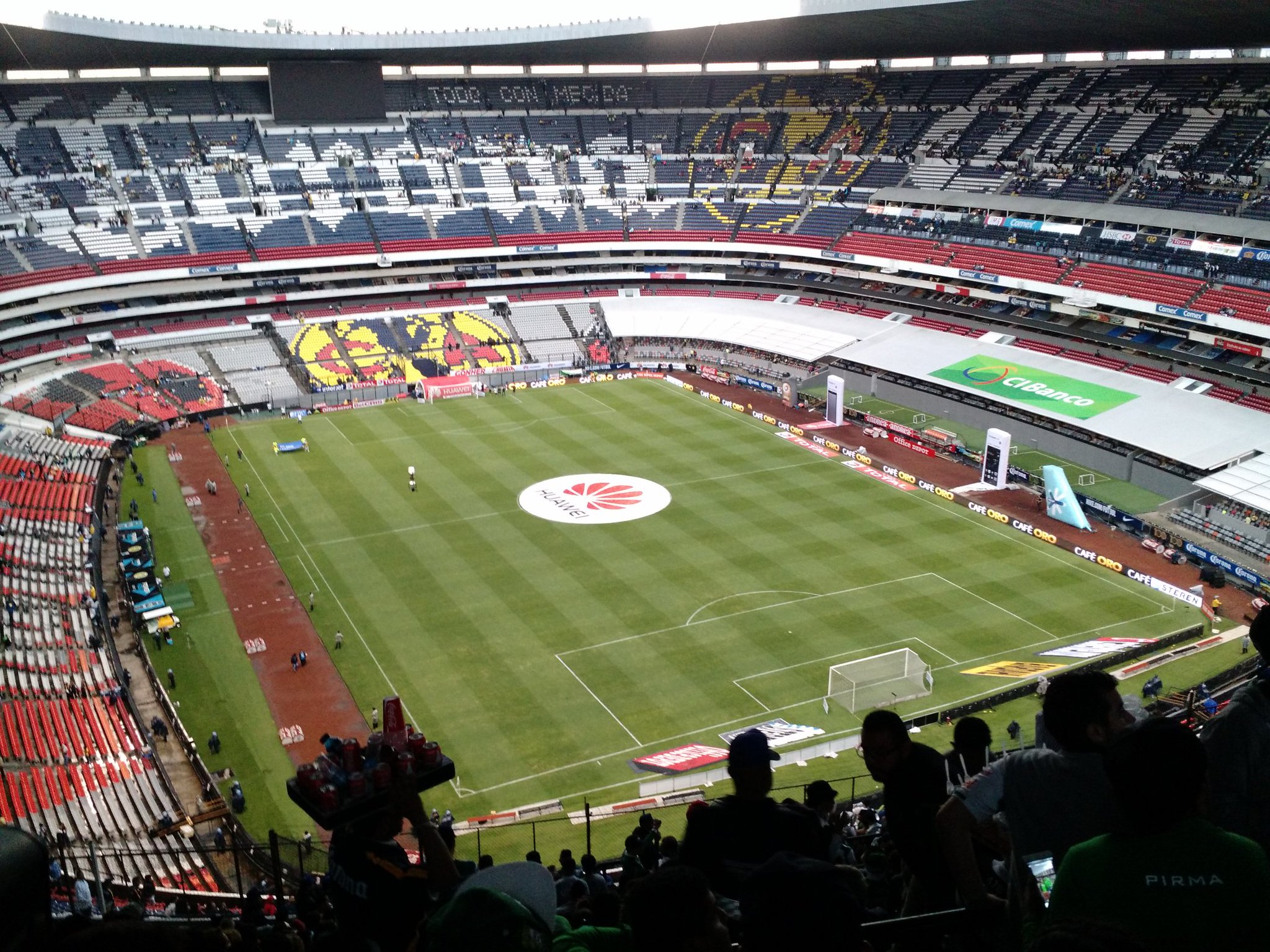
May 29, 1966, 60 years ago: Estadio Azteca opens in Mexico City, about 9 miles south of downtown. Club América takes a 2-0 lead over Italian team Torino F.C., but Torino plays back to a 2-2 draw. President Gustavo Díaz Ordaz of Mexico made the ceremonial first kick, and FIFA President Sir Stanley Rous attended.

The Azteca is the most famous building not just in Mexico, but in all of Central America. Named for the ancient empire that ruled Mexico, it remains the home of the national team and of Club de Fútbol América S.A. de C.V., or simply Club América, the most-loved -- and, like the New York Yankees, the most-hated -- sports team in the country. 

It is older than every Major League Soccer stadium except Providence Park in Portland; every NFL stadium except Lambeau Field in Green Bay; every MLB stadium except Fenway Park in Boston, Wrigley Field in Chicago, and the 2 Los Angeles area ballparks, Dodger Stadium and Angel Stadium; every NBA arena; and every NHL arena.

From a peak of 119,853 fans at a 1968 game, renovations have reduced the soccer seating capacity to an official 87,523, which still makes it larger than all but a few stadiums in the world, including most of those in the U.S. The field is a hybrid of natural grass and artificial fibers, and runs north-to-south.
Known as "El Coloso de Santa Úrsula," the Colossus of Saint Ursula (for the neighborhood it's in), along with the Maracanã in Brazil, it is 1 of 2 stadiums to have hosted 2 World Cup Finals: 1970, in which Brazil beat Italy; and 1986, in which Argentina beat West Germany.

It also hosted the 1970 Semifinal between Italy and Germany that became known as "The Game of the Century"; and the 1986 Quarterfinal between Argentina and England in which Diego Maradona scored what became known as "The Goal of the Century," only 4 minutes after his handball goal that he called "The Hand of God," the most famous cheat in the history of sports on planet Earth.

In addtion to Club América, the Azteca has been the home field for Club Necaxa, who played there from 1966 to 1970, and again from 1982 to 2003 before going to the city of Aguascalientes; Atlante, who played there off and on from 1966 to 2007, before returning permanently to their home base in Cancún; Club de Fútbol Universidad Nacional A.C., a.k.a. Pumas de la UNAM, Pumas or UNAM from 1967 to 1969; Atlético Español from 1970 until they went out of business in 1982; and Cruz Azul (Blue Cross) from 1971 to 1996.

It's also hosted soccer for the 1968 Olympics, the 1975 Pan American Games, the 1993 and 2003 CONCACAF Gold Cups, the 1999 Confederations Cup, and the 2011 Under-17 World Cup. It will host 5 matches of the 2026 World Cup, including 2 Mexico matches, and matches in the Rounds of 32 and 16. (Estadio Olímpico Universitario was the main stadium for the 1968 Olympics, and preceded the Azteca as the national team's stadium.)

It's hosted our football 10 times. The 1st was on August 15, 1994, in a preseason game in which the Houston Oilers beat the Dallas Cowboys 6-0, in front of the largest crowd in NFL history, 112,376. It's hosted 6 regular-season games, with a 1 each planned for the seasons of 2026, 2027 and 2028.

On February 20, 1993, the stadium's all-time attendance record was set, as 132,247 people saw Mexico's greatest-ever boxer, Julio César Chávez, knock Greg Haugen out to retain the Light Welterweight Championship of the World. The stadium has also hosted concerts, including by Paul McCartney, Michael Jackson and U2; and religious convocations, including the funeral of Chesperito, a legendary Mexican comedian who was a Club América fan.

Mexico City's combination of desert and mountains -- its elevation is higher than that of Denver, "the Mile High City" -- makes for a climate difficult for visiting teams, especially from outside Mexico. It took the U.S. national team 12 tries, until 2012, to get their 1st win over Mexico at the Azteca, and that was in a friendly: As of May 29, 2022, they're still looking for their 1st competitive win there.

Thursday, February 19, 2026

February 19, 1946: Baseball's "Mexican Jumping Beans"

Danny Gardella

February 19, 1946, 80 years ago: Danny Gardella, an outfielder for the New York Giants, becomes the 1st Major League Baseball player to announce he is "jumping" to the Mexican League.

It is considered an "outlaw" league because, unlike the American League, the National League, and most of North America's minor leagues, it is not under the control of MLB and its Commissioner. The Commissioner is controlled by the MLB team owners. And if there is one thing a major league sports team owner values more than money, it is control.

Jorge Pasquel was the man infringing on their control. He and his brothers began their fortune with a cigar factory in the port city of Veracruz. Jorge and Bernardo Pasquel had the ML's Azules de Veracruz -- in English, the Veracruz Blues -- and minority ownership of some other teams among their assets.
Jorge Pasquel

In 1943, knowing that the ML had no "color line" like the American majors did -- given the racial makeup of Mexico, such a ban would have been both hypocritical and nearly impossible to enforce -- he signed several players away from the Negro Leagues, and some found success in the ML. Among them was Monte Irvin, a future Hall-of-Famer, who said it was the best decision he made in baseball, and that he had never felt so free.

With World War II having ended, Pasquel began to offer high salaries to bring major league talent over to the Mexican League. He may have been driven by nationalism, and by a dislike for American imperialism, possibly spurred by the U.S. invasion of his hometown in 1914, when he was a child. (The year 1946 having been the 100th Anniversary of the start of the Mexican-American War also might have had something to do with it.) Pasquel further aided his family's fortune later in 1946, by getting his cousin, Miguel Alemán Valdés, elected President of Mexico.

A total of 22 players, including 8 Giants, moved to the Mexican League, becoming known as "the Mexican Jumping Beans." Commissioner Albert B. "Happy" Chandler banned all 22 players for life. In addition to Gardella, they included Mickey Owen, the catcher whose dropped 3rd strike cost the Brooklyn Dodgers Game 4 of the 1941 World Series; and Sal Maglie, a Giants pitcher who would go on to become the best-known of these players.

But Pasquel's plan didn't last long. Owen quickly returned to the U.S., citing poor playing conditions.  A long legal battle ensued, after which Owen was determined to owe Pasquel $35,000 for breach of contract. The league took large financial losses in 1947.

In 1948, Gardella filed a lawsuit against Chandler, and the League Presidents, Ford Frick of the NL and Will Harridge of the AL. He charged that they were engaged in interstate commerce, because the defendants had made contracts with radio broadcasting and television companies that sent narratives or moving pictures of the games across state lines.

This suit hit the team owners where it really hurt: Their money and their sense of control. If Gardella won his case, not only would it mean the end of the reserve clause, which would force them to pay much higher salaries than they wanted, but it would mean the end of their special antitrust exemption that had been granted in 1922, as fallout from their 1914-15 battle with the Federal League.

The team owners decided to save the reserve clause, save the antitrust exemption, and save face. They settled the case, offering all of the Jumping Beans amnesty. Their suspensions were ended, and all were free to return -- to the teams which had held their rights before they jumped.

Gardella and Owen barely played in the majors afterward, both having been traded by their teams. Both lived until 2005. The most successful returnee was Maglie, who became the Giants' ace, a key figure in their winning Pennants in 1951 and 1954. Knowing for having one of the best curveballs in the game, and nicknamed "Sal the Barber" because he threw close to batters' heads, giving them "a close shave," he went 119-62 in the major leagues, despite not becoming a regular starter there until he was 33. Had he not taken 2 years off to work in a defense plant during World War II (a sinus issue made him 4-F), and lost 4 years in the ML, he could have approached Hall-of-Fame-worthy career statistics. He lived until 1992.
Sal Maglie

Jorge Pasquel wasn't so lucky. Although his cousin the President enabled him and his brother Bernardo to make a great deal of money in the Mexican oil industry, the brothers lost a sizeable chunk of change in baseball. They sold their teams in 1952, but maintained ownership of Mexico City's largest ballpark, Parque Deportivo del Seguro Social (Social Security Sports Park), taking in rent from the teams' new owners. Jorge was killed in a plane crash in 1955. He was only 48 years old.

Founded in 1925, the Mexican League reached an agreement with MLB in 1955, becoming an official Class AA league. In 1967, it was promoted to Class AAA. Today, it has 20 teams, 10 each in a North Division and a South Division. The Diablos Rojos del México -- the Mexico City Red Devils, formerly simply the Mexico City Reds -- have won the most titles, 18 Pennants, including in 2024 and 2025.

Friday, March 7, 2025

March 7, 1965: Bloody Sunday in Selma & U.S. Soccer's Great Missed Opportunity

March 7, 1965, 60 years ago: Selma, Alabama becomes a flashpoint in the Civil Rights Movement. A crowd estimated at 600 people were determined to march from Selma to the State capital of Montgomery, 54 miles away, to demand a Voting Rights Act to follow the Civil Rights Act of the previous year.

The march was led by John Lewis of the Student Nonviolent Coordinating Committee (SNCC), and the Rev. Hosea Williams of the Southern Christian Leadership Conference (SCLC).

The marches reached the Edmund Pettus Bridge, carrying U.S. Route 80 over the Alabama River. Built in 1940, the bridge was already heavy with symbolism: Pettus was a Brigadier General in the Confederate Army, and later an official in the Ku Klux Klan. He was elected to the U.S. Senate in 1896, and served until his death in 1907.

By 1965, Pettus was virtually unknown outside Alabama, but the bridge named for him became a landmark.

When the marchers got to the other side of the bridge, State Troopers were waiting for them. Their commanding officer, John Cloud, ordered them to disband. Williams tried to speak to him, but was shoved. The Troopers then moved forward, shoved other demonstrators, and began beating them with their nightsticks. Tear gas was fired. Mounted Troopers charged.

Williams escaped serious injury. Lewis did not: He sustained a fractured skull. (That's him in the overcoat, in the middle of the photograph above.) Amelia Boynton, another organizer of the march, was beaten unconscious. Television cameras captured it all: The horses, the shoving, the beating, the gas. There were 67 injuries, including 17 people admitted to hospitals. Incredibly, no one died. But the event became known as Bloody Sunday.

There have been many "Bloody Sundays" in human history:

* Many of them have involved the struggle for Ireland: An 1887 police attack on a demonstration in London, a 1920 battle between the Irish Republican Army and undercover British intelligence agents in Dublin, a 1921 Loyalist massacre in Belfast, and a 1972 British Army shooting of protesters in Derry City.

* Some of them were in connection with the labor movement: A police charge during the 1911 Liverpool transit strike, the Everett Massacre in Washington State in 1916, police attacking a steelworkers' strike in Nova Scotia in 1923.

* Probably the best-known one outside the English-speaking world was in St. Petersburg, leading to the failed Russian Revolution of 1905.

This was America's Bloody Sunday. March 9 was "Turnaround Tuesday." Dr. Martin Luther King led marchers over the bridge, then, faced with another phalanx of State Troopers, turned them around and marched back. That night, 4 KKK members attacked the 3 white Unitarian Universalist ministers who had been assisting the black marchers. One of them, the Rev. James Reeb, died from his injuries on March 11. 

On March 15, President Lyndon B. Johnson addressed a joint session of Congress, demanding the Voting Rights Act that the marchers wanted. This white Southerner, once an opponent of civil rights, had made a complete turnaround, and told the nation, "It is not just Negroes, but, really, it is all of us, who must overcome the crippling legacy of bigotry and injustice. And we shall overcome."

On March 17, the bill for the Act was introduced in Congress. The same day, a federal judge ruled that the marchers had the legal right to proceed, and that the government of the State of Alabama, through any of its law enforcement agencies, could not interfere.

On March 21, 2 Sundays after the 1st attempt, the marchers, led by Dr. King, tried again. Among the celebrities who joined the march were black singers Sammy Davis Jr., Harry Belafonte and Nina Simone, and Hispanic singer Joan Baez -- but also white singers Tony Bennett, Frankie Laine, the Chad Mitchell Trio, and Peter, Paul and Mary (Peter Yarrow, Paul Stookey and Mary Travers). Many of those had been at the March On Washington a year and a half earlier.

On March 25, the march reached the State Capitol, where Dr. King said, "I know you are asking today, 'How long will it take?' I come to say to you this afternoon, however difficult the moment, however frustrating the hour, it will not be long."

That night, Viola Liuzzo, a 39-year-old white mother of 5 from Detroit was driving marchers back to Selma, as she had volunteered to do. A car full of Klansmen pulled up to her, and shot her. The KKK had no respect for the dead, especially those they murdered: They said she was a registered member of the Communist Party who had abandoned her white children in the North to have sex with black men in the South. It was a total lie.

On July 15, Barry McGuire recorded "Eve of Destruction," a song written by P.F. Sloan. The 4th and last verse contains these lines, invoking strife foreign and domestic:

Think of all the hate
there is in Red China
then take a look around
to Selma, Alabama.
You may leave here
for four days in space
but when you return
it's the same old place.

Some things did change: On August 6, 1965, 5 months after the 1st attempt at the march, LBJ signed the Voting Rights Act into law.

Some things didn't change: On April 4, 1968, Dr. King was assassinated in Memphis. In 1975, his widow, Coretta Scott King, led 4,000 marchers over the Edmund Pettus Bridge to commemorate the 10th Anniversary of the march.

In 1986, John Lewis was elected to Congress from a district in Atlanta. In 1995, Lewis led a 30th Anniversary march. In 1996, with the Olympics set for Atlanta, the Olympic torch was carried over the bridge.

In 2015, on the 50th Anniversary, Lewis, Amelia Boynton Robinson, Barack Obama (the 1st black President), Michelle Obama (the 1st black First Lady, and she and her husband flanked Lewis and held hands with him), their daughters Malia and Sasha, Vice President Joe Biden, and George W. Bush (whose record on race relations as Governor of Texas and then as President was, to put it politely, less than stellar), led a new march, of 40,000 people, including some of the original marchers, some now elderly and in wheelchairs.
Mrs. Robinson died later that year. Hosea Williams had died in 2000. On July 17, 2020, John Lewis died at age 80, having served in Congress for 33 years. On July 26, a horse-drawn carriage carried his coffin over the Edmund Pettus Bridge, and he lay in state at the Alabama State Capitol. The coffin was flown back to Washington, where it lay in state in the Rotunda of the U.S. Capitol on July 27 and 28.

He was buried in South-View Cemetery in Atlanta, which is also the final resting place of fellow civil rights figure Julian Bond, several members of Dr. King's family (but not Dr. King himself), singer Chuck Willis, baseball icon Hank Aaron, and Basketball Hall-of-Famer Walt Bellamy.

*

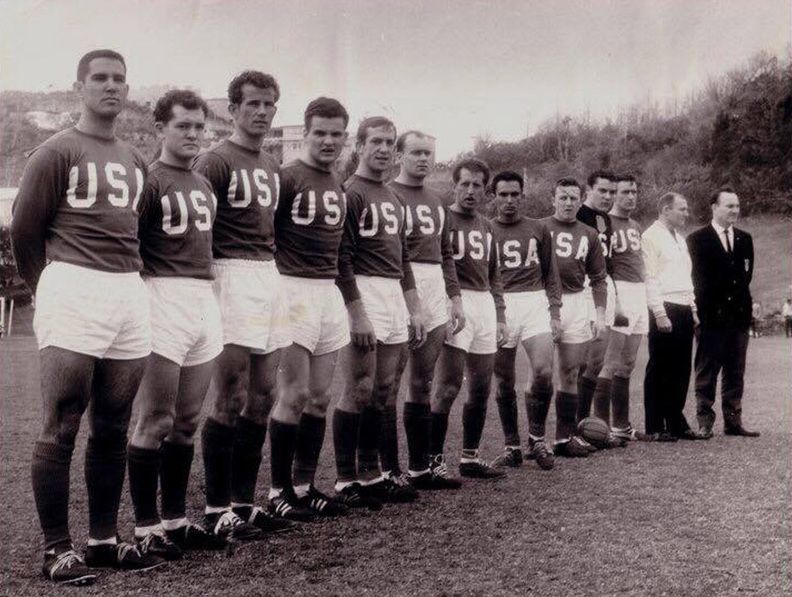
There is another event that took place on March 7, 1965 that should be mentioned. The U.S. national soccer team was in qualification, through CONCACAF -- the governing body for soccer in North America, Central America, and the Caribbean region -- for the 1966 World Cup in England.
The 1965 U.S. soccer team

The U.S. was placed in a group with Mexico and Honduras. We got a 1-0 win and a 1-1 draw with Honduras, but only a 2-2 draw and a 2-0 loss with Mexico. Had that 2-2 draw with Mexico at the Los Angeles Memorial Coliseum on March 7, 1965 been a 3-2 win, we would have advanced to the round-robin with Costa Rica and Jamaica.

Could we have won that? We'll never know. We still would have had to beat Mexico out for the one and only berth in the World Cup awarded to CONCACAF.

But even if we had won that game with Mexico, it would not have been the biggest story of the day. The Selma-to-Montgomery March was a story that should be remembered for all time.

Wednesday, October 23, 2024

Fernando Valenzuela, 1960-2024

Baseball has had many characters, many legends, and a few folk heroes. Fernando Valenzuela was all three.

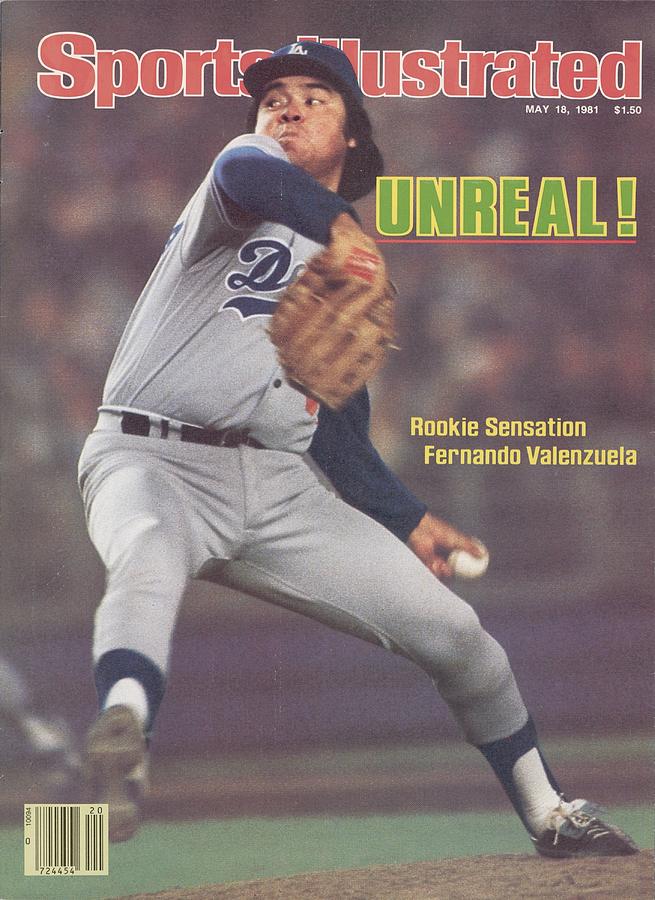
Fernando Valenzuela Anguamea was born on November 1, 1960 in Navojoa, Sonora, Mexico. In 1981, the chunky, screwballing lefthander for the Los Angeles Dodgers was the hottest thing in baseball, He won his 1st 8 starts, with 5 shutouts and an ERA of 0.50. He was only 20 years old.

On May 15, 1981, I was traveling with my family to a weekend vacation in Williamsburg, Virginia. We stopped off at a rest area on the New Jersey Turnpike, and I saw the new Sports Illustrated. Fernando was on the cover, with the headline, "UNREAL!" No, the cover didn't jinx him: He was 7-0 at that point, and won his next start, before falling to 8-1. That night, in a totally unrelated development, Len Barker of the Cleveland Indians pitched the 1st major league perfect game of my lifetime.

"Fernandomania" made the Dodgers what they remain to this day: Mexico's favorite baseball team, despite the San Diego Padres playing a short drive from the border. The mania was tamed somewhat by the midseason strike, as he went just 5-7 after his amazing start. But he pitched a complete-game win over the Yankees in Game 3 of the World Series, helping to turn the Series around. The Dodgers won in Game 6; had it gone to Game 7, he would have started it.

He had his only 20-win season in 1986, and struck out a record-tying 5 straight batters in that season's All-Star Game, at the Astrodome in Houston: Don Mattingly, Cal Ripken, Jesse Barfield, Lou Whitaker, and the opposing pitcher, Teddy Higuera. Higuera, 3 years older, was frequently compared to Fernando: He was also a chunky Mexican lefthander who threw the screwball. He would go 94-64 in his career. Both men pitched 3 scoreless innings in that game, which the American League won, 3-2.

Fernando missed most of the 1988 season due to injury, but still got a 2nd World Series ring. He was released in 1991, and bounced around, signing with the Padres. In 1996, the Padres played 3 games in Monterrey, the 1st regular-season games ever played in Mexico. Fernando started the opener against the Mets, and benefited from a 15-0 lead. The Mets came back, and he left to a standing ovation. The Padres hung on to win, 15-10.

He should have retired after the season, having gone 13-8 with an ERA of 3.62, helping the Padres reach the Playoffs for the 1st time in 12 years. Instead, he hung on for 1 more year, going 2-12. His career record finished at 173-153. A member of the Hispanic Heritage Baseball Museum Hall of Fame and the Caribbean Baseball Hall of Fame, the Dodgers retired his Number 34 in 2023.
He became a broadcaster for the Dodgers' Spanish network, bringing up memories of his struggles to learn English. It was said in 1981 that, "The two best lefthanded pitchers don't speak English: Fernando Valenzuela and Steve Carlton." (Referencing Carlton's refusal to talk to the media.) Manager Tommy Lasorda said the only English words he knows are "beer," "food" and "light beer." On The Tonight Show, Johnny Carson said, "Fernando Valenzuela learned another English word today: 'Million.'"

In 1981, Fernando married Linda Burgos, a schoolteacher from Mexico. The couple had 4 children, including Fernando, Jr., who played in the San Diego Padres and Chicago White Sox organizations as a 1st baseman.

In 2023, Fernando stepped aside from his broadcasting duties, due to ill health. He died yesterday, October 22, 2024, at the age of 63.

Generally, the Dodgers don't officially retire uniform numbers unless the player is in the Baseball Hall of Fame. They have made 2 exceptions: Fernando and Jim "Junior" Gilliam. Gilliam succeeded Jackie Robinson as their 2nd baseman in Brooklyn, played on 4 World Series winners, in both Brooklyn and Los Angeles, and in 1965, while still playing, was named only the 2nd black coach in the major leagues, after Buck O'Neill with the 1962 Chicago Cubs.

Gilliam died 1978, like Fernando between the National League Championship Series and the World Series. The Dodgers dedicated the World Series to Gilliam's memory, and wore Number 19 patches on their sleeves. It is likely that the Dodgers will now do the same for Fernando Valenzuela.