Showing posts with label ncaa tournament. Show all posts

Sunday, March 29, 2026

March 29, 1976: College Basketball's Last Undefeated Team

Left to right: Bob Knight, Scott May and Quinn Buckner.
Knight was hardly the only basketball coach to favor
plaid sportsjackets -- it was the 1970s, after all --
but he hadn't yet started wearing his more familiar red sweaters.

March 29, 1976, 50 years ago: Indiana University beats the University of Michigan, 86-68, at The Spectrum in Philadelphia, to win the NCAA Division I Men's Basketball Tournament. The Hoosiers finish the season 32-0. It remains the last undefeated National Championship season in college basketball.

Head coach Bobby Knight -- sometimes listed as "Bob Knight," which he apparently preferred -- always thought his previous season's team was better. They went 31-1, beating teams that were, at the time the Hoosiers played them, ranked Number 7, away to Kansas on December 4; Number 11, away to Notre Dame on December 11; Number 15, home to Kentucky on December 7; Number 17, away to Michigan on January 6; and Number 20, home to Purdue on January 25.

They won the Big Ten Conference title, going a perfect 18-0 in the league, and beat Texas-El Paso and Oregon State in the NCAA Tournament, before Kentucky beat them in the Elite Eight, 92-90 in Dayton, Ohio.

They did this without Larry Bird, who began the schoolyear as a freshman at IU, but found the transition difficult, and transferred to Indiana State University, which he eventually led to an NCAA Final.

With guard Quinn Buckner and forward Scott May returning for their senior years, and center Kent Benson returning as a junior, Knight was more determined than ever to win it all. They opened the season on November 29, 1975, ranked Number 1, playing defending National Champions UCLA, ranked Number 2 but playing with a head coach other than John Wooden for the 1st time since 1949 (Gene Bartow), at the St. Louis Arena, on national television. Indiana won convincingly, 84-64.

It was only the beginning. They beat Number 8 Notre Dame at home on December 11. They beat Number 14 Kentucky in Louisville. In the week between Christmas and New Year's, they won the ECAC Holiday Festival at Madison Square Garden, beating schools from 3 different Boroughs of New York City: Columbia, of Manhattan, 106-63; Manhattan College, which is located not in Manhattan but in The Bronx, 97-61; and Number 17 St. John's, of Queens, 76-69.

They beat Number 19 Michigan away on January 10. They needed overtime to beat Michigan at home at Assembly Hall in Bloomington, but did it, 72-67. They finished the regular season 27-0, again going through the Big 10 18-0.

The NCAA Tournament put them in Notre Dame's Joyce Center in South Bend, Indiana for their 1st round game, but they beat St. John's, then ranked Number 17, again. In Baton Rouge, Louisiana, they beat Number 6 Alabama and Number 2 Marquette, to put them in the Final Four at The Spectrum in Philadelphia. Again, they played UCLA, then ranked Number 5, and beat them, 65-51. In the Final, they had to play Michigan for a 3rd time, and Michigan were ranked Number 9. This time, it wasn't close: Indiana won, 86-68. They were 32-0, undefeated, and National Champions.

None of Knight's "Big Three" became professional stars. Buckner played in the NBA from 1976 to 1986, was a member of the Boston Celtics' 1984 NBA Champions, and later became a broadcaster. May played from 1976 to 1981, mostly for the Chicago Bulls. Benson played from 1977 to 1988, for 4 different teams. Both May and Benson later played in Italy's league.

Knight led Indiana to a 2nd National Championship in 1981, and a 3rd in 1987. They had previously won in 1940 and 1953, both under Branch McCracken. So Knight got the program to where it had won 5 titles. He also became, for a time, the winningest coach in college basketball history, before he was surpassed by a former assistant of his, Mike Krzyzewski of Duke. Eventually, his excesses could no longer be stood by IU administrators, and he was fired in 2000.

March 29, 1976 was a Monday. Tennis star Jennifer Capriati was born.

Friday, March 20, 2026

March 20, 1976: Rutgers Basketball Reaches the Final Four

March 20, 1976, 50 years ago: The men's basketball team of Rutgers, the State University of New Jersey, beats the Virginia Military Institute, a.k.a. VMI, at the Greensboro Coliseum in Greensboro, North Carolina. This advances them to a record of 31-0, and to the NCAA Semifinal at The Spectrum in Philadelphia. Rutgers has reached the Final Four.

One of nine "colonial colleges," which opened before American independence in 1776, Rutgers was best known as the site of the 1st American football game in 1869. But, since then, sports successes had been few and far between.

Now, under coach Tom Young, they had a basketball team that was ready to challenge the rest of the country. The usual starting lineup was guards Mike Dabney and Eddie Jordan, forwards Phil "the Thrill" Sellers and Hollis Copeland, and center "Jammin'" James Bailey, a freshman.

It was one thing to beat regional rivals like Princeton and Seton Hall (also in New Jersey); Columbia, Fordham, Manhattan College and Long Island University (New York City); the University of Pennsylvania and Temple (Philadelphia); Bucknell, Lehigh and Lafayette (Northeastern Pennsylvania); the University of Delaware; the Naval Academy (Maryland); American University (Washington, D.C.); the University of Connecticut; and Boston College.

But beating bigger teams was another thing. On December 4, 1975, they beat Big Ten team Purdue. Between Christmas and New Year's, they went to Greenville, South Carolina to play in the Poinsettia Classic, and beat The Citadel (not a big deal) and Georgia Tech (which was a big deal). They beat West Virginia at Madison Square Garden on February 5.

By this point, home games at the 3,200-seat College Avenue Gymnasium, built in 1931 after a fire burned down the previous gym on the site, roughly on the site of that first college football game, in New Brunswick, Middlesex County, New Jersey, were next to impossible to get into unless you were a student. It got so loud, paint chips fell from the ceiling. (I have had this confirmed by an RU graduate, Class of '76.) The decision to build a new arena was made.
The College Avenue Gym

Rutgers beat the University of Pittsburgh, then Syracuse. On March 1, they closed the regular season at home to St. Bonaventure, still undefeated at 25-0. The Bonnies took an early lead, but the Scarlet Knights came back, and won, 85-80. They entered the ECAC Metro Tournament at Princeton's Jadwin Gymnasium, and beat LIU and St. John's -- schools from Brooklyn and Queens, respectively -- to go 28-0.
It was on to the NCAA Tournament. This was only the 2nd time RU had made the Tournament, having gotten in the year before, and going out in the 1st Round. They had gotten to the Semifinals of the NIT in 1967, with future North Carolina State coach Jim Valvano playing for them.

They played Princeton -- not in New Jersey, but at the Providence Civic Center in Rhode Island. (It's now named the Amica Mutual Pavilion.) It was the closest game of the season, but Rutgers beat their ancient rivals, 54-53.

On to the Regional Semifinal, in Greensboro. Connecticut was not yet the power it would become, and Rutgers won, 93-79. That led to the Regional Final, also in Greensboro, against VMI. This time, Rutgers was solidly favored, and won, 91-75. They were undefeated. They were 31-0. They were ranked Number 4 in the country. And they were on their way to the Final Four.

Hail the Heroes:

* Number 12, a 6-foot-5-inch senior forward from Brooklyn, New York: Phil Sellers.
* Number 20, a 6-9 freshman center from Boston, Massachusetts: James Bailey.
* Number 22, a 6-3 sophomore guard from Washington, D.C.: Stanford Nance.
* Number 24, a 6-7 senior center from Parsippany, Morris County, New Jersey: Bruce Sherer.
* Number 30, a 6-1 junior guard from D.C.: Eddie Jordan.
* Number 32, a 6-4 senior guard from East Orange, Essex County, New Jersey: Mike Dabney.
* Number 34, a 6-5 sophomore forward from Trenton, Mercer County, New Jersey: Hollis Copeland.
* Number 42, a 6-2 junior guard from Queens, New York: Mark Conlin.
* Number 44, a 6-2 senior guard from Queens: Jeff Kleinbaum.
* Number 50, a 6-5 sophomore guard from East Rockaway, Long Island, New York: Steve Hefele.
* Number 52, a 6-7 senior center from Hackettstown, Warren County, New Jersey: Mike Palko.
* And Number 54, a 6-7 freshman forward from Belleville, Essex County, New Jersey: Abdel Anderson.

Since it was 1976, the Bicentennial year, the Final Four, and the All-Star Games for MLB, the NBA and the NHL, were held in Philadelphia. On March 27, against the University of Michigan, ranked Number 9 entering the Tournament, the bubble finally burst. The Wolverines jumped out to an early lead, and the Knights just couldn't get into their game. Michigan won, 86-70, and RU were 31-1.

In those days, there was a 3rd Place Game, and Rutgers lost that, too, 106-92 to defending National Champion UCLA, to finish 31-2. Indiana, coached by Bobby Knight, and featuring future NBA players Kent Benson, Scott May and Quinn Buckner, beat Michigan, and completed an undefeated season, 32-0. There hasn't been an undefeated season in college basketball since.

Calendar year 1976 was magical for Rutgers: In the Autumn, the football team also went undefeated, 11-0, but was not invited to a bowl game.

In 1977, Rutgers moved into the Rutgers Athletic Center, a.k.a. The RAC (pronounced like "rack"), across the Raritan River from New Brunswick, on the Livingston Campus in Piscataway. From 1986 to 2019, it was named the Louis Brown Athletic Center, after a donation from Brown's family.

Now named the Jersey Mike's Arena, it only seats 9,000, and has never been very good. Plans for renovation, or for a new arena in downtown New Brunswick, have been floated, but it looks like the current nondescript chunk of concrete is going to stay.

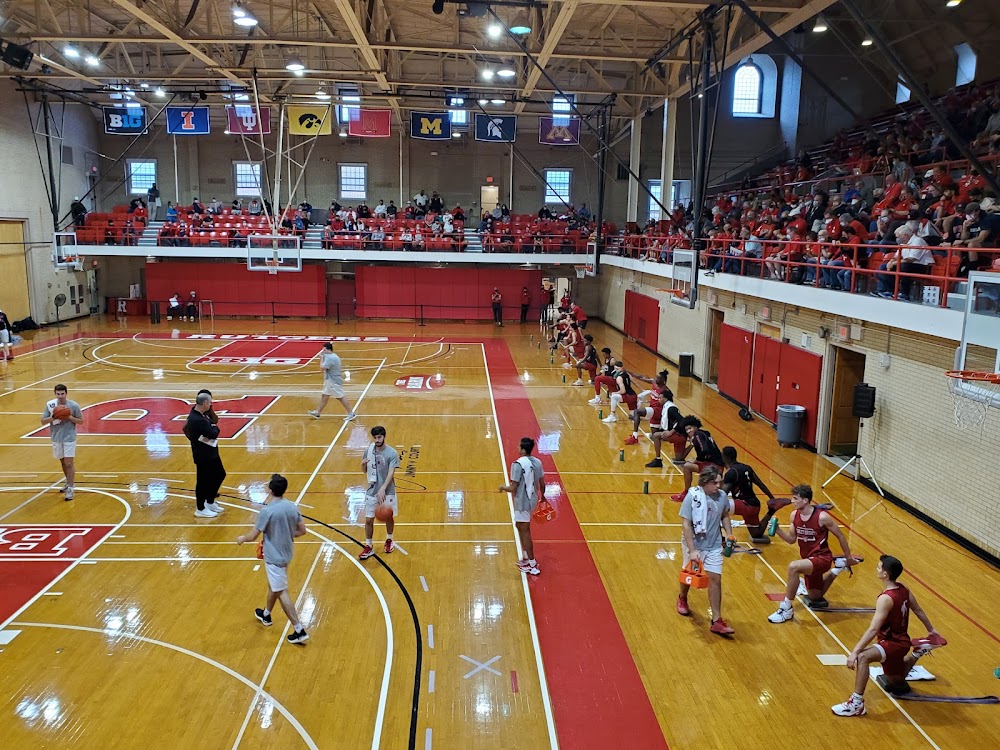
The College Avenue Gym still stands, and hosts the RU wrestling and volleyball programs.

Rutgers made the NCAA Tournament again in 1979, getting to the Sweet Sixteen. They made it again in 1983, getting to the 2nd Round. In 1989, they made it as Champions of the Atlantic-10 Tournament. They made it again in 1991. Both times, they went out in the 1st Round. They didn't make it again until 2021, but made it again in 2022.

Despite being the team's top player, Phil Sellers played just 1 season in the NBA, with the 1976-77 Detroit Pistons. Hollis Copeland played 2 seasons with the New York Knicks. James Bailey lasted 9 seasons, playing for both the Knicks and the New Jersey Nets, among other teams.

Eddie Jordan had the most successful pro career, playing 7 seasons, 3 of them with the Nets, and 3 with the Los Angeles Lakers, including winning the 1982 NBA Championship. He later coached the NBA's Sacramento Kings, Washington Wizards and Philadelphia 76ers.

Tom Young started at Rutgers in 1973, and coached them until 1985, when he was lured away by Old Dominion University in Norfolk, Virginia. He later served as an assistant to Jordan on the Wizards. He died on March 20, 2022, the 36th Anniversary of his Final Four achievement.

Phil Sellers died on September 19, 2023. The remaining players are still alive.

Tuesday, April 1, 2025

April 1, 1985: Villanova's Perfect Game

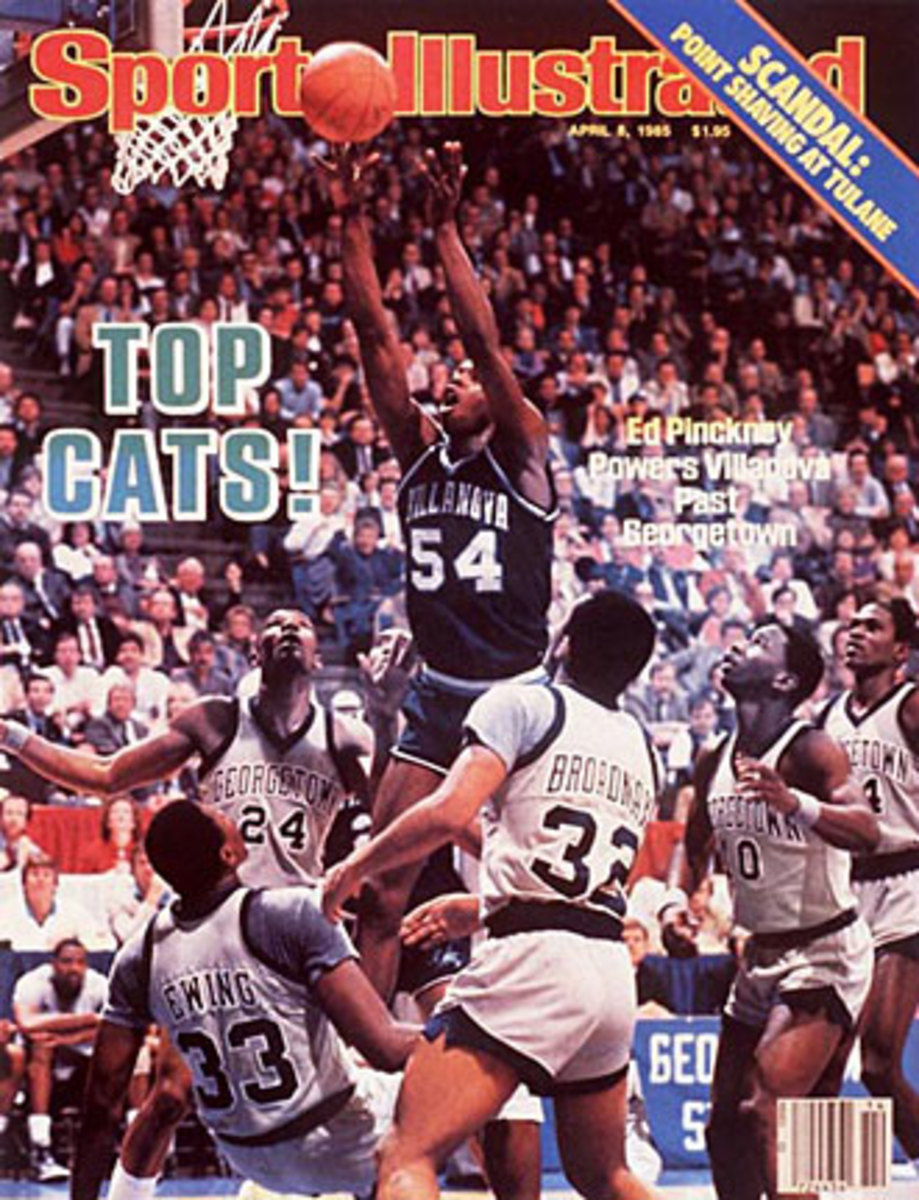
April 1, 1985, 40 years ago: Someone who had been following the college basketball season, but had been unable to watch the game, might have seen the final score, and thought it was an April Fool's joke. After all, this was mere days after Sports Illustrated's article "The Curious Case of Sidd Finch." But it was real, and it remains the biggest upset in the history of the NCAA's men's basketball tournament.

In Philadelphia college basketball, the "Big Five," an unofficial group, are the University of Pennsylvania, Temple University, La Salle University, St. Joseph's University, and Villanova University. Temple is secular. Penn is Ivy League. La Salle and St. Joe's are Catholic. Villanova is Catholic, likes to pretend that it is Ivy.

While St. Joe's straddles the City Line and the western "Main Line" suburbs, Villanova, is 11 miles to the northwest, well into the Main Line. While the other 4 schools, especially Temple, are more racially diverse (yes, even Penn), the Wildcats are mocked as "Vanilla-nova," and with claims that half the black people on campus are on the basketball team.

One season, as the seconds ticked down in a win over St. Joe's, allowing them to clinch the best overall record in the Big 5, their fans chanted, "We own Philly!" The St. Joe's fans chanted back, "You ain't Philly!" They do seem, of the 5 student bodies, the least likely to eat a cheesesteak and then work it off by running up the steps of the Philadelphia Art Museum -- but then, their track and field program has been among the nation's best for decades.

In 1972, Chuck Daly, later to coach the Detroit Pistons to back-to-back NBA Championships, hired Rollie Massimino as an assistant coach. In 1973, trying to move on from the scandal that got their 1971 Final Four berth stricken from the record, Villanova needed a young man of integrity. The fact that the 38-year-old Rollie was Catholic, and had the endorsement of the admired Daly, helped a lot.

Burdened by NCAA sanctions that the previous regime had brought on, his 1st 2 seasons were bad. But in 1976, he went 16-11. In 1977, he got them into the NIT. In 1978, he got them into the NCAA Tournament.

In 1982, he won the Big East Conference, and got 'Nova to the Elite Eight. In 1983, he did that again, tying Georgetown for the title. In 1984, he finished 2nd in the Big East, to Georgetown.

The Wildcat players were believing in the man they called Daddy Mass, and they were giving him something to believe in. In other words, what happened in the 1984-85 season, while worthy of expressions of surprise, should not have been considered an outright shock.

The big rivalry in the Big East was between 2 big-city Catholic schools: St. John's in New York, and Georgetown in Washington, D.C. Almost nobody was paying attention to the one in between, where Rollie had made the Wildcats big enough that the 1,500-seat Villanova Field House (shortly thereafter, renamed the Jake Nevin Field House) was woefully inadequate, and even the 6,500-seat Pavilion that was then under construction wasn't enough: 'Nova played nearly every game at the 18,000-seat Spectrum, the South Philly home of the 76ers and Flyers, 14 miles from campus.

Villanova went just 9-7 in Big East play, and were 19-10 going into the NCAA Tournament. They were seed 8th in their region, and their game against 9th seed Dayton was, uncharacteristically, on Dayton's home court. The Wildcats won anyway. Then they best 1st seed Michigan, 4th seed Maryland (with Len Bias), and 2nd seed North Carolina.

The Big East had 3 of the Final Four berths: Lou Carnsecca's St. John's, John Thompson's Georgetown, and Rollie Massimino's Villanova. Dana Kirk's Memphis State had the other one.

The Final Four was set for Rupp Arena in Lexington, Kentucky. On spite of being named the Wildcats and wearing blue, like the venue's home team, most observers didn't give Villanova a chance. Even if they beat Memphis in the Final, the other Semifinal, between defending National Champion Georgetown and St. John's, who had split their regular-season meetings, was being considered "the real final."

But Villanova did beat Memphis, and when Georgetown beat St. John's rather easily, it seemed to set Monday, April 1, 1985 up as a coronation for the defending National Champion Hoyas.

Instead, Villanova pulled off one of the biggest upsets of all time. They shot 22-for-28 from the field, 78 percent, the highest in Final Four history. Georgetown hardly folded, but Villanova won, 66-64. It was April Fool's Day, but there was no joke in Rupp Arena.

It was the 1st NCAA men's basketball National Championship won by a Philadelphia-area team since La Salle in 1954. And, with the 9th seed in their region, the 1985 Villanova team remains the lowest seed ever to win the Tournament.

"I still never saw the Championship Game replay in its entirety," Massimino said in 2015, at a 30th Anniversary reunion. "I still think we might lose."

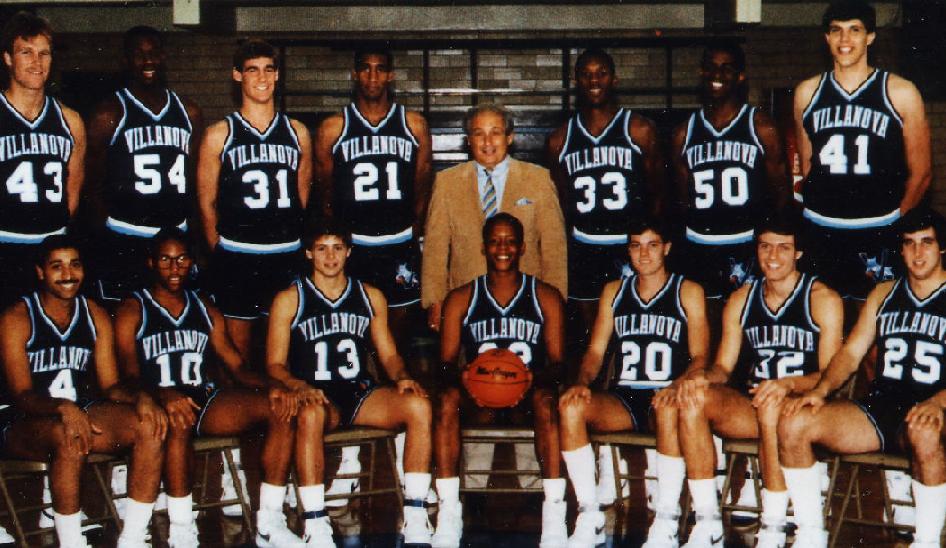
But they won. Hail the Champions:
Top row, left to right: Center Wyatt Maker; forward Ed Pinckney,
forward Mark Plansky, forward Howard Pressley,
head coach Rollie Massimino, forward Dwayne McClain,
forward Connally Brown, center Chuck Everson.
Bottom row: Guard Dwight Wilbur, guard DeAlvin Phillips,
guard R.C. Massimino, guard Gary McLain,
guard Brian Harrington, guard Harold Jensen, forward Steve Pinone.

Pretty much all of them went on to do good things. Ed Pinckney played 12 seasons in the NBA, mostly for the Phoenix Suns. He went back to Villanova, on Jay Wright's staff, and has been an assistant coach for 3 NBA teams. Dwayne McClain played 12 seasons of pro ball, mostly in Europe, but did have 1 season with the Indiana Pacers. He went into coaching, and now runs a financial firm in Florida.

Harold Pressley played for the Sacramento Kings, and is now a TV announcer in Sacramento. Connally Brown became an FBI Agent. And R.C. Massimino, 1 of 5 kids Rollie had with his wife, now runs a construction management company in the Philadelphia suburbs.

Rollie stayed at Villanova until 1992, when he got an offer that spoke to his integrity, and mirrored his arrival at Villanova. The University of Nevada at Las Vegas, reeling from NCAA sanctions after their failure to defend their 1990 National Championship, a 1991 Semifinal loss to Duke nearly as shocking as Georgetown's 1985 loss to Villanova (a win by Duke could still be considered a big upset then), had fired crooked head coach Jerry Tarkanian.

But maybe, just maybe, Vegas corrupts everyone eventually. Just 2 years later, Rollie's own integrity was impeached. It was revealed that he and UNLV President Robert Maxson cut a deal to lift Rollie's salary above the figure that was reported to the State of Nevada, violating ethics rules. He had to go.

He resurfaced in 1996, at Cleveland State University. He did not do well there, and he couldn't control his players, who were involved in substance abuse, other crimes, and academic fraud. He left in 2003.

He moved to Florida, intending to be retired. But in 2005, Northwood University, an NAIA school in West Palm Beach, started a basketball program, and the athletic director asked Rollie to be their 1st coach. He led them to 4 conference titles, getting to the NAIA Semifinal in 2011 and the Final in 2012. In 2014, Northwood was bought by a private corporation, and renamed Keiser University.

He began battling cancer, but in 2016, Villanova got back to the NCAA Final, and coach Jay Wright asked Rollie to come to the Final at NRG Stadium in Houston. He did, and met with the team. Villanova won a thriller against North Carolina, to take their 2nd National Championship. He died the following year.

Villanova won another National Championship in 2018. The Big 5's count currently stands as follows: Villanova 3, Penn 2 (if you count retroactive titles from the pre-NCAA Tournament era), La Salle 1, Temple 1 (if you count NIT titles from the era before the NCAA Tournament became the big one), St. Joseph's none.

Monday, March 31, 2025

March 31, 1975: The End of the John Wooden UCLA Dynasty

March 31, 1975. 50 years ago: The Final of the NCAA Division I Men's Basketball Tournament is held at the San Diego Sports Arena. (It's now named the Pechanga Arena.)

The NCAA Tournament had varied from between 22 and 25 teams since 1953. For the 1974-75 season, due to the frustrations of teams unable to win the Conference Tournaments, and thus qualify for the NCAA Tournament, despite previously having exceptional seasons, the NCAA expanded the Tournament to 32 teams, and allowed teams that failed to win their conference in.

In the Mideast Regional Final, at the University of Dayton Arena in Dayton, Ohio, on March 22, Indiana, then undefeated at 31-0 and ranked Number 1 in the country, faced Number 5 Kentucky, who were 24-3, with 1 of their losses coming to Indiana in Bloomington. This time, Joe B. Hall's Wildcats beat Bobby Knight's Hoosiers, 92-90, and secure Kentucky's 1st berth in what would later be called "the Final Four" since losing the 1966 Final. This would be the only game that Indiana would lose between March 11, 1974 and December 1, 1976, a stretch over which they went 66-1.

The University of California at Los Angeles had won 7 straight titles, and 9 out of 10, under coach John Wooden, before losing in the 1974 Semifinal to North Carolina State. In 1974-75, the Bruins finished the regular season 23-3, losing only away to Stanford by 4 points, away to Notre Dame (again) by 6, and, in their only bad game of the season, away to Washington by 22.

At the time, the league then known as the Pacific-Eight Conference had no Conference Tournament, but UCLA easily won the regular-season title. The Bruins struggled in the NCAA Tournament: They needed overtime to beat Michigan, beat the University of Montana by only 3 points, beat Arizona State to get to the Final Four, and needed overtime to beat the University of Louisville, coached by Wooden's former assistant, Denny Crum.

After that Semifinal win over Louisville, Wooden announced his retirement: Win or lose, the Final against Kentucky would be his last game.

The game was tight. So were the Bruins, as if they were trying too hard to send Wooden out a winner. The lead changed hands several times in the 1st half, which ended with UCLA ahead, 43-40. Kentucky stayed close, and were within 76-75 with less than 7 minutes left.

Dave Meyers -- brother of UCLA women's star Ann Meyers -- was called for an offensive foul on a shot attempt during which he bumped into Grevey. Meyers yelled at referee Hank Nichols for this, and was assessed a technical foul. This led the normally mild-mannered Wooden to run onto the court, and call Nichols a "crook."

Maybe this shook the Wildcats up, because Kevin Grevey, their best player, missed all 3 free throws. Kentucky never recovered, and UCLA won, 92-85. Wooden and UCLA had their 10th National Championship, all within the last 12 years.

As with so many other great college coaches, Wooden cast a shadow that his successors found it difficult to get out of. The following year, Gene Bartow got UCLA back to the Final Four, but lost to Indiana, with Knight leading them to what remains the last undefeated season for an NCAA Division I men's basketball team.

In 1978, Hall led Kentucky to their 1st National Championship in 20 years, while Grevey helped the Washington Bullets win the NBA Championship. Under Larry Brown, UCLA got back to the Final in 1980, losing to Louisville and Wooden's former assistant Crum, who would win the National Championship again in 1986.

UCLA has won 1 National Championship without Wooden, in 1995, under Jim Harrick Sr. In 2006, Ben Howland took them to the Final, where they lost to Florida.

Of Wooden's '75 Bruins: Marques Johnson starred with the Milwaukee Bucks, becoming a 5-time NBA All-Star; Dave Meyers was his teammate on the Bucks; Andre McCarter played a season each with the Kansas City Kings and the Bullets; Ralph Drollinger played 1 season, the expansion season of the Dallas Mavericks, 1980-81; Brett Vroman, that same season, played 11 games with his home-State Utah Jazz, the extent of his NBA career, though he also played in Europe, mostly in Italy; Richard Washington, named the Tournament's Most Outstanding Player, played 6 seasons in the NBA, including 1 as a teammate of Johnson and Meyers, and another as a teammate of Drollinger; and Wilbert Olinde never played in the NBA, but starred in Germany's basketball league.

And then there was Gavin Smith. He transferred to the University of Hawaii, where he set the school's single-season scoring record, which still stands. He became a stuntman, an actor, and a film studio executive. In 2012, he disappeared after leaving a friend's house in the Los Angeles suburbs. Two years later, his remains were found, and a man was convicted of his murder.

John Wooden had been a star player at Purdue University in the early 1930s, before coaching at Indiana State (later the Alma Mater of Larry Bird) from 1946 to 1948, and then at UCLA until 1975. His career record was 664-162 -- including 335-22 from 1963 to 1975, for a percentage of .938.

He won National Championships in 1964, with Walt Hazzard and Gail Goodrich; 1965, with Goodrich; 1967 and 1968, with Lew Alcindor, who later changed his name to Kareem Abdul-Jabbar; 1969, with Kareem and Sidney Wicks; 1970 and 1971, with Wicks; 1972 and 1973, with Bill Walton and Keith Wilkes, who later changed his name to Jamaal Wilkes; and 1975, with Marques Johnson.

It's worth noting that Wooden titled his autobiography They Call Me Coach. Even long after his retirement, his former players, even those who had gone into coaching themselves, still called him "Coach" rather than "John." It's also worth noting that Kareem only let 2 people continue to call him "Lewis": His father, Ferdinand Lewis Alcindor Sr.; and Wooden.

It's also worth noting that Wooden was just 64 when he retired, though he looked older. To put this in perspective: Dean Smith and Gary Williams each coached their last college game at 66, Bobby Knight and Jud Heathcote 67, Don Haskins 69, Roy Williams 70, Lute Olson 72, Denny Crum 74, Mike Krzyzewski and Larry Brown 75, Jim Calhoun 79, Rollie Massimino 83. As of March 31, 2022, Jim Boeheim and Tom Izzo are still coaching at 67, Rick Pitino at 69.

He was the 1st person elected to the Basketball Hall of Fame as both a player and a coach, the former in 1960 and the latter while still coaching in 1973. His success led to UCLA building the Edwin W. Pauley Pavilion in 1965. In 2003, the school named the playing surface the Nell and John Wooden Court. John insisted that, if he were going to be so honored, his late wife's name should go first. That same year, President George W. Bush awarded him the Presidential Medal of Freedom. He died in 2010, 4 months short of his 100th birthday.

Wednesday, April 3, 2024

Cities Winning the NCAA Men's Basketball Tournament & a Major League Championship In the Same Year

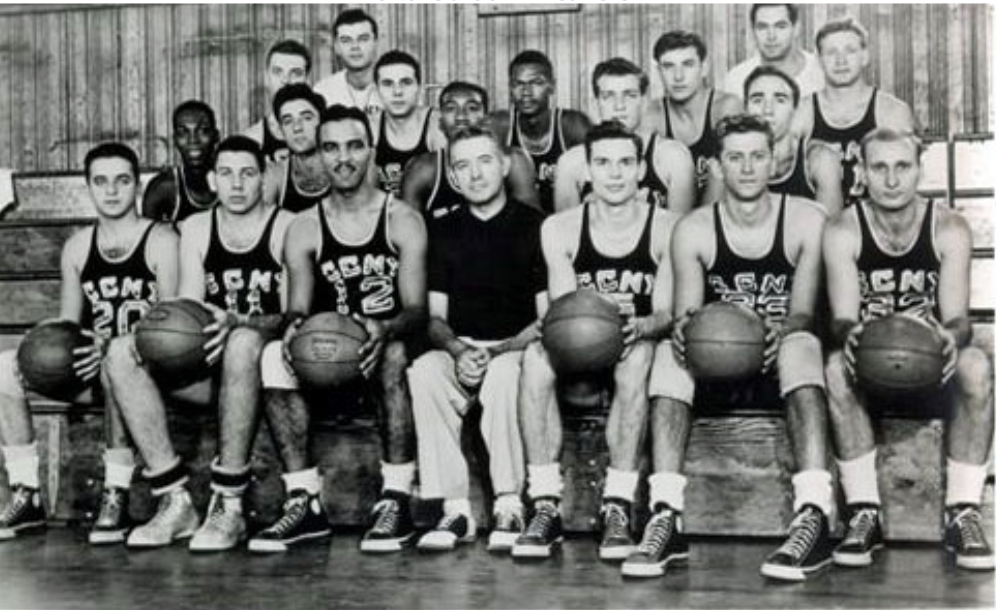
The 1950 CCNY Team, National Champions.

Note: That's calendar year, January 1 to December 31 -- not schoolyear, July 1 to June 30.

1. 1950: City College of New York (CCNY) won the NCAA Tournament, and the New York Yankees won the World Series.

2. 1963: Loyola University of Chicago won the NCAA Tournament, and the Chicago Bears won the NFL Championship.

3. 1965: The University of California at Los Angeles (UCLA) won the NCAA Tournament, and the Los Angeles Dodgers won the World Series.

4. 1972: UCLA won the NCAA Tournament, and the Los Angeles Lakers won the NBA Championship.

5. 1989: Michigan won the NCAA Tournament, and the Detroit Pistons won the NBA Championship. The Crisler Center is 54 miles from the site of The Palace of Auburn Hills. This is close enough for me to count it as the same metropolitan area, but it's certainly not the same city.

6. 2018: The Philadelphia Eagles won the Super Bowl, and Villanova University won the NCAA Tournament. The Finneran Pavilion is 19 miles from Lincoln Financial Field; so, if UM and the Pistons count, then 'Nova and the Eagles count.

So, 6 occurrences: 2 by Los Angeles, and 1 each by New York, Philadelphia, Detroit and Chicago.

New York had a close call in 1952: The Yankees won the World Series, but St. John's University lost the NCAA Final.

In 1961, the University of Cincinnati won the NCAA Tournament, but the Cincinnati Reds lost the World Series.

In 1976, Indiana University won the NCAA Tournament, and the Cincinnati Reds won the World Series. However, despite the Reds being the closest MLB team to IU, the distance of 127 miles from Assembly Hall to Riverfront Stadium, and the crossing of a State Line, means this doesn't count.

In 1980, the Lakers won the NBA Championship, but UCLA lost the NCAA Final.

In 1996, the Yankees won the World Series, but Syracuse University lost the NCAA Final. Besides, the JMA Wireless Dome (then the Carrier Dome) is 252 miles from Yankee Stadium, so it wouldn't have counted, anyway. Nor would 2003, when Syracuse won the NCAA Final, but the Yankees lost the World Series, have counted. That 1996 Final was hosted at the Meadowlands, but that doesn't count, either. If St. John's had done it, or if one of the New Jersey schools -- Rutgers, Princeton, Seton Hall, St. Peter's of Jersey City -- had done it, that would have counted.

In 2001, the Arizona Diamondbacks won the World Series, but the University of Arizona lost the NCAA Final. Besides, the McKale Center in Tucson is 114 miles from Chase Field (then Bank One Ballpark), so I probably wouldn't have counted it, anyway.

In 2004, the University of Connecticut won the NCAA Tournament. The New England Patriots won the Super Bowl, and the Boston Red Sox won the World Series. However, Gampel Pavilion in Storrs, Connecticut is 74 miles from Gillette Stadium in Foxborough, Massachusetts; and 82 miles from Fenway Park in Boston. And, unlike Ann Arbor and Auburn Hills in Michigan, it's not in the same State. So I chose not to count it.

In 2005, the Chicago White Sox won the World Series, but the University of Illinois lost the NCAA Final. Besides, the State Farm Center (then Assembly Hall) in Champaign is 132 miles from Guaranteed Rate Field (then U.S. Cellular Field), so I probably wouldn't have counted it, anyway.

In 2006, the University of Florida won the NCAA Tournament, and the Miami Heat won the NBA Championship. However, Gainesville is 338 miles from Miami, so that can't be counted.

In 2019, the University of Virginia won the NCAA Tournament, and the closest MLB team, the Washington Nationals, won the World Series. However, Charlottesville, Virginia is 119 miles from D.C., and a State Line must be crossed, so I can't count it.

The 2024 Final Four teams are, in alphabetical order: Alabama, Connecticut, North Carolina State and Purdue. The Kansas City Chiefs have won the Super Bowl, but can't be paired up with any of these schools. Alabama, in Tuscaloosa, is too far, even from Atlanta, to match up. Connecticut has already been ruled out.

North Carolina State is in Raleigh, so a Stanley Cup win by the Carolina Hurricanes, which is currently possible, would work; but the NBA's Charlotte Hornets are 162 miles away, so that pairing wouldn't work. And Purdue is in West Lafayette, Indiana: It's 69 miles from the Indianapolis teams, and nearly twice that from the Chicago teams, so it would be a judgment call if any of the applicable teams should be counted.

UPDATE: UConn won, so there won't be a new entry in 2024.

Thursday, March 21, 2024

March 21, 1964: The UCLA Dynasty Begins

March 21, 1964, 60 years ago: The University of California at Los Angeles beat Duke University, 98-83, at the Municipal Auditorium in Kansas City, in the Final of the NCAA Men's Basketball Tournament. It is the 1st National Championship for UCLA. It will not be the last.

UCLA coach John Wooden had been good enough of a player at Purdue University in the early 1930s that he eventually became the 1st person elected to the Basketball Hall of Fame separately as a player and as a coach. He became UCLA's head coach in 1948, and took them to what would later be called the Final Four for the 1st time in 1962.

In 1963-64, with guards Walt Hazzard and Gail Goodrich, forwards Keith Erickson and Jack Hirsch, and center Fred Slaughter, he guided the Bruins to an undefeated season, 30-0. Goodrich and Erickson would star with the Los Angeles Lakers, and Goodrich would join Wooden in the Basketball Hall of Fame.

The closest they came to losing in the regular season was a 2-point win away to the main campus of the University of California in Berkeley in February, a 3-point win away to Kansas State early in the season, 4 over Illinois in the L.A. Classic (at the Memorial Sports Arena, not on their own campus), and 5 away to Washington State.

In the tournament, they won their regional games at Oregon state in Corvallis, beating Seattle University, 95-90; and the University of San Francisco, 76-72. In Kansas City, they faced Kansas State again, this time winning, 90-84, before beating a Duke team that featured future Golden State Warriors star Jeff Mullins.

UCLA made it back-to-back titles in 1965. These titles raised enough money that the Bruins could move out of their 2,400-seat Men's Gym, and also stop using the Sports Arena, which they were sharing with their arch-rivals, the University of Southern California (like the next-door Coliseum, it was on USC's campus), and into a large on-campus building, which became Pauley Pavilion. Wooden would eventually lead UCLA to 10 National Championships in 12 seasons. The school won an 11th in 1995, under Jim Harrick.

Duke had reached the Final Four in 1963, and would again in 1966. But they would not do so again until 1978, and then not again until 1986, the 1st of 14 times they would do so under Mike Krzyzewski. "Coach K" finally got them their 1st National Championship in 1991.

Tuesday, May 9, 2023

Denny Crum, 1937-2023

Rick Pitino coached both the University of Kentucky and the University of Louisville, arch-rivals, to National Championships in college basketball. And was corrupt at both schools. It is possible to succeed at one of them, and to do it cleanly. Denny Crum proved that.

Denzel Edwin Crum was born on March 2, 1937 in the Los Angeles suburb of San Fernando, California. He played at Los Angeles Pierce College, then, in 1956, transferred to the University of California at Los Angeles.

John Wooden was the head coach at UCLA, and had yet to lead the Bruins to their 1st appearance in what would now be called the NCAA Tournament's Final Four. In 1958, Crum graduated, and Wooden appointed him as the freshman coach. In 1961, he became an assistant coach back at Pierce, and head coach in 1964. That year, Wooden led UCLA to their 1st National Championship, and won another in 1965, and another in 1967.

Wooden then brought Crum back as his assistant and his chief recruiter. He recruited Sidney Wicks. He recruited Henry Bibby. He recruited Keith Wilkes (later to rename himself Jamaal Wilkes). Most importantly, he recruited Bill Walton. UCLA won the National Championship again in 1968, 1969, 1970 and 1971.

Crum was then hired to be the head coach at the University of Louisville. In his 1st season there, 1971-72, Crum guided the Cardinals to the Final Four, losing in the Semifinals -- to Wooden's UCLA. Crum got Louisville to the Final Four again in 1975, losing in the Semifinals -- again, to UCLA. The Bruins won the National Championship again without him in 1972, 1973 and 1975, so, while he was a big part of Wooden's success, Wooden did win 6 titles without him, and 4 without the players Crum recruited.

Wooden retired after that 1975 title. In 1980, Crum led Louisville to another Final Four. This time, they reached the Final -- where they played UCLA, now coached by Larry Brown. But the Cardinals wouldn't be denied, with Darrell Griffith, a.k.a. "Dr. Dunkenstein," scoring 23 points, beating UCLA, 59-54.

Louisville reached the Final Four again in 1983. In 1986, they won another National Championship, led by freshman star Pervis Ellison, beating the 1st Final Four team that Mike Krzyzewski coached at Duke University.

He was only the 9th coach to win 2 National Championships. Henry Iba at the school now known as Oklahoma State, Adolph Rupp at Kentucky, Indiana coaches Branch McCracken and Bob Knight, Phil Woolpert at the University of San Francisco, Ed Jucker at the University of Cincinnati, Dean Smith at North Carolina, and, of course, Wooden. (He has been joined by Krzyzewski, Pitino, Jim Calhoun at Connecticut, Billy Donovan at Florida, Roy Williams at North Carolina, Jay Wright at Villanova, and Bill Self at Kansas, for a total of 16.)

In addition to his 2 National Championships and his 6 Final Fours, he won 15 regular season Conference Championships and 11 Conference tournaments. In 1993, he became the 2nd-fastest coach to reach 500 wins. He was elected to the Basketball Hall of Fame the next year. He retired in 2001, with a record of 675-295, a winning percentage of .696.

He was married twice, and since 2001, he had been married to Susan Sweeney, a news anchor at a Louisville television station. He had a daughter, Cynthia; and 2 sons, Steve and Scott. From 2004 to 2014, Crum co-hosted The Joe B. and Denny Show on Fox Sports Radio, with Joe B. Hall, who had coached Kentucky to 3 Final Fours, including the 1978 National Championship. Hall died in 2022.

Denny Crum died today, May 9, 2023, at his home in Louisville. He was 86 years old, and it was a life of success and integrity, in a profession where the two have frequently refused to mix.

Thursday, March 23, 2023

March 23, 1963: Loyola vs. Cincinnati

March 23, 1963, 60 years ago: The Final of the NCAA men's basketball tournament is held at Freedom Hall in Louisville. It is the culmination of a tournament with heavy overtones of the Civil Rights Movement.

Mississippi State University had won the Southeastern Conference Championship, earning them a berth into the NCAA Tournament. The Bulldogs were all-white, as Mississippi colleges were still racially segregated. There was an "unwritten law" that no team from the State could play an integrated team. MSU coach James "Babe" McCarthy defied this, and traveled to East Lansing, Michigan, to Jenison Field House on the campus of Michigan State University. There, they played Loyola University Chicago (there is no "of" in their name), and lost, 61-51.

This Loyola should not be confused with Loyola University Maryland in Baltimore, whose teams are called the Greyhounds; Loyola University New Orleans, the Wolf Pack; or Loyola Marymount University in Los Angeles, the Lions. They are all named for Íñigo López de Oñaz y Loyola, a Spanish theologian who, in 1541, founded the Society of Jesus, a.k.a. the Jesuits, with Peter Faber and Francis Xavier. He is better known by his Latin name, St. Ignatius of Loyola.

The Loyola Ramblers did not stop there. Coached by George Ireland, they won their 1st 21 games, before losing away to Bowling Green. They won 3 more games before losing their regular-season finale to Wichita State at the Chicago Stadium. In the Tournament's Round of 32, they beat Tennessee Tech on the Northwestern campus in Evanston, Illinois. In the Round of 16, they beat Mississippi State at East Lansing. In the Quarterfinal, they beat Illinois at East Lansing. And in the Semifinal, they beat Duke at Freedom Hall.

In the Final, their opponents were the University of Cincinnati, the 2-time defending National Champions. In 1959 and 1960, with Oscar Robertson, the reached what's now known as the Final Four. In 1961, with new head coach Ed Jucker, they reached the Final, and dethroned defending Champions Ohio State, who had Jerry Lucas and John Havlicek coming back. In 1962, they beat Ohio State in the Final again.

In 1963, they were 25-1 going into the Final, to Loyola's 28-2. Like Loyola, they had lost to Wichita State, by 1 point in Wichita. That Wichita State team had Nate Bowman and Dave Stallworth, both of whom would be drafted by the New York Knicks, and were still with them when they won the 1970 NBA Championship. But in 1962-63, Wichita State only went 19-8, finishing 2nd in the Missouri Valley Conference to Cincinnati, did not get invited to the NCAA Tournament, and crashed out of the NIT in the 1st Round.

In the Semifinal, Cincinnati beat Oregon State, which featured Terry Baker, who, 4 months earlier, had won the Heisman Trophy as OSU's quarterback; and, 3 months earlier, had been named Sports Illustrated magazine's Sportsman of the Year, citing his status as a scholar-athlete. And this was before March 1963, when he became the 1st Heisman Trophy winner to also play in the Final Four. He remains the only one.

In that 1963 Final, Loyola started 4 black players, the 1st team ever to do so: Center Les Hunter, forwards Jerry Harkness and Vic Rouse, and guard Ron Miller. Only guard Jack Egan was white.

"The unspoken rule then was two blacks at home, if you had to play them, and one on the road," Ireland said in a 1987 interview. "I played four, and rarely substituted." In other words, he didn't care about an unspoken rule, only written rules.

On the question of substitutions: If both teams had had their choice, all 10 starters would have played the entire game. All 5 of Loyola's did. In Cincinnati's case, center George Wilson got into foul trouble, and sat out for 4 minutes. Guard Larry Shingleton was put in, and forward Dale Heidotting took over the center role. The rest played the whole game: Heidotting and fellow forward Ron Bonham, and guards Tom Thacker and Tony Yates.

Wilson, Thacker and Yates were also black. This marked the 1st time that over half the players in the NCAA Final were black -- in this case, 7 out of 10. So, whichever team won, it would be a step forward in civil rights in basketball: Fans were used to black stars, but not black teams. To borrow the words of playwright Arthur Miller (Jewish, rather than black), "Attention must be paid."

Harkness was the Ramblers' best player. He was shut out from the field by the Bearcats' Tony Yates and Tom Thacker for better than 35 minutes. But he reeled off 9 of his 14 points in the last 5 minutes of regulation, due to both of them getting into foul trouble and having to back off a little.

With 12 seconds left in regulation, Shingleton went to the foul line with the Bearcats up, 53-52. He made the 1st free throw, but missed the 2nd. Hunter grabbed the rebound, and passed to Harkness, who scored to send the game to overtime, 54-54.

There was no 3-point shot available at the time. There was no shot clock in college basketball then, either. This turned out to be critical. With 1:21 left, the game was tied at 58-58, when Loyola won a tip. They passed the ball around, waiting for their chance to take the last shot. Harkness drove, but couldn't get a shot, and flipped the ball to Hunter. He missed, but Rouse flicked the ball into the net as the gun sounded. Final score: Loyola 60, Cincinnati 58.

This was the 1st time that an NCAA Tournament Final had been decided on a last-second shot, a "buzzer-beater." It was also the 1st time that a buzzer-beater had sent an NCAA Tournament Final to overtime.

At the end of the year, the Chicago Bears won the NFL Championship. That made Chicago the 1st city to win both the NFL Championship and the NCAA Basketball Tournament in the same calendar year. It's only happened once since, in 2018, with the Super Bowl by then played in February: Philadelphia did it with the Eagles and Villanova.

Vic Rouse died in 1999, Jim Reardon and head coach George Ireland in 2001, Les Hunter in 2020, Jerry Harkness in 2021. As of March 23, 2022, 5 members of the 1963 Loyola team are still alive: Jack Egan, Chuck Wood, Dan Connaughton, Rich Rochelle and Ron Miller.

For all of the rich history of basketball in the City of Chicago, and in the State of Illinois, this remains the only time that a team from that City or that State has won the NCAA Championship. DePaul University, on Chicago's North Side, made the Final Four under head coach Ray Meyer in 1943, and again in 1979 with Meyer still there. Bradley University, of Peoria, made the NCAA Final in 1950 and 1954, losing the former to City College of New York and the latter to La Salle University of Philadelphia. The University of Illinois made it all the way to the Final in 2005, but lost to North Carolina.

And Loyola made it back to the Final Four in 2018, becoming a national story not just because of their many upsets, but for their team chaplain, Sister Jean Schmidt. With some irony, she had a Master's degree from a Loyola University, but it was from Marymount, the one in Los Angeles. In 1963, she was teaching at a women's Catholic school in Chicago, Mundelein College. In 1991, Mundelein was merged with Loyola University Chicago. In 1994, she became the basketball program's chaplain. In 2018, she was 98 years old, and became a national media figure. In 2022, Loyola qualified for the NCAA Tournament again, and she was in attendance at age 102.

UPDATE: Dan Connaughton died in 2024. Sister Jean died in 2025.

Thursday, March 12, 2020

We Didn't Start the Virus

The Coronavirus, a.k.a. COVID-19, has, thus far, killed about as many Americans as our worst mass shootings. That number could rise to more than the 3,000 or so that were killed on 9/11.

That's the best-case scenario. What might happen if we had a government that gave a damn about its citizens. We don't. Donald Trump only cares about himself, so he's going to do whatever he thinks it will take to keep him in the White House and out of prison. And he has botched this thing six ways to Sunday.

And the stock market, the one thing that had been saving Trump, giving him free rein to say, "Re-elect me because the economy is great," is in free-fall. It's lost a net 4,600 points in the last 4 trading days -- and that includes a 900-point gain on Monday.

Actor Tom Hanks, and his wife, actress Rita Wilson, were in Australia, and feeling a little under the weather. They got tested. They've got it.

There has been some panic, and the idea of Hanks, one of America's most beloved actors, having this disease has freaked some people out. The scientists say that of the people who get it, maybe 2 or 3 percent will die, most of them older people and/or those with compromised immune systems. In other words, if you get it, you may feel lousy for a few days, but you probably won't die because of it. In this one way, it is like the flu, although it may take longer to run its course.

Thus far, New Jersey has reflected this: As of this writing, a little before 1:00 PM on Thursday, March 12, we have about 25 cases, but only 1 death, a 69-year-old man. Most schools in New Jersey are closed, and other States are likely to follow.

Last night, Trump gave a speech from the Oval Office, contradicting his earlier claims that the virus was a hoax to make him look bad and would go away quickly.

But in that speech, his face was oranger and puffier than usual, his right eye was squinting as if he couldn't read the teleprompter (an activity he had mocked Barack Obama for), he slurred some words (twice in a space of 30 seconds, he turned the word "relief" into "reliff"), and gave the impression that he was either sick or on drugs (Adderall is the most-rumored one).

The way that sports has handled it has varied. Before anyone in America realized it was going to be a problem, it was out of control in northern Italy, and Italian soccer games have been played in closed stadiums, with only people necessary to make the game happen allowed in. There is talk that the rest of Europe will do the same.

In America, the NBA has suspended its season, as 2 Utah Jazz players, Rudy Gobert and Donovan Mitchell, have tested positive. Most teams have played about 65 of their 82 regular-season games.

Think about this: This NBA season has seen the collapse of the league's most recent quasi-dynasty, the Golden State Warriors; season-long, or nearly so, injuries to superstars Steph Curry and Kevin Durant; the injury-delayed arrival of super rookie Zion Williamson; and the death of league legend Kobe Bryant -- and none of those stories is the biggest story of the season. The biggest story of the season is that we don't know if -- and, if so, how, the season will be resolved.

Major League Soccer has suspended its season for the next 30 days, at which point it will reassess the situation.

The NHL office has announced it is continuing its season, but will watch for further developments.

The NCAA has announced that its basketball tournament, a.k.a. March Madness, would be played, but "behind closed doors." Suppose they gave a tournament, and nobody came? Conference tournaments, the last activity before the NCAA Tournament, have also been canceled.

Major League Baseball is, like the NHL, taking a wait-and-see approach. The only cancellation thus far has been the home opener series for the Oakland Athletics, and their hand was forced when Alameda County banned large gatherings.

What does all of this mean for my blog? Last September, due to a health scare and some other things going on in my life, I announced that I wouldn't do Trip Guides for the NBA this season. That turned out to be the right thing to do, as this disruption would have messed that up.

As for the NHL: I've done them for every team this season, except one, the Minnesota Wild. That one is due a week from today, on March 19, since the Devils are supposed to play there a week from then, on March 26. I still intend to do that one.

As for MLS: I can't do any more of those until I know what the league intends to do.

As for MLB: I will do those until the Commissioner's office changes its plans.

Somebody on Twitter wrote of yesterday, "Today was like if (Billy Joel's song) 'We Didn't Start the Fire' was a day." And someone responded:

Schools close, Tom Hanks, trouble in the big banks
no vaccine, quarantine, no more toilet paper seen.
Travel ban, Weinstein, panic COVID-19
NBA, gone away, what else do I have to sayyyyyy

We didn't start the virus. No, we didn't light it, but we're trying to fight it.


UPDATE: A few minutes after I posted this, the NHL also suspended its season. A couple of hours later, MLB suspended Spring Training, and suspended regular season games for the 1st 2 weeks of the season, at which point it will reassess. A couple of hours after that, the NCAA canceled both its men's and women's national tournaments outright.

And Arsenal revealed that manager Mikel Arteta tested positive. The Premier League postponed their match with Brighton & Hove Albion this Saturday, but hasn't suspended the season outright yet.

Monday, August 31, 2015

August 31, 1915: Pete Newell Is Born

August 31, 1915, 100 years ago: Peter Francis Newell is born in Vancouver, British Columbia. Since the sport's inventor was Dr. James Naismith, from the Ottawa area, Newell had to settle for being the 2nd most important Canadian in basketball.

He grew up in Los Angeles, and coached the University of San Francisco to the NIT title in 1949, when that was still considered a bigger tournament than the NCAA. (USF would be led to NCAA titles in 1955 and '56 by Phil Woolpert, his high school classmate.) In 1959, he led the University of California, with Darrall Imhoff at center, to the National Championship, beating Jerry West's West Virginia team, and back into the Final the next season, losing to the Ohio State team of Jerry Lucas, John Havlicek, and 6th man Bobby Knight, who would later call Newell his greatest coaching influence.

Newell then coached the U.S. team to the Gold Medal at the Olympics in Rome. This was the best basketball team ever assembled, until at least the U.S. team of 1984: It included Imhoff, West, Lucas, Oscar Robertson, Walt Bellamy and Terry Dischinger. It was so good that Havlicek, one of the 5 best forwards in NBA history, but then a 20-year-old college sophomore, could only make it as an alternate.

He then served as Cal's athletic director, and a scout for the Los Angeles Lakers, instrumental in their acquisition of Kareem Abdul-Jabbar. Until his death on November 17, 2008, at the age of 93, he ran the most influential basketball camp in the Western U.S.

His son Pete Jr. is a successful high school coach, and his son Tom coached in the NBA and is now a Fox Sports commentator. He is in the Basketball Hall of Fame, and the court at Cal's arena, the Walter A. Haas Pavilion, is named for him.

His proudest accomplishment, though, was that every single player he ever coached got his degree. Ironically, for a long time, that wasn't true: His greatest player, Imhoff, hadn't done so. When Imhoff found out he was the only one, he went back to Cal and finished his degree, in forestry. That's what Pete Newell meant to those who knew him.

Saturday, June 5, 2010

Coach John Wooden, 1910-2010

It is one of the strange facts of life on this planet that Richard Llewellyn, creator of the John R. Wooden Award, one of a few awards given annually to the top college basketball player (and thus a hardwood equivalent of football's Heisman Trophy), died at the age of 93, just hours before Wooden himself passed away at the age of 99.

The man who summed up his life by titling his autobiography They Call Me Coach, a designation he considered sacred, last coached a basketball game 35 years ago. Think about how long ago 1975 was:

Wilt Chamberlain, Jerry West, Willis Reed and Oscar Robertson had retired a yeaer earlier. The Golden State Warriors, led by Rick Barry, won their only NBA Championship since moving from Philadelphia in 1962. Julius Erving was still in the ABA. Magic Johnson and Larry Bird were just about to enter high school. Michael Jordan was 13. Shaquille O'Neal was 3. Kobe Bryant, LeBron James, Yao Ming? Not yet born.

The NCAA Tournament, last won by Wooden's UCLA that season, had just been expanded from 24 to 32 teams. ESPN hadn't been invented. The words "March Madness" could be applied either to baseball's spring training or a late snowstorm. And Dick Vitale was head coach at the University of Detroit (now Detroit Mercy).

A long time has passed. So many people, pretty much everyone my age and younger, know Wooden only as a heavily (and rightly) honored name, the name of a coach who led the University of California at Los Angeles to 10 National Championships in 12 seasons, from 1964 to 1975 -- including 7 in a row. That included winning streaks of 88 and 47, 2 of the 3 longest streaks in college basketball history. (The University of Connecticut women's team has a shot at surpassing 88 early next season. We'll see.)

Think about that. Ten National Championships. (UCLA also won in 1995 under Jim Harrick.) The next closest school, through its entire history, is Kentucky with 7. The next closest coaches are Adolph Rupp of Kentucky (1948 to 1958) and Mike Krzyzewski of Duke (1991 to 2010, so far) with 4.

Since such a long time has passed since he was the central figure in the game of college basketball, many people might not know what all the fuss was about. I'd like to think that those who are wondering would have pleased Coach Wooden. He wanted people to be curious.

*

Woodenisms:

  • Learn as if you were to live forever; live as if you were to die tomorrow.
  • Young people need models, not critics.
  • Talent is God-given. Be humble. Fame is man-given. Be thankful. Conceit is self-given. Be careful.
  • Don’t beat yourself. That’s the worst kind of defeat you’ll ever suffer.
  • It takes time to create excellence. If it could be done quickly, more people would do it.
  • Be quick, but don't hurry.
  • If you don't have the time to do it right, when will you have time to do it over?
  • Never mistake activity for achievement.
  • If you want to go fast, go alone. If you want to go far, you need a team.
  • Passion is momentary. Love is enduring.

*

Five things everyone should know about John Wooden.

5. By the standards of his day, he was a great basketball player. He was a 3-time All-American at Purdue University, helping them win what was later retroactively decided to be the 1932 National Championship.

He did play professional basketball in those pre-NBA days, for the Indianapolis Kautskys -- apparently owned by a man named Kautsky, this later became the NBA team known as the Indianapolis Jets and, after taking on some 1948 Gold Medalists, the Indianapolis Olympians, before folding in 1953. He was elected to the Basketball Hall of Fame as a player in 1960. In 1972, he became the first man elected to it as both a player and a coach.

4. He was a racial traiblazer. In 1947, he was the head coach at Indiana State University, the school later floor-managed to the NCAA Championship Game by Bird. That season, just days before Jackie Robinson reintegrated Major League Baseball and mere months after the reintegration of professional football, the ISU Sycamores won the Indiana Collegiate Conference title, and received an invitation to the National Association of Intercollegiate Basketball National Tournament in Kansas City.

But one of Wooden's players was Clarence Walker, a black man, and, knowing that he wouldn't be permitted to use Walker in segregated Kansas City, Wooden refused the invitation.

A year later, the NAIB changed their policy to allow black players. Indiana State again won their league, and this team Wooden took them to the tournament, losing the final to Louisville. A year later, Wooden was hired as head coach at UCLA, where he coached such great players as Walt Hazzard, Lew Alcindor, Sidney Wicks and Richard Washington.

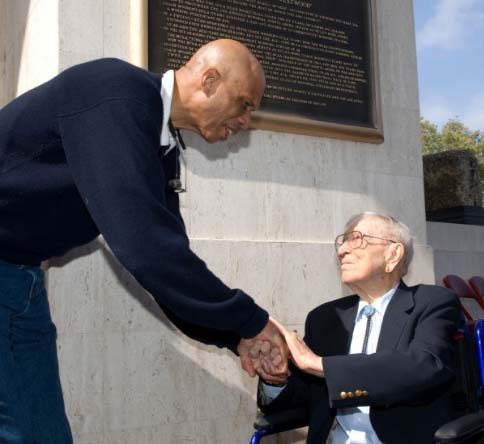
3. Alcindor, who converted to Islam and changed his name to Kareem Abdul-Jabbar, had so much affection for Coach Wooden that he was 1 of only 2 people he told that they could continue to call him "Lew" or "Lewis." The other was his father, Ferdinand Lewis Alcindor Sr.
Abdul-Jabbar and Wooden

2. Lew/Kareem was the greatest player in the history of college basketball, and became one of the top ten players in the NBA's history. Bill Walton wasn't so lucky, though his injury-plaged pro career did include 2 NBA Championships.

But, even more so than Lew/Kareem, Walton was a complicated young man who sometimes tested Wooden's patience. In his memoir Nothing But Net, Walton described Wooden as a man with a superb eye for detail, to the point where he could see if you weren't wearing your socks properly. Walton couldn't believe that this old man (he was 60 at the time) was teaching college men how to put their socks on. Walton thought this was beneath them. John Wooden had a way of teaching young men that nothing is beneath you.

Walton very much wanted to grow his hair long, in the spirit of the Sixties' antiwar movement. Wooden put up with a certain amount of length, but no more. He wouldn't let his players grow beards. He wouldn't let them wear headbands. (Walton would go to all these extremes as a pro, though he toned it down shortly thereafter, possibly having gotten it out of his system).

And he was unhappy that Walton and the other players had sent a letter to President Richard Nixon as Watergate was heating up, demanding that he resign. Wooden wasn't upset that they had exercised their freedom of speech in this way. He was upset that they had sent the letter on official UCLA stationery, because the University, as a State institution, could not take such a position.

But Wooden knew how to handle young men. When Walton reminded Wooden that he was an adult, and no man could legally stop him from growing a beard, Wooden told him, "If that's the way you feel, William, then you're right. I can't stop you. Go ahead and grow your beard. I'm going to miss you."

Translation: "I can't stop you from growing a beard, but I can stop my players from growing them. You can have a beard, or you can play basketball on my team. But you can't do both. You have the right to choose, just as I have the right to set rules for my team." Walton may have been a little crazy, but he wasn't stupid: He knew Wooden was right. He shaved the beard.

1. I never met him. I never saw him in person. I was too young to ever watch on television a game he coached. And I don't usually want Los Angeles-area teams to win their games. And yet, this man moved me to the point where I had to write a blog entry saluting him.

He didn't quite make it to the age of 100. There are a few people who deserve to do so. But he also deserved to be free of his health difficulties, and to be reunited with his wife Nell.

I once saw Coach Wooden as a guest on The Charlie Rose Show. In his 90s, his memory was still sharp enough to recite from a favorite poem, "Elegy Written In a Country Churchyard" by Thomas Gray. Its last two stanzas are worth repeating here, in the Coach's memory:

Large was his bounty, and his soul sincere,
Heaven did a recompense as largely send:
He gave to Misery all he had, a tear,
He gained from Heaven ('twas all he wish'd) a friend.

No farther seek his merits to disclose,
Or draw his frailties from their dread abode
(There they alike in trembling hope repose),
The bosom of his Father and his God.


UPDATE: John Wooden was buried at Forest Lawn Memorial Park, in the Hollywood Hills. Even though he may have been the least "Hollywood" person in Los Angeles. Jim Murray, the great sports columnist of the Los Angeles Times, once wrote, "He's so square, he's divisible by four."