Showing posts with label afl. Show all posts

Monday, June 8, 2026

June 8, 1966: The NFL-AFL Merger Is Announced

The AFL's logo, and the logo the NFL was using at the time

June 8, 1966, 60 years ago: After 6 years of "war," the established National Football League and the upstart American Football League reach an agreement on a merger.

The process began 2 months earlier, when Al Davis, head coach of the AFL's Oakland Raiders, was named Commissioner of the AFL, replacing Joe Foss, who had been Commissioner since the league's founding in 1959. Davis' approach, much like the pirate on his team's helmet, was "Take no prisoners." That spooked the NFL team owners, who were tired of the rising salaries that the bidding war between the leagues was producing.

So Tex Schramm, general manager of the NFL's Dallas Cowboys, contacted Lamar Hunt, founder of the AFL and owner of the Kansas City Chiefs. Hunt, more respected by the AFL team owners than Davis was, went behind Davis' back, and undercut Davis in his desire for all-out war. This resulted in Raiders vs. Chiefs being a very nasty rivalry that lasts to this day, in spite of the Raiders' moves.

On June 8, Hunt and Schramm called a press conference in New York, and announced that they'd agreed upon these points:

* The AFL's 8 teams, which would be 10 teams by the time the process was completed, would join the NFL and its 14 teams, which would soon grow to 16, and the combined 26-team league would keep the NFL name.

* All existing teams would remain in their respective metropolitan areas for the time being. Some teams soon built new stadiums out in the suburbs of their anchor cities, including the AFL's Boston Patriots and Buffalo Bills; and the NFL's New York Giants, Detroit Lions and Dallas Cowboys. But no team in the combined NFL would move to a different metro area until the Raiders moved to Los Angeles in 1982. (That, however, began a new era in which several teams moved, and others at least threatened to do unless their current cities built them new stadiums.)

* Each league's champion would meet in an "AFL-NFL World Championship Game," starting with the end of the upcoming season. As it turned out, it would be informally nicknamed "the Super Bowl" at the time, officially so for the one at the climax of the 1968 season, and, for the 1970 season, officially named that with a Roman numeral added: Super Bowl V.

* Starting in 1967, there would be a common draft between the two leagues.

* Also starting in 1967, there would be preseason exhibition games between teams in the two leagues. So the first "AFL-NFL World Championship Game," retroactively renamed Super Bowl I, became, in Hunt's words, "the only time a pure AFL team played a pure NFL team."

* Starting in 1970, with everybody in one league, the National Football Conference would be made up of "original NFL" teams, while 3 such teams -- the Baltimore Colts, the Cleveland Browns and the Pittsburgh Steelers -- were moved over to join the AFL teams in the American Football Conference.

* Each Conference would be divided into Eastern, Central and Western Divisions. Each Division's champion, plus a "wild card" team, would go into the Playoffs, resulting in 4 Playoff teams in each Conference, competing to be the Conference Champions, who would then face each other in the Super Bowl.

* Each league would keep its current television contract: CBS would keep the NFL/NFC games, and NBC would keep the AFL/AFC games. For interconference games, whichever was the visiting team would decide it: If an NFC team was visiting an AFC team, CBS would televise it; if it was the other way around, it was on NBC. This would hold until 1993, when new contracts were signed. (CBS ended up broadcasting so many Dallas Cowboys games that people joked that their initials stood for "Cowboys Broadcasting System.")

* And Pete Rozelle, currently the Commissioner of the NFL, would remain in charge of the combined league.

That last point ticked Davis off: He wanted to be Number 1 in everything he did, from running the Raiders to football competition. He resigned as AFL Commissioner in July, replaced by Milt Woodard, who had been Assistant Commissioner under both Foss and Davis, and served until the merger was completed in March 1970.

Sunday, January 4, 2026

January 4, 1976: George Blanda: The NFL's Oldest Player

January 4, 1976, 50 years ago: The Pittsburgh Steelers beat the Oakland Raiders, 16-10 at Three Rivers Stadium in Pittsburgh, in the AFC Championship Game. The Raiders' George Blanda attempted an extra point, and made it; and attempted 2 field goals, making 1.

Two weeks earlier, in the Raiders' last regular-season game, a win over the Kansas City Chiefs at the Oakland Coliseum, Blanda threw 3 passes in relief of starting quarterback Ken Stabler, completing 1, for 11 yards.

The fact that Blanda was playing at all, never mind completed a pass, was extraordinary. He was 48 years old.

George Frederick Blanda was born on September 17, 1927 in Youngwood, Pennsylvania, outside Pittsburgh. He played at the University of Kentucky, the 1st renowned quarterback to play for future Alabama icon Bear Bryant, and was drafted by the Chicago Bears in 1949. In 1950, he succeeded Hall-of-Famer Sid Luckman as the Bears' starting quarterback, and remained in that spot through the 1958 season.

He was not particularly notable in the position. In 1953, he led the NFL in both attempts and completions. In 1954, he led in passing yards per game. In 1955, he led in field goal percentage. In 1956, he got the Bears to the NFL Western Division title, but they got clobbered by the New York Giants in the NFL Championship Game. He retired after the 1958 season, and he seemed destined to be a footnote in the history of professional football.

But the founding of the American Football League in 1960 changed a lot of things. He was coaxed out of retirement to become the quarterback for the Houston Oilers, and he led them to the AFL Championship in 1960 and 1961, and got them back into the AFL Championship Game in 1962. He was named AFL Player of the Year in 1961, a season that included his longest field goal: 55 yards.

In 1967, at the age of 40, he was traded to the Oakland Raiders, where he became the backup to Daryle Lamonica. The Raiders won the AFL Championship that season. He played for the Raiders until 1975, and only started 1 game for them, but he stayed on the roster because he was still one of the most accurate placekickers in the game. In 9 seasons with the Raiders, he attempted 250 extra points, and missed only 3; and he made 62.7 percent of his field goal attempts. Even in his last season, he made 13 out of 21.

Between the NFL and the AFL, he passed for 26,920 yards, which doesn't sound like much now, but was a big total for the time. He threw considerably more interceptions than touchdowns (277 to 238), but that wasn't surprising for a quarterback who debuted in the 1940s. He kicked 335 field goals, for 1,005 points; and kicked 943 extra points. He also ran 9 touchdowns in from the quarterback position, for 54 points. This gave him 2,002 points for his career, making him the NFL's 1st 2,000-point man.

In 2026, 50 years after his last game, he still ranks 7th all-time. The current all-time leader is Adam Vinatieri, with 2,673 points. However, Blanda's 238 touchdown passes means he had a hand in 3,430 points -- and that's before you factor in how many field goals his teams scored as a result of the drives he led. For the sake of perspective: Tom Brady has passed for 649 touchdowns, which accounts for 3,894 points.

Blanda still ranks 5th all-time with 340 games played. (Morten Andersen leads with 382.) His 335 field goals has long since been surpassed. (Vinatieri leads with 599.) But his 26 seasons, his playing at age 48, and his 943 extra points made are still all-time records. A few players, mostly backup quarterbacks and placekickers (and Blanda was both), have played at 46, but Blanda remains the only one to play at 47, or 48. He and John Carney, who kicked for several teams from 1987 to 2010, are the only men to have played in the NFL in 4 different decades.

On January 20, 1976, 16 days after Blanda's last game, the ABC sitcom Happy Days, which took advantage of the 1950s nostalgia wave, aired an episode with Richie Cunningham (played by Ron Howard) and Ralph Malph (Donny Most) watching a game on television. It was December 9, 1956, and the Chicago Bears were playing the Chicago Cardinals at Wrigley Field.

Ed Brown, playing quarterback for the Bears, threw an interception. Richie said he wanted the other quarterback put in. Ralph said, "He's washed up. He's old. He's 30. He's got no future." Richie said, "George Blanda has 2 or 3 good years left." The Bears won the game, 10-3.

Blanda was elected to the Pro Football Hall of Fame in 1981, his 1st year of eligibility. He was retroactively named to the AFL All-Time Team. He died on September 27, 2010, a few days after his 83rd birthday.

*

January 4, 1976 was a Sunday. Also that day, the NFC Championship Game was played, and the Dallas Cowboys beat the Los Angeles Rams, 37-7 at the Los Angeles Memorial Coliseum. The Steelers went on to beat the Cowboys in Super Bowl X. 

Thursday, December 26, 2024

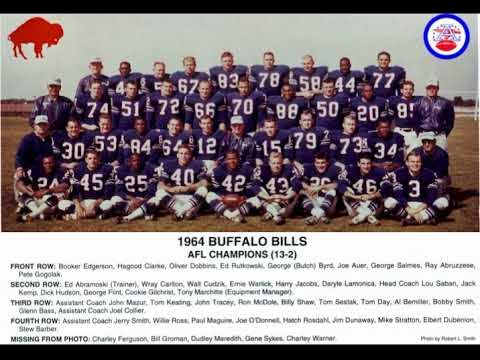
December 26, 1964: The Buffalo Bills Triumphant

December 26, 1964, 60 years ago: The American Football League Championship Game is played for the 1964 season.

The season before, the San Diego Chargers, coached by Sid Gillman, had won the title, showing football fans that the AFL wasn't just a pass-happy "basketball league": It could feature good defense, too. The Buffalo Bills, coached by Lou Saban, followed the same path, with a defense led by end Ron McDole, tackle Tom Sestak, and linebacker Mike Stratton.

The Chargers would regret letting quarterback Jack Kemp go, as the Bills had acquired him to run their offense. Protected by a future Hall-of-Famer, guard Billy Shaw, he could hand off to running back Carlton Chester "Cookie" Gilchrist, or pass to receiver Elbert Dubenion.

There was once a common trivia question: Name the men wearing Number 32 who won the Most Valuable Player awards in the American League, the National League, the NFL and the AFL in 1963. But the question was no good: Elston Howard, Sandy Koufax, Jim Brown and Gilchrist won their respective awards, but, while the other 3 players wore 32, Gilchrist wore 34.

The Bills went 12-2 in 1964. They dropped 48 points on the Houston Oilers, and scored at least 30 points in 6 other games. Their only losses were on November 15, 36-28 at home to the Boston Patriots; and on December 6, 16-13 away to the Oakland Raiders.

As it was an even-numbered year, it was the Eastern Division winners' turn to host the AFL Championship Game, and the Bills welcomed the defending Champion Chargers into War Memorial Stadium. Built in 1938, it was already dilapidated, known as "The Old Rockpile." Buffalo native Brock Yates, a screenwriter who created the race upon which the Cannonball Run movies were based, said that it "looks as if whatever war it was a memorial to had been fought within its confines." And it was small: At 40,242 seats, its capacity would prove too small when the AFL and the NFL merged in 1970, so the Bills had to build a larger stadium.
In the 1st quarter, Tobin Rote threw a 26-yard touchdown pass to Dave Kocourek, to put the Chargers up, 7-0. But they never scored again. The Bills' defense was symbolized by Stratton hitting Keith Lincoln midway through the 1st quarter, breaking a rib and knocking him out of the game. It was the most famous defensive play in AFL history.
Pete Gogolak and his brother Charley, natives of Hungary, became pro football's 1st "soccer-style kickers," approaching the placement from the side and hitting the ball with the instep of the foot, rather than the traditional straight-on, hit-with-the-toes style. Pete kicked a field goal late in the 1st quarter, and another in the 2nd. In between, Kemp guided the Bills down to where Wray Carlton could score on a 4-yard run. In the 4th quarter, Kemp scored on a quarterback sneak. The Bills won, 20-7.
The Bills won the AFL Championship again in 1965, again beating the Chargers; then lost the 1966 AFL Championship Game to the Kansas City Chiefs. Saban would leave, then return as head coach, and lead the Bills to the AFC Wild Card Playoff berth in 1974.
Like basketball coach Larry Brown, Saban was known, somewhat unfairly, for never staying in the same place for very long, also serving as head coach for the Boston Patriots, the Denver Broncos, and several college teams. He died in 2009. His son, Nick Saban, in junior high school at the time of the Bills' AFL titles, would win 7 National Championships in the college ranks. Unlike many father & son coaching pairs, they never coached together. Indeed, while Lou was head coach at Army in 1979, Nick was an assistant coach at Navy in 1982.
The Bills had won the last 2 AFL Championships before the AFL Champion was allowed to play the NFL Champion for a World Championship, and had lost the game that would have put them in Super Bowl I. It would take until the 1990 season before they finally got into a Super Bowl. And they got into 4 in a row, something no other franchise has done. And yet, they lost all 4, and only the 1st one was all that close (although they were leading the 4th at the half).
The Bills have become to the NFL what the Chicago Cubs once were to baseball, the sport's "lovable losers" with a history of close calls breaking the hearts of some of the most passionate fans in the sport. From 1964 onward, they have been 1 of the last 2 teams standing 6 times, something only 7 other teams have done.
But the fact that the Bills' titles came before the advent of the Super Bowl means that they get discounted: Even before the distance of time became what it is now, NFL fans had come to regard any title won before the Super Bowl, NFL or AFL, as not a "real" championship.
As it stands, through Christmas 2024, no team based in, or near, Buffalo has ever won a major league sports championship. The NHL's Sabres are 0-for-2 in Stanley Cup Finals, and the NBA's Braves, like the Sabres a 1970 expansion team, moved in 1978. Due to Canadian COVID restrictions, the Toronto Blue Jays had to play some "home games" at Buffalo's Sahlen Field in 2020 and '21. Before that, there hadn't been a Major League Baseball team in Buffalo since the 1914-15 Blues of the Federal League; before that, the Bisons of the National League, who folded after the 1885 season. And none of those teams won a Pennant.
Unless you count soccer as a major league sport in North America, with the 1971 Rochester Lancers and the 2016 Western New York Flash, then the last World Championship won by a team that can be considered "Western New York" remains the 1955 NBA Champion Syracuse Nationals. If you don't count Syracuse as "Western," then it's the 1951 NBA Champion Rochester Royals.

Maybe this is the year the Bills finally pull it off. Then again, the Detroit Lions -- the team in which Ralph Wilson had a minority interest before becoming the founding owner of the Bills -- are also closer than they've ever been since their last title, in 1957. If Super Bowl LIX is Bills vs. Lions, one fanbase will be happier than ever, and the other will face the greatest letdown yet.

Friday, October 4, 2024

October 4, 1964: Baseball's Greatest Season Concludes

Henry Aaron didn't mind being called "Hank."
Roberto Clemente very much minded being called "Bob" or "Bobby."

October 4, 1964, 60 years ago: Perhaps the greatest season in Major League Baseball history comes to a close.
Why did I choose this one as the greatest? It was well after the re-integration of the game. There were still several of the classic old ballparks left, but, as yet, no domes, and no artificial turf. There were as many all-time legends of the game active as we are ever likely to have -- on the field, and in the broadcast booth. And both Leagues' Pennant races came down to 3 teams on the last weekend.
I submit this knowing that I was not born yet, and also knowing that my team did not win the World Series that season, although it came very close.
In the American League, the New York Yankees finished 1 game ahead of the Chicago White Sox, and 2 ahead of the Baltimore Orioles. The Yankees won their 29th Pennant, all in the last 44 seasons. As it turns out, it is the last in their Dynasty.
The Yankees had clinched the day before, so it did not matter that, on this last day, they had lost to the Cleveland Indians, 2-1 at Yankee Stadium. No usual Yankee starter was in the starting lineup, although as the game went on, most appeared as pinch-hitters, but Mickey Mantle and Roger Maris got the whole day off.
The starting pitchers were Jim Bouton for New York and Luis Tiant for Cleveland, and neither got into the 7th inning. Both of them would go on to be viewed by the baseball establishment as weird, though for different reasons.
Tommy John pitched 2 innings in relief of Tiant, who had hit a home run in his own cause. Stan Williams allowed the winning run in the top of the 13th inning, on a groundout by Leon Wagner. Sam McDowell, usually a starter, pitched the 12th and the 13th, and was the winning pitcher.
This was also the last game as a Yankee broadcaster for Mel Allen, who was fired after 26 years. No reason was given. Rumors abounded: He was an alcoholic, he was a prescription drug addict, he'd had a nervous breakdown, he was gay. Most likely, none of these were true.
Apparently, though, in this era when sponsors still had an iron grip on broadcasting, the real reason was that Ballantine beer, the Yankees' sponsor and beneficiary of Mel's calling home runs "Ballantine blasts," saw their sales dropping, and they blamed Mel, the greatest salesman they ever had.
The National League race remained undecided going into this last day, thanks to the Philadelphia Phillies' nosedive, and the surges of the Cincinnati Reds and the St. Louis Cardinals.

The Phillies bombed the Reds, 10-0 
at Crosley Field in Cincinnati. Jim Bunning went the distance to finish 19-8, and NL Rookie of the Year Richie Allen -- later to insist on being called Dick Allen -- went 3-for-5 with 2 home runs and 4 RBIs. For the Reds, Frank Robinson went 2-for-4, and Pete Rose went 1-for-4.
In those pre-Internet, pre-satellite TV days, the 2 teams then joined forces, and sat in the visitors' clubhouse at Crosley, listening to a radio (which was appropriate, since longtime Reds owner Powel Crosley made his fortune selling radios), hoping that the Cardinals would lose to the New York Mets at Busch Stadium in St. Louis (the 1st of 3 ballparks to have now had that name, it was named Sportsman's Park from 1909 to 1952), which would keep both teams alive, and force a 3-way tie for the Pennant.
Since the possibility had already arisen in 1956, when the Reds, the Brooklyn Dodgers and the Milwaukee Braves had a close race -- the Dodgers ended up beating the Braves by 1 game and the Reds by 2 -- a plan for such an eventuality was already in place.

It wasn't a head-to-head tiebreaker. If it had been, the Cards would have had the edge over the Phils (13-5), the Reds would have had the edge over the Phils (10-8), and the Reds and Phils would have split (9-9). Overall, the Cards would've been 21-15, the Reds 19-17, and the Phils 14-22.

NL President Warren Giles -- who would have to remain neutral, despite having once been the Reds' general manager -- would have drawn lots. The team whose name was written down on the 1st slip of paper he pulled out of a hat or box would be designated "No. 1," followed by "No. 2" and "No. 3." The schedule would have been as follows: No. 1 would have hosted No. 2, then No. 2 would have hosted No. 3, and No. 3 would have hosted No. 1. In other words, all 3 teams would have played each of the other 2 teams, and all 3 teams would have had 1 home game.

If 1 team ended up 2-0, with another 1-1 and another 0-2, the 2-0 team should have been declared the Pennant winner. Instead, the 0-2 team would have been eliminated, and Giles would have drawn another lot to determine home field for a 1-game Playoff. But if all 3 finished 1-1, they would do it all over again.

That's what would have happened over the coming days if the Mets had beaten the Cardinals on October 4, 1964.

Here's what actually did happen: The Mets took a 3-2 lead into the 5th inning‚ but the Cards scored 3 runs to regain the lead. The Mets scored once more, but the Cardinals completed their scoring with 3 in the 8th, to win 11-5. Cardinal manager Johnny Keane took no chances: When Curt Simmons was knocked out of the box, he put his best starter, Bob Gibson, into the game, and Gibson was the winning pitcher.
For St. Louis‚ it was their 1st Pennant since 1946, 18 years. For Cincinnati, it was a crushing defeat, as, even though they had won the Pennant just 3 years earlier, they wanted to win this one for their manager, Fred Hutchinson, who was dying of cancer.

For Philadelphia, which hadn't won a Pennant in 14 years, it was even more devastating: The Phils had led by 6 1/2 games with 12 to play, but went on a 10-game losing streak to blow it. The Phillie Phlop would define the franchise for a generation, and even fans who lived long enough to see the titles of 1980 and 2008 remained scarred by it.
To rub it in further, Simmons had been a star on the previous Phils Pennant team, the 1950 "Whiz Kids," but had to miss that year's World Series because his U.S. Army Reserve unit was called to serve in the Korean War just as the regular season was winding down. Now, Simmons had a Pennant, at the Phils' expense. To make it even weirder for the Phillies, the Reds' interim manager, filling in for Hutchinson, was the man whose home run against the Dodgers in the 10th inning of the last game clinched their 1950 Pennant: Dick Sisler, son of Hall-of-Famer George Sisler.
In the end, it was the closest race in NL history: 3 teams within 1 game, 4 within 3, 5 within 5. The Cards won over the Reds and the Phils by 1 game each, the Jints by 3, the Braves by 5, the Dodgers and the Pittsburgh Pirates by 13, the Chicago Cubs by 17, the Houston Colt .45s by 27, and the Mets by 40.
In 1964, the Phillies won 92 games, and lost the Pennant, and were regarded as a failure. In 1980, the Phillies won 91 games, 1 fewer in than in 1964, but it was enough to win the NL East, and they went on to win the Pennant and the franchise's 1st World Series, and they're regarded as the greatest Phillies team ever.
Or, to put it another way: The 1967 Red Sox also won 92 games, but it was enough to win the Pennant by 1 game on the final day, and they're an iconic baseball team for good reasons. The '64 Phils remain iconic for bad reasons.
*

October 4, 1964 was a Sunday. These other baseball games were played that day:

* The Boston Red Sox beat the Washington Senators, 14-8 at Fenway Park in Boston. Carl Yastrzemski went 1-for-4 with a walk. For the Senators, the team that started in 1961 and became the Texas Rangers in 1972, Roy Sievers hit his 318th career home run. As it turned out, it was the last for the slugger, who had starred for the "Old Senators," who became the Minnesota Twins in 1961.

* The Chicago White Sox beat the Kansas City Athletics, 6-0 at Comiskey Park in Chicago. Bruce Howard pitched a 2-hit shutout.

* The Milwaukee Braves beat the Pittsburgh Pirates, 6-0 at Milwaukee County Stadium. Bill Southworth, whose father Billy had managed the Boston version of the Braves to the 1948 NL Pennant, hit his one and only major league home run, in what turned out to be his 3rd and last major league game. Joe Torre went 1-for-4 with 2 RBIs. Neither Hank Aaron, nor Roberto Clemente, nor Willie Stargell played.

Bob Sadowski pitched 8 innings of 2-hit ball, and Warren Spahn pitched the 9th for the save, to finish the shutout. It may have been because the Braves were already trying to move to Atlanta for the 1965 season, and the team wanted Spahn, who started the 1st game at County Stadium in 1953, to pitch the last game. It also explains why Eddie Mathews, whose 1st full season was 1953, and didn't start the game, was put at 3rd base for the 9th inning.

As it turned out, an injunction forced the Braves to stay in Milwaukee for a lame-duck season, and they moved to Atlanta for 1966. Then the Brewers came in 1970, and County Stadium remained open until 2000.

* The Los Angeles Angels beat the Minnesota Twins, 3-0 at Metropolitan Stadium in the Minneapolis suburb of Bloomington, Minnesota. The game was called due to rain after 6 innings. Harmon Killebrew went 1-for-3.

* The Los Angeles Dodgers beat the Houston Colt .45s, 11-1 at Dodger Stadium in Los Angeles. This was the last game the Houston franchise played under that name. In 1965, with the Astrodome opening, they became the Houston Astros.

* The Chicago Cubs beat the San Francisco Giants, 9-2 at Candlestick Park in San Francisco. Jimmy Stewart hit a home run for the Cubs. No, not the It's a Wonderful Life actor, who once played a real-life baseball player in The Stratton Story. Ernie Banks went 2-for-3 with 2 RBIs. Willie Mays hit a home run, but Gaylord Perry got knocked out of the box in the 3rd inning.

* And the Baltimore Orioles and the Detroit Tigers completed their respective schedules against each other the day before.

Since it was Sunday, there was also professional football. For New York's purposes: The NFL's New York Giants lost to the Detroit Lions, 26-3 at Tiger Stadium in Detroit. As the Yankees would the next season, the Giants' best players seemed to get old, or get hurt, or both, all at once. They had won their Division in each of the last 3 seasons, and in 6 of the last 8, but finished this season 2-10-2.

And in the American Football League, the New York Jets and the San Diego Chargers played to a tie, 17-17 at Shea Stadium.

Friday, January 5, 2024

January 5, 1964: A Title for San Diego

 
January 5, 1964, 60 years ago: The American Football League Championship Game is played for the 1963 season. It marks a turning point for the League. In its 1st 3 seasons, it was a pass-happy league, without much defense. But now, a team was able to combine big offense with big defense.

Barron Hilton received the Los Angeles franchise of the AFL at its founding in 1959. He named the team the Chargers, after the credit card he founded, Carte Blanche. He was the son of hotel magnate Conrad Hilton, the brother of Elizabeth Taylor's 1st husband Conrad Nicholson Hilton Jr. a.k.a. Nicky Hilton, and the grandfather of Paris and Nicky Hilton. He turned out to be the last surviving member of "The Foolish Club," the 8 original AFL owners.

After reaching the 1st AFL Championship Game in the 1960 season, he realized that, even with his money, he couldn't compete with the NFL's Rams and college football's USC and UCLA for the attention of Los Angeles' football fans. So he moved the team down the Coast, and they became the San Diego Chargers. They reached the title game again in 1961, with the same result, losing to the Houston Oilers.

Head coach Sid Gillman built a high-powered offense, with 2 quarterbacks, Tobin Rote and John Hadl. Rote had filled in for an injured Bobby Layne, and led the Detroit Lions to victory in the 1957 NFL Championship Game, 59-10 over the Cleveland Browns. It was a bit of foreshadowing. Oddly, Hadl had also been drafted by the Lions, but the AFL offered more money than the NFL.
Sid Gillman

These passers' favorite target was Lance Alworth, whose running reminded someone of a deer, and so he was nicknamed "Bambi." He would end up as the 1st former AFL player elected to the Pro Football Hall of Fame. (Contrary to what some people believe, it's not the NFL Hall of Fame.) Gillman's offense also had running backs Paul Lowe and Keith Lincoln, tight end Jacque MacKinnon, guard Walt Sweeney, and offensive tackle Ron Mix. Mix would join Alworth in Canton.
Lance Alworth

But it was the defense that marked the '63 Chargers as being different from previous AFL teams. They were one of the teams in the 1960s that called its defensive line "The Fearsome Foursome": Ends Ron Nery and Earl Faison, and tackles Ernie Ladd (also a successful professional wrestler, before that competition became a scripted joke) and Bill Hudson. The linebackers were pretty good, too: Chuck Allen, Frank Buncom and Emil Karas.
Ernie Ladd

Another distinctive feature of San Diego's 1st major league sports team was their uniforms. It wasn't just the lightning bolts on the helmets. From 1960 to 1973, they wore jerseys that had been called "collegiate blue" (probably a reference to UCLA, with whom they shared the Los Angeles Coliseum in 1960), "electric blue" (which matched the "charger" theme) and "powder blue" (which is what it usually gets called today).

The Chargers went 11-3, their only losses coming at the hands of the Denver Broncos and, twice, the Oakland Raiders. They won the AFL Western Division, which meant that, being that it was an odd-numbered year, they would get to host the AFL Championship Game at Balboa Stadium.
Their opponents were the Boston Patriots, who finished only 7-6-1, but that was good enough to tie the Buffalo Bills for 1st place in the Eastern Division. And 2 of the losses were to the Chargers. To be fair, 5 of the 6 losses were by 7 points or less, and the Pats did beat the Bills in Buffalo in a Playoff to get to the Championship Game.

The title game -- postponed a week, due to the postponement of the regular-season games of November 24, 1963, and that due to the assassination of President John F. Kennedy 2 days earlier -- would not be close. It turned out to be the biggest blowout in the 10-year history of AFL Championship Games. Since the 1970 merger with the NFL, only once has the winning team in the AFC Championship Game matched the Chargers' point total, the 1990-91 Buffalo Bills; and no team has surpassed it. No team has scored this many in the NFC Championship Game, either.

The Chargers wasted little time. Rote took a quarterback sneak for a touchdown. Lincoln scored on a 67-yard run. The Patriots scored on Larry Garron's 7-yard touchdown run, to close to within 14-7, but that was as close as they would get. Lowe ran 58 yards for a touchdown, and it was 21-7 San Diego after a quarter.

George Blair of the Chargers and Gino Cappelletti of the Patriots traded field goals in the 2nd quarter. But the fact that the Chargers were able to score 24 points in the 1st half, none of them on touchdown passes, was telling. Before the half ended, Rote threw a 14-yard touchdown pass to Don Norton, and it was 31-10.

Rote threw a 48-yard touchdown pass to Alworth in the 3rd quarter, and was relieved by Hadl in the 4th. But this proved not to be a mercy move by Gillman: Hadl threw a 25-yard touchdown pass to Lincoln, and later scored on a sneak. Final score: Chargers 51, Patriots 10. It remained the most dominating performance in the AFL's 10-year history.

The Chargers reached the Championship Game again in 1964 and 1965, losing to the Bills both times. The Kansas City Chiefs won the AFL title in 1966 and 1969; the Raiders in 1967; and the New York Jets in 1968. Each of these teams had a "Mad Bomber" quarterback -- Jack Kemp, Len Dawson, Daryle Lamonica and Joe Namath, respectively -- but each also followed the Chargers in the other way, too: The philosophy that "Defense wins championships."

Charger fans, and aficionados of the old AFL, are convinced that the Chargers could have beaten the NFL Champion Chicago Bears had there been a Super Bowl at the time. They are wrong: The Bears had a defense unlike any the AFL had yet seen, including on the Chargers.
This is what a Chargers championship ring looks like.
But "World Champions"? No.

The Chargers appeared in 5 of the 10 AFL Championship Games; the Oilers, 4; the Bills and the Chiefs, 3 each; the Raiders, 2; the Patriots and the Jets, 1 each; and the Denver Broncos, and the expansion Miami Dolphins and Cincinnati Bengals, none.

But the Chargers got old, and by 1973, as mentioned by the sportswriter character Oscar Madison on the TV series The Odd Couple, they and the Oilers were the 2 worst teams in the NFL. Alworth got a Super Bowl ring, but it was with the 1971-72 Dallas Cowboys.

In 1974, the Chargers switched to dark blue jerseys and helmets. In 1978, they became one of a few teams that preferred to wear white jerseys at home, and it did look better. They went back to dark blue at home in 1984, occasionally wore powder blue as "throwback uniforms" for a few years, and in 2019, their 60th season, they began wearing powder blue as their regular home color. They have also gone back to the white helmets.

The Chargers reached the 1981 AFC Championship Game, but lost it to the Bengals. They reached the 1994 AFC Championship Game, and beat the Pittsburgh Steelers in a thriller, but got clobbered by the San Francisco 49ers in Super Bowl XXIX. They reached the 2007 AFC Championship Game, but lost to the Patriots, revenge finally achieved.

In 1966, Barron Hilton sold the Chargers to Gene Klein. In 1984, Klein, who loved football but hated the business of it, sold the team to Alex Spanos. In his memoir, First Down and a Billion, he closed every chapter with the words, "Thank you, Alex."

In 1967, the Chargers moved to San Diego Stadium, which was renamed Jack Murphy Stadium in 1981 and Qualcomm Stadium in 1997. Spanos handed control of the team over to his son Dean in 1993, and Dean Spanos, a member of a billionaire family, continually demanded that either the City of San Diego or the County of San Diego use taxpayer money to build him a new stadium. He threatened to move the team back to Los Angeles, or perhaps to another city, if he didn't get the stadium.

A ballot initiative only got 43 percent of the vote, and so Dean proved he wasn't bluffing, and moved the team back to its original home. San Diego fans were angry, but seem to value their integrity more than their football team.  

The 1963 Chargers remain the only major league sports team in San Diego that has gone as far as the rules of the time have allowed them to go. The San Diego Padres have won National League Pennants in 1984 and 1998, but lost the World Series each time.

The city lost the NBA's Rockets (1967-71) to Houston and the NBA's Clippers (1978-84) to Los Angeles. It's never had an NHL team or an MLS team. The ABA's Conquistadors and the WHA's Mariners each folded before their respective leagues did. And neither the WFL (1974-75) nor the USFL (1983-85) saw fit to put a team in what was already being called "America's Finest City," despite the Chargers being in decline on both occasions, with the Don Coryell "Air Coryell" teams being successful in between.

The San Diego Sockers won the Major Indoor Soccer League title 10 times in 11 seasons from 1982 to 1992, but, despite its name, the MISL could hardly be called major league. The old North American Soccer League could have been called that, but the Sockers never got past the Semifinals.

There has been speculation of a "curse" on San Diego sports. The most common one is that it is the result of letting Alworth go after the 1970 season, hence "The Curse of Bambi." What's more, the fact that the Chargers' title came before the advent of the Super Bowl means that it gets discounted: Even before the distance of time became what it is now, NFL fans have come to regard any title won before the Super Bowl, NFL or AFL, as not a "real" championship. And the fact that it came in the sad interregnum between the Kennedy assassination and the arrival of The Beatles is another reason it tends to get forgotten.

As for the Patriots, who changed their name to the New England Patriots when they moved to suburban Foxborough, Massachusetts in 1971, they didn't make the Playoffs again until 1976, didn't reach the Super Bowl until the 1985 season, and didn't win one until the 2001 season. After that, though, they were off to the races.

There are 14 surviving players from the 1964 AFL Champion San Diego Chargers: Lance Alworth, Ron Mix, Gerry McDougall, Paul Lowe, Dick Westmoreland, Dick Harris, George Blair, Bobby Jackson, Bud Whitehead, Don Rogers, Bobby Lane, Larry Park, Paul Maguire and Bob Petrich.

Thursday, December 14, 2023

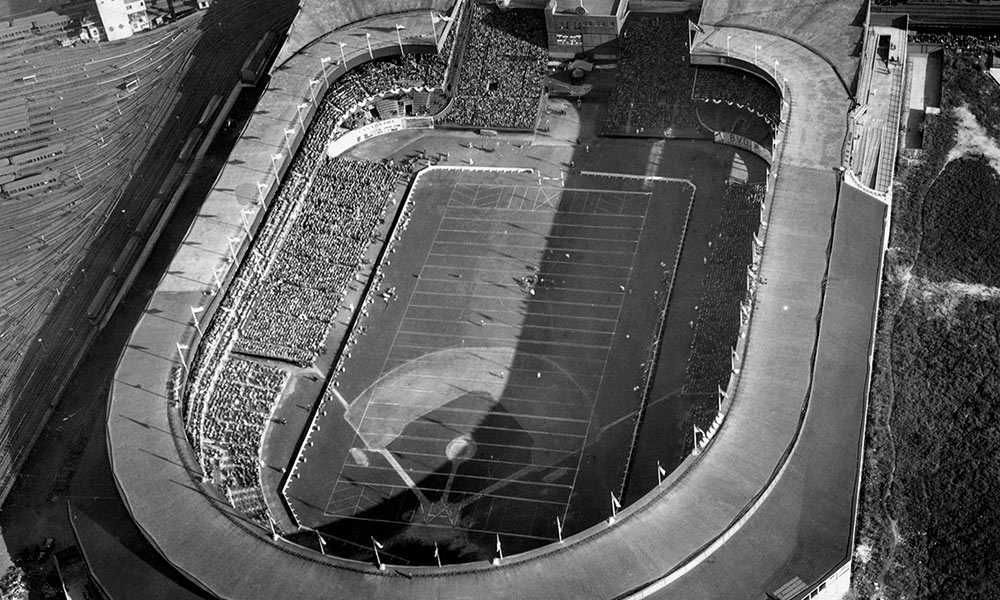
December 14, 1963: The Polo Grounds Closes

December 14, 1963, 60 years ago: The last event is held at the Polo Grounds, after 53 years of the current stadium, and 72 years of sports on the site. The New York Jets lose to the Buffalo Bills, 19-10.

I suppose it was only fair: The Jets, still known as the New York Titans at the time, ruined the Bills' 1st regular-season game, 27-3 over the September 11, 1960, also at the Polo Grounds -- and, of course, also the first game for the Jets-to-be.

It was a bit of an ignominious end for a stadium that had hosted 13 World Series, 5 NFL Championship Games and 2 Heavyweight Championship fights. Only 6,526 fans attended the wake. That was still more than the 1,752 who were at the last competitive baseball game at the old Harlem Horseshoe. On September 18, 1963, the New York Mets lost to the Philadelphia Phillies, 5-1.

The following April, with both the Mets and the Jets having moved into the new Shea Stadium, the same demolition crew that demolished Ebbets Field in 1960 used the same wrecking ball, painted to look like a baseball, to take the Polo Grounds down. The Polo Grounds Towers opened on the site in 1966, with a playground named Willie Mays Field.
Polo Grounds Towers, as seen from Coogan's Bluff

Wednesday, May 31, 2023

Happy 80th Birthday, Joe Namath!

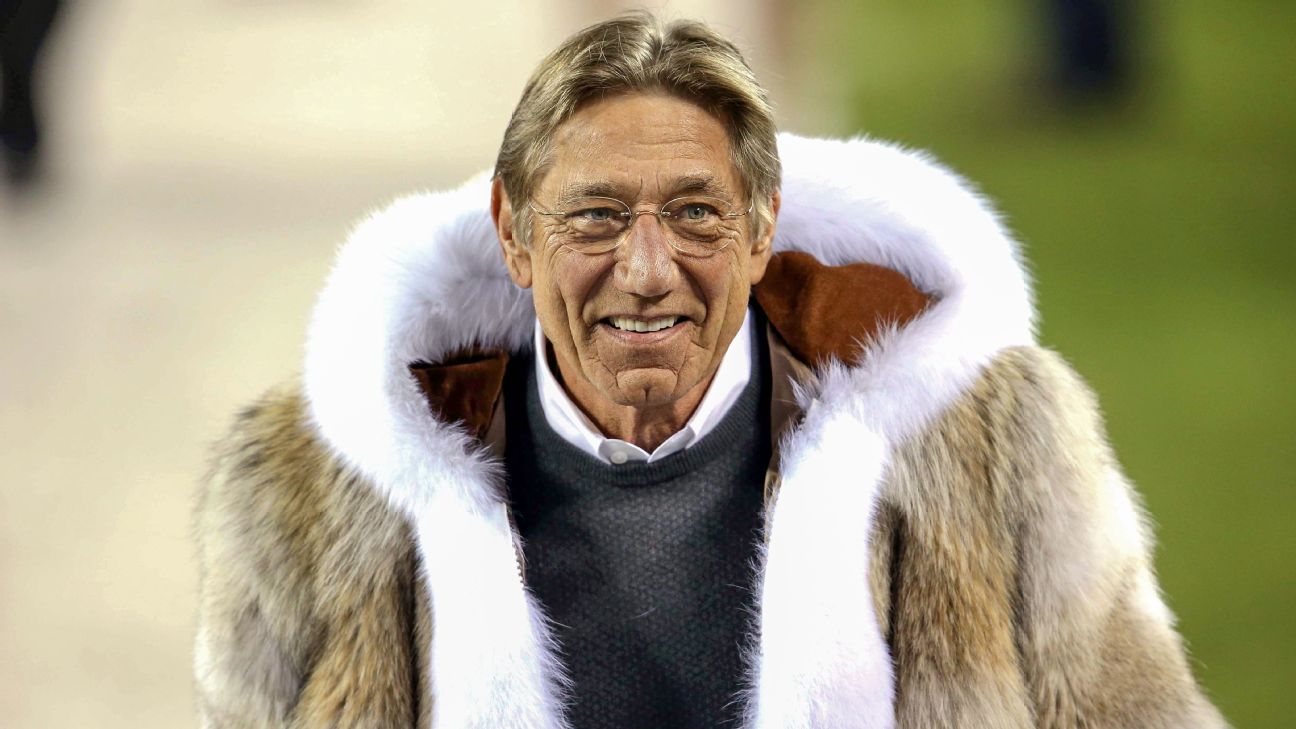
May 31, 1943, 80 years ago: Joseph William Namath - not named "Joe Willie," as Howard Cosell called him, and allowed it to be incorrectly entered into public consciousness – is born in Beaver Falls, Pennsylvania, a mill town outside Pittsburgh.

Joe would play quarterback at the University of Alabama, where he developed that weird half-Pittsburgh-half-Dixie accent, and led the school to the 1964 National Championship. Then on to New York, where he made the American Football League first exciting, then respectable.

One of my favorite sports trivia questions is, "How many touchdown passes did Joe Namath throw in Super Bowl III?" The answer is, "None." The Jets only scored one touchdown, on Snell's run. Namath was better 2 weeks earlier in the Jets' win over the Raiders in the AFC Championship Game. That was a better game overall, too.
It could even be argued that Namath, with a career completion percentage of just 50.1 percent, more interceptions than touchdowns (220-173), a career losing record as a starting quarterback (62-63-4, plus 2-1 in the postseason to make him exactly .500, 64-64-4). He only made 1 Pro Bowl, in 1972. That was also the only time he led the NFL in passing yards, and the only time he led it in passing touchdowns. And with injuries leaving him with his last productive season at age 32 and his last game at 34, would not have been elected to the Pro Football Hall of Fame if the Jets had lost this game.
But Namath did lead the Jets to victory in that game, and was elevated to sports idolhood. Along with the Mets' Tom Seaver 9 months later, and the Knicks' Walt "Clyde" Frazier 8 months after that, he became part of New York's holy trinity of sports icons for a generation, as Mickey Mantle and Frank Gifford had been in the generation before, and Reggie Jackson and Lawrence Taylor, and then Derek Jeter and Eli Manning, would later become.

In 1999, at Number 96, he just barely made The Sporting News' list of the 100 Greatest Football Players. When the NFL Network chose its 100 Greatest Players in 2010, he squeezed in at Number 100 – although he was ranked Number 1 on the Network's list of the NFL's "Greatest Characters."
 
But that Super Bowl III prediction and win made him a legend for all time. That 1 Super Bowl win stands taller than the 4 won by fellow Number 12 Terry Bradshaw, and the 7 won by fellow Number 12 Tom Brady. (And Joe never had to cheat, as Brady did.)

That win, often called one of the greatest upsets in sports history, also helped pave the way for the Mets' World Series upset win later in the year. A wiseguy might say that the modern world of sports was conceived on January 12, 1969, when the Jets won the Super Bowl; and was born 9 months later, on October 16, 1969, when the Mets won the World Series.

The Jets retired his Number 12, and he was elected to the Pro Football Hall of Fame. As yet, he does not have a statue outside MetLife Stadium. Maybe, as the Mets did with Tom Seaver, the Jets are waiting until after he dies.

From 1984 to 2000, he was married to actress Deborah Mays. They had 2 daughters, Jessica and Olivia. Through Olivia, he has a granddaughter, Natalia. He quit drinking after he got married, relapsed after the divorce, and quit again in 2004, after an embarrassing interview the previous year.
Like his contemporaries Muhammad Ali and Walt Frazier, Broadway Joe was a perfect mix of man, method and moment in sports. As a rebellious young player, at the glamour position in what had become the glamour sport, in the biggest city in the country, at a time when television had become not just the big thing (as it was for his hero, Johnny Unitas) but everything, he was the right man, doing the right thing, in the right way, in the right place, at the right time.

He was also the only athlete who made it onto President Richard Nixon's infamous "Enemies List." White House Counsel John Dean was once asked about this, and said he didn't know why, suggesting that it might have been a mistake.
 
Because of those circumstances, there might one day be another quarterback leading the Jets to a Super Bowl win – stop laughing – but there can never be another Joe Namath. Anybody copying his style would be hit with, "Yeah, been there, seen that, what else ya got?"

Monday, May 1, 2023

May 1, 1923: The Los Angeles Memorial Coliseum Opens

May 1, 1923, 100 years ago: The Los Angeles Memorial Coliseum opens, adjacent to the campus of the University of Southern California. It completed a stretch of two weeks in which three of the greatest stadiums ever built on planet Earth opened: The original Yankee Stadium in New York on April 18, and the original Wembley Stadium in London on April 28. Of the three, the Coliseum is the only one that still stands, 100 years later.

Unless you count the nearby HOLLYWOOD sign and the Golden Gate Bridge in San Francisco as "buildings," the Coliseum is the most famous building in the State of California.

At its opening, seating capacity was 75,144. It was expanded to 101,574 for the 1932 Olympic Games. A renovation, necessary after the 1994 Northridge Earthquake, dropped capacity to 93,103. Another recent renovation, including wider seats, and bigger media facilities requiring the removal of some seats, has made the current capacity 77,500, making it the 2nd-biggest stadium in California, behind the Rose Bowl in nearby Pasadena.

It hosted a football game for the 1st time on October 6, 1923. The University of Southern California hosted Pomona College, and won, 23-7. The USC Trojans have used the Coliseum as their home field ever since.

Their nearby rivals, the University of California at Los Angeles, played home games there from 1933 to 1981. The UCLA Bruins now play home games at the Rose Bowl, which, due to the Trojans' success, has often seemed like a secondary home field to them, not just every other year when they play UCLA in their home-and-home series, but also on January 1, when the Rose Bowl game is usually played.

The Coliseum has also been the leading professional football venue in Southern California. In the NFL, the Los Angeles Rams played there from 1946 to 1979, and again from 2016 to 2019; the Los Angeles Raiders from 1982 to 1994; Super Bowl I in 1967 and Super Bowl VII in 1973; and the postseason Pro Bowl from 1951 to 1972, and again in 1979.

Other pro football teams using the Coliseum: The Los Angeles Dons of the All-America Football Conference from 1946 to 1949, the Los Angeles Chargers of the American Football League in 1960, the Los Angeles Express of the United States Football League from 1983 to 1985, and the Los Angeles Xtreme of the XFL in 2001.

It has hosted the U.S. national soccer team 20 times, starting in 1965; and Mexico's team 61 times. In 1967, the only season of play for the United Soccer Association, it hosted the Los Angeles Wolves, who won that league's title. It also hosted the city's entry in another league starting that season, the Los Angeles Toros of the National Professional Soccer League. After that year, the two leagues merged to form the North American Soccer League, whose Los Angeles Aztecs used the Coliseum as their home field in the 1977 and 1981 seasons.

The Los Angeles Dodgers used the Coliseum as their 1st home field after leaving Brooklyn, while waiting for Dodger Stadium to be built, from 1958 to 1961. Their home games in the 1959 World Series against the Chicago White Sox attracted over 92,000 fans, the highest-attended competitive games in Major League Baseball history. An all-time record crowd for baseball, 115,300, attended a preseason game between the Dodgers and the Boston Red Sox on March 29, 1958, honoring the Dodgers' 50h Anniversary in Los Angeles.

And, of course, the Coliseum was the main venue for the 1932 and 1984 Summer Olympic Games, and will be again in 2028.

In 2018, naming rights to the playing surface were sold. It is now United Airlines Field. The Coliseum name remains for the stadium as a whole.

Sunday, January 29, 2023

NFL Championship Game Appearances, 1932-2023

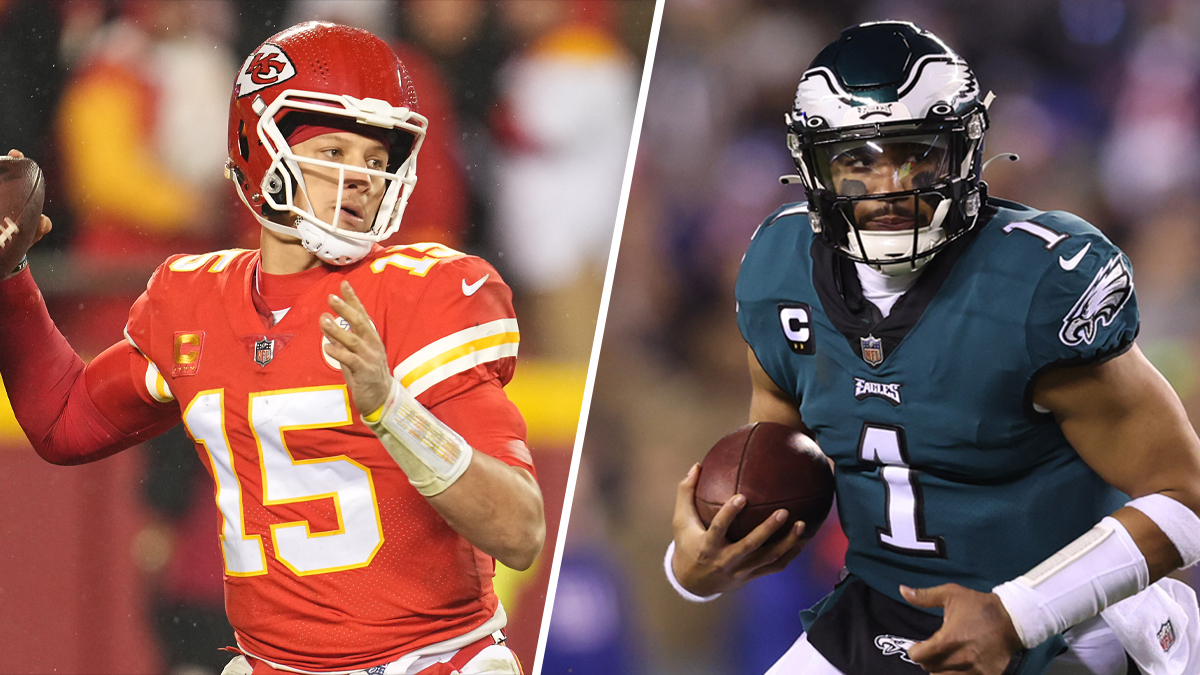
NFL Championship Game appearances, counting this season's, between the Philadelphia Eagles and the Kansas City Chiefs -- including from before the Super Bowl era, with all teams listed under their current names, and ties broken by most wins, and then by most recent:


1. New York Giants 19

2. Green Bay Packers 13

3. Chicago Bears 13

4. New England Patriots 11

5. Los Angeles Rams 10

6. Washington Commanders 10

7. Cleveland Browns 9

8. Pittsburgh Steelers 8

9. Dallas Cowboys 8

10. Philadelphia Eagles 8

11. Denver Broncos 8

12. San Francisco 49ers 7

13. Indianapolis Colts 7

14. Detroit Lions 6

15. Las Vegas Raiders 5

16. Kansas City Chiefs 5

17. Miami Dolphins 5

18. Buffalo Bills 4

19. Minnesota Vikings 4

20. Seattle Seahawks 3

21. Arizona Cardinals 3

22. Cincinnati Bengals 3

23. Tampa Bay Buccaneers 2

24. Baltimore Ravens 2

25. Atlanta Falcons 2

26. Carolina Panthers 2

27. New Orleans Saints 1

28. New York Jets 1

29. Tennessee Titans 1

30. Los Angeles Chargers 1
31. Jacksonville Jaguars none, but reached 3 AFC Championship Games
32. Houston Texans none, hasn't yet reached an AFC Championship Game

The Rams reached 1 as the Cleveland Rams, and 2 as the St. Louis Rams. The Commanders reached 1 as the Boston Redskins, the rest as the Washington Redskins. The Colts reached 5 as the Baltimore Colts. The Lions reached 1 as the Portsmouth Spartans. The Raiders reached 4 as the Oakland Raiders, and 1 as the Los Angeles Raiders. The Cardinals reached 2 as the Chicago Cardinals. The Chargers reached their 1 as the San Diego Chargers.

NFL and AFL Championships, including pre-title game wins, 1920-31:

1. Green Bay 13

2. Chicago 11 (Bears 9, Cardinals 2)

3. New York 9 (Giants 8, Jets 1)

4. Cleveland 9 (Browns 4, Canton Bulldogs 3, Rams 1, Akron Pros 1)

5. Pittsburgh 8

6. San Francisco Bay Area 8 (49ers 5, Oakland Raiders 1 in AFL & 2 SB)

7. New England 7 (Patriots 6, Providence Steam Roller 1)

8. Dallas 6 (Cowboys 5 NFL, Texans 1 AFL)

9. Washington 5

10. Philadelphia 5 (Eagles 4, Frankford Yellow Jackets 1)

11. Baltimore 5 (Colts 3, Ravens 2)

12. Detroit 4

13. Kansas City 4 (Chiefs 2 in AFL, 2 Super Bowls)

14. Los Angeles 3 (Rams 2, Raiders 1)

15. Tampa Bay 2

16. Denver 2

17. Miami 2

18. Buffalo 2 (Bills 1964 and 1965 in AFL)

19. Houston 2 (Oilers 1960 and 1961 in AFL)

20. Seattle 1

21. New Orleans 1

22. Indianapolis 1

23. St. Louis 1

24. San Diego 1 (Chargers 1963 in AFL)

25. Minnesota 1 (Vikings 1969 NFL, lost Super Bowl)

26. Arizona 0-1 in title games

27. Tennessee 0-1

28. Atlanta 0-2

29. Carolina 0-2

30. Cincinnati 0-3

31. Las Vegas none

32. Jacksonville none

Monday, January 16, 2023

Last Active Players for Defunct Teams and Leagues

Joe Cirella, an original New Jersey Devil
and the last Colorado Rockie active in the NHL

Major League Baseball:
Boston Braves, 1871-1952: Eddie Matthews, 1968
St. Louis Browns, 1902-1953: Don Larsen, 1967
Philadelphia Athletics, 1901-1954: Vic Power, 1965
Brooklyn Dodgers, 1883-1957: Bob Aspromonte, 1970
New York Giants, 1883-1957: Willie Mays, 1973
"Old" Washington Senators, 1901-1960: Jim Kaat, 1983
Milwaukee Braves, 1953-1965: Phil Niekro, 1987
Kansas City Athletics, 1955-1967: Reggie Jackson, 1987
Seattle Pilots, 1969: Fred Stanley, 1982
"New" Washington Senators, 1961-1971: Toby Harrah, 1986
Montreal Expos, 1969-2004: Bartolo Colón, 2018

National Football League:
Cleveland Rams, 1936-1945: Bob Waterfield, 1952
Chicago Cardinals, 1920-1959: Ken Gray, 1970 
"Old" Los Angeles Chargers, 1960: Ernie Wright, 1972
Dallas Texans, 1960-1962: Len Dawson, 1975
"Old" Oakland Raiders, 1960-1981: Howie Long, 1993
Baltimore Colts, 1953-1983: Rohn Stark, 1987
St. Louis Cardinals, 1960-1987: Mark Royals, 2003
"Old" Los Angeles Rams, 1946-1994: Sean Landeta, 2006
Los Angeles Raiders, 1982-1994: Tim Brown, 2004
"Old" Cleveland Browns, 1946-1995: Matt Stover, 2009
Houston Oilers, 1960-1996: Jon Runyan, 2009
St. Louis Rams, 1995-2015: 2 current, Aaron Donald & Rob Havenstein
San Diego Chargers, 1961-2016: 2 current, Keenan Allen & Joey Bosa 

American Football League (1926): Ray Flaherty, 1935
American Football League (1936-1937): Haven't been able to find rosters
American Football League (1940-1941): John Kimbrough, 1948
All-America Football Conference (1946-1949): Ben Agajanian, 1964
American Football League (1960-1969): Charlie Joiner, 1986
World Football League (1974-1975): Danny White, 1988
United States Football League (1983-1985): Sean Landeta, 2006
XFL (2001): Rod Smart, 2005

National Basketball Association:
Indianapolis Olympians, 1931-1953: Joe Graboski, 1962
Rochester Royals, 1937-1957: Jack Twyman, 1966
Fort Wayne Pistons, 1941-1957: Gene Shue, 1964
Minneapolis Lakers, 1947-1960: Elgin Baylor, 1971
Chicago Zephyrs, 1961-1963: Don Nelson, 1976
St. Louis Hawks, 1955-1968: Paul Silas, 1980 
San Diego Rockets, 1967-1971: Elvin Hayes, 1984 
Cincinnati Royals, 1957-1972: Nate "Tiny" Archibald, 1984
Baltimore Bullets, 1963-1973: Elvin Hayes, 1984
New York Nets, 1968-1977: Julius "Dr. J" Erving, 1987
Buffalo Braves, 1970-1978: Mike Glenn, 1986
New Orleans Jazz, 1974-1979: Rich Kelley, 1986
San Diego Clippers, 1978-1984: Terry Cummings, 2000
Kansas City Kings, 1972-1985: Otis Thorpe, 2001
Washington Bullets, 1973-1997: Juwan Howard, 2013
Vancouver Grizzlies, 1995-2001: Mike Bibby, 2012
"Old" Charlotte Hornets, 1988-2002: Baron Davis and Jamaal Magloire, 2012
Seattle SuperSonics, 1967-2008: 2 current, Kevin Durant, Jeff Green 
New Jersey Nets, 1977-2012: Brooklyn Lopez, active 
New Orleans Hornets, 2002-2012: 2 current, Marco Belinelli, Eric Gordon
Charlotte Bobcats, 2004-2013: 2 current, Kemba Walker, Bismack Biyombo

American Basketball Association, 1967-1976: Moses Malone, 1995

National Hockey League:
Pittsburgh Pirates, 1925-1930: Cliff Barton, 1940
Philadelphia Quakers, 1930-1931: Syd Howe, 1946
"Old" Ottawa Senators, 1902-1934: Flash Hollett, 1946
St. Louis Eagles, 1934-1935: Bill Cowley, 1947
Montreal Maroons, 1924-1938: Herb Cain, 1946
New York Americans, 1925-1942: Pat Egan, 1951
California Golden Seals, 1967-1976: Dennis Maruk, 1989
Kansas City Scouts, 1974-1976: Wilf Paiement, 1988
Cleveland Barons, 1976-1978: Dennis Maruk, 1989
Atlanta Flames, 1972-1980: Kent Nilsson, 1995
Colorado Rockies, 1976-1982: Joe Cirella, 1995
Minnesota North Stars, 1967-1993: Mike Modano, 2011
Quebec Nordiques, 1972-1995: Adam Foote, 2011
"Old" Winnipeg Jets, 1972-1996: Shane Doan, 2017
Hartford Whalers, 1972-1997: Jean-Sébastien Giguère, 2014
Atlanta Thrashers, 1999-2011: current, Zach Bogosian, Andrew Ladd, Evander Kane, Blake Wheeler

World Hockey Association, 1972-1979: Mark Messier, 2004

Friday, October 28, 2022

October 28, 1962: The Cuban Missile Crisis Is Resolved

Herbert Block (Herblock) cartoon in The Washington Post,
November 1, 1962: JFK says, "Let's get a lock for this thing."

October 28, 1962: The Cuban Missile Crisis is resolved, as Soviet Premier Nikita Khrushchev
announces that he has ordered the removal of Soviet missile bases in Cuba, as demanded by President John F. Kennedy.

In a secret deal between them, JFK agrees to the withdrawal of U.S. missiles from Turkey. The fact that the Turkey part of the deal is not made public makes it look like the Soviets have backed down, rather than that the deal was a true compromise.

Much of the world thought that this was it, that World War III was assured, that the NFL and AFL games of this day might be the last sporting events that they'd ever see, or even that they would be prevented. They weren't, and the world moved on.

One event the world moved on to was the Nuclear Test Ban Treaty, signed on July 26, 1963 by JFK, Khrushchev, and British Prime Minister Harold Macmillan, banning nuclear testing in the atmosphere -- including above the Arctic Circle.

*

October 28, 1962 was a Sunday. The baseball season ended on October 16, as the New York Yankees beat the San Francisco Giants 1-0 in Game 7 of the World Series, the 1st Series to be between a team on the Atlantic Coast and a team on the Pacific Coast. (The Dodgers had already been in a World Series since their move from Brooklyn to Los Angeles, in 1959, but their opponent was the Chicago White Sox, not a coastal team. The Dodgers won it.)

There was 1 NBA game played that day. The Cincinnati Royals beat the San Francisco Warriors, 131-130 at the Cincinnati Gardens. The Warriors were in their 1st season on the Coast, after playing in Philadelphia. They changed their name to the Golden State Warriors in 1971.

Wilt Chamberlain scored 53 points and grabbed 27 rebounds. Just another day at the office for the greatest basketball player who ever lived. But Oscar Robertson, himself a serious contender for that title, scored 36 to lead the team now named the Sacramento Kings to victory.

For the NHL, this was the "Original Six" era, and 4 of the 6 played. The New York Rangers lost to the Chicago Black Hawks, 5-3 at the old Madison Square Garden. And the Detroit Red Wings beat the Toronto Maple Leafs, 2-0 at the Olympia Stadium in Detroit. The Montreal Canadiens and the Boston Bruins did not play.

And there was football. In the NFL, at the original Yankee Stadium. Y.A. Tittle tied an NFL record with 7 touchdown passes, and the New York Giants beat the Washington Redskins 49-34.

Tittle is 1 of 8 NFL quarterbacks to have thrown 7 touchdown passes in a single game. Sid Luckman of the Chicago Bears did it against the Giants in 1943. Adrian Burk of the Philadelphia Eagles did it against the Redskins in 1954. Although it was in the AFL, the NFL counts George Blanda of the Houston Oilers doing it against the New York Titans (the Jets) in 1961. Joe Kapp of the Minnesota Vikings did it against the Baltimore Colts in 1969.

It was done twice in 2013, by Peyton Manning of the Denver Broncos against the Baltimore Ravens, and by Nick Foles of the Philadelphia Eagles against the Oakland Raiders. In 2015, the Giants were victimized again, by Drew Brees of the New Orleans Saints.

Also on October 28, 1962:

* The Green Bay Packers beat the Baltimore Colts, 17-6 at Memorial Stadium in Baltimore. Johnny Unitas was the greatest quarterback of the era, but Vince Lombardi was the best coach and the best general manager, and had built the best team. From September 24, 1961 to September 13, 1964, the Packers went 38-5-1, including winning the 1961 and 1962 NFL Championship Games.

* The Cleveland Browns beat their arch-rivals, the Pittsburgh Steelers, 41-14 at Forbes Field in Pittsburgh.

* The St. Louis Cardinals beat the Dallas Cowboys, 28-24 at the Cotton Bowl in Dallas.

* The Detroit Lions beat the Chicago Bears, 11-3 at Tiger Stadium in Detroit.

* The Philadelphia Eagles beat the Minnesota Vikings, 31-21 at Metropolitan Stadium in the Minneapolis suburb of Bloomington, Minnesota.

* And the Los Angeles Rams beat their arch-rivals, the San Francisco 49ers, 28-14 at Kezar Stadium in San Francisco.

In the upstart American Football League:

* The New York Titans beat the San Diego Chargers, 23-3 at the Polo Grounds in New York. The Titans changed their name to the New York Jets the next year.

* The Boston Patriots beat the Oakland Raiders, 26-16 at Boston University Field. The stadium would be renamed Nickerson Field in 1964, and the team would be renamed the New England Patriots upon their move to suburban Foxborough, Massachusetts in 1971.

* The Dallas Texans beat the Houston Oilers, 31-7 at Jeppesen Stadium in Houston. The teams would meet again in the AFL Championship Game, and the Texans won. The next year, though, tired of trying to compete for attention with the NFL's Cowboys, they moved, becoming the Kansas City Chiefs.

* The Buffalo Bills beat the Denver Broncos, 45-38 at Bears Field in Denver. Bears Field would be expanded and turned into the original Mile High Stadium.

Wednesday, August 24, 2022

Len Dawson, 1935-2022

Everyone considers the performance of Joe Namath in Super Bowl III, leading the New York Jets to victory after predicting it, to be one of the biggest moments in the history of professional football.

The performance of Len Dawson in Super Bowl IV the following season should not be overlooked.

Leonard Ray Dawson was born on June 20, 1935 in Alliance, Ohio, as the seventh son of a seventh son, a distinction that folklore says means one has special abilities. In spite of this, Len never wore Number 7 during his playing career, always Number 16.

Alliance is about 50 miles southeast of Cleveland, and 16 miles northeast of Canton, where the Pro Football Hall of Fame would be built. After starring at quarterback for Alliance High School, he was recruited by 2 Big Ten Conference schools, Ohio State and Purdue.

He knew that Ohio State head coach Woody Hayes didn't like to throw the ball. With some irony, Purdue's head coach, Stu Holcomb, had played at Ohio State, albeit 20 years before Hayes got there. He sent one of his assistants to talk to Dawson about the school, in West Lafayette, Indiana, about halfway between Chicago and Indianapolis, and its program. That assistant coach was Hank Stram, and thus began a friendship that lasted for the rest of Stram's life.

In 1954, as a sophomore, Dawson became Purdue's starting quarterback. While he wasn't the first Boilermaker signal-caller to be nicknamed "The Golden Boy" -- Bob DeMoss, later the school's longtime athletic director, had that honor -- he set the standard by which so many Purdue quarterbacks would be measured, including Bob Griese, who joined Dawson in the Pro Football Hall of Fame; and Drew Brees, who almost certainly will.

In that 1954 season, Dawson led the NCAA in passing efficiency, and also played defensive back and placekicker. In his 1st 2 games, he threw 4 touchdowns passes in a win over Missouri, then made the cross-State journey to South Bend, Indiana, and beat Notre Dame, 27-14. The Fighting Irish had come in as defending National Champions, ranked Number 1 in the country, and had a 13-game winning streak. They had a pretty good sophomore quarterback of their own, also known as the Golden Boy: Paul Hornung. (Both Purdue and Notre Dame have traditionally worn gold helmets.)

Also in 1954, Dawson was married to his high school sweetheart, Jackie, and they remained married until her death in 1978. They had a daughter, Lisa Ann; and a son, Len Jr.

In 1956, his senior year, Dawson would again lead Purdue into South Bend and upset Notre Dame, 28-14. The team as a whole wasn't that good, though, although the defensive line did feature future Los Angeles Rams star Lamar Lundy. Overall, though, the team's record in his 3 seasons was 13-10-4; they finished 6th, 4th and 7th in the Big Ten; and, as a result of the league's rule that only its Champion (or, if the Champion had gone the previous season, the 2nd-place finisher) could go to a bowl game, specifically the Rose Bowl, the Boilermakers didn't play in one.

*

The Pittsburgh Steelers drafted Dawson in the 1st Round of the 1957 NFL Draft. But after just 1 season, they acquired Bobby Layne, who had led the Detroit Lions to 3 NFL Championships and 1 other NFL Championship Game in the preceding 5 seasons.

Everyone who knew Steelers founding owner Art Rooney seemed to love him, but the man was a better administrator and a better fan than he was a football talent evaluator. In the 1950s, the Steelers had these quarterbacks in their camp: Len Dawson, Bobby Layne, Jack Kemp and Johnny Unitas. And they didn't make the Playoffs until 1972, with Terry Bradshaw.

Rooney traded Dawson to the Cleveland Browns. With Paul Brown as head coached, he should have thrived. (Should that be "thrived" or "throve"?) But Brown preferred starting quarterback Milt Plum. Fortunately, he had options: The American Football League had gotten started, and he signed with the Dallas Texans, whose head coach was his friend from Purdue, Hank Stram.

The Texans won the AFL Championship in 1962, and Dawson was named the AFL's Most Valuable Player. But attendance was an issue: The NFL's Cowboys, though lousy, got more fans than the Champion Texans. So team owner and AFL founder Lamar Hunt moved the team, and they became the Kansas City Chiefs.

Playing in Municipal Stadium, groundsharing with baseball's Kansas City Athletics, the Chiefs proved more successful than the A's, and more popular. And Dawson -- not Joe Namath of the New York Jets, not George Blanda of the Houston Oilers, not Daryle Lamonica of the Oakland Raiders, and not Jack Kemp, who had also found new life in the league, with the Buffalo Bills -- was the AFL's best quarterback, making 6 All-Star Games, leading the league in completion percentage 7 times, in passer rating 6 times, and in touchdown passes 4 times.

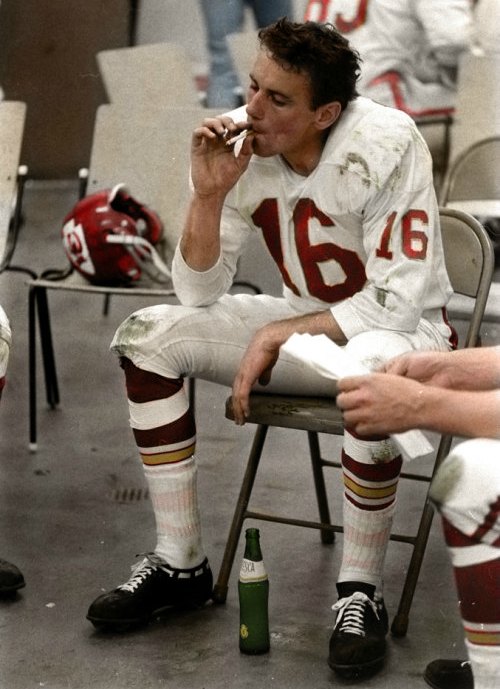
In 1966, with Dawson again being named the game's MVP, the Chiefs won a 2nd AFL Championship, making them the league's representative in the 1st AFL-NFL World Championship Game, later retroactively renamed Super Bowl I. At halftime, the Chiefs were very much in the game, trailing the NFL Champion Green Bay Packers, 14-10. In the locker room, Dawson smoked a cigarette, and a famous photo was taken. Final score: Packers 35, Chiefs 10. Let that be a lesson to you, kids: Don't smoke.
I'd seen this photo a dozen times,
and only now did I notice he was also drinking a beer.
Another lesson: Don't drink and drive an offense.

Dawson hurt his knee in the 2nd game of the 1969 season, but came back in midseason, and led the Chiefs to wins, in the Playoffs, on the road, over both participants in the previous season's AFL Championship Game, the Jets and the Raiders.

That 3rd AFL Championship got them into Super Bowl IV, but, in spite of Namath having proved the year before that it wasn't that the NFL was superior to the AFL, it was that the Packers were superior to everybody, the Vikings were big favorites.

But Dawson proved that the previous year's AFL win was no fluke, that the teams that would be forming the American Football Conference the next season, the 1st season of the merged NFL, were every bit as good as the established NFL teams that were forming the National Football Conference.
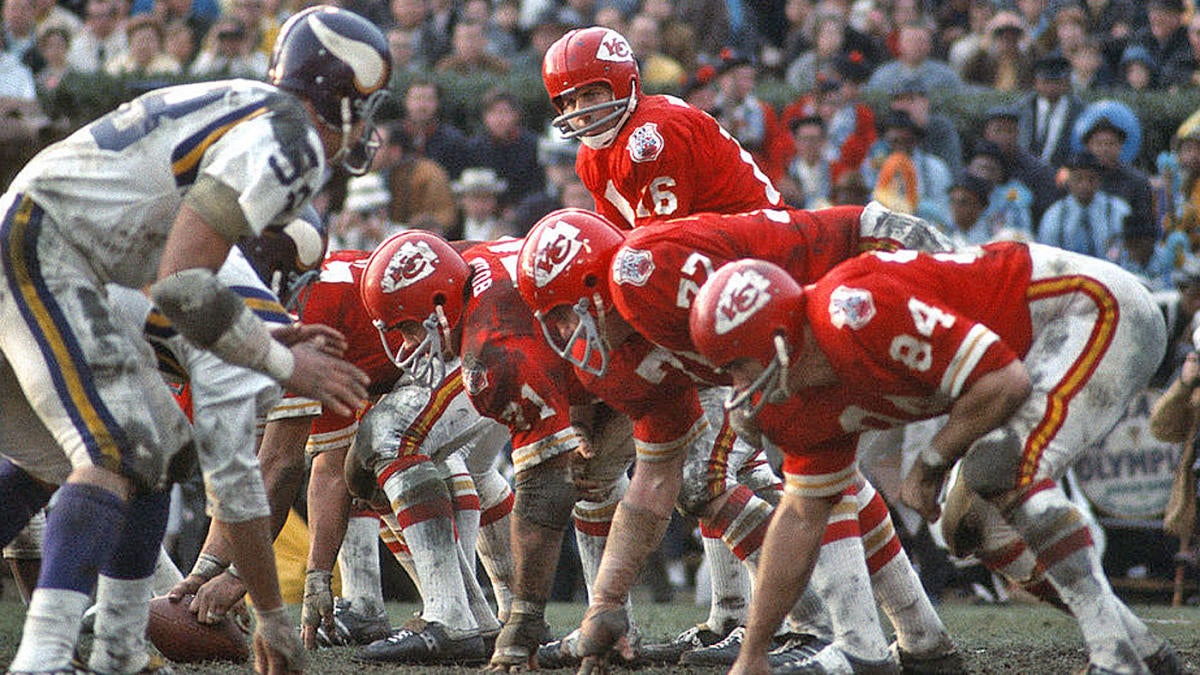
He completed 12 of 17 passes for 142 yards. Although he threw an interception, he also passed for a touchdown -- something that, for all his talk, all his charisma, and all his talent, Namath did not do a year earlier. And with the AFL's best defense, the Chiefs beat the Vikings, 23-7 at Tulane Stadium in New Orleans. The founding franchise of the AFL had won the last game any AFL team would ever play, and had made Lamar Hunt's point.

The Chiefs made the Playoffs again in 1971, and moved into Arrowhead Stadium in 1972. Dawson was named NFL Man of the Year (now known as the Walter Payton Man of the Year Award), in 1973, and retired after the 1975 season. He was named to the AFL All-Time Team, the Chiefs' team Hall of Fame with his Number 16 retired, and, in 1987, the Pro Football Hall of Fame.

Dawson became the sports director for KMBC-Channel 9, the ABC affiliate in Kansas City, and broadcast for the Chiefs from 1976 to 2017. From 1977 to 2001, he hosted HBO's Inside the NFL. From 1977 to 1982, he analyzed AFC games for NBC.

In 2012, the Hall of Fame gave him its Pete Rozelle Award, making him only the 2nd person in any of North American's "Big Four" sports to be honored by its Hall of Fame as both a player and a broadcaster, following Frank Gifford. (Walt Frazier just became the 1st basketball player so honored, but no baseball or hockey player has.) In 2017, Clark Hunt, who became Chiefs owner following his father Lamar's death in 2006, named the Arrowhead Stadium broadcast booth for Dawson.
The reason this was done in 2017 is that he had announced that he was retiring at the end of the season, as his health had begun to fail. He had remarried, and his 2nd wife, Linda remained by his side until he died this morning, August 24, 2022, at the University of Kansas Medical Center in Kansas City, Kansas. He was 87 years old.

"My family and I are heartbroken," Clark Hunt said in a statement Wednesday. "Len Dawson is synonymous with the Kansas City Chiefs. Len embraced and came to embody Kansas City and the people that call it home. You would be hard-pressed to find a player who had a bigger impact in shaping the organization as we know it today than Len Dawson did."

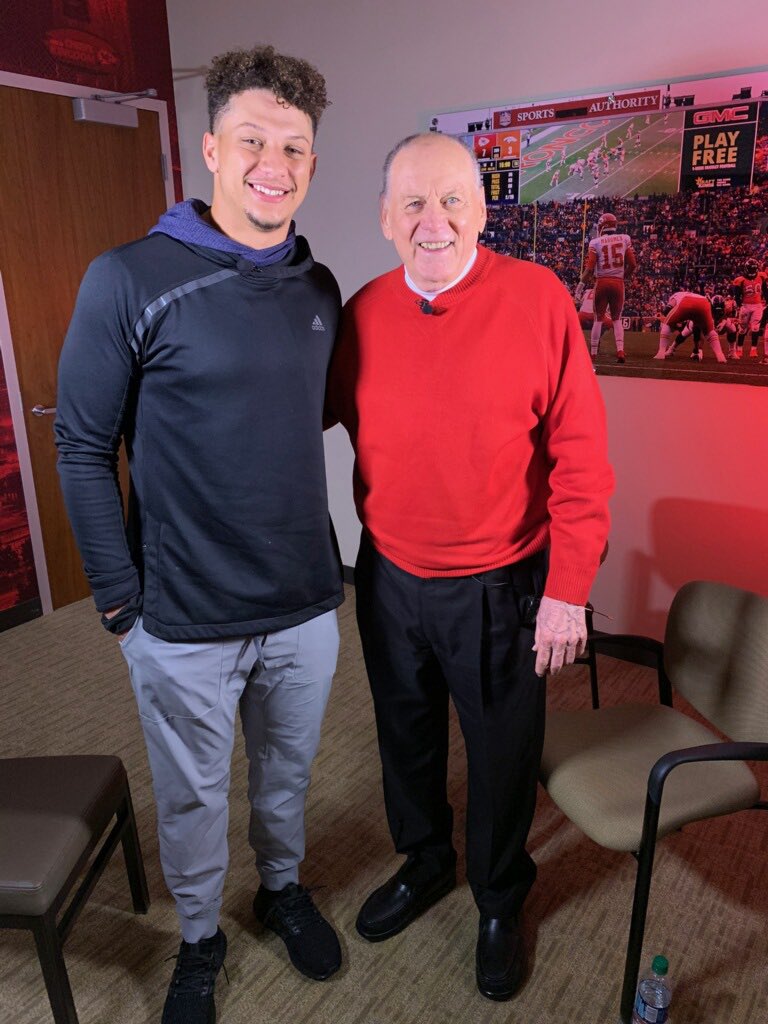
Dawson still held most of the Chiefs' career passing records, but he lived long enough to see Patrick Mahomes lead them to victory in Super Bowl LIV, ending a 50-year drought.
Mahomes said today, "RIP to the legend Len Dawson. The legacy and impact you made on Kansas City will live on forever. Prayers to his family."

With his death, there are now 21 living players from the Chiefs' Super Bowl IV winners: Willie Lanier, Bobby Bell, Jan Stenerud, Ed Podolak, Emmitt Thomas, Mike Garrett, Johnny Robinson, Ed Budde, Otis Taylor, Tom Flores, Paul Lowe, Warren McVea, Mike Livingston, Willie Mitchell, Frank Pitts, Curtis McLinton, Jim Marsalis, Jim Kearney, Bob Stein, Mo Moorman and Ed Lothamer.

And there are 10 surviving players from the AFL All-Time Team: Chiefs Lowe, Robinson, Bell and Budde; Jets Namath and Gerry Philbin; the Bills' Billy Shaw; the Raiders' Jim Otto; and the San Diego Chargers' Lance Alworth and Ron Mix.