Thursday, March 18, 2021

Hockey Title Point Totals

Do all World Championships matter? Yes. Do some matter more than others? Yes. Is recency the determining factor? Yes: Ranger fans can cling to 1994 all they want, but the iconic status of that Stanley Cup does not change the fact that the titles won in 1995, 2000 and 2003 by the New Jersey Devils mean more.

The 1st Stanley Cup was in 1893, and its winners get 1 point. The 1894 winners get 2, and so on. Moving a team starts the count all over again. Sorry, Ottawa fans, but you can't count the Cups won by the old Senators who left town in 1934 with the new Senators who started in 1992.

1. Montreal Canadiens, 1916, 1924, 1930, 1931, 1944, 1946, 1953, 1956, 1957, 1958, 1959, 1960, 1965, 1966, 1968, 1969, 1971, 1973, 1976, 1977, 1978, 1979, 1986, 1993: 1,680.

2. Detroit Red Wings, 1936, 1937, 1943, 1950, 1952, 1954, 1955, 1997, 1998, 2002, 2008: 908.

3. Toronto Maple Leafs, 1918, 1922, 1932, 1942, 1945, 1947, 1948, 1949, 1951: 826.

4. Pittsburgh Penguins, 1991, 1992, 2009, 2016, 2017: 605.

5. Chicago Blackhawks, 1934, 1938, 1961, 2010, 2013, 2015: 567.

6. Edmonton Oilers, 1984, 1985, 1987, 1988, 1990: 514.

7. Boston Bruins, 1929, 1939, 1941, 1970, 1972, 2011: 458.

8. New York Islanders, 1980, 1981, 1982, 1983: 390.

9. New Jersey Devils, 1995, 2000, 2003: 346.

10. New York Rangers, 1928, 1933, 1940, 1994: 259.

11. Los Angeles Kings, 2012, 2014: 258.

12. Tampa Bay Lightning, 2004, 2020: 256.

13. Colorado Avalanche, 1996, 2001: 229.

14. Philadelphia Flyers, 1974, 1975: 181.

15. St. Louis Blues, 2019: 135.

16. Washington Capitals, 2018: 134.

17. Anaheim Ducks, 2007: 123.

18. Carolina Hurricanes, 2006: 122.

19. Dallas Stars, 1999: 115.

20. Calgary Flames, 1989: 105.

--. Ottawa Senators, 1903, 1904, 1905, 1906, 1909, 1910, 1911, 1920, 1921, 1923, 1927: 304.

--. Montreal Wanderers: 1906, 1907, 1907, 1908, 1910: 115.

--. Montreal Maroons, 1926, 1935: 93.

--. Quebec Bulldogs, 1912, 1913: 59.

--. Victoria Cougars, 1925: 41.

--. Montreal Hockey Club, 1893, 1894, 1895, 1902, 1903: 35.

--. Seattle Metropolitans, 1917: 34.

--. Montreal Victorias, 1895, 1896, 1897, 1898, 1899: 34.

--. Vancouver Millionaires, 1915: 32.

--. Toronto Blueshirts, 1914: 31.

--. Winnipeg Victorias, 1896, 1901, 1902: 30.

--. Kenora Thistles, 1907: 22.

--. Montreal Shamrocks, 1899, 1900: 21.

21. Winnipeg Jets, 3 WHA titles but no Stanley Cups: 0.

--. Houston Aeros, 2 WHA titles but no Stanley Cups: 0.

--. Quebec Nordiques, 1 WHA title but no Stanley Cups: 0.

--. Hartford Whalers, 1 WHA title but no Stanley Cups: 0.

22. Vancouver Canucks, 3 lost Finals: 0.

23. Buffalo Sabres, 2 lost Finals: 0.

--. Minnesota North Stars, 2 lost Finals: 0.

24. Vegas Golden Knights, 1 lost Finals: 0.

25. Nashville Predators, 1 lost Finals: 0.

26. San Jose Sharks, 1 lost Finals: 0.

27. Ottawa Senators, 1 lost Finals: 0.

28. Florida Panthers, 1 lost Finals: 0.

29. Arizona Coyotes, 1 lost Conference Finals: 0.

30. Minnesota Wild, 1 lost Conference Finals: 0.

--. Atlanta Thrashers, 1 Division title: 0.

31. Columbus Blue Jackets, 6 Playoff berths: 0.

--. Colorado Rockies, 1 Playoff berth: 0.

--. Oakland Seals, 1 Playoff berth: 0.

--. Kansas City Scouts, no Playoff berths: 0.

--. Cleveland Barons, no Playoff berths: 0.

32. Seattle Kraken, not yet begun play: 0.

Basketball Title Point Totals

Do all World Championships matter? Yes. Do some matter more than others? Yes. Is recency the determining factor? Yes: Knick fans can cling to 1970 and 1973 all they want, but the iconic status of those two does not change the fact that the titles won in 1971 by the Milwaukee Bucks and 1974 by the Boston Celtics mean more.

The 1st NBA Championship was in 1947, and its winners get 1 point. The 1948 winners get 2, and so on. Moving a team starts the count all over again, but Laker fans didn't need the 5. Minneapolis titles.

1. Los Angeles Lakers, 1972, 1980, 1982, 1985, 1987, 1988, 2000, 2001, 2002, 2009, 2010, 2020: 594.

2. Boston Celtics, 1957, 1959, 1960, 1961, 1962, 1963, 1964, 1965, 1966, 1968, 1969, 1974, 1976, 1981, 1984, 1986, 2008: 462.

3. San Antonio Spurs, 1999, 2003, 2005, 2007, 2014: 298.

4. Chicago Bulls, 1991, 1992, 1993, 1996, 1997, 1998: 291.

5. Golden State Warriors, 1975, 2015, 2017, 2018: 241.

6. Miami Heat, 2006, 2012, 2013: 193.

7. Detroit Pistons, 1989, 1990, 2004: 145.

8. Houston Rockets, 1994, 1995: 97.

9. Toronto Raptors, 2019: 73.

10. Cleveland Cavaliers, 2016: 70.

11. Dallas Mavericks, 2011: 65.

12. Philadelphia 76ers, 1967, 1983: 58.

13. New York Knicks, 1970, 1973: 51.

--. Seattle SuperSonics, 1979: 33.

14. Washington Wizards, 1978: 32.

15. Portland Trail Blazers, 1977: 31.

--. Minneapolis Lakers, 1949, 1950, 1952, 1953, 1954: 28.

16. Milwaukee Bucks, 1971: 25.

--. St. Louis Hawks, 1958: 12.

--. Philadelphia Warriors, 1947, 1956: 11.

--. Syracuse Nationals, 1955: 9.

--. Rochester Royals, 1951: 5.

--. Baltimore Bullets, 1948: 2.

17. Indiana Pacers, 3 ABA titles but no NBA titles: 0.

--. New York Nets, 2 ABA titles but no NBA titles: 0.

--. Kentucky Colonels, 1 ABA title but did not enter NBA: 0.

--. Utah Stars, 1 ABA title but did not enter NBA: 0.

--. Oakland Oaks, 1 ABA title but did not enter NBA: 0.

--. Pittsburgh Pipers, 1 ABA title but did not enter NBA: 0.

18. Orlando Magic, 2 lost Finals: 0.

--. New Jersey Nets, 2 lost Finals: 0.

19. Utah Jazz, 2 lost Finals: 0.

20. Phoenix Suns, 2 lost Finals: 0.

--. Fort Wayne Pistons, 2 lost Finals: 0.

21. Oklahoma City Thunder, 1 lost Finals: 0.

--. Washington Capitols, 1 lost Finals: 0.

--. Chicago Stags, 1 lost Finals: 0.

22. Denver Nuggets, 1 lost ABA Finals but no NBA Finals: 0.

23. Atlanta Hawks, 3 lost Conference Finals but no NBA Finals: 0.

--. Cincinnati Royals, 2 lost Conference Finals but no NBA Finals: 0.

24. Memphis Grizzlies, 1 lost Conference Finals but no NBA Finals: 0.

25. Minnesota Timberwolves, 1 lost Conference Finals but no NBA Finals: 0.

26. Sacramento Kings, 1 lost Conference Finals but no NBA Finals: 0.

--. Kansas City Kings, 1 lost Conference Finals but no NBA Finals: 0.

27. Los Angeles Clippers, 2 Division titles but no Conference Finals: 0.

28. New Orleans Pelicans, 1 Division title but no Conference Finals: 0.

29. Charlotte Hornets, 10 Playoff Berths: 0.

30. Brooklyn Nets, 5 Playoff berths: 0.

--. Buffalo Braves, 3 Playoff berths: 0.

--. San Diego Rockets, no Playoff berths in 4 seasons: 0.

--. New Orleans Jazz, no Playoff berths in 5 seasons: 0.

--. Vancouver Grizzlies, no Playoff berths in 6 seasons: 0.

--. San Diego Clippers, no Playoff berths in 6 seasons: 0.

Football Title Point Totals

Do all World Championships matter? Yes. Do some matter more than others? Yes. Is recency the determining factor? Yes: Jet fans can cling to 1969 all they want, but the iconic status of that one does not change the fact that the title won in 1970 by the Kansas City Chiefs means more.

The 1st NFL Championship was in 1920, and its winners get 1 point. The 1921 winners get 2, and so on. Years listed here are for the regular season, not necessarily the calendar year in which the title was won.

Sadly, the Cheatriots are on top:

1. New England Patriots, 2001, 2003, 2004, 2014, 2016, 2018: 535. 

2. Green Bay Packers, 1929, 1930, 1931, 1936, 1939, 1944, 1961, 1962, 1965, 1966, 1967, 1996, 2010: 488.

3. Pittsburgh Steelers, 1974, 1975, 1978, 1979, 2005, 2008: 403.

4. New York Giants, 1927, 1934, 1938, 1956, 1986, 1990, 2007, 2011: 396.

5. San Francisco 49ers, 1981, 1984, 1988, 1989, 1994: 351.

6. Dallas Cowboys, 1971, 1977, 1992, 1993, 1995: 333.

7. Denver Broncos, 1997, 1998, 2015: 253.

8. Washington Football Team, 1937, 1942, 1982, 1987, 1991: 244.

9. Chicago Bears, 1921, 1932, 1933, 1940, 1941, 1943, 1946, 1963, 1985: 233.

10. Philadelphia Eagles, 1948, 1949, 1960, 2017: 198.

11. Tampa Bay Buccaneers, 2002, 2020: 183.

12. Baltimore Ravens, 2000, 2012: 174.

13. Kansas City Chiefs, 1969, 2019: 150.

14. Cleveland Browns, 1950, 1954, 1955, 1964: 147.

--. Baltimore Colts, 1958, 1959, 1970: 130.

15. Detroit Lions, 1935, 1952, 1953, 1957: 121.

--. Oakland Raiders, 1976, 1980: 118.

16. Miami Dolphins, 1972, 1973: 107.

17. Seattle Seahawks, 2013: 94.

18. New Orleans Saints, 2009: 89.

19. Indianapolis Colts, 2006: 86.

--. St. Louis Rams, 1999: 80.

--. Los Angeles Raiders, 1983: 64.

20. New York Jets, 1968: 49.

--. Chicago Cardinals, 1925, 1947: 34.

21. Los Angeles Rams, 1951: 32.

--. Cleveland Rams, 1945: 26.

--. Canton Bulldogs, 1922, 1923, 1924: 12.

--. Providence Steam Roller, 1928: 9.

--. Frankford Yellow Jackets, 1926: 7.

--. Akron Pros, 1920: 1.

22. Buffalo Bills, no Super Bowls but 2 AFL Championships and 4 AFC Championships: 0.

23. Minnesota Vikings, no Super Bowls but 1 NFL and 3 NFC Championships: 0.

24. Atlanta Falcons, no Super Bowls but 2 NFC Championships: 0.

25. Carolina Panthers, no Super Bowls but 2 NFC Championships: 0.

26. Cincinnati Bengals, no Super Bowls but 2 AFC Championships: 0.

--. Houston Oilers, no Super Bowls but 2 AFL Championships: 0.

--. San Diego Chargers, no Super Bowls but 1 AFL and 1 AFC Championship: 0.

27. Arizona Cardinals, no Super Bowls but 1 NFC Championship: 0.

28. Tennessee Titans, no Super Bowls but 1 AFC Championship: 0.

29. Jacksonville Jaguars, 3 AFC Championship Games but lost them all: 0.

30. Houston Texans, 6 Division titles but no AFC Championship Games: 0.

--. St. Louis Cardinals, 3 Division titles but no NFC Championship Games: 0.

31. Los Angeles Chargers, 1 Playoff berth but no AFC Championship Games: 0.

32. Las Vegas Raiders, no postseason berths: 0.

Baseball Title Point Totals

Do all World Championships matter? Yes. Do some matter more than others? Yes. Is recency the determining factor? Yes: Met fans can cling to 1969 and 1986 all they want, but the iconic status of those two does not change the fact that the titles won in 1970 by the Baltimore Orioles and 1987 by the Minnesota Twins mean more.

The 1st World Series was in 1903. So give the team that won that 1 point, and each following World Series winner 1 more point than the previous.

Once a team moves, they have to start over. Atlanta can't count the Milwaukee Braves, and Oakland can't count the Philadelphia Athletics.

1. New York Yankees, 1923, 1927, 1928, 1932, 1936, 1937, 1938, 1939, 1941, 1943, 1947, 1949, 1950, 1951, 1952, 1953, 1956, 1958, 1961, 1962, 1977, 1978, 1996, 1998, 1999, 2000, 2009: 1,302.

2. St. Louis Cardinals, 1926, 1931, 1934, 1942, 1944, 1946, 1964, 1967, 1982, 2006, 2011: 631.

3. Boston Red Sox, 1903, 1904, 1912, 1915, 1916, 1918, 2004, 2007, 2013, 2018: 490.

4. Los Angeles Dodgers, 1959, 1963, 1965, 1981, 1988, 2020: 464.

5. San Francisco Giants, 2010, 2012, 2014: 330.

6. Oakland Athletics, 1972, 1973, 1974, 1989: 301.

7. Cincinnati Reds, 1919, 1940, 1975, 1976, 1990: 290.

8. Pittsburgh Pirates, 1909, 1925, 1960, 1971, 1979: 234.

9. Detroit Tigers, 1935, 1945, 1968, 1984: 224.

10. Baltimore Orioles, 1966, 1970, 1983: 213.

11. Kansas City Royals, 1985, 2015: 196.

12. Miami Marlins, 1997, 2003: 196.

13. Philadelphia Phillies, 1980, 2008: 184.

14. Toronto Blue Jays, 1992, 1993: 181.

15. Minnesota Twins, 1987, 1991: 174.

16. New York Mets, 1969, 1986: 152.

17. Chicago Cubs, 1907, 1908, 2016: 125.

--. New York Giants, 1905, 1921, 1922, 1933, 1954: 125.

18. Chicago White Sox, 1906, 1917, 2005: 122.

19. Washington Nationals, 2019: 117.

20. Houston Astros, 2017: 115.

21. Los Angeles Angels, 2002: 100.

22. Arizona Diamondbacks, 2001: 99.

23. Atlanta Braves, 1995: 93.

--. Philadelphia Athletics, 1910, 1911, 1913, 1929, 1930: 87.

24. Cleveland Indians, 1920, 1948: 64.

--. Milwaukee Braves, 1957: 55.

--. Brooklyn Dodgers, 1955: 53.

--. Washington Senators, 1924: 22.

--. Boston Braves, 1914: 12.

25. Tampa Bay Rays, Pennants in 2008 and 2020 but no World Series wins: 0.

26. Texas Rangers, Pennants in 2010 and 2011 but no World Series wins: 0.

27. San Diego Padres, Pennants in 1984 and 1998 but no World Series wins: 0.

28. Colorado Rockies, Pennant in 2007 but no World Series wins: 0.

29. Milwaukee Brewers, Pennant in 1982 but no World Series wins: 0.

30. Seattle Mariners, 3 Division titles but no Pennants: 0.

--. Montreal Expos, 2 Division titles but no Pennants: 0.

--. Kansas City Athletics, never made postseason: 0.

*

How much have things changed? This is what it would have looked like 20 years ago, with only the 30 then-current MLB teams counted: 

1. New York Yankees, 1923, 1927, 1928, 1932, 1936, 1937, 1938, 1939, 1941, 1943, 1947, 1949, 1950, 1951, 1952, 1953, 1956, 1958, 1961, 1962, 1977, 1978, 1996, 1998, 1999, 2000: 1,195.

2. St. Louis Cardinals, 1926, 1931, 1934, 1942, 1944, 1946, 1964, 1967, 1982: 418.

3. Los Angeles Dodgers, 1959, 1963, 1965, 1981, 1988: 346.

4. Oakland Athletics, 1972, 1973, 1974, 1989: 301.

5. Cincinnati Reds, 1919, 1940, 1975, 1976, 1990: 290.

6. Pittsburgh Pirates, 1909, 1925, 1960, 1971, 1979: 234.

7. Detroit Tigers, 1935, 1945, 1968, 1984: 224.

8. Baltimore Orioles, 1966, 1970, 1983: 213.

9. Toronto Blue Jays, 1992, 1993: 181.

10. Minnesota Twins, 1987, 1991: 174.

11. New York Mets, 1969, 1986: 152.

12. Miami Marlins, 1997: 95.

13. Atlanta Braves, 1995: 93.

14. Kansas City Royals, 1985: 83.

15. Philadelphia Phillies, 1980: 78.

16. Cleveland Indians, 1920, 1948: 64.

17. Boston Red Sox, 1903, 1904, 1912, 1915, 1916, 1918: 56.

18. Chicago White Sox, 1906, 1917: 19.

19. Chicago Cubs, 1907, 1908: 11.

20. San Francisco Giants, Pennants in 1962, 1989 and 2002 but no World Series wins: 0.

21. San Diego Padres, Pennants in 1984 and 1998 but no World Series wins: 0.

22. Milwaukee Brewers, Pennant in 1982 but no World Series wins: 0.

23. Houston Astros, 5 Division titles but no Pennants: 0.

24. Texas Rangers, 3 Division titles but no Pennants: 0.

25. Los Angeles Angels, 3 Division titles but no Pennants: 0.

26. Seattle Mariners, 2 Division titles but no Pennants: 0.

27. Montreal Expos, 2 Division titles but no Pennants: 0.

28. Arizona Diamondbacks, 1 Division title but no Pennants: 0.

29. Colorado Rockies, 1 Wild Card berth but no Division titles: 0.

30. Tampa Bay Rays, no postseason berths: 0.

Wednesday, March 17, 2021

Top 5 Reasons You Can't Blame Clarence Campbell for the Montreal Canadiens Losing the 1955 Stanley Cup

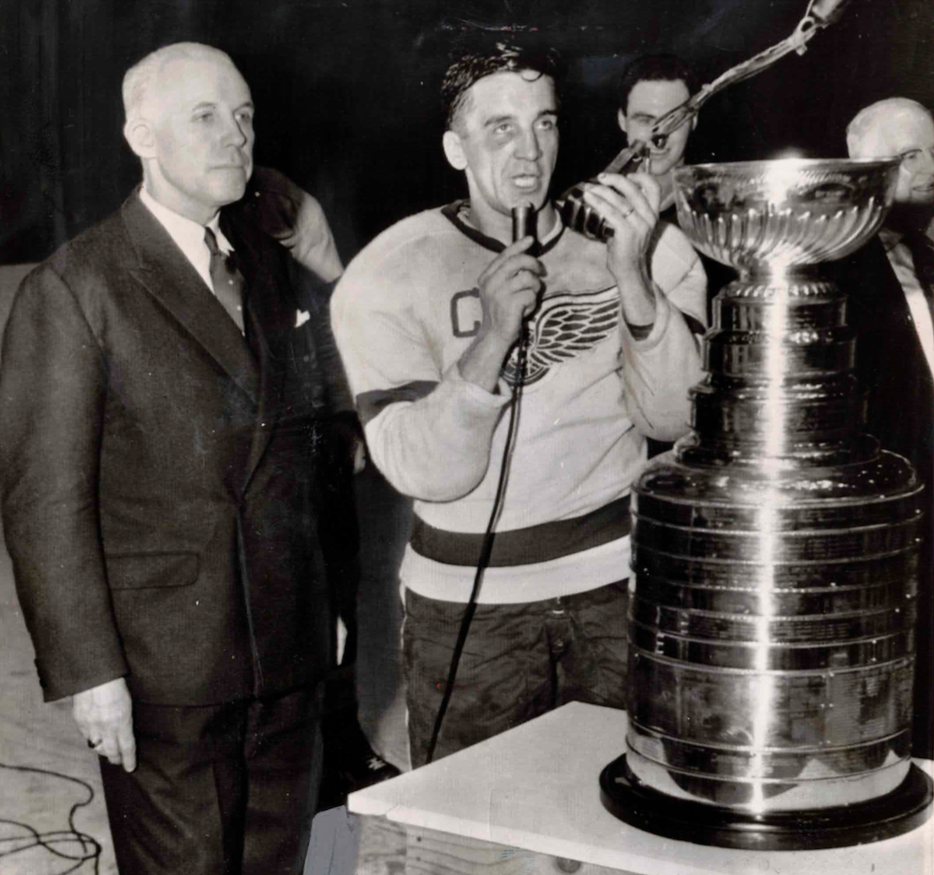
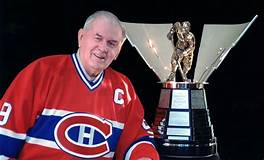
Clarence Campbell, about to award the Stanley Cup.
He awarded it 31 times, 14 times to the Montreal Canadiens
and 4 times to Maurice Richard as their Captain.

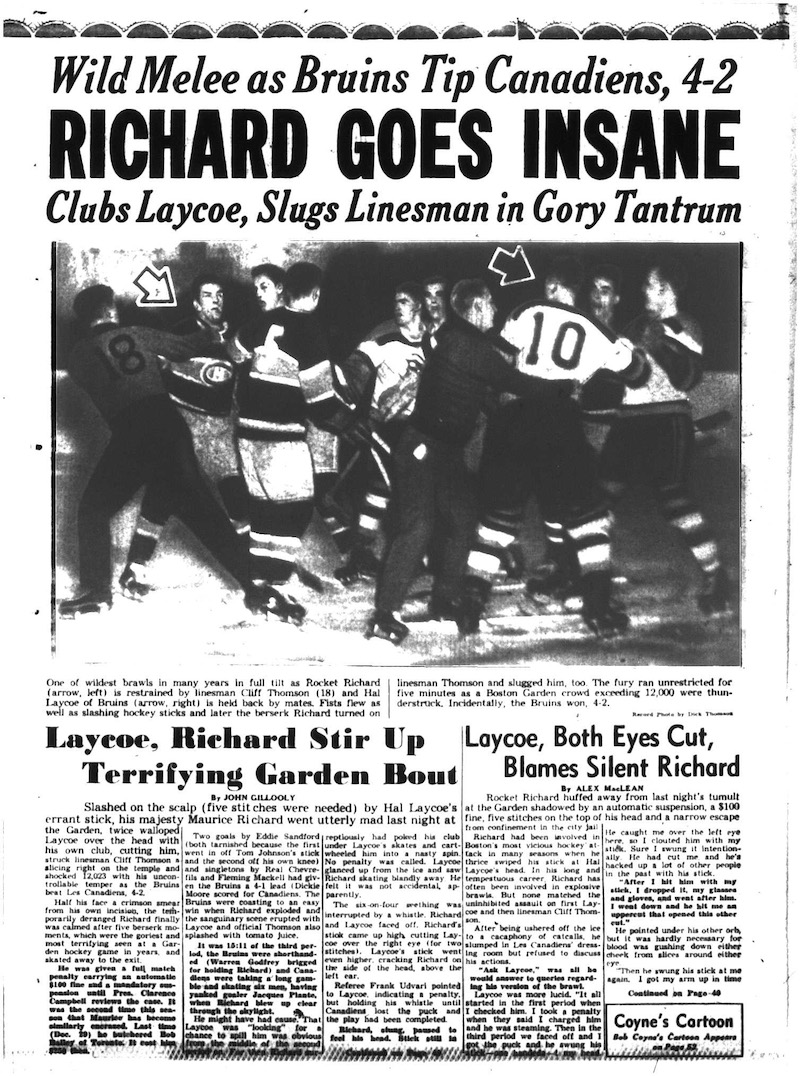
March 13, 1955: The Boston Bruins beat the Montreal Canadiens, 4-2 at the Boston Garden. The Bruins' Hay Laycoe hits the Canadiens' Maurice Richard in the head with his stick. In retaliation, Richard, known as the Rocket, does the same.

No member of the officiating crew saw Laycoe hit Richard -- or so they said. Linesman Cliff Thompson sees Richard hit Laycoe, and tries to intervene. Thinking he's another Bruin player, Richard punches him.

That's one thing you can never do, in any sport: Hit an official. Boston police tried to arrest Richard, but Bruins general manager Lynn Patrick -- son of former New York Rangers head coach and GM Lester Patrick, and himself a Hall of Fame player -- tells the cops to let the Rocket go, because the NHL office will handle the situation.

March 15, 1955: With 3 games left in the regular season, NHL President Clarence Campbell announces that Richard is suspended, for the remainder of the regular season, 3 games -- 2 against the Detroit Red Wings, home and away, and 1 at home to the Rangers -- and for the entirety of the Playoffs.

This decision would cost Richard the Art Ross Trophy as the NHL's leading scorer, as his teammate, Bernie "Boom-Boom" Geoffrion, would finish with 37 assists to Richard's 36, and both had 38 goals, so Boom-Boom finished with 75 points to the Rocket's 74.

But there was a far bigger effect than that. Richard was considered the league's best player at the time. At the least, he was considered 2nd behind the Red Wings' Gordie Howe, also a right wing. (By position, not by politics.)
The most familiar photograph of Richard.
The eyes make him look a little crazy.

So the team known as Les Habitantes, or "The Habs," would be losing him when they were in a dogfight with the Wings for 1st place overall in the League, knowing full well that, a year earlier, the Wings had beaten them in the Finals, with Game 7 being at the Olympia Stadium in Detroit, won by an overtime goal by Tony Leswick. They did not want to cede home-ice advantage, especially in a potential Game 7, again.

This wasn't the first time that Campbell had sanctioned Richard. There was a great bias against French-Canadian -- both French-speaking and Catholic -- among the League's Anglophone and Protestant base in the rest of Canada, including the League office in Toronto, home of the Habs' greatest rivals, the Toronto Maple Leafs. Leafs boss Conn Smythe despised Richard, and Campbell was often seen as Smythe's puppet.

And so, opposing players would go after Richard, knowing that the threat came not from what referees or Campbell would do to them, but what Richard would do to them. Like Howe, and later like Bobby Orr -- but not Wayne Gretzky, Mario Lemieux or Sidney Crosby -- Richard didn't need goons to protect him. He did his own fighting, and usually won, and relished beating the thugs at their own game. So they had reason to be afraid of Richard. They frequently fought that fear, and went after him anyway.

Campbell had fined Richard many times, for fighting back. At one point, Richard, like many other great athletes of the pre-television era, had a ghostwritten column in a local newspaper, in this case a French-language publication, Samedi-Dimanche (Saturday-Sunday). One time, he used the column to criticize Campbell's treatment, not just of himself, but of French players in general, giving them bigger fines and longer suspensions than their Anglophone counterparts. For this, Campbell forced Richard to post a $1,000 "good-behaviour bond."
Cartoon in a French-language newspaper:
Richard writes, "I will not call Mr. Campbell a dictator again."

This was the Original Six Era. Six teams, and six bosses: Smythe in Toronto, general manager Frank Selke in Montreal, team president William M. Jennings in New York, owner Weston Adams in Boston, James D. Norris in Detroit, and team president Bill Tobin of the Chicago Black Hawks. (The spelling was changed to one word, "Blackhawks," in 1986.) Actually, it was 5 bosses: Norris owned the Hawks' arena, the Chicago Stadium, and Tobin was essentially his puppet.

The thing was, the American teams' bosses knew that their cities had heavy Catholic populations, if not heavy French populations. And they knew that, at the time, Richard was the biggest drawing card in the sport. And so, while Selke may not have held much sway with Campbell, the others -- Jennings, Adams and Norris -- had, combined, every bit as much over him as Smythe did. And so, Campbell may have held back a bit on punishing Richard on previous occasions.

This time, he couldn't: Richard hadn't just hit another player over the head with his stick, in self-defense from having the same thing done to him. That was understandable, if wrong. He had hit an official. That was inexcusable, even if he thought he was defending himself against another opposing player.

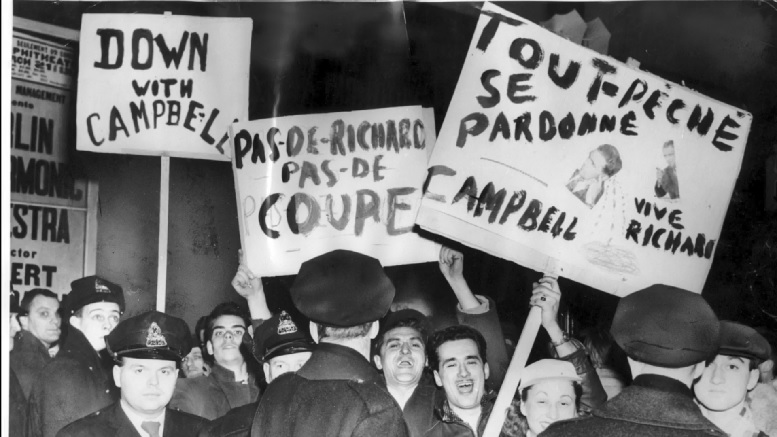
The media in English Canada, from St. John's to Vancouver, almost unanimously praised Campbell for suspending Richard for the rest of the season. French Canada was furious: They considered it not merely a personal insult, to Richard and his fellow Québécois, but also an attempt by Campbell to fix the chase for the Stanley Cup.
This is actually an American paper, the Providence Journal,
for whom the Bruins were "the home team."
Not an English Canadian paper.

The Rangers and Black Hawks were deep in 5th and 6th place, respectively, and weren't going to make the Playoffs. The Maple Leafs and Bruins were likely to finish 3rd and 4th (though not necessarily in that order), and one was going to play the Canadiens in the Semifinals, and the other was going to play the Red Wings. Neither Toronto nor Boston was considered likely to win.

So a Finals rematch of 1954 -- and 1952, when the Wings swept the Habs in 4 straight -- was considered likely. And whoever had home ice for Games 1, 2, 5 and 7 was likelier to win. And now, especially with Richard out for 2 games between the Habs and Wings, the Wings were likelier to get that home ice.

Letters and telegrams came in to Campbell's Toronto office. Angry ones. Including death threats. So Campbell made a terrible decision: He decided to attend the next Canadiens game, against the Wings at the Montreal Forum.

March 17, 1955: Tensions are high on this Thursday night. The French people of Montreal are angry. It's St. Patrick's Day, and the Irish people of the city, who also see the English establishment as their traditional enemies, are standing with their French brethren against Campbell. Nevertheless, he attends. So does Richard, in a suit and coat, behind his team's bench. Campbell didn't own the Forum, so he couldn't ban Richard from the building.
Note that Campbell was denounced
by Anglophones and Francophones alike.

Canadien fans see Campbell in his seat -- with his wife, no less -- and throw things at him, including vegetables and eggs. At the end of the 1st period, with the Wings leading 4-1, someone throws a tear gas bomb. It misses Campbell, but lands on the ice. The building is evacuated. Campbell declares unplayable conditions, and, since it's the Canadiens' responsibility to make the conditions playable, he declares the game forfeited to the Red Wings.

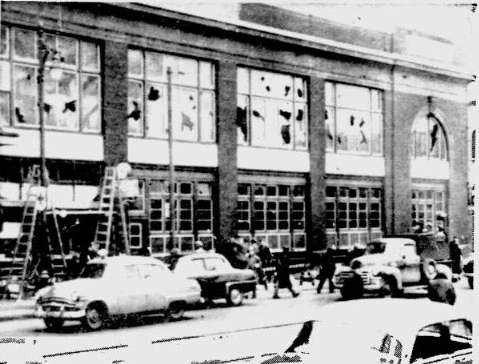
A mob of over 20,000 people are outside, on Rue Sainte-Catherine. They riot, smashing in windows at the Forum and nearby businesses. Nobody dies, but 37 people are hospitalized, 70 are arrested, and damage is estimated at $100,000 Canadian -- about $1 million U.S. in today's money.
The Forum, the next morning

The next day, Richard speaks (in French) on the radio, and asks the people to stop: "Do no more harm. Get behind the team in the Playoffs. I will take my punishment, and come back next year, and help the club and the younger players to win the Cup." They heed his call, and the night is quiet.
The night after that, the Canadiens beat the Rangers 4-2 at the Forum. But the following night, in Detroit, they lost to the Wings, 6-0. While it is not surprising that, without Richard, they only scored 2 goals against the Wings -- who did have Hall-of-Fame defensemen Red Kelly and Marcel Pronovost -- it is shocking that they would allow 10 goals.

It was true that Richard was not regarded as a great defensive player, but that shouldn't have made it easier for the Wings' "Production Line" of Alex Delvecchio centering Howe and left wing Ted Lindsay to score so much.

But it could be that the Canadiens were simply disheartened by the whole process. They beat the Bruins 4 games to 1 in the Semifinals. But, sure enough, the home team won every game in the Finals: Detroit won 4-2 in Game 1 and 7-1 in Game 2; Montreal won 6-2 in Game 3 and 5-3 in Game 4; Detroit won 5-1 in Game 5; Montreal won 6-3 in Game 6; and, in Game 7 at the Olympia, the Wings won 3-1.
Campbell and Wings Captain Ted Lindsay, with a black eye

In 1954, with Richard, the Canadiens scored 12 goals in the 7 games, and won Games 2 and 5 in Detroit; but lost Games 3 and 4 in Montreal, before losing Game 7 in Detroit. In 1955, without Richard, the Canadiens scored more goals: 22, including 6 each in Games 3 and 6, and 5 in Game 4. But they only scored 1 in the key Game 7.

The following off-season, Selke fired head coach Dick Irvin Sr., a once-great player, whose son Dick Jr. would become a great broadcaster for the Canadiens. Selke hired Hector "Toe" Blake, who, with Richard and Elmer Lach, formed the Punch Line, winning the Cup in 1944 and 1946.

Selke brought up several young stars, including left wing Dickie Moore, and a promising center, Richard's much younger brother Henri, known due to his short stature as "the Pocket Rocket." The Rocket and Boom-Boom continued their assaults on NHL nets. Doug Harvey remained the greatest defenseman in the game, a two-way threat, Orr before there was Orr. Center Jean Béliveau and goaltender Jacques Plante came into their own.

The Canadiens won the next 5 Cups, something not done before or since. They avenged their defeat to the Wings in the 1956 Finals, and the Wings didn't win another cup until 1997. They beat Boston in the Finals in '57 and '58, and Toronto in '59 and '60.
Having won 8 Cups, including the last 5 in a row with his brother Henri, become the 1st player with 500 goals in NHL regular-season play, and not causing any more incidents to get him fined or suspended, Maurice Richard then retired. Until Orr and then Wayne Gretzky came along, he was the most popular player in hockey history.

By his own admission -- "I wasn't a great player. I was a great scorer." -- Howe was a better all-around player, but the Rocket was more popular. Even English Canada accepted his greatness.
Near the end of his life, the Richard Trophy was created.
While the Ross Trophy goes to the NHL's leading scorer,
goals and assists combined, this one goes to the leading goalscorer.

Campbell, who had been named President of the NHL in 1946, remained in that office until 1977. Instances of his being unfair to French-Canadian players seemed to happen less often. Perhaps he and Richard both learned lessons from the whole sordid thing.

*

Still, there are people who blame Campbell for stealing the '55 Cup from the Habs. Which is rather petty, given that the Canadiens have won not just more Cups than any other team, 24, but far more: The Leafs are next with 13, then the Wings with 11, then the Bruins and Blackhawks with 6 each.

To put that in perspective: I grew up in Central Jersey, coming into awareness of hockey in the late 1970s, when the Rangers were good but not great, the Islanders becoming really good but not yet having won their 1st Cup, the Devils were still in Denver as the Colorado Rockies; and, in the other direction, the Philadelphia Flyers had recently won back-to-back Cups.

To this day, the Flyers still have only those 2 Cups, the Devils 3, and the Rangers and Islanders 4 each. Put those Cups together, and that's 13 -- and, despite not having won any Cups since 1993, the Canadiens still have nearly twice as many as that.

Is it petty for Montreal fans to blame Campbell for their team losing the '55 Cup? Certainly. But is it justified?

Top 5 Reasons You Can't Blame Clarence Campbell for the Montreal Canadiens Losing the 1955 Stanley Cup

5. Maurice Richard. He lived until 2000, and had plenty of chances to watch ESPN and see misdeeds of players in all sports, including hockey, broadcast over and over and over again. But his misdeed of March 13, 1955 was only shown on TV once. There was no videotape to record it on, since it didn't yet exist. Therefore, there was no instant replay. There is no surviving kinescope. There is no surviving film. There isn't even a surviving radio broadcast. Anybody who wasn't watching as it happened, either in the Forum or on television, has never seen the incident.

Had it been preserved, and everyone had seen what he did, there might have been a call for him to get an even longer suspension. After all, look at what happened to Ray Rice: In 2014, the star running back for the Baltimore Ravens was suspended 2 games when it was heard that he punched his girlfriend; when a videotape clip of the punch was actually seen, his career was effectively declared over.

Which leads to...

4. Clarence Campbell. He didn't "screw the Canadiens over." He had a job to do, and he did it. He was a fool for going to the Forum on the 17th, but he did the right thing in suspending Richard on the 15th. He had to show that no player, not even the biggest player in the game at the time, is above the law.

Just as Baseball Commissioner Kenesaw Mountain Landis did with Shoeless Joe Jackson, and later for Babe Ruth; and Bart Giamatti later did for Pete Rose. Just as NFL Commissioner Pete Rozelle did with Paul Hornung and Alex Karras. Just as NBA Commissioner David Stern -- sort of -- did with Michael Jordan.

If any one person is to blame for the Habs losing the Finals, it's the man who got suspended, not the man who suspended him.

To his credit, Richard did what he had to do thereafter: He told the fans, in their native language, to stop the rioting, and that he would take his punishment, cheer the Canadiens on the rest of the way, and play the next season in hopes of helping them win the Cup. And he helped them win 5 more Cups, and there was never another disciplinary incident with him.

So Campbell got through to him. As he should have. Campbell did the right thing at the time, and Richard did the right thing thereafter.

Compare how Richard took his punishment to how the others I mentioned took theirs. Shoeless Joe was upset, but kept silent. The Babe was mad, but knew that what he did was against the rules, and took his punishment. Hornung and Karras came clean, and both admitted, at the beginning and later on, that Rozelle was right to do what he did. Jordan stepped aside to avoid an official punishment, and kept quiet until he was allowed to say, "I'm back." But Rose lied about what he did to the league, accepted punishment knowing that it would be worse if he didn't, lied about it to the public for 14 years, finally apologized for the lie, but, to this day, has never apologized for the action itself.

Richard admitted the truth immediately, accepted the judgment of his league willingly, spoke when he had to, said what needed to be said, did not speak when he did not have to, and then, when allowed to again attempt to make his point, made it, and made it in the right way: On the field of play.

3. Home Ice Advantage. The home team won every game of the Finals. Had the Habs won just 1 game in Detroit, they would have won the Cup.

2. The Montreal Canadiens. They nearly won the Cup without Richard anyway. The Finals went the full 7 games, and they lost Games 1 and 7 by 2 goals each. They were still a really good team, and they had their chances.

1. The Red Wings Were Better -- For the Moment. They could field an entire starting lineup of Hall-of-Famers: Terry Sawchuk in goal, Red Kelly and Marcel Pronovost on defense, and the "Production Line" of Alex Delvecchio (replacing original Production Line center Sid Abel in 1952) flanked by Gordie Howe on the right and Ted Lindsay on the left.
Or, as seen in this photo, left to right:
Lindsay, Howe, Delvecchio

They had already won the Cup in 1950 (beating the Rangers in the Finals, needing overtime of Game 7 to do it), 1952 (sweeping the Canadiens) and 1954 (needing overtime of Game 7 to beat the Canadiens). In those last 2 (out of 3) games between the teams in 1955, the Wings outscored the Habs 10-2. In the 1955 Finals, the Wings outscored the Canadiens 27-22. This, in spite of the Habs having Hall of Fame defensemen Doug Harvey, Butch Bouchard and Tom Johnson.

Richard might have helped the Canadiens score more than 1 goal in Games 2, 5 and 7; and more than 2 in Game 1. But he wasn't going to have made a defensive difference in Game 2, in which the Wings scored 7; or Game 5, in which they scored 5.

From 1950 to 1955, the Wings were 4-0 in Cup Finals; the Habs, 1-3, including 0-2 vs. the Wings. From 1956 to 1966, it would be Habs 7-0, Wings 0-5, including 0-2 vs. the Habs. From 1967 to 1994, the Wings never made the Finals at all, while the Habs went 10-2. From 1993 onward, though, the Habs haven't made the Finals again, while the Wings have gone 4-2.

But in 1954-55, the season in question, there is little doubt that the Wings were better than the Habs.

VERDICT: Not Guilty. Clarence Campbell deserved a lot of criticism for some of his decisions as Commissioner, and going to the Canadiens-Red Wings game on March 17, 1955 was a dumb thing to do. But he was not the reason the Canadiens did not win the Stanley Cup that season. The Red Wings were.

Even if Maurice Richard had been available to play in the Finals -- and, as he accepted, it was his own fault that he wasn't -- the Wings probably still would have won, as they had in '52 and '54.

Monday, March 15, 2021

Top 5 Reasons You Can’t Blame Bill Bidwill for Moving the St. Louis Cardinals to Arizona

December 13, 1987: The St. Louis Cardinals football team beats the New York Giants, 27-24 at Busch Memorial Stadium in downtown St. Louis. A rumor is going around that the team will be moved, and one kid in the stands holds up a sign saying, "DEAR SANTA PLEASE DON'T LET THEM TAKE MY TEAM."

The Big Red -- the football Cardinals were often called that to differentiate themselves from the baseball Cardinals, a.k.a. the Redbirds -- play 2 more games that season, beating the Buccaneers in Tampa and losing to the Cowboys in Dallas, finishing 7-8.

March 15, 1988: Cardinals owner William V. Bidwill makes it official: After 28 seasons in the Gateway City, the NFL's Cardinals are being moved to the Phoenix area. They become the Phoenix Cardinals, and will groundshare with Arizona State University at Sun Devil Stadium on their campus in Tempe.

September 4, 1988: The Cardinals play their 1st game as a Phoenix team, losing to the Cincinnati Bengals, 21-14 at Riverfront Stadium.

September 12, 1988: The Phoenix Cardinals play their 1st home game, losing to the Dallas Cowboys, 17-14 at Sun Devil Stadium. They finish 7-9, but 6 of their losses are by 10 points or less.

In 1994, to broaden their fanbase, Bill Bidwill changes the team's name to the Arizona Cardinals. In 2006, he moves the team to the new University of Phoenix Stadium in suburban Glendale. In 2018, the stadium is renamed State Farm Stadium.

Was this just another greed-fueled sports team move? Or was it the right thing to do?

Top 5 Reasons You Can't Blame Bill Bidwill for Moving the St. Louis Cardinals to Arizona

5. Identity. St. Louis was not the Cardinals' 1st home. They played in Chicago from 1920 to 1959. But the City of the Big Shoulders had completely lost interest in them. In their last season, they averaged 28,425 fans per home game. Take out their game against the crosstown Bears, and it dropped to 21,671. They actually moved 2 "home games" to Minneapolis, in consideration of moving there.

Even in 1948, when they were defending NFL Champions, and went 11-1, still the franchise's best regular season ever, they averaged only 29,918 fans at Comiskey Park -- 25,347 in games not against Da Bears, whose George Halas-fueled promotion machine ultimately led Bidwill's mother, Violet Bidwill Wolfner, the NFL's 1st female owner, to move the team to St. Louis.

But St. Louis never really took to them, either. Groundsharing with the baseball Cardinals, first at Sportsman's Park and then at Busch Memorial Stadium from 1966 onward, they still never had great attendance. Even when they were winning back-to-back NFC East titles in 1974 and '75, they struggled to get 50,000 fans per home game.

Throw in the fact that Bidwill himself was born and raised in Chicago, not St. Louis, and his ties to the latter city simply weren't very strong. The Cardinals hadn't done well in either city, either on the field or at the box office. 

4. The Stadium Situation. Busch Memorial Stadium was one of the multipurpose ovals built in the 1960s and '70s, which by necessity produced sight lines that, beyond the movable stands at field level, were not very good for football and terrible for baseball.
Since their move to Arizona, they have played at 2 different stadiums that were built football-specific. True, they first had to share Sun Devil Stadium with Arizona State. But they didn't have to share it with a baseball team.

3. St. Louis Is Not a Football Town. In 1995, they got the Rams to replace the Cardinals, and except for their Playoff run of 1999 to 2004, they didn't do a whole lot better, despite a new domed stadium. In 2014, the Rams averaged 57,018 fans per home game. Only the Minnesota Vikings did worse, and that was because they were groundsharing with the University of Minnesota while a new stadium was built on the site of the Metrodome. UM's stadium only seats a shade over 52,000 people, so the Vikings could have sold many more seats.

In 2015, the Rams did even worse than the Vikings: 52,402. They only filled the Edward Jones Dome to 80 percent of capacity. The next-worst in the NFL was the Raiders, who only got the Oakland Coliseum 86 percent filled.

To make matters worse, St. Louis-area fans didn't even seem to care that the team was leaving. In October 2015, the NFL owners met at a St. Louis hotel. With the threat of moving to L.A. having hung in the air pretty much for Kroenke's entire 5-year ownership, meaning a move would not have surprised anyone, how many fans showed up to tell the owners not to approve the move? About 1,500. That's right: One thousand, five hundred. I've been to high school soccer games with bigger crowds. And that's the biggest protest I could find on Google.
(The NFL owners voted 30 to 2 to allow the move. Even Alex Spanos of the San Diego Chargers, who also wants to move to L.A., possibly to share the Inglewood stadium with the Rams, voted for it. The only ones to vote against it? Understandably, Mark Davis of the Raiders. Less understandably, Mike Brown of the Cincinnati Bengals: Apparently, he thinks that the Rams being in L.A. will mean less money for team owners.)

St. Louis is not a pro football town. Busch Memorial Stadium seated about 54,000 for football, but the Cardinals played there from 1966 to 1987, and -- with brief exceptions in the mid-1970s and early 1980s when the Cards made the Playoffs -- they didn't fill it then, either. The Cards moved to Arizona, and even when they couldn't get 50,000 into Sun Devil Stadium (let alone the 64,000 that now regularly fills the University of Phoenix Stadium), Bill Bidwill never regretted the move.
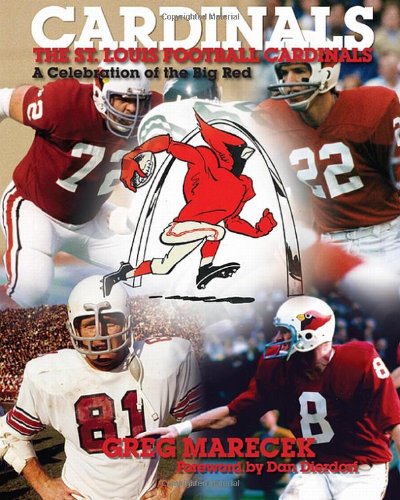
Top row, left to right: Dan Dierdorf and Roger Wehrli.
Bottom row, left to right: Jackie Smith and Larry Wilson.
Are 4 are in the Pro Football Hall of Fame, but none
reached an NFL or NFC Championship Game with St. Louis.

St. Louis is not a college football town, either. The University of Missouri's Faurot Field is 126 miles from the Edward Jones Dome. And that's the closest Football Bowl Subdivision (formerly known as Division I-A) school to St. Louis. The next-closest such team is the University of Illinois (which, of course, is not in Missouri), and their Memorial Stadium is 173 miles away.

Nor is St. Louis known for producing great football players. Go ahead: Name a great football player who came from within a 50-mile radius of the Gateway Arch. The best is Kellen Winslow, the great tight end of the San Diego Chargers. The next-best is probably Jimmy Conzelman, a St. Louis native who played at the city's Washington University, and won an NFL Championship. You might not have heard of him, because that title was with the 1928 Providence Steam Roller (who went out of business 3 years later). He coached the Cardinals to the 1947 title and the 1948 title game, but that was in Chicago, not St. Louis. And he's been dead since 1970.

In other words, St. Louis' greatest football products are a guy who peaked in Ronald Reagan's 1st term, and is now 63 years old; and a guy who has been irrelevant in the game since Harry Truman was President, and dead since Richard Nixon's 1st term. Go ahead: Name another great football player from St. Louis and environs. I can't.

St. Louis is not a football town.

2. Phoenix Is a Football Town. Arizona State draws well. So does the University of Arizona, although that's in Tucson, 113 miles to the southeast. The Fiesta Bowl sells out every New Year's Day (or thereabouts).
Okay, the Cardinals had seat-filling issues at first. The only sellouts they had at Sun Devil Stadium were when they played the Cowboys, and then there were so many Cowboy fans, they took over and made it feel like an away game for the Cards. But since State Farm Stadium opened, and the Cards had first dibs, fans have come out in droves.
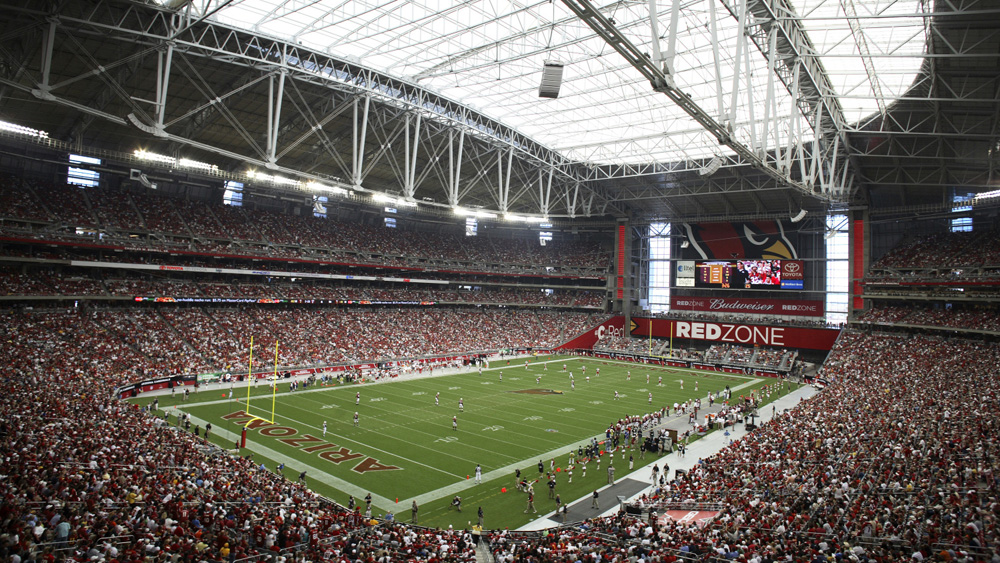
State Farm Stadium, sold out.

1. The Market. Look at market size. The Phoenix metropolitan area has 4.8 million people. Contrast that with St. Louis: They have just 2.9 million. Portland, Oregon and Orlando, Florida don't have NFL teams, and their metro areas have more people than St. Louis. Sacramento isn't far behind in terms of metro area population, and they've had trouble holding onto just 1 team, the NBA's Kings.

St. Louis also has Major League Baseball's Cardinals, who are by far the most popular team in town; and the NHL's Blues, who are more popular in St. Louis and its vicinity than either the Cardinals or the Rams were when they were in St. Louis.

The baseball Cardinals are a beloved, iconic franchise, backed by enough money to overcome any "small market" issues. The Blues are doing very well at the box office, and have a recent World Championship to their name (2019). Both of those teams have venues that they own, control, and sell out on a regular basis. They're not going anywhere. And St. Louis is getting a Major League Soccer team, finally acknowledging the city's contribution to American soccer history. 

But St. Louis lost the NBA's Hawks to Atlanta in 1968, right after getting the Blues, proving they couldn't hold 4 major league teams. They lost the football Cardinals in 1987, and have now lost the Rams, proving yet again that they can't even hold 3 major league teams. (If they can also support the St. Louis MLS team, that might prove that they can, and that MLS is finally a "major league.")

Somebody recently said, "How bad can St. Louis be, if it can produce Yogi Berra?" Good question. I'm not saying that it's a bad city. But it's not a big market, and it's just not a football town. Phoenix is both, and the Cardinals have done better there.

VERDICT: Not Guilty. Bill Bidwill may have been a bad owner in competitive terms: He was the controlling owner of the Cardinal football franchise for 57 years, 1962 to 2019, and only once did he get to an NFL championship game, under any name, and he lost it. But moving the team from St. Louis to Arizona was the right thing to do.

Sunday, March 14, 2021

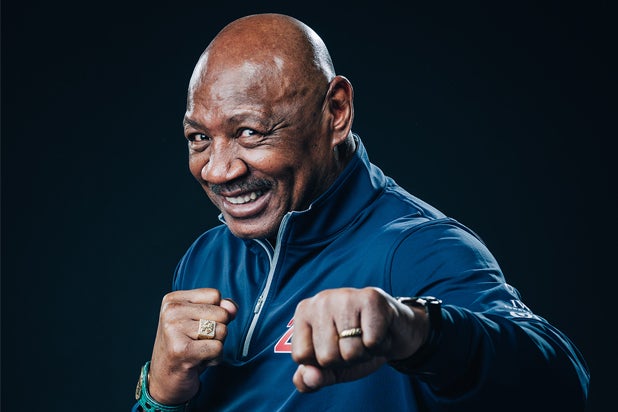
Marvelous Marvin Hagler, 1954-2021

The 1980s was the last real glory period for boxing, especially in the lower divisions. In the Middleweight and Welterweight divisions alone, there was Roberto Durán, Ray Leonard, Thomas Hearns and Marvin Hagler.

Hands of Stone. Sugar Ray. The Hit Man. And Marvelous Marvin.

Marvin Nathaniel Hagler was born on May 23, 1954 in Newark, New Jersey, growing up in its Central Ward. But after the riot of 1967, the family moved Brockton, Massachusetts -- also the hometown of the man who was the Heavyweight Champion of the World at the time that Marvin was born, Rocky Marciano.

Things were no better, and in 1969, Marvin was beaten up by a local boxer while his friends watched. The next day, he walked into a gym, lied about his age -- the minimum age to enter amateur tournaments in Massachusetts was then 16 -- and he was trained, and he won fight after fight, including beating the boxer who had dealt him the earlier humiliation. In 1973, he won the Amateur Athletic Union's 165-pound title.

His final record as an amateur: 55-1. His only defeat was a decision to Dale Grant in the 1973 National Golden Gloves tournament. But upon turning professional, it was difficult for him to find opponents willing to face him. Former Heavyweight Champion Joe Frazier told him, "You have three strikes against you: You're black, you're a southpaw, and you're good." Frazier was all 3 of those things as well, and, unlike Frazier, Hagler did not have an Olympic Gold Medal. (He didn't make the 1972 U.S. boxing team, and had already turned pro by 1976.)

As it turned out, it was Frazier who gave Hagler his big break. He was managing a fighter named Willie "the Worm" Monroe. Monroe won by decision, but it was close enough that Monroe offered Hagler a rematch, and Hagler knocked him out in the 12th round. There was a 3rd fight, and this time, Hagler knocked him out in the 2nd round.

Years before fighting Ray Leonard, Hagler fought another Sugar Ray. No, not Robinson: He was long retired by this point. Sugar Ray Seales was the only U.S. boxer to win a Gold Medal at the 1972 Olympics in Munich, but he couldn't beat Hagler in 3 tries: The 1st was a decision for Hagler, the 2nd a draw, and the 3rd a knockout for Hagler.

Hagler moved on, knocking out Mike Colbert, the Number 1 contender for the Middleweight Championship of the World. He lost to Bobby "Boogaloo" Watts, but knocked him out in the 2nd round of a rematch. Promoter Bob Arum signed Hagler after that rematch.

On November 30, 1979, Hagler got his 1st shot at the title, at Caesars Palace outside Las Vegas, against the Champion, Italian boxer Vito Antuofermo. As a pro, Hagler was 46-2-1; Antuofermo, a similar 45-3-1. The fight went the distance, 15 rounds. Most ringside observers thought Hagler had won.

One judge gave the fight to Hagler, 145-141. Another gave it to Autofermo, 144-142. The other scored it a draw, 143-143. If they had simply totaled up the points, it would have been Hagler 430-428. But it didn't work that way: With one judge giving it to each, and the other calling it a draw, the tiebreaker was a tiemaker, and Antuofermo kept the title.

Four months later, also at Caesars, Antuofermo lost the title, losing to Englishman Alan Minter on a split decision. Three months later, a rematch was held at the Empire Pool in London (a.k.a. the Wembley Arena), and Minter knocked Antuofermo out.

Hagler went up to Portland, Maine for his next 2 fights, both 2nd-round knockouts, first over Algerian fighter Loucif Hamani, then the aforementioned rematch against Watts. Then he went back to Caesars, and won an easy decision over Mexican fighter Marcos Geraldo. The title bout was set: Marvin Hagler would challenge Alan Minter for the Middleweight Championship of the World, at the Wembley Arena, on September 27, 1980.

Minter was quoted as saying, "No black man is going to take my title." He was both racist and wrong: Hagler beat the hell out of him, inflicting 4 cuts on his face. Referee Carlos Berrocal stopped the fight in the 3rd round.

The London crowd was furious that the fight was stopped, apparently preferring that their man die than give up. Hagler and his cornermen needed a police escort back to the locker room, as bottles and glasses were thrown at them. Clive Gammon, covering the fight for Sports Illustrated, titled his article, "It Was Blood, Sweat and Beers."

Minter only fought 3 more times, losing 2, both to men who would later fail to take the title from Hagler, and closed his career at 39-9. He died of cancer in 2020.

*

Hagler's 1st defense was on home ground, knocking out Fulgencio Obelmejias in the 8th round at the Boston Garden. A Venezuelan, Obelmejias would win the Super Middleweight title in 1988, and hold it for a year.

Then, on June 13, 1981, also at the Boston Garden, came the fight that people wanted to see: Hagler-Antuofermo II. It was a bloodbath, almost literally: Hagler shredded Antuofermo's face, and after 4 rounds, Vito's handlers threw in the towel.

The Sports Illustrated writeup included a picture of Antufermo with a massive welt over his right eye. The caption read, "Antuofermo leaves the ring. Would he fight again? His only answer was a grotesque smile." He did fight again, winning 4 fights against nobodies, before getting pounded by future Junior Middleweight Champion Matthew Hilton, at Hilton's home building, the Montreal Forum.

Antuofermo finished his career at 50-7-2. Like Hagler, he became an actor, best known for playing Anthony Squigliaro, the ill-fated bodyguard to Joe Mantegna's Joey Zasa, in The Godfather Part III. He is still alive, having just turned 68.

His fights at "The Gahden" made Hagler possibly the 1st black athlete truly beloved by Boston area sports fans. They admired Bill Russell of the Celtics, Jim Nance of the Patriots, and Jim Rice of the Red Sox, but never really loved them. Hagler became New England's favorite boxer since Marciano. His fights drew big ratings on HBO. However, their announcers refused to call him by his nickname, Marvelous Marvin. So, in 1982, he had his name legally changed to "Marvelous Marvin Hagler."

He beat Mustafa Hamsho and Tony Sibson, both of whom had beaten Minter. He won a rematch with Obelmejias. Then came another one of those fights that everyone wanted to see: Hagler would fight Roberto Durán. The Panamanian known as "Hands of Stone" had been Lightweight Champion from 1972 to 1979, took the Welterweight Championship away from Sugar Ray Leonard in 1980, lost it back to him later that year, and had won the Superr Welterweight title.

On November 10, 1983, they went at each other at Caesars. For once, it was Hagler who got cut, and after 13 rounds, Durán was leading on points. But Hagler found something in reserve, and won the last 2 rounds. The scoring was 144-142, 144-143 and 146-145 -- all slightly in Hagler's favor. He kept the Middleweight title.

Durán's next fight was against Thomas Hearns, and he got knocked out in the 2nd round. He kept on fighting, including losing a rubber match with Leonard in 1989. He wouldn't stop fighting, finally giving up in 2001 after losing to Héctor Camacho Sr. After starting his career 72-1 before losing his 2nd fight with Leonard, his final record was 103-16. He is now 69 years old, and survived COVID-19 last June.

Hagler won 2 more fights, and then, on April 15, 1985, got back into the ring at Caesars, this time to face Hearns. Known as The Hit Man, the Detroit native had held the WBA version of the Welterweight title, before losing a tough unification fight with Leonard in 1981. He now held the Light Middleweight title, and was moving up in class. He was 40-1, Leonard being the only man to beat him thus far. It was advertised as "The War."

It lived up to the billing. The 1st round was one of the best rounds any fight fan had ever seen, with each man landing some great blows. But it took too much out of Hearns, and despite opening a cut on Hagler's famously bald head, he was wobbly.

Referee Richard Steele stopped the fight for a moment to look at the cut, and determined that it wasn't interfering with Hagler's vision. Knowing that another stoppage would end the fight with a TKO in Hearns' favor, Hagler unloaded, and, in the 3rd round, crashed a right hand into Hearns' chin. Hearns got up at the count of 9, but Steele wisely stopped the fight.

"His awkwardness messed me up, but I can't take anything away from him," Hearns said yesterday. "He fought his heart out, and we put on a great show for all time."

Hearns kept fighting even longer than Durán did, all the way until 2006. His career closed with a 61-5-1 record. He is now 62 years old.

On March 10, 1986, Hagler knocked out John "The Beast" Mugabi at Caesars. Finally, the last of the fights that everyone wanted to see was set up: Marvelous Marvin Hagler vs. Sugar Ray Leonard, at Caesars, on April 6, 1987. Many great fights have been held on Saturday nights, and Friday Night at the Fights was a popular early TV show. But this was a Monday, and it was the boxing equivalent of the Super Bowl being played on Monday Night Football.

Leonard was 33-1, his only loss his 1st fight against Durán. Due to an eye injury sustained in the fight with Hearns, he had fought just once in the last 5 years, but he thought he was ready to take on the Marvelous One.

Hagler wanted more money. Leonard had conditions for that: A larger ring, 22 feet square instead of the usual 20; 10-ounce gloves, instead of the usual 8-ounce; and 12 rounds instead of 15. Nevertheless, Hagler was favored.

Leonard came out quickly, and was credited with winning the 1st 2 rounds. Hagler changed tactics, and by the 5th round, Leonard was tiring. The round ended with Leonard on the ropes. Steele was referee again, and gave Leonard 30 warnings for holding, but never deducted any points. The fight became more even, but Hagler couldn't put Leonard back in serious danger. When it was over, Hagler celebrated, thinking he'd won. He later said that Leonard told him, "You beat me, man."

The judges told a different story. And all 3 of them stood by their stories. Lou Filippo scored the fight 115-113 for Hagler: "Hagler was doing all the work. The referee, Richard Steele, warned Leonard at least once every round about holding. Leonard fought in spurts. Leonard would run in and grab and hold. He did what he had to do. But I can't see a guy holding that much and getting points for it."

Dave Moretti scored it 115-113 for Leonard: "Obviously, Hagler was the aggressor, but he was not the effective aggressor. You can't chase and get hit and chase and get hit, and get credit for it. Besides, the hardest punching was by Leonard."

And JoJo Guerra scored it... 118-110 for Leonard, his card having given Hagler only 2 rounds. He later said he should have given Hagler 2 more rounds. But that would still have given the fight to Leonard. Guerra said, "Leonard outpunched Hagler, outsmarted him, outboxed him... He made Marvin Hagler come to him. He dictated the fight."

Feeling robbed of his title, Hagler wanted a rematch. Any sensible boxing observer had to admit that one was called for. But Leonard chose to retire. A year later, Hagler retired. In 1990, Leonard finally offered Hagler a rematch. This time, it was Hagler who turned it down. He had moved to Italy, and gone into acting in its film capital of Milan.

"After I had nothing to prove to myself, it was the best thing to walk away," he said. He was one of the few boxers who stayed retired the first time. His record: 62-3-2.

The Ring magazine named him Fighter of the Year in 1983 and 1985. Boxing Illustrated named him Fighter of the Decade for the 1980s. He was elected to the International Boxing Hall of Fame in 1993. With his 1st wife, Bertha, he had 5 children: Charelle, Celeste, James, Marvin Jr. and Gentry. In 2000, he married for the 2nd time, to an Italian woman, Kay Guarrera.
Marvin and Kay Hagler divided their time between her home in Milan, and Bartlett, New Hampshire, near his hometown of Boston. Yesterday, March 13, 2021, Kay announced that Marvelous Marvin Hagler had unexpectedly died at the age of 66.

No cause has been announced, but conspiracy theorists are already saying it was a result of one of the COVID vaccines. He had recently gotten the 1st of 2 doses.

* Former Heavyweight Champion Lennox Lewis: "Not only was he a living legend, but I was proud to call him my friend. He was so full of life, energy and positivity in our conversations that you would never guess what a wrecking machine he was in the ring."

* Max Kellerman, boxing analyst on ESPN: "Hard to explain what a big deal Marvelous Marvin Hagler was in the 1980s. He was Mike Tyson before there was a Mike Tyson. The best AND the baddest. For people in my generation, this one hits hard. RIP champ." 

* Sugar Ray Leonard: "I was really in shock yesterday after hearing the news of Hagler, it hit me hard. We had just the utmost respect for each other! Marvin Hagler had every ingredient that it takes to be a great champion. Marvin, you are definitely gone too soon, but you will forever live on as one of the greats! Thoughts and prayers to the entire Hagler family."

* Thomas Hearns: "A real true warrior."

No question. Marvelous Marvin Hagler was one of the truest and the greatest.