Showing posts with label sun devil stadium. Show all posts

Thursday, January 4, 2024

January 4, 1999: The 1st Bowl Championship Series Game

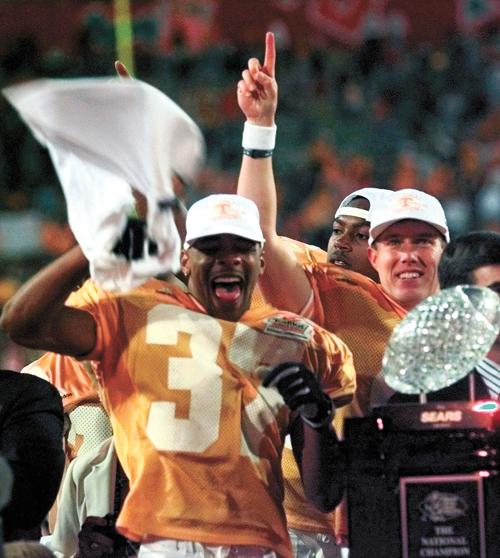
January 4, 1999, 25 years ago: The Fiesta Bowl is played at Sun Devil Stadium on the campus of Arizona State University, in the Phoenix suburb of Tempe, Arizona. It was the 1st game played under the Bowl Championship Series system, with the intention of selecting a definitive National Champion, something college football had never had before.

The Fiesta Bowl had hosted de facto National Championship games before, because it didn't have an automatic league tie-in: The Rose Bowl in the Los Angeles suburb of Pasadena, California had the Big Ten and Pacific-10 Champions play each other; the Big Eight, and now Big Twelve, Champions were locked into the Orange Bowl in Miami; the Southeastern Conference Champions were locked into the Sugar Bowl in New Orleans; and the Champions of the now-defunct Southwest Conference were locked into the Cotton Bowl Classic in Dallas.

But, effective with the 1998 season, the BCS was determined to make it official. As a result, the NCAA allowed Conference Champions to opt out of their usual bowls, and play in the BCS National Championship Game, if they finished the last pre-bowl national poll ranked Number 1 or Number 2.

The Number 1 team in the last 1998 poll was the University of Tennessee, coached by Phillip Fullmer. For 4 years, the Volunteers had been an elite team, led by quarterback Peyton Manning, but they couldn't get past the University of Florida in the SEC. Now, their quarterback was the less-heralded Tee Martin, but they had a better all-around team, going 12-0, beating teams then ranked Number 2 (Florida), 7 (Georgia, away), 10 (Arkansas), 17 (Syracuse, away), and 23 (Mississippi State, in the SEC Championship Game).

The Number 2 team was Florida State University, coached by Bobby Bowden. The Seminoles opened the season by beating Number 14 Texas A&M at the Kickoff Classic at the Meadowlands, but then stumbled with a 24-7 loss away to North Carolina State.

They followed it by dropping 62 points on Duke, and beating Number 18 USC. They beat Clemson 48-0, then went to Atlanta and beat Number 20 Georgia Tech. They beat Number 12 Virginia, and won the Atlantic Coast Conference Championship. And they had to get past Number 4 Florida, beating them, 23-12 -- and they didn't need overtime to beat Florida, as Tennessee did. Perhaps that's why, despite having a loss, the Seminoles were favored by 5 1/2 points.

The 'Noles had been National Champions in 1993. The Vols, despite many good teams over the years, last won a National Championship in 1951.

The 1st quarter ended scoreless. In the 1st minute of the 2nd quarter, Martin threw a short touchdown pass to Shawn Bryson. On the next drive, the Vols' Dwayne Goodrich intercepted Marcus Outzen, and took it in 54 yards for a touchdown. It was 14-0 Tennessee.

Outzen drove the Seminoles to the Volunteer 1-yard line, and William McCray scored. Still fuming over missed field goal attempts earlier in the decade, Bowden had recruited Sebastian Janikowski, a 6-foot-1, 255-pound native of WaƂbrzych, Poland, who grew up in Florida, and became the top high school kicker in the nation. But Janikowski missed the extra point on this touchdown. He made up for it on the last play of the 1st half, kicking a 34-yard field goal. It was Tennessee 14, Florida State 9, and still anybody's ballgame.

Goodrich, whose interception had been key, and had been assigned to cover Outzen's favorite receiver, All-American Peter Warrick, did not return for the 2nd half, having sustained an ankle injury. He was replaced by Gerald Griffin, who had hardly played, but limited Warrick to a single catch.

The 3rd quarter saw no scoring. With 9:17 left in the 4th, Martin threw to the superbly named Peerless Price, and he took it 79 yards for a touchdown. But as had Janikowski, Vols kicker Jeff Hall missed the extra point. With 6 minutes left, Hall again followed Janikowski's pattern, and kicked a field goal, from 23 yards out. It was 23-9 Tennessee.

Florida State wasn't done. There was still time for the 2 scores they needed. Outzen got them to within 7 yards, and scored on his own run with 3:42 left, to make it 23-16. Their defense forced a fumble by Travis Henry, and they had a last shot with 2 minutes to go. But Outzen threw a pass that was intercepted by Steve Johnson, and that was the ballgame, and the National Championship: Tennessee had won.

The BCS didn't always work as intended. There would always be a team stuck at Number 3, sometimes even Number 4, that thought it deserved to get into the final game. Finally, taking effect with the 2013 season (settled in early January 2014), a College Football Playoff National Championship system was set up.

Except that the new system, as had the BCS, allows teams that didn't even win their Conference, sometimes not even their Division -- read: Alabama or a team that lost the SEC Championship Game or West Division to Alabama -- to be one of the last 4.

There is no perfect system. It may just be that the hated BCS is the best system we have yet had.

In 2023, Sun Devil Stadium was renamed Mountain America Stadium.

Also on January 4, 1999, the New Jersey Devils' Swiss star Nico Hischier was born.

Monday, March 15, 2021

Top 5 Reasons You Can’t Blame Bill Bidwill for Moving the St. Louis Cardinals to Arizona

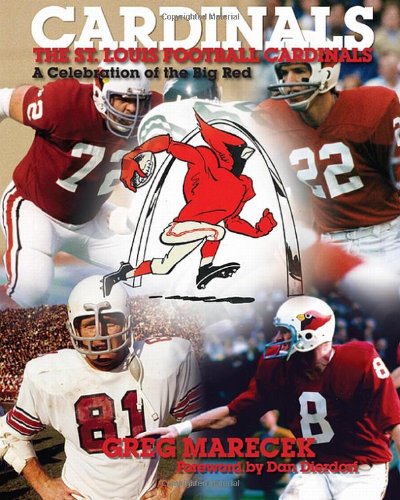
December 13, 1987: The St. Louis Cardinals football team beats the New York Giants, 27-24 at Busch Memorial Stadium in downtown St. Louis. A rumor is going around that the team will be moved, and one kid in the stands holds up a sign saying, "DEAR SANTA PLEASE DON'T LET THEM TAKE MY TEAM."

The Big Red -- the football Cardinals were often called that to differentiate themselves from the baseball Cardinals, a.k.a. the Redbirds -- play 2 more games that season, beating the Buccaneers in Tampa and losing to the Cowboys in Dallas, finishing 7-8.

March 15, 1988: Cardinals owner William V. Bidwill makes it official: After 28 seasons in the Gateway City, the NFL's Cardinals are being moved to the Phoenix area. They become the Phoenix Cardinals, and will groundshare with Arizona State University at Sun Devil Stadium on their campus in Tempe.

September 4, 1988: The Cardinals play their 1st game as a Phoenix team, losing to the Cincinnati Bengals, 21-14 at Riverfront Stadium.

September 12, 1988: The Phoenix Cardinals play their 1st home game, losing to the Dallas Cowboys, 17-14 at Sun Devil Stadium. They finish 7-9, but 6 of their losses are by 10 points or less.

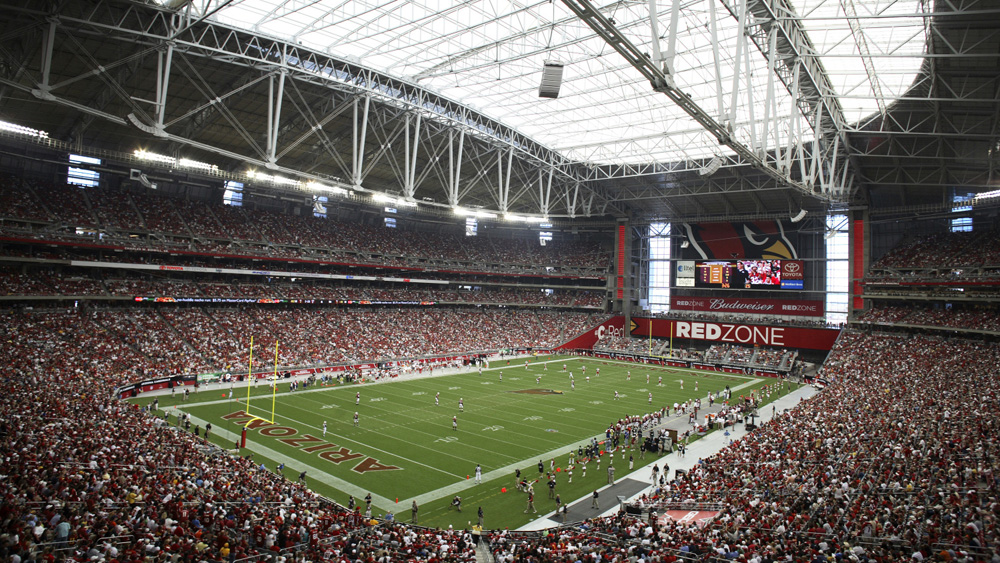
In 1994, to broaden their fanbase, Bill Bidwill changes the team's name to the Arizona Cardinals. In 2006, he moves the team to the new University of Phoenix Stadium in suburban Glendale. In 2018, the stadium is renamed State Farm Stadium.

Was this just another greed-fueled sports team move? Or was it the right thing to do?

Top 5 Reasons You Can't Blame Bill Bidwill for Moving the St. Louis Cardinals to Arizona

5. Identity. St. Louis was not the Cardinals' 1st home. They played in Chicago from 1920 to 1959. But the City of the Big Shoulders had completely lost interest in them. In their last season, they averaged 28,425 fans per home game. Take out their game against the crosstown Bears, and it dropped to 21,671. They actually moved 2 "home games" to Minneapolis, in consideration of moving there.

Even in 1948, when they were defending NFL Champions, and went 11-1, still the franchise's best regular season ever, they averaged only 29,918 fans at Comiskey Park -- 25,347 in games not against Da Bears, whose George Halas-fueled promotion machine ultimately led Bidwill's mother, Violet Bidwill Wolfner, the NFL's 1st female owner, to move the team to St. Louis.

But St. Louis never really took to them, either. Groundsharing with the baseball Cardinals, first at Sportsman's Park and then at Busch Memorial Stadium from 1966 onward, they still never had great attendance. Even when they were winning back-to-back NFC East titles in 1974 and '75, they struggled to get 50,000 fans per home game.

Throw in the fact that Bidwill himself was born and raised in Chicago, not St. Louis, and his ties to the latter city simply weren't very strong. The Cardinals hadn't done well in either city, either on the field or at the box office. 

4. The Stadium Situation. Busch Memorial Stadium was one of the multipurpose ovals built in the 1960s and '70s, which by necessity produced sight lines that, beyond the movable stands at field level, were not very good for football and terrible for baseball.
Since their move to Arizona, they have played at 2 different stadiums that were built football-specific. True, they first had to share Sun Devil Stadium with Arizona State. But they didn't have to share it with a baseball team.

3. St. Louis Is Not a Football Town. In 1995, they got the Rams to replace the Cardinals, and except for their Playoff run of 1999 to 2004, they didn't do a whole lot better, despite a new domed stadium. In 2014, the Rams averaged 57,018 fans per home game. Only the Minnesota Vikings did worse, and that was because they were groundsharing with the University of Minnesota while a new stadium was built on the site of the Metrodome. UM's stadium only seats a shade over 52,000 people, so the Vikings could have sold many more seats.

In 2015, the Rams did even worse than the Vikings: 52,402. They only filled the Edward Jones Dome to 80 percent of capacity. The next-worst in the NFL was the Raiders, who only got the Oakland Coliseum 86 percent filled.

To make matters worse, St. Louis-area fans didn't even seem to care that the team was leaving. In October 2015, the NFL owners met at a St. Louis hotel. With the threat of moving to L.A. having hung in the air pretty much for Kroenke's entire 5-year ownership, meaning a move would not have surprised anyone, how many fans showed up to tell the owners not to approve the move? About 1,500. That's right: One thousand, five hundred. I've been to high school soccer games with bigger crowds. And that's the biggest protest I could find on Google.
(The NFL owners voted 30 to 2 to allow the move. Even Alex Spanos of the San Diego Chargers, who also wants to move to L.A., possibly to share the Inglewood stadium with the Rams, voted for it. The only ones to vote against it? Understandably, Mark Davis of the Raiders. Less understandably, Mike Brown of the Cincinnati Bengals: Apparently, he thinks that the Rams being in L.A. will mean less money for team owners.)

St. Louis is not a pro football town. Busch Memorial Stadium seated about 54,000 for football, but the Cardinals played there from 1966 to 1987, and -- with brief exceptions in the mid-1970s and early 1980s when the Cards made the Playoffs -- they didn't fill it then, either. The Cards moved to Arizona, and even when they couldn't get 50,000 into Sun Devil Stadium (let alone the 64,000 that now regularly fills the University of Phoenix Stadium), Bill Bidwill never regretted the move.
Top row, left to right: Dan Dierdorf and Roger Wehrli.
Bottom row, left to right: Jackie Smith and Larry Wilson.
Are 4 are in the Pro Football Hall of Fame, but none
reached an NFL or NFC Championship Game with St. Louis.

St. Louis is not a college football town, either. The University of Missouri's Faurot Field is 126 miles from the Edward Jones Dome. And that's the closest Football Bowl Subdivision (formerly known as Division I-A) school to St. Louis. The next-closest such team is the University of Illinois (which, of course, is not in Missouri), and their Memorial Stadium is 173 miles away.

Nor is St. Louis known for producing great football players. Go ahead: Name a great football player who came from within a 50-mile radius of the Gateway Arch. The best is Kellen Winslow, the great tight end of the San Diego Chargers. The next-best is probably Jimmy Conzelman, a St. Louis native who played at the city's Washington University, and won an NFL Championship. You might not have heard of him, because that title was with the 1928 Providence Steam Roller (who went out of business 3 years later). He coached the Cardinals to the 1947 title and the 1948 title game, but that was in Chicago, not St. Louis. And he's been dead since 1970.

In other words, St. Louis' greatest football products are a guy who peaked in Ronald Reagan's 1st term, and is now 63 years old; and a guy who has been irrelevant in the game since Harry Truman was President, and dead since Richard Nixon's 1st term. Go ahead: Name another great football player from St. Louis and environs. I can't.

St. Louis is not a football town.

2. Phoenix Is a Football Town. Arizona State draws well. So does the University of Arizona, although that's in Tucson, 113 miles to the southeast. The Fiesta Bowl sells out every New Year's Day (or thereabouts).
Okay, the Cardinals had seat-filling issues at first. The only sellouts they had at Sun Devil Stadium were when they played the Cowboys, and then there were so many Cowboy fans, they took over and made it feel like an away game for the Cards. But since State Farm Stadium opened, and the Cards had first dibs, fans have come out in droves.
State Farm Stadium, sold out.

1. The Market. Look at market size. The Phoenix metropolitan area has 4.8 million people. Contrast that with St. Louis: They have just 2.9 million. Portland, Oregon and Orlando, Florida don't have NFL teams, and their metro areas have more people than St. Louis. Sacramento isn't far behind in terms of metro area population, and they've had trouble holding onto just 1 team, the NBA's Kings.

St. Louis also has Major League Baseball's Cardinals, who are by far the most popular team in town; and the NHL's Blues, who are more popular in St. Louis and its vicinity than either the Cardinals or the Rams were when they were in St. Louis.

The baseball Cardinals are a beloved, iconic franchise, backed by enough money to overcome any "small market" issues. The Blues are doing very well at the box office, and have a recent World Championship to their name (2019). Both of those teams have venues that they own, control, and sell out on a regular basis. They're not going anywhere. And St. Louis is getting a Major League Soccer team, finally acknowledging the city's contribution to American soccer history. 

But St. Louis lost the NBA's Hawks to Atlanta in 1968, right after getting the Blues, proving they couldn't hold 4 major league teams. They lost the football Cardinals in 1987, and have now lost the Rams, proving yet again that they can't even hold 3 major league teams. (If they can also support the St. Louis MLS team, that might prove that they can, and that MLS is finally a "major league.")

Somebody recently said, "How bad can St. Louis be, if it can produce Yogi Berra?" Good question. I'm not saying that it's a bad city. But it's not a big market, and it's just not a football town. Phoenix is both, and the Cardinals have done better there.

VERDICT: Not Guilty. Bill Bidwill may have been a bad owner in competitive terms: He was the controlling owner of the Cardinal football franchise for 57 years, 1962 to 2019, and only once did he get to an NFL championship game, under any name, and he lost it. But moving the team from St. Louis to Arizona was the right thing to do.

Sunday, November 18, 2018

How to Go to the Duel In the Desert, Arizona vs. Arizona State

Next Saturday, the football teams at the University of Arizona and Arizona State University will play each other, in a rivalry known as the Duel in the Desert, at UA's campus in Tucson.

Before You Go. You know the cliche about weather in Arizona: "But it's a dry heat." AZcentral.com, the website for Phoenix's largest newspaper, the Arizona Republic, and Tucson's paper, the Arizona Daily Star, are both predicting that the entire Thanksgiving weekend will have daytime temperatures in the high 60s, and nighttime temperatures in the mid-40s. You'll need a jacket for the evenings, but not the mornings and afternoons.

UPDATE: According to a January 30, 2019 article in Thrillist

Occasionally, retired Kroger business executives from Ohio and their Pilates-instructor second wives will accidentally move to Flagstaff and get very sad and angry when they realize the average winter temperature is somewhere in the 20s. But most of Arizona offers up that dry desert day heat that is good for arthritis and any lingering guilt about leaving their first wives to deal with their delinquent teenage kids back in Indian Hill.    

Arizona's infamous Daylight Savings Time issue has been settled: The State is on Mountain Time when New York is on Daylight Savings Time, and on Pacific Time when we're on Standard Time. This is the DST time of year. So you'll be on Pacific Time, 3 hours behind New Jersey and New York City. Adjust your timepieces accordingly.

Tickets. Arizona State usually comes close to selling out, but Arizona usually falls a few thousand short. But this game will be sold out. Get your tickets while you can.

At UA, tickets are $47 on the sideline in the lower level, and $21 in the end zone and in the upper deck. At ASU, they're $125 in midfield, $80 toward the goal lines and in the end zones, $20 in the upper deck

Getting There. Keep in mind, this will be Thanksgiving weekend. The normal travel rules may not apply, due to demand reducing the available seats and jacking up prices.

It's 2,406 miles from Times Square to Arizona Stadium in Tucson, and 2,469 miles to Sun Devil Stadium in Tempe. In other words, if you're going, you're flying.

You think I'm kidding? Even if you get someone to go with you, and you take turns, one drives while the other one sleeps, and you pack 2 days' worth of food, and you use the side of the Interstate as a toilet, and you don’t get pulled over for speeding, you'll still need nearly 2 full days to get there. One way.

But, if you really, really want to... You'll need to get on the New Jersey Turnpike. Take it to Exit 14, to Interstate 78. Follow I-78 west all the way through New Jersey, to Phillipsburg, and across the Delaware River into Easton, Pennsylvania. Continue west on I-78 until reaching Harrisburg. There, you will merge onto I-81. Take Exit 52 to U.S. Route 11, which will soon take you onto I-76. This is the Pennsylvania Turnpike, the nation's 1st superhighway, opening in 1940.

The Turnpike will eventually be a joint run between I-76 and Interstate 70. Once that happens, you'll stay on I-70, all the way past Pittsburgh, across the little northern panhandle of West Virginia, and then across Ohio, Indiana and Illinois, into Missouri.

At St. Louis, take Exit 40C onto Interstate 44 West, which will take you southwest across Missouri into Oklahoma. Upon reaching Oklahoma City, take Interstate 40 West, through the rest of the State, across the Texas Panhandle, and into New Mexico. At Santa Rosa, take Exit 275 onto U.S. Route 54 South, to Almagordo. There, take U.S. Route 70 West, through Las Cruces to Interstate 10 West. This will take you into Arizona. Take Exit 263 onto the South Kino Parkway North, and that will take you right to the UA campus.

If you do it right, you should spend about an hour and 15 minutes in New Jersey, 5 hours and 30 minutes in Pennsylvania, 15 minutes in West Virginia, 3 hours and 45 minutes in Ohio, 2 hours and 45 minutes in Indiana, another 2 hours and 45 minutes in Illinois, 5 hours in Missouri, 6 hours in Oklahoma, 3 hours in Texas, 6 hours and 15 minutes in New Mexico, and 4 hours and 30 minutes in Arizona. That's about 41 hours. Counting rest stops, you're probably talking about 54 hours.

Driving to ASU, follow the same directions until you get to Santa Rosa, New Mexico. Instead of taking Route 54, keep going west on I-40, until you reach Flagstaff. Take Exit 195 onto Interstate 17 South, which will take you into Phoenix. Take Interstate 10 East to Exit 147A, which will lead you to Arizona Route 202, the Red Mountain Freeway. Exit 7 will bring you to North Scottsdale Road. Turn right, cross over the Salt River, and you'll be on the ASU campus.

If you do it right, you should spend about an hour and 15 minutes in New Jersey, 5 hours and 30 minutes in Pennsylvania, 15 minutes in West Virginia, 3 hours and 45 minutes in Ohio, 2 hours and 45 minutes in Indiana, another 2 hours and 45 minutes in Illinois, 5 hours in Missouri, 6 hours in Oklahoma, 3 hours in Texas, 6 hours and 15 minutes in New Mexico, and 5 hours and 15 minutes in Arizona. That's about 41 hours and 45 minutes. Counting rest stops, you're probably talking about 55 hours.

In each case, that's still faster than Greyhound, averaging around 68 hours. To either Phoenix or Tucson, it's a whopping $904 round-trip, maybe as low as $673 if you order on advanced purchase. To get to Phoenix by Monday afternoon, you'll have to leave on Friday night. The station is at 2115 East Buckeye Road, adjacent to Sky Harbor International Airport. Number 13 bus to downtown. And Amtrak's schedules to Arizona make them inadvisable.

Flights to Phoenix' Sky Harbor International Airport  are usually among the cheapest to any big-league city. Not this time: You'd have to pay over $1,500. And if you're going to Tucson International Airport, not only will you not save any money, but you'd probably have to fly to Phoenix anyway and change planes.

Once In the City. Arizona was admitted to the Union as the 48th State on February 12, 1912. The name apparently comes from a Native American word meaning "small spring." Jack Swilling, a Confederate veteran who in 1867 founded what became the State's capital city, accepted the suggestion of a fellow settler, an Englishman named Lord Duppa: Since it was on the site of a previous Indian civilization, it should be named Phoenix, for the mythical bird that rose from its own ashes. The city was incorporated in 1881, making it the youngest city in American major league sports.
Home to just 100,000 people in 1950, Phoenix saw huge growth in the 2nd half of the 20th Century: 440,000 by 1960, 580,000 by 1970, 800,000 by 1980, and it surpassed the 1 million mark in the early 1990s. It's 1.6 million now, with about 4.6 million people in the metropolitan area.

All this made it an expansion target. The NBA's expansion Suns arrived in 1968. The NFL's St. Louis Cardinals in 1988, changing their name from the Phoenix Cardinals to the Arizona Cardinals in 1993. The USFL's Arizona Wranglers played there in 1984, and became the Arizona Outlaws the following year. This was around the time that the Philadelphia Eagles nearly moved there due to owner Leonard Tose's fractured finances.
The State House, in Phoenix

The MLB team that became the Diamondbacks was awarded in 1995, to begin play in 1998. And the NHL's 1st Winnipeg Jets became the Phoenix Coyotes in 1997, changing their name to the Arizona Coyotes in 2013. This was after the World Hockey Association had the Phoenix Roadrunners in the 1970s -- and, yes, I'm well aware of the cartoon connection: Roadrunners replaced by Coyotes. The WNBA's Phoenix Mercury also began play in 1997. Today, the Suns are the only Phoenix-area team to keep the city's name as their identifier, rather than the State's name.

The sales tax in Arizona is 5.6 percent, but it's 8.3 percent within the City of Phoenix. ZIP Codes for Arizona start with the digits 85 and 86, and the Area Codes are 602 (for Phoenix), 480 and 623 (for the suburbs).
Central Avenue is the source street for east-west house numbers; oddly, the north-south streets are numbered Streets to the east, and numbered Avenues to the west. Washington Street divides addresses into north and south. State Route 101 forms a partial "outer beltway," while Interstates 10 (north and east) and 17 (south and west) form an "inner beltway."

Arizona Public Service provides electricity and water. The Phoenix metropolitan area has a population that is about 58 percent white, 31 percent Hispanic, 5 percent black, 3 percent Asian, and 3 percent Native American. Tucson is about 47 percent white, 42 percent Hispanic, 5 percent black, 3 percent Asian, 3 percent Native American.

Although Phoenix has had a gang problem, its bigger problem has been the racism of the white people to the Mexican-American community, symbolized by Joe Arpaio, Sheriff of Maricopa County from 1993 to 2017, who had people arrested without cause and tortured in his jails. After losing his last bid for re-election, he was convicted for contempt of court. He then became the 1st criminal pardoned by Donald Trump, and ran for his old office again in 2020, and lost.

A single ride on Phoenix buses and Valley Metro Rail is $2.00, with an All-Day Pass a bargain at $4.00. With the ballpark being downtown and thus probably near your hotel, you probably won't need the light-rail system to get there. But in the heat, you may still want to take a cab. If you do take Metro Rail, it's Washington at 3rd Street station going westbound, and Jefferson at 3rd Street station going eastbound.
Light rail train stopped at Chase Field,
home of the Arizona Diamondbacks

Tempe, seat of ASU, was founded in 1892, and has about 185,000 people. The campus is about 8 miles east of downtown Phoenix. Tucson is 118 miles southeast of Phoenix, and Arizona Stadium is 116 miles southeast of Sun Devil Stadium.

Tucson was a Spanish word meaning "at the base of the black hill." Founded in 1877, it has about 535,000 people, and a metro area of about an even million. It's about 47 percent white, 42 percent Hispanic (36 percent Mexican), 5 percent black, 3 percent Asian and 3 percent Native American. SunEdison runs its electricity. Its Area Code is 520, and its ZIP Codes start with 857.

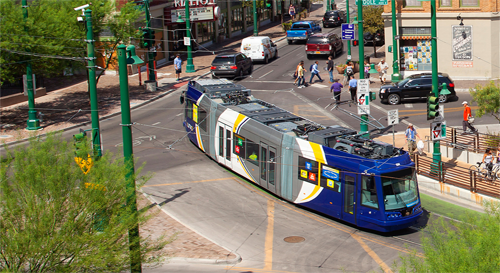
Tucson does not have a beltway. Congress Street divides addresses into East and West, and Stone Avenue into North and South. Sun Tran runs bus service, and Sun Link links downtown with the UA campus via light rail. The fare is $1.50 on each.
Sun Link

The University of Arizona was chartered in 1885, 27 years before Statehood. Noted athletes, other than football players that I'll mention in "Team History Displays," include:

* Basketball: To Tolbert, Sean Elliott, Steve Kerr, Mike Bibby, Richard Jefferson, brothers Damon and Salim Stoudamire (Amar'e Stoudamire is neither related nor a UA graudate), Gilbert Arenas, Channing Frye, Luke Walton, Andre Iguodala, Jason Terry. Also, Brenda Frese, who played at UA and coached the University of Maryland to the 2006 National Championship.

* Baseball: Terry Francona, Ron Hassey, Jack Howell, Scott Erickson, Scott Kingery, Kenny Lofton, Trevor Hoffman, J.T. Snow. Also, softball Olympic Gold Medalist Jennie Finch.

* Swimming: Olympic Gold Medalists George DiCarlo, Amy Van Dyken and Amanda Beard.

* Horse Racing: Trainers Bob Baffert and Todd Pletcher.

Annika Sorenstam is also a UA graduate, but golf is not a sport. New York Jets owner Robert Wood Johnson IV (Woody Johnson), Los Angeles Angels of Anaheim owner Arte Moreno, and Phoenix Suns owner Robert Sarver are UA graduates.
Old Main, the UA administration building

Graduates in other fields include: 

* Politics, representing Arizona unless otherwise stated: Governor and Senator Paul Fannin, Governor Raul Castro, Congressmen Stewart and Morris (Stew and Mo) Udall, Senator Dennis DeConcini, Senator John Kyl, and Surgeon General Richard Carmona. 

* Science: Dick Scobee '65, commander of the Space Shuttle Challenger on its fateful flight in 1986.

* Literature: Richard Russo '71, Barbara Kingsolver '81.

* Journalism: Geraldo Rivera '65, Savannath Guthrie '93 (grew up in Tucson).

* Entertainment: Joan Ganz Cooney '51, Jerry Bruckheimer '65, Craig T. Nelson '69 (so filming snowy scenes set in Minnesota on Coach must have been a big shift for him), Garry Shandling '71, Michael Biehn '74, Jack Wagner '82, Greg Kinnear '85, Kourtney Kardashian '01.
"A Mountain," overlooking downtown Tucson

Arizona State was also founded in 1885, as the Normal School of Arizona. It became Tempe Normal School in 1903, Tempe State Teachers College in 1925, Arizona State Teachers College in 1929, Arizona State College in 1945, and Arizona State University in 1958, the year Sun Devil Stadium opened. Unlike UA, which has only its main campus in Tucson, ASU has its main campus in Tempe, and also a West Campus and a Downtown Phoenix Campus. 

Its famous athletes include:

* Baseball: Reggie Jackson, Sal Bando, Rick Monday, Gary Gentry, Duffy Dyer, Lenny Randle, Craig Swan, Larry Gura, Ken Landreaux, Floyd Bannister, Bob Horner, Ken Phelps, Hubie Brooks, Alvin Davis, Mike Devereaux, Barry Bonds, Fernando Vina, Paul Lo Duca, Ian Kinsler, Dustin Pedroia, Andre Ethier, Ike Davis, Don Wakamatsu and Jason Kipnis.

* Basketball: Joe Caldwell, Lionel Hollins, Lafayette "Fat" Lever, Alton Liser, Byron Scott, Eddie House and James Harden. Olympic Gold Medals won by Caldwell in 1964 and Harden in 2012.

* Soccer: Amy LePeilbet, 2012 Olympic Gold Medal.

Olympic Gold Medalists:

* Swimming: Jan Henne-Hawkins, 3 in 1968; Bernie Wrightson, 1968 (diving); Melissa Belote, 3 in 1972; Andy Jameson, 1984; Troy Dalbey, 2 in 1988; Attila Czene, 1996 for Hungary; Agnes Kovacs, 2000 for Hungary.

* Gymnastics: Amanda Borden, 1996.

* Track & Field: Henry Carr, 2 in 1964; Ulis Williams, 1964; Ronald Freeman, 1968; Herman Frazier, 1976; Ronald Brown and Ria Stalman, 1984 (Stalman for the Netherlands); Maicel Malone-Wallace, 1996; Nick Hyson, 2000; Dwight Phillips, 2004.

* Archery: Jay Barrs, 1988; Justin Huish, 2 in 1996.

Sportscaster Al Michaels is an ASU graduate. So is Phil Mickelson, but, as I said, golf is not a sport.
The Arizona State campus

Notable graduates in other fields:

* Politics, again representing Arizona unless otherwise stated: Governor Evan Mecham, Jane Hull and Doug Ducey; Senator Carl Hayden; former Congresswoman Barry Goldwater Jr (his father, the longtime Senator and the 1964 Republican Presidential nominee, attended UA, but only for 1 year); Congresswoman and Senator-elect Kyrsten Sinema; and the 1st President of an independent Kosovo, Fatmir Sejdiu. 

* Fashion: Kate Spade.

* Entertainment: Brenda Strong, David Spade (Kate's brother-in-law), and Legally Blonde author Amanda Brown. Comedian Steve Allen attended ASU, but left in 1943 to take a job in radio. Wonder Woman star Lynda Carter attended ASU, but dropped out when her acting career took off. Another TV superhero, Tyler Hoechlin (Superman on Supergirl), played baseball at ASU, including in the College World Series, but transferred to California-Irvine.

Going In. Arizona Stadium opened in 1929, as a 7,000-seat facility. It was expanded to 26,000 by 1950, 40,000 in 1965, 57,000 in 1975, and now seats 55,675. The address is 1 National Championship Drive, and is bounded by East 4th Street (north), Warren Avenue (east), 6th Street (south) and Highland Avenue (west). It is 2 miles east of downtown Tucson. SunLink to 2nd & Highland, then a 10-minute walk south. If you drive in, parking is $20.

The stadium is a north-south horseshoe, with the open end at the north. The field was converted from natural grass to FieldTurf in 2013. It hosted the postseason Copper Bowl from 1989 to 1999, and has hosted the Arizona Bowl since 2015. It has hosted 2 concerts: Fleetwood Mac in 1977, and the odd pairing of Jay-Z and Kelly Clarkson in 2009.
The McKale Memorial Center is located to the northeast of Arizona Stadium. James Fred "Pop" McKale was UA's football coach from 1914 to 1930, its basketball coach from 1914 to 1921, its baseball coach from 1915 to 1949, and its athletic director from 1914 to 1957.

The arena opened in 1973. Since 2001, the playing surface has been named for its legendary basketball coach and his wife: The Lute and Bobbi Olson Court. Their basketball team has won 27 Conference Championships, including 16 times in the league now known as the Pac-12, including the last 2 and 5 of the last 8; won 7 Conference Tournaments; reached the Final Four in 1988, 1994, 1997 and 2001; and won the 1997 National Championship, defeating Kentucky in an All-Wildcats Final that denied UK 3 straight titles.
Sun Devil Stadium opened in 1958. The address is 500 E. Veterans Way, about 8 1/2 miles east of downtown Phoenix. Light Rail to Veterans Way & College Avenue, a station located near the stadium's southwest corner, about a 24-minute ride. If you drive in, there are parking lots within a 10-minute walk for just $5.00.

The Cardinals played there from 1988 to 2005, and the Fiesta Bowl was held there from 1971 to 2006. Both then moved into what's now named State Farm Stadium. From 2006 to 2015, it hosted the Cactus Bowl.
Sun Devil Stadium, before the renovation,
at the foot of Tempe Butte

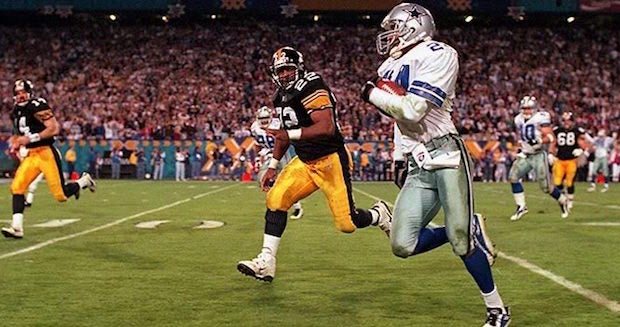
The Dallas Cowboys treated Sun Devil Stadium as a 2nd home field when they played the Cardinals, because there always seemed to be more Cowboy fans there. This was emphasized when they won Super Bowl XXX there, when the world learned A) it was possible for the Pittsburgh Steelers to lose a Super Bowl, and B) Terry Bradshaw was smart compared to Neil O'Donnell. It also hosted 2 U.S. soccer team matches in the 1990s.
During Super Bowl XXX, January 28, 1996

Fiesta Bowls held there turned out to be National Championship games for the seasons of 1986-87, Penn State over Miami; 1988-89, Notre Dame over West Virginia 1995-96, Nebraska over Florida; 1998-99, Tennessee over Florida State; and, controversially, 2002-03, Ohio State over Miami. However, unlike the stadiums in Pasadena, Miami, Dallas and in a few "minor bowl" cities, it has never been officially named the Fiesta Bowl; unlike the long-gone Tulane Stadium in New Orleans, it has never been been nicknamed the Fiesta Bowl. 

The stadium opened with 30,000 seats, and was increased to 57,000 in 1976, 70,000 in 1977, and 72,000 in 1988. It is the opposite of Arizona Stadium: A horseshoe, with the open end at the south. The field has always been natural grass, and was named Frank Kush Field for their former coach in 1996.

By 2007, the stadium's concrete base was buckling, because the steel supporting it was rusting. They couldn't figure out why. It was because it wasn't waterproofed. They didn't waterproof it because they didn't expect much rain in the Arizona desert. But the seating area was hosed down to clean it after every game.

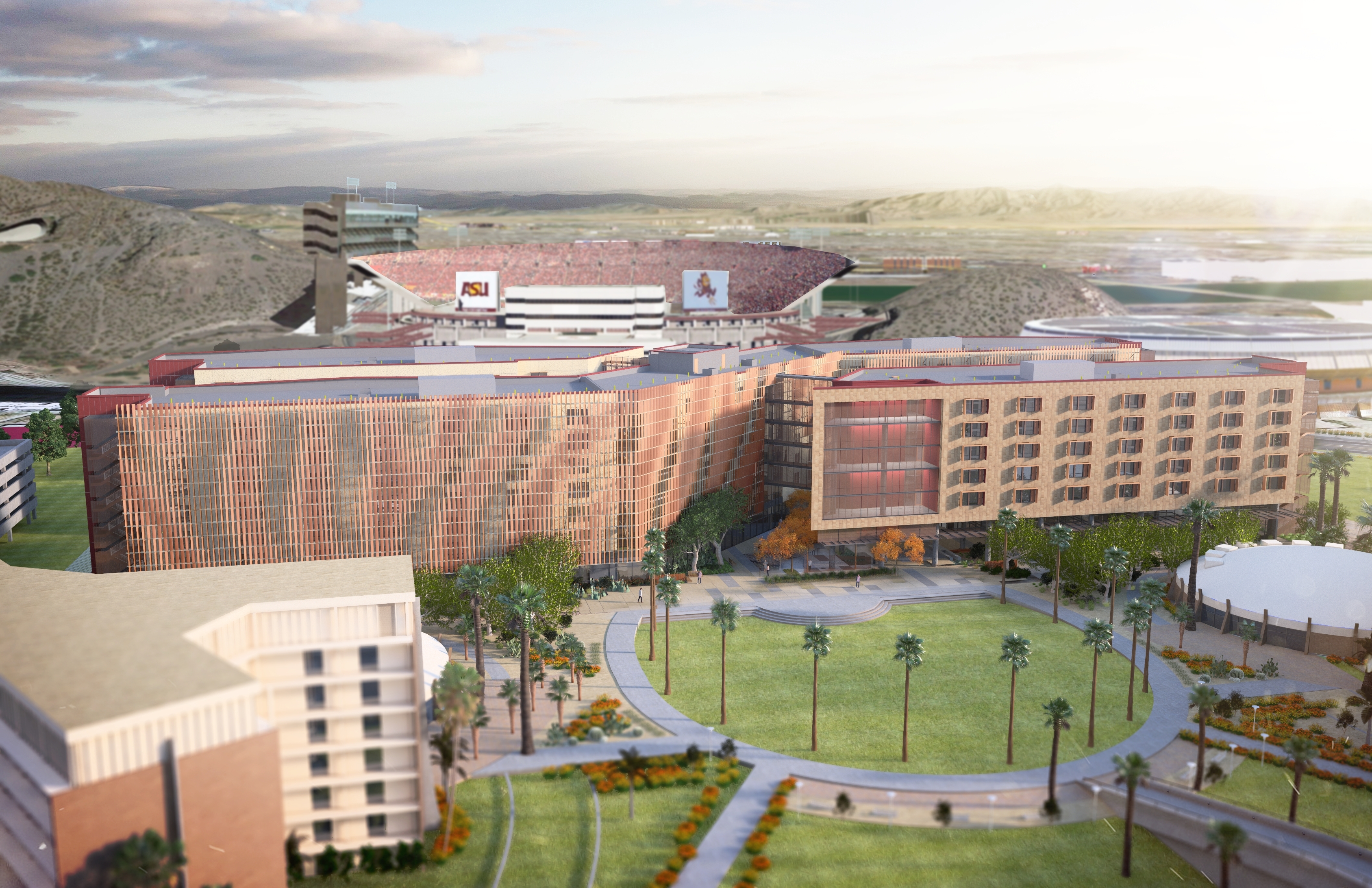
So, rather than move the ASU football team to the Cardinals' stadium in Glendale and completely demolish Sun Devil Stadium, a renovation plan was set up, essentially rebuilding the stadium piece by piece, much like the 4 sides of an old English soccer stadium getting rebuilt. Renovations are expected to be done in time for next season. It currently seats 53,599.
The stadium appeared in the 1976 version of A Star Is Born, Used Cars, Jerry Maguire (Cuba Gooding Jr.'s character Rod Tidwell played for the Cardinals), and 2 concert films: The Rolling Stones' 1982 Let's Spend the Night Together and U2's 1988 Rattle and Hum

The Wells Fargo Arena, previously known as the ASU Activity Center, is to the southeast of the stadium. It opened in 1974. ASU's basketball team has never gotten any closer to an NCAA title than the Sweet 16, in 1995. Elvis Presley sang there on March 23, 1977.
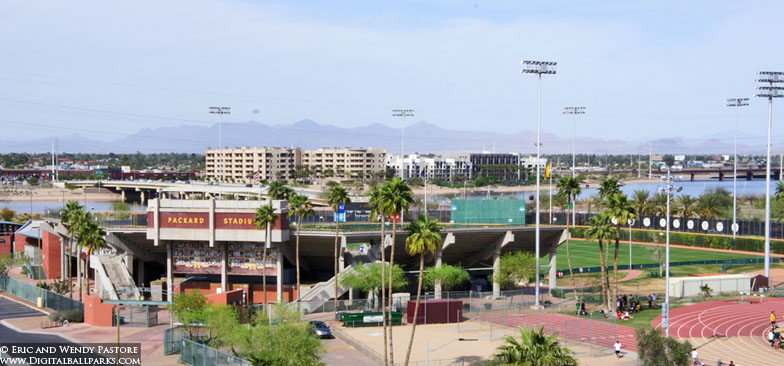
Packard Stadium, opened in 1974, is home to the ASU baseball program, one of the most successful college baseball teams, east of the stadium and arena, at Rural Road and Rio Salado Parkway. The Sun Devils have won 5 National Championships, most recently in 1981. ASU's Gammage Auditorium, at the other end of the campus, hosted one of the 2004 Presidential Debates between George W. Bush and John Kerry. 1200 S. Forest Avenue.
Packard Stadium

The US Airways Center, Wells Fargo Arena, University of Phoenix Stadium, and the McKale Center have all hosted NCAA basketball tournament games.

Food. As a Southwestern State, you might expect Arizona's stadiums to have a Mexican/Spanish food theme. But this is not really specified on either university's website.

Arizona Stadium relies heavily on barbecue, including BrushFire BBQ and the Memphis-style Carole's Up in Smoke BBQ. Epic CafĂ©, according to the University website, "will offer a variety of sandwiches that was satisfy customers that are meat lovers, vegetarian, vegan and those who want gluten-free options."

Sweet Dough Co. Donuts is on the west concourse. On the west, east and south concourses, Eegee's (probably a variant of "E.G.'s") sells frozen-fruit drinks, or what most of us would call "smoothies." Arizona Stadium also has Hebrew National hot dogs, which would certainly catch the attention of a visiting New Yorker).

In the stands under the north end zone, they have jumbo pretzels, corn dogs, beef skewers, egg rolls and roasted nuts. Under the east stand, they have smoked turkey legs, chicken wings, fries, grilled cheese sandwiches... and then it all goes wrong: Focaccia bruschetta sandwiches, veggie dogs, black bean burgers, chicken tenders in a waffle cone, and -- if you can believe this -- macaroni and cheese in a waffle cone. That's just wrong. Especially the last one.

ASU says, "Multiple concession stands are located on all levels throughout Sun Devil Stadium. All stands offer a variety of food and beverage items. Some of the specialty concessions offer for the 2018 season include Chick-fil-a located behind section 238 and the south end zone student section, Somburros located behind section 33 and Scoop located behind section 243."

Team History Displays. Arizona State began playing football in 1897; Arizona, in 1899. Both schools were independents until joining the Border Conference in 1931, and moved to the Western Athletic Conference in 1962. After both teams had some frustrating lack of respect from the national ranking systems, they realized they had to leave the WAC. In 1978, both joined the Pacific-8 Conference, turning the Pac-8 into the Pac-10. It became the Pac-12 with the addition of Colorado and Utah in 2011.

Arizona has 6 Conference Championships: The Border in 1935, 1936 and 1941; the WAC in 1964 and 1973; and the Pac-10 in 1993. They won the Pac-12 South in 2014, but lost the Conference Championship Game, getting throttled by Oregon.

Arizona State thought they should have been awarded the National Championship after Frank Kush led them to undefeated seasons in 1970 and 1975, but only minor polls recognized them as such. They've won 17 Conference Championships: 1931, 1939, 1940, 1952, 1957, 1959 and 1961 in the Border; 1969, 1970, 1971, 1972, 1973, 1975 and 1977 in the WAC; and 1986, 1996 and 2007 in the Pac-10. Unlike the Wildcats, the Sun Devils have not yet won the Pac-12 South or appeared in the Pac-12 Championship Game. Neither school appears to have any notations for these titles in the open stadium area.

Arizona has appeared in 21 bowl games, winning 9. They didn't win a bowl game until the 1986 Aloha Bowl. And their only major bowl win is the 1993 Fiesta Bowl -- on ASU's home field.

ASU has been a bit more successful in this regard, appearing in 30 bowls, winning 14. But they also took a while to get their 1st bowl win, in the 1970 Peach Bowl. They not only hosted the Fiesta Bowl, but appeared in the 1st 3, and 5 of the 1st 7 from 1971 to 1977. It became a New Year's Day bowl in the 1982-83 season. They've won it in 1971, 1972, 1973, 1975, 1983.

In Rutgers' 1st 2 bowl games, they hosted Arizona State at the Meadowlands in the 1978 Garden State Bowl, and lost 34-18; and traveled to Phoenix to play ASU at the Diamondbacks' stadium in the 2005 Insight Bowl, and lost 45-40. They've been in 2 Rose Bowls, beating Michigan in 1987 and losing to Ohio State in 1997.

Arizona retires jerseys, but not uniform numbers. They honor 9 players: 22, Art Luppino, 1950s running back, a 2-time NCAA rushing leader, but never played in the pros; 98, 1980s linebacker Ricky Hunley, who reached 2 Super Bowls with the Denver Broncos; 26, 1980s safety Chuck Cecil, a Pro Bowler with the Green Bay Packers; 29, 1980s cornerback Darryl Lewis, a Pro Bowler with the Houston Oilers; 98 again, 1990s defensive tackle Rob Waldrop, who won 2 Grey Cups with the Toronto Argonauts; 68, linebacker Tedy Bruschi, a Pro Bowler and a 3-time Super Bowl winner with the New England Patriots; 3, 1990s placekicker Steve McLaughlin; 28, 1990s cornerback Chris McAlister; a 3-time Pro Bowler and a Super Bowl winner with the Baltimore Ravens; and 20, 2000s cornerback Antoine Cason.

Hunley, Cecil, Waldrop and Bruschi are in the College Football Hall of Fame. So are 3 head coaches: Warren Woodson, 1952-56; Darrell Mudra, 1967-68; and Jim Young, 1973-76. Oddly, Frank Kush is not.

Other notable Arizona football players include: 1940s quarterback Fred Enke Jr. (his father Fred Sr. was an assistant coach at the time), 1950s cornerback Warren Livingston, 1980s Broncos receiver Vance Johnson, longtime NFL punter Josh Miller (a year behind me at East Brunswick High School in New Jersey and a Super Bowl XXXIX winner with the Patriots), Carolina Panthers Pro Bowl receiver Michael Bates (helped them reach Super Bowl XXXVIII), former Jets kicker Nick Folk, Pro Bowl and Super Bowl XLII Giants linebacker Antonio Pierce (now crossing the line to be linebackers coach at ASU), Patriots tight end Rob Gronkowski, and Philadelphia Eagles quarterback Nick Foles. Noted referee Ed Hochuli is also a UA graduate.

Arizona State has only 1 retired number: 42, for 1990s safety Pat Tillman. After the 9/11 attacks at the beginning of the 2001 season, Tillman played out the season with the Arizona Cardinals, left the NFL, enlisted in the U.S. Army, graduated from Ranger School, was deployed to Afghanistan, and was killed in a "friendly fire" incident on April 22, 2004. ASU players now pass a statue of him as they enter the field.
ASU's All-Americans include Tillman, 1940s running back Wilford White (who, like running back and later Supreme Court Justice Byron White, was nicknamed "Whizzer"), 1960s defensive tackle Curley Culp, 1960s receiver J.D. Hill, 1970s defensive tackle Junior Ah You (one of the earliest Samoans in pro football, inspiring both ASU and UA to recruit them), 1970s quarterback Danny White (son of Wilford), 1970s linebacker Bob Breunig, 1970s cornerback Mike Haynes, 1970s receiver John Jefferson, 1980s running back Gerald Riggs, 1980s linebacker Jim Jeffcoat, 1980s kicker Luis Zendejas, 1980s guard Randall McDaniel, 1980s cornerback Eric Allen, 1990s safety Darren Woodson, 1990s quarterback Jake Plummer, 1990s tight end Todd Heap, 2000s linebacker Terrell Suggs and 2010s defensive tackle Will Sutton.

Culp, Haynes and McDaniel are in the Pro Football Hall of Fame. Woodson, a 3-time Super Bowl winner with the 1990s Dallas Cowboys, and Heap and Suggs, both stars on the 2000s Baltimore Ravens, could make it. Ah You is in the Canadian Football Hall of Fame.

Included in Sun Devil Stadium is the Ed and Nadine Carson Student-Athlete Center, which includes the Bill and Judy Schafer Sports Hall of Fame, honoring various ASU performers. It is open on game days.

There is an Arizona Sports Hall of Fame, but it doesn't have a permanent display. The Wildcats in it are football players Fred Enke Jr., Warren Livingston and Karl Eller (also a founding part-owner of the Phoenix Suns and the founder of the Fiesta Bowl, and not to be confused with Minnesota Vikings star Carl Eller); baseball players Shanty Hogan and Hank Lieber; basketball star Sean Elliott; horse trainer Bob Baffert; and coaches Pop McKale, Fred Enke Sr. (basketball head and football assistant), Miles Casteel (football), Frank Sancet (baseball), Ed Doherty (football) and Lute Olson.

Sun Devils in it are football players Wilford and Danny White, Curley Culp, Darren Woodson, Randall McDaniel, and Jake Plummer and Pat Tillman, teammates in both college and pro ball; baseball player Bob Horner (but no others, not even Reggie Jackson or the admittedly problematic Barry Bonds); basketball player Fat Lever; track star Herman Frazier; wrestlers Art Matori and Anthony Robles; golfers Billy Mayfair and Heather Farr; coaches Ed Doherty (football), Frank Kush (football), Ned Wulk (basketball), Royce Youree (basketball), Rudy Lavik (football and basketball) and Linda Vollstedt (golf); and athletic director Clyde B. Smith.

Arizona and Arizona State first played each other in football in 1899, UA's 1st season, and have played each other every season since 1946. ASU won the 1st game, then UA won 20 of the next 21. ASU won 9 straight from 1965 to 1973, UA went 8-0-1 from 1982 to 1990, and since then, it's been more or less even. The Sun Devils won last year, but the Wildcats still lead 49-41-1. (UPDATE: Through the 2020 season, the Wildcats now lead 49-44-1.)

The rivalry has been called "The Duel In the Desert" and, from the beginning, since both teams began play before Statehood in 1912, "The Territorial Cup." A trophy with that name was awarded with the 1st game, but it got lost until 1980, when it was found in the basement of a church near the ASU campus. It was restored, and is the oldest college football rivalry trophy -- though, obviously, not the oldest continuously awarded one. 
Stuff. Sparky's Shop, named for the mascot, is in the south end of Sun Devil Stadium. In contrast, Arizona Stadium doesn't seem to have a team store. The University of Arizona Bookstore is at 1209 E. University Blvd., 5 blocks north of Arizona Stadium. The ASU Bookstore is at 525 E. Orange Street, about a 10-minute walk south of Sun Devil Stadium.

There doesn't seem to be a comprehensive book about Wildcat football history. In 2007, Jeff Van Raaphorst published Game Day: Arizona State Football: The Greatest Games, Players, Coach and Teams in the Glorious Tradition of Sun Devil Football. In 2013, Shane Dale published Territorial: The History of the Duel in the Desert. In 2008, a pair of DVDs arrived: The Legends of Arizona Wildcats College Football, and The Legends of Arizona State.

During the Game. For the most part, Arizona fans -- including Arizona State fans -- are okay, not making trouble for fans of teams playing their teams. UA vs. ASU is the State's biggest rivalry. It's a heated rivalry... but it's a dry heat. (Yeah, I had to use that line.) So you should be safe.

In spite of UA's mascot being the Wildcats, they, like the Chicago Bears, have "Bear Down" as a motto, and a fight song: "Bear Down, Arizona!" Actually, that's an unofficial fight song. The official fight song is "Fight! Wildcats! Fight!" They have not just a mascot, but a mascot couple: Wilbur and Wilma Wildcat. The costumed Wilbur debuted in 1959, Wilma in 1986, and they were "married" on the field. Wilbur wears Number 12, because he's representative of the fans, "The 12th Man." Wilma wears a cheerleader's uniform. Gender stereotypes, and all that.
The lower east sideline at Arizona Stadium includes the student section, known as the ZonaZoo. The south end zone of Sun Devil Stadium is called The Inferno. Because their Sun Devil logo has a pitchfork, ASU fans chant, "Fork 'em, Devils!" Clearly, this is a takeoff on Texas Longhorns fans' "Hook 'em, Horns." But New Jersey Devils fans don't use the same chant. ASU fans also use "Fear the Fork."

ASU tells its fans, "Always wear GOLD unless specified." At this year's Michigan State game, they were asked to wear black; against Stanford, maroon -- which makes no sense, since ASU's secondary color of maroon is, from a distance, is a shade of red almost indistinguishable from Stanford's cardinal.

The original ASU mascot was an owl, a symbol of wisdom. (Actually, I've heard that owls are not among the smarter birds.) Later, it became a bulldog, because they wanted to be more respected, like Yale, which has a bulldog. In 1946, the bulldog was replaced with the Sun Devil.

Two years later, the 1st Sparky was drawn, holding a trident. He is specifically said to be based not on The Devil, and is "a mischievous imp." Unofficially, the original artist, Berk Anthony, drew the face, complete with thin mustache, to resemble his former boss: Walt Disney. The costumed Sparky debuted in 1951, and the current version wears Number 1. The fast food chain Orange Julius used a very similar-looking symbol in the 1970s and '80s, but dropped it after ASU decided to sue. 
Honestly, I don't think he looks like Walt Disney at all.
Mitch Miller, maybe. Burl Ives, possibly.

The Sun Devil Marching Band, a.k.a. The Pride of the Southwest, wear sun logos on their uniforms, and play the fight song, "Maroon & Gold." Every time the Sun Devil defense takes the field, they play "The Imperial March" from Star Wars (or, if you prefer, "Darth Vader's Theme").
"If only you knew the power of the Dry Heat.
Obi-Wan never told you what happened to your father.
He retired to Scottsdale."

After the Game. The Phoenix area does have crime issues, but you should be safe as long as you stay on campus or downtown. Tucson should be safe for you and your car as well.

Across 6th Street from the south end of Arizona Stadium is Abe's Place. A block away is Cheba Hut, a sandwich shop. If you want anything more interesting than that, you may have to head back to the student union at 1303 E. University Blvd. (a 5-minute walk northwest of the stadium), or maybe to downtown Tucson.

There are lots of eateries near the ASU campus, most of them to the southwest of Sun Devil Stadium, particularly along S. Mill Avenue, 3 blocks to the west, including Zipp's Sports Grill at 690 South Mill. Hey, that rhymes.

Tim Finnegan's is the Phoenix area's Jets fan hangout, but that's 11 miles north of downtown, at 9201 North 29th Avenue. It appears that the local football Giants fan club meets at Blue Moose, at 7373 E. Scottsdale Mall, but that's 12 miles northeast. I've read that a Yankee Fan hangout is at LagerFields Sports Grill, at 12601 N. Paradise Village Pkwy. W., 14 miles northeast. Alas, I can find nothing Mets-specific in the area.

If you visit Phoenix during the European soccer season, which is now approaching its climax, the best "football pub" in Arizona is the George & Dragon Pub, which opens at 7:00 AM on matchdays. 4240 N. Central Avenue, about 3 miles north of downtown. Bus 13 to Buckeye Road & Central Avenue, then transfer to Bus ZERO to Farrington Lane. Unless you're a Liverpool fan, or you'd prefer to stay downtown, in which case you can go to the Rose and Crown, at 628 E. Adams Street, 2 blocks north of the ballpark.

In Tucson, you'd go to Martin Drug Co., 300 E. Congress Street.

Sidelights.
 Not much. Tucson isn't an old city, and Tempe is a suburb of Phoenix, which also isn't. Not much to look for.

Phoenix has the Arizona Diamondbacks at Chase Field, at 401 East Jefferson Street, the street bounding center field. The Phoenix Suns are at the Talking Stick Resort Arena, 2 blocks west of Chase Field, at 2nd & Jefferson. 

The Glendale Sports & Entertainment District, in the Phoenix suburb of Glendale, consists of State Farm Stadium (until this year known as The University of Phoenix Stadium), home to the Arizona Cardinals since 2006; and the Gila River Arena, home to the Coyotes since 2003.

The complex is about 17 miles northwest of downtown Phoenix. The official address of the stadium is 1 Cardinals Drive, and that of the arena is 9400 W. Maryland Avenue. Number 8 bus from downtown to 7th & Glendale Avenues, then transfer to Number 70 bus, to Glendale and 95th Avenue, then walk down 95th.

UPDATE: In 2022, the Gila River Arena was renamed the Desert Diamond Arena, and the Coyotes moved to the new Mullett Arena, as tenants of Arizona State. It seats just 5,000 people. The Coyotes still have difficulty selling it out.

New York Tri-State Area sports fans know the stadium as the site of Super Bowl XLII, where the Giants derailed the New England Patriots' bid for the NFL's first 19-0 season. The stadium is also home to the Fiesta Bowl, and hosted the 2017 NCAA Final Four, and 2 games of the 2017 CONCACAF Gold Cup. (UPDATE: It hosted 2 Quarterfinals of the 2021 CONCACAF Gold Cup. It will host the Final Four again in 2024.)

The official address of the stadium is 1 Cardinals Drive, and that of the arena is 9400 W. Maryland Avenue. Number 8 bus from downtown to 7th & Glendale Avenues, then transfer to Number 70 bus, to Glendale and 95th Avenue, then walk down 95th.

The highest-ranking pro soccer team in Arizona is Phoenix Rising FC, in the United Soccer League, our 2nd division. They play at the rather unimaginatively-named Phoenix Rising FC Soccer Complex, which seats 6,200. 751 N. McClintock Drive, in Scottsdale, 10 miles east of downtown Phoenix. It takes 4 buses over 2 hours to get there, so if you don't have a car, forget it.

Presuming Major League Soccer's current expansion wave passes Phoenix by, the closest MLS teams are the 2 in Los Angeles, 375 (LAFC) and 376 (LA Galaxy) miles to the west, respectively. The San Jose Earthquakes and Real Salt Lake are considerably further away.

Tucson was home to the Tucson Cowboys, a Class D team from 1915 to 1939, and Class C from 1940 to 1958. They got a Class AAA team in 1969, the Tucson Toros. In 1998, they became the Tucson Sidewinders. They won Pennants in 1941, 1953, 1991, 1993 and 2006, but got moved in 2008, and haven't been replaced.

Arizona hosts a college football bowl game. From 1989 to 1996, it was named the Copper Bowl; from 1997 to 2011, the Insight Bowl after a tech company; in 2012 and 2013, the Buffalo Wild Wings Bowl; from 2014 to 2017, the Cactus Bowl; and now, the Cheez-It Bowl. (UPDATE: In 2020, it became the Guaranteed Rate Bowl.)

It was played at the Wildcats' Arizona Stadium from 1989 to 1999. It was moved to Chase Field in 2000, to Sun Devil Stadium in 2006, and back to Chase Field in 2016.

The tallest building in Phoenix, and in all of Arizona, is the Chase Tower, bounded by Central Avenue and Van Buren, 1st and Monroe Streets. That it's only 483 feet, and that no taller building has been built in the city since it opened in 1972, says something about this city, but I'm not sure what. But the city seems to be intent on growing outward, not upward.
Television shows set in Phoenix, or anywhere in Arizona, are few and far between. The High Chaparral, another Western created by Bonanza creator David Dortort, ran on NBC from 1967 to 1971, and is fondly remembered by some. Medium was set in the Maricopa County District Attorney's office in Phoenix.

The best-remembered show is Alice, starring Linda Lavin as one of several waitresses at fictional Mel's Diner, running on CBS from 1976 to 1985. The show was taped in Hollywood (Burbank, actually), and its address was given on the show as 2128 Bush Highway. There is a Bush Highway in the area, but it starts in Mesa, well to the northeast of downtown.

But that once-famous "14-ounce coffee cup" sign is still used outside a real working diner in Phoenix. It was Lester's, until the owner agreed to change the name to "Mel's Diner" for the publicity. Today, it's Pat's Family Diner, at 1747 NW Grand Avenue, 2 miles northwest of downtown. Number 15 bus to 15th Avenue & Pierce Street, and then walk one block east to Grand, Pierce, and 12th. There are also still-in-business diners in Ohio and Florida that use the same sign design. "Pickup!"

Movies set in modern-day Arizona usually show the Grand Canyon or the Hoover Dam. Notable on this list is Thelma & Louise, in which Geena Davis and Susan Sarandon drive a 1966 Ford Thunderbird into the Canyon rather than be captured by the FBI, enacting a distaff version Paul Newman and Robert Redford at of the ending of Butch Cassidy & the Sundance KidNational Lampoon's Vacation and Natural Born Killers also used Arizona as a backdrop. While not a Western, Revenge of the Nerds was filmed at the University of Arizona.

The vast majority of movies set in Arizona have been Westerns, including the 1957 and 2007 versions of 3:10 to Yuma, the 1950 film Broken Arrow (not the later John Travolta film of the same title), Fort Apache (not the later Newman film set in The Bronx), Newman's Hombre, Johnny Guitar, A Million Ways to Die In the West, No Name On the Bullet, and all the films based on the 1881 Earps vs. Clantons gunfight, including My Darling Clementine in 1946, Gunfight at the O.K. Corral in 1957, Tombstone in 1993 and Wyatt Earp in 1994.

If you're a Western buff, and you want to see the site of the legendary gunfight, the official address is 326 East Allen Street, Tombstone, AZ 85638. Re-enactments are held daily. Be advised, though, that it's 184 miles southeast of downtown Phoenix, a 3-hour drive, and ain't no Greyhound or Amtrak service, stranger: You'll have to drive. It's also just 50 miles from the Mexican border.

And the other 2 things in Arizona that everybody talks about? The Grand Canyon Skywalk is 262 miles northwest of downtown Phoenix, and Hoover Dam 269 miles. They're 96 road miles apart, but about half that as the crow flies.

*

If you go to Arizona to see a college football game, be careful of the heat: Unlike the ballpark, the NFL stadium, and the arenas, it could be hot even late in the year, when we're putting on jackets. But you should still be able to have a good time in the State.

Tuesday, January 17, 2017

How Long It's Been: The Dallas Cowboys Reached a Super Bowl

In 2013, to promote is new coverage of English soccer's Premier League, NBC had Jason Sudeikis play Ted Lasso, a former NFL coach who had been hired to manage that other "football," specifically North London's Tottenham Hotspur Football Club.

Like pretty much everything associated with "Spurs," it was laughable, and he didn't last long. Part of his "learning curve" was learning to associate teams in his new league with teams in his old one:

Assistant: "Manchester United. Super-rich. Everybody either loves them or hates them."
Ted: "Dallas Cowboys."
Assistant: "Liverpool. Used to be great. Haven't won a title in a really long time."
Ted: "Also, Dallas Cowboys."

He was right, both times.

And the Cowboys got knocked out of the Playoffs over this weekend, losing a thriller at home to the Green Bay Packers, the real "America's Team."

Cowboy fans who talked smack online all season long look like idiots now. I mean, more so than usual. The last time their team won a Super Bowl, it was rather hard to talk smack online, because the Internet was pretty much just message boards.

The Cowboys haven't even played in a Super Bowl since January 28, 1996. That's about to be 21 years. How long has that been?

*

Barry Switzer was coaching a team led by "The Triplets": Quarterback Troy Aikman, running back Emmitt Smith, and receiver Michael Irvin. Other stars included Nate Newton, Larry Allen, Mark Tuinei, Jay Novacek, Darrell "Moose" Johnston, Charles Haley, Russell Maryland, Deion Sanders, Darren Woodson, and... Leon Lett? "Not Leon Lett!"

Aikman, Irvin, Novacek, Johnston and Sanders are all now part of NFL broadcast teams. Aikman, Smith, Irvin and Sanders are now in he Pro Football Hall of Fame. Aikman, Smith and Irvin are also in the Cowboys' Ring of Honor.

The Denver Broncos, the Los Angeles Rams (then in their St. Louis sojourn), the Cleveland Browns franchise that was in the process of becoming the Baltimore Ravens, the New England Patriots, the Tampa Bay Buccaneers, the Seattle Seahawks, the Colts since moving to Indianapolis, and the New Orleans Saints had never won a Super Bowl. The Patriots, the Browns/Ravens, the Buccaneers, the Seahawks, the Indy version of the Colts, the Saints, the Atlanta Falcons, the Tennessee Titans (having just completed their next-to-last season as the Houston Oilers), the Carolina Panthers and the Arizona Cardinals had never even been in one. All those facts are now untrue.

The Cowboys were playing in Texas Stadium in Irving. The Pittsburgh Steelers, whom they beat, were playing in Three Rivers Stadium. Both have moved to new stadiums, and their old ones have been demolished. Super Bowl XXX was played at Sun Devil Stadium in Tempe. While Arizona State University still plays football there, the Cardinals have moved to the other side of the Phoenix suburbs, to Glendale, and have hosted 2 Super Bowls there.

Of the 30 teams playing in the 1995-96 NFL season, only 7 are still playing in the same stadiums: Buffalo, Green Bay, Jacksonville, Kansas City, Miami, New Orleans and Oakland. (That doesn't count the Chargers, now in the process of moving from San Diego to Los Angeles.)

Early NFL legends Sammy Baugh, Don Hutson and Sid Luckman were still alive. Ray Lewis, Peyton Manning and Tom Brady were in college. Drew Brees, Tony Romo, Eli Manning, Troy Polamalu and Ben Roethlisberger were in high school. Aaron Rodgers was 12 years old, Clay Matthews and Ndamukong Suh were 9, Richard Sherman was about to turn 8, Russell Wilson was 7; Cam Newton, Rob Gronkowski and Andrew Luck were 6; Odell Beckham Jr. and Johnny Manziel were 3, and Marcus Mariota was 2.

Derek Jeter had 12 hits in his major league career, LeBron James was 11, and Sidney Crosby was 8.

Current Cowboys coach Jason Garrett was Aikman's backup as Cowboys quarterback. Todd Bowles was an assistant with the Packers, Ben McAdoo was attending Indiana University of Pennsylvania, Terry Collins was managing the Houston Astros, Joe Girardi was playing for the Yankees, Jeff Hornacek was playing for the Utah Jazz, Kenny Atkinson was playing in Spain's basketball league, Alain Vignault was an assistant coach with the Ottawa Senators, Jack Capuano was an assistant coach with the Tallahassee Tiger Sharks, and John Hynes was playing at Boston University.

In winning their 3rd title in a span of 4 years, the Cowboys dethroned the San Francisco 49ers as NFL Champions. The other titleholders at that point were the New Jersey Devils, the Atlanta Braves and the Houston Rockets.

The Heavyweight Champion of the World was... well, it was Bruce Seldon according to the WBA, Frank Bruno according to the WBC, and the title was vacant according to the IBF, last held by the second coming of George Foreman. There was no current holder of the MLS Cup, as MLS was still 3 months away from beginning its 1st season.

The Olympic Games have since been held in America twice, Japan, Australia, Greece, Italy, China, Canada, Britain, Russia and Brazil. The World Cup has since been held in France, Japan, Korea, Germany, South Africa and Brazil.

Bill Clinton was beginning his campaign for a 2nd term as President. Conservatives were obsessing over Hillary Clinton's paper documents. Former Presidents Gerald Ford, Jimmy Carter, Ronald Reagan and George H.W. Bush, their wives, and the widow of Lyndon Johnson were all still alive. (Both Fords, both Reagans, and Lady Bird Johnson have since died.) George W. Bush was in his 1st term as Governor of Texas.

Barack Obama was practicing law with the Chicago firm of Davis, Miner, Barnhill & Galland. And Donald Trump, while not screwing over anybody he could with his businesses, was still cheating on his 2nd wife, Marla Maples. Melania Knauss was still modeling in Milan and Paris, and may not even have met her future husband yet.

The Mayor of Dallas was Ron Kirk. Current Mayor Mike Rawlings was then Chairman of the Dallas Convention and Visitors Bureau. The Governor of the State of New York was George Pataki. The Mayor of the City of New York was Rudolph Giuliani. The Governor of New Jersey was Christine Todd Whitman. Andrew Cuomo was Assistant Secretary of Housing & Urban Development, and Bill de Blasio was working for him. Chris Christie was a Morris County Freeholder.

Only 4 of the Justices on the Supreme Court then are still on it now: Anthony Kennedy, Clarence Thomas, Ruth Bader Ginsburg and Stephen Breyer.

The current holder of the Nobel Peace Prize was Joseph Rotblat, a Polish physicist who helped develop the atomic bomb, then spent the last 60 years of his life working to prevent its use. The Pope was John Paul II. The current Pope, Francis, was then Jorge Mario Bergoglio, and a bishop in Buenos Aires, Argentina.

The Prime Minister of Canada was Jean Chretien, and of Britain John Major. Queen Elizabeth II was on the throne, and she still is. Blackburn Rovers were the holders of the Premier League title, and Everton of the FA Cup.

Major novels of 1996 included several political stories, in anticipation of the year's Presidential election: Absolute Power by David Baldacci, Executive Orders by Tom Clancy, and Primary Colors, a barely-veiled portrait of Bill Clinton's 1992 New Hampshire Primary campaign, whose author was originally listed as simply "Anonymous," but was later revealed to be Newsweek reporter Joe Klein.

Other big novels of the year included The Fourth Estate by Jeffrey Archer, Bridget Jones' Diary by Helen Fielding, The Runaway Jury by John Grisham, The Green Mile by Stephen King, Intensity by Dean R. Koontz, How Stella Got Her Groove Back by Terry McMillan, We Were the Mulvaneys by Joyce Carol Oates, Infinite Jest by David Foster Wallace, Jeff Shaara's Civil War story Gods and Generals, and Fight Club by Chuck Palahniuk. (Oops, I talked about it.)

The 1st book in George R.R. Martin's A Song of Ice and Fire saga, was published, and gave its name to the TV series covering all the books in it: A Game of Thrones. Natalie Dormer was about to turn 14. Richard Madden, Emilia Clarke and Kit Harington were 9, and Rose Leslie was about to be 9. Jack Gleeson was 3, Sophie Turner would be born 24 days later, Maisie Williams 15 months later, and Dean-Charles Chapman 20 months later. The Harry Potter books had yet to be published. Daniel Radcliffe was 6, and Emma Watson was 5.

January 1996 was not a good month for movies: It saw the release of Dunston Checks In, Bio-Dome, From Dusk till Dawn, and the parody of gangsta rap movies Don't Be a Menace to South Central While Drinking Your Juice in the Hood.

Television saw the debuts of 3rd Rock from the Sun on NBC, Moesha on UPN, and the much-mocked "glow puck" on Fox Sports' hockey broadcasts. Aside from Robert Kardashian Sr., part of O.J. Simpson's recent defense team, none of the Kardashians were famous yet: Kourtney was 16, Kim was 15, Khloe was 11, Rob was 8, Kendall Jenner was 3 months old, and Kylie Jenner wasn't born yet.

Dean Cain was playing Superman on TV. George Clooney had been cast as Batman in a movie. Lynda Carter was still the last live-action Wonder Woman. Nicholas Hammond was still the last live-action Spider-Man. Pierce Brosnan was playing James Bond, and Paul McGann would soon star in a one-shot Doctor Who.

No one had yet heard of Ash Ketchum, Austin Powers, Carrie Bradshaw, Tony Soprano, Jed Bartlet, Robert Langdon, Master Chief, Jack Bauer, Omar Little, Rick Grimes, Leroy Jethro Gibbs, Michael Bluth, Lisbeth Salander, Bella Swan, Michael Scott, Don Draper, Katniss Everdeen, Walter White, Jax Teller, Richard Castle, Leslie Knope or Sarah Manning.

Mariah Carey and Boyz II Men had the Number 1 song in America with "One Sweet Day." Lisa Marie Presley filed for divorce from Michael Jackson, although they remained friends for the rest of his life.

Jamaican authorities, mistaking it for that of a drug trafficker, opened fire on a plane carrying U2 singer Bono and Jimmy Buffett; it landed safely, with no injuries. Jonathan Larson died at age 35 of an undetected heart defect, just 1 day after his musical Rent was to have its 1st public performance, which went forward anyway. Kid Rock released his debut album, Early Mornin' Stoned Pimp. (He sure looked stoned on the cover.)

Stana Katic, Katie Holmes, Heath Ledger, Pink, Michelle Williams (both of them), Ben Savage, Christina Aguilera, Alicia Keys, Hayden Christensen, Jessica Alba, Natalie Portman, Chris Evans, Beyonce Knowles, Britney Spears, Sienna Miller, Kate Middleton, Hayley Atwell and Kirsten Dunst were in high school. Matt Smith, Anne Hathaway and Andrew Garfield were in junior high.

Lady Gaga and Drake were 9 years old, Kevin Jonas was 8, Rihanna and Emma Stone were 7, Joe Jonas was 6, Sarah Hyland was 5, Louis Tomlinson was 4; Selena Gomez, Demi Lovato, Nick Jonas, Miley Cyrus, Nicki Minaj and Zayn Malik were 3; Ariana Grande, Liam Payne and Niall Horan were 2, and Harry Styles and Justin Bieber were about to turn 2; and Abigail Breslin, Ariel Winter, Rico Rodriguez and Nolan Gould weren't born yet.

Inflation was such that what $1.00 bought then, $1.57 would buy now. A U.S. postage stamp was 32 cents, and a New York Subway token -- or a single ride on the newly-developed MetroCard -- was $1.50. Dallas doesn't have a subway, but since 1996, it has developed a light rail system. The average price of a gallon of gas was $1.32, a cup of coffee $1.79, a McDonald's meal (Big Mac, fries and shake) $4.11, a movie ticket $4.42, a new car $13,600, and a new house $118,200. The Dow Jones Industrial Average closed the preceding Friday at 5271.75.

The first tablet computer was about to be released. But, as yet, there was no Wikipedia, no iPod, no Skype, no MySpace, no Facebook, no YouTube, no Twitter, no Tumblr, no iPhone, no Pinterest, no Instagram, no iPad, and no Vine. Motorola had just introduced the Motorola StarTAC Wearable Cellular Telephone, the world's smallest and lightest mobile phone to date. Finally, instead of clipping a mobile phone onto your belt, you could fit on in your pocket. But you still couldn't access the fledgling Internet from your phones. The original Sony PlayStation was the leading home video game system of the time. There were birth control pills, but no Viagra.

At the beginning of 1996, 30 inches of snow were dumped on the Northeast, a storm that killed over 150 people. Fighting broke out between Russian soldiers and rebel fighters in Chechnya. Coup took place in the African nations of Sierra Leone and Niger. Haiti, on the other hand, has its 1st-ever peaceful transfer of power. And Amber Hagerman, age 9, was murdered in Arlington, Texas, not far from where the Texas Rangers played and where the Cowboys would move in 2009; she became the namesake of the AMBER Alert system.

Francois Mitterand, and Gene Kelly, and Superman creator Jerry Siegel died. Sasha Pieterse, and Tyler Ulis, and D'Angelo Russell were born.

January 28, 1996. The Dallas Cowboys beat the Pittsburgh Steelers 27-17 at Sun Devil Stadium, to win Super Bowl XXX, their 3rd World Championship in 4 years, and the 5th World Championship in their history.

They have never even been to another Super Bowl. In the 21 years since, the Dallas Mavericks have been to 2 NBA Finals, winning 1; the Dallas Stars have been to 2 Stanley Cup Finals, winning 1; the Dallas Burn have been founded, changed their name to FC Dallas, moved from the Cotton Bowl to a soccer-specific stadium in suburban Frisco, won 2 U.S. Open Cups, and reached an MLS Cup Final; and the Texas Rangers have won 2 Pennants, although they haven't won a World Series, but at least they've been to their sport's finals.

AT&T Stadium, the new Arlington home of the Cowboys, hosted Super Bowl XLV on February 6, 2011, and many Cowboys fans thought that they would become the 1st team ever to play a Super Bowl on its own field. It didn't happen.

Since Super Bowl XXX, the title has been won by the New England Patriots 4 times, the Denver Broncos 3 times, the Green Bay Packers twice (including the one in Arlington), the Baltimore Ravens twice, the Pittsburgh Steelers twice, the New York Giants twice, and once each by the Rams (then in St. Louis), the Tampa Bay Buccaneers, the Indianapolis Colts, the New Orleans Saints and the Seattle Seahawks.

But for 21 years, the Cowboys haven't even been to one. That means, come January 28, 2017, just 11 days from now, a person born on the day the Cowboys last won it can legally buy a drink and toast the Cowboys' entire generation of failures.

HOW 'BOUT DEM COWBOYS? DALLAS SUCKS!