Showing posts with label orange bowl. Show all posts

Sunday, September 6, 2026

September 6, 1946: The 1st Southern Team In the "Major Leagues"

September 6, 1946, 80 years ago: The All-America Football Conference, an early "rebel league," debuts. The Cleveland Browns, replacing the Rams, who won the NFL Championship and then moved to Los Angeles because of poor attendance, play their 1st game, at home, at Cleveland Municipal Stadium, and win, 44-0.

Under head coach Paul Brown, in the 4 years that the AAFC played, the Browns went 47-4-3, and won all 4 league championships. They then were admitted into the NFL, and won the Championship in 1950, 1954 and 1955; losing the Championship Game in 1951, 1952 and 1953. Counting their 4 AAFC seasons and their 1st 6 NFL seasons, they went 58-13-1 and reached 10 league title games, winning 7.

But this post isn't about the Browns, or the AAFC. It's about the team the Browns beat in their 1st game: The Miami Seahawks.

Miami... Seahawks? I mean the Miami Dolphins, or the Seattle Seahawks, right? Nope: The Dolphins didn't debut until 1966, in the AFL; and the Seattle team didn't debut until 1976. In fact, there was a minor-league hockey team called the Seattle Sea Hawks from 1936 to 1941.

No, the Miami Seahawks actually existed. And, if you consider the AAFC a "major league," then the Seahawks were the 1st major league team in the American South, the 1st major league team from a State that had seceded from the Union for the American Civil War.

Harvey Hester, a former quarterback at the University of Florida, and briefly the head coach at Wofford College in South Carolina, led a group of fellow Miami businessmen to put together an ownership team.

Their head coach was Jack Meagher, who had played at Notre Dame while Knute Rockne was an assistant coach there. He coached Rice University to an 8-4 season in 1930, Auburn to win the 1938 Orange Bowl, and the Iowa Pre-Flight Team to a 10-1 record under wartime conditions in 1944. His Auburn teams were nicknamed Meagher's Marauders.

The Iowa Pre-Flight Team, established (as were some of the other military-base teams that played college teams during World War II) near a major college campus, in this case the University of Iowa, was, due to the "flight" theme, named for a bird: The Seahawks. Meagher took their name with him, and Hester approved it for the Miami team, which made more sense in Miami than it did in Iowa City. He hadn't yet coached a pro game, but, certainly, he was qualified.

But while they got better after their opening disaster, they were never good. They lost 21-14 away to the San Francisco 4ers, and 30-14 away to the Los Angeles Dons, before playing their 1st home game, losing to the 49ers again, 34-7 at Burdine Stadium, which would be renamed the Orange Bowl in 1959.

On October 11, they got their 1st win, 17-14 over the Buffalo Bisons at Civic Stadium in Buffalo, later renamed War Memorial Stadium. But that would be the highlight of their season. They lost 28-7 to the Chicago Rockets at Soldier Field, 30-7 to the football version of the Brooklyn Dodgers at Ebbets Field, 24-21 to the football version of the New York Yankees at Yankee Stadium, and 20-7 at home to the Rockets.

(Note: When I say, "the football version of... " I only mean that those teams had the same names as their baseball equivalents, and it was convenient for them to play in the same stadiums. It wasn't the baseball teams moonlighting as football teams, a practice that did include Connie Mack's Philadelphia Athletics in a league that lasted just one year, 1902.)

The way the Seahawks' schedule worked out, 7 of their 1st 8 games were on the road, and their last 6 games were at home. On November 18, they beat the Bisons again. They lost 34-21 to the Dons, 34-0 to the Browns, and 31-0 to the Yankees. They closed on December 13, at home, beating the Dodgers, 31-20. 
The Seahawks wore orange and green,
like the University of Miami, and presaging the Dolphins.

They finished 3-11. With the Dodgers and the Bisons, the 2 teams they beat, both finishing 3-10-1, the Seahawks had the worst record in the league. They folded after the season.

Why? Several reasons. This was before the widespread use of air conditioning made life in Florida tolerable. As a result, Miami was, by far, the smallest market in the AAFC, and only Green Bay was smaller in the NFL. The stadium that would become the Orange Bowl only seated 35,000, so even if the Seahawks sold games out, it still might not have been enough to make a profit. It was soon expanded, but that didn't do the Seahawks any good.

The Browns had brought in black players Marion Motley and Bill Willis. The AAFC made it known that black players would be accepted. Despite Florida being a Southern State, there were no incidents when they played in Miami. But the Southern fans wanted no part of that, and the Seahawks simply didn't draw well. Knowing this, Hester knew he couldn't bring black players onto the team, no matter how good they were. So he was stuck with a an all-white team that went 3-11.

Even more telling, Hester needed the other members of his group to buy the team. He was the only owner, in the NFL and the AAFC combined, who was not a millionaire. Paul Brown, who was the Browns' head coach and GM, was not their owner, but stood in for the owners in league meetings until Art Modell bought the team in 1962. He noticed that Hester didn't seem to fit in, operationally or emotionally, with the other team owners, and wouldn't even play poker with them.

Meagher never coached again, and died in 1968. An Auburn fan group took the name "Meagher's Marauders," and annually award a scholarship and dedicate an award to an Auburn football legend. I can find no details of what happened to Hester after the Seahawks folded, only that he lost his life savings with the team, fell deeply into debt, and was not involved in professional sports again.

There wouldn't be another major league (or even "major league") team in a former Confederate State until 1952, when the NFL debuted the Dallas Texans. They failed after 1 season, too. In 1960, the NFL debuted the Dallas Cowboys, and the AFL debuted, with the Dallas Texans, who became the Kansas City Chiefs in 1963, and the Houston Oilers, who became the Tennessee Oilers in 1997 and the Tennessee Titans in 1999. In 1962, Major League Baseball debuted the Houston Colt .45s, who became the Houston Astros in 1965.

And the Miami Dolphins finally brought major league sports back to Florida in 1966. This would be followed by the NFL's Tampa Bay Buccaneers in 1976, the NBA's Miami Heat in 1988 and Orlando Magic in 1989, the NHL's Tampa Bay Lightning in 1992, MLB's Miami Marlins and the NHL's Miami-area Florida Panthers in 1993, the NFL's Jacksonville Jaguars in 1995, and MLB's Tampa Bay Rays in 1998. (The Rays were known as the Tampa Bay Devil Rays until 2007. The Marlins were known as the Florida Marlins until 2011.)

Other Southern cities getting major league teams have included Charlotte and Raleigh in North Carolina, Atlanta in Georgia, Nashville and Memphis in Tennessee, New Orleans in Louisiana, Oklahoma City, and, in addition to Dallas and Houston in Texas, San Antonio.

If you counted the ABA as "major league," not only did Memphis have a team, but the Norfolk area had the Virginia Squires, Louisville had the Kentucky Colonels, and Miami had the Floridians. If you counted the WHA, then there were the Houston Aeros, and the Toronto Toros moved to Alabama, anglicized their name, and became the Birmingham Bulls. A Miami Screaming Eagles was planned for the WHA's start in 1972, but their ownership group fell apart, and the franchise was awarded to Philadelphia instead.

One more sports note for September 6, 1946: The New York Yankees lost to the Philadelphia Athletics, 4-3 at Shibe Park In Philadelphia. Bob Savage outpitched Clarence Marshall, whose nickname was "Cuddles." How is a team supposed to beat a Savage with Cuddles? Joe DiMaggio went 3-for-4. Sam Chapman hit a home run for the A's.

Thursday, January 1, 2026

January 1, 1966: The New York Transit Strike

Mike Quill
January 1, 1966, 50 years ago: For the 1st time, the New York City Transit Workers Union goes on strike, shutting down the City's Subway and bus systems.
Their contract with the City had expired, and, after threatening strikes before, the union's head, Michael Joseph Quill, called it at 5:00 AM.
This was just 5 hours into the Administration of the new Mayor, John Vliet Lindsay. At his Inaugural Ball that night, the lead entertainer was New York native Sammy Davis Jr., who told the crowd, "Just one day in office, and he's already eliminated crime in the Subways!"
In their issue dated on this day, Billboard magazine's chart of the biggest songs in America, the Hot 100, was topped by "The Sound of Silence," by Paul Simon and Art Garfunkel. It includes Simon's line, "The words of the prophets are written on the subway walls, and tenement halls." But nobody saw the words on this day. 
Lindsay had won the office because he was good-looking, well-spoken, charismatic, smart, and seemed to be paying attention to the City's nonwhite neighborhoods. Though a Republican (he had been a Congressman for 6 years before that), he stood by his Party's stance in favor of civil rights after the national edition of the Party had abandoned it.
You wanted the job, John.
Mike Quill had been a personal friend of the outgoing Mayor, Robert F. Wagner Jr., and worked things out with him rather than go on strike, making what he considered acceptable gains. But Lindsay was not his friend.
Quill was 60, an immigrant from Ireland, a Roman Catholic, a former ditch-digger, who had founded the TWU in 1934, at a time when being in the American labor movement meant that you, quite literally, took your life into your own hands. He had served 12 years on the City Council, with the leftist American Labor Party, earning him the nickname Red Mike.
Lindsay was 44, of English descent, a Protestant, as patrician as you could get, and had pretty much run the year before against the idea of New York's old Democratic political machine, of which Quill's friend Wagner had been a symbol. And each man took it personally.
As Jimmy Breslin wrote in the New York Daily News, "John Lindsay looked at Mike Quill, and he saw the past. And Mike Quill looked at John Lindsay, and he saw the Church of England." Quill was not Boss Tweed, and Lindsay was not Oliver Cromwell. But they had one thing in common: They were stubborn as hell. You couldn't tell either of them anything.
And Quill managed to gain the upper hand in the media. At a time when the Irish were still the best-known ethnic group in New York (if not the biggest), and when not just the TWU, but the police and fire departments were dominated by Irish-Americans, the City that had elected Lindsay with a plurality in a 3-way race, with 45 percent of the vote, decided that it liked Quill better. This pretty much poisoned the political atmosphere and made Lindsay a lame duck, literally from Day One.
Lindsay didn't help himself. He tried to brush it off by saying, "New York is a fun city." "Fun City" soon became a nickname, every bit as sarcastic as calling the New York Mets baseball team "Amazin'" was at the time. What's worse, all of Lindsay's public relations skills, his greatest asset the year before, abandoned him. Evidence of this was his suggestion that "nonessential" workers stay home. When the holiday ended, a lot of people decided they were "nonessential." It was, for all intents and purposes, a sympathy strike.
Lindsay got a judge to issue an injunction against the strike, meaning that Quill was subject to arrest. Shortly after midnight on January 4, Quill said, "The judge can drop dead in his black robes. I don't care if I rot in jail: I will not call off the strike." He was arrested.
If enforcing the law was intended to give Lindsay the upper hand with the public, it backfired massively. Quill was sick, and was taken to Bellevue Hospital. (And not to the hospital's famous psychiatric ward.) The City's sympathy was with Quill.
On January 10, 15,000 workers picketed City Hall. Lindsay knew he had lost, and ordered negotiations to start. On January 13, the strike was settled, on terms the union embraced. 
Quill was released from the hospital on January 25. He made a victory speech to the union that day. He died on January 28. As with Bart Giamatti's fatal heart attack a week after his permanent ban of Pete Rose perhaps dooming Rose's chance of ever being reinstated, Quill's death so soon after his win in the transit strike cast a pall over Lindsay's mayoralty that he was never able to shake. He had a rough time running for re-election in 1969, and didn't dare run for a 3rd term in 1973.
New York would have another transit strike in 1980. That time, Mayor Ed Koch seized the media narrative from the beginning, and made the union out to be the villains, and won.
*
Being New Year's Day, college football bowl games were played: 
* In the Rose Bowl in the Los Angeles suburb of Pasadena, California, UCLA, the University of California at Los Angeles, beat Michigan State University, 14-12. Michigan State had been declared the National Champions before the bowls by the AP, the sportswriters' poll, so this put that into question.
* In the Cotton Bowl in Dallas, Louisiana State University beat the University of Arkansas, 14-7. Arkansas had won a share of the National Championship for the 1964 season, and had they won this game, their Number 2 ranking and Michigan State's loss would have given them a sweep of the polls. But they lost, and were out.
* In the Orange Bowl in Miami, the University of Alabama beat the University of Nebraska, 39-28. Since Alabama went in ranking Number 3, this led to UPI, the coaches' poll, declaring them the National Champions.
* In the Sugar Bowl in New Orleans, the University of Missouri beat the University of Florida, 20-18.

Wednesday, January 1, 2025

January 1, 1995: Nebraska Redeemed

January 1, 1995, 30 years ago: The World Trade Organization (WTO) begins operation. The History Channel is launched.

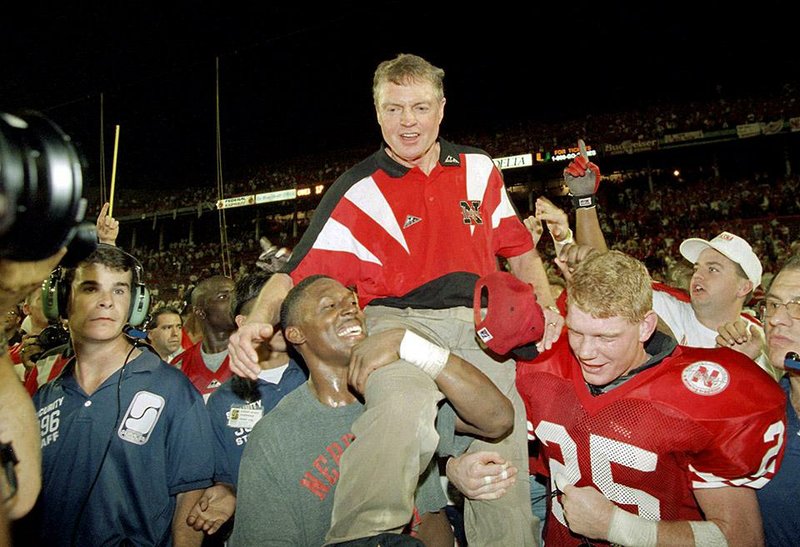
And the Orange Bowl is played in Miami, at the stadium of the same name. It was also the home field for the football team at the University of Miami, who were ranked Number 3 in the country, and invited to play in it.

The Number 1 team in the country was also invited to play in it. This was the University of Nebraska.

In spite of Nebraska being ranked higher, all signs pointed to a Miami win.

Since winning back-to-back National Championships in 1970 and 1971, Nebraska had won 12 Big Eight Conference Championships, 3 Sugar Bowls, 2 Orange Bowls and a Cotton Bowl. But they hadn't won another National Championship. They only lost 1 game in 1982, by 3 points, away to Penn State. They put up one of the most stunning seasons in college football history in 1983, but lost the Orange Bowl to Miami on a missed 2-point conversion.

That started Miami on a quasi-dynasty that saw them awarded that season's National Championship, and win it again in 1987, 1989 and 1991, and just miss it in 1986, 1988 and 1992. So in a stretch of 10 seasons, they reached an official or unofficial game for the National Championship 7 times, winning 4 of them. In those 10 seasons, they ended up Number 1 in the final poll 4 times, Number 2 twice, and Number 3 3 times.

But Nebraska couldn't get over the hump. Head coach Tom Osborne had been an assistant to Bob Devaney on those early 1970s titles, but since taking over in 1973, he couldn't win one himself. From 1982 to 1993, 12 seasons, the Cornhuskers had regular seasons of 11-1, 12-0, 9-2, 9-2, 9-2, 10-1, 11-1, 10-1, 9-2, 9-1-1, 9-2 and 11-0. They lost 3 Orange Bowls to Miami. And just 1 year earlier, on New Year's Day 1994, they thought they had the National Championship won with a last-minute field goal over Florida State. But they gave up a field goal, and then missed one on the last play.

At this point, the Chicago Cubs hadn't won a World Series in 86 years, the Boston Red Sox hadn't won one in 76 years, the New York Rangers had just ended a Stanley Cup drought at 54 years, and Nebraska football, while their drought was a much shorter 33 years, it was similarly tinged with painful close calls.

So when football fans found out that Nebraska's opponents for the de facto National Championship game were the Miami Hurricanes, it seemed like, as baseball legend Yogi Berra would have said, "Déjà vu all over again."

This was a typical Nebraska team, pounding weak opponents and doing enough, sometimes just enough, to beat the stronger ones. They opened the season ranked Number 4, and beat Number 24 West Virginia in the Kickoff Classic at the Meadowlands. They hung 70 points on the University of the Pacific, 49 on Number 13 UCLA, 45 on Kansas, 42 on Texas Tech, 42 on Wyoming, 42 on Missouri.

Kansas State was ranked Number 16 when Nebraska went there and won, 17-6. The 'Huskers essentially wrapped up the Big Eight Conference title when, ranked Number 3, they beat Number 2 Colorado at home, 24-7. And they went to arch-rival Oklahoma and beat them, 13-3.

Miami were 10-1 under head coach Dennis Erickson. Their only loss was to Number 17 Washington, but it did come at the Orange Bowl. They did manage to beat Number 3 Florida State, Number 10 Syracuse, Number 13 Virginia Tech, and Number 25 Boston College, winning the Big East Conference title.

Cliché Alert: In football, home-field advantage is said to be worth 3 points. The Las Vegas oddsmakers took that into account, and installed Miami as favorites by 1 point.

Midway through the 1st quarter, Dan Prewitt kicked a field goal to put Miami on the board. At the end of the quarter, Frank Costa threw a touchdown pass to Trent Jones, and now the Hurricanes were up 10-0. It was looking like another bad ending for Nebraska.

But the 'Huskers made the only score of the 2nd quarter, as Brook Berringer threw a touchdown pass to Mark Gilman. The teams went into the locker room with the score 10-7 Miami, and the game still either team's to win.

Early in the 3rd quarter, Costa threw to Jonathan Harris, who ran 44 yards for a touchdown. It was 17-7 Miami, and with 28 minutes to go, it looked like Nebraska were beaten. Within 2 minutes, Nebraska had to punt the ball away. But with 11:35 left in the 3rd, Dwayne Harris sacked Costa in the end zone for a safety. The 3rd quarter ended 17-9 in Miami's favor.

Theoretically, it was now a one-score game. Quarterback Tommie Frazier drove the 'Huskers down the field. With 7:38 left in regulation, running back Cory Schlesinger scored on a 15-yard run. Frazier threw to Eric Alford for the 2-point conversion, the play that had doomed Nebraska on that very field 11 years earlier (and had helped to do so 1 year earlier). This time, it was successful, and the game was tied, 17-17.

Miami could do nothing with their next possession. Nebraska got the ball back, and Frazier drove them again. With 2:46 left, Schlesinger broke off a nearly identical run, and rumbled into the end zone. The extra point was good, and Nebraska led. Their defense held, and they were 24-17 victors.

The Nebraska Cornhuskers were redeemed. Tom Osborne had his National Championship. And his greatest victory had just been won on the site of his greatest defeat.

Two weeks later, Erickson resigned from Miami, to become head coach of the NFL's Seattle Seahawks. He did not do well there. In contrast, Osborne won another National Championship in 1995, and another in 1997 (albeit with the polls split, one poll choosing Nebraska, the other choosing Michigan).

Schlesinger played 12 seasons in the NFL, mostly as a blocking back for the Detroit Lions, making 3 Pro Bowls. Despite quarterbacking the 'Huskers to back-to-back National Championships, Frazier was not drafted, because NFL teams were afraid of his history of blood clots. He played 1 season with the CFL's Montreal Alouettes, but his illness took hold again, and he had to retire. Like Turner Gill, the quarterback on the 1983 Nebraska team that crashed through everybody before losing the title to Miami, he went into coaching. He was still better off than his backup, Berringer, who was killed in a plane crash in 1996.

Only 1 other bowl game was played that New Year's Day: Number 23 North Carolina State beat Number 16 Mississippi State in the Peach Bowl, at the Georgia Dome in Atlanta.

The rest of the major bowl games were played the next day, January 2 -- and it could have been argued that Nebraska still didn't have the National Championship won. Penn State was undefeated, and playing in the Rose Bowl. They beat Oregon, 38-20, and their fans still claim the 1994 season as a National Championship.

But both the final AP poll (the Associated Press, the sportswriters) and the final UPI poll (United Press International, the coaches) gave it to Nebraska. I guess they didn't want to take Osborne's great moment away. Or maybe they already knew about the harm that was being caused in Joe Paterno's program.

The reason there were comparatively few bowl games played on New Year's Day is that it was a Sunday, and it was the 1st round of the NFL Playoffs. Two games were played in those Playoffs. The Cleveland Browns beat the New England Patriots, 20-13, in what turned out to be the last postseason game, in any sport, at Cleveland Municipal Stadium. The Browns didn't win another Playoff game for 16 years. And the Chicago Bears beat the Minnesota Vikings, 35-18 at the Metrodome in Minneapolis.

January 1, 1935: The 1st Orange Bowl & the 1st Sugar Bowl

January 1, 1935, 90 years ago: The 1st Orange Bowl is played, at Miami Field in Miami. Unlike in a few later appearances, having the home-field advantage did not help the University of Miami, as they lost to Bucknell University, 26-0.

The Bison defense held the Hurricanes to just 4 1st downs and 28 yards total offense en route to the victory. The Bucknell offense gained 278 yards, and earned its 6th shutout of the season.

The Orange Bowl was pattered after the Rose Bowl in Pasadena, California, with its pregame Tournament of Roses Parade. The Fiesta of the American Tropics parade was held in 1926, but there was no game. Then came the Florida land bust that year, and then the Great Depression in 1929, killing Florida tourism.

In 1932, trying to revive Florida tourism, Miami was ready to try again. A parade was held on January 1, 1933, and a Festival of Palms Bowl was played at Moore Park on January 2, with the University of Miami beating Manhattan College, 7-0. In 1934, again at Moore Park, Miami lost to Duquesne University of Pittsburgh. For the following season, the organizing committee received official sanction from the NCAA, and, for that reason, the 1935 edition was not only the 1st to carry the Orange Bowl name, but is recognized as the 1st Orange Bowl, rather than the 3 earlier Festival of Palms Bowls.

And so, every year, from 1936-37 to 2001-02, the King Orange Jamboree Parade would be held in downtown Miami on New Year's Eve, and the Orange Bowl on New Year's Day, except when January 1 fell on a Sunday, moving the game back to January 2. Traditionally, NBC televised both. The Parade's attendance dropped, and it was canceled in 2002.

Bucknell, in Lewisburg, Pennsylvania, downgraded its football program in 1948. In 1973, with the NCAA reclassifying, they were put in Division II. In 1978, they were promoted to Division I-AA, which was renamed the Football Championship Subdivision (FCS) in 2006. They have played at the same stadium since 1924. In 1989, it was renamed Christy Mathewson-Memorial Stadium, in honor of the school's most famous graduate, the New York Giants pitcher who was 1 of the 1st 5 players elected to the Baseball Hall of Fame.

Clarke Hinkle, star running back for the Green Bay Packers in the 1930s, before this Orange Bowl, remains Bucknell's greatest football player. They have never again appeared in a bowl game, and have never won a conference championship.

Miami, on the other hand, would have a decent football history until the 1980s, when they became a bit indecent, but also one of the best programs in the game. In 1937, they moved into Burdine Stadium, built on the site of Miami Field, named for the late Roddy Burdine, department store owner and major booster of the City of Miami. The stadium was renamed the Miami Orange Bowl in 1959, and would host 5 Super Bowls, including the New York Jets' famed upset of the Baltimore Colts in Super Bowl III.
The Miami Dolphins played at the Orange Bowl from 1966 to 1986, then moved into Joe Robbie Stadium in suburban Miami Gardens in 1987. The Orange Bowl game was first played there in 1997 and 1998, moved back to its namesake stadium in 1999, and has been played at the Miami Gardens facility, now named Hard Rock Stadium, from 2000 onward. The University of Miami last played at the Orange Bowl in 2007, and moved to Miami Gardens. The stadium was demolished in 2008, and the new home of the Miami Marlins, now named LoanDepot Park, opened on the site in 2012.
From 1968 to 1996, the Champion of the Big Eight Conference was officially awarded a berth in the Orange Bowl, something that had unofficially been done since 1954. It was accepted all but twice, by Nebraska in 1974 and 1975, in favor of a better shot at the National Championship. They paid dearly for this, losing both times. Since the 2014 season, the Champion of the Atlantic Coast Conference has been guaranteed a berth in the Orange Bowl, unless it qualifies for the National Championship Playoff.

The Orange Bowl has featured 16 teams that won the National Championship for the preceding calendar year: Miami in 1988 and 1992; Oklahoma in 1954, 1987 and 2001; Nebraska in 19871, 1972, 1995 and 1997; Georgia Tech in 1952; Alabama in 1965; Clemson in 1982;  Notre Dame in 1990; Colorado in 1991; and Florida State in 1994.

*

January 1, 1935 was a Tuesday. This was also the day the 1st Sugar Bowl was played, at Tulane Stadium in New Orleans. Tulane University beat Temple University, 20-14.
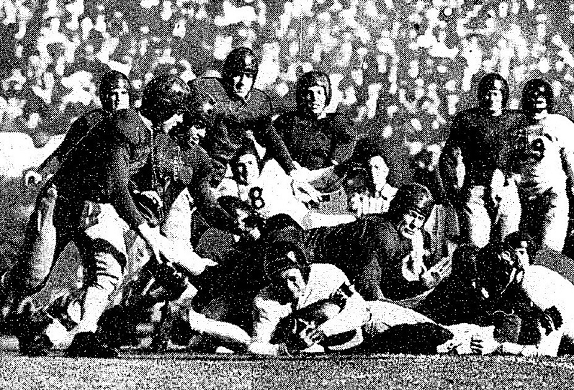
The most notable play of the game came in the 2nd quarter, when Tulane's quarterback, John McDaniel, caught a Temple kickoff, ran to the right to draw tacklers, then threw a lateral pass to his teammate Monk Simons, who ran 75 yards for the touchdown. Two more Tulane touchdowns in the second half outweighed Temple's early lead.

Tulane had been built on a sugar plantation, and sugar was long the leading crop in the State of Louisiana. Hence, the game was named for a local crop. New Orleans civic leaders wanted to copy Pasadena, California's Rose Bowl for a few years, and finally got it set up for 1934-35. There was no pregame parade, however.

Tulane had been one of the South's leading football schools, winning titles in the Southern Intercollegiate Athletic Association in 1920, and the Southern Conference in 1925, 1929, 1930 and 1931. That league was the forefather of both the Southeastern Conference (SEC) and the Atlantic Coast Conference (ACC).

In 1933, Tulane was a founding member of the SEC, and won the title in 1934, giving them the credibility to host the bowl game. They would win the SEC again in 1939 and 1949, but went into decline, and left the league after the 1965 season, surpassed in football importance in their State by Louisiana State University (LSU), and even by the black college rivalry between Grambling State and Southern University. They would later win the title in Conference USA in 1998, and are now members of the American Athletic Conference (AAC), having won the AAC title in 2022.

The game was held at Tulane Stadium from 1935 until 1975. In 1975, the Louisiana Superdome opened, and the game has been held there every year since, with the exception of 2006, when it was held at the Georgia Dome in Atlanta, due to repairs on the Superdome from Hurricane Katrina.
Tulane Stadium

Temple have also never again reached the football heights they reached in the 1930s. They devalued their program in 1958, but began moving back up in 1991, becoming members of the Big East Conference. In 2013, they joined the American Athletic Conference (AAC), winning it in 2016.

After the inaugural Sugar Bowl, they didn't go to another bowl game until the 1979 season, and then not again until 2009. They won the Garden State Bowl in 1979, the New Mexico Bowl in 2011, and the Gasparilla Bowl in 2017. But they've never been to another traditional New Year's Day bowl game.

Tulane Stadium hosted Super Bowls IV, VI and IX, and was home to the NFL's New Orleans Saints from 1967 to 1974, before they and the Green Wave moved into the Superdome for the 1975 season. Tulane Stadium was demolished in 1979, the 1st of the 4 classic New Year's Day bowl game facilities to go. (The Orange Bowl followed in 2008, while the Rose Bowl and Cotton Bowl stadiums still stand.) In 2014, Yulman Stadium was opened on the site of Tulane Stadium.
The Superdome

The Sugar Bowl has usually invited the SEC Champion, although this was not made official until the 1976 season. With the advent of the Bowl Championship Series (BCS) in the 1998 season, hosting the SEC Champion was no longer a given. Given the success of the SEC since the start of the National Championship Playoff in 2014, it's been almost impossible.

The Sugar Bowl has featured the National Champions of the preceding calendar year 23 times: Louisiana State University (LSU) in 1959 and 2007; the University of Mississippi (Ole Miss) in 1960, 1961 and 1963; Alabama in 1962, 1979, 1980 and 1993; the University of Miami in 1990 and 2001; Texas Christian University (TCU) in 1939; Texas A&M in 1940; Oklahoma in 1950; Maryland in 1952; Georgia Tech in 1953; Notre Dame in 1974; the University of Pittsburgh in 1977; Georgia in 1981; Penn State in 1983; Florida in 1997; Florida State in 2000; and Ohio State in 2021.

Also on this day, the Rose Bowl was played at the stadium of the same name, outside Los Angeles in Pasadena, California. Alabama completed an undefeated season, ruining Stanford's, 29-13. The Cotton Bowl debuted on New Year's Day 1937.

Saturday, November 23, 2024

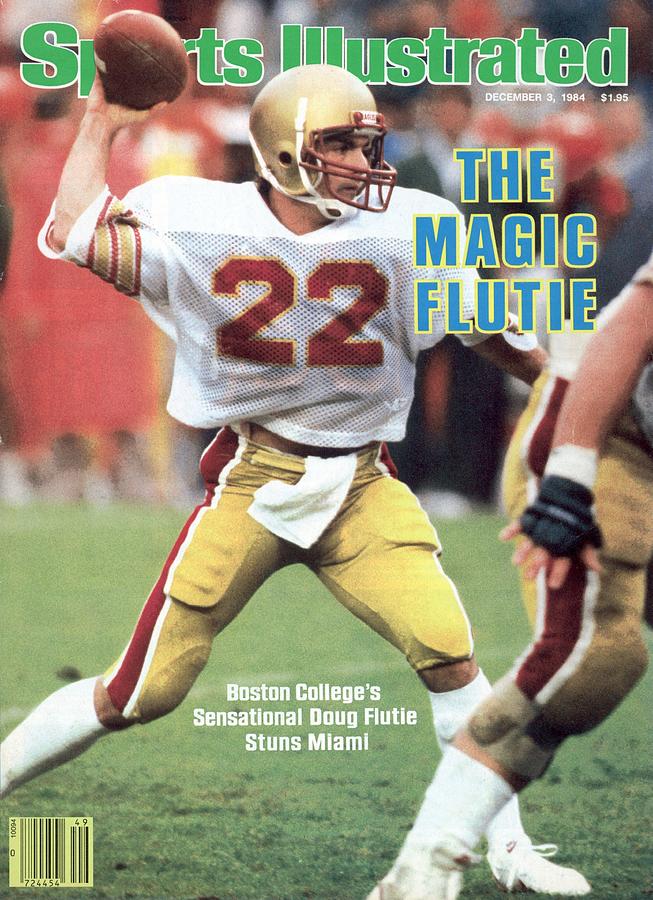
November 23, 1984: Doug Flutie's Miracle In Miami

November 23, 1984, 40 years ago: It is the day after Thanksgiving, and this was the early days of retail treating it as "Black Friday," the biggest shopping day of the year, which has come to, traditionally, set the tone for the Christmas season: Either they will make big profits, and be "in the black"; or they will be wearing black for mourning.

Thanksgiving weekend is also a time for football. The day before, many high school games were played, much more so than are played today. I was a sophomore at East Brunswick High School in Central New Jersey, and my Bears came back from a 27-13 deficit to beat Colonia High School of Woodbridge, 33-27, and clinch the Championship of the Middlesex County Athletic Conference and an undefeated regular season. It's often regarded as the greatest football game in the school's history. Unfortunately, we lost the Central Jersey Group IV Final, costing us a "State Championship" and an undefeated full season, something, to this day, we've never had.

There was only one college football game that Thanksgiving Day, a minor rivalry to everyone but those connected to the schools playing: Miami University of Ohio beat the University of Cincinnati, 31-26 at Nippert Stadium in Cincinnati. Miami University, in Oxford, Ohio, was founded in 1809, 8 years before Ohio gained Statehood. In contrast, the University of Miami, in suburban Coral Gables, Florida, wasn't founded until 1925.

In the NFL, both of the traditional home teams won: The Detroit Lions beat the Green Bay Packers, 31-28 at the Silverdome in Pontiac, Michigan; and the Dallas Cowboys beat the New England Patriots, 20-17 at Texas Stadium in Irving.

There was only one college game played on the day after Thanksgiving, on CBS. So anybody who wanted to watch a football game at that point was watching it. At the time, there was a Big East Conference, but they did not sponsor a football competition. If they did, this game would have decided its Championship. The fact that both teams involved have since moved to the Atlantic Coast Conference (ACC) should not attract from what that meant.

The University of Miami were the defending National Champions, having shocked the University of Nebraska in the previous season's Orange Bowl game, in the stadium of the same name, which was the Hurricanes' usual home field.

Bernie Kosar quarterbacked them as a freshman, and now, as a sophomore, had led them to an 8-3 record. They had won the Kickoff Classic at the Meadowlands, beating then-Number 1 Auburn. They beat Number 17 Florida on neutral ground in Tampa. They beat Number 16 Notre Dame away. But they had lost to Number 14 Michigan away, losing the Number 1 ranking in the process. They had lost to Number 15 Florida State at home.

And, in their last game before this one (they had a week off in between), they lost an embarrassing one: They led Maryland 31-0 at the half, and lost, 42-40. For many years thereafter, it was the biggest comeback in NCAA Division I-A (now FBS, the Football Bowl Subdivision) history. The Maryland quarterback was Frank Reich, substituting for the injured Boomer Esiason. In the 1992 NFL Playoffs, subbing for the injured Jim Kelly -- who had played at Miami -- Reich led the Buffalo Bills to what is still the biggest comeback in NFL history, from 35-3 down to beat the Houston Oilers, 41-38 in overtime.

Their opponents for this game would be Boston College. BC had some good teams in the 1930s and '40s, but hadn't done much since. In 1981, they were struggling, losing to the University of Pittsburgh, ranked Number 2 in the country, and coach Jack Bicknell turned to a 5-foot-9 3/4-inch freshman quarterback from nearby Natick, Massachusetts, and said, "Okay, Flutie, see what you can do."

And Doug Flutie went in, and nearly pulled the upset. They ended the season 5-6. The next season, Sports Illustrated noted that Flutie would be the starting quarterback, and whoever was writing the article finished with, "Good luck, Flutie."

Flutie made his own luck, leading BC to an 8-3-1 record. Their non-wins were all against then-ranked teams: A tie away to Number 16 Clemson, and losses away to Number 16 West Virginia, home to Number 8 Penn State, and to Number 18 Auburn in the Citrus Bowl. It was their 1st bowl game in 39 years.

As a junior in 1983, Flutie led them to a 9-3 season, losing at home to Number 12 West Virginia, away to unranked Syracuse, and in the Liberty Bowl to Notre Dame. On October 29, in a game too big for their 32,000-seat on-campus Alumni Stadium, they played defending National Champion (but, at the time, unranked) Penn State at Sullivan Stadium, home of the NFL's New England Patriots (later renamed Foxborough Stadium). Before a crowd of 56,605, and millions more watching on ABC, the Eagles beat the Nittany Lions, 27-17. Flutie, already the classic "local boy makes good," became a national star.

BC were 7-2 going into their game with Miami. They had beaten Number 9 Alabama in Birmingham, but had lost 2 games, away to Number 20 West Virginia and away to Penn State -- by a combined 8 points. BC were ranked Number 10, Miami Number 12. In spite of these rankings, Miami were a 6-point betting favorite. (Keep in mind: In football, home-field advantage is traditionally said to be worth 3 points.) Flutie was the favorite for the Heisman Trophy, although Kosar was also a contender for it. The winning quarterback would get his Heisman vote totals boosted significantly.

The game was played at the Orange Bowl, in a driving rainstorm throughout. It was almost as if there was a real hurricane going on. It kicked off at 2:30 PM Eastern Time, and BC jumped out to a 14-0 lead. Miami scored a touchdown before the 1st quarter ran out, and tied the game with a touchdown early in the 2nd quarter.

BC scored on a run by Flutie, then Miami scored on a Kosar touchdown pass, then BC did so on a touchdown pass from Flutie to his college roommate, Gerard Phelan. At halftime, the score was Boston College 28, Miami 21. So there had already been as much action as in most full games.

In the 3rd quarter, Miami scored another touchdown, and the teams traded field goals. The quarter ended with the game tied, 31-31. BC kicked another field goal to make it 34-31, but Melvin Bratton broke off a 52-yard run to make it 38-34 Miami. It seemed like Miami had the game won. Flutie led a drive that ended with a touchdown, and it was 41-38 BC. But Kosar led a drive that ended with another touchdown run by Bratton, and it was 45-41 Miami.

BC got the ball back with 28 seconds left in regulation, on their own 20 yard line. Flutie got the Eagles to the Hurricanes' 48-yard line. There were 6 seconds left. Time for one more play. A field goal wouldn't have helped, it would have been 65 yards anyway, and the weather and the wet grass would have made it a tricky proposition regardless of how close it was. There was no choice: The play had to result in a touchdown.

Before the play, CBS announcer Brent Musberger said, "One thing is certain: Those brave folks who sat out here in the Orange Bowl, and put up with this terrible weather, saw a whale of a football game, and they should give both teams a rousing ovation when this one is over." His broadcast partner, former Notre Dame coach Ara Parseghian, whose career included a 10-10 tie with Michigan State in 1966, known as "The Game of the Century," followed this with, "This is one of the better ones that I've seen."

Flutie called "55 Flood Tip": No running backs, and all eligible receivers run straight routes to the end zone. He was flushed out of the pocket by the Miami defense, and had to scramble. He had to attempt his 46th pass of the game, on the run, throwing from his own 37-yard line, meaning the ball had to fly at least 63 yards, into a 30-mile-per-hour wind, and through the rain.

Flutie heaved the ball. Since a Roger Staubach to Drew Pearson play in the 1975 NFL Playoffs, such a pass had been known as a "Hail Mary." Some Catholics find the expression offensive. In this case, given that Boston College is a Catholic school -- specifically, Jesuit -- it might have been appropriate.

Three Miami defensive backs blanketed receiver Kelvin Martin. There would be no way he could catch the ball. Phelan was behind them. It would require perfect placement of both man and ball for him to catch it. He did. Boston College 47, Miami 45. Ballgame. No chance to try for an extra point, with everyone running onto the field, and no need for it.

"Caught by Boston College!" Musberger yelled. "I don't believe it! It's a touchdown! The Eagles win it! I don't believe it! Phelan is at the bottom of that pile!" The entire team piled onto Phelan. As Musberger noted, "Jack Bicknell is the only person over there on the sidelines! He couldn't get the headset off fast enough! Doug Flutie has done it! And your heart goes out to Bernie Kosar. He did everything he could."

Kosar had passed for 447 yards, then a school record, with 2 touchdowns. And Bratton had run for 4 touchdowns. It was all for naught, as Flutie passed for 472 yards, becoming the 1st major college quarterback with 10,000 career passing yards. He also threw for 3 touchdowns. Miami punted only once all game; BC, just 3 times.

The game became known as the Miracle in Miami, and if there was any doubt before the game that Flutie would win the Heisman Trophy, that doubt disappeared into Phelan's hands. Ohio State running back Keith Byars finished 2nd. Robbie Bosco, who quarterbacked Brigham Young University to a controversial National Championship, finished 3rd. Kosar was 4th. Jerry Rice of Mississippi Valley State, who went on to become the greatest receiver in football history, finished 9th. Bo Jackson of Auburn, who would win it the next season, did not finish in the Top 10 this season.

Miami went on to lose the Fiesta Bowl to UCLA. Kosar would have a good pro career with the Cleveland Browns, before winning a Super Bowl ring as Troy Aikman's backup on the Dallas Cowboys.

Flutie's last college game was in the Cotton Bowl, and BC beat the University of Houston. But NFL teams passed on him due to his lack of height. This was so dumb. How dumb was it? Well, let's absolve the following teams, because they drafted Hall-of-Famers: The San Francisco 49ers, Rice; the Buffalo Bills, Bruce Smith; and the Minnesota Vikings, Chris Doleman. And, besides, the 49ers had Joe Montana, while the Bills had the rights to Jim Kelly. And several other teams drafted All-Pros. But lots of teams needed a quarterback, and didn't draft Flutie, and struggled for years to come.

Flutie signed with the New Jersey Generals of the United States Football League, and led them to the Playoffs. When the USFL folded, the Chicago Bears signed him, against the wishes of head coach Mike Ditka. Ditka refused to start him over an already-injured Jim McMahon, and the Bears haven't won a Super Bowl since. In 1987, the Bears traded Flutie to his hometown New England Patriots, but they kept him as a backup to Tony Eason, and didn't get too far, and released him after the 1989 season, and got even worse.

Flutie signed with the Vancouver-based BC Lions of the Canadian Football League. In 1992, he was traded to the Calgary Stampeders, and he led them to the CFL Championship, the Grey Cup. He did the same for the Toronto Argonauts in 1996 and '97. All 3 times, he was named the game's Most Valuable Player. He was named the CFL's Most Outstanding Player 6 times in 7 years from 1991 to 1997.

Finally, at the age of 36, the NFL could ignore him no longer. With Kelly having retired after the 1996 season, the Bills signed Flutie, and he led them to the Playoffs, made the Pro Bowl, and was named the NFL Comeback Player of the Year. He got them back into the Playoffs in 1999, but coach Wade Phillips benched him for the Playoff game against the Tennessee Titans, in favor of Rob Johnson. The Bills lost, and didn't make the Playoffs again for 18 years.

Flutie played 4 years for the San Diego Chargers, and closed his career with the Patriots, as a backup to Tom Brady. In his last game, against the Miami Dolphins, on New Year's Day 2006, he did something no NFL player had done since 1941: He converted a dropkick. It was good for a point-after-touchdown, and the Patriots won.

Doug Flutie is not in the Pro Football Hall of Fame. It is, quite specifically, not "The National Football League Hall of Fame." It includes a few players who would not have made it if not for their performances in the All-America Football Conference (1946-49) and the 1960s version of the American Football League, including Billy Shaw, who played 9 seasons for the Bills, all in the AFL, and never played a down in the NFL.

Still, voters for it tend not to consider CFL statistics. There are really only 2 NFL players who are not in the Hall whose qualifications would be noticeably boosted if their CFL tenures were included, and they're both quarterbacks: Joe Theismann and Doug Flutie. Another quarterback, Warren Moon, is the only player in the Hall with significant CFL performance, although Bud Grant won 4 Grey Cups as a coach in Winnipeg before becoming a Hall of Fame coach in Minnesota.

Oddly, for all the exposure BC got from the Flutie years, their Alumni Stadium wasn't expanded to its present 44,500 seats until the 1994 season.

Wednesday, July 31, 2024

Arsenal In America: The Complete History, 1972-2024

May 31, 1972, Orange Bowl, Miami.

1 Goalkeeper (GK) Geoff Barnett, in place of the injured Bob Wilson
2 Right Back (RB) Pat Rice
3 Left Back (LB) Sammy Nelson, in place of Bob McNab
4 Midfielder (MF) Peter Storey
5 Centreback (CB) Frank McLintock; sub: 14 John Roberts
6 CB Peter Simpson
7 MF George Armstrong
8 MF Alan Ball; sub: 12 Eddie Kelly
9 Forward (FW) John Radford
10 FW Ray Kennedy
11 FW Charlie George.

Miami Gatos 2-3 Arsenal, the Gunners coming from 1-0 down at the half. The Gatos were a North American Soccer League franchise that played from 1972 to 1976, known after that 1st season as the Miami Toros -- the Cats becoming the Bulls. Goals by George, Radford and Kennedy. Attendance: 4,725.

May 23, 1973, Varsity Stadium, Toronto.

1 GK Bob Wilson
2 RB Pat Rice
3 LB Bob McNab
4 MF Eddie Kelly
5 CB Richie Powling
6 CB Peter Simpson
7 FW Peter Marinello
8 MF Brian Chambers
9 FW John Radford
10 FW Charlie George
11 MF George Armstrong
(No substitutions were used. Peter Storey and Ray Kennedy did not play.)

Toronto Select 0-1 Arsenal. Charlie George scored the game's only goal. Attendance: I can't find a reference.

Four days later, in a game that was in the CONCACAF region but not on the North American continent, Arsenal beat Devonshire Colts in Bermuda, 4-0. It was the same lineup, with Charlie scoring again, as did Marinello (in what turned out to be his last appearance for the club), and Radford twice.

Other CONCACAF, but not North American countries or country equivalents where Arsenal have played include Trinidad & Tobago, Jamaica, Curacao and Aruba in 1965; and Trinidad & Tobago again in 1982 and 1985. Arsenal have never played in Mexico, nor in any nation that could be called "Central America."

Their only visits to South America have been Summer tours of Brazil in 1949 and 1951. They've played in Africa in South Africa in 1964 and 1993, and in Egypt in 1982. Their visits to Asia have included Japan in 1968 and 2013; Singapore in 1975, 1977, 1990, 2015 and 2018; Thailand in 1975 and 1999; Malaysia in 1975, 1999, 2011 and 2012; the United Arab Emirates in 1976, 2019 and 2022; Kuwait in 1977; China in 1981, 1995, 2011, 2012 and 2017; Indonesia in 1983 and 2013; Saudi Arabia in 1984; and Vietnam in 2013. They went to Australia in 1977 and 2017.

August 6, 1989, Joe Robbie Stadium, Miami Gardens, Florida.
Left to right: Michael Thomas, David Rocastle, Lee Dixon

1 GK John Lukic
2 RB Lee Dixon
3 LB Gus Caesar (in place of Nigel Winterburn)
4 MF Michael Thomas
5 CB David O'Leary
6 CB Tony Adams
7 MF David Rocastle
8 MF Kevin Richardson
9 FW Alan Smith
10 MF Paul Merson
11 MF Steve Morrow (in place of Brian Marwood or Martin Hayes)

Independiente 1-2 Arsenal. Club Atletico Independiente, of Avellaneda in the province of Buenos Aires, were the defending champions of Argentina, as Arsenal were the defending champions of England. This was for the Zenith Data Systems Challenge Trophy, a phony "world championship." "Rocky" Rocastle scored from open play in the 1st half, and from a penalty in the 2nd half.

For the 2nd time, Arsenal decided that the best place in America to visit during the Summer was Miami. Attendance: 10,042, the vast majority of them Hispanics rooting for the South American team. Each team had someone sent off: Independiente, a player; Arsenal, oddly enough, physio Gary Lewin.

And then Arsenal did not return to North America for a quarter of a century. Joe Robbie Stadium has gone through several name changes, and is now Hard Rock Stadium.

July 26, 2014, Red Bull Arena, Harrison, New Jersey, outside New York.
Thierry Henry and Jack Wilshere

1 GK Wojciech Szczesny; 46th minute sub: 26 Emiliano Martinez
3 LB Kieran Gibbs, played entire game
7 FW Tomáš Rosický; 71st minute sub: 37 Chuba Akpom
8 MF Mikel Arteta; 46th minute sub: 34 Francis Coquelin
10 MF Jack Wilshere; 71st minute sub: 56 Jon Toral
16 MF Aaron Ramsey; 46th minute sub: 24 Abou Diaby
18 CB Nacho Monreal, played entire game
19 MF Santi Cazorla; 71st minute sub: 53 Kristoffer Olsson
25 RB Carl Jenkinson; 46th minute sub: 39 Héctor Bellerín
35 MF Gedion Zelalem; 46th minute sub: 20 Mathieu Flamini
45 CB Isaac Hayden; 46th minute sub: 48 Ignasi Miquel

New York Red Bulls 1-0 Arsenal. Attendance: A sellout of 25,219, including myself. If the game had been played at the 41,922-seat Citi Field in Flushing, Queens; at the 49,638-seat new Yankee Stadium in The Bronx; or even at the 82,566-seat MetLife Stadium, at the Meadowlands Sports Complex in East Rutherford, New Jersey, it would still have sold out. That's how much of a following The Arsenal have in America, and particularly in the New York Tri-State Area.

Bradley Wright-Phillips, son of Arsenal legend Ian Wright, scored the only goal. Diaby had a goal disallowed for offside -- incorrectly, I thought. (Some things never change: Even in meaningless games on other continents, The Arsenal get screwed over by the officials.) It is ironic that the Arsenal player most known for not playing due to injury had come the closest to scoring in an Arsenal uniform than any player I've ever seen, and would hold that title until 2024. I had seen Thierry Henry score, and in that very stadium, but for the Red Bulls.

Several Arsenal players who featured in the 2014 World Cup did not make the trip: Germans Per Mertesacker (4) and Mesut Özil (11); Frenchmen Laurent Koscielny (6) and Olivier Giroud (12); Englishmen Theo Walcott (14) and Alex Oxlade-Chamberlain (15); and Chilean Alexis Sánchez (17).

As a result, the club was short at certain positions. Rosický, normally a midfielder, played the 1st 70 minutes up top. Monreal, normally a left back, was moved to centreback. Zelalem, only the 3rd American ever to play for Arsenal (after Frank Simek in 2003 and Danny Karbassiyoon in 2004), became the 1st player from a CONCACAF nation to play for Arsenal in a CONCACAF nation, let alone his own.

I had seen Özil play for Real Madrid against AC Milan at Yankee Stadium on August 8, 2012, and Mertesacker and Lukas Podolski play for Germany against the U.S. team at Robert F. Kennedy Stadium in Washington on June 2, 2013, that latter game being my first time seeing an active Arsenal player, albeit not playing for Arsenal, which is what this 2014 game was all about. The first former Arsenal player I ever saw playing for anybody was Freddie Ljungberg, for the Seattle Sounders against the Red Bulls at Red Bull Arena, on April 3, 2010.

This game, and the 2012 Emirates Cup 1-1 draw between the clubs, may be as close as we come to Henry, who with only 9 seasons in an Arsenal shirt falls just short of qualifying, ever getting an official testimonial.

July 28, 2016, Avaya Stadium, San Jose, outside San Francisco.

33 GK Petr Cech; 67th minute sub: 26 Emiliano Martinez
2 RB Mathieu Debuchy; 46th minute sub: 24 Héctor Bellerín)
3 LB Kieran Gibbs; 46th minute sub: 18 Nacho Monreal
10 MF Jack Wilshere; 46th minute sub: 17 Alex Iwobi
14 FW Theo Walcott; 67th minute sub: 68 MF Chris Willock, his Arsenal debut
15 MF Alex Oxlade-Chamberlain; 67th minute sub: 32 FW Chuba Akpom
16 CB Rob Holding, his Arsenal debut, played entire game
28 MF Joel Campbell; 69th minute sub: 31 FW Jeff Reine-Adelaide
34 MF Francis Coquelin; 46th minute sub: 29 Granit Xhaka, his Arsenal debut
35 MF Mohamed Elneny; 67th minute sub: 40 Gedion Zelalem
37 CB Krystian Bielik; 46th minute sub: 21 Calum Chambers

MLS All-Stars 1-2 Arsenal. Campbell and Akpom the Arsenal scorers.

Özil, Koscielny and Giroud did not play, because they featured in Euro 2016. Özil at least made the trip. Mertesacker did not, because he was injured. Sánchez, now wearing 7, did not make the trip, because he featured in the Copa America.

Attendance: Listed as exactly 18,000, which, if true, would be a sellout. Just 2 days later, Liverpool and AC Milan played just a few miles away at Levi's Stadium, the new home of the NFL's San Francisco 49ers, and sold out at 68,500. I have no doubt that Arsenal, never mind the MLS All-Stars, could have sold that out, too. Avaya Stadium is now named PayPal Park.

July 31, 2016, StubHub Center, Carson, California, outside Los Angeles.

13 GK David Ospina; 68th minute sub: 26 Emiliano Martinez
14 FW Theo Walcott; 46th minute sub: 32 Chuba Akpom
15 MF Alex Oxlade-Chamberlain; 65th minute sub: 40 Gedion Zelalem
16 CB Rob Holding, played entire game
17 MF Alex Iwobi; 65th minute sub: 68 Chris Willock
18 LB Nacho Monreal; 46th minute sub: 3 Kieran Gibbs
19 MF Santi Cazorla; 46th minute sub: 28 Joel Campbell
21 CB Calum Chambers; 46th minute sub: 37 Kristian Bielik
24 RB Héctor Bellerín; 46th minute sub: 2 Mathieu Debuchy
29 MF Granit Xhaka; 46th minute sub: 35 Mohamed Elneny
34 MF Francis Coquelin; 65th minute sub: 31 Jeff Reine-Adelaide

Club Deportivo Guadalajara 1-3 Arsenal. Holding, Oxlade-Chamberlain and Akpom the Arsenal scorers against the team popularly known as Chivas. A rare match in which no players wearing Numbers 1 through 11 started, for either side.

Attendance: 24,000. This may have been the 1st time that a Mexican team has played in California and had their fans outnumbered. Three days earlier, Chelsea beat Liverpool at the Rose Bowl in nearby Pasadena, in front of 53,117. Arsenal would have done at least that well.

The StubHub Center is now named Dignity Health Sports Park.

Goals scored by Arsenal in North America, December 11, 1886 to July 27, 2016: 6.
Goals scored by Arsenal in North America, July 28 to 31, 2016: 5.

July 15, 2019, Dick's Sporting Goods Park, Commerce City, Colorado, outside Denver.

33 GK Matt Macey
21 CB Calum Chambers; 62nd minute sub, 31 Sead Kolašinac
25 RB Carl Jenkinson
30 FW Eddie Nketiah; 78th minute sub, 9 Alexandre Lacazette
41 MF Robbie Burton
45 MF Tyreece John-Jules; 78th minute sub, 14 Pierre Emerick Aubameyang
49 CB Zech Medley
52 MF James Olayinka; 62nd minute sub, 28 Joe Willock
60 LB Dominic Thompson; 62nd minute sub, 20 Shkordan Mustafi
77 LW Bukayo Saka
35 RW Gabriel Martinelli; 78th minute sub, 10 Mesut Özil

Colorado Rapids 0-3 Arsenal. This trip was a bright moment in the dark interlude of the management of Unai Emery, after the stupidity of forcing Arsène Wenger out. I mean, come on: Martinelli (in his Arsenal debut) on the right, Saka on the left? Still, the opponent was only an MLS team, so the best XI didn't need to be fielded. And Emery's choices of where to put them worked this time: Saka scored in the 13th minute, Olayinka in the 29th, and Martinelli in the 61st. Attendance: 18,061, a sellout.

July 17, 2019, Dignity Health Sports Park, Carson, California, outside Los Angeles.

1 GK Bernd Leno; 46th minute sub, 26 Emiliano Martinez
5 CB Sokratis Papasthathopoulos (usually referred to a just "Sokratis")
7 RW Henrikh Mkhitaryan; 64th sub, 24 Reiss Nelson
9 FW Alexandre Laczette; 81st minute sub, 30 Eddie Nketiah
10 MF Mesut Özil; 81st minute sub, 45 Tyreece John-Jules
14 LW Pierre-Emerick Aubameyang; 81st minute sub, 77 Bukayo Saka
15 RB Ainsley Maitland-Niles
18 LB Nacho Monreal; 46th minute sub, 31 Sead Kolašinac
20 CB Shkodran Mustafi; 81st minute sub, 21 Calum Chambers
28 MF Joe Willock; 64th minute sub, 41 Robbie Burton
34 MF Granit Xhaka

Arsenal 2-1 Bayern Munich. In UEFA Champions League play, Bayern had done to Arsenal what they do to everyone else, which is beat them through cheating. This time, they beat themselves, on an own goal by Louis Poznanski in the 49th minute. Robert Lewandowski equalized in the 71st, but Nketiah won it in the 88th. Attendance: 26,704, a sellout.

July 20, 2019, Bank of America Stadium, Charlotte, North Carolina.

26 GK Emiliano Martinez; 46th minute sub, 1 Bernd Leno
18 LB Nacho Monreal; 80th minute sub, 10 Mesut Özil
20 CB Shkodran Mustafi; 80th minute sub, 49 Zech Medley
21 RB Calum Chambers; 63rd minute sub, 5 Sokratis Papasthathopoulos
24 MF Reiss Nelson; 80th minute sub, 35 Gabriel Martinelli 
25 RW Carl Jenkinson; 80th minute sub, 34 Granit Xhaka
30 FW Eddie Nketiah; 46th minute sub, 9 Alexandre Lacazette
31 LW Sead Kolašinac; 80th minute sub, 15 Ainsley Maitland-Niles
41 MF Robbie Burton; 80th minute sub, 60 Dominic Thompson
52 MF James Olayinka; 63rd minute sub, 7 Henrikh Mkhitaryan
77 MF Bukayo Saka; 63rd minute sub, 28 Joe Willock

Arsenal 3-0 AFC Fiorentina. The team from Florence Italy had only finished 16th in the preceding Serie A season, and were no match for even a heavily-substituted Gunners squad. Attendance: 34,902, meaning they only opened the lower level of the stadium. Anybody predicting that, just 4 years later, Charlotte FC (admitted to MLS 5 years later) would set a single-game MLS attendance record would not have been taken seriously.

July 23, 2019, FedEx Field, Landover, Maryland, outside Washington.

26 GK Emiliano Martinez
5 CB Sokratis Papasthathopoulos
7 LW Henrikh Mkhitaryan; 74th minute sub, 24 Reiss Nelson
9 FW Alexandre Lacazette; 74th minute sub, 30 Eddie Nketiah
10 MF Mesut Özil; 74th minute sub, 77 Bukayo Saka
14 RW Pierre-Emerick Aubameyang; 74th minute sub, 41 Robbie Burton
21 CB Calum Chambers
25 RB Carl Jenkinson
28 MF Joe Willock; 46th minute sub, 18 Nacho Monreal
31 LB Sead Kolašinac
34 MF Granit Xhaka

Real Madrid 2-2 (3-2 after penalties) Arsenal. Real Madrid are the most successful team in the history of soccer. They are the closest thing soccer has to the Yankees, the Boston Celtics, the Montreal Canadiens. And, as I found out in the aforementioned game with AC Milan at Yankee Stadium in 2012, they don't treat any game like a "friendly." They play to win, every time. By cheating, if they have to. And it was rough: Both teams had a man sent off in the 1st half, in Arsenal's case Sokratis, and finished with 10 men.

There was a handball in the box in the 10th minute, and Lacazette converted the penalty. Aubameyang made it 2-0 a few minutes later. Former Tottenham star Gareth Bale scored early in the 2nd half, and Marco Ascensio tied it just 3 minutes later. 

The match went to penalties. Reiss Nelson went 1st for Arsenal, and made his shot. Bale went first for Real, and was stopped by Martinez. But Xhaka was stopped by Keylor Navas, and Isco made his shot. Saka and Raphaël Varane and Saka made their shots. Monreal hit the post, Vinícius Júnior made his for Real, and Burton shot over the goal, to give Real the victory.

Attendance: 52,856. That seems low, giving the popularity of both teams. But the Landover stadium is not easy to reach, and is considered one of the worst stadiums in the NFL. It is now named Northwest Stadium.

Because of the rearrangements forced by COVID, there would be no Summer tour, anywhere, in 2020, and only 2 preseason friendlies. Arsenal entered the Florida Cup, which would have been conducted in Orlando on July 25 and 28, 2021, the other teams being Everton, Internazionale Milano, and Colombian side Millonarios. But a COVID outbreak among the Arsenal team canceled the tournament. A new Florida Cup was set up for Summer 2022, with Arsenal facing hosts Orlando City of MLS, Chelsea, and Mexico City team Club América.

July 16, 2022, M&T Bank Stadium, Baltimore, Maryland.

30 GK Matt Turner
5 MF Thomas Partey; sub, 19 Nicolas Pépé
6 LB Gabriel Magalhães; sub, 97 Reuell Walters
7 RW Bukayo Saka; sub, 15 Ainsley Maitland-Niles
8 MF Martin Ødegaard; sub, 25 Mohamed Elneny
9 FW Gabriel Jesus; sub, 14 Eddie Nketiah
11 LW Gabriel Martinelli; sub, 24 Reiss Nelson
12 CB William Saliba; sub, 22 Pablo Marí
17 CB Cédric Soares; sub, 16 Rob Holding
20 RB Nuno Tavares; sub, 2 Héctor Bellerín
34 MF Granit Xhaka; sub, 23 Albert Lokonga

Arsenal 2-0 Everton. Goals by Jesus in the 33rd and Saka in the 36th. Attendance: 39,245. It sounds like they only opened the lower level. It also sounds like Everton fans don't travel as well as their neighbors, Liverpool FC.

July 20, 2022, Exploria Stadium, Orlando, Florida.

32 GK Aaron Ramsdale; 46th minute sub, Matt Turner
11 LW Gabriel Martinelli; 46th minute sub, 9 Gabriel Jesus
14 FW Eddie Nketiah; 74th minute sub, 24 Reiss Nelson
15 MF Ainsley Maitland-Niles; 46th minute sub, 8 Martin Ødegaard
16 CB Rob Holding; 59th minute sub, 12 William Saliba
17 RB Cédric Soares; 46th minute sub, 2 Héctor Bellerín  
19 RW Nicolas Pépé; 59th minute sub, 7 Bukayo Saka
20 LB Nuno Tavares; 84th minute sub, 6 Gabriel Magalhães
22 CB Pablo Marí; 46th minute sub, 4 Ben White
25 MF Mohamed Elneny; 59th minute sub, 5 Thomas Party
23 MF Albert Lokonga; 59th minute sub, 34 Granit Xhaka

Orlando City 1-3 Arsenal. Goals by Martinelli in the 5th, Nketiah in the 66th, and Nelson in the 80th. Attendance: 19,738, a sellout. Exploria is a locally-headquartered tourism company. The stadium has since been renamed Inter&Co Stadium. Inter&Co is a Brazilian "digital bank."

July 23, 2022, Camping World Stadium, Orlando, Florida.

32 GK Aaron Ramsdale; 72nd minute sub, Matt Turner
4 RB Ben White; 72nd minute sub, 17 Cédric Soares
5 MF Thomas Partey; 72nd minute sub, 25 Mohamed Elneny
6 CB Gabriel Magalhães
7 FW Bukayo Saka; 72nd minute sub, 27 Marquinhos
8 MF Martin Ødegaard; 78th minute sub, 15 Ainsley Maitland-Niles
9 FW Gabriel Jesus; 57th minute sub, 14 Eddie Nketiah
11 FW Gabriel Martinelli; 72nd minute sub, 19 Nicolas Pépé
12 CB William Saliba
34 MF Granit Xhaka; 78th minute sub, 23 Albert Lokonga
35 LB Oleksandr Zinchenko; 46th minute sub, 20 Nuno Tavares

Arsenal 4-0 Chelsea. Goals by Jesus in the 15th, Ødegaard in the 36th, Saka in the 65th, and Lokonga in the 92nd. Attendance: 63,811. This stadium was formerly known as the Tangerine Bowl and the Citrus Bowl, and was used in the 1994 World Cup.

July 19, 2023, Audi Field, Washington, District of Columbia.

1 GK Aaron Ramsdale; 46th minute sub, 31 Karl Hein
2 CB William Saliba; 64th minute sub, 12 Jurriën Timber
4 RB Ben White; 80th minute sub, 32 Auston Trusty
6 CB Gabriel Magalhães; 65th minute sub, 18 Takehiro Tomiyasu
7 RW Bukayo Saka; 46th minute sub, 29 Kai Havertz
9 FW Gabriel Jesus; 65th minute sub, 26 Folarin Balogun
14 LW Eddie Nketiah; 46th minute sub, 8 Martin Ødegaard
15 LB Jakub Kiwior; 64th minute sub, 3 Kieran Tierney
19 MF Leanrdo Trossard; 56th minute sub, 11 Gabriel Martinelli
20 MF Jorginho; 65th minute sub, 41 Declan Rice
21 MF Fábio Vieira; 65th minute sub, Marquinhos

MLS All-Stars 0-5 Arsenal. Goals by Jesus in the 5th, Trossard in the 23rd, a penalty taken by Jorginho in the 47th, Martinelli in the 84th, and Havertz in the 89th. Attendance: 20,621. Balogun had already added his name to the list of Americans playing for Arsenal; now, Trusty did as well. This result was great for Arsenal, not so much for MLS: At least when their All-Stars hosted Arsenal in 2016, it was close.

This game marked the Arsenal debuts of Rice, Havertz, Trossard, Kiwior, and a horrible away kit that nonetheless proved lucky for Arsenal: Lemon-yellow with wiggly black stripes all over the place.

July 22, 2023, MetLife Stadium, East Rutherford, New Jersey.

1 GK Aaron Ramsdale
2 CB William Saliba; 71st minute sub, 20 Jorginho
6 CB Gabriel Magalhães
7 RW Bukayo Saka; 71st minute sub, 21 Fábio Vieira
8 MF Martin Ødegaard
11 LW Gabriel Martinelli; 58th minute sub, 9 Gabriel Jesus
12 CB Jurriën Timber; 58th minute sub, 4 Ben White
14 FW Eddie Nkietiah; 71st minute sub, 19 Leandro Trossard
18 LB Takehiro Tomiyasu; 46th minute sub, 3 Kieran Tierney
29 MF Kai Havertz; 71st minute sub, 10 Emile Smith Rowe
41 MF Declan Rice; 58th minute sub, 5 Thomas Partey

Manchester United 2-0 Arsenal. Bruno Fernandes, the latest in a long line of diving pricks signed by Man U, scored in the 30th minute. Jadon Sancho scored in the 37th, and Arsenal were done and dusted. Despite the fact that the game had a definitive result, after the 94 minutes were played, there was a penalty shootout, which Man U won, 5-3.

This was the Arsenal's 2nd visit to the New York Tri-State Area. I did not attend on this occasion. I figured, I had my chance, and I made the most of it, so let others who didn't get to see them at Red Bull Arena 9 years earlier get their chance now. Besides, it's one thing to spend all that money and risk watching them lose to the Red Bulls; it's another thing to spend all that money and risk watching them lose to Man U, the most disgusting sports team in the English-speaking world.

Attendance: 82,262. My 2014 prediction that Arsenal could sell out the Meadowlands remains unfulfilled, since Man U remain the more popular team, in America as well as in England, as stomach-churning a proposition as that is.

July 26, 2023, SoFi Stadium, Inglewood, California.

1 GK Aaron Ramsdale
2 CB William Saliba; 70th minute sub, 15 Jakub Kiwior
4 RB Ben White
5 MF Thomas Partey; 70th minute sub, 20 Jorginho
6 CB Gabriel Magalhães; 84th minute sub, 16 Rob Holding
7 RW Bukayo Saka; 84th minute sub, 45 Amario Cozier-Duberry
8 MF Martin Ødegaard; 62nd minute sub, 21 Fábio Vieira
9 FW Gabiel Jesus; 79th minute sub, 14 Eddie Nketiah
12 LB Jurriën Timber; 70th minute sub, 3 Kieran Tierney
19 LW Leandro Trossard; 79th minute sub, 11 Gabriel Martinelli 
29 MF Kai Havertz; 46th minute sub, 10 Emile Smith Rowe

Arsenal 5-3 Barcelona. The Gunners beating the notorious Catalan cheats is rare, even in a game that doesn't count for anything, and there was a considerable amount of rough play in this "friendly." Arsenal fell behind in the 7th minute, on a goal by Robert Lewandowski, but Saka tied it in the 13th. Arsenal were awarded a penalty in the 22nd, but Saka missed. Rapinha gave Barça back the lead in the 34th, but Havertz tied it in the 43rd.

Trossard gave Arsenal their 1st lead in the 55th, and he scored again in the 78th. Ferran Torres scored for Barça in the 88th, but Arsenal attacked right from the kickoff, and Vieira put the game away a minute later. Attendance: 70,223, a sellout.

July 24, 2024, Dignity Health Sports Park, Carson, California.

31 GK Karl Hein
4 RB Ben White; 78th minute sub, 51 Josh Nichols
5 MF Thomas Partey; 62nd minute sub, 20 Jorginho
12 CB Jurriën Timber; 62nd minute sub, 60 Omar Rekik
14 CF Eddie Nketiah; 62nd minute sub, 9 Gabriel Jesus
21 RW Fábio Vieira; 62nd minute sub, 64 Charles Sagoe Jr.
24 RW Reiss Nelson; 62nd minute sub, 19 Leandro Trossard
49 LB Myles Lewis-Skelly; 62nd minute sub, 35 Oleksandr Zinchenko
53 MF Ethan Nwaneri; 84th minute sub, 44 Jimi Gower
56 MF Salah-Eddine Oulad M'Hand; 45th minute sub, 8 Martin Ødegaard
76 CB Ayden Heaven; 62nd minute sub, 15 Jakub Kiwior

Arsenal 1-1 (5-4 after penalties) AFC Bournemouth. Yes, Arsenal had a Jesus and a Heaven on the pitch in the same game. Vieira scored in the 18th minute. Bournemouth equalized in the 73rd. The attendance was given at only 13,000, so unless the upper deck was purposely closed off at this 27,000-seat stadium, that's incorrect.

July 27, 2024, SoFi Stadium, Inglewood, California.

31 GK Karl Hein
4 CB Ben White; 63rd minute sub, 51 Josh Nichols
8 MF Martin Ødegaard; 71st minute sub, 29 Kai Havertz
9 LW Gabriel Jesus; 71st minute sub, 14 Eddie Nietiah
12 CB Jurriën Timber; 63rd minute sub, 6 Gabriel Magalhães
19 MF Leandro Trossard; 63rd minute sub, 21 Fabio Vieira
20 MF Jorginho; 63rd minute sub, 5 Thomas Partey
24 RW Reiss Nelson; 71st minute sub, 11 Gabriel Martinelli
35 LB Oleksander Zinchenko; 63rd minute sub, 49 Myles Lewis-Skelly
53 MF Ethan Nwaneri; 46th minute sub, 56 Salah-Eddine Oulad M'Hand
76 CB Ayden Heaven; 46th minute sub, 15 Jakub Kiwior

Arsenal 2-1 Manchester United. Revenge for the previous Summer's loss at the Meadowlands. After giving up a goal in the 10th minute, Jesus scored in the 26th, and Martinelli won it in the 81st. Attendance: 62,486.

July 31, 2024, Lincoln Financial Field, Philadelphia.

31 GK Karl Hein
4 CB Ben White; 84th minute sub, 76 Ayden Heaven
5 MF Thomas Partey; 78th minute sub, 20 Jorginho
6 CB Gabriel Magalhães; 84th minute sub, 51 Josh Nichols
8 MF Martin Ødegaard
9 CF Gabriel Jesus; 78th minute sub, 14 Eddie Nketiah
11 LW Gabriel Martinelli; 46th minute sub, 21 Fabio Vieira
15 CB Jakob Kiwior
24 RW Reiss Nelson; 46th minute sub, 19 Leandro Trossard
29 MF Kai Havertz; 70th minute sub, 53 Ethan Nwaneri
35 LB Oleksander Zinchenko; 70th minute sub, Myles Lewis-Skelly

Arsenal 1-2 Liverpool. Mohamed Salah decided the game, scoring in the 13th minute. Fabio Carvalho scored in the 34th. Havertz pulled one back in the 40th, but Arsenal could not find an equalizer. Attendance: 69,879.

*

So, to sum up:

Miami 1972 1989
New York 2014 2023
San Francisco 2016
Los Angeles 2016 2019 2023 2024
Denver 2019
Charlotte 2019
Washington 2019 2023
Baltimore 2022
Orlando 2022
Philadelphia 2024

1972 Miami
1989 Miami
2014 New York
2016 San Francisco, Los Angeles 
2019 Los Angeles, Denver, Charlotte, Washington 
2022 Baltimore, Orlando
2023 Los Angeles, Washington, New York
2024 Los Angeles, Philadelphia