Showing posts with label san diego clippers. Show all posts

Monday, May 27, 2024

Bill Walton, 1952-2024

If Bill Walton had never existed, and someone tried to create a fictional character based on him, no one would believe it.

William Theodore Walton III was born on November 5, 1952 in the San Diego suburb of La Mesa, California. His older brother Bruce (1951-2019) was a guard for the Dallas Cowboys from 1973 to 1975, his last game being Super Bowl X, which they lost to the Pittsburgh Steelers.

Like Bruce, his younger sister Cathy, and youngest brother Andy, he went to Helix High School in La Mesa. Other notable Helix graduates include football players Reggie Bush and Alex Smith, and actor Dennis Hopper. Between his sophomore and junior years, he grew from 6-foot-1 to 6-foot-7; by the time he graduated, he was 6-foot-11.

But his injury curse had already began: At Helix, he broke an ankle, a leg, and several bones in his feet. Before his sophomore season, he underwent surgery to repair torn cartilage on his left knee. He still managed to lead Helix to 49 straight wins and 2 State Championships.

Bill Walton was a loner, Dottie. A rebel. Yet he wanted to play basketball for the best coach in the college game, John Wooden of the University of California at Los Angeles. Having already led UCLA to the National Championship in 1964, 1965, 1967, 1968, 1969 and 1970, Wooden wanted him, too, and may have been the only coach who could make him fulfill his potential.

Until 1972, NCAA rules prohibited freshmen from playing on varsity teams, except in emergency conditions; so Wooden won the 1971 National Championship without Walton. Together, they won the National Championship in 1972 and 1973, and forged an 88-game winning streak from January 23, 1971 to January 19, 1974 that remains the record for men's college basketball. This included Walton's 21-for-22 shooting in the 1973 Final against Memphis State. In 1973, the Amateur Athletic Union (AAU) gave him the James E. Sullivan Memorial Award, as America's outstanding amateur athlete.

This was in spite of Walton's choice not to play for the U.S. team in the 1972 Olympics in Munich, Germany. At the time, it was thought to be because of his opposition to the Vietnam War. But it wasn't true: It was due to his bad experience at the 1970 World Championships, in Yugoslavia, under coach Hal Fisher. In a 2004 interview with ESPN, Walton said, "For the first time in my life, I was exposed to negative coaching and the berating of players, and the foul language, and the threatening of people who didn't perform."

In the men's basketball final, the U.S. controversially lost to the Soviet Union, 51-50. According to Russian sports historian Robert Edelman, "When they saw who was and wasn't on the U.S. team, that's when they started feeling like they'd actually have a chance. They followed American basketball closely, and they knew that no Walton was going to be a big deal." James Forbes was on that U.S. team, and he said, "If he plays, all of this becomes academic." Much like, that same month, if Bobby Orr hadn't been hurt, or if the NHL had led WHA defector Bobby Hull play for Canada, that hockey "Summit Series" doesn't go to the last minute of the last game.

(Speaking of Edelman: I heavily recommend his 2012 book about one of the world's great soccer teams, also a good work of Soviet national history: Spartak Moscow: A History of the People's Team in the Workers' State.)

A joke went around that "UCLA" stood for "U Can't Lose to Anybody." On January 19, 1974, UCLA traveled to play Notre Dame away. Coached by Richard "Digger" Phelps, and led by a freshman from Washington, D.C. named Adrian Dantley, the Fighting Irish -- who, 3 years earlier, were the last team to beat UCLA -- were 9-0, and ranked Number 2. Unlike UCLA's 1968 loss to the University of Houston at a packed Astrodome, this game was not billed beforehand as a "Game of the Century."

Had it been, it would have lived up to the hype. UCLA led by 11 points with 4 minutes to play. But Notre Dame went on a tear, and, with 6 seconds to go, took their 1st lead of the game, 71-70. One last-gasp effort by Walton missed, and the streak was over. (The University of Connecticut women's team broke the record with a 90-game streak, 2008-10.)

People who met Bill Walton were advised to never, ever mention this game to him. In his 1993 memoir Nothing But Net, he said it still bothered him. He complained about it many times afterward.

One week later, on January 26, there was a rematch at Pauley Pavilion in Los Angeles, and UCLA got its revenge, 94-75. Notre Dame finished the season 26-3, losing to Michigan in the NCAA Tournament's round of 16.

UCLA would get to the Semifinal, then lose to a North Carolina State team led by David Thompson. N.C. State then beat Marquette for the title. Without the graduating Walton, Wooden led UCLA to 1 last National Championship in 1975, and retired, winning 10 in 12 years. No other school has won that many. UCLA has since won an 11th title, in 1995.

Did I mention that Walton was a rebel? He wanted to grow his hair long, and to grow a beard. Wooden told him no. Walton took the high road, and calmly explained to Wooden that he was an adult, over age 18, and had the right to express himself that way; and, as an employee of a State university, Wooden had no right to stop him.

Wooden -- who also continued to call his previous big star, Kareem Abdul-Jabbar, formerly named Lew Alcindor, "Lewis," and Kareem let him because of his high regard for him -- said, "William, I respect your right to express yourself. I'm sorry to see you go." Wooden was right: He did have the right to set rules for his players, and that if Walton wanted to break those rules, he would not play.

Walton's senior year, 1973-74, was the time of Watergate. He took a sheet of stationery with the UCLA masthead on it, wrote a letter on it, demanding that President Richard Nixon resign, and got all the UCLA basketball players to sign it. He then gave it to Wooden to sign. Wooden wouldn't sign it. Not because he thought Nixon should stay in office, but because the letter was on official UCLA stationery, and sending it would be tantamount to the school making the resignation demand its official policy. And Wooden was not willing to compromise the school that way. Walton understood.

*

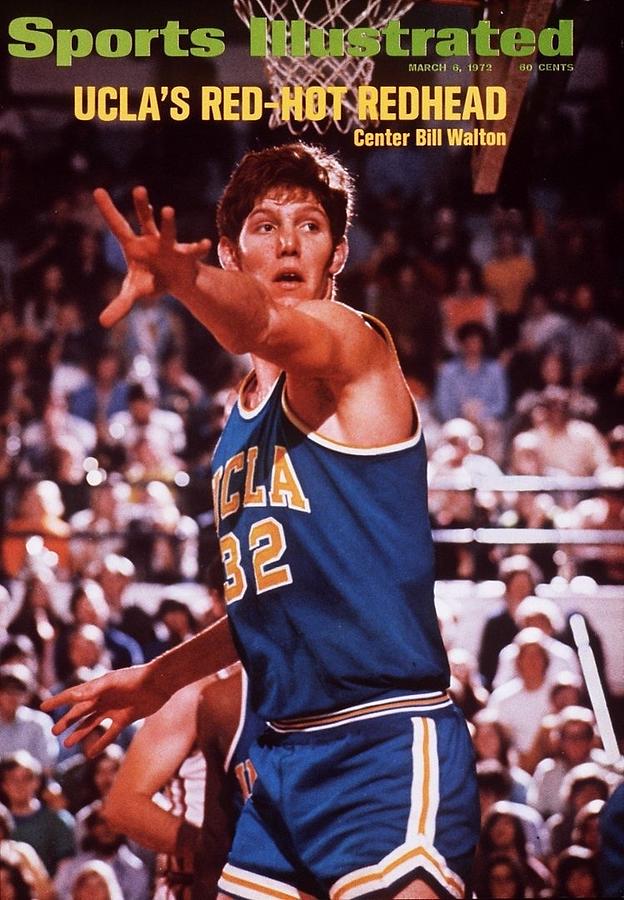
Walton was drafted by the Portland Trail Blazers. At first, he looked like tennis star Bjorn Borg: The Swede had long blond hair, wore a headband, and, just as some hockey players grow "playoff beards," he grew a beard only during Wimbledon. Walton had red hair, but the Blazers' red jerseys and a matching red headband were even redder than the hair and beard he was finally allowed to grow.
But hippie-ish Portland was his kind of place. He rode a bicycle from his apartment to the Portland Memorial Coliseum. He became a vegetarian, and began meditating. He began leaving tickets for his favorite band, the epitome of hippiedom: The Grateful Dead. He claimed to have seen them play over 850 concerts, including joining them on drums in a 1978 concert. At the Pyramids in Egypt. The band nicknamed him "Grateful Red."

Walton would later compare the Dead to a basketball team: There were five of them, they were a team, people traveled around to watch them perform, and their performances often included improvisation. "Of course," he said, "unlike a basketball team, the Grateful Dead have no opponents, unless you consider the police."

But the injury bug struck him again. He played only 35 games in 1974-75, rendering him unable to win the NBA's Rookie of the Year. (His UCLA teammate, Jamaal Wilkes, won it.) He was limited to 51 games in 1975-76. And he played 65 out of the 82 games in 1976-77.

But it was enough. The Blazers' head coached was Dr. Jack Ramsay, a Philadelphia native with a doctorate in education from the University of Pennsylvania. He had been the general manager of the Philadelphia 76ers when they won the 1967 NBA Championship. Blazers owner Larry Weinberg and general manager Harry Glickman hired Ramsay away from the Buffalo Braves in 1976.

And that 1st season in Portland, even more than the 68-13 1966-67 title season in Philadelphia, was Ramsay's masterstroke. A record of 49-33 was not particularly outstanding. But, talent-wise, they were: With Bill Walton at center; Maurice Lucas, Bob Gross, Corky Calhoun, Larry Steele and Lloyd Neal as forwards; and Lionel Hollins, Johnny Davis and Dave "Pinball" Twardzik as guards, the Blazers played the kind of artistic basketball that had rarely been seen: By the early 1970s New York Knicks, or maybe by one team or another in the ABA, but that was it.

In the Playoffs, the Blazers beat the Chicago Bulls, 2 games to 1; the Denver Nuggets, 4 games to 2; and the Los Angeles Lakers in 4 straight, including a signature dunk by Walton over his fellow UCLA graduate Kareem. In the Finals, the 76ers won the 1st 2 games, but the Blazers won the last 4, including a thrilling clincher in Portland in Game 6, 109-107. Walton was named the Most Valuable Player of the Finals.

In the locker room after that game, Ramsay -- who had previously coached Wilt Chamberlain in Philadelphia -- told the media, "I've never coached a better player, I've never coached a better competitor, and I've never coached a better person than Bill Walton." Walton, who, by this point, had ditched the headband and the long hair, but not the beard, said little: He was still badly affected by a stutter that he would later overcome. But his smile told the story.
Left to right: Jack Ramsay, Larry Weinberg,
Bill Walton & NBA Commissioner Larry O'Brien.
The championship trophy is now named for O'Brien.

For 11 months, from March 29, 1977 to February 28, 1978, the Portland Trail Blazers They went 70-15, counting the Playoffs, winning the franchise's 1st (and still only) NBA Championship. Walton was named the NBA's MVP in 1978. Boston Globe columnist and ESPN correspondent Bob Ryan said that this team played the game of basketball as well as it has ever been played.
Ryan also called them "the greatest what-if story in the history of basketball. If that team stays healthy, and stays together, I think we're looking at 3 out of 4, 4 out of 6."
It may have been even better than that. The next 2 NBA Western Conference titles were won by the Seattle SuperSonics, a good team, but with only one Hall-of-Famer, and he wasn't even considered their best player yet: Dennis Johnson. The Lakers got Earvin "Magic" Johnson for the 1979-80 season, so the Blazers probably don't reach the Finals that year. But in 1981, the Houston Rockets had a losing record, and made the Playoffs as the West's 6th seed. The Blazers could have reached 3 straight Finals, and 4 out of 5, before the Lakers totally took over the West.
But on February 28, 1978, Bill Walton, the Trail Blazers' fulcrum, broke his foot. Although he returned for 2 games of the Playoffs that year, he was never the same player again, and it took the Blazers a decade to recover. He was unhappy about the way the team's medical staff handled him, and demanded a trade. They wouldn't do it, and he sat out the 1978-79 season -- not that his injury left him with another choice.
Following his retirement, Walton and the Blazer organization reconciled. But the team has never truly replaced him. Their quest for another dominating big man led them in 1984 to draft Sam Bowie instead of Michael Jordan, and in 2007 to draft Greg Oden instead of Kevin Durant. As with Walton, both Bowie and Oden had already had a major injury, and both would see their pro careers ruined by additional injuries.
When ESPN did an episode of The Top 5 Reasons You Can't Blame... on drafting Bowie instead of Jordan, one of the reasons was "The Curse of Bill Walton." Walton was interviewed for the show, and, with a smile, knowing that it wasn't a curse that he'd actually placed on the team, he said, "Blame me." 
*
His contract having run out, he signed with his hometown team, the San Diego Clippers. But his injuries recurred. In 1979-80, Walton played only 14 games. He missed the 1980-81 season. He missed the 1981-82 season. He played 33 games in 1982-83. In other words, from February 28, 1978 to October 28, 1983, 5 1/2 years, he played only 47 of a possible 443 games -- 10.6 percent. As he said in 1981, after one of his surgeries, "Minor surgery is what they do to someone else."

He managed to get into 55 games in 1983-84. But it was too late for the team. A healthy hometown hero might have brought a sellout of 14,000 fans to the San Diego Sports Arena (now named the Pechanga Arena) for every game. But without the key figure, no one wanted to spend their money to watch professional basketball.
Number 7 is Bobby "Bingo" Smith.
Both men would get their numbers retired:
Smith by Cleveland, Walton by Portland,
and neither by the Clippers.

"When you fail in your hometown, that's as bad as it gets, and I love my hometown," Walton said. "I wish we had NBA basketball here, and we don't, because of me. It's my greatest failure as a professional in my entire life: I could not get the job done in my hometown. It is a stain and stigma on my soul that is indelible. I'll never be able to wash that off, and I carry it with me forever."

Walton was a bit hard on himself. He didn't get hurt on purpose. But if he had been healthy, maybe the Clippers would have survived in San Diego, instead of being moved to Los Angeles, where they were a joke franchise for nearly 30 years, and have still only reached the Conference Finals once in 54 seasons, in 3 cities: In 2021, losing to the Phoenix Suns.

He played 67 games for the Clippers in 1984-85, their 1st season in Los Angeles. Then Red Auerbach, president of the Boston Celtics, pulled off his last great transaction: He sent the Clippers Cedric "Cornbread" Maxwell and a 1st-round draft pick, eventually wasted on Arvydas Sabonis, then stuck behind the Iron Curtain, for Walton.

In the 1985-86 season, the Celtics went 67-15, including 40-1 at the Boston Garden. Ironically, it was Portland who dealt them their only home loss, on December 6. Walton, now 33, saw that Kevin McHale, a future Hall-of-Famer, was wearing his usual Number 32. So he added 3 plus 2, and wore Number 5.

Walton backed up center Robert Parish, with forwards McHale and Larry Bird, the on-court leader of that team, and the most popular player in Celtic history. The guards were Danny Ainge and the aforementioned Dennis Johnson. Also notable on that team was guard Rick Carlisle, who went on to coach the Dallas Mavericks to the 2011 NBA Championship, and the Indiana Pacers into this year's Eastern Conference Finals.

On a 1996 ESPN broadcast to debate the greatest NBA team ever, in which he also made the aforementioned comments about the '77 Blazers, Ryan nominated the '86 Celtics, calling them "the team that could beat you the most different ways. He said his best argument was that it was the only team that ever brought a healthy Bill Walton off the bench. Being the backup center was key for Walton: Not having the burden of being the starter, and averaging 19 minutes per game, instead of the 33 he usually averaged when healthy, he was able to play in 80 of the 82 regular-season games.

He also played in 14 of the 16 Playoff games: In all 3 of the Celtics' 3-game sweep of the Bulls, in all 5 of the Celtics' win over the Atlanta Hawks, in all 4 of the Celtics' 4-game sweep of the Milwaukee Bucks, and in 4 of the 6 games in the Finals, where the Celtics beat the Rockets, for their 16th NBA Championship, their 3rd in 6 years, and Walton's 2nd, making him one of the few players to win with 2 different teams.

Between them, the 7-foot-1 Parish and the 6-foot-11 Walton had little trouble against the Rockets' "Twin Towers" of 7-feet-even Hakeem Olajuwon and the 7-foot-4 Ralph Sampson. Sampson, next to Walton, is the patron saint of great college players whose injuries kept them from reaching their true pro potential.

Ryan called Walton "the most influential player ever to lace up a pair of sneakers." Walton was an all-time great, but Ryan knows better than that: He is old enough to have seen Bill Russell and Bob Cousy play against Wilt Chamberlain. Theoretically, he's old enough to have seen George Mikan play. But Ryan also said that Bird and Walton, playing together, "It was sinful. It was almost pathetic." He said, "They raised basketball to the level of something almost spiritual." Walton himself said, "Playing basketball with Larry Bird is like singing with Jerry Garcia."
Left to right: Walton, Bird, Parish

But it was only to be for that 1 season. He was injured again the next season, and played only 10 regular-season games. He played in the 1987 Finals, which the Celtics lost to the Lakers. He was 34 years old. He never played again. He still held out hope of a comeback, but finally announced his retirement in 1990.

"I would love to play one more game", Walton said he wished. "But then I would want to play another one. And another one. But I will take one."

*

The fact that he became a broadcaster surprised people who knew him. He credited the 1st great NBA broadcaster, Marty Glickman, with helping him overcome it. As Walton said:

I'm a stutterer. I never spoke to anybody. I lived most of my life by myself. But as soon as I got on the court, I was fine. But in life, being so self-conscious, red hair, big nose, freckles and goofy, nerdy looking face, and can't talk at all. I was incredibly shy and never said a word. Then, when I was 28, I learned how to speak. It's become my greatest accomplishment of my life, and everybody else's biggest nightmare.

He worked for CBS in 1990 and 1991, NBC from 1990 to 2002, the Clippers from 1990 to 2002, and ABC/ESPN from 2002 to 2009. He had to step aside due to terrible back pain and the subsequent spinal-fusion surgery. It was so bad, he could not walk into the hospital.

He was able to return to broadcasting in 2010, 2 seasons for the Sacramento Kings. In 2012, he returned to ESPN, and also joined the Pac-12 Network, broadcasting games on the West Coast, to stay close to home in San Diego. His hippie mindset led to some odd opinions on the air, endearing him to some, but not all.

Walton and his 1st wife, Susie, were married from 1979 to 1989. They had 4 sons: Adam, Nathan, Luke and Chris. In 1991, Bill married Lori Matsuoka, and they were together until death did they part.

Luke Walton, 6-foot-8, was a forward, was with the Lakers when they won the 2009 and 2010 NBA Championships. The Waltons thus became the 3rd father-son tandem to both win NBA titles, following the Matt Guokasas (Sr., 1947 Philadelphia Warriors; Jr., 1967 Philadelphia 76ers) and the Barrys (Rick, 1975 Golden State Warriors; Brent, 2005 and 2007 San Antonio Spurs). Luke was an assistant coach to Steve Kerr on the Golden State Warriors' 2015 title, was the Lakers' head coach from 2016 until 2019, and was the Sacramento Kings' head coach from then until 2021. Since 2022, he has been an assistant coach for the Cleveland Cavaliers.

Bill Walton was named to the Basketball Hall of Fame. The NBA named him to its 50th Anniversary 50 Greatest Players and its 75th Anniversary 75 Greatest Players. UCLA made its 1st 2 basketball retired numbers Kareem's Number 33 and Walton's Number 32. The Trail Blazers also retired his Number 32. (The Celtics retired Number 5, but for a later player, Kevin Garnett.)

He was elected to the San Diego Hall of Champions, the California Sports Hall of Fame, and the Oregon Sports Hall of Fame. In 2016, a statue of him was unveiled at Ski Beach Park in the Mission Bay section of San Diego.

In his life, he underwent 39 surgeries. Still, echoing baseball icon Lou Gehrig, he said, "I'm the luckiest guy on Earth." 

Bill Walton moved to a new plane of existence today, May 27, 2024. He was 71 years old, and had cancer.
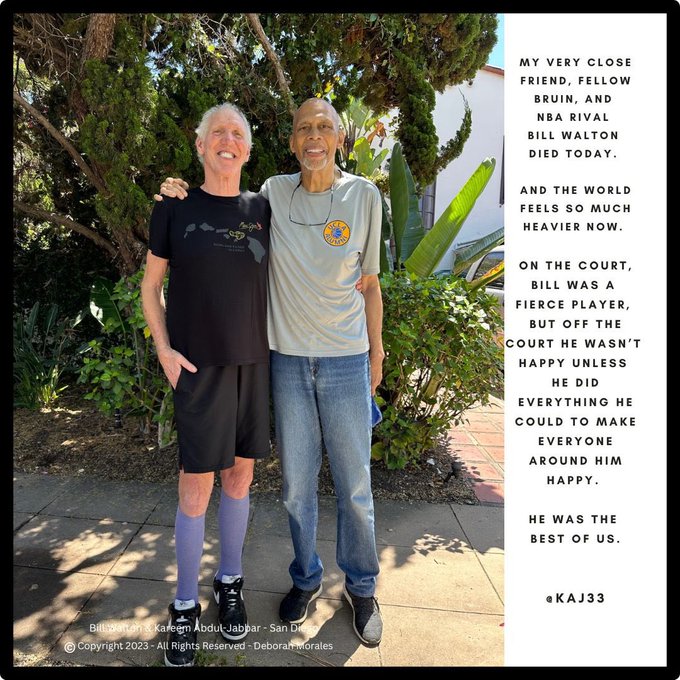
Kareem's tribute
 
Hosting ESPN's Around the Horn today, Tony Reali said, "He will be lovingly referred to as an American original. I would like to respectfully question that, because that would mean that he was from this planet. And we all know Bill traveled intergalactically and on a multiverse plane."

On that same show, Clinton Yates pointed out that it was "almost poetically memorable" that Walton passed away at the same time as the league in which UCLA played, and for whom he broadcast, known in its last few years as the Pac-12.

Some other tributes:

* Larry Bird: "I am very sorry about my good friend, Bill Walton. I love him as a friend and teammate. It was a thrill for me to play with my childhood idol and together we earned an NBA Championship in 1986. He is one of the greatest ever to play the game. I am sure that all of my teammates are as grateful as I am that we were able to know Bill, he was such a joy to know and he will be sorely missed."

* Magic Johnson: "From shooting jump shots to making incredible passes, he was one of the smartest basketball players to ever live. Bill was a great ambassador for college basketball and the NBA, and he will be sorely missed."

* Julius Erving, another playing and style icon turned broadcaster: "I am sad today hearing that my comrade & one of the sports worlds most beloved champions & characters has passed. Bill Walton enjoyed life in every way. To compete against him & to work with him was a blessing in my life. Sorry for your loss Walton family. We’ll miss him too."

* John Fogerty, leader of rock band Creedence Clearwater Revival: "So sad that our friend Bill Walton has passed away. He was truly a very special and joyful person and his megawatt smile made everyone smile! His enthusiasm for life and all things rock and roll was unstoppable and we miss you Bill! Our love and prayers to Lori and family."

* Barack Obama, former President, basketball fan: "Bill Walton was one of the greatest basketball players of all time – a champion at every level and the embodiment of unselfish team play. He was also a wonderful spirit full of curiosity, humor and kindness. We are poorer for his passing."

Once, appearing on an ESPN broadcast, tie-dyed T-shirt on, a Hawaiian lei around his neck, he said, "It doesn't get any better than this."

We all have our definitions of that. But who am I to try to convince Bill Walton of mine?

Thursday, April 14, 2022

Top 5 Reasons You Can’t Blame Donald Sterling for Moving the San Diego Clippers to Los Angeles

April 14, 1984: The San Diego Clippers beat the Utah Jazz, 146-128. But they finish 30-52, and miss the Playoffs.

It turns out to be the last game they ever played. In the off-season, team owner Donald Sterling moved them up the Pacific Coast to Los Angeles. San Diego has never had another NBA team, or any other indoor major league sports team, since.

Sterling bought the Clippers in 1981, on the advice of Los Angeles Lakers owner Jerry Buss, with whom he'd dealt in real estate. Even in 1982, he was ready to move the team to Los Angeles, which led to an investigation of him by the NBA. In 1984, Sterling and the league settled: Sterling would pay a $6 million fine, and be allowed to move the team.

He must have hated that, but must also have considered it the price of doing business. Certainly, he didn't like paying his players. The best one he ever had, San Diego native Bill Walton, said, "The checks bounced higher than the basketballs when Donald Sterling took over. The basketball was awful, and the business side was immoral, dishonest, corrupt and illegal. Other than that, it was all fine."

Top 5 Reasons You Can’t Blame the San Diego Clippers for Moving to Los Angeles
5. Al Davis. Sterling admitted being inspired by Davis moving the Oakland Raiders to Los Angeles in 1982. The NFL tried to stop Davis, and failed. Sterling believed that if he were as steadfast in his attempt to move as Davis was in his, he would win. It wasn't pretty, and it did cost him $6 million, but he got what he wanted.
"Just do whatever the hell you want, baby.
Whatta they gonna do, huh? Sue you?"
4. The San Diego Sports Arena. It opened in 1966, and in spite of its age, this building, now named the Pechanga Arena, is considered one of the best arenas of its size in America. But it only seats 14,600 people, and that was already too small for an NBA arena. Now, with luxury suites being paramount, it would never host a new NBA or NHL team, except maybe as a stopgap facility while a new arena is built.
In addition, the location is far from ideal: While the area around it is safe, it's 5 miles northwest of downtown. If you don't have a car, you'd need to take a trolley and a bus to get there.
Oddly, Buss did not let Sterling share The Forum with the Lakers, so he rented out the even older Los Angeles Memorial Sports Arena. Finally, in 1999, with the Staples Center (now the Crypto.com Arena) going up, Sterling made a deal with Buss for the Clippers to play there. There were still doing so when Sterling was forced to sell the team in 2014. New owner Steve Ballmer is building the Intuit Dome in Inglewood, near The Forum and SoFi Stadium, with the hopes of opening for the 2024-25 season.
3. Los Angeles. It was home to Sterling. He was born in Chicago, but he grew up in Boyle Heights, in East L.A., now an almost entirely Mexican-American neighborhood. He went to Theodore Roosevelt High School in that neighborhood. He went to Cal State-Los Angeles, and then to Southwestern University School of Law, also in L.A.
He practiced law in L.A., but soon found that the biggest way to make money in Southern California was in real estate. He bought an apartment building in Beverly Hills, and later made a killing in Westwood. If he weren't so cheap, Sterling probably could have done what the Clippers are doing now: Build them their own arena in Inglewood, next to SoFi Stadium, the new home of the Rams and the Chargers. Or he could have bought The Forum, modernized it, and moved the Clippers there.
Sterling owes his success to being a product of Los Angeles. He owed San Diego nothing.
2. Bill Walton's Injuries. For 11 months, from March 29, 1977 to February 28, 1978, the Portland Trail Blazers went 70-15, counting the Playoffs, winning the franchise's 1st (and still only) NBA Championship.
With Bill Walton at center; Maurice Lucas, Bob Gross, Corky Calhoun, Larry Steele and Lloyd Neal as forwards; and Lionel Hollins, Johnny Davis and Dave "Pinball" Twardzik as guards, the Blazers played the kind of artistic basketball that had rarely been seen: By the early 1970s New York Knicks, or maybe by one team or another in the ABA, but that was it.

But on February 28, Walton, the team's fulcrum, broke his foot. Although he returned for 2 games of the Playoffs that year, he was never the same player again, and it took the Blazers a decade to recover. He was unhappy about the way the team's medical staff handled him, and demanded a trade. They wouldn't do it, and he sat out the 1978-79 season -- not that his injury left him with another choice. His contract having run out, he signed with his hometown team, the San Diego Clippers.

But his injuries recurred. In 1979-80, Walton played only 14 games. He missed the 1980-81 season. He missed the 1981-82 season. He played 33 games in 1982-83. In other words, from February 28, 1978 to October 28, 1983, 5 1/2 years, he played only 47 of a possible 443 games -- 10.6 percent. As he said in 1981, after one of his surgeries, "Minor surgery is what they do to someone else."

He managed to get into 55 games in 1983-84. But it was too late for the team. A healthy hometown hero might have brought a sellout of 14,000 fans to the San Diego Sports Arena for every game. But without the key figure, no one wanted to spend their money to watch professional basketball.
"When you fail in your hometown, that's as bad as it gets, and I love my hometown," Walton has said. "I wish we had NBA basketball here, and we don't, because of me. It's my greatest failure as a professional in my entire life: I could not get the job done in my hometown. It is a stain and stigma on my soul that is indelible. I'll never be able to wash that off, and I carry it with me forever."

Walton's a bit hard on himself. He didn't get hurt on purpose. But if he had been healthy, maybe the Clippers would have survived in San Diego.

Bill says he loves his hometown. But maybe his hometown is the problem:

1. San Diego. With 1.4 million people, it's the 8th-biggest in the country. But its metropolitan area has just 3.3 million people. This ranks it 23rd in baseball. In the other sports, it would rank 21st in football, 20th in basketball, 20th in hockey and 19th in soccer. And that's after being double what it was 40 years ago, when the Clippers were there.
The city already lost its 1st NBA team, the Rockets, to Houston in 1971. They lost their American Basketball Association team, known first as the Conquistadors and then as the Sails, in 1975. They lost their World Hockey Association team, the San Diego Mariners, in 1977, despite making the Playoffs all 3 seasons, because they couldn't get fans to come and support a winning team.

They came very close to losing the Padres after the 1973 season, and might have lost them after 1998 without the Pennant that convinced people to vote for the appropriation that built Petco Park. Finally, in 2017, they lost the Chargers, when San Diego became the 1st city to face a team owner pointing a gun at them, and giving them Humphrey Bogart's line in Casablanca: "Go ahead, shoot, you'll be doing me a favor." The people were angry at losing the Chargers, but they blame owner Alex Spanos, not the City of San Diego or the County of San Diego. But now, the Padres are all they have left.

And you know what? They don't seem to care that much. Nearly every day, it's 80 degrees with little humidity and hardly any rain, and there's a beach in one direction and mountains in the other. There's less smog than in Los Angeles, and fewer earthquakes than in Los Angeles or San Francisco. People in San Diego like to spend their money on things other than professional sports. With a "great outdoors" like that, who needs an indoor sport where your city never really did anything anyway?

VERDICT: Not Guilty. Donald Sterling is a contemptible person, but he had little reason to keep his team in San Diego.

What he did that kept the team mediocre after he moved it is another story.

Friday, April 9, 2021

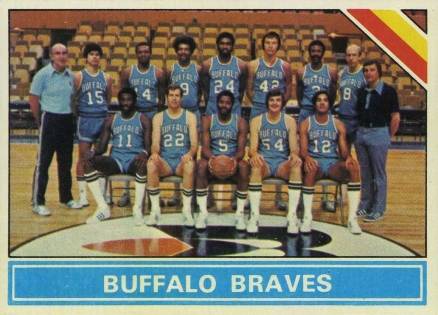
Top 5 Reasons You Can’t Blame the Buffalo Braves for Moving to San Diego

April 9, 1978: The Boston Celtics beat the Buffalo Braves, 131-114 at the Boston Garden. It was appropriate that they ended the regular season -- and, since neither made the NBA Playoffs, their entire season -- against each other.

The Celtics had fallen apart in the 2 years since their 1976 NBA Championship. Team owner Irv Levin wanted to move the league's most historic franchise to San Diego. The NBA wouldn't let him. So he worked out a deal with the Braves' owner, John Y. Brown: They would swap teams. Brown would keep the Celtics in Boston, but sell the team to Harry Mangurian a year later. Levin would gain control of the Braves, and move them to San Diego.

The NBA team owners approved this deal, 21-1. Commissioner Larry O'Brien refused to announce who the owner who voted against the deal was. The Braves were moved, and their name was changed to the San Diego Clippers.

After 8 years in Buffalo, including 3 Playoff berths and a Playoff round win over the Philadelphia 76ers in 1976, the Clippers did not do well in San Diego. They had a winning record in only their 1st season. Trading for the city's native son, Bill Walton, didn't help, as he was too injured to make a difference. They bottomed out at 17-65 in 1982, and were bought by Los Angeles real estate mogul Donald Sterling, who moved them to his hometown in 1984.

As the Los Angeles Clippers, they missed the Playoffs for the next 7 seasons, never won a Playoff series until 2006, didn't win another until 2012, didn't win a Division title until 2013, and the NBA forced Sterling to sell in 2014 after it came out just how much of a racist and a misogynist he is. Under the ownership of former Microsoft CEO Steve Ballmer, they've been better. But, up to this, their 51st season in the NBA, the franchise has never even reached a Conference Finals.

Sounds like Levin made a mistake in moving the Braves to San Diego. Did he?

Top 5 Reasons You Can't Blame the Buffalo Braves for Moving to San Diego

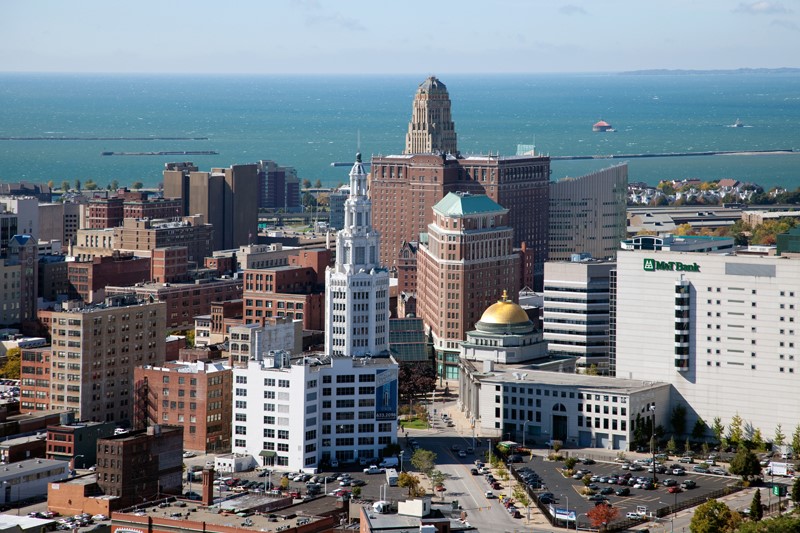
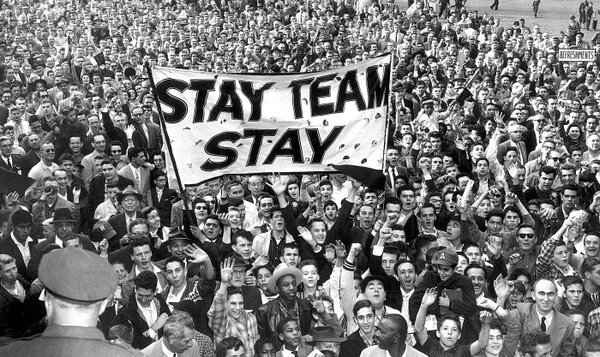
5. Western New York State. In 1970, the population of Buffalo was about 460,000 people. It seemed like it was still a big enough city to support an NFL team (the Bills), an NBA expansion team (the Braves), an NHL expansion team (the Sabres) and a Triple-A baseball team (the Bisons).
Buffalo had already lost the Basketball Association of America's Bisons in 1946. Buffalo also had a team called the Buffalo Bills in the All-America Football Conference from 1946 to 1949, but when the NFL took 3 teams from the AAFC, they took the Cleveland Browns, the Baltimore Colts and the San Francisco 49ers. It became known as "The Screwing of Buffalo."

Buffalo would gain the AFL's version of the Bills in 1960, and the NBA's Braves and the NHL's Sabres in 1970, the same year the Bills became part of the AFL-NFL merger. But the Braves moved in 1978. And the Bills and Sabres have both faced the possibility of having to move, in spite of the Sabres having a relatively new arena. Today, both are still struggling, despite both being owned by billionaires Terry and Kim Pegula.

This is matched by the other cities in Western New York. Rochester lost the NBA's Royals in 1957. Syracuse lost the NBA's Nationals in 1963. Like Syracuse, Rochester has a longtime team in minor-league hockey, the  Rochester Americans. And all 3 cities also have long had teams in baseball's Class AAA International League.

But not in the major leagues. In spite of the Toronto Blue Jays' COVID-forced tenancy at Sahlen Field last season, Buffalo hasn't had a Major League Baseball team since the 1915 Buffalo Blues -- or, if you don't count the Federal League, then the version of the Bisons that dropped out of the National League in 1885.

Today, with half a century of white flight, the population of Buffalo is more like 260,000. The metropolitan area has about 1.2 million. That would place it ahead of only New Orleans, still recovering from Hurricane Katrina, among NBA markets.

Even with the most generous possible measure, including the metropolitan areas of Rochester, Syracuse, Niagara Falls on both sides of the U.S.-Canadian border, and half of Hamilton, Ontario, it's about 3.8 million, which would rank it in the middle of the pack of every major sports league in North America (even the Canadian Football League).

Remember the movie It's a Wonderful Life? George Bailey (played by Jimmy Stewart), operator of a building and loan association, is shown what his New York State hometown of Bedford Falls would have been like if he had never been born.

He sees that the company his father had founded had gone out of business, because George wasn't there to save it; the low-income housing George had built wasn't built; Henry Potter, the miserable old man who controlled everything in town but the building and loan, had changed the town's name to Pottersville; and, like an organized crime boss, he let the other businessmen do what they pleased, so long as he got his cut.

And what businesses were doing well? Bars and casinos. The very things that, today, are pretty much the only businesses doing well in New York State, thanks to the local Native tribes getting casino licenses. In 2009, at the depth of a recession, a New York Times writer pointed this out, and contrasted it with the housing market that George Bailey once ran. The writer concluded that, for the sake of the future of the State of New York, the kindhearted Bailey was wrong, and the old bastard Potter was right. (And you thought the Times was a liberal newspaper.)

Put simply, New York State, from the capital of Albany on west through Syracuse, Rochester and Buffalo, simply can't support major league sports in the modern era.

4. San Diego. In contrast, San Diego, like pretty much the entire State of California in the 1970s, was growing by leaps and bounds. The city's population had soared to over 800,000; the metro area, 1.6 million. They had MLB's Padres and the NFL's Chargers, and had recently had the San Diego Mariners in the World Hockey Association. San Diego looked like a city of the future.

Today, it's a different story. The Clippers are gone. The Chargers are gone. The city has never regained major league hockey. And the Padres would be gone if not for their 1998 Pennant leading people to vote for funding for what became Petco Park. They could well have been a city of over 3 million people with no major league sports teams.
The fact that the Braves/Clippers franchise didn't stay in San Diego, either, is a story for another time. But that's got nothing to do with whether moving out of Buffalo was a good idea.

3. The Arena Situation. The Braves and Sabres were playing in the Buffalo Memorial Auditorium. It was built in 1940, and had 16,235 cramped seats. It was also 1 of 3 arenas in the NHL -- the Boston Garden and the Chicago Stadium being the other 2 -- that had rinks shorter than the NHL standard of 200 feet: 196. It did meet than the NHL standard width of 85 feet, as did Chicago Stadium (185 by 85), but Boston did not (191 by 83).
"The Aud" should never have been more than a stopgap facility for both teams. But the City of Buffalo and the County of Erie couldn't afford a new arena. This made it inevitable that either the Braves or the Sabres would have to go.

In contrast, the San Diego Sports Arena was 2,000 seats smaller, but was built in 1966, and was a considerably more modern arena, with a lot more parking, and thus a lot more gameday revenue.

Today, under the name Pechanga Arena, it's considered as outdated as The Aud was in 1978. It's considered among the best smaller arenas in the country, but it just doesn't have enough regular seats, and certainly not enough luxury suites, for a present-day NBA or NHL team.
2. The NBA. It's become conventional wisdom that the league didn't yet have the star power that it would soon have. Magic Johnson and Larry Bird arrived in 1979; Isiah Thomas in 1981; Michael Jordan, Hakeem Olajuwon and Charles Barkley in 1984; and Patrick Ewing in 1985.

This is garbage. In 1978, the NBA already had Kareem Abdul-Jabbar, Julius "Dr. J" Erving, Darryl "Chocolate Thunder" Dawkins, Bill Walton, Elvin "Big E" Hayes, "Pistol" Pete Maravich, David "Skywalker" Thompson, George "Iceman" Gervin, Moses Malone; and, on the Knicks, the veteran but still fine Earl "the Pearl" Monroe, and the former Buffalo Brave Bob McAdoo.

But the league was even worse at marketing its stars than was MLB. At their peak, the Braves had McAdoo, Ernie DiGregorio and Randy Smith. McAdoo was nearly as flashy as Dr. J., "Ernie D" was nearly as slick a mover and passer as Maravich, and Smith was as fast as anybody in the game.

It shouldn't have been that hard to make the Braves as admired a small-market team as Walton's Portland Trail Blazers were, or the San Antonio Spurs became 20 years later under David Robinson and Tim Duncan, or the Cleveland Cavaliers a few years after than under LeBron James. But Larry O'Brien, once a great political operative, was a lousy Commissioner: Under his leadership, the NBA didn't know its ass from a hole in the ground. Why the league's Championship trophy is named for him, I have no idea.

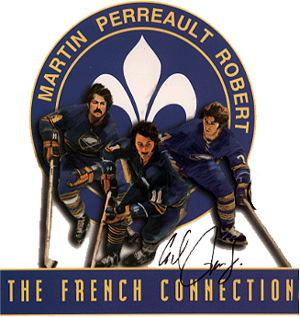
1. The French Connection. No, not the 1971 movie in which Gene Hackman plays a New York cop busting up an international drug ring. Named for that movie was a forward line for the Buffalo Sabres: Gilbert Perreault at center, Rick Martin at left wing, and René Robert at right wing. They had gotten the Sabres into the Playoffs in only their 3rd season, 1972-73, and into the Stanley Cup Finals in 1975. The Sabres made the Playoffs every season from 1973 to 1985.
And with Western New York's economy crashing, fans couldn't afford 2 major league teams in the Winter. One had to go. And since there were more white people there than black people, they flocked to the hockey team, not the basketball team. Or, you could say that racism had nothing to do with it, but that the French Connection Line had more star power than McAdoo, Ernie D and Randy.

In 1996, what's now named the KeyBank Center opened, a couple of blocks from The Aud, which was demolished in 2009. Outside the new arena is a statue of the French Connection Line. There's hardly any indication that Buffalo ever had an NBA team.

VERDICT: Not Guilty. The Braves simply weren't sustainable in Buffalo.

Friday, April 27, 2018

San Diego's 10 Greatest Teams

This weekend, the Mets play a series in San Diego against the Padres, the city's last remaining major league team. For the moment: While they're not in danger of moving, there could eventually be a replacement team in another sport.

San Diego's 10 Greatest Teams

Honorable Mention to the San Diego Sockers. The city's former pro soccer team had a dumb name, but frequently had smart play. They won division titles in 1978, 1981 and 1984, the last season of the old North American Soccer League. But they truly excelled in the hybrid game of indoor soccer, winning the title in the Major Indoor Soccer League (MISL) 10 times in 11 years from 1981 to 1992, missing only in 1987.

10. 1968-69 San Diego Rockets. The city's 1st NBA team lasted only 4 seasons before moving to Houston in 1971, never had a winning record, and only made the Playoffs in their 2nd. They did, however, take the Atlanta Hawks to 6 games in their series. They needed another 6 years to get back to the Playoffs, and it wasn't for San Diego.

The Buffalo Braves moved to become the San Diego Clippers in 1978, but lasted only 6 seasons, and never made the Playoffs. In a reverse of the Rockets, they did have a winning season, their 1st, 1978-79, but missed the Playoffs. In 1984, they moved up the Coast, and became the Los Angeles Clippers.

9. 1972-74 San Diego Conquistadors. "The Q's" lasted just 4 seasons in the American Basketball Association, the last as the San Diego Sails. They made the Playoffs in their 1st season, 1972-73, but got swept by the Utah Stars. Then they signed Wilt Chamberlain as player-coach, but an injunction prevented him from playing for them, ruling that he was still under contract to the NBA's Los Angeles Lakers. He got them to the 1974 ABA Playoffs, but they lost to the Stars again.

Wilt then retired, and never held another job with an NBA team, not that he needed it. The locals never really took to this team. Two more seasons without the Playoffs, and it was over.

8. 1974-77 San Diego Mariners. Show me another team that made the Playoffs in every season of its existence. Most didn't make it 3 years, but the Mariners did. Formerly the New York Raiders and the Jersey Knights, Padres owner and McDonald's boss Ray Kroc bought them in 1974 and moved them to San Diego.

In 1975 they beat the Toronto Toros in the World Hockey Association Quarterfinals, then lost to the Houston Aeros in the Semifinals. In 1976, they beat the Phoenix Roadrunners, before losing to the Aeros again. In 1977, they made it, but lost to the Winnipeg Jets. They were 119-106-14 all-time, above .500.

But the San Diego Sports Arena (now the Valley View Casino Center) was far from downtown, wasn't very good, and they couldn't fill it any more than did the Rockets or the Conquistadors -- or, as it turned out, the Clippers.

Unable to get a new arena, Kroc made a tentative deal to sell them to a guy who wanted to move them to Miami, but the deal for a lease on an arena there failed, negating the sale. Kroc tried this 3 times, but none of the prospective Miami buyers could get it done. So they just plain folded. San Diego has had minor-league teams since, but never an NHL team.

7. 2004-09 San Diego Chargers. They won 5 AFC Western Division titles in 6 years, but the closest they got to a Super Bowl was a hard-fought loss to the New England Patriots in Foxboro in the 2007 AFC Championship Game.

6. 1984 San Diego Padres. They won 92 games to take the franchise's 1st National League Western Division title, then came back from a 2-0 deficit in the NL Championship Series to beat the Chicago Cubs in 5 games. But the "Cub-busters" lost the World Series to the Detroit Tigers, in a Series whose Game 2 remains the only Series game they've ever won. They were unable to follow it up.

5. 2005-07 San Diego Padres. The team's only back-to-back postseason years, and it was 3 straight, sort of. They won the NL West in both 2005 and '06, but lost the NL Division Series to the St. Louis Cardinals both times. In 2007, they finished in a tie for the NL Wild Card, but lost to the Colorado Rockies on a controversial game-ending play at the plate. They've only had 1 winning season since, 2010, winning 90 games but missing the Playoffs.

4. 1992-95 San Diego Chargers. They made 3 Playoffs in 4 seasons, and in 1994 won the team's only AFC Championship since the 1970 merger, beating the Steelers in Pittsburgh in the title game. But they got throttled by the San Francisco 49ers in Super Bowl XXIX.

3. 1979-82 San Diego Chargers. Coach Don Coryell's "Air Coryell" attack was exciting, but not well-balanced enough to get over the hump. They won 3 straight AFC Western Division titles and made the Playoffs 4 straight seasons. They won thrilling Playoff games against the Buffalo Bills in the 1980-81 season, the Dolphins in "The Epic in Miami" in 1981-82, and the Pittsburgh Steelers in 1982-83.

But they lost AFC Championship Games to the Oakland Raiders and the Cincinnati Bengals. The Chargers were used to heat at home, but not humidity like in Miami, and overcame that only to go into "The Freezer Bowl" in Cincinnati.

2. 1996-98 San Diego Padres. They won the Division in 1996, but got swept in the NLDS by the Cardinals. They tailed off in 1997, but won 98 in 1998, still a franchise record. They beat the Houston Astros and then the Atlanta Braves to take their 2nd Pennant. They got swept by the Yankees in the World Series, although only Game 2 was a blowout. Then, as in '84, they fell apart thereafter.

But that 1998 season saved the city as a major league outpost: Had they not won the Pennant, Proposition C, which provided money for building Petco Park, would not have passed, and, today, San Diego might have no major league teams, unless the threat of that had convinced the city government to cave in to the Chargers' demands. But with the Padres in San Diego for the near future, the city told Dean Spanos to get lost, and he did.

1. 1960-65 San Diego Chargers. Okay, the 1st of those seasons was in Los Angeles. But the Bolts won the AFL Western Division, and made the AFL Championship Game, in 5 of the League's 1st 6 seasons, missing only in 1962.

They lost the title game to the Houston Oilers in 1960 and '61, and to the Buffalo Bills in '64 and '65. Imagine that: Losing a championship game to the Bills. And the Oilers. And then, in each case, doing it again the next year!

Now, imagine beating the Patriots in a championship game. The Philadelphia Eagles just did it . The New York Giants did it twice in 5 years. In 1963 -- or, more accurately, on January 5, 1964, at Balboa Stadium, in Balboa Park just outside downtown San Diego -- the Chargers walloped the team then known as the Boston Patriots, 51-10. It was the most points scored in either an NFL or an AFL Championship Game, under any name, between the 1957 and 1989 seasons. The Pats were so badly beaten, they didn't make the Playoffs again for 13 years.
Paul Lowe and Tobin Rote

But the Chargers of the early and mid-'60s were not only a championship team, they were also an exciting team. With a great passing attack designed by head coach Sid Gillman, a good running game, and the AFL's 1st great defense -- their line was known as the Fearsome Foursome before that of the NFL's Los Angeles Rams was -- they were the 1st AFL team that could be taken seriously.

Indeed, of the 6 AFL Champions that didn't get the chance to play the NFL Champions in the Super Bowl, the Chargers probably stood the best chance of beating the older league's titlists, as that season's Chicago Bears, while excellent, were not overwhelming like the decade's Green Bay Packers.

The 1963 Chargers remain the only San Diego major league team, in any sport, to go as far as the rules of the time allowed them to go. It wasn't a "World Championship," but it's the best they've ever done. And it was sustained excellence for a few years. So, unless the Padres go on a good run in the 2020s, or the city gets a team in another sport that can do so, this is the greatest San Diego team of them all.

Sunday, August 16, 2009

Top 10 Dumbest Team Moves in Sports History

Dishonorable Mention. 2008 Seattle SuperSonics to Oklahoma City Thunder. The Sonics were Seattle's longest-lasting major league team. (41 years; the Seahawks will take over that title, assuming they’re not moved before the 2018 NFL season). They're also the city's most successful: They've had 3 trips to the finals (the Mariners and Seahawks combined: 1) and the 1979 NBA Championship. They were horrible in their 1st season in Oklahoma City, although the fans came out.

Oklahoma City proved during the New Orleans Hornets' temporary relocation that they deserve a team. But not this team. The Sonics didn't fail, they were sabotaged. The reason this one doesn't make the Top 10 is that it's still too soon: If the Thunder turn into a long-term success, on the court and at the box office, I'll take them off this list should I ever choose to revise it; if they turn out to be a bust, they'll move up.

10. 1958 Brooklyn Dodgers to Los Angeles. How can the most successful move in the history of sports be one of the 10 dumbest? Let's see, a "visionary" like Walter O’Malley should have been visionary enough to outwit Robert Moses and get the stadium he wanted in Downtown Brooklyn, at the Atlantic Yards site now favored by a current lying megalomaniac, Bruce Ratner, for the Nets. Let's see, suppose it was the same capacity as the Dodger Stadium he actually got, 56,000…

How many of those seats do you think Brooklynites would have bought to see Brooklyn natives Sandy Koufax and Tommy Davis? To say nothing of the last years of "Boys of Summer" Duke Snider and Gil Hodges? Maury Wills? Don Drysdale? Later, Steve Garvey, Ron Cey, Don Sutton, Mike Marshall… Fernando Valenzuela, Pedro Guerrero, Orel Hershiser… Mike Piazza, Pedro Martinez… Russell Martin and the rest of the current Dodgers managed by Brooklyn's own Joe Torre? Even if this planned-but-never built Dodger Stadium were to have been replaced by now, it would still have been every bit the gold mine that the actual one in Chavez Ravine was.

9. 1982 Minnesota Vikings from Metropolitan Stadium to the Metrodome. In their 1st 21 seasons of existence, the Vikings played out in the suburbs, equidistant from downtown Minneapolis and downtown St. Paul, and made the Playoffs 11 times, more than half the time. In their 27 seasons in the Metrodome, they’ve made the Playoffs 14 times, also more than half. The difference is that, at the Met, they reached the Super Bowl 4 times; at the Metrodome, they've reached three NFC Championship Games and lost them all. (Update: In January 2010, the Vikes made it 0-for-4 in NFC Title Games since moving indoors. In January 2018, they made it 0-for-5.)

Some attribute the Vikes' lack of success to the change in the atmosphere – literally. The Minnesota cold terrified some teams. Maybe not NFC Central opponents like Green Bay and Chicago, but Tampa Bay? Atlanta? Los Angeles? Brrrr…. But the Met seated only 54,000, and the Dome added another 10,000 and protection from the cold. But although the Dome is known for its noise level, a Vikings game has never truly been the same. At least they stayed in the same metropolitan area, although even that is no guarantee, as witness the next entry.

8. 1979 Los Angeles Rams from the Coliseum to Anaheim. L.A.'s oldest team, having arrived in 1946, went from perhaps the greatest football stadium ever built to the suburbs. From 1966 to 1978, Anaheim Stadium was a nice baseball facility. But then, in 1979, after Rams owner Carroll Rosenbloom drowned, his widow, Georgia Frontiere (wow, she got remarried fast), cut a deal to move them down the Santa Ana Freeway (Interstate 5), I guess because the Coliseum and the USC campus are on the edge of South Central and she was worried about some men from a race she didn’t like vandalizing her limousine.

The Rams made the Playoffs in their last 7 seasons at the Coliseum; in their 15 seasons in Anaheim, they made the Playoffs 8 times, but had totally lost the L.A. glamour. The move to St. Louis was depressing – although not entirely unjustified, as Anaheim Stadium was totally unsuitable, and St. Louis was Georgia's hometown, and they have done better there – but it wouldn't have happened if Georgia had simply accepted that playing in L.A. was worth more to the team than playing in a suburban parking lot.

7. 1996 Winnipeg Jets to Phoenix Coyotes. Every other NHL move, possibly ever, could be justified on some grounds or other, including improved performance. But what was gained by the Jets moving to Arizona? Especially now that the team is bankrupt, while Winnipeg has a new arena? Forget Hamilton, Ontario: Send the Jets home!

6. 1997 Washington Redskins from the District to Landover. Huh? The Bullets/Wizards and Capitals made the smart move, from just outside the Capital Beltway to Downtown, from the Capital Centre/USAir Arena to the MCI/Verizon Center. So why did the Skins move to almost the same spot, but still slightly inside the Beltway? Because Robert F. Kennedy Stadium seated 56,000, and the District wouldn’t build Jack Kent Cooke a new stadium. So Prince Georges County built it.

In their last 26 seasons at RFK, the Redskins made the Playoffs 13 times – half the time. In the 12 seasons they've played at what was Jack Kent Cooke Stadium and is now FedEx Field, they've made the Playoffs twice. It's like the move from the 56,000-seat, noisy, intimate RFK to the 92,000-seat FedEx Field has cost them those things that made a Washington Redskins game such a special event.

5. 1982 Oakland Raiders to Los Angeles. At first, it seemed to work. In their first season at the L.A. Coliseum, the Raiders tied for the NFL's best record at 8-1, though flamed out in the Playoffs. In their second season, they won the whole thing, demolishing the Redskins 38-9 in Super Bowl XVIII – Los Angeles' 1st NFL Championship since the '51 Rams and the only Super Bowl the city has actually won, rather than hosted. Even as late as 1990, the Raiders were in the AFC Championship Game.

But just as he'd butted heads with the Oakland Coliseum authority, so too did he start to do with the Los Angeles Memorial Coliseum Commission. By 1994, he'd had enough, and managed to finagle his way back into Oakland after finagling his way out 12 years earlier.

What did Davis get out of his L.A. sojourn? A World Championship that he almost certainly would have had in Oakland anyway, a lot of frustration, a stadium 43 years older than the one he’d left and to which he was returning, and a change in the Raiders' image as a team of grubby but lovable misfits to a team of hard-core gangsters – part Hell's Angels, part Crips and/or Bloods. Was that really worth it? And today, the Raiders are still the most popular NFL team in Los Angeles (although the Chargers have reached up from San Diego and claimed Orange County, abandoned by the Rams at the same time).

4. 1984 San Diego Clippers to Los Angeles. Bone. Head. Move. In San Diego, they had the Chargers in November and December, and then, unless the Chargers made the Playoffs, no competition until the Padres started again in April.

In L.A., they not only play in the same metro area as the Lakers, but since 1999 they've played in the same building. This was even dumber than the Jets playing at Giants Stadium. To say nothing of having to also share the building with the Kings, and the metro area with the Ducks, plus the months of November and December (and sometimes the first week of January) getting attention diverted from them by L.A. being the nation’s premier college football town, with USC as one of the top 5 all-time truly great programs and UCLA being one of the top 25 all-time programs. And UCLA having one of the top 5 great programs in college basketball – there have been times when the Clips might have been the Number 3 basketball team in L.A.

So why isn't this awful move ranked higher? Simple: Donald Sterling was still the owner. Who's to say the Clippers wouldn't have been just as hopeless, performance-wise, if they’d stayed in San Diego? It' because they’re constantly compared to the Lakers that they'’ve reached truly pathetic status.

3. 1984 New York Jets from Flushing Meadow to the Meadowlands. We’ve all heard about how bad Shea Stadium was. Now add fall and winter weather to that mix. Then add the fact that, by the 1983 season, at 60,000 seats in its football configuration, Shea was one of the smaller venues in the NFL. Jet owner Leon Hess had plenty of reasons to want out. Fair enough.

But why would you agree to play your home games in a place that's not only identified with the other, more successful team in your metro area – especially when their name was on the stadium? At least, the Giants were then more successful at the box office and in the media, as they hadn't yet won a Super Bowl while the Jets had.

When the Angels shared Dodger Stadium for 4 years, they had tickets and media handouts printed up calling the place not by its official name, but by the area's former name, "Chavez Ravine." Not the Jets: For all their wishing that people would simply call it "The Meadowlands," the name "Giants Stadium" was there for all to see. Not to mention the green drapery hung over the blue sideline background for Jet games looked so F! A! K! E! Fake! Fake! Fake!

It was even dumber every 3 years when they'd play each other in the regular season – and dumber still every 6 years when the game would be a home game for the Jets, making the Giants the visiting team in their own stadium, and sometimes the Jets' season-ticket holders would have brought along some Giant fans as guests, and sometimes even Jet fans – who may have become such for the simple reason that the Giants haven't played to an unsold seat since 1956 – would turn on their team, making a Jet home game against the Giants into a Giant home game against some other team.

As a notable Sports Illustrated cover with Lawrence Taylor and Mark Gastineau on it pointed out...
And when the chance finally came to get their own stadium, the Jets first blew it with the Midtown stadium across from the Javits Center that will now never be built, then could have struck a deal with the Mets to redevelop the Shea site after Citi Field opened, then blew another deal (which, theoretically, is still possible) to work with the Islanders to redevelop the Nassau Coliseum site (putting them right across from their now-abandoned Weeb Ewbank Hall complex at Hofstra University) and restore them to their Queens/Long Island roots, and, who knows, maybe they could have even found a way to share that spacious lawn at Citi Field with the Mets. (Why not, Army is playing a few football games at Yankee Stadium these next few years.)

Instead, they'll finish the 2009 season at Giants Stadium, and then starting in 2010 they will share the new Meadowlands stadium (as yet unnamed) with the G-Men. The Jets will own 50 percent of the stadium and thus have a considerably more favorable lease, but it will still be seen by most people as "the new Giants Stadium."

If there is a dumber franchise, historically speaking, in all of sports, it's… just across Route 120, for the moment: The Nets. And, of course, the Clippers.

2. 1961 Washington Senators to Minnesota Twins. Just as the Senators were getting to be better than at any time since the close of World War II, Calvin Griffith moved them out. Did he not know that District of Columbia Stadium – later named RFK – was being built and could have been the team's home? Did he not see that he had Harmon Killebrew, Bob Allison, Jim Lemon, Camilo Pascual, and a skinny kid named Jim Kaat? Did he not realize, after seeing the 1965 World Series, and the '69 and '70 Playoffs, what that could have meant in D.C.?

Certainly, the Old Senators/Minnesota Twins would have been more competitive from 1961 to 1971 than the New Senators/Texas Rangers were. Griffith wasn't just cheap as hell, he was dumb as a post.

1. 1958 New York Giants to San Francisco. Forget for a moment the Giants' problems with Candlestick Park: This was dumb for 2 other very big reasons. The 1st is the stadium that Robert Moses wanted to build in Flushing Meadow-Corona Park, the one that became Shea Stadium. If Horace Stoneham really wanted to get out of the Polo Grounds that badly, he should have gotten on the phone to Moses or Mayor Robert Wagner – a self-proclaimed Giants fan – in 1957 and said, "What can we do?"

What we knew as Shea could, theoretically, have opened by 1960, and can you imagine Juan Marichal, Gaylord Perry, Jack Sanford and Billy Pierce pitching there? Willie Mays having that big center field to run around in? Willie McCovey. Orlando Cepeda. The Alou brothers. Even with the Dodgers on the other coast, assuming that still happened, the Giants would have been so much better off staying in New York and moving into Flushing Meadow – which, of course, might have had New York superlawyer William A. Shea, himself a Giants fan even though he worked for a time for the Dodgers, as a season-ticket holder, but it wouldn’t have had his name on the place.

In 1969, the Giants finished 2nd in the National League West; staying in the East, they could have been the New York team that benefited from the Chicago Cubs' collapse and performed the Miracle of '69. There would have been a Subway Series with the Yankees in '62, and, who knows, maybe more, if playing in New York (and in the NL East) could have altered the NL standings from 1996 onward. And maybe, with the acclaim of New York, Barry Bonds wouldn't have felt the need to try to match the cheers for Mark McGwire and Sammy Sosa, and maybe he wouldn't have taken steroids, and might still have hit over 600 home runs as a New York Giant.

In 2009, the Giants could have christened Citi Field as their new home, possibly as the 1969 (and others?) World Champions, and as a still-beloved New York institution.

Instead, Stoneham listened to Walter O’Malley, and moved to San Francisco, and while the Giants have been competitive more often than not, they've never won a World Series in that city, and have suffered in comparison – not just to their rivals in Southern California, but to the team that replaced them as New York's National League entry. Face it, if you’re being compared with the New York Mets, historically, and the comparison does not favor you, you've got a problem.