Showing posts with label dwight gooden. Show all posts

Tuesday, October 27, 2026

October 27, 1986: The Mets Win the World Series

October 27, 1986, 40 years ago: The New York Mets win the World Series. I was not happy about this.

They have not done so since. I am very happy about that.

After escaping from the nether regions of the National League with a 2nd-place finish in the Eastern Division in 1984, and nearly winning the Division in 1985, Met fans began to treat the winning of the 1986 World Series as inevitable: They bragged to Yankee fans that the would win the '86 Series, even before the '85 Pennants were decided.

The Mets, celebrating their 25th season with an anniversary patch, began the 1986 regular season 2-3, then rattled off an 11-game winning streak to the end of April, lost 1, then won another 7 in a row. So they went 17-1 from April 18 to May 10, at which point they already led the NL East by 5 games over the Montreal Expos. Already, anybody who couldn't stand the Mets was sick of the commercials used to drum up ticket sales, with the "Baseball Like It Oughta Be" and "We got the teamwork to make the dream work" songs.

A 10-1 run from June 6 to 16 put them up by 11 1/2 games over the Expos. Around this time, I was at the Woodbridge Center Mall in Woodbridge, Middlesex County, New Jersey, and The Sports Corner, a store that sold sports memorabilia, and also served as a Ticketron outlet (Ticketmaster bought them out in 1991). One of the items they were selling was a T-shirt that read, "New York Mets, 1986 World Series Champions." The World Series was still 4 months away.

Come the All-Star Break on July 13, they were 13 1/2 in front of the Expos. Pitcher Dwight Gooden, catcher Gary Carter, 1st baseman Keith Hernandez and right fielder Darryl Strawberry were all voted in as starters for the National League in the All-Star Game at the Astrodome in Houston. Pitcher Sid Fernandez was selected as a reserve. But the game turned out to be a minor embarrassment for the Mets: Lou Whitaker of the Detroit Tigers hit a home run off Gooden, and the American League won, 3-2.

By August 23, the Mets were 20 games ahead of the Philadelphia Phillies. On September 6, I had been invited to attend a game at Shea Stadium, my 1st live National League game. The Mets trailed the San Diego Padres, 3-2 going into the bottom of the 8th, but Carter hit his 2nd home run of the game, and the Mets won, 4-3. They led the Phillies by 20 1/2.

"The inevitable" began to take shape on September 17. The Mets beat the Chicago Cubs 4-2 at Shea, and clinched the Division title with 17 games to go. It was their 1st postseason berth in 13 years. Gooden went the distance for the win. The fans rushed the field, and one was already in fair territory before the final out reached Hernandez's 1st baseman's mitt. The field was ripped to shreds, and the Mets had a day game scheduled for just 16 hours later. Somehow, the grounds crew got the field in playable shape, not that a forfeit would have mattered.

After what the British would call "pitch invasions" at Met clinchers in 1969, 1973, and this night, and Yankee clinchers in 1976, 1977, 1978 and 1981, Mayor Ed Koch, invoking the City's ownership of both ballclubs' stadiums, ordered mounted police to come on the field and surround the field at each clincher, and announced that punishments for charging the field would be more severe.

The Mets needed a walkoff home run from Lenny Dykstra to win Game 3 of the NL Championship Series. They led the series, 3 games to 2, but the 2 losses were to Mike Scott, an ex-Met who found success with the split-fingered fastball, and they had to avoid facing him in Game 7 in the Astrodome. So Game 6 was a death struggle, going back and forth for 16 innings before the Mets finally won it to take the Pennant. It was on the road, so fans charging the field was not an issue.

The World Series was against the Boston Red Sox. There were 3 men in uniform who had been in uniform for the Mets' previous World Series win, in 1969: Manager Davey Johnson had been the 2nd baseman for the Baltimore Orioles, and had made the last out; '69 shortstop Bud Harrelson was now the Mets' 3rd base coach; and former Met ace Tom Seaver was playing out the string with the Red Sox, unable to pitch in this Series due to injury, but got a huge ovation when introduced before Game 1.

The Red Sox stunned the Mets in the 1st 2 games of the World Series, leading the New York Daily News to reference Boston's nickname of "Beantown" with the headline "BEANS!" The Mets won Games 3 and 4 in Fenway Park, but lost Game 5 there. So they had to win Games 6 and 7 at Shea to win. Game 6 was an epic, with the Red Sox taking a 5-3 lead in the top of the 10th inning. With 2 outs in the bottom of the 10th, a message on the Shea scoreboard congratulated the Sox. Sox pitcher Bruce Hurst was named the Series' Most Valuable Player. Then came the comeback/collapse of all time, and the Mets won, 6-5.

Game 7 was pushed back a day by rain. In its place, NBC aired the baseball-themed movie The Natural, as part of its usual NBC Sunday Night Movie show. Despite airing on a Monday night, when another New York team, the Giants, were playing on ABC Monday Night Football at the same time, this game got more TV viewers than any Major League Baseball game ever: 60 million people. (The Giants beat the team then known as the Washington Redskins, 27-20 at Giants Stadium.)
The Red Sox actually seemed to be shaking off the historical, hysterical Game 6 loss. They led the Mets, 3-0 in the bottom of the 6th inning. Hurst, with an extra day's rest, was doing just fine. The Sox chased Ron Darling. Sid Fernandez relieved him. The Sox were just 12 outs away from their 1st World Championship in 68 years after all.

But these were the pre-steroid Boston Red Sox, and they couldn't hold it. The Mets tied it up in the 6th. Manager John McNamara brought in Calvin Schiraldi, who choked in the 10th the night before, to pitch the 7th, and Ray Knight led off with a home run. The Mets made it 6-3 by the inning's end.

The Sox made it 6-5 in the top of the 8th, so there was still hope. But Al Nipper served one up to Strawberry, and he hit it out, and took a leisurely stroll around the bases. NBC could have run a commercial.

The Mets let reliever Jesse Orosco bat for himself, and he drove in another run, and he got the last out by striking out Marty Barrett. Mets 8, Red Sox 5. Orosco hurled his glove high into the Flushing air.

The bullpen gate was opened, and mounted policemen came onto the field. The fans stayed in the stands. They had obeyed the Mayor. No New York clincher since has seen a pitch invasion. So I guess we should thank Koch for that.

The Mets had won their 1st World Championship on October 16, 1969. It took them 17 years and 11 days, but they had now won their 2nd World Championship. Anyone then thinking that they wouldn't win their 3rd World Championship for at least another 40 years would have been asked what he was smoking.

But, tonight, exactly 40 years later, the Mets are still looking for that 3rd World Championship. They've won just 2 more Pennants and just 2 more World Series games since that night -- 1 in 2000, and 1 in 2015. To make matters worse, following the 1st of those Pennants, they went on to lose to the Yankees in the World Series, 1 of 5 the Yankees have won since 1986.


Thursday, May 14, 2026

May 14, 1996: Dwight Gooden's No-Hitter

May 14, 1996, 30 years ago: For the 2nd time in 72 hours, following Al Leiter pitching the 1st no-hitter in Florida Marlins history, a former Met finishes off a no-hitter. This one really hurts Met fans, because it's something they never could have imagined 10 years ago when they were heading toward an "inevitable" World Championship, or even 2 months ago: Dwight Gooden pitching a no-hitter… for the Yankees.

Pitching for the Mets, at the ages of 19 and 20, Gooden was one of the best pitchers anyone had ever seen. At 21, he was less than that, but still very good, and a World Series winner. At 22 and 23, he was still one of the best pitchers in baseball, but had already become addicted to alcohol and cocaine and gone through rehab once.

At 24, he missed half the season due to injury. At 25, he was really good again. But the injuries and the substance abuse piled up. At 26, 27 and 28, when he should have been at his peak, he was just another pitcher. At 29, he was busted for drugs again. At 30, he sat out the entire year with a suspension.

At 31, he was signed by the Yankees, as team owner George Steinbrenner was a sucker for 2 things: A redemption story, and anything that made the Mets look bad. Gooden came into the game of May 14, against the Seattle Mariners at Yankee Stadium, with a record of 1-3 and an ERA of 5.67. It was becoming clear that the only reason he was in the rotation was that his former Mets teammate, David Cone, who was supposed to be the Yankees' ace, would be out with an injury until September.

On this night, he would be facing a team that had beaten the Yankees in the previous season's Playoffs, the Seattle Mariners. Their lineup no longer had Tino Martinez, whom the Yankees had obtained in an off-season trade, but it had Ken Griffey Jr., Edgar Martinez, Jay Buhner, and a not-quite-21-year-old Alex Rodriguez. And if that wasn't enough, Gooden was pitching knowing that his father was scheduled for heart surgery the next morning.

And the Yankees had trouble backing him up. It took them until the top of the 6th inning to score. Wade Boggs led off with a single, Joe Girardi singled (and was probably wondering why Mariner starter Sterling Hitchcock, part of the Tino trade, was still pitching despite a shutout to this point), Paul O'Neill advanced the runners with a groundout, Rubén Sierra was walked intentionally, Tino got Boggs home with a sacrifice fly, and Jim Leyritz singled home Girardi. At this point, Yankee Legend turned Mariner manager Lou Piniella was so flustered, he brought Michael Jackson in to pitch. (Not that one.)

Gooden began the game with a walk, and walked another batter in the 1st inning. Good fielding helped him get out of it. He walked a batter in the 2nd, and another in the 3rd. Tino made an error in the 6th. But the man once known as "Doctor K" for his many strikeouts, and now, usually, as just plain "Doc," kept getting out of it, without allowing a run, or even a hit.

Gooden took the mound for the top of the 9th, with only a 2-0 lead, and a famous "short porch" behind him in right field. He still had to worry about winning the game first, and making history second. He walked A-Rod. He got Griffey to ground out to Tino, unassisted, which advanced Griffey to 2nd. He walked Edgar. Now, the tying runs were on base. With Buhner up, he threw a wild pitch. Now, the tying runs were in scoring position.

Gooden struck Buhner out. It was only his 5th strikeout, to 6 walks -- but no hits. The game fell into the hands of Paul Sorrento. He popped up to short, and the Yankees' rookie shortstop, Derek Jeter, caught it for the last out.

Ballgame over: Yankees 2, Mariners 0. Dwight Gooden had pitched a no-hitter for the Yankees.

This was the 1st indication that this season, the 1st of the post-Don Mattingly era, might be something special.

I had the chance to go to this game. I had the time, the money, and the day off. I decided against it, because I didn’t want to mess with rush hour traffic (road and subway) in New York. I chose instead to see the game the following Saturday afternoon. The Yankees lost that game to the Milwaukee Brewers, and a broken water main in Times Square meant it took me ages to get back to Port Authority. That'll teach me.

Gooden finished the season 11-7, with a 5.01 ERA. Manager Joe Torre left him off the postseason roster, due to exhaustion.

Dan Gooden, Dwight's father, survived the surgery, performed in their hometown of Tampa, but never fully recovered, and died the following January 12, at the age of 69.

After pitching for Cleveland, Houston and Tampa Bay, Gooden returned to the Yankees in 2000, appearing in 1 game each of the AL Division Series and Championship Series. He did not appear in the World Series -- against the Mets -- but the Yankees won it. Gooden then retired, just short of his 36th birthday.

His career record was 194-112. His ERA was 3.51. He struck out 2,293 batters. It wasn't just the substance abuse that shortened his career: It was multiple injuries, too, injuries that had nothing to do with amber liquid or white powder. He might have stayed totally clean, and still not made the Baseball Hall of Fame.

The Mets elected him to their team Hall of Fame, and retired his Number 16. He won 2 World Series with the Yankees, 1 with the Mets. He has appeared at both teams' Old-Timers Day celebrations.

Tuesday, July 8, 2025

July 8, 2000: A Split-Stadium Doubleheader

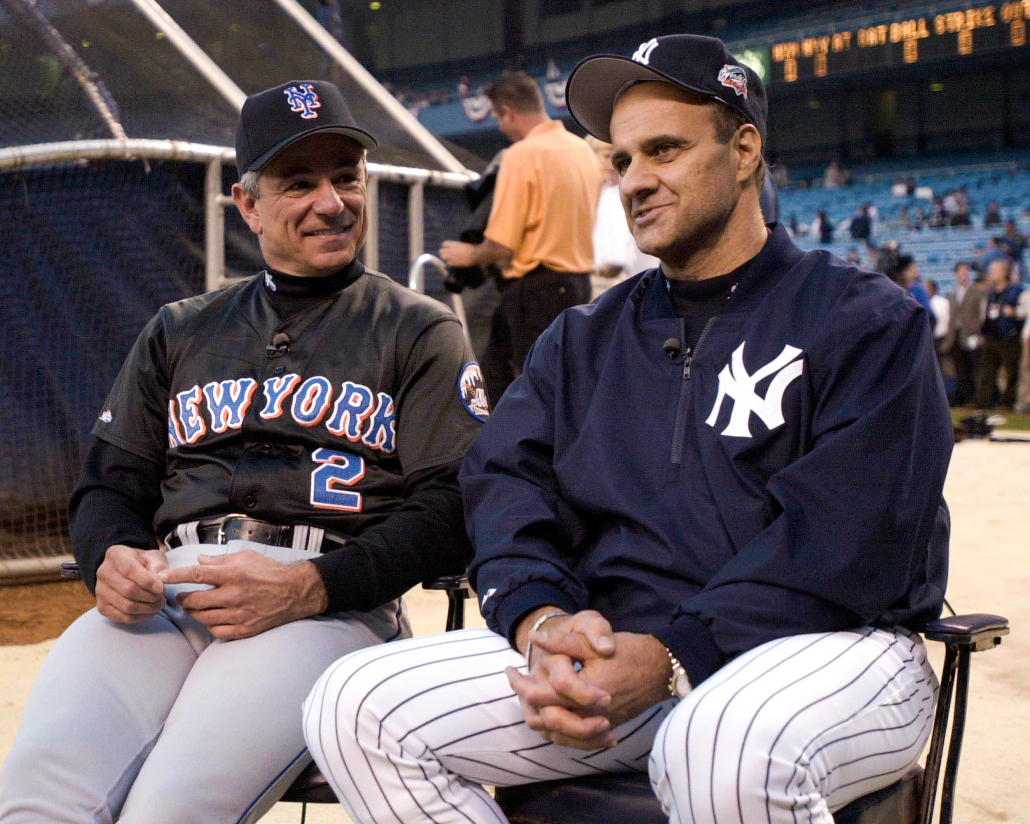
Mets manager Bobby Valentine (left) and Yankees manager Joe Torre

July 7, 2000, 25 years ago: An Interleague weekend series begins at Shea Stadium in New York. It was supposed to be 3 games there, but a rainout forced it into 4 games, with the teams playing a doubleheader the next day, one at each stadium.

In the Friday night game, the Yankees beat the Mets 2-1. Four straight singles – by Derek Jeter, Paul O’Neill, Bernie Williams and Jorge Posada – off Al Leiter in the 1st inning get Orlando (El Duque) Hernández all the runs he needs.

July 8, 2000: The Saturday split-stadium doubleheader began at Shea at 1:15 PM, U.S. Eastern Time. Bobby Jones started for the Mets, while former Met star Dwight Gooden started for the Yankees. The Yankees staked "Doctor K" to a 2-0 lead in the 1st inning. The Mets pulled a run back in the bottom of the 2nd, and tied the game in the 5th.

But Tino Martinez hit a home run in the top of the 6th, and singled home another run in the 8th. The Yankees won, 4-2. It was the 191st win of Gooden's career, cut short by drug suspensions and injuries. He would only win 3 more, and a 194-112 record, 2,293 strikeouts, and 3 World Series rings have not been enough to gain him serious consideration for the Baseball Hall of Fame.

The 2nd game got underway at Yankee Stadium at 8:05 PM. All the scoring came in the 5th inning. Back-to-back singles by Derek Bell and Edgardo Alfonzo off Roger Clemens gave the Mets a 2-0 lead. But the Yankees came right back against Glendon Rusch: A single by David Justice, a single by Shane Spencer, a sacrifice bunt by Chris Turner, an RBI single by Scott Brosius, and a 3-run home run by Chuck Knoblauch. Yankees 4, Mets 2.

June 9, 2000: Andy Pettitte did not have his best stuff. Mike Hampton had his, going 7 innings of 6-hit shutout ball. A Todd Zeile homer in the 4th and a Melvin Mora sacrifice fly in the 7th gave the Mets a 2-0 win.

So the Yankees took 2 out of 3 in the scheduled series, 3 out of 4 overall. The way the regular season worked out, the Mets won more games, 92 to the Yankees' 87; but the Yankees' total was enough to win the American League Eastern Division by 2 1/2 games over their arch-rivals, the Boston Red Sox; while the Mets' total put them 1 game behind the Atlanta Braves in the National League Eastern Division.

Luck was on the Mets' side: In the NL Division Series, they beat the San Francisco Giants, while the Braves lost to the St. Louis Cardinals. The Mets then beat the Cards for their 1st Pennant in 14 years. The Yankees beat the Oakland Athletics, then the Seattle Mariners, to win their 3rd straight Pennant, their 4th in the last 5 years, and their 37th overall.

That set up the 1st Subway Series since 1956, Yankees vs. Brooklyn Dodgers. Since Interleague Play began in 1997, New York baseball fans, and the New York media, always refer to the regular-season games between the Yankees and the Mets as a "Subway Series." It's not. Nobody ever called regular-season games between the Dodgers and the New York edition of the Giants a "Subway Series." That term was reserved for a World Series between 2 New York teams. The Yankees beat the Mets in 5 games, clinching at Shea Stadium. 

Friday, July 4, 2025

July 4, 1985: The Rick Camp Game

July 4, 1985, 40 years ago: For anybody who watched this baseball game, it was a 4th of July that will never, ever be forgot.

The Atlanta Braves were hosting the New York Mets at Atlanta-Fulton County Stadium, and Braves owner Ted Turner, showman that he was, scheduled a postgame 4th of July fireworks show. Paid attendance at the 52,007-seat concrete ashtray just south of downtown Atlanta was 44,947.

But the game was delayed by rain, and didn't start until 9:04 PM. Rick Mahler started for the Braves, and the Mets hit him hard, and he didn't get out of the 4th inning. Dwight Gooden started for the Mets, and, in a year when he seemed to be touched by God, he was no better. A second rain delay came, and Met manager Davey Johnson -- who hit 41 home runs as a 2nd baseman for the Braves in 1973 -- didn't take any chances, and he took Doctor K out.

Did I say Davey didn't take any chances? When they came back from the rain delay, he let Roger McDowell, normally a late-inning reliever, finish the bottom of the 3rd inning. Terry Leach pitched the 4th through the 8th, but Davey brought in Doug Sisk, and he let the Braves score 4 runs in that inning to take the lead, 8-7. This included a Keith Hernandez home run. But future Hall-of-Famer Bruce Sutter blew it in the 9th, and the game went to extra innings. At one point, Davey got thrown out of the game.

The Braves got 2 men on with 1 out in the bottom of the 11th, but the Mets got out of it with a double play. In the top of the 13th, with 2 out, Ray Knight singled, and Howard Johnson hit a home run. 10-8 Mets. But in the bottom of the 13th, Tom Gorman -- the only reliever the Mets had left -- allowed a leadoff single to Rafael Ramirez. He struck out Dale Murphy and Gerald Perry, but then gave up a home run to Terry Harper. 10-10. More "free baseball."

Gene Garber walked Lenny Dykstra and Hernandez in the top of the 14th, but got out of it. Knight singled for the Mets in the top of the 15th, but got no farther than 1st base. With 2 out in the bottom of the 16th, Ken Oberkfell singled off Gorman, and Bruce Benedict drew a walk. But Gorman got out of it.

Rick Camp, the Braves' last remaining reliever, came into the game in the top of the 17th, and walked Gary Carter, but then struck out Darryl Strawberry and Gorman, and got Knight to ground into a force play. Ramirez singled with 2 outs in the bottom of the 17th, but Gorman got out of it.

Top of the 18th. HoJo led off with a single. Danny Heep bunted, and Camp rushed it, and threw it away. 1st and 3rd, nobody out. Dykstra hit a sacrifice fly, and it was 11-10 Mets. There was nothing that Braves manager Eddie Haas could do, as Camp was it: The only pitchers he had left were starters, the same as the Mets.

Bottom of the 18th. Perry and Harper grounded out. That brought up Camp, as Haas couldn't pinch-hit for him. He had nobody left to bat or pitch. This pudgy bearded guy, wearing Number 37 for his home-State team, came up to bat. He came into that game 10-for-168 for his career -- a lifetime batting average of .060. He was 0-for-his-last-13. He hadn't gotten a hit since September 1, 1984, 10 months earlier.

John Sterling, who became the main voice for the New York Yankees in 1989, but then doing games for the Braves, turned to his broadcast partner, Ernie Johnson -- who pitched for the Braves in Milwaukee and was the father of basketball announcer Ernie Johnson Jr. -- and said, "I'll tell you, Ernie: If hits a home run to tie this game, this game will be certified as absolutely the nuttiest in the history of baseball."

What do you think happened? Have you ever heard 8,000 people make as much noise as 50,000? You did if you were watching TBS -- or WOR-Channel 9 -- that middle-of-the-night. I was watching on WOR, but, because of Sterling's call, it's the TBS version that seems to have been preserved for posterity and shown on highlights.

Sterling:

And he hits it to deep left! Heep goes back! It is... GONE! Holy cow! Oh my goodness! I don't believe it! I don't believe it! Rick Camp! Rick Camp! I told you Ernie, if he hits it out... That certifies this game as the wildest, wackiest, most improbable game in history!

Mets 11, Braves 11. And to make matters worse, Gorman walked the next batter, Benedict. But he got Paul Runge to ground into a force play, and we went to the 19th inning. (This Paul Runge is not related to the umpire of the same name, whose father Ed and son Brian have also been MLB umpires.)

The Mets play a game this long every few years. In 1964, they went 23 innings in a loss to the San Francisco Giants -- in the 2nd game of a doubleheader. In 1965, they went 18 innings in Philadelphia against the Phillies, before the game was called due to a curfew, and it was replayed. In 1968, they went 24 innings in a loss to the Houston Astros. In 1974, they went 25 innings in a loss to the St. Louis Cardinals.

In 1986, they played what was then the longest game in NLCS history, going 16 innings in beating Houston to clinch the Pennant. They went 20 innings in a 2010 win in St. Louis, 20 in a 2013 loss to the Miami Marlins, 18 in a 2015 loss in St. Louis, and 18 in a 2019 loss in Milwaukee to the Brewers. The 2020 introduction of the "ghost runner" rule makes another such marathon unlikely.

At some point in all this, Ralph Kiner, the great Pittsburgh Pirates slugger who'd been broadcasting for the Mets since the franchise began in 1962 (and still did one game a week until he died in 2014), left the stadium, returned to his hotel, and turned on the TV. He saw the game, and during the next Met broadcast, said that he thought it was a recap. Nope, the game was still going on.

Finally, at about 3:30 in the morning, with only about 8,000 people left in the stands, the Mets decided enough was enough, that they'd had it with these mother-freaking Braves in this mother-freaking game. They pounded Camp, who could not be relieved. Carter led off with a single. John Christensen, who'd pinch-hit for Strawberry, bunted him over to 2nd.

Whoever was managing the Mets at that point -- it might have been 1st base coach Bill Robinson -- decided to let the next day's starter, Ron Darling, pitch the bottom of the 19th, and a few innings thereafter if necessary, since who knew if this game had another 9 innings in it, and sent Rusty Staub, playing one of his last games, up to pinch-hit for the exhausted Gorman.

Haas ordered Camp to walk Staub intentionally to set up a double play, but it didn't work: Knight doubled home Carter and sent Staub to 3rd.  (Daniel Joseph Staub was known as Rusty for his hair, and Montreal Expos fans called him "Le Grand Orange." He wasn't fast even before he turned into a flame-haired Fat Elvis -- or, as Sterling called him in this game, "Babe Ruth.") HoJo was intentionally walked, and that didn't work, either: Heep singled home Staub and Knight, and the throw from the outfield was mishandled, and HoJo scored, too. Dykstra flew out, getting Heep to 3rd, and Wally Backman singled Heep home, before Camp finally got Hernandez to ground out.

Mets 16, Braves 11. This was the mid-1980s Mets. Surely, these Mets could hold a 5-run lead. Surely, the Braves wouldn't score 6 runs and win it in the bottom of the 19th. Or, potentially worse, score 5 runs and send the game to a 20th inning!

They were determined to give it a good shot. Darling came out, and got the 1st out, a groundout by Paul Zuvella. But Claudell Washington hit a bouncer to 1st that Hernandez mishandled. (No, Kramer and Newman from Seinfeld were not in the stands to yell, "Nice game, pretty boy!") Claudell and his long neck got to 2nd.

No problem, Darling would get out of it, right? Sure enough, he got Ramirez to pop up. One more out. That left only the dangerous Murphy, the 1982 & '83 National League Most Valuable Player, and still one of the most dangerous hitters in the game. But what could he do? A home run would only make it 16-13.

But Darling walked him. And then he walked Perry. And now the bases were loaded for Harper, who had already homered. And Harper singled. Washington and Murphy scored. Perry was on 3rd. It was 16-13 Mets. Men on 1st and 3rd. A home run would tie the game. Again.

And who was up? Rick Camp. Surely, he wouldn't do it again...

He didn't: Darling struck him out on a high fastball. Finally, mercifully, at long last, ballgame over.

Camp was the losing pitcher, but he won something more important than a single baseball game. He won a place in baseball lore. After all these years, we're still talking about this mind-boggling game, and not about any other game in which he ever pitched.

Oh yeah: Although the game was over, the night wasn't. The game ended at 3:55 AM. At 4:00 on the dot, Ted Turner kept his promise: The fireworks went off. The 8,000 or so fans who hadn't left cheered.

People living near the stadium did not. They heard booms and saw flashes of light, and they called the police, thinking that Atlanta was under attack.

Incredibly, Camp got 2 more hits that season, for a batting average of .231. He closed his career 13-for-175, .074. On-base percentage, .109. Slugging percentage, .114. OPS, .224. OPS+, -39. RBIs, 7. Home runs, 1.

After leaving baseball, Camp became a lobbyist. He got into legal trouble in 2005, indicted by a federal grand jury for conspiring to steal over $2 million from a mental health agency. He was convicted, and served 3 years in prison. But everyone who met him seemed to say he was a wonderful guy. Is it possible that, like Denny McLain, a pitcher who went to prison on a similar charge, he simply got in with the wrong people?

Camp died in 2013. He was 59 years old. He gave baseball fans a memory they might cherish, or they might not, but it is one that they will never, ever forget.

Friday, October 20, 2023

The Future Ain't What It Used to Be

October 20, 1988, 35 years ago: The Los Angeles Dodgers beat the Oakland Athletics, 5-2 in Game 5 of the World Series at the Oakland Coliseum. This gives the Dodgers the World Championship in a tremendous upset, sparked by Kirk Gibson's home run that won Game 1.

Now, imagine that you could go back to that night, and that you could tell someone that, eventually, the following things will have happened:

* Kirk Gibson will never appear in another World Series.

* Mark McGwire and José Canseco of the defeated A's will appear in the next two World Series, but that will be it for them.

* The next time Orel Hershiser, the pitching hero of this World Series and, indeed, of the entire season, appears in a World Series, it will be as a Cleveland Indian.

* The next time Darryl Strawberry and Dwight Gooden of the Mets win a World Series, they will be playing for the Yankees.

* The next time the Yankees win a Pennant and a World Series, not only will they have Darryl and "Doc" on their roster, but they won't have Don Mattingly on it. But they will have Wade Boggs on it. And their manager will be Joe Torre. And George Steinbrenner will be cheered at the subsequent ticker-tape parade.

* Bo Jackson will never play football again after the 1990 Playoffs.

* Pete Rose will be banned from baseball.

* Boggs and Torre will get into the Baseball Hall of Fame. None of the other guys I mentioned will ever get in.

* Terry Bradshaw, Howie Long, Troy Aikman (then in his senior year at UCLA), Bill Walton, Charles Barkley and John Davidson will all become better known as broadcasters in their respective sports than they are as players. Same with Jimmy Johnson, Digger Phelps and Barry Melrose as coaches.

* Within 9 years, Major League Soccer and the Women's National Basketball Association will be founded, and New York will be among the founding teams in both, but, through the 2023 season, neither will have yet won a single league title. (UPDATE: The New York Liberty won the 2024 WNBA Championship).

* Rose, O.J. Simpson, Mike Tyson and Bill Cosby will all go to prison. (I could add Martha Stewart, but she wasn't all that famous yet.)

* Betty White, 48 years older than River Phoenix, will outlive him by 28 years. She is 36 years older than both Michael Jackson and Prince, and will outlive the former by 12 years and the latter by 5 years. She is 28 years older than Tom Petty, and will outlive him by 4 years. She is 25 years older than David Bowie, and will outlive him by 5 years. She is 20 years older than Muhammad Ali, and will outlive him by 5 years.

* Keith Richards, 13 days older than John Denver, who had a much cleaner image, will outlive Denver by at least 26 years.

* Gay people would get the right to serve in the military and get married. 

* A Governor of Arkansas would get elected President -- as a liberal Democrat. And get impeached over a sex scandal. And be acquitted.

* Not only would Vice President George Bush win the upcoming election, but he would lose the next election, to the aforementioned Governor, and then that next President would be succeeded by Bush's son, who didn't go to Vietnam, but would bring America its next "Vietnam," and would bring its worst economic conditions since the Great Depression.

* That President's replacement would be a black man with an Arabic name.

* Rudy Giuliani, who made his name prosecuting organized crime bosses under the RICO Act in federal court, would be indicted under the RICO Act in federal court.

* Al Sharpton would become a respected elder statesman of civil rights.

* New York City would elect a Mayor who was both black and a former cop.

* Arnold Schwarzenegger would get elected Governor of California. Twice. And would get the Delegates at the Republican Convention to do something they hadn't done since 1972: Cheer the mention of Richard Nixon.

* Great Britain would have a Prime Minister who was both Indian and Muslim.

* Prince Charles would both get divorced and remarried, and would still be allowed to become King.

* Israel would have a Prime Minister who could, in terms of governing style if not in terms of the number of people he killed, legitimately be compared to Adolf Hitler. And he had gone to the same high school, at the same time, as Reggie Jackson.

* Within 2 years, on back-to-back days, Yankee Stadium will be sold out -- by Nelson Mandela and then Billy Joel. Remember: Mandela was still in prison in 1988, and the Reagan Administration had been treating him as a Communist, a terrorist, and a pariah. Congress had passed sanctions against South Africa's apartheid government, Reagan had vetoed them, and his veto was overridden. And the Yankees, in 1988, were not in the habit of hosting standalone concerts at The Stadium. (Only the occasional postgame show.)

* Joel would release albums in 1989 and 1993, and would live at least another 30 years, but, in that time, never release another album of new music.

* Donald Trump will soon go bankrupt, and go on to recover; host a game show; become President without previously holding any public office, elective or appointive; crash the economy, let over one million people die because he threw away a contingency plan because it was written by the previous President, who was black, cave in to the Russian dictator, get impeached (but not removed) because of it; and lose his bid for re-election, send terrorists to invade the Capitol to try to overturn the result, fail, and still be allowed to run again.

* And he would lose that disputed election to Joe Biden, a guy who had to drop out of this year's race because of his health and a minor scandal -- and would now be President of the United States at the age of 80, and have at least a 50-50 chance of being re-elected.

* And, by the way, in 2023, we still don't have flying cars!

Your man on the street in 1988, especially if he's a New Yorker and a sports fan, won't believe any of that.

As Yogi Berra put it, "The future ain't what it used to be."

Monday, August 28, 2023

Things Aren't Looking Good for My Teams

After dropping 2 out of the 3 to the execrable Tampa Bay Rays -- and that's a comment on their character, though they've also fallen from their exalted early-season perch -- the Yankees are now 62-68. This means they will have to go 20-12 the rest of the way, just to finish the season above .500.

That's a 101-win pace.

For this Yankee team.

I don't think so.

*

Someone wrote on a Yankee-themed Facebook page: "I was just watching the replay of yesterday’s game and Boone’s post game presser was depressing. He looks and sounds like a defeated man. I think he’s been told he’s gone. I almost felt sorry for him but then I realized that he is partially responsible for the state of this team so screw him."

If this guy is right, and Aaron Boone knows he's going to be fired after the season, why doesn't he just go now? Seriously: More people would respect him for getting out of a bad relationship than would call him a quitter.

And who is Brian Cashman going to get to replace Boone? Who is willing to take Cashman's orders and Hal Steinbrenner's money, while subverting his own ideas about managing?

*

Across town, the Mets aren't doing any better, despite setting a new record for highest MLB payroll ever. Proving that it's not how much you spend, it's how wisely.

The Mets also announced that, next season, they'll retire the Number 16 of Dwight Gooden and the Number 18 of Darryl Strawberry.

Met fans: The Yankees retire too many numbers. It devalues the honor.

Also Met fans: Finally, Dwight Gooden and Darryl Strawberry are getting their numbers retired.

Yankee Fans: We've got 20 honorees for 27 titles. You've now got 8 honorees for 2 titles. (Note: These numbers do not include managers.) You've got Bud Harrelson in your team Hall of Fame. We don't have Bucky Dent in Monument Park. Also, why didn't you retire Gary Carter's number while he was, you know, still alive? Oh, by the way: Doc and Darryl did more for us than they did for you.

*

My Alma Mater, East Brunswick High School, had its earliest football game ever last Friday night, losing to Franklin, a school only 2 towns away, but in a different County.

At least we have a home field to play on this year: Last year, we had to play all our games on the road, because a hurricane had damaged our artificial turf, which was all of 15 years old. I thought part of the point of the plastic stuff was that it was cheaper to take care of than real grass.

And Arsenal dropped 2 points they shouldn't have on Saturday, allowing Fulham -- the West London team is not exactly a powerhouse -- to draw with them at the Emirates.

And the Red Bulls stink, having just lost to Inter Miami, which was the worst team in MLS until they signed Lionel Messi.

Rutgers won't be any good. Again.

Things aren't looking good for my teams.

How soon until the Devils start up?

Thursday, June 29, 2023

The 12 New York Yankees to Have Pitched a No-Hitter, In Perspective

Left to right: Joe Girardi, David Cone, Don Larsen,
Yogi Berra, David Cone and Jorge Posada.

The following 12 pitchers have pitched a no-hitter while playing for the New York Yankees:

1. George Anthony Mogridge, Rochester, New York, 1889-1962, lefthanded, pitching in the era before uniform numbers were worn, with Les Nunamaker as his catcher, against the Boston Red Sox, at Fenway Park in Boston, Massachusetts, the Yankees winning, 2-1, on April 24, 1917. He walked 3 batters, and the Yankees made 3 errors behind him.

He pitched in the era before there was an All-Star Game. He appeared in 1 postseason, but after leaving the Yankees, winning the 1924 World Series with the Washington Senators.

2. Samuel Pond Jones, "Sad Sam," Woodsfield, Ohio, 1892-1966, righthanded, pre-number, with Fred "Bootnose" Hofmann catching, against the Philadelphia Athletics, at Shibe Park in Philadelphia, Pennsylvania, the Yankees winning, 2-0, on September 4, 1923. He didn't strike any batters out, walked 1, and the Yankees made an error behind him.

He pitched in the era before there was an All-Star Game. He had won the 1916 and 1918 World Series with the Boston Red Sox, won with the Yankees in 1923, and lost with the Yankees in 1922 and 1926.

In 1959, another pitcher named Sam Jones, with the Chicago Cubs, became the 1st black pitcher to throw a no-hitter in the major leagues.

3. Montgomery Marcellus Pearson, "Monte," Fresno, California, 1908-1978, righthanded, Number 16, with Joe Glenn (not Bill Dickey) catching, against the Cleveland Indians, at Yankee Stadium in The Bronx, New York, in the 2nd game of a doubleheader, the Yankees winning, 13-0, on August 27, 1938. He walked 2 batters.

Monte Pearson appeared in 2 All-Star Games, and was a member of the Yankees' 4 straight World Series wins from 1936 to 1939.

He pitched the 1st no-hitter at the original Yankee Stadium. is the only native of Fresno, California to pitch a no-hitter for a New York team. Tom Seaver was from Fresno, but, of course, pitched his only career no-hitter with the Cincinnati Reds, not the Mets.

4. Allie Pierce Reynolds, "the Superchief," Oklahoma City, Oklahoma, 1917-1994, righthanded, Number 22, with Yogi Berra catching, against the Cleveland Indians, at Cleveland Municipal Stadium in Cleveland, Ohio, the Yankees winning, 1-0, on July 12, 1951. He walked 3 batters, and the Yankees made an error.

Reynolds became the 2nd pitcher, of whom there are now 6, to throw 2 no-hitters in 1 season: Again with Yogi Berra catching, it was against the Boston Red Sox, at Yankee Stadium, the Yankees winning, 8-0, in the 1st game of a doubleheader, on September 28, 1951. He walked 4 batters, and the Yankees made an error. In the 2nd game of the doubleheader, they clinched the Pennant.

Reynolds pitched in 6 All-Star Games, and won the World Series with the Yankees in 1947, and then with their 5 straight World Champions of 1949 to 1953. The Yankees honored him with a Plaque in Monument Park at Yankee Stadium -- so far, the only one of these so honored.

Charles "Chief" Bender of the Philadelphia Athletics pitched a no-hitter in 1910, so Reynolds was the 2nd Native American pitcher to throw a no-hitter in the major leagues.

5. Don James Larsen, "Gooney Bird," San Diego, California, 1929-2020, righthanded, Number 18, with Yogi Berra catching, against the Brooklyn Dodgers, in Game 5 of the World Series, at Yankee Stadium, the Yankees winning, 2-0, on October 8, 1956.

It was the 1st no-hitter in postseason history, and while it is no longer the only one, or even the only one in World Series history, it remains the only perfect game in postseason history. Or, as Yogi put it, as only he could, "It's never been done before, and it still hasn't."

Larsen won the 1956 and 1958 World Series with the Yankees, losing in 1955 and 1957, and also lost to the Yankees with the San Francisco Giants in the 1962 World Series.

6. David Allan Righetti, "Rags," San Jose, California, born in 1958, lefthanded, Number 19, with Butch Wynegar catching, against the Boston Red Sox, at Yankee Stadium, the Yankees winning, 4-0, on July 4, 1983. He walked 4 batters.

Dave Righetti had been the 1981 American League Rookie of the Year, and had just been selected for the 1st of what would be 2 All-Star Games. But, by starting him in this game, manager Billy Martin ensured that Righetti wouldn't be able to pitch in the All-Star Game. It was a very hot day, but he finished the game in improbable fashion, by striking out Wade Boggs, one of the best contact hitters of all time.

Righetti had been with the Yankees when they lost the 1981 World Series, then was converted to a reliever in 1984. In 1986, he saved 46 games, a record at the time. He later served as the pitching coach on the San Francisco Giants teams that won the 2010, 2012 and 2014 World Series.

George "Hooks" Wiltse of the 1908 New York Giants and George Mullin of the 1912 Detroit Tigers also pitched no-hitters on the 4th of July. In Righetti's case, it was also the birthday of his boss, Yankees team owner George Steinbrenner.

7. James Anthony Abbott, "Jim," Flint, Michigan, born in 1967, lefthanded -- he was born without a right hand -- Number 25, with Matt Nokes catching, against the Cleveland Indians, at Yankee Stadium, the Yankees winning, 4-0, on September 4, 1993. He walked 5 batters.

When Jim Abbott arrived in the major leagues, in 1989, with the team then named the California Angels, it was one of the most inspirational stories in baseball history. His closest call with the postseason was after leaving the Yankees, going back to the Angels, when they lost a Playoff for the American League Western Division title in 1995.

8. Dwight Eugene Gooden, "Doctor K" or just "Doc," Tampa, Florida, born in 1964, righthanded, Number 11, with Joe Girardi catching, against the Seattle Mariners, at Yankee Stadium, the Yankees winning, 2-0, on May 14, 1996. It was the least "perfect" Yankee no-hitter, with 6 walks and an error.

Doc had been the great hope of New York Mets fans, winning the National League's Rookie of the Year in 1984 and its Cy Young Award in 1985, but by the time they won the 1986 World Series, he was already beginning to descend into cocaine addiction. He eventually appeared in 4 All-Star Games, before a combination of drugs and a rotator cuff injury led the Mets to let him go after he was suspended for the entire 1995 season.

George Steinbrenner, always a sucker for a redemption story, and also always there for getting one over on the Mets, signed him. It worked, and he helped the Yankees win the 1996 World Series, was traded, was reacquired, and helped them win the 2000 World Series.

9. David Lee Wells, "Boomer," San Diego, California, born in 1963, lefthanded, Number 33, with Jorge Posada catching, against the Minnesota Twins, at Yankee Stadium, the Yankees winning, 4-0, on May 17, 1998. It was a perfect game, although he claimed that he was hungover while he pitched it.

Wells appeared in 3 All-Star Games, won the 1992 World Series with the Toronto Blue Jays, lost the 1996 AL Championship Series to the Yankees with the Baltimore Orioles, won the 1998 World Series with the Yankees, lost the 2003 World Series with the Yankees, and also reached the postseason with the 2005 Red Sox and in 2006 with his hometown San Diego Padres.

He and Larsen both graduated from Point Loma High School, both were known for their hard-partying ways, and both pitched perfect games for the Yankees.

10. David Brian Cone, "Coney," Kansas City, Missouri, born in 1963, righthanded, Number 36, with Joe Girardi catching, against the Montreal Expos, at Yankee Stadium, the Yankees winning, 6-0, on July 18, 1999. It was a perfect game.

The Yankees held Yogi Berra Day, and Larsen threw a ceremonial first pitch that Yogi caught. It was a terribly hot day, hotter even than for Righetti's no-hitter. Cone managed to finish the job, though. It was the 1st no-hitter ever pitched in an Interleague game. It was also, along with Gooden's, one of many no-hitters to have been pitched by a former Met before Johan Santana's dubious achievement of 2012.

A 5-time All-Star, Cone won the 1994 AL Cy Young Award with the Kanas City Royals. He arrived too late to appear with the Mets in the 1986 World Series, but was a member of their 1988 NL Eastern Division Champions. He won the World Series with the Blue Jays in 1992; and with the Yankees in 1996, 1998, 1999 and 2000.

When the old Yankee Stadium was closed on September 21, 2008, a photo was taken on the mound, with the 3 perfect game pitchers and their catchers, as seen above.

11. Corey Scott Kluber, "Klubot," Coppell, Texas, born in 1986, righthanded, Number 28, with Kyle Higashioka catching, against the Texas Rangers, at Globe Life Field, in the Dallas suburb of Arlington, Texas, the Yankees winning, 2-0, on May 19, 2021. The only baserunner he allowed was a walk of Charlie Culberson with 1 out in the 3rd inning.

The Rangers represent the Dallas-Fort Worth "Metroplex," which includes Coppell, so Kluber is the only Yankee ever to pitch a no-hitter in his home region. Due to his injuries, the Yankees let him go after the season, making him the Yankee soonest let go after his no-hitter, beating Wells' record by 2 days. A 3-time All-Star, Kluber won the AL Cy Young Award with the Indians in 2014 and 2017.

12. Domingo Germán (no middle name, unusual for a Hispanic person), San Pedro de Macorís, Dominican Republic, born in 1992, righthanded, Number 0 (formerly 55), with Kyle Higashioka catching, against the Oakland Athletics, at the Oakland-Alameda County Coliseum, the Yankees winning, 11-0, on June 28, 2023.

Higgy thus joined Yogi and Girardi as the only catchers to catch 2 Yankee no-hitters. Yogi lived to see Girardi do it, and he could have said, "I don't mind the company, especially when there's somebody else who did it."

Career wins: Wells 239, Jones 229, Gooden 194, Cone 194, Reynolds 182, Mogridge 132, Kluber 116, Pearson 100, Abbott 87, Righetti 82 (plus 252 saves), Larsen 81, Germán 31. Kluber and Germán are still active.

Wins with the Yankees: Reynolds 131, Righetti 74 (with 224 saves), Wells 68, Jones 67, Cone 64 (81 with the Mets), Pearson 63, Mogridge 48, Larsen 45, Germán 31, Gooden 24 (157 with the Mets), Abbott 20, Kluber 5.

Righetti, Abbott, Gooden, Wells, Cone, and the still-active Kluber and Germán are still alive.

Friday, May 14, 2021

1996 Yankees Silver Anniversary, Part I: A Special Season Begins

May 14, 1996, 25 years ago: The Yankees took the field at the old Yankee Stadium on a Tuesday night, to face the Seattle Mariners. At the time, there was no feeling that this season, or this game in particular, was going to be anything special.

Because... well, let's take a step back:

*

October 8, 1995: Thanks to a 2-run double off Jack McDowell by Edgar Martinez, the Seattle Mariners become only the 4th team in major league history to overcome a 2-game deficit to win a 5-game series, when they dramatically come from behind to beat the Yankees in 11 innings, 6-5 at the Kingdome in Seattle.

This, of course, was the last game as Yankee manager for Buck Showalter, mainly because he let starting pitcher David Cone throw 147 pitches, rather than trust a reliever warming up, a young Panamanian named Mariano Rivera.

It was also the last game as a major league player for Don Mattingly: Although he only said he was taking the 1996 season off, we knew he wouldn't be back for 1997. George Steinbrenner subsequently moved general manager Michael to an oversight role, replaced him with Bob Watson, and hired Joe Torre as field manager.

Watson soon made the trades to bring Mariners Tino Martinez and Jeff Nelson, and Chicago Cub catcher Joe Girardi, to New York. When starting shortstop Tony Fernandez went down with an injury in Spring Training 1996, the Yankees nearly traded Rivera to the Mariners for Felix Fermin. Instead, they decided to try a rookie, who had barely played in 1995, and wouldn't turn 22 until June.

His name was Derek Jeter.

*

April 2, 1996: The Yankees open a new season at Jacobs (now Progressive) Field in Cleveland, after a day's postponement due to snow. It was the team's 1st regular-season game with Torre as manager. With Mattingly having retired, it felt like a new era, one where the glory days had passed. Except the glory days never actually happened with Mattingly.

Nobody knew it yet, but they were about to begin, including with a home run by Jeter. As it turned out, Fernandez missed the entire season due to injury, and never played for the Yankees again. He would be a key figure on a future Pennant winnner, but that would be in Cleveland.

Bernie Williams also hits a home run, and the Yankees beat the Cleveland Indians 7-1. David Cone outpitches Dennis Martinez.

April 9, 1996: The home opener is played a week later, and snow strikes again. "It's the only time I've ever played 'Let It Snow, Let It Snow, Let It Snow' at Yankee Stadium," organist Eddie Layton said. Nevertheless, the Yankees got all 9 innings in, and beat the Kansas City Royals 7-3.

In shades of things to come, Andy Pettitte was taken out after 84 pitches, but did end up as the winning pitcher. Jim Leyritz, the hero of the last game that counted at Yankee Stadium (hitting a walkoff home run in the 15th inning of Game 2 of the ALDS, on October 4, 1995), went 3-for-3 with 2 RBIs.

Tino Martinez, coming off his 1st All-Star Game berth, had replaced Mattingly at 1st base, and was certainly not yet embraced by the Bronx faithful. The 2nd baseman was Mariano Duncan, a former All-Star who had previously won the World Series with the 1990 Cincinnati Reds, and a Pennant with the 1993 Philadelphia Phillies. The shortstop, as stated, was the rookie Jeter. And the 3rd baseman was Wade Boggs, a 5-time batting champion while with the Boston Red Sox.

Left field was not exactly settled, as former Met superstar Darryl Strawberry, former Montreal Expos speedster Tim Raines, former Texas Rangers slugger Ruben Sierra, a few others were tried there. Rising star Bernie Williams was in center field, and Paul O'Neill in right field. O'Neill had been the AL's batting champion in 1994, and had won the World Series with the 1990 Reds, along with Duncan, managed by former Yankee Lou Piniella. Girardi had succeeded Mike Stanley as the starting catcher. Strawberry and Sierra were used as the lefthanded designated hitters, Leyritz as the righthanded one. 

The starting rotation was Cone, Pettitte, Jimmy Key, and Dwight Gooden, with Kenny Rogers as the spot starter. All but Pettitte, who had a fine rookie season the year before, were veterans. Cone and Key had won the 1992 World Series with the Toronto Blue Jays.

Gooden, like Cone and Strawberry, had been with the crosstown Mets. Torre had played for them, and managed them, before any of those players arrived. Cone had not yet arrived when they won the 1986 World Series. By that point, Gooden and Strawberry had become huge stars, but were also already addicted to cocaine.

By this point, they were trying to come back from drug use and rehab. And Yankee team owner George Steinbrenner was a sucker for, among other things, comeback stories and trying to put one over on the Mets. So he signed them both, as well as Cone and Torre.

Another former Met: Torre's bench coach, Don Zimmer, who had been an original Met player in 1962, and had also been the ill-fated Red Sox manager when the Yankees beat them out in 1978. Another former Met: Mel Stottlemyre, who had been an All-Star Yankee pitcher and then the Mets' pitching coach.

But on May 7, Cone was diagnosed with an aneurysm in his pitching shoulder. Never mind his career: His life was in danger. It was surgically removed, but he wouldn't be back until September.

So now, the rotation would be Pettitte, Key, Gooden and Rogers. This did not fill Yankee Fans with confidence. Scott Kamieniecki took Rogers' place as the spot starter.

The bullpen was anchored by John Wetteland, who had starred with the Montreal Expos, with Rivera as the 7th and 8th inning man. That part seemed to be fairly consistent. But the Yankees had to get there first.

April 27, 1996: The Yankees lose to the Minnesota Twins, 8-6 in 10 innings at Yankee Stadium. Only 20,025 came out. The Yankees fall to 11-10.

But they go on a 9-1 run, and start looking promising. Then they lose 3 straight, before winning on May 12, to rise to 21-14.

On the 14th, a Tuesday night, I had the time and the money to go to the game. But I didn't want to mess with rush hour traffic in New York, and decided to go to the game on the following Saturday -- which the Yankees ended up losing to the Milwaukee Brewers. I should have gone to the Tuesday night game. I would have been on hand, rather than watching on TV, for one hell of a story...

May 14, 1996, 25 years ago: Only 20,786 fans came to Yankee Stadium on a Tuesday night, to see Gooden start against the Mariners, the team that had knocked the Yankees out of the Playoffs the season before.

When he debuted with the Mets in 1984, only 19 years old, Gooden was a sensation, striking out everybody who came to the plate and his dog. He became known as "Doctor K," or "Doc" for short. He set a new National League record for strikeouts by a rookie, and won the NL's Rookie of the Year award.

In 1985, he went 24-4, falling 1 win short of the team record for wins in a season (Tom Seaver went 25-7 in 1969), and won the NL's Cy Young Award. That year, the side of the Holland Hotel at 351 West 42nd Street was festooned with a giant photo of Gooden, as an ad for Sports Illustrated. (According to Mike Vaccaro of the New York Post, it was 95 feet tall by 42 feet wide. Another source I saw said it was 102 feet tall.) So anyone taking a bus into the Port Authority Bus Terminal -- including visitors from New Jersey, such as myself -- had to look at it every time they came in, whether they liked the Mets or (such as myself) not.

In 1986, Gooden was very good, but not quite as great as he was the 2 years before. Cocaine, alcohol, and late nights were catching up with him. He was the losing pitcher in Game 2 of the World Series, and again in Game 5. For all intents and purposes, the Mets won that World Series without him. Not since 1948, when the Cleveland Indians won it despite Bob Feller losing Games 1 and 5 (despite pitching better than Gooden did both times), had a team had such a heralded pitcher and won a World Series without said pitcher winning a game. (Denny McLain went 31-6 for the 1968 Detroit Tigers, but only 1-2 in the World Series.)

The morning of the team's ticker-tape parade for winning the Series, Gooden didn't show up. He was at his drug dealer's apartment. At the end of Spring Training in 1987, he was sent to rehab, and missed the 1st month of the season. He had run-ins with police in his native Tampa Bay region. And he missed time for reasons that had nothing to do with substance abuse, but rather with injuries.

In 1993, SI ran a cover story on him, with the cover caption being "From Phenom to Phantom." In 1994, just before the season-ending strike, his drug problems got him suspended for the rest of the season (which was all but meaningless), and for all of the 1995 season (which did have some meaning). On July 16, 1995, the 42nd Street mural came down, replaced with one of Knicks star Charles Oakley. (The 1927 building has since been refitted as apartments with balconies, so a mural is no longer possible.)

Along with Strawberry, Gooden may have been the most talented player the Mets franchise has had in its 1st 60 seasons of play -- Willie Mays and Rickey Henderson only playing for them toward the ends of their careers -- and was more hyped then than Jacob deGrom is now. (Trust me: I was around back then.) But by the time his suspension ended, and the Yankees picked him up, he was a failure. At the ages of 19 and 20, he was one of the best there ever was. From 21 to 25, he was one of the best at the time. From 26 to 28, he was a broken-down memory. And at 29 and 30, he was a drugged-out disgrace.

At 31, he took the mound at Yankee Stadium, with that cloud over him, with the unfamiliar Pinstripes on him, the unfamiliar Number 11 on his back instead of his Mets' Number 16 (the Yankees had retired that number for Whitey Ford), and with the home fans not fully trusting him -- remembering him not just as a recovering addict, but as an oft-injured pitcher, and as one of them. The Other Team.

As if he didn't have enough on his mind, his father, Dan, 69 years old and weakened by years of illness, was going in for heart surgery the next day, in Tampa. Torre understood: His brother Frank, a former 1st baseman for the Milwaukee Braves, was suffering from heart trouble, and waiting for a transplant that everyone knew might not come in time. And Cone was already out. But Torre told Gooden that if he didn't want to pitch, and would prefer to fly to Tampa tonight, he would understand.

Gooden told Torre his father would want him to pitch, so he did. And it was against a Mariner lineup with Ken Griffey Jr., Edgar Martinez, Jay Buhner, and a 20-year-old rookie shortstop named Alex Rodriguez. Gooden was shaky at first: He walked 2 of the 1st 3 batters he faced, 3 of the 1st 6, and 4 of the 1st 11.

But he settled down, and the game was scoreless going to the bottom of the 6th, as Sterling Hitchcock, whom the Yankees had given up as part of the trade to bring in Tino and Jeff Nelson, was, for the moment, pitching even better.

Boggs led off the inning with a single. Girardi followed with another. O'Neill grounded back to Hitchcock, whose only play was to 1st. Sierra was walked to set up the double play. It didn't work: Tino hit a sacrifice fly to score Boggs. Leyritz, in the game as the DH, singled Girardi home. It was 2-0 Yankees.

That gave Gooden a huge boost, although, with a 2-run lead, thinking about the fact that he hadn't allowed any hits yet was still problematic, especially given the Seattle lineup. But he sent the M's down 1-2-3 in the 7th, and again in the 8th.

But he ran into trouble again in the 9th. Leadoff walks are always worrisome, and he issued one to A-Rod. Griffey grounded to 1st, and there was no way for Tino to go after the lead runner. Walking Edgar put the tying run on base, but filling an open 1st base wasn't the worst thing that could have happened. A worse thing would be a wild pitch, and he threw one, advancing the runners. Given that, Piniella, now the Mariners' manager, took out the chunky Edgar, and sent Rich Amaral in to pinch-run. So a single by Buhner could tie the game.

Gooden bore down against Buhner, whom the Yankees traded away for Ken Phelps in 1988, before he'd done much in the majors, and struck him out. The batter was Paul Sorrento. He popped up, and it was an easy play for Jeter.

The list of pitchers who had once been Mets and later threw no-hitters already included Tom Seaver and, 7 times, Nolan Ryan. Now, it included Dwight Gooden. This was one hell of a redemption story, and the crowd at Yankee Stadium accepted him as a Yankee.

The following day, Dan Gooden came through his heart surgery alive. He lived until the following January 12, long enough to see his son's redemption complete.

Dwight Gooden's no-hitter was unexpected on multiple levels. Indeed, it was the 1st no-hitter pitched by a righthanded pitcher for the Yankees since Don Larsen pitched his perfect game in Game 5 of the 1956 World Series. Dave Righetti in 1983 and Jim Abbott in 1993, lefthanders, had pitched no-hitters for the Yankees.

Gooden's gem was the 1st real sign that maybe, just maybe, 1996 could be a special season for the New York Yankees and their fans. But, to paraphrase The Hollies, the road ahead would be long, with many a winding turn.