Sunday, February 7, 2021

How Long It's Been: A Team Played In an NFL Championship Game On Its Home Field

The Super Bowl is chosen years ahead of time, in the hope that it will be a neutral site. Twice, teams have played in the Super Bowl in their own market, but not in their home stadium:

* Super Bowl XIV, January 20, 1980: The Los Angeles Rams, who then played home games at the Los Angeles Memorial Coliseum, played at the Rose Bowl in Pasadena. But they lost the game to the Pittsburgh Steelers, 31-19.

* Super Bowl XIX, January 20, 1985: The San Francisco 49ers, who then played home games at Candlestick Park, played at the old Stanford Stadium in Palo Alto. They beat the Miami Dolphins, 38-19.

Miami has hosted the Super Bowl a record 11 times, each time at what was then the Dolphins' home stadium: II, III, V, X and XIII at the Orange Bowl; XXIII, XXIX, XXXIII, XLI, XLIV and LIV at what's now named Hard Rock Stadium in Miami Gardens. The Dolphins have been in 5 Super Bowls, but in none of those 11.

New Orleans has hosted the Super Bowl 10 times, each time at what was then the New Orleans Saints' home stadium: IV, VI and IX at Tulane Stadium; XII, XV, XX, XXIV, XXXI, XXXVI and XLVII at the Superdome. But the Saints have only been to 1 Super Bowl, XLI, and that was in Miami (or, rather, its suburbs).

Dallas Cowboys fans were sure that they were going to play Super Bowl XLV at home, at AT&T Stadium in Arlington. But they went 6-10, and didn't come close to making the Playoffs.

The Minnesota Vikings almost did it, getting to the NFC Championship Game in the 2017-18 season, with Super Bowl LII set for their new U.S. Bank Stadium. But they lost to the Philadelphia Eagles.

Now, with Tom Brady cheating leading them to victory, the Tampa Bay Buccaneers are in Super Bowl LV, which is being played at their ground, Raymond James Stadium. (Raymond James is a financial services company, formed by the 1964 merger of Robert A. James Investments and Raymond & Associates. They are headquartered across the Bay in St. Petersburg, Florida.

Brady, who has previously been in 6 winning Super Bowls and 3 losing ones, won't have it easy, as the Bucs will be playing the defending Champions, the Kansas City Chiefs. Patrick Mahomes already has 1 Super Bowl ring without cheating, something Brady cannot truthfully claim.

Thus, the Bucs will be the 1st team to play in the Super Bowl in their own stadium. They will be the 1st team to play in an NFL Championship Game in its own stadium since January 2, 1966, when the Green Bay Packers beat the Cleveland Browns 23-12 at Lambeau Field. That would be the last title game before the NFL and AFL Champions began playing each other the next season, in the game that would later be officially renamed the Super Bowl. In those days, the right to host the Championship Game alternated between the winners of the Eastern and Western Divisions.

The Bucs will be the 1st team to play in an unquestioned world championship game for pro football since the Baltimore Colts beat the New York Giants, 31-16, before 57,545 fans at Memorial Stadium in Baltimore, in the NFL Championship Game on December 27, 1959, an event mentioned (but not shown) in the 1982 film Diner, set in Baltimore.

So no NFL team has played in a World Championship game at home in 61 years. How long has that been?

*

The Colts were led by some of the greatest players of all time: Quarterback Johnny Unitas, running back Lenny Moore, receiver Raymond Berry, defensive end Gino Marchetti, and defensive tackle Art Donovan. They were coached by Wilbur "Weeb" Ewbank. These men won back-to-back titles in 1958 and 1959, beating the Giants of Frank Gifford and Sam Huff in both games. The 1958 game went to overtime at Yankee Stadium, and has been called "The Greatest Game Ever Played."

There are 8 players on that '59 Colt team still alive: Moore, Berry, Dick Szymanski, Andy Nelson, Mike Sommer, Ed Cooke, Dave Sherer, and Jerry Richardson, who would later found a fast food empire, and found a 1995 NFL expansion team, the Carolina Panthers.

Unitas, Moore, Berry, Donovan, Gifford, Huff, Charlie Conerly, Roosevelt Brown, Andy Robustelli, George Blanda, Bill George, Stan Jones, Lou Groza, Jim Brown, Mike McCormack, Gene Hickerson, Dick "Night Train" Lane, Bobby Layne, Lou Creekmur, John Henry Johnson, Alex Karras, Yale Lary, Dick LeBeau, Joe Schmidt, Bobby Dillon, Forrest Gregg, Paul Hornung, Henry Jordan, Jerry Kramer, Willie Davis, Ray Nitschke, Jim Ringo, Bart Starr, Jim Taylor, Les Richter, Ollie Matson, Chuck Bednarik, Norm Van Brocklin, Tommy McDonald, Sonny Jurgensen, Jack Butler, Ernie Stautner, Len Dawson, Y.A. Tittle, Joe Perry, Hugh McElhenny, Leo Nomellini, Bob St. Clair and Bobby Mitchell were all active players in 1959 who would go on to be elected to the Pro Football Hall of Fame. Only Moore, Berry, Huff, Kramer and Jurgensen are still alive.

The American Football League had been founded, but had not yet begun play. The founding teams were the New York Titans (who became the Jets in 1963), the Boston Patriots (who changed their name to the New England Patriots in 1971), the Buffalo Bills, the Dallas Texans (who moved to become the Kansas City Chiefs in 1963), the Houston Oilers (who moved to become the Tennessee Titans in 1997), the Denver Broncos, the Oakland Raiders (who moved to Los Angeles in 1982, back to Oakland in 1995, and to Las Vegas in 2019), and the Los Angeles Chargers (who moved to San Diego in 1961, and back to Los Angeles in 2017).

Both Leagues had reached the Pacific Coast. But not yet the South. The AFL put teams in Dallas and Houston. The NFL would also put a team in Dallas. But there were, as yet, no teams in Florida, or Atlanta, or New Orleans.

The only NFL stadium in use in 1959 that is still in use today is Lambeau Field in Green Bay. No NBA or NHL arena in use then is in use now, although a few from back then still stand. And the only MLB parks still in use are Fenway Park in Boston and Wrigley Field in Chicago.

Amos Alonzo Stagg was still alive. Fran Tarkenton was at the University of Georgia. Bill Parcells, Roger Staubach, Dick Butkus, Gale Sayers and Joe Namath were in high school. Mean Joe Greene and Larry Csonka were 13 years old, O.J. Simpson was 12, Terry Bradshaw was 11, Lyle Alzado and Joe Theismann were 10, Bil Belichick was 9, Ron Jaworski was 8, Randy White was 6, Tony Dorsett and Walter Payton were 5, Earl Campbell was 4, Joe Montana was 3, Andy Reid was a year and a half, Lawrence Taylor was 10 months old; and John Elway, Dan Marino and Jerry Rice weren't born yet. Nor had any of the current managers and head coaches of the major league teams in the New York Tri-State Area yet been born. (The oldest, Lindy Ruff of the Devils, was born on February 17, 1960.)

The Colts successfully defended the NFL Championship they had won the year before. The other titleholders were the Los Angeles Dodgers in baseball, the Boston Celtics in basketball (winning their 1st of 8 straight), and the Montreal Canadiens in hockey (winning their 4th of 5 straight). The Heavyweight Champion of the World was Ingemar Johansson.

The Olympic Games have since been held in America 5 times; 3 times each in Japan and Canada; twice each in Austria, France, Italy, Russia and Korea; and once each in Mexico, Germany, Bosnia, Spain, Norway, Australia, Greece, China, Britain and Brazil. The World Cup has since been held twice each in Mexico and Germany, and once each in America, Chile, England, Argentina, Spain, Italy, France, Japan, Korea, South Africa, Brazil and Russia.

Alaska and Hawaii had, within the calendar year, become the 49th and 50th States. There were 22 Amendments to the Constitution of the United States. There had been a Civil Rights Act in 1957, but it was relatively toothless. There was, as yet, no Civil Rights Act barring segregation in public facilities, no Voting Rights Act, no Fair Housing Act.

There was also no Medicare, no Medicaid, no Environmental Protection Agency, no OSHA, no Title IX. The idea that abortion and same-sex marriage would one day be legalized was ludicrous; but then, so was the idea that corporations were "people," and entitled to the rights thereof.

The President of the United States was Dwight D. Eisenhower. His Vice President was Richard Nixon, and he was preparing to run for President. So was the Majority Leader of the U.S. Senate, Lyndon Johnson of Texas. So was Senator John F. Kennedy of Massachusetts. Former Presidents Herbert Hoover and Harry Truman, and the widows of Woodrow Wilson and Franklin Roosevelt, were still alive.

Gerald Ford was a young Congressman from Michigan. Jimmy Carter was farming in Georgia. Ronald Reagan was an actor who was no longer young enough to be a romantic leading man. George H.W. Bush was in the oil business in Texas. Joe Biden was in high school. Bill Clinton, George W. Bush and Donald Trump were 13 years old. Jill Biden was 8. Barack and Michelle Obama, and Melania Trump, weren't born yet.

The Governor of the State of New York was Nelson Rockefeller; of New Jersey, Robert G. Meyner; and of Maryland, where this game was played, J. Millard Tawes. The Mayor of the City of New York was Robert F. Wagner Jr.,, and of Baltimore, J. Harold Grady. He had succeeded Thomas D'Alesandro Jr., whose son Thomas III would also serve as Mayor. The daughter of Tommy Jr., and the sister of Tommy III, Nancy Pelosi, would become a Congresswoman from California and the Speaker of the U.S. House of Representatives.

There were still living veterans of America's Indian Wars, and a surviving member of Butch Cassidy's Wild Bunch. Walter Williams, who died a week before the game in question, was hailed as the last surviving veteran of the American Civil War, and was buried with full military honors -- complete with American soldiers folding a Confederate flag that had draped his coffin. It was discovered that he was born not in 1842 as he had claimed (making him 117 years old), but 1854 (making him 105, but 11 at the time of the surrender at Appomattox, and thus not a Civil War veteran).

The Nobel Peace Prize had recently been awarded to Philip Noel-Baker, a British politician who had long worked for disarmament. The Pope was John XXIII. The current Pope, Francis, was then Jorge Mario Bergoglio, a 23-year-old novitiate in the Society of Jesus. 

The Prime Minister of Canada was John Diefenbaker, and of Britain, Harold Macmillan. The monarch of both nations was Queen Elizabeth II -- that hasn't changed. The holders of England's Football League title were Birmingham-area team Wolverhampton Wanderers, who would go on to take the FA Cup in the season in progress, with the current holders being East Midlands team Nottingham Forest. Lancashire team Burnley would succeed "Wolves" as League Champions.

There have since been 13 Presidents of the United States, 12 Prime Ministers of Britain, and 6 Popes.

Major novels of 1959 included Henderson the Rain King by Saul Bellow. It has not been made into a feature film. But all of these others have, some sooner than others: Psycho by Robert Bloch, The Manchurian Candidate by Richard Condon, Advise and Consent by Allen Drury, The Tin Drum by Günter Grass, Starship Troopers by Robert A. Heinlein, The Haunting of Hill House by Shirley Jackson, The Subterraneans by Jack Kerouac, A Separate Peace by John Knowles, The Apprenticeship of Duddy Kravitz by Mordecai Richler, Goodbye, Columbus by Philip Roth, The Loneliness of the Long Distance Runner by Alan Sillitoe, The Magic Christian by Terry Southern, The Rescuers by Margery Sharp, and the James Bond story Goldfinger by Ian Fleming. Even the supposedly "unfilmable" Naked Lunch by William S. Burroughs.

The year also so the publication of Cornelius Ryan's book about the D-Day invasion, The Longest Day; and the premieres of the plays Sweet Bird of Youth by Tennessee Williams, Becket by Jean Anouilh, and A Raisin in the Sun by Lorraine Hansberry.  These would all be filmed over the next few years as well.

C.S. Lewis and J.R.R. Tolkien were still writing. Stephen King was 12 years old. George R.R. Martin was 11. J.K. Rowling wasn't born yet.

Major films of late 1959 included Ben-Hur, A Summer Place, Operation Petticoat, On the Beach, Suddenly, Last Summer, and a film version of Jules Verne's Journey to the Center of the Earth.

Gene Roddenberry was writing for TV shows, such as the Western series Have Gun - Will Travel. George Lucas was 15 years old. Steven Spielberg was 13. James Bond had not yet appeared on film: His only live-action appearance was in 1954, on an episode of the CBS anthology series Climax!, in an Americanized adaptation of Casino Royale.

The Doctor Who franchise had not yet been created. The Adventures of Superman had to stop production 6 months earlier, because its star, George Reeves, died of a gunshot wound, officially a suicide. There hadn't been a live-action Batman since Robert Lowery in a serial 10 years earlier. The DC superheroes Supergirl and the Hal Jordan version of Green Lantern had just debuted. Batgirl and the Ray Palmer version of the Atom had yet to debut. So had the modern Marvel heroes: The Fantastic Four, Spider-Man, the Hulk, and so on.

The Mickey Mouse Club had recently aired its last first-run episode. Premiering this year were Rawhide, Bonanza, The Twilight Zone, Bourbon Street Beat, Hawaiian Eye, The Untouchables, Rocky and His Friends (debuting the character of Bullwinkle), and a TV version of the comic strip Dennis the Menace

No one had yet heard of Fred Flintstone, Andy Taylor, Rob Petrie, Jed Clampett, Dr. Richard Kimble, Napoleon Solo, Maxwell Smart, Willy Gilligan, Herman Munster or Gomez Addams.

The Number 1 song in America was "Why" by Frankie Avalon. Elvis Presley was still in the U.S. Army. Frank Sinatra had released an album titled No One Cares, and sang the songs on it (including a version of "Stormy Weather") as if he believed it. Joan Baez had recently performed at the Newport Folk Festival for the 1st time.  Major musical events of the month (plus one month in each direction).

The Primettes were formed, and would eventually become The Supremes. The Beach Boys, Paul Simon and Art Garfunkel, Jimi Hendrix, Janis Joplin and Jim Morrison were still in high school. So was Robert Allen Zimmerman, not yet calling himself Bob Dylan. Lou Reed had just entered Syracuse University.

John Lennon, Paul McCartney, George Harrison and Pete Best were in a band together, calling themselves Johnny & The Moondogs. Soon to join them was Stuart Sutcliffe, who suggested changing the name to The Beatles, in tribute to The Crickets, the band of Buddy Holly, who had been killed in a plane crash earlier in the year.

Elton John was 12 years old, Billy Joel and Bruce Springsteen were 10, Stevie Wonder was 9, Joey Ramone and Chrissie Hynde were 8. Michael Jackson, Madonna and Prince were all less than 2 years old. Chuck D would be born the next year.

Inflation was such that what $1.00 bought then, $8.89 would buy now. A U.S. postage stamp cost 4 cents, and a New York Subway ride 15 cents. The average price of a gallon of gas was 28 cents, a cup of coffee 33 cents, a McDonald's meal (cheeseburger, fries, shake -- there was no Big Mac until 1968) 49 cents, a movie ticket 68 cents, a new car $2,200, and a new house $12,400. The Dow Jones Industrial Average closed the preceding Thursday (Christmas Eve, before closing for the holiday weekend) at 670.69.

The tallest building in the world was the Empire State Building in Midtown Manhattan. There were cars with telephones in them, but not "mobile phones" as we now understand that term. Telephone numbers were still based on "exchanges," based on the letters on a rotary dial. So a number that, today, would be (718) 293-6000 (this is the number for the Yankees' ticket office, so I’m not hurting anyone's privacy), would have been CYpress 3-6000.

There were no ZIP Codes, either. They ended up being based on the old system: The old New York Daily News Building, at 220 East 42nd Street, was "New York 17, NY"; it became "New York, NY 10017." There wouldn't be all-number calling until May 11, 1962, or ZIP Codes until July 1, 1963.

This was the year that Xerox put the 1st photocopier on the market. Computers were so large, they took up an entire wall of a city-block-long building. Steve Jobs, Bill Gates and Tim Berners-Lee were all 4 years old. Credit cards were still a relatively new thing, and there were no automatic teller machines in America.

There were artificial kidneys, but no artificial hearts. Transplanting a kidney was possible, but not a heart, lung or liver. There was no birth control pill (the 1st would hit the market the next year), but there was no Viagra, either. Satellites, including some with live animals, had been put into in orbit; but, as yet, no people.

In the last few weeks of 1959, the Soviet probe Luna 3 sent back the 1st photos of the far side of the Moon. Riots broke out in the Belgian Congo, and in nearby Rwanda, a period of civil violence known as "The Wind of Destruction" began. The 1st section of Britain's 1st freeway, the M1 Motorway, opened. The Antarctic Treaty was signed. And Fidel Castro continued to consolidate his successful revolution in Cuba. A TV-movie about him, made while he was still alive and in charge, would carry the tagline, "He fought for freedom. He settled for power."

In America, the Solomon R. Guggenheim Museum, the last design of the late Frank Lloyd Wright, opened to the public. The Clutter family of Holcomb, Kansas was murdered, inspiring Truman Capote's book In Cold Blood. The musical The Sound of Music opened on Broadway. And the MOS transistor was introduced, revolutionizing electronics.

Victor McLaglen, and former Heavyweight Champion Max Baer Sr., and Baseball Hall-of-Famer Sunny Jim Bottomley died. Mike McCarthy, and Neal Broten, and Florence Griffith Joyner were born.

December 27, 1959. The Baltimore Colts defeated the New York Giants at Memorial Stadium in Baltimore. The Colts were playing in the NFL Championship Game, on their home field.

Today, it will happen for the 1st time since then. Then, the home team's quarterback, and the winning team's quarterback, was Johnny Unitas, who would, upon his retirement, be called by many the greatest quarterback of all time. Today, the home team's quarterback is Tom Brady, who has been called by many the greatest quarterback of all time.

Johnny Unitas never had to cheat. Tom Brady has cheated. Will he do so again? Almost certainly. Will it pay off for him? I hope not.

Saturday, February 6, 2021

February 6, 1951: The Woodbridge Wreck

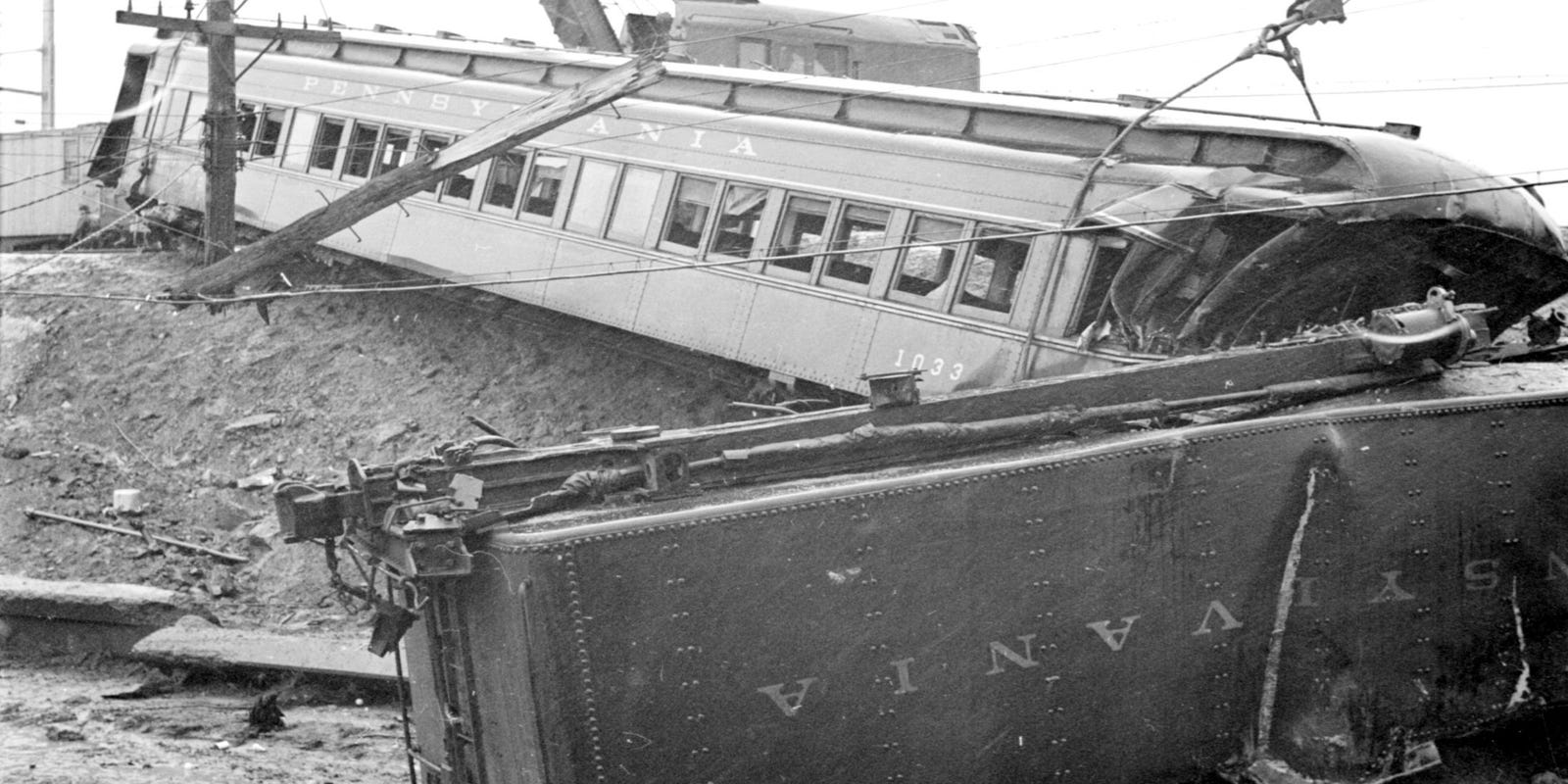
February 6, 1951, 70 years ago: A Pennsylvania Railroad train derails on a temporary wooden trestle in Woodbridge, Middlesex County, New Jersey, killing 85 passengers. It is the deadliest rail disaster in New Jersey history.

It is the deadliest rail disaster anywhere in America since the Malbone Street Wreck, outside Prospect Park in Brooklyn, on November 1, 1918. There were no games on that day: The baseball season was done, the NHL was a few weeks away from starting, the NFL and the NBA hadn't been founded yet, and it was a Friday, so the college football games were played the next day.

Around 5:00 PM, Pennsylvania Railroad train Number 733 left Exchange Place station in Jersey City. It was to head down the PRR's Main Line to Rahway, where it would branch onto the North Jersey Coast Line.

The Central Railroad of New Jersey was on strike, so No. 733 had more passengers than usual: Over 1,000 people on 11 cars.

At the time, there was a temporary wooden trestle near the Woodbridge station. The express was meant to bypass that station. The normal speed limit for a train doing so was 60 miles per hour. On the temporary trestle, it was 25.

But as the train approached the station at 5:43, the engineer, Joseph Fitzsimmons, only dropped the speed to 50. The tracks shifted under the weight of the locomotive, and 8 of the 11 cars derailed. The 3rd and 4th fell down a 26-foot-high embankment. Most of the 85 people killed were in one of these cars. The 5th and 6th were left hanging in mid-air over a street, and some people jumped out, some of those dying.

No one was charged with any crime as a result of the wreck. Fitzsimmons was kept on by the Railroad, but he never operated a train again. Today, there is a memorial outside the Woodbridge station. New Jersey Transit operates commuter lines, but even their express trains on the Coast Line usually stop at Woodbridge.

Friday, February 5, 2021

Top 5 Reasons You Can't Blame the Atlanta Falcons for Losing Super Bowl LI

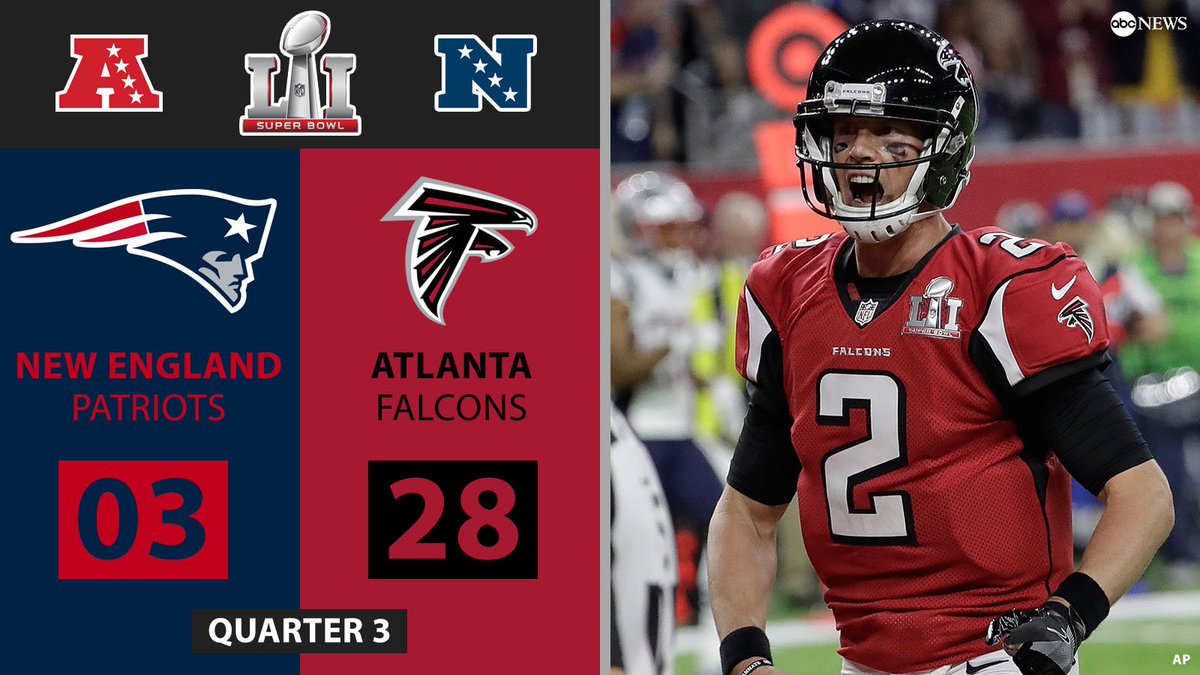
February 5, 2017: Super Bowl LI is played at NRG Stadium in Houston. With 2 minutes and 12 seconds left to play in the 3rd quarter, the Atlanta Falcons led the New England Patriots 28-3. In other words, with less than 18 minutes to play, they had a 25-point lead.

In the 1st 50 Super Bowls, no team had ever blown a lead of more than 10 points. The Falcons were in great shape to win the 1st World Championship in team history, 51 seasons, the entire Super Bowl Era.

Several sources said that the Falcons had a 99 percent chance of winning at that point. One source said it was 99.9 percent.

With 57 seconds to play in regulation, the Patriots tied the game, and we had the 1st Super Bowl that went to overtime. With 11:02 left in the 1st overtime, the Patriots won the ballgame, 34-28.

Boston, and all of New England, were now the beneficiaries of "the greatest choke in baseball history" and "the greatest choke in football history."

And Tom Brady was certified as not merely the greatest quarterback, but the greatest player in the history of football.

How could the Falcons have blown it?

Top 5 Reasons You Can't Blame the Atlanta Falcons for Blowing a 25-Point 2nd Half Lead and Losing Super Bowl LI

5. The Officials. They called 9 penalties on the Falcons, only 4 on the Patriots. They penalized the Falcons for 65 yards, the Patriots only 23. The Patriots gained 4 1st downs as a result of penalties, the Falcons only 1.

It's been suggested that there were no bad calls in this game, and that the disparity in the penalties was due to the Patriots being sufficiently disciplined, and the Falcons not. So I can only leave this as Reason Number 5.

4. The Curse of Mark Wohlers. In 1995, relief pitcher Wohlers was key to the Atlanta Braves winning the World Series. It was the 1st World Championship Atlanta had won in any sport, and remains the only one.

Unless you count soccer: The Atlanta Chiefs won the old North American Soccer League title in 1968, and Atlanta United won the MLS Cup in 2018. However, soccer is still the Number 5 league sport in North America. So maybe, for most fans of Atlanta sports teams, it doesn't really count.

In Game 4 of the 1996 World Series, the defending World Champion Braves were up 3 games to 1, led the Yankees 6-0 after 5 innings, and were still up 6-3 in the 8th. With 5 outs to go, but with 2 men on, Wohlers was throwing 98- and 99-mile-per-hour BBs to Jim Leyritz, and got 2 strikes on him. Then he hung an 86-MPH slider, and Leyritz hit a game-tying home run.
The Yankees won the game 8-6 in 10 innings, and won Games 5 and 6 to take the title. In the 25 years since:

* The Braves haven't won a World Series game, and have won only 1 National League Pennant, in 1999, and the Yankees then swept them in the World Series. They have lost the NL Championship Series in 1997, 1998, 2001 and 2020. They have lost the NL Division Series in 2000, 2002, 2003, 2004, 2005, 2010, 2013, 2018 and 2019. And they have lost the NL Wild Card Game in 2012.

* The Falcons have lost Super Bowl XXXIII (1998 season) and, the point of this post, Super Bowl LI (2016 season). They have lost the NFC Championship Game in 2004 and 2012. They have lost in the NFC Divisional Playoff in 2002, 2010 and 2017. They have lost in the Wild Card Playoff in 2008 and 2011.

* The Hawks have not won an NBA Championship since 1958, when they were the St. Louis Hawks. They haven't made the NBA Finals since 1961. They moved to Atlanta in 1968. But let's talk about what's happened to them just since Wohlers hung that slider. The Hawks have lost in the Conference Finals in 2015. They've lost in the Conference Semifinals in 1997, 1999, 2009, 2010, 2011 and 2016. They've lost in the 1st Round in 1998, 2008, 2012, 2013, 2014 and 2017.

* And Atlanta has both gained and lost an NHL team, the Atlanta Thrashers. They played 12 seasons, 1999 to 2011, made the Playoffs exactly once, in 2007, and got swept. By the New York Rangers. Is that the lowest?

It's been 25 years. I think it's safe to say that Atlanta sports could have a curse on it.

3. Donald Trump. He attended the Super Bowl. As Rick Wilson, a Republican political operative who launched the anti-Trump "Lincoln Project" in an effort to cleanse his Party of Trump's influence, titled his book about the man, Everything Trump Touches Dies.

Furthermore, Trump and Patriots team owner Robert Kraft are friends -- or, perhaps, the closest Trump knows how to come to being someone's friend. The Patriots' players would not have been thrown off their game by the sight of Trump. The Falcons' players might have been.
Maybe it was poetic justice that Georgia helped take both the Presidency and the U.S. Senate away from the Republican Party in the elections of 2020-21.

2. Lady Gaga. This might be the most controversial thing I've ever written in this blog. Not just because it seems silly to blame the performer of the halftime show for the defeat of the team that lost the Super Bowl. But because Gaga's fans are among the most passionate of any performers', ever, and will not take kindly to perceived attacks on her.

So, let me state for the record that I'm not accusing her of intentionally hurting the Atlanta Falcons in Super Bowl LI. I don't know which team she was rooting for, or even if she likes football. (She did show up at home games for both the Yankees and the Mets in 2010, early in her career, behaved badly at both, and wore a Yankee jersey, and not much else, at the former.) I am saying that her halftime show may, however inadvertently, have had a deleterious effect on the Falcons.

She began by singing the chorus of Woody Guthrie's "This Land Is Your Land." She sang "The Edge of Glory," which would seem to be a good title for a song at the Super Bowl, but was really about her grandfather on his deathbed, knowing he had lived a good life, despite not having experienced anything of what Gaga had once called "The Fame." She has reached the point where gaining fame, becoming a bigger star, is no longer the point: Making a difference is. This is something that Trump will never understand.

Next was "Poker Face," something Trump doesn't have, and it's about gay people being forced by society to hide who they really are. Next was "Born This Way," which is the opposite: She called it "my this-is-who-the-fuck-I-am anthem." It's an in-your-face message. Next was "Telephone," which she has said is about "Fear of suffocation, something that I have or fear is never being able to enjoy myself."

Next was "Just Dance," her 1st single, from the Spring of 2008, a song that helped a lot of people get through that year's economic crash, the last time a Republican held the White House. Next was "Million Reasons," which is about questioning everything, and was released on the day Trump was "elected," November 8, 2016. She closed with "Bad Romance," which is certainly what America entered into with Trump. In short, all 8 songs she sang could be interpreted as a middle finger to Trump, without even mentioning his name. If you really want to piss him off...
Super Bowl halftime shows are a crapshoot. Some are really good. Some are bad. At least one has been outright scandalous. But Gaga's was one of the best-received, ever.

And it ran a little long. Maybe the Falcons players heard it, maybe they didn't. Maybe it threw them off their game. In the 1st half, Atlanta outscored New England 21-3. The rest of the way, New England outscored Atlanta 31-7.

1. The Patriots Cheated. We don't actually know that the Patriots cheated at any point in the 2016-17 NFL season, including in the Super Bowl. We only know that they have been caught cheating multiple times. They have forfeited the presumption of innocence.

And Matt Ryan, as a result of winning the NFC Championship Game 2 weeks earlier, had done something Tom Brady has never done: He quarterbacked a team into the Super Bowl, and did it fairly.

You say Brady has never cheated? You are a liar.

VERDICT: Not Guilty. You can argue that, even with the Patriots having cheated, the Falcons should still have been able to hold onto a lead that was 25 points with a little over 17 minutes to go, 19 points with 10 minutes to go, 16 points with 6 minutes to go, and 8 points with 1 minute to go.

Instead, they had the best excuse of all for why they didn't: Unfairness.

UPDATE: The Braves ended Atlanta's drought by winning the 2021 World Series.

Top 5 Reasons You Can't Blame the Officials for the Seattle Seahawks Losing Super Bowl XL

February 5, 2006, 15 years ago: Super Bowl XL is played at Ford Field in Detroit. The Pittsburgh Steelers were going for their 5th Super Bowl win -- "One for the Thumb," as they put it back in 1980, but hadn't yet gotten. The Seattle Seahawks, in their 30th season, with only 1 previous appearance in a Conference Championship Game to their credit, were in their 1st Super Bowl.

The Steelers won the game, 21-10. But the statistics suggest that it shouldn't have ended that way. The Seahawks got 20 1st downs, the Steelers only 14. The Seahawks had 396 total yards, the Steelers 339. The Seahawks had the ball for 33 minutes, the Steelers for 27. (Well, 33:02 and 26:58, respectively.)

Seahawk fans have spent the last 15 years saying the officials gave the Steelers the game. They point to these calls: 

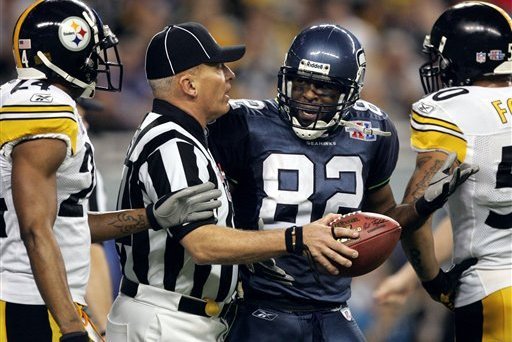
* With 2:08 left in the 1st quarter, and the game scoreless, Darrell Jackson appeared to have scored a touchdown on a 16-yard pass from Matt Hasselbeck. But he was called for offensive pass interference, by pushing off against Steeler safety Chris Hope. Four plays later, Josh Brown kicked a 47-yard field goal. That made it 3-0 Seattle.

* With 12:29 left in the 2nd quarter, and the score still 3-0 Seattle, Hasselback started from the Steelers' 47-yard line, and passed to Jerramy Stevens. Stevens appeared to have possession of the ball, and then fumble. But the officials ruled that he never had possession, nullifying the gain he might have made.

* With 12:35 left in the 4th quarter, and Pittsburgh leading 14-10, Hasselbeck completed a pass to Stevens, going for 18 yards, to the Steeler 1-yard line. But Seahawk offensive tackle was called for holding on linebacker Clark Haggans. So now it was 1st-and-20, and Hasselbeck was sacked by Casey Hampton on the next play. Then came a 7-yard run by Shaun Alexander.

* And on the play after Alexander's run, with 10:54 left in the game, the ball on the Steeler 27, and the Steelers still up by 4, Hasselbeck again tried to pass to Jackson, but was intercepted by cornerback Ike Taylor. On his return of the interception, Hasselback was penalized for an illegal block.

* The Steelers were flagged for only 3 penalties all game long, totaling just 20 yards. The Seahawks were flagged 7 times, for 70 yards. To put it another way, average yards per penalty: Seahawks 10, Steelers 6.67.

The next day, at a rally for the team at their stadium, Seahawks coach Mike Holmgren, who had previously led the Green Bay Packers into Super Bowls XXXI (won) and XXXII (lost), said at the team's rally, "We knew it was going to be tough going against the Pittsburgh Steelers. I didn't know we were going to have to play the guys in the striped shirts as well."

Jason Whitlock of the Kansas City Star and ESPN wrote, "Bill Leavy and his crew ruined Super Bowl XL. Am I the only one who would like to hear them defend their incompetence?"

Two days after the game, ESPN published a poll: Out of over 100,000 votes cast, 61 percent said that "officiating mistakes affected the outcome of Super Bowl XL."

In 2010, Leavy, the game's referee, admitted his mistakes:

It was a tough thing for me. I kicked two calls in the fourth quarter, and I impacted the game, and, as an official, you never want to do that. It left me with a lot of sleepless nights, and I think about it constantly. I'll go to my grave wishing that I'd been better...

I know that I did my best at that time, but it wasn't good enough...

When we make mistakes, you got to step up and own them. It's something that all officials have to deal with, but unfortunately when you have to deal with it in the Super Bowl it's difficult.

This seemed to confirm what every football fan in the Pacific Northwest wanted to believe: Their beloved 'Hawks got screwed by the officials.

What they wanted to believe was wrong.

Top 5 Reasons You Can't Blame the Officials for the Seattle Seahawks Losing Super Bowl XL

5. The Calls Went Both Ways. With 2:13 left in the 3rd quarter, and the Steelers up 14-10, the Seahawks started with the ball on their own 7-yard line. Hasselbeck ran around right end, and gained 8 yards before being tackled by Aaron Smith. The Steelers thought that Hasselbeck had fumbled, and that they had recovered. But the officials ruled that he was already out of bounds before losing the ball.

Had the Steelers gotten the call they wanted, they would have had the ball deep in Seattle territory. Instead, the Seahawks kept going, until the Taylor interception.

4. 5-for-17 on 3rd downs. A bad 3rd down conversion rate would also be a big reason why the Seahawks lost Super Bowl XLIX.

In the 1st quarter, they had a 3rd-and-9, and allowed Hasselbeck to get sacked. Still in the 1st, they had a 3rd-and-14. They were unlikely to convert anyway, but a false start penalty pushed them back further. They had a 3rd-and-6 in Pittsburgh territory, when Hasselbeck connected with Jackson for 18 yards, but it was called back for holding -- correctly. And all that was just in the 1st quarter.

In the 2nd quarter, they had a 3rd-and-2 in Pittsburgh territory, after Alexander had made 2 gains. Instead of giving him the ball again, Hasselbeck threw, and it fell incomplete. Later in the quarter, on 3rd-and-3, Hasselbeck completed a pass, but it went only 2 yards. In the last minute of the half, they had 3rd-and-6 in Pittsburgh territory, and Hasselbeck threw incomplete. The ensuing field goal attempt by Josh Brown was 54 yards, and missed.

Early in the 3rd quarter, with a 3rd-and-5 in Pittsburgh territory, Hasselbeck threw another bad pass, forcing Brown into another long attempt, 50 yards, also missed. With 6:36 to go, possibly enough time to make up the Steelers' 11-point lead, and with a 3rd-and-8 in Pittsburgh territory, Hasselbeck got sacked.

When Hasselbeck most needed to come through for his team, he didn't do a good job of it. As a result...

3. The Game Wasn't That Close. 21-10. Suppose the Darrell Jackson touchdown had been allowed to stand. Would that have changed the course of the game? Maybe. By enough? Maybe not. If that had been the only difference, the Steelers would still have won, 21-13.

2. The Steelers Were Better. Normally, "The opposition was better" would be Reason Number 1. Not this time, although the Steelers were a better team than the Seahawks. They went into the game favored by 4 points, won by 11, and held the Seahawks to 10 points.

That 10-point defensive performance had only been done, or bettered, in 14 of the previous 39 Super Bowls, and in only 3 of the 14 since. The Steel Curtain defense of the 1970s? They allowed the Minnesota Vikings 6 points in Super Bowl IX, the Dallas Cowboys 17 in Super Bowl X, the Cowboys 31 in Super Bowl XIII, and the Los Angeles Rams 19 in Super Bowl XIV.

In other words, what's usually regarded as the greatest defense in football history averaged, over 4 Super Bowls, 16 points per game. The Pittsburgh defense of 2005-06, led by Troy Polamalu, Casey Hampton, James Farrior and Joey Porter, bettered that by nearly a full touchdown.

1. The Officiating Wasn't Bad. Mike Pereira, then the NFL's Director of Officiating, and previously a referee in both the NFL and college ball, reviewed every play, and determined that all 7 of the penalties called against the Seahawks were correct. Referee Bill Leavy was right at the time, and wrong in his later confession.

VERDICT: Not Guilty. The reason the Seattle Seahawks lost Super Bowl XL is that they didn't get the job done, and that the Pittsburgh Steelers didn't let them.

Monday, February 1, 2021

Top 5 Reasons You Can't Blame Pete Carroll for the Seattle Seahawks Losing Super Bowl XLIX

February 1, 2015: Super Bowl XLIX is played at University of Phoenix Stadium -- now named State Farm Stadium -- in the Phoenix suburb of Glendale, Arizona. Over 114 million viewers tuned in to NBC to watch it, making it the most-watched television program in American history.

The defending Champion Seattle Seahawks had a 10-point lead with 8 minutes left in regulation, and blew it. The New England Patriots took a 28-24 lead with 2:02 left. Quarterback Russell Wilson drove the Hawks to the Patriot 1-yard line with 26 seconds to go.

With the ball there, the call seemed obvious: A running play. Possibly Wilson on a quarterback sneak, like Bart Starr to win the 1967 NFL Championship Game, the Ice Bowl, for the Green Bay Packers. Or a handoff to Marshawn Lynch, the running back known as "Beast Mode," a 5-time Pro Bowler, who had already scored a touchdown in the game, and had gotten the ball 4 yards to the 1-yard line on the previous play.

Instead, Seahawk head coach Pete Carroll called for a pass, from Wilson to Ricardo Lockette. Patriot cornerback Malcolm Butler correctly figured out that Lockette was the target, and intercepted the pass. The Patriots won the game.
It's hard to imagine now, with Ohio State University having had Heisman Trophy-winning quarterbacks and winning National Championships with a great passing game, but there was a time, in the 1960s and '70s, when their head coach was Woody Hayes. Famous for a running game described as "Three yards and a cloud of dust," he was known for hating the forward pass enough to say, "There are three things that can happen when you throw the ball, and two of them are bad." Meaning an incomplete pass and an interception.

Malcolm Butler clinched victory for the New England Patriots in Super Bowl XLIX with the most famous interception in football history.

Cris Collinsworth, a 3-time Pro Bowler who had played in Super Bowls XVI and XXIII for the Cincinnati Bengals, was broadcasting the game for NBC, and spoke for so many people watching:

I'm sorry, but I can't believe the call... You've got Marshawn Lynch in the backfield. You've got a guy that has been borderline unstoppable in this part of the field. I can't believe the call...

If I lose the Super Bowl because Marshawn Lynch can’t get it in from the 1-yard line, so be it. So be it! But there is no way.

Hall of Fame cornerback Deion Sanders, analyzing the game for CBS, called it "one of the worst calls in Super Bowl history." Peter King, the main football writer for Sports Illustrated, and a winner of the Pro Football Hall of Fame's Dick McCann Award for writers, used the exact same words: "one of the worst calls in Super Bowl history." Hall-of-Famer Emmitt Smith, the NFL's all-time leading rusher, went even further, calling it "the worst play call in the history of football."

So that's, effectively, 3 members of the Pro Football Hall of Fame, 3 guys who really know football -- one on offense, one on defense, and one watching from above -- saying it was a bad call, essentially blaming Pete Carroll for throwing away back-to-back wins in the Super Bowl, a rare achievement, and possibly Carroll's own eventual election to the Hall.

Is there any way to defend the call? Not really.

Is there any way to say that Carroll shouldn't be blamed for the loss? Yes. Can any such way be taken seriously? Read on:

Top 5 Reasons You Can't Blame Pete Carroll for the Seattle Seahawks Losing Super Bowl XLIX

5. Pete Carroll. He got the Seahawks into that Super Bowl. And into the one the year before, and won it. He, Jimmy Johnson and Barry Switzer are the only head coaches to win both an NCAA National Championship and an NFL Championship (either before or during the Super Bowl era, 1967 onward).

Did he make a mistake with that play-call? Almost certainly. But he got them to within 1 play of back-to-back Super Bowl wins. Here's all the head coaches who have reached back-to-back Super Bowls: Vince Lombardi, Tom Landry, Don Shula, Bud Grant, Chuck Noll, Joe Gibbs, Dan Reeves, Marv Levy, Jimmy Johnson, Mike Holmgren, Mike Shanahan, Bill Belichick and Pete Carroll. 

That's 13 guys. Of those, just 10 won at least 1 of them: Lombardi, Landry, Shula, Noll, Gibbs, Johnson, Holmgren, Shanahan, Belichick and Carroll. Both of them? 6: Lombardi, Shula, Noll, Johnson, Shanahan and Belichick.

Going back to the pre-Super Bowl era, back-to-back NFL Championship Games were also won by George Halas, Greasy Neale, Buddy Parker, Paul Brown and Weeb Ewbank. So, 11 guys since 1932. That should give you and idea of how hard it is.

(No, Bill Walsh never did it. Only once have the San Francisco 49ers made back-to-back Super Bowls: In 1988-89, Walsh's last season as head coach; and 1989-90, George Seifert's first.)

Pete Carroll got the Seattle Seahawks to within one yard of back-to-back World Championships. They would not have gotten that far without him.

4. Russell Wilson. He threw the pass. He also could have said, "This is a bad call. I'm calling a different play in the huddle." He could have shown the leadership that a great quarterback would show. He didn't.
3. Malcolm Butler. He made the interception. Give him credit for pulling off the key play.

2. The Seahawks Offense. Their 20 1st downs wasn't that bad, compared to the Pats' 25. But they were only 3-for-10 on 3rd down, compared to the Pats' 8-for-14. They also committed more penalties, 7-5, for twice as many yards, 70-36. And had less time of possession, 26:14 to 33:46.

It took them 20 minutes and 13 seconds to get their 1st score. Their last score came with 19 minutes and 54 seconds to go. They blew a 10-point lead, and they blew it with 8 minutes to go. Blowing a 10-point lead tied what was then a Super Bowl record.

It would be eclipsed 2 years later by the Atlanta Falcons -- also against the Patriots. Hmmmm...

1. The Patriots Cheated. We don't actually know that the Patriots cheated at any point in the 2014-15 NFL season, much less in this Super Bowl. We only know that they have been caught cheating multiple times. They have forfeited the presumption of innocence.

So we have heard the case for the prosecution, and we have heard the case for the defense. It's time to decide.

VERDICT: Guilty. Going over the Top 5 Reasons again:

5. It doesn't matter what Carroll did before, only what he did at the moment in question.

4. Wilson was following orders. If he had disobeyed that order, and run the ball, and had gotten stopped, he would have been blamed for losing the Super Bowl, in spite of the fact that he had won one just the year before. If there's one thing the powers that be in the NFL value more than money, it's control.

If Wilson had rebelled, and gotten it right, he could be headed for the Hall of Fame. But if he had rebelled, and gotten it wrong, they could have made bullshit stuff up about him, as has been made about countless players, including quarterbacks (and not always as brazen as what was said about Colin Kaepernick), and he could have been run out of the game.

3. Butler wouldn't have intercepted the pass if Carroll hadn't called it.

2. The Seahawks' offense put themselves in position to win the game. Granted, this would seem to contradict the rebuttal to Reason Number 5. But it does emphasize the fact that Carroll blew it.

1. If Carroll had made the right call, it wouldn't have mattered if the Patriots cheated: The Seahawks would have won anyway.

Yes, the New England Patriots have cheated their way to 6 Super Bowl wins in the 22 seasons that they have been coached by Bill Belichick. But they have also failed to win the Super Bowl 16 times, including losing the Super Bowl 3 times: XLII and XLVI to the New York Giants, and LII to the Philadelphia Eagles.

It is possible to beat the Patriots, even when they cheat. Carroll had a great chance to do so. He didn't. He is to blame for that.

Friday, January 29, 2021

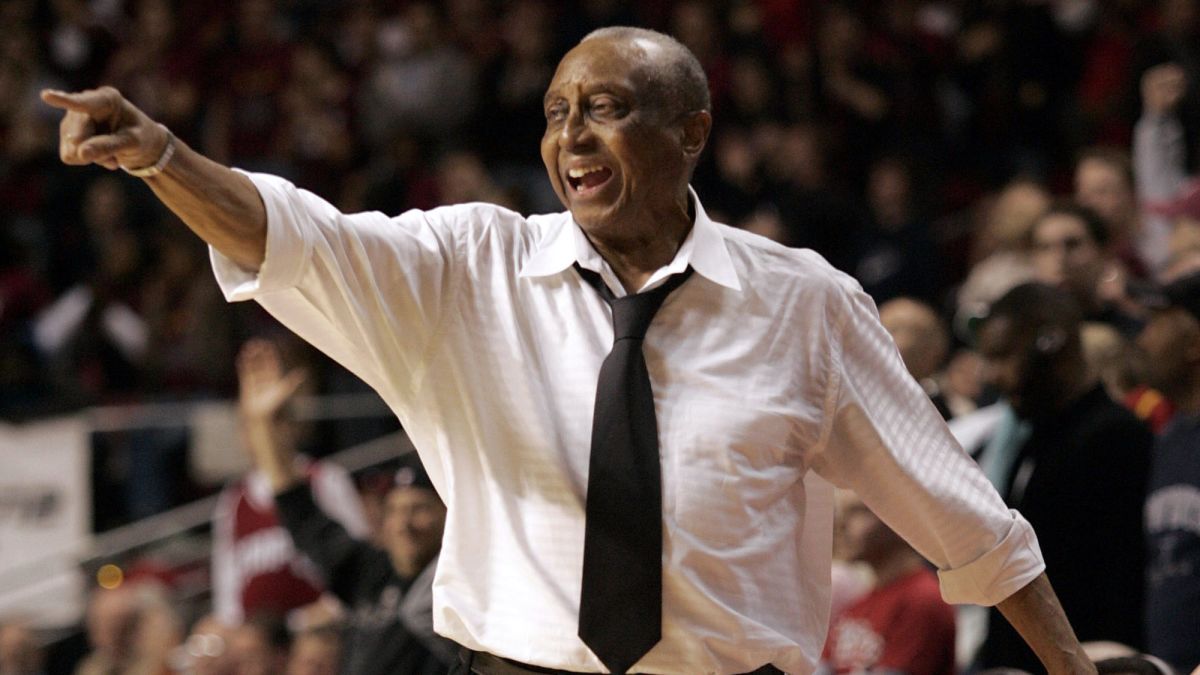
John Chaney, 1932-2021

If you only know Bob Knight as a raving lunatic who happened to be a great college basketball coach, then you need to know more.

The same was true for John Chaney, who may have changed even more lives for the better. Certainly, he changed lives more than Knight did.

John Chaney (no middle name) was born on January 21, 1932 in Jacksonville, Florida. Like pretty much any black man in the South who wanted to go to college, he had to go to one of the South's "historically black colleges and universities" (HBCUs). In his case, it would be Bethune-Cookman University in Daytona Beach, Florida, from which he graduated in 1955.

At this point, the NBA had black players, but not many. And Chaney was not drafted. So he played in the next-highest league, the Eastern Professional Basketball League, for the Sunbury Mercuries from 1955 to 1963, and the Williamsport Billies until 1966. Both of those teams were in Pennsylvania. That got the attention of basketball people in that State, particularly in its largest city, Philadelphia.

Philadelphia was already a great basketball city. Its "Big Five" (or "Big 5," if you prefer) schools are Temple University, which had won the 1st NIT in 1938, and had already been to what we now call the NCAA Final Four in 1956 and 1958; La Salle University, which won the National Championship in 1954 and got back to the Final in 1955; Villanova University, which made the 1st Final Four in 1939; St. Joseph's University, which had made the Final Four in 1961; and the University of Pennsylvania, one of the earliest great programs, and whose 1927-built arena, The Palestra, hosted many Big 5 games, many of them not even featuring Penn, and became known as "The Cathedral of Basketball."

In addition, the South Philadelphia Hebrew Association, a.k.a. the Philadelphia SPHAs, were one of the earliest great professional teams, and evolved into the Philadelphia Warriors, the 1st NBA Champions in 1947, won the title again in 1956, and moved in 1962, eventually becoming the Golden State Warriors. In 1963, they were replaced by the Philadelphia 76ers.

In 1963, while still playing for Williamsport, John Chaney got his 1st coaching job, at Sayre Junior High School in Sayre, Bradford County, in Northeast Pennsylvania. In 1966, he hung up his sneakers to take the job at Simon Gratz High School in North Philadelphia.

Simon Gratz was a longtime member of the Philadelphia Board of Education. By the time Chaney got there, the school had already produced Baseball Hall-of-Famer Roy Campanella, Pro Football Hall-of-Famer Leroy Kelly, longtime Warriors and 76ers statistician Harvey Pollack, singer Eddie Fisher, songwriter Artie Singer (who had co-written "At the Hop" and "Rock and Roll Is Here to Stay" for South Philly doo-wop group Danny & The Juniors), and future Congressman Bill Gray. It has since produced boxing champion Meldrick Taylor and 2 NBA stars: Rasheed Wallace and a player Chaney would coach, Aaron McKie.

When Chaney got to Gratz, they were coming off a season in which they won exactly one game. He took them to a 63-23 record in 6 seasons. He couldn't get Gratz to win the Public League Championship, but the school has since done so in 1973 under coach Lionel Hoye; 1990, 1991, 1993, 1994, 1997 and 2001 under Bill Ellerbee; and in 2004 and 2006 under Leonard Poole.

In 1972, Chaney reached the college ranks, Cheyney State College, now Cheyney University, an HBCU in Cheyney, Chester County, southwest of Philadelphia. In 10 seasons, offering chances to kids whose only way out of Philly's ghettos seemed to be basketball, he guided the school, now in NCAA Division I, to a 232-56 record, including the NCAA Division II Championship in 1978. Surely, some people thought the school was named for him, not noticing the difference in spelling.

In 1982, he was hired at Temple University. Sitting on the area where Center City begins to fade out, and the North Philly ghetto begins, it has always been an inclusive school, and a lifelong for poor youth in the city. This has included its basketball program, a haven first for Jewish kids, then for black ones.

(This confused me, as I heard the name "Temple" and thought it had started as a Jewish school. In fact, it was founded in 1884 by Russell Conwell, a Bostonian, a lawyer, and an ordained Baptist minister. Its 1st lecture hall was in the basement of Conwell's Grace Baptist Temple, and that's where the name comes from.)

Temple's motto is "Perseverantia Vincit," Latin for "Perseverance Conquers." Chaney already knew that, and he showed it at McGonigle Hall. He became known for early-morning practices, yelling in a raspy voice when he perceived insufficient effort, his tie getting looser and looser as games went on, a fine match-up zone defense, and scheduling the Temple Owls against the toughest teams in the country. He was a firm believer in the old line of, "If you want to be the best, you've got to beat the best."

In 1985, he guided them to the Atlantic 10 Conference regular-season title, and also to the A-10 Tournament title. He repeated this feat in 1987, and again in 1988, and again in 1990. In 1988, he got a team led by Tim Perry and Macon Macon to the pre-NCAA Tournament Number 1 ranking. In the Tournament, they beat Lehigh, Georgetown and the University of Richmond to reach the Elite Eight, with a record of 31-1. But they were beaten by Duke in the Regional Final. Chaney swept the various National Coach of the Year awards, one of which he had already won in 1987.

Chaney became an icon in Philadelphia, and beyond. But 1988 would be the closest he ever got to a Division I National Championship. And as time went on, he began to be seen as a quirky character, an irascible old man. I saw a newspaper cartoon comparing him to the Star Wars character Yoda. (A bit taller, he was, hm?)

In 1994, Temple went 23-8, finished 2nd in the A-10, and was ranked 12th in the last national poll. By Chaney's standards, it was about average. But on February 13, they went up to Amherst, Massachusetts to play the University of Massachusetts, then coached by John Calipari, and lost 56-55.

During Calipari's postgame press conference, Chaney, 62, barged in, and accused Coach Cal, 35 and already with the kind of reputation that would get him called a "preening schmo," of "manipulating the referees." Calipari tried to respond, but Chaney wouldn't let him, yelling, "Shut up, goddammit!" He then charged the podium, and security officers stopped him before he could get close. But not before he could yell, "I'll kill you!" and, "When I see you, I'm gonna kick your ass!" and, "I'll tell my players to knock your fucking kids in the mouth!"

Calipari, a native of a small town outside Pittsburgh, stood his ground, and said, "Nothing ceases to amaze me." He has gone on to great success in the game, but also to great controversy. Chaney was suspended for 1 game over the incident, apologized, and, years later, publicly defended Calipari during one of his scandals.

Chaney would lead Temple to the A-10 regular season title in 1998, sweep the regular-season and Tournament titles in 2000, win the Tournament again in 2001, and win the regular-season title again in 2002. In 2001, meeting the eligibility requirement -- active coaches can be elected with 25 years of service -- he was elected to the Basketball Hall of Fame.

But after getting Temple back to the Elite Eight in 2001, he never got them into the NCAA Tournament again. Despite 3 straight 2nd-place finishes in the league, overall, he went 18-16 in 2003, 15-14 in 2004, and 16-14 in 2005. The A-10 then went to a single division, due to changes in affiliations, and in 2006, he went 8-8, good enough for only 7th, and went 17-16 overall.

At the age of 73, he hung up his whistle. He was 741-312 for his career, including 516-253 at Temple. He had won 8 regular-season Conference Championships, and 6 Conference Tournaments. But despite making the Elite Eight in 1988, 1991, 1993, 1999 and 2001, he never made the Final Four.

He was succeeded by Fran Dunphy, who came over from fellow Big 5 school Penn. Despite a losing record in his 1st season -- something Chaney had also done at Temple, and it would be the only losing season he ever had as a coach -- he led Temple to A-10 titles in 2010 and 2012, and to the Championship of the American Athletic Conference in 2016.

In 2019, "Mr. Big 5" stepped aside, having surpassed Chaney as the all-time wins leader among Big 5 coaches, and handed the reigns to Aaron McKie, who had been his assistant, had won A-10 Player of the Year under Chaney in 1993, and had starred in Philly for the 76ers.

John Chaney died today, January 29, 2021, after a brief illness. He had just reached his 89th birthday, and leaves behind his wife Jeanne, their daughter Pamela, dozens of men whose lives received a boost thanks to his tutelage, the love of the people of Philadelphia, and the respect of basketball fans everywhere.

Update On Trip Guides

My Trip Guides, a.k.a. "How to Be a (Name of Team) Fan in (Name of City)," have been on hold since March 9, 2020, due to the COVID-19 restrictions.

There are still restrictions. With schedules for the Spring & Summer sports already released, I decided I should update you on where I will stand with them:

* Major League Baseball: I won't do them for the 2021 season. It would be different if each team made 2 roadtrips to its League opponents every season, but the schedule is unbalanced, so not all roadtrips will be available.

* Major League Soccer: I won't do those for the 2021 season, either, for the same reason.

* College football: Since it will start in late August, by which point most Americans should be vaccinated, it will depend on whether COVID restrictions are lifted by then. It is possible that I will be able to do them.

* The National Football League: Since it will start in early September, it may be possible.

* The National Hockey League: Since it will start in early October, it may be possible.

* The National Basketball Association: Since it will start in late October, it may be possible.

Hopefully, there will be no more restrictions in 2022.

*

The details of this countdown are dependent on COVID restrictions:

Days until the next Arsenal game: 1, tomorrow, at 12:30 PM New York time, home to Manchester United. This past Tuesday, they beat Hampshire team Southampton in the League, after losing to them the preceding Saturday, in the 4th Round of the FA Cup.

Days until the next game of the U.S. National Soccer Team: 2, this Sunday, January 31, at Exploria Stadium, home of Orlando City FC and the women's team Orlando Pride. 

Days until the New Jersey Devils again play a local rival: 8, a week from tomorrow night at 7:00, against the New York Rangers at the Prudential Center. They're coming off 2 straight home losses to the Philadelphia Flyers.

Days until the next North London Derby: 43, on Saturday, March 13, at 10:00 AM New York time, at the Emirates Stadium. A little over 6 weeks. The British TV networks may have the time and/or the date changed in order to get better ratings, or so they believe.

Days until the New York Yankees open the 2021 season: 62, on Thursday, 1:00 PM, home to the Toronto Blue Jays. Under 9 weeks.

Days until the next New York Red Bulls game: 64, on Saturday, April 3, opponent and location as yet unknown. MLS has only announced when the season will open.

Days until the Red Bulls again play a local rival: See the previous answer.

Days until the next Yankees series against the Boston Red Sox begins: 126, on Friday, June 4, at 7:00 PM, at Yankee Stadium II. A little over 4 months.

Days until the COVID-delayed Euro 2020 opens: 148, on Friday, June 26. Under 5 months. Games will be played all over Europe, with the Semifinals and the Final at the new Wembley Stadium in London.

Days until the COVID-delayed 2020 Olympics open in Tokyo, Japan: 175, on Friday, July 23. Under 6 months.

Days until the next East Brunswick High School football game: 217, on Friday, September 3, at 7:00 PM, home to arch-rival Old Bridge. A little over 7 months.

Days until the next East Brunswick-Old Bridge football game: See the previous answer.

Days until the next Rutgers University football game: 218, on Saturday, September 4, at 12:00 noon, home to Temple University.

Days until the next election for Governor of New Jersey and Mayor of New York City: 277, on Tuesday, November 2. A little over 9 months.

Days until the next Rutgers-Penn State football game: 302, on the Saturday after Thanksgiving, November 27, at 12:00 noon, at Beaver Stadium in State College, Pennsylvania. Under 10 months.

Days until the 1st Baseball Hall of Fame election for which Alex Rodriguez and David Ortiz will be eligible, and we will know for sure whether steroid use keeps a player out, or if it's only perception that does: 361, on Tuesday, January 25, 2022. Under 12 months.

Days until the next Winter Olympics open in Beijing, China: 371, on Friday, February 4, 2022. A little over 12 months.

Days until the next elections for Congress and for Governor of most States, including New York and Pennsylvania: 648, on Tuesday, November 8, 2022. Under 2 years, or a little over 21 months.

Days until the next World Cup opens: 661, on Friday, November 21, 2022, in Doha, Qatar. Under 2 years, or under 22 months.

Days until the next Women's World Cup opens: 892, on Friday, July 10, 2023, jointly held in the neighboring nations of Australia and New Zealand. Under 2 and a half years, or a little over 29 months.

Days until the next Presidential election: 1,376, on Tuesday, November 5, 2024. Under 4 years, or a little over 45 months.