Showing posts with label bob short. Show all posts

Thursday, September 30, 2021

Top 5 Reasons You Can’t Blame Bob Short for Moving the Washington Senators to Texas

September 30, 1971, 50 years ago: The last Washington Senators game is played, against the Yankees at Robert F. Kennedy Stadium.

Team owner Bob Short, having already moved the NBA's Minneapolis Lakers to Los Angeles in 1960, has announced he's moving the Senators to the Dallas area, to become the Texas Rangers. He complains about the low attendance, despite having the highest ticket prices in the American League, and no subway access to RFK Stadium. (Washington's Metro would not open until 1976.)
A rare vertical sports fan banner, reading "SHORT STINKS."
It was still considered bad form to say that someone "sucks."

Frank Howard, the Senators' most popular player in their 2nd go-around of 1961-71, hits the last home run. Dick Bosman starts, and stands to be the winning pitcher as the Senators lead 7-5 with 1 out left in the 9th. All he has to do is get Bobby Murcer out.

But he can't, through no fault of his own. Angry fans from the "crowd" of 14,461 people storm the field. The umpires cannot restore order, and they forfeit the game to the Yankees.
Only 2 AL games have been forfeited since, both promotions that turned into fiascos: The Cleveland Indians' Ten-Cent Beer Night in 1974, and the Chicago White Sox' Disco Demolition Night in 1979. Outfielder Rusty Torres, who turned 23 on the day of the last Senators game, was also in uniform on each of those occasions.

There are 18 players from this game still alive. From the Yankees: Torres, Roy White, John Ellis, Ron Hansen, Frank Baker, Mike Kekich, Jack Aker and Felipe Alou. From the Senators: Howard, Bosman, Elliott Maddox, Toby Harrah, Jack Billings, Jeff Burroughs, Del Unser, Tom Ragland, Horacio PiƱa and Tom McCraw.

The next April, Bosman also starts the team's 1st game as the Rangers. Major League Baseball will not return to the Nation's Capital, except for the occasional preseason exhibition game, until the 2005 season.

While RFK Stadium would host exhibition games, there would not be another Major League Baseball game played in Washington, D.C. until April 14, 2005. Formerly the Montreal Expos, the Washington Nationals beat the Arizona Diamondbacks 5-3. In addition to George W. Bush upholding the tradition of the President of the United States throwing out a ceremonial first ball, Frank Howard was also invited to do so.

*

Moving the Senators was a bad thing to do, right? And if it was, then Short is the one mainly to blame for it, right?

Top 5 Reasons You Can’t Blame Bob Short for Moving the Washington Senators to Texas

5. His Move of the Lakers. In 1960, Short owned the Minneapolis Lakers, and moved them to Los Angeles. Nobody tried to stop him then. And, given the other MLB moves of the last few years, he thought no one would stop him this time, either. And he was right.

4. Dallas. If you were going to move an MLB team, the Dallas-Forth Worth "Metroplex" was a good choice. Charlie Finley already thought so in 1962, when he wanted to move the Kansas City Athletics there. The city didn't have a proper ballpark at the time, and he wasn't willing to play in the Cotton Bowl with Polo Grounds-like or L.A. Coliseum-like dimensions until a new ballpark was ready.

According to the 1970 Census, Dallas had 844,401 people, a 24 percent jump over 1960. This has since grown to 1.3 million, with a metropolitan area of a whopping 7.6 million, trailing only New York, Los Angeles, Chicago, the San Francisco Bay Area and Boston.
Dallas, circa 1980, around the time J.R. Ewing got shot

And, as seen in the TV show Dallas, the city was rich, and getting richer. It wasn't just the oil industry. It was banking. It was insurance. It was transportation: Both Greyhound buses and American Airlines were headquartered in Dallas. Their airport covers more land than the island of Manhattan, and is a major hub.

The Cowboys were already showing that Dallas worked for the NFL. It would take some time for basketball and hockey to work there. But if the NFL would work there, so could MLB. As it turned out, it took a while for the Metroplex to take to the Rangers. The loyalty was deep among those who had it, but not especially wide.

3. The Baltimore Orioles. When the St. Louis Browns arrived as the Orioles in 1954, they were a minor threat to the Senators. They took Baltimore and its suburbs away from the Senators' "market." But when they got good in the early 1960s, they began to siphon off those areas of Maryland closer to Washington. The 1971 season was the 3rd straight, and the 4th in the last 6, in which the Orioles won the Pennant. For many Maryland fans, it wasn't much more difficult to go a little further to see a winning team than to stay close to see a losing team.

It eventually worked the other way around: In the 1990s, Orioles owner Peter Angelos consistently opposed D.C. getting a new team, saying that it would cost the Orioles a quarter of their fan base.  Was he right? Maybe.
This map certainly suggests so.

On the other hand, the Orioles were due to lose fans anyway, since a lot of them weren't really Oriole fans, just Cal Ripken fans. And the team began losing. Their Playoff berths in 2012 and 2014, years in which the Nationals also made it, helped.

It's been Angelos' mismanagement more than the arrival of the Nationals that has cost the O's fans. The 1960s O's hurt the Senators much more than the 2010s Nats have hurt the O's.

2. The District of Columbia. Unlike Dallas, Washington, at the time, was a one-industry town. The federal government. Many of the people living there had come from other places, and kept their old loyalties. So even when they did go to Griffith Stadium, and later to RFK Stadium, they were rooting for their original home teams.
The only ones who were converted to Senators fans were the ones whose closest MLB team was a long way away -- and if they were fans of one of the storied minor-league teams (say, the Birmingham Barons or the San Antonio Missions), they still kept their old loyalties.

And the people who did live there? They weren't exactly well-enough-off to buy season tickets. Both Griffith Stadium (which was replaced by the hospital of Howard University) and RFK Stadium were in poor black neighborhoods. It was the same problem that the Dodgers face with the neighborhoods around Ebbets Field: The locals couldn't afford to get in on a regular basis.

In addition, access was bad. It wasn't until 1976 that a subway system, the Metro, opened, providing easy access to RFK Stadium. So unless you had a car, getting there wasn't easy.

All of which managed to, however inadvertently, turn away lots of...

1. Washington Fans. It was another case of loyalty being deep where it was, but not very wide. The few who showed up for that last game cared a lot. But most fans didn't.

In the 60 years of the "Old Senators," 1901 to 1960, after which they became the Minnesota Twins, only once did they draw more than 1 million fans. It was 1946, the 1st full year after the end of World War II, when the soldiers came back. It was also a year after the Senators had their last real Pennant race, falling just short of the Detroit Tigers for the 1945 American League Pennant. They drew 1,027,216.

But they went 76-78 in 1946, and fell to 64-90 in 1947, dropping to 850,758 fans. They never even topped that many again until their 1st season in Minnesota.

And when the "New Senators" arrived in 1961, they didn't have good attendance, either, even with the novelty of a new stadium starting in 1962. Their only winning season was in 1969, 86-76. As a result, 1970 was their peak attendance year, 824,789, the 3rd-highest in Washington baseball history to that point. But the team fell 70-92, and 63-96 in 1971, collapsing in attendance to 655,156.

Even afterward, President Richard Nixon, a big baseball fan but a bigger football fan, who had worked in the city since beginning his 1st term in Congress in 1947, understood that the Senators would never be the biggest team in town: "All anybody cares about in Washington is the Redskins. Nobody gives a damn about the Kennedy Center or the National Gallery of Art."

As Horace Stoneham put it in 1957, when asked what the move of the New York Giants to San Francisco would do to kids in New York, "I feel bad about the kids, but I haven't seen too many of their fathers lately." In 1971, Bob Short could have said the same thing.

VERDICT: Not Guilty. The success of the Nationals at the box office since their arrival in 2005, and their success on the field since their 1st trip to the postseason in 2012, doesn't change things. Short may have played his hand badly, but he played the hand he was dealt. Washington, D.C. was not a city capable of supporting Major League Baseball in 1971.

As for who is to blame for D.C. taking until 2005 to get a replacement team, that's a separate debate.

Tuesday, November 29, 2016

Top 5 Reasons You Can't Blame Bob Short for Moving the Minneapolis Lakers to Los Angeles

The 1953 NBA Champion Minneapolis Lakers.
Left to right: Head coach John Kundla, Slater Martin,
Frank Saul, Jim Holstein, Vern Mikkelsen,
Lew Hitch, George Mikan, Jim Pollard, Bob Harrison,
Whitey Skoog, general manager Max Winter

Tomorrow night, the New York Knicks will travel to Minneapolis to face the Timberwolves, which they have done since 1989.

From 1948 to 1960, they traveled to Minneapolis to play the Lakers. The Lakers won the National Basketball League title in 1948, entered the NBA, and won the title in 1949, 1950, 1952, 1953 and 1954.

They featured future Basketball Hall-of-Famers: George Mikan, Vern Mikkelsen, Jim Pollard, Slater Martin, Clyde Lovellette, and head coach John Kundla -- still alive at age 100. They had another Hall-of-Famer: Pro Football Hall of Fame coach Bud Grant played for them.

The institution of the 24-second shot clock for the 1954-55 season changed everything, making the NBA a faster, higher-scoring game. By the end of the 1955-56 season, Mikan, despite being only 32 years old, saw the writing on the wall, and retired. His era, the Lakers' era of dominance, was over.

By 1959, the team had completely turned over, and reached the NBA Finals with rookie sensation Elgin Baylor, but lost the Finals to the Boston Celtics. And then, after the 1959-60 season, team owner Bob Short moved them across the country to Los Angeles.

How could Short move a team that had been to 7 league finals, winning 6 of them, in just 12 seasons? Especially since he was a Minneapolis native, and having Baylor, and being able to draft Jerry West, meant that they had 2 great drawing cards to fill the arena? It didn't make any sense. Talk about "Short-sighted."

In 1965, Short sold the Los Angeles Lakers to Jack Kent Cooke, who had owned minor-league baseball's Toronto Maple Leafs, was already a part-owner of the NFL's Washington Redskins, and would soon found the NHL's Los Angeles Kings. In 1968, he bought MLB's Washington Senators, and after the 1971 season, moved them as well, to the Dallas area, where they became the Texas Rangers. So he not only moved 2 different major league sports teams, he did it in 2 different sports, involving 4 different metropolitan areas.

But how could Short move what is still the most successful team in the history of Minnesota sports? Think about it: The Lakers won 5 World Championships; every other Minnesota team combined, 2 (both by the Twins).

Top 5 Reasons You Can't Blame Bob Short for Moving the Minneapolis Lakers to Los Angeles

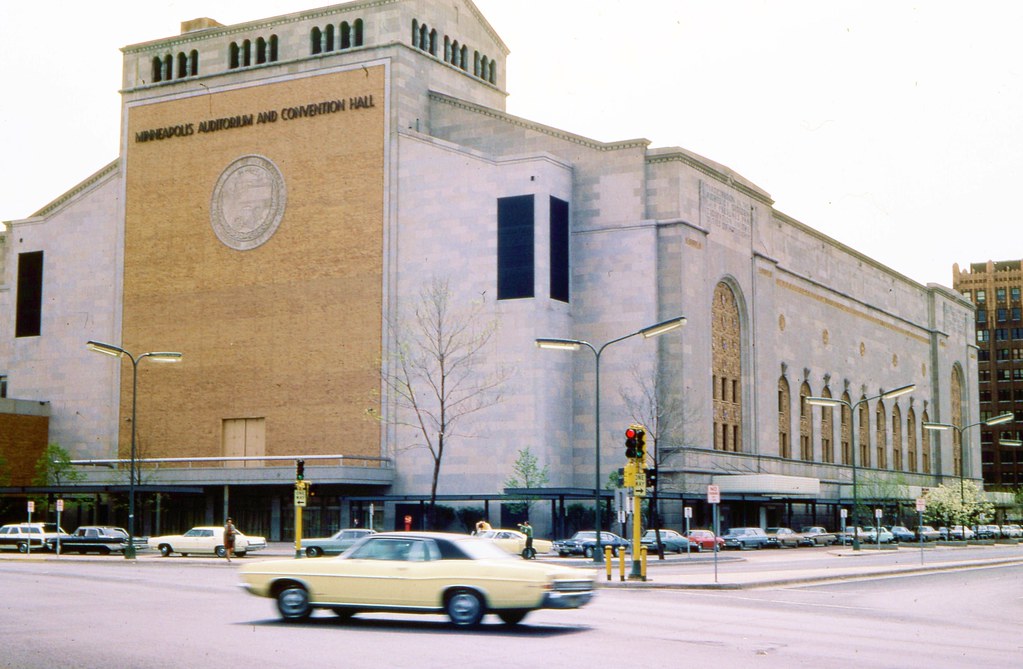
5. The Arena Situation. The Minneapolis Auditorium opened in 1927, and seated 10,000 people, but it was not designed with sports in mind. Nor was the Minneapolis Armory, which opened in 1936 and was the Lakers' home in their final Minneapolis season, 1959-60. The Auditorium was demolished in 1989, while the Armory still stands.
The Minneapolis Auditorium

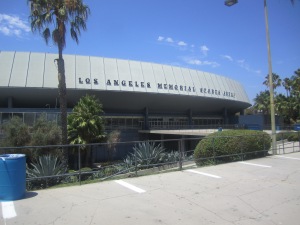
In contrast, the Los Angeles Memorial Sports Arena opened in 1959, seated over 16,000 for basketball, and had no tenant. The Dodgers had recently arrived to an overwhelming response, the Rams were successful, and both USC and UCLA attracted good basketball crowds. Short realized that the NBA could work there.
When Cooke bought the team from Short, he built an even better arena, the Forum in suburban Inglewood.
4. Coast to Coast. The NBA needed a team in California to be recognized as a truly major league, just as MLB had become in 1958, and the NFL had in 1946. Just 2 years later, the Philadelphia Warriors moved to San Francisco.

By the time the 1970-71 season dawned, they were joined on the Coast by the San Diego Rockets (who didn't last long), the Seattle SuperSonics and the Portland Trail Blazers. And that's without counting the ABA.

3. Los Angeles: City of the Future. The Lakers fit right in: With Elgin Baylor and Jerry West in the 1960s, West and Wilt Chamberlain in the early 1970s, Kareem Abdul-Jabbar and Magic Johnson leading "Showtime" in the 1980s, Shaquille O'Neal and Kobe Bryant in the early 2000s, and Kobe and Pau Gasol the last few years, their flashy image has been a perfect match for L.A.
Downtown Los Angeles, 1958, right after the Dodgers moved in,
and not long before the Lakers did.

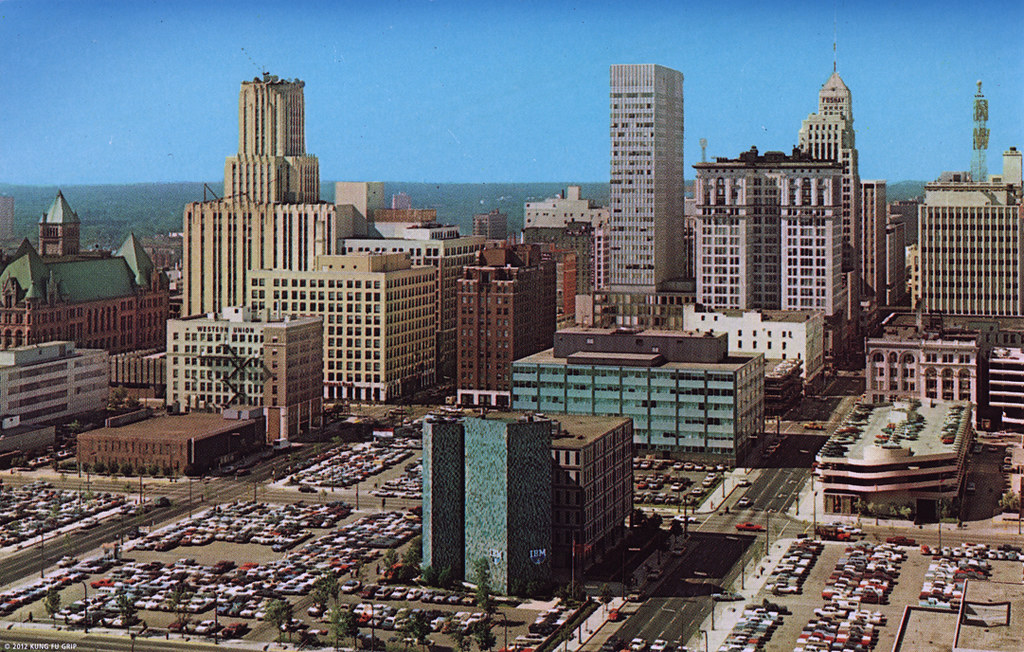
2. Minnesota Didn't Miss Them. Once George Mikan retired, the Lakers' attendance was terrible. In 1961, right after the move, the Twins and Vikings arrived. By 1962, the Twins were contenders; by 1967, so were the Vikings. Also, at the time, the University of Minnesota's football team was a championship contender. So the Twin Cities weren't starved for sports entertainment.
Downtown Minneapolis, 1965

True, the Twins lost the 1965 World Series -- to the Dodgers, no less. But they were still having more fun watching the Twins and the Vikings throughout the 1960s than they had watching the Lakers in the late 1950s.

1. It Worked. The Lakers are Southern California's most successful team, making 25 trips to the NBA Finals in their 1st 56 seasons, winning 11 of them. Although it took them until 1972 to win their 1st title, they were popular immediately. With their 1980s success, they became the region's most popular team, surpassing the Dodgers.

In contrast, when the NBA finally expanded in 1989 to include the Minnesota Timberwolves, the response was underwhelming. The T-Wolves have never been a success on the court -- they've only reached the Western Conference Finals once in their 26 seasons to date -- and they're not making the turnstiles spin, either.

The Twin Cities might not be big enough of a region to support teams in each of the Big Four sports, plus Major League Soccer. And, with the Twins and Vikings both having new stadiums, MLS' Minnesota United set to get one (while they start their history at UM's TCF Bank Stadium), and the State of Minnesota being hockey-crazy, and the NHL not wanting to piss them off a 2nd time, if any team has to go, it's going to be the T-Wolves.

In spite of the Laker titles of the Truman and early Eisenhower years, Minneapolis is simply not a basketball city, and Minnesota is not a basketball State. In contrast, Los Angeles loves its hoops.

VERDICT: Not Guilty. Whatever flaws -- or, rather, shortcomings -- Bob Short may have had, it's hard to argue that keeping the Lakers in Minneapolis would have been a better idea than moving them to Los Angeles.

Saturday, April 17, 2010

Top 10 Reasons to Hate Dallas

The Yankees swept the Texas Rangers, the Dallas-Fort Worth "Metroplex" area's team, this weekend.

On Friday night, the Yankees won a rain-shortened 5-1 game over the Texas Rangers. Yesterday, the Yankees won, 7-3. Alex Rodriguez hit his 584th career home run, surpassing Mark McGwire for 8th on the all-time list. Next up is Frank Robinson at 586, Sammy Sosa at 609, Ken Griffey Jr. at 630 (and "counting"), Willie Mays at 660, Babe Ruth at 714, Hank Aaron at 755, and Barry Bonds at 762.

Of course, a lot of those are steroid-aided... including the ones A-Rod hit from 2001 to at least 2003, possibly thereafter. At least we know he hasn't been caught using steroids as a Yankee.

It was only A-Rod's 1st homer of the season. Today, Mark Teixeira hit his 1st homer of the season, in a 5-2 Yankee win. Imagine that: The Yankees are 9-3, kicking some serious tush, and it took until this weekend for their2 best power hitters to hit their 1st homers.

Last night, Red Bull New York -- or, if you prefer the New York Red Bulls, still called "Metro" by some fans who remember them as the New York/New Jersey MetroStars -- also played a Dallas-area team, FC Dallas, which play at Pizza Hut Park in the suburb of Frisco. The Red Bulls won, 2-1, on two goals by captain Juan Pablo Angel, including a penalty kick in the 89th minute.

*

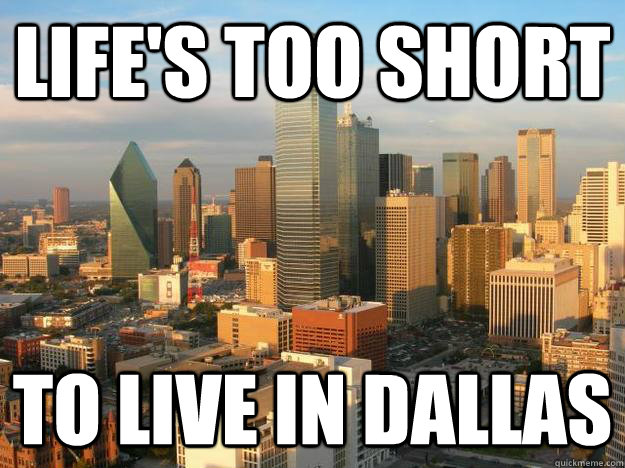
Now, like all sports fans with taste, I hate Dallas. Can I come up with 10 reasons why? How about limiting it to 10: That might be tougher.

Top 10 Reasons to Hate Dallas

Dishonorable Mention: The Weather. It's too damn hot!

10. FC Dallas. Why would anyone hate a soccer team from Dallas? (Well, except for fans of the Houston Dynamo.) Mostly the name. "Football Club Dallas"? Where's the imagination? The baseball team is the Texas Rangers, the football team the Dallas Cowboys, the basketball team the Dallas Mavericks...

Okay, the hockey team, formerly the Minnesota North Stars, became the Dallas Stars, when they should have become the Dallas Lone Stars. But look at the 2 major colleges: SMU is the Mustangs, TCU the Horned Frogs. Now that's imagination.

Dallas was previously home to the Dallas Tornado, a pretty successful team in the North American Soccer League (NASL), including winning its 1971 championship. There was also a Dallas Sidekicks in the Major Indoor Soccer League (MISL).

The team now known as FC Dallas was the Dallas Burn from the 1996 founding of Major League Soccer (MLS) until the name change in 2005. What's wrong with "Tornado" -- or, better yet, "Tornados or "Tornadoes"? What's wrong with "Burn"? (Okay, "Burn" might confuse people, what with MLS also having a Chicago Fire.) But... "FC Dallas"? Come on!

9. What They Did to David Clyde. In 1973, their 2ond season, the Texas Rangers had the 1st pick in the Major League Baseball Draft. They chose a Texas kid, David Clyde, a recently graduated 18-year-old high school pitcher from the Houston suburb. Desperate for attendance, they put him on the mound at Arlington Stadium without ever having appeared in a minor-league game, let alone a college one.

Unfortunately, the worst thing that could have happened to him was that he won his 1st major league start. And his 2nd one. So they kept sending him out there, and, as it turned out, he was far from ready. When the year was over, he was 4-8 with a 5.01 ERA. By 1975, he had arm trouble and was in the minors. He pitched his last professional game in 1981, at age 26, going just 18-33 in the majors.

He began drinking heavily, and ruined 2 marriages with it. He stopped, married a 3rd time, worked for his father-in-law's lumber business, and eventually ran it and coached a youth baseball team, before retiring to take care of his ailing father. He turned out all right, no thanks to his initial bosses.

8. Texas Stadium. Cowboy fans liked to say that the ridiculous facility in the northern suburb of Irving had a hole in the roof "so God could look down on his favorite team." Since when can God not look through a stadium's dome?

It had awful artificial turf. It had what we would now call skyboxes pushing the upper deck way too far back, well before most stadiums did -- in fact, the post-1971 stadium that most resembled Texas Stadium in terms of seating positioning was the much-maligned Metrodome in Minneapolis.

According to a column in today's Fort Worth Star-Telegram, the Hole Bowl is also the forerunner of "personal seat licenses," another reason to hate it. And longtime Cowboys executive Gil Brandt said this was also a reason why the dump never hosted a Super Bowl, as its replacement, Cowboys Stadium in Arlington, will do this coming February:

<< In a forerunner to today's seat licenses, the Cowboys sold what were called seat bonds, for $250 a pop. Season-ticket holders could buy bonds that gave them ownership of their seats for any and all events at the stadium.

Although the bonds were not interest-bearing, the seats increased significantly in value as the team became a perennial winner, meaning the Cowboys could never regain control of them.

Super Bowl crowds are comprised largely of out-of-towners -- officials, dignitaries, corporate types and players, coaches and team executives -- and Brandt said the Cowboys "couldn't guarantee the NFL seats."

"People had those seats for any event, no exceptions, even the Super Bowl," said the 77-year-old Brandt. "Clint borrowed money from people going to the stadium so it would help pay for it.

"He wouldn't have done it that way again. Consequently, it wasn't about not trying to get the Super Bowl, but not being able to." >>

If that's what caused the Cowboys to never play a Super Bowl on their home field, good.

7. Norm Green. He bought the North Stars in 1991, and moved them to Dallas. To this day, Minnesotans call him "Norm Greed."

6. Bob Short. In 1960, he moved the greatest basketball franchise the world had yet seen, the Minneapolis Lakers, to Los Angeles. In 1971, he became the first man to rip the hearts out of two sets of fans, by moving the Washington Senators to the Dallas area, where they became the Texas Rangers.

At the Senators' last home game, a banner hung from the upper deck at Robert F. Kennedy Stadium, reading, "SHORT STINKS." I guess it wasn't yet acceptable to use the word "sucks" in that context.

Going back to the previous point, Rangers manager Whitey Herzog said that Short was desperate to keep up the attendance that Clyde brought that he told Herzog to leave him in games longer than he should have. In only his 1st big-league managing job, Herzog didn't have the confidence to stand up to the bastard, and by the end of the season, Short fired Herzog, hiring Billy Martin.

Dishonorable Mention: What Dallas did to Billy Martin. Made him feel like a cowboy. Made him want to be a cowboy. Fed his already unpleasant drinking problem. Made him even more of a paranoiac than he already was. If Billy had never managed in Texas, he might not have killed himself in a drunk-driving accident at age 61.

5. Southern Methodist University. The football edition of the SMU Mustangs are the only college sports program ever to have been given the "death penalty." In 1987, following nearly a decade of dominating the Southwest Conference, and with SMU already on probation for recruiting violations, they were caught doing it again. Their 1987 season was cancelled, and due to what they would have lost through players not involved in the scandal being allowed to transfer out without losing any eligibility, they cancelled their 1988 season as well.

At the time, there were bumper stickers all over the Lone Star State: "Support Pro Football. Watch the SMU Mustangs." They have since rebuilt their program in the lower-profile Conference USA.

4. The Cowboys Cheat. Lee Roy Jordan knocking out Philadelphia Eagle running back Timmy Brown's teeth in 1967. Drew Pearson with the most blatant offensive pass interference in history in that 1975 Playoff game with the Minnesota Vikings, and getting away with it. And I'm still not sure the way they managed to get the top pick in the 1977 NFL Draft, enabling them to get Heisman Trophy winner Tony Dorsett, was on the up-and-up.

3. "America's Team"/"God's Team." The Cowboys decided that all by themselves. There was no election, and, if there had been, they would have been easily outvoted.

If God is such a Cowboy fan, why did He not tell "God's Coach," Tom Landry, to get his drug-addicted, boozing, philandering players off the field and into treatment? And why, then, did He let Jerry Jones buy the team, and hire a corrupt college coach, Jimmy Johnson, and turn Texas Stadium into a bigger Sodom & Gomorrah Southwest than Dallas' Southfork Ranch ever was?

2. Conspicuous Consumption. Nine years before Michael Douglas, in the film Wall Street, gave his "Greed is good" speech (and 12 years before Douglas broke my heart by snagging Catherine Zeta-Jones), the CBS-TV drama Dallas, starring Larry Hagman as J.R. Ewing, paved the way for the Reagan era of presuming that being rich was noble and being poor was your own fault.

Which is insane, because most of the rich people on Dallas were incredibly immoral. Heck, even Bobby Ewing (Patrick Duffy) wasn't always angelic. Kristin Shepard (Mary Crosby) should've gotten a medal for shooting J.R.

Of course, the TV show was a case of art imitating life. Dallas, as a city, is despised in Houston, the State Capital of Austin, and especially in nearby Fort Worth. In fact, there are those who like to say, "Dallas is not in Texas." The city is hated for being a center of oil, of banking, of insurance, things that are often hated by the general populace. And those industries are usually controlled by...

1. Right-Wing Fanaticism. Cowboys owner Clint Murchison was an out-and-out flake. So was oil baron H.L. Hunt -- thankfully, his son, Lamar Hunt, kept his politics quiet, and can be praised as the founder of the American Football League and the Kansas City Chiefs (formerly the Dallas Texans), the co-founder of the Super Bowl and the Chicago Bulls, and a key figure in the history of American soccer (the American equivalent of the FA Cup is named the Lamar Hunt U.S. Open Cup).

This link will send you to a handbill that was handed out in Dallas on November 21, 1963. President John F. Kennedy saw it, and told his wife Jacqueline, "We're headed into nut country tomorrow." Anybody who thinks Lee Harvey Oswald acted alone is a fucking fool -- if, that is, Oswald had anything to do with it:

Dallas and the surrounding area also sent to Congress Richard K. Armey. In 1994, Dick Armey, then the Republican Party's 3rd-ranking member in the House of Representatives, stood in the well of the House and told the Democrats, "Your President isn't that important to us." Your President? Our President, Dickhead. Yours, too.

From 1995 to 1998, Armey was the House Majority Leader. He once opposed a bill raising the minimum wage by telling of his days as a college professor, and finding out that the retarded janitor who worked there was laid off because the school couldn't afford the rise in the minimum wage. A reporter checked out the story and found it to be a big fucking lie. Dick Armey, a man who would rather lie about a retarded janitor than give people a living wage -- this is the kind of politician Dallas calls a "moderate."

Oh yeah: The SMU campus in Dallas is also going to be home to the George W. Bush Presidential Center. Notice they're not calling it a "library," even though his wife was a professional librarian. The most right-wing President ever, and they love him in Dallas.

I'm sure the vast majority of people in the Dallas-Fort Worth Metroplex are reasonable people, with at least some intelligence, and don't deserve to be hated or told that they suck.

But, in the words of Angelo Cataldi, the morning man on Philadelphia's all-sports station 610 WIP, "I've seen it, fathers with three, four, five-year-old kids, and the kids know four, five, maybe six words, and two of them, taught to them by their fathers, are, 'Dallas sucks!'"

Angelo is a wacko, but he knows what he's talking about: DALLAS SUCKS. And for reasons that go well beyond sports.