
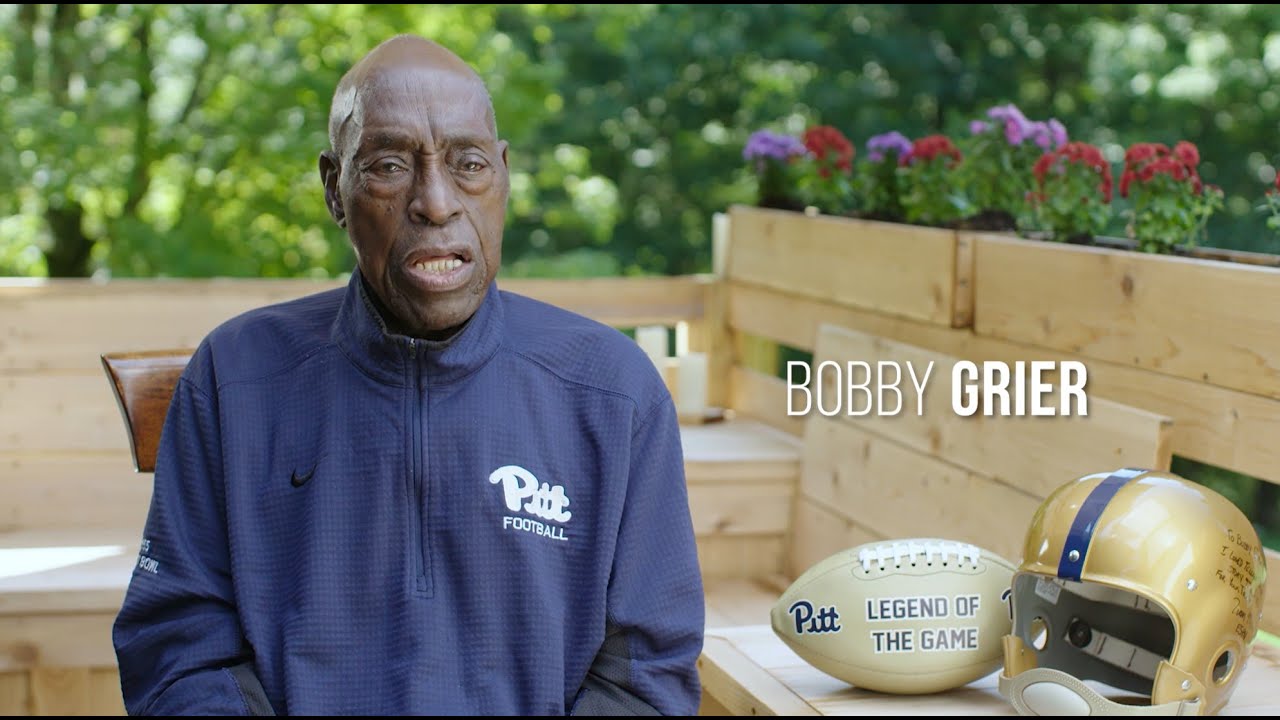
Bobby Grier
January 2, 1956, 70 years ago: The college football season comes to an end, with the traditional New Year's Day bowl games, pushed back a day because January 1 was a Sunday.
This Monday saw the playing of the Sugar Bowl, at Tulane Stadium in New Orleans. The Georgia Institute of Technology, a.k.a. Georgia Tech, entered the game at 8-1-1, having lost to Auburn and been tied by Tennessee; however, they had beaten the University of Miami, Florida and Duke, each of them ranked at the time. Tech came in ranked Number 7.
However, they were only 3rd in the Southeastern Conference. Mississippi, instead of accepting the usual invitation given by the Sugar Bowl to the SEC Champions, instead accepted an invitation to play in the Cotton Bowl. "Ole Miss" and Tech did not play each other that season. Auburn, who finished 2nd, were not invited by the Sugar Bowl, and ended up losing the Gator Bowl to the 5th-place team in the SEC, Vanderbilt. (Tennessee finished 4th.) So the Sugar Bowl invited Georgia Tech.
Their opponents were the University of Pittsburgh. An Independent, Pitt were only 7-3, losing to Oklahoma, Navy and Miami. However, they had beaten ranked teams Duke and West Virginia, and teams from other regions, Nebraska and the University of California. They came into the game ranked Number 11.
Pitt's best player was Bobby Grier, a fullback and a linebacker, as most college football teams were still sending players to play what was known as "single-platoon football," the same players playing on both offense and defense. Grier, a native of the football-mad town of Massillon, Ohio, was black.
Segregationists didn't want Grier to play in the Sugar Bowl. Governor Marvin Griffin of Georgia sent a telegram to Tech's Board of Regents, in an attempt to pressure the school's president, Blake Van Leer, to pull the team out of the game. Van Leer was already catching heat for pushing through a vote to allow women in Georgia Tech.
But Van Leer, who had held the office since 1944, refused to be bullied by the ignorant redneck Governor: He told a meeting of the Faculty Senate, "Either we're going to the Sugar Bowl, or you can find yourself another damn president of Georgia Tech." The Senate gave him a standing ovation.
This was one month after Rosa Parks refused to stand up on a bus in Montgomery, Alabama, with the bus boycott ongoing; 4 months after the murder of 14-year-old Emmett Till in Money, Mississippi; and a year and a half after the U.S. Supreme Court struck down public school segregation in the case of Brown v. Board of Education of Topeka, Kansas.

Grier, supported by his white teammates
As it turned out, there was no law that could prevent Grier from playing in the game, and, for the 1st time, a bowl game in the South had a black player in it.
Georgia Tech won the game, 7–0. The margin of victory mostly resulted from a disputed pass interference penalty, in the 1st quarter. It was called on Grier, giving Georgia Tech a 1st and goal on the Pitt 1-yard line. The Yellow Jackets scored the game's only touchdown on the next play. Photographic evidence later strongly indicated the referee's call was incorrect.
The irony of the bad call is that it was made by referee Rusty Coles, who was from the Pittsburgh area, and who had no objective in making the wrong call, but simply made a mistake, which he admitted after seeing the game films.
Grier finished the game as its leading rusher with 51 yards. After the game, he protested the pass interference call, but praised the Georgia Tech players, saying, "They were good sportsmen, perhaps the best I've played against all season. They played hard, but clean. It was a good game. But believe me. I didn't push that man."
As it turned out, the State of Georgia needed to find a new president of Georgia Tech, anyway: Blake Van Leer died of a heart attack on January 24, 1956, just 22 days after the game. Edwin D. Harrison was named the new president. In 1960, he oversaw a vote by an overwhelming majority of Tech students to endorse the integration of qualified applicants, regardless of race.
Bobby Grier did not play professional football. Instead, he enlisted in the U.S. Air Force, and later served as an administrator at a community college in the Pittsburgh area. In 2022, he was elected to the Pitt Athletics Hall of Fame. He died in 2024.
January 2, 1956 was, as I said, a Monday. These other bowl games were played that day:
* Oklahoma beat Maryland, 20-6, in the Orange Bowl, at Burdine Stadium in Miami. In 1959, the stadium was renamed the Orange Bowl. This was, effectively, the National Championship Game: Oklahoma, in the middle of their 47-game winning streak, still a college football record, were ranked Number 1, and had won the Big Seven Conference title; while Maryland were ranked Number 3, and had won the Atlantic Coast Conference title.
Oklahoma were favored by 7 points. If Maryland had pulled the upset, it's likely that they would have been awarded the National Championship, regardless of whether Number 2 Michigan State won the Rose Bowl. At the very least, there could have been a split in the polls. But Oklahoma won, making the Rose Bowl academic.
* Michigan State did their part, beating the University of California at Los Angeles, 17-14, in the Rose Bowl, in the stadium of the same name in the Los Angeles suburb of Pasadena, California. Michigan State were ranked Number 2, and Champions of the Big Ten Conference. UCLA were ranked Number 4, and Champions of the Pacific Coast Conference. But Oklahoma's 2-touchdown win put the National Championship out of reach for Michigan State.
* Mississippi beat Texas Christian University, 14-13, in the Cotton Bowl, in the stadium of the same name in Dallas. As previously stated, Ole Miss were the SEC Champions, and went into the game ranked Number 10. TCU were the Champions of the Southwest Conference, and were ranked Number 6.
* Wyoming beat Texas Tech, 21-14 in the Sun Bowl, at Kidd Field in El Paso, Texas. Wyoming finished 4th in the Skyline Conference, while Texas Tech were the Champions of the Border Conference.
* Juniata College and Missouri Valley College played to a tie, 6-6 in the Tangerine Bowl, in the stadium of the same name in Orlando, Florida. The Tangerine Bowl game was a showcase for what were then called "small college" teams. Both the game and the stadium would become bigger, and become known as the Citrus Bowl.
Juniata, of Huntingdon, Pennsylvania, then an Independent, now competes in NCAA Division III. Missouri Valley, of Marshall, Missouri, were the Champions of the Missouri College Athletic Union, and now compete in the NAIA -- for all intents and purposes, NCAA Division IV.


No comments:
Post a Comment