Friday, February 9, 2024

February 9, 1964: The Beatles On "The Ed Sullivan Show"

February 9, 1964, 60 years ago: The Beatles perform on The Ed Sullivan Show, live on CBS, from what was then named CBS Studio 50, at 1697 Broadway between 53rd and 54th Streets, in Midtown Manhattan, New York City. Built in 1927, the theater still stands, seating 400. It was the home of The Ed Sullivan Show from 1948 to 1971, and was renamed the Ed Sullivan Theater in 1967.

The Beatles had been superstars in their native Britain for about a year, but it was only about a month before this that America had taken notice. On January 25, their song "I Want to Hold Your Hand" hit Number 1, launching what became known as rock and roll's "British Invasion."

On February 7, they landed at the newly-renamed John F. Kennedy International Airport (formerly Idlewild Airport), and there were thousands of screaming teenage girls there to greet them. They had become the biggest music phenomenon since Elvis Presley, 8 years earlier.

So, like Elvis, they had to appear on Sullivan, America's biggest TV variety show. And they weren't the only performers on the show that night, or even the only British performers. In fact, Sullivan made the point that he had purposely booked other Brits to make the Liverpool quartet feel more at home:

* The cast of the Broadway musical Oliver!, based on Charles Dickens' novel Oliver Twist. Since the theater was literally on Broadway, just up the block from most of the "Broadway theaters" (most of which are a block or two off Broadway, not on the street itself), Sullivan frequently booked the shows' stars to do their big numbers.

Among the cast of Oliver!, playing The Artful Dodger, was Davy Jones, later of The Monkees -- who never appeared on Sullivan in full, since they were an NBC act. Also in the show, and singing on the Sullivan stage, was Georgia Brown, an English singer born Lilian Clair Klot, who had recorded the song "Sweet Georgia Brown," and renamed herself for it. She would later appear on 2 episodes of Star Trek: The Next Generation, playing Helena Rozhenko, adoptive mother of Worf.

* Tessie O'Shea, a Welsh singer I can best describe as Britain's answer to Sophie Tucker.

* American husband and wife comedians Charlie Brill and Mitzi McCall.

* American actor and impressionist Frank Gorshin, later to be known for playing villain The Riddler on the 1966-68 Batman TV show, and Commissioner Bele, a bigoted lawman on the original Star Trek series.

* Dutch magician Fred Kaps. Sullivan loved magic acts, and tried to get acts from Europe onto his show as often as possible.

* Acrobats Wells and the Four Fays. Sullivan loved novelty acts like acrobats.

* Terry McDermott, who had won a surprise Gold Medal for America, in speed skating at the just-concluded Winter Olympics in Innsbruck, Austria.

At the time, the theater seated 728 people. There were 50,000 ticket requests. When Elvis played there, there had been 7,000. Former Vice President Richard Nixon's daughters Tricia (who was about to turn 18) and Julie (15) were there, as guests of Randy Paar, daughter of comedian and former Tonight Show host Jack Paar. (Although the Nixons were Californians, they lived in Manhattan from 1963 to 1968. Tricky Dick would infamously target John Lennon for deportation in 1972.)

Sullivan began the show by telling the audience that Elvis had sent The Beatles a telegram, wishing them success in America. What Sullivan didn't know at the time is that it wasn't true: The telegram had been sent in Elvis' name, without his knowledge, let alone his permission, by his manager, "Colonel" Tom Parker. But it seemed to give Elvis' approval for the Mop Tops. (The King of Rock and Roll and the Fab Four finally met on August 27, 1965.)

Sullivan said, simply, "Ladies and gentlemen... The Beatles!" A few hundred high-pitched shrieks filled the air -- how so many teenage girls managed to scream and chew gum at the same time, I'll never know -- and then bass guitarist Paul McCartney kicked things off with the song "All My Loving."

As a tribute to the street on which they were performing, they sang a show tune they'd recorded, "Till There Was You" from The Music Man. While Paul sang lead on that, they were identified by graphics, so the TV audience could learn their individual names. The camera focused on Paul, then on lead guitarist George Harrison, and then on drummer Ringo Starr for a few seconds. When they got to rhythm guitarist and co-lead singer John Lennon, the graphics included "SORRY GIRLS, HE'S MARRIED." (If they only knew how seriously John was taking his wedding vows.)

Then they sang their biggest hit of the previous year, at least in their own country, "She Loves You." Just as "Hound Doug" remains the song which seems to symbolize Elvis, "She Loves You" remains the song which seems to symbolize the early Beatles, with its chorus of "Yeah, yeah, yeah" and their headshakes as they went, "Woo!" in homage to rock and roll pioneer Little Richard, with whom they'd toured England in late 1962.

Over the next 40 minutes or so, the other acts took the stage. The show closed with The Beatles returning for 2 more songs: The B side of their current single, "I Saw Her Standing There"; and the A side, the Number 1 hit, "I Want to Hold Your Hand."

The Beatles themselves weren't satisfied with their performance. Paul later said that John's microphone volume was too low. He was right: On the surviving recording, it does sound like John was only singing backup on "I Want to Hold Your Hand," which was at least as much his composition as Paul's.

Sullivan and CBS were fine with it, because they got the biggest TV audience for a single-network broadcast in American history to that point: 73 million viewers. The band's manager, Brian Epstein, was also very happy with it.

In Freehold, New Jersey, 14-year-old Bruce Springsteen watched it. So did 14-year-old Billy Joel, in Hicksville, Long Island, New York. Both said it changed their lives. A lot of those 73 million people would say the same thing.

That night has often been cited as the first time Americans felt good again after the assassination of President John F. Kennedy, 79 days earlier. Like that day, it became one of those "Where were you when... ?" days, but a good one. That record of 73 million would hold for 3 1/2 years, until the last episode of The Fugitive in 1967.

The New York Police Department was fine with it, too: They had the fewest reported crimes of any night in their recorded history, a record that has been broken only once: The night of the 1965 blackout. As George Harrison later put it, "Even the criminals were at home, watching us."

The Beatles would also appear on Sullivan the following week, February 16, at a remote location: The Deauville Hotel in Miami. They week after that, February 23, the performance was pre-taped, not broadcast live. They made another live appearance on August 14, 1965, taping for broadcast on September 12. All of these appearances were in black & white.

Thereafter, Sullivan would occasionally show them in color promotional clips for their records -- what would later be called music videos. On June 5, 1966, he showed them playing "Paperback Writer" and "Rain"; on February 12, 1967, "Penny Lane" and "Strawberry Fields Forever"; on November 26, "Hello Goodbye," believed to be the only footage of the band performing in their Sgt. Pepper uniforms (although John and Paul had shaved their mustaches); and on March 1, 1970, "Let It Be" and "Two of Us."

Today, the Beatles are known for many things. If Ed Sullivan is known for one thing, it's for hosting the Beatles.

From this moment on, the Beatles changed everything. Music. Fashion. Hair. The nature of fame itself. Even politics: Harold Wilson, leader of Britain's Labour Party, posed for a photo with them. It may have made the difference in Britain's general election later in the year, making Wilson the new Prime Minister. (Posing with Elvis would not have helped Adlai Stevenson defeat Dwight D. Eisenhower in 1956.)

Other British acts came over. Some of them were flashes in the pan: The Dave Clark Five, Billy J. Kramer & the Dakotas, Gerry & the Pacemakers. Some had staying power: The Rolling Stones, the Kinks, the Hollies, the Yardbirds, and eventually The Who.

The Beatles turned record sales from a singles-based thing into an album-based thing. They expanded rock and roll to include classical instruments on their recordings.

And people still get the references. John was "The Smart One." George was "The Shy One." Ringo was "The Silly One." And Paul was "The Cute One." When he was knighted in 1997, Scott Muni, New York's leading "classic rock" disc jockey, who had interviewed the band for WABC (or "W-A-Beatle-C") in 1964, said, "From now on, you can call him Sir Cute One."

And when I called Jordan Knight "the Paul of New Kids On the Block," Justin Timberlake "the Paul of NSYNC," Harry Styles "the Paul of One Direction," and Jimin "the Paul of BTS," people knew exactly what I meant. When Derek Jeter, Mariano Rivera, Andy Pettitte and Jorge Posada were called the New York Yankees' "Core Four," it was joked that, because of his nose and ears, Posada was "the Ringo." (Jeter was "the Paul." The spiritual Rivera was "the George." And Pettitte did have a nose something like John's.)

On a personal note: My father was 20 years old, living in Newark, New Jersey, and soon to graduate from the school now known as the New Jersey Institute of Technology, also in Newark. My mother was 16, in nearby Belleville, and a senior in high school. Neither of them were rock and roll fans, and both of them claimed they weren't fans of The Beatles, and never watched any of their appearances on The Ed Sullivan Show.

And yet, in his last years, my father was singing and playing guitar in a "Christian rock" band. His name was John, and there was a Paul in the band. There was no George, and no Ringo (or even Richard). And, if you'll pardon the pun, the spirit was willing, but the talent was weak. But it was a band with a John and a Paul.

Wednesday, February 7, 2024

Stadium Distinctions

With the announcement of MetLife Stadium as the site of the 2026 World Cup Final, I decided to make these lists.

Stadiums that have hosted an NFL Championship Game (under that name or under the Super Bowl name) and a World Cup Final: 

1. The Rose Bowl, Pasadena (Los Angeles), California: Super Bowl, 1977, 1980, 1983, 1987, 1993; World Cup Final, 1994.

2. MetLife Stadium, East Rutherford, New Jersey (New York, New York): Super Bowl 2014; World Cup Final, 2026.

Stadiums that have hosted a World Series and an NFL Championship Game (under any name):

1. Wrigley Field, Chicago, Illinois: World Series, 1929, 1932, 1935, 1938, 1945, 2016; NFL Championship Game, 1933, 1937, 1941, 1943, 1963.

2. Polo Grounds, New York (Manhattan), New York: World Series, 1911, 1912, 1913, 1917, 1921, 1922, 1923, 1924, 1933, 1936, 1937, 1951, 1954; NFL Championship Game, 1934, 1936, 1938, 1944, 1946.

3. Griffith Stadium, Washington, District of Columbia: World Series, 1924, 1925, 1933; NFL Championship Game, 1940, 1942.

4. Comiskey Park, Chicago, Illinois: World Series, 1917, 1918, 1919, 1959; NFL Championship Game, 1947.

5. Cleveland Municipal Stadium, Cleveland, Ohio: NFL Championship Game, 1945, 1950, 1952, 1954, 1964; World Series, 1948.

6. Shibe Park/Connie Mack Stadium, Philadelphia, Pennsylvania: World Series, 1910, 1911, 1913, 1914, 1929, 1930, 1931, 1950; NFL Championship Game, 1948.

7. Navin Field/Briggs Stadium/Tiger Stadium, Detroit, Michigan: World Series, 1934, 1935, 1940, 1945, 1968, 1984; NFL Championship Game, 1953, 1957.

8. Yankee Stadium I, New York (Bronx), New York: World Series, 1923, 1926, 1927, 1928, 1932, 1936, 1937, 1938, 1939, 1941, 1942, 1943, 1947, 1949, 1950, 1951, 1952, 1953, 1955, 1956, 1957, 1958, 1960, 1961, 1962, 1963, 1964, 1976, 1977, 1978, 1981, 1996, 1998, 1999, 2000, 2001, 2003; NFL Championship Game, 1956, 1958, 1962.

9. Los Angeles Memorial Coliseum, Los Angeles, California: NFL Championship Game, 1949, 1951, 1955; World Series, 1959.

10. Memorial Stadium, Baltimore: NFL Championship Game, 1959; World Series, 1966, 1969, 1970, 1971, 1979, 1983.

11. San Diego Stadium/Jack Murphy Stadium/Qualcomm Stadium, San Diego, California: World Series, 1984, 1998; Super Bowl, 1988, 1998, 2003.

12. Joe Robbie Stadium/Pro Player Stadium/Sun Life Stadium/Hard Rock Stadium: Super Bowl, 1989, 1995, 1999, 2007, 2010, 2020; World Series, 1997, 2003.

13. Metrodome, Minneapolis, Minnesota: World Series, 1987, 1991; Super Bowl, 1992. It also hosted the NCAA Final Four in 1992, meaning that, not only did it become the only venue to host all 3 of these events, but it did so in a span of 6 months, between October 1991 and April 1992.

Since there are no more stadiums hosting an MLB team and an NFL team, this category is retired.

Arenas that have hosted an NBA Finals and a Stanley Cup Finals

1. Chicago Stadium, Chicago, Illinois: Stanley Cup Finals, 1931, 1934, 1938, 1944, 1961, 1962, 1965, 1971, 1973, 1992; NBA Finals, 1947, 1991, 1992, 1993.

2. Madison Square Garden III, New York (Manhattan), New York: Stanley Cup Finals, 1929, 1932, 1933, 1937, 1940; NBA Finals, 1951.

3. Boston Garden, Boston, Massachusetts: Stanley Cup Finals, 1929, 1930, 1939, 1941, 1943, 1946, 1953, 1957, 1958, 1970, 1972, 1974, 1977, 1978, 1988, 1990; NBA Finals, 1957, 1958, 1959, 1960, 1961, 1962, 1963, 1964, 1965, 1966, 1968, 1969, 1974, 1976, 1981, 1984, 1985, 1986, 1987.

4. Madison Square Garden IV, New York (Manhattan), New York: NBA Finals, 1970, 1972, 1973, 1994, 1999; Stanley Cup Finals, 1972, 1979, 1994, 2014.

5. The Spectrum, Philadelphia, Pennsylvania: Stanley Cup Finals, 1974, 1975, 1976, 1980, 1985, 1987; NBA Finals, 1977, 1980, 1982, 1983.

6. The Forum, Inglewood (Los Angeles), California: NBA Finals, 1968, 1969, 1970, 1972, 1973, 1980, 1982, 1983, 1984, 1985, 1987, 1988, 1989, 1991; Stanley Cup Finals, 1993.

7. Brendan Byrne Arena/Continental Airlines Arena/Izod Center, East Rutherford, New Jersey (New York, New York): Stanley Cup Finals, 1995, 2000, 2001, 2003; NBA Finals, 2002, 2003.

8. First Union Center/Wachovia Center/Wells Fargo Center, Philadelphia, Pennsylvania: Stanley Cup Finals, 1997, 2010; NBA Finals, 2001.

9. Staples Center/Crypto.com Arena, Los Angeles, California: NBA Finals, 2000, 2001, 2002, 2004, 2008, 2009, 2010; Stanley Cup Finals, 2012, 2014.

10. United Center, Chicago, Illinois: NBA Finals, 1996, 1997, 1998; Stanley Cup Finals, 2010, 2013, 2015.

11. TD Garden, Boston, Massachusetts: NBA Finals, 2008, 2010, 2022; Stanley Cup Finals, 2011, 2013, 2019.

12. Pepsi Center/Ball Arena, Denver, Colorado: Stanley Cup Finals, 2001, 2022; NBA Finals, 2023.

13. American Airlines Arena/Kaseya Center, Miami, Florida, Texas: NBA Finals, 2006, 2011, 2012, 2013, 2014, 2023; Stanley Cup Finals, 2023.

The "Old Garden," The Spectrum, and the Meadowlands arena are the only venues to have hosted a Stanley Cup Finals, an NBA Finals, and an NCAA Final Four.

The Metrodome, the Superdome in New Orleans, the Georgia Dome in Atlanta, Ford Field in Detroit, Lucas Oil Stadium in Indianapolis, NRG Stadium in Houston, AT&T Stadium outside Dallas, State Farm Stadium outside Phoenix, and U.S. Bank Stadium in Minneapolis are the 9 buildings that have hosted a Super Bowl and a Final Four. By 2028, Mercedes-Benz Stadium in Atlanta and Allegiant Stadium in Las Vegas will make it 11.

Stadiums that have hosted a World Cup Final and been the main stadium for the Olympic Games:

1. Stade de Colombes/Stade Yves-du-Manoir, Paris, France: Olympics, 1924; World Cup Final, 1938.

2. Wembley Stadium, London, Great Britain: Olympics, 1948; World Cup Final, 1966. It was an Olympic venue again in 2012, but not the main stadium.

3. Olympiastadion, Munich, Germany: Olympics, 1972; World Cup Final, 1974. It was a World Cup venue again in 2006, but not for the Final.

4. Olympiastadion, Berlin, Germany: Olympics, 1936; World Cup Final, 2006. With Germany divided between 1945 and 1990, it could not be a World Cup venue in 1974.

5. Estadio do Maracanã, Rio de Janeiro, Brazil: World Cup Final, 1950, 2014; Olympics, 2016.

6. Stade de France, Saint-Denis (Paris), France: World Cup Final, 1998; Olympics, 2024.

The Stadio Olimpico in Rome, Italy was the main stadium for the 1960 Olympics, but was totally torn down and rebuilt for the 1990 World Cup. This is also true of the Luzhniki Stadium in Moscow, Russia, home to the 1980 Olympics (under the name of the Lenin Stadium) and the 2018 World Cup.

The Estadio Azteca in Mexico City, Mexico hosted the World Cup Final in 1970 and 1986, and was a venue for the 1968 Olympics, but was not the main stadium for those Games.

Los Angeles hosted the Olympics in 1932 and 1984, and is scheduled to do so again in 2028, and hosted the 1994 World Cup Final -- but not in the same stadium. Barcelona, Spain hosted World Cup matches in 1982, but not the Final, and it wasn't in the same stadium that was used as the main venue for the 1992 Olympics.

Seoul, South Korea hosted the 1988 Olympics and had 2 different venues for the 2002 World Cup, but not the same venue as for the Olympics, and neither hosted the Final, anyway. That World Cup was a joint hosting between South Korea and Japan. Japan hosted the Olympics in 1964 and 2020, but not in the same stadium as the 2002 World Cup Final.

The Los Angeles Memorial Coliseum is the only stadium to be the main venue for 2 Olympic Games. It will be used again in 2028, although SoFi Stadium is set to be the main venue. The Maracanã is 1 of 2 stadiums to have hosted 2 World Cup Finals, along with the Azteca.

In 2024, the Stade de France will become the 4th stadium to have hosted an Olympic Games, a World Cup Final, and a UEFA Champions League Final. The others are the old Wembley Stadium, and the Olympiastadions in Berlin and Munich.

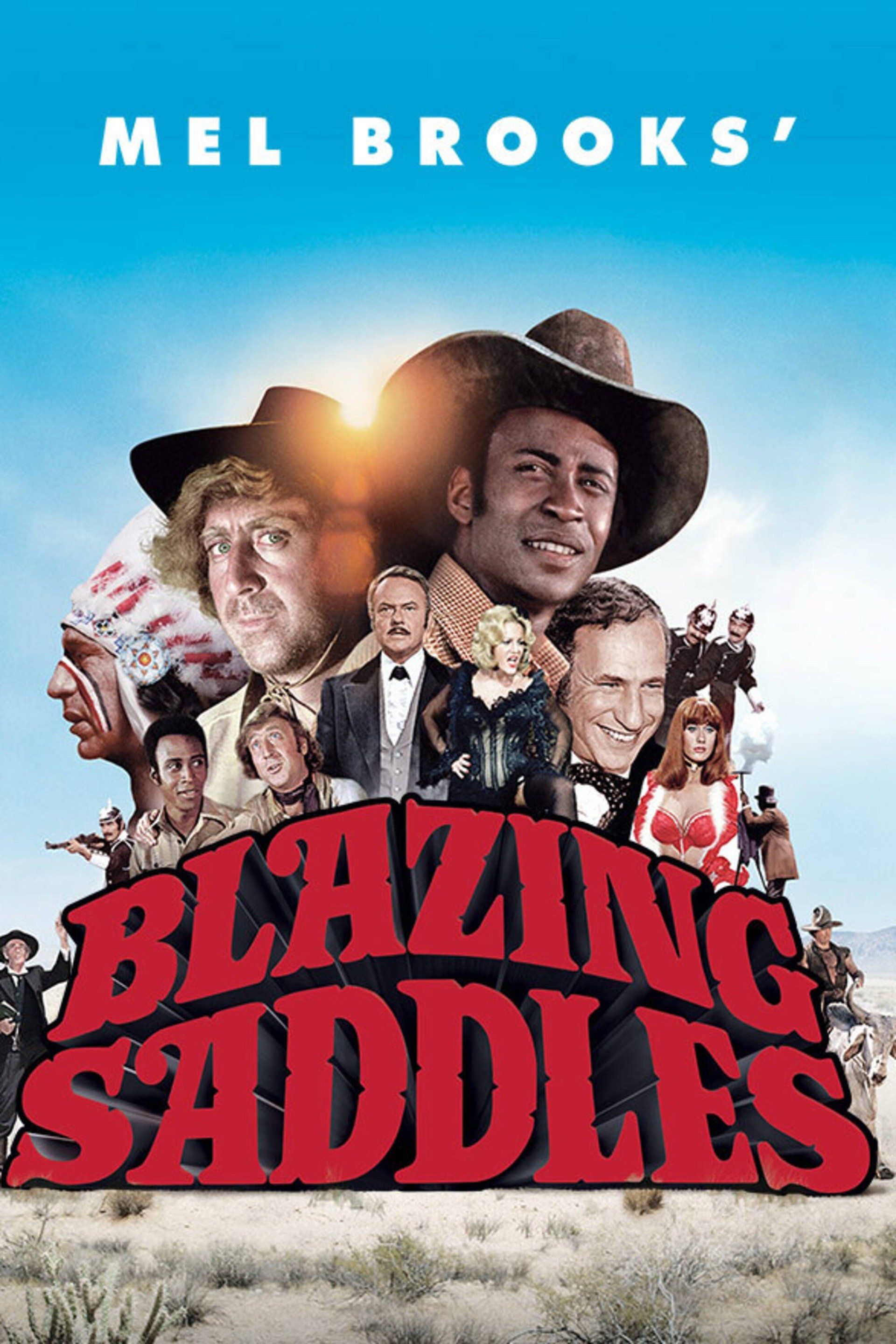
February 7, 1974: "Blazing Saddles" Premieres

February 7, 1974, 50 years ago: Blazing Saddles premieres, director Mel Brooks' tribute to, and parody of, classic Western movies.

Hedley Lamarr (played by Harvey Korman) is a railroad executive, and the Attorney General of an unidentified Western territory of the United States. His name always gets turned into that of Hedy Lamarr, a popular actress of the 1930s and '40s. He gets told, "This is 1874: You can sue her!" He wants to build his railroad through the town of Rock Ridge, but the residents (who all seemed to be named Johnson) won't leave.

So he sends his flunky Taggart (Slim Pickens) and his goons there, to, as Taggart, says, "go ridin' into town, whompin' and a-whompin'," until the terrified citizens leave. But the move backfires: They are willing to fight for their town, and demand that the Territorial Governor, William J. Le Petomane (Brooks) appoint a Sheriff to protect them.

Lamarr figures out a way around this: Since Le Petomane is an idiot, and Lamarr is clearly the power behind the throne, he convinces Le Petomane to appoint a Sheriff that the people of Rock Ridge will never accept: A black man named Bart (Cleavon Little -- the character's last name is never mentioned).

Sure enough, at first, they are repulsed. As Jim (Gene Wilder), a former hired gun known as the Waco Kid, explains: "You've got to remember that these are just simple farmers. These are people of the land. The common clay of the new West. You know: Morons." (The ending was an ad-lib by Wilder. Little cracked up, and Brooks left it in, because it was funny. As Brooks has said, "The only true sin is not being funny.")

In a flashback, where Bart tells Jim his backstory, he mentions his family being the only black family in a wagon train, and thus at the back of it, as if it was a segregation-era bus. When they're attacked by Indians, the chief, also played by Brooks, tells his braves to give them a break: "They're even darker than we are!"

Jim helps Bart win the town over. So Lamarr sends in his doomsday weapon: Mongo (former football star Alex Karras), a gigantic man of limited intelligence and words. Lamarr figures Bart wouldn't be able to handle him. As Jim says, when Bart suggests shooting him, "Don't do that. It'll only make him mad!" Well, not only does Bart find a way to handle Mongo, but Mongo defects to Bart's side, respecting him as the only man ever to stand up to him.

This not having worked, Lamarr sends in another secret weapon: Lili von Shtupp, an overtly sexy German singer (Madeline Kahn, in an obvious homage to Marlene Dietrich), who is meant to seduce Bart. But Bart is a lover as well as a fighter, so she defects to his side, too.

So Lamarr decides he needs total war, telling Taggart, "I want you to round up every vicious criminal and gunslinger in the west. Take this down. I want rustlers, cutthroats, murderers, bounty hunters, desperados! Mugs, pugs, thugs! Nitwits, halfwits, dimwits! Vipers, snipers! Con men, Indian agents, Mexican bandits! Muggers, buggerers! Bushwhackers, hornswogglers, horse thieves, bull dykes! Train robbers, bank robbers! Asskickers, shitkickers! And Methodists!"

The final brawl breaks the fourth wall. Well, it breaks a wall, as the fighting Wild Westerners crash through the set of a movie musical, directed by Buddy Bizarre (Dom DeLuise). Then it breaks into the commissary at Warner Brothers' studio. Finally, it spills out onto the streets of Hollywood, where Bart shoots Lamarr in front of the famous Chinese Theatre. Back in 1874, the townspeople thank Bart for his service, and he and Jim start to ride off into the sunset, as Western heroes tend to do. Then they get off their horses and into a limousine, and are driven off into the desert -- possibly to Las Vegas.

Brooks wrote the screenplay with black comedy legend Richard Pryor, who was supposed to play Sheriff Bart. But Pryor's cocaine habit was out of control at the time, and he became unreliable: The insurance company for the film wouldn't insure him. So it became a starmaking role for Little.

Brooks also wrote the songs for the film, including the title song. Thinking of Frankie Laine's singing of the theme to the TV show Rawhide, and his big Western-themed hit song "Mule Train," both with the sound effect of a cracking whip, Brooks placed an ad in the trade paper Variety, calling for "a Frankie Laine type." Laine himself answered the ad. Brooks didn't tell him the film was a comedy, and he sang it absolutely straight, and it's a great performance.

(There was precedent for this: Ten years earlier, Stanley Kubrick directed Dr. Strangelove, and told half the cast that the film was a comedy, and the other half that it was a drama, with equally stunning results.)

The studio had a lot of problems with the film. There was a lot of usage of "The N-word." In a 2012 interview, Brooks said, "If they did a remake of Blazing Saddles today, they would leave out the N-word. And then, you've got no movie." The purpose was to satirize racism, to show how rotten it is, and how stupid it is. And Brooks got support on it from both Pryor and Little.

There were also objections to Karras punching a horse. And to the beans scene. Brooks pointed out that, in pretty much every movie with cowboys in it, they're eating beans, but nobody hears the sounds that result. But Brooks' contract gave him final content control, and he refused to make any substantive changes.

Times change. When the film is shown on TV today, the N-word is blanked out. And there's a scene near the beginning where Taggart accuses some of the rail workers of "jumping around like a bunch of Kansas City faggots!" That word is often called the gay version of the N-word, but the TV version could have used a better rewrite than "a bunch of Kansas City dummies!"

And Kahn's German singer? Her name is Lili von Shtupp. "Schtup" is, basically, "fuck" in Yiddish. So the TV version blanks it out, so it sounds like her name is "Lili von Sh." And yet, her name can be seen on the poster for the concert. But they left in the Indian chief's reaction upon seeing Bart's family, the single word "Schwarzes!" (German, or in Brooks' case, Yiddish, for "Blacks!" In the vampire parody Love at First Bite, George Hamilton's Dracula said it, but, for the TV version, it was replaced with, "Good evening!")

Wilder, who had previously worked with Brooks in The Producers, agreed to be in Blazing Saddles on one condition: He had a special project he wanted to do, and he asked Brooks to direct. So they made that movie next: Young Frankenstein. Brooks has said that Blazing Saddles is his funniest movie, but Young Frankenstein is his best.

In 1995, I had a terrible cold, a cough that lasted for weeks, and kept me up nights. One night, I saw that Blazing Saddles was going to be on TV. I'd never seen it before, so I figured, what the heck. Big mistake: Every time I laughed, I started coughing again. I began to wonder who would die first, me or Hedley Lamarr. (I didn't see Young Frankenstein until 2021. Shame on me for waiting until then to get over the hump.)

Slim Pickens died in 1983, Jack Starrett (Gabby Johnson, a parody of Western actor Gabby Hayes) in 1989, Cleavon Little in 1992, Madeline Kahn in 1999, Richard Pryor in 2005, Frankie Laine in 2007, Harvey Korman in 2008, Dom DeLuise in 2009, Alex Karras in 2012, Gene Wilder and David Huddleston (Olson Johnson) in 2016, and John Hillerman (Howard Johnson) in 2017.

Amazingly, as of February 7, 2023, Mel Brooks is still alive, at age 96. Also of note in the film and still alive on that date are Robyn Hilton, who played Miss Stein, the Governor's top-heavy secretary; and Rodney Allen Rippy, the former hamburger spokeskid who played young Bart, who grew up and left acting for a successful career in marketing. 

Monday, February 5, 2024

It's Coming Home!

In 2018, sure that England, the country that didn't invent soccer but popularized it around the world, were going to win the World Cup, the English media released a slogan: "It's Coming Home."

It went home, all right: The World Cup Trophy is named for the founder of the tournament, FIFA President Jules Rimet, who was French. In 2018, France won it.

We already knew that the 2026 World Cup would be a joint hosting effort between the U.S., which had previously hosted in 1994; Mexico, which had done so in 1970 and 1986; and Canada, which never had, although it had hosted the Women's World Cup in 2015. What we didn't know was where the Final would be held.

In 1994, the games were held mainly in the suburbs of major cities New York, Giants Stadium, at the Meadowlands Sports Complex in East Rutherford, New Jersey; Boston, Foxboro Stadium in Foxborough, Massachusetts; Detroit, the Silverdome in Pontiac, Michigan; San Francisco, Stanford Stadium in Palo Alto, California; and Los Angeles, the Rose Bowl in Pasadena, California. Within cities, games were held at Robert F. Kennedy Memorial Stadium in Washington, Soldier Field in Chicago, the Cotton Bowl in Dallas, and the Citrus Bowl in Orlando.

(Of those 9, only the Rose Bowl, the Cotton Bowl and the Citrus Bowl still stand, and the Citrus Bowl has been renamed Camping World Stadium. Soldier Field and Stanford Stadium have been replaced with new stadiums on the site, while Giants Stadium and Foxboro Stadium were replaced by new stadiums next-door.)

The choice for the venue the Final came down to 3: New York and Los Angeles, as the 2 biggest cities; and Washington, as the national capital. Since the Rose Bowl had the biggest seating capacity, it was chosen.

The venues for the 2026 World Cup were announced yesterday. In Canada: BMO Field in Toronto and BC Place in Vancouver. In Mexico: Estadio Azteca in Mexico City, which hosted the 1970 and 1986 Finals; Estadio BBVA in Guadalupe, outside Monterrey; and Estadio Akron in Zapopan, outside Guadalajara. In the U.S.:

* MetLife Stadium in East Rutherford, New Jersey, representing New York.
* Lincoln Financial Field in Philadelphia, Pennsylvania.
* Gillette Stadium in Foxborough, Massachusetts, representing Boston.
* Mercedes-Benz Stadium in Atlanta, Georgia.
* Hard Rock Stadium in Miami Gardens, Florida, representing Miami.
* Arrowhead Stadium in Kansas City, Missouri.
* AT&T Stadium in Arlington, Texas, representing Dallas.
* NRG Stadium in Houston, Texas.
* SoFi Stadium in Inglewood, California, representing Los Angeles.
* Levi's Stadium in Santa Clara, California, representing San Francisco.
* Lumen Field in Seattle, Washington.

All 13 of the stadiums in the U.S. and Canada are in metropolitan areas with at least 1 Major League Soccer franchise, 5 are currently home to MLS teams, and 2 previously hosted a team. None of these is a holdover from the 1994 World Cup, although, of the 11 U.S. sites, 6 are in markets that are. And 7 have previously hosted Super Bowls.

Why not Washington, the nation's capital? Simple: The stadium issue. With the demolition of RFK Stadium, the biggest stadium in the city is Nationals Park, and that's a baseball-specific stadium. The next-biggest is Audi Field, and the home of the city's MLS team seats only 20,000. The suburbs, of course, have a bigger stadium: FedEx Field in Landover, Maryland, which has hosted many soccer games. But it's considered inadequate, particularly with its distance from the city's subway system.

For a while, the Final seemed narrowed down to 2: New York and Los Angeles -- or, more accurately, the Meadowlands and Inglewood. It seemed like a difficult choice. After all, America does not have a "national stadium." I was hoping the Final would come, not just to New York, but to New Jersey.

Sometimes, the choice is easy. England hosted in 1966, and put the Final at Wembley Stadium in London. Mexico, as I said, put it at the Azteca both times. Brazil put it at the Estádio do Maracanã in Rio de Janeiro both times they hosted. Italy has put it in their national stadium in Rome both times (although not the same stadium). West Germany put it at the Olympic Stadium in Munich in 1974, and, after the country was reunited, had the Olympic Stadium in Berlin available in 2006, and put it there.

But just last week, a rumor got around that the choice for the Final had been narrowed to 2: Los Angeles/Inglewood and Dallas/Arlington. And Arlington was the favorite.

Texas? A State that has proven itself to be openly hostile to foreigners coming in, hosting the biggest event in the world?

Dallas? The city that killed a President and became synonymous with greed and excess?

AT&T Stadium? The home of the Dallas Cowboys?

Oh, hell, no! I was infuriated.

The announcement was yesterday, and I was apprehensive. Were they really going to give it to Dallas? 

No. It was given to MetLife. To New York. To New Jersey. As they would say in England, it will be on my manor.

That made me happier than the game a few hours earlier, when Arsenal beat Liverpool, 3-1.

For all that is wrong with the sport, its governing body, and its signature tournament, I am not merely pleased, but proud that it's coming to my home.

I just hope that the State government, through the New Jersey Sports & Exposition Authority and New Jersey Transit, fix the issues that messed up Super Bowl XLVIII in 2014. They have 2 years to get whatever kinks remain out.

*

Days until the next Arsenal match: 6, this coming Sunday, at 9:00 AM New York Eastern Time, away to West Ham United in East London. They are out of both domestic cups, but only 2 points behind Liverpool for 1st place in the Premier League after beating them yesterday, and still in the UEFA Champions League.
Days until the New Jersey Devils again play a local rival: 12, on Saturday, February 17, 2024, at 8:00 PM, away to the Philadelphia Flyers.
Days until the next New York Red Bulls game: 20, on Sunday, February 25, at 5:00 PM Eastern Time, away to Nashville SC. This is the season opener. Under 3 weeks.
Days until Donald Trump's federal election trial begins: 28, on Monday, March 4. Exactly 4 weeks. If we're lucky, he'll be convicted before the Republican Convention, and the Republican Party will do the right thing, and drop his fat fascist ass.
Days until the next game of the U.S. National Soccer Team: 45, on March 21, at 7:00 PM (6:00 local time), in the CONCACAF Nations League, home to Jamaica, at AT&T Stadium in the Dallas suburb of Arlington, Texas.
Days until the Yankees' season opener: 52, on Thursday, March 28, time TBA, away to the Houston Astros. Under 2 months.
Days until the Yankees' home opener: 60, on Friday, April 5, at 1:05 PM, vs. those pesky Toronto Blue Jays. Exactly 2 months. Unusually, the Yankees do not have the day after the home opener off, in case of rainout.
Days until the next North London Derby: 82, on Saturday, April 27, at 10:00 AM New York time, at Tottenham Hotspur Stadium. The game will almost certainly be rescheduled, to a different time, maybe to a different day, for the purpose of TV ratings. But it will still be that weekend. Under 3 months.
Days until the Red Bulls again play a nearby rival: 96, on Saturday, May 11, 2024, at 7:30 PM, home to the New England Revolution.
Days until the Yankees' next series against the Boston Red Sox begins: 130, on Friday night, June 14, 2024, at Fenway Park. A little over 4 months.
Days until the next Summer Olympic Games: 172, on Friday, July 26, 2024, in Paris, France. Under 6 months.
Days until the next Rutgers University football game: 208, on Saturday, August 31, 2024, at 12:00 Noon, home to Howard University. Under 7 months.
Days until the next East Brunswick High School football game: Unknown, as the schedule hasn't been released yet. If it goes as usual, starting on the 1st Friday in September at 7:00 PM, that will be on September 6, 2024. That's 214 days, or a little over 7 months.
Days until the next East Brunswick-Old Bridge game: Unknown. If the 2024 game is played in the same week of the year as was the 2023 game, a close 30-28 loss, it will be on Friday, September 20, at 7:00 PM, away, at Vince Lombardi Field. That would be 228 days. Under 8 months.
Days until the next Presidential election: 274, on Tuesday, November 5, 2024. Exactly 9 months.
Days until the next elections for Governor of New Jersey and Mayor of New York City: 638, on Tuesday, November 4, 2025. A little under 2 years, or a little under 21 months.
Days until the next Rutgers-Penn State football game: Unknown. With the expansion of the Big Ten Conference for the 2024 season, these 2 schools will not play each other in 2024. They are set to play each other in 2025, but a date has not been set. Since Rutgers entered the Big 10 in 2014, the Penn State game has usually been on the 3rd or 4th Saturday in November. If that holds true, then it will be on November 22, 2025, at 12:00 Noon, in Piscataway, at what's currently named SHI Stadium. (The naming rights could well be sold to someone else by then.) If that turns out to be when it's played, that's 656 days.
Days until the next Winter Olympics open in Milan, Italy: 732, on Friday, February 6, 2026. Almost exactly 2 years, or 24 months.
Days until the next World Cup opens: 854, on Monday, June 8, 2026. Under 2 1/2 years, or a little over 28 months.
Days until the World Cup Final in New Jersey: 895, on Sunday, July 19, 2026. Under 2 1/2 years, or a little over 29 months.

Sunday, February 4, 2024

February 4, 2004: Facebook Goes Live

February 4, 2004, 20 years ago: Facebook is launched in Cambridge, Massachusetts by Harvard University student Mark Zuckerberg, who screwed over Divya Narendra and the twin brothers Cameron and Tyler Winklevoss. This was, of course, before Zuckerberg screwed over America by helping Cambridge Analytica help steal the 2016 Presidential election.

Narendra did all right for himself, having founded SumZero, an online investment company. The Winklevoss Twins got rich, too, even more so in the recent cryptocurrency craze that shows no signs of fading.

Facebook's IPO, launched on May 18, 2012 at $38.00, dropped to $27.72 by June 1, with no help at all from Dan Aykroyd and Eddie Murphy. But it rebounded: On December 26, 2023, a single share of Facebook stock closed at $354.83.

On December 7, 2018, the Internet series Epic Rap Battles of History had a battle between Zuckerberg (played by series co-founder Nice Peter) and Elon Musk (EpicLloyd, the other co-founder). At the time, Zuckerberg seemed like more of a villain. In hindsight, that role is now a toss-up.

Saturday, February 3, 2024

Class Is In Session

In the immortal words of Bruce Campbell, All right, you primitive screwheads, listen up!

"Super Bowl" is one word, not two.

If you've previously said that you were boycotting the NFL, shut the hell up about how the TV networks cover Taylor Swift's appearances at the games.

It's okay to root for the Kansas City Chiefs to win the upcoming Super Bowl, because it will make right-wingers upset over Taylor Swift, who wants President Biden to be re-elected.

It's okay to root for the San Francisco 49ers to win the upcoming Super Bowl, because it will make right-wingers upset that "liberal" "coastal" "elite" San Francisco beat "conservative" "Middle America" Kansas City.

Joe Montana is the greatest quarterback who ever lived. There are a few other legitimate candidates. Tom Brady is not one of them, because he was a compulsive and unrepentant cheater.

The Mets have not surpassed the Yankees. Not in any way. They don't even have the better ballpark food. Maybe they had that at Shea, but not since they both opened new ballparks.

Golf is still not a sport. Nor is figure skating. Nor is auto racing.

The Honeymooners is the greatest sitcom of all time. M*A*S*H is a better show, but it's not a sitcom. The Sopranos had its moments, but the vulgarity, and I don't just mean the language, hurts it. The Office was not funny, in either version.

Robert Pattinson is a better Batman than Ben Affleck, and David Corinswet will be a better Superman than Henry Cavill, if for no other reason than Zack Snyder will not be involved.

Elon Musk has never invented a damn thing, and he is not a genius.

It's pork roll. Not Taylor ham. Says who? Says Taylor, the company that invented the stuff, and sells more of it than anybody. They call it pork roll, because it legally isn't ham.

Pizza tastes better by the water. New York City is practically surrounded by water. And in New Jersey, the pizza is better down the Shore.

There is no such thing as a chicken cheesesteak. A chicken sandwich with the things you might put on a cheesesteak might be very good, but the word "steak" implies beef. No beef, no steak.

New York, New Jersey, Philadelphia, Chicago and San Francisco are better places to live than Florida or Texas.

Evidence matters.

You don't get to call something a "crisis" if you're not willing to try to stop it until a President who belongs to your party takes office. Especially if the last President who belonged to your party already failed to stop it.

I don't care if you're the biggest pop star in the world, or a sitting U.S. Senator who recently suspended your campaign for President: Don't tell a man you love him unless you actually do.

Stop caring about what bathrooms people use, and just make sure you wash your hands. More kids get molested by clergymen than "trans" people, anyway.

The race of the cop matters less than the race of the arrestee.

The history of all the peoples of America is American history, whether you like them, or not; whether you accept it, or not.

Class dismissed.

Thursday, February 1, 2024

February 1, 2004: Timberlake vs. Jackson

February 1, 2004, 20 years ago: Super Bowl XXXVIII -- thus far, the Super Bowl with the longest Roman numeral -- is played at Reliant Stadium (now NRG Stadium) in Houston. And, for the first time, and thus far the only time, a Super Bowl is overshadowed by something else that happened inside the stadium. (Black Sunday was a novel, and then a film. Same with The Sum of All Fears. Thankfully, nothing like either has ever happened in real life.)

The New England Patriots were AFC Champions, after winning Super Bowl XXXVI on a last-play field goal by Adam Vinatieri and then missing the Playoffs in the season in between. By an unusual turn of events, it was the 4th Super Bowl appearance in team history, but the 1st that wasn't played at the Superdome in New Orleans.

The Carolina Panthers were NFC Champions in their 8th season of play, after reaching the NFC Championship Game in 1996-97, only their 2nd. This was not the 1st time a Carolina-based team had reached a Final, though: The Carolina Hurricanes had reached the 2002 Stanley Cup Finals.

It was the 2nd time the Super Bowl was held in Houston, after Super Bowl VIII was held at Rice Stadium, home of Rice University. It was already outdated by 1974, but it seated about 20,000 more people than the Astrodome did. The NFL waited until both the Houston Oilers and the Astrodome were replaced before awarding Houston another game. (The League now has a policy that the game can only be played in stadiums that are a team's home field, even as they hope that team won't make the game, so that it will be a neutral field.) It was the 1st time that the Super Bowl was held in a stadium with a retractable roof.

The Patriots were favored by 7 points. Houston native Beyoncé Knowles sang the National Anthem. The 1st quarter was scoreless: The closest either team came to scoring was Vinatieri missing a 31-yard field goal attempt.

In the 2nd quarter, Vinatieri attempted a field goal from 36 yards out. This time, the Panthers blocked it. But the Panthers were no better: Quarterback Jake Delhomme completed only 1 of his 1st 9 passes, got sacked 3 times, and fumbled. The last of those sacks, by Mike Vrabel, forced the fumble, which became the break the Patriots were looking for. Richard Seymour recovered it at the Patriots' 20-yard line, and, 3 plays later, Tom Brady threw a 5-yard touchdown pass to Deion Branch.

This was 26 minutes and 55 seconds into the game, the longest a Super Bowl had gone from kickoff without scoring. But it opened the floodgates: Delhomme figured things out, drove the Panthers 95 yards in 8 plays, and threw a 39-yard touchdown pass to Steve Smith to tie the game. But there was 1:07 left in the half, and Brady took the Pats 78 yards in 6 plays, 52 of those yards on a pass to Branch. Brady threw a 5-yard pass to David Givens, to make it 14-7 New England. But there was still enough time for the Panthers to get into field goal range, and John Kasay kicked one from 50 yards out on the last play of the half. Patriots 14, Panthers 10.

The Super Bowl Halftime Show was next. It was sponsored by MTV (which, like the game's telecaster, CBS, was owned by Viacom), and it began with a "Choose or Lose" video, encouraging young people to vote. So far, so good.

As for the live performances, Jessica Simpson, a Texas native, started the festivities not by singing -- there was a relief -- but by shouting, "Houston, choose to party!" Next up, the combined marching bands of the University of Houston and Texas Southern University (a historically black school in Houston) played "The Way You Move," by OutKast (who were not there). Still, nothing that couldn't be rated PG.

Next up was Sean Combs, then using the name P. Diddy. I have never liked him, but he wasn't especially offensive this time, singing "Bad Boy for Life." Next up were singers dressed like cheerleaders, singing Toni Basil's 1982 Number 1 hit "Mickey," substituting first "Diddy," then "Nelly." That was the cue for Nelly, the St. Louis-based rapper, who sang his best-known song, "Hot in Herre." This is where the trouble started: Nelly kept grabbing and shaking his dick.

Diddy followed with another song, his duet with his pal, the late Notorious B.I.G., "Mo Money Mo Problems." This was followed by Robert James Ritchie, a.k.a. Kid Rock. Or, as he said, introducing himself, "My name is Kiiiiiiiiiiiid... " I never did hear him say, "Rock!" This great conservative was wearing a plastic American flag as a poncho. That should have been the most offensive gesture of the day, although the 2 songs he did, "Bawitdaba" and "Cowboy," were not exactly Sgt. Pepper material.

Next was Janet Jackson, who wore a long black vinyl outfit with what looked like rhinestones around the breasts, and led a group of dancers through her song "Rhythm Nation." At the time, she was bigger than any of these people. She had done what few relatives of superstars had managed to do: Build her own brand, and get on, if not quite the same level, then maybe only one level below her brother Michael.

And if that had been the end of it, well, we might have been talking about how disgusting Nelly was, and how hypocritical Kid Rock is. But that was not the end of it. The last song was "Rock Your Body" by Justin Timberlake.

The biggest heartthrob of the vocal group NSYNC, he has had, far and away, the biggest solo career of any member of the late 1990s-early 2000s "boy bands." He did it by doing what Janet did: Building his own brand. In his case, building an image of the Southern version of a sex maniac who is simply too charming for women to resist.

"Rock Your Body" had been written by Chad Hugo and Pharrell Williams, collectively known as The Neptunes. Ironically, they had first offered the song to Michael Jackson, but he turned it down. So they gave it to Justin, and his recording of it hit Number 2 in 2003.

But I didn't like Justin. Never have. Never will. Janet, I liked, and still do. But not Justin. I was watching this game, and this show, at a chain restaurant that has since closed (though the chain is still in business). When I saw him come onstage, I thought, "Good time for a bathroom break."

It seemed as though the halftime show was going to end with Janet and Justin dancing together to Justin's big hit. And if that had been the case, no one would remember it today. But they got to the last line of the song, which is "I gotta have you naked by the end of this song."

And just before getting to that line, thus proving that both of them had been lip-syncing, Justin grabbed Janet's right breast, and pulled, tearing off a piece of the outfit, and exposing the breast, with what looked like a jeweled earring attached to the nipple.

At that moment, presumably as scheduled, fireworks were shot off from the stadium's roof. Someone at CBS saw what was happening, and immediately switched camera angles to show the fireworks above -- not the "fireworks" below.

And, being in the bathroom at the time, I missed it.

When I came back out, the restaurant wasn't exactly packed, and if anybody was talking about it, I didn't hear it. This was February 1, 2004. Facebook went online exactly 3 days later. Twitter was more than 2 years away. We had the Internet, but we didn't have "social media" as we now understand that term. Had I gone into a chat room, or onto a message board, or even clicked on a newspaper or TV network website, I would have found out what happened rather quickly. But there was no way to know within minutes what had happened. I literally didn't know about it until I woke up the next morning.

I didn't know about it because CBS announcers Greg Gumbel and former New York Giants quarterback Phil Simms didn't talk about it. They did briefly talk about, but did not show, a streaker who ran onto the field after the halftime show's stage was dismantled. The streaker wasn't completely naked: He wore a thong. And he had the address of a website written in black ink on his back. This was no Morganna the Kissing Bandit, or 1986 World Series parachutist Michael Sergio, or even the "Fan Man" at one of the Evander Holyfield vs. Riddick Bowe fights. This was just some fat yutz trying to make a quick buck and maybe a name for himself.

It probably never entered his mind that he might be taking some of the heat off the halftime show. If that had been his secondary intent, along with the primary intent of promoting the website, it didn't work at all.

Anyway, with me only knowing about the game itself, the game itself went on. There was no scoring in the 3rd quarter, leaving it still at New England 14, Carolina 10. But there would be 37 points scored in the 4th quarter, the most ever in a single Super Bowl, breaking the record of 35 in the 2nd quarter of Super Bowl XXII, all by the Washington Redskins.

Two plays into the 4th quarter, Antowain Smith scored on a 2-yard run, and the Patriots led 21-10. The Panthers got the ball back, and DeShaun Foster broke off a 33-yard touchdown run. The Panthers tried a 2-point conversion, but failed, leaving the score at 21-16. The Patriots launched another drive, but Reggie Howard intercepted Brady in the end zone. Delhomme then threw an 85-yard touchdown pass to Mushin Muhammad, the longest play from scrimmage in Super Bowl history. Another 2-point conversion attempt failed.

But the Panthers now led, 22-21. It was the 1st time a team had trailed a Super Bowl by at least 10 points and had taken the lead.

The Patriots were not fazed. (Because they knew they were still going to win? Were they cheating?) The Patriots got to 3rd & goal, and set Vrabel up as a tight end, and scored. The Patriots attempted a 2-pointer, and made it, taking a 29-22 lead with 2:51 to go.

There was plenty of time for the Panthers. Two years earlier, Ricky Proehl had caught a game-tying touchdown pass for the St. Louis Rams against the Patriots, who won that Super Bowl anyway. This time, he was playing for the Panthers, and Delhomme threw him a 12-yard touchdown pass. Having already failed on 2 2-point conversions, Panthers coach John Fox went for 1, and Kasay kicked the extra point to make it 29-29.

But there was 1:08 left, and Kasay's kickoff went out of bounds, giving the Pats the ball on their own 40. Brady got them close enough for Vinatieri to try a 41-yard field goal attempt with 9 seconds left. In his career, he had attempted 35 field goals in indoor stadiums, and missed only 4 of them -- but all 4 had been right there at Reliant Stadium.

He made it. The Panthers could do nothing with the ensuing kickoff, and the Patriots had won, 32-29. There had now been 4 field goal attempts to win Super Bowls in the last 10 seasons, 3 of them successful, and Vinatieri had made 2 of them.

The Panthers didn't blow it. They didn't choke. They didn't break their fans' hearts. They played pretty well, scoring enough points to have won 17 of the 37 previous Super Bowls. But it would take them 12 years to get to another, and they still haven't won one. The Patriots, meanwhile, continued their run of success.

It was one of the best Super Bowls ever played. And, outside of New England, and North and South Carolina, nobody cared. All people wanted to talk about was what was already being called "Nipplegate." It had overtones of sex, overtones of race (Janet is black, Justin is white), and a connection to sports. A triple threat.

The NFL ruled that MTV would never be invited to participate in anything with them again. The Federal Communications Commission fined CBS $550,000 for "indecency." A federal court ultimately voided the fine, and it was never paid. That was the right call: The situation wasn't CBS' fault. They were taken every bit as much by surprise as everyone else was.

The bulk of the public anger fell on Janet. The jokes from late-night comedians, while embarrassing and seeming to go on forever, turned out to be the least damaging part of it. Viacom and its subsidiaries, including CBS, MTV and Infinity Broadcasting, blacklisted her from their broadcasts.

"There are much worse things in the world," Janet said, "and for this to be such a focus, I don't understand."

From 1986 to 2001, she had 10 songs reach Number 1 on Billboard magazine's Hot 100 chart. Her next album, titled Damita Jo after her middle name, was released on March 30, 2004, 58 days after the incident, and none of the 3 singles from it cracked the Top 40. From 2006 to 2021, she would have only 2 singles that did.

She was 37 years old at the time of the incident, and still looked, moved and sounded great, so it's not like she was washed up. And her fans still sold out arenas all over the planet. But she has never again been a hitmaker.

And Timberlake? His next album came on September 8, 2006, and it produced 3 Number 1 hits. From 2006 to 2018, he had 18 Top 10 hits, 5 of them hitting Number 1.

He got off scot-free from hurting Janet's career. Just as he had gotten off scot-free from the way he treated Britney Spears, both while and after he was her girlfriend.

In 2021, a documentary about Britney's struggle to reclaim her legal rights aired, and it put Timberlake's actions and words -- toward her, and toward Janet -- in a new light. In an Instagram post, Timberlake said:

I am deeply sorry for the times in my life where my actions contributed to the problem, where I spoke out of turn, or did not speak up for what was right...

I understand that I fell short in these moments and in many others and benefited from a system that condones misogyny and racism...

I didn’t recognize it for all that it was while it was happening in my own life but I do not want to ever benefit from others being pulled down again.

I can do better and I will do better. 

He had better. To paraphrase one of his later hits, he was one of those other boys who don't know how to act.