Wednesday, January 24, 2024

Top 10 Sports "Spoke Too Soon" Moments

Bill Terry

January 24, 1934, 90 years ago: Interviewed by the New York Herald Tribune, Bill Terry, the manager and hard-hitting 1st baseman for the previous year's World Series winners, the New York Giants, says, "Pittsburgh, St. Louis and Chicago will be the teams we'll have to beat. I don't think the Braves will do as well as they did last year."

Asked of his team's local rivals, "Do you fear the Dodgers?" he says, "I was just wondering whether they were still in the league."

In the public mind, this got twisted into, "Brooklyn? Is Brooklyn still in the league?"

At the time, it seemed like a reasonable question. The Dodgers had won the National League Pennant in 1920, and had finished 2nd in 1924. In the 9 seasons since, they had finished an average of 20 games out of 1st place.

The players were called "The Daffiness Boys," and this was also around the time that they began to be called "Dem Bums," and not with affection. Three years later, at a time when there were only eight teams in each League, Brooklyn Eagle sportswriter Bill McCullough wrote, "Overconfidence may cost the Dodgers seventh place."

It was the Great Depression, which compounded the effects of earlier financial issues. Team part-owners Charles Ebbets and Ed McKeever had both died in 1925, a few years after Ebbets had to place his shares of the team with a bank to protect them from being taken in his very messy divorce. So they were bad in the boardroom, too: They couldn't sign good players, and couldn't provide proper upkeep on Ebbets Field. That would change in 1938, when the bank hired Larry MacPhail.

But, in the meantime, there was the very real threat that the Dodgers -- and also the American League's St. Louis Browns -- might well go out of business.

Top 10 Sports "Spoke Too Soon" Moments

Note: I am not including the 2004 American League Championship Series, or Super Bowl LI in 2017. Because, in each case, the New England team cheated.

I know, I know: It has never been proven that the Patriots cheated in Super Bowl LI. But they have forfeited the presumption of innocence.

10. January 24, 1934: "Is Brooklyn still in the League?" Yes, they were. They finished 71-81, 6th place. Not good, but a 6-game improvement over the season before. And in the last 2 games of the season, they beat the Giants. The Giants ended up losing the Pennant to the St. Louis Cardinals by 2 games. Dodger fans never let Giant fans forget this.

Oh, yes: The Dodgers' manager would eventually -- after leaving Brooklyn -- manage his way into the Baseball Hall of Fame: Casey Stengel.

9. January 21, 1979: Super Bowl XIII. Three years earlier, in the same stadium, the Orange Bowl in Miami, the Pittsburgh Steelers had beaten the Dallas Cowboys in the Super Bowl. Now, they would play each other in the big game again.

Steeler quarterback Terry Bradshaw had frequently faced accusations of low intelligence. Cowboy All-Pro linebacker Thomas "Hollywood" Henderson told the media, "He couldn't spell 'Cat' if you spotted him the 'c' and the 'a.'" Henderson also predicted the Cowboys would win, 31-0.

He got the Cowboys' 31 right. What he didn't get right was the Steelers' 0: With Bradshaw throwing 4 touchdown passes, the Steelers won, 35-31. Bradshaw was named the game's Most Valuable Player. He told the press, "Ask Hollywood how dumb I am now."

There are 10 members of that Steeler team in the Pro Football Hall of Fame, including Bradshaw. There are 6 members of that Cowboy team in the Hall. Henderson is not one of them.

8. October 12, 1978: World Series, Game 2. After losing to the New York Yankees in 6 games in the previous year's Series, the Los Angeles Dodgers thought they were the better team this time. They seemed to prove it, taking the 1st 2 games at Dodger Stadium in Los Angeles, the 2nd when rookie Bob Welch struck Reggie Jackson, the Yankees' "Mr. October," out with the bases loaded and 2 out in the top of the 9th inning.

The Yankees won the next 4 games. In Game 6, with the game pretty much decided, Reggie faced Welch again, and hit a ball that might still be in orbit around the Earth. Neither team won their respective Pennant in 1979 or 1980, but in 1981, the Dodgers finally got some measure of revenge.

7. September 23, 1952: Heavyweight Championship Fight. Jersey Joe Walcott was 38 years old, and for a long time to come he would be the oldest Heavyweight Champion ever. On this night, at Municipal Stadium (later renamed John F. Kennedy Stadium) in Philadelphia, he knocked contender Rocky Marciano down in the 1st round.

But Marciano got up, and stayed toe-to-toe with Walcott until the 13th round, before a short but powerful right hand to the chin, knocked Walcott out. Marciano would retire 4 years later, 49-0 for his career.

6. June 28, 1939: Heavyweight Championship Fight. Tony Galento sure didn't look like a boxing contender. Arthur Mercante, one of boxing's top referees (but not the one for the fight in question), recalled, "He seemed 5-foot-8, whichever way you looked at him." A guy like that had no business getting in the ring with the Heavyweight Champion of the World, especially when it was Joe Louis.

Sure enough, Louis knocked Galento down in the 2nd round at Yankee Stadium. But in the 3rd round, he knocked Louis down. The world was shocked. Louis shook it off, and destroyed Galento in the 4th round.

Even afterward, the newsreel cameras caught Galento saying, "I shoulda knocked him out." In a 1977 interview, Galento finally admitted, "I was never gonna knock him out."

5. October 7, 1977: National League Championship Series, Game 3. The series was tied, 1-1, and the fans at Veterans Stadium in Philadelphia had rattled Burt Hooton of the Los Angeles Dodgers so much, he walked 2 runners home in the 1st inning, and had to be taken out.

But for fans of the Philadelphia Phillies, this would be known as Black Friday. With the Phils leading 5-3 in the top of the 9th, needing 1 more out to get within 1 win of the Pennant, they fell apart, and got "help" from a blown call at 1st base by umpire Bruce Froemming, which allowed the tying run to score. They ended up losing, 6-5, and the Dodgers won the Pennant the next day.

That year's American League Championship Series could also qualify: The Kansas City Royals led the New York Yankees 1 game to 0, 2 games to 1, and led 3-1 in the top of the 8th inning of Game 5. But the Yankees came back, and won Game 5, 5-3, and won the Pennant, before beating the Dodgers in the World Series in 6 games.

4. October 19, 2006: National League Championship Series, Game 7. In the top of the 6th inning, the New York Mets and the St. Louis Cardinals were tied, 1-1 at Shea Stadium. Endy Chavez robbed Scott Rolen of a home run with one of the greatest catches anyone had ever seen. Met fans were sure that this catch meant that they were going to win the Pennant.

Just 3 innings later, it was still 1-1, and Yadier Molina hit a home run that gave the Cardinals a 2-1 win and the Pennant. Met fans have had to endure many hard defeats, and this was one of the most crushing of all.

3. January 31, 1988: Super Bowl XXII. The Denver Broncos led the Washington Redskins, 10-0 early in the 2nd quarter. It looked like the Broncos would get their 1st Super Bowl win. It looked like it would be the latest in a string of Super Bowl blowouts.

It was -- the other way. In just 13 minutes, Washington quarterback Doug Williams turned it into a 35-10 Redskin lead. They would win, 42-10. It would take the Broncos another 10 years to win a Super Bowl, after losing their 1st 4 appearances.

2. July 7, 1974: World Cup Final. The Netherlands had dazzled the world with their "Total Football" performance, led by the amazing Johan Cruyff. They got into the Final, but had to play the hosts, West Germany. In the 1st minute of the game, the Dutch were awarded a penalty, and Cruyff converted it.

But the Germans scored twice before the half, and the Dutch came a little unglued. The 2-1 score held, and West Germany won. It seemed grossly unfair that a team that was supremely competent but boring had beaten a team that was wonderful to watch. Well, welcome to the 1970s.

1. October 25, 1986: World Series, Game 6. A home run by Dave Henderson in the top of the 10th inning gave the Boston Red Sox a 5-3 lead over the New York Mets at Shea Stadium. There would, in the end, be 13 separate pitches on which the Sox could have gotten the last out that would have clinched their 1st World Championship in 68 years.

All over New England, people were saying things like, "I've waited my whole life for this!"

According to Dan Shaughnessy, the Boston Globe columnist, in his book The Curse of the Bambino, somebody later calculated that the odds of the Red Sox blowing a 2-run, 2-out, 2-strike lead at that point were 320-1. Three hundred and twenty to one. Think about that for a moment: A baseball regular season lasts 162 games. So if you had those conditions every single game -- 2 outs, 2 strikes on the batter, and you're up by 2 runs in the bottom of the 9th inning, or later -- the odds are that you would win every single game in a season, and nearly every single game in a 2nd season, except for one.

Another source said that the Mets' chances of winning the World Series were:

* 5 percent when the bottom of the 10th began;
* 0.8 percent when they were first down to their last strike;
* 2 percent after Gary Carter's single;
* 5 percent after Kevin Mitchell's single;
* 11 percent after Ray Knight singled home Carter;
* and 35 percent after Bob Stanley's wild pitch tied the game.

And that was before any broadcaster had any reason to mention the name of Bill Buckner.

Red Sox fans would have to wait another 18 years. And then, their team had to cheat.

Analyzing the 2024 Baseball Hall of Fame Vote

Last night, the Baseball Writers Association of America balloting for the 2024 election to the Baseball Hall of Fame was released. This election was for players who retired between 2009 and 2018.

Players must be retired for 5 full seasons, and may remain on the ballot for up to 10 seasons, before they are moved to one of the committees that replaced the old Committee on Veterans.

Players had to get 75 percent of the vote to be elected. As is usually the case, the vote ended up including at least one obvious selection, at least one questionable selection, at least one questionable denial, and at least one denial that was pure baloney.

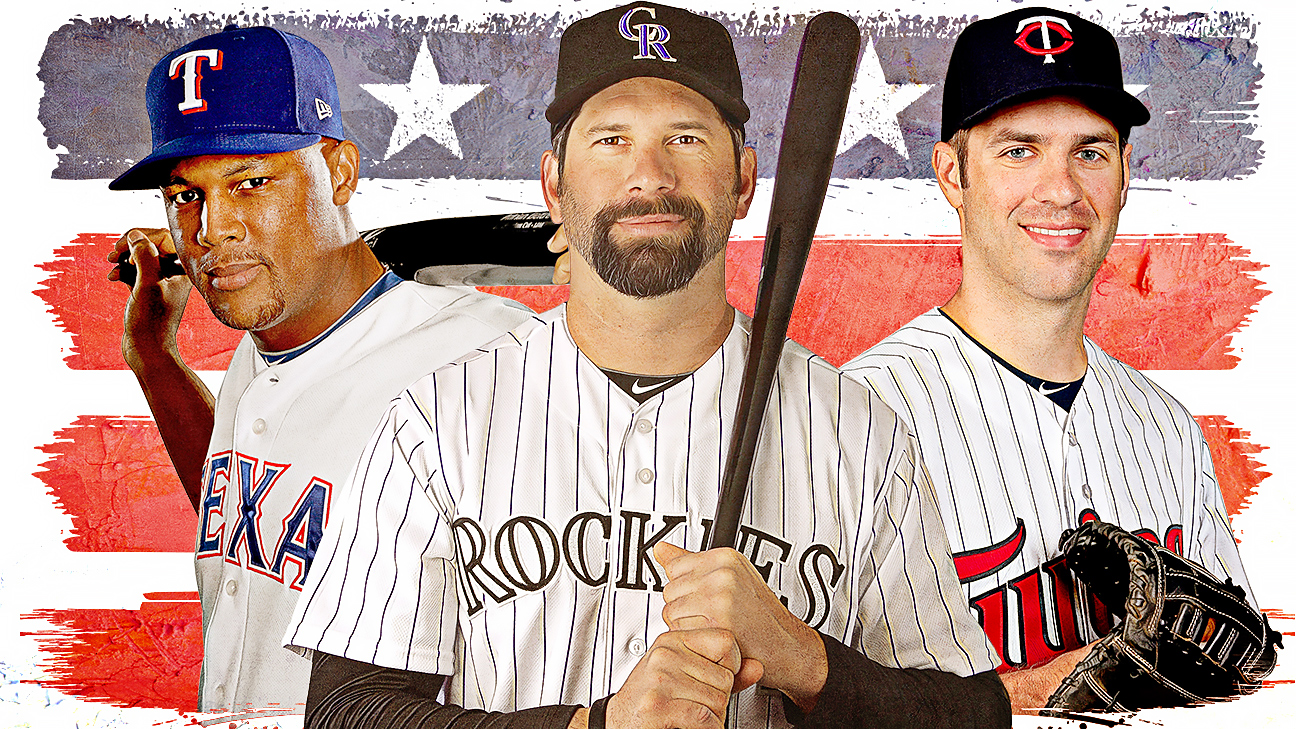
Adrián Beltré was elected in his 1st year of eligibility, receiving over 95 percent of the vote. The Dominican 3rd baseman was the obvious selection: 3,166 hits, 477 home runs, 5 Gold Gloves, 4 All-Star Games. He reached the postseason with the 2004 Los Angeles Dodgers; and with the Texas Rangers in 2011 (winning his only Pennant), 2012, 2015 and 2016.

Todd Helton was elected on his 6th try, receiving 79 percent. The 1st baseman is probably the greatest player in the history of the Colorado Rockies, with a .316 lifetime batting average, 2,519 hits including 369 home runs, 3 Gold Gloves and 5 All-Star Games. He helped the Rockies win their 1st Pennant in 2007, and reach the postseason again in 2009.

Joe Mauer was elected on his 1st try, receiving 76 percent. One of the top catchers of his generation before the Minnesota Twins switched him to 1st base, his retirement at age 35 left him with career statistics, which, I thought, made him a borderline case.

Despite a .306 lifetime batting average, he only had 2,123 hits, 143 of them home runs, despite playing most of his early career's home games at the homer-happy Metrodome in Minneapolis. He won 3 Gold Gloves, made 6 All-Star Teams, was selected (over Derek Jeter, dubiously) as the 2009 American League Most Valuable Player; and reached the postseason with the Twins in 2006, 2009, 2010 and 2017.

Billy Wagner fell just short, with 73.8 percent. That's 5 votes short. This was his 9th time on the ballot, leaving him with 1 more, next year. The case for Wagner is that he has 422 saves, 2nd-most among all lefthanded pitchers, and a 2.31 ERA, the 2nd-lowest among all pitchers in the post-1920 Lively Ball Era, behind only Mariano Rivera. He was a 7-time All-Star.

Who's kidding who? He's not a Hall-of-Famer. The lefty ahead of him, with 424, is John Franco, and he's not in, and he was a much more reliable pitcher.

The Houston Astros made the Playoffs in 1997, 1998, 1999 and 2001, but never won a postseason series. The Philadelphia Phillies came close to the Playoffs in 2004 and 2005, but didn't make it either time. The New York Mets came within 1 run of the Pennant in 2006, but didn't make it. The Mets came within 1 win of making the Playoffs in 2007 and 2008, but didn't make it. The Boston Red Sox made the Playoffs in 2009, and the Atlanta Braves did so in 2010, but each was knocked out of the Playoffs in the Division Series.

What did all of those teams have in common? Billy Wagner. His career postseason ERA was 10.03. His career postseason WHIP was 1.971. He was the worst pitcher in postseason history. Armando Benitez looks like Goose Gossage in comparison. Bottom line: If your team needed to win a game, to get into the postseason or win in it, Wagner was not your guy.

Gary Sheffield got 63.9 percent, in his 10th and last year. He now falls to the "Contemporary Baseball Committee." Since he has been credibly accused of using steroids, he should not get in. Nor should the Alex Rodriguez, who got 34.8 percent; or Manny Ramirez, who got 32.5 percent.

On the other hand David Ortiz, who flat-out failed a test, got in. And Sheff, A-Rod and Manny were all far better all-around players. I'll say it again. Either steroid use matters, or it doesn't. If it does, then Ortiz and any other proven steroid user who is in must be kicked out. If it doesn't, then any player who has been credibly accused, but has the stats, has to be let in. If you are in the BBWAA, and you voted for David Ortiz, but you've never voted for Alex Rodriguez, you are intellectually dishonest, and your membership and voting privileges should be revoked.

And Andy Pettitte, in his 6th year on the ballot, got 13.5 percent. They call him a "cheater." What he did can hardly be called cheating. If you refuse to vote for Pettitte because he "cheated," but voted for Ortiz, you're not merely a goddamned liar, you're a blithering idiot.

Carlos Beltrán got 57.1 percent. This was his 2nd time on the ballot. Stat-wise, he should be in. But he is forever tainted by the Houston Astros cheating scandal, and should never get in. Different kind of cheating than steroid use, but cheating is cheating, even if what you did before was enough.

Andruw Jones got 61.6 percent. This was his 7th time. He has never been credibly accused of cheating, but he does have a domestic violence cloud over him. Statistically, he's close, but it's not definitive. Omar Vizquel, also in his 7th go-round, should be in based on performance alone, but also has the taint of domestic violence against him, and he only got 17.7 percent.

Three Philadelphia Phillies stars of the 21st Century were on the ballot and didn't come close. Chase Utley got 28.8 percent, while both Bobby Abreu and Jimmy Rollins got 14.8 percent. Ryan Howard first reached the ballot in 2022, but got less than 5 percent of the vote, and will now have to wait for consideration from the Contemporary Era Committee.

Met "legend" David Wright, in his 1st year on the ballot, got 6.2 percent, barely staying on. He'll never get in.

Among next year's 1st-time eligibles: Ichiro Suzuki is a shoo-in; CC Sabathia should be; Dustin Pedroia, Ian Kinsler, Félix Hernández, Troy Tulowitzki and Curtis Granderson are longshots at best; and the rest can forget it.

Tuesday, January 23, 2024

My Evil Twin

How ya doin'? My name is Bernard. I'm Mike's evil twin. You can tell I'm the evil twin, because I have a goatee.

I do everything the opposite of Mike. I root for the Mets, the Rangers, Penn State and Manchester United. I like disco music. I vote Republican. Because I'm evil! I eat at Chick-fil-A, and I shop at Walmart. Because I'm evil!

I hate dogs. I hate cats. You know what I got for pets? A snake, and a ferret. They're evil, too.

When I watch The Wizard of Oz, I root for the Witch. When I watch Star Wars movies, I root for Darth Vader and the Empire. When I watch West Side Story, I root for Officer Krupke. When I watch a Godfather film, I cheer whenever a member of the Corleone family dies or gets beaten up. Even the innocent women? Especially the innocent women. Because I'm evil!

I love The Office, and my favorite character on M*A*S*H was Frank Burns. I wear an Izod Lacoste sweater and Nike sneakers. Like Mike, I grew up in New Jersey. Unlike him, I moved to Florida. You know, because of the taxes! The only thing I miss about New Jersey is Taylor ham! That's right, I call it Taylor ham, not pork roll! Because I'm evil!

Now, if you'll excuse me, I gotta go. Hobby Lobby is having a sale!

*

I first created the character of Bernard, my evil twin, for the parody-song website Amiright.com in 2006, with "My Evil Twin, Naturally." I "killed him off" 2 years later, with "Total Eclipse of Bernard." But I found that sweater in my closet, and I didn't even remember having it. I figured, it must have been one of his, so I brought the character back, just for a day.

Why "Bernard"? I liked the way Dustin Hoffman said the name in his version of Death of a Salesman, broadcast on CBS in 1985. Bernard was the nephew that asked Willy Loman the famous question, "What happened in Boston, Willy?" There was nothing obviously evil about Bernard, and there's never been a man by that name in my family.

Eventually, though, I decided that Senator Bernard "Bernie" Sanders was evil, so, for this brief revival, I'm keeping the name of the character.

Friday, January 19, 2024

Sports Illustrated, 1954-2024

The 1st cover, dated August 16, 1954.
Eddie Mathews of the Milwaukee Braves,
Wes Westrum of the New York Giants,
and umpire Augie Donatelli,
at Milwaukee County Stadium.

Today, Sports Illustrated laid off its entire staff, 7 months short of its 70th Anniversary.

No more great sports journalism or great sport photos, at least not from them. No more Walter Iooss Jr. No more Preview Issues. No more Swimsuit Issues. No more Dreaded SI Cover Jinx.

I know the cost of paper and ink has gone way up since I was a kid. But this hurts.

Incidentally, the magazine's 2 biggest features -- one intentional, the other not -- have never come together. No model on the cover of the Swimsuit Issue has ever fallen victim to the Cover Jinx. None saw their careers ruined by it, many saw their careers boosted by it, and, as far as I can tell, going back to the 1st one, Babette March in 1964, all of them are still alive.


January 19, 1974: Notre Dame Ends UCLA's 88-Game Winning Streak

January 19, 1974, 50 years ago: UCLA loses a basketball game. This is a big deal: It hadn't happened in 3 years.

The basketball team at the University of California at Los Angeles had been coached by John Wooden since 1949. In 1962, he got them into the Semifinal of the NCAA Tournament -- what we would now call the Final Four -- for the 1st time. In 1964, he guided them to an undefeated season and the National Championship. He won another in 1965. He won another in 1967, undefeated. He won another in 1968. He won another in 1969. In those last 3 seasons, led by Lew Alcindor, later to change his name to Kareem Abdul-Jabbar, the UCLA Bruins went 88-2.

Losing the future Kareem didn't stop UCLA: They won another National Championship in 1970. On January 23, 1971, they were 14-0, and traveled to South Bend, Indiana to play the University of Notre Dame. They lost, 89-82. This was a surprise, but not a shock: Notre Dame, although (then as now) far better known for football, was then ranked Number 9 in the country, and had the home-court advantage at the Athletic & Convocation Center.

Wooden got the Bruins to shake it off, and they won another National Championship. In 1972, with a new star center, sophomore Bill Walton from San Diego, they went undefeated and won another National Championship. In 1973, they went undefeated and won another National Championship. A joke went around that "UCLA" stood for "U Can't Lose to Anybody."

On January 19, 1974, they were 13-0, having an 88-game winning streak, the longest in college basketball history, when, again, they traveled to play Notre Dame away. Coached by Richard "Digger" Phelps, and led by a freshman from Washington, D.C. named Adrian Dantley, the Fighting Irish were 9-0, and ranked Number 2. Unlike UCLA's 1968 loss to the University of Houston at a packed Astrodome, this game was not billed beforehand as a "Game of the Century."

Had it been, it would have lived up to the hype. UCLA led by 11 points with 4 minutes to play. But Notre Dame went on a tear, and, with 6 seconds to go, took their 1st lead of the game, 71-70. One last-gasp effort by Walton missed, and the streak was over.

In the event that you should ever meet Bill Walton, never, ever mention this game to him. In his 1993 memoir Nothing But Net, he said it still bothered him. He has complained about it many times since. (UPDATE: You no longer have to worry about that: Walton died on May 27, 2024.)

One week later, on January 26, there was a rematch at Pauley Pavilion in Los Angeles, and UCLA got its revenge, 94-75. Notre Dame finished the season 26-3, losing to Michigan in the NCAA Tournament's round of 16.

UCLA would get to the Semifinal, then lose to a North Carolina State team led by David Thompson. N.C. State then beat Marquette for the title. Without the graduating Walton, Wooden led UCLA to 1 last National Championship in 1975, and retired, winning 10 in 12 years. No other school has won that many. UCLA has since won an 11th title, in 1995.

Renamed the Joyce Center in 1987, in honor of school administrator Rev. Edmund P. Joyce, Notre Dame's basketball arena is a house of upsets. In addition to the 2 noteworthy wins over UCLA, Notre Dame also upset the basketball team then ranked Number 1 in the nation in 1977 (the University of San Francisco), 1980 (DePaul), 1987 (North Carolina), 1991 (UCLA again), 2012 (Syracuse), and 2016 (North Carolina again).

No men's basketball team has seriously approached UCLA's 88-game winning streak. UNLV, the University of Nevada at Las Vegas, has the longest streak since, 45, in 1990 and '91, including the 1990 NCAA Final over Duke, who then ended the streak in the 1991 NCAA Semifinal.

But the women's team at the University of Connecticut now has 2 longer winning streaks: 90 straight from 2008 to 2011, and 111 straight from 2016 to 2018. 

Tuesday, January 16, 2024

Superhero TV Shows > Superhero Movies

Are superhero TV shows are better than superhero movies? I say yes, because they don't have to follow the same rules:

1. You can take 45 minutes to show the hero's origin story, and instead of, "Enough already, we want to see the movie!" That's your pilot episode. You're allowed to do that.

2. You don't have to pack all of the action into 2 hours. You can have the hero -- and the villain -- talking plans over with the people they work with, and instead of sounding like some foreign film from the 1960s that doesn't even make sense when you add subtitles, it's "The West Wing meets the Super Friends," and it works.

3. You can have 5 different villains over the course of a season, develop their characters as well, and bring them back.

4. If you throw in a guest superhero, it works -- especially if it turns out to be the main hero's girlfriend.

5. It doesn't get ridiculous if the hero has a new girlfriend every season, the way it would if he had a new one every movie. This was one of the problems with the Burton-Schumacher era of Batman films, 1989 to 1997.

6. There's no pressure to fill 15 minutes of the first hour and the last half hour of the movie with punches and explosions. You can pace yourself. You can have 3 or 4 episodes in a row with no major battles, and it works.

7. An episode, even a season finale or a season premiere, doesn't have to be the ultimate battle. Indeed, it can't be. Science fiction writer David Gerrold made the point that, in a standalone movie, this has to be the most important moment of the hero's life. Or else, why would we pay to see the movie?

But if it's a series -- Gerrold used both Sherlock Holmes and James Bond as examples -- then none of these adventures has to be the biggest battle of them all, because you want to keep the fans coming back for the hero. If it's a TV show, save the ultimate battle for the series finale.

Monday, January 15, 2024

January 15, 1974: "Happy Days" Premieres

Top row, left to right: Henry Winkler, Tom Bosley, Anson Williams.
Bottom row, left to right: Donny Most, Erin Moran,
Marion Ross and Ron Howard.

January 15, 1974. 50 years ago: Happy Days premieres on ABC. The situation comedy is designed to ride the nostalgia wave for the 1950s, and becomes one of the most successful shows in the network's history.

The show was set 19 years in the past: When the show began, it was definitively in 1955; when the show was finally wrapped up in 1984, characters were wearing T-shirts that said, "Kinks '65 World Tour."

The show was based around the Cunninghams, who lived in a suburban part of Milwaukee. Howard (played by Tom Bosley) owned a hardware store downtown. His wife, Marion (Marion Ross), was a housewife. They had a pair of teenage children, Richie (Ron Howard) and Joanie (Erin Moran). They often found it difficult to change with the times, but they were good parents, never going too far and alienating their kids.

(Originally, there was another son, Chuck, played first by Gavan O'Herlihy, then by Randolph Roberts. He appeared in only 11 episodes over the 1st 2 seasons. In the show's final scene, Howard mentions his 2 children, not 3. The character's disappearance gave rise to the term "Chuck Cunningham Syndrome," used to describe TV characters that disappear from shows without an in-universe explanation and are nowhere to be seen or mentioned again.)

Richie has 2 best friends: Ralph Malph (Donny Most) and Warren "Potsie" Webber (Anson Williams), and they're typical suburban 1950s teenage boys, discovering that they're not quite cool enough to have the adventures they want.

Never in the history of television has a "breakout character" more succeeded. Enter Arthur Fonzarelli (Henry Winkler), a.k.a. "Fonzie" or "The Fonz." He was the coolest man on television, with his perfect hair, his T-shirt, his leather jacket, his motorcycle, and his mannerisms. Catchphrase? He had "Sit on it," which, in hindsight, sounds like a safe way to say, "Shove it up your ass." But the Fonz was so cool. How cool was he? He was so cool, he didn't need no catchphrase: He just gave a thumbs-up sign, and said, "Ayyyy!"

He was so cool, he could get any girl he wanted. He was so cool, he would walk into Arnold's, the local malt-shop hangout, and turn on the lights by pounding his fist on the wall. He could start the jukebox the same way.

In spite of his "hood" image, Fonzie showed the elder Cunninghams sufficient respect, to the point where Marion considered him part of the family, and Howard let him rent the room above the garage. He looked after Richie, and, later, Joanie.

Arnold's was owned and operated by Matsuo Takahashi (Pat Morita). He bought it from a man named Arnold, and kept the name when he realized how much it would cost to have the name changed to "Takahashi's." In Season 4, Arnold's was bought by "Big Al" Delvecchio (Al Molinaro). In spite of the name, he was not a mobster, and became an extra father to the show's "kids."

Eventually, Richie got a steady girlfriend, Lori Beth Allen (Lynda Goodfriend), whom he married. After Season 7, in 1981, Ron Howard left the show, to focus on his directing career. Don Most (as Donny now preferred to be called) also left. They returned to for a reunion episode in the final season, and in the final episode.

So, rather than cancel the show, the writers shifted the focus from Richie and his friends, including the Fonz, to Richie's sister, Joanie and her friends, including the Fonz and his younger cousin, Charles "Chachi" Arcola (Scott Baio), whom Joanie dated, and finally married in the show's final episode, on July 19, 1984.

The show never really recovered from the shift from the focus on Richie to the focus on Joanie. Such a moment in a show's history -- often attributed to a marriage, a birth, a death, a major character leaving, a shift in location, and so on -- is often called "jumping the shark." The expression comes from the finale of the 3-part Season 4 opener, "Hollywood," when the gang goes to Los Angeles. Fonzie makes a water-ski jump over a penned-in area with a live shark in it.

Except Happy Days was still high in the ratings for another 4 years, until the Richie/Joanie shift. So the show's "Jump the Shark Moment" was not when Fonzie jumped the shark.

In 1976, Penny Marshall and Cindy Williams guest-starred. Penny was the sister of series creator Garry Marshall, and had previously played recurring characters on The Odd Couple and Chico and the Man. Cindy -- as well as eventual Three's Company star Suzanne Somers, Jaws star Richard Dreyfuss, and Star Wars icon Harrison Ford -- appeared with Howard in the film American Graffiti. Their appearance proved so popular, a spinoff was created, Laverne & Shirley, also set in Milwaukee in the late 1950s, before moving to Los Angeles in 1981 (1965, show-time, and that was their "shark-jump"). 

In 1978, Robin Williams guest-starred as an alien, Mork from Ork. His appearance was so popular, it led to a spinoff, taking place in the present day, Mork & Mindy, which lasted 4 years. Another spinoff, Joanie Loves Chachi, in which those characters left Milwaukee to become stars in Chicago, failed as much as the characters did, and they returned for one more season, reconciling and marrying in the final episode.

Pat Morita died in 2005, Tom Bosley in 2010, Robin Williams in 2014, Al Molinaro in 2015, series creator Garry Marshall in 2016, Erin Moran in 2017, Penny Marshall in 2018, and Cindy Williams in 2023. As of January 15, 2022, Ron Howard, Henry Winkler, Marion Ross, Don Most, Anson Williams, Lynda Goodfriend and Scott Baio are still alive.

Anson Williams was not related to either Cindy Williams or Robin Williams. He was, however, related to the inventor of the anti-choking maneuver: His birth name was Anson William Heimlich.