Showing posts with label billy wagner. Show all posts

Friday, January 26, 2024

Which Relievers Should Be in the Baseball Hall of Fame?

We don't yet have a clear idea of what gets a reliever into the Hall of Fame. So I'm going to run a comparison, between those who are in, and those who some people say should be in.

First, let's take Hoyt Wilhelm and Dennis Eckersley out of the equation, because they both spent significant time as starters. And John Smoltz, while pretty good as a reliever, was a starter for the vast majority of his career.

That means that there are only 6 relievers in the Hall of Fame. In order of election, they are: Rollie Fingers, Bruce Sutter, Rich "Goose" Gossage, Trevor Hoffman, Mariano Rivera and Lee Smith.

Let's look at a few other relievers of note: Dan Quisenberry, star reliever of the 1980s; Jeff Reardon, another 1980s reliever, and the all-time leader between Fingers and Smith; John Franco, the all-time save leader among lefthanded pitchers; Billy Wagner, right behind Franco in that regard, and who, a few days ago, fell 5 votes short of election; and Francisco "K-Rod" Rodriguez, who has the most saves of any pitcher not in the Hall, eligible or otherwise, and holds the single-season record.

And if you think I missed any relievers worth considering, let me know. Just don't suggest any that are not yet eligible.

Saves: Rivera 652, Hoffman 601, Smith 478, Rodriguez 437, Franco 424, Wagner 422, Reardon 367, Fingers 341, Gossage 310, Sutter 300, Quisenberry 244.

Earned Run Average (ERA): Rivera 2.21, Wagner 2.31, Quisenberry 2.76, Sutter 2.83, Rodriguez 2.86, Hoffman 2.87, Franco 2.89, Fingers 2.90, Gossage 3.01, Smith 3.03, Reardon 3.16.

ERA compared to the league average (ERA+), with 100 being exactly average: Rivera 205 (making him the all-time leader, among all pitchers), Wagner 187, Rodriguez 148, Quisenberry 146, Hoffman 141, Franco 138, Sutter 136, Smith 132, Gossage 126, Reardon 122, Fingers 120.

Walks and Hits (BB + H), Divided by Innings Pitched (WHIP): Wagner 0.998, Rivera 1.000, Hoffman 1.058, Sutter 1.140, Rodriguez 1.155, Fingers 1.156, Quisenberry 1.175, Reardon 1.199, Gossage 1.232, Smith 1.256, Franco 1.333.

Why do I not count Wins + Saves? Because it's not that hard to blow a lead, then still be your team's pitcher of record when they retake the lead. For a reliever, Wins is a misleading statistic.

Why do I not count Strikeouts (K's), or K/Innings Pitched, or K/BB? Because, while strikeouts help, outs in general matter more than how you get them.

The main case for Wagner is his career save total: He's 2nd all-time among lefthanded pitchers, right behind Franco. But most people supporting the election of Wagner do not support that of Franco. Also, until he was surpassed by Hoffman, and both were surpassed by Rivera, the all-time leader in saves was Smith. And yet, it took the Veterans Committee (or whatever that's called now) to get him in. The writers did not consider his all-time leadership in a major pitching category to be enough to elect him. Given where he ranked in the other categories, they had a point.

Based on Saves, ERA, ERA+ and WHIP, a case can be made for both Wagner and Rodriguez.

Based on Saves, ERA and ERA+, a case can be made for Franco. However, his WHIP is noticeably higher than the next-lowest reliever mentioned.

Based on ERA, ERA+ and WHIP, a case can be made for Quisenberry. But the cumulative one, saves, is one on which he trails by a lot.

Based on Saves and WHIP, a case can be made for Reardon. But ERA and ERA+ don't help him.

Then again, based on the preceding judgments I've made, Fingers, Sutter and Gossage might not have enough saves. And Gossage and Fingers might not have a high enough ERA+. Gossage and Smith each have a WHIP that seems a bit high. Each of those assessments could be explained by things being different in their era, which would then help their contemporaries, Quisenberry and Reardon.

Clearly, Hall voters took the pitchers' effects on their teams into account. So let's look:

Rollie Fingers, In: Reached the postseason with the Oakland Athletics in 1971, '72, '73, '74 and '75; and the Milwaukee Brewers in 1981 and '82. Won Pennants in 1972, '73, '74 and '82. Won the World Series in 1972, '73 and '74. Was key to all of that.

Bruce Sutter, In: Made the postseason only once, but he was critical to it, helping the St. Louis Cardinals win the 1982 World Series -- over Fingers and the Brewers.

Goose Gossage, In: Made the postseason with the New York Yankees in 1978, '80 and '81; the San Diego Padres in 1984. Won Pennants in 1978, '81 and '84. Won the World Series in 1978. Was key to all of that.

Dan Quisenberry, Out: Made the postseason with the Kansas City Royals in 1980, '81, '84 and '85. Won the Pennant in 1980, beating Gossage and the Yankees; and '85. Won the World Series in 1985, beating the Cardinals after they foolishly traded Sutter. Was key to all of that.

Jeff Reardon, Out: Made the postseason with the Montreal Expos in 1981, the Minnesota Twins in 1987, the Boston Red Sox in 1990, and the Atlanta Braves in 1992. Won the Pennant in 1987 and '92. Won the World Series in 1987. Was key to all of that, although results varied: He had a 0.00 ERA in 4 games for the '87 Twins, but a 13.50 ERA in 2 games that may have helped cost the Braves the '92 Series.

Lee Smith, In but had to wait for the Vets Committee: Made the postseason with the Chicago Cubs in 1984, and the Red Sox in 1988. Didn't win the Pennant either time. Clearly, this didn't help his bid for election.

Trevor Hoffman, In: Made the postseason with the Padres in 1996, '98, 2005 and '06. Won the Pennant in 1998. Was key to all of that.

Mariano Rivera, In: Made the postseason with the Yankees in 1995, '96, '97, '98, '99, 2000, '01, '02, '03, '04, '05, '06, '07, '09, '10 and '11. Won the Pennant in 1996, '98, '99, 2000, '01, '03 and '09. Won the World Series in 1996, '98, '99, 2000 and '09. May well have been the biggest key to all of that, including 1998 over Hoffman and the Padres.

Billy Wagner, Out: Made the postseason with the Houston Astros in 1997, '98, '99 and 2001; the New York Mets in 2006; the Red Sox in 2009; and the Braves in 2010. This is where the case for Wagner takes a huge hit: He may have been the worst pitcher in postseason history, going 1-1 with a 10.03 ERA and a 1.971 WHIP. In addition, he was with the Philadelphia Phillies in 2005, when they missed the National League Wild Card berth by one game. If ever a pitcher could not be counted on when you needed him most, it was Billy Wagner.

John Franco, Out: Made the postseason with the Mets in 1999 and 2000, winning the Pennant in 2000, although he was no longer the closer by that point. Nevertheless, he did save Game 3, their only win in the 2000 Series. He helped the Cincinnati Reds reach 2nd place 4 straight seasons, 1985-88, and it certainly wasn't his fault that they didn't reach the Playoffs; but they traded him to the Mets before he could be a part of their 1990 title team. That doesn't help much.

Francisco Rodriguez, Out: Made the postseason with the team now known as the Los Angeles Angels in 2002, '04, '05, '07, '08; and the Brewers in 2011. The fact that he helped those teams, among the least successful in the post-expansion era, reach the postseason is remarkable. The fact that he was key to the Angels' only Pennant and only World Series win in 2002, his rookie season, speaks volumes. In between the Angels and the Brewers, he pitched poorly for the Mets, which may, thus far, have made a difference in keeping him out, but I'm not sure it should.

CONCLUSION: Among these names, Wagner and K-Rod are the closest to being Hallworthy. Quis, Reardon and Franco are certainly worthy of consideration. I can't definitively say that any of them should get in. But I don't think much of a fuss should be made if and when any of them get in.

There will be, though. There are plenty of people who will say the Hall has been "watered down" with the election of guys who should have remained in "The Hall of Very Good."

But some of those people were fine with the election of steroids cheats like David Ortiz, so to Hell with them.

Wednesday, January 24, 2024

Analyzing the 2024 Baseball Hall of Fame Vote

Last night, the Baseball Writers Association of America balloting for the 2024 election to the Baseball Hall of Fame was released. This election was for players who retired between 2009 and 2018.

Players must be retired for 5 full seasons, and may remain on the ballot for up to 10 seasons, before they are moved to one of the committees that replaced the old Committee on Veterans.

Players had to get 75 percent of the vote to be elected. As is usually the case, the vote ended up including at least one obvious selection, at least one questionable selection, at least one questionable denial, and at least one denial that was pure baloney.

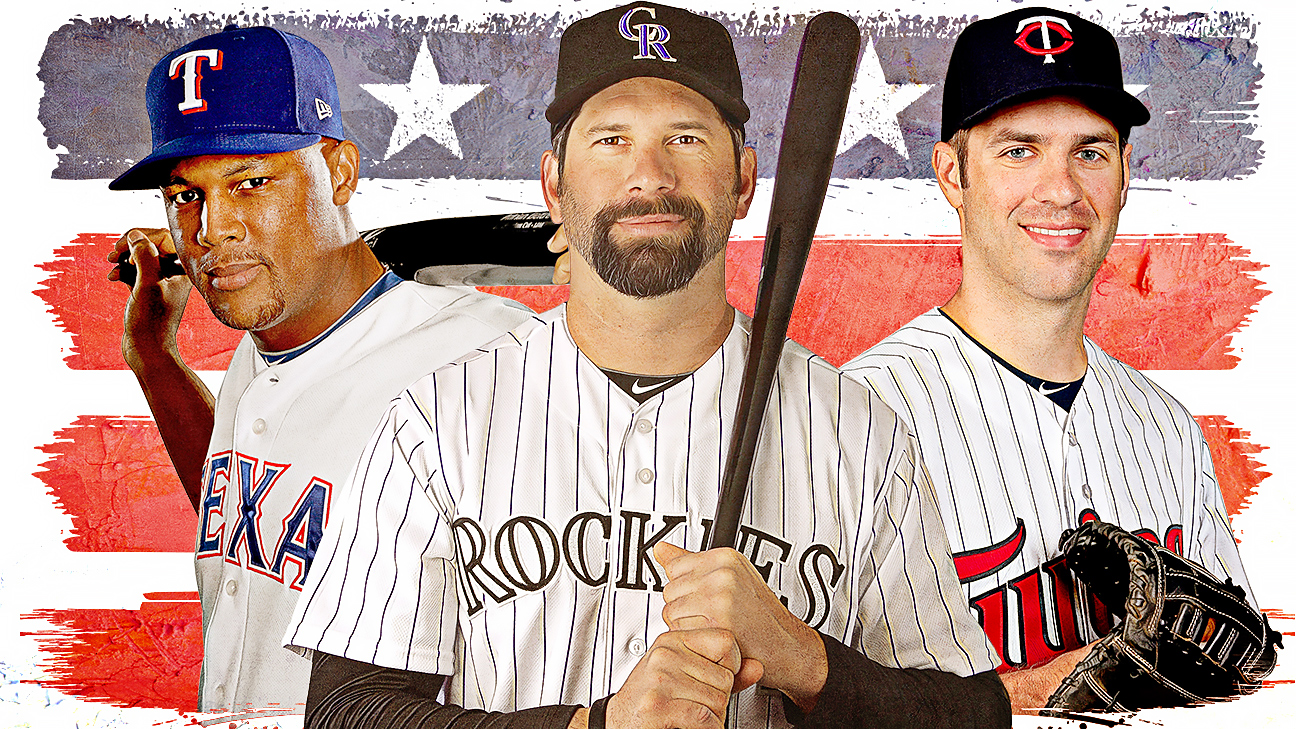
Adrián Beltré was elected in his 1st year of eligibility, receiving over 95 percent of the vote. The Dominican 3rd baseman was the obvious selection: 3,166 hits, 477 home runs, 5 Gold Gloves, 4 All-Star Games. He reached the postseason with the 2004 Los Angeles Dodgers; and with the Texas Rangers in 2011 (winning his only Pennant), 2012, 2015 and 2016.

Todd Helton was elected on his 6th try, receiving 79 percent. The 1st baseman is probably the greatest player in the history of the Colorado Rockies, with a .316 lifetime batting average, 2,519 hits including 369 home runs, 3 Gold Gloves and 5 All-Star Games. He helped the Rockies win their 1st Pennant in 2007, and reach the postseason again in 2009.

Joe Mauer was elected on his 1st try, receiving 76 percent. One of the top catchers of his generation before the Minnesota Twins switched him to 1st base, his retirement at age 35 left him with career statistics, which, I thought, made him a borderline case.

Despite a .306 lifetime batting average, he only had 2,123 hits, 143 of them home runs, despite playing most of his early career's home games at the homer-happy Metrodome in Minneapolis. He won 3 Gold Gloves, made 6 All-Star Teams, was selected (over Derek Jeter, dubiously) as the 2009 American League Most Valuable Player; and reached the postseason with the Twins in 2006, 2009, 2010 and 2017.

Billy Wagner fell just short, with 73.8 percent. That's 5 votes short. This was his 9th time on the ballot, leaving him with 1 more, next year. The case for Wagner is that he has 422 saves, 2nd-most among all lefthanded pitchers, and a 2.31 ERA, the 2nd-lowest among all pitchers in the post-1920 Lively Ball Era, behind only Mariano Rivera. He was a 7-time All-Star.

Who's kidding who? He's not a Hall-of-Famer. The lefty ahead of him, with 424, is John Franco, and he's not in, and he was a much more reliable pitcher.

The Houston Astros made the Playoffs in 1997, 1998, 1999 and 2001, but never won a postseason series. The Philadelphia Phillies came close to the Playoffs in 2004 and 2005, but didn't make it either time. The New York Mets came within 1 run of the Pennant in 2006, but didn't make it. The Mets came within 1 win of making the Playoffs in 2007 and 2008, but didn't make it. The Boston Red Sox made the Playoffs in 2009, and the Atlanta Braves did so in 2010, but each was knocked out of the Playoffs in the Division Series.

What did all of those teams have in common? Billy Wagner. His career postseason ERA was 10.03. His career postseason WHIP was 1.971. He was the worst pitcher in postseason history. Armando Benitez looks like Goose Gossage in comparison. Bottom line: If your team needed to win a game, to get into the postseason or win in it, Wagner was not your guy.

Gary Sheffield got 63.9 percent, in his 10th and last year. He now falls to the "Contemporary Baseball Committee." Since he has been credibly accused of using steroids, he should not get in. Nor should the Alex Rodriguez, who got 34.8 percent; or Manny Ramirez, who got 32.5 percent.

On the other hand David Ortiz, who flat-out failed a test, got in. And Sheff, A-Rod and Manny were all far better all-around players. I'll say it again. Either steroid use matters, or it doesn't. If it does, then Ortiz and any other proven steroid user who is in must be kicked out. If it doesn't, then any player who has been credibly accused, but has the stats, has to be let in. If you are in the BBWAA, and you voted for David Ortiz, but you've never voted for Alex Rodriguez, you are intellectually dishonest, and your membership and voting privileges should be revoked.

And Andy Pettitte, in his 6th year on the ballot, got 13.5 percent. They call him a "cheater." What he did can hardly be called cheating. If you refuse to vote for Pettitte because he "cheated," but voted for Ortiz, you're not merely a goddamned liar, you're a blithering idiot.

Carlos Beltrán got 57.1 percent. This was his 2nd time on the ballot. Stat-wise, he should be in. But he is forever tainted by the Houston Astros cheating scandal, and should never get in. Different kind of cheating than steroid use, but cheating is cheating, even if what you did before was enough.

Andruw Jones got 61.6 percent. This was his 7th time. He has never been credibly accused of cheating, but he does have a domestic violence cloud over him. Statistically, he's close, but it's not definitive. Omar Vizquel, also in his 7th go-round, should be in based on performance alone, but also has the taint of domestic violence against him, and he only got 17.7 percent.

Three Philadelphia Phillies stars of the 21st Century were on the ballot and didn't come close. Chase Utley got 28.8 percent, while both Bobby Abreu and Jimmy Rollins got 14.8 percent. Ryan Howard first reached the ballot in 2022, but got less than 5 percent of the vote, and will now have to wait for consideration from the Contemporary Era Committee.

Met "legend" David Wright, in his 1st year on the ballot, got 6.2 percent, barely staying on. He'll never get in.

Among next year's 1st-time eligibles: Ichiro Suzuki is a shoo-in; CC Sabathia should be; Dustin Pedroia, Ian Kinsler, Félix Hernández, Troy Tulowitzki and Curtis Granderson are longshots at best; and the rest can forget it.

Tuesday, January 24, 2023

Baseball Hall-of-Famers By Team, 2023 Edition

Scott Rolen has been elected to the Baseball Hall of Fame. He is the only honoree in today's election, voted on by the Baseball Writers' Association of America.
He will be inducted on July 23, at the Clark Sports Center outside Cooperstown, New York, along with Veterans' Committee inductee Fred McGriff.

Rolen was only player to get the necessary 75 percent of the vote: In his case, 76.3 percent. Todd Helton got 72, Billy Wagner 68, Andruw Jones 58, the steroid-tainted Gary Sheffield 55, the Astros-cheating-scandal tainted Carlos Beltrán 46, Jeff Kent 46, the steroid-tainted Alex Rodriguez 35, the steroid-tainted Manny Ramirez 33, the domestic-violence-tainted Omar Vizquel 19, and Andy Pettitte 17.

There have been 22,860 men who have played in Major League Baseball, between the 1st season of 1871 and the most recent season of 2022. There are now 236 of them in the Hall. That's 1.0323 percent -- or 1 out of every 96.8. That sounds pretty elite to me.

If we limited it to the top 1.00000000 percent, without going over, that would be 228. Which means we'd only have to kick 8 out. And if there was a year in which nobody was elected, chances are, to keep as close to 1.000 percent without going over, we'd probably have to let 1 of those 8 back in.

For the sake of this list, a player is counted as a Hall-of-Famer with the team if he played at least 4 seasons with them. However, there will be the occasional exception. Teams are ranked in order of most HOFers.

If there is a tie, it will be broken by which team has more players, as opposed to those who were elected in other categories. If there is still a tie, then I go to which has more non-broadcasters. If it's still a tie, which has more players whose contributions were mostly with that club. If it's still a tie, which team has played fewer seasons will be ranked ahead -- since, for example, 5 HOFers is more impressive for a team that's been around since 1977 than it would be for one that's been around since 1961.

Teams that no longer exist in that form will be listed in italics, and will be ranked behind current teams with the same number, regardless of composition.

Players are listed in chronological order of when they arrived at the club, then managers, then broadcasters.

1. New York Yankees, 42: It works out to a little over 1 for every Pennant the team has won:

Clark Griffith (the team's 1st manager, elected as a pitcher and he was still a solid pitcher while he was their manager), Willie Keeler, Jack Chesbro, Frank "Home Run" Baker, Waite Hoyt, Herb Pennock, Babe Ruth, Lou Gehrig, Tony Lazzeri, Earle Combs, Bill Dickey, Red Ruffing, Lefty Gomez, Joe DiMaggio, Joe Gordon, Phil Rizzuto, Yogi Berra, Johnny Mize, Whitey Ford, Mickey Mantle, Enos Slaughter, Jim "Catfish" Hunter, Reggie Jackson, Rich "Goose" Gossage, Dave Winfield, Rickey Henderson, Wade Boggs, Derek Jeter, Mariano Rivera and Mike Mussina.

Also, managers Miller Huggins, Joe McCarthy, Casey Stengel and Joe Torre; owner Jacob Ruppert; executives Ed Barrow and George Weiss; broadcasters Mel Allen, Red Barber, Joe Garagiola, Jerry Coleman (played for the Yankees but elected as a broadcaster, first for the Yankees, then for the Padres) and Tony Kubek (played for the Yankees but elected as a broadcaster).

Bucky Harris managed the Yankees to the 1947 World Championship, but was only their manager for 2 seasons (1947 & '48), so I'm not counting him with the Yankees. In this case, according to the rule I set, I have to count Rickey Henderson as a Yankee. If Lou Piniella is ever elected as a manager, I wouldn't be able to count him as a Yankee HOFer, since he wouldn't be elected as a player ,and only managed them for 3 seasons, none of them a title season.

Rizzuto was also a longtime broadcaster. Lee MacPhail was elected for what he did as American League President, not as Yankee general manager. Bernie Williams and Paul O'Neill have dropped off the writers' ballot. They, like Don Mattingly, will, in a few years, become eligible once again, through the Veterans' Committee -- but in all 3 cases, let's not kid ourselves.

And then there's Roger Clemens: Even if he does get in, would you want to count him as a Yankee? George Steinbrenner, now being dead, is now eligible through the Veterans' Committee.

Tim Raines was a Yankee for only 3 years, although 2 of them were title seasons. Iván Rodríguez was a Yankee for about 3 minutes. So neither of them can be included here.

Álex Rodríguez and Andy Pettitte are eligible. But because they are Yankees linked to PEDs, they will not get in. The Yankee Doodle Double Standard remains in effect.

2. St. Louis Cardinals, 34: Charlie Comiskey (played for them before managing and owning teams elsewhere), Jake Beckley, Roger Bresnahan, Rogers Hornsby (won a World Series as their player-manager), Jesse Haines, Grover Cleveland Alexander, Jim Bottomley, Charles "Chick" Hafey, Burleigh Grimes, Frankie Frisch (elected as a player, won a World Series as their player-manager), Dizzy Dean, Joe Medwick, Johnny Mize, Enos Slaughter, Stan Musial, Red Schoendienst (elected as player, also managed them to a title), Bob Gibson, Lou Brock, Orlando Cepeda, Steve Carlton (7 seasons), Jim Kaat, Ted Simmons, Bruce Sutter, Ozzie Smith, Lee Smith (4 seasons, so he qualifies here), Scott Rolen.

Also, Miller Huggins (manager, also played several years for the Cards), Billy Southworth (manager, also played for them), Whitey Herzog (manager-executive), Tony LaRussa (manager), Branch Rickey (executive), Harry Caray (broadcaster), Jack Buck (broadcaster), Joe Garagiola (broadcaster).

Jesse Burkett won a batting title with the Cards, but only played 3 seasons with them, so he just misses qualifying. On the other hand, Cepeda didn't even play 3 full seasons with the Cards, but his tenure included the 1967 title and the 1968 Pennant, and he, as much as Gibson, was a symbol of that team, and he may be better remembered as a Cardinal than as a Giants, so I'm bending the rule for him. Leo Durocher was a good player for the Cards, but was elected as a manager and never managed them, so he doesn't qualify here.

Larry Walker was only a Cardinal for a year and a half, so, although that time did include the only Pennant he ever won (2004), he doesn't count for the Cards. Mark McGwire and Jim Edmonds did not qualify on enough ballots, and won't be eligible again until they qualify under the Veterans Committee. Surprisingly, longtime owner Gussie Busch has never been elected.

3. Chicago Cubs, 28: Adrian "Cap" Anson, Mike "King" Kelly, Clark Griffith (elected as a pitcher for them, later a manager and owner elsewhere), Joe Tinker, Johnny Evers, Frank Chance (elected as a player but should have been elected as a manager instead), Mordecai "Three-Finger" Brown, Grover Cleveland Alexander, Hazen "Kiki" Cuyler, Lewis "Hack" Wilson, Charles "Gabby" Hartnett (also managed them to a Pennant), Rogers Hornsby, Billy Herman, Ernie Banks, Billy Williams, Ron Santo, Ferguson Jenkins, Bruce Sutter, Ryne Sandberg, Lee Smith, Andre Dawson, Greg Maddux (spent enough time with them).

Also, Al Spalding (elected as an executive but was also a great pitcher), Frank Selee (manager), Joe McCarthy (manager, managed them to a Pennant before going to the Yankees), Leo Durocher (manager), Jack Brickhouse (broadcaster), Harry Caray (broadcaster).

Sammy Sosa is eligible, but he's not getting in. If Lou Piniella is elected as a manager, I'll have to count him as a Cub HOFer, since he managed them for 4 seasons.

Lou Boudreau was a beloved broadcaster for the Cubs after his playing and managing career, but never played or managed for them, and so I can't count him as a Cub HOFer. Santo was also a longtime broadcaster. Surprisingly, longtime owner Phillip K. Wrigley is not in.

4. Chicago White Sox, 26Ed Walsh, George Davis, Eddie Collins, Ray Schalk, Red Faber, Ted Lyons, Luke Appling, Minnie Miñoso, Nellie Fox, Luis Aparicio, Early Wynn, Hoyt Wilhelm, Goose Gossage (5 years with them), Carlton Fisk, Harold Baines, Frank Thomas, Tim Raines, Jim Thome, Al Lopez (manager), Tony LaRussa (manager), Charlie Comiskey (owner), Bill Veeck (owner), Jack Brickhouse (broadcaster), Bob Elson (broadcaster), Harry Caray (broadcaster), Ken Harrelson (broadcaster).

Although Clark Griffith pitched for them in their 1st 2 seasons and won the 1st American League Pennant as their manager, those 2 seasons are not enough to qualify with the White Sox. Although Tom Seaver notched his 300th victory with the Pale Hose, he pitched for them in just 3 seasons, and can't be counted as one of their HOFers.

Thome was a White Sock for less than 4 full seasons, but did play for them in 4 seasons, so he counts with them.

New York Giants, 26: Roger Connor, Buck Ewing, Tim Keefe, Mickey Welch, John Montgomery Ward, Roger Bresnahan, Christy Mathewson, Joe McGinnity, George Davis, Richard "Rube" Marquard, Dave Bancroft, Ross Youngs, Frankie Frisch, George "Highpockets" Kelly, Fred Lindstrom, Travis Jackson, Bill Terry, Mel Ott, Carl Hubbell, Johnny Mize, Monte Irvin, Willie Mays, Hoyt Wilhelm.

Also, John McGraw (manager, also played for them), Leo Durocher (manager), Russ Hodges (broadcaster).

Casey Stengel played for the Giants, but was elected as a manager, so I can't count him as a Giant HOFer.  

Counting all figures who played or managed at least one game for the Giants, in New York and San Francisco, they have 76, more than any other team; however, many of those were with the club only briefly. But even by my definitions, they are ahead of the arch-rival Dodgers.

5. Boston Red Sox, 24: Jimmy Collins (elected as a player but also managed them to the 1st World Series title in 1903), Cy Young, Tris Speaker, Harry Hooper, Babe Ruth (6 seasons with Sox before going to Yanks), Herb Pennock (7 seasons before Yanks), Red Ruffing (also 7 seasons before Yanks), Joe Cronin (elected as a player, but also managed them to the 1946 Pennant, though unlike Collins had already retired as a player; was also longtime AL President), Rick Ferrell, Jimmie Foxx, Lefty Grove, Bobby Doerr, Ted Williams, Carl Yastrzemski, Carlton Fisk, Jim Rice, Dennis Eckersley, Wade Boggs, Pedro Martinez, David Ortiz.

Also, Dick Williams (manager, no relation to Ted), Tom Yawkey (owner), Curt Gowdy (broadcaster), and Ken Harrelson (broadcaster). "Hawk" only played 2 seasons for Boston, though 1 was the 1967 "Impossible Dream" Pennant season; but he broadcast for them for 7 years, so he counts here.

I am bending the rule slightly for Dick Williams, who only managed 3 seasons for the Red Sox, but 1 of them, 1967, was the most important season in the club's modern history. Luis Aparicio played 3 seasons for the Red Sox, so by my rule he is not eligible to be counted with them. Eckersley, however, played 7 seasons with them, so I have to count him with them, and with their living HOFers for as long as he lives.

It was long suspected that owner Jean Yawkey would become the 1st woman elected to the Hall of Fame, but Effa Manley, who owned the Negro Leagues' Newark Eagles, is in, while Mrs. Yawkey is still out.

Manny Ramirez (500 Home Run Club but known steroid cheat, and not as popular as Ortiz), Roger Clemens (300 Win and 3,000 Strikeout Clubs but suspected steroid cheat) and Curt Schilling (3,000 Strikeout Club but possible steroid cheat) are eligible, but not yet in.

6. Pittsburgh Pirates, 23: James "Pud" Galvin, Vic Willis, John "Honus" Wagner, Fred Clarke (elected as a player, also won Pennants as their manager), Jack Chesbro, Jake Beckley, Max Carey, Hazen "Kiki" Cuyler, Waite Hoyt (5 seasons with them), Harold "Pie" Traynor (also managed them), Paul Waner, Lloyd Waner ("Big Poison" and "Little Poison," though Lloyd was actually taller), Joseph "Arky" Vaughan, Al Lopez (elected as a manager but was an All-Star catcher for the Pirates), Ralph Kiner, Bill Mazeroski, Roberto Clemente, Willie Stargell, Bert Blyleven.

Also, Bill McKechnie (manager), Barney Dreyfuss (owner), Branch Rickey (executive), Bob Prince (broadcaster).

Blyleven was only a Pirate for 3 seasons, but I'm bending the rule because he was a key cog on their last World Championship team in 1979. Barry Bonds is eligible, but while the stance against steroid cheats is softening, he still, for the moment, falls under the category of, "Who's kidding who?"

Boston Braves, 22: Harry Wright (player and manager), George Wright, Al Spalding, Jim "Orator" O'Rourke, James "Deacon" White, Charlie "Old Hoss" Radbourne, Mike "King" Kelly, John Clarkson, Charles "Kid" Nichols, Cy Young, Hugh Duffy, Tommy McCarthy (he and Duffy were known as "the Heavenly Twins"), Billy Hamilton, Vic Willis, Jimmy Collins, Johnny Evers, Walter "Rabbit" Maranville, Dave Bancroft.

Also, Frank Selee (manager), Bill McKechnie (manager, though with no success with the Braves), Casey Stengel (ditto, also played for Braves), Billy Southworth (manager).

Brooklyn Dodgers, 22: Willie Keeler, Joe Kelley, Richard "Rube" Marquard, Zack Wheat, Burleigh Grimes, Charles "Dazzy" Vance, Joseph "Arky" Vaughan, Billy Herman, Joe "Ducky" Medwick, Harold "Pee Wee" Reese, Gil Hodges, Jackie Robinson, Edwin "Duke" Snider, Roy Campanella, Ned Hanlon (manager), Wilbert Robinson (manager), Leo Durocher (elected as a manager but was also a good player), Walter Alston (manager), Branch Rickey (owner), Walter O'Malley (owner), Red Barber (broadcaster), Vin Scully (broadcaster).

Casey Stengel played 6 seasons for the Dodgers, and was good, but not Hall of Fame good.  He managed 3 seasons for them; in spite of their poor performance under him, had he managed them for 1 more season, he would still qualify as one of theirs under my rule.  Dick Williams played 5 seasons for them, but was elected as a manager, and never managed the Dodgers. Owner Charles Ebbets is not in.

7. Philadelphia Phillies, 20: Billy Hamilton, Ed Delahanty, Sam Thompson, Grover Cleveland Alexander, Eppa Rixey, Dave Bancroft, Chuck Klein, Richie Ashburn, Robin Roberts, Jim Bunning, Jim Kaat, Steve Carlton, Mike Schmidt, Scott Rolen, Jim Thome, Roy Halladay, Harry Wright (manager), Pat Gillick (executive), By Saam (broadcaster), Harry Kalas (broadcaster).

Thome spent 3 seasons with them, then left, then returned for a 4th, so he counts here. Ashburn was also a longtime broadcaster for the Phils. If Curt Schilling gets in, he can be counted with the Phillies. Pete Rose, of course, is ineligible.

8. Cincinnati Reds, 19: Bid McPhee, Jake Beckley, Joe Kelley, Sam Crawford, Edd Roush, Eppa Rixey, Ernie Lombardi, Frank Robinson, Johnny Bench, Tony Perez, Joe Morgan, Tom Seaver (6 seasons with Reds), Barry Larkin, Ken Griffey Jr., Scott Rolen (5 seasons), Bill McKechnie (manager), Sparky Anderson (manager), Red Barber (broadcaster), Marty Brennaman (broadcaster).

Pete Rose, of course, is ineligible. John Franco is not yet in, but if he gets in, he pitched enough seasons with the Reds to qualify for this list. If Lou Piniella is elected as a manager, I'll count him as a Reds HOFer: He only managed them for 3 seasons, but 1 was a World Championship season. Miller Huggins played several years for the Reds, but was elected as a Yankee manager.

Longtime owner Powel Crosley and GM Bob Howsam should be in, but they're not. Waite Hoyt broadcast for the Reds, and was beloved in that role, but has not been given the Ford Frick Award, so I can't count him with the Reds.

And while 2 members of the 1st openly professional baseball team, the 1869-70 Cincinnati Red Stockings, are in the Baseball Hall of Fame, Harry and George Wright -- the other Wright Brothers who "invented" something important in American life -- that team was not the same team as the current Reds franchise, which began in the old American Association of 1882 and joined the NL in 1892.

9. Detroit Tigers, 18: Sam Crawford, Ty Cobb, Harry Heilmann, Henry "Heinie" Manush, Charlie Gehringer, Goose Goslin, Hank Greenberg (the last 3 nicknamed the "G-Men" in those early days of the FBI), Mickey Cochrane (elected as a player, also managed them to 2 Pennants), Hal Newhouser, George Kell, Al Kaline, Jim Bunning, Jack Morris, Alan Trammell, Iván Rodríguez, Hughie Jennings (manager, also played for the team), Sparky Anderson (manager), Ernie Harwell (broadcaster).

With Trammell getting in through the Veterans Committee, Lou Whitaker's chances of also doing so increase. Kaline and Kell were also longtime broadcasters. Longtime owners Frank Navin, Walter Briggs and John Fetzer are not yet in. Former executive Will Harridge is in, but for what he did as President of the AL, so I can't count him as a Tiger HOFer.

10. Cleveland Guardians, 18: Napoleon "Nap" Lajoie, Elmer Flick, Addie Joss, Tris Speaker (elected as player but also managed them to a title), Stan Coveleski, Joe Sewell, Earl Averill, Bob Feller, Lou Boudreau, Bob Lemon, Larry Doby, Early Wynn, Gaylord Perry, Jim Thome, Al Lopez (manager), Bill Veeck (owner), Jack Graney (broadcaster), Jimmy Dudley (broadcaster).

Barring a major shift in voters' attitudes, Manny Ramirez is probably out of luck. Satchel Paige reached the majors with the Indians, but only pitched 2 seasons for them. So, although I can count him with 3 different Negro League teams on this list, I can't count him with any major league team. Indeed, that fact is the reason I've included the Negro League teams on this list, along with moved and defunct major league teams.

11. Baltimore Orioles, 14: Brooks Robinson, Hoyt Wilhelm, Robin Roberts (4 seasons with O's), Luis Aparicio, Frank Robinson, Jim Palmer, Eddie Murray, Cal Ripken, Roberto Alomar, Harold Baines, Mike Mussina, Earl Weaver (manager), Chuck Thompson (broadcaster), Jon Miller (broadcaster).

Although he won his only World Series with the Orioles, we don't usually associate Aparicio with them, but he did play 5 seasons with them, so, by my own rule, I've got to count him here. Same with Robin Roberts, who played 4 seasons in Baltimore. Rafael Palmeiro is eligible, but he's not getting in.

Frank Cashen should be in as an executive. Dick Williams played enough seasons with the O's to qualify, but was elected as a manager and never managed them, so he doesn't qualify as an O's HOFer.

Philadelphia Athletics, 13: Eddie Plank, Rube Waddell, Frank "Home Run" Baker, Chief Bender, Eddie Collins, Herb Pennock, Al Simmons, Mickey Cochrane, Jimmie Foxx, Lefty Grove, George Kell, Connie Mack (owner-manager), By Saam (broadcaster).

12. Atlanta Braves, 11: Hank Aaron, Phil Niekro, Tom Glavine, Greg Maddux, John Smoltz, Chipper Jones, Fred McGriff, Bobby Cox (manager), Joe Torre (managed them in between Cox's 2 tenures there, also a player), John Schuerholz (general manager), Milo Hamilton (broadcaster).

Andruw Jones will be listed with them if he is elected. Don Sutton broadcast for the Braves, but can't be counted among their HOFers. Former owners Bill Bartholomay and Ted Turner are not in, nor do I ever expect them to be elected, but maybe they should be.

13. Los Angeles Dodgers, 11: Gil Hodges, Duke Snider, Don Drysdale, Sandy Koufax, Don Sutton, Mike Piazza, Walter Alston (manager), Tommy Lasorda (manager), Walter O'Malley (owner), Vin Scully (broadcaster), Jamie Jarrin (broadcaster).

Snider played 5 seasons after the move, Hodges 4, so both count in both Brooklyn and Los Angeles. Steve Garvey is not getting in. Pedro Martinez started out with the Dodgers, but only played 2 seasons for them.

14. New York Mets, 11: Nolan Ryan, Tom Seaver, Gary Carter, Mike Piazza, Tom Glavine (5 seasons), Pedro Martinez (4 seasons), Casey Stengel (manager, 4 seasons), Joe Torre (manager), Lindsey Nelson (broadcaster), Bob Murphy (broadcaster), Tim McCarver (broadcaster). So that's 3 broadcasters, 2 managers, and 6 players.

Still, you didn't realize the Mets had so many, did you? And that's without counting Ralph Kiner, who was elected as a Pirates' player, not as a Mets' broadcaster. Nor can you count Richie Ashburn, Duke Snider, Warren Spahn or Willie Mays. And, based on what they did while they were Mets, why would you want to count Eddie Murray, Rickey Henderson or Roberto Alomar?

Ryan did appear for the Mets in at least 1 game for 5 different seasons, including the 1969 World Championship season. So I have to count him here.

I had previously counted Yogi Berra, but while he managed them for 4 seasons, including winning a Pennant, he was elected to the Hall as a player, not as a manager, and so I can't count him as a Met HOFer. Nor can we count Gil Hodges: Though he did manage the team for 4 seasons, including their 1st World Series win, he was elected as a player, not a manager, and his playing for them was a painful end to his career.

As for Torre: Yes, he managed in 4 seasons for them. They were awful then, and there wasn't much he could do about it, but he counts as a Met Hall-of-Famer. Although I notice that, unlike Yogi and Willie, he wasn't invited to the farewell ceremony at Shea Stadium in 2008.

Frank Cashen should be in as an executive. If John Franco is ever elected, you can count him.

Washington Senators, 11: Walter Johnson, Stanley "Bucky" Harris (elected as a manager but was also a great player), Sam Rice, Henry "Heinie" Manush, Leon "Goose" Goslin, Joe Cronin (elected as a player but also managed them to a Pennant), Rick Ferrell, Early Wynn, Clark Griffith (owner), Arch McDonald (broadcaster), Bob Wolff (broadcaster).

No, you can't count Ted Williams as a manager.

15. San Diego Padres, 9: Dave Winfield, Ozzie Smith, Rollie Fingers, Goose Gossage, Tony Gwynn, Trevor Hoffman, Dick Williams (manager), Jerry Coleman (broadcaster), Dick Enberg (broadcaster).

Yes, the Wizard and the Goose each played 4 seasons in Mission Valley. Considering how many they have in a comparatively short history, you shouldn't also count Willie McCovey, Gaylord Perry or Roberto Alomar. Longtime owner Ray Kroc, who saved the team from being moved to Washington in 1974, is not in. Steve Garvey, who is not my Padre, is not getting in.

16. Oakland Athletics, 9: Jim "Catfish" Hunter, Reggie Jackson, Rollie Fingers, Rickey Henderson, Dennis Eckersley, Dick Williams (manager), Tony LaRussa (manager), Lon Simmons (broadcaster), Bill King (broadcaster).

Mark McGwire is eligible, but he's not getting in. Owner Charlie Finley is eligible, but I don't think he'll ever get in, either. I am bending the rule slightly for Williams, who only managed 3 seasons for the A's, but got them into the postseason in all 3, including 2 World Championships.

Kansas City Monarchs (Negro Leagues), 9: Jose Mendez, Leroy "Satchel" Paige, James "Cool Papa" Bell, Wilber "Bullet" Rogan, Norman "Turkey" Stearnes, Andy Cooper (also manager), Hilton Smith, John "Buck" O'Neil (also manager), J.L. Wilkinson (owner).

Bell played 3 seasons for them, but because Negro League players bounced around as much as international soccer players do, and also like club soccer there were often loan deals involved, I'll bend my 4-season rule. 

Jackie Robinson played his first season in professional baseball, 1945, with the Monarchs. They were also the first pro team of Ernie Banks. But neither was elected on the basis of anything he did in Kansas City.

Montreal Expos, 8: Gary Carter, Andre Dawson, Tim Raines, Larry Walker, Pedro Martinez, Vladimir Guerrero, Dick Williams (manager), Dave Van Horne (broadcaster). Duke Snider cannot be counted for the Expos, although he broadcast for them. He also played in Montreal for the Dodgers' farm team, the Montreal Royals, as did Tommy Lasorda.

Chicago American Giants (Negro Leagues), 8: Andrew "Rube" Foster (also manager and owner), Bill Foster (a.k.a. Willie Foster, Rube's brother), Cristobal Torriente, Pete Hill, George "Mule" Suttles, John Henry "Pop" Lloyd, Norman "Turkey" Stearnes, Willie Wells.

17. San Francisco Giants, 7: Willie Mays, Orlando Cepeda, Willie McCovey, Juan Marichal, Gaylord Perry, Lon Simmons (broadcaster), Jon Miller (broadcaster).

Barry Bonds is eligible, and his rising percentages suggest that he might get in despite his known cheating. And I'm surprised that longtime owner Horace Stoneham isn't in, and that neither is his son-in-law, Charles "Chub" Feeney, a Giant executive who became President of the NL.

18. Minnesota Twins, 7: Harmon Killebrew, Jim Kaat, Tony Oliva, Rod Carew, Bert Blyleven, Kirby Puckett, Herb Carneal (broadcaster).

Tom Kelly could be elected as a manager. No, you can't count Dave Winfield, Paul Molitor or Jack Morris: Although hometown heroes, none played 4 seasons with the Twins. Jim Thome played only 2 seasons with them. Founder Calvin Griffith is not in, nor should he be.

19. Houston Astros, 7: Joe Morgan, Nolan Ryan, Craig Biggio, Jeff Bagwell, Gene Elston (broadcaster), Milo Hamilton (broadcaster), Harry Kalas (broadcast 6 seasons for them before joining the Phillies' broadcast team).

Roger Clemens is eligible, but only played 3 seasons with the Astros, and, even with his legal exoneration, it's not clear that he will ever get in.

Homestead Grays (Negro Leagues), 7: Cumberland "Cum" Posey (pitcher, then manager, then owner), Smokey Joe Williams, Josh Gibson, Buck Leonard, James "Cool Papa" Bell, Jud Wilson, Ray Brown.

Oscar Charleston and Judy Johnson each played 2 seasons for them, but I'm not willing to bend the rules THAT much. Gibson was known as the Black Babe Ruth, Leonard as the Black Lou Gehrig, and together they were known as the Thunder Twins or the Dynamite Twins. Williams was sometimes known as Cyclone Joe, sometimes as Smokey Joe (but never as Smokin' Joe, like boxer Frazier).

As for Posey, "Cum" was short for "Cumberland," and it is possible that, like James "Pud" Galvin, his nickname was not considered sexually explicit in his time. As an athlete, he was probably better in football, and Wendell Smith, the leading black sportswriter of the between-the-wars years and a winner of the Hall's Taylor Spink Award for media work, called him "the smartest man in Negro baseball and certainly the most successful."

Newark Eagles (Negro Leagues), 7: George "Mule" Suttles, Ray Dandridge, Leon Day, James "Biz" Mackey (also manager), Monte Irvin, Larry Doby, Effa Manley (owner, the only woman in the Baseball Hall of Fame). Don Newcombe also played for the Eagles, and if his service there is counted, I believe that it makes him worthy of election to the Hall, but he hasn't been elected.

20. Los Angeles Angels of Anaheim, 6: Nolan Ryan, Rod Carew, Reggie Jackson, Bert Blyleven, Vladimir Guerrero, Dick Enberg (broadcaster). Jim Edmonds will have to wait for the Veterans Committee. Founder-owner Gene Autry is not in, but should be. All but Guerrero played for them under the "California Angels" name.

21. Milwaukee Brewers, 6: Robin Yount, Paul Molitor, Rollie Fingers, Ted Simmons, Bud Selig (owner), Bob Uecker (broadcaster). No, you can't count Hank Aaron, because, while he played 14 seasons in Milwaukee, only 2 of those were for the Brewers.

22. Toronto Blue Jays, 6: Fred McGriff, Roberto Alomar, Roy Halladay, Pat Gillick (executive), Tom Cheek (broadcaster), Tony Kubek (broadcaster). No, you can't count Dave Winfield, Rickey Henderson, Paul Molitor or Frank Thomas. Or Roger Clemens, if he ever gets in.

Baltimore Orioles, AA & NL 1882-1899, 6: John McGraw, Wilbert Robinson, Hughie Jennings, Willie Keeler, Joe Kelley, Ned Hanlon (manager).

While McGraw, Robinson and Jennings were all elected as managers, all could have been elected on the basis of their playing for the old Orioles. Indeed, to this day, McGraw has the highest lifetime batting average of any 3rd baseman, .334. Dan Brouthers played 2 seasons with them, the 1894 and '95 Pennant seasons, but can't be counted with them.

St. Louis Browns, 6: Bobby Wallace, George Sisler, Rogers Hornsby (also managed them), Rick Ferrell, Branch Rickey (executive), Bill Veeck (owner).

Rube Waddell, Goose Goslin, Heinie Manush and Satchel Paige just miss, each having played 3 seasons for the Browns. That was also the length of time that Veeck owned the team, but since he (and his one-at-bat midget Eddie Gaedel) are now the people most identified with this team, I'm bending the rule for him.

23. Texas Rangers, 5: Ferguson Jenkins, Gaylord Perry, Nolan Ryan, Iván Rodríguez, Eric Nadel (broadcaster). Bert Blyleven pitched just 2 seasons for them. Rafael Palmeiro and Juan Gonzalez are eligible, but who's kidding who? No, you can't count Ted Williams as a manager. And I sure hope former owner George W. Bush is never elected; but, since the team won nothing while he was in control, that seems safe.

Pittsburgh Crawfords (Negro Leagues), 5: Oscar Charleston, Satchel Paige, Josh Gibson, James "Cool Papa" Bell, WIlliam "Judy" Johnson.

24. Seattle Mariners, 4: Edgar Martinez, Randy Johnson, Ken Griffey Jr., Pat Gillick (executive). If Lou Piniella is elected as a manager, I'll have to count him as a Mariner HOFer.

25. Kansas City Royals, 4: George Brett, Whitey Herzog (manager), John Schuerholz (executive), Denny Matthews (broadcaster). Founder-owner Ewing Kauffman, surprisingly, is not in.

Milwaukee Braves, 4: Warren Spahn, Eddie Matthews, Hank Aaron, Red Schoendienst. Joe Torre began his playing career with them, but can't be counted here.

Buffalo Bisons (NL 1879-1885), 4: Dan Brouthers, Jim "Orator" O'Rourke, James "Deacon" White, James "Pud" Galvin.

Cuban Giants (Negro Leagues, based in New York), 4: Frank Grant, Sol White, Pete Hill, Bud Fowler. Unlike the later Cuban Stars and New York Cubans, both also based in New York, this 1880s-90s team had no Cubans: They were called "Cuban" so their all-black roster would be better accepted. Grant has been called the best black player of the 19th Century.

Lincoln Giants/Brooklyn Royal Giants (Negro Leagues), 3: Louis Santop, Smokey Joe Williams, John Henry "Pop" Lloyd. Imagine that, a Brooklyn team called the Giants. What the heck, from 1944 to 1948, the NFL had a Boston Yanks (defunct); and, in the 1961-62 season, the NBA had a Chicago team called the Packers (today's Washington Wizards).

Detroit Stars (Negro Leagues), 3: Pete Hill, Andy Cooper, Norman "Turkey" Stearnes. Stearnes now has a statue at Comerica Park, alongside several Tiger greats.

Indianapolis ABCs (Negro Leagues), 3: Oscar Charleston, Ben Taylor, James "Biz" Mackey (also managed them). A later team, the Indianapolis Clowns, was the first professional team of Hank Aaron.

Philadelphia Giants (Negro Leagues), 3: Sol White, Pete Hill, John Henry "Pop" Lloyd.

Philadelphila Hilldale (Negro Leagues), 3: Martin DiHigo, James "Biz" Mackey (also managed them), William "Judy" Johnson.

St. Louis Stars (Negro Leagues), 3: George "Mule" Suttles, James "Cool Papa" Bell, Willie Wells.

Cuban Stars (Negro Leagues, based in New York), 3: Jose Mendez, Martin Dihigo, Alex Pompez (owner).

26. Miami Marlins, 2: Felo Ramirez and Dave Van Horne (both broadcasters). Iván Rodríguez was only a Marlin for 1 season, although it was a World Championship season. If Gary Sheffield gets in, he can be counted as a Marlin, but I don't think he's getting in.

No, you can't count Miami native Andre Dawson, although he did close his career with the club and is now working in their front office. So is Tony Perez, who briefly managed the team, but you can't count him, either.

Baltimore Black Sox (Negro Leagues), 2: Jud Wilson, Ben Taylor. This team is not to be confused with the Elite Giants.

Washington/Baltimore Elite Giants (Negro Leagues), 2: James "Biz" Mackey (also manager), Roy Campanella. And that's pronounced EE-light, not the usual Eh-LEET.

Birmingham Black Barons (Negro Leagues), 2: George "Mule" Suttles, Satchel Paige. Willie Mays played his first professional season, 1948, for the Black Barons, but only that 1 season, so he can't be counted here.

Kansas City Stars (Negro Leagues), 2: James "Cool Papa" Bell, Willard Brown.

New York Cubans (Negro Leagues), 2: Martin DiHigo, Alex Pompez. Although DiHigo and Pompez were also involved with the Cuban Stars, and that team was also based in New York, it was not the same team as the New York Cubans. Like several of the Negro League owners, Pompez got some funding from the black organized crime bosses of the era, and eventually turned state's evidence to avoid prison. He later worked as an unofficial scout for the New York/San Francisco Giants, helping to sign Hispanic stars like Orlando Cepeda, Juan Marichal, and the Alou brothers.

Philadelphia Stars (Negro Leagues), 2: James "Biz" Mackey (also manager), Jud Wilson.

Providence Grays (NL 1878-1885), 2: John Montgomery Ward, Charlie "Old Hoss" Radbourn. Their 1879 Pennant was managed by original 1869 Cincinnati Red Stocking George Wright, but he only played with them for 2 seasons.

Cleveland Spiders (NL, 1887-1899), 2: Cy Young and Jesse Burkett.

Detroit Wolverines (NL, 1881-1888), 2: Sam Thompson, Ned Hanlon (elected as a manager but played 8 seasons for them). Dan Brouthers and Deacon White played 3 seasons for them.

27. Arizona Diamondbacks, 1: Randy Johnson. If Curt Schilling gets in, he can be counted with them.

28. Colorado Rockies, 1: Larry Walker.

29. Tampa Bay Rays, 1: Fred McGriff. With his election, every current MLB team now has at least 1 legitimate Hall-of-Famer.

30. Washington Nationals, 1: Frank Robinson, their 1st manager, was already in the Hall long before MLB returned to D.C., but he did manage for them for 5 years, 1 more than my rules require. But you can't count the HOFers from this franchise's previous incarnation, the Montreal Expos. So of the 30 current teams, they're the last team without a legitimate Hall of Fame player.

Bacharach Giants (Negro Leagues), 1: John Henry "Pop" Lloyd.  This team played its home games in Atlantic City, and were named for Harry Bacharach, who was that city's Mayor on and off from 1912 to 1935. He was played by John Rue on the TV series "Boardwalk Empire." Lloyd stayed in Atlantic City after he retired, died there, and a youth baseball facility there is named for him.

Harrisburg Giants (Negro Leagues), 1: Oscar Charleston.

San Antonio Black Bronchos (Negro Leagues, pronounced like Broncos), 1: Smokey Joe Williams. 

Kansas City Athletics, none: No player in the Hall of Fame was with the A's in their K.C. tenure for at least 4 seasons. Ken Harrelson played 5 seasons for them, but he was elected as a broadcaster, not a player, so he doesn't count as one of their Hall-of-Famers.

Friday, March 14, 2014

Washington D.C.'s All-Time Baseball Team

And now, as promised, my updates for each Major League Baseball team's "all-time regional team." That is to say, the best players at each position from their metropolitan area -- or "market," if you prefer.

I will post starters at every position, and Honorable Mentions where I think it's merited -- from those, I may select a designated hitter. I'll post 5 starting pitchers, in chronological order rather than by effectiveness; at least 1 relief pitcher, and a manager. And for the post's photograph, I'll show the player I believe to have been the best ever to have come from the area.

I'm going in ascending order of achievement -- meaning that a team's actual history and the talent on the team you'll see presented may not match.

All statistics that you will see for active players are through the 2013 season.

I begin with the Number 30 MLB team in terms of on-field success, the Washington Nationals. Granted, they've only been around since 2005 -- but even if you count their years as the Montreal Expos, and include their strike-shortened 1981 and 1994 seasons of finishing 1st in the National League Eastern Division, they're still not ahead of anyone.

All 4 teams that have debuted since 1977 have won at least 1 Pennant, and even the Mariners, who debuted that year and haven't won a Pennant, have been to more postseasons (and that's even counting the Expos as 1994 NL East Champions and therefore "qualifying for the postseason").

30. Washington D.C.' All-Time Baseball Team

The metro area here is the District of Columbia, southern and western Maryland, the West Virginia panhandle, and all but the panhandle of Virginia.

This team has a little bit of power, and a little bit of speed. The rotation is a little shaky, but that may change in the next few years. The bullpen? Um... Actually, compared to the regional all-time teams elsewhere in the Northeast -- Boston, Philadelphia, neighboring Baltimore and especially the 2 New York teams you'll be seeing -- this is easily the weakest.

1B George McQuinn of Arlington, Virginia, across the Potomac River from Washington. A 6-time All-Star, he had the misfortune to play most of his career with the St. Louis Browns, with whom he batted .324 in 1938 and .316 in 1939. From 1938 to 1944, he averaged 16 home runs and 84 RBIs for that sorry franchise, which later became the far more-respected Baltimore Orioles. In 1944, the Browns won their one and only American League Pennant, mainly because the traditionally stronger teams had lost more men to the war effort.

In 1947, he was acquired by the Yankees, and gave them a .304 average, 13 homers and 80 RBIs, and he was a big part of their World Championship team. He played one more season before retiring with a .276 average, a 110 career OPS+, 1,588 hits including 315 doubles, 64 triples and 135 homers.

2B Tony Womack of Danville, Virginia. An All-Star as a rookie with the Pittsburgh Pirates in 1997, it was the 1st of 3 straight seasons he led the NL in stolen bases: 60, 58 and 72, very big numbers for the homer-happy post-Strike of '94 era.

Traded to the Arizona Diamondbacks, he helped them reach the postseason in 1999, 2001 (his 9th-inning single helping to beat the Yankees and win the World Series) and 2002. After that, he bounced around, reaching the postseason with the Chicago Cubs in 2003 (disaster), the St. Louis Cardinals in 2004 (Pennant, but swept in the Series), and the Yankees in 2005 (he forgot how to hit), before running out the string with the Cincinnati Reds and back to the Cubs in 2006. Not much of a hitter, but stole 363 bases and was a good fielder.

SS Maury Wills of Cardozo H.S. in Washington, D.C. Probably the best player ever born in the District, he redefined baserunning. A process that began with Jackie Robinson in 1947 and was accelerated in 1959 by Chicago's Pennant-winning "Go-Go White Sox" was thrown into overdrive by Wills in 1960, beginning a string of 6 straight seasons in which he led the NL in stolen bases. In 1962, he broke Ty Cobb's 1915 record of 96 steals in a season, with 104, a record that would stand for another 12 years. He was named NL Most Valuable Player that season.

In 1965, he stole 94. He helped the Dodgers win Pennants in 1959 (beat the White Sox in the World Series), 1963 (swept the Yankees), 1965 (beat the Minnesota Twins) and 1966 (got swept by the Orioles), and they just missed a Pennant in his MVP year of 1962 (tying the San Francisco Giants for first but losing a Playoff).

But his ego, and his drinking and drug problems, led to hit exit after the 1966 season; that and the retirements of Sandy Koufax and Jim Gilliam ended the Dodgers' 1st great era in California. He didn’t have a great career: His lifetime batting average was .281, his OPS+ a mere 88, and "just" 2,134 hits.

Yes, he stole 586 bases, but tha'’s not a great qualification: There are 10 players with more in the Lively Ball Era (1920-onward): Rickey Henderson, Lou Brock, Max Carey and Joe Morgan are in the Hall; but Tim Raines (222 more), Vince Coleman (166 more), Willie Wilson (82 more), Bert Campaneris (53 more), Kenny Lofton (36 more) and Otis Nixon (34 more) are not; and Juan Pierre (28 more, the current active leader) is not yet eligible.

On Baseball-Reference.com, their Hall of Fame Monitor, where a "Likely HOFer" is at 100, Wills is at 104, appropriately enough, and that means he should get in. But on their Hall of Fame Standards, where an "Average HOFer" is at 50, he's at just 29, meaning he doesn't even come close.

Of his 10 "Most Similar Batters," Dave Bancroft, Johnny Evers and John Montgomery Ward are in; but Larry Bowa, Steve Sax, Don Kessinger, Donie Bush, Kid Gleason and Roger Peckinpaugh are not; and Luis Castillo is not yet eligible, but who's kidding who. Wills makes this team, but he's only getting into the Hall of Fame by buying a ticket.

Honorable Mention to Granville "Granny" Hamner of Richmond, Virginia. Until Jimmy Rollins came along, it was a tossup as to whether Hamner or Bowa was the best shortstop the Philadelphia Phillies have ever had. A 3-time All-Star, he set a major league record with 157 games played in 1950 – all 154 regularly-scheduled games and 3 made-up rainouts, a record that wouldn't be breakable until the expansion to a 162-game schedule in 1961.

With Richie Ashburn, he formed a fine double-play combination that held with the Phils from 1948 to 1958, when they were both traded. He was a member of the Pennant-winning "Whiz Kids" of 1950, batted .300 in 1958 (and just missed in 1954), had a surprising (for a Fifties shortstop) 71 homers from 1950 to 1954, and 4 times topped 80 RBIs for the Fightin's. He is a member of the Philadelphia Baseball Wall of Fame. His brother Wes Hamner also briefly played for the Phils.

3B Don Money of La Plata, Maryland. A 4-time All-Star, he became a potent hitter for the Milwaukee Brewers, helping them to rise to respectability in the late Seventies. He began to decline, though, and by the 1982 Pennant season, Paul Molitor was making Money more of a DH, and he only played 1 more season. Still, they wouldn't have gotten there without him.

Honorable Mention to David Wright of Chesapeake, Virginia. He is now the Mets' all-time leader in hits, with 1,558. Lifetime batting average, .301; OPS+, a nice 137; home runs, 222, and 5 100-RBI seasons, despite playing his home games in pitcher's parks Shea Stadium and Citi Field. A 7-time All-Star, and a 2-time Gold Glove. And he's only 31.

So what's stopping me from putting him ahead of Money? Easy: Team success, or lack thereof. He's only been to the postseason once, in 2006, and in the 7 biggest games of his life, the NLCS, he batted .216.

Honorable Mention to Ryan Zimmerman of Virginia Beach, who played in the same Little League at the same time as Wright, and also the brothers B.J. and Justin Upton. Nearly the NL Rookie of the Year in 2006, in 2009 he was an All-Star and a Gold Glove. In each of those seasons, he topped 100 RBIs. He's only 29, but he's already the greatest player in Washington Nationals history -- if you don't count their Montreal years, and if you remember that it's a little soon to count Stephen Strasburg as such.

Honorable Mention to Ernest Judson "Jud" Wilson of Remington, Virginia. A star in the Negro Leagues, mostly with the Baltimore Black Sox in the Twenties and the Philadelphia Stars in the Thirties, he was also a Homestead Grays teammate of Josh Gibson, who suggested that Wilson might have been the better hitter (if not the more powerful one); and briefly a Pittsburgh Crawfords teammate of both Gibson and Satchel Paige, who called him 1 of the 2 toughest hitters he ever faced, along with Charles "Chino" Smith.

Wilson was one of the "overlooked" Negro League players elected to the Hall of Fame in 2006. Yet another for whom it's too bad we don't have full statistics to peruse or film to view, to get an idea of how good he really was. Chances are, he was better than Money, Wright or Zimmerman.

LF Charlie Keller of Middletown, Maryland. The University of Maryland graduate was known as King Kong Keller because he was big, strong and hairy. Not to his face, mind you: He hated that nickname.

And he could back it up, too: From 1939 to 1943, he was one of the best hitters in the game, averaging 99 RBIs. From 1940 to 1943, he averaged 25 home runs. In 1939, he scored the winning run in Game 4 of the World Series, enabling the Yankees to sweep the Cincinnati Reds. It became controversial because, intentionally or otherwise, he kneed the Reds' Hall of Fame catcher Ernie Lombardi in the groin, stunning him momentarily and causing him to lose the ball, enabling Joe DiMaggio to score an additional run.

After spending 1944 and most of '45 in the U.S. Merchant Marine during World War II, he came back with a vengeance in 1946, hitting 30 homers with 101 RBIs. He was just 29 and looked like he was headed to the Hall of Fame.

But a back injury put an end to that. He still managed to give the Yankees some production, forming one of the greatest outfields ever with DiMaggio and Tommy Henrich. They won the World Series in 1939, 1941, 1943, 1947 and 1949. But after that last one, his injuries made the Yankees give up on him at age 32. He played 3 more years, including a brief comeback with the Yanks, but after 189 homers and 5 All-Star Games in 6 full seasons, he was done. Still, he had a career batting average of .286 and a mighty 152 OPS+. He returned to Maryland and trained racehorses at his Yankeeland Farm. His brother Hal Keller had a spell as the catcher for their "hometown" Washington Senators.

Honorable Mention to Curtis Pride of Silver Spring, Maryland. He can see you applaud this selection, but he can't hear it. He starred in baseball, basketball and soccer for John F. Kennedy High School in Silver Spring, and played basketball rather than baseball at the College of William & Mary in Williamsburg, Virginia.

Despite his deafness, he played in the majors from 1993 to 2006, batting .250 as a reserve outfielder, including a .300 average, 10 homers and 31 RBIs in 95 games with the 1996 Detroit Tigers. He briefly played for the Yankees in 2003, but despite playing for them, the Boston Red Sox and the Atlanta Braves in a successful era for each, his only postseason appearance was with the Angels in 2004.

There were a few deaf players in the late 19th and early 20th Century, mostly called "Dummy" because "dumb" then meant mute rather than stupid, but Pride is the only hearing-impaired player to make an impact in the last 100 years.

CF Al Bumbry of Fredericksburg, Virginia. The AL Rookie of the year in 1973, "Bumblebee" played all but his last season with the Orioles, making just 1 All-Star Team (1980), but was the leadoff man on 4 postseason teams, just missing 4 others.

His lifetime batting average was .281, he led the AL in triples in 1973, had at least 29 doubles 3 times, collected 205 hits in 1980, stole at least 22 bases 5 times with a peak of 44 in 1980, and was a member of the 1979 Pennant winners and 1983 World Champions.

Honorable Mention to B.J. Upton of Norfolk, Virginia -- whose real name is Melvin Emanuel, and I can't find a reference as to how he got those initials. Now with the Braves after having helped build the Tampa Bay Rays' ill-attended rise to power, he's stolen 244 bases in what amounts to 8 full seasons.

RF Jim Lemon of Covington, Virginia. He may have looked like a lemon in leading the AL in strikeouts 3 straight seasons, but, considering he was a Washington Senator, playing his home games in Griffith Stadium with its distant fences, he was one of the best power hitters in the game in the late Fifties.

He led the AL in triples in 1956, and from that season through 1960, 5 years in a tough ballpark, he hit 141 home runs. In 1960, he made his one and only appearance in the All-Star Game, and was also one of 3 Senators to appear on the TV show Home Run Derby. (The others were Harmon Killebrew and Bob Allison.)

Strangely, the move of the team to become the Minnesota Twins, in the far more hitter-friendly Metropolitan Stadium, did him no favors, as his production declined. However, he was subject to injuries, and had his last productive season in 1961, the team's 1st season as the Twins, and was done at 35. He seems to have fit the "steroid profile," but there were no steroids in baseball in those days.

He later returned to Washington to manage the new Senators, the franchise that became the Texas Rangers in 1972, although he wasn’t exactly a "local" guy: Covington is 230 miles from D.C., in the Shenandoah Valley, hard by the West Virginia State Line.

Honorable Mention to Michael Cuddyer of Chesapeake, Virginia. An All-Star last season for the Colorado Rockies, he had previously made it once with the Twins, whom he helped to the Playoffs 6 times.

Honorable Mention to Justin Upton of Norfolk, Virginia. Younger than B.J. by 3 years, he's already the better player, having reached 2 All-Star Games with the Diamondbacks before joining B.J. on the Braves. In what amounts to 6 full seasons, he's already hit 135 home runs, despite playing most of his home games in Phoenix's Chase Field, which isn't exactly conducive to slugging.

C Randy Hundley of Bassett, Virginia. He spent most of his career with the Cubs, winning a Gold Glove in 1967, making the NL All-Star Team in 1969, and showing surprising power for a Sixties catcher. Unfortunately, he's probably best known as a player for the Cubs' 1969 "September Swoon," including the game at Shea Stadium where Tommie Agee scored the winning run, and Hundley turned to the umpire, screamed, and jumped about as high as a man wearing catching gear can to protest. The replay showed, yes, Agee was out, but that's Cubs luck for you. (That was September 8: The next day was the Black Cat Game.)

Randy went on to found the 1st "baseball fantasy camp," at the Cubs' spring training grounds in Scottsdale, Arizona, and still runs it today. His son Todd, like his father, was born in Martinsville, Virginia, but grew up in the Chicago suburbs while his dad played for the Cubs, graduating from Fremd High School in Palatine, Illinois, and, while a good player in his own right (202 home runs, All-Star berths with the Mets in 1996 and ’97), he is geographically ineligible for this team, and I can't take him ahead of Jim Sundberg for the Cubs' all-time regional team. Maybe ahead of Tom Haller for the White Sox edition, but you can't put a Hundley on a White Sox team!

SP Guy Harris "Doc" White of Washington, D.C. This Georgetown University graduate and actual medical doctor starred for the White Sox from 1903 to 1911, helping them win the 1906 World Series with an 18-6 record, leading the AL in ERA with 1.52 and WHIP with 0.903. A year later, he went 27-13. The Sox tailed off a bit in 1912, taking him down with them, and his career record was 189-156. But his career ERA+ was 113, and his WHIP was 1.121.

SP Eppa Rixey of Culpeper, Virginia. Despite all their success over the years, the Cincinnati Reds have only one pitcher in the Hall of Fame, with their cap on his plaque, and a lot of people don’t think Rixey belongs, either. After helping the Phillies win their 1st Pennant in 1915, he went to the Reds in 1921 and put together seasons of 19, 25, 20, 15, 21, 14, 12 and 19 wins before tailing off. His career record was 266-251, 87-103 (but a 2.83 ERA) for the Phils and 179-148 with the Reds. His ERA+ was 115 and his WHIP 1.272.

SP Steve Barber of Takoma Park, Maryland. He was one of the "Baby Birds" who helped the Orioles reach their 1st Pennant race in 1960, as a 22-year-old rookie. He won 18 the next season and 20 just 2 seasons later, in 1963, making the All-Star Team and becoming the first Baltimore pitcher to win 20 in a major league season in 64 years. In 1966, he went 10-5 with a 2.30 ERA to make another All-Star Game, as the O’s won their first Pennant and World Series.

But 1967 was the year it all went wrong. On April 30, he was removed from a game against the Tigers with 2 out in the 9th inning after having given up 2 runs despite having not surrendered a hit. Stu Miller got the final out to complete the no-hitter, although the Orioles lost 2-1. Then he hurt his elbow, and was traded to the Yankees.

Today, he's probably best remembered for being with the expansion Seattle Pilots in 1969, where Jim Bouton would record in his diary Ball Four that Barber said, "My arm's not sore, it's just a little stiff." He hung on until 1974, finishing 121-106, with a 105 ERA+. Fred Talbot of Fairfax, Virginia, on the other side of the Capital Beltway, was a teammate of Barber's on those ill-fated '69 Pilots, but doesn't make this team.

SP Joe Saunders of Falls Church, Virginia. He won 17 games for the Anaheim Angels in 2008 (making the AL All-Star Team), 16 more in 2009, losing just 7 and helping them reach the postseason each time. Seasons of 9-17 in 2010 and 11-16 with a bad Mariner team last year have dropped his career record to 89-81. But he has reached the postseason with 3 different teams: The '08 and '09 Angels, the '11 D-backs and the '12 O's.

SP Justin Verlander of Goochland, Virginia. Just 31 years old, he's already won 137 games against just 77 losses, with an ERA+ of 127 and a WHIP of 1.191. In 2006, he was the AL Rookie of the Year, helping the Tigers win the Pennant. In 2011, he went 24-5 to win not just the AL's Cy Young Award, but it's MVP, joining Hal Newhouser, Denny McLain and Willie Hernandez as Tiger MVP pitchers. He nearly won another Cy in helping the Tigers win the 2012 Pennant.

He has now made 6 All-Star Teams, and is arguably the best pitcher in the game today. He may even be the best D.C.-area player -- although Goochland is 126 miles south of Washington, making it much more a suburb of the State Capital of Richmond than it is of the Nation's Capital. But, for now, Eppa Rixey, from 70 miles away in Culpeper, is the only area player in the Hall of Fame. (Oddly, there is a Strasburg on the D.C. side of Virginia, but Stephen Strasburg is not from there.)

RP Billy Wagner of Tazewell, Virginia. In the regular season, he was as good as relievers come. His career record was 47-40, he had a 187 ERA+, a 0.998 WHIP, and 422 career saves – only Mariano Rivera, Trevor Hoffman, Lee Smith and John Franco have more, and only Franco (by just 2) does among lefthanders. He was a 7-time All-Star.

But it was in the stretch drive and in the postseason where he became a liability. His Houston Astros won NL Central titles in 1997, '98, '99 and 2001, but won just 2 postseason games in that stretch, with Wagner losing an NLDS game in '97, blowing a save (but getting the win anyway) in another in '98, and getting shelled in another in '01. He almost reached the Playoffs with the 2005 Phillies.

He came within a run of the Pennant with the 2006 Mets, but Yadier Molina had other ideas. (That wasn't Wags' fault, but a 3-run blowup in the 9th in Game 2 of that NLCS was.) His ineffectiveness was a big reason why the Mets blew that big lead in 2007, and his injury was a big reason why they blew a September lead in 2008 as well.

In 2009, he got back to the postseason with the Red Sox, but got shelled in 2 ALDS games against the Angels. His postseason ERA was 10.32, his WHIP 1.941. In 2010, he had a renaissance with the Atlanta Braves, helping them reach the postseason, although he barely pitched in it, and retired thereafter. In spite of his enviable regular-season performances, I don't think he'll ever make the Hall of Fame.

Picking a manager for this team is hard. Probably the best manager ever from the District was Charles N. "Pop" Snyder, who led the Cincinnati Red Stockings (for whom he was also the catcher, and forerunners of today's Reds, not the "first professional team" of 1869) to the first American Association Pennant in 1882, but it was a verrrry different game back then.

The best manager from the D.C. side of Maryland was probably Ray Miller, and while he was a great pitching coach, he wasn't a very good manager. The best from Virginia may have been Lemon, while managing the new Senators. Jim, that is, not Bob.

I could, of course, go with Maury Wills, who managed the Seattle Mariners late in 1980 and early in 1981, but that would require me to be as fried on cocaine as he has since admitted he was at the time. No thank you. I'll stick with Jim Lemon, unless we can get Randy Hundley to put his fantasy-camp leadership to good use.

Thursday, September 30, 2010

Washington D.C.'s All-Time Baseball Team

Almost done with these. After this, it'll just be the 2 New York teams and Cincinnati. I'm doing the Capital Region's team (the District of Columbia, not Trenton or Albany) because the Nationals are heading to New York to face the Mets to close out the regular season.

Washington D.C.'s All-Time Baseball Team

A little bit of power, a little bit of speed. The rotation is a little shaky, but that may change in the next few years. The bullpen? Um... Actually, compared to the regional all-time teams elsewhere in the Northeast -- Boston, Philadelphia, neighboring Baltimore and especially the 2 New York teams you'll be seeing -- this one is easily the weakest.

1B George McQuinn of Arlington, Virginia. A 6-time All-Star, he had the misfortune to play most of his career with the St. Louis Browns, with whom he batted .324 in 1938 and .316 in 1939. From 1938 to 1944 he averaged 16 home runs and 84 RBIs for that sorry franchise, which later became the far more-respected Baltimore Orioles. In 1944, the Browns won their one and only American League Pennant, mainly because the traditionally stronger teams had lost more men to the war effort.

In 1947, he was acquired by the Yankees, and gave them a .304 average, 13 homers and 80 RBIs, and he was a big part of their World Championship team. He played one more season before retiring with a .276 average, a 110 career OPS+, 1,588 hits including 315 doubles, 64 triples and 135 homers.

2B Tony Womack of Danville, Virginia. He was an All-Star as a rookie with the Pittsburgh Pirates in 1997. It was the 1st of 3 straight seasons he led the National League in stole bases: 60, 58 and 72. Traded to the Arizona Diamondbacks, he helped them reach the postseason in 1999, 2001 (his 9th-inning single helping to beat the Yankees and win the World Series) and 2002.

After that, he bounced around, reaching the postseason with the Chicago Cubs in 2003 (disaster), the St. Louis Cardinals in 2004 (Pennant, but swept in the Series), and the Yankees in 2005 (he forgot how to hit), before running out the string with the Cincinnati Reds and back to the Cubs in 2006. He was not much of a hitter, but stole 363 bases and was a good fielder.

SS Maury Wills of Cardozo High School in Washington, D.C. Probably the best player ever born in the District, he redefined baserunning. A process that began with Jackie Robinson in 1947 and was accelerated in 1959 by Chicago's Pennant-winning "Go-Go White Sox," who faced the Dodgers, including Wills, in the World Series was thrown into overdrive by Wills in 1960, beginning a string of 6 straight seasons in which he led the NL in stolen bases. In 1962, he broke Ty Cobb's 1915 record of 96 steals in a season, with 104, a record that would stand for another 12 years. He was named NL Most Valuable Player that season.

In 1965, he stole 94. He helped the Dodgers win Pennants in 1959 (beat the White Sox), 1963 (swept the Yankees), 1965 (beat the Minnesota Twins) and 1966 (got swept by the Orioles), and they just missed a Pennant in his MVP year of 1962 (tying the San Francisco Giants for 1st place, but losing a Playoff).

But his ego, his drinking and drug problems, and Dodger management's cheapness and lack of repsect for the players who had won for him, led to hit exit after the '66 season. That and the retirements of Sandy Koufax and Jim Gilliam ended the Dodgers' 1st great era in California. He didn't have a great career: His lifetime batting average was .281, his OPS+ a mere 88, and "just" 2,134 hits.

Yes, he stole 586 bases, but that's not a great qualification: There are 10 players with more in the Lively Ball Era (1920-onward): Rickey Henderson, Lou Brock, Max Carey and Joe Morgan are in the Hall; but Tim Raines (222 more), Vince Coleman (166 more), Willie Wilson (82 more), Bert Campaneris (53 more) and Otis Nixon (34 more) are not; and Kenny Lofton is not yet eligible.

On Baseball-Reference.com, their Hall of Fame Monitor, where a "Likely HOFer" is at 100, Wills is at 104 (appropriately enough); but on their Hall of Fame Standards, weighted more toward career stats, where an "Average HOFer" is at 50, he's at just 29.

Of his 10 "Most Similar Batters," Dave Bancroft, Johnny Evers and John Montgomery Ward are in; but Larry Bowa, Steve Sax, Don Kessinger, Donie Bush, Kid Gleason and Roger Peckinpaugh are not; Luis Castillo is still active, but who's kidding who. Wills makes this team, but he's only getting into the Hall of Fame by buying a ticket.

UPDATE: Raines is now in the Hall.

Honorable Mention to Granville "Granny" Hamner of Richmond, Virginia. Until Jimmy Rollins came along, it was a tossup as to whether Hamner or Bowa was the best shortstop the Philadelphia Phillies have ever had. A 3-time All-Star, he set a major league record with 157 games played in 1950 – all 154 regularly-scheduled games and 3 made-up rainouts, a record that wouldn't be breakable until the expansion to a 162-game schedule in 1961.

With Mike Goliat, he formed a fine double-play combination that held with the Phils from 1948 to 1952. He was a member of the Pennant-winning "Whiz Kids" of 1950, batted .300 in 1958 (and just missed in 1954), had a surprising (for a Fifties shortstop) 71 homers from 1950 to 1954, and 4 times topped 80 RBIs for the Fightin's. He is a member of the Philadelphia Baseball Wall of Fame. His brother Wes Hamner also briefly played for the Phils.

3B Don Money of La Plata, Maryland. A 4-time All-Star, he became a potent hitter for the Milwaukee Brewers, helping them to rise to respectability in the late Seventies. He began to decline, though, and by the 1982 Pennant season, Paul Molitor was making Money more of a DH, and he only played 1 more season. Still, they wouldn't have gotten there without him.

Honorable Mention to Ernest Judson "Jud" Wilson of Remington, Virginia. A star in the Negro Leagues, mostly with the Baltimore Black Sox in the Twenties and the Philadelphia Stars in the Thirties, he was also a Homestead Grays teammate of Josh Gibson, who suggested that Wilson might have been the better hitter (if not the more powerful one); and briefly a Pittsburgh Crawfords teammate of both Gibson and Satchel Paige, who called him 1 of the 2 toughest hitters he ever faced, along with Charles "Chino" Smith.

Wilson was one of the "overlooked" Negro League players elected to the Hall of Fame in 2006, and was yet another for whom it's too bad we don't have full statistics to peruse or film to view, to get an idea of how good he really was. Chances are, he was better than Don Money or David Wright.

I'm not going to give an Honorable Mention to David Wright of Norfolk, Virginia. It seems like every year, from April through August, he's an action hero; but in September, he becomes The Invisible Man.

LF Charlie Keller of Middletown, Maryland. The University of Maryland graduate was known as King Kong Keller because he was big, strong and hairy. Not to his face, mind you: He hated that nickname. And he could back it up, too: From 1939 to 1943, he was one of the best hitters in the game, averaging 99 RBIs. From 1940 to 1943, he averaged 25 home runs.

In 1939, he scored the winning run in Game 4 of the World Series, enabling the Yankees to sweep the Cincinnati Reds; it became controversial because, intentionally or otherwise, he kneed the Reds' Hall of Fame catcher Ernie Lombardi in the groin, stunning him momentarily and causing him to lose the ball, enabling Joe DiMaggio to score an additional run. After spending 1944 and most of '45 in the U.S. Merchant Marine during World War II, he came back with a vengeance in 1946, hitting 30 homers with 101 RBIs. He was just 29 and looked like he was headed to the Hall of Fame.

But a back injury put an end to that. He still managed to give the Yankees some production, forming one of the greatest outfields ever with DiMaggio and Tommy Henrich. They won the World Series in 1939, 1941, 1943, 1947 and 1949. But after that last one, his injuries made the Yankees give up on him at age 32. He played 3 more years, including a brief comeback with the Yanks, but after 189 homers and 5 All-Star Games in 6 full seasons, he was done.

Still, he had a career batting average of .286 and a mighty 152 OPS+. He returned to Maryland and trained racehorses at his Yankeeland Farm. His brother Hal Keller had a spell as the catcher for their "hometown" Washington Senators.

Honorable Mention to Curtis Pride of Silver Spring, Maryland. He can see you applaud this selection, but he can't hear it. He starred in baseball, basketball and soccer for John F. Kennedy High School in Silver Spring, and played basketball rather than baseball at the College of William & Mary in Williamsburg, Virginia.

Despite his deafness, he played in the majors from 1993 to 2006, batting .250 as a reserve outfielder, including a .300 average, 10 homers and 31 RBIs in 95 games with the 1996 Detroit Tigers. He briefly played for the Yankees in 2003, but despite playing for them, the Boston Red Sox and the Atlanta Braves in a successful era for each, his only postseason appearance was with the Angels in 2004.

There were a few deaf players in the late 19th and early 20th Century, mostly called "Dummy" because "dumb" then meant "mute" rather than "stupid," but Pride is the only hearing-impaired player to make an impact in the last 100 years.

CF Al Bumbry of Fredericksburg, Virginia. Either B.J. Upton or his brother Justin (a right fielder) might end up on this list someday, but, for now, Bumblebee is the center fielder. Named the American League Rookie of the year in 1973, he played all but his last season with the Baltimore Orioles, making just 1 All-Star Team (1980) but was the leadoff man on 4 postseason teams, just missing 4 others.

His lifetime batting average was .281, he led the AL in triples in 1973, had at least 29 doubles 3 times, collected 205 hits in 1980, stole at least 22 bases 5 times with a peak of 44 in 1980, and was a member of the 1979 Pennant winners and 1983 World Champions.

RF Jim Lemon of Covington, Virginia. He may have looked like a lemon in leading the AL in strikeouts 3 straight seasons, but, considering he was a Washington Senator, playing his home games in Griffith Stadium with its distant fences, he was one of the best power hitters in the game in the late Fifties.

He led the AL in triples in 1956, and from that season through 1960, 5 years in a tough ballpark, he hit 141 home runs. In 1960, he made his one and only appearance in the All-Star Game, and was also 1 of 3 Senators, along with Harmon Killebrew and Bob Allison, to appear on the TV show Home Run Derby.

Strangely, the move of the team to become the Minnesota Twins, in the far more hitter-friendly Metropolitan Stadium, did him no favors, as his production declined. However, he was subject to injuries, and had his last productive season in 1961, the team's 1st season as the Twins, and was done at 35. He seems to have fit the "steroid profile," but there were no steroids in baseball in those days. 

He later returned to Washington to manage the new Senators, the franchise that became the Texas Rangers in 1972, although he wasn't exactly a "local" guy: Covington is 230 miles from D.C., in the Shenandoah Valley hard by the West Virginia State Line. Still, this is the team he qualifies for geographically.

C Randy Hundley of Bassett, Virginia. He spent most of his career with the Chicago Cubs, winning a Gold Glove in 1967, making the NL All-Star Team in 1969, and showing surprising power for a Sixties catcher.

Unfortunately, he's probably best known as a player for the Cubs' '69 "September Swoon," including the game at Shea Stadium where Tommie Agee scored the winning run, and Hundley turned to the umpire, screamed, and jumped about as high as a man wearing catching gear can to protest. The replay showed, yes, Agee was out, but that's Cubs luck for you. (That was September 8: The next day was the Black Cat Game.)

Randy went on to found the 1st "baseball fantasy camp" at the Cubs' spring training grounds in Scottsdale, Arizona, and still runs it today. His son Todd, like his father, was born in Martinsville, Virginia, but grew up in the Chicago suburbs while his dad played for the Cubs, graduating from Fremd High School in Palatine, Illinois, and, while a good player in his own right (202 home runs, All-Star berths with the Mets in 1996 and ’97), he is geographically ineligible for this team, and I can't take him ahead of Jim Sundberg for the Cubs' all-time regional team. Maybe ahead of Tom Haller for the White Sox edition, but you can't put a Hundley on a White Sox team!

Dishonorable Mention to Brady Anderson of Silver Spring, Maryland. Sure, he was a 3-time All-Star. Sure, he had a 109 career OPS+. Sure, he had 1,661 hits, including 338 doubles and 210 homers. And, sure, he helped the Baltimore Orioles nearly reach the Playoffs in 1989 and got them there in 1996 and 1997. But…

Look, here's his home run totals from 1992 to 2000: 21, 13, 12, 16, 50, 18, 18, 24, 19. Can you pick out the season in which Brady Anderson used steroids? Cheater!

SP Guy Harris "Doc" White of Washington, D.C. This Georgetown University graduate and actual medical doctor starred for the White Sox from 1903 to 1911, helping them win the 1906 World Series with an 18-6 record, leading the AL in ERA with 1.52 and WHIP with 0.903. A year later, he went 27-13. The Sox tailed off a bit in 1912, taking him down with them, and his career record was 189-156. But his career ERA+ was 113, and his WHIP was 1.121.

SP Eppa Rixey of Culpeper, Virginia. Despite all their success over the years, the Cincinnati Reds have only 1 pitcher in the Hall of Fame, Rixey, and a lot of people don't think he belongs, either. After helping the Phillies win their 1st Pennant in 1915, he went to the Reds in 1921 and put together seasons of 19, 25, 20, 15, 21, 14, 12 and 19 wins before tailing off. His career record was 266-251, 87-103 (but a 2.83 ERA) for the Phils and 179-148 with the Reds. His ERA+ was 115 and his WHIP 1.272.

SP Steve Barber of Takoma Park, Maryland. He was one of the "Baby Birds" who helped the Orioles reach their 1st Pennant race in 1960, as a 22-year-old rookie. He won 18 the next season and 20 just 2 seasons later, in 1963, making the All-Star Team and becoming the 1st Baltimore pitcher to win 20 in a major league season in 64 years. In 1966, he went 10-5 with a 2.30 ERA to make another All-Star Game, as the O's won their 1st Pennant and World Series.

But 1967 was the year it all went wrong. On April 30, he was removed from a game against the Detroit Tigers with 2 out in the 9th inning after having given up 2 runs despite having not surrendered a hit. Stu Miller got the final out to complete the no-hitter, although the Orioles lost 2-1. 

Then he hurt his elbow, and was traded to the Yankees. Today, he's probably best remembered for being with the expansion Seattle Pilots in 1969, where Jim Bouton would record in his diary that became the book Ball Four that Barber said, "My arm's not sore, it's just a little stiff." He hung on until 1974, finishing 121-106, with a 105 ERA+.

Fred Talbot of Fairfax, Virginia was a teammate of Barber's on those ill-fated '69 Pilots, but doesn't make this team. "But at least I don't look like a sissy."

SP Joe Saunders of Falls Church, Virginia. He won 17 games for the Anaheim Angels in 2008 (making the AL All-Star Team), 16 more in 2009, losing just 7 and helping them reach the postseason each time. Having a bad season this year, he was traded to the Diamondbacks after going just 6-10 for the Angels, is now 9-16, but is only 29, and should bounce back.

SP Justin Verlander of Goochland, Virginia. Just 27 years old, he's already won 83 games in the majors, with an ERA+ of 117 and a WHIP of 1.259. In 2006, he was the AL Rookie of the Year, helping the Tigers win the Pennant. He has now made 3 All-Star Teams.

RP Billy Wagner of Tannersville, Virginia. In the regular season, he's been as good as relievers come. His career record is 47-40, he's got a 188 ERA+, a 0.996 WHIP, and 421 career saves – only Trevor Hoffman, Mariano Rivera, Lee Smith and John Franco have more, and only Franco has more among lefthanders.

But it's in the stretch drive and in the postseason where he becomes a liability. His Houston Astros won NL Central titles in 1997, '98, '99 and 2001, but won just 2 postseason games in that stretch, with Wagner losing an NLDS game in '97, blowing a save (but getting the win anyway) in another in '98, and getting shelled in another in '01.

He almost reached the Playoffs with the 2005 Phillies. He came within a run of the Pennant with the 2006 Mets, but Yadier Molina had other ideas. (That wasn't Wags' fault, but a 3-run blowup in the 9th in Game 2 of that NLCS was.) His ineffectiveness was a big reason why the Mets blew that big lead in 2007, and his injury was a big reason why they blew a September lead in 2008 as well.

In 2009, he got back to the postseason with the Red Sox, but got shelled in 2 ALDS games against the Angels. His postseason ERA is 10.32, his WHIP 1.941. This season, he's had a renaissance at age 38 with the Atlanta Braves, going 7-2 with a 1.32 ERA and 36 games. Show of hands: Anybody think the Braves are going to win the Pennant with a 38-year-old Billy Wagner as their closer? Anybody? Anybody? Bueller?

Picking a manager for this team is hard. Probably the best manager ever from the District was Charles N. "Pop" Snyder, who led the Cincinnati Red Stockings (for whom he was also the catcher, and forerunners of today's Reds, not to be confused with the "first professional team" of 1869) to the 1st American Association Pennant in 1882, but it was a verrrry different game back then.

The best manager from the D.C. side of Maryland was probably Ray Miller, and while he was a great pitching coach, he wasn't a very good manager. The best from Virginia may have been Lemon, while managing the new Senators. Jim, that is, not Bob. I could, of course, go with Maury Wills, who managed the Seattle Mariners late in 1980 and early in 1981, but that would require me to be as fried on cocaine as he has since admitted he was at the time. No thank you. I'll stick with Jim Lemon, unless we can get Randy Hundley to put his fantasy-camp leadership to good use.