Showing posts with label bruce sutter. Show all posts

Friday, January 26, 2024

Which Relievers Should Be in the Baseball Hall of Fame?

We don't yet have a clear idea of what gets a reliever into the Hall of Fame. So I'm going to run a comparison, between those who are in, and those who some people say should be in.

First, let's take Hoyt Wilhelm and Dennis Eckersley out of the equation, because they both spent significant time as starters. And John Smoltz, while pretty good as a reliever, was a starter for the vast majority of his career.

That means that there are only 6 relievers in the Hall of Fame. In order of election, they are: Rollie Fingers, Bruce Sutter, Rich "Goose" Gossage, Trevor Hoffman, Mariano Rivera and Lee Smith.

Let's look at a few other relievers of note: Dan Quisenberry, star reliever of the 1980s; Jeff Reardon, another 1980s reliever, and the all-time leader between Fingers and Smith; John Franco, the all-time save leader among lefthanded pitchers; Billy Wagner, right behind Franco in that regard, and who, a few days ago, fell 5 votes short of election; and Francisco "K-Rod" Rodriguez, who has the most saves of any pitcher not in the Hall, eligible or otherwise, and holds the single-season record.

And if you think I missed any relievers worth considering, let me know. Just don't suggest any that are not yet eligible.

Saves: Rivera 652, Hoffman 601, Smith 478, Rodriguez 437, Franco 424, Wagner 422, Reardon 367, Fingers 341, Gossage 310, Sutter 300, Quisenberry 244.

Earned Run Average (ERA): Rivera 2.21, Wagner 2.31, Quisenberry 2.76, Sutter 2.83, Rodriguez 2.86, Hoffman 2.87, Franco 2.89, Fingers 2.90, Gossage 3.01, Smith 3.03, Reardon 3.16.

ERA compared to the league average (ERA+), with 100 being exactly average: Rivera 205 (making him the all-time leader, among all pitchers), Wagner 187, Rodriguez 148, Quisenberry 146, Hoffman 141, Franco 138, Sutter 136, Smith 132, Gossage 126, Reardon 122, Fingers 120.

Walks and Hits (BB + H), Divided by Innings Pitched (WHIP): Wagner 0.998, Rivera 1.000, Hoffman 1.058, Sutter 1.140, Rodriguez 1.155, Fingers 1.156, Quisenberry 1.175, Reardon 1.199, Gossage 1.232, Smith 1.256, Franco 1.333.

Why do I not count Wins + Saves? Because it's not that hard to blow a lead, then still be your team's pitcher of record when they retake the lead. For a reliever, Wins is a misleading statistic.

Why do I not count Strikeouts (K's), or K/Innings Pitched, or K/BB? Because, while strikeouts help, outs in general matter more than how you get them.

The main case for Wagner is his career save total: He's 2nd all-time among lefthanded pitchers, right behind Franco. But most people supporting the election of Wagner do not support that of Franco. Also, until he was surpassed by Hoffman, and both were surpassed by Rivera, the all-time leader in saves was Smith. And yet, it took the Veterans Committee (or whatever that's called now) to get him in. The writers did not consider his all-time leadership in a major pitching category to be enough to elect him. Given where he ranked in the other categories, they had a point.

Based on Saves, ERA, ERA+ and WHIP, a case can be made for both Wagner and Rodriguez.

Based on Saves, ERA and ERA+, a case can be made for Franco. However, his WHIP is noticeably higher than the next-lowest reliever mentioned.

Based on ERA, ERA+ and WHIP, a case can be made for Quisenberry. But the cumulative one, saves, is one on which he trails by a lot.

Based on Saves and WHIP, a case can be made for Reardon. But ERA and ERA+ don't help him.

Then again, based on the preceding judgments I've made, Fingers, Sutter and Gossage might not have enough saves. And Gossage and Fingers might not have a high enough ERA+. Gossage and Smith each have a WHIP that seems a bit high. Each of those assessments could be explained by things being different in their era, which would then help their contemporaries, Quisenberry and Reardon.

Clearly, Hall voters took the pitchers' effects on their teams into account. So let's look:

Rollie Fingers, In: Reached the postseason with the Oakland Athletics in 1971, '72, '73, '74 and '75; and the Milwaukee Brewers in 1981 and '82. Won Pennants in 1972, '73, '74 and '82. Won the World Series in 1972, '73 and '74. Was key to all of that.

Bruce Sutter, In: Made the postseason only once, but he was critical to it, helping the St. Louis Cardinals win the 1982 World Series -- over Fingers and the Brewers.

Goose Gossage, In: Made the postseason with the New York Yankees in 1978, '80 and '81; the San Diego Padres in 1984. Won Pennants in 1978, '81 and '84. Won the World Series in 1978. Was key to all of that.

Dan Quisenberry, Out: Made the postseason with the Kansas City Royals in 1980, '81, '84 and '85. Won the Pennant in 1980, beating Gossage and the Yankees; and '85. Won the World Series in 1985, beating the Cardinals after they foolishly traded Sutter. Was key to all of that.

Jeff Reardon, Out: Made the postseason with the Montreal Expos in 1981, the Minnesota Twins in 1987, the Boston Red Sox in 1990, and the Atlanta Braves in 1992. Won the Pennant in 1987 and '92. Won the World Series in 1987. Was key to all of that, although results varied: He had a 0.00 ERA in 4 games for the '87 Twins, but a 13.50 ERA in 2 games that may have helped cost the Braves the '92 Series.

Lee Smith, In but had to wait for the Vets Committee: Made the postseason with the Chicago Cubs in 1984, and the Red Sox in 1988. Didn't win the Pennant either time. Clearly, this didn't help his bid for election.

Trevor Hoffman, In: Made the postseason with the Padres in 1996, '98, 2005 and '06. Won the Pennant in 1998. Was key to all of that.

Mariano Rivera, In: Made the postseason with the Yankees in 1995, '96, '97, '98, '99, 2000, '01, '02, '03, '04, '05, '06, '07, '09, '10 and '11. Won the Pennant in 1996, '98, '99, 2000, '01, '03 and '09. Won the World Series in 1996, '98, '99, 2000 and '09. May well have been the biggest key to all of that, including 1998 over Hoffman and the Padres.

Billy Wagner, Out: Made the postseason with the Houston Astros in 1997, '98, '99 and 2001; the New York Mets in 2006; the Red Sox in 2009; and the Braves in 2010. This is where the case for Wagner takes a huge hit: He may have been the worst pitcher in postseason history, going 1-1 with a 10.03 ERA and a 1.971 WHIP. In addition, he was with the Philadelphia Phillies in 2005, when they missed the National League Wild Card berth by one game. If ever a pitcher could not be counted on when you needed him most, it was Billy Wagner.

John Franco, Out: Made the postseason with the Mets in 1999 and 2000, winning the Pennant in 2000, although he was no longer the closer by that point. Nevertheless, he did save Game 3, their only win in the 2000 Series. He helped the Cincinnati Reds reach 2nd place 4 straight seasons, 1985-88, and it certainly wasn't his fault that they didn't reach the Playoffs; but they traded him to the Mets before he could be a part of their 1990 title team. That doesn't help much.

Francisco Rodriguez, Out: Made the postseason with the team now known as the Los Angeles Angels in 2002, '04, '05, '07, '08; and the Brewers in 2011. The fact that he helped those teams, among the least successful in the post-expansion era, reach the postseason is remarkable. The fact that he was key to the Angels' only Pennant and only World Series win in 2002, his rookie season, speaks volumes. In between the Angels and the Brewers, he pitched poorly for the Mets, which may, thus far, have made a difference in keeping him out, but I'm not sure it should.

CONCLUSION: Among these names, Wagner and K-Rod are the closest to being Hallworthy. Quis, Reardon and Franco are certainly worthy of consideration. I can't definitively say that any of them should get in. But I don't think much of a fuss should be made if and when any of them get in.

There will be, though. There are plenty of people who will say the Hall has been "watered down" with the election of guys who should have remained in "The Hall of Very Good."

But some of those people were fine with the election of steroids cheats like David Ortiz, so to Hell with them.

Friday, January 26, 2018

What Does It Take to Elect a Reliever to the Baseball Hall of Fame?

What does it take to get a relief pitcher elected to the Hall of Fame?

With the election this week of Trevor Hoffman, there are currently 6 pitchers who were elected to the Hall based mainly on what they did as relievers:

* Hoyt Wilhelm, who pitched from the mid-1950s to the early 1970s, and was both a starer and a reliever until the early 1960s. He was the master of the knuckleball, and the 1st pitcher to appear in as many as 1,000 regular-season games (breaking Cy Young's long-standing record of 906).

* Rollie Fingers, at his peak in the 1970s and early 1980s. He was known for his handlebar mustache, reminiscent of silent-film villains, and very villainous to hitters, though not known to hit batters on purpose, and, by all accounts, a nice guy off the mound.

* Bruce Sutter, who had a relatively short peak, from the late 1970s to the early 1980s. He was the 1st pitcher to make a name for himself with the split-fingered fastball, though Elroy Face used its predecessor, the forkball, with much relief success a generation earlier.

* Rich "Goose" Gossage, a relief star from the mid-1970s all the way to the mid-1990s. One of the fastest pitchers who ever lived, like Fingers, he eventually developed his own iconic mustache.

* Dennis Eckersley, a fine starter in the late 1970s and early 1980s (pitched a no-hitter in 1977 and won 20 in 1978), who was converted to a reliever in the mid-1980s and was one of the best ever into the mid-1990s. The Eck was the original Ninth Inning Man, also with an iconic look, his long hair and thin mustache earning him the nickname "the King of Spades." And...

* Trevor Hoffman, at his peak in the late 1990s and all through the 2000s. The 1st man to 500 saves, the 1st man to 600 saves, and still the National League's all-time record holder with 601.

As a note that may not mean anything here, Sutter and Hoffman are currently the only pitchers ever elected to the Hall who never started a game, either regular-season or postseason. Presuming that hasn't changed once Mariano Rivera gets in, it still won't due to his election: He arrived in the major leagues as a starter in 1995.

*

What does the election of these 5 pitchers tell us about what gets a reliever in?

Keep in mind: In Wilhelm's time, there weren't big save totals like we would see in the era of Fingers and Gossage; and the totals in their time would be frequently surpassed by the time Eck became a closer. As Wikipedia's entry on Fingers says:

When Fingers reached the major leagues, the role of relief pitchers was limited, as starting pitchers rarely left games while holding a lead; but as team offense increased following the 1968 season, and especially with the American League's introduction of the designated hitter in 1973, managers became more willing to replace starters in the late innings with a lead in order to forestall any late rallies by opponents.

Through the 1960s, both leagues' annual saves leaders tended toward totals of 20–25 saves; few pitchers remained in the role more than two or three years, with significant exceptions such as Roy Face and knuckleballer Hoyt Wilhelm. But in the 1970s, in an era allowing for greater opportunities for closers than had previously been available, Fingers' excellence in relief allowed him to gradually increase his annual saves totals past 30. In 1980 he broke Wilhelm's record of 227 saves, and eventually finished with 341, a record that stood until Jeff Reardon passed it in 1992.

Case in point: The Yankees won 5 straight American League Pennants in the early 1960s, but had a different main reliever each year: Art Ditmar in 1960, Luis Arroyo in 1961, Marshall Bridges in 1962, Hal Reniff in 1963 and Pete Mikkelsen in 1964.

Also, until Oakland Athletics manager Tony LaRussa made Eck essentially a 9th-inning-only guy, presaging the way Yankee manager Joe Torre would use Mariano Rivera, which pretty much made every manager (including Torre's successor, Joe Girardi) want a setup reliever, an 8th-inning-only guy, and a 9th-inning-only guy, relievers were expected to pitch more than 1 inning -- sometimes several more.

In the 1978 Playoff for the AL Division title against the Boston Red Sox, Yankee manager Bob Lemon brought Gossage in to relieve Ron Guidry in the 7th inning. The year before, in the AL Championship Series against the Kansas City Royals, Lemon's predecessor, Billy Martin, brought Sparky Lyle in to pitch in the 6th in Game 3 and the 4th in Game 4, going the rest of the way both times. And then to pitch the 8th and 9th in the deciding Game 5. (There was no Most Valuable Player award for the LCS at that time; if there was, he would have been an easy choice.) That was Lyle's Cy Young Award season, and he's not in the Hall of Fame.

And in 1974, with the A's in trouble in Game 1 of the World Series against the Los Angeles Dodgers, manager Alvin Dark brought Fingers in for the 5th, and let him go until relieving him with a starter, Catfish Hunter, in the 9th. The A's won, and won the Series in 5. (Fingers would be named MVP of that Series.)

So saves, and various related stats, might not be that reliable.

Also, coming in earlier in the old days meant that some relievers had a better chance to get wins than pitchers in the 1980s or later. ERA (earned run average), ERA+ (ERA relative to the League, with park effect somehow factored in), and WHIP (Walks + hits, per innings pitched) should also be considered.

Strikeouts, and related stats like K/9 IP and K/BB ratio, should not: While strikeouts are spectacular, they don't count for any more than a groundout or an out in the air. It's not like for starters, where 3,000 strikeouts over a career really is impressive. And, of course, winning is important: Did the pitcher's performance help his team win?

For the sake of argument, let us suppose that Mariano Rivera, eligible next season, gets in. Because even hardcore Red Sox fans won't suggest that he doesn't belong. So, here we go:

Saves: Rivera has a record 652 saves, Hoffman 601, Eckersley 390, Fingers 341, Gossage 310, Sutter 300, Wilhelm 227.

Wins Plus Saves: Mo a record 734, Hoffman 662, Eck 587, Fingers 455, Goose 434, Wilhelm 370, Sutter 368.

ERA: Mo 2.21 (lowest of any pitcher, starter or reliever, in the post-1920 Lively Ball Era), Wilhelm 2.52, Sutter 2.83, Hoffman 2.87, Fingers 2.90, Goose 3.01, Eck 3.50 (that high because he was a starter for 12 years, literally half his career).

ERA+: Mo a record 205, Wilhelm 147, Hoffman 141, Sutter 136, Goose 126, Fingers 120, Eck 116.

WHIP: Mo 1.000 (actually, 1.00026), Hoffman 1.058, Wilhelm 1.125, Sutter 1.140, Fingers 1.156, Eck 1.161, Goose 1.232.

Postseason appearances: Mo 16, Eck 8 (counting the 1978 Red Sox -- they did, after all, play a 163rd game that season), Fingers 7 (counting the 1981 Milwaukee Brewers in the strike-forced split-season Playoff format), Goose 5, Wilhelm 2 (as a rookie with the 1954 New York Giants and a veteran with the 1969 Atlanta Braves, although he did not appear in the NLCS against the Mets), Sutter only 1 (but was cheated out of another when the split-season format denied the St. Louis Cardinals the 1981 NL East title even though they had the best overall record in the Division, and another, possibly another ring, when the Cards traded him after the 1984 season despite tying Dan Quisenberry's record of 45 saves in a season).

World Series wins: Mo has 5 (1996, 1998, 1999, 2000 and 2009 Yankees), Fingers 3 (1972, 1973 and 1974 Oakland Athletics), Wilhelm 1 (as a rookie with the 1954 New York Giants), Sutter 1 (1982 St. Louis Cardinals), Eckersley 1 (1989 A's), Hoffman none (1 Pennant, with the 1998 San Diego Padres).

*

So what does this tell us? It means that 300 saves is a minimum consideration; that Wilhelm doesn't have 300 saves, but his other stats show him to be in, at the least, the same class as the other 4; that the Eck, because of his starting for half his career, is the only one with an ERA over 3.01 and an ERA+ under 120; and that, while Hoffman proves that postseason success isn't required to get in, a pitcher should have at least 1 ring. It also tells us that having a career losing record wasn't enough to keep either Fingers, Sutter or Hoffman out (although Sutter had to wait a lot longer to get in).

So let's use the following as our minimums: 300 saves, which all but Wilhelm had; with that established, 368 wins + saves; an ERA of 3.00 or lower, with the Goose slightly over and the Eck well over because he wasn't always a reliever; an ERA+ of 120 or higher, with the Eck an outlier; and a WHIP of 1.240 or lower, with the Goose being the highest. Once those are established, we should look at postseason berths and titles.

There are currently 28 pitchers with at least 300 career saves. Minus Rivera, Hoffman, Eckersley, Fingers, Gossage and Sutter, that leaves 22:

Lee Smith, 478; Francisco Rodriguez, a.k.a. K-Rod, 437 and counting; John Franco, 424; Billy Wagner, 422; Joe Nathan, 377; Jonathan Papelbon, 368; Jeff Reardon, 367; Troy Percival, 358; Randy Myers, 347; John Wetteland, 330; Francisco Cordero, 329; Roberto Hernandez, 326; Huston Street, 324 and counting; Jose Mesa, 321; Todd Jones, 319; Rick Aguilera, 318; Robb Nen, 314; Tom Henke, 311; Jeff Montgomery, 304; Doug Jones, 303; Fernando Rodney, 300 and counting; and Jason Isringhausen, 300.

Let's not kid ourselves: We can eliminate both Doug and Todd Jones, Isringhausen, Rodney, Montgomery, Henke, Nen, Aguilera, Mesa, Hernandez and Cordero.

That leaves Smith, Franco, Wagner, Nathan, Papelbon, Reardon, Percival, Myers, Wetteland, and the still-active K-Rod and Street. Keep in mind, this is not about whether they'll get in through the Writers: Some have already dropped off, and can only get in later through the Veterans Committee. This is about, based on who's already in, who else belongs.

We've been over 300 saves. This raises it to 330. But we've also established 368 wins + saves. So, of these 11, that leaves Smith with 549, Franco 514, K-Rod 489, Wagner 469, Nathan 441, Reardon 440, Papelbon 409, Percival 393, Myers 391, Wetteland 378 -- Street 366, but he's still active, and only needs 2 more to meet the threshold.

Also with an ERA of 3.00 or lower? Wagner 2.31, Papelbon 2.44, K-Rod 2.86, Nathan 2.87, Franco 2.89, Wetteland 2.93, Street 2.95 -- Smith 3.03, Reardon 3.16, Percival 3.17, Myers 3.19.

Also with an ERA+ of 120 or higher? Wagner 187, Papelbon 177, Nathan 151, Wetteland 148, K-Rod 148, Percival 146, Street 141, Franco 138, Smith 132, Myers 123, Reardon 122.

Also with a WHIP of 1.240 or lower? Wagner 0.998, Street 1.066, Percival 1.108, Papelbon 1.043, Nathan 1.120, Wetteland 1.135, K-Rod 1.155, Reardon 1.199 -- Smith 1.256, Myers 1.304, Franco 1.333.

Meeting all 4: Wagner, Nathan, Papelbon, Wetteland, and, for all intents and purposes, Street.

Meeting 3 of the 4: Franco, K-Rod, Reardon, Percival.

Meeting only 2: Smith, Myers. So we can eliminate those 2.

But here's another way to look at it: The old IYGA argument: "If you gotta ask... " In other words, if you hear his name, and you don't automatically say, "He should be in the Baseball Hall of Fame," then he shouldn't be.

K-Rod may be the all-time leader in saves by a lefthander. Franco, the recordholder before him. And Wetteland, he's a hero of the 1996 Yankees. But can you really say any of those get in?

I can't.ce those are established, we should look at postseason berths and titles.

Monday, March 31, 2014

Philadelphia's All-Time Baseball Team

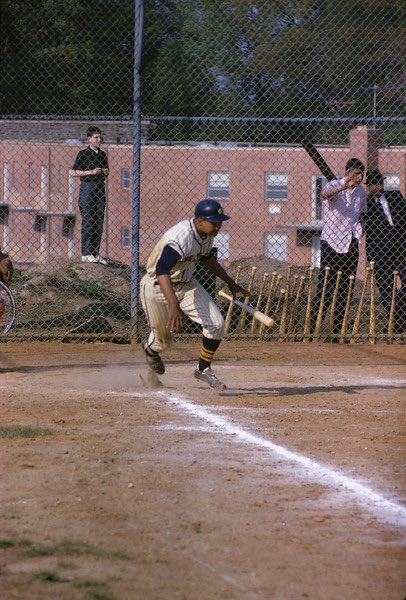
Reggie Jackson playing baseball for Cheltenham High School,
outside Philadelphia, Spring 1964. The color is real.

Angelo Cataldi, the morning man on all-sports radio station 610 WIP says of Philadelphia, "This town is wired for football."

I disagree. Pennsylvania is definitely a football State, but Philadelphia is a basketball city.

And yet, the city has a long and storied baseball history.

Note that I didn't say the stories were all good.

12. Philadelphia's All-Time Baseball Team

The Phillies' region is Pennsylvania between the Delaware and Susquehanna Rivers, New Jersey south of Interstate 195 plus the State capital of Trenton, and the entirety of Delaware.

Despite the fact that the Trenton Thunder are a Yankee farm team, the city is 30 miles from Philly and 60 miles from New York, and I usually see more people wearing Phils gear than Yankee gear at Thunder games (supposedly, more than half their season-ticket base lives across the river in Bucks County, Pennsylvania), so I'm counting players from Trenton as being in Philly's region, with one exception that I'll make when I do the Yankees' all-time regional team.

Each of these figures is from Pennsylvania unless otherwise stated. This team has got plenty of power, and if you're thinking about outpitching them, think again.

1B Mickey Vernon of Eddystone, Delaware County. How unlucky was this guy? He always seemed to be with losing teams, or with winning teams, before or after but never during.

He spent the majority of his career with the Washington Senators: "First in war, first in peace, and last in the American League." He got to the Cleveland Indians after they won the 1948 World Series, went back to Washington, went to Boston after the Red Sox' 1946-51 period of contention, went back to Cleveland after their 1954 Pennant, went to the Milwaukee Braves after their 1957 and '58 Pennants. And while he did play the last 9 games of his career with the 1960 Pittsburgh Pirates, he was not included on the World Series roster and did not get a ring.

But he won the AL batting title in 1946 and 1953, led the AL in doubles in 1946, '53 and '54, had a career OPS+ of 116, and collected 2,495 hits, 490 of them doubles. He hit only 172 homers, but probably would have had a lot more if he hadn’t played so many games at Griffith Stadium, Cleveland Municipal, and as a lefty at Fenway Park.

It would be nice if he were in the Hall of Fame. Alas, he's not, and the Senators are no longer around to retire any of the numbers he wore for them (more games in Number 3 than any other). He is, however, honored in the Washington Hall of Stars display at Nationals Park.

Honorable Mention to Andre Thornton of Phoenixville, Chester County. Though born in Tuskeegee, Alabama, he's a Delaware Valley man, who had a 122 OPS+, and 253 homers despite playing most of his home games at Cleveland Municipal Stadium. He was a 2-time All-Star who had 2 (very nearly 3) 100-RBI seasons. One of the most decent baseball men of his era, he is a member of the Cleveland Indians Hall of Fame.

2B Eddie Stanky of Northeast Philadelphia. Leo Durocher, his manager for the Brooklyn Dodgers and later the New York Giants, said of him, "He can't hit, he can't run, and he can't throw. All he can do is beat you." He won Pennants with the Dodgers in 1947, the Boston Braves in 1948, and the Giants in 1951. (The reason the Dodgers traded him after '47 is that he wouldn't get along with Jackie Robinson. He had a house and business interests in Alabama, and went coward on that basis.)

He was just a .268 hitter lifetime, but drew 996 walks in just 7 full seasons, leading the NL 3 times and thus in on-base percentage twice. He made 3 All-Star teams. He also managed in the majors, but the closest he came to a Pennant was with the 1967 Chicago White Sox, 3 games back but in 4th place.

SS Hugh Jennings of Pittston, Luzerne County. I had to go back a ways for the shortstop on this team, but found a good one. He starred on the NL Champion Baltimore Orioles of 1894, '95 and '96 with John McGraw and Willie Keeler, and also played with them on the 1899 and 1900 NL Champion Brooklyn Superbas (forerunners of the Dodgers). Brooklyn wouldn't win another major-league World Championship without him as a player until 1955, and Baltimore not until 1966.

I could also have made Jennings the manager of this team, as he led the Detroit Tigers to the 1907, '08 and '09 Pennants. He later became one of McGraw's coaches on the Giants, and briefly subbed for him as manager in the 1924 and '25 seasons. Known for, and by, his shout of "Ee-yah!", and for being hit with more pitches than any player in baseball history (287), he is in the Hall of Fame.

3B George "Whitey" Kurowski of Reading, Berks County – not to be confused with Reading in Berkshire, England. A 4-time All-Star, he played on 4 Pennant winners for the St. Louis Cardinals, and was a key figure in 2 World Series. In Game 5 in 1942, he hit a 9th-inning home run at Yankee Stadium to give the Cards the lead, enabling them to clinch. But in Game 2 in 1943, also at Yankee Stadium, Johnny Lindell slid into 3rd base, and kicked away a throw that would have nailed him, and the Yankees won that game and the next 3 to win the Series.

Kurowski also played on the Cards' World Series winners in 1944 and 1946, although an injury finished him at age 31. His lifetime batting average was .286, and he had a 125 OPS+. He only played 6 full seasons, but had 100 RBIs in 2 of them.

Honorable Mention to William Julius "Judy" Johnson of Wilmington, New Castle County, Delaware. Because he played in the Negro Leagues, mostly for the Philadelphia Hilldales, we can only guess as to how good he really was, but he impressed the Hall of Fame's Committee on the Negro Leagues to elect him to the Hall.

He was also the 1st person inducted into the Delaware Sports Hall of Fame. The home of the Carolina League's Wilmington Blue Rocks, the only professional team in Delaware at the moment, is named Judy Johnson Field at Daniel S. Frawley Stadium (Frawley being the Mayor who brought minor-league ball back to Wilmington).

LF Leon "Goose" Goslin of Salem, Salem County, New Jersey. The only South Jersey native in the Hall of Fame, he had a .316 lifetime batting average, an OPS+ of 128, 2,735 hits, 500 doubles, 173 triples, 248 homers, 12 100-RBI seasons, the 1928 AL batting title at .379, and played in the World Series with the Washington Senators in 1924 (won) and '25 (lost), and the Detroit Tigers in 1934 (lost) and ’35 (his bottom of the 9th single won Game 6 and the Series). When The Sporting News announced its 100 Greatest Baseball Players in 1999, he came in at Number 89.

Honorable Mention to Del Ennis of Olney, North Philadelphia. A hometown hero, he led the NL in RBIs in 1950, 1 of 7 100-RBI seasons for him, and was the biggest bat on the 1950 Pennant-winning Phillies "Whiz Kids." An injury knocked him out age 34, but he hit 288 home runs, 259 of them as a Phillie, making him the franchise's all-time leader until Mike Schmidt came along. With a career OPS+ of 117, and over 2,000 hits, he is a member of the Philadelphia Baseball Wall of Fame.

Honorable Mention to George Case of Trenton, Mercer County, New Jersey. A graduate of The Peddie School, a prep school in Hightstown, Case played most of his career with the Washington Senators, and led the AL in stolen bases 6 times. The closest he came to a Pennant was in 1945, when the Senators finished a game behind the Tigers. But in an era when few players ran like that, he stood out.

CF Mike Trout of Millville, Cumberland County, New Jersey. Yes, already. The Los Angeles Angels of Anaheim star is just 22, and has played only 2 full seasons in the majors, but look at them. In the 1st, 2012, he batted .326, led the AL in runs, stolen bases and OPS+, was named Rookie of the Year. In the 2nd, 2013, he batted .323, led the league in runs and walks, and came close to a 100-RBI season. In each year, he made the All-Star Team and finished 2nd in the MVP voting. He's already hit 62 home runs and stolen 86 bases. He's already the greatest player ever to come from Cumberland County.

Looking at the rest of that part of New Jersey that tilts toward Philadelphia rather than New York, aside from Goslin’s Salem, Case’s Mercer and Trout's Cumberland, the best player from South Jersey's Counties are:

Atlantic County: John Henry "Pop" Lloyd, who was born in Florida but grew up and played part of his professional career in Atlantic City, where a local park is named for him, and is one of the Negro Leaguers in the Hall of Fame. Unfortunately, since I don't have big-league stats for this man, often called the greatest shortstop in Negro League history, I can't make him a starter on this team.

Burlington County: See below.

Camden County: Ray Narleski of Collingswood, a star reliever for the 1950s Indians including their 1954 Pennant winners.

Gloucester County: Abram Harding "Hardy" Richardson of Clarksboro, an 1880s star with 2 teams that no longer exist, the NL's Buffalo Bisons and Detroit Wolverines, winning the 1887 Pennant with Detroit, while Dan Meyer of Woolwich is currently pitching for the Florida Marlins.

RF Carl Furillo of Stony Creek Mills, Berks County. Grew up just outside Reading, and with his powerful right arm became known as the Reading Rifle. His love of scungilli also got him the nickname "Skoonj."

At the bottom of the scoreboard in right field at Ebbets Field was a sign, posted by a man who would ride that sign's fame to the Presidency of first the New York City Council and then the Borough of Brooklyn: "HIT SIGN WIN SUIT. ABE STARK. Brooklyn's Leading Clothier." With Dixie Walker and then Furillo playing right field, it was believed that Mel Ott was the only player to hit that sign on the fly. When it was suggested to Stark that he give Furillo a free suit, for having saved him from having to give out so many, he did.

Furillo was a good hitter, too: Lifetime batting average .299, OPS+ of 112, 5 times a .300 hitter including the 1953 NL batting title at .344. He played on 7 Pennant winners with the Dodgers, including the 1955 (Brooklyn) and 1959 (Los Angeles) World Championships.

Even more notably, he retired due to injury in 1960, and sued the Dodgers over not telling him how bad his injury was… and won. Imagine that, suing Dodger owner Walter O’Malley, the most powerful man in baseball (who pulled the strings for Commissioner Ford Frick), and himself a lawyer, and winning! Furillo went to work for Otis Elevators, and helped install the elevators in the World Trade Center as it went up in the late 1960s and early 1970s.

DH Reginald Martinez Jackson of Wyncote, Bucks County. I was going to put Reggie in right field, even with his glove, but I couldn't resist putting Furillo in there. Because of when and where I first came into sports awareness, Reggie remains my favorite athlete of all time.

With the Oakland Athletics, New York Yankees and California Angels (as the Anaheim franchise was then known), he reached 11 postseasons, winning 6 Pennants (and just missing 3 others by a game) and 5 World Championships: 1972, '73 and '74 with the A's, and 1977 and '78 with the Yanks. He is the only man to win World Series MVP awards with 2 teams, with the '73 A's and the '77 Yanks, featuring his 5 homers in the latter Series, 3 in the clinching Game 6. His career total is 563, making him the leader among all players born between 1936 (Harmon Killebrew) and 1963 (Mark McGwire).

Hall of Fame, Number 9 retired by the A's, Number 44 retired and Monument Park plaque dedicated by the Yanks. (The Angels have a team Hall of Fame, but Reggie has not yet been elected to it or had his Number 44 retired by them.) When The Sporting News announced its 100 Greatest Baseball Players in 1999, he came in at Number 48. They call him Mr. October, but he remains a man for all seasons.

C Roy Campanella of Nicetown, North Philadelphia. Don't let the name fool you: For as long as I can remember, "Nicetown" has been a ghetto and not very nice. But Campy was. In the 1940s with the Baltimore Elite Giants of the Negro Leagues, and in the 1950s with the Brooklyn Dodgers, he built a Hall of Fame career, including 3 NL MVPs, 5 Pennants and the 1955 World Championship.

A car crash ended his career and paralyzed him for life at age 36, but for years, Dodger fans said he was better than Yogi Berra across town. He remained on the Dodger payroll until his death in 1993, long after the Dodgers moved to Los Angeles, and his Number 39 was retired, along with Jackie Robinson’s 42 and Sandy Koufax's 32, in a 1972 ceremony at Dodger Stadium, the 1st numbers retired by the franchise. When The Sporting News announced its 100 Greatest Baseball Players in 1999, he came in at Number 50.

Mike Piazza of Norristown, Montgomery County is not on this team. Never mind the steroid accusations, for which we have every bit as much proof as we do for his nemesis, Roger Clemens: He couldn't play the position of catcher, and Campy was a better hitter. He can be the righthanded platoon at DH with the lefthanded Reggie.

Honorable Mention to Doug Allison of Philadelphia: He was the catcher on the 1st openly professional team, the 1869-70 Cincinnati Red Stockings, and lasted long enough to be a member of the 1879 NL Champion Providence Grays. He is also the earliest known player to use a glove, using buckskin mittens to protect his hands with the 1870 Red Stockings.

Honorable Mention also to Allison's teammate, Dick Hurley of Honesdale, Wayne County, who is listed as the "substitute" for the 1869-70 Red Stockings. It seems the position he most played in pro ball after leaving Cincinnati was right field. Not all that well, apparently: He appears to have last played for the 1872 Washington Olympics of the National Association, not a good team even by the standards of the Ulysses S. Grant Administration.

SP Christopher "Christy" Mathewson of Factoryville, Wyoming County. Was he the greatest pitcher of them all? We'll never know how he would have done in the Lively Ball Era, unlike Walter Johnson and Grover Cleveland Alexander who pitched well into the 1920s. But "Big Six" (he was 6-foot-1 when that was considered very tall) was, from 1901 to 1914, probably the greatest pitcher the planet had yet seen.

His 373 wins are tied for 3rd all-time, 1st in NL play, with Alexander. (Cy Young's 511 were split between the Leagues, and Walter Johnson had 417, all in the AL.) A 2.13 ERA, an ERA+ of 136, so he was 36 percent better in ERA than the pitchers of his time. WHIP 1.058 -- that is sick. His 2,507 strikeouts were 2rd all-time behind Young at the time of his retirement. His 79 shutouts were a record until surpassed by Johnson.

He pitched the Giants to the 1904 Pennant, and in 1905 pitched 3 shutouts as the Giants won the World Series over the Philadelphia Athletics. But that was his last title: The Giants just missed the Pennant in 1908 (Mathewson started the "playoff" forced by Fred Merkle's Boner and lost it), and they lost the World Series in 1911, 1912 (Mathewson lost the deciding Game 8) and 1913. Still, he was the most beloved player of his day.

Exposure to poison gas while training for World War I, and the subsequent Spanish flu epidemic, both damaged his lungs, and when tuberculosis struck, he never had a chance. He died in 1925, just 45 years old, and a nation mourned.

He was one of the 1st 5 players elected to the Hall of Fame in 1936 -- the only one already dead. (Ty Cobb, Babe Ruth, Honus Wagner and Johnson were still alive.) Although he played before uniform numbers were worn, the Giants, long after moving to San Francisco, placed an "NY" alongside their retired numbers, first at Candlestick Park and then at AT&T Park. He was elected to the All-Century Team. That same year, when The Sporting News announced its 100 Greatest Baseball Players, he came in at Number 7.

He also played football at Bucknell University, and their stadium is named for him. His brother Henry also briefly pitched in the majors.

SP Ed Walsh of Plains, Luzerne County. "Big Ed Walsh?" Hall-of-Famer Sam Crawford said of the great Chicago White Sox spitballer. "You talk about spitballs? I think that ball disintegrated, and came back together when the catcher got a hold of it! I swear, when it went past the plate, it was just the spit went by!"

It was an easy thing to believe: Then a legal pitch, Walsh used the spitter to win 195 games against just 126 losses, with a career WHIP of exactly 1.000 and an all-time record low ERA of 1.82 -- for an ERA+ of 146, so he wasn't just taking advantage of the Dead Ball Era.

In 1906, he helped the White Sox win the World Series in a big upset over the crosstown Cubs. In 1908, he went 40-15, pitching a 20th Century record 484 innings. That included a 15-strikeout performance late in the season against the Cleveland Indians -- but Walsh lost the game, because opposing pitcher Addie Joss threw a perfect game. (Ty Cobb's Tigers edged them both for the Pennant.)

In 1910, architect Zachary Taylor Davis supposedly consulted Walsh on how to design the Sox' new home, and this is believed to be why Comiskey Park, for all of its 80-year life, was a pitchers' park. (Davis would also design what became Wrigley Field in 1914.) After back-to-back 27-win seasons in 1911 and '12, Walsh appeared to lose it, having had his last good season at age 31. Still, he's in the Hall of Fame.  When The Sporting News announced its 100 Greatest Baseball Players in 1999, he came in at Number 82.

He died on May 26, 1959 -- the day Harvey Haddix outdid both Walsh and Joss by pitching a perfect game for 12 innings, and losing the game in the 13th! Big Ed's son, Ed Walsh Jr., also pitched for the White Sox, while Big Ed was a Sox coach, though not nearly as well.

SP Stan Coveleski of Shamokin, Northumberland County. "There was nothing strange in those days about a twelve-year-old Polish kid working in the mines for 72 hours a week at a nickel an hour," he said late in life. "What was strange is that I ever got out of there."

He pitched for the hometown Athletics, but was sold because Connie Mack and the Shibe brothers needed the money. Big mistake. He was the ace of the 1920 World Champion Indians, and also pitched in the Series for the 1925 Washington Senators (though they lost) and the 1928 Yankees (they won). He went 216-142 for his career, and he was elected to the Hall of Fame. He lived his post-baseball life in South Bend, Indiana, where the minor-league ballpark is named Stanley Coveleski Regional Stadium and is home to the South Bend Silver Hawks.

SP Orel Hershiser of Cherry Hill, Burlington County, New Jersey. Born in Buffalo, New York, but a graduate of Cherry Hill High School East. Putting together a superb career record of 204-150, he reached the postseason with the Dodgers in 1985 and '88 (and almost in '91, and would have again if the Strike of '94 hadn't hit), the Indians in '95, 96 and '97, the Giants in '98 and the Mets in '99.

He went 23-8 with a 2.26 ERA in 1988, including pitching a record 59 consecutive scoreless innings to close the regular season. He was one of the rare pitchers who deserved a regular-season MVP, it went instead to his teammate Kirk Gibson; while Gibson is remembered for his walkoff homer in Game 1 of the World Series, Hershiser won Games 2 and 5 (the clincher) to take the Series MVP. He was 8-3 with a 2.59 ERA in postseason play. He is now a broadcaster with ESPN, and is generally regarded as one of the smartest men in baseball.

Does he deserve to be in the Hall of Fame? He’s been eligible since 2006. Baseball-Reference.com's HOF Monitor has him at 90 of 100, meaning he comes close but doesn't get in; and their HOF Standards have him at 34 out of 50, meaning he doesn't come all that close. Of their 10 Most Similar Pitchers, only 2, Catfish Hunter and Dazzy Vance, are in; the others include Bob Welch, Kevin Brown, Vida Blue and Dave Stieb.

SP Mike Mussina of Montoursville, Lycoming County. From 1991 to 2000, "Moose" won 147 games and lost just 81 for the Orioles, with an ERA+ of 130 and a WHIP of 1.175. He helped them reach the ALCS in 1996 and '97. Once he retired from the game, he was elected to their team Hall of Fame.

He left the O's for their rivals, the Yankees, where he won another 123 games and lost just 72. In total, he went 270-153, a winning percentage of .638. He never won a World Series, although he did pitch in the 2001 and 2003 editions for the Yankees. He went 20-9 in 2008, finally winning 20 at age 39, and then retired. (Maybe it was for the best: I was at the 2009 Old-Timers' Game at Yankee Stadium II, and he pitched in it, and he was awful, letting guys in their 50s and 60s get hits off him, and David Cone had to come in to bail him out; 4 years older, Coney had better stuff that day than the Moose.)

Mussina is now eligible for the Hall of Fame, but didn't get in this time. As video producer Sean C. Dunn, who sponsors Mussina's Baseball-Reference.com page, points out, there's only 6 pitchers with at least that many wins and a better winning percentage. In chronological order: John Clarkson, Christy Mathewson, Grover Cleveland Alexander, Lefty Grove, Roger Clemens and Randy Johnson. B-R's HOF Monitor has him at 121 (meaning he absolutely should be in), and their HOF Standards have him at 54 (which also qualifies him).

Honorable Mention to SP William "Bucky" Walters of Germantown, North Philadelphia. He pitched for his hometown Phillies from 1934 to 1938, in Baker Bowl with its dilapidated condition and a 280-foot right-field fence. Needing cash, the Phils traded him to the Cincinnati Reds, and that was the best thing that could have happened to him.

In 1939 the Reds won the Pennant, and in 1940 they won the World Series. Walters led the NL in wins, ERA, ERA+, innings pitched, WHIP, fewest hits per 9 IP and complete games in both seasons, going 49-21 – not counting going 2-0 in the '40 Series, although he was 0-2 in the '39 edition. He also led the NL in strikeouts in '39. He went 27-11 in '39, 22-10 in '40, and 23-8 in '44.

His career record was 198-160 ,with an ERA+ of 115, and if he hadn't pitched all those games for a lousy team in a lousy ballpark, he'd probably have about 230 wins and he might be in the Hall of Fame. The Reds have elected him to their team Hall of Fame, although his Number 31 remains in circulation. (John Franco, for one, wore it for the Reds.)

Honorable Mention to Curt Simmons of Egypt, Lehigh County. Another local guy on the Phillies, he was the 2nd-best pitcher on the 1950 "Whiz Kids," going 17-8, but with the Korean War raging, he was drafted right before the regular season ended, costing him an appearance in the World Series (and, quite possibly, denying the Phils a good chance at beating the Yankees).

He got another chance at glory in 1964, going 18-9 at age 35, helping the Cardinals win the Series over the Yankees, but had to beat the Phillies with that amazing comeback (and Phils choke) to do it. He won 193 games in his career, and would have won a lot more had he not spent the first half of his career with the Phils.

Honorable Mention to Bobby Shantz of Pottstown, Montgomery County. Officially, he was 5-foot-6. Unofficially, he was the last in a long line of great pitchers for his hometown Philadelphia Athletics. In 1951, with an A's team that won only 70 games, he went 18-10, and he was just getting warmed up. In 1952, with the A's winning just 79 and finishing 4th, he went 24-7 with a 2.48 ERA (an ERA+ of 159) and a 1.048 WHIP. He was named AL MVP that season, ahead of World Champion Yankees like Mickey Mantle and Yogi Berra.

After moving to Kansas City, the cash-strapped A's traded him to the Yankees, and in 1957 he led the AL in ERA with 2.45, helping the Yankees win the Pennant. Becoming a reliever, he was a major factor in the Yanks winning the 1958 World Series. He ended his career back in his home market; unfortunately, this was with the 1964 Phillies.

He finished 119-99, a good record considering he was mainly a reliever from age 31 onward. He is a member of the Philadelphia Baseball Wall of Fame, although his plaque is now at the Philadelphia Athletics Historical Society display in Spike's Trophies in Northeast Philly.

Honorable Mention to Danny McDevitt of Hallstead, Susquehanna County, near the New York State Line in the northeastern corner of Pennsylvania. He had only a 22-27 career record, but he did pitch a shutout to win the last game ever played at Ebbets Field, a 2-0 Brooklyn win over Pittsburgh. He was also on the Los Angeles staff that won the 1959 World Series.

In 2007, he threw out the first ball before a Brooklyn Cyclones game to commemorate the 50th Anniversary of the Dodgers' forced farewell to the Borough.

Honorable Mention to Chris Short of Milford, Kent County, Delaware. There have been 52 MLB players born in The First State, and the greatest of them -- aside from Judy Johnson, for whom we don't have reliable stats -- is probably Short, another pitcher for the '64 Phils. He won 135 games in he major leagues, all but 3 for the Phils, and is in the Philadelphia Baseball Wall of Fame.

RP Bruce Sutter of Mount Joy, Lancaster County. Injury limited him to only 1 full season after age 32, but from 1976 to 1984 (ages 23 to 31), he was as good a reliever as there ever was. In 1977, with a good but not great Chicago Cub team, he went 7-3 with 31 saves, a 1.34 ERA and a 0.857 WHIP. He pitched 107 innings, struck out 129, and walked just 23 (only 16 unintentionally). That's unreal. In 1979 with 37, he tied the NL single-season record for saves; in 1984 with 45, he broke it.

He went to the Cubs' arch-rivals, the St. Louis Cardinals, and led them to the 1982 World Series against the Milwaukee Brewers, striking out Gorman Thomas for the last out. The Cards traded him to the Atlanta Braves prior to 1985, and they would pay dearly for that as they lost the Series in ’85 and again in '87. But maybe, due to his injuries, Sutter couldn’t have helped.

He finished with 300 saves (2nd all-time behind Rollie Fingers at that point and the most in the NL), an ERA+ of 136 and a WHIP of 1.140. In 2006, he was elected to the Hall of Fame, and the Cards retired his Number 42 (which, of course, he wore before it was retired for all of baseball for Jackie Robinson).

MGR and GM Dallas Green of Newport, New Castle County, Delaware. A mediocre pitcher for the Phillies, going 2-1 with a 5.79 ERA, mostly in relief, for the infamous 1964 squad, he redeemed himself as their manager, leading them to their 1st World Championship in 1980. He also led the Phils to the 1st-half NL East title in the strike-split 1981 season, before the Chicago Cubs hired him away to be their general manager. As such, he made the trade that brought Ryne Sandberg to Chicago, and the Cubs won the 1984 and 1989 NL East crowns as a result of his deals. He later managed both the Yankees and the Mets, neither with success.

For the last few years, he has been back in Philadelphia as a special adviser to the Phils. He is a member of the Philadelphia Baseball Wall of Fame, and the fact that he led both the Phillies and the Cubs, perennial losers, to more than one postseason berth suggests that he belongs in Cooperstown as well. Certainly, the Phillies should retire his Number 46.

Tommy Lasorda of Norristown was also a mediocre pitcher before managing, but I didn't make him the manager of this team, for one simple reason: I don't like him. Okay, maybe for a second simple reason: Dallas Green might bite my head off otherwise. What's Tommy gonna do, sit on me?

Wilmington, New Castle County natives Robert Ruliph Morgan Carpenter Jr. and his son Robert III, a.k.a. "Bob" and "Ruly" Carpenter, who owned the Phillies from the 1940s to the 1980s, are the owners of this team.

Saturday, August 7, 2010

Philadelphia's All-Time Baseball Team

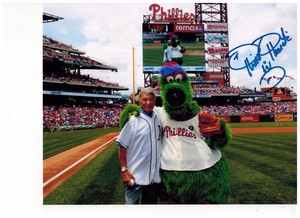
Bobby Shantz, the last great Philadelphia Athletics pitcher,
and the Phillie Phanatic at Citizens Bank Park

Last night was not a good night for the New York teams. The Yankees began a 4-game set with The Scum by losing 6-3, partly due to Jorge Posada getting the day off and Francisco Cervelli, his backup, dropping a popup in fair territory, leading to 4 unearned runs; and partly due to the pitcher being Javier Vazquez, who can't beat Boston.

The Mets were no better, and certainly no luckier. They led the Phillies 2-1 in the opener of a 3-game set in Philadelphia, with Jon Niese pitching well. Stop me if you've heard this one before: The Met bullpen was not up to the task, and despite a Met comeback in the 9th, the Phils won, 7-5.

Philadelphia's All-Time Baseball Team

Each of these figures is from Pennsylvania, between the Delaware and Susquehanna Rivers, unless otherwise stated. Plenty of power, and if you're thinking about outpitching them, think again.

1B Mickey Vernon of Eddystone, Delaware County. How unlucky was this guy? He spent the majority of his career with the Washington Senators: "First in war, first in peace, and last in the American League." He got to the Cleveland Indians after they won the 1948 World Series, went back to Washington, went to Boston after the Red Sox' 1946-51 period of contention, went back to Cleveland after their 1954 Pennant, went to the Milwaukee Braves after their 1957 and '58 Pennants. And while he did play the last 9 games of his career with the 1960 Pittsburgh Pirates, he was not included on the World Series roster, and did not get a ring.

But he won the AL batting title in 1946 and 1953, led the AL in doubles in 1946, '53 and '54, had a career OPS+ of 116, and collected 2,495 hits, 490 of them doubles. He hit only 172 homers, but probably would have had a lot more if he hadn't played so many games at Griffith Stadium, Cleveland Municipal, and as a lefty at Fenway Park.

It would be nice if he were in the Hall of Fame. Alas, he's not, and the Senators are no longer around to retire any of the numbers he wore for them (more games in Number 3 than any other). He is, however, honored in the Washington Hall of Stars display at Nationals Park.

Honorable Mention to Andre Thornton of Phoenixville, Chester County. Though born in Tuskeegee, Alabama, he's a Delaware Valley man, who had a 122 OPS+, and 253 homers despite playing most of his home games at Cleveland Municipal Stadium. He was a 2-time All-Star who had 2 (very nearly 3) 100-RBI seasons. One of the most decent baseball men of his era, he is a member of the Cleveland Indians Hall of Fame.

2B Eddie Stanky of Northeast Philadelphia. Leo Durocher, his manager for the Brooklyn Dodgers and later the New York Giants, said of him, "He can't hit, he can't run, and he can't throw. All he can do is beat you." He won Pennants with the Dodgers in 1947, the Boston Braves in 1948, and the Giants in 1951. (The reason the Dodgers traded him after '47 is that he wouldn't get along with Jackie Robinson.) He was just a .268 hitter lifetime, but drew 996 walks in just 7 full seasons, leading the NL 3 times and thus in on-base percentage twice. He made 3 All-Star teams.

He also managed in the majors, but the closest he came to a Pennant was with the 1967 Chicago White Sox, 3 games back but in 4th place.

SS Hugh Jennings of Pittston, Luzerne County. I had to go back a ways for the shortstop on this team, but found a good one. Starred on the NL Champion Baltimore Orioles of 1894, '95 and '96 with John McGraw and Willie Keeler, and also played with them on the 1899 and 1900 NL Champion Brooklyn Superbas (forerunners of the Dodgers).

Brooklyn wouldn't win another major-league World Championship without him as a player until 1955, and Baltimore not until 1966. I could also have made Jennings the manager of this team, as he led the Detroit Tigers to the 1907, '08 and '09 Pennants. He later became one of McGraw's coaches on the Giants, and briefly subbed for him as manager in the 1924 and ’25 seasons. Known for, and by, his shout of "Ee-yah!", he is in the Hall of Fame.

3B George "Whitey" Kurowski of Reading, Berks County – not to be confused with Reading in Berkshire, England. A 4-time All-Star, he played on 4 Pennant winners for the St. Louis Cardinals, and was a key figure in 2 World Series.

In Game 5 in 1942, he hit a 9th-inning home run at Yankee Stadium to give the Cards the lead, enabling them to clinch. But in Game 2 in 1943, also at Yankee Stadium, Johnny Lindell slid into 3rd base and kicked away a throw that would have nailed him, and the Yankees won that game and the next 3 to win the Series.

Kurowski also played on the Cards' World Series winners in 1944 and 1946, although an injury finished him at age 31. His lifetime batting average was .286, and he had a 125 OPS+. He only played 6 full seasons, but had 100 RBIs in 2 of them.

Honorable Mention to William Julius "Judy" Johnson of Wilmington, Delaware. Because he played in the Negro Leagues, mostly for the Philadelphia Hilldales, we can only guess as to how good he really was, but he impressed the Hall of Fame's Committee on the Negro Leagues to elect him to the Hall. He was also the 1st person inducted into the Delaware Sports Hall of Fame.

The home of the Carolina League's Wilmington Blue Rocks, the only professional team in Delaware at the moment, is named Judy Johnson Field at Daniel S. Frawley Stadium (Frawley being the Mayor who brought minor-league ball back to Wilmington).

LF Leon "Goose" Goslin of Salem, Salem County, New Jersey. The only South Jersey native in the Hall of Fame, he had a .316 lifetime batting average, an OPS+ of 128, 2,735 hits, 500 doubles, 173 triples, 248 homers, 12 100-RBI seasons, the 1928 AL batting title at .379, and played in the World Series with the Washington Senators in 1924 (won) and ’25 (lost), and the Detroit Tigers in 1934 (lost) and ’35 (his bottom of the 9th single won Game 6 and the Series).

Honorable Mention to Del Ennis of Olney, Philadelphia. A hometown hero, he led the NL in RBIs in 1950, one of 7 100-RBI seasons for him, and was the biggest bat on the 1950 Pennant-winning Phillies "Whiz Kids." An injury knocked him out age 34, but hit 288 home runs, 259 of them as a Phillie, making him the franchise’s all-time leader until Mike Schmidt came along. With a career OPS+ of 117, and over 2,000 hits, he is a member of the Philadelphia Baseball Wall of Fame.

CF George Case of Trenton, Mercer County, New Jersey. Despite the fact that the Trenton Thunder are a Yankee farm team, the city is 30 miles from Philly and 60 miles from New York, and I usually see more people wearing Phils gear than Yankee gear at Thunder games (supposedly, more than half their season-ticket base lives across the river in Bucks County, Pennsylvania), so I'm counting players from Trenton as being in Philly's region, with an exception that I'll make when I do this team for New York.

Case played more left than center, but not by much, and I needed a center fielder. A graduate of The Peddie School, a prep school in Hightstown, he played most of his career with the Washington Senators, and led the AL in stolen bases 6 times. The closest he came to a Pennant was in 1945, when the Senators finished a game behind the Tigers. But in an era when few players ran like that, he stood out.

Looking at the rest of that part of New Jersey that tilts toward Philadelphia rather than New York, aside from Goslin's Salem and Case's Mercer, the best player from South Jersey's Counties are:

Atlantic County: John Henry "Pop" Lloyd, who was born in Florida but grew up and played part of his professional career in Atlantic City, where a local park is named for him, and is one of the Negro Leaguers in the Hall of Fame. Unfortunately, since I don't have big-league stats for this man, often called the greatest shortstop in Negro League history, I can't make him a starter on this team.

Burlington County: See below.

Camden County: Ray Narleski of Collingswood, a star reliever for the 1950s Indians including their 1954 Pennant winners.

Cape May County: None. Not that none were good enough, but that no player from the County has ever reached the major leagues. (UPDATE: In 2014, Matt Szczur of Lower Township became the 1st, debuting with the Chicago Cubs.)

Cumberland County: Ted Ford of Richland, who in his only full season, 1972, hit 14 homers with 50 RBIs for the Texas Rangers.

Gloucester County: Abram Harding "Hardy" Richardson of Clarksboro, an 1880s star with two teams that no longer exist, the NL's Buffalo Bisons and Detroit Wolverines, winning the 1887 Pennant with Detroit, while Dan Meyer of Woolwich is currently pitching for the Florida Marlins.

RF Carl Furillo of Stony Creek Mills, Berks County. Grew up just outside Reading, and with his powerful right arm became known as the Reading Rifle. His love of scungilli also got him the nickname "Skoonj."

At the bottom of the scoreboard in right field at Ebbets Field was a sign, posted by a man who would ride that sign's fame to the Presidency of first the New York City Council and then the Borough of Brooklyn: "HIT SIGN WIN SUIT. ABE STARK. Brooklyn's Leading Clothier." With Dixie Walker and then Furillo playing right field, it was believed that Mel Ott was the only player to hit that sign on the fly. When it was suggested to Stark that he give Furillo a free suit, for having saved him from having to give out so many, he did.

Furillo was a good hitter, too: Lifetime batting average .299, OPS+ of 112, 5 times a .300 hitter including the 1953 NL batting title at .344. He played on 7 Pennant winners with the Dodgers, including the 1955 (Brooklyn) and 1959 (Los Angeles) World Championships.

Even more notably, he retired due to injury in 1960, and sued the Dodgers over not telling him how bad his injury was… and won. Imagine that, suing Dodger owner Walter O’Malley, the most powerful man in baseball (who pulled the strings for Commissioner Ford Frick), and himself a lawyer, and winning! Furillo went to work for Otis Elevators, and helped install the elevators in the World Trade Center as it went up in the late 1960s and early 1970s.

DH Reginald Martinez Jackson of Wyncote, Bucks County. I was going to put Reggie in right field, even with his glove, but I couldn't resist putting Furillo in there. Because of when and where I first came into sports awareness, he remains my favorite athlete of all time.

With the Oakland Athletics, New York Yankees and California Angels (as the Anaheim franchise was then known), he reached 11 postseasons, winning 6 Pennants (and just missing 3 others by a game) and 5 World Championships: 1972, '73 and 74 with the A's, and 1977 and '78 with the Yanks. He is the only man to win World Series MVP awards with 2 teams, with the '73 A's and the '77 Yanks, featuring his 5 homers in the latter Series, 3 in the clinching Game 6. His career total is 563, making him the leader among all players born between 1936 (Harmon Killebrew) and 1963 (Mark McGwire).

Hall of Fame, Number 9 retired by the A's, Number 44 retired and Monument Park plaque dedicated by the Yanks. (The Angels have a team Hall of Fame, but Reggie has not yet been elected to it or had his Number 44 retired by them.) They call him Mr. October, but he remains a man for all seasons.

C Roy Campanella of Nicetown, Philadelphia. Don't let the name fool you: "Nicetown" is a part of North Philly and, for as long as I can remember, it has been a ghetto and not very nice. But Campy was.

In the 1940s with the Baltimore Elite Giants of the Negro Leagues, and in the 1950s with the Brooklyn Dodgers, he built a Hall of Fame career, including 3 NL MVPs, 5 Pennants and the 1955 World Championship. A car crash ended his career and paralyzed him for life at age 36, but for years, Dodger fans said he was better than Yogi Berra across town.

He remained on the Dodger payroll until his death in 1993, long after the Dodgers moved to Los Angeles, and his Number 39 was retired, along with Jackie Robinson's 42 and Sandy Koufax' 32, in a 1972 ceremony at Dodger Stadium, the first numbers retired by the franchise.

Mike Piazza of Norristown, Montgomery County is not on this team. Never mind the steroid accusations, for which we have every bit as much proof as we do for his nemesis, Roger Clemens: He couldn't play the position of catcher, and Campy was a better hitter.

Honorable Mention to Doug Allison of Philadelphia: He was the catcher on the 1st openly professional team, the 1869-70 Cincinnati Red Stockings, and lasted long enough to be a member of the 1879 NL Champion Providence Grays. He is also the earliest known player to use a glove, using buckskin mittens to protect his hands with the 1870 Red Stockings.

Honorable Mention also to Allison's teammate, Dick Hurley of Honesdale, Wayne County, who is listed as the "substitute" for the 1869-70 Red Stockings. It seems the position he most played in pro ball after leaving Cincinnati was right field. Not all that well, apparently: He appears to have last played for the 1872 Washington Olympics of the National Association, not a good team even by the standards of the Ulysses S. Grant Administration.

SP Christopher "Christy" Mathewson of Factoryville, Wyoming County. Was he the greatest pitcher of them all? We'll never know how he would have done in the Lively Ball Era, unlike Walter Johnson and Grover Cleveland Alexander who pitched well into the 1920s. But "Big Six" (he was 6-foot-1 when that was considered very tall) was, from 1901 to 1914, probably the greatest pitcher the planet had yet seen.

His 373 wins are tied for 3rd all-time, 1st in NL play, with Alexander. (Cy Young's 511 were split between the Leagues, and Walter Johnson had 417, all in the AL.) A 2.13 ERA, an ERA+ of 136, so he was 36 percent better in ERA than the pitchers of his time. WHIP 1.058 -- that is sick. His 2,507 strikeouts were 2rd all-time behind Young at the time of his retirement. His 79 shutouts were a record until surpassed by Johnson.

He pitched the New York Giants to the 1904 Pennant, and in 1905 pitched 3 shutouts as the Giants won the World Series over the Philadelphia Athletics. But that was his last title: The Giants just missed the Pennant in 1908 (Mathewson started the "playoff" forced by Fred Merkle's Boner and lost it), and they lost the World Series in 1911, 1912 (Mathewson lost the deciding Game 8) and 1913. Still, he was the most beloved player of his day.

Exposure to poison gas while training for World War I, and the subsequent Spanish flu epidemic, damaged his lungs, and when tuberculosis struck, he never had a chance. He died in 1925, just 45 years old, and a nation mourned.

He was one of the 1st 5 players elected to the Hall of Fame in 1936 -- the only one already dead. (Ty Cobb, Babe Ruth, Honus Wagner and Johnson were still alive.) Although he played before uniform numbers were worn, the Giants, long after moving to San Francisco, placed an "NY" alongside their retired numbers, first at Candlestick Park and then at AT&T Park.

He was elected to the All-Century Team in 1999, even though he'd debuted exactly 99 years earlier and last pitched 83 years earlier. He also played football at Bucknell University, and their stadium is named for him. His brother Henry also briefly pitched in the majors.

SP Ed Walsh of Plains, Luzerne County. "Big Ed Walsh?" Hall-of-Famer Sam Crawford said of the great Chicago White Sox spitballer. "You talk about spitballs? I think that ball disintegrated, and came back together when the catcher got a hold of it! I swear, when it went past the plate, it was just the spit went by!"

It was an easy thing to believe: Then a legal pitch, Walsh used it to win 195 games against just 126 losses, with a career WHIP of exactly 1.000 and an all-time record low ERA of 1.82 -- ERA+ of 146, so he wasn't just taking advantage of the Dead Ball Era. In 1906, he helped the White Sox win the World Series in a big upset over the crosstown Cubs. In 1908, he went 40-15, pitching a 20th Century record 484 innings. That included a 15-strikeout performance late in the season against the Cleveland Indians -- but Walsh lost, because Addie Joss threw a perfect game in the same game. (Ty Cobb's Tigers edged them both for the Pennant.)

In 1910, architect Zachary Taylor Davis supposedly consulted Walsh on how to design the Sox' new home, and this is believed to be why Comiskey Park, for all of its 80-year life, was a pitchers' park. (Davis would also design what became Wrigley Field in 1914.) After back-to-back 27-win seasons in 1911 and '12, Walsh appeared to lose it, having had his last good season at age 31. Still, he's in the Hall of Fame. He died on May 26, 1959 -- the day Harvey Haddix outdid both Walsh and Joss by pitching a perfect game for 12 innings, and losing the game in the 13th! Big Ed's son, Ed Walsh Jr., also pitched for the White Sox, while Big Ed was a Sox coach, though not nearly as well.

SP Stan Coveleski of Shamokin, Northumberland County. "There was nothing strange in those days about a 12-year-old Polish kid working in the mines for 72 hours a week at a nickel an hour," he said late in life. "What was strange is that I ever got out of there."

He pitched for the hometown Athletics, but was sold because Connie Mack and the Shibe brothers needed the money. He was the ace of the 1920 World Champion Indians, and also pitched in the Series for the 1925 Washington Senators (though they lost) and the 1928 Yankees (they won). He went 216-142 for his career, and he was elected to the Hall of Fame.

He lived his post-baseball life in South Bend, Indiana, where the minor-league ballpark is named Stanley Coveleski Regional Stadium and is home to the South Bend Silver Hawks.

SP Orel Hershiser of Cherry Hill, Burlington County, New Jersey. Born in Buffalo, New York, but a graduate of Cherry Hill High School East. A superb career record of 204-150, he reached the postseason with the Dodgers in 1985 and '88 (and almost in '91, and would have again if the Strike of '94 hadn't hit), the Indians in '95, '96 and '97, the Giants in '98 and the Mets in '99.

He went 23-8 with a 2.26 ERA in 1988, including pitching a record 59 consecutive scoreless innings to close the regular season. He was one of the rare pitchers who deserved a regular-season MVP, but it went instead to his teammate Kirk Gibson; while Gibson is remembered for his walkoff homer in Game 1 of the World Series, Hershiser won Games 2 and 5 (the clincher) to take the Series MVP. Was 8-3 with a 2.59 ERA in postseason play. He is now a broadcaster with ESPN, and is generally regarded as one of the smartest men in baseball.

Does he deserve to be in the Hall of Fame? He's been eligible since 2006. Baseball-Reference.com's HOF Monitor has him at 90 of 100, and their HOF Standards have him at 34 out of 50. Of their 10 Most Similar Pitchers, only 2, Catfish Hunter and Dazzy Vance, are in; the others including Bob Welch, Kevin Brown, Vida Blue and Dave Stieb.

SP Mike Mussina of Montoursville, Lycoming County. From 1991 to 2000, "Moose" won 147 games and lost just 81 for the Baltimore Orioles, with an ERA+ of 130 and a WHIP of 1.175. He helped them reach the ALCS in 1996 and '97. And he has retired from the game. I can’t imagine why he hasn't been elected to their team Hall of Fame. (UPDATE: He has now.)

Oh yeah: He left the O's for their rivals, the Yankees, where he won another 123 games and lost just 72. In total, he went 270-153, a winning percentage of .638. He never won a World Series, although he did pitch in the 2001 and 2003 editions for the Yankees. He went 20-9 in 2008, finally winning 20 at age 39, and then retired.

(Maybe it was for the best: He pitched in the 2009 Old-Timers' Game at Yankee Stadium II, and was awful, letting guys in their 50s and 60s get hits off him, and David Cone had to come in to bail him out; 4 years older, Coney had better stuff that day than the Moose.)

Mussina will be eligible for the Hall of Fame in 2014, and he'd better get in. As video producer Sean C. Dunn, who sponsors Mussina's Baseball-Reference.com page, points out, there's only 6 pitchers with at least that many wins and a better winning percentage. In chronological order: John Clarkson, Christy Mathewson, Grover Cleveland Alexander, Lefty Grove, Roger Clemens and Randy Johnson.

Honorable Mention to SP William "Bucky" Walters of Germantown, Philadelphia. He pitched for his hometown Phillies from 1934 to 1938, in Baker Bowl with its dilapidated condition and a 280-foot right-field fence. Needing cash, the Phils traded him to the Cincinnati Reds, and that was the best thing that could have happened to him. In 1939 the Reds won the Pennant, and in 1940 they won the World Series.

Walters led the NL in wins, ERA, ERA+, innings pitched, WHIP, fewest hits per 9 IP and complete games in both seasons, going 49-21 – not counting going 2-0 in the '40 Series, although he was 0-2 in the '39 edition. He also led the NL in strikeouts in '39. He went 27-11 in '39, 22-10 in '40, and 23-8 in '44. His career record was 198-160 ,with an ERA+ of 115, and if he hadn't pitched all those games for a lousy team in a lousy ballpark, he'd probably have about 230 wins and he might be in the Hall of Fame. The Reds have elected him to their team Hall of Fame, although his Number 31 remains in circulation. (John Franco, for one, wore it for the Reds.)

Honnorable Mention to Curt Simmons of Egypt, Lehigh County. Another local guy on the Phillies, he was the 2nd-best pitcher on the 1950 "Whiz Kids," going 17-8, but with the Korean War raging, was drafted right before the regular season ended, costing him an appearance in the World Series (and, quite possibly, denying the Phils a good chance at beating the Yankees).

He got a measure of redemption in 1964, going 18-9 at age 35, helping the Cardinals win the Series over the Yankees, but had to beat the Phillies with that amazing comeback (and Phils choke) to do it. He won 193 games in his career, and would have won a lot more had he not spent the first half of his career with the Phils.

Honorable Mention to Bobby Shantz of Pottstown, Montgomery County. Officially, he was 5-foot-6. Unofficially, he was the last in a long line of great pitchers for his hometown Philadelphia Athletics. In 1951, with an A's team that won only 70 games, he went 18-10, and was just getting warmed up. In 1952, with the A's winning just 79 and finishing 4th, he went 24-7 with a 2.48 ERA (an ERA+ of 159) and a 1.048 WHIP. He was named AL MVP that season, ahead of World Champion Yankees like Mickey Mantle and Yogi Berra.

After moving to Kansas City, the cash-strapped A's traded him to the Yankees, and in 1957 he led the AL in ERA with 2.45, helping the Yankees win the Pennant. Becoming a reliever, he was a major factor in the Yanks winning the 1958 World Series. He ended his career back in his home market; unfortunately, this was with the 1964 Phillies.

He finished 119-99, a good record considering he was mainly a reliever from age 31 onward. He is a member of the Philadelphia Baseball Wall of Fame, although his plaque is now at the Philadelphia Athletics Historical Society display in Hatboro, Bucks County.

Honorable Mention to Danny McDevitt of Hallstead, Susquehanna County, near the New York State Line in the northeastern corner of Pennsylvania. Only a 22-27 career record, but he did pitch a shutout to win the last game ever played at Ebbets Field, a 2-0 Brooklyn win over Pittsburgh. He was also on the Los Angeles staff that won the 1959 World Series.

In 2007, he threw out the first ball before a Brooklyn Cyclones game to commemorate the 50th Anniversary of the Dodgers' forced farewell to the Borough.

RP Bruce Sutter of Mount Joy, Lancaster County. Injury limited him to only 1 full season after age 32, but from 1976 to 1984 (ages 23 to 31), he was as good a reliever as there ever was. In 1977, with a good but not great Chicago Cub team, he went 7-3 with 31 saves, a 1.34 ERA and a 0.857 WHIP. He pitched 107 innings, struck out 129, and walked just 23 (only 16 unintentionally). That's unreal. In 1979 with 37, he tied the NL single-season record for saves; in 1984 with 45, he broke it. 

He went to the Cubs' arch-rivals, the St. Louis Cardinals, and led them to the 1982 World Series against the Milwaukee Brewers, striking out Gorman Thomas for the last out. The Cards traded him to the Atlanta Braves prior to 1985, and they would pay dearly for that as they lost the Series in '85 and again in'’87. But maybe, due to his injuries, Sutter wouldn't have helped anyway.

He finished with 300 saves (2nd all-time behind Rollie Fingers at that point and the most in the NL), an ERA+ of 136 and a WHIP of 1.140. In 2006, he was elected to the Hall of Fame, and the Cards retired his Number 42 (which, of course, he wore before it was retired for all of baseball for Jackie Robinson).

MGR and GM Dallas Green of Newport, New Castle County, Delaware. A mediocre pitcher for the Phillies, going 2-1 with a 5.79 ERA, mostly in relief, for the infamous 1964 squad, he redeemed himself as their manager, leading them to their 1st World Championship in 1980.

He also led the Phils to the first-half NL East title in the strike-split 1981 season, before the Chicago Cubs hired him away to be their general manager. As such, he made the trade that brought Ryne Sandberg to Chicago, and the Cubs won the 1984 and 1989 NL East crowns as a result of his deals. He later managed both the Yankees and the Mets, neither with success.

For the last few years, he has been back in Philadelphia as a special adviser to the Phils. He is a member of the Philadelphia Baseball Wall of Fame, and the fact that he led both the Phillies and the Cubs, perennial losers, to more than one postseason berth suggests that he belongs in Cooperstown as well. Certainly, the Phillies should retire his Number 46.

The greatest player from Delaware -- aside from Judy Johnson, for whom we don't have reliable stats -- is probably another pitcher for the '64 Phils, lefthander Chris Short of Milford, Kent County, who won 135 games, all but 3 for the Phils. Wilmington, New Castle County natives Robert Ruliph Morgan Carpenter Jr. and his son Robert III, a.k.a. "Bob" and "Ruly" Carpenter, who owned the Phillies from the 1940s to the 1980s, are the owners of this team.

Tommy Lasorda of Norristown was also a mediocre pitcher before managing, but I didn't make him the manager of this team, for one simple reason: I don't like him. Okay, maybe for a second simple reason: Dallas Green might bite my head off otherwise. What's Tommy gonna do, sit on me?