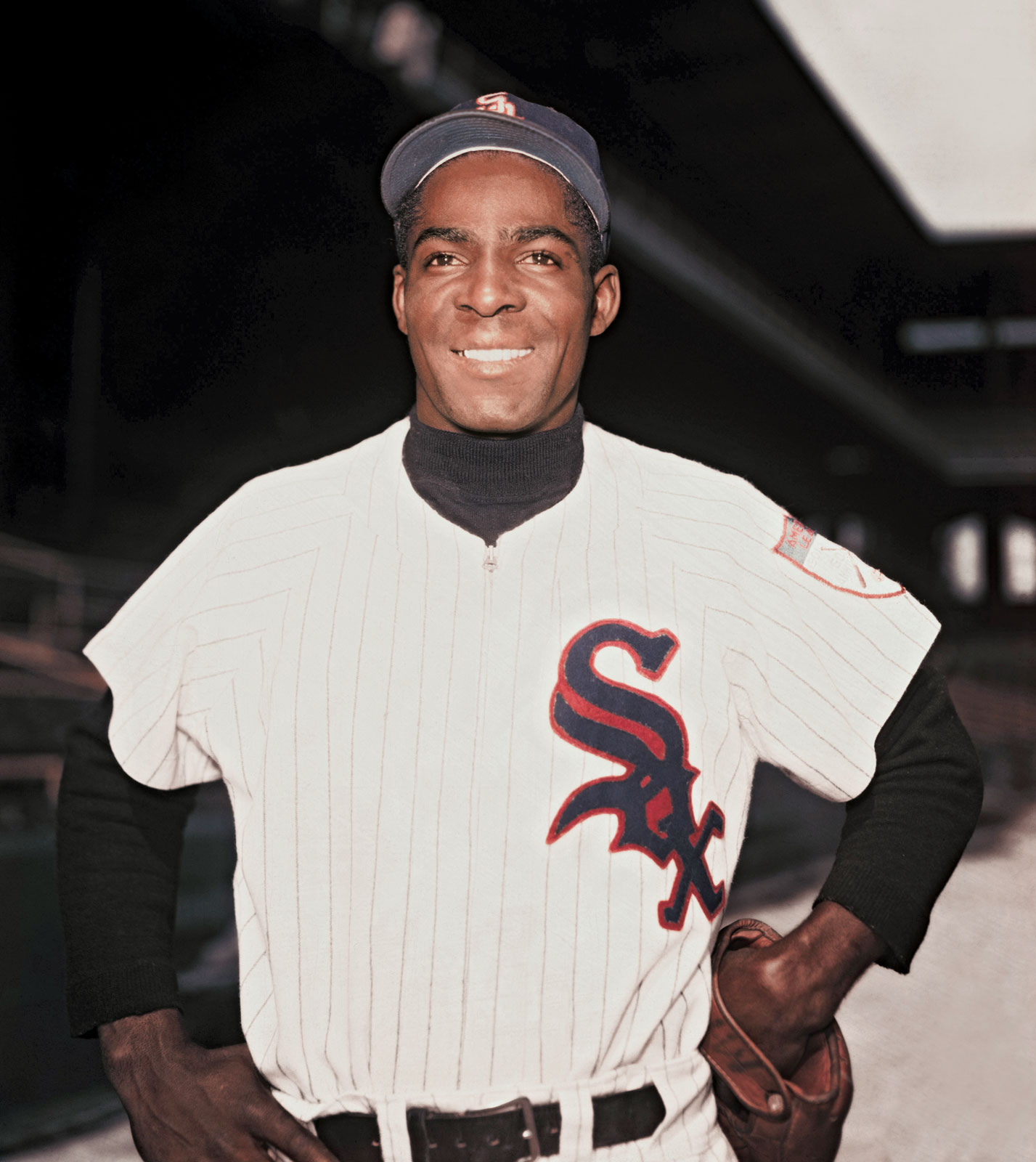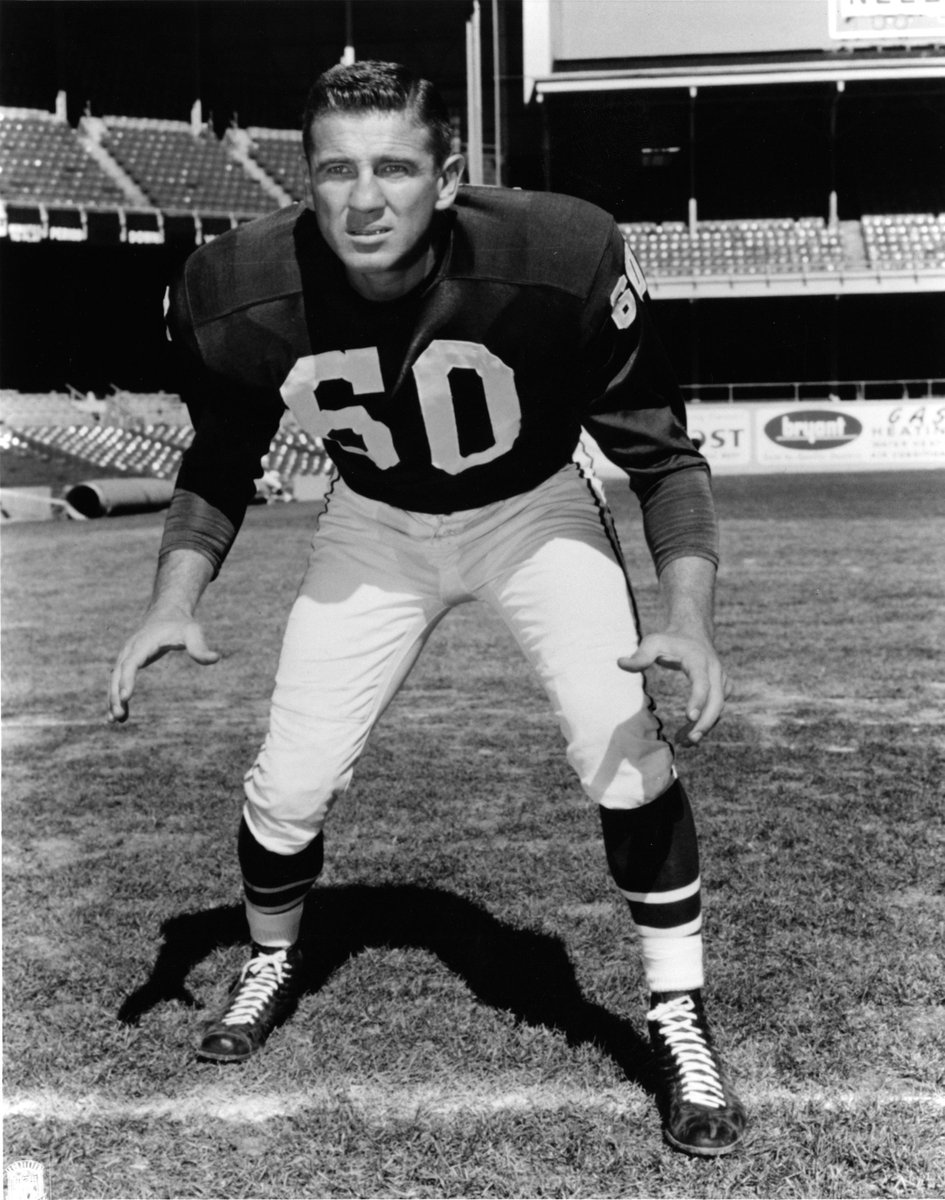
Sunday, March 22, 2015

Chuck Bednarik, 1925-2015

This is my 44th post of the calendar year thus far. And 9 of them have been tributes to sports personalities who've died this year.

And this one is the toughest of them all. Not the toughest to write, but the toughest person. How tough does a man have to be to get the nickname "Concrete"?

*

Charles Philip Bednarik was born on May 1, 1925 in Bethlehem, Pennsylvania, in the Lehigh Valley, a region that produces coal, steel, great football players and high school wrestling champions.

In an interview with NFL Films long after he retired, he went back home, where his elderly mother was still alive. She and Chuck's father were immigrants from what was then the Austro-Hungarian Empire -- their former home is now in Slovakia, and they spoke Slovakian. Mama Bednarik told NFL Films host Steve Sabol, "I told him, 'Don't you hit nobody first. But if he hits you first, get him!'"

After graduating from Bethlehem High School in 1943, with World War II still raging, he enlisted in the U.S. Army Air Force, who made him a waist-gunner on a B-24 bomber. He flew 30 combat missions over Nazi Germany, and won the Air Medal. He was discharged with the rank of 1st Lieutenant.

He used the G.I. Bill to get into the University of Pennsylvania. If you know about Chuck, you're probably amazed that this famously tough guy, a son of Eastern European immigrants, got into an Ivy League school.

Two things to keep in mind. One: He was also one of the smartest players of his era. Two: In Philadelphia, even the Ivy Leaguers are tough. He finished 3rd in the Heisman Trophy voting in 1948 -- despite being a center on offense and a linebacker on defense. Very few offensive linemen have ever come even that close to winning the Heisman. (The winner was running back Doak Walker of Southern Methodist University, soon to star for the Detroit Lions.)

*

Chuck was drafted by the Philadelphia Eagles, defending NFL Champions. Yes, you read that correctly. He followed his former Penn teammate, All-America tackle George Savitsky, to the Eagles. He helped them win the NFL Championship again in 1949.

Until 1957, the Eagles played at Shibe Park -- renamed Connie Mack Stadium in 1953. But it was too small, only 33,000 seats, and its North Philadelphia neighborhood was crumbling. So in 1958, they moved to Franklin Field, Penn's 67,000-seat horseshoe on its University City campus, across the Schuylkill River from Center City. This enabled Chuck to play his pro games at his college field.

By the early 1950s, the NFL went from single-platoon to two-platoon football. This meant that players began playing on only one side of the ball: Either offense only, or defense only. But not Chuck Bednarik: He remained the Eagles' starting center and their starting middle linebacker.

For those of you who grew up in the 1980s like I did: Imagine that Dwight Stephenson and Mike Singletary were the same man, playing for the same team. That was Bednarik. He was the last of "the sixty-minute men." He even wore Number 60, although that had nothing to do with his two-way status.

In those days, athletes weren't paid during the off-season, so they needed to get real jobs. Chuck sold concrete for the Warner Company. Hugh Brown of The Bulletin, a Philadelphia newspaper that went out of business in 1982, gave Chuck the nickname "Concrete Charley," saying he was "as hard as the concrete he sells."

In 1953, the Eagles were playing the Cleveland Browns. Bednarik was snapping for a punt. This required him to have his head down. This was the beginning of the usage of facemasks in the NFL, and the Browns were among the first teams to use them. The Eagles were not. And after snapping the ball, Bednarik looked up, and got clobbered. All he saw when he got hit was the uniform number: 65. When he came to, he saw Number 65 trotting away, and, knowing full well the man couldn't hear him, he pointed, and said, "You son of a bitch. I'll get you. I'll get you!"

He found a copy of the Browns' roster. Number 65 was also a center and linebacker, named Chuck, from a true blue-collar place: East Side of Cleveland native Chuck Noll, a man that Browns coach Paul Brown, himself one of the greatest minds in the history of football, considered so smart that he sent him in to relay plays to quarterback Otto Graham. Noll hated being used as a messenger boy, and when he became head coach of the Pittsburgh Steelers, he trusted quarterback Terry Bradshaw to call his own plays. (And people called Terry dumb.)

Bednarik said it took 4 years for him to get his revenge. Most likely, it was because Noll began playing mostly defense, as a linebacker, and thus not directly opposing a center on most plays. Certainly, it wasn't due to injury: Both men were quite durable. Nor was it due to military service: Bednarik's was done, and, despite being of draft age, Noll didn't miss any playing time for this reason.

It was October 13, 1957, at Connie Mack Stadium. The Eagles won, 24-7. This was a big win, considering that the Browns went on to win the NFL Eastern Division Championship. Late in the game, Bednarik finally had his chance to clobber Noll. And he did, on play after play. At one point, Noll, apparently having forgotten the 1953 hit, yelled that he would take on Bednarik, would take on the entire Eagle team. Even Bednarik had to admit that was pretty tough. Bednarik said that wasn't necessary: When the game was over, he'd be ready for Noll.

When the final whistle blew, Noll, having had enough, came at Bednarik -- with his helmet off. Big mistake. Noll said, "Are you ready, you... " And before Noll could call Bednarik whatever he was going to call him, Bednarik took advantage of the unprotected head, and flattened Noll with one punch.

The result was a brawl that got the attention of one particular spectator at the game: NFL Commissioner Bert Bell -- himself a former Penn player, and the founder of the Eagles, whose office was in Philadelphia. Due to a quirk in the schedule, the same 2 teams were to meet again, this time at Cleveland Municipal Stadium. He hauled Bednarik into his office, and told him that, before taking the field in Cleveland, he had to go into the Browns' locker room and apologize to Noll in front of his teammates, or face what would have been, for that era, a huge fine.

Bednarik took his medicine like a man. He walked in, found Noll, and said, "I want to apologize for what happened in Philadelphia." Noll thought this over for a minute, and said, "Bullshit." Bednarik turned and began to walk off, having done his duty, for all the good it had done. But Noll then said, "All right, I accept your apology." The Browns won the game, 17-7.

But despite all he accomplished as a coach, this is all Noll is known for as a player. Which isn't fair, because he reached 4 NFL Championship Games with the Browns, winning titles in 1954 and '55. He wasn't a great player, but he was a very good one.

Chuck Noll died last year, on June 13. I did not do one of these tributes for him. I should have.

*

Chuck Bednarik played for 14 years, 12 games a season. He missed only 3 games due to injury. This was not necessarily true for his opponents. Most notably, Frank Gifford.

Some cities, like Los Angeles and Miami, like their sports heroes to be flashy. Others, like Philadelphia and Chicago, prefer them to be tough. Blue-collar. They will accept failure, but they will not accept failure to try. They understand it if you fall, as long as you get back up. New York likes to have it both ways: Men like Joe DiMaggio, Joe Namath, Walt "Clyde" Frazier, Derek Jeter. And one of the flashiest New York athletes was Frank Gifford, Hall of Fame running back for the Giants in the 1950s. Until 1960, it never would have occurred to anyone to call Gifford "tough."

On November 20, 1960, the Eagles and Giants, arch-rivals since the Eagles' founding in 1933, played at Yankee Stadium. The winner was probably going to win the NFL's Eastern Division and play in the NFL Championship Game, as the Giants had in 3 of the last 4 years. Since the hosting alternated between the East and West winners in those days, the winner would also host the title game.

The Giants led 10-0 at the half, but blew it. In the 4th quarter, the Eagles' Jimmy Carr picked up a fumble and returned it 38 yards for a touchdown, making it 17-10 Eagles.

With the clock running out, George Shaw, filling in for injured quarterback Charlie Conerly, threw a pass toward Gifford at midfield. Gifford caught the pass, but Bednarik arrived at the same time, and he flattened Gifford, who fumbled. The Eagles recovered.

On the film, this doesn't look like an especially devastating hit. I've seen much worse. What made this the most famous hit in NFL history -- aside from the fact that it was in New York, and involved a New York team, and was seen by a national TV audience -- was how Chuck reacted.

The film shows him reacting to the fumble by jumping around and clapping his hands. Then he pumped his fist, and issued what became his catchphrase: "This fucking game is over!" Which, for all intents and purposes, it was. The final score was, indeed, 17-10 Eagles.

But it was the photograph that proved devastating. It showed Bednarik standing over Gifford, pumping his fist. Gifford is lying on the ground, motionless. Bednarik spent the last 54 years of his life explaining that he didn't even realize Gifford was motionless on the ground in front of him, that he was celebrating the Eagles wrapping up a big win, not the fact that he'd knocked Gifford out. He said he didn't even realize he'd knocked Gifford out.
Legend has it that Gifford was knocked out because, despite wearing a helmet, he hit his head on the frozen grass at Yankee Stadium. This couldn't be true: According to Pro-Football-Reference.com, it was 49 degrees at gametime -- not a particularly notable temperature for mid-November New York, and hardly cold enough to freeze the field.

Gifford was taken to the Giants locker room -- which, at the old Stadium, was also the Yankee locker room -- Gifford's locker was also Mickey Mantle's. Also taken to the locker room for first aid was a security guard who had a heart attack. Frank's first wife, Maxine, didn't know this, and when she went down to the locker room to see Frank, she heard someone say, "He's dead" -- meaning the security guard. When the guard was wheeled out on a stretcher, with his face covered by a sheet, reporters saw this, and thought it was Gifford.

The rumor began to spread that Bednarik had killed him. And when the photo was seen in newspapers across the country the next day, Bednarik looked like a monster, celebrating his "kill."

It got worse. Bednarik went to see Gifford in the hospital the next day, and was told Gifford couldn't receive visitors. But a new rumor circulated, that Bednarik wouldn't see Gifford. It wasn't that he wouldn't, it was that he couldn't.

Gifford missed the rest of the season, and decided to retire at age 30. But he missed the game, and returned in 1962, switching to receiver for safety reasons. He played 3 more seasons and retired again, becoming one of football's greatest broadcasters.

Gifford has always said he never held it against Bednarik. Bednarik said he was tired of people remembering him mainly for one thing. "It was always, 'Oh, you're the guy! You're the guy! You're the guy that got Frank Gifford!'" He was also tired of Howard Cosell, on Monday Night Football, seeing a hard hit, and turning to Gifford and saying, "Just like Chuck Bednarik blindsided you at Yankee Stadium, Giffaroo!"

"Blindsided, my fanny! It was a clean hit," he always said. And it was: Like the infamous Denis Potvin hit on Ulf Nilsson in 1979, or Scott Stevens leveling Eric Lindros in 2000, no penalty was called on it. (And, yes, this profane man would say, "fanny," not "ass." In America, "fanny" means rear end. In Britain, it means the other side, of a woman.)

*

The Eagles did advance to the NFL Championship Game, held at Franklin Field on the day after Christmas, December 26, 1960. At the time, the stadium didn't have lights. Remembering 2 years earlier, when Gifford's Giants and the Baltimore Colts went to overtime, the game was pushed back to a starting time of 12:00 noon.

The Eagles played the Green Bay Packers, in the title game for the 1st time in 16 years. Just 2 years earlier, they were 1-10-1. They had been rebuilt by head coach and general manager Vince Lombardi, a former Giants assistant. The Eagles took a 17-13 lead, thanks to a touchdown by a Philly native, Villanova graduate Ted Dean.

The Packers drove for a winning touchdown. On the last play, as Eagle broadcaster Bill Campbell said, "I wish you could see 67,000 people standing -- standing!" Bart Starr threw over the middle, and running back Jim Taylor caught the pass. But Bednarik, who played 58 1/2 of the game's 60 minutes, met him at the 7-yard-line, and shoved him down, and held him down, as the clock ran out. There was no penalty flag for delay of game.

Taylor said, "Get off me, you son of a bitch!" Bednarik looked up, saw the clock run out, and got up. The film shows him jumping for joy. What it doesn't capture is his words: "You can get up now, you son of a bitch! This fucking game is over!"

*

So were Bednarik's glory days. At age 35, he had played nearly every minute of 13 games (counting the title game). He played 2 more seasons as only a center, and retired. He was elected to the Pro Football Hall of Fame in 1967, his first year of eligibility.

The Eagles retired his Number 60, and made him a charter inductee into the Eagles Honor Roll in 1987. (All the charter inductees were already in the Pro Football Hall of Fame.) He was honored in ceremonies at Veterans Stadium for the 25th Anniversary of the 1960 title team in 1985, and for the 40th Anniversary of the 1948 and '49 title teams in 1988; and at Lincoln Financial Field for the 50th Anniversary of the 1960 title team in 2010. For a while, in the late 1990s and early 2000s, he feuded with Eagle management, but reconciled in 2006.
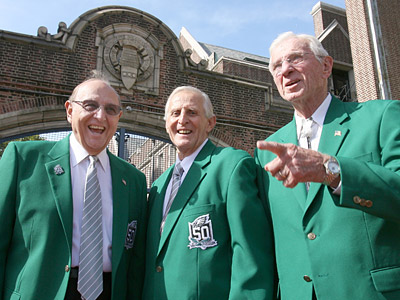
(Left to right: 1960 Eagles Joe Pagliei, Tommy McDonald and Chuck Bednarik,
outside Franklin Field during 50th Anniversary commemorations.)

Chuck was named to the NFL's 50th Anniversary Team in 1969, and its 75th Anniversary Team in 1994. In 1999, The Sporting News made its end-of-century list of the 100 Greatest Football Players. He came in at Number 54, the highest-ranking center, the 8th-ranked linebacker, the highest-ranking career Eagle, and 2nd among all Eagles players behind Reggie White (who, these days, tends to get remembered more as a Packer). In 2010, despite the extra 11 years, he actually moved up when the NFL Network aired the special The Top 100: NFL's Greatest Players.

He became something of a curmudgeon in his later years, the old veteran -- of war and the game -- lamenting what he saw as the insufficient toughness of today's players, and their insufficient respect for players of the past. In essence, he was the NFL's answer to baseball's Bob Feller. But he was always a big draw for NFL Films, giving them several interviews.

But even the toughest men don't live forever. Chuck Bednarik died yesterday morning, at the age of 89. His daughter, Charlene Thomas, said that he'd been suffering from Alzheimer's disease, and she believes the constant hard contact of his 14-year NFL career had something to do with that.

Lots of NFL players, even today, with far greater protection for the head, have fallen victim to brain trauma, including dementia, even in their 50s. This has gotten increasing attention in the last few years.

Whether Chuck, in his final years, understood this well enough to change his mind about the toughness of modern players, only he knew.

With Chuck's death, there are now 5 surviving players from the 1949 NFL Champion Philadelphia Eagles, 65 years later. In alphabetical order, they are: Two-way end Neill Armstrong, backup quarterback Bill Mackrides, two-way halfback Jack Myers, two-way halfback Clyde Scott, and two-way tackle Al Wistert. Armstrong, Mackrides, Myers and Wistert are the last 4 survivors of the 1948 NFL Champion Philadelphia Eagles. (This Neill Armstrong, no relation to the Neil Armstrong who was the 1st man to walk on the Moon, is best remembered as the head coach of the Chicago Bears before Mike Ditka, guiding them to a Playoff berth in 1979.)

From the 1960 NFL Champion Philadelphia Eagles, 54 years later, there are now 22 survivors: Running back Billy Ray Barnes, linebacker Maxie Baughan, running back Timmy Brown, defensive end Marion Campbell, running back Ted Dean, defensive end Riley Gunnels, cornerback Bobby Jackson, quarterback Sonny Jurgensen, defensive end Ed Khayat, center Bill Lapham, receiver Dick Lucas, offensive tackle Jim McCusker, receiver Tommy McDonald, defensive tackle Don Owens, tight end Pete Retzlaff, tight end Jerry Reichow, running back Theron Sapp, offensive tackle J.D. Smith, linebacker Chuck Weber, defensive tackle John Wilcox, defensive end Jerry Wilson and guard John Wittenborn.

(Campbell and Khayat would both become head coaches of the Eagles; Retzlaff, general manager. John Madden was drafted by the Eagles as an offensive tackle in 1959, but hurt his knee in preseason, and never played in the NFL. But quarterback Norm Van Brocklin saw him walk into the locker room on crutches, and invited him to watch film with him. Madden later said that's how he became a coach, by studying film with a quarterback on his way to the Hall of Fame.)

That 1960 title remains the Eagles' last. Since it happened, they have fallen, and risen again -- 4 separate times, and have recently risen again for the 4th time. They have left Franklin Field, moved into Veterans Stadium, left the Vet, and moved into Lincoln Financial Field. The Vet has been demolished, while, amazingly, Franklin Field still stands on Penn's campus, as it has since 1923. (A predecessor had stood on the site since 1895.) Since Chuck got off Jim Taylor 54 years and 3 months ago, the Eagles have become a cultural phenomenon, Philadelphia's most popular sports team. But they have never won another title, only reaching 2 more NFL championship games, both under the Super Bowl name, and losing both.

But Chuck Bednarik remains the Eagle icon. Go to an Eagles home game, and you can still find fans, whose parents weren't born yet in Christmas week 1960, in the last full month of the Ike Age, the time of the Eagles' last World Championship, who file into The Linc wearing 1960 throwback jerseys with Bednarik's name, his Number 60, and, sometimes, his autograph on them. (No doubt purchased from, or online through, the famed Philly nostalgia store Mitchell & Ness.)

In one of those NFL Films interviews, Bednarik pointed out that people he met didn't always point out that he was "the guy that got Frank Gifford":

I still get people come up to me in airports, saying, "Are you Chuck? Hiya, Chuck!"

And, thinking of that, the man remembered as one of the NFL's ultimate tough guys broke out into a big smile, with a twinkle in his eye, that actually suggested sentimentality.

What the hell: He earned the right to be fondly remembered, and the right to be sentimental about it.

UPDATE: Bednarik was buried at Saint Joseph Calvary Cemetery in Limeport, Lehigh County, Pennsylvania.

Sunday, March 15, 2015

Al Rosen, 1924-2015

It's hard to say that a man who played 10 years in the major leagues, had a long and distinguished career as a major league executive, was admired for decades, and lived into his 90s faced unfairness.

But Al Rosen did.

Albert Leonard Rosen was born in February 29, 1924, in Spartanburg, South Carolina. Actually, while the Earth has gone around the sun 91 full times since then, his birthday falling on Leap Year Day meant that he faced only 22 birthdays.

His father left the family shortly after he was born, and his mother and grandmother took him to Miami -- meaning he did the opposite of what Jewish people stereotypically do: He grew up in Miami, and went to New York when he got old.

A 3rd baseman, he was signed by the Cleveland Indians, and was Texas League Most Valuable Player in 1947, starring for the Oklahoma City Indians. Like Hank Greenberg before him, and Ryan Braun long after him, he was nicknamed the Hebrew Hammer.

His performance got him a late-season call-up. He made his major league debut on September 10, 1947, at the original Yankee Stadium. Wearing Number 17, he pinch-hit for Joe Frazier -- not the heavyweight boxing champion, but the man who went on to manage the Mets between Yogi Berra and Joe Torre -- who was injured in mid-swing while pinch-hitting for Indians catcher Jim Hegan. This was in the top of the 6th inning, against Vic Raschi. Rosen struck out, and the Yankees won, 7-4.

Because the Indians had the fine-fielding Ken Keltner at 3rd base, Rosen only made 65 major-league plate appearances before his 26th birthday. This included 5 in their 1948 World Championship season, still the last one the club has won. But manager/shortstop Lou Boudreau did include him on the World Series roster, and he made a plate appearance, and thus he got a World Series ring. That late start was the 1st thing that may have cost him membership in the Baseball Hall of Fame. (He served in World War II, but was just 21 when the war ended, so it's hard to say the war seriously delayed his arrival in the majors.)

In 1950, the Indians trading the injured Keltner, and Rosen, now wearing Number 7, was their regular 3rd baseman for the next 7 season. And what seasons they were. In 1950, he batted .287, led the American League with 37 home runs, had 106 RBIs, and drew 100 walks, still a record for an Indians rookie 65 years later. Those 37 homers were an AL record until Mark McGwire -- possibly already using steroids -- broke in in 1987.

Rosen did all this, despite playing his home games in Cleveland Municipal Stadium, whose expansive dimensions and rough weather (it was right on Lake Erie) made it a pitcher's park.

He also led the AL in being hit by 10 pitches. How many of those were due to his being Jewish, only the pitchers who did it knew for sure. Anti-Semitism may have been a 2nd reason he's not in the Hall of Fame.

Once, during a game against the Chicago White Sox, an opposing player shouted from the dugout, calling him a "Jew bastard." He didn't recognize the voice, but he walked over to the dugout, and said to the entire team, "I'll see you after the game, you son of a bitch!" The SOB didn't show, and he never found out who said it.

Another time, against the Boston Red Sox, he was playing 3rd base, wen a Sox player yelled anti-Semitic names. This time, Rosen saw who was doing it: Matt Batts. He called time, ran to the front of the Sox dugout, and challenged Batts. The challenge was not met. On occasion, Rosen mentioned that he wished he had a name that sounded more Jewish, like "Rosenstein."

In 1951, he had 102 RBIs, and hit 24 home runs, 4 of them grand slams, a club record until 2006, when Travis Hafner hit 5. In 1952, he led the AL with 105 RBIs and 297 total bases, and made the 1st of 4 All-Star Games. The Gold Gloves weren't established until after he retired as a player, but he was generally regarded as a good fielder. The unavailability to him of that particular recognition may be a 3rd reason he's not in the Hall of Fame.

In 1953, Rosen had his best season -- according to The Bill James Historical Baseball Abstract, the best season ever by a 3rd baseman. He batted .336, just behind Mickey Vernon of the Washington Senators for the batting title. Another hit, and he would have won the Triple Crown, as he led the AL in home runs with 43 and RBIs with 145, still an Indians record 62 years later.

He also led the AL in runs, slugging percentage and total bases. His OPS+ was a whopping 180, meaning that, in that season, he was 80 percent better at producing runs than the average player. He was named AL MVP, even though, as they had in 1951 and '52, the Indians finished 2nd to the Yankees.

In 1954, despite the Yankees winning 103 games, the Indians finally got over the big Bronx hump, winning 111 to break the 1927 Yankees' AL record. (This record has only been surpassed by the 1998 Yankees and the 2001 Seattle Mariners.) Rosen batted .300 with 24 homers and 102 RBIs -- a comedown, to be sure, but a big help in winning the Pennant. But they fell victim to New York again, this time getting swept by the Giants in the World Series, thanks to Willie Mays' glove, Dusty Rhodes' bat and Johnny Antonelli's arm. Losing that Series may be a 4th reason why Rosen is not in the Hall of Fame.

It would be 41 years before the Indians won another Pennant, and injuries to Rosen's back and leg were among the many reasons why. They picked up Ralph Kiner for 1955, but he, too, had a bad back, and had to retire after that season. In 1955, Rosen's average dropped from .300 to .244, although he still had 21 homers and 81 RBIs.

But 1956 was a miserable season for him, as his injury got worse. After playing in 612 of a possible 618 games from 1950 to '53, he was down to 121 games. His production rate improved, as he batted .267, with 15 homers and 61 RBIs. But it got too painful to play, and, at age 32, he hung up his spikes, with just 192 home runs. So not only did he lose a few years at the beginning of his career, he lost a few at the end. Essentially, he had half a career. That's a 5th reason why he's not in the Hall of Fame.

*

A 6th reason why he's not in the Hall of Fame is that they don't combine playing and non-playing achievements. None of the 4 major North American sports' halls of fame does. In baseball, in particular, this has hurt Rosen, Fred Hutchinson, Gil Hodges, Lou Piniella and Mike Hargrove.

Baseball-Reference.com has a Hall of Fame Monitor, on which a score of 100 indicates a "Likely HOFer." Rosen came in at 82, meaning he fell a bit short. They also have a Hall of Fame Standards, on which a score of 50 represents the "Average HOFer." This is more weighted toward career numbers, and he came in at just 28, well below consideration.

They also have Similarity Scores, which is weighted toward players of the same or a similar field position. Rosen's 10 Most Similar Players are Bob Horner, Evan Longoria, Josh Hamilton, Jim Ray Hart, Charlie Keller, Phil Nevin, Ryan Zimmerman, Matt Kemp, Wally Post and Preston Wilson. None of them is in the Hall -- and you'll notice that some of them also had their careers short-circuited by injury: Horner, Keller, and now Kemp. Granted, Longoria, Hamilton, Zimmerman and Kemp are still active, but I wouldn't bet on any of them making it.

So Rosen's chances of ever getting into the Hall as a player are not good. Which may not be fair, but the Hall of Fame isn't for guys who were great for 5 years -- unless you're Dizzy Dean or Sandy Koufax -- it's for guys who were great for much longer.

*

"Flip" Rosen became a stockbroker, and a very successful one. But for 22 years, no major league team asked him to return to the game, in any capacity.

That ended in 1978. Yankee owner George Steinbrenner, who grew up in Cleveland and remembered him with the Indians, asked him to become team president and general manager, succeeding Gabe Paul, who decided he'd had enough of George, and went back to running the Indians.

When Billy Martin had his midseason meltdown, and resigned one step ahead of George's ax, Rosen recommended that George hire his former Indians pitching teammate, Bob Lemon, to replace Billy. It wasn't out of the blue: Lemon had been the pitching coach on the Yankees' 1976 Pennant winners, and had previously managed the White Sox and the Kansas City Royals. He'd just been fired as White Sox manager, so he was available. He came in, calmed the team down, and made it back-to-back World Series wins.

Rosen now had a 2nd World Series ring, 30 years after his 1st, and, this time, he was a true contributor.

There's an interesting note that brings us back to the subject of his religion. When the Yankees and the Red Sox finished in a tie for the AL Eastern Division title, a Playoff was scheduled for October 2. Rosen and Red Sox GM Haywood Sullivan got on the phone with AL President Lee MacPhail, who flipped a coin to decide home-field advantage for the game. Rosen called heads, and it came up tails. (This had nothing to do with his nickname: He was known as Flip long before this.)

When George found out the game would be in Boston, he flipped: "How the hell could you call heads, when any dummy knows that tails comes up 75 percent of the time?" (I don't know where George got that piece of info. Maybe from "my baseball people." I'd certainly never heard it before I wrote this post.) Of course, playing the game at Fenway probably saved the Yanks: Bucky Dent's 7th inning home run would have been a long out at Yankee Stadium, and those 2 plays that Lou Piniella faced in the 9th inning might have both been home runs.

But when the Yankees got to their hotel in Kansas City, to face the Royals in the AL Championship Series, there was a message for Rosen. It was from a Jewish woman, who pointed out that October 2, in 1978, was Rosh Hashanah, the Jewish New Year. Rosen had refused to play on the high holy days, as had Greenberg before him, and as would Koufax after him. But this time, he had sat next to Steinbrenner all game long, and the woman said she saw him on TV.

Al had the perfect response. He asked the woman if she was Jewish as well. She said she was. He asked, "Why were you watching TV on Rosh Hashanah?"

The 1979 season was one of the hardest in Yankee history, and George's various complaints and rages finally caught up with Al, and he quit. George calmed down, and offered him a lifetime contract for $1 million a year, at a time when no player was yet making that much. Al refused, telling George, "I'll always consider you a friend, but I could never work for you again."

Another man who could never work for George again was Dr. John McMullen, an engineer who had graduated from the U.S. Naval Academy and, after serving, became a shipping engineer, which is how he met George, and became one of his "limited partners" in buying the Yankees in 1973. In 1979, he sold out, saying, "There is nothing so limited as being one of George Steinbrenner's limited partners."

McMullen then bough the Houston Astros, and hired Rosen. Together, they signed free-agent pitcher Nolan Ryan, a native of the Houston suburbs, and made him the first $1 million-a-year player. The Astros won the National League Western Division for the 1st time in 1980, and made the Playoffs again in the strike-forced split season of 1981. But they couldn't keep it together, and, in 1985, Rosen moved on.

He moved on to the San Francisco Giants, and helped them win the 1987 NL West title and the 1989 Pennant. In the latter year, he was named NL Executive of the Year, making him the only person to date to win that award and an MVP. He left the Giants in 1992, as Bob Lurie tried to move the team to Tampa Bay, before selling them to a group that kept them in San Francisco.
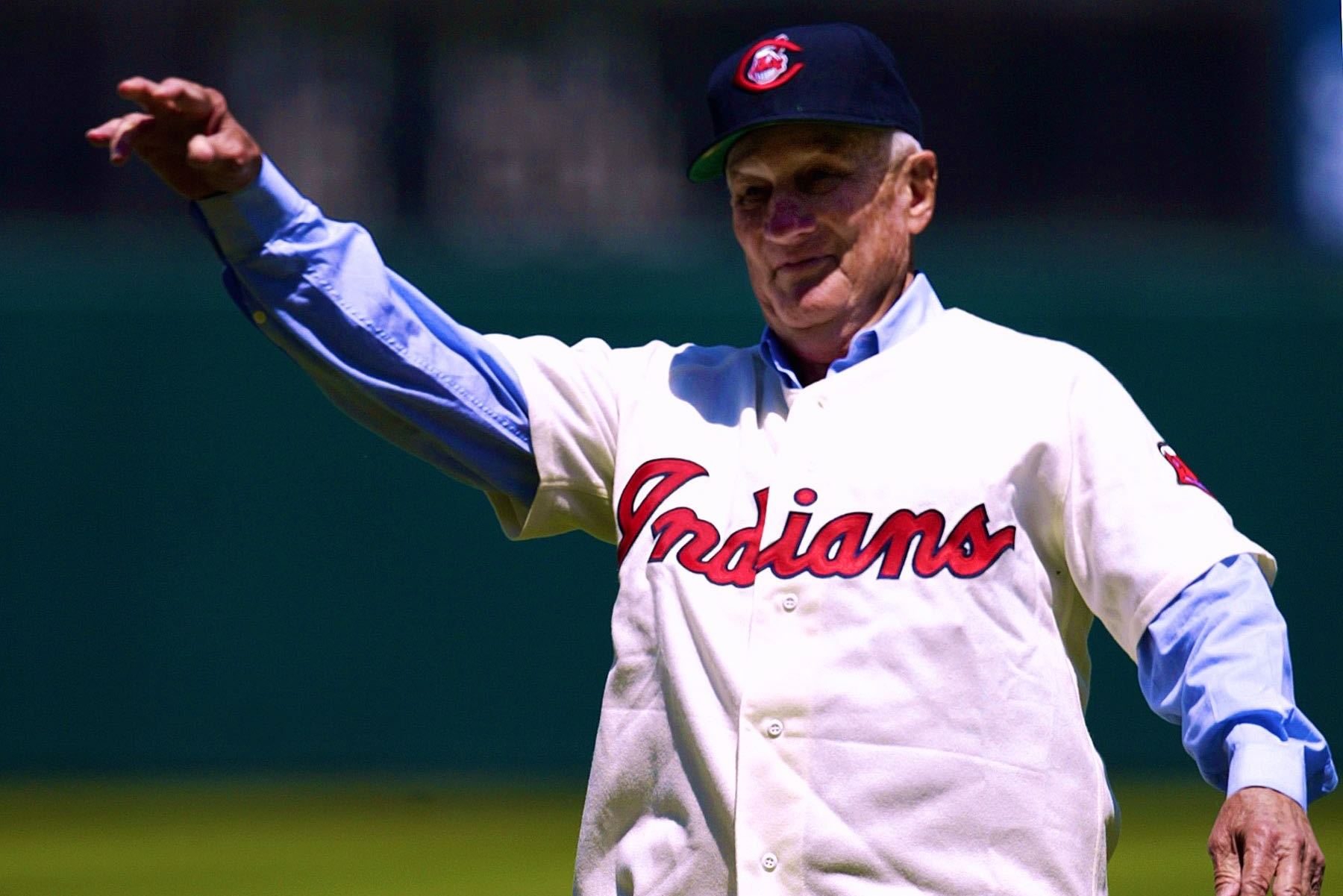
Throwing out the ceremonial first ball
before a 1997 World Series game in Cleveland.

Al mainly consulted with major league teams after that, and, changing his mind about working for George again, was a special assistant to GM Brian Cashman in 2001 and '02, helping the Yankees win another Pennant.

But he hasn't been elected to the Hall of Fame as an executive, either. And now, he'll never be elected during his lifetime. He died on Friday, in the resort community of Rancho Mirage, California. He married twice, had 3 children with his 1st wife, and 2 stepchildren with his 2nd wife.

Al Rosen isn't in the Baseball Hall of Fame as a player, or as an executive. And that's a bit unfair. He was a Hall of-Fame-worthy figure in baseball history, and if you're a fan of the Indians, the Yankees, the Astros or the Giants; or, if you're a Jewish baseball fan; or, heck, if you're a baseball fan, you owe him your thanks.

Thank you, Al.

*

Rosen's death means that there are now only 3 living players from Game 1 of the 1954 World Series, when Mays made "The Catch": Mays, Monte Irvin, and Rosen's usual backup at 3rd base for the Indians, Rudy Regalado.

It also means that there are only 2 players left who played in the 1948 World Series: Eddie Robinson of the Indians, and Clint Conatser of the Boston Braves. Alvin Dark opposed Rosen's Indians for the '48 Braves and the '54 Giants, but he died this past November.

UPDATE: Rosen's final resting place is not publicly known.

Monday, March 9, 2015

How Long It's Been: Arsenal Beat Manchester United at Old Trafford

Left to right: Tomas Rosicky,
Emmanuel Adebayor and Kolo Toure

Today -- tonight, local time -- Arsenal defeated Manchester United 2-1, at Man U's historic ground, Old Trafford, and knocked them out of the FA Cup.

Arsenal advance to the Semifinal, to play the winner of the Quarterfinal replay between Reading and Bradford City. The other Semifinal will be between Birmingham-based Aston Villa and the winner of the Quarterfinal replay between Liverpool and Blackburn Rovers.

Old Trafford -- also known as the Theatre of Dreams if you love United, Old Tramsheds or Old Trashdump if you have taste -- has been a house of horrors for Arsenal. Although they clinched the League title there in 2002, and a key win there in 1998 set them on the path to winning the title, they'd lost some big games there, often with the "assistance" of United-friendly officials. This includes a notorious August 2009 defeat engineered by referee Mike Dean, a Vladimir Putin lookalike; and the last FA Cup match between the clubs before this game, a 2011 Quarterfinal.

Even the retirement of longtime United boss Alex Ferguson -- I refuse to give that corrupt bastard the knighthood title "Sir" -- didn't stop that, as they beat Arsenal last season, despite having their worst season in over 30 years.

This time, referee Michael Oliver didn't fall (if you'll pardon the choice of words) for United's cheating. Dives were executed by Ashley Young, Adnan Januzaj and Angel Di Maria, their major midseason pickup. (But not, oddly, by United captain and diver extraordinaire Wayne Rooney, who scored their only goal.) With Arsenal up 2-1 thanks to goals by left back Ignacio "Nacho" Monreal (his 1st goal in 2 years) and former United player Danny Welbeck (thanks to 2 major defensive lapses), Di Maria dove (or is it correct, in this sport, to say, "dived"?), and Oliver correctly gave Di Maria a yellow card.

Then, Di Maria did the one thing you must never do to an official: He touched him. Put his hand on him. United players, and Rooney in particular, have surrounded referees for years in the hope of intimidating them into giving them favorable calls, and have even cursed them out. But they don't touch the refs. Di Maria did, and, less than 30 seconds after receiving his 1st yellow card, he received his 2nd: Automatically, a sending-off (thrown out of the game) and a 1-game suspension, taking effect with United's next domestic game. (In other words, their next game, since they didn't qualify for Europe at all this season, for the 1st time in over 20 years.)

I wasn't born yet when man first landed on the Moon. I have, however, seen in my lifetime the fall of the Berlin Wall and the election of a black President of the United States. Now, I have seen the sending-off of a Manchester United player, at Old Trafford, against Arsenal, with Arsenal leading.

Even a "Fergie Time" of 5 minutes' stoppage time added at the end of the 2nd half couldn't help the bastards. Full-Time, Manchester United 1-2 Arsenal.

The Manc dragon has been slain. Along with Arsenal having beaten Manchester City away earlier this season, the old saw, "Arsenal can't win big games away" has been shattered.

The last Arsenal win at Old Trafford was on September 17, 2006. That's 8 years, 5 months and 16 days. How long has that been?

*

Here are the starting lineups for the teams on that day: 

Manchester United: Tomasz Kuszczak; Gary Neville, Rio Ferdinand, Wes Brown, Mikael Silvestre; Darren Fletcher, Paul Scholes, John O'Shea, Cristiano Ronaldo; Wayne Rooney, Louis Saha. Silvestre was injured, and was replaced in the 23rd minute by Patrice Evra. Rooney was subbed off in the 77th for Ole Gunnar Solskjaer. And Scholes was subbed off in the 78th by Paul Carrick.

Of these players, only Rooney and Carrick are still playing for United, and both were in the game tonight. Neville, Scholes, Saha and Solskjaer have retired. (So have Ryan Giggs and Neville's brother Phil, who were injured and thus unavailable for this game.)

Arsenal: Jens Lehmann; Emmanuel Eboue, Johan Djourou, Kolo Toure, William Gallas; Tomas Rosicky, Freddie Ljungberg, Gilberto Silva, Cesc Fabregas, Aleksandr Hleb; Emmanuel Adebayor. Hleb was subbed off for Julio Baptista in the 68th, while Adebayor, who scored the game's only goal in the 86th, was subbed off for the defense-minded Mathieu Flamini in the 88th, as Wenger tried to hold the lead.

Of these players, only Rosicky is still with Arsenal, although Flamini left and has returned; neither got into today's game. Also still with Arsenal is Theo Walcott, an unused substitute that day and also today. Lehmann and Ljungberg have retired, as has Thierry Henry, who was injured and unavailable for this game. Current Arsenal star Alex Oxlade-Chamberlain was 13, and Gedion Zelalem was 9.

Despite the win, Arsenal, in its 1st season in the Emirates Stadium after 93 years at the Arsenal Stadium, nicknamed Highbury for its neighborhood, would only finish 4th in the Premier League, while United won it again. The FA Cup, then held by Liverpool, would be won by Chelsea, who would also win the League Cup, becoming only the 3rd team to win both domestic cups in the same season -- the "Cup Double." Arsenal did it in 1993, and Liverpool in 2001.

Chelsea beat Arsenal in the League Cup Final, despite Arsenal's Abou Diaby kicking Chelsea's despicable captain John Terry in the face and knocking him out of the game. It was an accident, of course: Knowing Diaby, if he'd tried it on purpose, he not only would have failed, but injured himself in the process.

Adebayor would later leave Arsenal under dubious circumstances, and make an annoyance of himself against Arsenal for both Manchester City and Arsenal's North London arch-rivals, Tottenham Hotspur.

Yorkshire club Sheffield United, South London club Charlton Athletic, and Hertfordshire club Watford were relegated out of the Premier League at the end of that 2006-07 season, and haven't returned since. Manchester area clubs Bolton Wanderers and Wigan Athletic, Berkshire club Reading, Hampshire club Portsmouth and North-East club Middlesbrough were also in the Premiership then, but are not now.

Alex Ferguson has since retired as Man U manager, replaced by David Moyes, Giggs, and Louis Van Gaal. Wenger is the only Premiership manager still managing the club he was managing at the time. Of the captains of the 20 teams in the League that season, only Terry and, until the end of this season, Steven Gerrard of Liverpool are still captains of the same team. Indeed, most of the other 18 captains are retired now.

The previous May, Arsenal had fallen to Barcelona, in controversial circumstances, in the UEFA Champions League Final. The MLS Cup had been won by the Houston Dynamo. The New York Red Bulls, who had been the New York/New Jersey MetroStars until the year before, made the Playoffs despite a losing record.

Football legends Alan Ball, Bobby Robson, Nat Lofthouse, Bill Foulkes and Tom Finney of England; Ian Porterfield and Dave Mackay of Scotland; Gary Speed of Wales; Enzo Bearzot and Giorgio Chinaglia of Italy; Helmut Haller, Ottmar Walter, Bert Trautmann and Udo Lattek of Germany; Ferenc Puskás and Gyula Grosics of Hungary; Nils Liedholm of Sweden; Fyodor Cherenkov of Russia; Eusébio and Mário Coluna of Mozambique by way of Portugal; Alfredo Di Stéfano of Argentina; and Sócrates, Djalma Santos, Gilmar, Nílton dos Santos and Hilderaldo Bellini of Brazil were all still alive. Now, none of those is.

Current Man United manager Louis van Gaal was managing AZ Alkmaar in the Netherlands. New York Red Bulls manager Jesse Marsch was managing the ill-fated Chivas USA in the Los Angeles area. New York City FC manager Jason Kreis was playing for Real Salt Lake.

Tom Coughlin of the Giants was the only manager of a New York Tri-State Area team that's still got that job. Joe Girardi of the Yankees was managing the Florida Marlins. Terry Collins of the Mets was managing in Japan. Alain Vigneault of the Rangers had just become head coach of the Vancouver Canucks. Todd Bowles of the Jets was the defensive backs coach for the Dallas Cowboys. Lionel Hollins of the Nets was an assistant coach with the Memphis Grizzlies. John Hynes of the Devils was coaching with the U.S. national hockey team. Jack Capuano of the Islanders was an assistant coach for their farm team, the Bridgeport Sound Tigers. And Derek Fisher of the Knicks was playing for the Utah Jazz.

The reigning World Champions in the major North American sports were the Chicago White Sox, the Pittsburgh Steelers, the Miami Heat (with Dwayne Wade but not yet with LeBron James) and the Carolina Hurricanes. The Heavyweight Championship of the World was heavily fractured between 5 governing bodies, and none of the pretenders could be taken seriously as the champ.

The monarch of Great Britain was Queen Elizabeth II -- that hasn't changed -- while the Prime Minister was Tony Blair. The Prime Minister of Canada was Stephen Harper. The President of the United States was George W. Bush. His father George H.W. Bush, Bill Clinton, Jimmy Carter, Gerald Ford, their wives, and the widow of Lyndon Johnson were all still alive.

The Mayor of London was Ken Livingstone, and of Manchester David Sandiford, having recently succeeded to the office upon the death of James Ashley. The Mayor of New York City was Michael Bloomberg, the Governor of New York was George Pataki (about to give way to Eliot Spitzer), and the Governor of New Jersey was Jon Corzine.

Same-sex marriage was legal in Massachusetts. Most other States were willing to settle for something called "civil unions," as long as it wasn't called "marriage." For millions of Americans, the idea that two people of the same gender could marry each other was ridiculous. Then again, so was the idea that corporations were "people" and entitled to the same rights thereof.

The Olympic Games have since been held in China, Canada, Britain and Russia. The World Cup had just been held in Germany, with Italy winning, and has since been held in South Africa and Brazil.

There were still living veterans of World War I, the Mexican Revolution, the Bolshevik Revolution, Mussolini's March On Rome, and the Irish and Turkish Wars of Independence. There were still living survivors of the sinking of the Titanic and the Lusitania, and the Ludlow Massacre.

The Pope was Benedict XVI. The current Pope, Francis, was Cardinal Jorge Mario Bergoglio, and the President of the Argentine Episcopal Conference. There have since been 2 Presidents of the United States, 2 Prime Ministers of Britain, and 2 Popes.

There had been 6 Harry Potter novels and 4 A Song of Ice and Fire novels; but while 4 Harry Potter movies had been released, Game of Thrones had not yet premiered on television.

Two major films releases that month looked at a pair of long-ago Los Angeles murders: The Black Dahlia (1947) and that of Superman actor George Reeves in Hollywoodland (1959). Remakes of The Wicker Man with Nicolas Cage and All the King's Men with Sean Penn did not fare well, either critically or commercially. The Queen premiered, starring Helen Mirren as Elizabeth II, dealing with the aftermath of the death of Princess Diana 9 years earlier.

Daniel Craig was about to debut as James Bond in Casino Royale. Brandon Routh had made his one and only appearance as Superman, Christian Bale was now Batman, Tobey Maguire was still Spider-Man, and David Tennant was The Doctor. No one had yet heard of Don Draper, Walter White, Jax Teller, Katniss Everdeen, Richard Castle, Leslie Knope or Sarah Manning.

The Walt Disney Company, which owned both ABC and ESPN, had just moved Monday Night Football, one of the premier franchises of the former, to the latter for its 37th season. NBC had just debuted Sunday Night Football. The Rachel Ray Show, Jericho, Brothers & Sisters, Heroes, and the U.S. version of Ugly Betty all debuted that month. Dexter, Friday Night Lights and 30 Rock would debut the next month.

The Number 1 song in America was "SexyBack" by Justin Timberlake. I said at the time that if he's bringing sexy back, that's an endorsement for homeliness. Weird Al Yankovic had his 1st Top 10 hit after nearly 30 years of song parodies, turning Chamillionaire's "Ridin'" (a.k.a. "Ridin' Dirty") into "White & Nerdy."

John Mayer released Continuum. Black Eyed Peas singer Fergie released her 1st solo album, The Dutchess. Tower Records was liquidated, saddening audiophiles throughout the New York Tri-State Area. Its main store was in Manhattan's East Village, just around the corner from legendary music club CBGB, which also closed, with club legend Patti Smith playing the final show.

Inflation has been such that what $1.00 bought then, $1.16 would buy now. Or, more to the point of the country in question, what £1.00 bought then, £1.33 would buy now. A U.S. postage stamp cost 39 cents, and a New York Subway ride $2.00. The average price of a gallon of gas was $2.63, a cup of coffee $2.30, a McDonald's meal (Big Mac, fries, shake) $6.79, a movie ticket $6.42, a new car $23,629, and a new house $308,100. The Dow Jones Industrial Average closed the previous Friday at 11,560.77.

Twitter and YouTube had recently debuted, but most people were only becoming aware of them and hadn't logged on. Facebook was still a relatively new phenomenon, and MySpace was still more popular. Most mobile phones were still of the flip-open variety. Sony PlayStation 2 and Xbox were battling to be the leading home video game system.

As Summer turned to Fall in 2006, Australian TV legend Steve Irwin was killed while filming a segment for his wildlife show. Nineteen people were shot in an attempted massacre at a Montreal college; just 1 died. A coup removed the Prime Minister of Thailand from power. A plane collision over the Amazon jungle of Brazil killed 155 people. Muhammad Yunus and his Grameen Bank, for their "microloans," were awarded the Nobel Peace Prize. And the International Astronomical Union redefined what is a "planet," demoting Pluto, reducing the population of our solar system from 9 full planets to 8.

Golf legend Byron Nelson, and 2-time Olympic decathlon champion Bob Mathias, and Italian soccer legend Giacinto Facchetti died. No one particularly famous yet was born, but the world had, for the most part, not yet heard of the Kardashian sisters (except maybe Kim as Paris Hilton's friend), Justin Bieber and the "stars" of Jersey Shore.

September 17, 2006. Arsenal went to Manchester United's home ground of Old Trafford, and won.

Now, it has happened again. Man U's last serious chance at a trophy is gone, and Arsenal's last serious chance at a trophy just got a lot more serious, as they head to the Semifinal, at the new Wembley Stadium. "We're the famous Arsenal, and we're going to Wemberly!"

Saturday, March 7, 2015

New York's Teams: How They Debuted

In honor of New York City FC's 1st game that counts, tomorrow, here is how every other New York major league sports team played theirs:

May 1, 1883: New York Gothams -- eventually known as the Giants. At the original Polo Grounds in Manhattan (111th Street and 5th Avenue), they beat the Boston Beaneaters (today's Atlanta Braves), 7-5.


May 1, 1884: Brooklyn Atlantics -- eventually known as the Dodgers. In Washington, they lost to Washington, 12-0. (They won their next 3, though.)


April 22, 1903: New York Highlanders -- eventually known as the Yankees. At National Park in Washington (predecessor to Griffith Stadium), they lost to the Washington Senators (today's Minnesota Twins), 3-1.


October 11, 1925: New York Giants (football). At the Providence Cycledrome in Rhode Island, they lost to the Providence Steam Roller, 14-0. (The Steam Roller went out of business in 1931.)

December 2, 1925: New York Americans. At Duquesne Gardens in Pittsburgh, beat the Pittsburgh Pirates, 2-1. (The Pirates, named for the city's baseball team, became the Philadelphia Quakers in 1930, and went out of business a year later.)

November 16, 1926: New York Rangers. At "the old Madison Square Garden," they beat the Montreal Maroons, 1-0. (The Maroons went out of business in 1938.)

September 13, 1931: Brooklyn Dodgers (football). At Universal Stadium in Portsmouth, Ohio, lost to the Portsmouth Spartans, 14-0. (These Dodgers went out of business in 1944, while the Spartans became the Detroit Lions in 1934. The site, now named Spartan Municipal Stadium, was rebuilt after a fire in the 1990s, and now hosts high school games.)

November 1, 1946: New York Knickerbockers (Knicks for short). At Maple Leaf Gardens in Toronto, beat the Toronto Huskies, 68-66. (The Huskies may have played the first 1st game in NBA history, but only played the league's 1st season, and went out of business.)

September 11, 1960: New York Titans -- eventually known as the Jets. At the Polo Grounds, beat the Buffalo Bills, 27-3.

April 11, 1962: New York Mets. At Sportsman's Park in St. Louis, lost to the St. Louis Cardinals, 11-4.

October 23, 1967: New Jersey Americans -- known today as the Brooklyn Nets. At the Teaneck Armory in Teaneck, New Jersey, lost to the Pittsburgh Pipers, 110-107. (The Pipers would win the ABA title in that 1st season, but would go out of business in 1972. The Armory still stands, but no longer hosts sporting events.)

April 17, 1971: The Original New York Cosmos. At Busch Memorial Stadium in St. Louis, lost to the St. Louis Stars, 2-1. (The Cosmos, and the North American Soccer League as a whole, went out of business in 1985. The reborn Cosmos are still in North American soccer's "second division," so I won't count these "CosFauxs" here.)

October 7, 1972: New York Islanders. At the Nassau County Veterans Memorial Coliseum, lost to the Atlanta Flames, 3-2. (This was also the Flames' first game. They moved to Calgary in 1980.)

October 5, 1982: New Jersey Devils. At the Brendan Byrne Arena in East Rutherford (now the Izod Center), tied the Pittsburgh Penguins, 3-3.

April 13, 1996: New York/New Jersey MetroStars -- eventually known as the New York Red Bulls. At the Rose Bowl in Pasadena, California, lost to the Los Angeles Galaxy, 2-1.

June 21, 1997: New York Liberty. At the Forum in Inglewood, California, beat the Los Angeles Sparks, 67-57. (As with the Knicks, this was the 1st game in the history of their league.)

March 8, 2015: New York City Football Club. They play Orlando City F.C., also making their competitive debut, at the Citrus Bowl in Orlando.

UPDATE: A 2nd-half goal by Mix Diskerud seemed to give NYCFC the win, but Brazilian legend Kaka scored for Orlando City in stoppage time, and the game ended in a 1-1 draw.

Monday, March 2, 2015

March 2, 1995: My Big Fat Boston Mistake

Twenty years ago today, I made a big fat mistake. And it was because I am a sports nut.

As regular readers of this blog are aware, I root for the New York Yankees. That means I root against the Boston Red Sox, and thus also tend to not like the other Boston teams.

I also root for the New Jersey Devils. Granted, that's a lot less history. But, at times, I take it a little more personally, since, unlike the Yankees, the Devils are actually my home-State team. More than that, they now play in Essex County, where I was born (although I haven't lived there since I was a toddler), and in Newark, where both of my parents grew up.

*

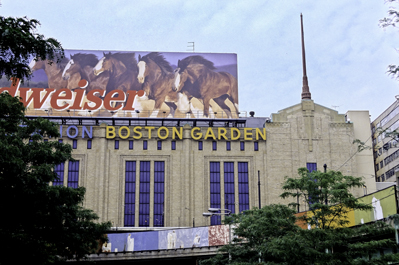
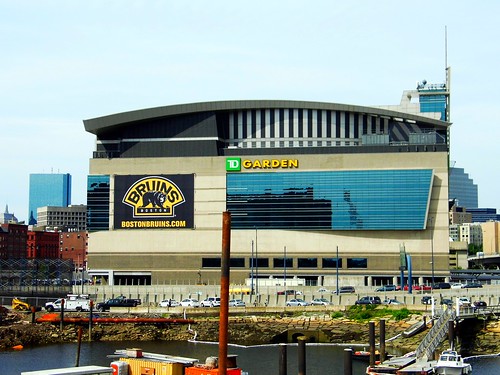
In 1995, the Boston Garden, home to the NHL's Boston Bruins since 1928 and the NBA's Boston Celtics since 1946, was closing after 67 years, prior to the opening of a new arena behind it, which is now named the TD Garden.

Due to various mistakes made in my life -- some small, some large -- I had already missed my chances to have enough money to visit some of the legendary stadiums and arenas of North America before they closed forever (and would miss more). Although I had visited Chicago in 1990, and seen both Wrigley Field and, in its last month of operation, Comiskey Park, I never got to see the original Soldier Field or, closing in 1994, Chicago Stadium.

Boston is considerably closer to my New Jersey home, so, having a job (however bad) in the Winter of 1994-95 (as opposed to being out of work for most of the previous year), I had the money to see a game at the Boston Garden. Now, what I needed was the time.

I looked at the schedules for the building's home teams. On Friday, March 2, the Bruins were facing my home-State hockey team, the New Jersey Devils. On Saturday, March 10, 8 days later, the Celtics were facing my home-State basketball team, the New Jersey Nets.

Here were the parameters at the time:

* The Bruins were then the winners of 5 Stanley Cups. They hadn't won any since 1972 (they have since won another), but had been to the Finals in 1988 and 1990, and were usually good. In their 1st Playoff run, the Devils got knocked out by the Bruins in the 1988 Conference Finals. However, the Devils had knocked the Bruins out in 1994.

* Now, the Devils, coming off a near-miss in Game 7 of the Conference Finals, were struggling to make the Playoffs, while the Bruins were going to make it.

* Also, the Bruins would occasionally fail to sell out the Garden's 14,448-seat hockey capacity, making it easier to get tickets. This was the dawn of the Internet Era, and the idea of ordering tickets online hadn't even occurred to major league sports teams yet. And even if it had, I didn't have the computerized ability to do so.

* The Celtics were then the winners of 16 NBA Championships. Their last one was in 1986 (they have since won another), and had been a perennial Playoff team. However, by this point, they had gone downhill. Nevertheless, so had the Nets, who had made the Playoffs in 1993 and 1994, but had quickly fallen apart, and were now lousy.

* The Celtics hadn't played to an unsold seat since Larry Bird arrived in 1979: Despite the fact that Bird, Kevin McHale and Robert Parish were now gone, they had gotten 14,890 fans for every single home game since the start of the Iran Hostage Crisis, through the end of the Carter Administration, all through Reagan, all through Bush I, and now halfway through the 1st Clinton term.

* Therefore: Getting tickets wouldn't be easy for either game, but it would be easier for Devils-Bruins than for Nets-Celtics.

* And while the Bruins were more likely to put up tougher opposition than the Celtics (something that had not happened often since the 1st Celtic title in 1957), the Devils were more likely to put up a winning effort than the Nets.

So I decided to see Devils vs. Bruins on March 2, 1995.

This was a big fat mistake.

*

Boston is further north than New Jersey and New York City. The weather is a little different. It doesn't get appreciably colder, but the number of days that are colder is greater. So is the likelihood of snow.
Infamously, the blizzard that hit Boston on February 6, 1978, dumping 27 inches of snow on the city and stranding players, fans and arena employees inside the Garden during college hockey's Beanpot Tournament (good thing there was food and restrooms in the arena), did not hit the New York Tri-State Area nearly as hard (although schools were closed for a day).

This was the beginning of March. Winter weather was still very possible. Indeed, last night, we got a couple of inches of snow here, with a coating of ice. That was not fun to shovel.

Nevertheless, I knew that the Boston Garden had been built in 1928. The average human rear end was a lot narrower in the Roaring Twenties, and the seats were not designed to accommodate people of my generation, used to eating more.
I knew that there wouldn't be enough space under the seat for both a heavy Winter jacket and the backpack I always traveled with at the time -- and it didn't occur to me at the time that I could check my backpack at North Station (which is, after all, a train station), on top of which the Garden was built. (In those pre-9/11 days, security was a lot more lax: They would ask to look inside the bag, but they wouldn't simply deny entry to a person with a backpack.)

So, instead, I left the house late at night on Thursday, March 1, wearing a light jacket, which I thought would, along with the backpack, fit under that 1928-built seat.

This did not seem to be a big mistake on the 1st. Nor did it seem to be a big mistake on the 2nd. It proved to be a very big mistake on the 3rd.

When the Greyhound bus pulled out of Port Authority Bus Terminal at around 2:00 AM on Friday, March 2, it was chilly in New York, but there was no snow on the ground.

When I woke up just outside Boston on the Massachusetts Turnpike as daylight was breaking, I saw that there was snow on the ground.

Okay, no big deal. Anyway, in spite of the cold, I had a nice day. I made sure to go to the Garden hours beforehand, and bought my ticket. I checked the seating chart, and I was going to be in Section 60. Near center ice on the lower level. Hey, this is a great seat!

Yeah, Mike, hold that thought...

*

So, after doing some other things in the city -- including going to Faneuil Hall and taking a picture of Red Auerbach's statue with my Yankee cap placed on his bald head (hey, he was from New York, albeit Brooklyn and probably a Dodger fan growing up) -- I got back to the Garden at around 6:30, checked the place out, and found my seat.
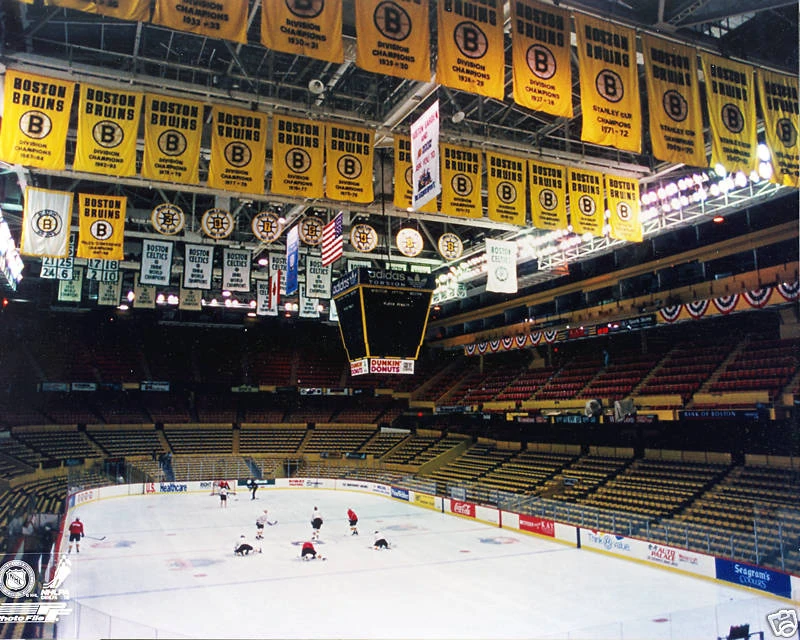
This photo is not from that game.
Nor was this the view from my seat.

My horizontal view was obstructed by a big-ass support post. And my vertical view was obstructed by the upper-deck overhang. I could only see about 60 percent of the rink, and I couldn't see the center scoreboard, only an auxiliary one. In fact, if it wasn't for a small TV set hanging overhead, installed into the overhang, I would have had to stand up or stretch to know what the score was, how much time was left in the period or in a penalty, or who was penalized.

Well, hey, bad seats were a big part of the Boston Garden experience. As well as a big reason why the thing was being replaced. It literally came with the territory. I accepted my bad view as a badge of honor. At least I was there, right? At least I was seeing a game there, right?

More like, "At most, I was seeing a game there."

Cam Neely had just come back to the Bruins' active roster after an injury -- about 4 years after an awful knee injury that caused him to miss nearly 2 full seasons. And the Devils' resident pest, Claude Lemieux -- my favorite player, because he scored goals, he was tough, and always seemed to play better against the hated New York Rangers and Philadelphia Flyers -- decided to check him into the boards.
The Bruin fans didn't like that, and booed vociferously. I understood.

Neely decided to deck Claudie. I understood.
Claude Lemieux at a considerably better moment,
June 24, 1995

But Claudie dropped to his knees and covered his head. In hockey, this move is known as "turtling." Claudie turtled, as Neely pounded away.

The referee threw Neely out of the game, and gave Claudie no penalty.

The Bruin fans went from angry to frothing-at-the-mouth rage. The language that came from them was George Carlinesque. I understood.

But I made a big fat mistake.

I stood up.

Now, at this point, I wasn't making enough money to buy my own personalized Devils jersey. But I had a Devils cap on. And I was wearing a shirt with alternating black and red stripes, Devils colors.

I stood up, not to try to antagonize anyone, or even to cheer Lemieux on. I was just trying to get a better look at this spectacle. What I achieved instead was give the Bruin fans a convenient target. They couldn't reach Claudie with anything they could throw, but they could sure reach me.

I became the target of a barrage that included popcorn, hot dog buns, the cartons containing the preceding, wadded-up pieces of paper, plastic cups, and other things I have since forgotten. Good thing for me that, by this point, glass bottles were no longer being sold at North American sporting events, or I could have gotten seriously hurt.

I could still have gotten seriously hurt. One of those Bruin fans could have come over and really taken his frustrations out on me. This is why soccer games, all over the world, segregate the fans: The visiting team's fans are all put together, in adjoining sections, so they don't get attacked by the home fans. This is also done in American college and high school sports.

Not so at the major league level: A visiting fan sits anywhere he likes, but he does so at his own risk.

It's a good thing I didn't reach into that backpack and take out the Yankee cap I brought. This was before the start of the Pedro Martinez, Nomar Garciaparra, David Ortiz, Manny Ramirez, Curt Schilling era of the Red Sox, but Sox fans still hated Yankee Fans more than any other fans of a North American sports team hated another other team and its fans.

They had no idea if I was a Yankee Fan or a Met fan -- or even if I liked baseball at all. (After all, this was not a baseball game.) But I'll guarantee you that 99 percent of the 14,000 or so Bruin fans in the building (there had to be a few other Devils fans visiting) were also Red Sox fans.

The fan to my left, thankfully, was a lot calmer, and suggested that I stay seated and quiet for the rest of the game. The fan to my right, thankfully, said nothing at all.

With every Bruin goal, the home fans razzed me some more. Doing the wisest thing I would do in a 36-hour stretch (maybe in the 25-year stretch that my life then was), I kept my mouth shut, and didn't provoke them.

I have since been to Yankees-Red Sox games at Fenway Park; Devils-Rangers games at the Meadowlands, the Prudential Center, and Madison Square Garden; Devils-Flyers games at the Meadowlands, the Prudential Center, and whatever the new Philly arena is called this year; and exhibition games at Red Bull Arena featuring legendary teams of European soccer.

In spite of all of that, this was, easily, the most endangered I have ever felt at a sporting event. And the Devils and Bruins aren't even secondary rivals to each other, much less each other's primary rivals. (That would be the Rangers for both teams, or possibly the Montreal Canadiens for the Bruins.)

In the end, it might have been much worse for me if the Devils had won the game. But that wasn't going to happen.

Brian Smolinski scored a hat trick: 3 goals. And he wasn't even named the 1st star of the game: Adam Oates scored a goal and had 5 assists. Martin Brodeur got shelled, and, with the score 5-1 Bruins after 2 periods, head coach Jacques Lemaire pulled him in favor of Chris Terreri, the former star of Providence College who dreamed of playing at the Bahstin Gahden, but for the Bruins. He was no better. And the Bruin fans went from hideous anger to fiendish glee.

Final score: Bruins 7, Devils 2. The Devils, already known for a good defense that included future Hall-of-Famers Brodeur, Scott Stevens and Scott Niedermayer, allowed 7 goals: 3 by Smolinski, and 1 each by Oates, Mats Näslund, Jozef Stümpel, and Mariusz Czerkawski, the 1st player born and trained to play hockey in Poland to make the NHL. (He later had his best years for the New York Islanders.)

Hall of Fame defenseman Ray Bourque, later to end his career with the Colorado Avalanche by wrecking our 2001 Stanley Cup Finals dream, had 3 assists, and pretty much controlled the game. The Devils goals were scored by Stephane Richer and Tom Chorske.

Seven goals. Or, as they would say if this were an English soccer game: "What time is it? Seven past Brodeur!" (Well, five past Brodeur, and two past Terreri.)

Attendance: 14,448. A sellout. I don't recall how many of those seats ended up sold but unfilled. It sure seemed like every seat had some ass in it.

Since Bruin fans were in a good mood at the end, they left me alone. I waited a few minutes for the section to thin out, just in case, and then convinced an usher to take my picture in front of the Garden ice. It didn't come out, though: Either the flash didn't go off, or, between it and the arena lighting, there still wasn't enough light. You can see a figure raising his arms in a "What can you do?" pose, but you can't see his face, and you can't tell that it's me.

*

Now, here's where I made things much worse than they had to be. Although the day wasn't terribly cold, the night was. I left the Garden at around 10:00 PM. My bus back to New York wasn't scheduled to leave until 12:30 AM. Even if I went straight from the Garden to South Station (the combined train/bus terminal at the edge of downtown), that would still leave me with about 2 hours with nothing to do, but wait.

So I decided to kill time by walking back from North Station to South Station, instead of taking the subway or a bus. I removed my Devils cap, put it in the backpack, put on my light jacket, thus hiding my status as a Devils (and Yankee) fan, and walked the mile or so between the transit hubs. It took me about half an hour, leaving me with still an hour and a half to sit around and do nothing. (I read my copies of that day's Boston Globe and Boston Herald again.)

But it was much, much colder. And I had only a light jacket. The shirt in question was rather thin. I didn't bring gloves. And I wasn't wearing either of my hats. By the time I got back onto the bus, I was thinking that I'd gotten out of New England with my head in one piece. I had no idea just what shape my head, or my chest, was going to be in.

On the morning of Saturday, March 3, I woke up on the bus in The Bronx, and didn't feel so good. By the time I got back home, and hit the sack for a couple of extra hours of sleep (or so I thought), I knew I had a cold.

That cold lasted 6 weeks. No matter what I took, no matter how much rest I got, I couldn't shake it. For 2 weeks, my head felt like it weighed a ton. My sinuses were like marble. Only marble doesn't produce gooey liquids. And I couldn't stop coughing.

It's a wonder I didn't lose my job. I won't say where I was working, because of things that happened after the cold finally ran its course, things that make me hate that company to this day, 20 years later. Let's just say it was a restaurant which, like Boston's arena, had "Garden" in its name. I learned a few things at that job, including how to cough on my elbows, not my hands. A bit more healthful for others that way.

Oh, by the way: On March 10, 1995, just 8 days later, the pathetic Nets (24-36 going in, just 8-23 on the road) defied the odds that made me pick the previous week's game, and beat the Celtics (24-35, 14-17 at home), 111-81. Attendance: Sure enough, 14,890. Not including me.

On May 14, 1995, in what turned out to be the final game that counted for anything at the Boston Garden, the Devils beat the Bruins, 3-2, and eliminated them from the Stanley Cup Playoffs. On June 24, 1995, the Devils beat the Detroit Red Wings 5-2, to sweep the Stanley Cup Finals, and win their 1st Cup.

On September 26, 1995, with the 1995-96 NHL and NBA seasons around the corner, the final event was held at Boston Garden. It was a preseason exhibition, and the Bruins played the Canadiens, since that was their opponent in their 1st game there, on November 20, 1928. The Canadiens won the opener, 1-0, but the Bruins won the finale, 3-0.

*

On December 9, 2006, I made my next visit to a Devils-Bruins game. By a weird turn of events, this was also the last season at their old arena for the Devils: The Prudential Center opened the following October. But this one was also on the road. This was at the new Garden -- it was still called the FleetCenter then, after a bank since swallowed up by TD Bank.
The experience was different in every way. I wore the same Devils cap, and the same red-and-black striped shirt. But, this time, I had enough money to get a Devils jersey, with my last name and the Number 44 on the back.

I also had enough money to get a hotel room for the night, just a 5-minute walk from the arena's gate, so I could leave my backpack there, and, in the post-9/11 and post-Columbine era, not arouse security's suspicions.

The new arena had spacious concourses, aisles and seats. I could put the big Winter jacket I properly wore under the seat, and could probably have fit the backpack under there, too. There were no obstructions: There were no support posts, and the upper deck was high enough for even the people in the back row of the lower level to see the entire rink and the main scoreboard.
Yet again, the picture is not from the game that I saw.

The Devils were considerably better than the Bruins at this point, and it showed: They won, 5-1. The outcome was never really in any doubt. The Devils' goals were scored by Jay Pandolfo, Jamie Langenbrunner, Erik Rasmussen, Patrik Eliáš and Sergi Brylin. Brodeur stopped 19 out of 20 shots. This time, it was the Bruins' goalie, Tim Thomas, who was pulled for his backup -- after just 1 period. (Although, given that the score was only 2-0 Devils at that point, it may have been due to an injury.)

Being 11 years older, and hopefully wiser, and remembering my 1995 experience at the old Garden, I made my celebration of each goal, and the final horn, brief, and nothing out of the ordinary. The Bruin fans, not seeing a Devils player abuse one of their heroes, and seeing their team get embarrassed in the game, and not in a fight, mostly behaved themselves. Nobody gave me a hard time.

Perhaps it was the nature of the building: The old Garden was a temple of sports passion going back to the Coolidge Administration, home to 21 World Championships and dozens of Hall-of-Famers; while the new Garden still had hardly any history, its history being in the minds of its regular fans and not on the floor/ice/hardwood. (The Celtics didn't win their 1st title as tenants of the new building until 2008, the Bruins until 2011.)

Or perhaps it was due to one more big, big difference: The attendance was only 13,476 -- 77 percent of capacity. This was more than a year after the restart of NHL play after the 2004-05 lockout, and the fans weren't fully back yet; but the Bruins came into the game with 14-12 record, so they were hardly hopeless. (The Devils were 16-11.)

*

Today, the Devils have co-head coaches, both of whom played in that March 2, 1995 game: Former Devils Captain Scott Stevens and Bruins Hall-of-Famer... Adam Oates. I wonder if they ever talk about that game.

I sure do. This morning, I told my 7-year-old nieces about it. They enjoyed the story. I told them, "It's funny now. It sure wasn't funny then!"

Sunday, March 1, 2015

Minnie Miñoso, 1925-2015

Who is the greatest player not in the Baseball Hall of Fame? If you said Pete Rose, you need to get smacked: While he was one of the great team players in baseball history, his career OPS+ was just 118, he never topped 82 RBIs in a season, and the reason he is the only player to play at least 500 games at 5 different positions -- 1st base, 2nd base, 3rd base, left field and right field -- is because he wasn't very good at fielding any of them. (He won Gold Gloves in 1969 and '70, but those were rather dubious.)

It may be that the best all-around baseball player not in the Hall of Fame is an outfielder who played the bulk of his career for the Cleveland Indians and the Chicago White Sox. And, no, I don't mean Shoeless Joe Jackson. Come to think of it, Rocky Colavito would also qualify for that description (if you threw in the Detroit Tigers), but I don't mean him, either.

The best all-around baseball player not in the Hall of Fame may well be Minnie Miñoso. But now, he won't live to see his rightful election.

UPDATE: Minnie was finally elected in 2021.

*

Saturnino Orestes Armas Arrieta was born on November 29, 1925 in Perico, Cuba, near the capital of Havana. (Like a lot of Hispanic players, there is some dispute as to the year; 1922 has also been cited, but Baseball-Reference.com says 1925, so that's what I'm going with.) His father was his mother's 2nd husband; her 1st had been named Miñoso, and he later assumed the name so that he would have the same last name as his older half-brothers. He would later, in an American court, have his name legally changed to Orestes Miñoso.

He worked in Cuba's oppressively hot sugar cane fields like his father did. When he found out that, unlike some other sugar plantations, the one he was on didn't have a baseball team, he organized it himself. A righthanded hitter and thrower, he patterned himself after the greatest player Cuba had yet produced (and perhaps still has), Negro League star Martin DiHigo: He learned to play multiple positions, and to hit to the opposite field. Settling on mainly playing 3rd base, in 1946 he made his North American professional debut with the New York Cubans, a Negro League team that sometimes played home games at the Polo Grounds. One of their pitchers was a crafty lefty named Luis Tiant -- father of the twisty, mustachioed Boston Red Sox pitching legend.

The owner, a gangster from Cuba named Alex Pompez, had a working relationship with the New York Giants: The Cubans were the only Negro League team that was officially a farm team of a major league team; as a result, they were the only Negro League team that got compensated when a major league team raided its roster. The Kansas City Monarchs, the Newark Eagles, the Baltimore Elite Giants, and so on? They got nothing in exchange for Satchel Paige, Monte Irvin, Roy Campanella, et al.

Prior to Miñoso, there had been a few Cubans, Puerto Ricans and Mexicans playing in Major League Baseball -- one of the 1st Cubans was Armando Marsans, who became Minnie's 1st professional manager in Cuba -- but they had all been obviously white, primarily of Spanish heritage rather than native Carib "Indians" or descendants of African slaves. (Southern politicians, especially after they seceded and formed the Confederate States of America, wanted to purchase Cuba from Spain, because of the slave labor and the vast sums of money to be made from Cuban sugar and fruit.) The saying was that they were "pure bars of Castilian soap."

Harlem Globetrotters founder-owner Abe Saperstein, a big baseball fan, is said to have recommended Miñoso to Indians owner Bill Veeck, who had integrated the American League with Larry Doby, and by this point had also signed Paige. 

On April 19, 1949, "Minnie" Miñoso -- I can find no reference as to where the nickname came from -- made his major league debut, with the Indians, against the St. Louis Browns, at Sportsman's Park in St. Louis, becoming the 1st black Hispanic player in major league history. Wearing Number 18, he made one plate appearance, drawing a walk as a pinch-hitter in the 7th inning. The Browns lost, 5-1. He didn't play again until May 4, when he got his 1st hit off Alex Kellner of the Philadelphia Athletics, and the Indians won, 4-3. The next day, against the Boston Red Sox, he hit his 1st home run off Jack Kramer. (The pitcher, not the tennis player.)

But the Indians were loaded in the late Forties and all through the Fifties, and with All-Star Al Rosen entrenched at 3rd base, the Tribe really didn't have a place for Minnie. On April 30, 1951, they sent him to the White Sox in a 3-way trade involving some other interesting names. The ChiSox got Miñoso and Paul Lehner. The Indians got Lou Brissie, who reached the majors as a lefthanded pitcher despite a war wound that nearly cost him his right leg, and required that he wear a metal plate over the constantly-operated-on shin.  The A's got slugger Gus Zernial, pinch-hit expert Dave Philley (who would now be playing in "Philly," and would eventually play for the Phillies), Ray Murray and Sam Zoldak. (Have you ever seen another trade involving 2 players whose last name began with a Z -- in any sport?)

On May 1, 1951, Miñoso became the 1st black player in the history of Major League Baseball in Chicago. (The late Ernie Banks would become the Cubs' 1st black player 2 years later.) In his 1st at-bat for the South Siders, he hit a home run of Yankee pitcher Vic Raschi, driving in Lehner, with whom he was traded. Also hitting a home run in that game was a 19-year-old kid from Oklahoma, playing right field for the Yankees. It was his 1st in the majors. His name was Mickey Mantle. The Yankees won the game, 8-3, as Yogi Berra also homered.

Both Mantle and Miñoso were on their way to what should have been Hall of Fame careers. While Mantle's had the occasional sidetrack, he did get elected in his 1st year of eligibility. In that regard, Miñoso wasn't so lucky.

From then on, "the Cuban Comet" wore Number 9, and was mainly an outfielder, playing 1,509 of his 1,665 major league games (90.6 percent) in left field. The Gold Gloves weren't established until 1957, but he won them in 3 of the 1st 4 seasons in which they were presented -- the last one shortly before he turned 35.

From 1919 to 2005, the White Sox won just 1 Pennant -- and Minnie wasn't with them when they did. Indeed, they'd traded him back to the Indians on December 4, 1957, so not only did he miss that Pennant, he was on the team that finished 2nd! But, while he put up good numbers for the Indians, the ChiSox might not have won the Pennant if they hadn't made the trade: They sent Minnie and Fred Hatford for Al Smith (replacing Minnie in left field) and Early Wynn (who won 24 games at age 39, and won the Cy Young Award).

The White Sox traded to get him back in 1960, and in that season he became the last player to play in every game in a 154-game season. Before the 1962 season, they sent him to the St. Louis Cardinals, where he wore the same Number 9 that had been worn by Enos Slaughter, and would later be worn by Roger Maris, Joe Torre and Terry Pendleton before being retired for Slaughter. But he crashed into an outfield wall, fracturing his skull and his wrist, and ending his time as a productive player.

He spent 1963 with the Washington Senators, and returned to the White Sox in 1964, making 38 plate apperances, mainly as a pinch-hitter, at age 38, as the Sox finished just 1 game behind the Yankees.

Miñoso was a 7-time All-Star, His lifetime batting average was .298, with 8 seasons of .300 or better, topping out at .326 in 1951 his rookie season, when he finished 2nd in the American League Rookie of the Year voting to the Yankees' Gil McDougald. (Mantle didn't come close.) His OPS+ was 130 -- meaning he was 30 percent better at producing runs than the average batter of his time. Despite playing most of his career in Comiskey Park and Cleveland Municipal Stadium, great pitcher's parks, he hit 186 home runs, topping 20 4 times, peaking at 24 in 1958. Until 1974, his 135 home runs in a White Sox uniform were a team record. He had 4 100+ RBI seasons, peaking at 116 in 1954.

He led the AL in stolen bases in 1951, '52 and '53; in triples in 1951, '54 and '56; in total bases in 1954; in doubles in 1957; in hits in 1960; in sacrifice flies in 1960 and '61; and in hit-by-pitches 10 times. He was hit by 188 pitches, an AL record until it was broken by Don Baylor in 1985.

*

The Miñoso legend was just getting warmed up. He went to Mexico, both managing and playing 1st base. batting .360 in 1965 and .348 in 1966. The Mexican League, today, is classified as Triple-A, and was probably of the same quality then, so Minnie may well have still been able to hit in the majors. Alas, there was no designated hitter in those days. He continued to play in Mexico until 1973, when he was nearly 48 (or 51, depending on whose records you believe). Mexican fans called him El Charro Negro -- "The Black Cowboy."

Bill Veeck, who'd been the owner of the Indians who'd signed Miñoso and of the White Sox who traded to get him back in 1960, was owner of the White Sox again, and hired him as a base coach. Veeck even activated him, and on September 12, 1976, Miñoso got a hit off California Angels pitcher Sid Monge. He was advertised as the oldest player ever to get a hit in a big-league game: 53 years old. In fact, he was 50, and the 3rd-oldest.


(Don't worry: While he did wear the awful Pale Hose uniforms of the Second Veeck Era, he didn't actually play in the shorts, which were only worn for 3 games, before September call-ups made his place on the roster justifiable.)

In 1980, Veeck had him activated one more time, at age 54. This made him the 3rd-oldest player in major league history, behind Paige (59) and Nick Altrock (also an occasionally-reactivated coach, 57) -- and the only player besides Altrock ever to appear in major league games in 5 different decades. He made his last appearance on October 5, 1980, at Comiskey Park, in a game in which the White Sox beat the Angels, 5-3. As with his big-league debut, 41 years earlier, he pinch-hit in the 7th inning. He grounded to 3rd off Dave Schuler.

On September 30, 1990, the last game was played at Comiskey Park, and Miñoso -- by this point known as "Mr. White Sox," just as Ernie Banks was "Mr. Cub" -- presented the White Sox lineup card. In 1993 and again in 2003, Mike Veeck, Bill's son and the owner of the revived St. Paul Saints of the independent Northern League, signed him to make 1-day appearances, so that he could play professional baseball in a 6th and a 7th decade -- in the latter, drawing a walk and reaching base at age 77.

*

Minnie married twice, and had 4 children. In 1983, the White Sox retired his Number 9. In 2004, a statue in his honor was dedicated at U.S. Cellular Field (formerly named the new Comiskey Park). 

He first appeared on the Baseball Writers Association of America (BBWAA) Hall of Fame ballot in 1970, and didn't get enough support to stay on it. Last playing in 1980, he was restored to the ballot in 1986 (getting in the official waiting period of 5 full years), but never made it, and in 2000 his BBWAA eligibility expired. He was eligible in the Veterans Committee votes of 2011 and 2014, but didn't not get enough votes either time.

Baseball-Reference has a Hall of Fame Monitor, on which a score of 100 indicates a "Likely HOFer." Miñoso is at 87, which means he falls short. They also have a Hall of Fame Standards, on which a score of 50 represents the "Average HOFer." Miñoso is at 35, which means he falls well short. And they have Similar Batters, showing the 10 players most statistically similar to a player, weighted toward players who played the same position. The 10 players most similar to Minnie: Carl Furillo, Cy Williams, Ken Griffey Sr., Amos Otis, Gary Matthews Sr., Ben Chapman, Dixie Walker, Bob Watson, Gee Walker and Tony Oliva. None of those are in the Hall of Fame, although many people (including myself) think Oliva should be in. It's also worth pointing out that these stats are for hitting and running only, and do not take defense into account.

One of the arguments in Miñoso's favor is that he got a late start, due to the color line. Except that might not be true. For so long, it was presumed that he was born in 1922, making him 26 when he first stepped to the plate in a major league game, and that's much too late for a player of his talent. But if he really was born in 1925, as Baseball-Reference says, then he made his big-league debut at age 23, and that's hardly early by the standards of that era, especially since it was a lot harder for a major league team to find a worthy player, white or black, in Cuba or elsewhere in the Caribbean than it would have been to find one in the continental U.S. And while he was certainly good in the Negro Leagues, he didn't have the long record of being spectacular in them, as did Irvin and Doby, who got into the Hall based on a combination of performances from all-black and mostly-white baseball.

But considering what kind of performance Minnie Miñoso put up, playing just about every home game in a park that favored pitchers (or, in the case of his brief time in St. Louis' Sportsman's Park, favored lefthanded hitters rather than righthanded ones like himself), adding in his defense, adding in his Negro League tenure, and topping it off with his pioneer status, as the 1st black Hispanic in the major leagues, I think he belongs in the Hall of Fame.

Minnie Miñoso died today, having been found unresponsive in his car while he was getting gas. He was 89, and, like Star Trek actor Leonard Nimoy, who died on Friday, the cause appears to have been the lung ailment COPD.

The players who were stars in the 1950s are going fast. There aren't a whole lot left. A few of the Brooklyn Dodgers are still around, like Don Newcombe and Carl Erskine. The New York Giants are still represented by Irvin and Willie Mays. The Yankees still have Yogi Berra, but he has looked very frail the last couple of years. We need to treasure these people while we can.

Chicago had just lost Ernie Banks, and now they've lost Minnie Miñoso. They were treasures of their city. It is sad that, now, they will be buried treasures.

"Minnie may have been passed over by the Baseball Hall of Fame during his lifetime," said the world's leading White Sox fan, President Barack Obama, a permanent resident of Chicago's South Side, "but, for me, and for generations of black and Latino young people, Minnie's quintessentially American story embodies far more than a plaque ever could."

The Prez has a way with words, just as Minnie Miñoso had a way with baseball.

UPDATE: Minnie was cremated, so there is no gravesite.