Sunday, February 7, 2021

Pro Football Hall-of-Famers By Team, 2021 Edition

Left to right: Charles Woodson, Peyton Manning, Calvin Johnson

Congratulations to the newly-elected members of the Pro Football Hall of Fame. New members are annually announced on the day before the Super Bowl, and that was done again yesterday. 

Here are the new electees, listed here in chronological order:

* Bill Nunn, front office, Pittsburgh Steelers 1970-2014, elected in the "Contributor" category.

* Drew Pearson, receiver, Dallas Cowboys 1973-83. He grew up in South River, Middlesex County, New Jersey, going 3-0 for South River High School against my alma mater, East Brunswick, from 1966 to 1968.

* Tom Flores, head coach, Oakland/Los Angeles Raiders 1979-87, Seattle Seahawks 1992-94.

* John Lynch, safety, Tampa Bay Buccaneers 1993-2003, Denver Broncos 2004-07. He is currently the general manager of the San Francisco 49ers.

* Alan Faneca, guard, Pittsburgh Steelers 1998-2007, New York Jets 2008-09, Arizona Cardinals 2010.

* Charles Woodson, cornerback, Oakland Raiders 1998-2005 and again 2013-15, Green Bay Packers 2006-12.

* Peyton Manning, quarterback, Indianapolis Colts 1998-2010, Denver Broncos 2012-15. (He missed the 2011 season due to injury. And...

* Calvin Johnson, receiver, Detroit Lions 2007-15.

Nunn died in 2014. The rest are still alive. It's interesting that there were no pre-1970 AFL-NFL merger inductees, with the oldest living inductee being Pearson, who just turned 70. (Were Nunn still alive, he would be 96.) Johnson is only 35, retiring at 30 due to injury concerns, but not before catching 731 passes for 11,619 yards (including 1,964 in 2012, a single-season record) and 83 touchdowns.

*

Inductees are listed here with a team if they played, or coached, or were an executive, with them for at least 4 seasons.

I have divided moved teams accordingly (i.e., Johnny Unitas never took a snap for the Indianapolis Colts). "Sure future Hall-of-Famers" are not included, because, as we have seen in baseball, there is no such thing anymore. 

Tenure as a player, or a coach, or an executive is only counted if they were elected as such. In other words, Raymond Berry coached the Patriots into a Super Bowl, and Forrest Gregg did so with the Bengals, but they were elected as a Colts player and a Packers player, respectively, so those are the teams with which they're included.

Ties in the rankings are broken by more players, as opposed to other categories; and then by time in the league. So a team with 4 players is ahead of one with 3 players and 1 coach, and a team with 3 players in 50 years is ahead of one with 3 players in 80 years.

Figures are listed here as follows: Players in chronological order of their Hall of Fame service with the team (even if they had other functions with that team), then coaches, then executives, then broadcasters.

1. Chicago Bears, 31: George Halas (founder, owner, general manager, head coach, player), John "Paddy" Driscoll, George Trafton, Ed Healey, William "Link" Lyman, Red Grange, Bill Hewitt, Bronko Nagurski, George Musso, Dan Fortmann, Joe Stydahar, Sid Luckman, George McAfee, Clyde "Bulldog" Turner, Ed Sprinkle, George Connor, George Blanda, Bill George, Doug Atkins, Stan Jones, Mike Ditka (player & coach), Dick Butkus, Gale Sayers, Walter Payton, Alan Page, Jim Covert, Richard Dent, Dan Hampton, Mike Singletary, Brian Urlahcer, Jim Finks (executive).

They have 5 from their 1985-86 "Super Bowl Shuffle" team, as opposed to 4 from their 1963 NFL Champions, and 7 from their 1940s "Monsters of the Midway" team -- 8 if you count Nagurski's 1943 comeback.

Willie Galimore and Gary Fencik should be in. Thomas Jones is now eligible, and while he didn't spend 4 seasons with any team, his 3 years with the Bears were his most productive period, so I'd list him with them if he got in, and with over 10,000 career rushing yards, he should be in.

2. Green Bay Packers, 29: Earl "Curly" Lambeau (founder, owner, executive, head coach, player), Cal Hubbard, John "Johnny Blood" McNally, Mike Michalske, Arnie Herber, Clarke Hinkle, Don Hutson, Tony Canadeo, Bobby Dillon, Jim Ringo, Bart Starr, Forrest Gregg, Paul Hornung, Jim Taylor, Jerry Kramer, Ray Nitschke, Henry Jordan, Willie Davis, Willie Wood, Herb Adderley, Dave Robinson, James Lofton, Jan Stenerud, Reggie White, Brett Favre, Charles Woodson, Vince Lombardi (coach & executive), Ron Wolf (executive), Ray Scott (broadcaster, later the main voice on CBS' NFL telecasts).

Nearly half of the Packer figures enshrined in Canton, 13, are from the Lombardi Era, including Lombardi himself. This doesn't count Emlen Tunnell, who played the last 3 seasons of his career with the Packers and retired after the 1st title of the Lombardi Era, 1961.

Now eligible from the Mike Holmgren era, and they would join White, Favre and Woodson, are Holmgren himself, LeRoy Butler, Adam Timmerman and Gilbert Brown. Eugene Robinson could be considered, but he was only a Packer for 2 seasons, although both ended in Super Bowls, but only 1 won.

Sean Jones played 3 seasons for the Packers, and would qualify as a Raider and an Oiler if he got in. Donald Driver is the only figure from the Mike McCarthy era yet eligible and worthy of consideration.

3. Pittsburgh Steelers, 29: Walt Kiesling (also coach), John "Johnny Blood" McNally, Bill Dudley, Ernie Stautner, Jack Butler, John Henry Johnson, Bobby Layne, Joe Greene, Terry Bradshaw, Franco Harris, Mike Webster, Jack Lambert, Jack Ham, Lynn Swann, John Stallworth, Mel Blount, Donnie Shell, Rod Woodson, Dermontti Dawson, Jerome Bettis, Troy Polamalu, Alan Faneca, Art Rooney (founder-owner), Dan Rooney (owner), Bert Bell (coach, later NFL Commissioner), Chuck Noll (coach), Bill Cowher (coach), Bill Nunn (scout), Myron Cope (broadcaster). 

While the Steelers were rarely competitive for their 1st 40 seasons, they did have a few players who were Hall-worthy, but note that 15 of the 29, more than half, including 11 of the 22 players, were involved with the club during their 1972-79 "Steel Curtain" dynasty.

Hines Ward is now eligible, and while that touchdown he scored on a kickoff return for the Gotham Rogues as the field collapsed behind him in The Dark Knight Rises does nothing to help his candidacy, if he does get in, you know that highlight will be played over and over again.

4. New York Giants, 22: Steve Owen (elected as a coach, also a pretty good player for Giants), Ray Flaherty, Benny Friedman, Red Badgro, Mel Hein, Ken Strong, Alphonse "Tuffy" Leemans, Emlen Tunnell, Arnie Weinmeister, Frank Gifford, Roosevelt Brown, Sam Huff, Andy Robustelli, Y.A. Tittle, Fran Tarkenton, Harry Carson, Lawrence Taylor, Michael Strahan, Tim Mara (founder & owner), Wellington Mara (owner), Bill Parcells (coach), George Young (executive).

Gifford has also been elected as a broadcaster. So has Pat Summerall, but as a CBS & Fox broadcaster, not as a Giants player or broadcaster, so he can't be included here. Tom Landry was the 1st great defensive back to be only a defensive back, after the early 1950s shift to two-platoon football, and was the defensive coordinator on the Giants' 1956-63 contenders. But was elected to the Hall based on his service as a head coach, and he only served as such for the Cowboys, and thus can't be counted here.

There are 6 from the 1956 NFL Champions, but only 3 from Parcells' Super Bowl-winning teams, 5 if you count Parcells himself and the newly-elected Young. Phil Simms has not yet been elected, and you can also make a case for Mark Bavaro (tight ends are in short supply in the Hall), George Martin and Leonard Marshall. I wonder if anyone will be willing to vote for Tiki Barber, who is now eligible.

5. Washington Football Team, 22: Cliff Battles, Turk Edwards (also coach), Wayne Millner, Sammy Baugh, Bobby Mitchell, Sonny Jurgensen, Charley Taylor, Sam Huff, Paul Krause, Chris Hanburger, Ken Houston, John Riggins, Art Monk, Russ Grimm, Darrell Green, Bruce Smith (last 4 years of his career as a Redskin), Champ Bailey, George Preston Marshall (founder & owner), Ray Flaherty (elected as a Giants player, but coached Washington to 2 NFL titles, so I'm counting him as one of theirs), George Allen (coach), Joe Gibbs (coach), Bobby Beathard (executive).

Jurgensen and Huff have also been broadcasters for the team. Grimm is the only one of the "Hogs" yet elected, but Jeff Bostic and Joe Jacoby should also be elected. A case can be made for an earlier Washington lineman, Len Hauss.

None of the men who have thus far quarterbacked the team formerly named the Washington Redskins into a Super Bowl is in: Not Billy Kilmer, not Joe Theismann, not Doug Williams, not Mark Rypien -- and good cases can be made for all but Rypien, who just didn't play long enough. If Jan Stenerud got elected as a kicker (who didn't also play another position, as did Lou Groza and George Blanda), then why not Mark Moseley?

6. Dallas Cowboys, 21: Bob Lilly, Mel Renfro, Bob Hayes, Rayfield Wright, Mike Ditka, Roger Staubach, Cliff Harris, Drew Pearson, Randy White, Tony Dorsett, Troy Aikman, Emmitt Smith, Michael Irvin, Deion Sanders, Larry Allen, Charles Haley, Tom Landry (coach), Jimmy Johnson (coach), Bill Parcells (coach), Tex Schramm (executive), Jerry Jones (owner).

Parcells did coach them for 4 seasons, so that counts. Ditka is so identified with the Bears (with whom he practically invented the position of tight end and won an NFL Championship in 1963) that people forget he was a Cowboy, and won a Super Bowl each as a player and as one of Landry's assistant coaches -- as did Dan Reeves, although if he ever got elected it would be as a head coach, and therefore not as a Cowboy.

Don Meredith was elected as a broadcaster, but was never a broadcaster specifically for the Cowboys. A case can be made that he deserves election as a player. Charlie Waters and Herschel Walker also have their advocates.

Oakland Raiders, 21: Jim Otto, Fred Biletnikoff, George Blanda, Ken Stabler, Gene Upshaw, Willie Brown, Art Shell, Dave Casper, Ray Guy, Ted Hendricks, Mike Haynes, Howie Long, Marcus Allen, Jerry Rice, Warren Sapp, Tim Brown, Charles Woodson, John Madden (coach), Tom Flores (coach), Al Davis (owner-coach), Ron Wolf (scout).

Madden has also been elected as a broadcaster. Rice and Sapp were both there for 4 seasons, so they count. Now that Guy is in, who's the most obvious Raider not in? I'd say Jack Tatum, if anybody's got the guts to elect a great cornerback who needlessly paralyzed a man in a preseason game. Also worthy of consideration are Ben Davidson and Lester Hayes.


Note that I'm making an exception to my one-city-only rule for the California-era Raiders, treating them as a continuous Oakland franchise, since they did return, even though their Los Angeles edition became a cultural icon (and not for good reasons). Counted separately, the Oakland Raiders have 18, and the Los Angeles Raiders have 3 (Haynes, Long, Allen). 


7. Kansas City Chiefs, 18: Bobby Bell, Len Dawson, Willie Lanier, Buck Buchanan, Emmitt Thomas, Johnny Robinson, Curley Culp, Jan Stenerud, Derrick Thomas, Marcus Allen, Willie Roaf, Will Shields, Tony Gonzalez, Hank Stram (coach), Mary Levy (coach), Lamar Hunt (founder-owner), Bobby Beathard (executive), Charlie Jones (broadcaster, did Dallas Texans/K.C. Chiefs games before becoming the main voice for NBC's AFL and then AFC broadcasts).

Dawson has also been elected as a broadcaster. 

8. Cleveland Browns, 17: Otto Graham, Marion Motley, Lou Groza, Dante Lavelli, Bill Willis, Mac Speedie, Frank Gatski, Len Ford, Mike McCormack, Jim Brown, Bobby Mitchell, Gene Hickerson, Leroy Kelly, Paul Warfield, Joe DeLamiellure and Ozzie Newsome, Paul Brown (coach-executive).

It says something about this franchise that there have been no players who have played so much as a down for them since 1990 that can be called a Browns' HOFer -- and only DeLamielleure and Newsome have played for them since 1977. Tom Cousineau hasn't made it, and neither has Clay Matthews Jr. (father of the current star Packer linebacker and brother of Oliers/Titans HOFer Bruce Matthews -- Clay Sr. played for the 49ers in the 1950s, but wasn't HOF quality).

And yet, look at just what they produced in the 1940s and '50s. And that doesn't include players they let get away, like Doug Atkins, Henry Jordan, Willie Davis, Len Dawson, and (while they did both play long enough for the Browns to be counted with them) Mitchell and Warfield.

Maybe that's the real reason Art Modell isn't in the Hall: It's not that he moved the original Browns, and screwed the people of Northern Ohio, it's that he was a bad owner. (Though, to be fair, his firing of Paul Brown and installation of Blanton Collier in 1962 did bring the 1964 NFL Championship, Cleveland's last title in any sport until the 2016 Cavaliers.)

9. San Francisco 49ers, 17: Bob St. Clair, Y.A. Tittle, Joe "the Jet" Perry, Leo Nomellini, Hugh McElhenny, John Henry Johnson, Dave Wilcox, Jimmy Johnson, Joe Montana, Fred Dean, Ronnie Lott, Jerry Rice, Steve Young, Charles Haley, Terrell Owens, Bill Walsh (coach), Eddie DeBartolo (owner).

Tittle, Perry, McElhenny and John Henry Johnson are the only entire backfield that all played together to all be elected to the Hall, and they were known as the Million Dollar Backfield. The Jimmy Johnson listed above was a black cornerback in the 1960s and '70s, and should not be confused with the white coach for the Cowboys -- although this Jimmy Johnson, unlike the coach, was actually born in Dallas.

Rickey Jackson only played 2 seasons for the Niners, but he did win his only ring with them. Deion Sanders played only 1 season for them, but got the same Super Bowl XXIX ring that Jackson did. So, due to insufficient longevity, I can't count either of them as 49ers HOFers.

From their 1980s champions, Dwight Clark, Roger Craig, Randy Cross, Guy McIntyre, Harris Barton and Ken Norton Jr. have not been elected, but all are worth consideration, and Craig absolutely should be in.

10. Detroit Lions, 16: Dutch Clark (also coach), Jack Christiansen, Bobby Layne, Doak Walker, Yale Lary, Alex Wojciechowicz, Lou Creekmur, Dick Stanfel, Dick "Night Train" Lane, Joe Schmidt (also coach), Alex Karras, Lem Barney, Dick LeBeau, Charlie Sanders, Barry Sanders (no relation to each other) and Calvin Johnson.
Although he played for their 1935 NFL Champions and coached them to the 1952 and '53 titles, Buddy Parker is not in the Hall. It took until this year, a little over 7 years after he died, for Karras to be elected. If Paul Hornung, a man whose morals were a lot looser than Karras', could be forgiven for his gambling charge that led to his suspension for the 1963 season and get elected, why not Karras, who was suspended at the same time for the same offense? Even though he's in now, the question still hangs there.
It says something about this franchise that there has been only 2 players (Barry Sanders and Calvin Johnson) who have played so much as a down for them since 1977 that can be called a Lions' HOFer, although cases can be made for Herman Moore, Lomas Brown and Chris Spielman.
11. Los Angeles Rams, 15: Bob Waterfield, Tom Fears, Elroy "Crazy Legs" Hirsch, Norm Van Brocklin, Les Richter, Deacon Jones, Merlin Olsen, Tom Mack, Jackie Slater, Jack Youngblood, Eric Dickerson, Kevin Greene, George Allen (coach), Dan Reeves (owner, not to be confused with the Denver/Atlanta coach), Dick Enberg (broadcaster).

Joe Stydahar coached the Rams to their only NFL Championship in Los Angeles, 1951, but he was elected as a player, not a coach, and so che an't be counted as a Rams' Hall-of-Famer. Counting their St. Louis years, the Rams franchise has 19. Now that Greene is in, Henry Ellard is the most deserving former L.A. Ram not yet in the Hall, but he's a borderline case at best.
12. Minnesota Vikings, 15: Fran Tarkenton, Carl Eller, Alan Page, Paul Krause, Ron Yary, Mick Tinglehoff, Chris Doleman, Gary Zimmerman, Randall McDaniel, Cris Carter, John Randle, Randy Moss, Steve Hutchinson, Bud Grant (coach), Jim Finks (executive). Warren Moon was only there for 3 seasons. 
13. Philadelphia Eagles, 14: Steve Van Buren, Alex Wojciechowicz, Pete Pihos, Chuck Bednarik, Sonny Jurgensen, Tommy McDonald, Norm Van Brocklin, Bob Brown, Jim Ringo, Harold Carmichael, Reggie White, Brian Dawkins, Greasy Neale (coach), Bert Bell (founder-owner-coach, later NFL Commissioner).

Van Brocklin only played 3 seasons for the Eagles, but he was the quarterback on their last NFL Championship team before the Super Bowl era, 1960, and then he retired, despite being only 34 years old, so I'm bending the rule to count him. On the other hand, Claude Humphrey played 3 seasons for them, 1 being their 1st trip to the Super Bowl, but unlike Van Brocklin is not an Eagles icon, so I can only include him with the Falcons. Former coach Dick Vermeil is not in, and should be.

Art Monk, James Lofton and Richard Dent briefly played for the team, and cases could be made for Stan Walters, Jerry Sisemore, Bill Bergey, Randall Cunningham, Clyde Simmons, Seth Joyner and Donovan McNabb. Ron Jaworski, however, only stands to be elected as a media personality, not a player. That is how Irv Cross was elected: While he made 2 Pro Bowls as an Eagle cornerback, he is not in the Hall as a player.

14. Miami Dolphins, 12: Larry Csonka, Nick Buoniconti, Bob Griese, Jim Langer, Larry Little, Paul Warfield, Dan Marino, Dwight Stephenson, Jason Taylor, Don Shula (coach), Jimmy Johnson (coach), Bobby Beathard (executive).

Johnson didn't win as Dolphins' head coach, but he was there for 4 seasons, so he counts there. In spite of everything that happened in his career, Ricky Williams rushed for over 10,000 yards. He is now eligible, but I doubt he'll ever get in. If he does, he would qualify only as a Dolphin, not as a Saint.

15. Buffalo Bills, 12: Billy Shaw, O.J. Simpson (had to list him), Joe DeLamiellure, James Lofton, Jim Kelly, Bruce Smith, Thurman Thomas, Andre Reed, Marv Levy (coach), Ralph Wilson (owner), Bill Polian (executive) and Van Miller (broadcaster).

Shaw played his entire career in the AFL, making him the only man in the Pro Football Hall of Fame who never played a down in the NFL. (Remember, it's not the National Football League Hall of Fame, it's the Pro Football Hall of Fame.) So much fuss was made over the special-teams skills of Steve Tasker that I'm surprised that he's not in.

Houston Oilers, 11: George Blanda, Elvin Bethea, Curley Culp, Robert Brazile, Earl Campbell, Dave Casper, Ken Houston, Charlie Joiner, Warren Moon, Mike Munchak, Bruce Matthews. Since Matthews counts as both an Oiler and a Titan, if we combine the Houston years and the Tennessee years, their total rises to 12.

16. Denver Broncos, 11: Willie Brown, Floyd Little, John Elway, Steve Atwater, Shannon Sharpe, Gary Zimmerman, Terrell Davis, Champ Bailey, John Lynch, Peyton Manning, Pat Bowlen (owner). 3-time AFC Champion coach Dan Reeves has not been elected, but should be. So should Randy Gradishar and Mark Schlereth, although, because of how many feathers he ruffled, I don't think you'll ever see Bill Romanowski get in. 

Chicago Cardinals, 10: Jimmy Conzelman, Paddy Driscoll, Guy Chamberlin, Duke Slater, Ernie Nevers, Walt Kiesling, Charley Trippi, Ollie Matson, Dick "Night Train" Lane, Charles Bidwill (owner). Conzelman, Driscoll and Kiesling were also head coaches for the Cards. Counting all their cities, despite having been around for nearly a century, the Cards have only 14 Hall-of-Famers.

Baltimore Colts, 10: Art Donovan, Raymond Berry, Gino Marchetti, Johnny Unitas, Lenny Moore, Jim Parker, John Mackey, Ted Hendricks, Weeb Ewbank (coach), Don Shula (coach). Counting their Indianapolis years, the Colts have 14.

San Diego Chargers, 10: Ron Mix, Lance Alworth, Fred Dean, Dan Fouts, Charlie Joiner, Kellen Winslow, Junior Seau, LaDainian Tomlinson, Sid Gillman (coach), Bobby Beathard (executive).

17. New England Patriots, 10: Nick Buoniconti, John Hannah, Mike Haynes, Andre Tippett, Curtis Martin, Ty Law, Junior Seau, Randy Moss, Bill Parcells (coach) and Don Criqui (broadcaster). This counts players from their AFL days, when they were officially named the Boston Patriots.

Cases could also be made for Jim Nance, Jim Hunt, Steve Nelson, Julius Adams, Irving Fryar, Drew Bledsoe and Tedy Bruschi, all eligible.

18. New York Jets, 9: Don Maynard, Winston Hill, Joe Namath, John Riggins, Curtis Martin, Kevin Mawae, Weeb Ewbank (coach), Bill Parcells (coach-executive), Ron Wolf (executive).

Of the 9, 4 are from the Super Bowl III team. Although the Big Tuna only coached the Jets for 3 seasons, he was an executive with them for 4 seasons, and thus meets my qualification for a Jet HOFer. Wesley Walker, Joe Klecko and Marty Lyons should be considered, although nobody seems to be willing to vote for Mark Gastineau. Vinny Testaverde is eligible, but not yet in. (He would also qualify as a Buccaneer.) No, you can't count Alan Faneca, as he was only a Jet for 2 seasons.
19. Indianapolis Colts, 7: Eric Dickerson, Marshall Faulk, Peyton Manning, Marvin Harrison, Edgerrin James, Tony Dungy (coach), Bill Polian (executive). Reggie Wayne is now eligible. 

20. Seattle Seahawks, 6: Steve Largent, Kenny Easley, Cortez Kennedy, Walter Jones, Kevin Mawae, Steve Hutchinson. Rickey Watters is eligible, and while he only played 3 seasons each with the 49ers and Eagles, he played 4 with the 'Hawks, so if he goes in, he would qualify only for them. Tom Flores coached 3 seasons with the 'Hawks, so is not eligible here.

Canton Bulldogs, 6: Jim Thorpe, Guy Chamberlin, Joe Guyon, Pete Henry, William "Link" Lyman, Earl "Greasy" Neale.
21. Tampa Bay Buccaneers, 6: Lee Roy Selmon, Warren Sapp, Derrick Brooks, John Lynch, Tony Dungy (coach), Ron Wolf (executive). Warrick Dunn is now eligible, and should be in, and would also qualify as a Falcon.
St. Louis Rams, 5: Orlando Pace, Kurt Warner, Marshall Faulk, Isaac Bruce, Aeneas Williams. Dick Vermeil and Torry Holt are eligible. Note that the St. Louis edition of the Rams is now italicized as a former team. Unlike the Raiders with their Oakland and Los Angeles eras, it doesn't really make sense to fold the St. Louis era in with Los Angeles.

22. Baltimore Ravens, 5: Jonathan Ogden, Ray Lewis, Rod Woodson, Ed Reed, Ozzie Newsome (executive). Newsome was elected as a Cleveland Browns player, but has been a masterful executive for the franchise since the move, so I'm bending the rules to include him as a Brown and a Raven. Jamal Lewis is eligible, but isn't yet in.

23. Atlanta Falcons, 5: Deion Sanders, Claude Humphrey, Morten Andersen, Tony Gonzalez, Bobby Beathard (executive). I wonder if anyone will vote for Michael Vick when he becomes eligible in 2022. Andre Rison, another controversial figure, is already eligible, and, while he played for 7 different teams (plus 1 in the CFL), on this list, he would qualify only for the Falcons.)
24. New Orleans Saints, 4: Rickey Jackson, Willie Roaf, Morten Andersen, Jim Finks (executive). Mike Ditka was Saints coach for 3 seasons and Tom Fears for 4, but neither was elected as a coach, so they can't be included here anyway. Same for Hank Stram, who was elected as a coach, but only coached the Saints for 2 seasons.
St. Louis Cardinals, 4: Larry Wilson, Dan Dierdorf, Jackie Smith, Roger Wehrli. Dierdorf has also been elected as a broadcaster, although not specifically with the Cardinals. Ottis Anderson should be elected as a Cardinal, although he achieved his greatest moment as a Giant.

Duluth Eskimos, 3: Walt Kiesling, John "Johnny Blood" McNally, Ernie Nevers.

25. Cincinnati Bengals, 3: Charlie Joiner, Anthony Munoz, Paul Brown (founder-owner-coach). Reggie Williams and Corey Dillon should be in, but Boomer Esiason is a borderline case. Chad "Ochocinco" Johnson hasn't played in an NFL game since 2011, but played in the Canadian Football League as recently as 2015, so I don't know what the ruling is on when his eligibility begins. Whenever it does, he's both a borderline Hall of Fame case and a borderline mental case.

26. Tennessee Titans, 2: Bruce Matthews, Kevin Mawae. Matthews only played 3 years as a "Tennessee Titan," but counting 2 years as a "Tennessee Oiler," he qualifies for the Titans. Eddie George is eligible, and should be in.

27. Arizona Cardinals, 2: Aeneas Williams, Kurt Warner. Emmitt Smith wasn't with them long enough. Nor was Edgerrin James.

Frankford Yellow Jackets, 2: Guy Chamberlin, William "Link" Lyman. The 1926 NFL Champions should also have Russell "Bull" Behman and Henry "Two-Bits" Homan -- the former a big guy by the standards of the time, and the latter a little guy who was the NFL's answer to Wee Willie Keeler -- in the Hall.  But both died in the early 1950s, so neither was able to speak on his own behalf since the 1962 founding of NFL Films. Although the Eagles replaced the Jackets as Philadelphia's NFL team, the two teams are not the same franchise.

Providence Steam Roller, 2: Jimmy Conzelman (player & coach), Frederick "Fritz" Pollard.

Brooklyn Dodgers (NFL 1930-1948), 2: Clarence “Ace” Parker, Frank "Bruiser" Kinard.

28. Carolina Panthers, 1: Bill Polian (executive). Mike McCormack was an executive with them, but that's as close any other Panthers figure comes. Reggie White, who played for them in 2000 and died in 2004, is their only former player thus far inducted. Perhaps the late Sam Mills might end up being their 1st elected HOF player, or maybe Steve Smith. Kevin Greene only played 3 seasons for them, so he doesn't count. Cam Newton, of course, is still active.

29. Las Vegas Raiders, none. Sorry, Mark Davis, but you dropped your team (nearly) to the bottom of this list when you screwed Oakland over, like your daddy did before you.

30. Los Angeles Chargers, none. Sorry, Dean Spanos, but you dropped your team (nearly) to the bottom of this list when you screwed San Diego over.

31. Houston Texans, none. Not surprising, as they are the newest franchise -- if not, as you saw above, "the newest team." It's not yet clear who their 1st HOFer would be, although the recently-retired Andre Johnson made 7 Pro Bowls, and the still-active J.J. Watt has made 5. No, you can't count Ed Reed, who played only 7 games as a Texan.

32. Jacksonville Jaguars, none: Not surprising, as they've only been around since 1995, and, while they've made 3 AFC Championship Games, they have yet to reach a Super Bowl. While Tony Boselli is in the College Football Hall of Fame, he has not yet been elected to the Pro Football Hall. He is still the likeliest to become their 1st HOFer. Fred Taylor is also a possibility.

Rock Island Independents, 1: Duke Slater.

How Long It's Been: A Team Played In an NFL Championship Game On Its Home Field

The Super Bowl is chosen years ahead of time, in the hope that it will be a neutral site. Twice, teams have played in the Super Bowl in their own market, but not in their home stadium:

* Super Bowl XIV, January 20, 1980: The Los Angeles Rams, who then played home games at the Los Angeles Memorial Coliseum, played at the Rose Bowl in Pasadena. But they lost the game to the Pittsburgh Steelers, 31-19.

* Super Bowl XIX, January 20, 1985: The San Francisco 49ers, who then played home games at Candlestick Park, played at the old Stanford Stadium in Palo Alto. They beat the Miami Dolphins, 38-19.

Miami has hosted the Super Bowl a record 11 times, each time at what was then the Dolphins' home stadium: II, III, V, X and XIII at the Orange Bowl; XXIII, XXIX, XXXIII, XLI, XLIV and LIV at what's now named Hard Rock Stadium in Miami Gardens. The Dolphins have been in 5 Super Bowls, but in none of those 11.

New Orleans has hosted the Super Bowl 10 times, each time at what was then the New Orleans Saints' home stadium: IV, VI and IX at Tulane Stadium; XII, XV, XX, XXIV, XXXI, XXXVI and XLVII at the Superdome. But the Saints have only been to 1 Super Bowl, XLI, and that was in Miami (or, rather, its suburbs).

Dallas Cowboys fans were sure that they were going to play Super Bowl XLV at home, at AT&T Stadium in Arlington. But they went 6-10, and didn't come close to making the Playoffs.

The Minnesota Vikings almost did it, getting to the NFC Championship Game in the 2017-18 season, with Super Bowl LII set for their new U.S. Bank Stadium. But they lost to the Philadelphia Eagles.

Now, with Tom Brady cheating leading them to victory, the Tampa Bay Buccaneers are in Super Bowl LV, which is being played at their ground, Raymond James Stadium. (Raymond James is a financial services company, formed by the 1964 merger of Robert A. James Investments and Raymond & Associates. They are headquartered across the Bay in St. Petersburg, Florida.

Brady, who has previously been in 6 winning Super Bowls and 3 losing ones, won't have it easy, as the Bucs will be playing the defending Champions, the Kansas City Chiefs. Patrick Mahomes already has 1 Super Bowl ring without cheating, something Brady cannot truthfully claim.

Thus, the Bucs will be the 1st team to play in the Super Bowl in their own stadium. They will be the 1st team to play in an NFL Championship Game in its own stadium since January 2, 1966, when the Green Bay Packers beat the Cleveland Browns 23-12 at Lambeau Field. That would be the last title game before the NFL and AFL Champions began playing each other the next season, in the game that would later be officially renamed the Super Bowl. In those days, the right to host the Championship Game alternated between the winners of the Eastern and Western Divisions.

The Bucs will be the 1st team to play in an unquestioned world championship game for pro football since the Baltimore Colts beat the New York Giants, 31-16, before 57,545 fans at Memorial Stadium in Baltimore, in the NFL Championship Game on December 27, 1959, an event mentioned (but not shown) in the 1982 film Diner, set in Baltimore.

So no NFL team has played in a World Championship game at home in 61 years. How long has that been?

*

The Colts were led by some of the greatest players of all time: Quarterback Johnny Unitas, running back Lenny Moore, receiver Raymond Berry, defensive end Gino Marchetti, and defensive tackle Art Donovan. They were coached by Wilbur "Weeb" Ewbank. These men won back-to-back titles in 1958 and 1959, beating the Giants of Frank Gifford and Sam Huff in both games. The 1958 game went to overtime at Yankee Stadium, and has been called "The Greatest Game Ever Played."

There are 8 players on that '59 Colt team still alive: Moore, Berry, Dick Szymanski, Andy Nelson, Mike Sommer, Ed Cooke, Dave Sherer, and Jerry Richardson, who would later found a fast food empire, and found a 1995 NFL expansion team, the Carolina Panthers.

Unitas, Moore, Berry, Donovan, Gifford, Huff, Charlie Conerly, Roosevelt Brown, Andy Robustelli, George Blanda, Bill George, Stan Jones, Lou Groza, Jim Brown, Mike McCormack, Gene Hickerson, Dick "Night Train" Lane, Bobby Layne, Lou Creekmur, John Henry Johnson, Alex Karras, Yale Lary, Dick LeBeau, Joe Schmidt, Bobby Dillon, Forrest Gregg, Paul Hornung, Henry Jordan, Jerry Kramer, Willie Davis, Ray Nitschke, Jim Ringo, Bart Starr, Jim Taylor, Les Richter, Ollie Matson, Chuck Bednarik, Norm Van Brocklin, Tommy McDonald, Sonny Jurgensen, Jack Butler, Ernie Stautner, Len Dawson, Y.A. Tittle, Joe Perry, Hugh McElhenny, Leo Nomellini, Bob St. Clair and Bobby Mitchell were all active players in 1959 who would go on to be elected to the Pro Football Hall of Fame. Only Moore, Berry, Huff, Kramer and Jurgensen are still alive.

The American Football League had been founded, but had not yet begun play. The founding teams were the New York Titans (who became the Jets in 1963), the Boston Patriots (who changed their name to the New England Patriots in 1971), the Buffalo Bills, the Dallas Texans (who moved to become the Kansas City Chiefs in 1963), the Houston Oilers (who moved to become the Tennessee Titans in 1997), the Denver Broncos, the Oakland Raiders (who moved to Los Angeles in 1982, back to Oakland in 1995, and to Las Vegas in 2019), and the Los Angeles Chargers (who moved to San Diego in 1961, and back to Los Angeles in 2017).

Both Leagues had reached the Pacific Coast. But not yet the South. The AFL put teams in Dallas and Houston. The NFL would also put a team in Dallas. But there were, as yet, no teams in Florida, or Atlanta, or New Orleans.

The only NFL stadium in use in 1959 that is still in use today is Lambeau Field in Green Bay. No NBA or NHL arena in use then is in use now, although a few from back then still stand. And the only MLB parks still in use are Fenway Park in Boston and Wrigley Field in Chicago.

Amos Alonzo Stagg was still alive. Fran Tarkenton was at the University of Georgia. Bill Parcells, Roger Staubach, Dick Butkus, Gale Sayers and Joe Namath were in high school. Mean Joe Greene and Larry Csonka were 13 years old, O.J. Simpson was 12, Terry Bradshaw was 11, Lyle Alzado and Joe Theismann were 10, Bil Belichick was 9, Ron Jaworski was 8, Randy White was 6, Tony Dorsett and Walter Payton were 5, Earl Campbell was 4, Joe Montana was 3, Andy Reid was a year and a half, Lawrence Taylor was 10 months old; and John Elway, Dan Marino and Jerry Rice weren't born yet. Nor had any of the current managers and head coaches of the major league teams in the New York Tri-State Area yet been born. (The oldest, Lindy Ruff of the Devils, was born on February 17, 1960.)

The Colts successfully defended the NFL Championship they had won the year before. The other titleholders were the Los Angeles Dodgers in baseball, the Boston Celtics in basketball (winning their 1st of 8 straight), and the Montreal Canadiens in hockey (winning their 4th of 5 straight). The Heavyweight Champion of the World was Ingemar Johansson.

The Olympic Games have since been held in America 5 times; 3 times each in Japan and Canada; twice each in Austria, France, Italy, Russia and Korea; and once each in Mexico, Germany, Bosnia, Spain, Norway, Australia, Greece, China, Britain and Brazil. The World Cup has since been held twice each in Mexico and Germany, and once each in America, Chile, England, Argentina, Spain, Italy, France, Japan, Korea, South Africa, Brazil and Russia.

Alaska and Hawaii had, within the calendar year, become the 49th and 50th States. There were 22 Amendments to the Constitution of the United States. There had been a Civil Rights Act in 1957, but it was relatively toothless. There was, as yet, no Civil Rights Act barring segregation in public facilities, no Voting Rights Act, no Fair Housing Act.

There was also no Medicare, no Medicaid, no Environmental Protection Agency, no OSHA, no Title IX. The idea that abortion and same-sex marriage would one day be legalized was ludicrous; but then, so was the idea that corporations were "people," and entitled to the rights thereof.

The President of the United States was Dwight D. Eisenhower. His Vice President was Richard Nixon, and he was preparing to run for President. So was the Majority Leader of the U.S. Senate, Lyndon Johnson of Texas. So was Senator John F. Kennedy of Massachusetts. Former Presidents Herbert Hoover and Harry Truman, and the widows of Woodrow Wilson and Franklin Roosevelt, were still alive.

Gerald Ford was a young Congressman from Michigan. Jimmy Carter was farming in Georgia. Ronald Reagan was an actor who was no longer young enough to be a romantic leading man. George H.W. Bush was in the oil business in Texas. Joe Biden was in high school. Bill Clinton, George W. Bush and Donald Trump were 13 years old. Jill Biden was 8. Barack and Michelle Obama, and Melania Trump, weren't born yet.

The Governor of the State of New York was Nelson Rockefeller; of New Jersey, Robert G. Meyner; and of Maryland, where this game was played, J. Millard Tawes. The Mayor of the City of New York was Robert F. Wagner Jr.,, and of Baltimore, J. Harold Grady. He had succeeded Thomas D'Alesandro Jr., whose son Thomas III would also serve as Mayor. The daughter of Tommy Jr., and the sister of Tommy III, Nancy Pelosi, would become a Congresswoman from California and the Speaker of the U.S. House of Representatives.

There were still living veterans of America's Indian Wars, and a surviving member of Butch Cassidy's Wild Bunch. Walter Williams, who died a week before the game in question, was hailed as the last surviving veteran of the American Civil War, and was buried with full military honors -- complete with American soldiers folding a Confederate flag that had draped his coffin. It was discovered that he was born not in 1842 as he had claimed (making him 117 years old), but 1854 (making him 105, but 11 at the time of the surrender at Appomattox, and thus not a Civil War veteran).

The Nobel Peace Prize had recently been awarded to Philip Noel-Baker, a British politician who had long worked for disarmament. The Pope was John XXIII. The current Pope, Francis, was then Jorge Mario Bergoglio, a 23-year-old novitiate in the Society of Jesus. 

The Prime Minister of Canada was John Diefenbaker, and of Britain, Harold Macmillan. The monarch of both nations was Queen Elizabeth II -- that hasn't changed. The holders of England's Football League title were Birmingham-area team Wolverhampton Wanderers, who would go on to take the FA Cup in the season in progress, with the current holders being East Midlands team Nottingham Forest. Lancashire team Burnley would succeed "Wolves" as League Champions.

There have since been 13 Presidents of the United States, 12 Prime Ministers of Britain, and 6 Popes.

Major novels of 1959 included Henderson the Rain King by Saul Bellow. It has not been made into a feature film. But all of these others have, some sooner than others: Psycho by Robert Bloch, The Manchurian Candidate by Richard Condon, Advise and Consent by Allen Drury, The Tin Drum by Günter Grass, Starship Troopers by Robert A. Heinlein, The Haunting of Hill House by Shirley Jackson, The Subterraneans by Jack Kerouac, A Separate Peace by John Knowles, The Apprenticeship of Duddy Kravitz by Mordecai Richler, Goodbye, Columbus by Philip Roth, The Loneliness of the Long Distance Runner by Alan Sillitoe, The Magic Christian by Terry Southern, The Rescuers by Margery Sharp, and the James Bond story Goldfinger by Ian Fleming. Even the supposedly "unfilmable" Naked Lunch by William S. Burroughs.

The year also so the publication of Cornelius Ryan's book about the D-Day invasion, The Longest Day; and the premieres of the plays Sweet Bird of Youth by Tennessee Williams, Becket by Jean Anouilh, and A Raisin in the Sun by Lorraine Hansberry.  These would all be filmed over the next few years as well.

C.S. Lewis and J.R.R. Tolkien were still writing. Stephen King was 12 years old. George R.R. Martin was 11. J.K. Rowling wasn't born yet.

Major films of late 1959 included Ben-Hur, A Summer Place, Operation Petticoat, On the Beach, Suddenly, Last Summer, and a film version of Jules Verne's Journey to the Center of the Earth.

Gene Roddenberry was writing for TV shows, such as the Western series Have Gun - Will Travel. George Lucas was 15 years old. Steven Spielberg was 13. James Bond had not yet appeared on film: His only live-action appearance was in 1954, on an episode of the CBS anthology series Climax!, in an Americanized adaptation of Casino Royale.

The Doctor Who franchise had not yet been created. The Adventures of Superman had to stop production 6 months earlier, because its star, George Reeves, died of a gunshot wound, officially a suicide. There hadn't been a live-action Batman since Robert Lowery in a serial 10 years earlier. The DC superheroes Supergirl and the Hal Jordan version of Green Lantern had just debuted. Batgirl and the Ray Palmer version of the Atom had yet to debut. So had the modern Marvel heroes: The Fantastic Four, Spider-Man, the Hulk, and so on.

The Mickey Mouse Club had recently aired its last first-run episode. Premiering this year were Rawhide, Bonanza, The Twilight Zone, Bourbon Street Beat, Hawaiian Eye, The Untouchables, Rocky and His Friends (debuting the character of Bullwinkle), and a TV version of the comic strip Dennis the Menace

No one had yet heard of Fred Flintstone, Andy Taylor, Rob Petrie, Jed Clampett, Dr. Richard Kimble, Napoleon Solo, Maxwell Smart, Willy Gilligan, Herman Munster or Gomez Addams.

The Number 1 song in America was "Why" by Frankie Avalon. Elvis Presley was still in the U.S. Army. Frank Sinatra had released an album titled No One Cares, and sang the songs on it (including a version of "Stormy Weather") as if he believed it. Joan Baez had recently performed at the Newport Folk Festival for the 1st time.  Major musical events of the month (plus one month in each direction).

The Primettes were formed, and would eventually become The Supremes. The Beach Boys, Paul Simon and Art Garfunkel, Jimi Hendrix, Janis Joplin and Jim Morrison were still in high school. So was Robert Allen Zimmerman, not yet calling himself Bob Dylan. Lou Reed had just entered Syracuse University.

John Lennon, Paul McCartney, George Harrison and Pete Best were in a band together, calling themselves Johnny & The Moondogs. Soon to join them was Stuart Sutcliffe, who suggested changing the name to The Beatles, in tribute to The Crickets, the band of Buddy Holly, who had been killed in a plane crash earlier in the year.

Elton John was 12 years old, Billy Joel and Bruce Springsteen were 10, Stevie Wonder was 9, Joey Ramone and Chrissie Hynde were 8. Michael Jackson, Madonna and Prince were all less than 2 years old. Chuck D would be born the next year.

Inflation was such that what $1.00 bought then, $8.89 would buy now. A U.S. postage stamp cost 4 cents, and a New York Subway ride 15 cents. The average price of a gallon of gas was 28 cents, a cup of coffee 33 cents, a McDonald's meal (cheeseburger, fries, shake -- there was no Big Mac until 1968) 49 cents, a movie ticket 68 cents, a new car $2,200, and a new house $12,400. The Dow Jones Industrial Average closed the preceding Thursday (Christmas Eve, before closing for the holiday weekend) at 670.69.

The tallest building in the world was the Empire State Building in Midtown Manhattan. There were cars with telephones in them, but not "mobile phones" as we now understand that term. Telephone numbers were still based on "exchanges," based on the letters on a rotary dial. So a number that, today, would be (718) 293-6000 (this is the number for the Yankees' ticket office, so I’m not hurting anyone's privacy), would have been CYpress 3-6000.

There were no ZIP Codes, either. They ended up being based on the old system: The old New York Daily News Building, at 220 East 42nd Street, was "New York 17, NY"; it became "New York, NY 10017." There wouldn't be all-number calling until May 11, 1962, or ZIP Codes until July 1, 1963.

This was the year that Xerox put the 1st photocopier on the market. Computers were so large, they took up an entire wall of a city-block-long building. Steve Jobs, Bill Gates and Tim Berners-Lee were all 4 years old. Credit cards were still a relatively new thing, and there were no automatic teller machines in America.

There were artificial kidneys, but no artificial hearts. Transplanting a kidney was possible, but not a heart, lung or liver. There was no birth control pill (the 1st would hit the market the next year), but there was no Viagra, either. Satellites, including some with live animals, had been put into in orbit; but, as yet, no people.

In the last few weeks of 1959, the Soviet probe Luna 3 sent back the 1st photos of the far side of the Moon. Riots broke out in the Belgian Congo, and in nearby Rwanda, a period of civil violence known as "The Wind of Destruction" began. The 1st section of Britain's 1st freeway, the M1 Motorway, opened. The Antarctic Treaty was signed. And Fidel Castro continued to consolidate his successful revolution in Cuba. A TV-movie about him, made while he was still alive and in charge, would carry the tagline, "He fought for freedom. He settled for power."

In America, the Solomon R. Guggenheim Museum, the last design of the late Frank Lloyd Wright, opened to the public. The Clutter family of Holcomb, Kansas was murdered, inspiring Truman Capote's book In Cold Blood. The musical The Sound of Music opened on Broadway. And the MOS transistor was introduced, revolutionizing electronics.

Victor McLaglen, and former Heavyweight Champion Max Baer Sr., and Baseball Hall-of-Famer Sunny Jim Bottomley died. Mike McCarthy, and Neal Broten, and Florence Griffith Joyner were born.

December 27, 1959. The Baltimore Colts defeated the New York Giants at Memorial Stadium in Baltimore. The Colts were playing in the NFL Championship Game, on their home field.

Today, it will happen for the 1st time since then. Then, the home team's quarterback, and the winning team's quarterback, was Johnny Unitas, who would, upon his retirement, be called by many the greatest quarterback of all time. Today, the home team's quarterback is Tom Brady, who has been called by many the greatest quarterback of all time.

Johnny Unitas never had to cheat. Tom Brady has cheated. Will he do so again? Almost certainly. Will it pay off for him? I hope not.

Saturday, February 6, 2021

February 6, 1951: The Woodbridge Wreck

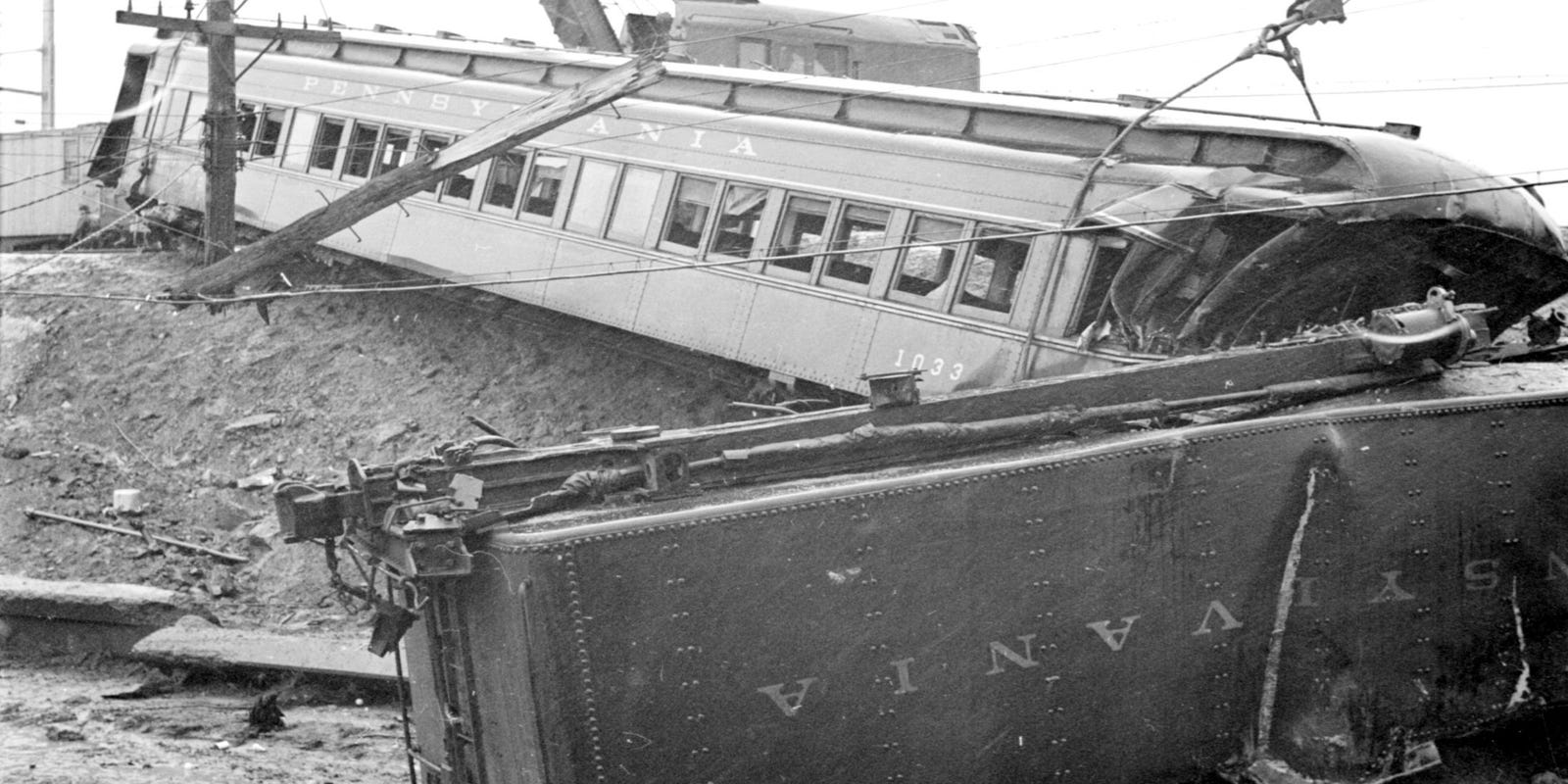
February 6, 1951, 70 years ago: A Pennsylvania Railroad train derails on a temporary wooden trestle in Woodbridge, Middlesex County, New Jersey, killing 85 passengers. It is the deadliest rail disaster in New Jersey history.

It is the deadliest rail disaster anywhere in America since the Malbone Street Wreck, outside Prospect Park in Brooklyn, on November 1, 1918. There were no games on that day: The baseball season was done, the NHL was a few weeks away from starting, the NFL and the NBA hadn't been founded yet, and it was a Friday, so the college football games were played the next day.

Around 5:00 PM, Pennsylvania Railroad train Number 733 left Exchange Place station in Jersey City. It was to head down the PRR's Main Line to Rahway, where it would branch onto the North Jersey Coast Line.

The Central Railroad of New Jersey was on strike, so No. 733 had more passengers than usual: Over 1,000 people on 11 cars.

At the time, there was a temporary wooden trestle near the Woodbridge station. The express was meant to bypass that station. The normal speed limit for a train doing so was 60 miles per hour. On the temporary trestle, it was 25.

But as the train approached the station at 5:43, the engineer, Joseph Fitzsimmons, only dropped the speed to 50. The tracks shifted under the weight of the locomotive, and 8 of the 11 cars derailed. The 3rd and 4th fell down a 26-foot-high embankment. Most of the 85 people killed were in one of these cars. The 5th and 6th were left hanging in mid-air over a street, and some people jumped out, some of those dying.

No one was charged with any crime as a result of the wreck. Fitzsimmons was kept on by the Railroad, but he never operated a train again. Today, there is a memorial outside the Woodbridge station. New Jersey Transit operates commuter lines, but even their express trains on the Coast Line usually stop at Woodbridge.

Friday, February 5, 2021

Top 5 Reasons You Can't Blame the Atlanta Falcons for Losing Super Bowl LI

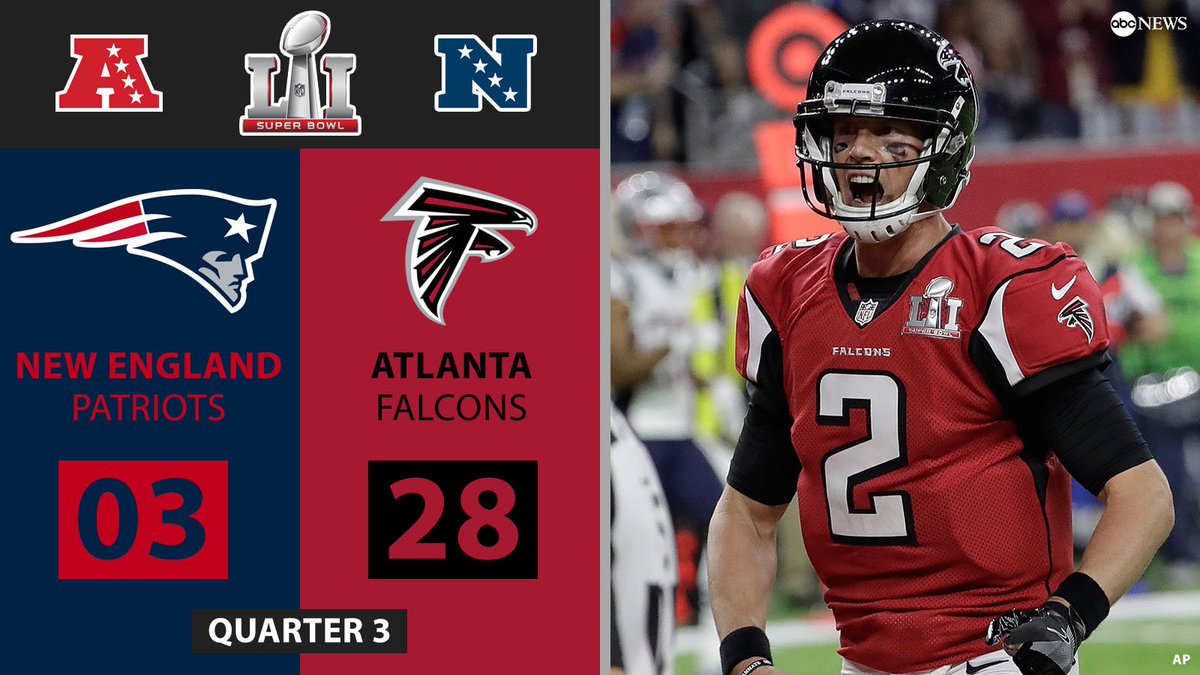
February 5, 2017: Super Bowl LI is played at NRG Stadium in Houston. With 2 minutes and 12 seconds left to play in the 3rd quarter, the Atlanta Falcons led the New England Patriots 28-3. In other words, with less than 18 minutes to play, they had a 25-point lead.

In the 1st 50 Super Bowls, no team had ever blown a lead of more than 10 points. The Falcons were in great shape to win the 1st World Championship in team history, 51 seasons, the entire Super Bowl Era.

Several sources said that the Falcons had a 99 percent chance of winning at that point. One source said it was 99.9 percent.

With 57 seconds to play in regulation, the Patriots tied the game, and we had the 1st Super Bowl that went to overtime. With 11:02 left in the 1st overtime, the Patriots won the ballgame, 34-28.

Boston, and all of New England, were now the beneficiaries of "the greatest choke in baseball history" and "the greatest choke in football history."

And Tom Brady was certified as not merely the greatest quarterback, but the greatest player in the history of football.

How could the Falcons have blown it?

Top 5 Reasons You Can't Blame the Atlanta Falcons for Blowing a 25-Point 2nd Half Lead and Losing Super Bowl LI

5. The Officials. They called 9 penalties on the Falcons, only 4 on the Patriots. They penalized the Falcons for 65 yards, the Patriots only 23. The Patriots gained 4 1st downs as a result of penalties, the Falcons only 1.

It's been suggested that there were no bad calls in this game, and that the disparity in the penalties was due to the Patriots being sufficiently disciplined, and the Falcons not. So I can only leave this as Reason Number 5.

4. The Curse of Mark Wohlers. In 1995, relief pitcher Wohlers was key to the Atlanta Braves winning the World Series. It was the 1st World Championship Atlanta had won in any sport, and remains the only one.

Unless you count soccer: The Atlanta Chiefs won the old North American Soccer League title in 1968, and Atlanta United won the MLS Cup in 2018. However, soccer is still the Number 5 league sport in North America. So maybe, for most fans of Atlanta sports teams, it doesn't really count.

In Game 4 of the 1996 World Series, the defending World Champion Braves were up 3 games to 1, led the Yankees 6-0 after 5 innings, and were still up 6-3 in the 8th. With 5 outs to go, but with 2 men on, Wohlers was throwing 98- and 99-mile-per-hour BBs to Jim Leyritz, and got 2 strikes on him. Then he hung an 86-MPH slider, and Leyritz hit a game-tying home run.
The Yankees won the game 8-6 in 10 innings, and won Games 5 and 6 to take the title. In the 25 years since:

* The Braves haven't won a World Series game, and have won only 1 National League Pennant, in 1999, and the Yankees then swept them in the World Series. They have lost the NL Championship Series in 1997, 1998, 2001 and 2020. They have lost the NL Division Series in 2000, 2002, 2003, 2004, 2005, 2010, 2013, 2018 and 2019. And they have lost the NL Wild Card Game in 2012.

* The Falcons have lost Super Bowl XXXIII (1998 season) and, the point of this post, Super Bowl LI (2016 season). They have lost the NFC Championship Game in 2004 and 2012. They have lost in the NFC Divisional Playoff in 2002, 2010 and 2017. They have lost in the Wild Card Playoff in 2008 and 2011.

* The Hawks have not won an NBA Championship since 1958, when they were the St. Louis Hawks. They haven't made the NBA Finals since 1961. They moved to Atlanta in 1968. But let's talk about what's happened to them just since Wohlers hung that slider. The Hawks have lost in the Conference Finals in 2015. They've lost in the Conference Semifinals in 1997, 1999, 2009, 2010, 2011 and 2016. They've lost in the 1st Round in 1998, 2008, 2012, 2013, 2014 and 2017.

* And Atlanta has both gained and lost an NHL team, the Atlanta Thrashers. They played 12 seasons, 1999 to 2011, made the Playoffs exactly once, in 2007, and got swept. By the New York Rangers. Is that the lowest?

It's been 25 years. I think it's safe to say that Atlanta sports could have a curse on it.

3. Donald Trump. He attended the Super Bowl. As Rick Wilson, a Republican political operative who launched the anti-Trump "Lincoln Project" in an effort to cleanse his Party of Trump's influence, titled his book about the man, Everything Trump Touches Dies.

Furthermore, Trump and Patriots team owner Robert Kraft are friends -- or, perhaps, the closest Trump knows how to come to being someone's friend. The Patriots' players would not have been thrown off their game by the sight of Trump. The Falcons' players might have been.
Maybe it was poetic justice that Georgia helped take both the Presidency and the U.S. Senate away from the Republican Party in the elections of 2020-21.

2. Lady Gaga. This might be the most controversial thing I've ever written in this blog. Not just because it seems silly to blame the performer of the halftime show for the defeat of the team that lost the Super Bowl. But because Gaga's fans are among the most passionate of any performers', ever, and will not take kindly to perceived attacks on her.

So, let me state for the record that I'm not accusing her of intentionally hurting the Atlanta Falcons in Super Bowl LI. I don't know which team she was rooting for, or even if she likes football. (She did show up at home games for both the Yankees and the Mets in 2010, early in her career, behaved badly at both, and wore a Yankee jersey, and not much else, at the former.) I am saying that her halftime show may, however inadvertently, have had a deleterious effect on the Falcons.

She began by singing the chorus of Woody Guthrie's "This Land Is Your Land." She sang "The Edge of Glory," which would seem to be a good title for a song at the Super Bowl, but was really about her grandfather on his deathbed, knowing he had lived a good life, despite not having experienced anything of what Gaga had once called "The Fame." She has reached the point where gaining fame, becoming a bigger star, is no longer the point: Making a difference is. This is something that Trump will never understand.

Next was "Poker Face," something Trump doesn't have, and it's about gay people being forced by society to hide who they really are. Next was "Born This Way," which is the opposite: She called it "my this-is-who-the-fuck-I-am anthem." It's an in-your-face message. Next was "Telephone," which she has said is about "Fear of suffocation, something that I have or fear is never being able to enjoy myself."

Next was "Just Dance," her 1st single, from the Spring of 2008, a song that helped a lot of people get through that year's economic crash, the last time a Republican held the White House. Next was "Million Reasons," which is about questioning everything, and was released on the day Trump was "elected," November 8, 2016. She closed with "Bad Romance," which is certainly what America entered into with Trump. In short, all 8 songs she sang could be interpreted as a middle finger to Trump, without even mentioning his name. If you really want to piss him off...
Super Bowl halftime shows are a crapshoot. Some are really good. Some are bad. At least one has been outright scandalous. But Gaga's was one of the best-received, ever.

And it ran a little long. Maybe the Falcons players heard it, maybe they didn't. Maybe it threw them off their game. In the 1st half, Atlanta outscored New England 21-3. The rest of the way, New England outscored Atlanta 31-7.

1. The Patriots Cheated. We don't actually know that the Patriots cheated at any point in the 2016-17 NFL season, including in the Super Bowl. We only know that they have been caught cheating multiple times. They have forfeited the presumption of innocence.

And Matt Ryan, as a result of winning the NFC Championship Game 2 weeks earlier, had done something Tom Brady has never done: He quarterbacked a team into the Super Bowl, and did it fairly.

You say Brady has never cheated? You are a liar.

VERDICT: Not Guilty. You can argue that, even with the Patriots having cheated, the Falcons should still have been able to hold onto a lead that was 25 points with a little over 17 minutes to go, 19 points with 10 minutes to go, 16 points with 6 minutes to go, and 8 points with 1 minute to go.

Instead, they had the best excuse of all for why they didn't: Unfairness.

UPDATE: The Braves ended Atlanta's drought by winning the 2021 World Series.

Top 5 Reasons You Can't Blame the Officials for the Seattle Seahawks Losing Super Bowl XL

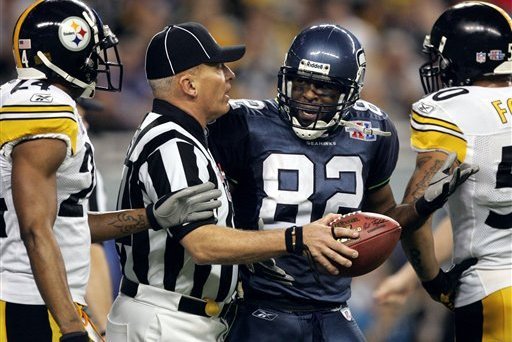
February 5, 2006, 15 years ago: Super Bowl XL is played at Ford Field in Detroit. The Pittsburgh Steelers were going for their 5th Super Bowl win -- "One for the Thumb," as they put it back in 1980, but hadn't yet gotten. The Seattle Seahawks, in their 30th season, with only 1 previous appearance in a Conference Championship Game to their credit, were in their 1st Super Bowl.

The Steelers won the game, 21-10. But the statistics suggest that it shouldn't have ended that way. The Seahawks got 20 1st downs, the Steelers only 14. The Seahawks had 396 total yards, the Steelers 339. The Seahawks had the ball for 33 minutes, the Steelers for 27. (Well, 33:02 and 26:58, respectively.)

Seahawk fans have spent the last 15 years saying the officials gave the Steelers the game. They point to these calls: 

* With 2:08 left in the 1st quarter, and the game scoreless, Darrell Jackson appeared to have scored a touchdown on a 16-yard pass from Matt Hasselbeck. But he was called for offensive pass interference, by pushing off against Steeler safety Chris Hope. Four plays later, Josh Brown kicked a 47-yard field goal. That made it 3-0 Seattle.

* With 12:29 left in the 2nd quarter, and the score still 3-0 Seattle, Hasselback started from the Steelers' 47-yard line, and passed to Jerramy Stevens. Stevens appeared to have possession of the ball, and then fumble. But the officials ruled that he never had possession, nullifying the gain he might have made.

* With 12:35 left in the 4th quarter, and Pittsburgh leading 14-10, Hasselbeck completed a pass to Stevens, going for 18 yards, to the Steeler 1-yard line. But Seahawk offensive tackle was called for holding on linebacker Clark Haggans. So now it was 1st-and-20, and Hasselbeck was sacked by Casey Hampton on the next play. Then came a 7-yard run by Shaun Alexander.

* And on the play after Alexander's run, with 10:54 left in the game, the ball on the Steeler 27, and the Steelers still up by 4, Hasselbeck again tried to pass to Jackson, but was intercepted by cornerback Ike Taylor. On his return of the interception, Hasselback was penalized for an illegal block.

* The Steelers were flagged for only 3 penalties all game long, totaling just 20 yards. The Seahawks were flagged 7 times, for 70 yards. To put it another way, average yards per penalty: Seahawks 10, Steelers 6.67.

The next day, at a rally for the team at their stadium, Seahawks coach Mike Holmgren, who had previously led the Green Bay Packers into Super Bowls XXXI (won) and XXXII (lost), said at the team's rally, "We knew it was going to be tough going against the Pittsburgh Steelers. I didn't know we were going to have to play the guys in the striped shirts as well."

Jason Whitlock of the Kansas City Star and ESPN wrote, "Bill Leavy and his crew ruined Super Bowl XL. Am I the only one who would like to hear them defend their incompetence?"

Two days after the game, ESPN published a poll: Out of over 100,000 votes cast, 61 percent said that "officiating mistakes affected the outcome of Super Bowl XL."

In 2010, Leavy, the game's referee, admitted his mistakes:

It was a tough thing for me. I kicked two calls in the fourth quarter, and I impacted the game, and, as an official, you never want to do that. It left me with a lot of sleepless nights, and I think about it constantly. I'll go to my grave wishing that I'd been better...

I know that I did my best at that time, but it wasn't good enough...

When we make mistakes, you got to step up and own them. It's something that all officials have to deal with, but unfortunately when you have to deal with it in the Super Bowl it's difficult.

This seemed to confirm what every football fan in the Pacific Northwest wanted to believe: Their beloved 'Hawks got screwed by the officials.

What they wanted to believe was wrong.

Top 5 Reasons You Can't Blame the Officials for the Seattle Seahawks Losing Super Bowl XL

5. The Calls Went Both Ways. With 2:13 left in the 3rd quarter, and the Steelers up 14-10, the Seahawks started with the ball on their own 7-yard line. Hasselbeck ran around right end, and gained 8 yards before being tackled by Aaron Smith. The Steelers thought that Hasselbeck had fumbled, and that they had recovered. But the officials ruled that he was already out of bounds before losing the ball.

Had the Steelers gotten the call they wanted, they would have had the ball deep in Seattle territory. Instead, the Seahawks kept going, until the Taylor interception.

4. 5-for-17 on 3rd downs. A bad 3rd down conversion rate would also be a big reason why the Seahawks lost Super Bowl XLIX.

In the 1st quarter, they had a 3rd-and-9, and allowed Hasselbeck to get sacked. Still in the 1st, they had a 3rd-and-14. They were unlikely to convert anyway, but a false start penalty pushed them back further. They had a 3rd-and-6 in Pittsburgh territory, when Hasselbeck connected with Jackson for 18 yards, but it was called back for holding -- correctly. And all that was just in the 1st quarter.

In the 2nd quarter, they had a 3rd-and-2 in Pittsburgh territory, after Alexander had made 2 gains. Instead of giving him the ball again, Hasselbeck threw, and it fell incomplete. Later in the quarter, on 3rd-and-3, Hasselbeck completed a pass, but it went only 2 yards. In the last minute of the half, they had 3rd-and-6 in Pittsburgh territory, and Hasselbeck threw incomplete. The ensuing field goal attempt by Josh Brown was 54 yards, and missed.

Early in the 3rd quarter, with a 3rd-and-5 in Pittsburgh territory, Hasselbeck threw another bad pass, forcing Brown into another long attempt, 50 yards, also missed. With 6:36 to go, possibly enough time to make up the Steelers' 11-point lead, and with a 3rd-and-8 in Pittsburgh territory, Hasselbeck got sacked.

When Hasselbeck most needed to come through for his team, he didn't do a good job of it. As a result...

3. The Game Wasn't That Close. 21-10. Suppose the Darrell Jackson touchdown had been allowed to stand. Would that have changed the course of the game? Maybe. By enough? Maybe not. If that had been the only difference, the Steelers would still have won, 21-13.

2. The Steelers Were Better. Normally, "The opposition was better" would be Reason Number 1. Not this time, although the Steelers were a better team than the Seahawks. They went into the game favored by 4 points, won by 11, and held the Seahawks to 10 points.

That 10-point defensive performance had only been done, or bettered, in 14 of the previous 39 Super Bowls, and in only 3 of the 14 since. The Steel Curtain defense of the 1970s? They allowed the Minnesota Vikings 6 points in Super Bowl IX, the Dallas Cowboys 17 in Super Bowl X, the Cowboys 31 in Super Bowl XIII, and the Los Angeles Rams 19 in Super Bowl XIV.

In other words, what's usually regarded as the greatest defense in football history averaged, over 4 Super Bowls, 16 points per game. The Pittsburgh defense of 2005-06, led by Troy Polamalu, Casey Hampton, James Farrior and Joey Porter, bettered that by nearly a full touchdown.

1. The Officiating Wasn't Bad. Mike Pereira, then the NFL's Director of Officiating, and previously a referee in both the NFL and college ball, reviewed every play, and determined that all 7 of the penalties called against the Seahawks were correct. Referee Bill Leavy was right at the time, and wrong in his later confession.

VERDICT: Not Guilty. The reason the Seattle Seahawks lost Super Bowl XL is that they didn't get the job done, and that the Pittsburgh Steelers didn't let them.

Monday, February 1, 2021

Top 5 Reasons You Can't Blame Pete Carroll for the Seattle Seahawks Losing Super Bowl XLIX

February 1, 2015: Super Bowl XLIX is played at University of Phoenix Stadium -- now named State Farm Stadium -- in the Phoenix suburb of Glendale, Arizona. Over 114 million viewers tuned in to NBC to watch it, making it the most-watched television program in American history.

The defending Champion Seattle Seahawks had a 10-point lead with 8 minutes left in regulation, and blew it. The New England Patriots took a 28-24 lead with 2:02 left. Quarterback Russell Wilson drove the Hawks to the Patriot 1-yard line with 26 seconds to go.

With the ball there, the call seemed obvious: A running play. Possibly Wilson on a quarterback sneak, like Bart Starr to win the 1967 NFL Championship Game, the Ice Bowl, for the Green Bay Packers. Or a handoff to Marshawn Lynch, the running back known as "Beast Mode," a 5-time Pro Bowler, who had already scored a touchdown in the game, and had gotten the ball 4 yards to the 1-yard line on the previous play.

Instead, Seahawk head coach Pete Carroll called for a pass, from Wilson to Ricardo Lockette. Patriot cornerback Malcolm Butler correctly figured out that Lockette was the target, and intercepted the pass. The Patriots won the game.
It's hard to imagine now, with Ohio State University having had Heisman Trophy-winning quarterbacks and winning National Championships with a great passing game, but there was a time, in the 1960s and '70s, when their head coach was Woody Hayes. Famous for a running game described as "Three yards and a cloud of dust," he was known for hating the forward pass enough to say, "There are three things that can happen when you throw the ball, and two of them are bad." Meaning an incomplete pass and an interception.

Malcolm Butler clinched victory for the New England Patriots in Super Bowl XLIX with the most famous interception in football history.

Cris Collinsworth, a 3-time Pro Bowler who had played in Super Bowls XVI and XXIII for the Cincinnati Bengals, was broadcasting the game for NBC, and spoke for so many people watching:

I'm sorry, but I can't believe the call... You've got Marshawn Lynch in the backfield. You've got a guy that has been borderline unstoppable in this part of the field. I can't believe the call...

If I lose the Super Bowl because Marshawn Lynch can’t get it in from the 1-yard line, so be it. So be it! But there is no way.

Hall of Fame cornerback Deion Sanders, analyzing the game for CBS, called it "one of the worst calls in Super Bowl history." Peter King, the main football writer for Sports Illustrated, and a winner of the Pro Football Hall of Fame's Dick McCann Award for writers, used the exact same words: "one of the worst calls in Super Bowl history." Hall-of-Famer Emmitt Smith, the NFL's all-time leading rusher, went even further, calling it "the worst play call in the history of football."

So that's, effectively, 3 members of the Pro Football Hall of Fame, 3 guys who really know football -- one on offense, one on defense, and one watching from above -- saying it was a bad call, essentially blaming Pete Carroll for throwing away back-to-back wins in the Super Bowl, a rare achievement, and possibly Carroll's own eventual election to the Hall.

Is there any way to defend the call? Not really.

Is there any way to say that Carroll shouldn't be blamed for the loss? Yes. Can any such way be taken seriously? Read on:

Top 5 Reasons You Can't Blame Pete Carroll for the Seattle Seahawks Losing Super Bowl XLIX

5. Pete Carroll. He got the Seahawks into that Super Bowl. And into the one the year before, and won it. He, Jimmy Johnson and Barry Switzer are the only head coaches to win both an NCAA National Championship and an NFL Championship (either before or during the Super Bowl era, 1967 onward).

Did he make a mistake with that play-call? Almost certainly. But he got them to within 1 play of back-to-back Super Bowl wins. Here's all the head coaches who have reached back-to-back Super Bowls: Vince Lombardi, Tom Landry, Don Shula, Bud Grant, Chuck Noll, Joe Gibbs, Dan Reeves, Marv Levy, Jimmy Johnson, Mike Holmgren, Mike Shanahan, Bill Belichick and Pete Carroll. 

That's 13 guys. Of those, just 10 won at least 1 of them: Lombardi, Landry, Shula, Noll, Gibbs, Johnson, Holmgren, Shanahan, Belichick and Carroll. Both of them? 6: Lombardi, Shula, Noll, Johnson, Shanahan and Belichick.

Going back to the pre-Super Bowl era, back-to-back NFL Championship Games were also won by George Halas, Greasy Neale, Buddy Parker, Paul Brown and Weeb Ewbank. So, 11 guys since 1932. That should give you and idea of how hard it is.

(No, Bill Walsh never did it. Only once have the San Francisco 49ers made back-to-back Super Bowls: In 1988-89, Walsh's last season as head coach; and 1989-90, George Seifert's first.)

Pete Carroll got the Seattle Seahawks to within one yard of back-to-back World Championships. They would not have gotten that far without him.

4. Russell Wilson. He threw the pass. He also could have said, "This is a bad call. I'm calling a different play in the huddle." He could have shown the leadership that a great quarterback would show. He didn't.
3. Malcolm Butler. He made the interception. Give him credit for pulling off the key play.

2. The Seahawks Offense. Their 20 1st downs wasn't that bad, compared to the Pats' 25. But they were only 3-for-10 on 3rd down, compared to the Pats' 8-for-14. They also committed more penalties, 7-5, for twice as many yards, 70-36. And had less time of possession, 26:14 to 33:46.

It took them 20 minutes and 13 seconds to get their 1st score. Their last score came with 19 minutes and 54 seconds to go. They blew a 10-point lead, and they blew it with 8 minutes to go. Blowing a 10-point lead tied what was then a Super Bowl record.

It would be eclipsed 2 years later by the Atlanta Falcons -- also against the Patriots. Hmmmm...

1. The Patriots Cheated. We don't actually know that the Patriots cheated at any point in the 2014-15 NFL season, much less in this Super Bowl. We only know that they have been caught cheating multiple times. They have forfeited the presumption of innocence.

So we have heard the case for the prosecution, and we have heard the case for the defense. It's time to decide.

VERDICT: Guilty. Going over the Top 5 Reasons again:

5. It doesn't matter what Carroll did before, only what he did at the moment in question.

4. Wilson was following orders. If he had disobeyed that order, and run the ball, and had gotten stopped, he would have been blamed for losing the Super Bowl, in spite of the fact that he had won one just the year before. If there's one thing the powers that be in the NFL value more than money, it's control.

If Wilson had rebelled, and gotten it right, he could be headed for the Hall of Fame. But if he had rebelled, and gotten it wrong, they could have made bullshit stuff up about him, as has been made about countless players, including quarterbacks (and not always as brazen as what was said about Colin Kaepernick), and he could have been run out of the game.

3. Butler wouldn't have intercepted the pass if Carroll hadn't called it.

2. The Seahawks' offense put themselves in position to win the game. Granted, this would seem to contradict the rebuttal to Reason Number 5. But it does emphasize the fact that Carroll blew it.

1. If Carroll had made the right call, it wouldn't have mattered if the Patriots cheated: The Seahawks would have won anyway.

Yes, the New England Patriots have cheated their way to 6 Super Bowl wins in the 22 seasons that they have been coached by Bill Belichick. But they have also failed to win the Super Bowl 16 times, including losing the Super Bowl 3 times: XLII and XLVI to the New York Giants, and LII to the Philadelphia Eagles.

It is possible to beat the Patriots, even when they cheat. Carroll had a great chance to do so. He didn't. He is to blame for that.