Showing posts with label atlantic city. Show all posts

Monday, November 2, 2026

November 2, 1976: Jimmy Carter Is Elected President

Note the 2nd line of the headline:
Gotta get that local angle in.

November 2, 1976, 50 years ago: Former Governor Jimmy Carter of Georgia edges incumbent President Gerald Ford, to reclaim the White House for the Democratic Party.

Ford had been Vice President when President Richard Nixon resigned on August 9, 1974. He was left with a recession he struggled to get under control, and the aftermath of the Watergate scandal that brought Nixon down. A month later, Ford pardoned Nixon for all crimes he committed, or may have committed, as President. That infuriated people who wanted to believe that Ford would be the honest man that Nixon wasn't.

Carter capitalized on that, telling voters, "I will never lie to you." It seemed to work: That statement, and the fact that he wasn't a "Washington insider" like so many other candidates for the Democratic nomination, made Carter stand out from the pack. At the Democratic Convention at Madison Square Garden, he took one of those insiders, Senator Walter Mondale of Minnesota, as his Vice Presidential nominee. The Carter-Mondale ticket left New York with a 33-point lead in the polls.

It didn't help Ford that he had waffled on a federal bailout for New York City's government, which was close to bankruptcy. At first, he refused, leading to the famous Daily News headline: "FORD TO CITY: DROP DEAD." That scared New York State officials, so they stepped in and helped the City get its house a little closer to being in order. That convinced Ford that a smaller bailout was okay.

So now, Ford had ticked off people in the City who thought he didn't care, and he'd ticked off conservatives in the Republican Party who didn't want any bailout for the city they hated the most. (Yes, conservatives hate New York more than they hate Los Angeles, San Francisco, Chicago or Boston.) To try to win the conservatives back, Ford announced that his original choice for Vice President, Nelson Rockefeller, himself a former Governor of New York, would not be the Party's nominee for the office in 1976.

That wasn't good enough. Ronald Reagan, who had been an actor and then Governor of California, was the darling of the conservative movement, and he challenged Ford in the Republican Primaries, and got almost enough Delegates to dethrone him at the Republican Convention at the Kemper Arena in Kansas City. (The building is now named the Hy-Vee Arena.) Ford chose Senator Bob Dole of Kansas as his new running mate.

Twenty years later, himself nominated for President, Dole would seem too moderate for current Republicans. But in 1976, he was considered acceptable by the Reagan wing of the Party. Which shows just how far to the right the Party had shifted, even by 1996.

Before the Republican Convention, Carter led Ford in the polls by a whopping 33 points. But things began to turn Ford's way. He went on a railroad "whistle-stop tour" like Harry Truman in 1948, because his "Rose Garden strategy" of staying in the White House and "acting Presidential" wasn't working.

He shored up support in the South, the Midwest and the West, leading conservative New York Times columnist William Safire, who had been a speechwriter for Nixon, to coin the phrase "The Winning West," saying that it had become more important than "The Solid South." Dole brought some supporters back. The economy finally began to improve, after the 1st-ever combination of unemployment and inflation, a.k.a. "stagflation," in American history in 1973, '74 and '75.

And the Carter campaign made enough minor mis-steps that Carter's drop in the polls mirrored what might have happened if he'd had one major mis-step. Indeed, it could be argued that, despite winning the Presidency, Carter's political stock was never higher than during the 1976 Democratic Convention.

And while he was pro-civil rights, there was still a stigma: No Southerner had been elected President without first being the Vice President since Zachary Taylor in 1848. (Woodrow Wilson had been born in Virginia, but was a New Jersey-based politician. And he was the only Southern-born politician even nominated between 1848 and 1976.)

There were some zingers, but nothing really nasty. Ford questioned Carter's experience, and Carter responded by saying that, if experience were the deciding factor, "we would have kept Richard Nixon." There was a brief question about Ford's taxes, and the special counsel investigating decided there was not enough evidence to recommend charges. But before that decision, Carter addressed it very deftly: "I don't know what the facts are about Mr. Ford and his income tax. He does!" The implication being, "What's he hiding? Haven't we had enough of that?"

Ford attacked what he perceived to be Carter's weakness and indecisiveness: "He wanders, he wavers, he waffles, and he wiggles!" He also said, "There was a great, great President, many years ago, named Teddy Roosevelt, who said, 'Speak softly and carry a big stick.' Jimmy Carter speaks loudly, and carries a fly swatter!" One day, he delivered his stump speech 10 times. By the 9th time, he was so tired, it came out "fly swapper"; on the 10th try, "fly spotter." Still, each man seemed to be enjoying himself on the campaign trail.

But the debates doomed Ford. In one, he was asked about Soviet influence in Eastern Europe, and said, "There is no Soviet domination in Eastern Europe, and there never will be under a Ford Administration." This statement was meant to suggest that he wouldn't let it happen. But most people knew that it had already happened, long before he took office, and it fed into the idea that Ford -- a graduate of the University of Michigan and Yale Law School, 2 of America's finest institutions of higher learning -- was dumb.

And in the Vice Presidential debate, Dole attacked the Democrats by saying that World War I, World War II, the Korean War and the Vietnam War were "all Democrat wars." This was completely stupid: The Vietnam War started under Dole's idol, fellow Kansan Dwight D. Eisenhower; and the others, once Democratic Presidents got America involved, Republicans in Congress wholeheartedly supported the war efforts. Indeed, with World War I, Republicans wanted it more than Democrats; and in World War II, Republicans didn't want to get involved at first, because they supported the fascist Axis against the Soviet Union.

On Election Day, November 2, the race was a virtual dead heat in the final poll. When the votes were tallied, it was definitive, but just barely. Carter got 40.8 million votes, Ford 39.1 million; Carter got 50.1 percent of the popular vote, Ford 48.0; Carter won only 23 States, to Ford's 27; but Carter's States added up to 297 Electoral Votes, Ford's to 240.

How close was it? Carter won Mississippi's 7 EVs by 15,000 votes, Wisconsin's 11 by 36,000, and Missouri's 12 by 61,000. Shift those 122,000 votes to Ford, and the EV count would have been Ford 271, Carter 267.

Carter won Pennsylvania by 123,000 votes. But shifting that 1 State, with 27 EVs, wouldn't have been enough to swing the election to Ford. Shifting New York would have been: Carter won it by 288,767 votes. Shift its 41 EVs, and it would have been Ford 281, Carter 256.

Ford's supporters were left to wonder. If only:

* Nixon had resigned a little sooner, giving Ford more time to turn things around.

* Ford hadn't pardoned Nixon, killing off some of the massive goodwill with which he began his Administration.

* Ford had given New York City the bailout at first, he could have won New York -- but he might not have won close States like Oregon, Maine, Virginia, and, most notably, Reagan's home State of California with its 45 EVs.

* Reagan had dropped out of the Primaries after losing Illinois, where he was born and raised, to Ford, allowing Ford to consolidate his intraparty support sooner.

* The economy had begun to improve, even a little bit sooner.

* Ford had come up with a better debate answer on Eastern Europe.

* Dole had come up with a better debate answer on foreign policy.

Had any one of those things happened, instead of what did happen, Ford could well have won, and continued as President all the way until January 20, 1981.

Already having big majorities in both houses of Congress, there wasn't much for the Democratic Party to gain there: They added just 1 seat in the House, giving them 292 seats; and 1 in the Senate, giving them 61. Neither major party has had that many since.

Among the new Senators elected were Democrats Howard Metzenbaum of Ohio (who beat Bob Taft Jr., son of a Senate Majority Leader and grandson of a President), Daniel Patrick "Pat" Moynihan of New York; and Republicans Richard Lugar of Indiana, Orrin Hatch of Utah, John Heinz of Pennsylvania (of the Pittsburgh condiment-making family), and Harrison Schmitt of New Mexico (who walked on the Moon on the Apollo 17 mission).

Maybe Ford was better off for having lost: Carter was left with the energy crisis, a hard situation in Iran, and a new round of recession and inflation. If Ford had what amounted to a 2nd term, he might have struggled just as much (if not with exactly the same attempted solutions), and he might now be considered one of the country's worst Presidents, if a well-meaning one.

Time magazine named Carter their Man of the Yar for 1976. He started his Inaugural Address by thanking "my predecessor, for all he has done to heal our land." That healed some of the bitterness that had come up between them during the campaign, and the two men remained on friendly terms for the rest of Ford's life, which came to a close in 2006, at the age of 93. At the time, Ford was the longest-lived President in American history.

The 1976 campaign remains the last one to date that was relatively civil. In 1980, Reagan and the Republicans ran a campaign that terribly mocked Carter, and it worked. As time has gone by, Presidential elections gotten nastier and nastier. The zingers that Ford and Carter traded in the Bicentennial Year now seem rather quaint by comparison.

Also on Election Day 1976, New Jersey voters approved casino gambling in Atlantic City. This would one day have repercussions in another Presidential race, as Donald Trump ran in 2016 despite building 3 casino-hotels in A.C., and having them all go bankrupt. Some businessman he turned out to be.

There's a Jimmy Carter Presidential Parkway and a Jimmy Carter Boulevard in his home State of Georgia. A statue of him stands outside the State Capitol in Atlanta. The city is also home to his Presidential Library, and the Carter Center, an institute dedicated to peaceful change all over the world. They opened on October 1, 1986, his 62nd birthday. Given his U.S. Navy experience, it was appropriate that a nuclear-powered submarine was named the USS Jimmy Carter, SSN-23, in service since 2004.

While he was born and raised in Los Angeles, actor Richard Paul had become known for his impressions, and his impression of Carter led to him being cast as Mayor Teddy Burnside in the sitcom Carter Country, which aired on ABC in the 1977-78 and 1978-79 TV seasons. In a retroactive irony -- Bill Clinton was first elected Governor of Arkansas in 1978 -- the name of the fictional Georgia town on the show was Clinton Corners. The TV show The Dukes of Hazzard, based in a fictional Georgia County, also debuted during Carter's Presidency. While it was filmed in 1976, the Georgia-based movie Smokey & the Bandit premiered in 1977.
Statue, State House, Atlanta, Georgia

Carter remains the only President born in, or representing, Georgia.

Carter has been played by Dan Aykroyd on Saturday Night Live, Ed Beheler in Sextette in 1978 and Hot Shots! Part Deux in 1993, and Brad Maynard in the pilot of the 1st live-action TV version of the superhero comedy The Tick in 2001. (A Soviet robot had been programmed specifically to kill Carter, not whoever was currently President, and was revived in what was then the present day.)

His work with Habitat for Humanity brings up a comparison with Trump. When Jimmy Carter built a wall, he built four of them. And a roof. And when he built a residence, he did it for comfort, not for luxury, and let it be open to anyone, regardless of race or religion. And then he did it again. And again. And again.

And the only thing that stopped him wasn't old age, but very old age. Carter became the 1st President to live to be 100 years old, on October 1, 2024. He had said he wanted to live long enough to vote for Kamala Harris over Donald Trump in the election on November 5. He did. He died on December 29.

Thursday, October 22, 2026

October 22, 1926: The Tragedy of Harry Greb

October 22, 1926: Harry Greb, a former Middleweight Champion of the World, dies in Atlantic City, New Jersey. He was only 32 years old.

Edward Henry Greb was born on June 6, 1894 in Pittsburgh, leading to his nicknames: "The Pittsburgh Windmill," "The Smoke City Wildcat" and "The Pittsburgh Bearcat." I thought his surname might have been shortened (either by him or his father) from a longer one, either Slavic or Italian, but, apparently, that was it, and he was of German descent.

By 1915, he was fighting world-class opposition, including 2 fights, though not sanctioned for the title, against Middleweight Champion George Chip. He lost both fights by what was then called a "newspaper decision." In 1917, he set a record that will almost certainly never be broken with 37 officially sanctioned fights in a single year -- an average of 1 every 9.8 days. He won 34 of them. He beat Barney "Battling" Levinsky, the Light Heavyweight Champion, although, again, the title was not officially on the line. Starting in 1918, he won 52 straight fights, including fights against Levinsky, and Billy Miske and Mike Gibbons, both of whom would later fight Jack Dempsey for the Heavyweight Championship.

In 1921, during a fight with light heavyweight Kid Norfolk, he was thumbed in the right eye, which is believed to have resulted in a retinal tear. He would eventually lose all sight in the eye, and lose some vision in his left eye as well. He kept this a secret from everybody except his wife and his closest friends. If even one State boxing commission found out, it would have notified the commissions in the other 47 States then in the Union, and Greb wouldn't have been able to box anywhere in America.

Despite the injury, Greb won the fight via a newspaper decision, and got a fight for the American light heavyweight title. On May 23, 1922, he faced champion Gene Tunney at the 2nd Madison Square Garden. In the 1st round, Greb broken Tunney's nose. Somehow, Tunney, a wealthy and cultured man who had learned to box while serving in the Marine Corps during World War I, managed to avoid getting knocked down, let alone out. Greb was announced as the winner, and The Ring magazine named it Fight of the Year.

It was the only professional fight Tunney ever lost. They fought at the 2nd Garden again on February 23, 1923, and Tunney won by a split decision. They fought there a 3rd time on December 10, 1923, and Tunney won by a unanimous decision. They fought a 4th time, on September 17, 1924 at the Olympic Arena in Cleveland, and it was ruled a draw. They fought a 5th time on March 27, 1925 at the St. Paul Auditorium in Minnesota, and Tunney won another unanimous decision.

A boxer facing a man 5 times? Greb fought Levinsky 6 times, and won them all. He also faced former Light Heavyweight Champion Tommy Loughran 6 times, losing the 4th, drawing the 6th, and winning the rest.

On August 31, 1923, Greb finally got his shot at a World Championship, winning a unanimous decision over Middleweight Champion Johnny Wilson at the Polo Grounds. He successfully defended the title 5 times, including a rematch against Wilson at The Garden in 1924; and one over then-Welterweight, later Middleweight, Champion Mickey Walker, "The Toy Bulldog," at the Polo Grounds in 1925.

On February 26, 1926, 2 months after the 3rd Madison Square Garden, the building that would become known as "The Old Garden," opened, he lost the title in a split decision to Theodore "Tiger" Flowers, who thus became the 1st black fighter to win the Middleweight title. After winning 2 tuneup fights, Greb fought a rematch, but Flowers won on an even more controversial split decision. This time, the fans stormed the ring to protest the outcome. Greb later stated, "Well, that was one fight I won, if I ever won any."

Officially, he won 108, lost 8, and drew 3. Of those 8 losses, 3 were to Tunney and 2 were to Flowers. Of those 108 wins, 33 of them were over 16 different members of the International Boxing Hall of Fame, and Greb is still the all-time leader in that category.

But he had to retire. His health, as had his face, had taken a beating. Not only did he have to have his right eye removed and replaced with a glass prosthesis, but damage to his nose had led to breathing issues. It forced him to turn down a job as a sparring partner for Dempsey, who was about to defend the Heavyweight Championship against Tunney in Philadelphia. Knowing both men's styles well, Greb was sure that Tunney would win that fight. He was right, and Tunney won the rematch as well, which became known as the "Long Count Fight."

Greb saw the 1st Dempsey-Tunney fight, but not the 2nd. He checked into a hospital in Atlantic City for surgery, but complications set in, causing a heart attack that killed him on October 22, 1926. He has been called the greatest middleweight fighter of all time, and one of the very greatest boxers, pound-for-pound, who has ever lived. But the thing that stands out the most about him isn't his fight totals, or his holding of a championship for 3 years, but the fact that he was the only man ever to beat Tunney, who remains the only man ever to retire while still Heavyweight Champion and stay retired.

Friday, October 6, 2023

October 6, 1993: Michael Jordan Retires (For the 1st Time)

October 6, 1993, 30 years ago: Michael Jordan retires from professional basketball. He is only 30 years old, does not claim an injury, and is coming off 3 straight NBA Championships with the Chicago Bulls.

The cover of the next issue of Sports Illustrated has a simple headline, with a simple question.
His answer: He had lost his desire to play basketball. He later added that the death of his father, James Jordan, a murder victim in Lumberton, North Carolina 3 months earlier, helped to convince him.

Later still, he said that another factor was not really having an off-season the year before, 1992, because he was leading the U.S. "Dream Team" at the Olympics in Barcelona, Spain. Apparently, he was both physically and emotionally exhausted.

There is another explanation, perhaps a more sinister one. During the Bulls' 1993 Playoff series with the New York Knicks, a story got out that he had made the 128-mile trip down to Atlantic City, New Jersey, and did a considerable amount of gambling there. And stories had gotten out that he had lost hundreds of thousands of dollars betting on golf games he was playing.

Now, there has never been any evidence, at least not publicly revealed, that Jordan bet on an NBA game. This is not a Pete Rose situation, as far as we know. But it didn't matter: If a player can be that much in debt to a gambler, he could be pressured to throw a game to pay off the debt.

But then-NBA Commissioner David Stern didn't want to lose the NBA's biggest drawing card and moneymaker. Not for good, anyway. So some people believe that Jordan cut a deal with Stern: Step away from the game for a while, and the investigation would be dropped. Essentially, it was an indefinite suspension.

It lasted for a year and a half. Jordan returned on March 18, 1995, and Stern allowed it. He played through the 1998 season, winning 3 more titles, then retired again. He came back one more time, for 2001-02 and 2002-03, with the Washington Wizards, and finally retired for good. There was never another investigation into his gambling.

But that question on that cover, "Why?", still lingers. Jordan himself has never told the story. Nor did Stern, before his death in 2020.

Monday, February 20, 2023

Living In a Jersey Paradise

To the tune of "Gangsta's Paradise" by Coolio, although, in terms of lyrical style, it probably owes more to "Weird Al" Yankovic's parody, "Amish Paradise."

As I walk through the valley of the Raritan
I take a look at my life and realize this wasn't planned.
But that's just perfect for us Jersey Guys
because it taught us all how to improvise.
Woke up this morning at 6:30, grab my keys.
Have breakfast at the deli: Pork roll, egg and cheese.
I've been waiting on this platform for the train so long
that even my Ma thinks my mind is gone!
But still, at 9, I'm in there, ready for work
for a totally insufferable jerk-fool!
I'm the kinda guy the office trainees wanna be like
in their studio apartments, sayin' prayers for 'burb life!

Been spending most our lives
living in a Jersey Paradise.
Learn how to improvise
living in a Jersey Paradise.
Eat pork roll by the slice
living in a Jersey Paradise.
It's just an option to be nice
living in a Jersey Paradise.

Work is done, I take the Subway back to Penn Station.
The trains backed up, leading to commuter consternation.
My briefcase is so packed, on me the boss was chunkin'.
But at least I got myself an iced latte from Dunkin.
Finally get home, resume my life.
On the table is McDonald's, bought by the wife.
She's a real estate agent, Jersey keeps her in commission
I gotta keep her pleased, 'cause I know what I was missin'!
The lawn mower's broken, the snowblower's through
and I ain't had the gutters cleaned since 2002!
She takes the Subaru to the Home Goods store.
Where she'll put all the stuff she buys there, I just don't know.

Tell me why are we stuck on Route 3?
Is it more construction or the return of Chris Christie?

Been spending most our lives
living in a Jersey Paradise.
It takes some sacrifice
living in a Jersey Paradise.
Atlantic City's our vice
living in a Jersey Paradise.
Leave up our Christmas lights
living in a Jersey Paradise.

Shopping malls are crowded, traffic is a bummer.
We still get to go down the Shore in the Summer!
The Devils gave us three Stanley Cups in hockey.
So who needs New York's Warriors or Philadelphia's Rocky?
They say I gotta learn, but nothing they can teach me
is worth doing things that would make the cops reach me!
I guess they can't, but I wish they would all
give tickets to cars taking up two spaces at the mall, fool!

Been spending most our lives
living in a Jersey Paradise.
We pay the ShopRite price
living in a Jersey Paradise.
No pineapple on pies
living in a Jersey Paradise.
We’re all standup guys
living in a Jersey Paradise.

Tell me why are we stuck on Route 3?
Someone made a wrong turn into Cheesecake Factory!
Tell me why are we stuck on Route 3?
Somebody ticked off the wrong "family"!

EDIT: There is a Cheesecake Factory off Route 4 in North Jersey, but not off Route 3.

*

Days until the next Arsenal match: 5, at 10:00 AM Eastern Time this Saturday, a Premier League match, away to Leicester City. The Arsenal remain top of the League, although Manchester City have closed the gap.

Days until the New Jersey Devils again play a local rival: 5, at 7:30 PM this Saturday, home to the Philadelphia Flyers.

Days until the next New York Red Bulls game: 5, at 7:30 PM this Saturday, away to Orlando City.

Days until the next game of the U.S. National Soccer Team: 32, on Friday, March 24, at 8:00 PM New York time, in the CONCACAF Nations League, away to Grenada.

Days until the Yankees' Opening Day: 38, on Thursday, March 30, home to the San Francisco Giants. This will be the 1st Yankee game to be both an Opening Day and an Interleague game. Under 3 months.

Days until the Red Bulls again play a nearby rival: 70, on Saturday, May 6, home to the Philadelphia Union.

Days until the Yankees' next series against the Boston Red Sox begins: 109, on Friday, June 9, 2023, at Yankee Stadium II. Under 4 months.

Days until the next Women's World Cup opens: 140, on Friday, July 10, 2023, jointly held in the neighboring nations of Australia and New Zealand. Under 5 months.

Days until the next North London Derby: Unknown. Arsenal have won both League games with Tottenham Hotspur, and will not face "Spurs" in any other competition this season. The 2023-24 Premier League season will begin on Saturday, August 12, which would be 173 days. But the season never begins with any derby matches, so it will probably be at least 1 week later.

Days until the next East Brunswick High School football game: Unknown, since we won't know the 2023 schedule for months. It could be as soon as Friday, September 1, which would be 193 days. A little over 6 months.

Days until the next East Brunswick-Old Bridge game: Also unknown. It could be the season opener. At least, after this year's game was at the purple shit pit on Route 9, next year's game will be at home.

Days until the next Rutgers University football game: 194, on Saturday, September 2, home to Northwestern. A little over 6 months.

Days until the next Rutgers-Penn State football game: 271, on Saturday, November 18, 2023, at a time to be determined, at Beaver Stadium in State College, Pennsylvania. Under 9 months.

Days until the next Summer Olympic Games: 522, on Friday, July 26, 2024, in Paris, France. A little under a year and a half, or a little over 17 months.

Days until the next Presidential election: 624, on Tuesday, November 5, 2024. Under 2 years, or under 21 months.

Days until the next elections for Governor of New Jersey and Mayor of New York City: 988, on Tuesday, November 4, 2025. Under 3 years.

Days until the next Winter Olympics open in Milan, Italy: 1,082, on Friday, February 6, 2026. A little under 3 years.

Days until the next World Cup opens: 1,204, on Monday, June 8, 2026. Under 3 1/2 years. 

Wednesday, January 1, 2020

New Jersey Glossary: Volume 1, A to E

232 Crazies: Fan group at New Jersey Devils games. They sit in Section 232 in the East Stand Balcony at the Prudential Center in Newark. They used to be the 228 Crazies, for their section at the Meadowlands Arena. But, like the Bleacher Creatures having to move from Section 39 to Section 203 at the new Yankee Stadium, they had to change their number. They're rowdy, but they're not that
crazy -- unless you're a Ranger fan or a Flyer fan who wants to start something.

They should not be confused with the Devils Fan Club, who sit in Section 11 in the lower level of the southwest corner of The Rock.

A.C.: See "Atlantic City."

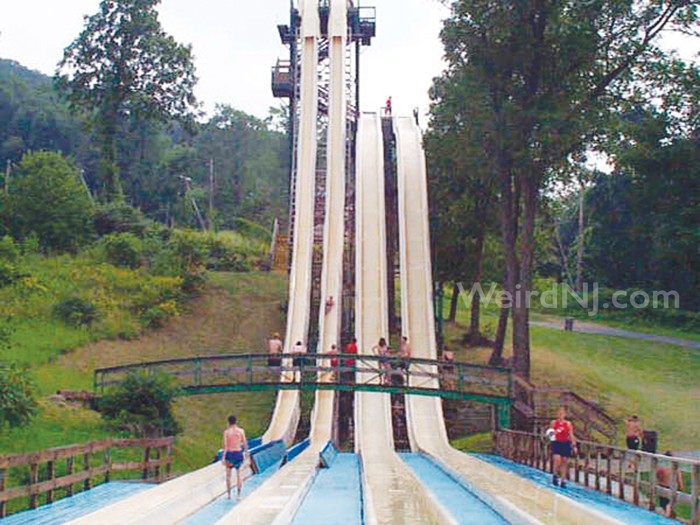
Action Park: An amusement park in Vernon, Sussex County, in the northernmost part of New Jersey. It opened in 1978, and the TV commercials for it made it look like a lot of fun.
I never went. It wasn't because my mother was cheap and my father always caved in to her cheapness. It was partly because Great Adventure was closer. But it was also because the place was genuinely dangerous. Between the ski-themed Alpine Center, the go-kart and motorcycle-themed Motorworld, and Waterworld, there were so many accidents, it became known as "Accident Park," "Traction Park".and "Class Action Park." There were 6 deaths in 18 years, before the lawsuits piled up, and it was finally closed in 1996.

It was bought, revamped, and reopened as Mountain Creek Waterpark in 1998. The name was changed back to Action Park in 2014, but the resulting bad publicity got the Mountain Creek name restored in 2016. New Jersey Route 94.

Next-door was New Jersey's only major ski resort, Vernon Valley Great Gorge, now also named Mountain Creek. See its entry.

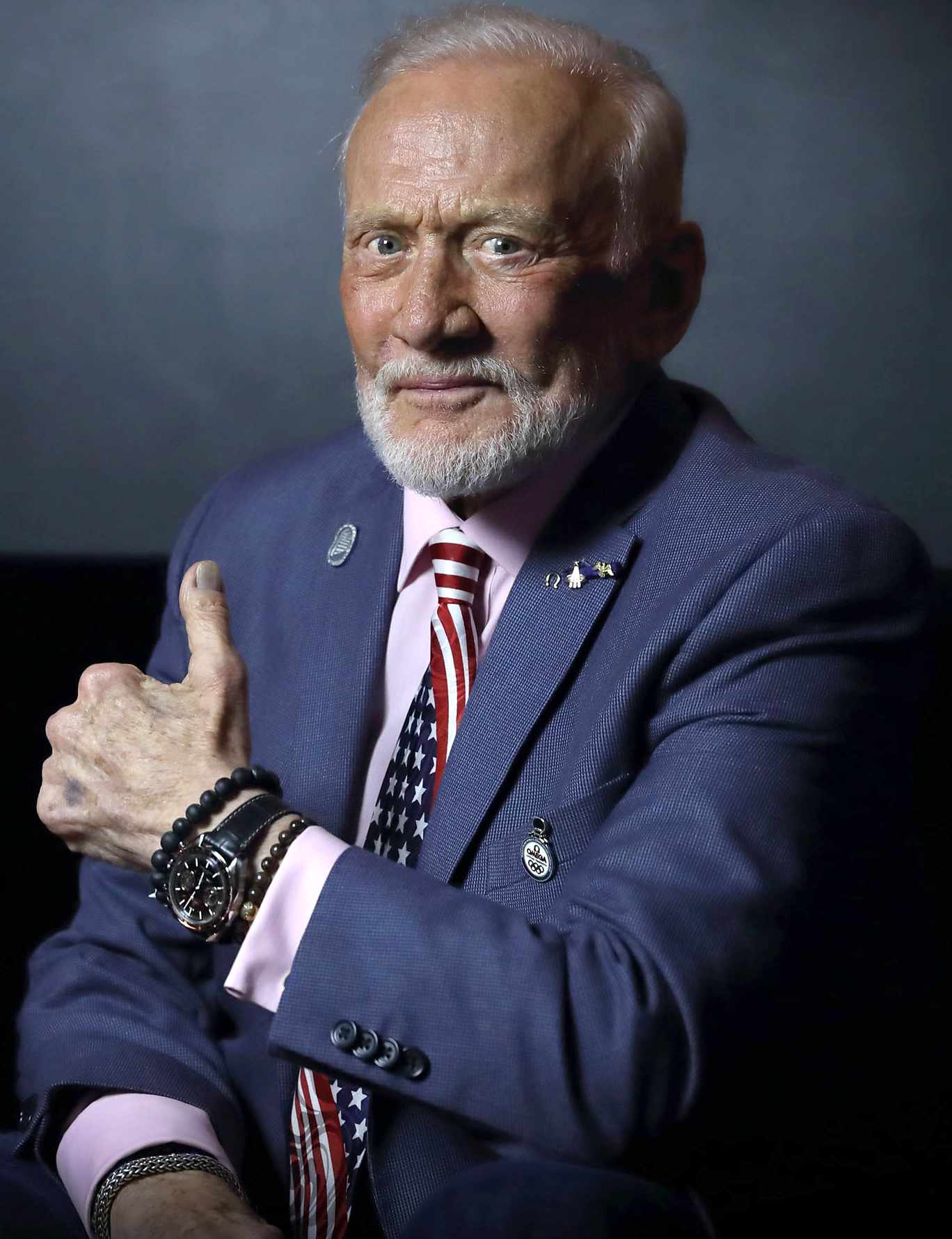
Aldrin, Buzz: Born Edwin Eugene Aldrin Jr. on January 20, 1930 in Glen Ridge, Essex County, and grew up in adjoining Montclair. Buzz was the lunar module pilot on Apollo 11, and, on July 20, 1969, followed mission commander Neil Armstrong to become the 2nd man, and the only New Jerseyan, to walk on the Moon.

As of this writing, he is still alive, and active on Twitter despite approaching his 90th birthday.
Atlantic City: A resort city on the Jersey Shore, in Atlantic County, connected to the mainland by U.S. Route 30 (the White Horse Pike), the Atlantic City Expressway, U.S. Route 40/322 (the Black Horse Pike), and New Jersey Transit's Atlantic City Line. The luxury hotels there inspired the world's 1st boardwalk, in 1870, so people coming off the beach would track less sand into the hotels.
Many of the streets of Atlantic City gave their names to the board game Monopoly, introduced in 1935. This includes 4 railroads that had lines going there: The Pennsylvania, the Reading, the Baltimore & Ohio (B&O) and the Short Line (based on the Atlantic City and Shore Railroad, a streetcar line that went from A.C. to Ocean City).

Also known as a hub for organized crime starting in the Prohibition Era, 1920-33, since it was distant enough from New York (120 miles) and Philadelphia (60 miles) to make it not really worth the law's effort to go down there, but close enough so that people who wanted to drink and party could go down there for a couple of days.

By the 1970s, it had become really run-down, and in 1976 voters approved legalized gambling, the 1st in the country outside Nevada, for the City of Atlantic City, in the hopes that it would revitalize the city. It began in 1978, and organized crime quickly took that over.

The revitalization worked, to a point: The neighborhoods away from the casinos were not helped much. As the comedian Alan King, who worked there both before and after, put it, "They spent $8 billion on the casinos, and 11 bucks on the rest of the city!"

This dichotomy inspired "Atlantic City," a 1980 film; and "Atlantic City," a 1982 song by Bruce Springsteen: "The Chicken Man" was Philadelphia Mob boss Phil Testa, and his enemies really did blow him up, and blow up his house, too, on March 15, 1981. (I guess no one told him to "Beware the Ides of March.") See "Springsteen, Bruce."

It also inspired Donald Trump to make his earliest big real-estate deals outside New York City. None of this made the parts of the city away from the casino-hotels any better, and a tunnel that Trump wanted resulted in a lot of people losing their homes. As a result, when Trump ran for President in 2016, he got just 44 percent in Atlantic County, most of that in the rural areas on the mainland, not on the island that includes Atlantic City. (He got 41 percent in the State overall, winning 9 of the 21 Counties, all of them majority-rural.)

The Miss America Pageant began on the Boardwalk in 1921. In 1929, Convention Hall opened, and it hosted the Pageant from 1933 until 1997, when it was moved to the new Atlantic City Convention Center. It was held there until 2004, then moved to Las Vegas. (See "Boardwalk Hall.")

Atlantic City is accessible by Parkway Exits 37 to 40.

Atlantic City Expressway: The only toll road in South Jersey, operated by the South Jersey Transportation Authority. The section from Turnersville to the Parkway was opened in 1964, and from the Parkway to Atlantic City in 1965. It was designed to alleviate traffic on U.S. Route 30, and to give people in South Jersey and Philadelphia easier access to Atlantic City.

Its eastern terminus is in downtown Atlantic City, and as it goes westward and northward, its exit numbers rise sequentially. Exit 5 connects it with U.S. Route 9, and Exit 7 with the Garden State Parkway. It terminates in Washington Township, Gloucester County (it's listed as "Turnersville"), merging with New Jersey Route 42, allowing access to the Turnpike and Interstates 76 and 295.
Image result for Atlantic City Expressway"
Atlantic City Line: New Jersey Transit's only local/commuter rail line in South Jersey, it opened in 1989, replacing the old Pennsylvania-Reading Seashore Line that ran from 1933 to 1976. Its irregular runs and frequent closings due to much-delayed maintenance are an unfortunate fact of life for Philadelphians and South Jerseyans wanting to reach Atlantic City and other beach towns.

It starts at 30th Street Station in Philadelphia, where transfers are available to Amtrak and SEPTA. It then runs north and east across Center City, and crosses the Delaware River, before reaching the new (2013) Pennsauken Transit Center, where a transfer to the Trenton-to-Camden River Line is available. It goes to Cherry Hill, and then to Lindenwold, where a transfer to PATCO is available. From here, it is paralleled by U.S. Route 30 (the White Horse Pike) and New Jersey Transit Bus 554.

It moves on to Hammonton, Egg Harbor City, Absecon, and the Atlantic City Rail Terminal, which has the convenient official street address of 1 Atlantic City Expressway. Unfortunately, to get to most of the casinos and the boardwalk, you have to go through the Atlantic City Convention Center and around the Sheraton Atlantic City Convention Center Hotel.

Atlantic City Surf: See "Trenton Thunder."

Bamberger's: A department store chain founded in Newark in 1892 by Louis Bamberger and 2 of his brothers-in-law. In 1929, he sold the chain to Macy's, who kept the Bamberger's name (and the "Bam's" nickname) in New Jersey, while Macy's stores were only in New York. But in 1986, Macy's renamed all the Bamberger's stores "Macy's."
Bayonne Bridge: See "New York, Crossings Into."

Beggel: What South Jersey calls a bagel.

Ben Franklin Bridge: See "Pennsylvania, Crossings Into."

Benny: What people who live full-time in Shore towns in Monmouth and Ocean Counties call day-trippers from New York City and North Jersey. Such people used to ride down the New York & Long Branch Railroad, now New Jersey Transit's North Jersey Coast Line. These travelers tended to come from Bayonne, Elizabeth, Newark and New York -- hence, "BENNY." The locals despise these people. Compare "Shoobie."

Bergen County Line: Known as the Bergen Line for short, this is a New Jersey Transit commuter rail line, serving the County of the same name, and replacing a line of the former New York and Erie Railroad.

It begins at the Hoboken Terminal, and intersects with the Northeast Corridor and the North Jersey Coast Line at Secaucus Junction. It then stops at Rutherford, Westmont in Wood-Ridge, Garfield, Plauderville, Broadway and Radburn in Fair Lawn, Glen Rock, Ridgewood, Ho-Ho-Kus, Waldwick, Allendale, Ramsey and Mahwah.

At Mahwah, it crosses the New York State Line, and, in co-operation with Metro-North Commuter Railroad, it continues as the Port Jervis Line in Rockland County: Suffern, Sloatsburg, Tuxedo, Harriman, Salisbury-Mills Cornwall, Campbell Hall in Hamptonburgh, Middletown-Town of Wallkill, Otisville and Port Jervis.

Betsy Ross Bridge: See "Pennsylvania, Crossings Into."

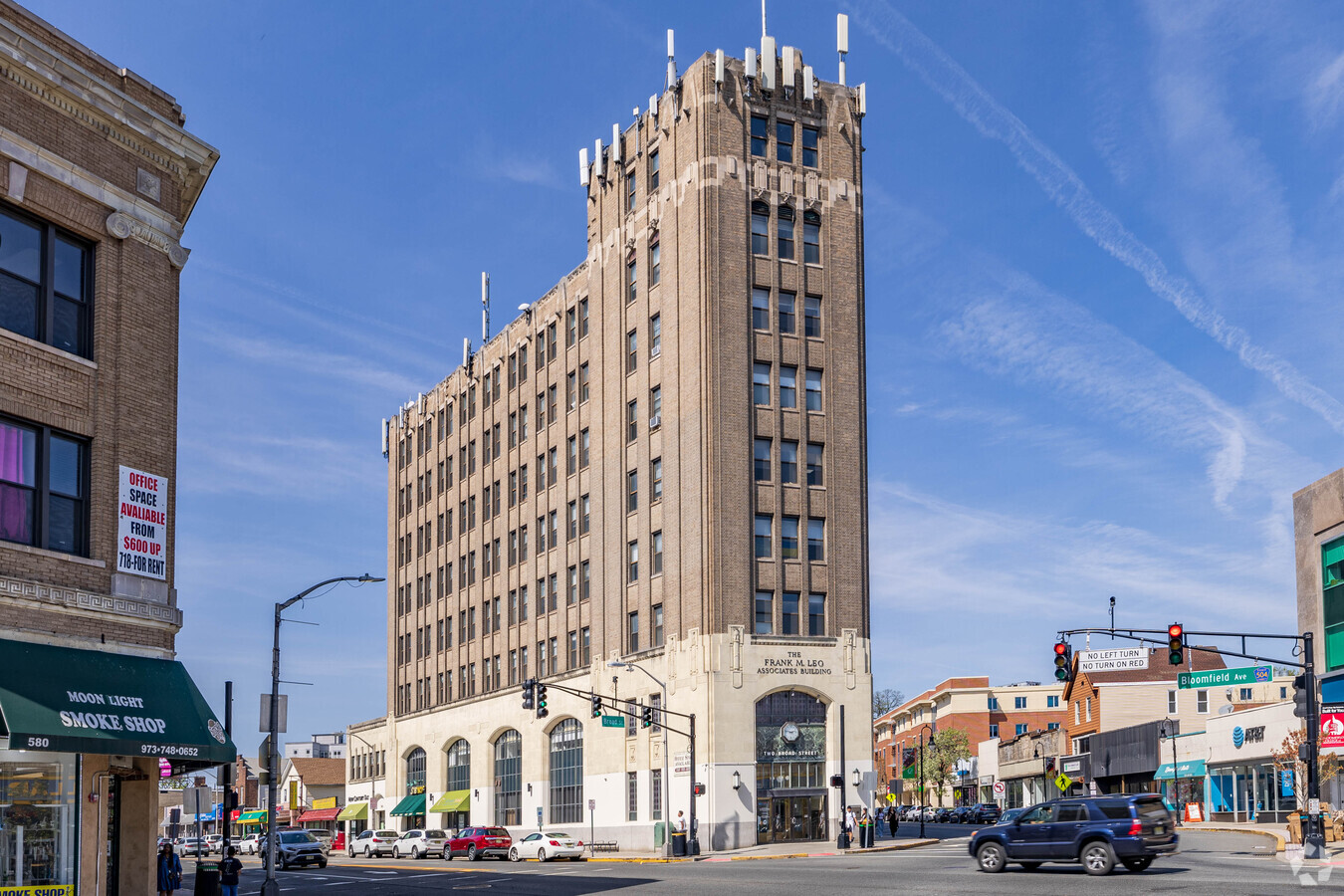
Bloomfield: A Township in Essex County, where I spent the 1st 3 years of my life. Adjacent to Newark, where my parents are from. Although there's a nice Methodist Church, which is one reason my parents decided to live there, the town is mostly Catholic, Italian 1st, Irish 2nd. It's not a suburb, but it's not a small town, either. It's more like 4 or 5 small towns strung together.
The Leo Building, 2 Broad Street,
"the Six Points," downtown Bloomfield

The town famously refused to allow The Sopranos to film there, until they finally got an offer they couldn't refuse. The series finale's famous final scene was shot at Holsten's, at Broad Street and Watchung Avenue. On the show, it looks like a diner. It's actually an ice cream parlor, and it's wonderful. Parkway Exits 148 to 151.

Blue Law: See "Paramus."

Boardwalk: Wooden planks separating street from beach in Shore towns. They usually have buildings on them, including changing rooms, showers, rest rooms, stores, restaurants, game arcades, and small amusement parks. And, yes, permanent, if small, houses that serve as second homes for people from elsewhere with a few bucks to blow.

Some Jersey Shore towns have only a boardwalk, and little shower stalls on the beach in front of them, and no stores, restaurants or amusements. Others have such businesses, but are separated from the boardwalk by a street, usually named "Ocean Avenue" or "Beach Avenue."

But when New Jerseyans say, "Boardwalk," they mean the full thing, like you find in Atlantic City, Seaside Heights, Wildwood, etc. When they go to coast communities in other States, and see boardwalks but nothing like the places previously mentioned, they get very disappointed.

Boardwalk Hall: South Jersey's largest arena, it opened in 1929 as Convention Hall. It is best known as the most-frequent site of the Miss America Pageant. It hosted the Democratic National Convention from August 24 to 27, 1964. On August 30, it hosted The Beatles, their only concert in New Jersey. (Elvis Presley never played a concert in New Jersey.)
It was renovated in 2001, including wider seats, reducing capacity to 10,500; and renamed Boardwalk Hall. In 2013, it began hosting Miss America again. While the Pageant is still headquartered in Atlantic City, this year's Pageant was moved to another casino base, Mohegan Sun in Uncasville, Connecticut.

Boardwalk Hall has hosted many prizefights, including, in 1988, Heavyweight Champion Mike Tyson's defeat of former Champ Larry Holmes and his 91-second demolition of Michael Spinks. In 1990, former Heavyweight Champion George Foreman knocked out Gerry Cooney, who had given Holmes a tough fight for the title in 1982. It was promoted by Don King as "The War at the Shore," but, given that Foreman was 41 and Cooney 33, and that the Hall is next-door to Caesars Atlantic City, it was called "Two Geezers at Caesars." The following year, Foreman fought current Champ Evander Holyfield, but lost.

In 2017, the arena was renamed Jim Whelan Boardwalk Hall, for the Mayor who served from 1990 to 2001 and got it renovated, and died earlier in the year while serving in the State Senate. Parkway Exit 38.

Boss, The: See "Springsteen, Bruce."

Brick City: See "Newark."

Burlington-Bristol Bridge: See "Pennsylvania, Crossings Into."

Calhoun Street Bridge: "Pennsylvania, Crossings Into."

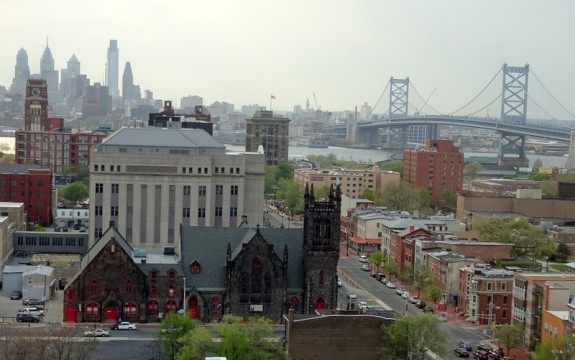
Camden: A City across the Delaware River from Philadelphia, namesake of Camden County, of which it is the seat. The things that turned American cities around in the 1990s seem to have passed it by, as it remains terribly poor. It's the kind of city where they say the crime rate is finally going down because there's nothing left to steal. Turnpike Exits 3 and 4.
Camden, with the Philadelphia skyline
and the Ben Franklin Bridge in the background

Do not let this deter you from visiting other places in Camden County, such as Haddonfield and Cherry Hill. On the other hand, if you've been to Haddonfield or Cherry Hill and enjoyed it, remember that Camden City is also in Camden County.

Camden Riversharks: See "Trenton Thunder."

Cape May: The town at the southern tip of the State, and they sell T-shirts advertising themselves as the southern terminus of the Parkway: "Exit 0." (Compare Montauk, at the eastern end of Long Island: Their T-shirts read, "The End.") Cape May calls itself America's 1st beach resort, and many of its Victorian-era (1837-1901) houses still stand, and some are even open to tourists.
While it does have a boardwalk, it's not lined with shops and games. That starts a couple of blocks inland, including the Washington Street mall.

Because of its comparative isolation -- 159 miles from Times Square, 141 miles from the Rutgers Student Center, 122 miles from the State House in Trenton, 92 miles from Center City Philadelphia, and even 47 miles from the Atlantic City casinos -- it tends to resist outside influences. It's not a suburb of either New York or Philly. Cape May City doesn't even resemble most of Cape May County: While the County (except for Shore towns like Ocean City and Wildwood) is largely rural and conservative, Cape May City, mainly because it needs to attract tourists, is open and liberal.

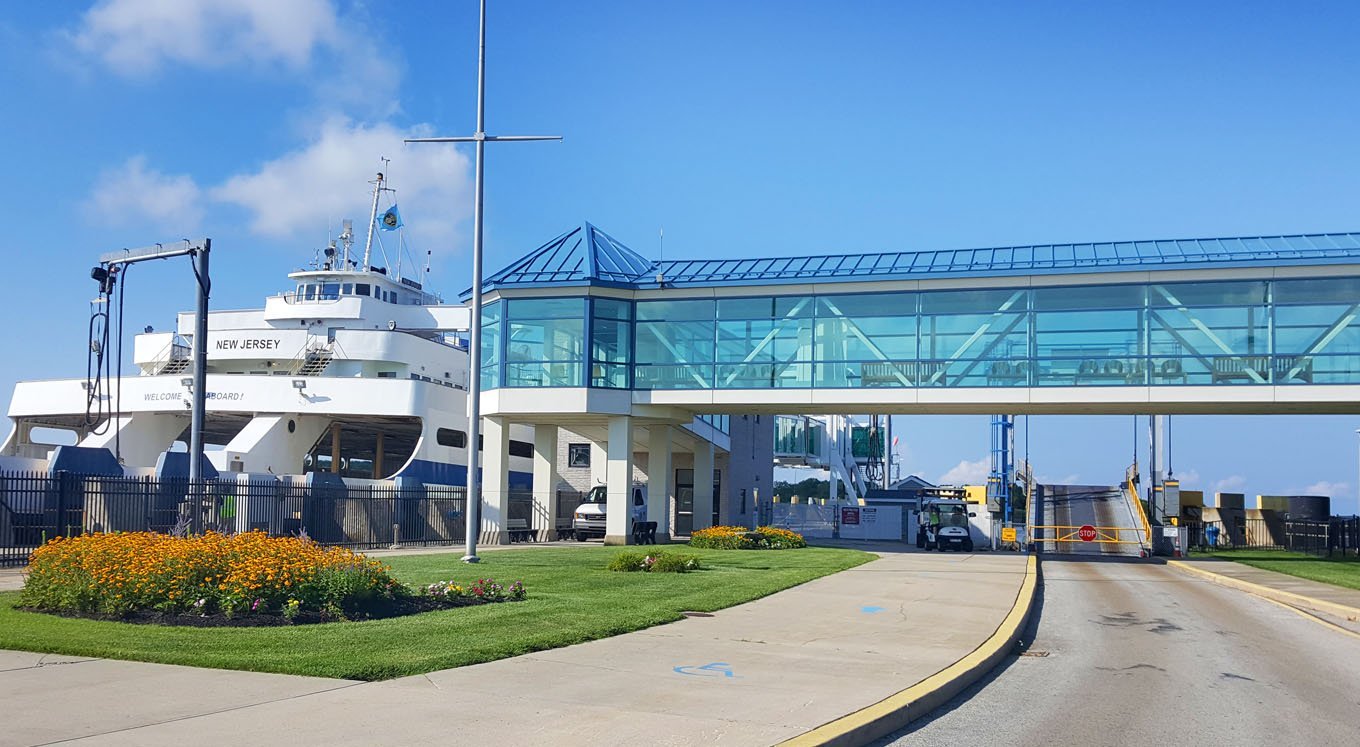
Since 1964, the Cape May-Lewes Ferry has connected North Cape May in Lower Township with Lewes, Delaware, across 17 miles of Delaware Bay. Fare: $21 per car, and $8.00 per passenger therein, so $29.
Cape May Ferry Terminal

Central Jersey: In terms of geography, the Counties of Hunterdon, Mercer, Somerset, Middlesex and Monmouth. In terms of population, Interstates 78 and 195 are convenient dividers, although that places parts of Hunterdon and Somerset in North Jersey; part of Ocean in Central Jersey; and parts of Mercer and Monmouth in South Jersey.

Other convenient, but hardly definitive, determinants are Area Codes and ZIP Codes. If your Area Code is 732 or 848, chances are, you live in Central Jersey. The 908 Area Code makes that a little tricky. And if your ZIP Code starts with 085 or 087, you could live in Central Jersey; if it starts with 086, 088 or 089, you definitely do.

People here root for the New York Tri-State Area sports teams: The Yankees more so than the Mets, the Giants more so than the Jets, the Devils more so than the Rangers, and the Red Bulls more so than New York City FC, in each case by about a 2-1 margin. In spite of the Nets' New Jersey tenure (1977-2012), the Knicks are overwhelmingly more popular, and Islanders fandom has faded tremendously since they stopped winning Stanley Cups in the mid-1980s.

But when you get to Mercer County, the southern parts of Hunterdon and Mercer, and the western part of Monmouth, this begins to change. Fans of the Philadelphia teams begin to show up regularly. In these areas, it's more like this: Yankees 50 percent, Mets 30, Phillies 20; Giants 40, Eagles 30, Jets 20; Knicks 50, 76ers 40, and the rest made up of the Nets and whichever team LeBron James is playing on at the moment; Devils 50, Flyers 30, Rangers 20; Red Bulls 50, Union 30, NYCFC 20.

If you have to fly, chances are, you do so out of Newark Liberty International Airport; but you may have discovered that doing so out of Philadelphia International Airport could be cheaper, although you're less likely to get a nonstop flight.

Some people in North Jersey say that Central Jersey doesn't exist. Some say that Central Jersey, by the definition I've given, is part of North Jersey. Others say it's part of South Jersey.

Central Railroad of New Jersey: Founded in 1849 by the merger of the Elizabethtown and Somerville Railroad and the Somerville and Easton Railroad, the "Jersey Central Lines" built a terminal at Jersey City in 1889, which is now part of Liberty State Park. From there, passengers could take the Communipaw Ferry to Liberty Street in Lower Manhattan.
The Reading Railroad bought the Jersey Central in 1901, but kept its name on all its existing lines. The railroad went bankrupt in 1967, and its operations were taken over by Penn Central. (See their entry.) New Jersey Transit now operates the North Jersey Coast Line and the Raritan Valley Line over former Jersey Central trackage.
Centre Bridge-Stockton Bridge: "Pennsylvania, Crossings Into."

Chairman of the Board: See "Sinatra, Frank."

Circle: See "Traffic Circle."

City, The: The New York City Borough of Manhattan. Even people from the Outer Boroughs of New York City (not so much The Bronx, but definitely Queens, Brooklyn and Staten Island) tend to say, "I'm going into The City" when they mean "I'm going to Manhattan." Nobody calls Philadelphia "The City," unless they live in, like, Lancaster, or someplace like that.

Turnpike Exits 14C (for the Holland Tunnel), 16E (for the Lincoln Tunnel) and 18E (for the George Washington Bridge).

Commodore Barry Bridge: See "Pennsylvania, Crossings Into."

Crazy Eddie: A chain of electronics stores that began in Brooklyn in 1971, founded by Eddie Antar. In 1972, Jerry Carroll, a disc jockey at New York radio station WPIX-FM, then the call letters for 101.9 on the FM dial -- "Champions of the new Rock 102!" -- read an ad on the air, and put a little emphasis on the tagline: "Crazy Eddie: His prices are in-sane!"

Antar was listening, called Jerry at the station, and said he wanted Jerry to do all his ads from then on. Jerry ended up doing 7,500 separate radio and TV ads. The radio ads tended to be 1 minute long, with Jerry yelling over a recording of Giaochino Rossini's William Tell Overture (a.k.a. the Lone Ranger theme): "Shop around! Get the best prices you can find! Then go to Crazy Eddie, and he'll beat 'em!"

The TV ads were about 30 seconds, and showed Jerry standing in front of electronic equipment, usually wearing a navy blue blazer and a light blue turtleneck, and waving his hands or shaking his fists at the camera when he got to the end: "In-saaaane!"
Jerry Carroll. Not a crook.

I say, "usually," because he would sometimes put on costumes depending on the theme of the sale, including as Santa Claus (but never with the fake white beard) for the Christmas Sale and the Christmas In August Sale. At first, Jerry took the Santa hat off, and looked at it, and said, "In August?" As if Eddie had finally gotten too crazy even for him. The next year, an unseen audience would yell, "In August?" And Jerry would enthusiastically respond, "In August!"

By 1978, Eddie had opened his 6th store, and Jerry was seen getting shaken up: "Get ready for another Earth-shattering grand opening! Crazy Eddie is coming to Route 18 in East Brunswick, New Jersey!" I was excited: The only previous store in New Jersey was on Route 17 in Paramus, and now, it was coming to my hometown. Eventually, Crazy Eddie would have 43 stores.

On December 23, 1982, just after my 13th birthday, having finally saved up the $197 necessary -- about $519 in today's money -- I went there and bought the Atari 5200 SuperSystem, the new king of video games. It was the happiest day of my childhood. And every time I had saved up $20 and could buy a new game for it, it was a toss-up between that Crazy Eddie store and the Toys R Us half a mile up Route 18.

But, like a lot of big things in the New York Tri-State Area in the 1980s, it all came crashing down. In 1987, Eddie Antar began to be investigated for a lot of fraud, and all the stores had closed by 1989. Eventually, he made a plea deal, and was sentenced to 8 years in prison.

Jerry Carroll has never been suspected of any involvement in any of the company's criminal activity, but he also took a public beating, because, as the face of the franchise, people thought he was Crazy Eddie, and thus thought he was a crook. He recovered enough to start a successful advertising agency, but wisely doesn't do his own commercials. Antar died in 2016. Some members of his family have made attempts to revive the chain, both brick-and-mortar and online, but the trademark has now lapsed, and it's unlikely we'll ever see a new Crazy Eddie store.

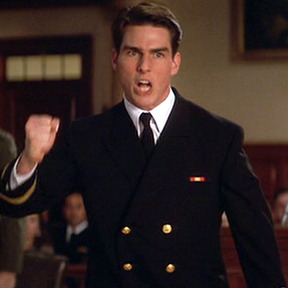
Cruise, Tom: Born Thomas Cruise Mapother IV on July 3, 1962 in Syracuse, New York, he lived there and in Ottawa, the capital of Canada, before his mother took him to Glen Ridge, Essex County, as a teenager. He caught the acting bug in Ottawa, and acted in plays at Glen Ridge High School before going on to become one of America's greatest actors, but also one of its strangest celebrities. His courtroom duel with fellow New Jerseyan Jack Nicholson in the film version of A Few Good Men is a classic.
"I want the truth!"
"Here it is: You're nuts! I told you, you can't handle the truth!"

I have a friend who was a freshman at Glen Ridge High when Cruise was a senior. They didn't know each other. She remembers him as "weird, but quiet." I asked her, "What happened to quiet?" She didn't know.

Cummon, Willya?: Jersey Accent for "Come on, will you?" In other words, "Hurry up!"

DeFuque: A contraction of "What the fuck?" An expression occasionally preceded by "Pardon my French, but... " as it sounds French.

Delaware Memorial Bridge: See "Twin Span." See also "State Line."

Delaware River-Turnpike Bridge: See "Pennsylvania, Crossings Into."

Delaware Water Gap: Short for Delaware Water Gap National Recreation Area, straddling the Delaware River at Walpack, Sussex County, New Jersey and Lehman, Pike County, Pennsylvania. It contains campgrounds and scenic areas. A water gap is a gap that flowing water has carved through a mountain range and still carries water today. Such a formation where water no longer flows is called a wind gap, and there is a nearby town in Pennsylvania called Wind Gap.
Don't let the name fool you: It's named for the River, not the State. It's 117 miles from the Delaware-Pennsylvania State Line. Accessible by Interstate 80.

Delaware Water Gap Toll Bridge: See "Pennsylvania, Crossings Into."

DEVCO: See "New Brunswick."

Diner: If you're from North Jersey, this is where you go in the middle of the night and you wake up hungry and there's nothing in the fridge, and a bag of chips from 7-Eleven just won't do the business for you. Compare "Wawa."
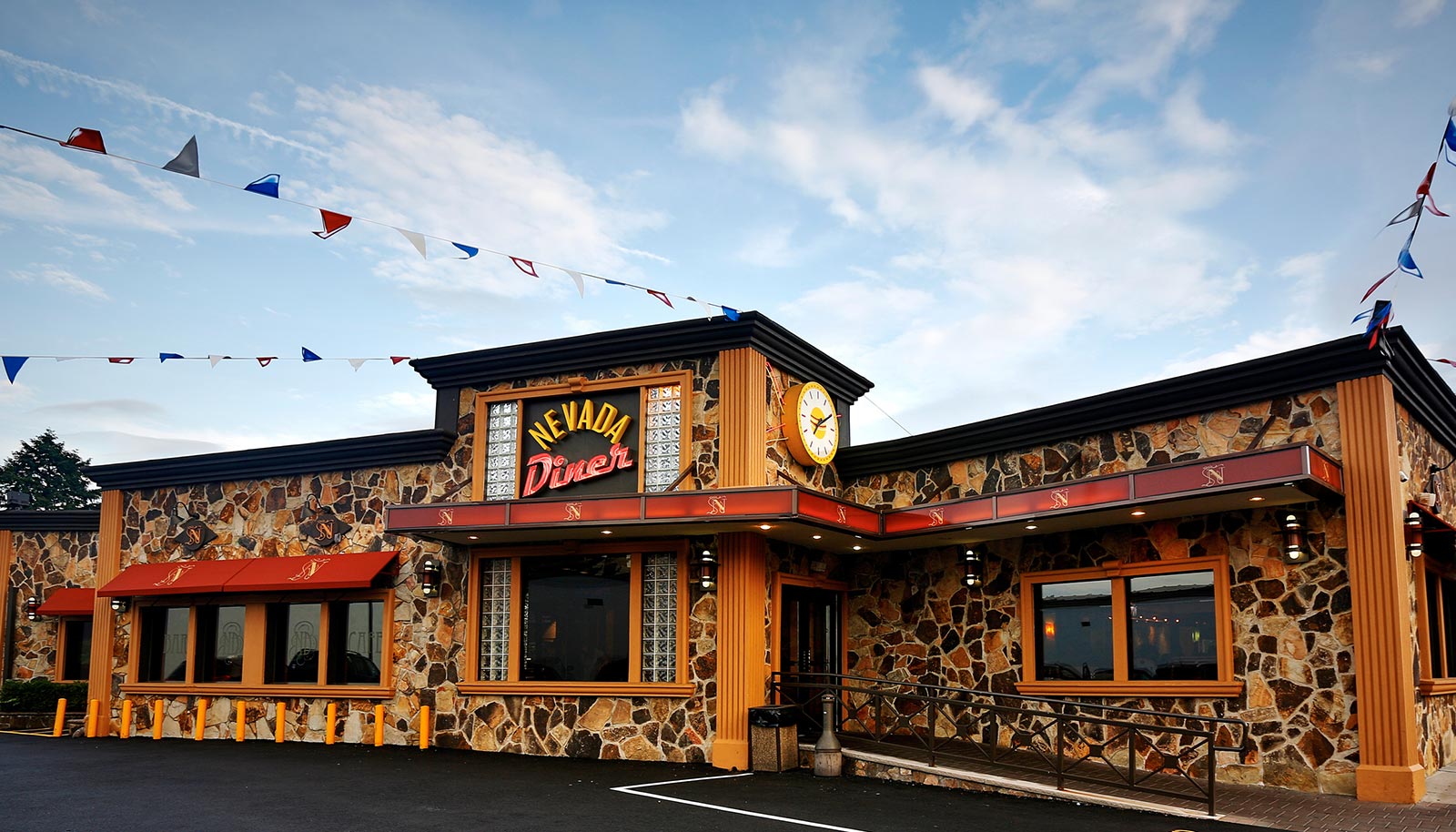
The Nevada Diner, Bloomfield

This could also be place you take a first date. If she likes you enough to give you a second date, you may have later dates at a diner at your own risk. But if she's not from Jersey, don't take her to one until she gets to know you a lot better.
The Colonial Diner, East Brunswick

In my hometown of East Brunswick, we have the Colonial Diner, rated as one of the best in the State. (There's also a Colonial Diner in Lyndhurst.) We also have the Seville Diner, which is 2 miles south of the Colonial on Route 18, and not nearly as good. Previously, it was known as the Red Fox Diner. This was in the 1970s, when Redd Foxx was starring on Sanford & Son. The joke was that it was called the Redd Foxx because if you eat their stuff, you'll grab your chest and say, "This is the big one!"

Diners are the reason Waffle House doesn't dare come into New Jersey. They may also be the reason that it took so long for Wawa to make inroads into the New York part of New Jersey.

Dingman's Ferry Bridge: See "Pennsylvania, Crossings Into."

Dinky: See "Princeton."

Disco Fries: French fries topped with gravy and melted mozzarella cheese. Considerably more popular in the New York suburbs of North Jersey than in the rest of the State, particularly in diners. I left Bloomfield in Essex County for East Brunswick in Middlesex County at the age of 3, so I have never had this stuff. But it's gotta be better than poutine, the Quebec variation with cheese curds. Compare "Fries."
"Disco Fries" is also the name of the music production unit consisting of New Yorkers Nick Ditri and Danny Boselovic.

DMV: See "MVS."

Doo Wop Motel: See "Wildwoods, The."

Double-Dipping: This has nothing to do with chips and dip. This is the practice of holding 2 different political offices at once, which is legal in New Jersey, as long as one of them is not at the federal level. For example: Bob Menendez, now in the U.S. Senate, served as both Mayor of Union City (in Hudson County, not Union County) and a member of the State Assembly. He had to resign both offices when he was first elected to the U.S. House of Representatives.

Down the Shore: Going to a town with a nearby beach. In New Jersey, nobody says, "We're going to the beach," unless they're already in a beach town. We say, "We're going down the shore."

This is true whether we live in the suburbs of New York in North Jersey (taking the Parkway to Monmouth or Ocean County) or in the suburbs of Philadelphia in South Jersey (taking the Atlantic City Expressway to the Parkway to Atlantic or Cape May County), because the direction is going to be south (or southeast, and then south).

See also "Pizza."

Drawbridge: The bane of the existence of many a person trying to go Down the Shore. You see the bridge opening, and it takes forever, and you know it'll take just as long to re-close it. Finally, you see why the bridge is opening: A tiny little boat with a tall, thin mast. And you wonder where the Germans' U-boats are now that you need them.

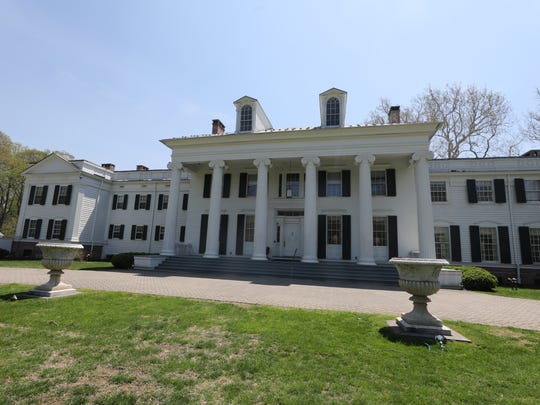
Drumthwacket: The Governor's Mansion, not in the capital of Trenton but in Princeton. The odd-sounding name is supposedly a Scottish Gaelic name meaning "wooded hill." The house was built in 1835 by Charles Smith Olden, who served as Governor from 1860 to 1863. His widow sold it, and in 1893 it was expanded to its current structure.
In 1981, it became the official residence of the Governor, replacing Morven, up the road, historic home of the Stockton family, and the Governor's residence since Governor Walter Edge bought it in 1944. Both can be reached by Turnpike Exit 8.

East Brunswick: A Township in Middlesex County, where I grew up. A great place to live if you're a kid, or a grownup with a car. If you're a grownup without a car, it's not so good. Home to the Brunswick Square Mall. (See "Mall.")
Tower Center, off Exit 9 of the Turnpike and Route 18

Whoever laid the town out was an idiot, putting the Civic Center (including the Municipal Building, the Library and the Senior Center) 2 miles west of New Jersey Route 18, the town's main drag. Turnpike Exit 9 is located at the northern end of the Township, giving it great access to New York, but also making it feel like the ultimate "bedroom community" for New York commuters.
Marquee for the Brunswick Square Mall

East Brunswick had 5,000 residents in 1950, but 10,000 in 1960, and 34,000 in 1970. Today, it's got about 48,000, making it about the same size as my original hometown, Bloomfield. How are they different? East Brunswick people know they're in the suburbs, and they like it; Bloomfield people would punch you in the nose if you called their town a "suburb." Bloomfield is pasta, East Brunswick is pasta salad. East Brunswick has therapists, Bloomfield has bartenders.

The geography is also weird: East Brunswick and North Brunswick are both south of New Brunswick, South Brunswick is further south still, and there's no West Brunswick. If anything, North Brunswick should be South Brunswick, South Brunswick should be North Princeton, Franklin should be West Brunswick, Piscataway should be North Brunswick, Highland Park should be East Brunswick, and East Brunswick should be... I don't know, East Milltown? North Spotswood? South Edison?

Easton-Phillipsburg Toll Bridge: See "Pennsylvania, Crossings Into."

East Pennsyltucky: See "Pennsyltucky."

East Philly: Pretty much any town in South Jersey that can be reached on the RiverLine. (See its entry.) In the Summer, this term can also be applied to Atlantic City and Wildwood.

Eatontown: A Borough in Monmouth County, home to about 13,000 people. From 1917 to 2011, it was home to the U.S. Army's Fort Monmouth. In 1960, Monmouth Shopping Center opened at the Eatontown Circle, where New Jersey Routes 35 and 36 and County Route 547 (Wyckoff Road).

In 1975, the shopping center was expanded, and was renamed Monmouth Mall, although some people still call it "Eatontown." This expansion made it unusual (as far as I know, unique) in that its original level was in one direction, while 2 new levels extended from the other, separated by stairwells and elevators. Parkway Exit 105.

Edison, Thomas: In the late 1870s, he invented the phonograph and the first practical light bulb at his laboratory in the Menlo Park section of Raritan Township, Middlesex County which was renamed Edison in 1954. ("Raritan" and "Washington" are popular town names in New Jersey.) Moved to West Orange, Essex County, where, in the 1890s, he became the 1st North American to build a working motion picture camera, and built the world's 1st movie studio.
He was a genius, who practically invented the 20th Century. He was also a bastard of a businessman, never hesitating to put his competitors of out of business, either through buying them out and claiming their accomplishments as his own, or using propaganda to scare their potential customers away.

The site of Edison's Menlo Park lab was replaced by the Edison Light Tower. Turnpike Exit 11 or Parkway Exit 132. For his West Orange lab, Turnpike Exit 15W or Parkway Exit 145.

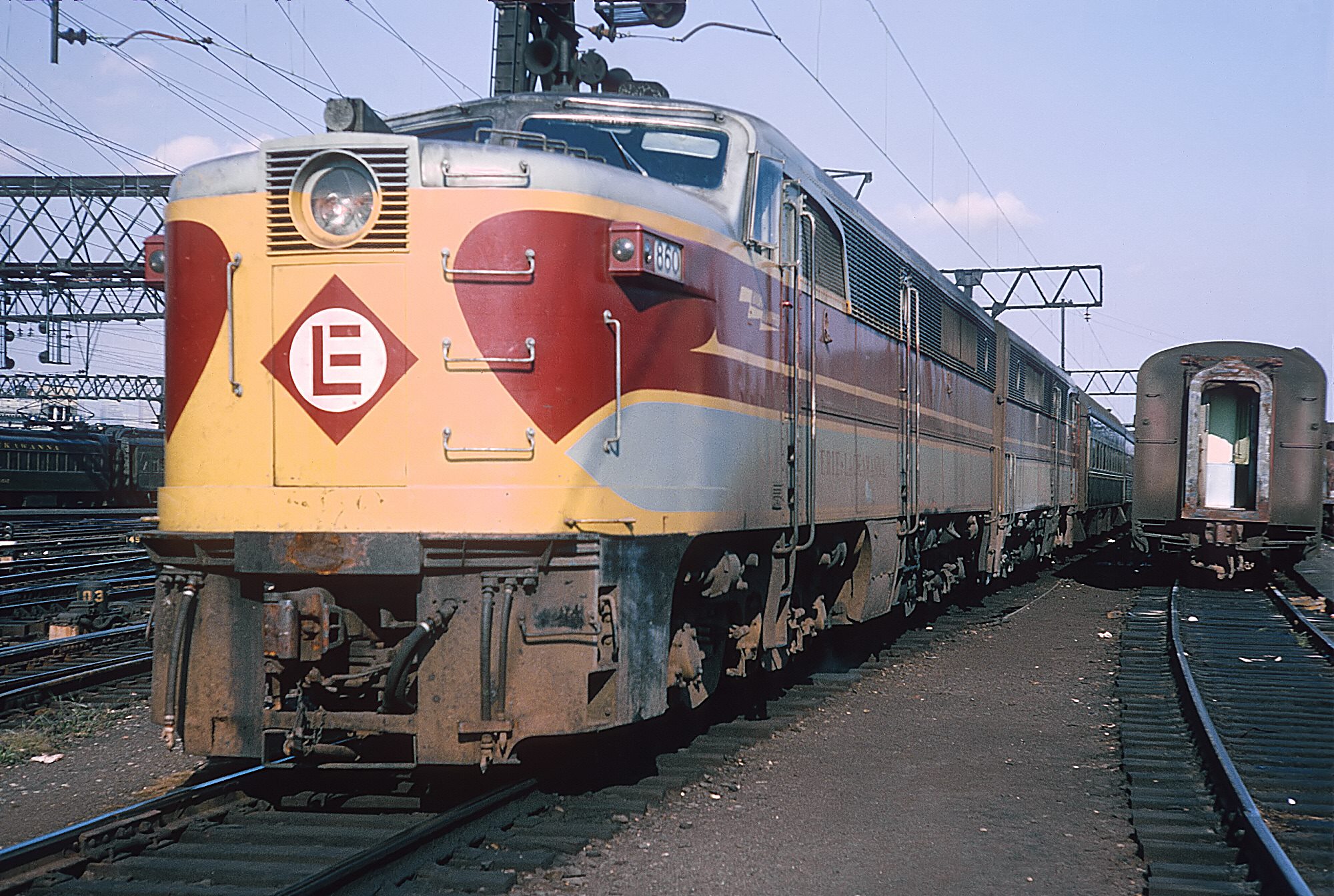
Erie-Lackawanna Railroad: Formed by the 1960 merger of the Erie Railroad and the Delaware, Lackawanna & Western Railroad. It was known as The Friendly Service Route, and carried passenger rail from Hoboken Terminal across New Jersey to Scranton, Pennsylvania, and all the way to Buffalo, New York. This included a lot of coal country, and so the E-L, and the DL&W before it, was known as the Anthracite Route.
Damage to rail bridges by Hurricane Agnes doomed it in 1972, and Conrail took over its passenger operations in 1976. Today, former E-L routes are operated by New Jersey Transit as the Pascack Valley, Montclair-Boonton, Morristown and Gladstone Lines.

Exit: How you tell people where you live. You use the closest exit on either the New Jersey Turnpike or the Garden State Parkway. See their entries. This started as a joke by comedian Joe Piscopo, from North Caldwell, Essex County (Parkway Exit 148), and took on a life of its own.
If you don't do this, you're probably from the northwestern part of the State, where there's lots of space and not many people, and you wonder why people from the rest of the State called Chris Christie "mean."

Volume 2 follows.

Thursday, May 26, 2016

May 26, 1956: The Garden State Parkway Opens

May 26, 1956, 60 years ago: The Great Egg Harbor Bridge opens, over Great Egg Harbor Bay in southern New Jersey, connecting Somers Point in Atlantic County with Upper Township in Cape May County. With this opening, the Garden State Parkway is fully open.

A 2nd bridge, taking northbound traffic, was added in 1972. The original, southbound bridge was replaced in 2016; the northbound one, in 2019.

Like the New Jersey Turnpike, which opened in 1951, the Parkway was the brainchild of Alfred E. Driscoll, Governor of New Jersey from 1947 to 1954. Just as the Turnpike was designed to ease the traffic flow of U.S. Route 1 in North and Central Jersey, and U.S. Route 130 in South Jersey, the Parkway was meant to do the same thing for U.S. Route 9.

Of course, it didn't work out that way. The huge growth of New Jersey's suburbs meant that the traffic on both 1 and 9 -- which merge in Woodbridge, Middlesex County, near the interchange that is Turnpike Exit 11 and Parkway Exit 129, and then go up together to the George Washington Bridge -- filled up anyway. But it's still better to have the 2 big superhighways than not. Similarly, the Atlantic City Expressway opened in 1964, but has never really eased Shorebound traffic on U.S. Route 30.

The Parkway runs the spine of New Jersey, paralleling Route 9, at times running concurrent with 9. It starts in Lower Township, Cape May County, with an interchange labeled "Exit 0," 2 1/2 miles north of the beach in Cape May City. The exits, more or less, match the mileposts. Until 2014, Exits 9, 10 and 11 were at-grade interchanges, complete with traffic lights.

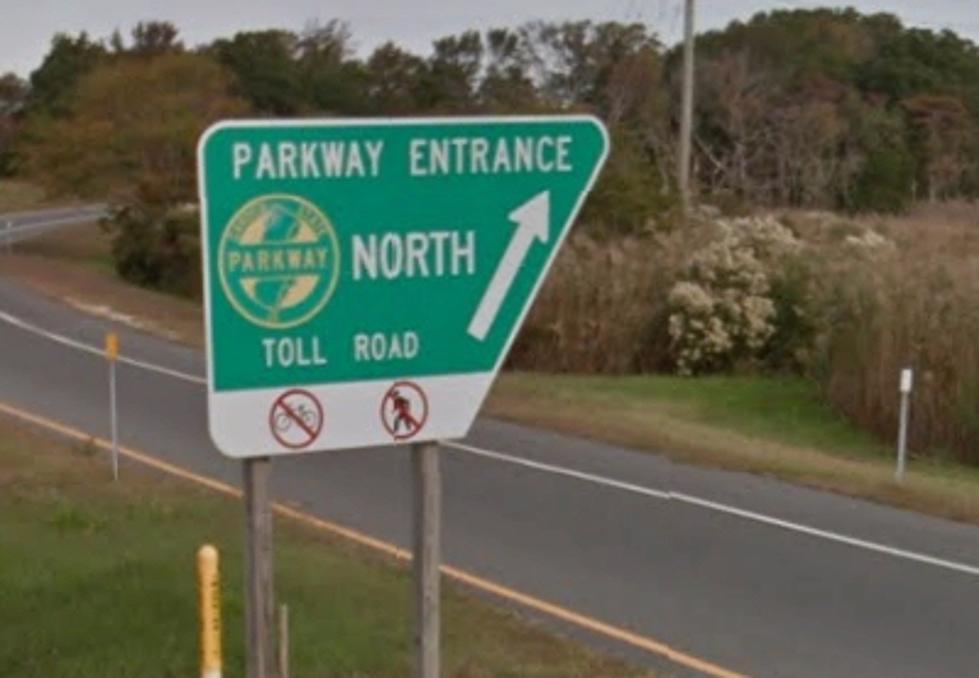
It goes from Cape May County to Atlantic County at the aforementioned Great Egg Harbor Bridge, near Exit 29. Atlantic City can be accessed via Exits 37 (U.S. Routes 40 and 322), 38 (the Atlantic City Expressway, that road's Exit 7) and 40 (U.S. Route 30).

Exits 50 and 52 are the only ones in Burlington County. In Ocean County, Exit 63 accesses New Jersey Route 72 and Long Beach Island; and Exit 82, N.J. Route 37 and Seaside Heights. In Monmouth County, Exit 100 is for N.J. Route 33 and Asbury Park; Exit 105 is for N.J. Route 36, the Monmouth Mall in Eatontown, and the Monmouth Park horse racing track in Oceanport; and Exit 116 is the only access point for the PNC Bank Arts Center (formerly the Garden State Arts Center) in Holmdel. You can't access this concert facility any way except through the Parkway.

At Exit 120, the Parkway enters Middlesex County. After Exit 125, it crosses the Raritan River. Exit 127 is an interchange with Interstate 287, U.S. Route 9, and N.J. Route 440, with ramps so tangled, it is known as "Spaghetti Junction." At Exit 129, it connects with the New Jersey Turnpike/Interstate 95 and its Exit 11. It intersects with U.S. Route 1 at Exit 130. At Exit 131 in Woodbridge, it passes under Amtrak's Northeast Corridor, formerly the Pennsylvania Railroad.
Exits 135 to 142 are in Union County, including Exit 142, an interchange with Interstate 78, which connects the Parkway with Newark Liberty International Airport. Exits 143 to 151 are in Essex County, including 145, in my parents' hometown of Newark, an interchange with Interstate 280; and 148, 149, 150 and 151 in my original hometown of Bloomfield.

Passaic County includes Exits 153, 154, 155 and 1956. Exit 153 intersects with N.J. Route 3, providing access to the Meadowlands Sports Complex. Exits 157 to 172 are in Bergen County. Exit 159 is an interchange with Interstate 80. Exit 161 provides access to the Garden State Plaza Mall in Paramus. Exit 172 is in Montvale. From here, the Parkway continues north, over the State Line, as the Garden State Parkway Connector to the New York State Thruway.

Unlike the Turnpike, which only has toll booths at the exits, the Parkway has 11 toll barriers, "nickel-and-diming" you from Cape May County to Bergen County.

*

May 26, 1956 was a Saturday. It was the off-season for the NFL, and the NBA and the NHL didn't yet extend their seasons that far. But there were Major League Baseball games played that day:

* The New York Yankees lost to the Baltimore Orioles, 9-4 at Memorial Stadium in Baltimore. The O's shelled Mickey McDermott for 4 runs in the 1st inning, and Gerry Staley for 4 more in the 2nd. Bill "Moose" Skowron hit a home run, and Mickey Mantle went 1-for-3, but it was far from enough.

* The Brooklyn Dodgers beat the New York Giants, 6-0 at the Polo Grounds. Roger Craig pitched a 3-hit shutout, backed by home runs from Sandy Amoros, Randy Jackson and Carl Furillo. Jackie Robinson went 1-for-2. Willie Mays did not play.

* The Pittsburgh Pirates beat the Philadelphia Phillies, 6-2 at Connie Mack Stadium in Philadelphia.

* The Washington Senators beat the Boston Red Sox, 4-1 at Fenway Park in Boston. The only Red Sox run came in the 7th inning, when Ted Williams pinch-hit for pitcher Dave Sisler (son of George and brother of Dick), and singled home Don Buddin. Future manager Whitey Herzog went 2-for-4 for the Senators.

* The Detroit Tigers beat the Kansas City Athletics, 12-6 at Briggs Stadium in Detroit. (It would be renamed Tiger Stadium in 1961.)

* The Milwaukee Braves beat the Cincinnati Redlegs, 2-1 at Milwaukee County Stadium. (The Reds were named the Redlegs from 1954 to 1958. A lot of things about America's handling of the Cold War were just flat-out stupid.) Hank Aaron did not hit a home run, but he did hit a triple in the 11th inning, and scored the winning run when singled home by Frank Torre, Joe's brother.

* There was a rainout at Comiskey Park in Chicago. It was made up as part of a doubleheader on August 31. The Cleveland Indians won the opener, 3-2. The Chicago White Sox won the nightcap, 1-0. Dick Donovan and future White Sox ace Early Wynn both went all 10 innings, and Donovan won it himself with a single off Wynn that drove in Bubba Phillips.

* There was also a rainout at the original Busch Stadium in St. Louis (known from 1909 to 1952 as Sportsman's Park.) It was made up as part of a doubleheader on August 19. The St. Louis Cardinals won the 1st game, 6-0. Murry Dickson pitched a 2-hit shutout, and helped himself by going 3-for-4 with 2 RBIs. Stan Musial hit a home run. The Chicago Cubs won the 2nd game, 3-1. Overall, Musial went 3-for-9 with 2 RBIs. Ernie Banks was injured, and did not play in either game.