If I listened long enough to you
I'd find a way to believe that it's all true
knowing
that you lied
straight-faced
while I cried.
Still, I look to find a reason to believe.
-- song written by Tim Hardin, 1966, best-known version by Rod Stewart, 1971
*
At any rate, believers in "Young Earth Creationism" believe that any archaeological or geological records that reveal any artifact, any skeleton (human or animal), any fossil, any rock, to be older than 6,000 years old are not merely wrong, but blasphemous: They believe that the Bible is not merely the final word on the subject, but the only word on it.
Or, as the William Jennings Bryan analogue said in the play Inherit the Wind, about the 1925 Scopes Monkey Trial, "I am more interested in the Rock of Ages than in the age of rocks."
On October 22, 2016, the Chicago Cubs won the National League Pennant. It wasn't the 1st time since 4004 BC, or 3761 BC. But, for many Cub fans, it felt like it.
October 22, 1746, 275 years ago: The College of New Jersey receives its royal charter from King George II of Britain. The college will be located in Elizabeth, New Jersey. It moves to Newark in 1747, and to Princeton in 1756, where Nassau Hall is built, leading to the school's nickname, "Old Nassau."
On January 3, 1777, in the War of the American Revolution, the Battle of Princeton was fought. It was an American victory, commanded by George Washington himself. Three American cannonballs hit Nassau Hall, which (along with the rest of the town and much of New Jersey) was occupied by the British. One bounced off a wall. Another did some damage that can still be seen today.
And another crashed through a window and smashed into a portrait of Britain's King George III -- "decapitating the King." It's been said that this shot was fired by Washington's aide, Colonel Alexander Hamilton, who had been rejected by the school, before being accepted by King's College in New York, which became Columbia University.
Briefly, from June 30 to November 4, 1783, Nassau Hall was where the Congress of the Confederation convened, due to issues with Philadelphia -- making Princeton the capital of the United States of America for 4 months.
On November 6, 1869, a group of students went up the road (now named New Jersey Route 27) to New Brunswick, and played against Rutgers College in what's recognized as "the first college football game." It was essentially a 25-a-side soccer game, and Rutgers won 6 goals to 4. A week later, they met again in Princeton, and the hosts won 8-0. Rutgers wouldn't beat them again until 1938.
On occasion, a Revolutionary War cannon was stolen by Rutgers and stolen back by Princeton. A 1946 attempt by Rutgers resulted in the car meant to tow it back up Route 27 being ripped in half. This "Big Cannon" is now buried in the backyard of Nassau Hall, in an area called Cannon Green. Unable to steal it now, Rutgers students occasionally sneak in to paint it their school color, scarlet red.
In 1896, while its president was Class of 1878 graduate Woodrow Wilson, the school was renamed Princeton University. He was the 2nd President to be one of its graduates. The 1st was James Madison. It's also produced former First Lady Michelle Obama, and current Supreme Court Justices Sonia Sotomayor, Elena Kagan and Samuel Alito.
The Princeton Tigers have been retroactively credited with 22 of the 1st 40 National Championships of college football, between 1869 and 1909. When the NCAA split Division I into Division I-A (now the Football Bowl Subdivision or FBS) and Division I-AA (now the Football Championship Subdivision or FCS), Rutgers stuck with I-A, hoping to go "big-time," while Princeton stuck with the other Ivy League schools (Harvard, Yale, Columbia, Pennsylvania, Cornell, Brown and Dartmouth) in I-AA.
The Rutgers-Princeton rivalry stopped on September 27, 1980, with a 44-13 RU victory at the old Rutgers Stadium. Rutgers had won the last 5 games, the last 3 by lopsided scores, and had gone 9-3-1 since 1968. But Princeton's dominance before that -- 33 straight wins from 1869 to 1937 (RU scoring only 29 points on PU in those 68 years), 8 from 1949 to 1957, and 6 from 1962 to 1967 -- meant that Princeton still won the all-time series, 53-17-1.
Since the official establishment of the Ivy League in 1955, Princeton has won or shared the football title 12 times: 1957, 1963, 1964, 1966, 1969, 1989, 1992, 1995, 2006, 2013, 2016 and 2018. They've also excelled in basketball and hockey.
The Rutgers-Princeton rivalry stopped on September 27, 1980, with a 44-13 RU victory at the old Rutgers Stadium. Rutgers had won the last 5 games, the last 3 by lopsided scores, and had gone 9-3-1 since 1968. But Princeton's dominance before that -- 33 straight wins from 1869 to 1937 (RU scoring only 29 points on PU in those 68 years), 8 from 1949 to 1957, and 6 from 1962 to 1967 -- meant that Princeton still won the all-time series, 53-17-1.
Since the official establishment of the Ivy League in 1955, Princeton has won or shared the football title 12 times: 1957, 1963, 1964, 1966, 1969, 1989, 1992, 1995, 2006, 2013, 2016 and 2018. They've also excelled in basketball and hockey.
In 1935, head football coach Herbert "Fritz" Crisler introduced the "winged helmet" design, and thus invented the football helmet logo as we've come to know it. In 1938, he was hired by the University of Michigan, and they made the design nationally famous. Princeton abandoned it for many years, but has since brought it back. The University of Delaware also uses it, and uses Michigan's navy blue and gold colors. (Or, as Michigan calls it, "Maize & Blue.")
In 1996, Trenton State College in nearby Ewing changed its name to The College of New Jersey, taking on Princeton's former name. They compete in NCAA Division III and the New Jersey Athletic Conference, their opponents being Rutgers-Newark, Rutgers-Camden, Montclair State, the New Jersey City University (formerly Jersey City State), Ramapo, William Paterson, Kean University, Rowan University (formerly Glassboro State College) and Stockton.
In 1996, Trenton State College in nearby Ewing changed its name to The College of New Jersey, taking on Princeton's former name. They compete in NCAA Division III and the New Jersey Athletic Conference, their opponents being Rutgers-Newark, Rutgers-Camden, Montclair State, the New Jersey City University (formerly Jersey City State), Ramapo, William Paterson, Kean University, Rowan University (formerly Glassboro State College) and Stockton.
*
October 22, 1844: William Miller, a Baptist preacher operating out of Hampton, New York (outside Albany, not in "The Hamptons" of eastern Long Island), had predicted this date -- using the aforementioned Ussher Chronology and his interpretation of the Bible -- as that of the Second Coming of Jesus. He had about 600,000 followers, at a time when the U.S. population was about 19 million, so this was a big number: About 3 percent of Americans believe dthat this day would be the end of the world.
It didn't happen, and the Millerites called it The Great Disappointment. Miller kept checking his figures, and revising, and issuing new "end of the world" dates, until the end of his world came on Decmeber 20, 1849.
Moral of the story: No matter how bad things look, in life or in sports, remember: It's not the end of the world.
October 22, 1845: The New York Morning News – not to be confused with the New York Daily News, which began publication in 1919 – reports that in yesterday's "friendly match of the time honored game of Baseball" the New York Club beat Brooklyn 24-4. A box score of the game is included in the account.
Henry Chadwick, the New York Clipper writer who did much to popularize the game, is often credited with inventing the box score, but this appears not to be the case, as he would not first write about baseball until 1857.
Two oddities: First, this account lists the name of the sport as 1 word, "baseball," not 2 words, "base ball," as was common even at the end of the 19th Century.
Second, we have been told that "the first baseball game" – usually defined as the first game under codified rules, as written by Alexander Cartwright and the Knickerbocker Club in September 1845, was played on June 19, 1846, 8 months later, between the Knickerbocker Club and the New York Club, and that this club, often referred to as "the New York Nine," beat the Knickerbockers 23-1 in 4 innings – 21 runs constituting a win under the rules of that time – despite rule-writer Cartwright serving as umpire for a contest involving the club of which he was a member.
Hello? Conflict of interest! But somebody had to be the ump. Who better to enforce the rules of the game than the man who literally wrote them? (Even if he wasn't the originator of all of them, though he probably was the originator of some of them, particularly the 90-feet-apart rule for the bases.)
I've often wondered how the Knickerbocker Club, the people who are the closest thing we have to the definitive inventors of the game, could get their heads handed to them, so soon after they wrote the rules. Were the members of the New York Club quick studies? Or were the Knickerbockers truly bad at the game they "invented"?
Now I know: While this game may not have been under the Cartwright rules, those rules were based in part on the way the game had already been played for a while, and, clearly, the NY9 was already quite good at that version of the game, and it appears they did not need to do much adapting to the Cartwright rules.
Henry Chadwick, the New York Clipper writer who did much to popularize the game, is often credited with inventing the box score, but this appears not to be the case, as he would not first write about baseball until 1857.
Two oddities: First, this account lists the name of the sport as 1 word, "baseball," not 2 words, "base ball," as was common even at the end of the 19th Century.
Second, we have been told that "the first baseball game" – usually defined as the first game under codified rules, as written by Alexander Cartwright and the Knickerbocker Club in September 1845, was played on June 19, 1846, 8 months later, between the Knickerbocker Club and the New York Club, and that this club, often referred to as "the New York Nine," beat the Knickerbockers 23-1 in 4 innings – 21 runs constituting a win under the rules of that time – despite rule-writer Cartwright serving as umpire for a contest involving the club of which he was a member.
Hello? Conflict of interest! But somebody had to be the ump. Who better to enforce the rules of the game than the man who literally wrote them? (Even if he wasn't the originator of all of them, though he probably was the originator of some of them, particularly the 90-feet-apart rule for the bases.)
I've often wondered how the Knickerbocker Club, the people who are the closest thing we have to the definitive inventors of the game, could get their heads handed to them, so soon after they wrote the rules. Were the members of the New York Club quick studies? Or were the Knickerbockers truly bad at the game they "invented"?
Now I know: While this game may not have been under the Cartwright rules, those rules were based in part on the way the game had already been played for a while, and, clearly, the NY9 was already quite good at that version of the game, and it appears they did not need to do much adapting to the Cartwright rules.
October 22, 1868: For the 1st time, a sitting member of Congress is assassinated. James M. Hinds, a lawyer from Minnesota, had been appointed to the Constitutional Convention for the State of Arkansas, as part of its restoration to the Union after the American Civil War. On June 24, 1868, he was elected to Congress from that State, as part of the process known as "Reconstruction."
He was campaigning for the Republican nominee for President, Ulysses S. Grant, the leading Union General of the war, in Indian Bay, and had argued for the right to vote and public education for black people. George Clark, secretary of the Monroe County Democratic Party, and a member of the Ku Klux Klan, shot Hinds, and another delegate to the Constitutional Convention, Joseph Brooks. Brooks was not seriously wounded, and lived another 8 years. Hinds lived just long enough to tell people who shot him. He was 34 years old. For fear of further violence, Clark was never arrested or prosecuted.
With the January 6 Insurrection earlier this year, this story should be remembered.
*
October 22, 1872: The Boston Red Stockings win the National Association championship‚ winning their 39th game by defeating the Brooklyn Eckfords 4-3. When the season ends on the 31st (only 17 matches will be played this month) Baltimore and Mutual (of New York) will be the closest teams finishing behind Boston‚ with 34 wins.
The Boston Red Stockings were direct descendants of the first openly all-professional team, the 1869 Cincinnati Red Stockings. Harry Wright was the owner, the manager, and the left fielder. His younger brother George Wright was the shortstop, and, at this point, the best player in the game. Cal McVey was the catcher, Charlie Gould played 1st base, and Andy Leonard was in right field. That’s 5 out of the 10 Boys of '69.
Their 2nd baseman was Roscoe "Ross" Barnes, who would move on to the Chicago White Stockings, forerunners of the Cubs, when the National League was founded in 1876, and not only win the 1st batting championship of what’s now considered a "major league," but hit the 1st home run in NL competition.
The Red Stockings' leading pitcher was 21-year-old Albert Goodwill Spalding, who will go to Chicago with Barnes and form the White Stockings, and later found the sporting goods empire that still bears his name and will go on to dominate the sport, and thus make him the closest thing baseball had to a commissioner in those days.
By winning the 1872 Pennant, the Red Stockings resume the dominance they had enjoyed as the Cincinnati club from April 1869 to June 1870, until their legendary defeat by the Brooklyn Atlantics. This is the 1st of 4 straight NA Pennants that they will win, and upon entering the NL in 1876, they will win Pennants in 1877, '78 and '83.
By the time of that 1883 Pennant, they will be known by another name, indicative of their city: The Boston Beaneaters. They will win Pennants in 1891, '92, '93, '97 and '98, before a change in management damages them and ends their dominance. From 1899 to 1956, they will win just 2 Pennants in 58 seasons; from 1899 to 1990, only 4 Pennants in 92 seasons. By 1912, they will be known as the Boston Braves; in 1953, they move to Milwaukee; in 1966, to Atlanta.
Thus they, not the franchise founded in 1882 and known these last 139 seasons as the Cincinnati Reds, are the descendants of the first professional baseball team, and thus the oldest continuously-operating professional sports franchise in North America. But as the Atlanta Braves, they cannot legitimately claim the 1869 Cincinnati "world championship," or the 14 Pennants and the 1914 World Series won in Boston, or the 1957 World Series and 1958 Pennant won in Milwaukee.
The last survivor of the 1872 Boston Red Stockings, and of the 1869 Cincinnati Red Stockings, was George Wright, who lived until 1937.
October 22, 1873: The Boston Red Stockings clinch the NA Pennant by defeating the Washington Nationals‚ 11-8‚ in Washington. George Wright leads the attack with a triple and 2 singles. Note that there are teams today named the Boston Red Sox and the Washington Nationals, but neither is connected to these 19th Century teams.
By this point, the Red Stockings had added catcher and 3rd baseman James Laurie "Deacon" White, from the Cleveland Forest Citys. He would win the 1st 2 National League RBI titles in 1876 and '77, and the '77 NL batting title, and finish his career in 1890. He was the last survivor of this team, outliving even George Wright, living until 1939.
October 22, 1879: Thomas Alva Edison successfully tests his incandescent lamp, with a carbon filament that glows for 13 1/2 hours at his lab in the Menlo Park section of Raritan Township, Middlesex County, New Jersey. Raritan would be renamed The Township of Edison in 1954.
Soon, he could make it last 1,500 hours -- over 2 months. So while Edison didn't really "invent the light bulb," he did make the 1st practical one, thus he gets the credit for its invention. (What credit he deserves for other things is debatable, so if anyone posts this on Reddit, let the record show that he did screw over Reddit's secular god, Nikola Tesla.)
This made possible artificially lit sporting events. The 1st night football game will be played in 1892, the 1st night game in the NFL and the 1st night game in professional baseball in 1930, and the 1st night game in Major League Baseball in 1935. This also makes the indoor sports of basketball and hockey possible without windows large enough to let in enough sunlight to get in the players' eyes.
October 22, 1872: The Boston Red Stockings win the National Association championship‚ winning their 39th game by defeating the Brooklyn Eckfords 4-3. When the season ends on the 31st (only 17 matches will be played this month) Baltimore and Mutual (of New York) will be the closest teams finishing behind Boston‚ with 34 wins.
The Boston Red Stockings were direct descendants of the first openly all-professional team, the 1869 Cincinnati Red Stockings. Harry Wright was the owner, the manager, and the left fielder. His younger brother George Wright was the shortstop, and, at this point, the best player in the game. Cal McVey was the catcher, Charlie Gould played 1st base, and Andy Leonard was in right field. That’s 5 out of the 10 Boys of '69.
Their 2nd baseman was Roscoe "Ross" Barnes, who would move on to the Chicago White Stockings, forerunners of the Cubs, when the National League was founded in 1876, and not only win the 1st batting championship of what’s now considered a "major league," but hit the 1st home run in NL competition.
The Red Stockings' leading pitcher was 21-year-old Albert Goodwill Spalding, who will go to Chicago with Barnes and form the White Stockings, and later found the sporting goods empire that still bears his name and will go on to dominate the sport, and thus make him the closest thing baseball had to a commissioner in those days.
By winning the 1872 Pennant, the Red Stockings resume the dominance they had enjoyed as the Cincinnati club from April 1869 to June 1870, until their legendary defeat by the Brooklyn Atlantics. This is the 1st of 4 straight NA Pennants that they will win, and upon entering the NL in 1876, they will win Pennants in 1877, '78 and '83.
By the time of that 1883 Pennant, they will be known by another name, indicative of their city: The Boston Beaneaters. They will win Pennants in 1891, '92, '93, '97 and '98, before a change in management damages them and ends their dominance. From 1899 to 1956, they will win just 2 Pennants in 58 seasons; from 1899 to 1990, only 4 Pennants in 92 seasons. By 1912, they will be known as the Boston Braves; in 1953, they move to Milwaukee; in 1966, to Atlanta.
Thus they, not the franchise founded in 1882 and known these last 139 seasons as the Cincinnati Reds, are the descendants of the first professional baseball team, and thus the oldest continuously-operating professional sports franchise in North America. But as the Atlanta Braves, they cannot legitimately claim the 1869 Cincinnati "world championship," or the 14 Pennants and the 1914 World Series won in Boston, or the 1957 World Series and 1958 Pennant won in Milwaukee.
The last survivor of the 1872 Boston Red Stockings, and of the 1869 Cincinnati Red Stockings, was George Wright, who lived until 1937.
October 22, 1873: The Boston Red Stockings clinch the NA Pennant by defeating the Washington Nationals‚ 11-8‚ in Washington. George Wright leads the attack with a triple and 2 singles. Note that there are teams today named the Boston Red Sox and the Washington Nationals, but neither is connected to these 19th Century teams.
By this point, the Red Stockings had added catcher and 3rd baseman James Laurie "Deacon" White, from the Cleveland Forest Citys. He would win the 1st 2 National League RBI titles in 1876 and '77, and the '77 NL batting title, and finish his career in 1890. He was the last survivor of this team, outliving even George Wright, living until 1939.
October 22, 1879: Thomas Alva Edison successfully tests his incandescent lamp, with a carbon filament that glows for 13 1/2 hours at his lab in the Menlo Park section of Raritan Township, Middlesex County, New Jersey. Raritan would be renamed The Township of Edison in 1954.
Soon, he could make it last 1,500 hours -- over 2 months. So while Edison didn't really "invent the light bulb," he did make the 1st practical one, thus he gets the credit for its invention. (What credit he deserves for other things is debatable, so if anyone posts this on Reddit, let the record show that he did screw over Reddit's secular god, Nikola Tesla.)
This made possible artificially lit sporting events. The 1st night football game will be played in 1892, the 1st night game in the NFL and the 1st night game in professional baseball in 1930, and the 1st night game in Major League Baseball in 1935. This also makes the indoor sports of basketball and hockey possible without windows large enough to let in enough sunlight to get in the players' eyes.
I had considered doing a "Scores On This Historic Day" post for this event. It would have been my earliest. But the baseball season was over, basketball hadn't been invented, hockey barely existed, and it was a Thursday, so for the few colleges then playing football, they wouldn't have been playing on this day.
Nor would they have been playing on November 21, 1877, a Wednesday, when Edison invented the phonograph. Nor would they have been playing on March 10, 1876, a Friday, when Alexander Graham Bell invented the telephone. (And Bell's claim to inventing the phone is in dispute, just as Edison's claim to inventing the light bulb requires the context I stated above.)
Also on this day, Joseph Francis Carr is born in Columbus, Ohio. He founded one of the earliest great professional football teams, the Columbus Panhandles. In 1920, he brought them in as one of the founding teams of the NFL. From 1921 until his death in 1939, he was the President of the NFL. He also founded the American Basketball League, the 1st professional hoops circuit, in 1925, and served as its 1st President until 1927. He was a charter inductee into the Pro Football Hall of Fame in 1963.
*
October 22, 1915: McGill Graduates Stadium opens on the campus of McGill University in Montreal. In 1919, it is renamed Percival Molson Memorial Stadium, after a McGill athlete, and a member of the local Molson brewing family, who had been killed in World War I.
McGill, the Harvard of Canada (and whose 1874 game against Harvard essentially created the American football we know today), has played football on the site ever since. The Canadian Football League's Montreal Alouettes played there from 1947 to 1967, and have again since 1998, although, due to the stadium's seating capacity of just 25,012, they play Playoff games at the Olympic Stadium. The Als have won 4 of their 7 Grey Cups while playing regular-season games at Molson Stadium.
Also on this day, Andrew Jackson Lummus Jr. is born on a farm outside Ennis, Texas. Jack Lummus (LOO-mis) played baseball and football at Baylor University, then was a 2-way end with the Giants in the 1941 season. When America entered World War II, he joined the Marines, rose to the rank of 1st Lieutenant, and was killed at the Battle of Iwo Jima on March 8, 1945. He was posthumously awarded the Congressional Medal of Honor.
McGill, the Harvard of Canada (and whose 1874 game against Harvard essentially created the American football we know today), has played football on the site ever since. The Canadian Football League's Montreal Alouettes played there from 1947 to 1967, and have again since 1998, although, due to the stadium's seating capacity of just 25,012, they play Playoff games at the Olympic Stadium. The Als have won 4 of their 7 Grey Cups while playing regular-season games at Molson Stadium.
Also on this day, Andrew Jackson Lummus Jr. is born on a farm outside Ennis, Texas. Jack Lummus (LOO-mis) played baseball and football at Baylor University, then was a 2-way end with the Giants in the 1941 season. When America entered World War II, he joined the Marines, rose to the rank of 1st Lieutenant, and was killed at the Battle of Iwo Jima on March 8, 1945. He was posthumously awarded the Congressional Medal of Honor.
As he was dying, he said, "Well, Doc, the New York Giants lost a mighty good end today." The Giants recognized this by putting a plaque in his honor on the center field clubhouse of the Polo Grounds, along with another of their players killed in The War, Al Blozis. (Also so honored with plaques in New York's "original Monument Park" were baseball Giants Christy Mathewson, Ross Youngs, manager John McGraw and Mayor Jimmy Walker, an old friend of McGraw's. Eddie Grant,a baseball Giant killed in World War I, had a monument on the field in front of the clubhouse.)
On October 11, 2015, to commemorate the 100th Anniversary of his birth and the 70th Anniversary of his sacrifice, the Giants elected him to their Ring of Honor at MetLife Stadium.
October 22, 1919: Elizabeth Ann Britton Harding is born in Asbury Park, Monmouth County, New Jersey. Her mother was Nanna "Nan" Britton of Marion, Ohio. Her father was also from Marion, but they weren't married -- a big no-no at the time. His name was Warren Gamaliel Harding, and he was a U.S. Senator and the publisher of a local newspaper, and married to another woman, and having an ongoing affair with yet another woman, Carrie Phillips. Harding promised to support mother and child, if she would keep the secret.
The next year, at the Republican Convention in Chicago, Party officials asked Harding if there was anything that could embarrass him if he were to be nominated for President. He asked to step out. Fifteen minutes later -- long enough to call Nan long-distance, and also long enough that the officials should have gotten suspicious and retracted the offer -- he returned, and said there wasn't.
He was nominated, and elected. He died on August 2, 1923, by which point both he and Nan had kept their part of the bargain.
Harding's wife, Florence, a.k.a. "The Duchess," refused to keep her husband's part of the child support going. She died in 1924. In 1927, broke, Nan published a memoir, The President's Daughter. Her fame faded, and she died in 1991, insisting to the end that Harding was her daughter's father.
The daughter was sent to her mother's aunt and uncle, to be raised in Athens, Ohio, then returned to her mother after the book royalties came in, and grew up in Chicago. She got married, had sons, and lived outside Los Angeles, under her married name, Elizabeth Ann Blaesing. She knew all along that Harding was her father, but died in 2005, at the age of 86, without ever publicly discussing it.
In 2015, her sons provided DNA, and settled it. Harding is the only President proven to have had a child with a woman he never married. The story of Thomas Jefferson having had children with his slave Sally Hemings still in scientific, if not cultural, dispute. Ronald and Nancy Reagan got married 7 months before Patti Davis was born. DNA testing revealed that Bill Clinton was not the father of a black Arkansas prostitute's son. And Donald Trump married Marla Maples after the birth of their daughter Tiffany.
*
October 22, 1921, 100 years ago: John Joseph Dunn III is born in Baltimore. Like his father and grandfather, Jack Dunn III was involved with the Baltimore Orioles of the International League, taking on several roles, including managing them in 1949. When the major league Orioles arrived in 1954, he served as their 1st traveling secretary. He died in 1987, and was elected to the Orioles' Hall of Fame in 2000.
October 22, 1923: Peter Louis Pihos is born in Orlando, Florida. Today, a great football player being born and growing up in Florida is understandable. In the 1920s and '30s, it was still a big deal. His father was murdered when he was 13, and his mother moved the family to be with her family in Chicago. He starred as a 2-way end at Indiana University, and then served in the U.S. Army in World War II, awarded a Silver Star and a Bronze Star.
He was a 6-time Pro Bowler, helping the Philadelphia Eagles to win the 1948 and 1949 NFL Championships. He was named to the College and Pro Football Halls of Fame, the Eagles' team Hall of Fame, and the NFL's 1940s All-Decade Team. One of many athletes nicknamed the Golden Greek, Pete Pihos lived until 2011.
Also on this day, Bernhard Carl Trautmann is born in Bremen, Germany. Many athletes have been said by their fans to be willing to die for their teams. This man didn't die for his team, but he came closer than most.
Known as Berndt Trautmann in Germany, he kept goal for his hometown club, Werder Bremen, and remained a supporter of theirs throughout his life. When World War II came, he joined the Luftwaffe as a paratrooper. It is important for me to point out that he was never a member of the Nazi Party, and he went on record saying that he never subscribed to their racist and anti-Semitic beliefs. He was a soldier only, and had nothing to do with any of the crimes that fall under the term "the Holocaust."
He was a good soldier, winning the Iron Cross and other medals on the Eastern Front. Transferred to the Western Front, he was captured by the British. He chose to go back with them after V-E Day. He signed for St. Helens Town, and in 1949 was purchased by Manchester City. Now usually called Bert Trautmann, he became the 1st European star to win over an English crowd, and they didn't mind that he had fought for the enemy.
Man City reached the FA Cup Final at London's Wembley Stadium in 1955, led by Welsh captain and halfback Roy Paul, and striker Don Revie, later the legendary manager of Leeds United. But Trautmann let in a goal by Newcastle United's superstar striker, Jackie Milburn, in the 1st minute, and Newcastle won, 3-1. (They haven't won the Cup since.)
Man City got back into the Final in 1956, against Birmingham City. Unlike the year before, when they wore their traditional sky blue, this time, neither team wore their traditional blue: Birmingham wore white, and Man City wore maroon with white stripes. Trautmann wore the traditional English goalkeeping color of green.
This time, it was Man City who struck early, with Joe Hayes scoring in the 3rd minute. Noel Kinsey equalized for the Brummies in the 15th. Bobby Johnston and Jack Dyson scored within 2 minutes of each other after the hour, and Man City led 3-1.
In the 73rd minute, Trautmann saved a shot by Peter Murphy, who slid, and his knee hit Trautmann in the neck. Trautmann was knocked unconscious. There were no substitutes allowed until the 1966-67 season, so another player would have to move into goal and leave the Mancs with 10 men. But Trautmann perked up, and, despite his pain, insisted on continuing. He made 2 more saves, and a collision with teammate Dave Ewing nearly knocked him out again.
The 3-1 score held, and Man City had won the Cup. As the players walked up the steps to the royal box to receive the Cup and their medals from Prince Philip, the film shows Trautmann rubbing his neck. Three days later, an X-ray revealed he had a broken bone in there, and 5 vertebrae dislocated. So, quite literally, Bert Trautmann broke his neck for Manchester City Football Club. A doctor determined that he could very easily have died.
He was out until the following December, then continued playing for Man City until 1964. Because he was playing outside his homeland, he was never selected for the West Germany team, and missed out on winning the 1954 World Cup.
He later managed clubs in England and Germany, and the national teams of Burma, Tanzania, Liberia and Pakistan. He settled in Valencia, Spain, attended the local side's La Liga games, maintained his connections to Werder Bremen and Manchester City, and died in 2013, age 89. A statue of him making a save now rests inside the City of Manchester (Etihad) Stadium.
October 22, 1926: The Sun Also Rises is published by Scribner's. It makes a star out of the 1st-time novelist, a journalist from outside Chicago, Ernest Hemingway.
The story is based on Hemingway's recent life among fellow American expatriates in Europe, especially Paris, after World War I. It introduces the world the the phrase "The Lost Generation."
I had considered doing a "Scores On This Historic Day" post for it, but the baseball season was over, the NBA hadn't yet been founded, the NHL season tended to start in December in that era, and it was a Friday, so there were no football games, college or professional.
Nor were there any games played on the date of publication of the magnum opus of the other great Lost Generation writer, F. Scott Fitzgerald: The Great Gatsby, on April 10, 1925.
October 22, 1927: New York Giants outfielder Ross Youngs‚ one of manager John McGraw's favorite players‚ dies of the kidney ailment Bright's disease at age 30‚ cutting short a 10-year career in which he batted .322. Youngs had been accompanied by a specialist as early as 1924‚ and after the illness had been identified‚ the Giants hired a nurse to travel with him. He was bedridden in 1927‚ after appearing in just 95 games in 1926.
For years, McGraw had no pictures of former players in his office. Two years earlier, when Christy Mathewson died, he became the 1st player so honored by McGraw. Youngs would become the 2nd. Decades after his death, Youngs was elected to the Baseball Hall of Fame. Since he died before uniform numbers were worn, there is no number to retire for him.
October 22, 1929: Lev Ivanovich Yashin is born in Moscow. He was a goaltender for both the soccer and ice hockey teams at Dynamo Moscow, the team sponsored by the Soviet Union's secret police -- first the NKVD, then the KGB.
With their soccer team, he won 5 Soviet league championships and 3 Soviet Cups, and led the USSR to the 1956 Olympic Gold Medal and the 1960 European Championship -- still the only major "professional" tournament won by the Soviets or any of their post-1989 breakaway nations, including Russia. In 1963, he recieved the Ballon d'Or (Golden Ball) as World Footballer of the Year, and he remains the only goalkeeper ever to receive this award.
He had jet-black hair and a dark complexion, and his warmup tracksuit was black. These factors, and his dexterity which made it seem like he had 8 arms and legs, won him the nickname The Black Spider. And, like Eusébio, the Mozambican who played for Portgual (and who called Yashin "the peerless goalkeeper of the century"), he was known as The Black Panther.
He played for the Soviets at the 1958, 1962, 1966 and 1970 World Cups, reaching the Semifinals in the latter 2, and winning the admiration of the entire world, even among those who despised Communism and the KGB. (He wasn't actually a KGB agent; indeed, he'd been purchased by Dynamo from a team sponsored by the factory where he was working.)
In 1967, while still an active player, he was awarded the Order of Lenin. In 1971, his testimonial match brought over 100,000 fans to the Lenin Stadium (now the Luzhniki Stadium), and Pelé, Eusébio and
Franz Beckenbauer attended.
He died of cancer in 1990. In 2000, FIFA named him the goalie on their World Team of the 20th Century. In 2003, in celebration of its 50th Anniversary, UEFA named a "Golden Player" for each member nation, designating them as that country's best-ever footballer, and Yashin was posthumously so awarded for Russia.
A statue of him was erected outside Central Dynamo Stadium in Moscow, the leading stadium of the Soviet Union from 1928 until the Luzhniki opened in 1957. Dynamo Stadium was demolished, and a new stadium opened on the site last November, complete with Yashin's statue. Officially, it, too, is the Central Dynamo Stadium, but for sponsorship purposes, it is named the VTB Arena.
Yashin shared his birthday with Bert Trautmann, and once said that the only great goalkeepers in the world at the time were himself and Trautmann.
*
October 22, 1931, 90 years ago: Having just negotiated a deal with President Herbert Hoover that eases Germany's debt payments to France after World War I, Prime Minister Pierre Laval of France is given a ticker-tape parade in New York. Later that year, Time magazine will name him its Man of the Year.
Both of these distinctions will later become embarrassing: When the Nazis took over France in 1940, Laval collaborated with them, taking the titles Vice President of the Council of Ministers, and then of Chief of the Government. Upon France's liberation in 1944, he was convicted of treason, and executed on October 15, 1945.
He died of cancer in 1990. In 2000, FIFA named him the goalie on their World Team of the 20th Century. In 2003, in celebration of its 50th Anniversary, UEFA named a "Golden Player" for each member nation, designating them as that country's best-ever footballer, and Yashin was posthumously so awarded for Russia.
A statue of him was erected outside Central Dynamo Stadium in Moscow, the leading stadium of the Soviet Union from 1928 until the Luzhniki opened in 1957. Dynamo Stadium was demolished, and a new stadium opened on the site last November, complete with Yashin's statue. Officially, it, too, is the Central Dynamo Stadium, but for sponsorship purposes, it is named the VTB Arena.
Yashin shared his birthday with Bert Trautmann, and once said that the only great goalkeepers in the world at the time were himself and Trautmann.
*
October 22, 1931, 90 years ago: Having just negotiated a deal with President Herbert Hoover that eases Germany's debt payments to France after World War I, Prime Minister Pierre Laval of France is given a ticker-tape parade in New York. Later that year, Time magazine will name him its Man of the Year.
Both of these distinctions will later become embarrassing: When the Nazis took over France in 1940, Laval collaborated with them, taking the titles Vice President of the Council of Ministers, and then of Chief of the Government. Upon France's liberation in 1944, he was convicted of treason, and executed on October 15, 1945.
October 22, 1939: George Reginald Cohen is born in Kensington, in Central London. He was the right back on the England team that won soccer's World Cup on home soil in 1966. He played all 13 seasons of his career for West London club Fulham, winning no trophies.
He retired at age 29 due to injury, and could still have been playing in 1975 when Fulham reached their one and only FA Cup Final (which they lost to East Londoners West Ham United). But, when you've got a World Cup winner's medal, you're a national icon and a world hero of the sport. (Unless you got it dishonestly, like Diego Maradona.)
A recent poll named him the greatest right back in the history of English football, ahead of, to use 3 more recent examples, Phil Neal of Liverpool, Lee Dixon of Arsenal and Gary Neville of Manchester United. He still attends Fulham home matches. In 2016, a statue of him was dedicated outside Fulham's stadium, Craven Cottage. His nephew Ben Cohen also won the World Cup for England, but in rugby, in 2003. He played most of his club rugby for Northampton.
*
October 22, 1941, 80 years ago: Venezuela beats defending champion Cuba 3-1 in Havana, to win the Amateur World Series. This is a watershed moment in Latin American baseball history, as the one South American nation to have made much of an impact in North American baseball achieves its 1st major honor. Most of South America achieved its independence from Spain before the invention of baseball, and, for linguistic reasons, turned to soccer.
But most of the 1941 Venezuela players never left their homeland to try their luck at making the American major leagues. The only one who made it was outfielder Jose Manuel "Chucho" Ramos, who, due to the manpower shortage of World War II, played 4 games for the Cincinnati Reds in 1944.
Also on this day, Wilbur Forrester Wood Jr. is born across the Charles River from Boston, in Cambridge, Massachusetts. With that combination of name and place, you might guess that he was a lawyer, a politician, or a college professor. No, he was a baseball pitcher.
He started with his hometown Red Sox in 1961, but came into his own with the Chicago White Sox, throwing the knuckleball. An All-Star in 1971, 1972 and 1974, he went 164-156 for mostly bad teams. He nearly won the Cy Young Award in 1972, and might have if the White Sox had beaten the Oakland Athletics out for the American League Western Division title.
He was durable. In 1968, he pitched in 88 games, a record since broken. In 1971, he was moved into the starting rotation. In 1973, he started both games of a doubleheader, and remains the last pitcher to do so, although he lost both of them. But earlier in the season, he finished up a restarted game that went 21 innings, and then won his regular start, winning 2 games in 1 day. That season, he won 24 games, but also lost 20 -- making him the last pitcher in the AL to both win and lose 20 in the same season. (The last in the majors? Another knuckleballer, Phil Niekro, 21-20 with the 1979 Atlanta Braves.) Wood is still alive.
October 22, 1946, 75 years ago: Michael Edward Butler is born in Memphis. A guard, Mike Butler helped the Utah Stars win the 1971 ABA Championship. He never played in the NBA. He died in 2018.
*
October 22, 1949: Arsène Charles Ernest Wenger is born in Strasbourg, in Alsace, a region of northeastern France that France and Germany spent the better part of 1870 to 1945 fighting over. He grew up in neighboring Duttlenheim, where his German father and French mother ran a bistro named La Croix d'Or (The Cross of Gold), where he would spend hours studying the behavior of the soccer-loving customers.
He got an economics degree at the University of Strasbourg, and played as a sweeper with FC Strasbourg, winning the Ligue 1 title in 1979 -- but that club has since been liquidated and reformed, its successor club RC Strasbourg Alsace has made it into Ligue 1 after winning Ligue 2, roughly equivalent to baseball's "Triple-A ball," in 2017.
As a manager, he led AS Monaco – keep in mind that Monaco is a separate, though very small, nation but their soccer team is in the French league – to the 1988 Ligue 1 title and the 1991 Coupe de France, and Nagoya Grampus Eight to Japan's Emperor's Cup in 1996. That's when he was signed to manage the Arsenal Football Club of North London.
Wenger led "the Gunners" (whose fans are called "Gooners") to the Premier League title in 1998, 2002 and 2004, and to the FA Cup, England's national tournament, in 1998, 2002, 2003, 2005, 2014, 2015 and 2017 – taking both titles, a.k.a. "The Double," in 1998 and 2002. His 7 FA Cup wins are the most of any manager in history.
The 2004 Arsenal team is known as "The Invincibles," as they went through an entire league season undefeated: 26 wins, 12 draws, 0 losses. It is the only undefeated season in the Football League since its very first, 1889, when Preston North End did it in far fewer games. Their undefeated streak eventually reached 49 (36 wins, 13 draws) , breaking the former record of 42 set by the Nottingham Forest team of Brian Clough in 1978-79.
Arsenal infamously went 9 seasons without a trophy until the 2014 FA Cup. He then won the 2015 FA Cup. He then finished 2nd in 2016. In 2017, for the 1st time since he arrived, Arsenal finished out of the Top 4 and the Champions League qualification, finishing 5th -- but still won the FA Cup.
In 2018, having finished 6th but gotten Arsenal to the Semifinal of the UEFA Europa League, he retired, having set things up very well for his successor -- who turned out to be Unai Emery, who made things noticeably worse. He was fired, and replaced by Mikel Arteta, Captain of Wenger's 2014 and '15 Cup winners, and he won the 2020 Cup.
After his last home game, a 5-0 masterclass against Lancashire side Burnley on May 6, Wenger told the fans, "Above all, I am like you. I am an Arsenal fan. This is more than just watching football. It's a way of life. It's caring about the beautiful game, about the values we cherish."
"Arsène Knows." He is a rare idealist in an increasingly cynical sport. Joyeux Anniversaire, mon chef.
*
October 22, 1950: The Los Angeles Rams beat the Baltimore Colts, 70-27 at the Los Angeles Memorial Coliseum. The '50 Rams set a record for most points scored per game in an NFL season: 38.8. And the '50 Colts set a record for most points allowed per game in an NFL season: 38.5. Both of those records still stand, 71 years later, so we know what would happen if "the best offense in NFL history" met "the worst defense in NFL history," because it actually happened.
The Rams scored 10 touchdowns: Elroy "Crazy Legs" Hirsch on a 58-yard pass from former Heisman Trophy winner Glenn Davis; Verda Thomas "V.T." or "Vitamin" Smith on a 95-yard kickoff return following the Colts' 1st touchdown, and on a 5-yard pass from Bob Waterfield; Dick Hoerner, "Deacon" Dan Towler and Ralph Pasquariello each doing so on 1-yard runs; Waterfield on a 13-yard run; Tom Fears on a 36-yard pass from Norm Van Brocklin; and Bob Boyd on a 33-yard pass from Van Brocklin and a 63-yard pass from Waterfield. Waterfield was 9-for-9 on extra points, and Hirsch kicked the last one, after Boyd's pass from Waterfield.
The Colts went 1-11 that season, while the Rams reached the NFL Championship Game, losing it to the Cleveland Browns, a loss they would avenge the following season, almost breaking their record for most points per game.
October 22, 1951, 70 years ago: Dennis Leroy Johnson is born in Passaic, Passaic County, New Jersey. No relation to Dennis Johnson the basketball player, he was a defensive lineman who starred at the University of Delaware. He played professionally for the Washington Redskins, the Buffalo Bills and the CFL's Toronto Argoanuts. He is still alive, and a member of the Delaware Sports Museum and Hall of Fame.
October 22, 1961, 60 years ago: The Wisconsin-Minnesota football rivalry, so deeply ingrained at the college level, has its 1st professional game in 31 years. The Green Bay Packers travel to Metropolitan Stadium, in Bloomington in the Minneapolis suburbs, and beat the Minnesota Vikings 33-7. They played each other again the next week, at Milwaukee County Stadium, and the Packers won again, 28-10.
The Packers went 11-3, and won the NFL Championship. The expansion Vikings won their 1st game, on September 17, 37-13 over the Chicago Bears, but it was mostly downhill from there, as they finished 3-11, and only 2 of their losses were within a touchdown.
By a weird coincidence, the last time the Packers had played a Minnesota team, it was also in back-to-back weeks: On October 19, 1930, the Packers went to Nicollet Park and beat the Minneapolis Red Jackets 13-0; then, on October 26, welcomed them to the old Green Bay City Stadium, and beat them 19-0.
The Red Jackets, formerly the Minneapolis Marines, had been in business since 1905, and joined the NFL in 1921. But in 1930, a combination of the Great Depression and lousy weather -- they scheduled 4 games for Nicollet, home of Triple-A baseball's Minneapolis Millers, and it rained all 4 times -- did them in. They folded after the season.
Also on this day, Leonard Allen Marshall Jr. is born in Franklin, Louisiana. A defensive end, he was a 2-time All-Pro, and a member of the Giants' Super Bowl XXI and XXV winners. He later went into coaching, and was the head coach at Hudson Catholic Regional High School in Jersey City, New Jersey.
Unfortunately, he has been diagnosed with CTE, the football-related brain damage. He was one of the players involved in the successful concussion lawsuit against the NFL, and is now a paid speaker on the dangers therein.
October 22, 1969: The Advanced Research Projects Agency Network (ARPANET) goes online, through the U.S. Department of Defense. It is an early packet-switching network, and the first network to implement the TCP/IP protocol suite.
It was designed by Leonard Kleinrock, Paul Baran, Donald Davies, Lawrence Roberts (who worked on the packet-switching methodology), Robert Kahn and Vint Cerf (who developed the protocols). Although ARPANET was taken offline in 1989, due to successor networks having gone online, it is, essentially, the beginning of the Internet.
*
October 22, 1971, 50 years ago: The Last Picture Show premieres, based on the novel by Larry McMurtry. Set in North Texas during the early 1950s, it is the film debut of Cybill Shepherd.
It was designed by Leonard Kleinrock, Paul Baran, Donald Davies, Lawrence Roberts (who worked on the packet-switching methodology), Robert Kahn and Vint Cerf (who developed the protocols). Although ARPANET was taken offline in 1989, due to successor networks having gone online, it is, essentially, the beginning of the Internet.
*
October 22, 1971, 50 years ago: The Last Picture Show premieres, based on the novel by Larry McMurtry. Set in North Texas during the early 1950s, it is the film debut of Cybill Shepherd.
October 22, 1972: The Oakland Athletics win their 1st World Championship in 42 years, since the 1930 Philadelphia team, with a 3-2 victory over the Cincinnati Reds in Game 7 at Riverfront Stadium. Gene Tenace has 2 RBI in the game. Tenace‚ who had only 5 homers in the regular season, had 4 in the Series‚ and is named MVP.
The Reds go on to win 2 World Series in the 1970s, and will win more games in the decade than the A's. They win 4 Pennants and 6 Division Titles in the decade to the A's' 3 Pennants and 5 Division Titles. For these reasons, their surviving players are convinced that they, not the A's, were the team of the decade.
However, the A's won 3 World Series in a row, and, what's more, in the one head-to-head matchup between the A's and the Reds, the A's won, winning 3 of the 4 games in Cincinnati, including the clincher, and doing so without their best player, Reggie Jackson. So there can be no doubt that the A's were the Team of the Seventies.
Besides, neither team was the one that won the most games in the decade: It was the Baltimore Orioles who did that, while winning 5 Division Titles and 3 Pennants, but only 1 World Series.
It would take until 1990 for the Reds to get revenge on the A's.
There are 19 surviving players from the 1972 World Champion Oakland A's: Reggie Jackson, Rollie Fingers, Vida Blue, Sal Bando, Bert Campaneris, Joe Rudi, Gene Tenace, Dick Green, Blue Moon Odom, Darold Knowles, Ted Kubiak, Dave Hamilton, Dave Duncan, Allan Lewis, George Hendrick, Mike Epstein, Tim Cullen, Joe Horlen and Bob Locker.
October 22, 1974: Pat Pieper dies at age 88. He had been the Cubs' public address announcer since 1916 -- 49 years. "Attention... Attention, please!... Have your pencil... and scorecards ready... and I'll give you... the correct lineup... for today's ball game." Those words became as familiar to Chicagoans as the "Your attention please... ladies and gentlemen... " of Bob Sheppard, the Yankee PA announcer who now holds the record for the majors' longest-serving (57 years) and oldest (97) PA announcer.
Pieper was there when the Cubs' James "Hippo" Vaughn and the Reds' Fred Toney both pitched no-hitters in 1917, Toney keeping his for 10 innings as the Reds reached Vaughn for a hit and the winning run. He was there when Babe Ruth called his shot against the Cubs in the 1932 World Series -- and, unlike most Cub fans, was willing to admit that the Babe did it. He was there when Gabby Hartnett hit his "Homer in the Gloamin'" that won a key Pennant race game for the Cubs in 1938.
He was there when the Cubs won the Pennant in 1945, when Ernie Banks integrated the team in 1953, when they had their thrilling but heartbreaking season of 1969, and in 1970, when Banks hit his 500th career home run and Billy Williams played in his 1,000th consecutive game, a streak he would stretch to a then-NL record of 1,117.
In nearly half a century, he missed only 16 home games, none after 1924, until he fell ill late in the 1974 season. The Cubs inducted him into their Walk of Fame when it was established in 1996.
Also on this day, Miroslav Šatan is born in Jacovce, in what's now Slovakia. He scored 363 goals in 15 NHL seasons. Despite having a name that sounds like the English name for the Devil (but is pronounced "Sha-TANN" in his language), he never played for the New Jersey Devils. Indeed, he seemed to play particularly well against them, no matter what team he was on, including the 2009 Stanley Cup Champion Pittsburgh Penguins.
After he retired from the game, remembering his good times with the New York Islanders, he settled in Jericho, Long Island, New York.
October 22, 1975: Just 20 hours after Carlton Fisk's home run finished what some still call the
greatest baseball game ever played, the Cincinnati Reds and Boston Red Sox have to play Game 7 of the World Series at Fenway Park, to decide the championship of the baseball world.
Before the game, Reds manager Sparky Anderson says of his starter, Don Gullett, "No matter what happens in this game, my starter's going to the Hall of Fame." Told by the reporters that Anderson had said that, Red Sox starter Bill Lee says, "No matter what happens in this game, I'm going to the Eliot Lounge."
The Eliot was a popular Boston watering hole, at the convenient intersection of Massachusetts and Commonwealth Avenues, known for local athletes dining and drinking there. Essentially, it was Boston's answer to Toots Shor's in New York or The Pump Room in Chicago. But since its closing in 1996, people who knew it well have argued that it was not a "sports bar," as if that term diminishes what the Eliot meant to the sports fans of Boston.
The Sox take a 3-0 lead in the 3rd, just as they had in Game 6. And, just as they had in Game 6, as they would say in English soccer, "Three-nil, and you fucked it up." Lee decided to try a blooper pitch against All-Star 1st baseman Tony Perez, and the man known as Big Doggie crushes it, sending it well over the Green Monster. That makes it 3-2 Boston.
Lee allows another run – some sources say he'd developed a blister, or maybe I'm confusing this with Roger Clemens in 1986 – and the game is tied.
Jim Willoughby finishes up the 7th for Boston, and also pitches the 8th. But in the 9th, Sox manager Darrell Johnson pinch-hits Cecil Cooper for Willoughby. Johnson brings in Jim Burton to pitch, and Burton allows 2 runners, and Joe Morgan singles up the middle to bring home Ken Griffey Sr. to make it 4-3 Cincinnati. Will McEnaney stares down Carl Yastrzemski with 1 out to go, and Yaz flies out to center fielder Cesar Geronimo to end it.
The Reds thus win their 3rd World Series, but their 1st in 35 years. The Red Sox have now gone 57 years without winning one, and New England will have to wait.
Many Sox fans wonder what could have been: If Johnson hadn't brought in Dick Drago and blown Lee's 2-1 lead in the 9th in Game 2; if Ed Armbrister hadn't interfered with Carlton Fisk in Game 3; if umpire Larry Barnett had called interference on that play; if the Sox hadn't blown a 1-0 lead in the 4th in Game 5; if Lee hadn't thrown the blooper to Perez; if Johnson hadn't pinch-hit for Willoughby; if Johnson had relieved Willoughby with someone other than Burton; and if rookie outfielder Jim Rice hadn't been injured late in the regular season, rendering him unavailable for the Series...
This Series has been regarded as one of the best ever, maybe the best. For the Red Sox, Yastrzemski, Fisk and Rice have been elected to the Hall of Fame, and some people think Luis Tiant and Dwight Evans should also be elected. For the Reds, Anderson, Morgan, Perez and Johnny Bench have been elected, and Pete Rose, named MVP of this Series, would have been elected to the Hall if he hadn't been caught betting on baseball.
However, despite Anderson's prediction, his Game 7 starter, Don Gullett, developed a shoulder problem, and a promising career was cut short, and he did not achieve election to the Hall. He did, however, help the Reds win the Series again the next year, and then signed with the Yankees as a free agent, and won another, before his shoulder injury ended his career in 1978.
For the 1975 World Champion Cincinnati Reds, 22 of the 26 players who had significant roster time are still alive. Pete Rose, Johnny Bench, Tony Perez, Dave Concepcion, George Foster, Cesar Geronimo, Ken Griffey Sr., Dan Driessen, Doug Flynn, Fred Norman, Don Gullett, Will McEnaney, Gary Nolan, Pat Zachry, Jack Billingham, Rawly Eastwick, Bill Plummer, Darrel Chaney, Terry Crowley, Merv Rettenmund, Clay Carroll and Pat Darcy.
October 22, 1976: The New York Nets and Julius Erving make their NBA debuts. Unfortunately for the Nets, it's not in the same game, as the Nets had to sell "Dr. J" to the Philadelphia 76ers so they could afford the entry fee, and the territorial indemnification fee that the New York Knicks demanded.
The badly-weakened last ABA Champions get 30 points from their new star, Nate "Tiny" Archibald, and 27 from "Super John" Williamson, and beat the Golden State Warriors, 104-103 at the Oakland Coliseum Arena (now the Oracle Arena).
Doc and the Sixers aren't so lucky. He scores 17 points, Doug Collins 30, and George McGinnis 29, but another former Net, Billy Paultz, scores 27 to lead another former ABA team, the San Antonio Spurs, to a 121-118 win at The Spectrum.
This night will prove to be an exception for both teams during the season: The Nets went from ABA Champions to the worst record in the NBA, while the 76ers won the Eastern Conference and led the Portland Trail Blazers 2-0 in the Finals, before the Bill Walton-led Blazers won 4 straight to take the title. Ironically, from 1976 to 2002, the only NBA Playoff series the Nets would win would be over the defending Champion 76ers in 1984.
October 22, 1977: Stuff Yer Face opens at 49 Easton Avenue in New Brunswick, New Jersey. The restaurant is known for its stromboli and its "beer library," and has become an institution in the hometown of Rutgers University. They are one of those places that likes to say, "We were here before you were born." For pretty much any visiting Rutgers student from the Class of 1996 onward, that has been true.
*
October 22, 1981, 40 years ago: John H. Boyd (I can't find what the H stands for) is born in Manhattan. The son of actor Guy Boyd, he has played 2 fictional FBI Special Agents: James Aubrey on Bones, and now Stuart Scola on FBI.
October 22, 1982: Robinson José Canó is born in San Pedro de Macoris, in the Dominican Republic. He lived in Newark for 3 years, and went to my father's alma mater, Barringer High School, before moving back to his homeland. The Yankees' 2nd baseman was named after Jackie Robinson, and wore Number 24 as it is Jackie's 42 reversed.
The 8-time All-Star wore 22 with the Seattle Mariners, as 24 is retired for Ken Griffey Jr. He now plays for the Mets, and wears 24 again, even though the number is considered "unofficially retired" for Willie Mays, despite Mays having played less than 2 full seasons for them.
Robbie Canó has a .303 lifetime batting average, 2,624 hits, 334 home runs and 2 Gold Gloves, and has been to 8 All-Star Games. In 2018, he served an 80-game suspension for testing positive for Lasix, which is allowed in horse racing (for horses, not jockeys), but not in baseball. He tested positive for stanozolol, his 2nd offense, and, as a result, was suspended for the entire 2021 season. Funny how Met fans called him a cheater when he was identified with, if no longer playing with, the Yankees; but after an offense committed while under contract with their own team, we heard not a peep.
The badly-weakened last ABA Champions get 30 points from their new star, Nate "Tiny" Archibald, and 27 from "Super John" Williamson, and beat the Golden State Warriors, 104-103 at the Oakland Coliseum Arena (now the Oracle Arena).
Doc and the Sixers aren't so lucky. He scores 17 points, Doug Collins 30, and George McGinnis 29, but another former Net, Billy Paultz, scores 27 to lead another former ABA team, the San Antonio Spurs, to a 121-118 win at The Spectrum.
This night will prove to be an exception for both teams during the season: The Nets went from ABA Champions to the worst record in the NBA, while the 76ers won the Eastern Conference and led the Portland Trail Blazers 2-0 in the Finals, before the Bill Walton-led Blazers won 4 straight to take the title. Ironically, from 1976 to 2002, the only NBA Playoff series the Nets would win would be over the defending Champion 76ers in 1984.
October 22, 1977: Stuff Yer Face opens at 49 Easton Avenue in New Brunswick, New Jersey. The restaurant is known for its stromboli and its "beer library," and has become an institution in the hometown of Rutgers University. They are one of those places that likes to say, "We were here before you were born." For pretty much any visiting Rutgers student from the Class of 1996 onward, that has been true.
*
October 22, 1981, 40 years ago: John H. Boyd (I can't find what the H stands for) is born in Manhattan. The son of actor Guy Boyd, he has played 2 fictional FBI Special Agents: James Aubrey on Bones, and now Stuart Scola on FBI.
October 22, 1982: Robinson José Canó is born in San Pedro de Macoris, in the Dominican Republic. He lived in Newark for 3 years, and went to my father's alma mater, Barringer High School, before moving back to his homeland. The Yankees' 2nd baseman was named after Jackie Robinson, and wore Number 24 as it is Jackie's 42 reversed.
The 8-time All-Star wore 22 with the Seattle Mariners, as 24 is retired for Ken Griffey Jr. He now plays for the Mets, and wears 24 again, even though the number is considered "unofficially retired" for Willie Mays, despite Mays having played less than 2 full seasons for them.
Robbie Canó has a .303 lifetime batting average, 2,624 hits, 334 home runs and 2 Gold Gloves, and has been to 8 All-Star Games. In 2018, he served an 80-game suspension for testing positive for Lasix, which is allowed in horse racing (for horses, not jockeys), but not in baseball. He tested positive for stanozolol, his 2nd offense, and, as a result, was suspended for the entire 2021 season. Funny how Met fans called him a cheater when he was identified with, if no longer playing with, the Yankees; but after an offense committed while under contract with their own team, we heard not a peep.
That the Yankees made a mistake in letting Canó go, instead of throwing a huge salary and a long-term contract at him, has been conventional wisdom. But the Yankees have now made the Playoffs without him 6 times, and he has yet to play a postseason game since, after 7 postseason appearances with the Yankees, including the 2009 World Championship.
October 22, 1986: Game 4 of the World Series at Fenway Park. Gary Carter hits 2 home runs, and the Mets beat the Red Sox, 6-2. The Series is tied, and those trash-talking Met fans get their confidence back.
Also on this day, Ștefan Daniel Radu is born in Bucharest, Romania. He led hometown club Dinamo București to the 2005 Romanian Cup and the 2007 Romanian League title. He moved to Italy, and helped Rome club SS Lazio win the Coppa Italia in 2009 and 2013. He is still Lazio's starting left back.
*
October 22, 1991, 30 years ago: For the 1st time, a World Series game is played in a place that used to be part of the Confederate States of America. Game 3 is held at Atlanta-Fulton County Stadium, and Mark Lemke's 2-out single in the bottom of the 12th gives the Braves a 5-4 win over the Minnesota Twins. It is the 1st World Series game won by the Braves since October 5, 1958, when they were still in Milwaukee.
October 22, 1994: Had there been a 1994 World Series, it would have begun on this date, in the home park of the National League's Pennant-winner.
October 22, 1997: With the Jacobs Field game-time temperature hovering at 35 degrees, the coldest start on record for any MLB postseason game, and snow blowing in from Lake Erie, the Cleveland Indians' bats come out smoking in Game 4 of the World Series, scoring 3 runs in the 1st and another 3 in the 3rd.
Highlights of their 10-3 rout of the Florida Marlins include Tribe 3rd baseman Matt Williams reaching base 6 times, and the matchup of 2 rookie starters on the mound: 21-year-old righthander Jaret Wright for Cleveland and 23-year-old southpaw Tony Saunders for Florida. This is only the 6th time that freshman hurlers have opposed one another in the history of the Fall Classic.
*
October 22, 2000: Game 2 of the Subway Series, at the original Yankee Stadium, is one of the most bizarre contests in baseball history. In the top of the 1st, with 2 out and a man on, Mike Piazza bats for the Mets against Roger Clemens of the Yankees.
Piazza had hit some long home runs off Clemens, and in July, in an Interleague game also at Yankee Stadium, Clemens had nailed Piazza on the helmet with a fastball, giving him a concussion.
This time, Piazza hits a foul ball, and breaks his bat. The barrel of the bat comes back to Clemens, and... he throws the jagged-edged bat barrel across the first-base foul line. Right in Piazza's path, and Piazza almost steps into it.
We may never know what was going on in the head of the Rocket, but what's going on in the head of Piazza is rage. He thinks Clemens was throwing the sharp object at him. Piazza moves toward Clemens and both benches empty. For one of the few times in his career, there's an on-field controversy with Clemens on the field, and Clemens is not the most insane man involved.
The umpires restore order, and Clemens finishes the at-bat by getting Piazza to ground out to 2nd base. He pitches 8 strong innings, and the Yankees pound Mike Hampton, and take a 6-0 lead into the 9th.
But the bullpen can't hold it, and the Mets come to within 6-5, including home runs by Piazza (the 1st-ever World Series homer for the alleged "greatest-hitting catcher ever") and Jay Payton, before Joe Torre has enough and brings in the Hammer of God, Mariano Rivera, to slam the door and keep it 6-5. The Yankees take a 2-games-to-0 lead in the Series, which now heads across town to Shea.
Clemens will be fined $50,000 for his what-the-hell moment. It was absolutely indefensible. He probably should have been suspended for it. Besides, he was probably on steroids at the time, right?
This time, Piazza hits a foul ball, and breaks his bat. The barrel of the bat comes back to Clemens, and... he throws the jagged-edged bat barrel across the first-base foul line. Right in Piazza's path, and Piazza almost steps into it.
We may never know what was going on in the head of the Rocket, but what's going on in the head of Piazza is rage. He thinks Clemens was throwing the sharp object at him. Piazza moves toward Clemens and both benches empty. For one of the few times in his career, there's an on-field controversy with Clemens on the field, and Clemens is not the most insane man involved.
The umpires restore order, and Clemens finishes the at-bat by getting Piazza to ground out to 2nd base. He pitches 8 strong innings, and the Yankees pound Mike Hampton, and take a 6-0 lead into the 9th.
But the bullpen can't hold it, and the Mets come to within 6-5, including home runs by Piazza (the 1st-ever World Series homer for the alleged "greatest-hitting catcher ever") and Jay Payton, before Joe Torre has enough and brings in the Hammer of God, Mariano Rivera, to slam the door and keep it 6-5. The Yankees take a 2-games-to-0 lead in the Series, which now heads across town to Shea.
Clemens will be fined $50,000 for his what-the-hell moment. It was absolutely indefensible. He probably should have been suspended for it. Besides, he was probably on steroids at the time, right?
That is the conventional wisdom, aided by Met fans and other Yankee Haters, including the media.
The conventional wisdom was not wise. How do you mistake half of a broken baseball bat for a baseball? It seems stupid. Nevertheless, Clemens told home plate umpire Charlie Reliford, "I thought it was the ball." His actions back that claim up. Clemens may not be the most honest ballplayer you'll ever meet, but, on this occasion, his words were consistent with his actions.
Granted, Clemens, then as now, was not a great guy. But Piazza was no prize, either. Clemens could be arrogant as hell. But Piazza could be even more arrogant. He was a hot dog. A showboat. A guy who would beat you and then give you a shit-eating grin.
I'm not saying that throwing anything at Mike Piazza is justified -- especially something life-threatening like a baseball or a broken bat. But he was, and remains, the kind of guy who makes you want to hit him with something.
Remember: Clemens did not throw the bat at Piazza. He threw it across the foul line. Look at the video: Once the bat left Piazza's hands, he and it never came within one foot of each other. If there's one thing that Roger Clemens made perfectly clear, many times in his playing career, it's this: If he wants to throw something at someone with the intention of hitting him, that person will get hit. If he wanted to throw the bat at Piazza, that bat would have hit Piazza.
Should he have done it? No. But the only thing that got hurt was Piazza's feelings, and the Mets', and the Met fans', and those of Yankee Haters everywhere.
So now, the question needs to be asked: Which of these men was on steroids, warping their perceptions of what was happening? Was it Clemens? Was it Piazza? Was it both? Was it neither? Until either man, or both men, decide to change their stories, we may never know for sure.
As it turned out, both men played their last game in 2007, meaning that both became eligible for the Baseball Hall of Fame in the election of January 2013. Piazza was elected in 2016. Clemens is still waiting. That did, however, avoid what would have been the most awkward induction ceremony in the Hall's history.
Oh, yes: The rest of the game. The Yankees took a 6-0 lead. The Mets scored 5 runs in the 9th, after Clemens was taken out. This included a home run by Piazza. Yankee manager Joe Torre had to call on Mariano Rivera to get the last out. He did. The Yankees took a 2-0 lead in the Series, and won the Series in 5 games.
Roger Clemens has 2 World Series rings. Mike Piazza has none. But Mike Piazza is in the Hall of Fame. Roger Clemens, thus far, is not. Who is better off?
October 22, 2001, 20 years ago: Bernie Williams, Paul O'Neill and Tino Martinez hit home runs, backing the pitching of Andy Pettitte, and the Yankees win Game 5 of the American League Championship Series, 12-3 over the Seattle Mariners, and take their 38th Pennant.
Yankee Fans chanted, "One sixteen!" "O-ver-RA-ted!" and, for "rookie" sensation Ichiro Suzuki -- I'm sure most of them didn't realize it was his 28th birthday -- "SAY-o-NA-ra!" (Japanese for "Goodbye.")
For the Yankees, it is their 5th Pennant in the last 6 years, and a tremendous lift for the City of New York after the events of last month. For the Mariners, it is a crushing defeat. They had tied an all-time major league record with 116 wins, but had totally flopped against the Yankees. They haven't played a postseason game since.
Also on this day, Bertie Mee dies in Barnet at age 82. He revived North London's Arsenal as manager in 1966, leading them to the Inter-Cities Fairs Cup (the tournament now known as the Europa League) in 1970, and to the Football League and FA Cup "Double" in 1971.
Also on this day, tennis legends Andre Agassi and Steffi Graf marry each other. Between them, they have a son, a daughter, and 30 Grand Slam singles titles (Steffi 22, Andre 8).
Also on this day, ESPN debuts the sports talk show Pardon the Interruption, hosted from their Washington studios by Washington Post columnists Tony Kornheiser, who is from New York, and Michael Wilbon, who is from Chicago. Although neither writes for the Post anymore, they still co-host the show 18 years later.
In 2004, Listen Up! premiered on CBS. The sitcom was based on Kornheiser, and starred Jason Alexander as his analogue, Tony Kleinman; and Malcolm-Jamal Warner as the Wilbon equivalent -- the difference being that Warner's character, Bernie Widmer, was a former NFL star, and, defying the real guys' celebrated bald domes, had very long dreadlocks. The show wasn't as funny as the show it was parodying, and people really weren't interested in what "Mister Tony" was like outside of PTI, so it was canceled after 1 season.
October 22, 2003: The Jeff Weaver Game. As Phil Rizzuto would have said, I get agita just thinking about it.
It's Game 4 of the World Series at what's now named Hard Rock Stadium. The Florida Marlins lead the Yankees 3-1 after 7 innings, but as he strikes out Luis Castillo (a name that will feature in the Yankees-Mets rivalry in 2009) to end the 7th, Roger Clemens walks off the mound, and a crowd of 65,934 gives him a standing ovation, thinking that the 41-year-old legendary fireballer is walking off the field as an active player for the last time. (Within weeks, this will prove to have been greatly exaggerated -- and not because Clemens could have appeared in Game 7, had this Series gone that long.)
Marlins starter Carl Pavano holds the Yankees to 1 run through 8 strong innings. Like Clemens' retirement, Pavano's frustration of Yankee Fans is happening for the first time, but by no means for the last.
The Yankees rally in the 9th against reliever Ugueth Urbina, whose post-baseball career will be more troubled than even Clemens'. Bernie Williams singles with one out, Hideki Matsui walks and Jorge Posada grounds into a force play. Pinch-hitter Rubén Sierra fouls off two full-count pitches before tripling into the right-field corner to tie the ball game. his is the biggest hit Sierra ever got for the Yankees – or for anyone else, for that matter. But he is stranded on 3rd.
No matter, as the momentum seems to have shifted to the Yankees, and if they can win the game in extra innings, they will take a 3-games-to-1 lead, and can clinch their 27th World Championship tomorrow night over a Marlins team that really was unworthy of being there. This unworthiness is almost certain now that nearly everybody suspects Iván "Pudge" Rodríguez of steroid use.
The Yankees threaten to score in the top of the 11th when they load the bases with one out off Chad Fox. Braden Looper relieves and strikes out Aaron Boone, and replacement catcher John Flaherty pops out to third. (Yes, the same John Flaherty who has since parlayed one big regular-season hit, against the Red Sox in 2004, into a career as a mediocre broadcaster. At least he had one big hit, as Boone did 6 days earlier, which is more than the similar Fran Healy ever got.) Still, the Yankees have the chance to win this game.
But in the bottom of the 11th, Torre makes a mistake every bit as critical as the stranding of Sierra on 3rd in the 9th. He had already used Jeff Nelson, and José Contreras, originally a starter, had already pitched 2 innings. Torre could have left Contreras in.
He could have brought in his closer, Mariano Rivera. But he had this mental block about using Mo in non-save situations -- Game 7 of the ALCS, just 6 days earlier, being the most notable exception. He could also have brought in Chris Hammond, one of the best middle-relievers of that period, in his only season with the Yankees.
Instead, he brings in Jeff Weaver, who gets through the 11th with no trouble, but Álex González leads of the bottom of the 12th. This is not the Alex Gonzalez, ironically from Miami, who uses no accent marks on the A's in his name, and whose error at shortstop made the Cubs' collapse in the previous week's Steve Bartman Game possible. This is the Venezuelan shortstop, who had a .245 lifetime batting average, although he did hit 18 home runs that season, and a respectable 157 for a career that included a 1999 All-Star berth.
Weaver throws him a hanging curveball, and González hits it down the left-field line, and it creeps over the fence for a game-winning home run. Marlins 4, Yankees 3.
By bringing in Weaver – or, as Red Sox fans would say if this happened to them, Jeff Fucking
Weaver – Torre turned the Yankees from a team that was 1 run away from being up 3 games to 1 to a team that ends up losing the World Series to a team that was lucky to even get the NL's Wild Card and then needed both steroids and the Bartman-connected collapse.
The Yankees don't win another World Series game until October 29, 2009.
This loss really, really pissed me off. I was not heartbroken. I was enraged. And that was before I knew that Pudge, the Marlins' emotional leader, was a steroid cheat. And before I knew that Josh Beckett, who shut the Yankees out in Game 6 to clinch it, was going to become a typical classless Red Sock. This loss angers me more 18 years later than it did at the time.
Torre trusted Weaver, and the World Series turned on that one pitch. I would hate Jeff Weaver's guts -- if he had any guts to hate.
*
October 22, 2005: For the 1st time in 46 years, a World Series game is played in the City of Chicago. The White Sox take Game 1 with a 5-3 victory over the Astros at U.S. Cellular Field. (Now Guaranteed Rate Field.)
Yankee castoff José Contreras gets the win for Chicago‚ despite hitting 3 batters in the game, to tie a Series record set by Bruce Kison of the Pirates in 1971. Joe Crede homers and makes a pair of great defensive plays in the field. Jermaine Dye also homers for the Pale Hose, while Mike Lamb connects for Houston.
October 22, 2008: Game 1 of the World Series, at Tropicana Field in St. Petersburg, Florida, the 1st ever played by the Tampa Bay Rays. For only the 3rd time in World Series history, and the 1st since 1970, both starting pitchers in Game 1 are under the age of 25. Cole Hamels, a 24-year old lefthander, gets the victory when the Phillies beat the Rays and their 24-year old southpaw Scott Kazmir at Tropicana Field, 3-2.
It is also the 1st World Series game broadcast by a father and a son: Harry Kalas of the Phillies, and Todd Kalas of the Rays.
October 22, 2009: Game 5 of the ALCS. The Los Angeles Angels of Anaheim score 4 runs in the bottom of the 1st. The Yankees score 6 in the top of the 7th. But the Angels score 3 in the bottom of the 7th, and win, 7-6.
The series goes back to New York with the Yankees ahead 3 games to 2. They will have to clinch at home, or not at all.
*
October 22, 2010: The Texas Rangers win their 1st Pennant. Unfortunately, they beat the Yankees to do it, winning Game 6 of the American League Championship Series, 6-1 at Rangers Ballpark in Arlington. Nelson Cruz homers off Phil Hughes. Of course, Alex Rodriguez makes the last out, taking a called 3rd strike, like Carlos Beltran did for the Mets 4 years earlier.
October 22, 2011, 10 years ago: Game 3 of the World Series. Albert Pujols hits 3 home runs, matching the feat of Babe Ruth in 1926 and 1928, and of Reggie Jackson in 1977. He gets 5 hits and 6 RBIs, which also tie Series records, on his way to a new Series record of 14 total bases. The Cardinals beat the Texas Rangers 16-7, tying for the 2nd-most runs in a Series game. (The Yankees got 18 in the clinching Game 6 in 1936.)
October 22, 2016: Two things I never expected to happen in sports happen: The New Jersey Devils dedicate a statue outside their arena, and the Chicago Cubs win a Pennant. The statue outside the Prudential Center is of Martin Brodeur. The Devils may be unique among NHL teams in that the greatest player in franchise history is a goalkeeper. In the game that follows, they beat the Minnesota Wild, 2-1 in overtime.
In Game 6 of the NLCS, Kyle Hendricks and Aroldis Chapman combined on a shutout, with 2 hits and 1 walk, and Wilson Contreras and Anthony Rizzo hit home runs off Clayton Kershaw, to give the Cubs a 5-0 win, and the 42,386 fans at Wrigley Field celebrate the Cubs' 1st Pennant in 71 years.
Like the Cubs, who had lost the NLCS to the Mets in 2015, the Dodgers needed 1 more year after losing the NLCS. Going into the 2017 World Series, for his career, in the regular season, Kershaw is 144-64, with a 2.36 ERA, a 161 ERA+, and a 1.002 WHIP; but in postseason play, he's 6-7 with a 4.40 ERA -- although his WHIP is a strong 1.129.
October 22, 2017: D.C. United, having used Robert F. Kennedy Stadium in Washington as their home field since their debut in 1996, play their last game there, losing to their arch-rivals, the New York Red Bulls, 2-1. Attendance: 41,418, not quite a sellout.
DCU moved into Audi Field in July 2018. A plan has been announced to demolish RFK Stadium in 2021.
October 22, 2019: Game 1 of the World Series is played at Minute Maid Park in Houston. It is the 1st World Series game ever, in 51 seasons, for the franchise known as the Montreal Expos from 1969 to 2004, and since as the Washington Nationals.
The Astros take a 2-0 lead in the bottom of the 1st, but the Nats score 5 runs over the next 4 innings, on home runs by Ryan Zimmerman and Juan Soto. A late Astro comeback falls short, and the Nats win 5-4. Max Scherzer is the winning pitcher. Gerrit Cole loses a decision for the 1st time since May 22.



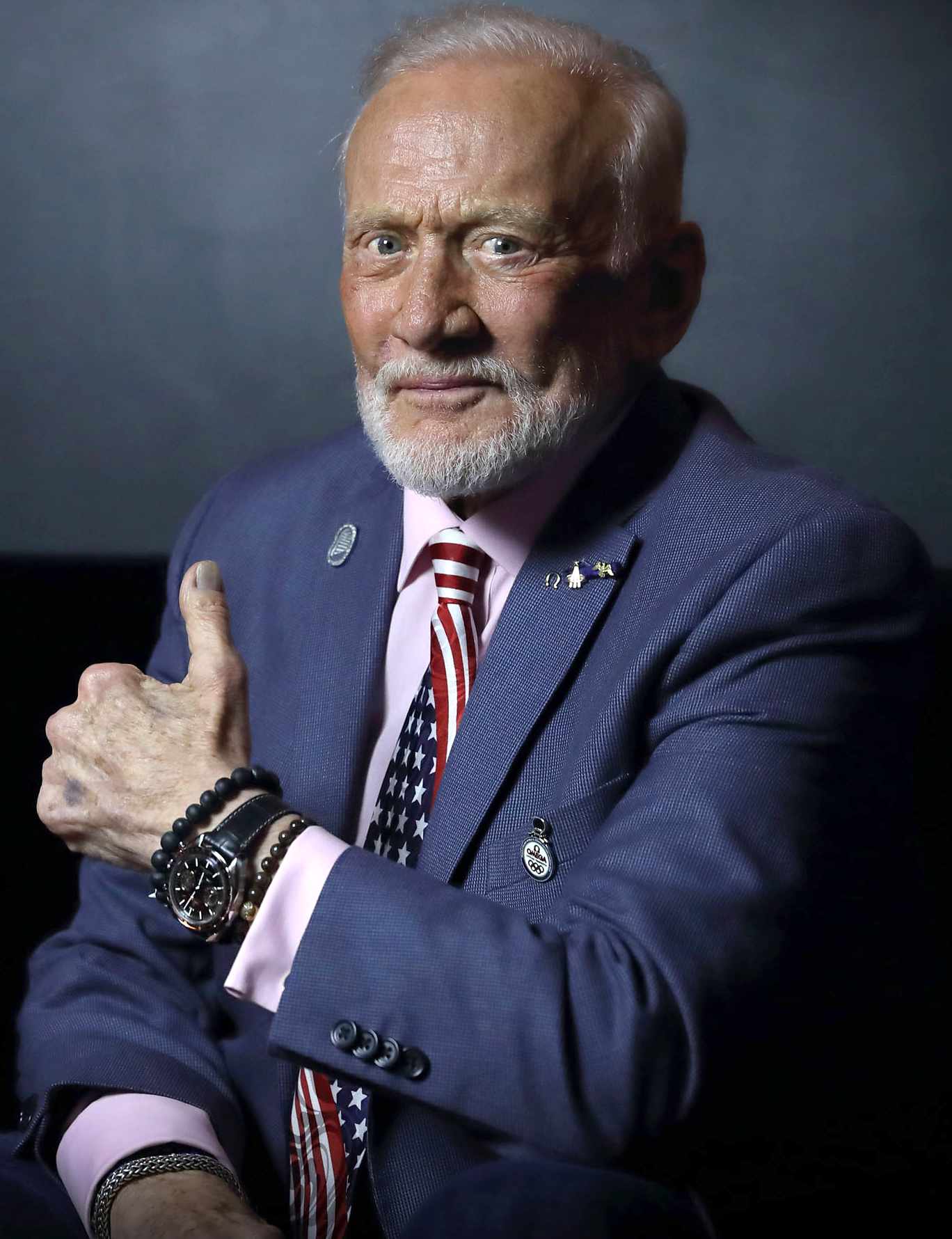


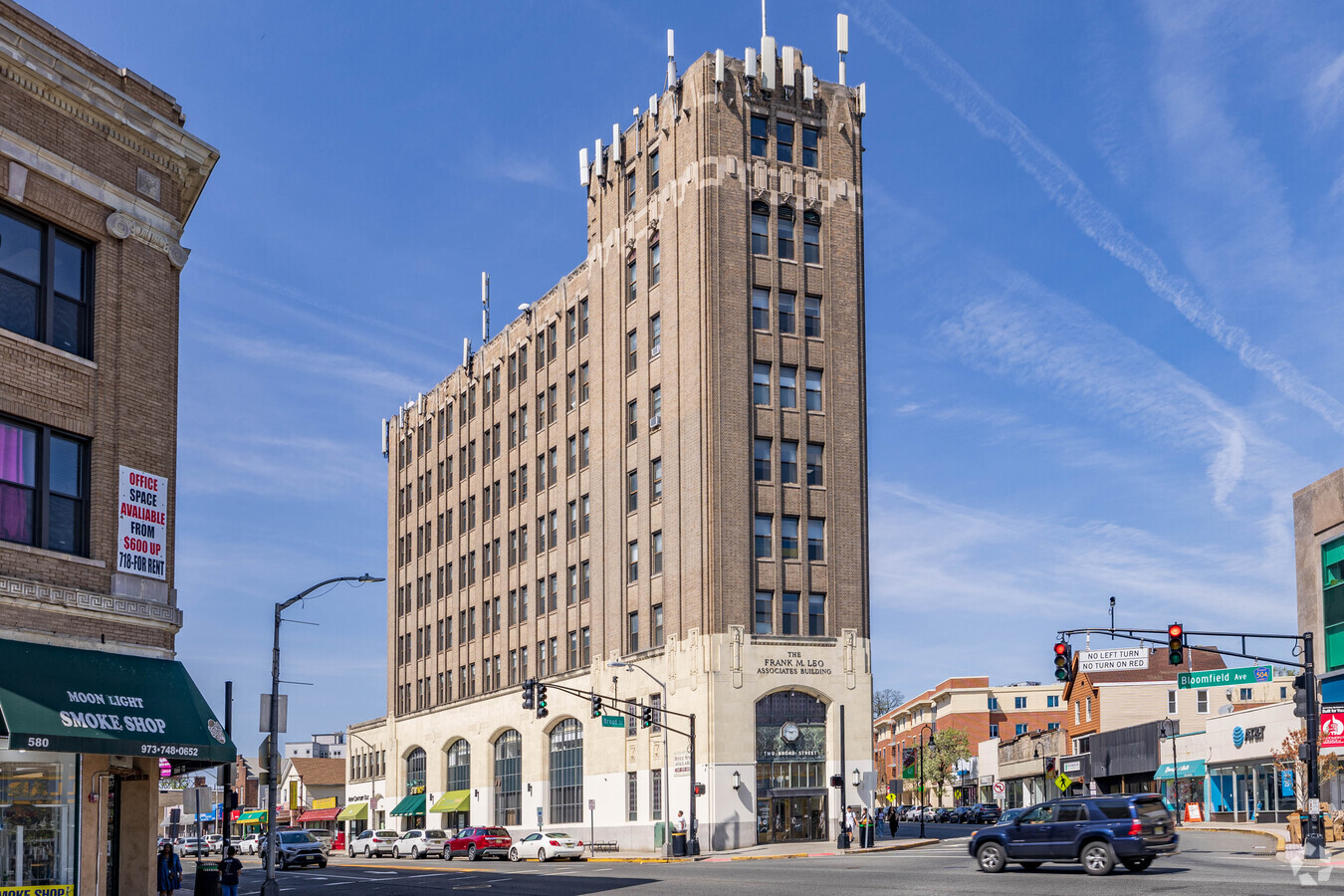

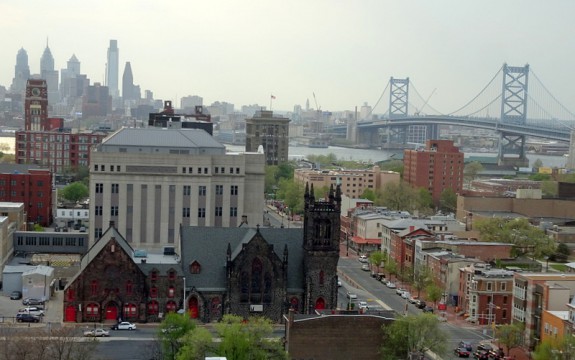
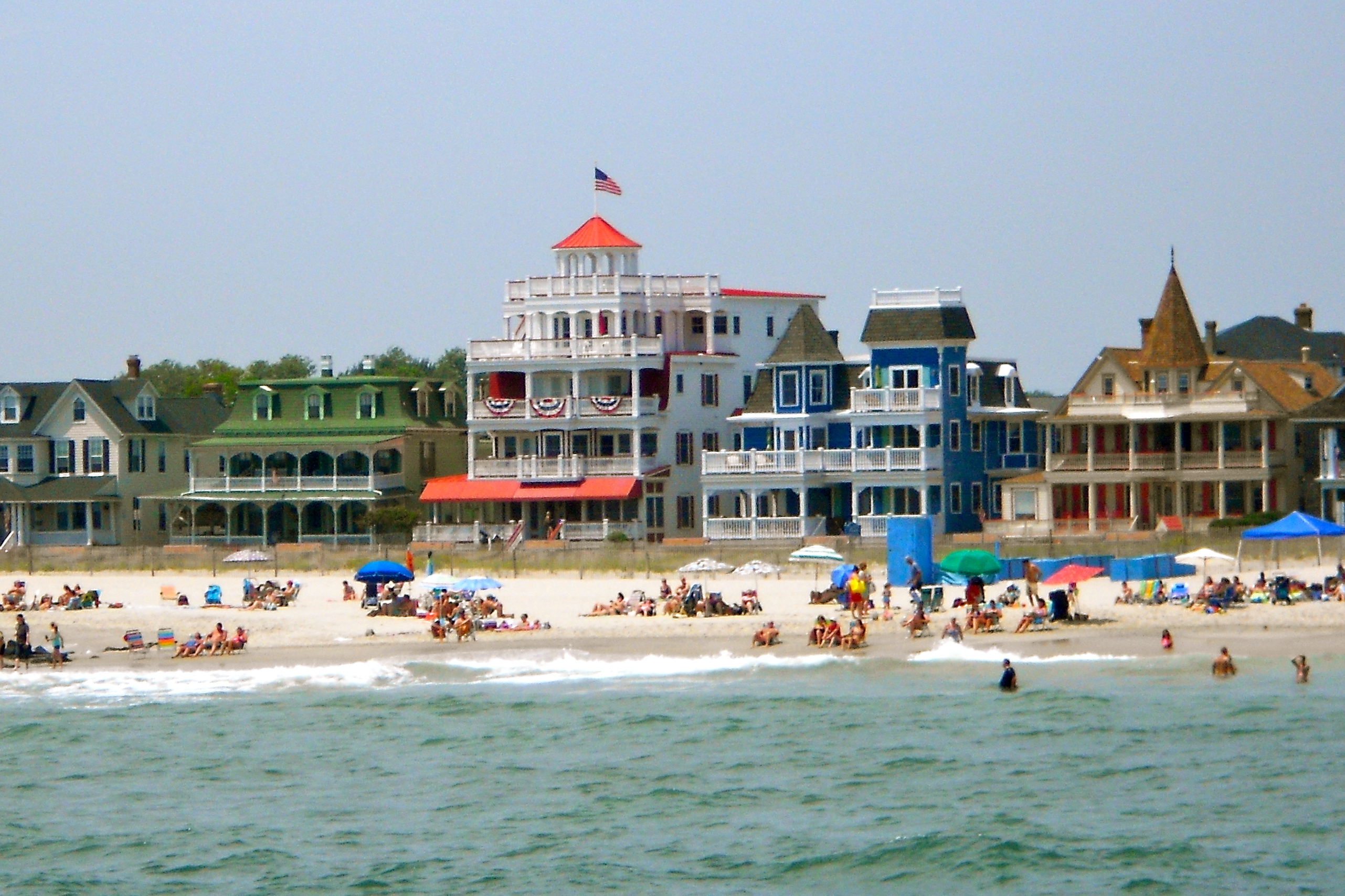
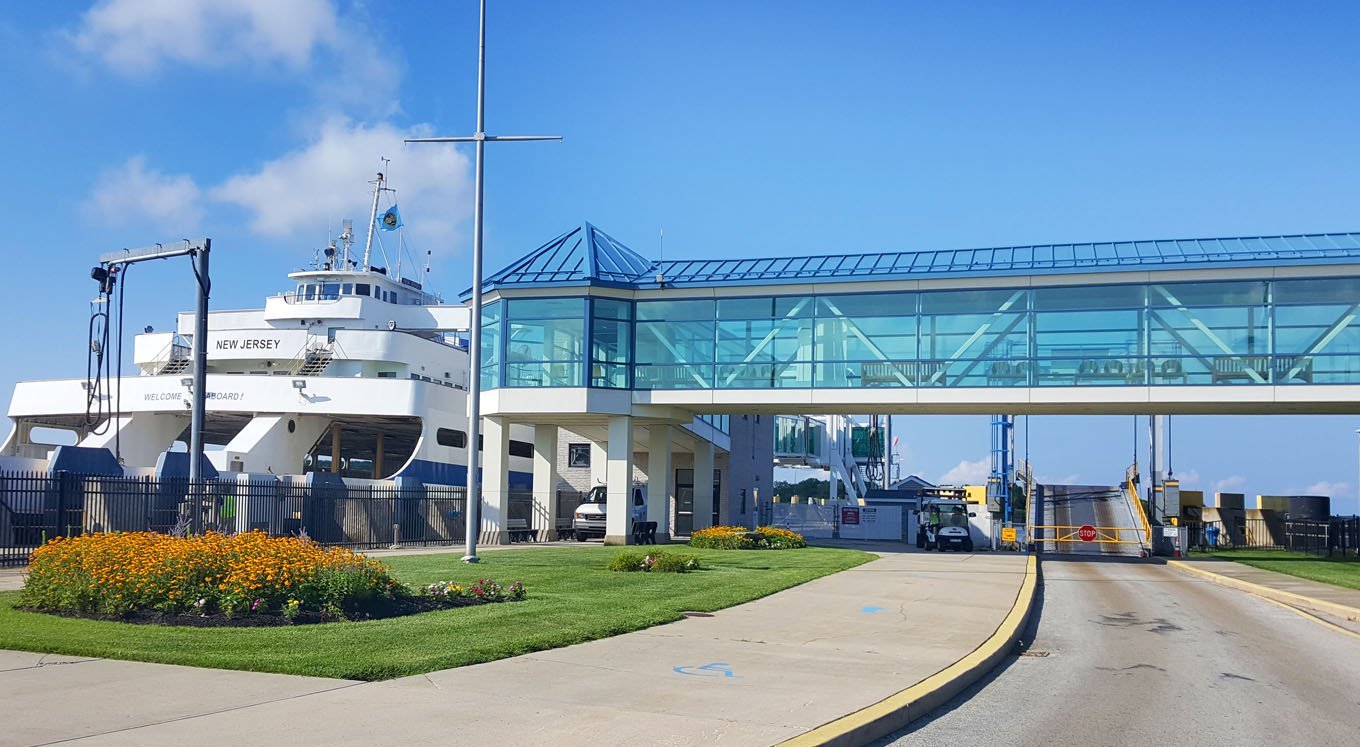


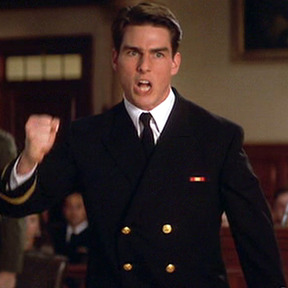


/disco-fries-tops-56d287db5f9b5879cc87ef13.jpg)