Friday, March 31, 2023

March 31, 1923: Don Barksdale, Basketball Pioneer

March 31, 1923, 100 years ago: Donald Argee Barksdale is born in Oakland, California. Before Drew Gooden, before Paul Pierce, before Jason Kidd, before Gary Payton, before Paul Silas, before Bill Russell, before Jim Pollard, Don Barksdale was the original Oakland basketball star.
 
And before Ed O’Bannon, before Bill Walton, before Sidney Wicks, before Kareem Abdul-Jabbar, before Gail Goodrich, and before Walt Hazzard, Don Barksdale was the original UCLA basketball star. They retired his Number 11.
 
In 1947, he became the 1st black basketball player to be named an All-American. In 1948, he was a member of the U.S. team that won the Gold Medal at the Olympics in London. He played for semi-pro teams in Oakland until 1951, when 
with the original Baltimore Bullets, he was only the 5th black player in the NBA. In 1953, with the Bullets, he was named an NBA All-Star. He played 2 more seasons, with the Boston Celtics, wearing Number 17 years before John Havlicek, before an ankle injury ended his career.
 
He made more money in his off-season job, owning 1 of Oakland's 1st 2 black-owned record stores. He later founded and owned a record label, a radio station, and a nightclub. He became the San Francisco Bay Area's 1st black beer distributor, and its 1st black television host, with a show called Sepia Review on KRON-Channel 4.

In 1983, he launched a foundation that is credited with saving high school sports in Oakland. He died of cancer in 1993. In 2012, long overdue, he was elected to the Basketball Hall of Fame. 

Thursday, March 30, 2023

Yankees Beat San Francisco Giants On Opening Day!

The New York Yankees opened the 2023 Major League Baseball season at Yankee Stadium II, in an Interleague game against the San Francisco Giants, a team that, from their 1883 founding until 1957, after which they moved to San Francisco, played in New York City. In fact, from 1913 to 1922, they shared the Giants' home, the Polo Grounds. And from 1923 to 1957, their home parks were right across the Harlem River from each other.

Gerrit Cole started, and began the game and the season by walking LaMonte Wade on 4 pitches, none of which was even close to the strike zone. Not a good omen. But he followed this by striking out the side: Former New York Mets Michael Conforto and Wilmer Flores, and former Los Angeles Dodger star Joc Pederson.

Logan Webb started for the Giants, who are wearing memorial patches for the late Hall of Fame pitcher Gaylord Perry on their right sleeves this season. Aaron Judge took him deep in the bottom of the 1st inning, picking up right where he left off last season. Otherwise, he also struck out the side. Home plate umpire Laz Diaz, known to favor pitchers, called Giancarlo Stanton out on a pitch low and outside. Diaz also closed the 6th with a called 3rd strike on Josh Donaldson that was outside, just 1 pitch after popping a balloon that had drifted onto the field, over to home plate, with "GO YANKEES" written on it.

Giants shortstop Brandon Crawford is married to Cole's sister Amy. Cole struck him out in the 2nd. In fact, he struck out the side in that inning, too.

Anthony Volpe, the much-hyped 21-year-old rookie shortstop from Manhattan, who went to the Delbarton School, a Catholic prep school in Morris Township, Morris County, New Jersey, drew a walk in his 1st major league plate appearance. He then nabbed his 1st major league stolen base. He made a nice play to throw out a batter to end the top of the 4th. In his 1st official at-bat, in the bottom of the 5th, he grounded out to 3rd base.

Gleyber Torres hit a 2-run home run in the bottom of the 4th. Cole pitched shutout ball through 6, striking out 11, a new Yankee Opening Day record, allowing only 3 hits. Wandy Peralta got into a little trouble in the 7th, and manager Aaron Boone called on Jonathan Loáisiga, who worked out of it.

In the bottom of the 7th, DJ LeMahieu singled home a run, and Judge hit a broken-bat looper that got another home. Rob Marinaccio pitched a 1-2-3 8th. Boone kept him in for the 9th, and he got the 1st out, then walked a batter, then struck out the next 2 to end it.

Yankees 5, Giants 0. WP: Cole (1-0). No save. LP: Webb (0-1). The time of the game, with the new pitch clock, was 2 hours and 33 minutes.

So Opening Day is done, the Yankees are 1-0, and, however briefly, all is right with the world. Day off tomorrow, then a 4:05 start on Fox on Saturday.

How Hard It Is to Be Enthused

Before I begin, I want to update my readers on the Trip Guide situation: I will not be doing them for the 2023 MLB season. Or the 2023 MLS season. I'll consider my options again as the 2023 football (both college and pro) season arrives. If I do it for that, I'll probably resume for the NBA and the NHL in their 2023-24 seasons, and then do them for MLB and MLS in 2024. But for now, I won't.

Today is Opening Day of the 2023 Major League Baseball season. Never mind Spring Training, and the glorified exhibition of the World Baseball Classic, which I never even mentioned in my posts: These games count.

And yet, how hard it is to be enthused over it. The Yankees are at home, at Yankee Stadium II. For the 1st time ever, their opener is an Interleague game, against the San Francisco Giants. But they are still managed by Aaron Boone, who takes his orders from the general manager.

He is still Brian Cashman, who takes his orders from the Chairman and Managing General Partner, the member of the ownership group who exercises control over the team.

And he is still Hal Steinbrenner, who seems not to share his father George's stance that "Winning, to me, is second only to breathing," and is willing to do what it takes to keep the Yankees in the Playoffs, so that they will make a profit, but doesn't seem to care any further than that.

As usual, the Yankees open with several questions. Some familiar, some new. They include:

* Do they have enough starting pitching? Once again, the answer appears to be, "No." The rotation appears to be Gerrit Cole, who's great when he doesn't give up home runs, but tends to give them up; Carlos Rodón, who has injury issues; Nestor Cortés, ditto; Luis Severino, ditto; and Domingo Germán, who has been completely inconsistent since his 2019 suspension, to the point where his switch of uniform numbers for this season from 55 to 0 (zero) seems appropriate. (Rodón wears 55, and Germán gave it up in deference.)

Frankie Montas is injured to start the season. And, as Yogi Berra might have said, even when he can pitch, he can't pitch. Right now, the "emergency starter," on such occasions as we will need one, and they will come up, is Clarke Schmidt. Lord have mercy. After him, it's Deivi García, yet another "prospect" that Cashman messed up.

* Do they have enough relief pitching? We have plenty of it. How much of it is any damn good? Your guess is as good as Cashman's. The bullpen, not including likely potential closers, includes Schmidt, the injury-prone Tommy Kahnle, Albert Abreu, Scott Effross, Luis Gil, Ron Marinaccio and Lou Trivino.

* Who's the closer? The good news is, Aroldis Chapman is now the Kansas City Royals' problem. The bad news is, we don't have a clear replacement. Is it Clay Holmes, who looked like it last season during Chapman's injury, but not after? Is it Jonathan Loáisiga, another "consistently inconsistent" guy? Is it Wandy Peralta? Don't make me laugh. 

* Can the lineup avoid injuries? Based on experience, we have to presume that the answer is, "No." But keeping Aaron Judge, Giancarlo Stanton, DJ LeMahieu and especially -- based on last season -- Anthony Rizzo healthy would be huge.

* Do we have a bench good enough to fill the injury gaps? The infield has LeMaheiu, who can play 1st base instead of Rizzo, and 3rd base instead of Josh Donaldson; and Oswaldo Cabrera, who can play anywhere in it but 1st base. Anthony Volpe has been called up, and either he or Isiah Kiner-Falefa can play shortstop.

So can Gleyber Torres -- in theory, but that experiment, which truly solidified him as "Cashman's Jeter," has already failed once, but then, you know Cashman: If at first you don't succeed, bring back Javier Vázquez or Adam Warren.

The starting outfield is likely to be Aaron Hicks in left, Harrison Bader in center, and Aaron Judge in right, with Giancarlo Stanton as the designated hitter. It should be Stanton in left. Estevan Florial can play left and center, but not right; Stanton has also played right well; center, less well.

* Do we have a major-league quality catcher? The 1st choice is Jose Trevino, not a good hitter for average, but has some power, and may be the best defensive catcher in the game. But he might not be available to start the season, due to a wrist injury. Ben Rortvedt is injury-prone. That leaves Kyle Higashioka, good defensively, but a terrible hitter.

* Do we have a major-league quality shortstop? The starting job has been given to Anthony Volpe, whose grand total of regular-season major league plate appearances coming into today is exactly none. IKF is okay as a fielder, but can't hit. Torres can't play the position, and his hitting suffered while he tried. And Cabrera is still a work in progress.

* Was trading for Gleyber Torres worth it? As of right now, the answer is the same as it was when the trade was made on July 25, 2016: "No." He had a good season last year, 

* Has Aaron Judge accepted that hitting 62 home runs is a footnote, and that the real goal is to win the World Series? I believe he has. Presuming he stays healthy, there's no reason why he shouldn't be able to put up another Most Valuable Player-quality season.

* Will the Yankees see the 2015, MVP version of Josh Donaldson? At either 3rd base or as a DH along with Stanton? Probably not. At this point, I'd settle for the 2019 version: .259, 37 home runs, 94 RBIs.

* What about the opposition? Let's start with the Yankees' own Division, the American League Eastern Division. The Tampa Bay Rays are always a problem, the Toronto Blue Jays also made the Playoffs last season, and the Baltimore Orioles improved significantly, to the point where they were in the Playoff race most of the way. The Boston Red Sox stunk last year, but isn't it about time for them to do what they always do when that happens, which is find a new way to cheat and win the World Series?

If the Yankees win the Division, the only other team in the AL that gives them trouble is the Red Sox South, the Chicken Fried Red Sox, the Houston Astros. The Asterisks will continue to cheat their way to victory until MLB Commissioner Rob Manfred does something about it. And, as long as the Astros' cheating is only hurting the Yankees, he won't. (He did after the 2019 World Series, because it had been proven to hurt a team he does like, the Los Angeles Dodgers.)

Here's what it looks like: The Yankees have enough to make the Playoffs, but not to win the Pennant. It's been 14 years since the last Pennant, and just 1 World Series win in the last 23 years. And yet, Cashman is never held accountable by Hal.

Brace yourself: A long season is here. How hard it is to be enthused.

*

Days until the Yankees' Opening Day: Zero. Right now.

Days until the New Jersey Devils again play a local rival: Zero, tonight, at 7:00 PM, home to the New York Rangers. So, kind of a big day in New York Tri-State Area sports.

Days until the next Arsenal match: 2, at 10:00 AM on Saturday, home to Yorkshire team Leeds United.

Days until the next New York Red Bulls game: 2, at 7:30 PM on Saturday, home to Atlanta United.

Days until the next game of the U.S. National Soccer Team: 25, on April 19, at 10:00 PM New York time, an international friendly, home to arch-rival Mexico, at State Farm Stadium in the Phoenix suburb of Glendale, Arizona.

Days until the Red Bulls again play a nearby rival: 37, on Saturday, May 6, home to the Philadelphia Union.

Days until the Yankees' next series against the Boston Red Sox begins: 71, on Friday, June 9, 2023, at Yankee Stadium II. Just 10 weeks.

Days until the next Women's World Cup opens: 101, on Friday, July 10, 2023, jointly held in the neighboring nations of Australia and New Zealand. A little over 3 months.

Days until the next North London Derby: Unknown, as The Arsenal have already played Tottenham Hotspur twice this season (and beaten them both times). The next Premier League season starts on Saturday, August 12, which is 134 days away. But the season never starts with a derby, so it'll be at least another week, 141 days.

Days until the next East Brunswick High School football game: Unknown, since we won't know the 2023 schedule for months. It could be as soon as Friday, September 1, which would be 164 days. A shade over 5 months.

Days until the next East Brunswick-Old Bridge game: Also unknown. It could be the season opener. At least, after this year's game was at the purple shit pit on Route 9, next year's game will be at home.

Days until the next Rutgers University football game: 165, on Saturday, September 2, home to Northwestern. A little over 8 months.

Days until the next Rutgers-Penn State football game: 242, on Saturday, November 18, 2023, at a time to be determined, at Beaver Stadium in State College, Pennsylvania. Under 8 months.

Days until the next Summer Olympic Games: 483, on Friday, July 26, 2024, in Paris, France. Under a year and a half, or a little under 15 months.

Days until the next Presidential election: 584, on Tuesday, November 5, 2024. Under 2 years, or a little over 19 months.

Days until the next elections for Governor of New Jersey and Mayor of New York City: 949, on Tuesday, November 4, 2025. Under 3 years.

Days until the next Winter Olympics open in Milan, Italy: 1,043, on Friday, February 6, 2026. Under 3 years.

Days until the next World Cup opens: 1,165, on Monday, June 8, 2026. Under 3 1/2 years.

Happy 100th Birthday, Dr. Frank Field!

March 30, 1923, 100 years ago: Franklyn Feld is born in New York. We know him as Dr. Frank Field. The U.S. Army Air Force veteran of World War II has a B.A. in geology from Brooklyn College, a B.S. in optometry from Columbia University, and an O.D. degree from the Massachusetts College of Optometry.

But he’s not, as my mother once said, just an eyeglass fitter: He’s a real doctor. If you don’t believe me, take the word of the Albert Einstein College of Medicine in The Bronx, where he taught in the Department of Preventive and Environmental Medicine.

From 1958 to 1984, he was the chief weatherman on WNBC-Channel 4 in New York, frequently hosting science- (often medicine-)based half-hour specials on weekends. From then until 1995, he held the same role at WCBS-Channel 2, later serving at WNYW-Channel 5 and WWOR-Channel 9, before retiring to Florida.

On July 3, 1978, "Doctor Frank" predicted beautiful weather for the 4th of July, perfect for going to the beach, attending parades, having backyard cookouts, and watching fireworks at night. Instead, on the 4th, it rained. It absolutely poured. Beaches were empty. Macy's, the department store that sponsored the City's main fireworks display, canceled it. More phone calls flooded the switchboard at 30 Rockefeller Plaza than at any time since the Heidi Bowl 10 years earlier, all of them angry at Frank.

He had a sense of humor about it, showing up for the 6:00 broadcast of what was then known as NewsCenter 4 with a noose around his neck, suggesting that people wanted to hang him for getting the big holiday forecast so wrong.

But the rain turned out to be a good thing: The entire Northeast got soaked, so the Yankees' scheduled game was postponed. That game was supposed to be against the Boston Red Sox, at Fenway Park. The Red Sox were healthy and leading the American League Eastern Division. The Yankees were battling injuries. Including the previous night's game, they were 2-4 against the Red Sox that season, and it would be 2-6.

But this game was postponed to September 7, making a 3-game series at Fenway a 4-game series. That turned out to be critical: By that point, the Yankees were healthy and streaking, and the Red Sox were injured and reeling. Unlike the Yankees, they didn't have a bench good enough to keep them afloat. And the Yankees swept that 4-game series, which became known as the Boston Massacre. The teams ended up tied for 1st place, and the Yankees won a Playoff for the Division title, which became known as the Bucky Dent Game, and went on to win the World Series.

Maybe George Steinbrenner should have ordered a World Series ring for Dr. Frank Field.

His son, Elliott David Field, went into the family business, and became known as Storm Field. From 1976 to 1991, he was the lead weatherman on WABC-Channel 7, competing with his father. Later, at both Channel 2 and Channel 9, the Fields worked together. Storm retired in 2007.
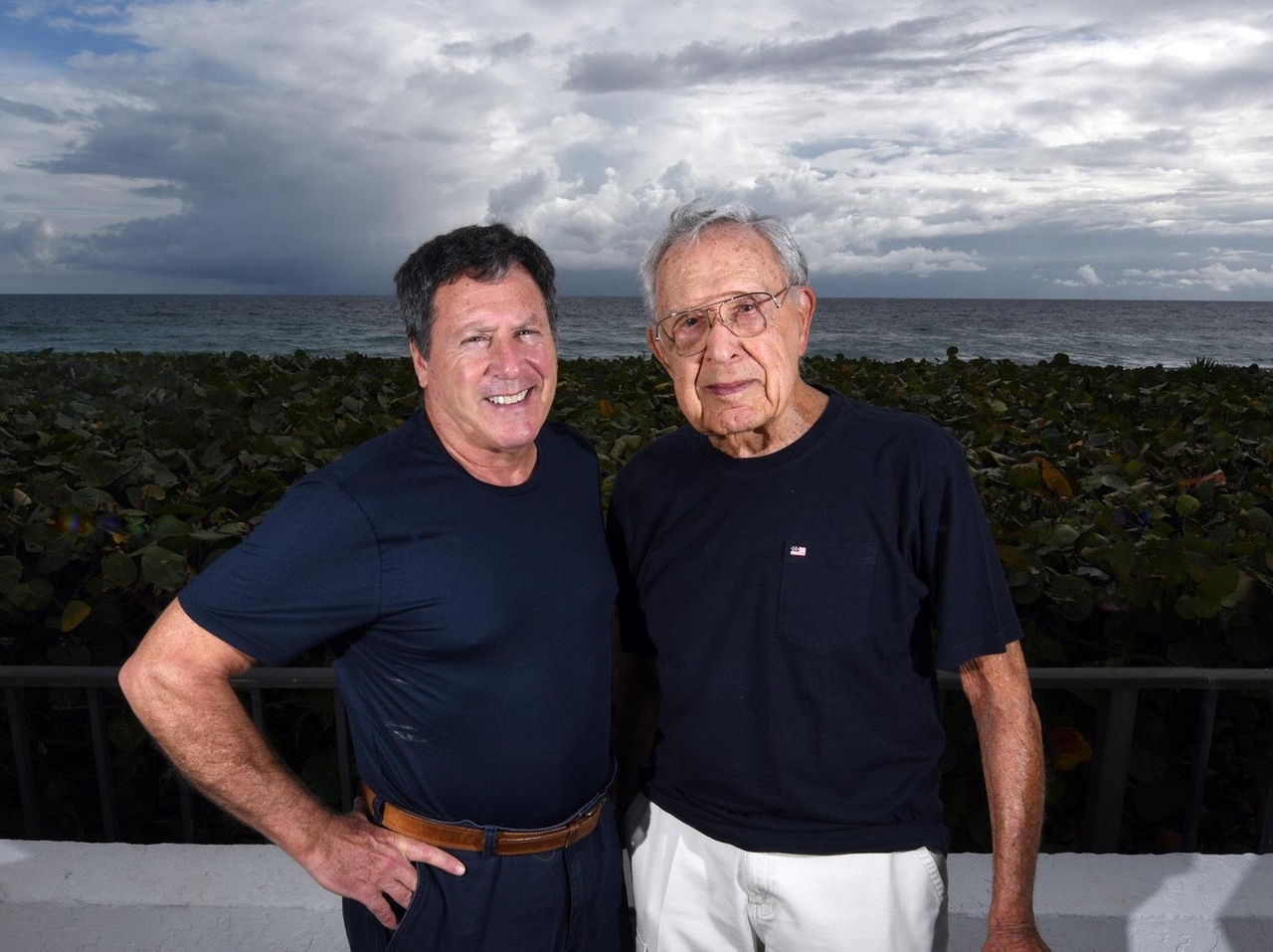
Storm and Frank, at Frank's home in Boca Raton, Florida,
in 2019. Frank was 96 years old.

Frank turns 100 today. Storm is 74.

UPDATE: Dr. Frank Field died on July 1, 2023, just 3 months after his 100th birthday.

Thursday, March 23, 2023

March 23, 1963: Loyola vs. Cincinnati

March 23, 1963, 60 years ago: The Final of the NCAA men's basketball tournament is held at Freedom Hall in Louisville. It is the culmination of a tournament with heavy overtones of the Civil Rights Movement.

Mississippi State University had won the Southeastern Conference Championship, earning them a berth into the NCAA Tournament. The Bulldogs were all-white, as Mississippi colleges were still racially segregated. There was an "unwritten law" that no team from the State could play an integrated team. MSU coach James "Babe" McCarthy defied this, and traveled to East Lansing, Michigan, to Jenison Field House on the campus of Michigan State University. There, they played Loyola University Chicago (there is no "of" in their name), and lost, 61-51.

This Loyola should not be confused with Loyola University Maryland in Baltimore, whose teams are called the Greyhounds; Loyola University New Orleans, the Wolf Pack; or Loyola Marymount University in Los Angeles, the Lions. They are all named for Íñigo López de Oñaz y Loyola, a Spanish theologian who, in 1541, founded the Society of Jesus, a.k.a. the Jesuits, with Peter Faber and Francis Xavier. He is better known by his Latin name, St. Ignatius of Loyola.

The Loyola Ramblers did not stop there. Coached by George Ireland, they won their 1st 21 games, before losing away to Bowling Green. They won 3 more games before losing their regular-season finale to Wichita State at the Chicago Stadium. In the Tournament's Round of 32, they beat Tennessee Tech on the Northwestern campus in Evanston, Illinois. In the Round of 16, they beat Mississippi State at East Lansing. In the Quarterfinal, they beat Illinois at East Lansing. And in the Semifinal, they beat Duke at Freedom Hall.

In the Final, their opponents were the University of Cincinnati, the 2-time defending National Champions. In 1959 and 1960, with Oscar Robertson, the reached what's now known as the Final Four. In 1961, with new head coach Ed Jucker, they reached the Final, and dethroned defending Champions Ohio State, who had Jerry Lucas and John Havlicek coming back. In 1962, they beat Ohio State in the Final again.

In 1963, they were 25-1 going into the Final, to Loyola's 28-2. Like Loyola, they had lost to Wichita State, by 1 point in Wichita. That Wichita State team had Nate Bowman and Dave Stallworth, both of whom would be drafted by the New York Knicks, and were still with them when they won the 1970 NBA Championship. But in 1962-63, Wichita State only went 19-8, finishing 2nd in the Missouri Valley Conference to Cincinnati, did not get invited to the NCAA Tournament, and crashed out of the NIT in the 1st Round.

In the Semifinal, Cincinnati beat Oregon State, which featured Terry Baker, who, 4 months earlier, had won the Heisman Trophy as OSU's quarterback; and, 3 months earlier, had been named Sports Illustrated magazine's Sportsman of the Year, citing his status as a scholar-athlete. And this was before March 1963, when he became the 1st Heisman Trophy winner to also play in the Final Four. He remains the only one.

In that 1963 Final, Loyola started 4 black players, the 1st team ever to do so: Center Les Hunter, forwards Jerry Harkness and Vic Rouse, and guard Ron Miller. Only guard Jack Egan was white.

"The unspoken rule then was two blacks at home, if you had to play them, and one on the road," Ireland said in a 1987 interview. "I played four, and rarely substituted." In other words, he didn't care about an unspoken rule, only written rules.

On the question of substitutions: If both teams had had their choice, all 10 starters would have played the entire game. All 5 of Loyola's did. In Cincinnati's case, center George Wilson got into foul trouble, and sat out for 4 minutes. Guard Larry Shingleton was put in, and forward Dale Heidotting took over the center role. The rest played the whole game: Heidotting and fellow forward Ron Bonham, and guards Tom Thacker and Tony Yates.

Wilson, Thacker and Yates were also black. This marked the 1st time that over half the players in the NCAA Final were black -- in this case, 7 out of 10. So, whichever team won, it would be a step forward in civil rights in basketball: Fans were used to black stars, but not black teams. To borrow the words of playwright Arthur Miller (Jewish, rather than black), "Attention must be paid."

Harkness was the Ramblers' best player. He was shut out from the field by the Bearcats' Tony Yates and Tom Thacker for better than 35 minutes. But he reeled off 9 of his 14 points in the last 5 minutes of regulation, due to both of them getting into foul trouble and having to back off a little.

With 12 seconds left in regulation, Shingleton went to the foul line with the Bearcats up, 53-52. He made the 1st free throw, but missed the 2nd. Hunter grabbed the rebound, and passed to Harkness, who scored to send the game to overtime, 54-54.

There was no 3-point shot available at the time. There was no shot clock in college basketball then, either. This turned out to be critical. With 1:21 left, the game was tied at 58-58, when Loyola won a tip. They passed the ball around, waiting for their chance to take the last shot. Harkness drove, but couldn't get a shot, and flipped the ball to Hunter. He missed, but Rouse flicked the ball into the net as the gun sounded. Final score: Loyola 60, Cincinnati 58.

This was the 1st time that an NCAA Tournament Final had been decided on a last-second shot, a "buzzer-beater." It was also the 1st time that a buzzer-beater had sent an NCAA Tournament Final to overtime.

At the end of the year, the Chicago Bears won the NFL Championship. That made Chicago the 1st city to win both the NFL Championship and the NCAA Basketball Tournament in the same calendar year. It's only happened once since, in 2018, with the Super Bowl by then played in February: Philadelphia did it with the Eagles and Villanova.

Vic Rouse died in 1999, Jim Reardon and head coach George Ireland in 2001, Les Hunter in 2020, Jerry Harkness in 2021. As of March 23, 2022, 5 members of the 1963 Loyola team are still alive: Jack Egan, Chuck Wood, Dan Connaughton, Rich Rochelle and Ron Miller.

For all of the rich history of basketball in the City of Chicago, and in the State of Illinois, this remains the only time that a team from that City or that State has won the NCAA Championship. DePaul University, on Chicago's North Side, made the Final Four under head coach Ray Meyer in 1943, and again in 1979 with Meyer still there. Bradley University, of Peoria, made the NCAA Final in 1950 and 1954, losing the former to City College of New York and the latter to La Salle University of Philadelphia. The University of Illinois made it all the way to the Final in 2005, but lost to North Carolina.

And Loyola made it back to the Final Four in 2018, becoming a national story not just because of their many upsets, but for their team chaplain, Sister Jean Schmidt. With some irony, she had a Master's degree from a Loyola University, but it was from Marymount, the one in Los Angeles. In 1963, she was teaching at a women's Catholic school in Chicago, Mundelein College. In 1991, Mundelein was merged with Loyola University Chicago. In 1994, she became the basketball program's chaplain. In 2018, she was 98 years old, and became a national media figure. In 2022, Loyola qualified for the NCAA Tournament again, and she was in attendance at age 102.

UPDATE: Dan Connaughton died in 2024. Sister Jean died in 2025.

Wednesday, March 22, 2023

March 22, 1993: The Crash On Little Lake Nellie

Steve Olin

March 22, 1993, 30 years ago: The Cleveland Indians are struck by tragedy, when a boating accident kills two of their pitchers, and badly injures a third.

Steve Olin, a 27-year-old native of Portland, Oregon, reached the Indians in the 1989 season. In 1991, he went 3-6 with 17 saves. In 1992, he went 8-5 with 29 saves. He looked like a star in the making, part of the Indians' plan to contend for a title by the time they moved out of Cleveland Municipal Stadium and into the new Jacobs Field for the 1994 season. (It was renamed Progressive Field in 2008.)

Tim Crews, 31, from Tampa, had reached the majors with the Los Angeles Dodgers in 1987. He was a middle reliever, with a career record of 11-13, and 15 saves, peaking at 6 in 1991.
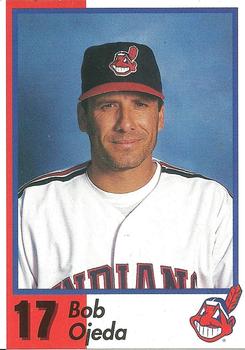
Bob Ojeda, 35, was from Visalia, California, and had helped the New York Mets win the 1986 World Series. An elbow injury the next season curtailed his career, and the Mets traded him to the Dodgers for the 1991 season. He went 12-9, but fell to 6-9 in 1992. After that season, both he and Crews were free agents, and both signed with the Indians.

Olin, Crews and Ojeda reported to Spring Training in Chain of Lakes Park in Winter Haven, Florida, after having trained in Tucson, Arizona since 1947. March 22 was an off-day, and the 3 pitchers decided to take a boat ride on Little Lake Nellie in nearby Clermont.

Crews piloted the boat. All 3 men had been drinking. Crews' blood alcohol level was found to be 0.14, or 0.04 over the legal limit. It was getting dark, and the boat struck a pier that jutted out into the lake. Olin was killed instantly. Crews died the next day.

Ojeda sustained lacerations to his head, and admitted he had been slouching at the time of impact, which probably saved his life. But his psychological issues were greater than his physical ones, and he didn't make his 1st appearance of the season until August 7.
In a pregame ceremony on Opening Day, April 5, 1993, at Municipal Stadium, Patti Olin and Lori Crews were presented with their husbands' jerseys. The Cleveland players took the field wearing patches with Olin's Number 31 and Crews' Number 52 on them. They lost the opener to the New York Yankees, and never really recovered from losing one-third of their pitching staff in one fell swoop. They went 76-86, finishing in 6th place in the American League Eastern Division.
Although Crews had chosen to sign with another team, the Dodgers also wore patches with a Number 52 on them. Later in the season, Dodger Hall-of-Famers Don Drysdale and Roy Campanella also died.

After the 1993 season, the Indians lost another pitcher: Cliff Young was killed in a car crash in his native Houston suburbs. He was only 29.
Cliff Young, from earlier in his career,
with the California Angels

Ojeda made 9 appearances for the Indians in 1993, and 2 more for the Yankees in 1994, before he finally accepted that his injuries were too much to overcome, and retired, with a career record of 115-98. He has since served as a pitching coach in the Mets' organization, and as an analyst for their network, Sportsnet New York.

The Indians won the American League Pennant in 1995, their 1st in 41 years. They lost the World Series to the Atlanta Braves. The won another Pennant in 1997, but lost the World Series in 7 games to the Florida Marlins, because their top reliever, Jose Mesa, turned out to be unreliable. Steve Olin would have been a few days past his 32nd birthday, and probably at his peak. But he was unavailable, for the worst of reasons. The Indians also won American League Central Division titles in 1996, 1998, 1999 and 2001. They won the Division again in 2007. Olin would have been 42, and, theoretically, could still have contributed to the Indians' postseason effort.

In 2009, the Indians left Winter Haven, and began training in Arizona again, at Goodyear Ballpark in the Phoenix suburb of Goodyear. (It's named for the town, not the tire company.) In 2010, they began sharing it with Ohio's other Major League Baseball team, the Cincinnati Reds. In 2022, the Indians became the Cleveland Guardians.

Tuesday, March 21, 2023

Willis Reed, 1942-2023

The Captain is dead. No, not Derek Jeter. Not Scott Stevens. Not Denis Potvin. Not Mark Messier. Not Harry Carson. The most important Captain in the history of New York Tri-State Area sports.

Willis Reed Jr. (no middle name) was born on June 25, 1942 in Hico, Louisiana, and grew up in nearby Bernice. He played basketball at the nearby historically black Grambling State University, which is better known for its football program. He led them to 3 Southwestern Athletic Conference Championship and an NAIA Championship. He was also a member of the U.S. team that won the Gold Medal at the 1963 Pan American Games, although he turned professional before the 1964 Olympics, and was the ineligible to participate under the rules of the time.

The New York Knicks drafted him in 1964, and in the 1964-65 season, he was named the NBA's Rookie of the Year, and was named to the 1st of 7 straight NBA All-Star Games. He had been a center in college, but the Knicks already had All-Star Walt Bellamy, so Reed was moved to forward.

The Knicks had struggled since the mid-1950s, but changes were being made. Head coach Dick McGuire was "kicked upstairs" to become chief scout, and William "Red" Holzman was brought in. In 1968, a few months after moving from the old Madison Square Garden to the new one, general manager Eddie Donovan traded Bellamy and Howie Komives to the Detroit Pistons for Dave DeBusschere.

This remains by far the greatest trade in the history of New York City basketball. Not only did this allow Reed to be moved back to his natural position, but, between Reed, DeBusschere, forward Bill Bradley, and guards Walt Frazier and Dick Barnett, the Knicks had developed the best defense in the NBA. And they could all play well on offense, too.

Reed was 6-foot-9, the same height as Bill Russell, the Boston Celtics legend who retired in 1969. But with Russell out of the way, Reed still had to face such centers as Wilt Chamberlain of the Los Angeles Lakers, Nate Thurmond of the San Francisco Warriors, Wes Unseld of the Baltimore Bullets, and, starting that season, Lew Alcindor (soon to rename himself Kareem Abdul-Jabbar) of the Milwaukee Bucks. He also had to oppose what would now be called power forwards in Elgin Baylor of the Lakers, John Havlicek of the Celtics, Jerry Lucas of the Cincinnati Royals and Elvin Hayes of the San Diego Rockets. You name the great big man of the era, and Reed, by this point named Captain of the Knicks, was the man assigned to stop him. In 1968-69, he grabbed 1,191 rebounds, still a franchise record.

In 1969-70, the Knicks won 60 games, then a team record, including an 18-game winning streak, an NBA record that lasted only 2 years. Reed was named the Most Valuable Player of the NBA's regular season and its All-Star Game, and to the league's First Team and All-Defensive First Team.

The Knicks faced the Baltimore Bullets in the 1st round of the Playoffs. Hayes wouldn't join the Bullets until 1972, but they still had Unseld and guard Earl "the Pearl" Monroe, along with Frazier 1 of the 3 best guards in the game at that point. The Bullets extended them to 7 games, but the Knicks won. In the Eastern Division Finals, the Knicks beat the Bucks of Alcindor and the veteran genius Oscar Robertson in 5 games, to reach the NBA Finals for the 1st time in 17 years.

But they would have to face the Lakers, who had Chamberlain, Baylor, and the other of the 3 best guards, Jerry West. The 1st 2 games were in New York, and while the Knicks won Game 1, the Lakers won Game 2. The next 2 games were in Inglewood, and went to overtime: The Knicks won Game 3, the Lakers won Game 4.

The Knicks won Game 5 in New York, but Reed got hurt. Without Reed to guard Chamberlain, the Lakers easily won Game 6 at home, 135-113. The 1st 5 games, with both Willis and Wilt available, were decided by a total of 30 points. Game 6, with Wilt overwhelming DeBusschere and backup center Nate Bowman for 45 points and 27 rebounds, was a 25-point Laker win.

Game 7 would be played at Madison Square Garden on May 8, 1970. There were 19,500 paying customers at The Garden that Friday night. Among them, Woody Allen was sitting courtside. Also from Brooklyn, but sitting up at the very top, in what were then known as the Blue Seats, was 13-year-old Shelton "Spike" Lee, who would also later become a renowned film director, and would also eventually be sitting courtside. And the one thing on the minds of Woody, Spike, and everybody in between was, "Will Willis play?" At what could have been their moment of greatest triumph, Knick fans were at their moment of greatest despair.

On radio station WHN, 1050 AM (now WEPN, the flagship of ESPN Radio), Marv Albert asked, "The big question is, 'Will Willis Reed play tonight?'" Shortly, he got his answer, "And here comes Willis! The crowd is going wild!"
Reed limped out onto the court for warmups, and hit a few shots. The Lakers stopped and watched. It was over: He was in their heads. They were already beaten.

When the game began, Willis dragged his bad leg around the court, took the Knicks' 1st 2 shots, and made them both. It was effectively over. Willis played only 27 of the 48 minutes. That was more than enough.

Everyone remembers it as The Willis Reed Game. But Frazier had his best game: 36 points to lead all players, 19 assists to lead all players, 7 rebounds. Barnett had 21 points. DeBusschere had 18 points and 17 rebounds. Bradley had 17, Nate Bowman 6, Mike Riordan 5, Dave Stallworth 4, Cazzie Russell 2.

Despite 28 points from West, 21 points and 24 rebounds from Chamberlain, and 19 points from Baylor, the Knicks won 113-99, and were World Champions for the 1st time. It became a particular point of pride for the Knicks that they held the Lakers to under 100 points in that Game 7.
Nationally, the game was broadcast on ABC -- but only on tape delay. The only people who saw it live were inside The Garden. In the locker room afterward, Howard Cosell told Reed, "You exemplify the very best that the human spirit can offer." Bradley said, “It was the best example of inspiration by an individual in a sporting event I’ve ever seen.”
Cosell (before his infamous toupee, but dripping with champagne),
Reed and Holzman

The Knicks finally had their title, and this game has only grown in New York sports legend. It's one of those games where a person who doesn't remember it must think that the venue must have held a million people, because that's how many people have said they were there that day.

In 1997, NBC had a promo for their sitcom Mad About You, with the following exchange:

Jamie Buchman (Helen Hunt): "What was the most amazing moment of your life?"

Paul Buchman (Paul Reiser): "Okay, you ready? 1970, NBA Finals, Game 7, Willis Reed limps onto the court, scores 4 points, Knicks win. I was there."

Jamie: "For me, it was our wedding."

Paul: "Okay, ask me that same question again." (Too late, fool.)

In 2006, as part of the league's 60th Anniversary celebrations, the NBA took an online poll to determine "The NBA's 60 Greatest Playoff Moments." Willis Reed taking the court on May 8, 1970 came in 3rd, behind Michael Jordan's last shot to clinch the 1998 title for the Chicago Bulls, and Magic Johnson switching to center for an injured Kareem Abdul-Jabbar to win the 1980 title for the Lakers.

The moment is still there. Willis limping up the court is up there with the fans storming the field at Shea 7 months earlier, and Joe Namath waving that "We're Number 1" finger 14 months earlier. There have been huge moments since: The Yankees and Mets having many, the Giants having their Super Bowl wins, the Islanders winning 4 Stanley Cups, the Devils 3, and the Rangers the 1 that "will last a lifetime!"

But the Knicks have won just 1 title since, and that 1972-73 title just didn't have a signature moment that everybody remembers. Ask the average Knick fan how many games the '73 Finals took, or if the title was clinched at home or on the road, or who the leading scorer was in the clincher, and they might not even know. (It was Game 5, at The Forum, and Earl Monroe, obtained from Baltimore early in the 1971-72 season, scored 23. It was May 10, and the Knicks won 102-93.)

The Knicks lost the 1971 Eastern Conference Finals to the Baltimore Bullets; got to the NBA Finals again in 1972, after trading for Monroe and Jerry Lucas, but lost to the Lakers; then beat the Lakers for the title in 1973. But Reed, DeBusschere and Lucas all retired after the 1974 season, and that was it for that generation of Knicks.

They didn't get back to the Finals until 1994, losing to the Houston Rockets in 7 games. They made it back in 1999, losing to the San Antonio Spurs in 5. They got back to the Eastern Conference Finals in 2000, losing to the Indiana Pacers. Since then, in 19 completed seasons, they have won a grand total of 9 Playoff games, and just 1 Playoff series, the last of each coming in 2013.

*

For his career, Reed averaged 18.7 points and 12.9 rebounds per game. In 1977, he was named to replace Holzman as head coach, and led them into the Playoffs in 1978. But he was fired early in the 1978-79 season. He was head coach at Creighton University in Omaha, Nebraska from 1981 to 1985, an assistant coach with the Atlanta Hawks from 1985 to 1987, and an assistant with the Sacramento Kings in 1987-88.

He nearly became a legend with the New York Tri-State Area's other NBA team. He was head coach of the New Jersey Nets in 1988-89, and their general manager of the Nets from 1989 to 1996. He built a team by drafting Derrick Coleman and Kenny Anderson; trading for Dražen Petrović and Jayson Williams; signing veteran stars Bernard King, Maurice Cheeks and Rick Mahorn as free agents; and hiring 2-time title-winning head coach Chuck Daly.

However, in 1993, a clothesline from the Knicks' John Starks led to Anderson falling on his wrist and breaking it, and he was never the same. Petrović was killed in a car crash in the off-season, and wasn't available the next season. Both seasons, the Nets lost in the 1st round. After that, they collapsed.

But Reed rebuilt, putting together a team with Jason Kidd, Kenyon Martin, Richard Jefferson, Eddie Griffin and Jason Collins. They made the NBA Finals in 2002 and '03, the franchise's only Finals berth since joining the NBA in 1976. From 2004 to 2007, Reed served as vice president of basketball operations for the New Orleans Hornets (now the New Orleans Pelicans), in his home State.

In 1976, he became the 1st Knick to have his uniform number retired, 19.  In 1982, he was elected to the Basketball Hall of Fame. He was named to the NBA's 50th Anniversary 50 Greatest Players in 1996, and to its 75th Anniversary 75 Greatest Players in 2021.
Reed married his 1st wife, Geraldine, while they were both at Grambling State. They had a son, Karl, who died in 2017; and a daughter, Veronica. His 2nd wife, Gale Kennedy, was a nurse.

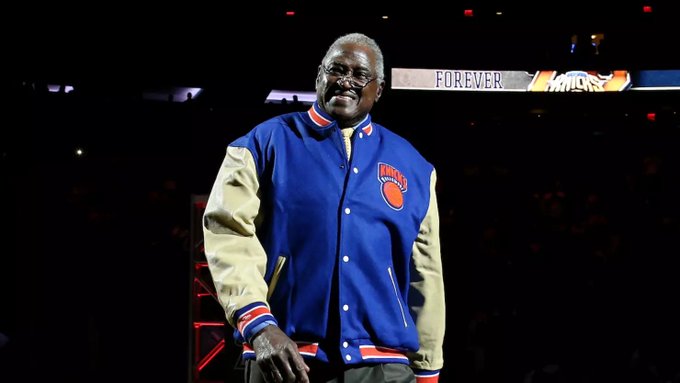
Willis Reed died today, March 21, 2023, of heart failure, at the Texas Heart Institute in Houston. He was 80 years old.

Walt Frazier: "Willis Reed embodied what it meant to be a New York Knick."

Mike Greenberg, ESPN: "There have been greater players than Willis Reed. There has never been a greater leader. Rest in peace, Captain. Fans of the #Knicks will love you until the end of time." 

Bill Simmons, alleged basketball expert: "Of all the legendary playing-in-pain performances, Willis Reed had the only one that swung the deciding game of the entire season. Top that, Dave Cowens."

Otis Livingston, sports anchor at WCBS-Channel 2 in New York: "A true sports icon who was an even better man off the court."

No argument.

Monday, March 20, 2023

March 20, 2003: The Iraq War Begins

March 20, 2003, 20 years ago: President George W. Bush launches the Iraq War, to topple President Saddam Hussein of Iraq from power.

April 9, 2003: Saddam fled, his regime of nearly 34 years coming to an end.

May 1, 2003: Aboard the aircraft carrier USS Abraham Lincoln, beneath a huge banner reading "MISSION ACCOMPLISHED," Bush did not use those words himself, but he did say, "Major combat operations in Iraq have ended. In the battle of Iraq, the United States and our allies have prevailed."

To be fair, he added, "We have difficult work to do in Iraq. We are bringing order to parts of that country that remain dangerous. Our mission continues."

December 13, 2003: Allied forces captured Saddam. But this was not the end of the war, either.

September 30, 2004: With the war still going, with no end in sight, Bush was running for re-election, and debating the Democratic nominee for President, Senator John Kerry of Massachusetts, at the University of Miami in Coral Gables, Florida. Bush was asked why he started the war.

He said, "The enemy attacked us." This was part of his continuing telling of the story that Saddam was involved in the terrorist attacks on September 11, 2001, including the destruction of the World Trade Center in New York.

Kerry responded: "Saddam Hussein did not attack us on September 11, 2001. Osama bin Laden did."

Kerry was right. Bush was lying. That should have ended Bush's bid for a 2nd term right there.

November 2, 2004: By a margin of one State in the Electoral College -- and we may never know just how much the Republicans cheated in Ohio, possibly in other States -- Bush was re-elected.

May 16, 2006: The 3rd season finale of the military-themed drama NCIS airs. Special Agent Leroy Jethro Gibbs, played by Mark Harmon, was in an explosion, and when he emerges from his coma, he has no memory of anything that happened after a similar thing happened to him while he was serving in the original Iraq War of 1991.

Dr. Donald "Ducky" Mallard (David McCallum) meets with NCIS Director Jenny Shepard (Lauren Holly), who says that Gibbs now knows that 15 years have passed, but, seeing the images of the current war on ZNN, that world's fictionalized version of CNN, he says he wants to know why we're still at war in Iraq. Ducky says, "He's not the only one."

January 20, 2009: Bush left office as one of the most unpopular Presidents ever, and Barack Obama became President. He had been elected partly on a pledge to end the Iraq War, which was still going.

June 1, 2009: Dick Cheney, who from 2001 to 2009 had been Bush's Vice President, finally admitted the truth: "I do not believe and have never seen any evidence to confirm that [Hussein] was involved in 9/11. We had that reporting for a while, [but] eventually it turned out not to be true," Cheney conceded.

December 18, 2011: President Obama withdrew the last U.S. combat forces from Iraq, leaving behind only a token force in a defensive role. There were 4,507 American soldiers killed, among 32,000 wounded. Other countries' forces in support, including the new Iraqi army: 18,000. Pro-Saddam and later ISIS forces killed: Approximately 37,000. Iraqi civilians killed: Officially, over 110,000, but probably far more.

Benefits to Iraq: They traded one corrupt regime for another, with far fewer extrajudicial killings. In other words, things became better, but still not good.

Benefits to America: The Bush-Cheney Administration's friends, especially energy companies and defense contractors, made a lot of money, and... uh... well... America remembered that war is a bad thing, and that just because you spout slogans and wave flags doesn't make you more patriotic than the people who say that war is a bad thing. 

Thursday, March 16, 2023

Bud Grant, 1927-2023

Bud Grant was a legend in 2 different sports, in 2 different countries. But, of the 2, he was considerably luckier in the one that was not his homeland.

Harold Peter Grant Jr. was born on May 20, 1927 in Superior, Wisconsin. That was the day that Charles Lindbergh took off from Long Island for Paris. His mother called him "Buddy Boy," which was shortened to "Bud." He starred in baseball, football and basketball at Superior Central High School, which has since been consolidated with another school. He played football under coach Paul Brown at the Great Lakes Naval Training Station in Chicago during World War II. He played end, both offensive and defensive, at the University of Minnesota, under their greatest coach, Bernie Bierman.

The Philadelphia Eagles selected him in the 1st Round of the 1950 NFL Draft. They had won the last 2 NFL Championships, but fell to 7-7 in 1950. In 1951, he caught 56 passes for 997 yards, in each case 2nd in the NFL. But it would be his last season as an NFL player. He also played 2 seasons for the Minneapolis Lakers, along with George Mikan, and was a member of their 1950 NBA Championship team.
The Winnipeg Blue Bombers, of what would become the Canadian Football League, had been interested in him out of Minnesota, and were willing to pay him more than the Eagles. So he became the 1st NFL player ever to play out his option and leave for another team. He was a 3-time Western Conference All-Star, leading the league in receptions 3 times and receiving yards twice. They reached the Grey Cup, Canada's "Super Bowl," in 1953, but lost.

In 1957, the Blue Bombers named Grant their head coach, before his 30th birthday, making him the youngest head coach in CFL history. He led them to the Playoffs in his 1st 6 seasons, and 8 of his 10. He won the Grey Cup in 1958, 1959, 1961 and 1962, and reached it but lost it in 1957 and 1965. An awful 1-14-1 season in 1964 dragged him down to 102-56 for his CFL tenure.
In 1961, Max Winter, founding owner of the Minnesota Vikings, asked Grant to be the team's 1st head coach. He turned them down, and they hired Norm Van Brocklin instead. After firing Van Brocklin following the 1966 season, Winter offered Grant the job again. This time, he took it, and got the Vikings into the Playoffs in his 2nd season. In 1969, he led them to the NFL Championship. This made him the 1st coach to lead a team into both a Grey Cup and a Super Bowl. In all the years since, Marv Levy is the only other coach to do it.

But they lost Super Bowl IV to the AFL Champion Kansas City Chiefs, the last game before the AFL-NFL merger. He led them to 12 Playoff berths, 11 NFC Central Division Championship, 5 NFL or NFC Championship Games, and 4 NFL or NFC Championships: 1969, 1973, 1974 and 1976.

But they never won a Super Bowl: They lost Super Bowl VIII to the Miami Dolphins, Super Bowl IX to the Pittsburgh Steelers, and Super Bowl XI to the Oakland Raiders. Their "Purple People Eaters" defense was one of the best in the game. But despite having Fran Tarkenton as quarterback and Chuck Foreman as running back, their offense was usually just not quite good enough. In 4 Super Bowls, they scored a total of 34 points. The Raiders scored 32 on them in Super Bowl XI alone.

He retired after the 1983 season, but after a 3-13 season under Les Steckel, Grant was enticed back for 1985, went 7-9, and gave it up for good. His record as NFL coach was 161-99-5.

Grant became an environmental activist in his retirement. He was inducted into both the Canadian Football and Pro Football Halls of Fame. The Blue Bombers dedicated a statue of him outside IG Field. Both they and the Vikings inducted him into their rings of honor.

In 1950, he married Patricia Nelson. They became the parents of 6 children: Kathy, Laurie, Peter, Mike, Bruce and Danny. Mike also went into coaching, leading Eden Prairie High School, in the Minneapolis suburbs, to 11 State Championships.

Bud Grant outlived his wife Pat, who passed away in 2009; and their son Bruce, in 2018. He also outlived several stadiums where he coached: Winnipeg Stadium, the University of Minnesota's Memorial Stadium, Metropolitan Stadium in the Minneapolis suburb of Bloomington, and the Metrodome.
A frequent guest at Vikings games at U.S. Bank Stadium, he died on March 11, 2023, from the effects of Parkinson's disease, at his home in Bloomington. He was 95 years old.

With his death, Bob Harrison is the last surviving member of the 1950 NBA Champion Minneapolis Lakers (he was already the last survivor of their 1952 and 1953 titlists).

Tuesday, March 14, 2023

Joe Pepitone, 1940-2023

The title of his autobiography said so much: Joe, You Coulda Made Us Proud. As in, you could have, but you didn't.

Joseph Anthony Pepitone was born on October 9, 1940, in Brooklyn. John Lennon of The Beatles was born the exact same day. Both would become stars in 1962, and genuine superstars by 1964. But, in each case, stardom would cost them a great deal.
Joe grew up in the Park Slope neighborhood of Brooklyn, and graduated from Manual Training High School (now John Jay Educational Campus). Among its other graduates have been actress Thelma Ritter, Nobel Prize-winning physicist I.I. Rabi, comedian Henny Youngman and painter Jean-Michel Basquiat.
The Yankees signed him after he graduated in 1958, and he worked his way up through their minor league system. He made his major league debut on April 10, the Opening Day of the 1962 season, at the old Yankee Stadium. Wearing the Number 25 that he would wear for the entirety of his tenure with the New York Yankees, he pinch-hit for pitcher Whitey Ford in the bottom of the 6th, against Hal Brown, and grounded into a double play. He was not put into the field. Thanks to home runs by Mickey Mantle, Roger Maris and Bill "Moose" Skowron, the Yankees won the game, 7-6.
"Pepi" became the backup to Skowron at 1st base, and received a World Series ring after the season. The Yankees thought so highly of Pepitone that they traded Moose before the 1963 season. Pepitone helped the Yankees win the 1963 and '64 AL Pennants, and hit a grand slam in Game 6 of the '64 World Series. He made 3 All-Star Teams and won 3 Gold Gloves. He had 182 career home runs before he turned 30. Joe was a New York kid playing for the local team, and he was very good. This made him enormously popular in New York at the time.
He had a bit of a nose, and was actually balding, but you couldn't tell that while he was wearing a cap or a batting helmet. (He had 2 toupees: A small one for during games, and a bigger "Guido" hairpiece for being out on the town.) Women wanted him, men wanted to be him. He was a matinee idol, and a hero to many, not just to his fellow Italian-Americans.

But, he would later admit, his father's death left him depressed, and he looked for comfort in New York's nightlife, in drinking and women -- "wine, women and song," as the old saying goes. He still hit a few home runs, and he still, as Yankee broadcaster Frank Messer put it, "played first base like he owned it," although he switched to center field in 1967 and '68 so that Mantle, with no designated hitter in those days, could ease the strain on his legs by playing 1st base.

But if you're going to carouse like Mantle, you'd better be able to play like Mantle. Like all but maybe 20 men who have ever played the game, Pepitone was not at that level. He once said that Mantle had told him, "I wish I could buy you for what you're really worth, then sell you for what you think you're worth."

It didn't help that he came into his own just as the old Yankee Dynasty was collapsing. As it turned out, he and Mel Stottlemyre were the last 2 remaining Yankees who had played on a Pennant winner. Twice in August 1969, he disappeared from the team for a few days before returning, without explanation, and was suspended after the 2nd time.
Finally fed up, the Yankees traded him to the Houston Astros before the 1970 season, and they traded him to the Chicago Cubs during that season. He hit Chicago's Rush Street every bit as hard as he hit New York's nightspots, but didn't hit National League pitchers quite so well, though the wind blowing out at Wrigley Field did help him. The ballpark's famed "Bleacher Bums" would throw marijuana joints and bags of cocaine onto the field as he warmed up into the outfield. He would hide them in the ivy on the outfield wall, and pick them up after the game.
As late as 1971, nearly 31, he was batting .307 with 16 home runs and 61 RBIs. But that was in only 115 games. Injuries, which his carousing didn't help, had caught up with him. In 1973, he was traded to the Atlanta Braves, and they released him after the season. His major league career was over, with a lifetime batting average of .258, an OPS+ of just 105, and 1,315 hits including 219 home runs.
He played in Japan, signing for the Yakult Swallows. But he didn't hit well, begged off games with injuries, and then got caught dancing in Tokyo's discos. In Japan, "Pepitone" became a slang term for a person who goofed off. He tried a comeback with the San Diego Padres in 1976, but after just 13 games for their Class AAA team, the Hawaii Islanders, batting .225, he was released.
In 1980, he was hired as a hitting instructor for the Yankees' minor-league system, and was promoted to the major league team in 1982. He would do time on Rikers Island on gun charges in 1988, although drug charges against him were dropped. And he would have continued alcohol and marriage problems, getting arrested again in 1995, when he drunkenly crashed his car inside the Queens-Midtown Tunnel.
He stayed out of trouble after that, living on Long Island, getting by and then some at memorabilia shows. He was welcomed back for Old-Timers Day, and I once saw him hit a triple when he was nearly 60. Eventually, he bowed to reality -- not enough to appear in public bald, but enough that he wore a gray hairpiece instead of a black one.
He knew he could have been so much more, and he knew he blew it: He titled his 1975 autobiography Joe, You Coulda Made Us Proud. Jim Bouton had portrayed him poorly in his own 1970 book, Ball Four, but Joe followed Jim by writing his own tell-all, and it is considerably more lurid, and less funny.
But the bad things Joe did were no excuse for what Cosmo Kramer did in "The Visa," a 1993 episode of Seinfeld. He had no right to hit Joe with a pitch at that fantasy camp. For crying out loud, Joe was 52 years old! You don't plunk a 52-year-old man! (Seinfeld co-creator Larry David would write Pepitone's name into 2 more episodes, and into 2 episodes of Curb Your Enthusiasm. He was also mentioned on the TV shows The Golden Girls, The Sopranos, The West Wing and Rescue Me.)
Tony Conigliaro was a very similar player in Boston, but his career was curtailed by injury as much as by wasting his talent. New England fans have often suggested that, had he stayed healthy, Tony C would have been their Mantle. But now that Tony C is dead, and the Boston press no longer has to protect the popular, handsome, ethnic local boy, some less-than-savory details about his life have come out.
Joe Pepitone married and divorced 3 times. He died on March 13, 2023, in Kansas City, Missouri, at the home of his daughter Cara. He also had daughters Eileen and Lisa, and sons Joe Jr. and Bill.

Sunday, March 12, 2023

March 12, 1983: Buckwheat Is Assassinated on "Saturday Night Live"

March 12, 1983, 40 years ago: Buckwheat is assassinated on Saturday Night Live. This was a big deal at the time.

Eddie Murphy had been playing a grownup version of Buckwheat, the black kid with the speech impediment and the upswept hair in the Our Gang serials from 1938 to 1944, on the show. His use of "O-tay!" instead of "Okay!" briefly became a popular catchphrase.

The actor who played Buckwheat, William Thomas Jr., billed as "Billie Thomas," later served in the U.S. Army, was decorated for his service, and returned to the film industry as an editor. On July 31, 1980, he was one of several former Our Gang (rebranded as The Little Rascals for later broadcasts on television) members honored at a convention in Los Angeles. But just a few weeks later, on October 10, he died of a heart attack. He was only 49 years old.

It was only after Thomas' death that Murphy began playing the character. What Thomas would have thought can only be speculated. His son, also named William Thomas Jr., became the executor of his father's estate and image, and raised no objection. But former co-star George "Spanky" McFarland hated it. Murphy got tired of it, too, and decided to "kill the character off." SNL executive producer Dick Ebersol agreed.

Despite being at night, instead of in daylight, the scene was staged to resemble the attempted assassination of President Ronald Reagan by John Hinckley 2 years earlier: Murphy, in character as Buckwheat, walks out of 30 Rockefeller Plaza, which includes NBC headquarters and the studio where SNL is taped, and waves to a crowd, saying "I wub noo!" (Meaning, "I love you!")

Then, as Buckwheat approaches his limousine, just as Hinckley shouted out, "Mr. President!" a voice is heard yelling, "Hey, Mr. Wheat!" Buckwheat turns, with his hands still up, and says, "Yes?" And he is shot. A bodyguard shoves him into the limo, which speeds off toward a hospital, while several people jump on the shooter.

SNL shot two versions, one with "blood squibs" and one without. They decided to go with the one without the squibs, because the one with the squibs looked too real, and they didn't want to actually scare anyone.

Castmember Joe Piscopo, known for his impersonation of Frank Sinatra, played ABC News Nightline host Ted Koppel, reporting on the story, and playing it absolutely straight, as if this was a real story happening in real time. He showed the shooting over and over, including in slow motion, as had been done with Reagan's shooting. Finally, he made the tragic announcement: "We have just received word: Buckwheat is dead!" Again and again, in slow motion, the shooting was repeated, and the audience got the joke.

As the character was taken in for emergency surgery, Mary Gross came on to play Alfalfa, another of the Our Gang characters. "His" reaction was, "I'm alarmed, and confused, and I don't know what to say." Ironically, the actual actor who played Alfalfa, Carl Switzer, was murdered, at his home in Los Angeles, on January 21, 1959. He was only 31.

Later, during the show's regular Saturday Night News segment -- it had originally been, and would again, be Weekend Update -- anchor Brad Hall (now better known for being the husband of Julia Louis-Dreyfus, also then an SNL castmember -- did the show as if it was a complete story, and posted reactions from famous people, who were obviously talking about someone else:

* Actor Charlton Heston, by then also known for his gun advocacy: "Well, he was one of the best we had, maybe the best America had had in this century." (He may have been talking about actor Henry Fonda, who died 7 months earlier.)

* Former Secretary of State Henry Kissinger: "He was tough. He had a good sense of humor." (He may have been talking about Soviet dictator Leonid Brezhnev, who died 4 months earlier; or Egyptian President Anwar Sadat, assassinated in late 1981.)

* President Reagan: "Nancy and I feel that we have lost a close and dear friend." (He could also have been talking about Fonda, or Sadat. In spite of their respective positions, he never met Brezhnev.)

* Pope John Paul II (graphics on the screen suggesting a translation from the original Italian -- yes, I know he was Polish, but he was speaking to Italians): "The entire world mourns the loss of this great humanitarian. Buckwheat was a man of peace. We all know how he died. But, perhaps some of you haven't seen the videotape. Let's take a look." (That made the live audience at 30 Rockefeller Plaza crack up.)

And every minute or so, they squeezed in a "commercial": "Buckwheat shot. America stunned. Brought to you by Texxon. Life goes on, and Texxon is there." "Emergency surgery. The world waits. Brought to you by Texxon. Life goes on, and Texxon is there." "Buckwheat dead. America mourns. Brought to you by Texxon. Life goes on, and Texxon is there." Finally, they closed the sketch with, "Buckwheat dead. America mourns. Brought to you by Texxon. Life goes on, and Texxon is there. Because Buckwheat would have wanted it that way."

The following week, Buckwheat's funeral was shown, again with Piscopo as Koppel covering it. It parodied Brezhnev's funeral, with soldiers doing a slow goose-step. But it also showed American soldiers firing a cannon in salute, probably taken from Reagan's Inauguration in 1981.

Among the simulated guests were First Lady Nancy Reagan, but not the President; and Diana, Princess of Wales, but not her husband, Prince Charles, or his mother, Queen Elizabeth II. Also, in footage clearly taken from Sadat's funeral: Former Presidents Richard Nixon, Gerald Ford and Jimmy Carter; plus Kissinger, and Prime Minister Menachem Begin of Israel.

They also showed footage of the candlelight vigil held in Central Park for former Beatle John Lennon after his assassination, in 1980, saying that this was for Buckwheat. (The entire Our Gang cast combined didn't have the impact that Lennon had.)

Piscopo/Koppel then announced that the police had identified the assassin. Like John Wilkes Booth, Lee Harvey Oswald, and Lennon's killer Mark David Chapman, he was always identified with all three names: John David Stutts. Murphy did double duty as victim and assassin.

As police led Stutts into court for his arraignment, a reporter asked him why he did it. Parodying David Berkowitz, the 1976-77 serial killer known as the Son of Sam, "Well, I had to kill him, because my dog told me he was the Antichrist."

Koppel introduced a clinical psychologist, asking him why people kill famous people. The psychologist said it was to become famous themselves, "and, unfortunately, certain irresponsible people in the media are only too eager to turn these assassins into instant celebrities." Koppel then introduced a profile of Stutts.

Everybody interviewed on the subject, including his former pastor, said Stutts was "Quiet, kind of a loner," which is what people always tend to say about famous killers, whether their victims are famous or not. But Koppel asked them all, "Do you think he killed Buckwheat?" They all said, "Oh, yes!" showing they were not surprised about his apparent guilt. His high school yearbook showed him to be President of the Future Assassins of America, and his class voted him "Most Likely to Kill Buckwheat."

Then, they parodied the shooting of Oswald in 1963, just 2 days after the assassination of President John F. Kennedy. Stutts was even dressed like Oswald, wearing a sweater, and the shooter was wearing a hat like the one Jack Ruby wore while shooting Oswald. Stutts' killer was not identified on the air.

There was also a new "commercial": "Brought to you by Mutual Life: Because you could die tomorrow." The last time, the announcer added, "Just like John David Stutts."

In spite of the "death," and having tired of the character, Murphy has brought Buckwheat back a few times.