Showing posts with label joe pepitone. Show all posts

Tuesday, August 20, 2024

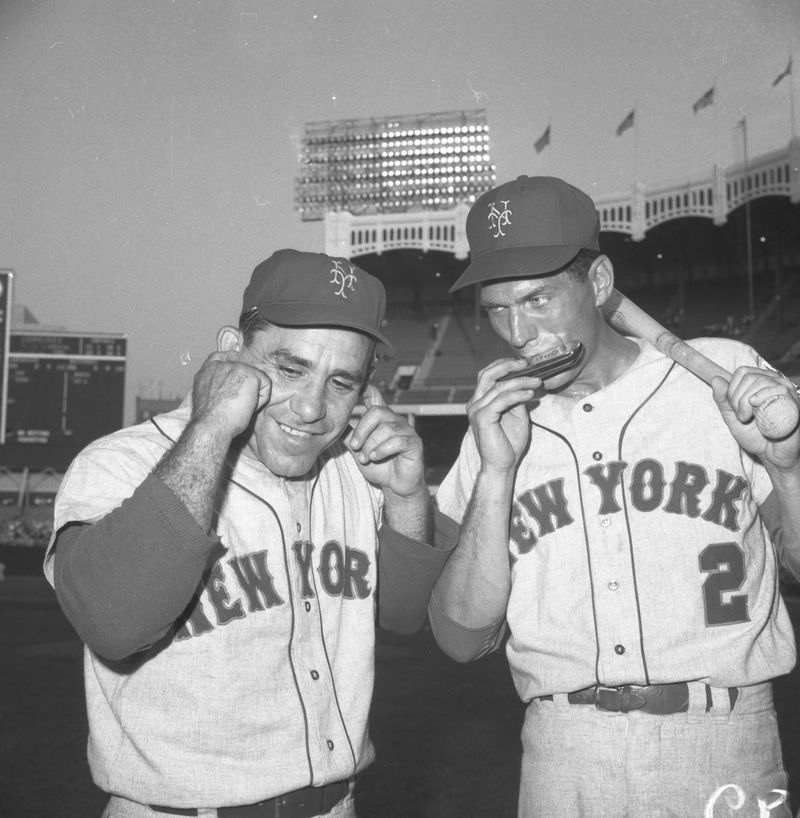
August 20, 1964: The Harmonica Incident

Phil Linz (left) and Yogi Berra. Winning solves everything.
At least for a while.

August 20, 1964, 60 years ago: An incident on the New York Yankees' team bus wakes the team up, and leads to a Pennant.

In 1959, catcher Yogi Berra and left fielder Elston Howard had their positions switched by manager Casey Stengel. Talking about how the Sun combined with the old Stadium's roof, making it difficult to see a fly ball from left field, Yogi said, "It gets late early out there."

He was still a key figure on Pennant-winning teams. But after the 1963 season, Yogi was 38 and clearly slowing down. And, with Ralph Houk, his former backup catcher, being moved up from field manager to general manager, Yogi was offered the job of managing the Yankees for the 1964 season.

There were those who thought that Yogi was too much of a softie to manage, especially players he'd played with. On August 20, the Yankees lost to the Chicago White Sox, 5-0 at Comiskey Park in Chicago. John Buzhardt went the distance for the ChiSox, while Whitey Ford got knocked out of the box in the 4th inning.

Former Yankee Bill "Moose" Skowron went 3-for-4 with an RBI for the ChiSox. The Yankees only got 7 hits, all singles: 3 by shortstop Tony Kubek, 2 by right fielder Roger Maris, 1 by Howard, and 1 by backup catcher Johnny Blanchard, who started in left field on this day. Usual center fielder Mickey Mantle was once again battling an injury, and did not play.

The loss completed a 4-game sweep by the Pale Hose over the Bronx Bombers, and left them 4 1/2 games behind Chicago with 23 to go. The Baltimore Orioles were just half a game behind the White Sox.

The tension on the team bus to O'Hare International Airport was so thick, it could have been cut with a knife. Reserve infielder Phil Linz pulled out a harmonica he'd begun learning how to play, and began to play "Mary Had a Little Lamb," the traditional song for anyone learning how to play an instrument to start with.

Yogi, sitting at the head of the bus, heard it, and yelled back, "Whoever's playing that thing, shove it up your ass!" (Yogi was old-school even by the standards of the Sixties, but he was no prude when it came to language.) Linz didn't hear what he said, and asked Mantle what it was. Being a wisenheimer, Mickey said, "He said, 'Play it louder.'" So Linz did.

Yogi wasn't having it. He got up, walked down the aisle of the bus, saw Linz, and said, "I thought I told you to shove that thing up your ass." Linz said, "If you want it shoved up my ass, why don't you shove it there?" He flipped the instrument to Yogi... who slapped it down.

There are 2 versions of what happened next. One is that everyone saw that Yogi could mean business, and that the respect for him as a manager suddenly grew by leaps and bounds. That's the version that Yankee management, in the years since, would have fans believe.

The other version, which is more believable, is included in Peter Golenbock's book Dynasty, and has been backed up by the surviving '64 Yanks, all of whom said that respect for Yogi was never an issue. This version says that the slapped-down harmonica bounced off 1st baseman Joe Pepitone's leg. Pepi then fell into the aisle in mock agony, rolling around on the floor of the bus like a Spanish soccer player (with the bad hair to match). Everyone cracked up -- and loosened up.

With respect for Yogi restored, or the tension shattered, whichever is true, the Yankees went on a tear. They flew to Boston and lost 2 more, then won 28 of their last 39, including an 11-game winning streak from September 16 to 26, and won the Pennant, winning 99 games, beating the White Sox by 1 game and the O's by 2. Yogi had won his 1st Pennant as a manager, and he wasn't even 40.

But they lost the World Series -- ironically, to Yogi's boyhood team, the St. Louis Cardinals. This was in spite of Linz, substituting for an injured Kubek, playing in all 7 games, and hitting home runs in Games 2 and 7, both off Bob Gibson. Yankee management fired Yogi, anyway, which they were determined to do even if he won the Series. If he was upset, he never let on: When people would ask him about it, he'd just say, "That's baseball."

At least they told him to his face. That would not be the case the 2nd time he was fired as Yankee manager.

With Stengel now managing the Mets, he hired Yogi was one of his coaches, and Yogi even played a few more games. In 1966, with Stengel having retired and Wes Westrum having been hired as Mets manager, the Yankees traded Linz to the Philadelphia Phillies. In 1967, the Phils traded Linz to the Mets, reuniting him with Berra.
Linz's playing career ended after the 1968 season, and he ran a restaurant in Manhattan, before retiring to Leesburg, Virginia. He died in 2020. (Not from COVID.)

Berra was on the coaching staff of Gil Hodges as the Mets won the 1969 World Series. In 1972, Hodges died at the end of Spring Training, and Yogi was named manager, winning the National League Pennant in 1973. He was fired in 1975, and brought back to the Yankees as a coach.

He was named manager for the 1984 season, but was fired early in 1985. Team owner George Steinbrenner, instead of telling Yogi face-to-face, sent a team official to do it. Furious over this lack of courtesy, not over the firing itself, Yogi said he would never set foot in Yankee Stadium again as long as Steinbrenner owned the team. He kept that promise for 14 years, until peace between them was negotiated, including a face-to-face apology from George to Yogi. Yogi was brought back into the Yankee fold, and remained there until his death in 2015.

Tuesday, March 14, 2023

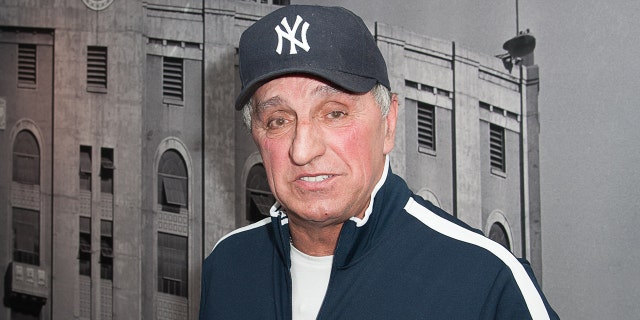
Joe Pepitone, 1940-2023

The title of his autobiography said so much: Joe, You Coulda Made Us Proud. As in, you could have, but you didn't.

Joseph Anthony Pepitone was born on October 9, 1940, in Brooklyn. John Lennon of The Beatles was born the exact same day. Both would become stars in 1962, and genuine superstars by 1964. But, in each case, stardom would cost them a great deal.
Joe grew up in the Park Slope neighborhood of Brooklyn, and graduated from Manual Training High School (now John Jay Educational Campus). Among its other graduates have been actress Thelma Ritter, Nobel Prize-winning physicist I.I. Rabi, comedian Henny Youngman and painter Jean-Michel Basquiat.
The Yankees signed him after he graduated in 1958, and he worked his way up through their minor league system. He made his major league debut on April 10, the Opening Day of the 1962 season, at the old Yankee Stadium. Wearing the Number 25 that he would wear for the entirety of his tenure with the New York Yankees, he pinch-hit for pitcher Whitey Ford in the bottom of the 6th, against Hal Brown, and grounded into a double play. He was not put into the field. Thanks to home runs by Mickey Mantle, Roger Maris and Bill "Moose" Skowron, the Yankees won the game, 7-6.
"Pepi" became the backup to Skowron at 1st base, and received a World Series ring after the season. The Yankees thought so highly of Pepitone that they traded Moose before the 1963 season. Pepitone helped the Yankees win the 1963 and '64 AL Pennants, and hit a grand slam in Game 6 of the '64 World Series. He made 3 All-Star Teams and won 3 Gold Gloves. He had 182 career home runs before he turned 30. Joe was a New York kid playing for the local team, and he was very good. This made him enormously popular in New York at the time.
He had a bit of a nose, and was actually balding, but you couldn't tell that while he was wearing a cap or a batting helmet. (He had 2 toupees: A small one for during games, and a bigger "Guido" hairpiece for being out on the town.) Women wanted him, men wanted to be him. He was a matinee idol, and a hero to many, not just to his fellow Italian-Americans.

But, he would later admit, his father's death left him depressed, and he looked for comfort in New York's nightlife, in drinking and women -- "wine, women and song," as the old saying goes. He still hit a few home runs, and he still, as Yankee broadcaster Frank Messer put it, "played first base like he owned it," although he switched to center field in 1967 and '68 so that Mantle, with no designated hitter in those days, could ease the strain on his legs by playing 1st base.

But if you're going to carouse like Mantle, you'd better be able to play like Mantle. Like all but maybe 20 men who have ever played the game, Pepitone was not at that level. He once said that Mantle had told him, "I wish I could buy you for what you're really worth, then sell you for what you think you're worth."

It didn't help that he came into his own just as the old Yankee Dynasty was collapsing. As it turned out, he and Mel Stottlemyre were the last 2 remaining Yankees who had played on a Pennant winner. Twice in August 1969, he disappeared from the team for a few days before returning, without explanation, and was suspended after the 2nd time.
Finally fed up, the Yankees traded him to the Houston Astros before the 1970 season, and they traded him to the Chicago Cubs during that season. He hit Chicago's Rush Street every bit as hard as he hit New York's nightspots, but didn't hit National League pitchers quite so well, though the wind blowing out at Wrigley Field did help him. The ballpark's famed "Bleacher Bums" would throw marijuana joints and bags of cocaine onto the field as he warmed up into the outfield. He would hide them in the ivy on the outfield wall, and pick them up after the game.
As late as 1971, nearly 31, he was batting .307 with 16 home runs and 61 RBIs. But that was in only 115 games. Injuries, which his carousing didn't help, had caught up with him. In 1973, he was traded to the Atlanta Braves, and they released him after the season. His major league career was over, with a lifetime batting average of .258, an OPS+ of just 105, and 1,315 hits including 219 home runs.
He played in Japan, signing for the Yakult Swallows. But he didn't hit well, begged off games with injuries, and then got caught dancing in Tokyo's discos. In Japan, "Pepitone" became a slang term for a person who goofed off. He tried a comeback with the San Diego Padres in 1976, but after just 13 games for their Class AAA team, the Hawaii Islanders, batting .225, he was released.
In 1980, he was hired as a hitting instructor for the Yankees' minor-league system, and was promoted to the major league team in 1982. He would do time on Rikers Island on gun charges in 1988, although drug charges against him were dropped. And he would have continued alcohol and marriage problems, getting arrested again in 1995, when he drunkenly crashed his car inside the Queens-Midtown Tunnel.
He stayed out of trouble after that, living on Long Island, getting by and then some at memorabilia shows. He was welcomed back for Old-Timers Day, and I once saw him hit a triple when he was nearly 60. Eventually, he bowed to reality -- not enough to appear in public bald, but enough that he wore a gray hairpiece instead of a black one.
He knew he could have been so much more, and he knew he blew it: He titled his 1975 autobiography Joe, You Coulda Made Us Proud. Jim Bouton had portrayed him poorly in his own 1970 book, Ball Four, but Joe followed Jim by writing his own tell-all, and it is considerably more lurid, and less funny.
But the bad things Joe did were no excuse for what Cosmo Kramer did in "The Visa," a 1993 episode of Seinfeld. He had no right to hit Joe with a pitch at that fantasy camp. For crying out loud, Joe was 52 years old! You don't plunk a 52-year-old man! (Seinfeld co-creator Larry David would write Pepitone's name into 2 more episodes, and into 2 episodes of Curb Your Enthusiasm. He was also mentioned on the TV shows The Golden Girls, The Sopranos, The West Wing and Rescue Me.)
Tony Conigliaro was a very similar player in Boston, but his career was curtailed by injury as much as by wasting his talent. New England fans have often suggested that, had he stayed healthy, Tony C would have been their Mantle. But now that Tony C is dead, and the Boston press no longer has to protect the popular, handsome, ethnic local boy, some less-than-savory details about his life have come out.
Joe Pepitone married and divorced 3 times. He died on March 13, 2023, in Kansas City, Missouri, at the home of his daughter Cara. He also had daughters Eileen and Lisa, and sons Joe Jr. and Bill.

Friday, March 26, 2021

Top 5 Old-Time Yankees Who Would Never Make It in the Social Media Age (And 5 Who Would Thrive In It)

We live in the Social Media Age, where some people, including athletes, have elevated themselves, and sometimes even society as a whole -- and some have made fools, or worse, of themselves.

Which Yankee Legends would have made it in this era? And which wouldn't have?

10. Would never make it: Babe Ruth

The media of the 1920s and early '30s loved the Sultan of Swat. He was great copy. So they protected him against revelations of his peccadilloes: His drinking, his carousing, his womanizing, and being possibly the worst driver in the history of the City of New York.

But by the early 1960s (more on that later), things began to change. Some players, the ones who cooperated with the media, would still be protected. Others, the ones who tended not to cooperate, were ripped. By the dawn of the 21st Century, as the Internet became a factor, and social media was on its way, any slip-up that got found out would have been exposed. The Bambino would have been shredded.

Granted, the media might soon have buried such a story, and pushed his redemption. Look at Kobe Bryant. Look at Tiger Woods (if you want to go outside the realm of sports). Maybe they would have let the Babe redeem himself.

But the Babe's own mentality would get in the way. In so many ways, he was like a kid that never really grew up. It would be wrong to say he was dumb: He was smart enough to understand every aspect of baseball. But he may have had a learning disability, one which blocked his ability to understand things he should have.

And social media might have been one of those things. Money certainly was: He needed his 2nd wife, Claire Hodgson, to be a proper business manager for him. I can certainly imagine her having control over his smartphone. But it might not have been enough: She slowed his carousing down, but it didn't really stop. He would still have been vulnerable to phone cameras recording his shenanigans.

9. Would thrive in it: Lou Gehrig
On the other hand, the Iron Horse would have adjusted just fine. The press didn't cover his private life because he didn't seem to have one. Today, people would have seen that he was a mama's boy, didn't go out partying with the Babe and the boys, didn't get married until he was 30 years old, and never had children, and might guess that he was secretly gay. (As far as I know, he wasn't.)

Or maybe, like Roger Maris, people in the media, and in social media, would have found him boring off the field. And, unlike Maris, he was able to roll with the punches. Twitter might have gotten Ruth into a problem he would have needed a lot of help to get out of. Gehrig wouldn't have had such a problem.

8. Would never make it: Joe DiMaggio
The Yankee Clipper was fiercely protective of his privacy. The very wording has become a cliche. He would never have gone on Twitter, probably not on Instagram, probably not on Facebook, either. Just as Seinfeld suggested that it would be absurd for Joltin' Joe to go into Dunkin Donuts (they called it "Dinky Donuts," but who's kidding who), I can't imagine him sharing intimate details like his breakfast or a new suit.

And the stories that were kept quiet by a media that was cowed into submission? His connections with organized crime? His treatment of his wives, first actress Dorothy Arnold, then superstar actress Marilyn Monroe? His late-night "raid" of Marilyn's place with Frank Sinatra? His later feud with Sinatra, in which the two most famous Italian-Americans of them all became bitter enemies -- over Frank's moves on Marilyn?

Joe would never have held up to modern scrutiny. And his attempts to avoid scrutiny, including calling on his aforementioned connections, might well have gotten him into hotter water.

7. Would thrive in it: Phil Rizzuto
But the Scooter would have loved it. During the games he was broadcasting, he was always talking about his family, the friends he had, the restaurants he dined at, the golf courses he played, the far-off places he visited. He would have been good on Twitter, better on Facebook, and, holy cow, maybe the King of Instagram.

6. Would never make it: Mickey Mantle
The Mick was basically shy. While Phil and Yogi were extroverts, Mickey, so different from Joe in some ways, was every bit the introvert. He didn't want to share his life with outsiders. And, with his drinking and womanizing, he had things to hide. Plus, if the stories about him shooing away autograph-seeking kids is true, then how he reacted to unkind online treatment might also have been bad.

5. Would thrive in it: Yogi Berra
Lawrence Peter Berra didn't look like an athlete, and he didn't look like an intelligent man. But he was both. The way he handled the media career that unexpectedly grew out of his baseball career, I have no doubt that he would have been just fine online.

As the man himself might have said, he would have been an overwhelming underdog, but he wouldn't have made too many wrong mistakes.

4. Would never make it: Roger Maris
Another guy really protective of his privacy. I can't see him ever opening an account. Maybe Facebook and Instagram after he retired, but never Twitter.

3. Would thrive in it: Joe Pepitone
Joe Pepitone had a lefthanded swing tailor-made for Yankee Stadium (especially before the renovation, when it was 296 feet to the right field pole and 344 to straightaway right), a nice glove, and a bubbly personality. He loved the spotlight. He enjoyed being a New York baseball star. If the Yankees had kept it going through the Sixties and into the Seventies, he would have been the guy to succeed Mantle as The Next Great Yankee.

There were 2 problems with this. The Yankees didn't keep it going. And Pepi cared more about being a star than about winning ballgames. It's one thing to be a man about town if -- like Mantle, the Jets' Joe Namath, and the Knicks' Walt Frazier -- you have the substance to back up the style.

Joe was backup to Moose Skowron at 1st base on the 1962 World Champions, but didn't appear in the World Series. He was the starter on the 1963 and '64 Pennant winners, and hit a grand slam in Game 6 of the '64 Series, so he'd done all that within a few days of his 24th birthday.

He made the All-Star team in '65, and won 3 more Gold Gloves. But he only batted .300 once (in 1971, with the Chicago Cubs after leaving the Yankees), only hit 30 homers once (in 1966), and topped out at 100 RBIs (in 1964, and that was the only time he even topped 90). That .307 season with the '71 Cubs was his last full season, and he turned 31 right after it ended.

But, oh, how he would have loved to make his case on social media. Oddly, now, at age 80, and apparently in good health, he's not on any of the major platforms. So maybe I'm wrong.

2. Would never make it: Billy Martin
There's a fine line between genius and madness, and Billy the Brat passed out on it. For every story about how good a manager he could be, there are a dozen about how he was nuts. The best thing he could have done with social media was stay the hell away from it.

1. Would thrive in it: Reggie Jackson
Reggie has been called "a sensitive soul." And he has been burned by mainstream media: SPORT magazine lied about him in both Oakland and New York, the New York media always seemed to take Martin's side, and the national media, which has never much liked the Yankees, always used them as good copy, Reggie among them. It seems like he wouldn't have fit in well with social media.

But he managed to turn the tables. He used the media as well, cultivating good relationships with some reporters, and doing commercials for things people actually liked to use: Candy, TV sets, cars, and the gasoline needed to power them.

And as the son of a Negro League player, and having come of age during the Civil Rights Movement, Reggie managed to get black activists on his side. Once he retired and his ego -- never greater than those of, say, Pete Rose or George Brett -- was no longer a threat to a fan's favorite team, he began to be seen as something of an elder statesman of baseball.

And he's been pretty good on Facebook and Instagram. (Less so Twitter, due mainly to fewer uses of it.) If he had the opportunity to use social media to go over the heads of his mainstream-media accusers of 1977, he might have been perceived differently then, and might even be better off now.

Thursday, March 17, 2016

Top 10 Yankee First Basemen

Honorable Mention to Ellsworth Tenney "Babe" Dahlgren, 1937-40. Part of the Yankees' 1920s and '30s San Francisco connection, he was only a starter for 2 seasons, but 1 of those was the 1939 World Championship season. After a bad season in 1940, manager Joe McCarthy dumped him. He actually got better after the Yankees got rid of him, including an All-Star season with the 1943 Philadelphia Phillies. But the Yankees started winning again, so they didn't miss him.

Still, he'll forever be remembered, albeit not for any particular feat, rather simply taking the place of Lou Gehrig on that sad day in Detroit, May 2, 1939.

Honorable Mention to Johnny Sturm, 1941. Due to World War II and a subsequent injury, this was his only season in the major leagues. But it was a World Championship season.

Honorable Mention to John "Buddy" Hassett, 1942. Known as the Bronx Thrush for his home Borough and his fine singing, he was a 3-time .300 hitter, twice for the Brooklyn Dodgers. He was the Yankees' starting 1st baseman in 1942, winning a Pennant (something Don Mattingly never did) and batting .284. But he went off to war, and never played in the major leagues again.

Honorable Mention to Nick Etten, 1943-46. He had 107 RBIs for the 1943 World Champions, led the AL with 22 homers in 1944, and led with 111 RBIs in 1945. But when the good pitchers came back from The War, he wasn't as good a hitter anymore. He played his last big-league game shortly before his 34th birthday.

Honorable Mention to George McQuinn, 1947-48. A 6-time All-Star, twice for the Yankees, he was the 1st baseman on the only St. Louis Browns team to win a Pennant, in 1944. He was released by the Philadelphia Athletics before the 1947 season, because he was about to turn 37 and had batted .225 the year before. He looked done. This was the kind of decision that led to the A's moving after 1954.

The Yankees took a chance on him. This was the kind of decision that led to the Yankees dominating baseball for a generation, as they had in the previous generation. McQuinn batted .304, hit 13 homers, drove in 80 runs, and helped the Yankees win the World Series. He tailed off in 1948, was released, and retired, but, for 1 year, he and the Yankees were good for each other.

Honorable Mention to Joe Collins, 1948-57. The native of Union Township, Union County, ew Jersey was the starter on 4 World Championship teams: 1950, '51, '52 and '53. He then served as a backup to Moose Skowron. He was a good fielder who might have won a Gold Glove had the award been established a few years earlier, and had a little power.

Tommy Henrich, normally a right fielder, played the most games at 1st base for the Yankees in the 1949 World Championship season, including catching a popup for the final out in the Pennant-clinching finale against the Boston Red Sox.

Honorable Mention to Bob Watson, 1980-82. He was only a Yankee for 2 seasons and the start of a 3rd, but he batted .307 in '80, his only full season in The Bronx, and was the general manager who built the 1996 World Champions.

10. Johnny Mize, 1949-53. He put up big numbers for the St. Louis Cardinals and the New York Giants before being acquired by the Yanks, and, at age 36, most people thought he was done. Manager Casey Stengel thought otherwise, and the Big Cat was an All-Star twice more, with a 116 OPS+ as a Yankee. (That's well below his career OPS+ of 158, which got him, albeit belatedly, into the Hall of Fame.)

The Georgian, a distant cousin of Ty Cobb, was with the Yankees 5 seasons, and they won the World Series all 5. He wore Number 10 as a Cardinal, 3 as a Giant before going off to World War II and 15 after coming back. As a Yankee, he wore 36, and was probably the best Yankee to wear the number until David Cone.

9. Wally Pipp, 1915-25. He's remembered today as the man whose headache -- possibly as a result of getting beaned in those pre-batting helmet days -- allowed Lou Gehrig to step in and not miss a game for 14 years. This led to anyone thinking about asking for a day off to worry about "getting pipped." That's not fair, because, by the standards of his time, Pipp was a very good player.

The native of Grand Rapids, Michigan led the American League in home runs in 1916 and '17 -- albeit, in those last few years of the Dead Ball Era, with 12 and 9 homers in those seasons. He led the AL with 19 triples in 1924, his last full season as a Yankee. He batted .300 3 times and just missed 2 others. He hit 311 doubles despite playing his big-league last game at age 35 and in the parks of the time, most of which had faraway center field fences. And, yes, he helped the Yankees win the 1921 and '22 Pennants and the '23 World Series.

The truth is, he was in a nasty slump when Gehrig began his streak on June 1, 1925, batting only .244 after having been at .321 on May 11. He wasn't benched because of a headache, or a concussion, or a fractured skull, or whatever version of the story you heard; the condition, whatever it was, apparently came later. No, he lost his job because he wasn't getting it done.

After that season, the Yankees sold him to the Cincinnati Reds (which was odd, because interleague transactions were rare in those days), and he had 3 more productive seasons in the majors and one more in the high minors with the 1929 Newark Bears (meaning, in a 30-team MLB, he almost certainly would have played well in The Show).

His lifetime batting average was .281, he had 6 seasons of at least 100 RBIs (5 with the Yankees), and had there been an All-Star Game in the 1910s and '20s, he probably would have played in 8 or 9 of them. He is worth remembering, and for his presence, not just his absence.

8. Chris Chambliss, 1974-79. The 1971 AL Rookie of the Year came to the Yankees on April 26, 1974, in a controversial trade that sent 4 party-boy pitchers to the Cleveland Indians. With Watergate in the headlines, some called the trade the Friday Night Massacre. But it was a great trade: None of the guys going to the Indians did much for them, while the Yankees got Chambliss and Dick Tidrow, a versatile pitcher without whom the 1976, '77 and '78 Pennants would not have been won.

Nor would they have been won without Chambliss, who grew up in Oceanside, California. He gave the Yankees their first really reliable 1st baseman since Moose Skowron. (Say what you want about Joe Pepitone, but "reliable" is not an adjective that comes to mind.) You need 17 homers in a season? You need 90 RBIs? You need a good glove at 1st? Chambliss was your man.

He was an All-Star in 1976, and he gave the season its exclamation point on October 14, hitting a home run to win Game 5 of the ALCS and the Pennant over the Kansas City Royals. He also hit a home run that tied Game 6 of the 1977 World Series, setting up The Reggie Jackson Show.

Speaking of Reggie, he was in the ABC booth for that '76 ALCS, assisting Keith Jackson and Howard Cosell, and he said it was a shame that there was no MVP award for the ALCS at the time. Chambliss batted .512 with 2 homers and 8 RBIs, meaning that if the award had been in place, he might have won it even without his capper. Overall, he batted .282 as a Yankee, and his career postseason average was nearly identical, .281. He hit 185 homers, 79 as a Yankee.

The Yankees sent him to the Toronto Blue Jays after the 1979 season, to get Rick Cerone to fill the catching void caused by the death of Thurman Munson, while Watson came in to play 1st in 1980 and '81. But the Jays foolishly traded Chambliss to the Atlanta Braves for outfielder Barry Bonnell, who did nothing in Toronto.

Chambliss helped the Braves win the NL West in 1982 (their only postseason appearance from 1969 to 1991), and forged a friendship with manager Joe Torre that led to being hired as Torre's hitting instructor when he managed the St. Louis Cardinals and later the Yankees.

His Number 10 has been retired by the Yankees, albeit for Phil Rizzuto. But he should be remembered as a fine player, and not just for one amazing moment, a hot bat on a cold night in The Bronx.

7. Joe Pepitone, 1962-69. The Brooklynite played his last big-league game at age 32. He said that once his father, his biggest fan, died, he began to lose interest. Clearly, he was one of these guys who was more interested in being a star than in being a great athlete. He knew he'd blown it: He titled his memoir Joe, You Coulda Made Us Proud.

He sure could have. After a cup of coffee in '62, the Yankees traded Moose Skowron to make room for him, and at first it worked. He was an All-Star the next 3 seasons, helping the Yankees win Pennants in '63 and '64, hitting a grand slam in Game 6 of the '64 Series.

But that was his high-water mark, and he was only 24. Despite 3 Gold Gloves and 219 homers (166 as a Yankee), Joe played himself out of baseball, and I don't mean on the field: Times Square when he was with the Yankees, Rush Street when he was with the Chicago Cubs, and the Ginza in his brief, scandalous (over there, anyway) tenure in Japan. His post-baseball life has had its difficulties as well. He now lives on Long Island, and has kept his nose (and liver) clean for about 20 years.

Fast facts with which you can amaze your friends: Like John Lennon, Joe Pepitone was born on October 9, 1940, made his "big-league debut" in 1962, was a huge star by 1964, but left his "group" in 1969. Too bad Joe never found his "Yoko": He's been divorced 3 times.

But at least he's alive, which is not true of John, and back in the good graces of Yankee management, for whom he does public-relations work. He will never get a Monument Park Plaque, or Number 25 retired in his honor. But he's doing okay now, and that's not something that could always be said of him.

6. Jason Giambi, 2002-08. Okay, the Giambino, shall we say, had help. Unlike those lying and cheating bastards David Ortiz, Mark McGwire, Ivan Rodriguez and Luis Gonzalez, all of whom contributed to Yankee postseason defeats (and Rafael Palmeiro and Juan Gonzalez, who did not, and Barry Bonds and Sammy Sosa, who never even got the chance), Giambi was man enough to admit it and stop.

He hit 440 career home runs, 209 with the Yankees. He helped the Yankees to the postseason 6 straight times, and his 2 homers kept the Yankees in Game 7 of the 2003 ALCS against the Roid Sox long enough for the alleged Curse of the Bambino to work one last time. (Unless you count that 13-inning dance of death of July 1, 2004, featuring Derek Jeter flying into the stands -- and I don't count it as part of The Curse.)

He hit at least 30 homers in 5 Yankee seasons, and had 100 or more RBIs in 3. He's a 5-time All-Star, 3 as a Yankee. He flopped in the '03 World Series (.235) and the '06 ALDS (.125), but overall he's got a .911 OPS in postseason play.

He'll never make the Hall of Fame or Monument Park, and his Number 25 stands a much better chance of being retired for Teixeira than for Giambi (or Pepitone), but it's unfair to call Giambi's tenure in Pinstripes a failure. After all, he was better over those particular seasons than Tino Martinez was.

5. Mark Teixeira, 2009-present. The man from the Baltimore suburbs will be 35 shortly after Opening Day, and has had 7 full seasons in Pinstripes. But don't be shocked that I have him so high on this list. The 1st 3 were fantastic seasons.

In 2009, he led the AL with 39 homers and 122 RBIs, batting .292. In 2010, he dipped to .256, but still hit 33 homers with 108 RBIs. In 2011, he dropped to .248, but hit 39 homers with 111 RBIs. He;s battled injuries ever since, although, as in 2009, he was having a monster year with Alex Rodriguez hitting behind him, until he got hurt and missed the last quarter of the season.

He's hit 191 of his 394 career home runs as a Yankee. His 3 100-RBI seasons with the Yankees makes 8 overall. His OPS+ is 124 as a Yankee, 129 overall. And he's won 5 Gold Gloves, 2 as a Yankee. It's too early to say that he'll get Number 25 retired, a Plaque in Monument Park, and election to the Hall of Fame. But I wouldn't bet against any of those.

4. Bill "Moose" Skowron, 1954-62. A 6-time All-Star, he hit 211 home runs (165 as a Yankee) in spite of playing his entire career in pitcher's parks, particularly as a right-handed hitter in the pre-renovation Yankee Stadium, with its 402 feet to straightaway left, 457 to left-center and 461 to center.

In spite of those dimensions, Moose still hit 28 home runs in 1961 -- joining with Roger Maris' 61 and Mickey Mantle's 54 to produce 143 home runs, still the highest total ever by 3 teammates. He was also a great fielder for a big man.

The nickname "Moose" had nothing to do with his size: As a kid, he got a crewcut, and someone said it made him look like Benito Mussolini. He kept the crewcut for the rest of his life, although in his old age his hairline had receded to the point where it looked right.

He won 8 Pennants (1955, '56, '57, '58, '60, '61, '62 and '63 -- the last after being traded to the Los Angeles Dodgers to make room for Pepitone) and 5 World Series (1956, '58, '61, '62 and '63 -- 4 with the Yanks, 1 with the Dodgers). He is also one of the few players to hit World Series home runs for both leagues, including a grand slam in Game 7 of the '56 Series against the Dodgers in the last postseason game ever played in Brooklyn.

Moose was elected to the National Polish-American Hall of Fame -- that's for all walks of life, not just sports. Na zdrowie, Moose. I have another reason for liking him: We share a birthday, December 18, albeit 39 years apart.

3. Don Mattingly, 1982-95. Only Number 3? This is the New York Yankees. We are about winning World Championships. Saint Donald Arthur of Evansville never even won a postseason series. Donnie Regular Season Baseball.

But if I'm going to be completely fair, I not only have to say all of that, but I have to say all of this: The guy did more than anybody in those years to get the Yankees in a position to win, and, talk of mythical sports-related curses aside, it wasn't his fault that it didn't happen.

His 145 RBI in 1985 are the most by a Yankee since Joe DiMaggio in 1948. His .352 batting average in 1986, although not enough to win the AL batting title as his .343 was in 1984, is the highest by a Yankee in a full season since Mickey Mantle in 1956. (Paul O'Neill batted .359 in strike-shortened 1994.) His 238 hits in 1986 are a Yankee record, breaking the 231 by Earle Combs in 1927. He's probably the best-fielding 1st baseman in Yankee history (although see Wally Pipp above), winning 9 Gold Gloves.

No, he never won a World Series, a Pennant, or even a postseason series. And he was far from, as Michael Kay of the YES Network puts it, "the most popular athlete in New York history." But Don Mattingly earned his Monument Park Plaque and the retirement of his Number 23.

Does he belong in the Baseball Hall of Fame? His lifetime batting average is .307. His OPS+ is 127. He was a 6-time All-Star and, as I said, a 9-time Gold Glove. But he had just 2,153 hits and 222 home runs. He had 14 stolen bases -- in his entire career. As Yogi Berra would have said if he'd thought of it first, Even when he could run, he couldn't run.

On its Hall of Fame Monitor, on which a "Likely HOFer" is at 100, Baseball-Reference.com puts Mattingly at 134, meaning he should absolutely be in. But that measures peak performance. On its Hall of Fame Standards, which is geared more toward career statistics, and at which the "Average HOFer" is at 50, he comes in at 34, thus he falls well short.

Its list of his 10 Most Similar Batters is as follows: Cecil Cooper, Wally Joyner, Hal McRae, Kirby Puckett (the man who gave him the nickname "Donnie Baseball"), Will Clark, Magglio Ordonez, Jeff Conine, Tony Oliva, Matt Holliday and Keith Hernandez.

Only Puckett is in the Hall, although Oliva and Hernandez, his New York contemporary to whom he is so often compared (right down to also having his career cut short by a back injury), arguably should be; while Holliday is still active and could get himself into consideration. The others all fall short. So does Mattingly: He is not a Hall-of-Famer, neither in fact nor in evidence.

2. Tino Martinez, 1996-2001, with a brief comeback in 2005. The Bamtino ahead of Donnie Baseball? Blasphemy! No, it's not, and I'll give you 4 reasons why: 1996, 1998, 1999 and 2000. In 1997 -- oddly, not one of the Yanks' Pennant years -- he had 141 RBIs, and his 44 homers were the most by a Yankee between Roger Maris (and Mickey Mantle) in 1961 and Alex Rodriguez in 2005.

The Tampa native hit 339 home runs, 192 as a Yankee. And he hit 2 of the most dramatic homers in Yankee history, the grand slam that won Game 1 of the 1998 World Series, and the homer that sent Game 4 of the 2001 Series to extra innings.

Tino will never make the Hall of Fame. Baseball-Reference.com lists his "10 Most Similar Batters" as Lee May, Gil Hodges, George Foster, Paul Konerko, Boog Powell, Joe Adcock, Jack Clark, Willie Horton, Norm Cash and Derrek Lee. Konerko has a shot at the Hall, and Hodges should be in, but none of the others ever will be.

Tino was the 1st player of the Joe Torre Dynasty to get a Monument Park Plaque, although his Number 24 remains in circulation. (At this point, it certainly won't be retired for Robinson Canó.) As much as anyone else, he was one of the guys who got the Yankees over the hump in 1996, and kept them there into the dawn of the 21st Century.

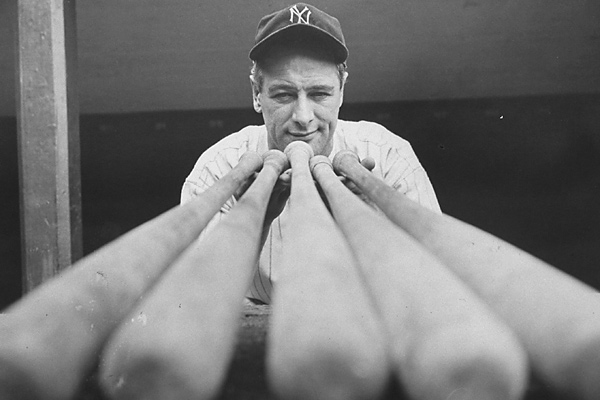
1. Lou Gehrig, 1923-39. When Major League Baseball and MasterCard held the balloting for the All-Century Team in 1999, Gehrig got the most votes. Even more than Babe Ruth.

How do you briefly sum up the greatest baseball player to actually come from New York City? (He grew up in Harlem, when it was still full of white German immigrants.) Said All-Century Team. Hall of Fame. His Number 4 was the 1st to be retired in all of baseball. A Monument -- not a Plaque -- in Monument Park. He was the 1st Yankee to win the Triple Crown. Illness stopped him just short of 500 homers and 2,000 RBI.

His brief callup in 1923 did not allow him to play in that year's World Series, but he played for the Yankees in 7 World Series (1926, '27, '28, '32, '36, '37 and '38), winning all but the first and as Captain for the last 4 of those. Moreover, when people think "Yankee Captain," the first name that comes to mind is not Derek Jeter or Thurman Munson, it's Lou Gehrig.

That's almost certainly due to the film The Pride of the Yankees starring Gary Cooper. The film doesn't really hold up well: Cooper looked like Gehrig, but didn't sound like him, and had never played baseball in his life, while it's not really a movie about a baseball player, it's a love story between Lou and Eleanor (played by Teresa Wright), and the leading man's job happened to be that of baseball player.

But the story is timeless, because Lou was timeless. The Iron Horse still runs, if only in our memories. A person would have to be about 85 years old now to have seen him play. But because of the movie, and because the Yankees have been so good at presenting their history, this man who died 75 years ago this June is still with us. Lou Gehrig lives.

Wednesday, February 16, 2011

Top 10 Yankee First Basemen

The batteries are done. As Tony Reali would say on ESPN, Let's go around the horn!

Honorable Mention to Bob Watson. He was only a Yankee for 2 seasons and the start of a 3rd, 1980-82, but batted .307 in '80, his only full season in The Bronx, and was the general manager who built the 1996 World Champions.

10. Mark Teixeira, 2009-present. He'll be 31 shortly after Opening Day, and has had only 2 full seasons in Pinstripes. But they've been fantastic seasons: In 2009, he led the AL with 39 homers and 122 RBIs, batting .292; in 2010, he dipped to .256, but still hit 33 homers with 108 RBIs. That's 72 homers as a Yankee, 275 overall. His 2 100-RBI seasons with the Yankees makes 7 overall. His OPS+ was 141in '09 and 125 in '10, and it's 134 for his career.

It's too early to say that he'll get Number 25 retired, a Plaque in Monument Park, and election to the Hall of Fame. But I wouldn't bet against any of those.

9. Johnny Mize, 1949-53. He put up big numbers for the St. Louis Cardinals and New York Giants before being acquired by the Yanks, and at age 36, most people thought he was done. Manager Casey Stengel thought otherwise, and the Big Cat was an All-Star twice more, with a 116 OPS+ as a Yankee. (That's well below his career OPS+ of 158, which got him, albeit belatedly, into the Hall of Fame.)

He was with the Yankees 5 seasons, and they won the World Series all 5. He wore Number 10 as a Cardinal, 3 as a Giant before going off to World War II and 15 after coming back. As a Yankee, he wore 36, probably the best Yankee to wear the number until David Cone.

8. Wally Pipp, 1915-25. He's remembered today as the man whose headache -- possibly as a result of getting beaned in those pre-batting helmet days -- allowed Lou Gehrig to step in and not miss a game for 14 years. This led to anyone thinking about asking for a day off to worry about "getting pipped." It's not fair, because Pipp was, by the standards of his time, a very good player.

He led the AL in home runs in 1916 and '17 -- albeit, in those last few years of the Dead Ball Era, with 12 and 9 homers in those seasons. He led the AL with 19 triples in 1924, his last full season as a Yankee. He batted .300 3 times and just missed 2 others. He hit 311 doubles despite playing his last game at age 35 (he closed his career with the Cincinnati Reds from 1926 to '28) and in the parks of the time, most of which had faraway center field fences.

And, yes, he helped the Yankees win the 1921 and '22 Pennants and the '23 World Series. He is worth remembering, and for his presence, not just his absence, whatever the real cause.

7. Chris Chambliss, 1974-79. The 1971 AL Rookie of the Year came to the Yankees on April 26, 1974 in a controversial trade that sent 4 party-boy pitchers to the Cleveland Indians. With Watergate in the headlines, some called the trade the Friday Night Massacre. But it was a great trade: None of the guys going to Cleveland did anything for the Indians, while the Yankees got Chambliss and Dick Tidrow, a versatile pitcher without whom the 1976, '77 and '78 Pennants would not have been won.

Nor would they have been won without Chambliss. He gave the Yankees their first really reliable 1st baseman since Moose Skowron -- say what you want about Joe Pepitone, but "reliable" is not an adjective that comes to mind. You need 17 homers in a season? You need 90 RBIs? You need a good glove at 1st? Chambliss was your man.

He was an All-Star in 1976, and he gave the season its exclamation point on October 14, hitting a home run to win Game 5 of the ALCS and then Pennant over the Kansas City Royals. He also hit a home run that tied Game 6 of the 1977 World Series, setting up The Reggie Jackson Show. Speaking of Reggie, he was in the ABC booth for that '76 ALCS, assisting Keith Jackson and Howard Cosell, and he said it was a shame that there was no MVP award for the ALCS at the time: Chambliss batted .512 with 2 homers and 8 RBIs, meaning that if the award had been in place, he might have won it even without his capper. Overall, he batted .282 as a Yankee, and his career postseason average was nearly identical, .281. He hit 185 homers, 79 as a Yankee.

The Yankees sent him to the Toronto Blue Jays after the 1979 season, to get Rick Cerone to fill the catching void caused by the death of Thurman Munson, while Watson came in to play 1st in 1980 and '81. But the Jays foolishly traded Chambliss to the Atlanta Braves for outfielder Barry Bonnell, who did nothing in Toronto. Chambliss helped the Braves win the NL West in 1982 (their only postseason appearance from 1969 to 1991), and forged a friendship with manager Joe Torre that led to being hired as Torre's hitting instructor when he managed the St. Louis Cardinals and later the Yankees.

Chambliss was recently hired as the hitting instructor for the Seattle Mariners. His Number 10 has been retired by the Yankees, albeit for Phil Rizzuto. But he should be remembered as a fine player, and not just for one amazing moment, a hot bat on a cold night in The Bronx.

6. Joe Pepitone, 1962-69. The Brooklyn native played his last big-league game at age 32. He said that once his father, his biggest fan, died, he began to lose interest. Clearly, he was one of these guys who was more interested in being a star than in being a great athlete. He knew he'd blown it: He titled his memoir Joe, You Coulda Made Us Proud.

He sure could have. After a cup of coffee in '62, the Yankees traded Moose Skowron to make room for him, and, for a while, it worked. He was an All-Star the next 3 seasons, helping the Yankees win Pennants in '63 and '64, hitting a grand slam in Game 6 of the '64 Series.

But that was the high-water mark, and he was only 24. Despite 3 Gold Gloves and 219 homers (166 as a Yankee), Joe played himself out of baseball, and I don't mean on the field: Times Square when he was with the Yankees, Rush Street when he was with the Chicago Cubs, and the Ginza in his brief, scandalous (over there, anyway) tenure in Japan. His post-baseball life has had its difficulties as well. He now lives on Long Island, and has kept his nose (and liver) clean for about 15 years.

Fast facts with which you can amaze your friends: Like John Lennon, Joe Pepitone was born on October 9, 1940, made his "big-league debut" in 1962, was a huge star by 1964, but left his "group" in 1969. Too bad Joe never found his "Yoko": He's been divorced 3 times. But at least he's alive, which is not true of John, and back in the good graces of Yankee management, for whom he does public-relations work. He will never get a Monument Park Plaque, or Number 25 retired in his honor. But he's doing okay now, and that's not something that could always be said of him.

5. Jason Giambi, 2002-08. Okay, the Giambino, shall we say, had help. Unlike those lying and cheating bastards David Ortiz, Mark McGwire, Ivan Rodriguez and Luis Gonzalez, all of whom contributed to Yankee postseason defeats, Giambi was man enough to admit it and stop.

He recently turned 40, and re-signed with the Colorado Rockies, so they, as well as he, think he's not done yet. He has 415 career home runs, 209 with the Yankees. He helped the Yankees to the postseason 6 straight times, and his 2 homers kept the Yankees in Game 7 of the 2003 ALCS against the Roid Sox long enough for the alleged Curse of the Bambino to work one last time. (Unless you count that 13-inning dance of death of July 1, 2004, featuring Derek Jeter flying into the stands -- and I don't count it as part of The Curse.)

He hit at least 30 homers in 5 Yankee seasons, and had 100 or more RBIs in 3. He's a 5-time All-Star, 3 as a Yankee. He flopped in the '03 World Series (.235) and the '06 ALDS (.125), but overall he's got a .911 OPS in postseason play.

He'll never make the Hall of Fame or Monument Park, and his Number 25 stands a much better chance of being retired for Teixeira than for Giambi (or Pepitone), but it's unfair to call Giambi's tenure in Pinstripes a failure. After all, he was better over those particular seasons than Tino Martinez was.

4. Bill "Moose" Skowron, 1954-62.  The nickname had nothing to do with his size: As a kid, he got a crewcut, and someone said it made him look like Benito Mussolini. He still has a crewcut today, only now his hairline has receded to the point where it looks okay.

A 6-time All-Star, he hit 211 home runs (165 as a Yankee) in spite of playing his entire career in pitcher's parks, particularly as a right-handed hitter in the pre-renovation Yankee Stadium, with its 402 feet to straightaway left, 457 to left-center and 461 to center. In spite of those dimensions, Moose still hit 28 home runs in 1961 -- joining with Roger Maris' 61 and Mickey Mantle's 54 to produce 143 home runs, still the highest total ever by 3 teammates. He was also a great fielder for a big man.

He won 8 Pennants (1955, '56, '57, '58, '60, '61, '62 and '63 -- the last after being traded to the Los Angeles Dodgers to make room for Pepitone) and 5 World Championships (1956, '58, '61, '62 and '63 -- 4 with the Yanks, 1 with the Dodgers). He is also one of the few players to hit World Series home runs for both leagues, including a grand slam in Game 7 of the '56 Series against the Dodgers in the last postseason game ever played in Brooklyn.

Moose, once again living near his native Chicago, is a member of the National Polish-American Hall of Fame -- that's for all walks of life, not just sports. Na zdrowie, Moose. I have another reason for liking him: We share a birthday, December 18, albeit 39 years apart.

(Another player with that birthday, Gino Cimoli, died this week. He was an outfielder who hit 40 doubles for the '59 Cards, and his 15 triples for the Kansas City Athletics led the AL in '62.)

3. Don Mattingly, 1982-95. Only Number 3? This is the New York Yankees. We are about winning World Championships. He never even won a postseason series. Donnie Regular Season Baseball.

But if I'm going to be completely fair, I not only have to say all of that, but I have to say all of this: The guy did more than anybody in those years to get the Yankees there, and, talk of mythical sports-related curses aside, it wasn't his fault that it didn't happen.

His 145 RBI in 1985 were the most by a Yankee since Joe DiMaggio in 1948. His .352 batting average in 1986, although not enough to win the AL batting title as his .343 was in 1984, is the highest by a Yankee in a full season since Mickey Mantle in 1956. (Paul O'Neill batted .359 in strike-shortened 1994.) His 238 hits in 1986 are a Yankee record (breaking the 231 by Earle Combs in 1927). He's probably the best-fielding 1st baseman in Yankee history (although see Wally Pipp above), winning 9 Gold Gloves.

No, he never won a World Series, a Pennant, or a postseason series. And he was far from, as Michael Kay of the YES Network puts it, "the most popular athlete in New York history." But Don Mattingly earned his Monument Park Plaque and the retirement of his Number 23.

2. Tino Martinez, 1996-2001, with a brief comeback in 2005. The Bamtino ahead of Donnie Baseball? Blasphemy! No, it's not, and I'll give you 4 reasons why: 1996, 1998, 1999 and 2000. In 1997 -- oddly, not one of the Yanks' Pennant years -- he had 141 RBIs, and his 44 homers were the most by a Yankee between Roger Maris (and Mickey Mantle) in 1961 and Alex Rodriguez in 2005. He hit 339 home runs, 192 as a Yankee. And he hit 2 of the most dramatic homers in Yankee history, the grand slam that won Game 1 of the 1998 World Series, and the homer that sent Game 4 of the 2001 Series to extra innings.

Tino will never make the Hall of Fame. Baseball-Reference.com lists his "10 Most Similar Batters" as Lee May, Gil Hodges, George Foster, Paul Konerko, Boog Powell, Joe Adcock, Jack Clark, Willie Horton, Norm Cash and Derrek Lee. Konerko has a shot at the Hall (he'll be 35 in March and already has 365 homers despite playing his entire career in pitcher's parks), and Hodges should be in, but none of the others ever will be. And at the rate Robinson Cano is going, he's a much more likely candidate to get Number 24 retired for him.

But Tino deserves a Monument Park Plaque. As much as anyone else, he was one of the guys who got the Yankees over the hump in 1996, and kept them there into the dawn of the 21st Century.

1. Lou Gehrig, 1923-39. When Major League Baseball and MasterCard did the balloting for the All-Century Team in 1999, Gehrig got the most votes. Even more than Babe Ruth.

How do you sum up Gehrig briefly? Said All-Century Team. Hall of Fame. His Number 4 was the first to be retired in all of baseball. A Monument -- not a Plaque -- in Monument Park. First Yankee to win the Triple Crown.

Illness stopped him just short of 500 homers and 2,000 RBI. His brief callup in 1923 did not allow him to play in that year's World Series, but he played for the Yankees in 7 World Series (1926, '27, '28, '32, '36, '37 and '38), winning all but the 1st and as Captain for the last 4 of those. Moreover, when people think "Yankee Captain," the 1st name that comes to mind is not Derek Jeter or Thurman Munson or, God forbid, Mattingly: It's Lou Gehrig.

That's almost certainly due to the film The Pride of the Yankees starring Gary Cooper. The film doesn't really hold up well: Cooper looked like Gehrig, but didn't sound like him, and had never played baseball in his life. While it's not really a movie about a baseball player, it's a love story between Lou and Eleanor (played by Teresa Wright), and the leading man's job happened to be that of baseball player.

But the story is timeless, because Lou was timeless. The Iron Horse still runs, if only in our memories. A person would have to be about 75 years old now to have seen him play, and closer to 80 to remember him at his peak. But because of the movie, and because the Yankees have been so good at presenting their history, this man who died 70 years ago this June is still with us. Lou Gehrig lives.