Thursday, December 14, 2023

December 14, 1963: The Polo Grounds Closes

December 14, 1963, 60 years ago: The last event is held at the Polo Grounds, after 53 years of the current stadium, and 72 years of sports on the site. The New York Jets lose to the Buffalo Bills, 19-10.

I suppose it was only fair: The Jets, still known as the New York Titans at the time, ruined the Bills' 1st regular-season game, 27-3 over the September 11, 1960, also at the Polo Grounds -- and, of course, also the first game for the Jets-to-be.

It was a bit of an ignominious end for a stadium that had hosted 13 World Series, 5 NFL Championship Games and 2 Heavyweight Championship fights. Only 6,526 fans attended the wake. That was still more than the 1,752 who were at the last competitive baseball game at the old Harlem Horseshoe. On September 18, 1963, the New York Mets lost to the Philadelphia Phillies, 5-1.

The following April, with both the Mets and the Jets having moved into the new Shea Stadium, the same demolition crew that demolished Ebbets Field in 1960 used the same wrecking ball, painted to look like a baseball, to take the Polo Grounds down. The Polo Grounds Towers opened on the site in 1966, with a playground named Willie Mays Field.
Polo Grounds Towers, as seen from Coogan's Bluff

Tuesday, December 12, 2023

December 12, 1933: A Dark Day In Sports

A colorized photo of Ace Bailey, included in a composite photo
of a Maple Leafs' Centennial Team, 2016

December 12, 1933, 90 years ago: A dark day in sports history. First, Connie Mack breaks up his team. Then, one of the best players in hockey almost dies on the ice.

The 1st time that Mack had broken up the Philadelphia Athletics, in 1914-15, it was because he couldn't keep up with the salaries being offered by the Federal League teams. This time, it was personal.

In 1925, the A's went 88-64, and were only 8 1/2 games behind the 1st-place Washington Senators. But the rise of the "Murderers' Row" Yankees delayed Philadelphia's return to greatness. In 1929, they began a run of 3 seasons in which they won 313 games, and game within a Game 7 loss in 1931 of winning 3 straight World Series.

But Mack lost all of his non-baseball holdings in the stock market Crash of 1929. He couldn't fund the A's with any other income. So, after the 1932 season, despite a strong 94-60 record (but 13 games behind the Pennant-winning Yankees), he began to sell of his 2nd generation of stars.

On September 28, 1932, he sent left fielder Al Simmons, 3rd baseman Jimmy Dykes, and center fielder Mule Haas are all sold to the Chicago White Sox, for $100,000. Simmons would be elected to the Baseball Hall of Fame, and Dykes and Haas would have been perennial All-Stars had the All-Star Game been founded before 1933.

But the big day was December 12, 1933, when Mack made 3 separate moves:

* Pitchers Lefty Grove and Rube Walberg, and 2nd baseman Max Bishop, are traded to the Boston Red Sox for Bob Kline and Rabbit Warstler and $125,000. Along with Carl Hubbell, Grove was 1 of the 2 best lefthanded pitchers in the game, and would go to the Hall of Fame. Walberg was the 3rd starter on the A's, behind Grove and George Earnshaw, but would have been the ace on many teams.

Key to this deal was the fact that Tom Yawkey had recently turned 30 and come into his inheritance, and had bought the Red Sox, and could afford to spend whatever he wanted to build a championship team. He did try, but the Yankees' dynasty that was restarted in 1936 thwarted his early efforts.

* Catcher Mickey Cochrane was traded to the Detroit Tigers for Johnny Pasek and $100,000. The Tigers subsequently named Cochrane player-manager, and won the next 2 American League Pennants.

* Finally, before the ink was dry on the previous 2 trades, Mack traded Pasek and Earnshaw to the White Sox for Charlie Berry and $100,000. So, in 1 day, Mack sold off his 3 best pitchers.
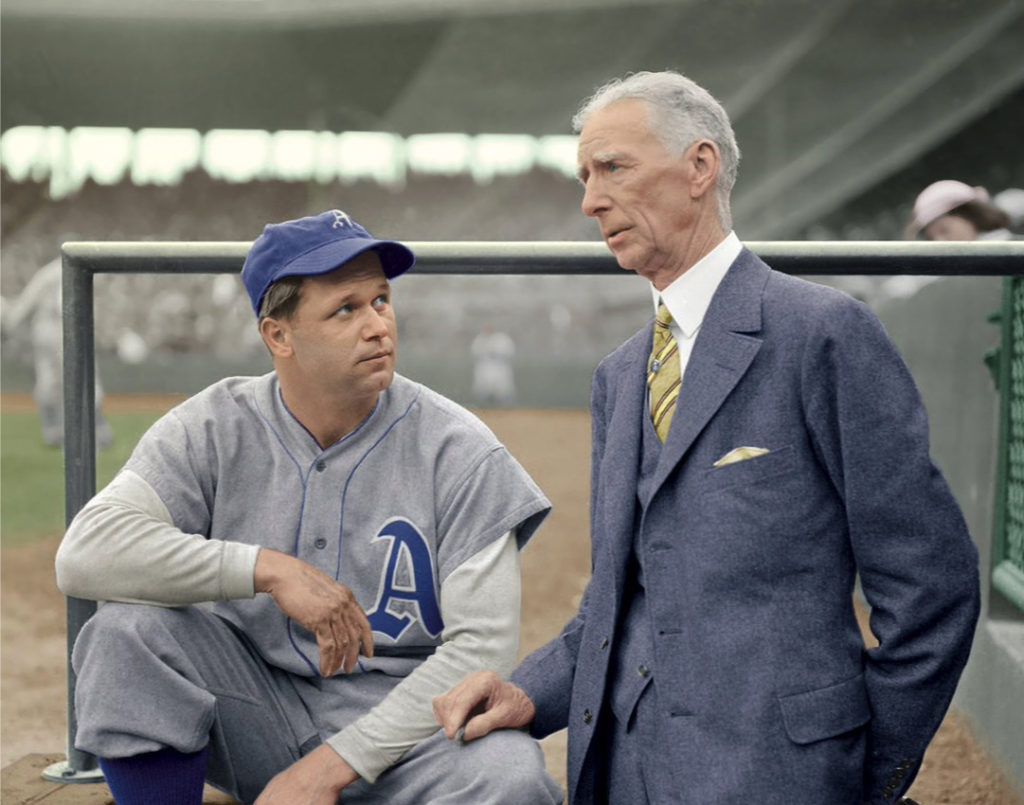
Jimmie Foxx (left) and Connie Mack

The A's went from 94-60 in 1932 to 79-72 in 1933, to 68-82 in 1934, to 58-91 in 1935. On December 10, 1935: 1st baseman Jimmie Foxx and pitcher Johnny Marcum were traded to the Red Sox for Gordon Rhodes, George Savino and $150,000. Foxx was the best righthanded slugger in the game, and would go to the Hall of Fame. Marcum was the Mackmen's best pitcher following the '33 fire sale, and Mack dumped him, anyway.

The A's never recovered, and the Mack family ended up selling the A's in 1954, to a buyer who moved them to Kansas City. They failed there as well, and Charlie Finley bought them in 1960, moving them to Oakland in 1968. After 5 straight AL Western Division titles, 1971-75, including 3 straight World Series wins, 1972-74, he broke them up, and the team crashed. New owner Walter Haas rebuilt them in the early 1980s, but the pitching collapsed, preventing a new dynasty. The A's rebuilt again, and won 3 straight Pennants, 1988-90, but after another Division title in 1992, were broken up again.

The pattern held: By 2000, the "Moneyball" regime built a team that reached the Playoffs 5 times in 7 years, but won no Pennants. They sold off, rebuilt, and made 3 straight Playoffs, 2012-14. They couldn't afford to keep it going, sold off, rebuilt, and made 3 straight Playoffs, 2018-20. They couldn't afford to keep it going, and sold off. In 2022, the A's lost 102 games, their most since the Finley fire sale bottomed out at 108 in 1979.

Now, it appears that the A's are moving to Las Vegas, probably for the 2025 season. If they do move, how long will it be before they win again? And, if so, how long before they have a 9th fire sale?

One thing is for sure: The A's are not moving back to Philadelphia, where the Phillies, having won the 2022 NL Pennant, are overwhelmingly popular. The city can certainly support one winning team, but not two teams. But, wherever they go, or if they stay, at some point, the A's will go back to their Philadelphia roots, and break it all down and start all over again.

*

Also on December 12, 1933, perhaps the ugliest game in National Hockey League history was played. But it led to one of the game's greatest moments.

The Boston Bruins were hosting the Toronto Maple Leafs at the Boston Garden. The Bruins still had most of the players who had led them to the 1929 Stanley Cup, including 2 of the greatest defensemen the game has ever known, Eddie Shore and Aubrey "Dit" Clapper. The Leafs, winners of the Cup in 1932, had another, Francis "King" Clancy.

This game, which the Leafs would win 4-1, was in the 2nd period. The Leafs had taken 2 quick penalties, and sent Clancy, defenseman George "Red" Horner, and right wing Irvine Wallace "Ace" Bailey out to defend the 5-on-3 Bruin power play.

Shore, who helped the Bruins win the Stanley Cup in 1929, rushed up the ice. Clancy, charitably listed at 5-foot-7 and 155 pounds, and a winner of the Cup with the Ottawa Senators in 1922, '23 and '27, and with the Leafs in '32, followed him, and checked him into the boards.

Shore got up, and, in his daze, he figured the closest Leaf player to him must have been the one who did it. He guessed wrong: The closest Leaf player to him was Bailey. Shore hit him from the side, and he landed head-first on the ice.
Horner skated over, knowing full well that it wasn't Bailey who had checked Shore, and yelled, "What did you do that for, Eddie?" Shore, not realizing the enormity of what he had done, gave Horner a big grin. What happened next is in dispute: The first source I saw on the story said that Horner hit Shore over the head with the blade of his stick. Another source said that Horner punched Shore, knocking him out in an instant.

Whatever the truth was, Shore was also out cold. The Boston crowd booed the hell out of Horner, who was already known as one of the dirtiest players in the game. But so was Shore, who, with his attitude, his receding hairline, and the fact that he was admired but not especially liked, was practically the Ty Cobb of hockey.

But it quickly became apparent that Bailey was hurt worse. Both men regained consciousness, and were carried off the ice together. Shore apologized. Bailey seemed to forgive him, saying, "It's all part of the game," and then passed out again.

Bailey was taken to Boston City Hospital. He was diagnosed with a fractured skull and an extradural clot on the brain. His father, listening to the game on the radio in Toronto, packed a gun, and immediately boarded a train for Boston, intending to kill Shore.

Leafs owner Conn Smythe found out about this, and talked to his general manager, Frank Selke. Selke had a friend working with the Boston Police, who met Bailey's father at the hotel, and talked him out of the murder plot.

Nevertheless, the BPD said they would charge Shore with manslaughter if Bailey died. Within 24 hours, he underwent 2 spinal taps to relieve intracranial pressure. There was at least one news report that Bailey had died. But, through several procedures, he came out of his coma after 10 days. He hung on, through Christmas and New Year's. In mid-January 1934, he was released from the hospital.

NHL President Frank Calder suspended Horner for 6 games, and Shore indefinitely. Once he was confident that Bailey was going to live, Calder set Shore's suspension at 16 games, or 1/3rd of the season at the time (48 games). Bailey never played again.

Walter Gilhooly, sports editor of the Ottawa Journal, recommended that a benefit game be played, to offset Bailey's loss of income. Calder agreed. The Leafs would host the game, and put their team out against a team made up of players from the rest of the League, 2 from each of the other 8 teams then in it.

The game was played at Maple Leaf Gardens on February 14, 1934. Here were the lineups:

* From the Toronto Maple Leafs, coached by Dick Irvin, once a great player, and the father of eventual Hall of Fame broadcaster Dick Irvin Jr.: Number 1, goaltender George Hainsworth, formerly a star with the Montreal Canadiens; 2, defenseman Red Horner; 3, defenseman Alex Levinsky; 4, defenseman Clarence "Hap" Day; 5, center Andy Blair; 7, defenseman King Clancy; 8, left wing Harold "Baldy" Cotton; 9, right wing Charlie "the Bomber" Conacher; 10, center Joe Primeau; 11, left wing Harvey "Busher" Jackson; 12, left wing Hector "Hec" Kilrea; 14, center Bill Thoms; 15, right wing Ken Doraty; 16, right wing Charlie Sands; 17, left wing Frank "Buzz" Boll.

NHL All-Stars, coached by Lester Patrick of the New York Rangers, also once a great player:

* From the Chicago Black Hawks: 1, goaltender Charlie Gardiner; and 7, defenseman Lionel Conacher, brother of Charlie.

* From the Boston Bruins: 2, defenseman Eddie Shore; and 9, center Nelson "Nels" Stewart, better known as a Montreal Maroon.

* From the Ottawa Senators: 3, right wing Frank Finnigan; and 17, defenseman Al Shields.

* From the Montreal Canadiens: 4, left wing Aurele Joliat; and 16, center Howie Morenz. Morenz, known as "the Babe Ruth of Hockey" -- like Ruth, he had several nicknames -- normally wore 7, but Lionel Conacher was considered the greatest all-around athlete in Canada, and had priority.

* From the Detroit Red Wings: 5, left wing Herbie Lewis; and 14, right wing Larry Aurie.

* From the New York Rangers: 6, defenseman Ivan "Ching" Johnson; and 15, right wing Bill Cook. Somebody decided that the Irish-Canadian Johnson looked Chinese, and nicknamed him Ching. He had seniority over Aurie, who also wore 6; but Lewis had seniority over Cook, who wore 5 with the Rangers.

* From the Montreal Maroons: 10, center Reginald "Hooley" Smith; and 18, right wing Jimmy Ward.

* From the New York Americans: 11, center Norman Himes; and 12, defenseman Norman "Red" Dutton.

Before the game, the other teams' players posed at center ice in their regular sweaters. Then they were given white jerseys with "NHL" on them. And the Leafs had special jerseys, too, with "ACE" on them.
The selection of Shore was controversial. When he skated up to receive his Number 2 jersey, the crowd of 14,074 was silent. Then he skated over to the Leafs bench, where Bailey was sitting in a suit, long coat and fedora. Shore offered his hand, and Bailey shook it. The crowd roared, and the players tapped their sticks on the ice, in what was already a long-established hockey salute.
The ceremony concluded with Smythe giving Bailey his Number 6 jersey, and announced that it would be retired.

Bailey dropped a puck for a ceremonial faceoff, and the game began. Charlie Conacher already had an injured knee, and left the game early. Other than that, there wasn't much hitting, and no penalties were called. Cotton and Jackson scored to put the Leafs up 2-0, before Stewart scored to make it 2-1 Leafs at the end of the 1st period.

Jackson scored again early in the 2nd period. Morenz and Finnigan scored to tie it up. But it was all Leafs the rest of the way: Day scored halfway through the 2nd, and Kilrea, Doraty and Blair scored in the 3rd. The Leafs won, beating the entire rest of the NHL, 7-3.

The game raised $20,909 for Bailey's family, about $426,000 in 2022 money. Bailey applied to the NHL to be a referee, but was turned down. Smythe hired him to work in the team's front office. He worked there, in one capacity or another, until a later owner, Harold Ballard, already perhaps the most hated man in the history of Canadian sports, fired him in 1986. Bailey lived until 1992.

A later player, Garnet Bailey, no relation, played in the NHL from 1969 to 1978, and was known as Ace Bailey. He was working as a scout for the Los Angeles Kings when he died in the destruction of United Airlines Flight 175 at the South Tower of the World Trade Center on September 11, 2001.

Shore continued to play with the Bruins through their 1939 Stanley Cup win. In 1940, he bought the minor-league Springfield Indians of Massachusetts, and remained their owner until his death in 1986. Both he and Bailey were elected to the Hockey Hall of Fame.

Bailey wanted the benefit game to become an annual event, for injured players. That didn't happen. But additional benefit games were held for the families of Morenz, who died of heart trouble in 1937, and the Canadiens' Albert "Babe" Siebert, who drowned in 1939. Both of those games were played at the Montreal Forum: The former was a combined Montreal team, Canadiens and Maroons, against the rest of the NHL. The Maroons folded in 1938, so it was just the Canadiens against the rest of the NHL in Siebert's benefit. Both times, the NHL All-Stars won. In 1947, the NHL finally established an annual All-Star Game.
Sunday, December 10, 2023

December 10, 1983: Farewell to Bradshaw, and to the NFL In New York City

December 10, 1983, 40 years ago: For the last time, so far, a National Football League game is played within the Five Boroughs of the City of New York. It does not go well for the home team.

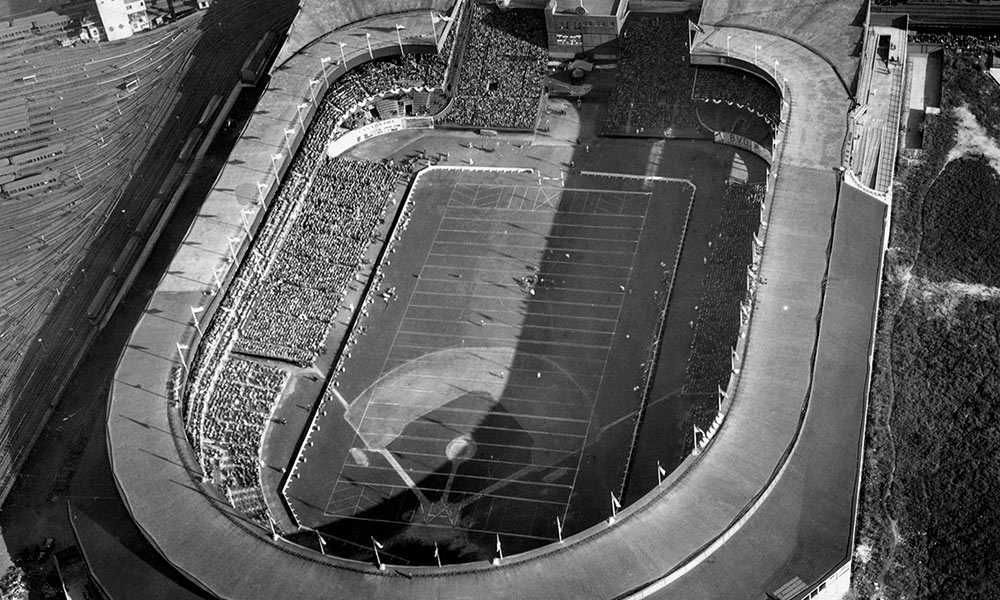
The New York Jets had been playing home games at Shea Stadium in Flushing Meadow-Corona Park in Queens since it opened in 1964. But the City's Department of Parks, which owned it (and also owned Yankee Stadium in the South Bronx), gave scheduling priority in September, the month when the NFL regular season begins, to the Major League Baseball team for whom it was really built, the New York Mets.

As a result, the Jets often had too many away games at the start of the season. Not only did this mean they often got off to bad starts, but it meant more home games later in the season. This was not as much of an advantage as you think: Shea was a wind tunnel, and could get very cold.

What's more, once the baseball season ended, the City tended to cut down on maintenance, leaving things messier, and various things to break down more often and stay broken down longer. Worst of all, from the Jets organization's point of view, lease at Shea was bad.

Team owner Leon Hess was an oil company boss, and could afford it. But that wasn't the point: The lease terms the Mets and the Yankees had with the City; the terms the New York Giants, the New Jersey Nets and the New Jersey Devils had with the State of New Jersey at the Meadowlands Sports Complex; and the terms the New York Islanders had with the County of Nassau at the Nassau Coliseum were all better. Throw in the fact that the Madison Square Garden Corporation owned the New York Knicks and the New York Rangers, so those teams had no lease at all at The Garden, and the Jets had easily the worst lease in the New York Tri-State Area.

So Hess made a deal with the New Jersey Sports and Exposition Authority, operator of the Meadowlands Complex. Starting in 1984, the Jets would play home games at Giants Stadium. This led to other problems, but it was still better than at Shea, not least because Giants Stadium then had 16,000 more seats than Shea did in its football configuration.

In this last game at Shea, the Jets hosted the Pittsburgh Steelers. Most of the stars of the Steeler teams that won 4 Super Bowls in 6 seasons from 1974 to 1979 had retired, or were now too far along in their careers, or too injured, to be significant contributors.

One such player was their quarterback, Terry Bradshaw. He had missed the 1st 14 weeks of the season with a bad elbow. But he said he was ready to come back for the season's last 2 games, and hopefully one more Playoff run.

The weather wasn't especially bad: 45 degrees at kickoff, with the wind at 12 miles per hour. A crowd of 53,996, about 6,000 short of a sellout, came out to watch the end of 2 eras, even though they only knew for sure about 1. At one point, the scoreboard operator had some fun, turning "N.Y. JETS" into "N.J. JETS."

At first, it looked like Bradshaw had turned back the clock. In the 1st quarter, he threw a 17-yard touchdown pass to Gregg Garrity. In the 2nd quarter, he threw a 10-yard touchdown pass to Calvin Sweeney. That made it 14-0 Steelers.

But on that pass to Sweeney, he felt something pop in his elbow. He had reaggravated the injury. He walked off the field, and never played another down.

Cliff Stoudt took over at quarterback, and put together 2 drives that ended in field goals by Gary Anderson, making it 20-0 Steelers at the half. He threw a touchdown pass to Bennie Cunningham in the 3rd quarter, and it was 27-0.

Finally, late in the 3rd quarter, Pat Ryan threw a 27-yard touchdown pass to Johnny "Lam" Jones, and the Jets were on the board. But in the 4th quarter, Stoudt threw to Sweeney, and it was another touchdown. Final score: Steelers 34, Jets 7.

Thousands of fans stormed the field, tore down the goalposts, ripped up the field, and took other souvenirs. The grounds crew had 4 months to get the field ready for the Mets.

The win clinched the AFC Central Division title and a Playoff berth for the Steelers, who went on to lose to the Los Angeles Raiders in the Divisional Round. The Jets finished 7-9, 5th and last in the AFC Eastern Division, out of the Playoffs.

In 2004, a stadium was proposed for the West Side of Manhattan, between Pennsylvania Plaza (including Penn Station and Madison Square Garden) and the Hudson River. It was to seat 85,000, and be a new home for the Yankees and the Jets, bringing the NFL back to New York City proper, the NFL back to Manhattan for the 1st time since the Giants left the Polo Grounds in 1955 (the Jets had played at the Polo Grounds from 1960 to 1963, in the AFL), and the Yankees back to Manhattan for the 1st time since they left the Polo Grounds in 1922.

It would have a retractable roof, allowing it to host Super Bowls, a college football bowl game called the Big Apple Bowl, and the NCAA Final Four. What's more, it would be the centerpiece of New York's bid to host the 2012 Olympics.

City officials, especially Mayor Mike Bloomberg, wanted it badly. Nobody else seemed to want it. The Yankees turned it down, preferring to build a new Yankee Stadium across 161st Street from the old one. The Mets didn't want it, either, preferring to build Citi Field next-door to Shea Stadium. The baseball teams seemed to want to keep their respective identities in The Bronx and Queens, respectively.

The real killer for the stadium was the realization of Woody Johnson, the pharmaceutical executive who had bought the Jets from Leon Hess' heirs, that the Jets would still be second-class citizens in this stadium. So he negotiated a deal with the Giants and the New Jersey Sports & Exposition Authority to build what became MetLife Stadium, next-door to Giants Stadium.

It would be owned 50-50 by the 2 New York NFL teams, and they would share the maintenance costs, and, not having to worry about whether a baseball team in the same stadium might make the Playoffs and mess up the schedule, would agree on open dates before each season started.

On June 6, 2005, the New York State Public Authorities Control Board voted West Side Stadium down. A month later, the International Olympic Committee voted on a site for the 2012 Olympics. New York finished 4th, behind London, Paris and Madrid, but ahead of Moscow. London ended up hosting the games, with the stadium eventually hosting soccer team West Ham United, and Major League Baseball's London Series, starting in 2019, with the Yankees playing the Boston Red Sox.

In 2010, the New Meadowlands Stadium, later renamed MetLife Stadium, opened. It pretty much guaranteed that no NFL game would be played within the City of New York for the majority of the 21st Century.

Saturday, December 9, 2023

Rudolph vs. A Christmas Story

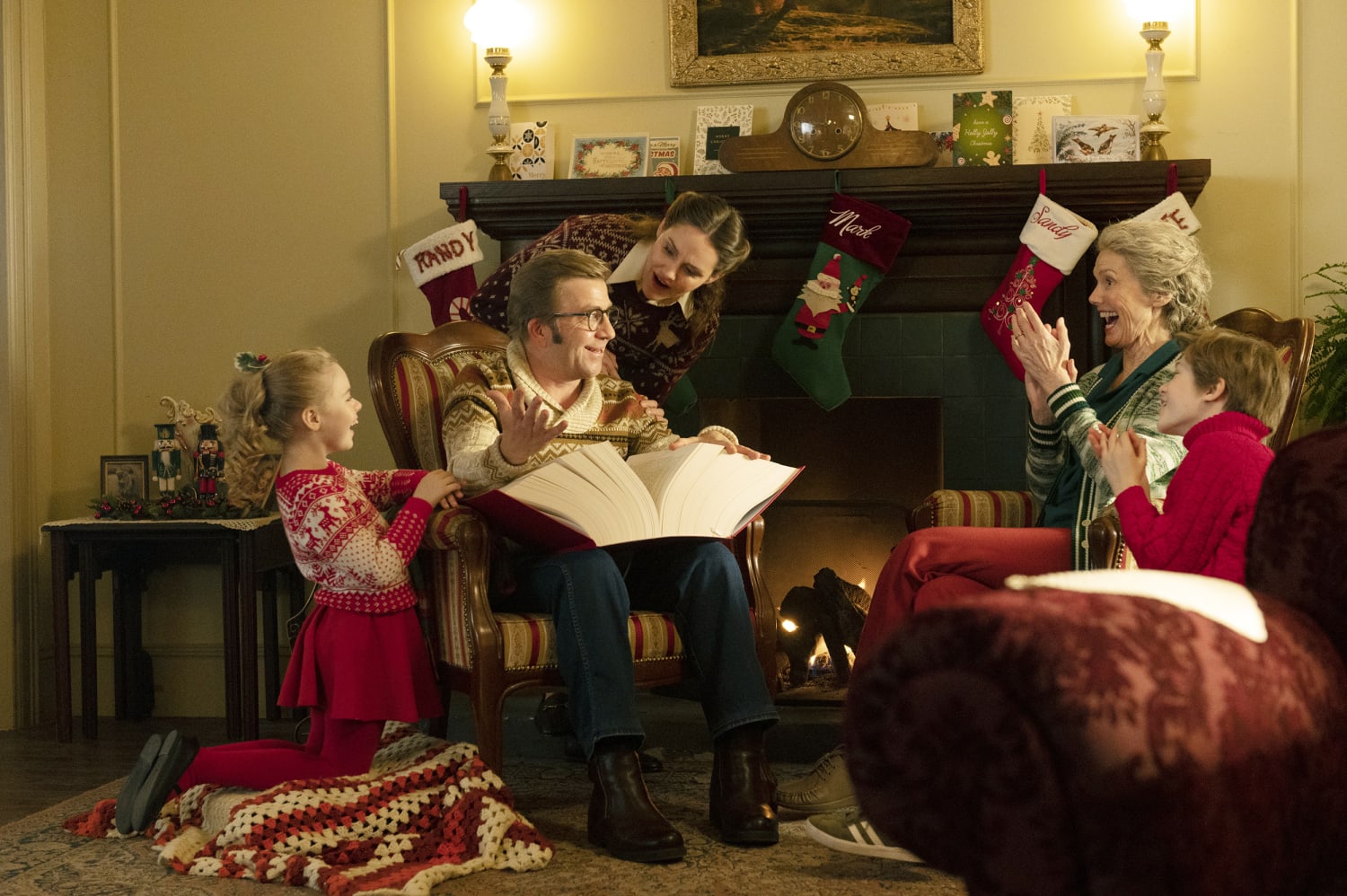
Peter Billingsley as adult Ralphie Parker in 1973,
from the 2022 film A Christmas Story Christmas,
the official sequel to the classic.

It just occurred to me: A Christmas Story is a better story than Rudolph the Red-Nosed Reindeer -- especially the TV special version.

Rudolph tries to teach the lesson that, "If you're different, it's okay, and you might even get to use your difference for good, and be praised for it."

Except that's not the lesson it teaches. Instead, it teaches, "If you're different, the only way you'll get accepted is if you catch the luckiest of lucky breaks. And, even then, they won't apologize for having ridiculed you for your difference."

Contrast that with what A Christmas Story teaches:

* Guns are bad.
* It's okay to wear glasses. Indeed, if Ralphie wasn't wearing glasses, he would have shot his eye out. In other words...
* In spite of often seeming to be the enemy, sometimes, adults know what they're talking about, and should be trusted.
* Pushing merchandise on a kid is bad. In other words...
* Sometimes, adults can't be trusted.
* Kitsch is okay up to a point, but don't be tacky. (The leg lamp was tacky.)
* The only thing a bully respects is power. If you don't stand up to him, and show him you're stronger, he'll never stop. This story takes place in 1940, so the Scut Farkas storyline is an allegory for Hitler and the Nazis. Note that he has two pals, perhaps standing in for Mussolini and Hirohito. That may not have been the intention, but, having thought of it, now, I can't unsee it. The remake, set in 1973, proves the point: Farkas realized that he was a jerk, and became a better person. So, he wasn't Hitler, he was Germany.
* Profanity is not necessarily bad. Sometimes, it's even justifiable.
* If you do something wrong, own up to it. Don't blame someone else.
* Control your dog(s).
* A Chinese restaurant will always be a good backup plan.
* And, however flawed a family member might be in your eyes, family is important, especially during holidays.

Thursday, December 7, 2023

Sometimes, They Listen

We've all said it, at various times in our lives. "Listen to me!" "Nobody ever listens to me!" "Why won't anybody listen to me?"

Those of us who are sports fans -- and, if you're reading this, you are one -- have said this of the management of a team we root for at some point: "They're not listening to me! They're not listening to any of their fans!"

Being a fan of the New York Yankees, especially in their down periods, is not easy. We get all the drawbacks of rooting for a historically successful team, and all the drawbacks of rooting for a team that fails to win, and few of the perks of either.

Nobody sympathizes with the Yankees when they lose: They sing, like Velma Kelly in the musical Chicago, "They had it comin', they had it comin', they only had themselves to blame... " They consider it payback for all the things our team has done to theirs, and comeuppance for our "cheating." Such things have been done on an individual basis, not as a result of a team culture that overlooks, or even encourages, it, as has been the case with our historic rivals, the Boston Red Sox, and our most recent bêtes noires, the Houston Astros.

But Yankee team management has appeared to act as though the feelings of its fans don't matter. We can see what the team needs. The biggest needs appear to be an outfielder who can stay healthy and can hit, and a lefthanded power hitter. If those two players can be one player, so much the better.

This time, team owner Hal Steinbrenner and general manager Brian Cashman appear to have listened. They pulled off a blockbuster trade:

* The Yankees receive: Outfielders Juan Soto and Trent Grisham.
* The San Diego Padres receive: Catcher Kyle Higashioka, and pitchers Michael King, Jhony Brito, Drew Thorpe and Randy Vásquez.

This comes just 1 day after a this trade: They sent pitchers Greg Weissert, Richard Fitts and Nicholas Judice to the Red Sox for outfielder Alex Verdugo.

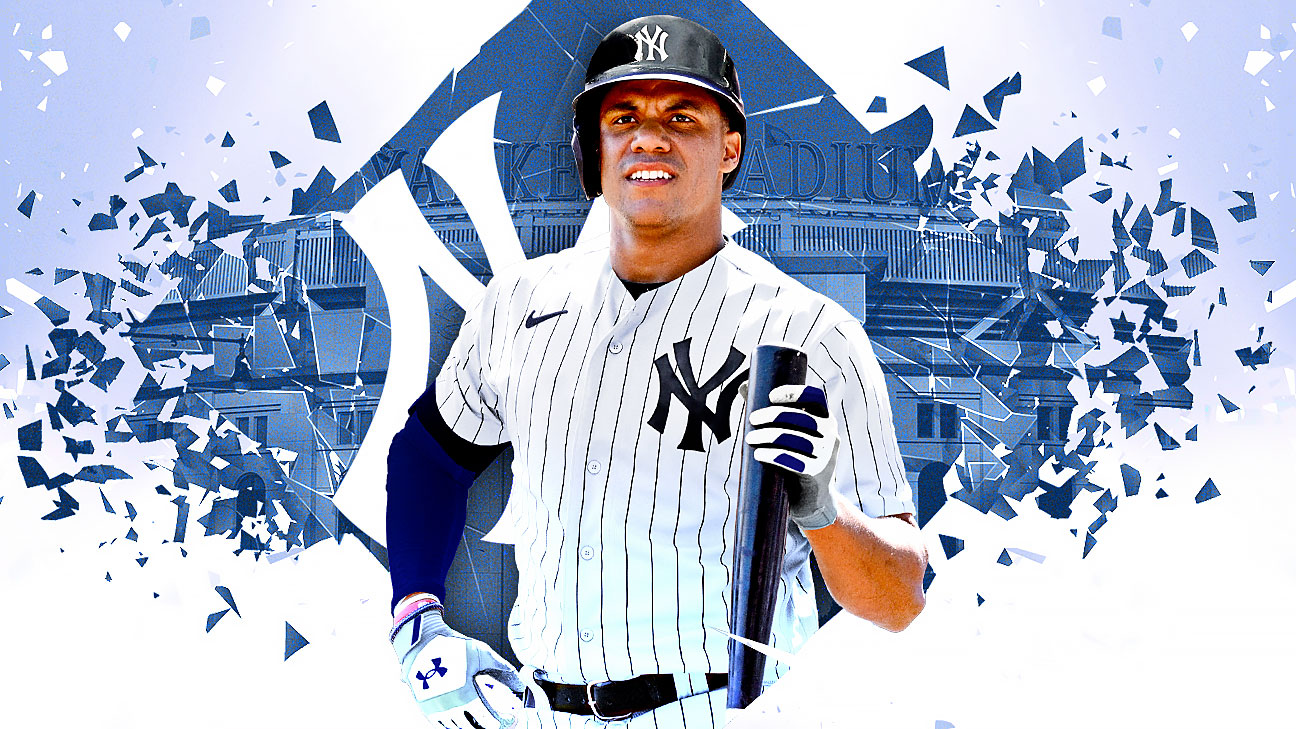
Soto just turned 25. He's already made 3 All-Star Games. He's won a batting title. He's hit 160 home runs. He's led the National League in walks 3 times. He helped the Washington Nationals win the 2019 World Series. And he helped the Padres reach the Playoffs in 2022.

Soto is young. He plays left field, a position at which the Yankees have lagged the last few years. He has power. He's lefthanded. He's going to be hitting in Yankee Stadium, with the short porch in right field. And he'll be providing protection in the lineup to Aaron Judge, with Giancarlo Stanton providing protection to him.

Because this is what the Yankee lineup will probably look like for 2024, even before Jasson Domínguez returns from injury, with batting Judge 2nd finally looking like it might be a good idea:

1. 26 1B DJ LeMahieu
2. 99 RF Aaron Judge
3. 22 LF Juan Soto
4. 27 DH Giancarlo Stanton
5. 25 2B Gleyber Torres
6. ?? CF Alex Verdugo
7. 11 SS Anthony Volpe
8. 39 C Jose Trevino
9. 95 3B Oswaldo Cabrera

(Bader wore Number 22 for the Yankees in 2023. Something tells me that Soto, who has never worn any other number since he reached the majors, will lead to Bader switching numbers. Verdugo wore 99 in Boston, and 61 and 27 in Los Angeles, and Jake Bauers is more likely to give up 61 than Judge 99 and Stanton 27.)

(UPDATE: I was unaware at the time that Bader's contract had run out, and that he was a free agent. The Yankees made no effort to re-sign him, and he signed with the Mets. This made 22 available, and Soto got it. I was also unaware that the Yankees had already traded Bauers to the Milwaukee Brewers, for Jace Avina and Brian Sanchez, neither of whom had yet debuted in the majors. Verdugo got Number 24, which had been worn by Willie Calhoun, whose contract ran out. He signed with the Los Angeles Angels.)

When "The Martian" returns...

1. 26 1B DJ LeMahieu
2. 99 RF Aaron Judge
3. 22 LF Juan Soto
4. 27 DH Giancarlo Stanton
5. 25 2B Gleyber Torres
6. 89 CF Jasson Domínguez
7. 11 SS Anthony Volpe
8. 39 C Jose Trevino
9. 95 3B Oswaldo Cabrera

This presumes that Domínguez will not get a lower number. He might not, since Judge seems satisfied with 99.

So, in the words of Balki Bartokomous (played by Bronson Pinchot) on the 1980s ABC sitcom Perfect Strangers, "Now, we are so happy, we do the dance of joy!" Right?

In the words of ESPN college football pundit Lee Corso, "Not so fast my friend!" We still have a hole in the lineup, at 3rd base. Cabrera is not yet a major-league quality player. Then again, he's 24, so he could still develop into one. And trading Higashioka, when Trevino is injury-prone, and Austin Wells is in much the same position as Cabrera, age-wise and experience-wise, means we may have a hole there as well. And we can't count on Cabrera and Wells becoming the kind of players we need.

All right, what about what we gave up? Higashioka, Thorpe and Vásquez didn't do much for the Yankees, and won't be missed much. But Brito, while inconsistent, showed suggestions of being capable of filling one of the holes in the rotation.

The real problem is giving up King: He may have been the team's best relief pitcher last season, until they experimented with making him a starter, and that seemed to work, too. You can't trade for a player like Soto without giving up something of substance. And there aren't many players like him, especially at such a young age.

This leads me to ask a question: Will the acquisition of Soto improve the Yankees' offense to the point where the pitchers won't have to win every game 1-0, 2-1 or 3-2? If so, that, alone, will make things better. The old saying, attributed to Connie Mack, is that pitching is 75 percent of baseball. But if getting a great hitter means the pitchers don't have to be as good as they were needed to be last year (and usually weren't), then, hooray for indirect effects.

The pitching? Luis Severino's contract was up, and he's signed with the Mets. He had 2 1/2 really good seasons with the Yankees, but too many injuries for us to count on him any further. And Domingo Germán, with all his talent and all his baggage, has also become a free agent. As of this writing, he has not signed with anyone. Theoretically, the Yankees could bring him back, but this is unlikely. (UPDATE: As of March 5, 2024, he was still unsigned.)

Between Severino, Germán, Brito, King and Vásquez, the Yankees no longer have the men who ranked 3rd, 4th, 6th, 8th and 9th in most starts made for them last season. So, in descending order by number of starts made, the rotation now consists of Gerrit Cole, Clarke Schmidt, Carlos Rodón, Nestor Cortés and... the man who ranked 10th in most starts made last season, and that was a tie, Ian Hamilton and Luke Weaver, with 3 each.

Between inconsistency and injuries, Cole was the only one who could really be counted on. If healthy, Cortés is a good 3rd starter, Rodón a good 4th, and Schmidt a serviceable 5th. And those are big ifs. And we don't have a reliable 2nd starter. That's one area where Hal and Cashman still aren't listening -- or, if they are, they haven't yet shown their hand, which could be for the best.

It seems unlikely that the Yankees will go for Shohei Ohtani: They now have the lefty power bat they need, Ohtani's not a catcher, he's not a 3rd baseman, and he's been shut down from pitching for 2024 due to his injury. Most likely, he was going to stay on the West Coast, anyway, which Japanese players tend to prefer, so, either he stays with the Los Angeles Angels, goes up Interstate 5 to play with the Los Angeles Dodgers, or goes way up I-5 to play with the Seattle Mariners. 

But with the Soto deal done and dusted, it now seems like the Yankees' big target is a big Japanese pitcher other than Ohtani: Yoshinobu Yamamoto. He's 25, righthanded, and has put together 3 straight spectacular seasons for the Orix Buffaloes, the Osaka-based team formerly known as the Orix BlueWave and the Hankyu Braves. (All Japanese teams are named for their owning corporations, not their cities. I have never liked that.) Cashman, not always the best judge of talent, has called him "really special."

The upside, as far as being able to get him? Previous Japanese pitchers have done well for the Yankees. The downside? Steve Cohen is putting his massive bankroll behind the Mets pursuing him, and they badly need pitching, too. If they get him, they will win the public relations battle -- at least, for 24 hours. But they need more than just one more really good pitcher: To borrow a word from Met history, they need a miracle. (UPDATE: Ohtani and Yamamoto both signed with the Dodgers.)

The Yankees don't need miracles. They need brains and guts. All too often, these last few years, I've been calling the players "gutless wonders." But Hal and Cashman have been the true gutless wonders, not caring about winning Pennants and World Series, only winning enough to make a profit.

They don't understand what Hal's father, George Steinbrenner, understood: If you win the World Series, you'll make more money than you'll do if you don't. George had some big flaws, and did some rotten things, but he always tried to win. Yankee Fans want their team to win titles. George listened. He didn't always correctly interpret what he heard. But he tried, and it worked this well: 11 Pennants, 7 World Series wins, and the growth of the Yankees into a worldwide brand. Thanks to international tours and movies, the Yankees were internationally known, but that's not the same thing as becoming a worldwide brand. George made them that, and Hal has expanded that.

But he hasn't expanded the winning. He's sold the winning, but he hasn't expanded it. We, the fans, have told him to do what it takes to expand the winning. Maybe, now, he's finally listening.

But I'm reminded of "Vincent," Don McLean's song about Vincent van Gogh: "They did not listen, they did not know how. Perhaps they'll listen now." van Gogh sold only one painting during his lifetime, and it's not one of the paintings he's known for now. People see his paintings in museums, and marvel at their beauty, but most don't think about "what you tried to say to me, and how you suffered for your sanity." McLean concluded: "They did not listen, they're not listening still. Perhaps they never will."

Baseball and art are occasionally linked. Maybe the Yankees are doing what they did in 1923, in 1936, in 1949, in 1977, in 1996, in 2009: Making a masterpiece.

Tuesday, December 5, 2023

December 5, 1933: Prohibition Ends

December 5, 1933, 90 years ago: The 21st Amendment to the Constitution of the United States is ratified, repealing the 18th Amendment, which had prohibited the production, sale, purchase, transport, and possession of alcoholic beverages in America. After 14 years, Prohibition has ended. 

America's self-appointed moral arbiters had gotten Prohibition ratified in the first place, in 1919 to take effect on January 16, 1920, because they saw alcohol as evil, but also because they saw it as something that those other people enjoy. You know, the immigrants. The foreigners. The Catholics.

As it turned out, Banning liquor and drinking was the worst thing they could have done. There was already organized crime in America, but Prohibition launched it headlong into American life, as Mob bosses like Al Capone were happy to supply the people with the drinks they craved.

With the Great Depression underway by late 1929, people needed a drink more than ever. And so, the desire to keep Prohibition began to fade away. Being "Dry" was a winning stance in the Presidential election of 1920 for Warren Harding, 1924 for Calvin Coolidge, and 1928 for Herbert Hoover.

In 1929 and 1930, the Philadelphia Athletics won the World Series. Both times, Hoover made the short train trip from Washington to Shibe Park in North Philadelphia, and threw out the ceremonial first ball before one of the games. In October 1929, he was cheered. In October 1930, he heard boos and chants of "We want beer! We want beer! We want beer!"

In 1932, the Depression meant that Hoover was going to lose to Franklin Delano Roosevelt, anyway, but being "Dry" hurt Hoover on top of that. FDR was "Wet," and that made him all the more popular.

Did making booze legal again stop organized crime? Far from it. The Mob, figuring that this day would eventually come, was prepared, and had already moved on to other things, like gambling, and illegal drugs.

By 1933, the 18th Amendment was so unpopular, that it became the first Amendment to the Constitution to be repealed. It remains the only one.

Friday, December 1, 2023

Top 10 TV Characters You Wouldn't Want to Invite to a Holiday Dinner (Even Though They're Good Guys)

I'm not counting guys who think they're good guys, but really aren't, like Archie Bunker or Ray Barone's parents.

Honorable Mention: The Squad from Barney Miller. Never mind that they're law-enforcement officials, and thus always on call, and might have to leave early -- which would eliminate everyone from Joe Friday to Theo Kojak to Andy Sipowicz to Maggie Bell.

Barney (played by Hal Linden) and Stanley Wojciehowicz (Max Gail) would probably be okay. But Phil Fish (Abe Vigoda) would hog the bathroom. Nick Yemana (Jack Soo) would volunteer to bring some food, but you wouldn't want to eat it. And he'd bring coffee, but you wouldn't want to drink it.

Arthur Dietrich (Steve Landesberg) would talk all night long, and you'd never know if he was telling the truth. (He was like Cliff on Cheers, except he was actually smart.) Ron Harris (Ron Glass) would criticize everything, including everyone's clothes. Seriously, can you imagine Harris holding court on Christmas sweaters? And Frank Luger would spend the whole night lamenting how the holidays ain't the way they used to be.

10. Commander Spock (Leonard Nimoy), Star Trek. Vulcans don't eat meat. He would have enough class to not make a nuisance of himself over the serving of turkey, or whatever other meat you might provide. But he would probably tell you that stuffing the bird, when simply serving the stuffing as a side dish, is a waste of work, and, therefore, highly illogical.

9. The Full House Guys. Danny Tanner (Bob Saget) would be a noodge. Joey Gladstone (Dave Coulier) would act immature, and have to be put at the kids' table. And Jesse Katsopolis (John Stamos) would sing Christmas carols in character as Elvis.

8. Lucy Ricardo (Lucille Ball), I Love Lucy. Not only are there enough episodes to explain why she shouldn't be allowed to help cook, meaning she'd have some explaining to do; but she'd spend the dinner whining about how her husband Ricky (Desi Arnaz) wouldn't let her be a part of his float in the Macy's Thanksgiving Day Parade.

7. Any number of NCIS Special Agents. More law-enforcement people who would always be on call. With his need to dominate every situation, Leroy Jethro Gibbs (Mark Harmon) would want to carve the bird. With his own knife. And how often does he sterilize "Ol' Rule Number 9"? And in what? You'd probably want Dr. Donald "Ducky" Mallard (rest in peace, David McCallum) to carve: He's an expert with using a knife on dead things.

Don't involve Ziva David (Cote de Pablo): It's not that she's Jewish, and would want to celebrate Hanukkah along with Christmas. It's that she'd probably want to kill the turkey herself, and her choice of weapon might render it inedible. Also, don't invite Tony DiNozzo (Michael Weatherly): He'd spend the whole night talking about holiday movies, and bragging about his prowess in everything from fighting crime to his love life.

6. The Cartwright Sons, Bonanza. Not so much Adam (Pernell Roberts), but definitely Hoss, (Dan Blocker), and Little Joe (Michael Landon). Not only would Hoss eat more than anyone else, but you'd constantly be telling Joe to take his feet off the table.

5. Jack Tripper (John Ritter), Three's Company. At first, he seems like the ideal fictional character to invite. After all, he's a chef, and a good one. But he'd probably carry the turkey out, and trip, and drop it.

4. The Honeymooners Guys. Ralph Kramden (Jackie Gleason) would eat everything he could, then be the first one to pass out on the sofa while watching football. And Ed Norton (Art Carney) would eat everything else, ask why nobody ever serves pizza at a holiday dinner, and then, annoyingly, never gain an ounce. But before that, he'd recommend a recipe he learned... while working in the sewer!

Also, don't let Ralph do any of the cooking. He once cooked for himself. Results: He turned the oven all the way up, so the chicken would cook faster, and he burned it; and he thought he didn't have enough rice, so he put the entire box in, and it boiled over.

3. Lieutenant Columbo (Peter Falk -- the character's first name was never mentioned), Columbo. Another cop for whom his job isn't the biggest issue. The real problem with Columbo is, you could put the full spread out in front of him, and everything would be good, and he would still say, "There's just one thing that bothers me. I can't get it out of my mind."

Which leads me to...

2. The Crane Brothers. Dr. Frasier Crane (Kelsey Grammer on Cheers and Frasier) and Dr. Niles Crane, (David Hyde Pierce on Frasier, once literally had this discussion:
Frasier: "What could be better than the perfect meal?"
Niles: "An otherwise perfect meal with one flaw, that we could talk about all night."

Which leads me to...

1. The Odd Couple. Felix Unger (Tony Randall) would criticize everything. But Oscar Madison (Jack Klugman) would be worse: He would put ketchup on everything, and spill most of it!