Friday, December 23, 2022

December 23, 1947: Bell Labs Invents the Transistor

The 1st working transistor. Yes, it has been preserved.

December 23, 1947, 75 years ago: Bell Telephone Laboratories, or Bell Labs for short, announces the invention of the transistor at its headquarters at Murray Hill, in the Township of Berkeley Heights, Union County, New Jersey.

According to Wikipedia:

transistor is a semiconductor device used to amplify or switch electrical signals and power. The transistor is one of the basic building blocks of modern electronics. It is composed of semiconductor material, usually with at least three terminals for connection to an electronic circuit. A voltage or current applied to one pair of the transistor's terminals controls the current through another pair of terminals. Because the controlled (output) power can be higher than the controlling (input) power, a transistor can amplify a signal. Some transistors are packaged individually, but many more are found embedded in integrated circuits...

The first working device to be built was a point-contact transistor invented in 1947 by American physicists John Bardeen and Walter Brattain while working under William Shockley at Bell Labs. The three shared the 1956 Nobel Prize in Physics for their achievement...

Transistors revolutionized the field of electronics, and paved the way for smaller and cheaper radios, calculators, and computers, among other things.

Left to right: John Bardeen, William Shockley, Walter Brattain

In 1963, Shockley went west, teaching at Stanford University between San Francisco and San Jose, leading to the region being known as Silicon Valley, for the element used in most transistors. Sadly, he also began to use his brilliant mind to pass off twisted theories of eugenics. He argued that black people were genetically inferior to white people, and that no amount of social assistance from government would make any difference.

In 1981, a science writer for the Atlanta Constitution compared Shockley's beliefs with those of the Nazis. Shockley sued for libel. He won the case, and was awarded one dollar in damages. In other words, the damage done was to his ego, for he had already damaged his own reputation with his statements. He died in 1989.

Nevertheless, we owe these 3 men a great deal, for all the technology that transistors have made possible -- including the transistor radios on which we've listened to sporting events and the Top 40 songs.

Bardeen won a 2nd Nobel Prize in 1972, with Leon Cooper and John R. Schrieffer, for a fundamental theory of conventional superconductivity. He lived until 1991. Brattain died in 1987.

The court-ordered breakup of AT&T led to the 2007 loss of Bell Labs to the company. The Labs are now run by a competitor, Japanese company Nokia.

Wednesday, December 21, 2022

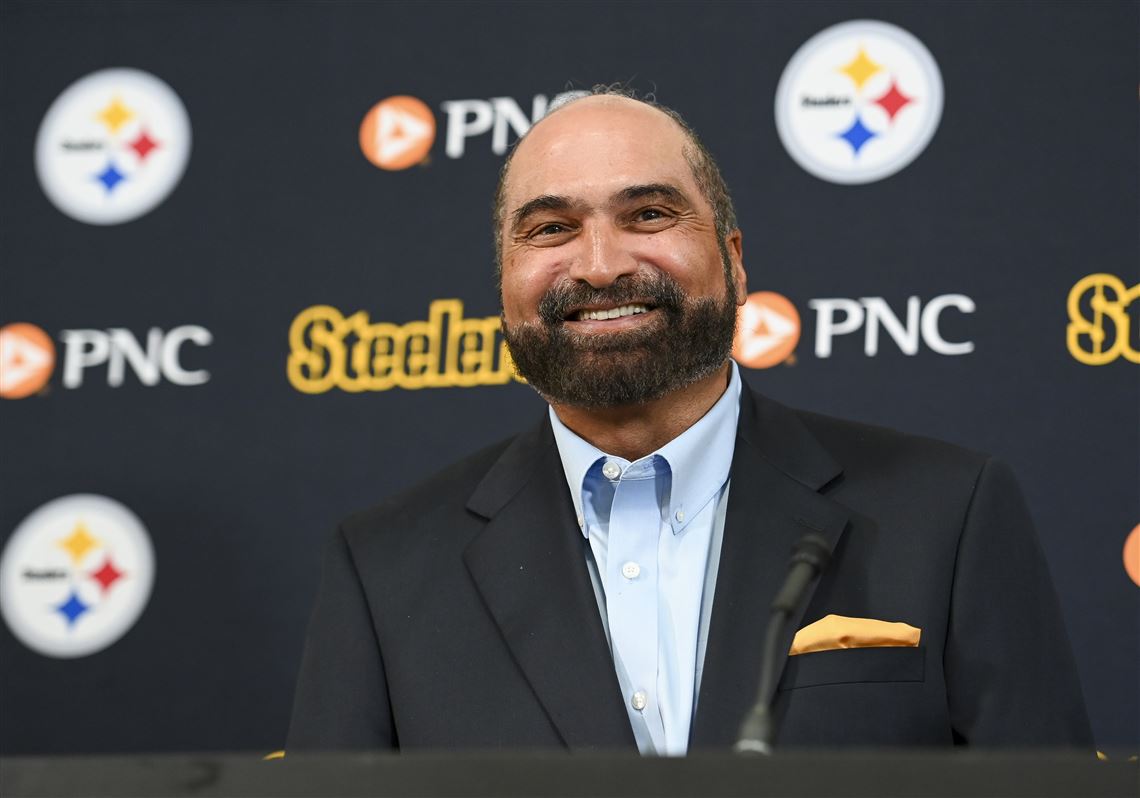
Franco Harris, 1950-2022

Timing is everything. Two days from now is the 50th Anniversary of the play that made a rookie running back into an all-time football legend. The following day, he was scheduled to be honored for the achievement. But now, he won't be available for the celebration.

Franco Harris -- no middle name -- was born on March 7, 1950, at Fort Dix, a U.S. Army base in Wrightstown, Burlington County, New Jersey. His father, Cad Harris, was a soldier stationed in Italy during World War II. While there, he met Gina Parenti, married her, and took her back to America. So, like baseball star Roy Campanella, from nearby North Philadelphia and playing in nearby Brooklyn, Franco was half-African-American, and half-Italian.

He grew up in Mount Holly, the seat of Burlington County, not far from Philadelphia, and went to Rancocas Valley Regional High School. Other RV graduates of note include former Philadelphia Eagles receiver Irving Fryar, current Eagles linebacker Shaun Bradley, and Barbara Park, author of the Junie B. Jones series of children's books.

Franco went to Pennsylvania State University, to play football for head coach Joe Paterno, as would his younger brother, safety Pete Harris. Franco was mainly a blocker for All-American running back Lydell Mitchell, but still managed to rush for 2,002 yards, catch 28 passes for 352 yards, and score 25 touchdowns.

*

He was taken with the 13th pick in the 1972 NFL Draft, by the Pittsburgh Steelers. They began play in 1933, with Art Rooney having founded them. But Art's love of football far exceeded his knowledge of it. In 1947, they finished in a 1st place tie in the NFL Eastern Division with the Philadelphia Eagles, and lost a playoff. To this day, the NFL does not recognize this as an official Playoff game.

Finally, after a 1-13 season in 1969, Art's sons, Dan and Art Jr., told dear old Dad to let them run the team from now on. And in just 3 seasons, they had built the team into AFC Central Division Champions. Coached by Chuck Noll, they had an offense led by quarterback Terry Bradshaw, and a defense known as the Steel Curtain, led by tackle "Mean" Joe Greene.

Harris was named NFL Offensive Rookie of the Year in 1972. That year, the owners of a local Italian restaurant, noting that he was half-black and half-Italian, came to Three Rivers Stadium in fatigues and battle helmets, calling themselves "Franco's Italian Army." Francisco Franco was still alive and in power in Spain when the fan club was founded, and while its  members were not openly political, neither did they seem to have a problem with a name associated with fascism.

Receiver Lynn Swan, who would be drafted 2 years later, and became Harris' roommate on roadtrips, said, "When he drafted Franco Harris, he gave the offense heart, he gave it discipline, he gave it desire, he gave it the ability to win a championship in Pittsburgh."

Al Davis ran the Oakland Raiders, and had built them into AFL Champions in 1967. But they lost Super Bowl II, then lost the 1968 AFC Championship Game to the New York Jets. By 1972, they were dominating the AFC Western Division, but hadn't won a Super Bowl yet.

And so, on Saturday afternoon, December 23, 1972, Davis' Silver and Black marched into Three Rivers Stadium in Pittsburgh to face the Rooneys' Black and Gold. For a game with such an epic ending, it was not good theater most of the way. The 1st half ended scoreless. Roy Gerela kicked a field goal early in the 2nd half, but it remained 3-0 at the end of the 3rd quarter. Gerela kicked another field goal early in the 4th quarter, but the Steelers couldn't put the ball in the end zone, so it remained 6-0 as the clock wound down.

Daryle Lamonica, known as the Mad Bomber, struggled in the 1st half, and coach John Madden replaced him with Ken Stabler, the Alabama lefthander known as the Snake. With 1:17 to go, Stabler ran for 30 yards to get into the end zone. George Blanda, the Raiders' ageless backup quarterback and regular kicker, nailed the extra point, and the Raiders had a 7-6 lead.

The Steelers did not yet have a reputation as the kind of team that could win this kind of game. And Pittsburgh fans, who had seen the Pirates win the World Series the year before, were not used to glory from their football team. The 50,327 fans inside Three Rivers figured the game was lost.

Among them was Art Rooney. "The Chief" left his suite and got into an elevator, to go down to the locker room to congratulate the Raiders and console his team. So he never saw the play that changed the course of his team's history.

Bradshaw, who had been the top pick in the 1970 NFL Draft, had a difficult relationship, not just with Noll, but with the Pittsburgh fans. He hadn't yet lived up to their hopes. Now, he had gotten the Steelers to their own 40 yard line. But it was 4th and 10, and there were only 22 seconds left, and the Steelers had no time-outs left.

Noll's intended play was "66 Circle Option," intended for Barry Pearson, a rookie who had been on the Steelers' bench all season long without being sent into a game. Now, he was -- his 1st professional play.

But just as no battle plan survives the first shot, Noll's play didn't last. Raiders Tony Cline and Horace Jones bore down on Bradshaw, and "the Blonde Bomber" from Louisiana had to scramble. He just got a throw off before getting clobbered by Cline and knocked to Three Rivers' artificial turf.

The ball got to the Raiders' 33-yard line, and it looked like Steeler running back John "Frenchy" Fuqua was going to catch it. But Raider safety Jack Tatum did what he so often did to potential receivers: He leveled Fuqua.

Big mistake: As with so many dirty soccer players, Tatum should have gone for the ball, not the opposing player. He could have intercepted it. Instead, the ball bounced off him, and went backwards to the Raider 43. And it almost hit the ground.

And for 50 years, the Raiders and their fans have insisted that the ball hit Fuqua first, which, under the rules of the time, would have made every Pittsburgh player an ineligible receiver after that. And they have insisted that the ball did hit the ground.

It didn't. Harris saved it, and took off down the left sideline, and scored. It was 3:29 PM -- don't bet any Steeler fan old enough to remember.

Steeler radio announcer Jack Fleming said, with only slight exaggeration, "From out of nowhere came Franco Harris, riding a white stallion, heading up Franco's Italian Army, galloping into the sunset!"

Like Rooney, Bradshaw didn't see the play. He remembered being down on the ground, and hearing a tremendous roar going up: "I knew that this was a good sound. This was the sound of something good happening."

Fans came pouring onto the field, and had to be cleared, because there was still an extra point to kick, which Gerela did, and 5 seconds to play. The Raiders could do nothing with the ensuing kickoff, and the Steelers had won, 13-7.

Those '72 Raiders still insist they were robbed. It would take until the 1976 season for them to win a Super Bowl. But the Steelers didn't win immediately, either: This was the season in which the Miami Dolphins went undefeated. Eight days later, they came into Three Rivers -- at the time, home-field advantage for Conference Championships was on a rotating basis, not decided by record -- and beat the Steelers, on their way to winning Super Bowl VII.

But the catch became known as "The Immaculate Reception." What Art Rooney, a devout Irish Catholic, thought about that, only he knew. Others, noting that it was 2 days to Christmas, called it a Christmas Miracle.

Along with Alan Ameche's overtime plunge to win the 1958 NFL Championship Game for the Baltimore Colts, Bart Starr's quarterback sneak to win the 1967 Championship Game (the Ice Bowl), and Dwight Clark's "The Catch" from Joe Montana to win the 1981 NFC Championship Game, it ranks as perhaps the greatest play in NFL history.

The Steelers would win Super Bowls IX, X, XIII and XIV. Harris was named the Most Valuable Player for IX, Swann for X, and Bradshaw for XIII and XIV. The Raiders would win Super Bowls XI, XV and XVIII.

"During that era, each player brought their own little piece with them to make that wonderful decade happen," Harris said during his Hall of Fame speech in 1990. "Each player had their strengths and weaknesses, each their own thinking, each their own method, just each, each had their own. But then it was amazing, it all came together, and it stayed together to forge the greatest team of all times."

*

Harris was named to the Pro Bowl in each of his 1st 9 seasons. He played for the Steelers until 1983, with 1 more season with the Seattle Seahawks. He finished his career with 12,120 rushing yards, 2nd all-time behind Jim Brown at that point. He also caught 307 passes for 2,287 yards, and retired with exactly 100 touchdowns.

He was named the NFL's Man of the Year for the 1976 season, and was elected to the Pro Football Hall of Fame, the NFL's 1970s All-Decade Team, and the Steelers' 75th Anniversary All-Time Team and their Hall of Honor. In 1999, The Sporting News ranked him 83rd on their list of the 100 Greatest Football Players. In 2006, a statue of him catching the Immaculate Reception was unveiled on the concourse of Pittsburgh International Airport. In 2011, he was elected to the New Jersey Hall of Fame -- that's for all citizens of the State, not just great athletes. He is easily New Jersey's greatest football player ever.

Harris and former Penn State teammate Lydell Mitchell founded a food-service company, to produce nutritious school meals. They used that company to buy the Parks Sausage Company, the 1st African-American-owned business to go public. In 2008, he served as one of Pennsylvania's Presidential Electors for Barack Obama.
The Steelers had announced that, this coming Sunday, with the Steelers scheduled to play the now-Las Vegas Raiders on NBC Sunday Night Football on Christmas Eve, 1 day after the 50th Anniversary of the Immaculate Reception, they were going to retire Franco Harris' Number 32.

But now, he won't be able to take part in the ceremony. He died today, December 21, 2022, in a statement issued by his son Dok. He was 72. He was also survived by his wife, the former Dana Dokmanovich.

Monday, December 19, 2022

World Cup Roundup

Top 10 observations about the 2022 World Cup -- from the obvious. to the hottest of all hot takes:

1. The tournament never should have been given to Qatar. We all know that this country -- bigoted toward women, Jews and gays -- never should have been considered, let alone given the tournament. But the country's royal family guaranteed FIFA, the governing body of world soccer, its most profitable World Cup ever, and got it. As with Russia 2018, it was a bribe.

Throw in the moving of the tournament from late Spring and early Summer to late Autumn, due to the intense Middle East heat, the fact that the construction of these stadiums was a reminder of the plight of migrant labor, and even a reminder that there are places in this world where slavery still exists, and it was, clearly, the worst World Cup ever, from an administrative standpoint, surpassing the ones hosted by fascist governments in Italy in 1934, Argentina in 1978, and Russia.

The time zone differences were a minor issues. Certainly, it was more workable than in 2002, when Japan and South Korea teamed to hold it. If Australia -- with or without New Zealand stepping in -- want to host it in 2030 or beyond, that will have to be dealt with. The tournament has to be convenient for the hosts, but the rest of the world's needs also need to be taken into consideration. (At least Australia would have the infrastructure already in place.)

2. A World Cup for which Italy does not qualify is not a true World Cup. At least it was better than in 2018, when Italy, the Netherlands, and the U.S. did not qualify.

Let's face it: Given that, in 2026, there will be an expansion from 32 to 48 teams, there's going to be some teams that don't really belong. So let's lessen that issue by guaranteeing "legacy teams," teams that have won World Cups before. That total now stands at: Brazil 5, Italy 4, Germany 4, Argentina 3, Uruguay 2, France 2, England 1, Spain 1.

3. A Group Stage defeat doesn't necessarily mean disaster. So Argentina were upset by Saudi Arabia. It ended up not mattering, any more than did the most embarrassing Group Stage loss ever, West Germany falling to political (if not footballing) arch-rival East German on West German soil in 1974.

4. The U.S.-England match. With the decline of high school football on Thanksgiving, and the NFL having mostly bumped the college game off of Turkey Day, having the American team's most-hypable game of the Group Stage on the day after was reminiscent of old college football rivalries often played on Thanksgiving Weekend, and sometimes on the Day itself: Alabama vs. Auburn, Texas vs. Texas A&M, Nebraska vs. Oklahoma, Michigan vs. Ohio State, Notre Dame vs. USC. (That order of listing them was a choice: The 1st 3 of those have been played on T-Day in recent years, but the latter 2 are almost always on the Saturday after.)

The English love to remind the Americans of certain things. "It's called 'football,' not 'soccer'": There was even a commercial for Doritos chips (not "crisps") where David Beckham (his hair is still ridiculous, but at least he still ha it) and Peyton Manning discuss the difference, with assistance from U.S. soccer legends, most of them women like Mia Hamm and Carli Lloyd.

The English love to remind us that they invented the sport. They did not. They invented its organization, but even that was a co-invention with the Scots. They love to remind us that they've won the World Cup, and we haven't. Well, we've won 4 World Cups. When they hear that, They say the women's game doesn't count. Then that means that their women's team, which has been more successful recently than their men's team, gets insulted.

Let's be honest: England claiming superiority because they've won 1 of the 17 World Cups, and that 1 being 56 years ago, is like Toronto Maple Leafs fans claiming 13 Stanley Cups, when they haven't even made the Finals since 1967. At least the New York Yankees have won 7 of their 27 World Series since England '66 and Toronto '67, and that's still the most since then, as well as overall.

And when the game was played, the U.S. did not play well, and England controlled the game most of the way. And still, it ended 0-0. It had all the markings of a Premier League game where Arsenal dominate but still can't find a win. England were better, but couldn't prove it on the scoreboard.

It was better for England than the 2010 match in South Africa, which became a 1-1 draw thanks to Rob Green's "Hand of Clod" mishandling of a Clint Dempsey shot. That was reminiscent of an Arsenal failure to win because of a fluke goal that never should have happened. For the vast majority of English fans, who like to mock Arsenal, the shoe seems to go on the other foot every 4 years.

Throw in the biggest upset in World Cup history, America's 1950 win over England in Brazil, and the record is as follows: American wins 1, draws 2, England wins exactly none. For all their braggadocio, England have never beaten America at the World Cup.

5. The American performance. The draw with England was encouraging, but it followed a draw with England's neighbors, Wales. That was depressing: We led 1-0 after 80 minutes, but indiscipline took over, and we gave away a stupid penalty.

This put us in a position where we had to beat Iran, which had the world supporting them as their people finally seem to have taken the initiative in challenging their evil religious-fanatic government. We won, but it was a very sluggish 1-0, and we felt like the least deserving team in the last 16.

6. The big difference. And then we had to play the Netherlands, one of the teams that always seems to grab the world's attention at the World Cup. Haji Wright's goal to pull us within 2-1 was quickly canceled out, and the Dutch won, 3-1.

After not making the tournament at all last time, making the knockout stage this time is a success. But the Dutch showed us that the difference between Top 16 and Top 8 is big. Manager Gregg Berhalter earned the right to be the man to bridge that difference, but, bridge it, he must, if we are to go any further than this.

To go with superstar midfielder Christian Pulisic, we need an out-and-out scorer, and we need stronger defenders. And it's not like "club football," where we can just go out and buy them. They have to be trained. Maybe Berhalter can bring Arsène Wenger in as a consultant, to help them develop "the quality" and "the mental strength." Because, for now, as to either one, we can truthfully say, "I did not see it."

One person who will never get to see is Grant Wahl, a journalist who did as much as anyone in the MLS era to spread knowledge of soccer through America. The 49-year-old native of the Kansas side of the Kansas City area, a Princeton graduate, wrote the 2002 Sports Illustrated cover story that introduced the world to a high school basketball star named LeBron James, and continued to write for SI on the subject of soccer, for which Fox Sports hired him as a studio analyst.
He was in the press box watching the Quarterfinal between Argentina and the Netherlands, which Argentina won on penalties (of course: When it comes to penalties, the Dutch are famously as useless as the English), when he collapsed in his seat. Despite his detainment by Qatari authorities after flouting their rules against political statements, and subsequent death threats, it was quickly determined that his claims of feeling unwell were due to an aortic aneurysm, which ruptured.

7. England choked again. After showing Senegal the difference between Teams 1 through 8 and Teams 9 through 16, the Three Lions had to face France, and were lucky to be level going into the 78th minute, when former Arsenal star Olivier Giroud scored for France.

In the 84th minute, England were awarded a penalty, and, of course it would be Harry Kane, golden boy for England and Tottenham Hotspur, who took it. But his former Tottenham teammate, Hugo Lloris, stopped him. After his giveaway performance in Russia 2018, and now this, any discussion of whether Kane, a known diver for penalties, is "world class" needs to end.

Of course, Kane wasn't the only choker. England haven't had a good defense in 30 years, and, once again, their attack tightened up after falling behind. For England, at least historically, the difference between Teams 1 through 4 and Teams 5 through 8 might be bigger than the U.S.'s difference between Teams 1 through 8 and Teams 9 through 16.

8. The Magic of Morocco. No team from the African continent, and no team from an Arab country, had ever reached the World Cup Semifinal. The only Muslim-majority country to have done so was Turkey in 2002. But Morocco won Group F. Then, avenging their geopolitical defeat of the Middle Ages, they beat Spain on penalties after a 0-0 draw, with goalkeeper Yassine Bounou stopping 3 penalties. "Bono" plays his club soccer in Spain, for Sevilla.

They faced Portugal in the Quarterfinal. Portugal were expected to play hard in what was to be the last World Cup for Cristiano Ronaldo. But Morocco held them, and Bounou's Sevilla teammate Youssef En-Nesyri scored in the 42nd minute, and Morocco were through to the Semifinal.

Which meant that they would face their former colonial overlords, France, the defending Champions. The dream ended quickly, as France scored in the 5th minute, and Morocco never looked like scoring. France added a goal to make the final 2-0. As Croatia had done in the previous tournament by reaching the Final and holding their own in it, Morocco had won the world's hearts, but someone else would win the World Cup.

9. The Mbappé hat trick. Only once before had a player scored 3 goals -- known among hockey fans as a "hat trick," and the term has drifted to soccer -- in a World Cup Final. That was Geoff Hurst of England in 1966, and the 2nd of those goals remains controversial.

Kylian Mbappé was a big reason why France won in 2018. He stood to be an even bigger reason why France won in 2022, had they done so. For the 1st 80 minutes of the game, France did practically nothing in attack. They couldn't: Argentina just controlled the ball the whole way. There was no doubt in my mind that Argentina were the better team.

That said, it was a very rough game. Argentina have been accused of dirty tactics by the world's English-language media since their performance in England in 1966, and this game was no exception. Eventually, the French began replying with their own roughhousing.

I watched the game at a bar in Midtown Manhattan, supporting France but surrounded by Argentina fans. A few of them had been in America long enough to get the joke, adapted from comedian Rodney Dangerfield's line about going to a prizefight: "I went to the World Cup, and a hockey game broke out!"

Argentina's 1st goal was a penalty given after an obvious dive by Ángel Di María. (No surprise there: He's spent most of his career at teams where cheating is the norm: Real Madrid, Manchester United, and he's now with Juventus.) Of course, the penalty was taken by their premier player, Lionel Messi.

It would have been hard to say Argentina cheated their way to victory, though, had the subsequent score of 2-0 held up: In the 36th minute, they had a strong setup, leading to a very nice goal by Di María, totally legit. "That's ballgame," I said at the time. "No way France come back from that."

And, until the 80th minute, it looked like I was right. But Randal Kolo Mouani was brought down in the box. That gave France a penalty and a lifeline. Mbappé took it and scored, and France had a chance. Just 1 minute later, Mbappé scored brilliantly from open play. It was 2-2. Argentina had blown a game they had controlled for it 1st 87 percent. As the old English soccer saying goes, "Two-nil, and they fucked it up!"

The last 10 minutes were nervy. And, as usual, given the heat and the injury stoppages, there were 8 minutes of stoppage time, but neither team could find a 3rd goal. In the 108th minute, Messi fired. The ball crossed the goal line, but was kicked out by a France player before it could reach the back of the next. VAR (Video-Aided Refereeing) showed that the goal was complete, and it was properly awarded. Argentina, again, had it won.

Except, again, they didn't. A handball in the box by Gonzalo Montiel meant another penalty for France. Mbappé took it, and it was 3-3. After 123 minutes, referee Szymon Marciniak of Poland blew his whistle, and the game went to penalties.
France won the toss, and elected to kick first, against Argentina goalkeeper Emiliano Martínez, of Aston Villa and, formerly, of Arsenal. There was no question that Mbappé was going to take the 1st one for them, even if it wouldn't be credited as a record-breaking 4th goal in a Final. He made it. Likewise, there was no question that the 1st Argentine to shoot toward France's goalie and Captain, Lloris, would be Messi. He made it.

But in the 2nd Round, Martínez stopped Kingsley Coman. Paulo Dybala made it 2-1 Argentina. And then, after having a great tournament for France, Real Madrid's Aurélien Tchouaméni missed the net completely, shooting wide left. Leandro Parades made it 3-1.Kolo Muani converted to keep France going, but Montiel, a right back for Sevilla in the club game, converted to give Argentina the 4-2 win, and their 3rd World Cup.

And to give Lionel Messi the World Cup that had been denied him, as he'd been with Argentina as they lost to Germany in penalties at the 2006 Quarterfinals; were knocked out by Germany in regular time at the 2010 Quarterfinals; lost to German yet again, in extra time, in the 2014 Final; and were knocked out by France in the Round of 16 in 2018. Finally, the "GOAT" (Greatest Of All Time) had removed the only doubt as to that title, by winning the biggest trophy of all, the one that had, until now, eluded him.

10. Lionel Messi Is NOT the Greatest Of All Time. Pelé -- whose illness prevented his attendance at the World Cup for the 1st time since 1954 -- won 3 World Cups, was definitively the best player in the world longer than the debate between Messi and Cristiano Ronaldo has raged, and, unlike Messi and Cristiano, never had to cheat, or to benefit from his teammates' cheating.

The Messi or "Ronaldo" debate -- as a far of the earlier Brazilian player named Ronaldo, I refuse to call Cristiano that -- is over. The debate as to whether Messi has succeeded Diego Maradona as Argentina's greatest icon -- sports or otherwise -- is well on. But there is no debate about the greatest soccer player ever. It's Pelé. O Rei is still The King.

Wednesday, December 14, 2022

December 14, 2012: The Sandy Hook Massacre

December 14, 2012, 10 years ago: A mentally ill 20-year-old man named Adam Lanza shoots and kills his mother in Newtown, Connecticut. He then goes to Sandy Hook Elementary School, and shoots 20 children and 6 adult staff members. As the police close in, he kills himself.

Newtown, then as now a town of about 27,000 people, was home to rubber innovator Charles Goodyear, film director Elia Kazan, civil rights lawyer Burke Marshall, decathlete-turned-businessman-turned-businesswoman Bruce-turned-Caitlin Jenner, Blossom actress Jenna von Oÿ, and Suzanne Collins, author of the Hunger Games books. The school is about 76 miles northeast of Times Square. Violent crime was rare there: In the 10 years before the Sandy Hook Massacre, there had been only 1 homicide in the town.

At the time, I had a job connected to social media, and it forced me to watch television, going back and forth between the news channels. It was a Friday, when I was allowed to go home at 3:00. This time, I couldn't. I just couldn't. I just sat there, watching the coverage, until I realized how dark it was, and how I hated getting home on the bus, and left at around 7:00.

It sounds like the story you hear about people, now old, glued to their TV sets after President John F. Kennedy was assassinated in 1963. I had already joined the entire country in doing so after the explosion of the Space Shuttle Challenger in 1986 (not after the explosion of Columbia in 2003, though); during the O.J. Simpson bronco chase in 1994; after the terrorist attacks on September 11, 2001; and after the hit on Osama bin Laden the year before.

Lanza's main weapon was a Bushmaster XM-15, a model of AR-15 automatic rifle. This was hardly the only recent mass shooting in which it had been used, so now, calls came for its banning, including from the President of the United States, Barack Obama. But the Republican Party controlled Congress, and absolutely no action was taken.

And so, the war on guns was over, and the guns won. The American people had just re-elected Obama the month before, but had re-elected the Republican Congress as well. It was a message: "This is America. Here, we love our guns more than we love our children."

What's more, conspiracy theories blew up, some suggesting that the massacre never happened. And National Rifle Association spokesman Wayne LaPierre suggesting we should have more guns, not fewer. Leading to a rare agreement in front page headlines of the Daily News and the New York Post.
There had been genuine wackos in American politics before, during the Red Scare of the late 1940s and early 1950s, to the John Birch Society in the 1960s, to the conspiracy flakes gunning for President Bill Clinton in the 1990s, to the Tea Party fanatics that had already been established in 2009, Obama's 1st year in office. But this now seems, in hindsight, like the launch of the QAnon Era, where such dishonesty, stupidity and ignorance began to be shamelessly brought into the mainstream.

And the mass shootings have never stopped, including in schools. Donald Trump did nothing about it while he occupied the White House. Joe Biden has tried, and did get Congress to pass a minor improvement on background checks.

There appears to be no connection between the school being named "Sandy Hook" and an outcropping of land on the Atlantic Coast of Monmouth County, New Jersey having the same name.

Those children would now be juniors in high school.

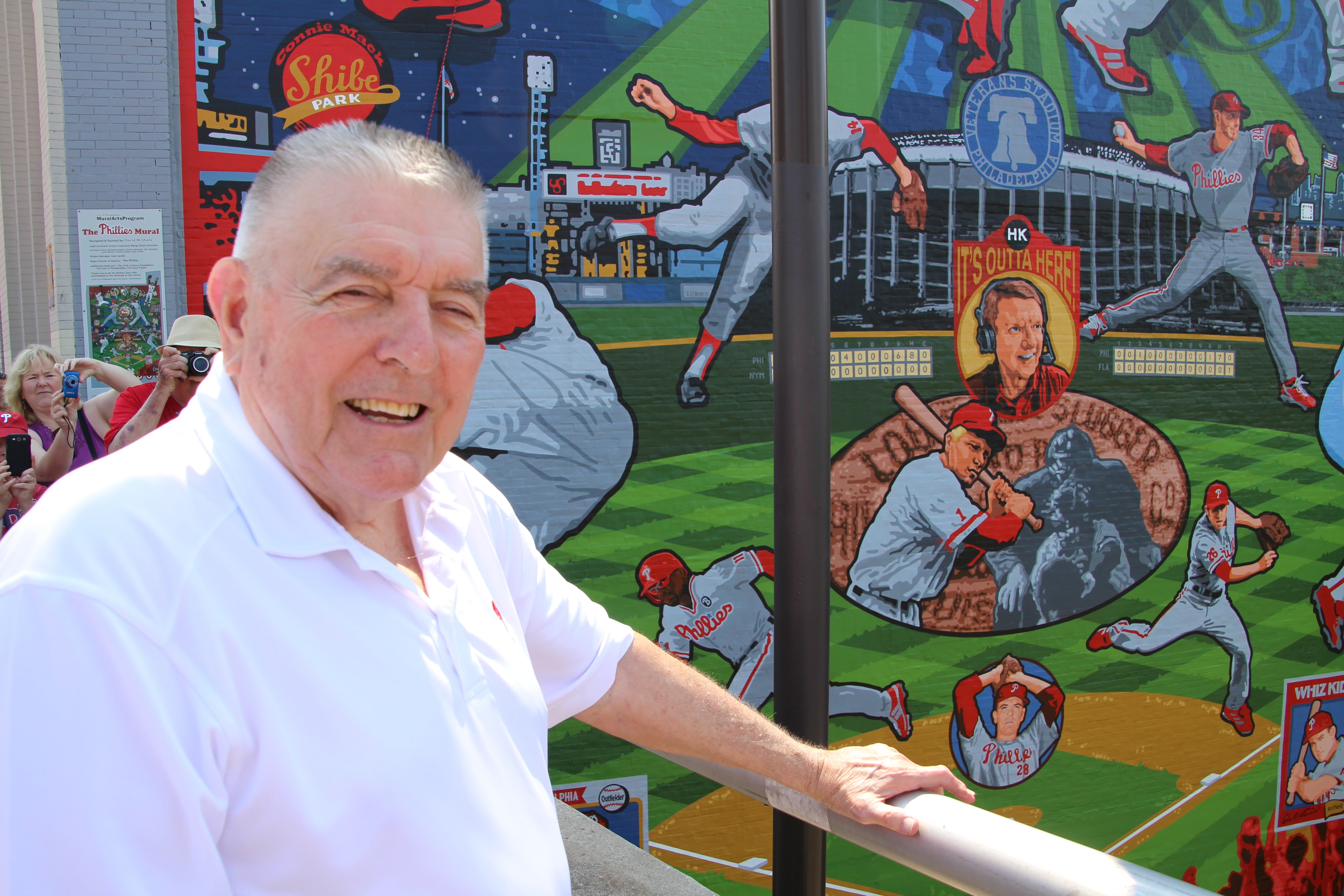
Curt Simmons, 1929-2022

With the death of a baseball legend, we must close the books on one of the sport's most famous single-season teams.

Curtis Thomas Simmons was born on May 19, 1929 in Whitehall, Lehigh County, Pennsylvania. In 1947, Bob Carpenter, owner of the Philadelphia Phillies, arranged for an exhibition match between his team and an all-star team of high school players from the Lehigh Valley. The game was played before 4,500 fans at Egypt Memorial Park in Whitehall, 65 miles north of Center City Philadelphia and 98 miles west of Midtown Manhattan. Simmons started for the high schoolers, and struck out 11 Phillies. An error cost the high schoolers the win, and the game ended 4-4.

Carpenter was impressed enough to offer Simmons a signing bonus of $65,000 -- about $868,000 in today's money. He was brought up to the major leagues, and made his debut on the last day of the regular season, September 28, 1947. Wearing Number 32, he went the distance against the New York Giants at Shibe Park in Philadelphia. He allowed 1 run on 5 hits and 6 walks, striking out 9. The Phillies won, 3-1.

He was given Number 28 for the 1948 season, and wore it for the remainder of his Phillies tenure. After 2 seasons of struggle, it all came together for the Phillies in 1950. The youngest team in the major leagues by average age, they became known as the "Whiz Kids," and won the National League Pennant on the last day of the season. They would be the last all-white team to win the Pennant in the NL. (The 1953 Yankees would be the last in the AL.)

But they had to finish it off without him. He made his last appearance on September 9, a win over the Boston Braves, to advance to 17-8 on the season -- and he was still only 21 years old. But he was drafted into the Korean War, and while he was granted leave to attend the World Series, he did so in the stands in his U.S. Army uniform, not in the dugout in his Phillies uniform.

Team management chose not to appeal to make him eligible for the Series, and this forced manager Eddie Sawyer to make some tough decisions. Starting Robin Roberts, who would have won the Cy Young Award had there been one then, in Game 1 would have given him just 2 days rest on top of 2 days rest, so Sawyer started his best reliever, Jim Konstanty, who had pitched 9 innings of relief on occasion. It almost worked, but the Yankees win, 1-0, and swept the Phillies in 4 straight. If Simmons had been available, the Phillies might have won a game, maybe 2, but it wouldn't have made a difference.

Simmons missed the entire 1951 season in the Army. In 1952, he won 14 games and pitched an MLB-leading 6 shutouts. He won 16 in 1953 and 14 in 1954, becoming a reliable lefthanded counterpoint to the righthanded Roberts, a future Hall-of-Famer. He battled injury in 1955, but won 15 in 1956 and 12 in 1957. He made the All-Star Game in 1952, '53 and '57.

He was injured again in 1959, and the Phillies released him in 1960. Big mistake, one of so many the Phillies have made, a big reason why they won only 1 World Championship between their founding in 1883 and 2007, and 2 Pennants between 1883 and 1979.

He was quickly signed by the St. Louis Cardinals, and was given Number 31. His manager, Johnny Keane, said, "Curt knows the hitters better than anyone in the league. He has the curve, the slider and the change, and he can reach back and get the fastball."
He recovered to go 15-9 in 1963, and 18-9 in 1964. The Phillies led that season's NL Pennant race most of the way, but lost 10 straight games in late September, the last of which was won by Simmons. The Cards went 5-0 against the Phils in games started by Simmons, and in those games, he went 4-0. The Cards won the Pennant by 1 game each over the Phils and the Cincinnati Reds, with Simmons winning the season finale against the Mets on October 4.

He finally had his Pennant, at the expense of his former team. He started Game 3 of the World Series, against the Yankees, and left after 8 innings, tied 1-1. But reliever Barney Schultz gave up a walkoff home run to Mickey Mantle. He started Game 6, but was outpitched by Jim Bouton. The Cards won Game 7 and the Series anyway.

Age caught up with him in 1965, and he was traded to the Chicago Cubs in 1966, and then to the California Angels in 1967. He retired after that season, with a record of 193-182, for mostly struggling Phillies teams, a 3.54 ERA, a 111 ERA+, and a 1.307 WHIP. Stan Musial and Hank Aaron, who, between them, collected 7,402 hits including 1,230 home runs, each called him the toughest pitcher they ever faced -- and that included Roberts, Simmons' 1964 teammate Bob Gibson, Warren Spahn, Sandy Koufax and Juan Marichal. In Aaron's case, it also included Tom Seaver and Steve Carlton.

After leaving baseball, Simmons was a partner with Roberts and others in a golf course in the Philadelphia suburb of Ambler, Montgomery County, Pennsylvania. His wife, the former Dorothy Ludwig, died in 2012. Together, they had sons Timothy and Thomas, and daughter Susan D'Acquisto, leading to 7 grandchildren.

The Phillies named him to the Philadelphia Baseball Wall of Fame in 1993. He was not related to a later Cardinal star, Hall of Fame catcher Ted Simmons. Nor was he related to another member of the Philadelphia Baseball Wall of Fame, Al Simmons, the Hall of Fame left fielder for the Philadelphia Athletics in their 1929-31 dynasty. 
Curt Simmons underwent hip replacement surgery a few years ago, but it didn't go well, leaving him debilitated. His daughter believes it contributed to his death this past Tuesday, December 13, 2022, at his home in Ambler. He was 93 years old. He was the last surviving member of the 1950 Phillies, the last "Whiz Kid."

With his death, there are now:

* 5 living men who played in Major League Baseball during the 1940s: Chris Haughey, Tommy Brown, Carl Erskine, Larry Miggins and Bobby Shantz.

* 15 living members of the 1964 World Champion St. Louis Cardinals: Roger Craig, Dick Groat, Bob Skinner, Tim McCarver, Mike Shannon, Julian Javier, Dal Maxvill, Bill White, Carl Warwick, Gordie Richardson, Ray Washburn, Ron Taylor, Charlie James, Bob Humphreys and Bob Uecker.

* And 19 living members of the Philadelphia Baseball Wall of Fame: Shantz, Greg Luzinski, Larry Bowa, Bob Boone, Steve Carlton, Mike Schmidt, Garry Maddox, Ron Reed, Bake McBride, Manny Trillo, Juan Samuel, John Kruk, Curt Schilling, Mike Lieberthal, Bobby Abreu, Pat Burrell, Jim Thome, former manager Charlie Manuel, and former general manager Pat Gillick.

Friday, December 9, 2022

If Every Team Moved to Where Its Owner Lived

Hal Steinbrenner, owner of the Tampa Bay Yankees

Note: If a team's owner does live in the market where it's already based, I haven't included it.

Major League Baseball
Colorado Braves
Los Angeles Padres
New York Red Sox 
New York Rays
Tampa Bay Yankees

Boston Red Sox owner John W. Henry lives in Westport, on the New York side of Connecticut. Tampa Bay Rays owner Stuart Sternberg lives in Rye, Westchester County, New York. Padres owner Peter Seidler is a grandson of Walter O'Malley, the man who moved the Dodgers from Brooklyn to Los Angeles. He bought the Padres in 2020, and appears to be intent on keeping them in San Diego.

National Football League
Boston Eagles
Cleveland 49ers
Denver Rams
Miami Jaguars
New York Dolphins
New York Panthers
New York Vikings

Carolina Panthers owner David Tepper lives in Livingston, Essex County, New Jersey. Miami Dolphins owner Stephen Ross lives in Southampton, Long Island. Minnesota Vikings owner Zygi Wilf lives in Springfield, Union County, New Jersey. Jacksonville Jaguars owner Shahid Khan lives in Naples, Florida, in Miami's market. Miami Marlins owner Bruce Sherman also lives there.

National Basketball Association
Detroit Cavaliers
Los Angeles Hawks
San Diego Nets
Seattle Clippers
Seattle Trail Blazers

Brooklyn Nets owner Joe Tsai lives in San Diego. Computer billionaire Paul Allen owned both the NFL's Seattle Seahawks and the NBA's Portland Trail Blazers, and his family trust now operates them. Since the Blazers were the arch-rivals of the Seattle SuperSonics, they will not be taking the Sonics' place.

Since the Clippers will never beat the Lakers for fan interest in Los Angeles, team owner Steve Ballmer should move them to his hometown, and make them the new Seattle SuperSonics. But he is committed to building a new arena in Inglewood, California, on the site of Hollywood Park Racetrack, adjacent to The Forum and SoFi Stadium.

National Hockey League
Buffalo Bruins
Dallas Hurricanes
Kansas City Kings
Las Vegas Coyotes
Nashville Wild
New York Panthers
New York Penguins
Toronto Senators

Josh Harris is from Philadelphia, and owns both the Devils and the NBA's 76ers. However, his main partner, David Blitzer, lives in Scotch Plains, Union County, where he grew up. Florida Panthers owner Vincent Viola lives in Manhattan. John W. Henry's Fenway Sports Group now owns a majority stake in the Pittsburgh Penguins, with Mario Lemieux continuing as a part-owner. The NBA's Sacramento Kings were the Kansas City Kings from 1972 to 1985.

Major League Soccer
FC Kansas City
Kansas City Galaxy
Miami United
New York FC
New York City SC
Real New Jersey
Tampa Bay FC

Vikings owner Zygi Wilf also owns Orlando City SC, so the Orlando club becomes "New York City SC," while New York City FC, part-owned by the Yankees, becomes "Tampa Bay FC," and Charlotte FC are owned by Carolina Panthers owner David Tepper. And David Blitzer owns a large, though not majority, stake in Real Salt Lake.

Jimmy Haslam owns both the NFL's Cleveland Browns and MLS' Columbus Crew, but I decided not to "move" either to the other's market, even though Columbus is closer to Cincinnati than it is to Cleveland. John J. Fisher owns MLB's Oakland Athletics and MLS' San Jose Earthquakes, and since both teams are in the San Francisco Bay Area, I chose not to change either team's name.

D.C. United majority owner Jason Levien lives in Miami. So do Inter Miami owners Jorge and Jose Mas. Calling FC Dallas "FC Kansas City" is problematic, since there was an FC Kansas City, in the National Women's Soccer League. But the team is owned by Clark Hunt, owner of the Kansas City Chiefs, who inherited them from his father, Lamar Hunt, who was form Dallas and founded both teams. KC's current NWSL team is the Kansas City Current.

Thursday, December 1, 2022

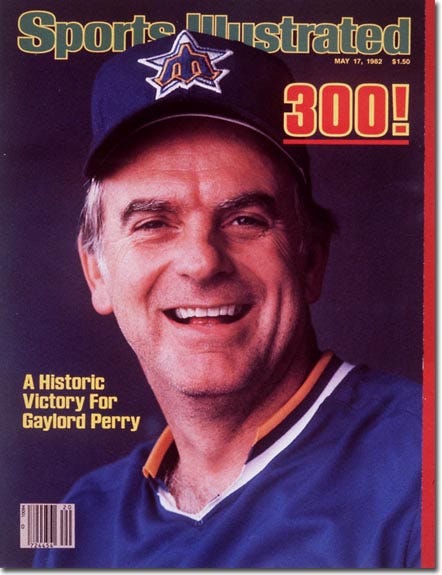
Gaylord Perry, 1938-2022

We sports fans frequently talk about cheating, and whether someone exposed as a cheater should be allowed in his sport's Hall of Fame. One member of the Baseball Hall of Fame not only openly admitted it, but probably wouldn't have gotten good enough to be considered without it.

Gaylord Jackson Perry was born on September 15, 1938 in Williamston, North Carolina. His older brother, Jim Perry, was a lefthanded pitcher in the major leagues from 1959 to 1975. Gaylord threw righthanded, and reached the major leagues with the San Francisco Giants on April 14, 1962, at Candlestick Park in San Francisco. He started, but did not get out of the 3rd inning. Nevertheless, Orlando Cepeda and Felipe Alou each hit 2 home runs, and the Giants beat the Cincinnati Reds, 13-6. (Willie Mays went 0-for-4, although he did draw a walk.)

Perry started out wearing Number 22, but would wear 36 for most of his career. He pitched in 13 games that season, and, while the Giants won the National League Pennant, he was not placed on the World Series roster.

That season, while taking batting practice and not doing well, manager Alvin Dark said, "There'll be a man on the Moon before he hits a home run." Was hit right? Yes, and no. On July 20, 1969, Perry hit a home run, after the Apollo 11 lunar module Eagle landed on the Moon, but before Neil Armstrong did the first Moonwalk.

Back to 1962: Perry wrote in his 1974 memoir Me and the Spitter that he was "the 11th man on an 11-man pitching staff," and that he needed an edge. Giant teammate Bob Shaw taught him how to throw the spitball. He first used it in an actual game in 1964, against the New York Mets, pitching 10 shutout innings. That got him a permanent spot in the Giants' rotation. He went 21-8 in 1966, and 23-13 in 1970, making the All-Star Game both times, finishing 2nd in the voting for the NL Cy Young Award in 1970.

He also wrote in the book that he chewed slippery elm bark to build up his saliva, but eventually stopped throwing the pitch in 1968, after MLB ruled pitchers could no longer touch their fingers to their mouths before touching the baseball. So he looked for other substances, like petroleum jelly, to doctor the baseball. He used various motions and routines to touch different parts of his jersey and body to get hitters to think he was applying a foreign substance, psyching them out, making them think they were facing an "unhittable" pitch.

As it turned out, the only postseason appearance of his career came in 1971, when the Giants won the National League Western Division title. He appeared in 2 games in the NL Championship Series, winning 1 and losing 1, and the Pittsburgh Pirates won.

After that season, the Giants traded Perry and backup infielder Frank Duffy to the Cleveland Indians for pitcher Sam McDowell. It was a rare trade that worked out well for the Indians, and one of many that didn't work out well for the Giants: McDowell's drinking had gotten out of control, and he did very little in San Francisco; while Perry, already 33 years old, got a second wind. For the Indians in 1972, Perry went 24-16, made the All-Star Game, and was awarded the American League's Cy Young Award. He went 21-13 in 1974, and was an All-Star again.
And yet, on June 13, 1975, the Indians traded him to the Texas Rangers, for pitchers Jim Bibby, Jackie Brown and Rick Waits, and the real reason the perennially-cash-poor Indians made the trade: $100,000. Despite winning 15 games for the Rangers in both 1976 and '77, the Rangers traded him to the San Diego Padres, for pitcher Dave Tomlin and $125,000.

At 39, the Rangers may have thought that Perry was on the downside of his career. Not yet: He went 21-6, and, on October 1, struck out Joe Simpson of the Los Angeles Dodgers, making him only the 3rd pitcher, after Walter Johnson and Bob Gibson, to strike out 3,000 batters in his career. He became the 1st Padre to win the Cy Young. That also made him the oldest pitcher to win it, and the 1st to win it in both Leagues. He made the All-Star Game again the next season.
He was probably thinking, "At my age, and with my accomplishments,
I shouldn't have to wear a uniform like this."

In 1980, the Rangers reacquired him, but on August 14, they traded him to the Yankees for pitcher Ken Clay and a player to be named later, who turned out to be Marv Thompson, who never made the major leagues. He pitched 10 games for the Yankees, going 4-4, and helped them win the AL Eastern Division title.

He signed with the Atlanta Braves in 1981, and the Seattle Mariners in 1982. On May 6, at the Kingdome in Seattle, at the age of 43, he pitched a complete game against the Yankees, allowing 3 runs on 9 hits, and the Mariners beat the Yankees, 7-3. It was the 300th win of Perry's career. When that game began, Walter Johnson was the only man with both 300 wins and 3,000 strikeouts.
That was the high point of his season. The low point came on August 23, when, for the 1st time in his career, in his 742nd career game, he was thrown out for having been caught "doctoring" the ball. He was given a 10-game suspension. A year later, having been released by the Mariners and picked up by the Kansas City Royals, he was once again thrown out of a game for an incident involving cheating: He tried to hide George Brett's illegally-pine-tarred bat in that infamous game against the Yankees.

He finished the 1983 season with the Royals, was released, and retired. He finished with 314 wins, 255 losses, a 3.11 ERA, a 117 ERA+, a 1.181 WHIP, and 3,554 strikeouts. In 1991, in his 3rd year of eligibility, despite complaints by many that he wouldn't have gotten as far as he did without cheating, and that he was a player who simply "played a long time and amassed a lot of stats," he was elected to the Baseball Hall of Fame. With Jim's 215 wins and 1,576 strikeouts, the Perry brothers held the records for most career wins and strikeouts by brothers, although they were soon surpassed in both categories by Phil and Joe Niekro. (Jim, who survives Gaylord, was never accused of throwing an illegal pitch.)

When Limestone University, a Christian school in Gaffney, South Carolina, started its baseball program in 1988, in NCAA Division II, Perry was hired as its 1st head coach, serving for 3 years.
In the 1989 film Major League, the character of Eddie Harris, a Southern pitcher who admitted to using foreign substances on the ball as advancing age has robbed him of his fastball, is clearly based on Perry. In 1999, The Sporting News ranked him 97th on their list of the 100 Greatest Baseball Players. The Giants retired his Number 36, dedicated a statue of him outside what's now named Oracle Park, invited him to throw out ceremonial first balls, and awarded him World Series rings for their 2010, '12 and '14 seasons even though he was no longer officially in their organization.

He was widowed in 1987, when his wife, the former Blanche Manning was killed in a car accident in Lake Wales, Florida. They had 3 daughters and a son, Jack, who was one of his pitchers at Limestone, and is the only pitcher the school has had to have pitched a no-hitter, doing so twice. Jack died of leukemia in 2017.

Gaylord Perry died today, December 1, 2022, at his home in Gaffney, of natural causes. He was 84 years old. He was a baseball lifer, and a character to the end.