Showing posts with label wes unseld. Show all posts

Thursday, June 11, 2020

Losing Is a Disease

Claudell Washington

"Losing is a disease, as contagious as polio. Losing is a disease, as contagious as syphilis. Losing is a disease, as contagious as the bubonic plague. Ah, but curable."
-- the psychiatrist talking to the New York Knights, The Natural

It used to be that if someone's death was listed as being from "a long illness," it was code for "cancer." Later, once the word "cancer" stopped being so shocking, "a long illness" frequently meant "AIDS," especially if the deceased was an unmarried man, and especially especially if the obituary called him "flamboyant."

These days, if a cause of death is not listed, it's easy to presume it's from the Coronavirus, a.k.a. COVID-19. Though that hasn't been the case with everyone.

Just in the last 2 weeks, the world of sports has lost:

* Roy Steele, 87, from a longstanding digestive issue, on May 28. He was the public-address announcer for the Oakland Athletics from their arrival from Kansas City in 1968 to 2005,

* Curtis Cokes, 82, from heart failure, on May 29. He was the Welterweight Champion of the World from August 24, 1966 to April 18, 1969,

Deibert Guzmán, 25, on May 30. He is believed to be the 1st soccer player to die from COVID-19, a native of the South American nation of Bolivia, who played for Beni in that country's 2nd division.

* Pat Dye, 80, from kidney problems made worse by COVID-19, on June 1. He coached Auburn to 3 Southeastern Conference Championships in the 1980s, and was also a college teammate of Fran Tarkenton at Georgia, but only played in the CFL, not in the NFL or the AFL;

* Lee Grosscup, 83, of undisclosed causes, on June 1. A career backup quarterback, he might have been the 1st player to play for both the Giants and the team that would become known as the Jets (originally the New York Titans), was on the Giants' roster for the 1959 and '61 NFL Championship Games, later broadcasting for the University of California,

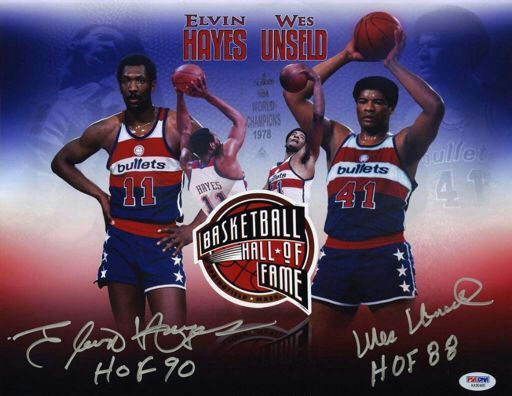
* Wes Unseld, 74, of pneumonia, on June 2. A member of the Basketball Hall of Fame, he got the Baltimore/Washington Bullets into the NBA Finals in 1971, 1975, 1978 and 1979, winning in 1978, named to the NBA's 50th Anniversary 50 Greatest Players.

* Johnny Majors, 85, of undisclosed causes, on June 3. A running back at the University of Tennessee, he finished 2nd in the Heisman Trophy voting in 1956, coached the University of Pittsburgh to the 1976 National Championship, before returning to Tennessee and leading them to 3 SEC Championships, nearly winning another National Championship in 1989.

* Pete Dademacher, 91, of undisclosed causes, on June 4. He won the Gold Medal in the Heavyweight boxing division at the 1956 Olympics in Melbourne, Australia, and then carried the American flag in the Closing Ceremony. The next year, he faced fellow '56 Olympian Floyd Patterson for the Heavyweight Championship of the World, but lost. He also lost to notable fighters Zora Folley, Brian London, Archie Moore and Karl Mildenberger; but beat George Chuvalo and Carl "Bobo" Olson.

* Kurt Thomas, 64, from a stroke, on June 5. He was the men's World Gymnastics Champion in 1978 and '79, and was set to be one of the American stars at the 1980 Olympics in Moscow, before President Carter's boycott. In 1985, he starred in Gymkata, a movie combining gymnastics and martial arts, becoming a cult favorite, a "so bad it's good" movie.

* Reche Caldwell, 41, shot during a robbery in Tampa, on June 6. A receiver, he had won the 2000 SEC Championship at Florida, then, played 6 seasons in the NFL, mostly for the San Diego Chargers.

* Ralph Wright, 72, of undisclosed causes, on June 7. A defender, he played for several teams in England, before coming to the North American Soccer League and playing for the New York Cosmos, the Miami Toros and the Dallas Tornado.

* Ken Riley, 72, of a heart attack, on June 7. One of the top cornerbacks in NFL history, he had 65 interceptions with the Cincinnati Bengals, and made 3 Pro Bowls. He should be in the Pro Football Hall of Fame. He later won 2 Conference Championships as head coach at his alma mater, Florida A&M.

* Tony Dunne, 78, of undisclosed causes, on June 8. The left back helped Dublin soccer team Shelbourne win the FAI Cup, the Republic of Ireland's version of England's FA Cup, in 1960. He was signed by Manchester United, with whom he won the FA Cup in 1963, the Football League in 1965 and 1967, and the European Cup in 1968. He later helped Bolton Wanderers win the 2nd Division in 1978, and played the 1979 season with the Detroit Express in the NASL.

* Paul Rochester, 81, of undisclosed causes, on June 9. He played in all 10 seasons of the 1960s AFL, including as an All-Star with the 1961 Dallas Texans, an AFL Champion with the 1962 Texans and the 1968 Jets, and a winner of Super Bowl III with the Jets.

With his death, there are now 31 living players from the Jets' Super Bowl team: Joe Namath, Don Maynard, Bob Talamini, Matt Snell, Emerson Boozer, Jim Turner, Bake Turner, Pete Lammons, Mark Smolinski, Bill Mathis, Lee White, John Schmitt, Paul Crane, Randy Rasmussen, Dave Herman, Jeff Richardson, Gerry Philbin, Steve Thompson, Carl McAdams, Ralph Baker, Al Atkinson, John Neidert, Randy Beverly, John Dockery, Earl Christy, Jim Richards, Michael Stromberg, Bill Baird, Mike D'Amato, Cornell Gordon and Karl Henke.

* Lonnie Wheeler, 68, of a long-term illness, on June 9. A former sports columnist for the Cincinnati Post until that paper closed in 2007, he ghost-wrote the autobiographies of Baseball Hall-of-Famers Hank Aaron and Bob Gibson, and also wrote biographies of Hall-of-Famers Mike Piazza and, barely finished before his death, Negro League legend James "Cool Papa" Bell. With Gibson and Hall-of-Famer Reggie Jackson, he wrote Sixty Feet, Six Inches, as Mr. October and the closest thing to his pitching equivalent discussed various aspects of the game.

He also wrote Blue Yonder, about University of Kentucky basketball. Your required reading is Bleachers: A Summer at Wrigley Field, in which he covered the 1987 season, the last season of the Cubs' ballpark without lights.

* Harry Glickman, 96, of undisclosed causes, on June 10. A longtime sportswriter for Portland's paper The Oregonian, he was one of the founding owners of the Portland Trail Blazers, and was their general manager from 1987 to 1994, building a team that won 2 NBA Western Conference Championships.

* Claudell Washington, 65, of prostate cancer, on June 10. Known for good hitting, good fielding, and a rather long neck, the outfielder won the 1974 World Series as a rookie with the Oakland Athletics, and was an All-Star with them in 1975 and the Atlanta Braves in 1984. He never won another ring, but he did reach the postseason again with the A's in 1975 and the Braves in 1982.

Footage from a 1985 game at Wrigley Field was shown in Ferris Bueller's Day Off, with a foul ball hit by Claudell being edited so that it looked like Ferris caught it. He was in another movie, Taking Care of Business, in 1990, allowing one more World Series appearance, with a fictional version of the California Angels. He played for both the Mets (in 1980) and the Yankees (including in 1988, when an upper-deck shot he hit at the Metrodome made the Yankees the 1st MLB team to have hit 10,000 home runs in their history).

Thursday, June 7, 2018

How Long It's Been: Washington, D.C. won an NBA Championship


Tonight, the Washington Capitals will play the Vegas Golden Knights in Game 5 of the Stanley Cup Finals, at T-Mobile Arena in Las Vegas. If the Caps win, they will win the Stanley Cup for the 1st time in their history.

It would not be the 1st World Championship for a team based in or around Washington, D.C. But most of those titles have been rare:

* The Washington Nationals have only played in the District of Columbia since 2005, and have never won a postseason series.

* Before them, the Washington Senators existed from 1901 to 1971, and only won 1 World Series, in 1924, losing the Series in 1925 and 1933.

* The Washington Redskins have been to 11 NFL Championship Games, winning 5 of them: The NFL Championship Games of 1937 and 1942; and Super Bowls XVII, XXII and XXVI, the titles for the seasons of 1982, 1987 and 1991.

* And the team now known as the Washington Wizards, known from 1973 to 1997 as the Washington Bullets, have reached 3 NBA Finals, losing in 1975 and 1979, and winning in 1978.

Their only NBA Championship came on June 7, 1978, in Game 7, beating the Seattle SuperSonics 105-99 at the Seattle Center Coliseum. That's exactly 40 years. How long has that been?

*

Hail the Champions: Number 10, forward Bob Dandridge; 11, center Elvin "Big E" Hayes; 14, guard Tom Henderson; 15, guard Charles Johnson; 20, guard Phil Walker (did not appear in the Finals); 25, forward Mitch Kupchak; 32, guard Larry Wright; 35, forward Kevin Grevey; 41, forward Wes Unseld; 42, forward Greg Ballard; 44, center Joe Pace; 45, guard Phil Chenier. Their head coach was Dick Motta.

Hayes and Unseld would be elected to the Basketball Hall of Fame and the NBA's 50th Anniversary 50 Greatest Players. They and Chenier, later a broadcaster for the team, would later have their numbers retired by the Wizards. Dandridge had previously won the title with the 1971 Milwaukee Bucks. Kupchak would later win titles with the 1982 and 1985 Los Angeles Lakers. Johnson died in 2007, Ballard in 2016, while the rest are all still alive.

There were 22 teams in the NBA. The Dallas Mavericks, the Charlotte Hornets, the Miami Heat, the Orlando Magic, the Minnesota Timberwolves, the Memphis Grizzlies, the Toronto Raptors and the New Orleans Pelicans did not yet exist. The New Jersey Nets, the Buffalo Braves, the Kansas City Kings, the New Orleans Jazz, and the team the Bullets beat in the '78 Finals but would lose to in the '79 Finals, the Seattle SuperSonics, did.

The Sonics, the Heat, the Mavericks, the Detroit Pistons since moving from Fort Wayne, the Houston Rockets, the San Antonio Spurs and the Cleveland Cavaliers had not yet won their 1st NBA title. The Pistons, the Rockets, the Jazz, the Spurs, the Nets, the Heat, the Mavericks, the Cavs and the Indiana Pacers had not even been to the NBA Finals.

All of those facts were true then. They are not anymore.

Madison Square Garden in New York and what's now named the Oracle Arena in Oakland were the only NBA arenas in use in the 1977-78 season that will still be in use in 2018-19 -- and after that, the Oracle can be dropped from the list. The Garden is the only NHL arena from that season still in use.

Maurice Podoloff, the founder of the NBA and its 1st Commissioner, was still alive -- and he was older than the sport itself. The defining players of my childhood were, at most, in their prime: Kareem Abdul-Jabbar, Bill Walton, Moses Malone and Julius "Dr. J" Erving were superstars; Bernard King was an NBA rookie; and Magic Johnson and Larry Bird were in college. Michael Jordan was in high school. Shaquille O'Neal was 6 years old, Tim Duncan was 2. Dirk Nowitzki was born 12 days later, Kobe Bryant 2 months later. Dwyane Wade, LeBron James and Steph Curry were a long way off.

The current Knicks coach, David Fizdale, was 4 years old. Kenny Atkinson of the Nets was 11. Todd Bowles of the Jets, Barry Trotz of the Islanders, and Domènec Torrent of NYCFC were in high school. Pat Shurmur of the Giants was in junior high school. David Quinn of the Rangers was 12, Aaron Boone of the Yankees and Jesse Marsch of the Red Bulls were 5, and Mickey Callaway of the Mets and John Hynes of the Devils were 3.

The Bullets had dethroned the Portland Trail Blazers as World Champions. The Yankees and the Montreal Canadiens would succeed themselves, and the Dallas Cowboys were defending NFL Champions.

The Heavyweight Champion of the World? In February, Muhammad Ali lost the undisputed title to Leon Spinks, but the WBC, seeing that the 1976 Olympic Gold Medalist didn't have enough pro fights, recognized Ken Norton as champ. Norton was then beaten by Larry Holmes. Ali beat Spinks in September, to regain the title, then retired. The WBA then recognized Holmes as well.

The Olympic Games have since been held in America 4 times; Canada, Russia and Korea twice, and once each in Bosnia, France, Spain, Norway, Japan, Australia, Greece, Italy, China, Britain and Brail. Argentina was about to win the World Cup on home soil. The tournament has since been held in America, Spain, Mexico, Italy, France, Japan, Korea, Germany, South Africa, Brazil and Russia.

There were then 26 Amendments to the Constitution of the United States. The President of the United States was Jimmy Carter. Ronald Reagan had run for President in 1976, but lost the nomination to incumbent Gerald Ford, who then lost to Carter. Reagan was now 67, and the idea of him ever becoming President was considered to be ludicrous.

George H.W. Bush was out of public office, teaching at Rice University in Houston. Ford, Richard Nixon, their wives, and the widows of Harry Truman, Dwight D. Eisenhower, John F. Kennedy and Lyndon Johnson were all still alive.

Bill Clinton was the Attorney General of the State of Arkansas, and was about to be elected Governor at age 32. George W. Bush was running for Congress from a district in north Texas, but would lose.  Barack Obama was attending the Punahou School. In his native Honolulu. Native Honolulu. Donald Trump was getting sued for racist practices in the slums he owned.

The Governor of the State of New York was Hugh Carey, the Mayor of the City of New York was Ed Koch, and the Governor of New Jersey was Brendan Byrne. Andrew Cuomo was attending Fordham University, Bill de Blasio was in high school, and Phil Murphy was at Harvard University.

There were still surviving veterans of the Spanish-American War, the Boer War, the Boxer Rebellion, the Philippine Campaign, and the Russo-Japanese War. The current Pope, Benedict XVI, then Joseph Cardinal Ratzinger, was Archbishop of Munich. The Prime Minister of Canada was Pierre Trudeau, and of Britain, James Callaghan. The head of state of both nations was Queen Elizabeth II -- that hasn't changed. There have since been 7 Presidents of the United States, 7 Prime Ministers of Britain and 5 Popes.

Nottingham Forest, of the East Midlands, had won the Football League for the 1st time, still their only title ever – completing the comeback of their manager, Brian Clough, who had previously won the 1972 title with Forest's nearby arch-rivals, Derby County, before a disastrous spell in charge of Yorkshire's Leeds United.

Liverpool FC had won the European Cup, but Forest were about to take it away. Arsenal had lost the FA Cup Final to Suffolk club Ipswich Town, managed by Bobby Robson, but were about to take it in the season that had just begun – and along the way, 2 days before Christmas, would travel to their North London arch-rivals, Tottenham Hotspur, and beat them 5-0, on a hat trick by Alan Sunderland, and Liam Brady feeding a header to his Dublin childhood pal Frank Stapleton and then scoring a goal that made broadcaster John Motson yell, "Look at that! Oh, look at that! What a goal by Brady!"

John Irving published The World According to Garp, Stephen King Children of the Corn, Richard Matheson What Dreams May Come, Ken Follett Eye of the Needle, and, a book many would come to regret by 1995, William Luther Pierce published The Turner Diaries.

Ira Levin moved away from the grimness of Rosemary’s Baby, The Boys from Brazil and The Stepford Wives, and wrote Deathtrap, a comedy like his first play, No Time For Sergeants, which, in 1955, made stars of Roddy McDowall and Don Knotts. Douglas Adams hadn't yet published any of his Hitchhiker's Guide to the Galaxy books. George R.R. Martin was best known for writing science fiction and fantasy short stories. J.K. Rowling was 13 years old.

No one had yet heard of Jason Bourne, Hannibal Lecter, Celie Harris, Kinsey Millhone, Jack Ryan, Forrest Gump, John McClane, Alex Cross, Bridget Jones, Robert Langdon, Bella Swan, Lisbeth Salander or Katniss Everdeen.

Major films released in the late Spring of 1978 included the musical biography The Buddy Holly Story; the musical Grease; the baseball sequel The Bad News Bears Go to Japan; the football-themed remake of Here Comes Mr. Jordan, Heaven Can Wait; the trucker film Convoy; the murder mystery The Cheap Detective; the science fiction films Capricorn One and The Cat from Outer Space; the horror sequels Damien: Omen II and Jaws 2; and the greatest horror of them all, a discofied version of the Beatles' story Sgt. Pepper's Lonely Hearts Club Band, with Peter Frampton and the Bee Gees standing in.


Roger Moore was still basking in the glow of perhaps the best James Bond film of them all, The Spy Who Loved Me, released late the previous year, and was now killing his momentum by filming Moonraker, an attempt to link Agent 007 with the sci-fi movie craze.

Christopher Reeve was about to debut as Superman, and Lynda Carter was still starring on TV as Wonder Woman, but Adam West was still the last live-action Batman. Tom Baker was The Doctor. Gene Roddenberry was filming Star Trek: The Motion Picture, trying to show everyone enamored with Star Wars that the future in our own galaxy was better than "A long time ago, in a galaxy far, far away." On that occasion, he did not succeed. George Lucas was preparing to film The Empire Strikes Back. Steven Spielberg had filmed Close Encounters of the Third Kind.

No one had yet heard of Mad Max, Jason Voorhees, Ash Williams, John Rambo, the Terminator, the Ghostbusters, Freddy Kreuger, Marty McFly, Roboco, John McClane, Jay & Silent Bob or Austin Powers.

In the television season that had just ended, Fantasy Island, The Incredible Hulk, Dallas, Vega$, the game show Card Sharks, and the ABC news magazine 20/20 had recently debuted; while both The Six Million Dollar Man and The Bionic Woman, The Carol Burnett Show, Police Woman, The Bob Newhart Show, Maude, Columbo, Baretta and Chico and the Man had ended their runs.

That week, the panelists on Match Game 78 were: M*A*S*H actor Gary Burghoff, regular Brett Somers, regular Charles Nelson Reilly, Charles' former The Ghost and Mrs. Muir co-star Hope Lange, regular and now Family Feud host Richard Dawson, and comedy writer Patti Deutsch, the lady with the whiny voice, weird way of coming up with definitive answers, long red hair, and large, as she put it, "upper frontals."


No one had yet heard of Bo & Luke Duke, Blake Carrington, Michael Knight, Christine Cagney & Mary Beth Lacey, Sam Malone, Cliff Huxtable, Balki Bartokomous, the Tanner family, Zack Morris, Hayden Fox, Dale Cooper, the Seinfeld Four, Buffy Summers, Fox Mulder & Dana Scully, Andy Sipowicz, Ross Geller & Rachel Greene, Dr. Doug Ross, Xena, Carrie Bradshaw, Tony Soprano, Jed Bartlet, Jack Bauer, Omar Little, Leroy Jethro Gibbs, Michael Bluth, Michael Scott, Don Draper, Walter White, Jax Teller, Richard Castle, the Pritchett family, Rick Grimes, Leslie Knope, Sarah Manning, Wynonna Earp or Jane "Eleven" Hopper.

Robert Kardashian Sr. and Kristen Mary Houghton were preparing to get married the next month. Bruce Jenner was busy turning his one Gold Medal into a lifetime of green. As far as I know, he had not yet met either of them.

From the aforementioned film version of the Broadway musical Grease, stars John Travolta and Olivia Newton-John's recording of "You're the One That I Want" was the Number 1 song in America. The Rolling Stones launched a U.S. tour in support of their album Some Girls. The Who, unbeknownst to them, played their last show with Keith Moon as drummer. Grace Slick got drunk before a Jefferson Airplane concert in Hamburg, Germany, and taunted the natives about World War II, and temporarily left the band. The aforementioned Peter Frampton killed his career's momentum, and nearly himself, in a car crash in The Bahamas.


Paul McCartney was still having hits with Wings. George Harrison's and Ringo Starr's runs of hits seemed to be over. John Lennon was still in self-imposed "househusband" exile. Priscilla Presley was busy trying to put her late ex-husband Elvis' estate back together. Bob Dylan was in the process of converting to evangelical Christianity -- temporarily, as it turned out. A movieversion of The Wiz, the all-black musical based on The Wizard of Oz, was being filmed, with Diana Ross as Dorothy and Michael Jackson as the Scarecrow.

Inflation has been such that what $1.00 would buy then, $3.86 would buy now. A U.S. postage stamp cost 15 cents, and subway ride in New York 50 cents. The average price of a gallon of gas was 65 cents, a cup of coffee 74 cents, a McDonald's meal (Big Mac, fries, shake) $1.65, a movie ticket $2.33, a new car $4,645, and a new house $66,400. The Dow Jones Industrial Average closed that day at 861.92.

The tallest building in the world was the Sears Tower in Chicago. Desktop computers and mobile telephones had been developed, but hardly anybody had them, and they were both still very bulky and very slow. There was not much of an Internet, and hardly anybody knew about it. America was in the middle of a 6-year spaceflight drought. Automatic teller machines were still a relatively new thing, and many people had never seen one. The leading home video game system was the Atari VCS (later renamed the Atari 2600).

There were heart transplants, liver transplants and lung transplants, and artificial kidneys, but no artificial hearts. There were birth control pills, but no Viagra. 

In the late Spring of 1978, the terrorist Red Brigades kidnapped and assassinated former Prime Minister Aldo Moro of Italy. Breton nationalist set of a bomb that damaged the Palace of Versailles outside Paris, but only 1 person was injured, and survived.

Civil wars raged in the African nations of Zaire, Ethiopia, Angola and the Comoros. King Hussein of Jordan married an American woman of Arab descent, Lisa Halaby, who becomes Queen Noor. He was 42, she was 26. And Ian Botham became the 1st cricketer to score a century and take 8 wickets in 1 inning of a Test match.

In America, Affirmed, ridden by Steve Cauthen, won thoroughbred racing's Triple Crown, something no other horse would do for the next 37 years. Pete Rose joined the 3,000 Hit Club, and started a National League record-tying 44-game hitting streak. Tom Seaver pitched the only no-hitter of his career. Both achieved their respective feats for the Cincinnati Reds -- a painful reminder for Met fans. Mavis Hutchinson, age 53, became the 1st woman to run across America, taking 69 days. (This would have been at the time that Forrest Gump would have been repeatedly doing so in the movie.)

Unabomber Ted Kaczynski struck for the 1st time, at Northwestern University. California voters approved Proposition 13, making it nearly impossible for the State legislature to raise taxes, and crippling the State's economy for the next 30 years. The comic strip Garfield made its debut. Resorts International opened in Atlantic City, New Jersey, as the 1st legal casino and hotel in America outside Nevada.

Former Australian Prime Minister Robert Menzies, and Real Madrid President Santiago Bernabéu, and Hungarian soccer star József Bozsik died. Erin Andrews, and Brian Urlacher, and Giants kicker Lawrence Tynes were born.

June 7, 1978. The Washington Bullets won the NBA Championship. It was the franchise's 1st, under any of its names: The Chicago Packers, the Chicago Zephyrs, the Baltimore Bullets, the Capital Bullets, the Washington Bullets, and the Washington Wizards.

They have never won a 2nd. Will they contend for it next season? They did make the Playoffs this season, so maybe they're on the right track.

Thursday, April 5, 2018

Washington's 10 Greatest Athletes

Today, the Mets started a series away to the Washington Nationals.

Washington's 10 Greatest Athletes

Honorable Mention to Washington Senators in the Baseball Hall of Fame, who didn't otherwise make the Top 10: Sam Rice, Bucky Harris, Goose Goslin, Joe Cronin, Heinie Manush, Rick Ferrell, Early Wynn and Harmon Killebrew. (The Killer only played his 1st 5 seasons in Washington. If the "Old Senators" hadn't moved, or he'd gone to the "New Senators" at some point, he'd be on this list. He will definitely be on it when I do it for Minnesota.)

Honorable Mention to Homestead Grays in the Baseball Hall of Fame: Cumberland Posey, Jud Wilson, Cool Papa Bell, Ray Brown, Buck Leonard and Josh Gibson. There is a consensus that, at the very least, Bell, Leonard and especially Gibson would have been superstars had baseball been integrated. But we'll never know, and Negro League stats are woefully incomplete.

Honorable Mention to the 3 big stars of the Washington Nationals' 4 (so far) National League Eastern Division Championships in this decade: Ryan Zimmerman, Stephen Strasburg and Bryce Harper. Would any of them be in the Top 10 if the Nats had won so much as a Pennant? I'm not sure. Would any be in it if they'd won the District's 1st World Series title since 1924? As Harper would say, "That's a clown question, bro."

Honorable Mention to Washington Redskins in the Pro Football Hall of Fame, who didn't otherwise make the Top 10: Turk Edwards, Wayne Millner, Bill Dudley, Bobby Mitchell, Sam Huff, Paul Krause, Chris Hanburger, Ken Houston, Russ Grimm and Bruce Smith.

Mitchell started in Cleveland and went to Washington, and if he'd spent his entire career in either city, would be a solid candidate for either's Top 10. Huff would be in the Top 10 if he'd spent his entire career in Washington. If he'd spent his entire career in New York, he might be in their Top 10.

Krause spent most of his career in Minnesota, and will be in the Twin Cities' Top 10. Houston spent half his career in the city whose name is his own, and will be in the Houston Top 10. Bruce, who spent most of his career in Buffalo, will definitely be in the Top 10 when I do this for Western New York.

Very Honorable Mentions to Charley Taylor and Art Monk: Each of these Redskins, at one point, was the NFL's all-time leader in receptions. When The Sporting News named their 100 Greatest Football Players in 1999, Houston was ranked 61st, Taylor 85th, Monk 91st. None of them was included in the NFL Network's 2010 list of the 100 Greatest Players.

Honorable Mention to Washington Bullets or Washington Wizards in the Basketball Hall of Fame, who didn't otherwise make the Top 10: Bernard King and Mitch Richmond.

Honorable Mention to Washington Mystics stars: Chamique Holdsclaw, Nikki McCray, Alana Beard and Crystal Langhorne.

Honorable Mention to Washington Capitals in the Hockey Hall of Fame, who didn't otherwise make the Top 10: Scott Stevens, Larry Murphy, Dino Ciccarelli and Adam Oates.

Honorable Mention to D.C. United players who were chosen for Major League Soccer's 10th Anniversary Best XI in 2005: Jeff Agoos, Eddie Pope, Marco Etcheverry and Jaime Moreno.

10. Rod Langway, defenseman, Washington Capitals, 1982-93. After starting his career with the Montreal Canadiens, and winning the Stanley Cup as a rookie in 1979, he never got close to the Cup again. But he became one of the top defensemen in the game in D.C. (Landover, actually), something he couldn't do with Larry Robinson running the show in Montreal.

He made 6 All-Star Games, 4 with the Caps. He won back-to-back Norris Trophies for best defenseman in 1983 and '84. He only scored 51 goals in his 14 NHL seasons, but had 278 assists. The Caps retired his Number 5, and was elected to the Hockey Hall of Fame.

9. Wes Unseld, center, Washington Bullets, 1973-81. The big center spent his entire career with the Bullets, arriving in Baltimore in 1968 and making the move down the Baltimore-Washington Parkway in 1973. He was both Rookie of the Year and Most Valuable Player in the NBA in 1969, although both of those were in Baltimore. He was a 5-time All-Star, though only the last was in Washington.

He got the Bullets into the NBA Finals in 1971, 1975, 1978 and 1979, and finally led them to the title in 1978, winning the Finals MVP. The Bullets retired his Number 41 (before becoming the Wizards), and he was named to the Basketball Hall of Fame and the NBA's 50th Anniversary 50 Greatest Players.

8. Mike Gartner, right wing, Washington Capitals, 1979-89. He played another 9 seasons in the NHL, and never once appeared in the Stanley Cup Finals -- coming closest when the Rangers traded him in 1994, just before they could win it.

It's too bad, because he was fantastic, scoring 708 goals, and making 7 All-Star Games, 4 with the Caps. He was elected to the Hockey Hall of Fame, the Caps retired his Number 11, and he was named to the 100 Greatest Hockey Players by both The Hockey News in 1998 and the NHL on its 100th Anniversary in 2017.

7. John Riggins, running back, Washington Redskins, 1976-86. He wasn't pretty. He wasn't graceful. He wasn't tactful. He was just a great fullback. He helped the University of Kansas win the 1968 Big Eight Championship, then played 5 seasons for the Jets, and 4 for the Washington Redskins.

Then he held out for the entire 1980 season, and returned, saying, "I'm bored, I'm broke, and I'm back." Good thing he did, because, 2 years later, he was named Most Valuable Player of Super Bowl XVII, the Redskins' 1st NFL Championship in 40 years.

He only played in 1 Pro Bowl, in 1975, but in 1983, he set an NFL record with 24 rushing touchdowns, and won the Bert Bell Award as NFL MVP, helping the Redskins get into Super Bowl XVIII, although they lost. He rushed for 11,352 yards and 104 touchdowns. He was named to the Pro Football Hall of Fame, the Redskins Ring of Fame, and the NFL's 1980s All-Decade Team.

6. Sonny Jurgensen, quarterback, Washington Redskins, 1964-74. In 1964, the Philadelphia Eagles named Joe Kuharich as head coach. Kuharich was a massive prude, and the Eagle's All-Pro quarterback, Christian Adolph Jurgensen III, liked the nightlife. So Kuharich traded Sonny to the Washington Redskins for their starting quarterback of the time, Norm Snead.

This trade was so dumb! How dumb was it? Over the rest of the decade, the Eagles floundered, while the Redskins got better, eventually becoming the team (albeit quarterbacked by Billy Kilmer, with Sonny as an aging backup) that won the 1972 NFC Championship.

Sonny also threw more touchdown passes in the 1960s than any other quarterback. Guess which quarterback threw more interceptions in the 1960s than any other. Did I telegraph the punch enough? It was Norm Snead. And Joe Kuharich traded Sonny for Norm.

Sonny had the highest career "quarterback rating" of any player before the 1978 rule changes that opened up the passing game: 82.6. He led the NFL in passing yards 5 times and in touchdown passes twice -- at a time when the other contenders for the title of best quarterback in the NFL were Johnny Unitas, Y.A. Tittle and Bart Starr. Vince Lombardi, who coached Starr in Green Bay and the Redskins in the last season of his life, 1969, said, "If we would have had Sonny Jurgensen in Green Bay, we'd never have lost a game."

Sonny was named to the College and Pro Football Halls of Fame, the NFL's 1960s All-Decade Team, the Philadelphia Eagles Hall of Fame and the Washington Redskins Ring of Fame. He and Hall of Fame linebacker Sam Huff formed a beloved broadcasting team for the Redskins.

The Redskins don't officially retire numbers (Sammy Baugh's 33 is the lone exception), but Jurgensen's Number 9 has only been given out once since he retired after the 1974 season. That was in 2002, by new head coach Steve Spurrier, to one of his former University of Florida quarterbacks, Shane Matthews. He also gave Number 7, worn by Joe Theismann, to another of his Florida quarterbacks, Danny Wuerffel. Redskin fans were so angry that, before the regular season started, he switched Wuerffel to 17 (no outcry over getting Kilmer's number) and Matthews to 6. At 83, Sonny remains that beloved in the Potomac Valley.

5. Elvin Hayes, forward, Washington Bullets, 1972-81. The Big E reached the Bullets in their last season in Baltimore, and may still be the best player the franchise has ever had, making 12 NBA All-Star Teams (7 in Washington), and helping them reach the NBA Finals 3 times, winning the 1978 NBA Championship.

His Number 11 was retired by the Bullets (before becoming the Wizards). He was named to the Basketball Hall of Fame. and the NBA's 50th Anniversary 50 Greatest Players.

4. Darrell Green, cornerback, Washington Redskins, 1983-2002. Those dates alone should tell you something: He played 20 seasons in the NFL, and not as a placekicker or a punter. He played 295 games, the most of any defensive player in the League's 98-season history. He might be the best Washington football player of the last 70 years, and he might also be the fastest player in NFL history.

He arrived too late to be a member of their team that won Super Bowl XVII, but he got them into Super Bowl XVIII (lost), Super Bowl XXII (won), and Super Bowl XXVI (won). He made 7 Pro Bowls, his last at age 38.

He was the oldest man to play either of the defensive back positions, cornerback or safety, nearly 43. He was the oldest to have a gain of at least 35 yards, also nearly 43. He was the oldest with an interception, nearly 42. He was the oldest to return an interception for a game-winning touchdown in overtime, nearly 36; and the 2nd-oldest to return any interception for a touchdown, nearly 38.

He wasn't just a great player: He was a great guy, winning the Walter Payton NFL Man of the Year award in 1996. He was named to the College and Pro Football Halls of Fame, the NFL's 1990s All-Decade Team, and the Redskins' Ring of Fame.

In 1999, The Sporting News ranked him 81st on its list of the 100 Greatest Football Players. In 2010, the NFL Network ranked him 75th on their list of the 100 Greatest Players. In other words, 11 years later, when other defensive backs had cemented their legacy, Green had actually grown in the estimation of many people.

3. Alex Ovechkin, left wing, Washington Capitals, 2005-present. He's only 32 years old, but already has 604 career goals (making him the all-time leader among Russian- or Soviet-born players), a record 20 of them in overtime. He scored 65 goals, a record for his position, in 2007-08.

When the Maurice Richard Trophy was established for the leading goalscorer in 1998-99, he became the the 1st player to win that, the Art Ross Trophy for leading scorer (goals and assists), the Lester B. Pearson Award (most outstanding player according to a players' vote) and the Hart Memorial Trophy (Most Valuable Player as judged by the sportswriters) in the same season, 2007-08.

A 9-time All-Star, he's won the Calder Memorial Trophy (Rookie of the Year) in 2006, the Hart in 2008, '09 and '13; the Ross in 2008; the Richard in 2008, '09 and '13; and Pearson in 2008, '09 and '10; and the Kharlamov Trophy (named for Valery Kharlamov, the great Soviet winger of the 1970s, and given to the best Russian-born player) in 2006, '07, '08, '09, '10, '14 and '15.

Team success has eluded him, as the Caps haven't reached the Conference Finals since he arrived. And he's never competed for Russia in the Olympics. But in 2017, he was named one of the NHL's 100th Anniversary 100 Greatest Players. Unless he does something on the level of Pete Rose or O.J. Simpson, he is sure to be elected to the Hockey Hall of Fame, and for the Capitals to retire his Number 8.

2. Walter Johnson, pitcher, Washington Senators, 1907-27. As Lawrence Ritter and Donald Honig put it in their 1981 book The 100 Greatest Players In Baseball History, "He had only one pitch, a fastball -- but what a fastball!" He used it to build statistics that simply don't look real, and to build a reputation such that, in a 1916 game, Ray Chapman of the Cleveland Indians, doomed to become the only MLB player to die as a result of an on-field injury, walked away from an at-bat. The umpire told him he had 1 strike left, and he said, "Take it. I don't want it."

"The Big Train" debuted in 1907, and won 417 games, 2nd-most behind Cy Young, and the most in American League history. And he did this for the Washington Senators, who, even in his day, were known as "First in war, first in peace, and last in the American League." He had a 2.17 career ERA, a 147 ERA+ -- so his greatness wasn't just a result of the Dead Ball Era -- and a 1.061 WHIP.

He had 3,508 strikeouts. Not only did that stand as a record from 1921, when he surpassed the 2,803 of Cy Young, until 1983, when Nolan Ryan surpassed him, but, from July 22, 1923, when he surpassed the 3,000-strikeout barrier, until July 17, 1974, when Bob Gibson also did, he was the only member of the 3,000 Strikeouts Club. While his strikeout record has now been surpassed by 8 pitchers, his record of 110 shutouts has never been approached. (Grover Cleveland Alexander is next-best with 90.)

He led the AL in wins 6 times, ERA 5 times, and strikeouts 12 times. He led the League in all 3 -- the Pitching Triple Crown -- in 1913, 1918 and 1924. In 1913, he went 36-7, with a 1.14 ERA -- an ERA+ of 259, meaning he was 159 percent better at preventing earned runs than the average pitcher that season. He pitched a no-hitter in 1920. It took until 1924 for the Senators to win a Pennant, and, after losing 2 games in the Series, he came on in relief in Game 7 and was the winning pitcher. He won another Pennant with the Senators in 1925.

His last game was on September 30, 1927. It was the game in which Babe Ruth set a new record with his 60th home run of the season. Oddly, Johnson came on as a pinch-hitter. He was a decent hitter by pitchers' standards, batting .235 with 24 home runs and 255 RBIs in 21 seasons.

In 1936, he was 1 of the 1st 5 players elected to the Baseball Hall of Fame. Sadly, his wife Hazel died of heatstroke in 1930, and he died of a brain tumor in 1946, only 59 years old. A monument to him was erected outside the Senators' Griffith Stadium, and moved to Walter Johnson High School when it was established in 1956 in the suburb of Bethesda, Maryland, where Johnson lived. A statue of him stands outside Nationals Park in Washington.

In 1999, The Sporting News ranked him 4th on their list of the 100 Greatest Players, 1st among pitchers, and trailing only Babe Ruth, Willie Mays and Ty Cobb among all players. That same year, 82 years after he threw his last professional pitch, he was still familiar enough to fans for them to vote him onto the Major League Baseball All-Century Team.

1. Sammy Baugh, quarterback, safety, punter, Washington Redskins, 1937-52. Maybe Slingin' Sammy wasn't quite "the first quarterback," but he was the 1st truly great passer in football. He was drafted by the Redskins in 1937, their 1st year in D.C., and, that year, he did something that no other human being had done before, and none has since: He led a team to the NFL Championship as a rookie quarterback. Johnny Unitas didn't do it. Nor did Joe Montana. Nor did Tom Brady. Otto Graham did it in the AAFC, and in his 1st season in the NFL, but not as a rookie and an NFL quarterback.
A 6-time Pro Bowler, he and Sid Luckman of the Chicago Bears reinvented the quarterback position, just as Don Hutson of the Green Bay Packers was doing to the position of end, inventing the wide receiver. Baugh and Luckman played each other in 4 NFL Championship Games, with Baugh's Redskins winning in 1937 and 1942, and Luckman's Bears winning in 1940 and 1943.

In 1943, Baugh led the NFL in passer rating, punting yards, and interceptions -- made, not thrown. Think about that: In one year, he was Tom Brady (without cheating), Shane Lechler and Darius Slay at the same time.

He played until 1952, and remains one of the greatest quarterbacks ever, and still has the highest career punting yard average. In 1960 and 1961, he was the 1st head coach of the New York Jets (then the New York Titans.) In 1963, he was a charter inductee into the Pro Football Hall of Fame, and he turned out to be the last survivor of those, living until 2008.

TCU retired his Number 45, and his 33 is the only number officially retired by the Redskins. He was named to the Redskins Ring of Fame, the NFL 1940s All-Decade Team, and the NFL 75th Anniversary Team. In 1999, The Sporting News ranked him 11th on its list of the 100 Greatest Football Players. In 2008, ESPN named ranked him 5th on their list of the Top 25 College Football Players of All Time. In 2010, the NFL Network ranked him 14th on their list of the 100 Greatest Players.
Interviewed for the NFL's 75th Anniversary TV special in 1994, he said, "I love the way they play today. I wish I was playing now." The football world isn't sure if they agree: They might want to watch him, but they wouldn't want to play against him.

Thursday, June 1, 2017

Top 10 Athletes From Kentucky

June 1, 1792: Kentucky gains admission to the Union as the 15th State.

Like Pennsylvania, Massachusetts and Virginia, Kentucky is officially self-designated as not a "State," but a "Commonwealth": The Commonwealth of Kentucky. The University of Kentucky's football facility is even named Commonwealth Stadium. (And a school in Virginia is named Virginia Commonwealth University, or VCU.) In legal effect, however, there is no difference.

Top 10 Athletes from Kentucky

Note: This is for people. No matter what they achieved, I'm not counting Kentucky-bred horses Man o' War and Citation. I am, however, including Citation's jockey.

Honorable Mention to the great Racehorses produced by the greatest of horse racing States. Nursery Stud, outside Lexington, produced Man o' War, who set the standard for thoroughbred racing by winning 20 out of 21 races in 1919 and 1920, including the 1920 Belmont Stakes (but didn't enter the Kentucky Derby or the Preakness Stakes, as the Triple Crown was still in the process of becoming a big thing), and became the father of War Admiral and the grandfather of Seabiscuit.

Claiborne Farm in Paris, outside Lexington, produced Gallant Fox, 1930 Triple Crown; Omaha, 1935 Triple Crown; Seabiscuit, 1938 Horse of the Year; Kelso, Horse of the Year every year from 1960 to 1964; Ruffian, the 1975 winner of the Triple Crown for fillies, who came to a tragic end in a match race with the year's Kentucky Derby winner, Foolish Pleasure (a Florida native); and Spectacular Bid, 1979 Kentucky Derby and Preakness.

Calumet Farm in Lexington produced Whirlaway, 1941 Triple Crown; and Citation, 1948 Triple Crown. Although he was retired to Calumet, Secretariat was born and trained in Virginia.

Faraway Farm in Lexington produced War Admiral, 1937 Triple Crown. Stoner Creek Stud in Paris produced Count Fleet, 1943 Triple Crown. Scott Farm outside Lexington produced Native Dancer, 1953 Preakness and Belmont. White Horse Acres Farm in Lexington produced Seattle Slew, 1977 Triple Crown. Taylor Made Farm in Nicholasville, outside Lexington, produced American Pharoah, 2015 Triple Crown.

Honorable Mention to Charles Kurtsinger of the Louisville suburb of Shepherdsville, who rode War Admiral.

Honorable Mention to Steve Cauthen of the Cincinnati suburb of Walton. In 1977, he became the 1st jockey to earn over $6 million in a year, and Sports Illustrated named him Sportsman of the Year. He remains the only jockey to win that award. But his greatest achievement was yet to come. In 1978, he rode Affirmed to win the Triple Crown. It would be 37 years before Victor Espinoza, aboard American Pharoah, became the next jockey to win it.

But Cauthen never won another race in the Triple Crown series, mainly because he went to Europe. He won several major races there, including England's Ascot Gold Cup in 1984, the Epsom Derby in 1985, and both races in 1987. He is the only jockey to win the Kentucky and Epsom Derbies, each the greatest horse race in its country. He was elected to the United States Racing Hall of Fame, but, in all honesty, career-wise, I can't put him in this Top 10.

Honorable Mention to Kentucky natives who helped the Yankees win the World Series: Don Gullett of South Shore (1977), Brian Doyle of Glasgow (1978), and Chris Turner of Bowling Green (2000).

Honorable Mention to David Akers of Lexington. A 6-time Pro Bowler, he helped the Philadelphia Eagles reach 4 straight NFC Championship Games, including reaching Super Bowl XXXIX. In 2011, with the San Francisco 49ers, he set single-season records for field goals with 44 and kicking points with 166. He was named to the Eagles' Hall of Fame and 75th Anniversary Team, and to the NFL's 2000s All-Decade Team.

On September 9, 2012, for the 49ers, he kicked a 63-yard field goal against the Green Bay Packers. It was the 4th time that record had been set, the 1st time by Tom Dempsey in New Orleans in 1970. A year later, a 64-yarder was kicked. However, Dempsey and Akers remain the only kickers to reach 63 or more yards outside the thin air of Denver.

Honorable Mention to Adrian Smith of Farmington. The point guard was the leader of University of Kentucky coach Adolph Rupp's "Fiddlin' Five," the 1958 National Champions. He was also a member of the 1960 U.S. Olympic team that won the Gold Medal in Rome, and was collectively elected to the Basketball Hall of Fame.

"Odie" Smith rejoined his Olympic teammates Oscar Robertson and Jerry Lucas on the NBA's Cincinnati Royals, and was named Most Valuable Player of the 1966 All-Star Game. His last pro season was in 1971-72, with the Virginia Squires of the ABA, alongside a rookie named Julius Erving. As far as I know, this makes him the only man to be a teammate of both the Big O and Dr. J.

10. Jim Bunning of the Cincinnati suburb of Southgate. While the Republican, who died last week, had a record in both houses of Congress that leaves a lot to be desired, he was only the 2nd pitcher to win 100 games in both Leagues, and only the 2nd to pitch no-hitters in both Leagues, including a perfect game. (In each case, the 1st was Cy Young.)

He was a 9-time All-Star, 7 times with the Detroit Tigers and 2 with the Philadelphia Phillies. Had there been separate Cy Young Awards for each League in 1964, he probably would have won it. He won the 1st game at Veterans Stadium in 1971. He was elected to the Baseball Hall of Fame, and the Phillies retired his Number 14 and elected him to the Philadelphia Baseball Wall of Fame.

9. Harold "Pee Wee" Reese of the Louisville suburb of Ekron. He was 5-foot-10, so it wasn't a lack of height that got him his nickname. Rather, as a boy, he was a marbles champion, and marbles were often called "pee wees."

A Dodger from 1940 to 1958, including the 1st year in Los Angeles, he was Brooklyn's Captain from 1950 onward. He played shortstop on Pennant winners in 1941, '47, '49, '52, '53, '55 and '56. When the Dodgers finally won the World Series in 1955, it was fitting that the last out was a grounder to him. He was a 10-time All-Star, is in the Baseball Hall of Fame, and the Dodgers retired his Number 1.

More importantly, this Southern-born team Captain's acceptance of Jackie Robinson, the 1st black player in baseball's modern era, showed the bigots that Jackie wasn't going anywhere.

8. Cliff Hagan of Owensboro. For all the University of Kentucky's basketball achievements, their best homegrown player only makes it to Number 8 on this list. Hagan led UK to the 1951 NCAA Championship, then became a 5-time All-Star with the St. Louis Hawks, reaching the NBA Finals in 1957, '58, '60 and '61, winning the Championship in 1958, still the only title won by the team.

Now in Atlanta, the Hawks have not retired his Number 16, but UK have retired his Number 6. He is in the Basketball Hall of Fame.

7. Phil Simms of Louisville. A lot of people don't like his broadcasting, but he quarterbacked the New York Giants to 2 Super Bowl wins. He he got hurt in the NFC Championship Game the 2nd time around and missed Super Bowl XXV, but was 22-for-25 in pass attempts in Super Bowl XXI, winning the game's MVP and ending a 30-year NFL Championship drought for the G-Men.

He was a 2-time Pro Bowler, and the Giants retired his Number 11 and elected him to their Ring of Honor. I can't understand why he hasn't been elected to the Pro Football Hall of Fame.

6. Mary T. Meagher of Louisville. She didn't get a chance to go to the 1980 Olympics in Moscow due to the boycott, but "Madame Butterfly" won 3 Gold Medals at Los Angeles in 1984, adding a Bronze Medal at Seoul in 1988. The University of California swimmer won the Honda-Broderick Cup as the top female collegiate athlete of the 1986-87 schoolyear.

5. Wes Unseld of Louisville. A 2-time All-American at the University of Louisville, he was a 5-time All-Star for the team known from 1963 to 1973 as the Baltimore Bullets, in the 1973-74 season as the Capital Bullets, and from 1974 to 1997 as the Washington Bullets. He was the NBA's Rookie of the Year and it's Most Valuable Player in 1969.

He led the franchise to the NBA Finals in 1971, '75, '78 and '79, teaming with Elvin Hayes to win the title in 1978, and being named the Finals MVP. His Number 41 was retired by the team, now known as the Washington Wizards. He was named to the Basketball Hall of Fame and the NBA's 50th Anniversary 50 Greatest Players.

4. Eddie Arcaro of the Cincinnati suburb of Newport. He is the only jockey to have won the Triple Crown twice: On Whirlaway in 1941, and on Citation in 1948. He also rode 1955 Horse of the Year Nashua, 1957 Horse of the Year Bold Ruler (Secretariat's father), and Kelso, who was Horse of the Year in 1960, '61, '62, '63 and '64 -- and, into the 1980s, the all-time moneywinner among horses.

He won the Kentucky Derby 5 times, and the other 2 legs of the Triple Crown, the Preakness Stakes and the Belmont Stakes, 6 times each. In all, he won 4,779 races, and was the 1st jockey to have over $30 million in winnings.

3. Dave Cowens of the Cincinnati suburb of Covington. It's a bit surprising that, given the Commonwealth's basketball history, the greatest basketball player they've ever produced is only Number 3 on this list.

Despite being within close range of such great basketball schools as Kentucky, Louisville, the University of Cincinnati, Xavier, Ohio State, Indiana and Purdue, he went to Florida State. He must have made a good choice, because the Boston Celtics made him the 4th pick in the 1970 NBA Draft. He was an 8-time All-Star, the 1971 Rookie of the Year, and the 1973 MVP, and led the Celtics to the NBA Championship in 1974 and 1976.

His Number 13 was retired by Florida State, and his 18 by the Celtics. He was named to the Basketball Hall of Fame and the NBA's 50th Anniversary 50 Greatest Players. Bob Ryan, who has covered the Celtics for The Boston Globe for half a century, and been a pundit on ESPN for a quarter of a century, and knows basketball about as well as any non-player ever has, has called Cowens his favorite player of all time.

2. Paul Hornung of Louisville. We associate him with Wisconsin, because he starred for the Green Bay Packers. And we associate him with Indiana, because the University of Notre Dame is in South Bend. But, since Notre Dame has a national student body, it's easy to forget where guys like Hornung, Joe Montana, Tim Brown, and so on actually come from. In Hornung's case, it's Louisville, Kentucky. (It's also strange to find out that fellow Heisman winner Roger Staubach, of the U.S. Naval Academy in Annapolis, Maryland, and the Dallas Cowboys, is from Cincinnati, Ohio. It's not like we've ever seen him wearing a Bengals uniform or a Reds cap.)

At Notre Dame in 1956, "The Golden Boy" was awarded the Heisman Trophy, giving him 2 distinctions that remain unique: He the only Kentucky native and the only player from a team with a losing record so honored. He also played basketball at Notre Dame.

The Packers drafted him, moved him from quarterback to running back, and in 1960, he set an NFL record by scoring 176 points: A League-leading 13 touchdowns, 15 field goals, and a perfect 41-for-41 on extra points. That record stood until 2006, but LaDainian Tomlinson needed 14 games to surpass what Hornung did in 12, eventually reaching 186. If the 2 touchdown passes Hornung also had that season are counted (though that's not how it's done), that's 188, and he would still hold the record.

In 1961, he set an NFL Championship Game record by scoring 19 points, and the Packers won. They would do it again in 1962 and 1965. He was sidelined with a neck injury for much of the 1966 season, and did not play in Super Bowl I, but it did earn him his 4th World Championships.

That injury ended his career at age 31. He rushed for 50 touchdowns, and had 12 more receiving. He was a 2-time Pro Bowler, won the 1961 NFL MVP, and was named to the NFL's 1960s All-Decade Team, the Green Bay Packers Hall of Fame, and both the College and the Pro Football Halls of Fame.

In 2000, NFL Films did a special on the Hall of Fame, and asked honorees who they would pick if they were starting a team, and could take any player from all of history. Hornung was honest: "I would pick me." Since he could pass, run and catch, he's got a case. He might have been the most versatile player of the two-platoon era.

But he wasn't the greatest player of that time. And he wasn't the greatest athlete from Kentucky. You know who the greatest was.

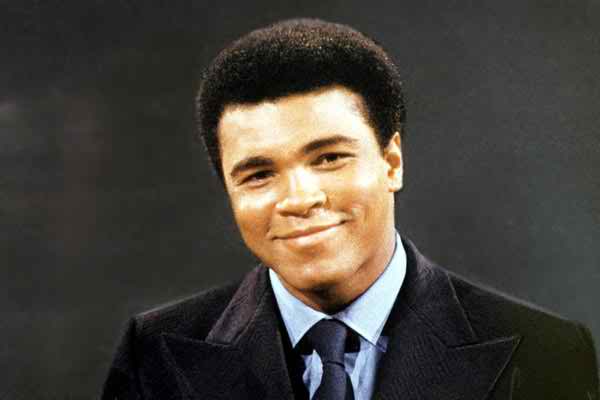
1. Muhammad Ali of Louisville. Before he was The Greatest, and even before he was Muhammad Ali, when he was still Cassius Clay, his big talk earned him the nickname "the Louisville Lip." He lived long enough to establish the Muhammad Ali Center in downtown Louisville -- ironically, 2 blocks from an art museum named Frazier. (No word on whether either of them is run by someone whose title is "Foreman.")

Before Michael Jordan, no one had appeared on the cover of Sports Illustrated more times than Ali. This included their 1974 end-of-year issue, where he was named Sportsman of the Year. The Ring magazine named him Fighter of the Year a record 6 times: 1963, 1966, 1972, 1974, 1975 and 1978. In 2005, George W. Bush -- a Republican, and whose own method of avoiding service in Vietnam somehow did not receive the same level of criticism -- awarded him the nation's highest civilian honor, the Presidential Medal of Freedom.

The only excuse not to put Ali at Number 1 is if you don't believe that boxing is a "sport." If it is, then he might be Number 1 among all States. Granted, he only played 1 sport (although he was interested in all of them, particularly basketball, given that he was from Kentucky); and, given his physique and his ambition, he probably could have played at least 1 more at the professional level had he so desired. But he only tried 1. (He liked golf, but wasn't very good at it, and that's not a sport.)

But, at the sport that he tried, even if he wasn't actually (in lower-case letters) the greatest of all time, he was, at the very least, 1 of the top 3 heavyweights ever, along with Joe Louis and Rocky Marciano. But his talent, the force of his personality, and the times that shaped him, and which he helped to shape right back, are what made him The Greatest Of All Time.
"Fool, I told you I was The Greatest!"
Yes, you did. And you were right.

There could never be another Muhammad Ali. And even if there were, he would be only that: A second Muhammad Ali. There would always be the first, against whom to measure him.