Showing posts with label toe blake. Show all posts

Monday, February 16, 2015

Top 10 Uniform Numbers That Should Be Retired

Maurice Richard, Number 9: Retired.
Elmer Lach, Number 16: Retired.
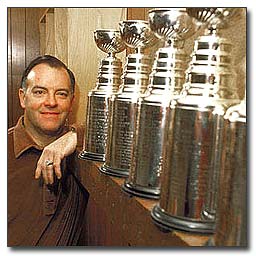
Toe Blake, Number 6.

The Yankees have announced that they will retire Andy Pettitte's Number 46 on August 23, the 1st Anniversary of the retirement of Number 6 for Joe Torre. Presumably, he will also get his Monument Park Plaque on that day.

UPDATE: Jorge Posada's Number 20 and Bernie Williams' Number 51 will also be retired. They will also get Plaques. So will Willie Randolph, although his Number 30 will remain in circulation.

Here are the Yankees' Retired Numbers, as of now:

4 Lou Gehrig, 1st base, 1923-39, number retired on July 4, 1939
3 Babe Ruth, right field, 1920-34, June 13, 1948
5 Joe DiMaggio, center field, 1936-51, April 18, 1952
7 Mickey Mantle, center field, 1951-68, June 8, 1969
37 Casey Stengel, manager, 1949-60, August 8, 1970
8 Bill Dickey, catcher, 1928-46, coach 1949-60, April 18, 1972
8 Yogi Berra, catcher, 1946-63, coach 1975-83, manager 1964 & 1984-85, April 18, 1972
16 Whitey Ford, pitcher, April 6, 1974
15 Thurman Munson, catcher, 1969-79, August 2, 1979
32 Elston Howard, catcher, 1955-67, coach, 1969-80, July 21, 1984
9 Roger Maris, right field, 1960-66, July 21, 1984
10 Phil Rizzuto, shortstop, 1941-56, broadcaster 1957-96, August 4, 1985
1 Billy Martin, 2nd base, 1950-57, manager, on and off 1975-88, August 10, 1986
44 Reggie Jackson, right field, 1977-81, August 14, 1993
23 Don Mattingly, 1st base, 1982-95, August 31, 1997
49 Ron Guidry, pitcher, 1975-88, August 23, 2003
42 Mariano Rivera, pitcher, 1995-2013, September 22, 2013
6 Joe Torre, manager, 1996-2007, August 23, 2014

46 Andy Pettitte, pitcher, on and off 1995-2013, August 23, 2015.
20 Jorge Posada, catcher, 1995-2011, sometime in 2015.
51 Bernie Williams, center field, 1991-2006, sometime in 2015.

In addition, Monument Park Plaques have been given to Miller Huggins (Monument) and Joe McCarthy, who never wore a number (even though McCarthy managed in the major leagues until 1950); to Lefty Gomez, Red Ruffing, Paul O'Neill, Allie Reynolds, Tino Martinez and Goose Gossage, without their numbers being retired (11, 15, 21, 22, 24 and 54, respectively); and to George Steinbrenner (Monument), Jacob Ruppert, Ed Barrow, Mel Allen and Bob Sheppard, who were nonuniformed personnel. Randolph's Plaque will be added.


There are also Plaques in honor of the Masses delivered at the old Yankee Stadium by Popes Paul VI, John Paul II and Benedict XVI; presumably, Pope Francis will also come to Yankee Stadium on his U.S. visit next year, making it "Four ex-Cardinals with Plaques in Monument Park at Yankee Stadium," as the old joke goes. And there are tributes to the 9/11 victims and rescuers, Jackie Robinson and Nelson Mandela (who gave a speech before a sellout crowd at The Stadium in 1990).

Removed from circulation, but not yet officially retired, is O'Neill's Number 21. Presumably, the 2 of Derek Jeter will also be retired. The 13 of Alex Rodriguez? As Pete Rose would say, Don't bet on it.

Other uniform numbers retired in major league sports in 2014 or, already, in 2015:

MLB: The Colorado Rockies retired 17 for Todd Helton.

NFL: The Jets officially retired 90 for Dennis Byrd, after merely removing it from circulation since his career-ending injury in 1992; the Pittsburgh Steelers retired 75 for Mean Joe Greene, after keeping it and several others (such as Terry Bradshaw's 12) out of circulation, but only retiring, to that point, Ernie Stautner's 70; the San Diego Chargers retired 55 for the late Junior Seau; the Chicago Bears finally made peace with Mike Ditka and retired his 89; and the Tampa Bay Buccaneers retired 55 for Derrick Brooks. The Green Bay Packers have not yet set a date, but have announced that they will retire 4 for Brett Favre.

NBA: The Philadelphia 76ers retired 3 for Allen Iverson; the Sacramento Kings retired 4 for Chris Webber and 16 for Peja Stojakovic; the San Antonio Spurs retired 12 for Bruce Bowen. The Dallas Mavericks have announced that they will retire 12 for Derek Harper.

NHL: The Montreal Canadiens retired 5 for Guy Lapointe; the Detroit Red Wings retired 5 for Nicklas Lidstrom; the Dallas Stars retired 9 for Mike Modano; and the Calgary Flames retired 25 for Joe Nieuwendyk (who helped them, and the Devils, each win a Stanley Cup). Already in 2015, the Los Angeles Kings have retired 4 for Rob Blake, the Buffalo Sabres have retired 39 for Dominik Hasek, and the Anaheim Ducks have retired 8 for Teemu Selanne. Since Martin Brodeur's experiment with the St. Louis Blues has now come to an official end, presumably, the Devils will soon retire his 30.

*

Top 10 Uniform Numbers that Should Be Retired

Note: The Washington Redskins (33, Sammy Baugh) have retired just one number, but have removed several others from circulation. 
The Toronto Maple Leafs have only 2 retired numbers -- Bill Barilko's 5 and Ace Bailey's 6 -- but they have (Canadian spelling) "Honoured Numbers," including Tim Horton's 7, Darryl Sittler's 27 and Doug Gilmour's 93.

UPDATE: At the start of the 2016-17 season, to celebrate the 100th Anniversary of both their team and the NHL, the Leafs retired all their Honoured Numbers.

From February 2015, when I first did this list, through January 2018, 3 years, none of the honorees I suggested have been honored.

10. Joint Entry: Several players for the Philadelphia Athletics. Across the Bay, the San Francisco Giants have retired numbers for players from their New York era.  The A's do hang banners for their 5 Philly-era World Championships, but they don't recognize their retired numbers from there.

They should have the following: 2, Mickey Cochrane, catcher, 1925-33; 3, Jimmie Foxx, 1st base, 1936-42; 7, Al Simmons, left field, 1924-32 with comebacks in 1940-41 and '44; 10, Lefty Grove, pitcher, 1925-33; and 32, Eddie Collins, 2nd base, 1906-14 and 1927-30, also coach 1931-32, which is when he wore the number.

Because Connie Mack lost a lot of money in the "Federal League War" of 1914-15, and lost his life savings in the stock market crash of 1929, he had to sell off both the dynasties he built. As a result, all of these guys spent some productive years with other teams: Collins and Simmons with the Chicago White Sox, Cochrane with the Detroit Tigers (where he wore 3, and they should retire it for him and for Alan Trammell, instead of merely removing it from circulation as they have), and Foxx and Grove with the Boston Red Sox.


None of them have had their numbers retired with any team, and that, along with the fact that the Philadelphia Athletics no longer exist in their present form, is why, unlike a lot of long-ago legends, they tend to get forgotten.

9. Joint Entry: Several players for the Oakland Raiders. The Raiders do not retire numbers. Nor do they have a team Hall of Fame. They should retire 16 for George Blanda (quarterback/placekicker, 1967-75), 12 for Ken Stabler (quarterback, 1970-79), 32 for Marcus Allen (running back, 1982-92, which Al Davis would never have done while he was alive even if he did retire numbers, due to their nasty falling-out), and 75 for Howie Long (defensive end, 1981-93). If others should be packed away, don't tell me, tell them.

8. Joint Entry: Several players for the Dallas Cowboys. The Cowboys don't retire numbers, either. But they do have a Ring of Honor, which was set up at their new stadium after having been established at Texas Stadium.

Five numbers ought to do it: 74, Bob Lilly, defensive tackle, 1961-74; 12, Roger Staubach, quarterback, 1969-79; 33, Tony Dorsett, running back, 1977-87; 8, Troy Aikman, quarterback, 1989-2000; and 22, Emmitt Smith, running back, 1990-2002.

7. Joint Entry: Two quarterbacks for the Philadelphia Eagles. 11, Norm Van Brocklin (1958-60); and 7, Ron Jaworski (1977-86). The Eagles have retired McNabb's 5, and he's 1 of 2 quarterbacks to lead them into the Super Bowl. Jaworski is the other. But Van Brocklin is the last quarterback to lead them to a championship, so even though he was only there for 3 years, he should be honored. (Yes, there are players who've been with some sports teams for less who've had their numbers retired — some, even without dying young.)


6. 1, Frank Brimsek, Boston Bruins, goaltender, 1938-49. In his rookie season, he helped the Bruins win the Stanley Cup, while posting 10 shutouts, earning him the nickname "Mr. Zero." He also helped them win the Cup in 1941. He's in the Hall of Fame. But while the Bruins have retired every other single-digit uniform number except 6, they haven't retired 1.

Brimsek's predecessor in goal, Clarence "Tiny" Thompson, who helped them win the Cup in 1929, is also in the Hall of Fame, but 1 hasn't been retired for him, either.

5. 8, Gary Carter, New York Mets, catcher, 1985-89. Met fans who chose Mike Piazza as the team's all-time catcher in a 50th Anniversary poll in 2012 forgot 3 things: 1, The greatest catcher in your team's history has to actually be able to play the position of catcher, and Piazza, couldn't play it worth beans; 2, A Hall of Fame catcher who helped you win a World Series should be ahead of a catcher not in the Hall of Fame who didn't help you win one; and, 3, Carter had just died, so remembrances of him would have been fresh.

Carter was elected to the Hall in 2003, and he lived until just before spring training in 2012, so they had 9 seasons in which to retire his number — 8, if he would have been too ill to attend in 2011. The Montreal Expos retired his 8 (although it was unretired when they became the Washington Nationals), but while the Mets have taken it out of circulation, they haven't retired it.

4. 4, Leonard "Red" Kelly, Detroit Red Wings, defenseman, 1947-60. In 1954, he was awarded the 1st Norris Trophy as best defenseman. He helped the Wings win the Stanley Cup in 1950, '52, '54 and '55.

They traded him to the Toronto Maple Leafs, who converted him to a center, and he helped them win Cups in 1962, '63, '64 and '67. This made him the only man to win as many as 8 Cups without ever having played for the Montreal Canadiens. He then retired, and became the 1st head coach for the Los Angeles Kings.

If you think Nicklas Lidstrom was the best defenseman in Detroit history, then you at least have to put Kelly alongside him in the all-time starting lineup. The Leafs have made his 4 an Honoured Number, but the Wings haven't given him the equivalent honor. They should, while he's still alive. (He's 87.)

UPDATE: The Wings retired 4 for Kelly on February 1, 2019. He was on hand for the ceremony. He died 3 months later.

3. 43, Tris Speaker, Cleveland Indians, center field, 1916-26; manager, 1919-26; coach, 1947-49. Speaker retired before uniform numbers were introduced, but, like Eddie Collins, and like Honus Wagner with the Pittsburgh Pirates (who retired his Number 33), he returned as a coach, to aid Larry Doby in his transition to center field, which he hadn't played before.

Since he was their greatest player, and 1 of only 2 managers to lead them to a World Championship, he should receive the honor. (Though I have no idea why they gave him 43.)

2. 99, George Mikan, Los Angeles Lakers, center, 1947-54. True, he only played for them in Minneapolis, but the league never would have lasted long enough for them to move to Los Angeles in 1960 if Mikan hadn't been the face of the league from 1948 to 1954.

The Lakers have a banner honoring Mikan and their other Minneapolis-era Hall-of-Famers, but that's not the same thing. (UPDATE: In 2022, they finally retired Number 99.)

1. 6, Hector "Toe" Blake, Montreal Canadiens, left wing 1935-48, head coach 1955-68.  He won a Hart Trophy as NHL MVP in 1939, and the Stanley Cup with the Habs in 1944 and '46. But his true contribution was as head coach, winning 8 Cups, including 5 in a row, then 4 in 5 years: 1956, '57, '58, '59, '60, '65, '66 and 
'68. Until Scotty Bowman came along, he was the greatest coach in NHL history. Yet, for all their retired numbers, the Habs have never given him the honor: 6 and 8 remain their only single digits in circulation.

If you're wondering why a hockey player was nicknamed "Toe," it's because, when he was a boy, his baby sister couldn't pronounce "Hector," and it came out "Hec-toe."

Sunday, October 20, 2013

Top 10 Uniform Numbers That Should Be Retired

Last month, the Yankees retired Mariano Rivera's Number 42.

Here are the Yankees' Retired Numbers, as of now:

4 Lou Gehrig, 1st base, 1923-39, number retired on July 4, 1939
3 Babe Ruth, right field, 1920-34, June 13, 1948
5 Joe DiMaggio, center field, 1936-51, April 18, 1952
7 Mickey Mantle, center field, 1951-68, June 8, 1969
37 Casey Stengel, manager, 1949-60, August 8, 1970
8 Bill Dickey, catcher, 1928-46, coach 1949-60, April 18, 1972
8 Yogi Berra, catcher, 1946-63, coach 1975-83, manager 1964 & 1984-85, April 18, 1972
16 Whitey Ford, pitcher, April 6, 1974
15 Thurman Munson, catcher, 1969-79, August 2, 1979
32 Elston Howard, catcher, 1955-67, coach, 1969-80, July 21, 1984
9 Roger Maris, right field, 1960-66, July 21, 1984
10 Phil Rizzuto, shortstop, 1941-56, broadcaster 1957-96, August 4, 1985
1 Billy Martin, 2nd base, 1950-57, manager, on and off 1975-88, August 10, 1986
44 Reggie Jackson, right field, 1977-81, August 14, 1993
23 Don Mattingly, 1st base, 1982-95, August 31, 1997
49 Ron Guidry, pitcher, 1975-88, August 23, 2003
42 Mariano Rivera, pitcher, 1995-2013, September 22, 2013

In addition, Monument Park Plaques have been given to Miller Huggins (Monument) and Joe McCarthy, who never wore a number (even though McCarthy managed in the major leagues until 1950); to Lefty Gomez, Red Ruffing and Allie Reynolds, without their numbers being retired (11, 15 and 22, respectively); and to George Steinbrenner (Monument), Jacob Ruppert, Ed Barrow, Mel Allen and Bob Sheppard, who were nonuniformed personnel.

Removed from circulation, but not yet officially retired, are the 6 of Joe Torre, the 20 of Jorge Posada, the 21 of Paul O'Neill, and the 51 of Bernie Williams. Presumably, the 2 of Derek Jeter and the 46 of Andy Pettitte will also be retired. The 13 of Alex Rodriguez? At this point, who knows.

(UPDATE: As of the 2023 season, 2, 6, 20, 21, 46 and 51 have been officially retired. 13 remains available.)

Other uniform numbers retired in major league sports in 2013: The Atlanta Braves have retired the 10 of Chipper Jones, the Philadelphia Eagles the 5 of Donovan McNabb, and the Tampa Bay Buccaneers the 99 of Warren Sapp; in the fall, the Brooklyn (formerly New Jersey) Nets will retire the 5 of their player, now coach, Jason Kidd; the Colorado Avalanche the 52 of Adam Foote; and, finally, mending fences with their greatest living icon, the Chicago Bears the 89 of Mike Ditka.

*

Top 10 Uniform Numbers that Should Be Retired

Note: The Pittsburgh Steelers (70, Ernie Stautner) and the Washington Redskins (33, Sammy Baugh) have each retired just one number, but have removed several others from circulation. No Steeler will ever again wear, among others, Terry Bradshaw's 12 or Mean Joe Greene's 75; no Redskin will ever again wear, among others, Joe Theismann's 7 or John Riggins' 44.

The Toronto Maple Leafs have only 2 retired numbers — Bill Barilko's 5 and Ace Bailey's 6 — but they have (Canadian spelling) "Honoured Numbers," including Tim Horton's 7, Darryl Sittler's 27 and Doug Gilmour's 93.

(UPDATE: At the start of the 2016-17 season, as part of their 100th Anniversary celebration, the Leafs officially retired all of their previously Honoured Numbers. The Steelers also retired Greene's 75.)

10. Joint Entry: Several players for the Philadelphia Athletics. Across the Bay, the San Francisco Giants have retired numbers for players from their New York era. The A's do hang banners for their 5 Philly-era World Championships, but they don't recognize their retired numbers from there.

They should have: 2, Mickey Cochrane, catcher, 1925-33; 3, Jimmie Foxx, 1st base, 1936-42; 7, Al Simmons, left field, 1924-32 with comebacks in 1940-41 and '44; 10, Lefty Grove, pitcher, 1925-33; and 32, Eddie Collins, 2nd base, 1906-14 and 1927-30, also coach 1931-32, which is when he wore the number.

Because Connie Mack lost a lot of money in the "Federal League War" of 1914-15, and lost his life savings in the stock market crash of 1929, he had to sell off both the dynasties he built.  s a result, all of these guys spent some productive years with other teams: Collins and Simmons with the Chicago White Sox, Cochrane with the Detroit Tigers (where he wore 3, and they should retired it for him and for Alan Trammell, instead of merely removing it from circulation), and Foxx and Grove with the Boston Red Sox.

None of them have had their numbers retired with any team, and that, along with the fact that the Philadelphia Athletics no longer exist in their present form, is why, unlike a lot of long-ago legends, they tend to get forgotten.

9. Joint Entry: Several players for the Oakland Raiders. The Raiders do not retire numbers. Nor do they have a team hall of fame. They should retire 16 for George Blanda (quarterback, 1967-75), 12 for Ken Stabler (quarterback, 1970-79), 32 for Marcus Allen (running back, 1982-92, which Al Davis would never have done while he was alive even if he did retire numbers, due to their nasty falling-out), and 75 for Howie Long (defensive end, 1981-93). If others should be packed away, don't tell me, tell them.

8. Joint Entry: Several players for the Dallas Cowboys. The  Cowboys don't retire numbers, either. But they do have a Ring of Honor, which was set up at their new stadium after having been established at Texas Stadium.

Five numbers ought to do it: 74, Bob Lilly, defensive tackle, 1961-74; 12, Roger Staubach, quarterback, 1969-79; 33, Tony Dorsett, running back, 1977-87; 8, Troy Aikman, quarterback, 1989-2000; and 22, Emmitt Smith, running back, 1990-2002.

7. Joint Entry: Two quarterbacks for the Philadelphia Eagles.  11, Norm Van Brocklin (1958-60); and 7, Ron Jaworski (1977-86). The Eagles just retired McNabb's 5, and he's 1 of 2 quarterbacks to lead them into the Super Bowl. Jaworski is the other.

But Van Brocklin is the last quarterback to lead them to a championship, so even though he was only there for 3 years, he should be honored. (Yes, there are players who've been with some sports teams for less who've had their numbers retired -- some, even without dying young.)

6. 1, Frank Brimsek, Boston Bruins, goaltender, 1938-49. In his rookie season, he helped the Bruins win the Stanley Cup, while posting 10 shutouts, earning him the nickname "Mr. Zero."  He also helped them win the Cup in 1941. He's in the Hall of Fame. But while the Bruins have retired every other single-digit uniform except 6, they haven't retired 1.  

Brimsek's predecessor, Clarence "Tiny" Thompson, is also in the Hall of Fame, but 1 hasn't been retired for him, either.

5. 8, Gary Carter, New York Mets, catcher, 1985-89. Met fans who chose Mike Piazza as the team's all-time catcher in a 50th Anniversary poll in 2012 forgot 3 things: 1, The greatest catcher in your team's history has to actually be able to play the position of catcher, and Piazza couldn't play it worth beans; 2, A Hall of Fame catcher who helped you win a World Series should be ahead of a catcher not in the Hall of Fame who didn't help you win one; and 3, Carter had just died, so remembrances of him would have been fresh.

Carter was elected to the Hall in 2003, and he lived until just before spring training in 2012, so they had 9 seasons in which to retire his number -- 8, if he would have been too ill to attend in 2011. The Montreal Expos retired his 8 (although it was unretired when they became the Washington Nationals), but while the Mets have taken it out of circulation, they haven’t retired it.

4. 4, Red Kelly, Detroit Red Wings, defenseman, 1947-60. In 1954, he was awarded the 1st Norris Trophy as best defenseman. He helped the Wings win the Stanley Cup in 1950, '52, '54 and '55.

They traded him to the Maple Leafs, who converted him to a center, and he helped them win Cups in 1962, '63, '64 and '67.  This made him the only man to win as many as 8 Cups without ever having played for the Montreal Canadiens. He then retired, and became the first head coach for the Los Angeles Kings.

If you think Nicklas Lidstrom was the best defenseman in Detroit history, then you at least have to put Kelly alongside him in the starting lineup. The Leafs have made his 4 an Honoured Number, but the Wings haven't so honored him. They should, while he's still alive. (He's 86.)

UPDATE: The Leafs retired Kelly's 4 in 2016, and the Wings did so in 2019.

3. 43, Tris Speaker, Cleveland Indians, center field, 1916-26; manager, 1919-26; coach, 1947-49. Speaker retired before uniform numbers were introduced, but, like the aforementioned Eddie Collins, and like Honus Wagner with the Pittsburgh Pirates (who retired his Number 33), he returned as a coach, to aid Larry Doby in his transition to center field, which he hadn't played before.

Since he was their greatest player, and one of only 2 managers to lead them to a World Championship, he should receive the honor. (Though I have no idea why they gave him 43.)

2. 99, George Mikan, Los Angeles Lakers, center, 1947-54. True, he only played for them in Minneapolis, but the league never would have lasted long enough for them to move to Los Angeles if Mikan hadn't been the face of the league from 1948 to 1954.

The Lakers have a banner honoring Mikan and their other Minneapolis-era Hall-of-Famers, but that's not the same thing.

1. 6, Hector "Toe" Blake, Montreal Canadiens, left wing 1935-48, head coach 1955-68. He won a Hart Trophy as NHL MVP in 1939, and the Stanley Cup with the Habs in 1944 and '46. But his true contribution was as head coach, winning 8 Cups, including 5 in a row: 1956, '57, '58, '59, '60, '65, '66 and '68.  Until Scotty Bowman came along, he was the greatest coach in NHL history. Yet, for all their retired numbers, the Habs have never honored him with the honor.

If you're wondering why a hockey player was nicknamed "Toe," it’s because, when he was a boy, his baby sister couldn't pronounce "Hector," and it came out "Hec-toe."

Wednesday, January 11, 2012

Do Medicore Players Make the Best Coaches? NHL Edition

Last in the series. I'll start with the 1926-27 season. Partly because most of the previous winning coaches were player-coaches. Partly because it was the 1st season in which the Stanley Cup became the sole province of the National Hockey League. And partly because it was the 1st season for 3 of the modern teams: The New York Rangers (who, in those pre-Devils days, did not suck), the Chicago Blackhawks and the Detroit Red Wings.

Remember: A player who didn't make it to the NHL, even if it was through no fault of his own (injury, illness, career interrupted by military service), is still classified as a "mediocre player."

1927 Ottawa Senators: Dave Gill. As far as I know, he never played pro hockey. This was the last of 9 Cups won by the old Senators, formerly known as the Ottawa Silver Seven. (There was an additional position 100 years ago, the "rover," sort of a half-forward, half-defenseman. Bobby Orr and Paul Coffey would have played the position.) These Senators went bankrupt in the Depression, moving to become the St. Louis Eagles in 1934 and folding a year later. The new Sens began in 1992, and have been far less successful: They're usually competitive, but they've won a grand total of 1 Stanley Cup Finals game.

1928 New York Rangers: Lester Patrick. One of the best defensemen of his time. In the Hockey Hall of Fame as a player, although he had much more influence as a coach and executive.

1929 Boston Bruins: Cy Denneny. One of the best forwards of his time. Hall of Fame.

1930 Montreal Canadiens: Cecil Hart. Never played.

1931 Canadiens: Hart.

1932 Toronto Maple Leafs: Dick Irvin. One of the best forwards of his time. Hall of Fame as a player, although he had much more influence as a coach. Actually, his best contribution to the game may have been his son, Hall of Fame broadcaster Dick Irvin Jr.

1933 Rangers: Patrick.

1934 Chicago Blackhawks: Tommy Gorman. Never played hockey, but was one of the best lacrosse players of his time.

1935 Montreal Maroons: Gorman. Not sure why he left the Hawks after winning the Cup, although it may have had something to do with team owner Frederic McLaughlin being a lunatic.

1936 Detroit Red Wings: Jack Adams. One of the best forwards of his time. In the Hockey Hall of Fame as a player, although he had much more influence as a coach and executive.

1937 Wings: Adams.

1938 Hawks: Bill Stewart. Played in college, but his professional sport was baseball. An injury cut short his playing career, but he became both a baseball umpire and a hockey referee, as well as the first American to coach a Cup winner.

1939 Bruins: Art Ross. One of the best defensemen of his time. In the Hockey Hall of Fame as a player, although he had much more influence as a coach and executive. You might be recognizing some of these names if you're a hockey fan over the age of 30, even if you're not one over the age of 80: Patrick, Ross and Adams all got their names put on NHL Divisions from 1974 to 1993, along with Toronto Maple Leafs executive Conn Smythe. With the NHL now having 6 Divisions, we'd probably have to add Scotty Bowman and Al Arbour.

1940 Rangers: Frank Boucher. Great center, on a line between the brothers Bill and Frederick "Bun" Cook, on the 1928 and '32 Cup-winning Rangers. Patrick, by now, was "only" the general manager, although his sons Lynn and Murray "Muzz" Patrick were Ranger players. Boucher, a Hall-of-Famer, was a part of every Ranger Cup-winner until 1994. And yet they've never retired his Number 7. Okay, it was also Rod Gilbert's number, but they've retired 9 for both Andy Bathgate and Adam Graves.

1941 Bruins: Ralph "Cooney" Weiland. Like Patrick, Ross left coaching and stayed the GM, and promoted his former Number 7, a Hall of Fame forward.

1942 Leafs: Clarence "Happy" or "Hap" Day. A Hall of Fame defenseman for the Leafs.

1943 Wings: Adams.

1944 Canadiens: Irvin. Left the Leafs for their arch-rivals. And, yes, today, the Habs and Leafs are still each others' arch-rivals, no matter what fans of the Bruins and the revived Ottawa Senators might think.

1945 Leafs: Day.

1946 Canadiens: Irvin.

1947 Leafs: Day.

1948 Leafs: Day.

1949 Leafs: Day.

1950 Wings: Tommy Ivan. An injury kept him from reaching the NHL.

1951 Leafs: Joe Primeau. A Hall of Fame center with the Leafs, along with Charlie Conacher and Harvey "Busher" Jackson on the 1930s' "Kid Line."

1952 Wings: Ivan.

1953 Canadiens: Irvin.

1954 Wings: Ivan.

1955 Wings: Jimmy Skinner. In the modern NHL, he probably would have made it, but in the six-team era, his path was blocked.

1956 Canadiens: Hector "Toe" Blake. He and Elmer Lach flanked Maurice "the Rocket" Richard on the "Punch Line" in the 1940s. An injury cut short his playing career but he was still elected to the Hall. Irvin was, uh, eased out of the Habs' head job after the 1955 season, partly because it was thought that an ex-teammate and good friend like Blake could handle the Rocket better, following the riot that bears his name. Blake coached 8 Stanley Cup winners, a record until Scotty Bowman broke it.

1957 Canadiens: Blake.

1958 Canadiens: Blake.

1959 Canadiens: Blake.

1960 Canadiens: Blake.

1961 Hawks: Rudy Pilous. A prospect for the Rangers, he never reached the NHL.

1962 Leafs: George "Punch" Imlach. Played minor-league hockey in Toronto, went off to World War II, and was offered a tryout by the Wings after his discharged, but didn't think he was in shape, and went into coaching.

1963 Leafs: Imlach.

1964 Leafs: Imlach.

1965 Canadiens: Blake.

1966 Canadiens: Blake.

1967 Leafs: Imlach.

1968 Canadiens: Blake.

1969 Canadiens: Claude Ruel. Played for the Habs' junior teams, but never reached the big club.

1970 Bruins: Harry Sinden. A good minor-league player, and an Olympian, but never reached the NHL.

1971 Canadiens: Al MacNeil. A defenseman, probably the 1st on this list to be good but not great, his career didn't have a whole lot of luck. Played for the Leafs before they won their 1960s Cups, the Habs between their '60 and '65 Cups, and the Hawks after their '61 Cup. Also an original 1967-68 member of the Penguins. His rotten luck continued when he coached the Canadiens in the 1969-70 and 1970-71 seasons -- bracketing the October Crisis in Quebec. During the '71 Finals, with the Habs down 3 games to 2 to the Hawks, with a potential Game 7 in Chicago, Henri Richard, the Rocket's much younger brother but also a HOFer, told the French media in Montreal, "MacNeil est incompetent." These words, suggesting that MacNeil's inability to speak French left him unable to properly deal with the many players whose ethnicity and language got the team nicknamed "the Flying Frenchmen," stirred up the ethnic, linguistic and political emotions of a city that, without having a wall, was as much divided at the time as Berlin. The only thing that could unite the city was the Canadiens, and they won Game 6 at home and Game 7 on the road. Afterward, Henri said, "I should've kept my mouth shut." As with Irvin in '55, MacNeil was quietly offered another place in the organization, and in came Scotty Bowman, who had coached the St. Louis Blues to the Finals in their first 3 seasons of play, without winning a Finals game, getting swept by the Habs in '68 and '69 and the Bruins in '70, despite a veteran lineup. Bowman and the '70s Habs were on their way to becoming the best dynasty in the game's history, as players like Henri and Jean Beliveau were on their way out, while men like Guy Lafleur, Larry Robinson and Ken Dryden were on their way in. MacNeil did coach in the NHL again, leading the Flames in 1980 when they moved from Atlanta to Calgary.

1972 Bruins: Tom Johnson. A Hall of Fame defenseman on the 1950s Canadiens.

1973 Canadiens: Scotty Bowman. An injury cut short his playing career, but as a coach he won a record 9 Cups, and with 3 different teams, so it can't be said that he was solely a beneficiary of the Habs' wonderful scouting and minor-league system. He is now a senior adviser to the Blackhawks, and his son Stan is their GM, and thus, as of 2010, also a Cup winner.

1974 Philadelphia Flyers: Fred Shero. The first first-time winners of the Cup in 38 years were coached by Freddy the Fog, who briefly played for the Rangers but was basically a career minor-leaguer.

1975 Flyers: Shero.

1976 Canadiens: Bowman.

1977 Canadiens: Bowman.

1978 Canadiens: Bowman.

1979 Canadiens: Bowman.

1980 New York Islanders: Al Arbour. An All-Star defenseman, won Cups with the '54 Wings, the '61 Hawks and the '62, '63 and '64 Leafs. Also a member of the Finalist Blues under Bowman, alongside such NHL legends as Jacques Plante and Doug Harvey. That Blues team thus had a reach in the NHL into the early Fifties and into the 21st Century. In the Hall as a "Builder," which is the Hall's category for coaches and executives, but a pretty good player.

1981 Isles: Arbour.

1982 Isles: Arbour.

1983 Isles: Arbour.

1984 Edmonton Oilers: Glen Sather. A defenseman, was traded from the Bruins right before their '70 Cup and the Habs right before their '76 Cup began a string of 4 straight. But his luck evened out as a coach.

1985 Oilers: Sather.

1986 Canadiens: Jean Perron. Never played in the NHL.

1987 Oilers: Sather.

1988 Oilers: Sather.

1989 Flames: Terry Crisp. A good center for the '74 & '75 Broad Street Bullies, although not, himself, known as a dirty player.

1990 Oilers: John Muckler. Never played in the NHL.

1991 Pittsburgh Penguins: Bob Johnson. Longtime head coach at the University of Wisconsin, earning him the name "Badger Bob," he produced some of the players on the 1980 U.S. Olympic team, including their leading scorer, his son Mark Johnson. But he never played in the NHL. Died of cancer shortly after winning the '91 Cup. The Pens then hired Bowman, in the hope that he could keep the team's newfound success going. He did.

1992 Pens: Bowman.

1993 Canadiens: Jacques Demers. Never played in the NHL.

1994 Rangers: Mike Keenan. Although he's coached 8 different teams, including taking the Flyers to the '85 and '87 Finals and in '94 becoming the only living person to coach the Rangers to a Cup, he never played in the NHL.

1995 New Jersey Devils: Jacques Lemaire. A Hall of Fame forward for the 1970s Habs, he scored the goal that won Game 4 of the '77 Finals and gave Montreal a sweep of the Bruins -- as reflected in the film of Barney's Version. (While the Mordecai Richler novel on which it's based has Barney as a huge Habs fan, the time periods are different, so Lemaire's goal does not, as in the film, happen on the day of his 2nd wedding.)

1996 Colorado Avalanche: Marc Crawford. An unremarkable player, although he did help the Vancouver Canucks reach their first Stanley Cup Finals, in 1982.

1997 Wings: Bowman.

1998 Wings: Bowman.

1999 Dallas Stars: Ken Hitchcock. Never played in the NHL. Now coaching the Blues.

2000 Devils: Larry Robinson. Hall of Fame defenseman for the 1970s and '80s Habs.

2001 Avs: Bob Hartley. Never played in the NHL. Not to be confused with the lead character on the 1970s sitcom The Bob Newhart Show.

2002 Wings: Bowman. His 9th and last.

2003 Devils: Pat Burns. Never played in the NHL.

2004 Tampa Bay Lightning: John Tortorella. A collegiate star, he never reached the NHL. Now the coach of the Rangers, who, as you may have noticed, suck.

2005 No Cup. Gary Bettman, you're going to hell, where you'll face Devils who will
treat you worse than the ones in New Jersey.

2006 Carolina Hurricanes: Peter Laviolette. Played a grand total of 12 games in the NHL, all in the 1988-89 season with the Rangers, who, by that point, had begun to suck. Now the coach of the Flyers -- who swallow.

2007 Anaheim Ducks: Randy Carlyle. An All-Star defenseman with the original Winnipeg Jets.

2008 Wings: Mike Babcock. Never played in the NHL.

2009 Pens: Dan Bylsma. Played several years as a defenseman with the two L.A.-area teams, the Kings and the Ducks.

2010 Hawks: Joel Quenneville. An original member of the Devils, was with the franchise when it moved from Denver, as the Colorado Rockies, in 1982. Being, as Wayne Gretzky put it, "a Mickey Mouse organization" at the time, they let him get away, and he became an All-Star defenseman with the Hartford Whalers.

2011 Bruins: Claude Julien. Had, as they would say in baseball, two "cups of coffee" with the Quebec Nordiques in the mid-1980s.

*

Great players: 29
Good players: 8
Mediocre players: 46

So there have been quite a few great players who've gone on to coach Stanley Cup winners. However, since Toe Blake hung up his whistle in 1968, of the 42 Cup-winning teams, 31 were led by mediocre players.

So my theory holds in this sport, too.

Today, the New Jersey Devils are coached by Peter DeBoer, who never played in the NHL. Does that mean there's hope for a Cup under him? If his coaching in this 2011-12 season thus far is any indication, the answer is no.