Showing posts with label jerome bettis. Show all posts

Thursday, February 5, 2026

February 5, 2006: Last Stop for the Bus

February 5, 2006, 20 years ago: Super Bowl XL is played at Ford Field in Detroit. The Seattle Seahawks were making their 1st appearance, having won the NFC Championship, after having played in the AFC from 1977 (after their 1st season, 1976, in the NFC) to 2001. They were coached by Mike Holmgren, who had coached the Green Bay Packers to victory in Super Bowl XXXI.

The Pittsburgh Steelers were making their 6th appearance. They had won their 1st 4, but had won their last in 1980, and thus sought "One for the Thumb In '81," but couldn't get it. They lost their most recent appearance, in 1996.

Head coach Bill Cowher had Ben Roethlisberger at quarterback. "Big Ben" had faced controversy over his treatment of women. Among his blockers was future Hall of Fame guard Alan Faneca. And a new edition of the "Steel Curtain" defense included linebackers James Farrior and Joey Porter, and future Hall of Fame safety Troy Polamalu.

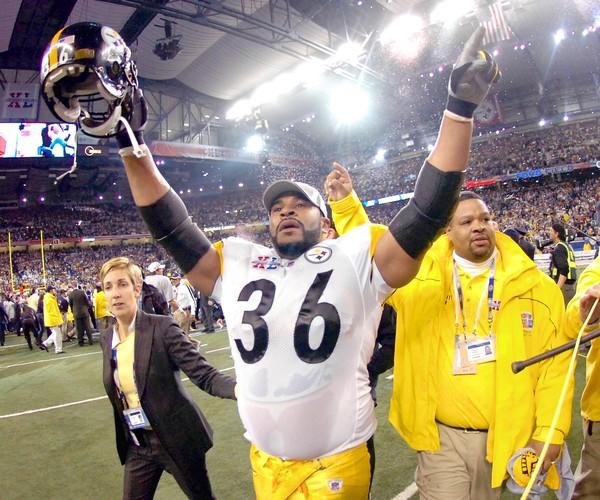
But the leading figure on the team was running back Jerome Bettis. "The Bus" was retiring after 13,662 rushing yards, 200 receptions for 1,449 yards, and 94 total touchdowns. And he was playing his last game in his hometown of Detroit.

The Seahawks scored first, on a field goal by Josh Brown. They thought they had a touchdown on a 16-yard pass from Matt Hasselback to Darrell Jackson. But the officials called a penalty on Jackson for offensive pass interference, nullifying the score. The Seahawks and their fans were furious with this call, but replays showed it was correct.

The only score in the 2nd quarter was a 1-yard run by Roehtlisberger, and it was 7-3 Steelers at the half. Early in the 2nd half, Willie Parker broke off a 75-yard touchdown run to put the Steelers up 14-3. Hasselback threw a 16-yard touchdown pass to Jerramy Stevens, and the 3rd quarter ended with Seattle down just 14-10.

In the 4th quarter, Seattle right tackle Sean Locklear was called for holding Steelers linebacker Clark Haggans, nullifying a deep pass that would have put the Hawks in position to take the lead. Seattle and their fans were furious with this call as well, but, again, the replay proved the call to be correct. Also disputed was a penalty called on Hasselbeck for an illegal block below the waist, while making a tackle during Ike Taylor's interception return.

With 8:56 left in the game, the Steelers tried some trickery: A reverse got the ball to receiver Antwaan Randle El, who had been a quarterback at Indiana University. He threw an option pass to Hines Ward, who took it 43 yards for a touchdown. It was the 1st touchdown pass by a receiver in a Super Bowl, and it made the score 21-10 Pittsburgh. That score held, as good clock management on offense and strong defense got the Steelers their "One for the Thumb."

The retiring Bettis rushed 14 times for 43 yards. He did not score a touchdown, but he converted a key first down, and allowed his team to run time off the clock late in the 4th quarter.

The Seahawks had more 1st downs, 20-14; more net yards, 396-339; fewer turnovers, 2-1; and more time of possession, 33:02-26:58. It was argued that the difference was penalties: The Hawks were penalized 7 times for 70 yards; the Steelers, 3 times for 20 yards.

But there were also 2 questionable calls that hurt the Steelers, and these were equally justified by instant replay. It wasn't the officials that cost the Seahawks the game: It was the Steelers getting the job done that did that.

The Steelers won a 6th Super Bowl 3 years later. The Seahawks finally won their 1st Super Bowl in 2014. 

Friday, January 26, 2018

Top 10 Athletes From Michigan

January 26, 1837: Michigan is admitted to the Union as the 26th State.

Top 10 Athletes From Michigan

Michigan is a big State, with almost 10 million people, and one of the largest metropolitan areas in the country, Detroit -- although a noticeable chunk of that metro area is across the Detroit River in Windsor, Ontario, Canada, and anyone from there is thus ineligible for this list.

Baseball. Football. Basketball. Hockey. Boxing. You could limit Michigan's Top 10 Athletes to any of those 5 sports, and come up with a list that could stand alongside 40 of the 50 States' Top 10.

Honorable Mention to Baseball Hall-of-Famers Hazen "Kiki" Cuyler of Harrisville, Hal Newhouser of Detroit, and John Smoltz of the Detroit suburb of Warren.

Honorable Mention to Jim Kaat of the Grand Rapids suburb of Zeeland. As both his name and his hometown's suggest, he is part of the large Dutch-American community in Michigan. He is not in the Hall of Fame, but he should be -- as either a player or a broadcaster. He was a 3-time All-Star, and won 16 Gold Gloves.

He won 283 games, including Pennants 17 years apart, in the American League with the 1965 Minnesota Twins, and in the National League with the 1982 St. Louis Cardinals, winning the World Series. When he retired the following year, he was the last active player who had played for the original Washington Senators (1901-60).

Honorable Mention to Kirk Gibson of the Detroit suburb of Pontiac. He played both baseball and football at Michigan State University. (So did Steve Garvey, but he's from Tampa.) He helped MSU's football team win the 1978 Big Ten Championship, then became a World Series hero in both leagues, for the 1984 Detroit Tigers and the 1988 Los Angeles Dodgers (following a regular season that won him the National League MVP).

Injuries cut short what could have been a Hall of Fame career, but still hit 255 home runs. In 2011, he was named NL Manager of the Year for getting the Arizona Diamondbacks to the NL Western Division title.

Honorable Mention to Orel Hershiser of Detroit. He was born in Buffalo, but was living in Detroit when he learned how to pitch, before moving to Toronto, and then to the Philadelphia suburb of Cherry Hill, New Jersey for high school. He had a 204-150 record over 18 seasons, reaching the postseason with the Los Angeles Dodgers in 1983, 1985 and 1988; the Cleveland Indians in 1995 and 1997; the San Francisco Giants in 1998; and the Mets in 1999.

A 3-time All-Star, his annus mirabilis was 1988: He won 23 games, set a new major league record with 59 consecutive scoreless innings pitched, won a Gold Glove and the National League Cy Young Award, and was named Most Valuable Player of both the NL Championship Series and, after winning Game 2 and the clinching Game 5, the World Series. In 1995, helping the Indians won the American League Pennant, he became the 1st (and still only) man to win LCS MVPs in both leagues.

He is not yet in the Hall of Fame, but he could be. He is now one of the game's most respected broadcasters.

Honorable Mention to Jim Abbott of Flint. Born without a hand on his right arm, he nonetheless learned how to pitch with his left, and to then switch his glove from his right wrist to his left hand and field his position. He won the 1987 James E. Sullivan Memorial Award as the nation's outstanding amateur athlete, for his pitching at the University of Michigan.

The team then known as the California Angels took a chance on him, and he reached the major leagues. Over 11 seasons, he had a record of 87-108, including a no-hitter with the Yankees in 1993.

Dishonorable Mention to Derek Lowe of the Detroit suburb of Dearborn. He went 176-157with 86 saves  in a 17-season career as a major league pitcher. He reached the postseason with the Boston Red Sox in 1998, 1999, 2003 and 2004; the Los Angeles Dodgers in 2008; the Atlanta Braves in 2010; and the Yankees in 2012.

A 2-time All-Star, he led the AL in saves in 2000 and the NL in wins in 2006, a rare combination. He pitched a no-hitter for the Red Sox in 2002. And he was a beneficiary of their steroid-induced cheating that helped them win the 2004 World Series, which led to Lowe's inclusion with his teammates as Sports Illustrated's Sportspeople of the Year. The Red Sox have elected him to their team Hall of Fame.

Somewhat Honorable Mention to George Gipp of Laurium. The way the University of Notre Dame handled him then would get them put on probation now, with the gambling and the womanizing and the barely showing up for class (and, worse from their perspective, the barely showing up for Mass), and for not doing anything about it.

But, by the standards of the time, he was a great runner, a great passer, a great punter, a great defensive back, and a great kick returner. He helped Notre Dame win the National Championship in 1919 and 1920. In 2008, ESPN named ranked him 22nd on their list of the Top 25 College Football Players of All Time.

He might have been the ideal guy to be the 1st great star of the newly-founded NFL, except he got strep throat, which developed into pneumonia, and died on December 14, 1920 -- almost certainly not telling head coach Knute Rockne to tell the team to "Win one for the Gipper" on his deathbed, as seen in the 1940 film Knute Rockne, All-American, with Ronald Reagan as Gipp and Pat O'Brien as Rockne.

As it is, despite not having played pro ball -- that we know of, lots of athletes in that era played it under assumed names to protect their eligibility, Jim Thorpe being the most notable one to get caught -- he remains the greatest athlete from Michigan's Upper Peninsula.

Honorable Mention to Bennie Oosterbaan of Muskegon. Baseball, football and basketball: He played, and coached, all 3 sports at the University of Michigan. In 1928, he led the league that became known as the Big Ten in batting average and in basketball scoring.

But football was his best sport. A 2-way end, he became the 1st great receiver in the Big Ten, taking passes from Benny Friedman -- the "Benny-to-Bennie" combination. (Friedman was from Ohio, although this is not as ironic as it sounds, as Ohio State was not then considered the Wolverines' big rival.) Michigan went 20-4 with 2 league titles while he played for them, despite Red Grange then being at Illinois. The school would eventually retire his Number 47.

But he never played any sport professionally, which is why I can't place him any higher. He went right into coaching, spending 20 years as a Michigan assistant, before becoming head coach in 1948 -- and winning the National Championship and Coach of the Year in his 1st season. He won the Big Ten in his 1st, 2nd and 3rd seasons. His record was 63-33-4.

Honorable Mention to Heisman Trophy winners Pete Dawkins of the Detroit suburb of Bloomfield Hills (1958) and Mark Ingram Jr. of the Detroit suburb of Grand Blanc (2011).

Honorable Mention to Reggie Williams of Flint. A star linebacker at Dartmouth College, he played 14 seasons for the Cincinnati Bengals, helping them win AFC Championships in 1981 and 1988. His charitable work earned him 2 different NFL "Man of the Year" awards, and a share of Sports Illustrated's "Athletes Who Care" Sportspeople of the Year in 1987. He later served a term on the City Council in Cincinnati.

Honorable Mention to Mel Daniels of Detroit, who is in the Basketball Hall of Fame. Don Nelson of Muskegon is in, but as a coach. Rudy Tomjanovich of Hamtramck is not yet in as either a player or a coach; most likely, he will be elected as a coach. Dan Majerle of Traverse City and Chris Webber of Detroit could be elected as players.

Honorable Mention to Hockey Hall-of-Famers Mark Howe of Detroit (son of Red Wings legend Gordie), Pat LaFontaine of Waterford, and Mike Modano of the Detroit suburb of Livonia. Craig Patrick of Detroit, son of Lynn and grandson of Lester, is in the Hall of Fame, but for his executive achievements, not his playing.

Honorable Mention to Ken Morrow of the Flint suburb of Davison and Mark Wells of the Detroit suburb of St. Clair Shores. Members of the U.S. hockey team that won the Gold Medal at the 1980 Winter Olympics, along with their teammates, they were named Sportsmen of the Year by Sports Illustrated. Wells never got out of the minor leagues, but Morrow went right to the New York Islanders and helped them win their 4 straight Stanley Cups.

Honorable Mention to New Jersey Devils Stanley Cup Winners: Brian Rolston of Flint (1995, beating his home-State Red Wings in the Finals), Shawn Chambers of the Detroit suburb of Sterling Heights (also 1995, won another with the 1999 Dallas Stars), Danton Cole of the Detroit suburb of Pontiac (also 1995), and Brian Rafalski of the Detroit suburb of Dearborn (2000 and 2003, won another with the Wings in 2008).

Honorable Mention to members of the U.S. team that won the 1996 World Cup of Hockey: LaFontaine, Modano, Rolston, Chambers, Doug Weight of the Detroit suburb of Warren (he had played for the New York Islanders, and is now their head coach and general manager), and the brothers Derian and Kevin Hatcher of the Detroit suburb of Sterling Heights.

Honorable Mention to Tim Thomas of Flint, who won the 2011 Conn Smythe Trophy for MVP of the Stanley Cup Playoffs, winning the Cup with the Boston Bruins.

Honorable Mention to Kate Sobrero of the Detroit suburb of Bloomfield Hills. Now Kate Markgraf, she was a member of the U.S. soccer team that won the 1999 Women's World Cup, and was, with her teammates, named to Sports Illustrated's Sportswomen of the Year. She also won Olympic Gold Medals in Sydney in 2000 and Athens in 2004.

Honorable Mention to William Bonthron of Detroit. He won the 1934 Sullivan Award as a middle-distance runner, and for 2 years held the world record in the 1,500 meters. But he fell short of qualifying for the 1936 Olympics.

Honorable Mention to James "Lights Out" Toney of Grand Rapids. He first held a World Championship in 1991, the IBF Middleweight Championship; and last did so in 2003, the IBF Cruiserweight Championship. The Ring magazine named him Fighter of the Year in 1991 and 2003 -- 12 years apart. In the 2001 film Ali, with Will Smith as The Greatest, "The Dark Emperor" played Joe Frazier.

Honorable Mention to Vernon Forrest of Marquette. "The Viper" was Welterweight Champion of the World from 2001 to 2003, and Super Welterweight Champion from 2007 to 2009. The Ring magazine named him Fighter of the Year in 2002.

Dishonorable Mention to Floyd Mayweather Jr. of Grand Rapids. You've heard of "The Good, the Bad, and the Ugly"? Well, here it is:

The good: The son of a fine boxer and the nephew of 2 others, the man nicknamed "Pretty Boy" after 1930s gangster Pretty Boy Floyd and "Money" because his skill made him "money in the bank" first won a World Championship in 1998, WBC Super Featherweight Championship. He most recently held a title in 2005 -- 17 years later -- the WBA and WBC Welterweight Championships.

He was The Ring's Fighter of the Year in 1998 and 2007. He beat such fighters as Arturo Gatti, an aging but still tough Oscar De La Hoya, Ricky Hatton, Victor Ortiz and Miguel Cotto. His career record is 50-0, with 27 knockouts.

The bad: Although he was 1 of 2 contenders for the title of best fighter, pound-for-pound, in the world during the 2000s, he spent years ducking the other such contender, Manny Pacquiao. In 2010, it appeared the fight would finally happen, with Mayweather 33 years old and Pacquiao 31, both still very much in their prime. But Mayweather kept ducking him and making excuses for it, until 2015, when, after Pacquiao had already lost 2 additional fights, and at 36 was the younger of the fighters. Mayweather won an easy decision.

The ugly: He was convicted of misdemeanor battery against a woman in 2002, against 2 women in 2004, against a man in 2005, and against another woman in 2011. So, until things were ironed out, he wasn't willing to fight the boxer then considered the most likely to ruin his undefeated record, but he was willing to hit women.

Now, the Top 10:

10. Paul Krause of the Flint suburb of Burton. He scored 54 points in a high school basketball game, and also lettered in baseball and track. He played baseball and football, as a receiver and a safety, at the University of Iowa. He was considered a legitimate MLB prospect until an injury.

But he made his professional mark in football. A 9-time All-Pro, he led the NFL in interceptions as a rookie with the 1964 Washington Redskins. He was traded to the Minnesota Vikings, and helped them win the 1969 NFL Championship and reach 4 Super Bowls. Although he is the only player ever to both intercept a pass in a Super Bowl (IV) and recover a fumble in another (IX), the Vikings lost all 4.

He is the NFL's all-time leader in interceptions, with 81. The old record of 79 was also held by an Iowa player, Emlen Tunnell. He also recovered 19 fumbles. Think about that: He personally had a turnover ratio of +100. He was named to the 70 Greatest Redskins, the Vikings Ring of Honor, and the Pro Football Hall of Fame.

9. George Gervin of Detroit. "The Iceman" came out of Eastern High School (now named for Martin Luther King) and Eastern Michigan University to become one of the most exciting players in pro basketball. He was a 12-time All-Star, 3 in the ABA and 9 in the NBA, including winning the All-Star Game MVP in 1980.

He led the NBA in scoring 4 times, his finger-roll becoming as much of a trademark in those days as Kareem Abdul-Jabbar's skyhook. Unfortunately for him, he never had a great team around him, and the closest he got to a League title was the 1976 ABA Semifinals (losing to the New York Nets) and 3 NBA Western Conference Finals, all with the San Antonio Spurs.

The Spurs retired his Number 44. He was named to the ABA All-Time Team and the NBA's 50th Anniversary 50 Greatest Players, 1 of 5 players so honored. Hall-of-Famer Gary Payton and Heisman Trophy-winning quarterback Ty Detmer, a San Antonio native, have called him their favorite athlete of all time.

8. Stanley Ketchel of Grand Rapids. A son of Polish immigrants, the man born Stanisław Kiecal and nicknamed the Michigan Assassin was, in the words of boxing historian Bert Sugar, "half animal." 

As Jack Dempsey later would, he went around the American West, getting fights wherever he could. Officially, he would build a pro record of 51-4-4. As for the fights he got paid for that haven't been counted, who knows.

He became Middleweight Champion of the World in 1908. He was known for his 4 fights with Billy Papke, winning 3. He frequently fought guys who were much bigger, beating Light Heavyweight Champion Philadelphia Jack O'Brien.

He and Heavyweight Champion Jack Johnson were friends, in spite of the racial difference. They agreed to fight each other, in spite of Johnson's tremendous size advantage. The deal was, it would go the distance, 20 rounds, and thus there would be no decision, and they would split the film rights to the fight 50-50. But Ketchel got carried away, forgot the deal, and knocked Johnson down. Big mistake: Johnson got up, and knocked out both Ketchel and some of his teeth.

Ketchel was training for a rematch with Johnson on a ranch in Missouri when he was shot and killed by a ranch hand on October 15, 1910. He was only 24. He is in the International Boxing Hall of Fame, and his hometown of Grand Rapids put up a statue of him. Nat Fleischer, founder and editor of The Ring magazine, called him the greatest middleweight fighter ever.

7. Jerome Bettis of Detroit. "The Bus" starred at Notre Dame, and moved with the Los Angeles Rams to St. Louis, before becoming a mainstay with the Pittsburgh Steelers. A 6-time Pro Bowler, he rushed for 13,664 yards and 91 touchdowns, and caught 200 passes for 1,457 yards and 3 touchdowns.

He closed his career in his hometown, as the Steelers won Super Bowl XL at Ford Field. The Steelers named him to their Hall of Honor, and have unofficially retired his Number 36. He is in the Pro Football Hall of Fame.

6. Charlie Gehringer of the Detroit suburb of Fowlerville. Mickey Cochrane, the catcher and manager of the Detroit Tigers in the mid-1930s, said, "Charlie says, 'Hello' on Opening Day, 'Goodbye' on closing day, and, in between, hits .350." His taciturnity, letting his bat and his glove do the talking, led to his nickname "The Mechanical Man."

There were no Gold Gloves in his day, and the All-Star Game didn't start until 1933, his 10th major league season. But he was the American League's starting 2nd baseman in the 1st 6 Games. He led the AL in stolen bases in 1929 and batting average in 1937, winning the Most Valuable Player that year. He helped the Tigers win Pennants in 1934, 1935 and 1940, winning the World Series in 1935.

He finished with a batting average of .320 and 2,839 hits. Following a barnstorming tour with a white team against a team of Negro Leaguers, Satchel Paige called him the best white hitter he ever pitched against. The Tigers retired his Number 2, and he was elected to the Baseball Hall of Fame. In 1999, The Sporting News chose him as one of their 100 Greatest Baseball Players.

5. Dave DeBusschere of Detroit. He pitched for the Chicago White Sox in the 1962 and '63 seasons, but he was also a basketball star in his home town, first for the University of Detroit, then for the Pistons, where he became the youngest head coach in NBA history, at 24, from 1964 to 1967.

He is 1 of only 12 athletes to have played in both Major League Baseball and the National Basketball Association (or its predecessor, the Basketball Association of America).

For a long time, Madison Square Garden would host NBA doubleheaders, with the Knicks playing the nightcap but not the opener. When the new Garden opened on February 14, 1968, Dave DeBusschere, playing for the Pistons, scored the new building's 1st basket.

The Knicks traded Walt Bellamy to the Pistons to get DeBusschere, already with a reputation as one of the league’s best defensive players. He led the defense that helped the Knicks win the NBA Championship in 1970 and 1973. He later served as head coach and general manager of the Knicks, and his Number 22 has been retired. He was elected to the Basketball Hall of Fame, and named to the NBA’s 50th Anniversary 50 Greatest Players.

My generation knows DeBusschere best as the Knick GM who won the 1st pick in the 1st-ever NBA Draft Lottery in 1985, selecting Patrick Ewing. Sadly, the great Double D suffered a heart attack and died in 2003, age 63.

4. Thomas Hearns of Detroit. The "Hit Man," also known as the "Motor City Cobra," first won a World Championship in 1980, the WBA Welterweight Championship. He last held a title in in 1992, the WBA Light Heavyweight Championship. In between, he was one of the most feared boxers in the world, being named Fighter of the Year by The Ring magazine in 1980 and 1984.

He lost a unification bout for the Middleweight Championship to Sugar Ray Leonard in 1981, but Leonard was barely hanging on before knocking Hearns out. After that, Hearns beat Wilfred Benitez and knocked out Roberto Duran. He got clobbered by Marvin Hagler, but it says something about him that even his 2 most notable defeats were fights in which he got in some great licks. His final record was 61-5-1.

3. Derek Jeter of Kalamazoo. His roots are in New Jersey. Born in Pequannock, Morris County, he lived in West Milford, Passaic County until age 4, when he moved with his parents to "Kazoo," about halfway between Chicago and Detroit. But because his grandparents still lived in North Arlington, Bergen County, he stayed a Yankee Fan.

His 2,747 games and 20 seasons are Yankee records. A 14-time All-Star and (contrary to the stories you may have been told about his bad fielding) a 5-time Gold Glove winner, he was AL Rookie of the Year in 1996, as the new Yankee Dynasty began. World Championships were won in 1996, 1998, 1999, 2000 and 2009. Additional Pennants were won in 2001 and 2003. In only 3 of his 20 seasons -- 1 of the 1st 18 -- did the Yankees fail to make the Playoffs.

In 2000, he became the 1st (and still only) player to be named Most Valuable Player of the All-Star Game and the World Series in the same season. However, he was never named a regular-season MVP, finishing in the top 3 in the voting in 1998, 2006 and 2009. In 2009, Sports Illustrated named him Sportsperson of the Year.

He finished with a .310 lifetime batting average, and 3,465 hits -- more than any person born after 1941 -- 260 of them home runs. The Yankees have retired his Number 2, and dedicated a Plaque for him in Monument Park. He will be eligible for the Hall of Fame in the election whose results will be announced in January 2020. He is now a part-owner of the Miami Marlins.

2. Earvin "Magic" Johnson of Lansing. He led Michigan State University to the 1979 National Championship, beating an Indiana State team led by Larry Bird. Magic was named the NCAA Tournament's Most Outstanding Player. This game, still the most-watched in college basketball history, is credited with launching the sport to a new level. It also started a professional and personal rivalry between Magic and Larry, although it never got nasty.

Magic was drafted by the Los Angeles Lakers, who already had Kareem Abdul-Jabbar, forcing him to switch from Number 33 to 32. The Lakers reached the 1980 NBA Finals, and when Kareem was hurt for Game 6, Magic, though 6-foot-9 was by then short for a center, moved from point guard, and torched the Philadelphia 76ers for 42 points on their own court, and won the title.

He also helped the Lakers win the NBA Championship in 1982 (again against the 76ers), 1985 (against Bird's Celtics), 1987 (against Bird again) and 1988 (against the Detroit Pistons). He was named Finals MVP (now named the Bill Russell Award) in 1980, 1982 and 1987. They also reached the Finals in 1983, 1984, 1989 and 1991. He became the all-time assists leader, a record since broken by John Stockton. He was a 12-time All-Star, and a 2-time All-Star Game MVP.

Now I come to the elephant in the room. Just before the 1991-92 season could begin, Magic announced he was retiring, because he'd been diagnosed with HIV, the virus that causes AIDS. He was nonetheless selected to that season's All-Star Game, and showed he still had his A-game, and was named the Game's MVP. He was named to the "Dream Team" that stormed to victory at the 1992 Olympics in Barcelona. Even then, he couldn't stay away, briefly coaching the Lakers in 1994 (not well) and briefly returning as a player in 1996 (ditto).

Michigan State retired his Number 33. The Lakers retired his Number 32 and dedicated a statue of him outside the Forum, since moved to the Staples Center. He was named to the Basketball Hall of Fmae and the NBA's 50th Anniversary 50 Greatest Players.

More than that, before he retired, he was already investing wisely, and had founded a chain of movie theaters, all in historically black neighborhoods, including on Harlem's iconic 125th Street. Not long before his diagnosis was announced, but right after Michael Jordan had led the Chicago Bulls to their 1st NBA Championship (beating Magic and the Lakers in the Finals), Magic said, "If Michael were doing what I'm doing, he really would own the world."

Magic's holdings now include a minority share of the Lakers, and the majority ownership of baseball's Los Angeles Dodgers, now defending National League Champions. Earvin Johnson still has a magic touch.

A man would have to be not just great at his sport, but a shaper of the world, to be ahead of Magic on this list. And the man at Number 1 was:

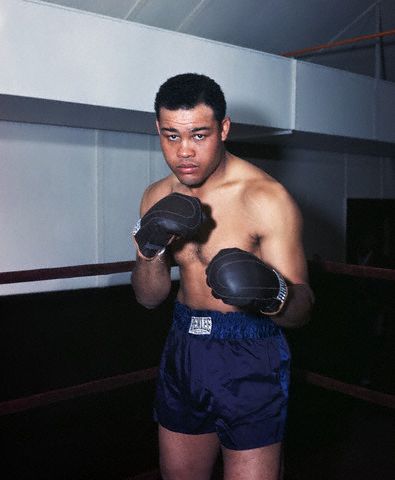
1. Joe Louis of Detroit. Born in Alabama as Joseph Louis Barrow, but trained to fight in Detroit, "the Brown Bomber" was the Motor City's 1st great fighter. By 1935, he was challenging men who had been Heavyweight Champion of the World, and winning. In 1936, he lost for the 1st time, to former Champion Max Schmeling.

But he recovered, won 6 more fights, and got a title shot against Champion Jim Braddock, knocking him out at Comiskey Park in Chicago on June 22, 1937. This completed an era in which the Detroit Tigers won back-to-back American League Pennants and a World Series, the Lions won an NFL Championship, and the Red Wings won back-to-back Stanley Cups. Detroit became the 1st city ever to call itself "the City of Champions," and they were right.

There were 5 men who were Heavyweight Champion in the 1930s before Louis, and he had beaten 4 of them: Braddock, Max Baer, Primo Carnera and Jack Sharkey. But he said he wouldn't consider himself the real champ until he beat Schmeling.

Schmeling had previously been rather popular in America, partly because he looked a bit like 1920s Champion Jack Dempsey, and partly because, although heavily accented, he spoke fluent English. And while Germans were despised in America during World War I, that was no longer the case during Schmeling's title-hold, 1930 to 1932.

But at this point, Nazi Germany was holding Schmeling up as an example of "Aryan supremacy." Schmeling didn't like that. He wasn't a bigot. And, with his dark complexion, dark hair, and thick eyebrows, he looked more like one of the Jews that the Nazis hated than a blond, blue-eyed Aryan Übermensch. Even when World War II came, and he was a paratrooper in the German army -- thus forcing him to swear an oath of loyalty to Adolf Hitler -- he was never a member of the National Socialist Party.

They fought at Yankee Stadium, the same site as their 1st fight, on June 22, 1938. President Franklin D. Roosevelt had told Louis he had to win for all America. He did: The fight lasted 2 minutes and 4 seconds. Joseph Goebbels, the Nazi propaganda minister, ordered the radio network broadcasting the fight throughout the Third Reich to stop broadcasting before Schmeling could be counted out.

Louis was now a hero to all America, white and black alike. He defended the Heavyweight Championship more times than anyone, 25. He held it continuously longer than anyone, 12 years. His fights with "Two Ton" Tony Galento, Light Heavyweight Champion Billy Conn, and Jersey Joe Walcott became legend. The Ring magazine named him Fighter of the Year in 1936, 1938, 1939 and 1941.
He retired after his 2nd fight with Walcott in 1948, and Ezzard Charles won the "elimination tournament" to become the new Champion in 1949. But Joe needed money, and came out of retirement, and it was a disaster. Charles beat him, and then rising contender Rocky Marciano knocked him out in 1951, ending his career with a record of 69-3. Still needing money, he became a pro wrestler. He wasn't good at it. And his last years saw him plagued by illness as well as debt. He died in 1981.

President Ronald Reagan, noting that Louis had served in the Army during World War II, ordered that he be buried at Arlington National Cemetery (which his family approved). His original hometown of Lafayette, Alabama erected a statue of him. Detroit erected an arena with his name on it, and a monument in his memory, a giant bronze arm with a clenched fist outside their City Hall.
Muhammad Ali called himself "The Greatest," but the generation that remembers Joe Louis as Heavyweight Champion may go to their eternal rests convinced that Louis was the best ever.
Sunday, February 1, 2015

Pro Football Hall of Fame Members by Team, 2015 Edition

Congratulations to the newly-elected members of the Pro Football Hall of Fame, whose new members are annually announced on the day before the Super Bowl:

* Mick Tinglehoff, center, 1960s-70s Minnesota Vikings.

* Ron Wolf, scout, 1960s-70s Oakland Raiders; general manager, 1970s Tampa Bay Buccaneers and 1990s Green Bay Packers. He was recently hired as a consultant for the New York Jets.
* Charles Haley, linebacker, 1980s San Francisco 49ers, and defensive end, 1990s Dallas Cowboys -- and while he's not the only man to play on 5 NFL Championship teams, he is the only one to do so entirely in the Super Bowl era.
* Bill Polian, general manager, 1980s-90s Buffalo Bills, 1990s Carolina Panthers, and 2000s Indianapolis Colts.
* Tim Brown, receiver, 1990s Los Angeles/Oakland Raiders. Also winner of the 1987 Heisman Trophy, although that has nothing to do with his pro football qualifications.
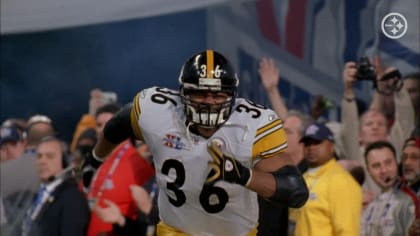
* Jerome Bettis, running back, 1990s-2000s Pittsburgh Steelers.
* Will Shields, guard, 1990s-2000s Kansas City Chiefs.
* Junior Seau, linebacker, 1990s San Diego Chargers, 2000s New England Patriots.

All are still alive, except for Seau, who took his own life, unable to live with the football-caused brain damage that had ruined his life.


*


Inductees are listed here with a team if they played, or coached, or were an executive, with them for at least 4 seasons. I bent this rule slightly for Wolf with Tampa Bay and Polian with Carolina, as they were, in each case, the 1st GM in franchise history, and were, despite only being with those teams for 3 years, partly responsible for each team reaching the NFC Championship Game as quickly as they did (the Panthers in Year 2, the Bucs in Year 4 despite losing every game in Year 1 and nearly also in Year 2).


I have divided moved teams accordingly (i.e., Johnny Unitas never took a snap for the Indianapolis Colts). “Sure future Hall-of-Famers” are not included, because, as we have seen in baseball, there is no such thing anymore. 

Tenure as a player, or a coach, or an executive is only counted if they were elected as such. In other words, Raymond Berry may have coached the Patriots into a Super Bowl, and Forrest Gregg did so with the Bengals, but they were elected as a Colts player and a Packers player, respectively, so those are the teams with which they're included.

Ties in the rankings are broken by more players, as opposed to other categories; and then by time in the league. So a team with 4 players is ahead of one with 3 players and 1 coach, and a team with 3 players in 50 years is ahead of one with 3 players in 80 years.

Figures are listed here as follows: Players in chronological order of their Hall of Fame service with the team (even if they had other functions with that team), then coaches, then executives, then broadcasters.

1. Chicago Bears, 28: George Halas (founder, owner, general manager, head coach, player), John "Paddy" Driscoll, George Trafton, Ed Healey, William "Link" Lyman, Red Grange, Bill Hewitt, Bronko Nagurski, George Musso, Dan Fortmann, Joe Stydahar, Sid Luckman, George McAfee, Clyde "Bulldog" Turner, George Connor, George Blanda, Bill George, Doug Atkins, Stan Jones, Mike Ditka (player & coach), Dick Butkus, Gale Sayers, Walter Payton, Alan Page, Richard Dent, Dan Hampton, Mike Singletary, Jim Finks (executive).

Willie Galimore and Gary Fencik should be in. Brian Urlacher will be eligible in January 2018. probably get in when he becomes eligible. Thomas Jones will be eligible in 2017, and while he didn't spend 4 seasons with any team, his 3 years with the Bears were his most productive period, so I'd list him with them if he got in, and with over 10,000 career rushing yards, he should be in.

2. Green Bay Packers, 25: Earl "Curly" Lambeau (founder, owner, executive, head coach, player), Cal Hubbard, John "Johnny Blood" McNally, Mike Michalske, Arnie Herber, Clarke Hinkle, Don Hutson, Tony Canadeo, Jim Ringo, Bart Starr, Forrest Gregg, Paul Hornung, Jim Taylor, Ray Nitschke, Henry Jordan, Willie Davis, Willie Wood, Herb Adderley, Dave Robinson, James Lofton, Jan Stenerud, Reggie White, Vince Lombardi (coach & executive), Ron Wolf (executive), Ray Scott (broadcaster, later the main voice on CBS' NFL telecasts).


There are 11 figures from the Lombardi Era, including Lombardi himself, who are enshrined in Canton -- not counting Emlen Tunnell, who played the last 3 seasons of his career with the Packers and retired after the 1st title of the Lombardi Era, 1961. For whatever reason, Jerry Kramer is not in, and he's not getting any younger. Brett Favre will be eligible next year, Mike Holmgren in 2018.

3. Pittsburgh Steelers, 24: Walt Kiesling (also coach), John "Johnny Blood" McNally, Bill Dudley, Ernie Stautner, Jack Butler, John Henry Johnson, Bobby Layne, Joe Greene, Terry Bradshaw, Franco Harris, Mike Webster, Jack Lambert, Jack Ham, Lynn Swann, John Stallworth, Mel Blount, Rod Woodson, Dermontti Dawson, Jerome Bettis, Art Rooney (founder-owner), Dan Rooney (owner), Bert Bell (coach, later NFL Commissioner), Chuck Noll (coach), Myron Cope (broadcaster). 


While the Steelers were rarely competitive for their first 40 seasons, they did have a few players who were Hall-worthy, but note that 15 of the 24 were involved with the club during their 1972-79 dynasty. Hines Ward will be eligible in 2017, and while that touchdown he scored on a kickoff return for the Gotham Rogues as the field collapsed behind him in The Dark Knight Rises does nothing to help his candidacy, if he does get in, you know that highlight will be played over and over again.


4. New York Giants, 21: Steve Owen (elected as a coach, also a pretty good player for Giants), Ray Flaherty, Benny Friedman, Red Badgro, Mel Hein, Ken Strong, Alphonse "Tuffy" Leemans, Emlen Tunnell, Arnie Weinmeister, Frank Gifford, Roosevelt Brown, Sam Huff, Andy Robustelli, Y.A. Tittle, Fran Tarkenton, Harry Carson, Lawrence Taylor, Michael Strahan, Tim Mara (founder & owner), Wellington Mara (owner), Bill Parcells (coach).

Gifford has also been elected as a broadcaster. So has Pat Summerall, but as a CBS & Fox broadcaster, not as a Giants player or broadcaster, so he can't be included here. Tom Landry was the first great defensive back to be only a defensive back, after the early 1950s shift to two-platoon football, and was the defensive coordinator on the Giants' 1956-63 contenders, but was elected to the Hall based on his coaching for the Cowboys, and thus can't be counted here. 

George Young, the architect of the Giants' 1986 & '90 NFL Champions, has not yet been elected. Nor has Phil Simms, and you can also make a case for Mark Bavaro (tight ends are in short supply in the Hall), George Martin and Leonard Marshall. I wonder if anyone will be willing to vote for Tiki Barber, who is now eligible.

5. Washington Redskins, 20: Cliff Battles, Turk Edwards (also coach), Wayne Millner, Sammy Baugh, Bobby Mitchell, Sonny Jurgensen, Charley Taylor, Sam Huff, Paul Krause, Chris Hanburger,  Ken Houston, John Riggins, Art Monk, Russ Grimm, Darrell Green, Bruce Smith (last 4 years of his career as a Redskin), George Preston Marshall (founder & owner), Ray Flaherty (elected as a Giants player but coached 'Skins to 2 NFL titles so I'm counting him as one of theirs), George Allen (coach), Joe Gibbs (coach).

Jurgensen and Huff have also been broadcasters for the team. Grimm is the only one of the "Hogs" yet elected, but Jeff Bostic and Joe Jacoby should also be elected. A case can be made for an earlier Redskin lineman, Len Hauss. None of the men who have thus far quarterbacked the Redskins into a Super Bowl is in: Not Billy Kilmer, not Joe Theismann, not Doug Williams, not Mark Rypien -- and good cases can be made for all but Rypien. If Jan Stenerud got elected as a kicker (who didn't also play another position, like Lou Groza and George Blanda), then why not Mark Moseley?

6. Oakland Raiders, 18: Jim Otto, Fred Biletnikoff, George Blanda, Gene Upshaw, Willie Brown, Art Shell, Dave Casper, Ray Guy, Ted Hendricks, Mike Haynes, Howie Long, Marcus Allen, Jerry Rice, Warren Sapp, Tim Brown, John Madden (coach), Al Davis (owner-coach), Ron Wolf (scout).

Note that I’m making an exception to my one-city-only rule for the Raiders, treating them as a continuous Oakland franchise, since they did return, even though their Los Angeles edition became a cultural icon (and not for good reasons). Counted separately, the Oakland Raiders have 13, and the Los Angeles Raiders have 3 (Haynes, Long, Allen).

Madden has also been elected as a broadcaster. Rice and Sapp were both there for 4 seasons, so they count. Now that Guy is in, who's the most obvious Raider not in? I'd say Jack Tatum, if anybody's got the guts to elect a great cornerback who needlessly paralyzed a man in a preseason game. Also worthy of consideration are Ben Davidson, Ken Stabler and Lester Hayes, and especially Tim Brown.

7. Dallas Cowboys, 17: Bob Lilly, Mel Renfro, Bob Hayes, Rayfield Wright, Mike Ditka, Roger Staubach, Randy White, Tony Dorsett, Troy Aikman, Emmitt Smith, Michael Irvin, Deion Sanders, Larry Allen, Charles Haley, Tom Landry (coach), Bill Parcells (coach), Tex Schramm (executive).

Parcells did coach them for 4 seasons, so that counts. Ditka is so identified with the Bears (with whom he practically invented the position of tight end and won a title in 1963) that people forget he was a Cowboy, and won a Super Bowl each as a player and as one of Landry's assistant coaches -- as did Dan Reeves, although if he ever got elected it would be as a head coach, and therefore not as a Cowboy.

Don Meredith was elected as a broadcaster, but was never a broadcaster specifically for the Cowboys. A case can be made that he deserves election as a player. Drew Pearson, Cliff Harris, Charlie Waters and Herschel Walker also have their advocates.

8. Cleveland Browns, 16: Otto Graham, Marion Motley, Lou Groza, Dante Lavelli, Bill Willis, Frank Gatski, Len Ford, Mike McCormack, Jim Brown, Bobby Mitchell, Gene Hickerson, Leroy Kelly, Paul Warfield, Joe DeLamiellure and Ozzie Newsome, Paul Brown (coach-executive).


It says something about this franchise that there have been no players who have played so much as a down for them since 1990 that can be called a Browns' HOFer -- and only DeLamielleure and Newsome have played for them since 1977. Tom Cousineau hasn't made it, and neither has Clay Matthews Jr. (father of the current star Packer linebacker and brother of Oliers/Titans HOFer Bruce Matthews -- Clay Sr. played for the 49ers in the 1950s, but wasn't HOF quality).

And yet, look at just what they produced in the 1940s and '50s. And that doesn't include players they let get away, like Doug Atkins, Henry Jordan, Willie Davis, Len Dawson, and (while they did both play long enough for the Browns to be counted with them) Mitchell and Warfield. Maybe that's the real reason Art Modell isn't in the Hall: It's not that he moved the original Browns, and screwed the people of Northern Ohio, it's that he was a bad owner. (Though, to be fair, his firing of Paul Brown and installation of Blanton Collier in 1962 did bring the 1964 NFL Championship, Cleveland's last title in any sport.)


9. Kansas City Chiefs, 15: Bobby Bell, Len Dawson, Willie Lanier, Buck Buchanan, Emmitt Thomas, Curley Culp, Jan Stenerud, Derrick Thomas, Marcus Allen, Willie Roaf, Will Shields, Hank Stram (coach), Mary Levy (coach), Lamar Hunt (founder-owner), Charlie Jones (broadcaster, did Dallas Texans/K.C. Chiefs games before becoming the main voice for NBC's AFL and then AFC broadcasts).
Dawson has also been elected as a broadcaster. Tony Gonzalez, who would also qualify as a Falcon, will be eligible in 2019.
10. San Francisco 49ers, 15: Bob St. Clair, Y.A. Tittle, Joe "the Jet" Perry, Leo Nomellini, Hugh McElhenny, John Henry Johnson, Dave Wilcox, Jimmy Johnson, Joe Montana, Fred Dean, Ronnie Lott, Jerry Rice, Steve Young, Charles Haley, Bill Walsh (coach).
Tittle, Perry, McElhenny and John Henry Johnson are the only entire backfield that all played together to all be elected to the Hall; although they were only all together for one season, 1954, and the Niners didn't make the Playoffs that season, they were known as the $100,000 Backfield. The Jimmy Johnson listed above was a black cornerback in the 1960s and '70s, and should not be confused with the white coach for the Cowboys -- although this Jimmy Johnson, unlike the coach, was actually born in Dallas.

Rickey Jackson only played 2 seasons for the Niners, but he did win his only ring with them. Deion Sanders played only 1 season for them, but got the same ring that Jackson did. So, due to insufficient longevity, I can't cont either of them as 49ers HOFers.

From their 1980s champions, Dwight Clark, Roger Craig, Randy Cross, Guy McIntyre, Harris Barton Haley and Ken Norton Jr. have not been elected, but all are worth consideration, and Craig absolutely should be in. Terrell Owens will be eligible next year, and it will be interesting to see how long it takes him to get in; judged solely on performance, not personality, he definitely should be in.


Los Angeles Rams, 14: Bob Waterfield, Tom Fears, Elroy "Crazy Legs" Hirsch, Norm Van Brocklin, Les Richter, Deacon Jones, Merlin Olsen, Tom Mack, Jackie Slater, Jack Youngblood, Eric Dickerson, George Allen (coach), Dan Reeves (owner, not to be confused with the Denver/Atlanta coach), Dick Enberg (broadcaster). Henry Ellard and Kevin Greene are the most deserving former Rams not yet in the Hall, but they're borderline cases at best.

Joe Stydahar coached the Rams to their only NFL Championship in Los Angeles, 1951, but was elected as a player, not a coach, and so can't be counted as a Rams' Hall-of-Famer. Counting their St. Louis years, the Rams franchise has 16.
11. Minnesota Vikings, 13: Fran Tarkenton, Carl Eller, Alan Page, Paul Krause, Ron Yary, Mick Tinglehoff, Chris Doleman, Gary Zimmerman, Randall McDaniel, Cris Carter, John Randle, Bud Grant (coach), Jim Finks (executive). Warren Moon was only there for 3 seasons. Randy Moss, if anybody has the guts to put aside personality and vote for him, will be eligible in 2018.
12. Detroit Lions, 13: Dutch Clark (also coach), Jack Christiansen, Bobby Layne, Doak Walker, Yale Lary, Alex Wojciechowicz, Lou Creekmur, Dick "Night Train" Lane, Joe Schmidt (also coach), Lem Barney, Dick LeBeau, Charlie Sanders and Barry Sanders (no relation to each other).
Although he played for their 1935 NFL Champions and coached them to the 1952 and '53 titles, Buddy Parker is not in the Hall. Nor is Alex Karras, who died without having been elected; if Paul Hornung, a man whose morals were a lot looser than Karras', could be forgiven for his gambling charge that led to his suspension for the 1963 season and get elected, why not his fellow suspendee Karras?
It says something about this franchise that there has been only 1 player (Barry Sanders) who has played so much as a down for them since 1977 that can be called a Lions' HOFer, although cases can be made for Herman Moore, Lomas Brown and Chris Spielman.

13. Philadelphia Eagles, 12: Steve Van Buren, Alex Wojciechowicz, Pete Pihos, Chuck Bednarik, Sonny Jurgensen, Tommy McDonald, Norm Van Brocklin, Bob Brown, Jim Ringo, Reggie White, Greasy Neale (coach), Bert Bell (founder-owner-coach, later NFL Commissioner).
Van Brocklin only played 3 seasons for the Eagles, but he was the quarterback on their last NFL Championship team, 1960, and then he retired, despite being only 34 years old, so I'm bending the rule to count him. On the other hand, Claude Humphrey played 3 seasons for them, one being their first trip to the Super Bowl, but unlike Van Brocklin is not an Eagles icon, so I can only include him with the Falcons.
It says something about this franchise that there has been only one player (Reggie White) who has played so much as a down for them since 1968 that can be called an Eagles' HOFer -- although Art Monk, James Lofton and Richard Dent briefly played for the team, and cases could be made for Stan Walters, Jerry Sisemore, Bill Bergey, Randall Cunningham, Clyde Simmons and Seth Joyner. Ron Jaworski, however, only stands to be elected as a media personality, not a player.
Donovan McNabb and Terrell Owens are not yet eligible, and T.O. would go in only as a 49er anyway. Irv Cross was elected as a media personality, but, while he made 2 Pro Bowls as an Eagle cornerback, he is not in the Hall as a player.
14. Buffalo Bills, 12: Billy Shaw, O.J. Simpson (had to list him), Joe DeLamiellure, James Lofton, Jim Kelly, Bruce Smith, Thurman Thomas, Andre Reed, Marv Levy (coach), Ralph Wilson (owner), Bill Polian (executive) and Van Miller (broadcaster).
Shaw played his entire career in the AFL, making him the only man in the Pro Football Hall of Fame who never played a down in the NFL. (Remember, it's not the National Football League Hall of Fame, it's the Pro Football Hall of Fame.) So much fuss was made over the special-teams skills of Steve Tasker that I'm surprised that he's not in.

Houston Oilers, 10: George Blanda, Curley Culp, Elvin Bethea, Earl Campbell, Dave Casper, Ken Houston, Charlie Joiner, Warren Moon, Mike Munchak, Bruce Matthews. Since Matthews counts as both an Oiler and a Titan, if we combine the Houston years and the Tennessee years, their total of 10 does not rise.


Baltimore Colts, 10: Art Donovan, Raymond Berry, Gino Marchetti, Johnny Unitas, Lenny Moore, Jim Parker, John Mackey, Ted Hendricks, Weeb Ewbank (coach), Don Shula (coach). Counting their Indianapolis years, the Colts have 12.
15. Miami Dolphins, 9: Larry Csonka, Nick Buoniconti, Bob Griese, Jim Langer, Larry Little, Paul Warfield, Dan Marino, Dwight Stephenson and Don Shula (coach).

In spite of everything that happened in his career, Ricky Williams rushed for over 10,000 yards. He becomes eligible in 2017, but I doubt he'll ever get in. If he does, he would qualify only as a Dolphin, not as a Saint.

Chicago Cardinals, 9: Jimmy Conzelman, Paddy Driscoll, Guy Chamberlin, Ernie Nevers, Walt Kiesling, Charley Trippi, Ollie Matson, Dick "Night Train" Lane, Charles Bidwill (owner). Conzelman, Driscoll and Kiesling were also head coaches for the Cards. Counting all their cities, despite having been around for nearly a century, the Cards have only 14 Hall-of-Famers.


16. San Diego Chargers, 8: Ron Mix, Lance Alworth, Fred Dean, Dan Fouts, Charlie Joiner, Ron Kellen Winslow, Junior Seau, Sid Gillman (coach). LaDainian Tomlinson becomes eligible in 2017.

17. New England Patriots, 8: Nick Buoniconti, John Hannah, Mike Haynes, Andre Tippett, Curtis Martin, Junior Seau, Bill Parcells (coach) and Don Criqui (broadcaster). This counts players from their AFL days, when they were officially the Boston Patriots. Drew Bledsoe is eligible, but not yet in.
Cases could also be made for Jim Nance, Jim Hunt, Steve Nelson, Julius Adams and Irving Fryar. Seau becomes the 1st player of the Bill Belichick Super Bowl teams to get in. Tedy Bruschi is now eligible, and is in the College Football Hall of Fame.
Canton Bulldogs, 6: Jim Thorpe, Guy Chamberlin, Joe Guyon, Pete Henry, William "Link" Lyman, Earl "Greasy" Neale.
18. New York Jets, 6: Don Maynard, Joe Namath, John Riggins, Curtis Martin, Bill Parcells (coach-executive), Ron Wolf (executive). Although the Big Tuna only coached the Jets for 3 seasons, he was an executive with them for 4 seasons, and thus meets my qualification for a Jet HOFer. Wesley Walker, Joe Klecko and Marty Lyons should be considered, although nobody seems to be willing to vote for Mark Gastineau. Vinny Testaverde is eligible, but not yet in. (He would also qualify as a Buccaneer.)
19. Denver Broncos, 5: Willie Brown, Floyd Little, John Elway, Shannon Sharpe, Gary Zimmerman. Longtime owner Pat Bowlen and 3-time AFC Champion coach Dan Reeves have never been elected, but should be. So should Randy Gradishar, Steve Atwater and Mark Schlereth, although, because of how many feathers he ruffled, I don't think you'll ever see Bill Romanowski get in.
St. Louis Cardinals, 4: Larry Wilson, Dan Dierdorf, Jackie Smith, Roger Wehrli. Dierdorf has also been elected as a broadcaster, although not specifically with the Cardinals. Ottis Anderson should be elected as a Cardinal, although he achieved his greatest moment as a Giant.
20. Tampa Bay Buccaneers, 4: Lee Roy Selmon, Warren Sapp, Derrick Brooks, Ron Wolf (executive). John Lynch is now eligible, and should be in, and would also qualify as a Bronco. Warrick Dunn is now eligible, and should be in, and would also qualify as a Falcon.
21. Baltimore Ravens, 3: Rod Woodson, Jonathan Ogden, Ozzie Newsome (executive). Newsome was elected as a Cleveland Browns player, but has been a masterful executive for the franchise since the move, so I'm bending the rules to include him as a Brown and a Raven. Ray Lewis is eligible in 2018. Jamal Lewis is eligible, but isn't yet in.

22. Indianapolis Colts, 3: Eric Dickerson, Marshall Faulk Bill Polian (executive). Marvin Harrison and Edgerrin James are now eligible. Peyton Manning, of course, is still active.

23. Seattle Seahawks, 3: Steve Largent, Cortez Kennedy, Walter Jones. Rickey Watters is eligible, and while he only played 3 seasons each with the 49ers and Eagles, he played 4 with the Hawks, so if he goes in, he would qualify only for them.

Duluth Eskimos, 3: Walt Kiesling, John "Johnny Blood" McNally, Ernie Nevers.

24. Cincinnati Bengals, 3: Charlie Joiner, Anthony Munoz, Paul Brown (founder-owner-coach). Reggie Williams and Corey Dillon should be in, but Boomer Esiason is a borderline case. Chad "Ochocinco" Johnson hasn't played in an NFL game since 2011, but played this past season with the Montreal Alouettes of the Canadian Football League, so I don't know what the ruling is on when his eligibility begins. Whenever it does, he's both a borderline Hall of Fame case and a borderline mental case.

25. New Orleans Saints, 3: Rickey Jackson, Willie Roaf, Jim Finks (executive). Mike Ditka was Saints coach for 3 seasons and Tom Fears for 4, but neither was elected as a coach, so they can't be included here anyway. Same for Hank Stram, who was elected as a coach, but only coached the Saints for 2 seasons. Morten Andersen should also be elected.

Frankford Yellow Jackets, 2: Guy Chamberlin, William "Link" Lyman. The 1926 NFL Champions should also have Russell "Bull" Behman and Henry "Two-Bits" Homan -- the former a big guy by the standards of the time, and the latter a little guy who was the NFL's answer to Wee Willie Keeler -- in the Hall.  But both died in the early 1950s, so neither was able to speak on his own behalf since the 1962 founding of NFL Films. Although the Eagles replaced the Jackets as Philadelphia's NFL team, the two teams are not the same franchise.
Providence Steam Roller, 2: Jimmy Conzelman (player & coach), Frederick "Fritz" Pollard.
26. St. Louis Rams, 2: Marshall Faulk, Aeneas Williams. Kurt Warner and Isaac Bruce are eligible, and Torry Holt becomes eligible next year.
27. Atlanta Falcons, 2: Deion Sanders, Claude Humphrey. Tony Gonzalez will probably be a first-ballot inductee in 2020. Michael Vick is still active, and I wonder if anyone will vote for him when he becomes eligible.
Brooklyn Dodgers (NFL 1930-1948), 2: Clarence “Ace” Parker, Frank "Bruiser" Kinard.
28. Tennessee Titans, 1: Bruce Matthews.  He only played 3 years as a "Tennessee Titan," but counting 2 as a "Tennessee Oiler," he qualifies for the Titans. Eddie George is eligible, and should be in.
29. Carolina Panthers, 1: Bill Polian (executive). Mike McCormack was an executive with them, but that’s as close as they come. Reggie White, who played for them in 2000 and died in 2004, is their only former player thus far inducted. Perhaps the late Sam Mills might end up being their first elected HOFer, or maybe Steve Smith.
30. Arizona Cardinals, 1: Aeneas Williams. Emmitt Smith wasn’t with them long enough. Kurt Warner was with them for 5 seasons, so he would qualify as a Cardinal if he is elected, and he might well be.
31. Houston Texans, none. Not surprising, as they are the newest franchise. While the Texans made the Playoffs in the 2011 and 2012 seasons, it's not yet clear who their first HOFer would be.

32. Jacksonville Jaguars, none: Also one of the 4 newest franchises. The former Jag most likely to be their first HOFer is Fred Taylor, although it could also be Tony Boselli or Jimmy Smith.