Showing posts with label green lantern. Show all posts

Sunday, August 3, 2025

Top 10 DC Comics Villains

Left to right: Dr. Sivana, Captain Cold, Gorilla Grodd,
Talia and Ra's al Ghul, The Penguin, The Joker, Mirror Master,
Lex Luthor, the Trickster, Mr. Element, Catwoman,
Mr. Mxyzptlk, The Scarecrow, The Riddler, Abra Kadabra.

Dishonorable Mention: Darkseid, the Anti-Monitor, Mongul, Ares and Brainiac. As evil as they are, Darkseid, the Anti-Monitor and Mongul know nothing but the desire for conquest. Ares, the Greek god of war and arguably the most significant villain to Wonder Woman, is every bit as "locked into" his role. And Brainiac is an artificial intelligence. Though he thinks on his own, he's still basically running a program. They're actually pretty boring as villains go.

Somewhat Honorable Mention: Selina Kyle, Catwoman, sometimes nemesis and sometimes love interest of Bruce Wayne, the Batman. If you only know her from the 1966-68 Batman TV show, where she was played by Julie Newmar and later Eartha Kitt -- and, in the 1966 film version, by Lee Meriwether -- where she was only a villain, despite her flirting with Batman, then you should give her another look.

She isn't so much a villain as an "anti-hero." She has played both sides. Like Britt Reid, the Green Hornet, she has played the villain to other villains to undermine them from the inside. And, many times, she has proven to be a valuable asset to Batman.

Now, the Top 10:

10. Pamela Isley, Poison Ivy, enemy of Batman. A scientist who, having been empowered by an elemental force, can control plants, became an ecoterrorist. She's the opposite of the corporate polluters she hates: She wants to save the Earth, but doesn't care who has to die to achieve this. Her goal is worthy, but her methods are unacceptable.

9. Albert Desmond, who was first Mr. Element, then Dr. Alchemy, enemy of The Flash. Desmond debuted as a chemist who, in a split personality, developed the identity of Mr. Element, developing an "elemental gun" that could change an object's chemical composition. (The so-called Silver Age of Comics, 1956 to 1973, liked to talk about science, but wasn't very good at observing the laws of physics.)

While in prison, he learned of the existence of the Philosopher's Stone, which could do what his gun could, and more efficiently. Upon his release, he found the Stone, stole it, and created the new persona of Dr. Alchemy.

As various versions of The Flash have sometimes been able to do with the villains in the "Flash Rogues Gallery," Barry Allen got Desmond to go straight. But he had an "astral twin": Alvin Desmond, named nearly the same, born at the exact same time, and also with what would now be called disassociative identity disorder, but also with a psychic link to Albert. He took on the Dr. Alchemy identity, and, without Albert's original personality to morally ground him, became a more dangerous foe.

In a story titled "The Good, the Bad, and the Unexpected," Albert (in this case, "The Unexpected") was unfairly accused of Alvin's crimes. So he resumed his Mr. Element identity, and helped The Flash take the 2nd Dr. Alchemy down.

8. David Hyde, Black Manta, arch-enemy of Aquaman. His origin has been tinkered with a few times. The current version has him as the younger half of father & son crooks, and he blames Aquaman for saving him but not his father from a disaster.

But he is always portrayed as a ruthless underwater mercenary, with a black insect-headed costume (even though the manta ray is a very different-looking creature), particularly focused on Aquaman. In some versions, as Aquaman failed to save Black Manta's father, Black Manta killed Arthur Curry Jr., son of Aquaman and Mera.

In the Super Friends cartoon of the 1970s, he was simply "Manta," and his armor was orange, but he was no less evil, and no less difficult for Aquaman and the other Super Friends (Superman, Wonder Woman, Batman and Robin, and the Wonder Twins) to defeat.

7. Harvey Dent, Two-Face, enemy of Batman. Once Gotham City's crusading District Attorney, and an ally of Police Commissioner Jim Gordon, and of the hero in both his businessman Bruce Wayne and crimefighter Batman personae -- he didn't know they were the same man -- half of his face was scarred by acid.

As a result, he developed the persona of Two-Face, who believed there was no such thing as justice, only chance. He had a two-headed silver dollar, and he took a knife and scarred one side of the coin. (In some versions of his origin, the coin was scarred by the same acid that ruined his face.) If the scarred side came up when he flipped it, he would commit a crime; but if the clean side came up, he wouldn't.

The 2nd Robin, Jason Todd -- who did not yet know that Dent had killed his father, gangster Willis Todd, but Batman did know -- asked how he could prepare for an opponent that unpredictable. Batman explained that Dent was actually their most predictable opponent, because his crimes were always based around the number 2, or duality in some form. Typical of this: He robbed the box office at the ballpark when the Gotham Goliaths played the Minnesota Twins, with 2 outs in the bottom half of the 2nd inning of the 2nd game of a doubleheader. Batman once set a trap for him by having a casino pay out a jackpot of $22 million -- money donated by Bruce Wayne, of course.

To make matters worse, there was a second Two-Face. Within the comics' universe, a TV-movie was made about the case, and the actor playing Dent, Paul Sloane, got mistakenly hit with real acid instead of water, and took up Two-Face's persona. The only way Batman could tell them apart was that Dent was righthanded, and Sloane was lefthanded. Sloane's damage was less severe, and he was cured in both face and mind. Dent has occasionally been cured, but has always had the Two-Face personality take over again.

Why do I put Two-Face on this list? Why not The Penguin? Because he's just a gangster with a theme. The film Batman Returns and the TV shows Gotham and The Penguin (the latter, a spinoff of the 2022 film The Batman) have tried to make him more interesting, but they didn't work for me.

Why not The Riddler? He's a bit more interesting, because he's more of an intellectual challenge for Batman -- although I did notice that, in the 1966-68 TV series, Robin (Dick Grayson) solved more of the riddles than Batman did. But he's not as unhinged, and thus as dangerous, as Two-Face, let alone the Joker.

Why not Bane, the man who "broke the Bat"? Certainly, he's more of a threat, but he's rather boring. Even in The Dark Knight Rises, when he was tied to Ra's al Ghul and his League of Shadows (which he previously was not in the comics), he wasn't that interesting.

6. Thaal Sinestro, arch-enemy of the Green Lantern Corps. Willpower is the green on the Lantern spectrum, and fear is the yellow on it. Once the leader of the Corps, and mentor of Earth's main Lantern, Hal Jordan, he believed that, in order to truly face all enemies, the Corps had to fully understand fear. The Guardians of the Universe, who ran the Corps, refused to accept this, and expelled him. So he became a Yellow Lantern, but it corrupted him. And, in most versions, the Green Lantern power ring is ineffective against the color yellow.

(On Earth-2, their Green Lantern, Alan Scott, got his power from plant life, and thus his ring couldn't be used against anything plant-related, including wood, leading to him occasionally getting hit with wooden objects.)

Turning against the Corps, with all his knowledge of them, made Sinestro not only a particularly effective counterpoint to the Corps, it made him, in effect, their "Anakin Skywalker," even though the character was created in 1961, 16 years before the debut of Star Wars, and 19 years before Anakin's betrayal and conversion to Darth Vader was known. On top of that, Sinestro is usually shown with pointed ears, which speaks more to the Vulcans and Romulans of Star Trek than Star Wars, even though he is frequently highly illogical.

5. Slade Wilson, Deathstroke, arch-enemy of, collectively, the Teen Titans. He's an anti-Captain America: First he was in the U.S. Army, then he received a "super-soldier serum," giving him vastly heightened strength, speed and reflexes. He became a mercenary, and is considered the top assassin in the DC Universe. The Marvel anti-hero Deadpool is considered a ripoff of Deathstroke, to the point where his real name is Wade Wilson.

Deathstroke has fought Batman and Green Arrow, and in the Arrowverse, where Green Arrow was the stand-in for Batman, he and Deathstroke fought each other. In the comics, Deathstroke's vendetta against the Titans began when he swore revenge for the death of his eldest son Grant, a villain who used the name Ravager. His other 2 children, Jericho and Rose, would go on to join the Titans to oppose him, with Rose even taking on the Ravager identity.

4. Ra's al-Ghul, enemy of Batman. This character was created in 1971, and was thus unavailable for the Adam West TV series. Centuries old, and revived from many deaths thanks to a Lazarus Pit, Ra's al-Ghul (Arabic for "The Demon's Head") runs the League of Assassins (known in The Dark Knight 
Trilogy as the League of Shadows), which has found every succeeding world civilization to be corrupt, and has tried to bring it down, becoming responsible for the Sack of Rome in AD 410, the fall of Camelot in 537, the Norman Conquest in 1066, the Black Death in 1340s Europe, the fall of Constantinople in 1453, the Reign of Terror in France in the 1790s, and World War I and the Bolshevik Revolution in the 1910s.

Ra's (usually pronounced "Rahz," but, to match the language, it should be "Raysh"), like Deathstroke and Captain America, has more-than-human strength and reflexes, if not on a truly superhuman level, and is one of the world's deadliest physical combatants, having had the time to master multiple martial arts and hand weapons.

He considers Batman's hometown of Gotham City to be the most corrupt place on Earth (there is some reason to think so), and has specifically targeted it for destruction, seeing Batman, whose secret identity of Bruce Wayne he figured out, as a not merely a worthy opponent, calling him "Detective," but as a possible successor to lead the League of Assassins, through marriage to his daughter, Talia.

Talia, nearly as much of a physical marvel as her father, is fine with this, as she is in love with Bruce. Bruce, whose feelings for her conflict with those of his other main love interest, Catwoman, can't resist her, and she kept the birth of their son, Damian Wayne, secret from him for years. Damian was raised to be his grandfather's successor and a great assassin, flying in the face of Batman's no-kill rule. But when Talia introduced Damian to Bruce, Bruce took him in, set him straight (mostly), and made him the latest in a series of Robins.

In the Arrowverse, given their refusal to use Batman, Ra's al-Ghul became the arch-nemesis of Green Arrow.

3. Lex Luthor, arch-enemy of Superman. Superman is unusual among superheroes in that, while he does have opponents who wear costumes and develop themes based on their powers and/or personalities, his Number 1 opponent is a mortal man without powers.

From 1940 to 1985, Luthor was usually portrayed as a stereotypical "mad scientist," who wanted to control the world, not such much out of greed or a lust for power, but because he thought he could run it better. And Superman stood in his way.

Eventually, he was given a backstory to explain his specific hatred of Superman: They had grown up together in Smallville, and were friends. One day, the teenage Luthor made a mistake in his lab, and Superboy, as Clark Kent's costumed identity was then known, blew out the fire, but the fumes caused Luthor's hair to fall out, and he blamed Superboy, not his own mistake, for this. And so, his schemes to stop him were personal, unlike his schemes to "take over the world." (This would be copied in Marvel, with Victor Von Doom/Dr. Doom blaming former friend Reed Richards/Mr. Fantastic for his facial scarring, rather than his own mistake.)

After Crisis On Infinite Earths in 1985, there was a complete reboot of DC Comics. Now, Luthor was several years older than Superman, and a contemporary and rival of Daily Planet publisher Perry White. And, like the Marvel superhero Iron Man, he seemed a variation on science wizard Howard Hughes.

This version of him hated Superman not just because he was now getting the headlines in the Planet that Luthor himself used to get, but because Luthor believed that the best of humanity -- himself, and people like him -- should be the best of Earth, not some super-powered alien "interloper."

Wanting to "save humanity" is just Lex's excuse for why he wants to eliminate Superman. If Lex's goal was to save humanity, he wouldn't kill people to achieve his sub-goals, be they building a new machine to help humanity, or synthesizing a helpful new drug, or building a factory to employ thousands of people. If he wanted to do those things, he'd just do them. And if he had to kill people to achieve them, being supposedly one of the smartest people alive -- he confesses that Batman is the only man he considers to be smarter than himself -- he'd find a way around killing to achieve them.

In All-Star Superman, Superman points out that, once Lex became as rich as he is, he could have "saved humanity," whatever those words meant to him, any time he wanted to. And he hasn't even tried. Some of the other brilliant scientists in the DC canon have tried, with limited success, particularly on a local scale (Bruce Wayne, a.k.a. Batman, in Gotham City; Oliver Queen, a.k.a. Green Arrow, in Star City, and so on). Luthor simply uses his genius and his resources for his own benefit.

2. Jack Napier, the Joker, arch-enemy of Batman. Whereas even Luthor would do the right thing if he thought he could benefit from it, the Joker only does things to make himself laugh. And, despite recent adaptations of Luthor as shown in the TV series Superman & Lois and in the 2025 Superman film, the Joker is even more sadistic, determined to prove that, as happened to him, all it takes is one truly bad day to drive a good man insane.

The fact that he was -- depending on the telling; as he put it, "If I have to choose my story, I prefer multiple choice!" -- already a small-time crook, either by choice or forced into it, and was disfigured and shocked into adopting his Joker persona as a result of a confrontation with Batman, makes it all the more poignant: Inadvertently, Batman created his arch-enemy, and he knows it. (The 2019 and 2024 Joker films go against this idea.)

The 1989 Batman film took this to the next level, showing that Napier was not only a gangster and a rotten guy long before he became the Joker, he was also the man who killed Thomas and Martha Wayne in front of a child Bruce. As Batman told him at the film's climax: "I made you? You made me first." This is the only version of the story where the Waynes' killer becomes the Joker: In most versions, it's Joe Chill, who is depicted as either a small-time hood who gets scared, and thus his mugging of the Waynes goes horribly wrong; or a Mob hitman, carrying out the vendetta of a boss that Dr. Wayne offended.

Two oddities, both from movies. In the Tim Burton movies, had the Penguin's plan succeeded, his death toll of over 100,000 would have been greater than any plan yet seen from any live-action version of the Joker. And in the film version of Watchmen, a hero-turned-antihero named the Comedian ends up killing more people, including more innocent people, than any version of the Joker.

So who could be worse than all of these, including Luthor and the Joker? In my opinion, this guy:

1. Eobard Thawne, Professor Zoom, the Reverse-Flash, arch-enemy of Barry Allen, the 2nd Flash. In the 25th Century, Thawne started out admiring the 20th Century hero, The Flash. He wanted to be like Barry Allen. So he found a way to give himself super-speed. Then, just as he's about to debut as his era's speedster hero, Allen comes from the past and saves the people Thawne was supposed to save. Though Barry didn't yet know Thawne existed, Thawne took his action as a deeply personal affront, and began to hate The Flash, and would occasionally go back to the 20th Century to make his life miserable.

He was responsible for the death of Barry's wife, Iris West, although she later returned from the dead. Not satisfied with this, Flash canon was rewritten so that Thawne became Barry's "Joe Chill," but with a twist: He went back further in time, killing Barry's mother Nora, and getting Barry's father Henry blamed for the murder, making Barry "lose" both parents as a boy. But instead of becoming embittered and a villain, Barry still sought justice and became a hero, and still stopped Thawne every time.

In 2011, deciding they needed another reboot, the suits at DC allowed the Flashpoint story: Barry went back in time and saved his mother, but it messed up the entire world. As Barry said in the 2023 Flash film, "I broke the universe!" In the comics version, adapted to an animated film, Thawne decided to lecture him over this:
Yes, Thawne. You are the villain. Barry was not a villain, just a well-intentioned fool.

Tell me, Thawne, when have you ever tried to save a life, instead of end one, or make one miserable? (The Arrowverse's series The Flash and Legends of Tomorrow tried to redeem him this way, but it rang hollow.)

Lex Luthor was an abused kid who lost his hair. The Joker and Two-Face were disfigured and lost everything. Mr. Element/Dr. Alchemy was already mentally ill. Black Manta lost his father, although he blamed the wrong person. Ra's al-Ghul and Poison Ivy want to save the world, though they try it with psychotic methods. Even Sinestro had a point, that no one was willing to listen to, and felt rejected by his own people.

What's your excuse for being a villainous son of a bitch, Thawne? A man who didn't even know you existed at that point, and thus wasn't trying to hurt you, hurt your feelings. He hurt your pride. That's it.

In a way, Thawne, you're even worse than Darkseid, Mongul and Brainiac. Trying to conquer is all they know. You should have been smarter than that. But you weren't. In your origin, you're the worst DC villain of them all. You are the villain.

Thursday, December 12, 2024

Top 5 Great Things About the Arrowverse (& 5 Things They Got Wrong)

Top row, left to right: Melissa Benoist as Kara Zor-El, Kara Danvers, Supergirl; Brandon Routh as Ray Palmer, The Atom; Stephen Amell as Oliver Queen, Green Arrow, The Spectre; Chyler Leigh as Alex Danvers, Sentinel; Grant Gustin as Barry Allen, The Flash; and Jesse Rath as Querl Dox, Brainiac 5.

Second row, left to right: Ruby Rose as Kate Kane, Batwoman; David Harewood as J'onn J'onzz, the Martian Manhunter.

Third row, left to right: Katherine McNamara as Mia Queen, the 2nd Green Arrow; Tyler Hoechlin as Kal-El, Clark Kent, Superman.

Front row, left to right: Audrey Marie Anderson as Lyla Michaels, Harbinger; Caity Lotz as Sara Lance, White Canary; Elizabeth Tulloch as Lois Lane.

Lower right inset: Arrowverse creator Marc Guggenheim.

*

Last week, with the final episode of Superman & Lois on The CW, the Arrowverse officially came to an end, after 12 years.

Top 5 Great Things About the Arrowverse (& 5 Things They Got Wrong)

10. Got Wrong: Teasing Green Lantern, But Not Delivering. During their version of Crisis On Infinite Earths, the Flash of Earth-90 (John Wesley Shipp reprising his role from the 1990-91 CBS Flash series) recognized John Diggle, a.k.a. Spartan (David Ramsey) as "John," suggesting that his counterpart was Earth-90's Green Lantern -- possibly a version of John Stewart. In the last installment, they showed that Earth-12 had a Green Lantern Corps. And the last episode of Arrow showed Diggle finding a box with something glowing green inside. But a later episode of The Flash showed Diggle rejecting the power ring, believing he would be corrupted by it.

There was a notation for "HAL" on the speed-dial of the pre-Crisis Earth-2's version of Barry Allen, the Flash (Grant Gustin), suggesting Hal Jordan. Ferris Air, Hal's employer, was mentioned on 7 episodes of Arrow and 12 episodes of The Flash. Coast City, Hal's hometown, was mentioned on 7 episodes of Arrow, 12 episodes of The Flash, 2 episodes of Vixen, 1 episode of Supergirl, and 1 episode of DC's Legends of Tomorrow. And in 1 of those episodes of Arrow, set partly in Coast City, a man wearing a bomber jacket with the name "JORDAN" on it is shown, although his face is not.

And, aside from references to the Earth-2 Green Lantern, Alan Scott, on Stargirl, that was it. We never saw an actor play Scott, or Stewart, or Hal Jordan, or Guy Gardner, or Kyle Rayner, or any of the interplanetary GLs. After the flop of the 2011 film with Ryan Reynolds as Jordan, that was disappointing.

9. Got Right: Diversity. The writers and producers of the Arrowverse were unafraid to highlight female heroes, with Supergirl, Batwoman and Vixen as title characters. They were unafraid to highlight black heroes, with Vixen, Black Lightning, and, eventually, Batwoman as title characters. They were unafraid to show an interracial marriage between John Diggle and Lyla Michaels, a.k.a. Harbinger (Audrey Marie Anderson).

They presented gay characters as well, starting on Arrow with Curtis Holt, a.k.a. Mr. Terrific, also a black character (played by Echo Kellum). The character is straight in the comic books. (UPDATE: As portrayed by Edi Gathegi in the 2025 Superman film, he is black, but his love-life is not mentioned.)

Kara Zor-El, a.k.a. Kara Danvers, a.k.a. Supergirl (Melissa Benoist) interacted with several gay characters, including her adoptive sister, Alex Danvers, a.k.a. Sentinel (Chyler Leigh); Kelly Olsen, Jimmy Olsen's sister and Alex's eventual wife, who succeeded Jimmy as the hero Guardian (Azie Tesfai); and Lena Luthor (Katie McGrath), Lex's sister who becomes Kara's best friend.

On DC's Legends of Tomorrow, the co-captains of the time-traveling spaceship Waverider, Sara Lance, a.k.a. White Canary, and Ava Sharpe developed a romance that led to a marriage and, through means too convoluted to discuss here, a pregnancy, though the baby hadn't yet been born when the show was canceled. (In real life, their portrayers, Caity Lotz and Jes Macallan, respectively, were both straight, are married to men as of this writing, and each recently had her 1st child.) 

On Batwoman, as the daughter of Jacob and Gabi Kane, Kate Kane was both female and Jewish, as was Jacob's sister, Martha Kane, who married Thomas Wayne, who wasn't Jewish, and this made their son Bruce (played only in a single hallucination scene, out of costume, by Warren Christie), Kate's 1st cousin, and half-Jewish but not raised as such. And Kate was also gay, for a trifecta of potential discrimination.

When Ruby Rose, the Australian supermodel and genderfluid actress who played Kate, left the show after Season 1 despite being "the Paragon of Courage" in the Arrowverse's version of Crisis On Infinite Earths, under controversial circumstances, a new character, who had never previously appeared in comic books, was created to be the new Batwoman: Ryan Wilder, who was written as female, gay, and black. Cast in the role was Javicia Leslie, who, in real life, is also all three. (UPDATE: Leslie is actually bi, and has since married a man. So has Megan Tandy, who played gay character Sophie Moore. Tandy has also had a baby.)

It didn't bother me that most of the people on the heroic side on Batwoman were gay -- Luke Fox, a.k.a. Batwing (Camrus Johnson), was an exception -- while the show's main villain, Kate's sister Beth, a.k.a. Alice (Rachel Skarsten), was straight. I fully support "Gay people can be heroic, too," but that doesn't mean being straight automatically makes someone the enemy.

Legends also had TV's 1st Muslim superheroes, the siblings Zari and Behrad Tarazi. (They were played by Tala Ashe and Shayan Sobhian, respectively. They are not related to each other in real life, but both are of Iranian descent).

8. Got Wrong: Making Green Arrow Their "Batman." Since they followed Warner Brothers' demand to not have Batman on TV shows, they needed a stand-in for the character, and made Green Arrow a "dark knight." For fans used to the usual version of Oliver Queen -- a billionaire business lord and wisecracking playboy who fights crime by night, but doesn't even get along with Batman -- this was jarring. On the other hand...

7. Got Right: Taking Green Arrow Seriously. Like Robin and Spider-Man, he's been a bit of a quipster, the jokes hiding his pain. Throw in the Robin Hood-like costume, and it's a little difficult to take Ollie seriously. But Arrow had him written as a serious character, with plenty of depth, and Stephen Amell was more than up to the challenge. They could have made him a little less dark, and still made him completely watchable.

6. Got Wrong: The Titans. The casting of Titans was not an issue. But making the show as dark as they did was.

As Batman has said in other media, the point of taking on kids and making them his Robins isn't so that they'll end up like him, but so that they won't. Yet, looking at this version of Dick Grayson (Brenton Thwaites) and Jason Todd (Curran Walters), it's clear that this Earth's version of Bruce Wayne did make them too much like him. Throw in the demonic stuff, and just how ruthless Deathstroke (Esai Morales) could be, and you have something that would have been rated R even without the sex scenes.

Actually, one casting was a terrible mistake. When I saw Iain Glen, at that point best known as Ser Jorah Mormont on Game of Thrones, come out of Wayne Manor to greet Dick, I thought he was a great choice to play Alfred. But he was Bruce instead, a role he was way too old for.

5. Got Right: The Justice Society of America: The Next Generation. Okay, the writers and producers of Stargirl never explained how their version of the original JSA got started in the 1940s and were still alive and relatively young in 2010. But they did a terrific job of showing what it would really be like to be both a teenager and a superhero, with Brec Bassinger as Courtney Whitmore/Stargirl, Yvette Monreal as Yolanda Montez/Wildcat, Cameron Gellman as Rick Tyler/Hourman, and Anjelika Washington as Beth Chapel/Dr. Mid-Nite.

And, in what might be the most trivial piece of trivia of all time, but I noticed it, and liked it: As far as I know, Yvette Monreal is the first actor, of either gender, to play a superhero whose secret identity has the same initials.
 
4. Got Wrong: Teasing Batman, But Not Delivering. Batman, under that name and under his real name of Bruce Wayne, was mentioned on nearly every episode of Batwoman (on the pre-Crisis Earth-1). He was mentioned on episodes of Supergirl (on the pre-Crisis Earth-38). On The Flash, "BRUCE" was another name listed on the phone of the pre-Crisis Earth-2's Flash. Iain Glen played Bruce, but not in costume, on Titans (on Earth-9, pre- and post-Crisis). Kevin Conroy, long the voice of Batman in the DC Animated Universe, played Bruce, but not in costume, on the Batwoman installment of Crisis (on Earth-99).

A much-older (and much-fatter) Burt Ward, who played Dick Grayson, a.k.a. Robin, on the 1966-68 Batman TV series, was shown at the beginning of Crisis. So was Robert Wuhl, who played news photographer Alexander Knox in the 1989 Batman film.

But, in 12 years, except for a shadowy figure whose face would couldn't see on 1 episode of Titans, we never saw Batman in costume. Nor did we ever find out what happened to the main universe's Batman after he left Gotham City. 

3. Got Right: Crisis On Infinite Earths. When the Marvel Cinematic Universe had its Infinity War, it was the end of half of all life in the universe, and they had to fix it. In the 1985 DC Comics series COIE, all the life in every universe was at risk. In the Arrowverse's adaptation, the Anti-Monitor actually went further: He did kill all the life in all the universes -- including, by inference, everyone watching -- except for, as it turned out, 11 individuals: Himself, 9 heroes, and Lex Luthor (Jon Cryer). And the heroes, plus Lex, had to restore life to the universe, and do it without a Superman, a Batman, or a Wonder Woman (though they did have a Supergirl, and a Batwoman, then played by Ruby Rose).

And they did it. In other words, in this way, the Arrowverse topped the MCU -- and the movies' DC Extended Universe. They took the darkest possible storyline, and still provided it with hope. They went for a young audience, and told an uplifting story, in a way that the MCU couldn't quite do, and the dark as hell DCEU didn't even try to do.

Bringing Brandon Routh, from the 2006 film Superman Returns, to play an older Superman of Earth-96, suggesting (but not outright saying) that he was the same Superman that Christopher Reeve played in 4 films from 1978 to 1987, emotionally wounded but still fighting for humanity, was the symbol of all of this.

When Earth-38's Lois Lane asks him why he added black to his S-like House of El crest, he said, "Because, Lois, even in the darkest times, hope cuts through. Hope is the light that lifts us out of the darkness."

2. Got Wrong: No Wonder Woman. The real world's leading female superhero character was mentioned on an episode of Batwoman. There was a notation for "DIANA" on the speed-dial of the pre-Crisis Earth-2's version of Barry Allen, the Flash, suggesting Princess Diana of Themyscira, a.k.a. Diana Prince, a.k.a. Wonder Woman. (In addition to "DIANA," "BRUCE" and "HAL," there was also a "CLARK.")

Themyscira, home of the Amazons and birthplace of Wonder Woman, was shown on an episode of Legends and mentioned on 2 others. And Diana's adoptive sister, Donna Troy, a.k.a. Wonder Girl (Conor Leslie -- white, and thus no relation to Javicia), was a major character on Titans, and mentioned Diana a few times.

But that was all we got. The Arrowverse's version of Crisis On Infinite Earth gave us a nod to Chris Reeve's Superman on Earth-96, and showed Burt Ward's Dick Grayson on Earth-66. (Adam West, who played Batman opposite Ward's Robin on the 1966-68 Batman series, had already died.) But no mention was made of any live-action Wonder Woman: Not Lynda Carter from the 1975-79 TV series, not Adrianne Palicki from the failed 2011 TV pilot, not Gal Gadot from the DCEU, not even Linda Harrison from the failed 1967 TV pilot. (Carter did appear on Supergirl, as Earth-38's President of the United States, though her character was forced to resign when she was exposed as an alien.)

When the end of their Crisis showed that the Multiverse had indeed been restored, including Earth-96 and its Superman, I wanted to see a scene of Ward as Dick, Routh as Clark Kent, and Carter as Diana Prince, standing together at the grave of Bruce Wayne, with an image of West carved into the tombstone. It would have been as close to perfect as they could have gotten, short of West still being alive.

1. Got Right: Superman and Lois Lane. Not just the series titled Superman & Lois, but the dynamic between them. Tyler Hoechlin gave us the best Superman since Chris Reeve, and the best Clark Kent ever. And Elizabeth "Bitsie" Tulloch took Lois to heights she'd never reached before.

No more of the games, with Lois trying to prove Clark is Superman, and Clark trying to prevent her from finding out. No more of Lois as a "damsel in distress" every week. This showed both of them as fully-rounded characters, complete with the difficulties that come from middle age and raising adolescents -- which, sometimes, is harder than saving the world.

Wednesday, August 9, 2023

Top 10 Most Tenuous Superhero Secret Identities

Note: I'm limiting this to DC Comics. Most Marvel heroes seem to have had their identities exposed at some point, some by their own choice.

Honorable Mention: Aquaman. Although he has a civilian name, Arthur Curry, he doesn't really have a civilian life. So the fact that he doesn't wear any kind of mask doesn't really affect his secret identity: He doesn't need to keep it a secret.

10. Tie: Starfire and Beast Boy/Changeling. These 2 members of the Teen Titans (or just "The Titans") have a distinct disadvantage, having unusual skin color: Starfire, a.k.a. Princess Koriand'r of Tamaran, has orange skin and bright green eyes, like all Tamarans. Her civilian identity of model Kory Anders tries to get around this by appeared to have used too many tanning beds. But Garfield "Gar" Logan seems never to have found a way to hide his green skin.

The TV show Titans mostly got around this. Kory was played by a black actress, Anna Diop, and her natural color was kept; so her hair, always drawn as a different shade of orange from the character's skin, didn't seem so odd. Gar was played by Ryan Potter, and given an appearance similar to the Joker: Green hair, and skin that, while not fully white, was whiter than what we normally call Caucasians. But that could be explained by his simply being a kid who dyed his hair.

9. Robin and...

8. Batman. Even on the 1966-68 TV series, the connection was made: Batman needs a lot of money to fund his gadgets, therefore he must be a rich guy, around a certain age, living in Gotham City. Narrow it down to that, and see which ones are especially motivated to fight crime. Bruce Wayne was a kid when his (at least, locally) famous parents were murdered right in front of him. There you go.

It's easy to rationalize that, even with that motivation, Bruce might not be Batman, he might only be funding him. Still, if you were to find a way to neutralize Bruce Wayne, then you can go some ways in neutralizing Batman, even if you don't know they're the same guy. The Joker did this in the recent Joker War storyline. (He knows the dual identity in some versions, but not others.)

Also, Bruce Wayne has a teenage ward, Dick Grayson. Batman has a teenage sidekick, Robin. Dick eventually left the role, leading to a series of Robins. Still, if you already suspect that Bruce has a direct connection to Batman, a succession of Robins could be easy to match to a succession of children, surrogate (Dick, Jason Todd, Tim Drake) or biological (Damian Wayne).

7. Green Lantern. Yes, Hal Jordan wears a mask, but he also always wears the power ring. He never takes it off.

As for the other Earth-based GLs: Alan Scott, Kyle Rayner, Simon Baz and Jo Mullein wear masks; Guy Gardner and John Stewart don't; and Jessica Cruz wears a Green Lantern tattoo over her right eye when she's in costume, making for a half-mask.

6. Wonder Woman. In "man's world," she uses the name "Diana Prince." Anyone who already knows that Wonder Woman is Princess Diana of Themiscyra (known in pre-Crisis continuity as "Paradise Island") will be able to make the connection.

In the 1975-79 TV series starring Lynda Carter, Wonder Woman wore glasses as Diana Prince, and this was carried over into the comics, both before and after Crisis. But it shouldn't have worked for her any more than it did for Superman. And in the DCEU, both in Wonder Woman 1984 and in Justice League, set in 2017, Gal Gadot's version doesn't use glasses.

And, like the 1977-79 version of Lynda Carter's character, she didn't adopt a new name at a point when the Diana Prince of the previous era should have been too old to look so young. There is a big difference between 1918 and 1984 (DCEU, so "the two Diana Princes" could have been believed to be grandmother and granddaughter), but not so much between 1945 and 1977 (TV), or between 1984 and 2016 (DCEU). Batman found a 1918 photo of her, and made the connection. You don't have to be "the world's greatest detective" to do that.

Honorable Mention: Wonder Girl. Neither of the women who've used that name and been trained by Wonder Woman, Donna Troy and Cassandra "Cassie" Sandsmark, have worn masks.

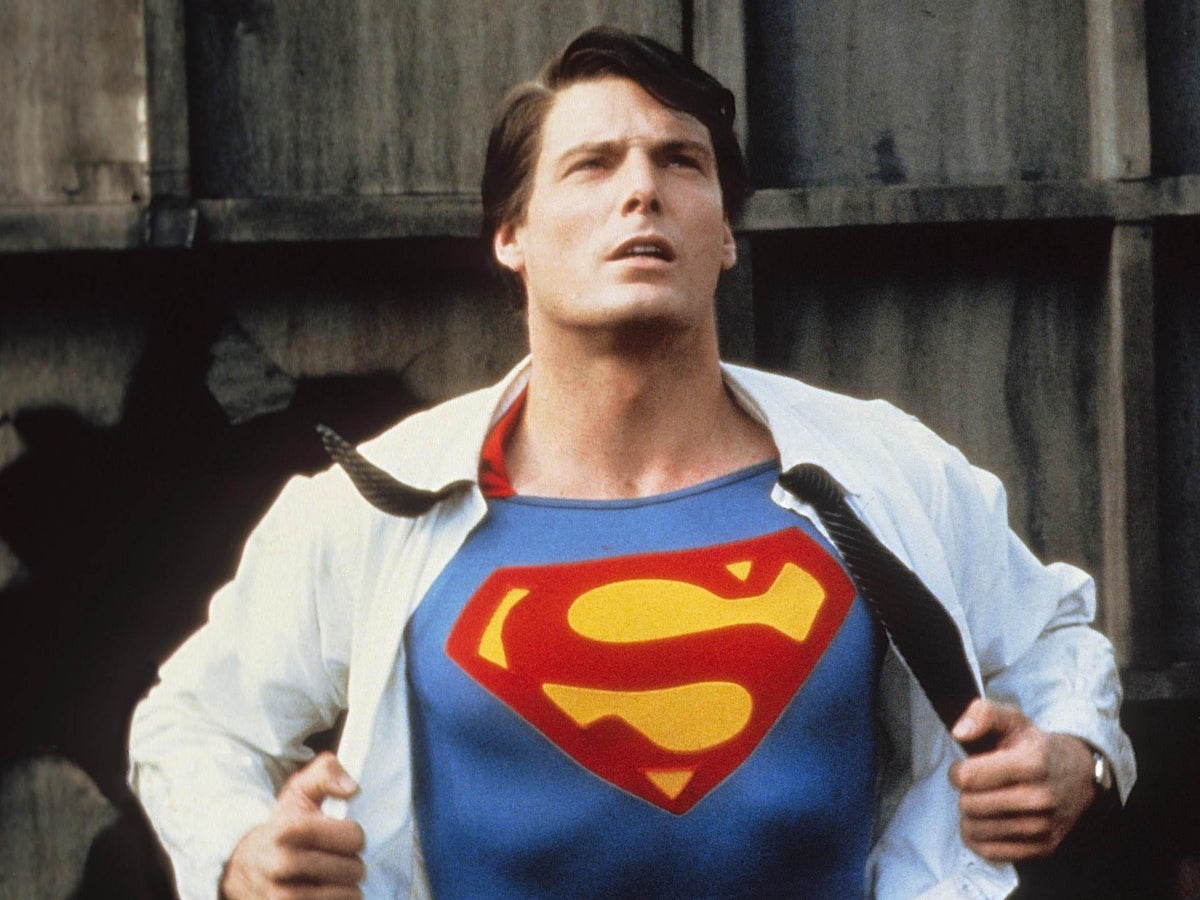
5. Superman. Honorable Mention: Supergirl. This is the most-cited example: Glasses shouldn't be enough. The early writers tried to get around this by making Superman raise his voice an octave while playing Clark Kent, and by slouching, so that Clark seems shorter than Superman.

But in post-Crisis continuity, Clark is less "mild-mannered," and more assertive. On Lois & Clark, Teri Hatcher's Lois noticed that Dean Cain's Clark was pretty buff, but it still took her 2 full seasons to make the connection.

The comics have further explanation for why people don't make the connection. One is that most people don't realize that Superman even has a secret identity. Another is that, when he knows he's facing still or television cameras, Superman uses an identity-obscuring trick he learned from...

4. The Flash of Earth-2. Jay Garrick doesn't even wear glasses, let alone a mask. Just a hat. He hides his identity by vibrating his face so fast that nobody can get a clear photograph of him. But all anybody needs is for him to forget to do that once, and his cover is blown.

(UPDATE: In the 2025 Superman film, the superheroes in the Justice Gang know Superman's true identity. Green Lantern Guy Gardner, played by Nathan Fillion, suggests that, as Clark, he wears "hypno-glasses," to make people see Clark and Superman as 2 different people.)

3. Mary Marvel. Saying, "Shazam!" ages her from teenager to adult, as with her foster brother (biological brother in pre-Crisis continuity) Billy Batson, a.k.a. Captain Marvel, a.k.a. Shazam. And it makes her physically stronger and more fit. But it doesn't alter her appearance beyond that. And she literally uses her real name in her superhero codename. That's very risky.

Marvel Comics have had characters named Ms. Marvel since 1977, but neither DC nor the Shazam Family's previous publisher, Fawcett Comics, ever thought to call Mary "Miss Marvel."

2. Black Canary. Dinah Lance doesn't wear a mask, a hat, or a hood. Her only concession to her secret identity is a blonde wig, as she's a natural brunette.

It is somewhat appropriate that the only DC hero whose secret identity is more tenuous is that of the hero she romanced and eventually married:

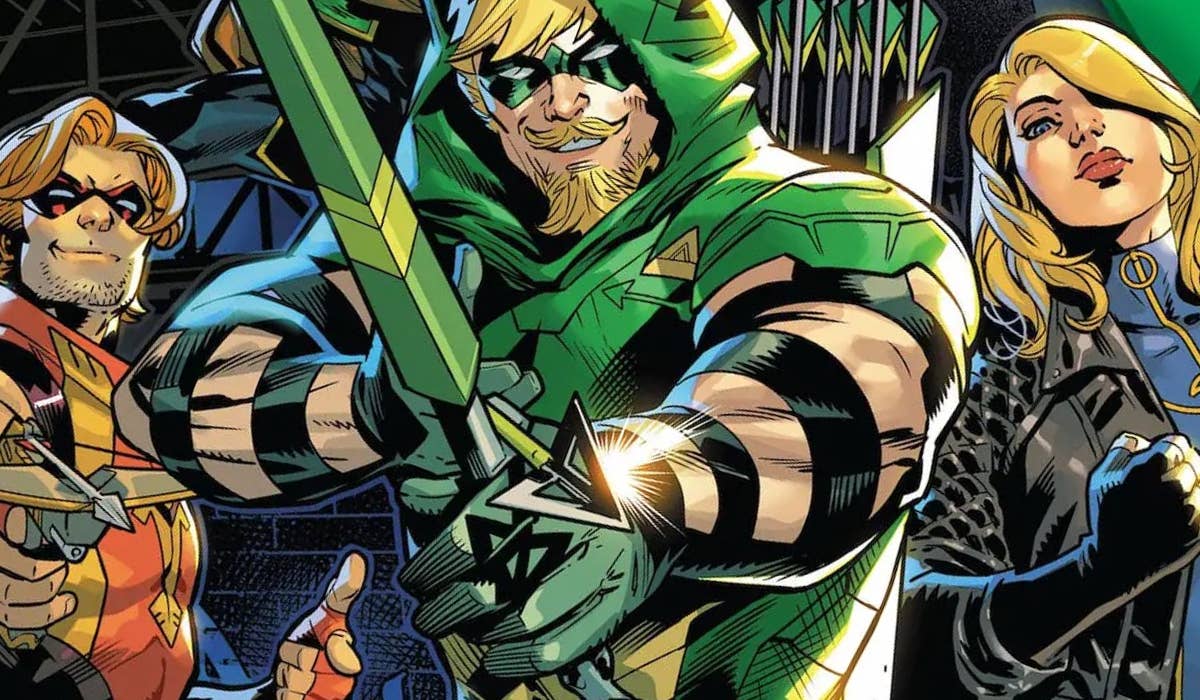
1. Green Arrow. Aside from his modus operandi, that of being an archer, what's GA best known for? His blonde Van Dyke beard, first drawn by Neal Adams in 1969, in the same story where GA started dating Black Canary. Oliver Queen, prominent Star City businessman (who, in some versions, has even served as the city's Mayor), has a Van Dyke beard. Hello?
The CW's Arrowverse came close to getting around this: While Stephen Amell's Ollie had a beard, it wasn't as distinctive as a Van Dyke; and wearing a hood instead of a Robin Hood-style cap, as GA has usually done post-Crisis, did more to disguise his identity. And he tended to operate mainly at night, like every version of Batman but the 1966-68 TV version, with darkness helping to obscure his identity. Still, anybody who met both Ollie and Green Arrow wouldn't have had to think too hard to make the connection.

This is my biggest problem with the current Superman & Lois TV series: Tyler Hoechlin never seems to shave. Superman shouldn't have stubble. Yet he has it, as both Clark and Superman. 

Risky mistake, and a rookie mistake, from a guy who's clearly been at this game long enough to have been Superman for a few years before marrying Lois Lane, and to now have sons old enough to drive (and fly).

Saturday, July 31, 2021

The DC Comics Film Universe: How It Should Have Happened

Left to right: Hal Jordan, the Green Lantern; Barry Allen, the Flash;
Clark Kent, Superman; Bruce Wayne, Batman; Diana Prince, Wonder Woman;
Arthur Curry, Aquaman; and J'onn J'onzz, the Martian Manhunter.
They are generally considered to be the 7 founding members
of the Justice League of America, DC Comics' top superhero team.

In 2007, following the success of Batman Begins, Warner Brothers was ready to make a Justice League film. However, it would star someone other than Christian Bale, star of Batman Begins, as Batman. And it would star someone other than Brandon Routh, star of the recent but less successful Superman Returns, as Superman.

One thing led to another, and the project got delayed, and delayed, and delayed, and finally dropped.

At first, the director was supposed to be Jason Reitman, who had recently directed Juno. He dropped out, and was replaced by George Miller, best known for the Mad Max films, an older director who was a contemporary of Jason's father, Ivan Reitman. But it never happened.

The stars were supposed to be as follows: D.J. Cotrona as Superman, Armie Hammer as Batman, Meghan Gale as Wonder Woman, Santiago Cabrera as Aquaman, Adam Brody as The Flash, Lonnie Lynn (a.k.a. the rapper Common) as the John Stewart version of Green Lantern, and Hugh Keays-Byrne as the Martian Manhunter.

(In hindsight, casting Hammer as Batman would have ended up very problematic, and not just because he did a terrible job as the Lone Ranger in Disney's 2013 film. Also, in the 2019 film Shazam!, Brody played the adult, super-powered version of Freddy Freeman, a character formerly known as Captain Marvel Jr.; and Cotrona played the adult version of another of Billy Batson's foster brothers, Pedro Peña.)

As villains, Jay Baruchel would have played Maxwell Lord, on the heels of Lord being the lead villain in DC's recent Identity Crisis storyline; and Teresa Palmer would have played Talia al Ghul, daughter of Ra's al Ghul and occasional girlfriend of Batman. (As with everything else about Batman, his love-life has always been complicated.)

DC had a chance to get a "cinematic universe" going before Marvel Comics did with Iron Man in 2008. Here's how they should have done it:

* Let Batman Begins start it in 2005, as actually happened, with Christian Bale as Bruce Wayne/Batman.

* Release a Superman film in 2006, as actually happened -- but not Superman Returns. Instead, totally start over, as was done with Man of Steel in 2013. This film could have kept that title -- and only that title.

Otherwise, basically do a remake of the film that started it all, the 1978 Superman starring Christopher Reeve, to which Superman Returns tried so hard to pay tribute, and succeeded in part, but not quite -- much as Star Wars' Episode VII was a redo of IV, VIII was of V, and IX was of VI.

At the time, Routh was 27 years old, a little too young to play a veteran superhero; and Kate Bosworth was 23, too young to play Lois Lane as we usually see her, and way too young to play a seasoned reporter with a 5-year-old child. But they would have been the ideal ages to play Clark Kent and Lois as being early in their careers.

Again, in hindsight, Kevin Spacey is a problem. Compared to how hokey Gene Hackman played Lex Luthor from 1978 to 1987, Spacey did for the character what Jack Nicholson did for the Joker in the 1989 Batman: He reminded us that this guy is a killer, and was meant to be scary.

This problem is easy to correct: Frank Langella, who played Perry White, had previously played villains ranging from Count Dracula to Richard Nixon (and subsequently reprised his Broadway role for the film version of Frost/Nixon). He should have been Luthor.

So who plays Perry? Laurence Fishburne plays him in the real-life DCEU. Perry has always been depicted as middle-aged man who was once a poor kid from Metropolis (or, sometimes, the real city of Chicago) who made good. By 2006, a black man with that background running "a great metropolitan newspaper" would no longer have seemed odd. So we move Fishburne up.

* 2007 would have brought the first Wonder Woman film. Gale would have been 32, about right to play Princess Diana of Themiscyra/Diana Prince/Wonder Woman. 

Chris Pine was 27, so he would already be a good choice to play Steve Trevor. Anything to keep him from playing "Captain Jerk" in J.J. Abrams' blasphemous Star Trek films. (Gal Gadot was only 22 at the time.) 

It would have been set in World War II, like her early comics and the 1st season (1976-77) of the TV show starring Lynda Carter. 

Setting the 1st Gadot movie during World War I would only have worked without the World War II background of the character, which was established when the character was created, during World War II. And it forces the question: If WWI was serious enough for her to leave Themiscyra, why wasn't the even more serious WWII enough to bring her back? Setting her origin story not in The Great War, a.k.a. The War To End All Wars, but rather in The Big One, fixes this plot hole, which is big enough to fly an invisible plane through.

* 2008 would have been the key year. We get the 2nd Batman film, The Dark Knight, going just the way we remember, with Heath Ledger as the Joker and Aaron Eckhardt as Harvey Dent/Two-Face. We get a 2nd Superman film, possibly remaking Superman II with the Phantom Zone villains: "Kneel before Zod!" We get a Flash film, with Brody as Barry Allen.

And we get an Aquaman film. Alan Ritchson, who played Arthur Curry on Smallville, and now plays Hank Hall/Hawk on Titans, could have been cast. Certainly, he looks more like the blond character seen in the comics than does the native Hawaiian Jason Momoa.

With his physique, Momoa would have been a good choice to play Katar Hol/Carter Hall/Hawkman. Likewise, Morena Baccarin, who has voiced Black Canary, Talia al Ghul and Cheetah in the DC Animated Universe, would be a good Shayera Thal, later Shayera Hol, a.k.a. Shiera Hall, a.k.a. Hawkwoman. (She would never be "Hawkgirl" in this series.)

* 2009 brings us the 2nd Wonder Woman film. Still set in World War II, it would set up the idea of the Justice League by introducing the superhero team of the 1940s, the Justice Society of America. 

The "Golden Age" versions of the Flash (Jay Garrick), Green Lantern (Alan Scott) and the Atom (Al Pratt) could be shown, along with Dr. Fate, Dr. Mid-Nite, Hourman, Wildcat, the Sandman and Starman. John Wesley Shipp, who starred in the 1990-91 Flash TV show as Barry Allen, and now plays Garrick on the current TV version, and absolutely should have been cast as Garrick at this point. The aforementioned Hawks can also be introduced here. Otherwise, these roles are open to speculation.

This film could show the JSA as vital in winning the war, but also show the sacrifice of Steve Trevor that leads Diana to retreat to her island -- for a while.

The year could also have given Green Arrow a film, with Justin Hartley playing him as he was doing on Smallville.

* With Green Lantern established, we get the film with Ryan Reynolds as the Hal Jordan version a year earlier, in 2010. The only thing that really bothered me about that film was the CGI'ed GL costumes. They were very distracting. What pairing up with Blake Lively as Carol Ferris, not yet an onscreen Star Sapphire, a year earlier would have done to his marriage to Marvel Comics heroine Scarlett Johansson, I don't know.

We also get a film for the Ray Palmer version of the Atom, although, with Routh occupied as Superman, he couldn't play the Atom, too.

A 3rd Batman movie could be set a year after Bruce letting Batman take the fall for Dent's crimes, looking like he's finally settling down with a girlfriend, Selena Kyle, whom he does not yet know is also Catwoman; nor does she yet know that he was Batman. They go to the circus together, and witness the murder of the Flying Graysons, thus bringing Bruce out of retirement, finding a way to restore Batman's good name, and introducing Dick Grayson as Robin; while Catwoman is also involved, and the "I love you but I must defeat you" relationship develops.

* 2011 brings us Flash II: Flashpoint. When Barry returns from fixing his timeline mess, he tells the other heroes what that other world was like, and says it's better if they work as a team when necessary.

* So here we go. July 1, 2011 -- a Friday, with the 4th on the following Monday, making for a three-and-a-half-day weekend. Justice League premieres. 

Basically, it's the story we got with The Dark Knight Rises, a film that should have had people asking, "Are there no other superheroes in this world who could have helped Batman save Gotham City?" Certainly, Ra's al Ghul has been a worthy opponent for the Justice League in the comics, without taking the easy way out by going directly to Darkseid, or indirectly to him through the middleman, Steppenwolf.

This time, Bruce figures out he needs help before Bane can break his back -- but that still happens before the others can properly respond to his call for aid. So the heroes figure out where Ra's' League of Shadows prison is, and they break him out. Whether his paralysis gets cured through Themiscyran or Atlantean medicine (Wonder Woman's people or Aquaman's) is negotiable.

Ultimately, Batman still beats Bane, and is still betrayed by Ra's' daughter Talia, in spite of her having fallen in love with him. However, it is Superman who gets the nuke off Earth, thus closing the plot hole of "But that bomb was still awfully close to Gotham City when it went off, so a lot of people are going to get cancer."

In so doing, this attracts the attention of Darkseid, setting up future movies. Bale could have continued as Batman, with a Robin. Gale could have continued as Wonder Woman, in the present day, with Pine playing a grandson of Trevor (as opposed to Lyle Waggoner playing father and son on the 1970s TV show).

Batgirl can be introduced, and we could have a movie showing Dick putting the Robin role aside to become Nightwing and form the Teen Titans, succeeded as Robin by Jason Todd. A subsequent film could combine the two great Batman graphic novels of 1988: The Killing Joke, in which the Joker shoots Barbara Gordon, paralyzing her and leading to her transition from Batgirl to Oracle; and A Death in the Family, in which the Joker kills Jason.

This would be followed by A Lonely Place of Dying, where the Bat-family, with new addition Tim Drake, confronts Batman and shows him that he's not alone, nor should he be. So Bruce accepts Tim as the 3rd Robin.

The Green Lantern films could have introduced the Guy Gardner, John Stewart, Kyle Rayner, etc. versions. A Green Arrow sequel could have introduced Dinah Lance, a.k.a. Black Canary, classically GA's girlfriend and later wife, matching the comics, instead of what the TV version did, killing her off and having Oliver Queen instead marry Felicity Smoak, who in the comics was connected to the hero Firestorm.

Captain Marvel/Shazam could be introduced. And here's an idea: Since Wonder Woman is being played by Gale, Gal Gadot, who would be 26 by this point and thus age-appropriate for the character, can play Zatanna, the Mistress of Magic. After her 1st film, she becomes a permanent Justice League member.

Should we tempt fate twice over? By doing Superman III again, and by putting Eddie Murphy in the Richard Pryor role, and maybe getting it right this time? Or should the new Superman III be a totally different story? Certainly, with Trump and Putin in office from January 20, 2017 onward, a film version of the Lex 2000 storyline would make sense, and so would the original series' title: Superman IV: The Quest for Peace.

Identity Crisis could be adapted for the 3rd Justice League film, with Zatanna's role leading to her pairing up in a later film titled Justice League Dark with her ex, John Constantine, as well as Dr. Fate, maybe the Phantom Stranger and the Spectre, and others.

A 4th Wonder Woman film could feature the death of Queen Hippolyta, with Diana, Steve, and their daughter, Lyta Trevor, returning to Themiscyra, with Diana as Queen, and Donna Troy, Wonder Girl of the Titans, becoming the new Wonder Woman. And the torches could also be passed in Metropolis (with Clark and Lois now married and raising son Jon) and Gotham (with Bruce and Selina now married, while Nightwing leads Tim/Robin III and the rest of the Titans in cleaning up Gotham).

The CW's Arrowverse could begin on time in 2012, totally separate from the DC Cinematic Universe, with Stephen Amell starring in Arrow, and play out as it actually has, leading up to a Crisis On Infinite Earths in 2019 with some of the aforementioned actors. And an Infinity Inc. film, featuring descendants of the JSA, could premiere, side-by-side with the Arrowverse's Stargirl series.

Where does that leave Henry Cavill? He can still play The Witcher, and maybe replace Daniel Craig as James Bond. Ben Affleck? After the 2003 film Daredevil, he should never have been allowed to play another superhero. So he's out. He'd be better as a villain, anyway. Maybe Maxwell Lord.

No Suicide Squad. Ever. No The Suicide Squad, either. And absolutely no Jared Leto. Never mind how stupid his version of the Joker was: I don't want to see him in any role. We could have a Birds of Prey, where Harley Quinn teams up with the Huntress, Black Canary (when she's not saving Star City alongside hubby Green Arrow), and perhaps a S.T.A.R. Labs-healed Batgirl. Or maybe Batwoman (Kate Kate) gets launched with this project, with her standalone film either preceding or following.

And, at some point, I'd like to see a Green Hornet film, or even a TV series, to wipe the horrible memory of the 2011 Seth Rogen film away. If Spider-Man can be restarted 3 times in a span of 13 years (Tobey Maguire in 2002, Andrew Garfield in 2012, Tom Holland in 2016), we can have a 2nd Green Hornet within 5 years.

To summarize: 

2005 Batman Begins 
2006 Superman: Man of Steel 
2007 Wonder Woman
2008 The Dark Knight (Batman II), The Flash, Aquaman
2009 Wonder Woman: Justice Society, Green Arrow, Superman II: The Zod Conspiracy, The Hawks (Hawkman & Hawkwoman)
2010 The Dark Knight and the Boy Wonder (Dick Grayson becomes Robin), Green Lantern, The Atom
2011 Batgirl, Flash II: Flashpoint (Introduces Wally West as Kid Flash), Justice League, Aquaman II
2012 Wonder Woman III (Introduces Steve III and Donna Troy as Wonder Girl), Titans (Dick becomes Nightwing, Jason Todd becomes Robin), Green Arrow and Black Canary (also introduces Roy Harper as Speedy, later renamed Arsenal)
2013 Batman: A Death in the Family (Joker shoots Barbara and kills Jason), Green Lantern II (Introduces Guy Gardner and John Stewart, Carol Ferris becomes Star Sapphire), Shazam!
2014 Superman III: Brainiac, Batman: A Lonely Place of Dying (Tim Drake becomes Robin), Zatanna, Justice League II: Apokolips
2015 Aquaman III, Atom II (Introduces Ryan Choi as Ray Palmer's assistant & eventual successor), Green Arrow III, Titans II: The Deathstroke Challenge
2016 The Green Hornet, Flash III: Zoom (Barry sacrifices himself, Wally becomes the new Flash), Shazam II: Fury of the Gods, Green Lantern III (Introduces Kyle Rayner as Hal goes rogue following the destruction of Coast City)
2017 Batman: Son of the Demon (Introduces Damian Wayne, Bruce and Talia's son, causing tension between a now-married Bruce and Selina, Bruce straightens him out and makes him the new Robin as Tim joins the Titans full-time), Wonder Woman IV (Hippolyta dies, Diana becomes Queen, Donna becomes Wonder Woman, Cassandra Sandsmark introduced as the new Wonder Girl), Justice League III: Identity Crisis
2018 Superman IV: The Quest for Peace, Batwoman (Kate Kane becomes the Scarlet Knight, with Ryan Wilder as her "Robin")
2019 Wonder Woman IV, Justice League Dark, Atom III (Ryan takes over as the Atom)
2020 Birds of Prey, Infinity, Inc.
2021 (Delayed due to COVID): Superman V: Grandson of Krypton, Shazam III: The Return of Black Adam, Titans III
2022 (At the time of this writing, still in the future, also delayed due to COVID): The Green Hornet Strikes Again, Batwoman II, Flash IV 

And so on. Or, to put it another way:

Batman: 2005, 2008, 2010, 2013, 2014, 2017
Superman: 2006, 2009, 2014, 2018, 2021
Wonder Woman: 2007, 2009, 2012, 2017, 2019
Flash: 2008, 2011, 2016, 2022
Aquaman: 2008, 2011, 2015
Green Arrow: 2009, 2012, 2015
Hawks: 2009
Green Lantern: 2010, 2013, 2016
Atom: 2010, 2015, 2019
Batgirl/Birds of Prey: 2011, 2020
Justice League: 2011, 2014, 2017, 2019
Titans: 2012, 2015, 2021
Shazam!: 2013, 2016, 2021
Zatanna: 2014
Green Hornet: 2016, 2022
Batwoman: 2018, 2022
Infinity, Inc.: 2020

There's the plan. All we need now is for the Legends of Tomorrow to take the Waverider back to 2004 and set it up.