Showing posts with label dodger stadium. Show all posts

Tuesday, October 6, 2026

October 6, 1966: The Smoggy Sendoff of Sandy Koufax

Sandy Koufax (left) and Jim Palmer

October 6, 1966, 60 years ago: Game 2 of the World Series. Los Angeles Dodger outfielder Willie Davis, having trouble seeing a white baseball against the smog-gray Los Angeles sky, commits 3 errors in 1 inning, enabling the Baltimore Orioles to win 6-0, and take both World Series games at Dodger Stadium, and head back to Memorial Stadium with a 2-0 lead.
Jim Palmer, days short of his 21st birthday, outduels Sandy Koufax, who struggles with the Oriole bats, Davis' fielding, and the pain in his elbow.
Koufax has told only a few people yet, but he's already decided that this is his last major league game. He is not yet 31. This could be called a "generational hinge" game. To put it another way: Koufax had won 169 games, including 4 in the World Series, but would never win another; Palmer, if you count this game, had won 21, and 255 more would follow.
To this day, the Orioles have never won a Pennant without Palmer on their staff. But they won 6 with him, including the 1966, 1970 and 1983 World Series. He is the only pitcher to win a World Series game in 3 different decades. His 186 wins during the 1970s made him the winningest pitcher of the decade. By a weird coincidence, the scout who discovered him was Hal Newhouser, whose 170 wins during the 1940s made him the winningest pitcher of that decade.
Many American cities have had, and some still have, smog issues, due to topography. New York's used to be bad, up until the 1970s, when the effects of the environmental movement helped. Denver's is bad, because of the Rocky Mountains.
But Los Angeles is widely known for smog, because it's the American city most identified with driving as opposed to public transportation, and all that car exhaust flies east with the prevailing wind in the Northern Hemisphere, and runs smack into the San Gabriel Mountains, trapping it. To make matters worse, the city gets an average of only an inch and a quarter of rain per month.
On July 26, 1943, the smog in L.A. was so bad! (How bad was it?) It was so bad, people began calling the police, thinking that the Japanese were conducting chemical warfare as part of their effort in World War II. The Japanese military never developed anything like that, but America didn't know that at the time, and it had only been 25 years since World War I and Imperial Germany's use of poison gas..
On October 21, 1954, the smog in L.A. was so bad, the City actually closed its public schools for several days.
On October 16, 1966, 10 days after this World Series game, comedian Allan Sherman appeared on The Ed Sullivan Show. Sherman, a Chicago native famed as a game show producer and a song parodist -- the "Weird Al" Yankovic of his time, many of his rewrites reflecting his Jewish heritage -- mentioned that he once lived in the L.A. suburb of Van Nuys, and sang this, to the tune of "Smoke Gets In Your Eyes": 
They ask me through the years
why I shed these tears.
I, of course, replies:
When you live in Van Nuys
smog gets in your eyes.

I thought I'd play it wise
so I closed my eyes.
Then, what do you suppose?
When both my eyes I close
smog got in my nose.

I went to price
an anti-smog device
to fit behind my car.
But, all too quick
the smog became so thick
I could not find my car.

Ten thousand cars provide
carbon monoxide.
If they'd all drive a horse
there'd be no smog, of course…
But there'd be something worse!

In 1971, on Rowan & Martin's Laugh-In, taped outside Los Angeles in what they mockingly called "Beautiful Downtown Burbank," co-host Dan Rowan said this as part of his regular "News of the Future" sketch: "Los Angeles, two years from now: Race relations were solved in Los Angeles, when the smog became so thick, nobody could tell what anybody's color was!" (That didn't happen in 1973, but the city did elect its 1st black Mayor that year, Tom Bradley.)
The founding of the Environmental Protection Agency, and the passage of the Clean Air Act, both in 1970, helped. So did an additional Clean Air Act in 1990. L.A.'s last Stage 1 Smog Alert was in 2003; its last Stage 2 Smog Alert, in 1988; and its highest level of alarm, a Stage 3 Smog Alert, was last issued in 1974. Then again, the American Lung Association still ranked L.A. as the nation's most-polluted city as recently as 2013.
October 6, 1966 was a Thursday. Also on this day, LSD was declared illegal throughout the United States. And Irish soccer star Niall Quinn was born.

Saturday, April 25, 2026

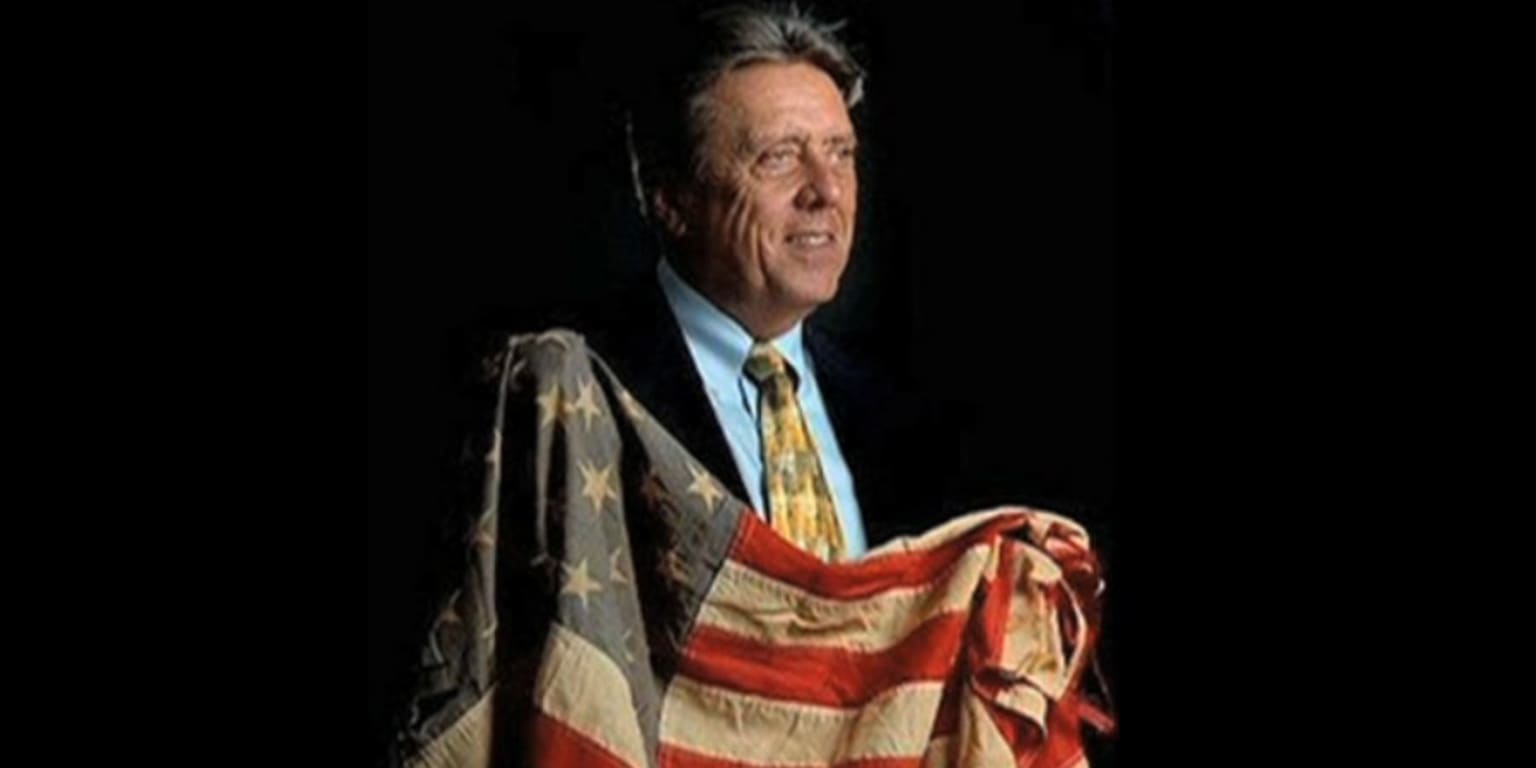
April 25, 1976: Rick Monday Saves an American Flag from Being Burned

April 25, 1976, 50 years ago: Rick Monday, a veteran of the U.S. Marine Corps in the Vietnam War era, is playing center field for the Chicago Cubs at Dodger Stadium in Los Angeles. He notices two people in left-centerfield, preparing to burn the American flag. He ran over and grabbed the flag from them.

"I was angry when I saw them start to do something like that to the flag," he said.

Later in 1976, Dodgers executive Al Campanis gave the flag to Monday. He still has it. "I know the people were very pleased to see Monday take the flag away from those guys," Manny Mota, who played with Monday, said. "I know Rick has done a lot of good things as a player and as a person. But what he did for his country, he will be remembered for the rest of his life as an American hero."
The actual flag has faded. The story has not.

Rick Monday didn't do a damn thing for his country by saving that flag. If anything, he interfered with two people who, however misguided and offensive, were exercising their constitutional rights. It was, literally, the least American thing he could have done.

This was 20 days after the event that became known as "the Soiling of Old Glory," in which a racist taunted a black man with a flag at City Hall in Boston. Has anybody ever asked Monday about that?

As for the game: The Dodgers beat the Cubs, 5-4. Ron Cey singled home the winning run in the bottom of the 10th inning.

The Dodgers acquired Monday before the next season, fitting in with their heavily-promoted All-American image. Actually, the Los Angeles Dodgers are the quintessential American sports team: They abandoned the people from whence they came, not for a better life but for more money, and stole land from the people who were already at their destination.

Then they issued lies and platitudes about themselves, all the while hiding some great evils. Sure, their Brooklyn forebears had ended baseball's segregation, but Campanis himself exposed his own racial bigotry, and manager Tommy Lasorda was exposed as homophobic. And then there was their paragon of virtue, Steve Garvey... 

A 2-time All-Star, Monday reached the postseason with the Oakland Athletics before being traded to the Cubs, and won the 1981 World Series with the Dodgers, having hit a Pennant-clinching home run in the National League Championship Series against the Montreal Expos. He retired after the 1984 season, with a .264 lifetime batting average and 241 home runs.

He became a broadcaster for the Dodgers, and still has the flag. He claims he has been offered $1 million for it, but won't sell it. 

Thursday, October 23, 2025

Why I Hate the Los Angeles Baseball Team, and So Should You

Tomorrow night, Game 1 of the 2025 World Series will be played at the Rogers Centre in Toronto. The American League Champions, the Toronto Blue Jays, will host the National League Champions, the Los Angeles Dodgers, in Games 1 and 2, and, if necessary, Games 6 and 7. Games 3 and 4, and, if necessary, 5 will be played at Dodger Stadium in Los Angeles.

The Blue Jays are the American League Champions for the 1st time since their only previous Pennants, the back-to-back World Series wins of 1992 and 1993 -- 32 years, almost a third of a century.

The Dodgers are the National League Champions for the 2nd year in a row, and the 5th time in the last 9 seasons.

Before that, they hadn't won a Pennant in 29 years, 1988 to 2017. Before that, they won 5 in a span of 15 years, 1974 to 1988. Before that, they hadn't won one in 8 years, 1966 to 1974. Before that, including their last few years as the Brooklyn Dodgers, they won 10 in 20 years and, if you extend it back 1 more year, just missed 4 others, 1946 to 1966.

They've won the World Series in 1955 in Brooklyn; and, in Los Angeles, in 1959, 1963, 1965, 1981, 1988, 2020 and 2024, and will likely be favored to win it again this year.

On a Facebook page titled "MLB Shit Talking !!!" (space, then 3 exclamation points), a Dodger fan named Lee Salomon wrote, and I haven't altered his text at all: 

You sorry ass people can't list ONE (1) LOGICAL reason for hating the Dodgers.
You try to make it about money, but almost every owner is a billionaire.
You try to make it about the Dodgers fans, but the Dodgers lead MLB in home AND road attendance every season.
.
Colin Cowherd said the Dodgers are the best run team in American sports. He is 100% correct.

I repeat, you sorry ass people can't list ONE (1) LOGICAL reason for hating the Dodgers 

This was my response:

You're missing the point. The reasons DON'T have to be logical. Playing baseball requires a great deal of logic. Being a baseball fan requires none. It's all based on feelings.

Up until 1957, the Dodgers represented not just the Borough of Brooklyn, and, by extension, the City of New York, but a state of mind. They were a team of the people. Their players lived in neighborhoods alongside the team's fans. They played in a small ballpark, where the players were close to the fans. They were visible as human beings. Being a Dodger fan meant being a part of a community.

When Jackie Robinson arrived in 1947, that community grew, but instead of diffusing it and weakening it, it made the community stronger, and ennobled it. Long before the Dallas Cowboys were created and took up that ridiculous slogan "America's Team," the Brooklyn Dodgers were a team for all America. Certainly, for underdogs, as they stood up to the more successful New York Giants, and then the even more successful New York Yankees. The Dodgers were blue-collar; the Yankees, white-collar. The Giants, whose success was earlier, could, I suppose, be called stiff-collar.

(Those teams represented something very different, but no less important. Life is full of defeats, so we look for teams that will win and lift us up. The Giants represented that up until the end of the 1930s, and the Yankees have since the early 1920s.)

Having risen from essentially team clerk in 1942 to owning 25 percent of the team to owning 75 percent of the team and bullying the owners of the remainder in 1950, in 1957, Walter O'Malley took the Dodgers out of Brooklyn, and moved them to Los Angeles.

While some of the Brooklyn "Boys of Summer" hung on for a while -- Gil Hodges until 1961, Duke Snider 1 more year -- by the time that Sandy Koufax and Don Drysdale, who barely pitched in Brooklyn, became baseball's dominant pitching tandem and led them to a title in 1963, they bore no real connection to their former identity, and that's how O'Malley wanted it.

They represented something else: Greed. To build their stadium, O'Malley saw to it that the people living on the land had their homes stolen from them. He maneuvered the City of Los Angeles into letting him have all the parking revenue, when the original offer was half. He refused to install water fountains in the ballpark, because he didn't want fans to have anything for free.

He was so devoted to the reserve clause and holding salaries down that he even gave his managers only one-year contracts, and after he died in 1979, his son Peter continued this until selling the team in 1997. Walter Alston got 23 one-year contracts; Tommy Lasorda, 20.

They also represented Hollywood glitz and fakery, instead of the real people of Los Angeles. They wanted Frank Sinatra and Steve McQueen to come to the games. They didn't want Joe Washington from Crenshaw or Ricardo Gonzalez from East L.A. I'd be interested to know how old Walter would have felt had he lived to see Fernandomania in 1981: How would he have felt about all those Mexicans coming into Dodger Stadium, his monument to himself? Aside from those 5 years, 1962 to 1966, when the blue-collar Jewish hero Koufax pitched every 4 days, it was the first time the Dodgers seemed human.

Rather, the Dodger hero of choice was Steve Garvey: Mr. Clean, the All-American Boy with the perfect hair, the perfect teeth, the beautiful blonde TV talk-show host wife, the powerful swing and the nice glove, who was actually a supreme hypocrite, leading to the "Steve Garvey is not my Padre" jokes after he went to San Diego and didn't have the protection of the L.A. media anymore.

And speaking of supreme hypocrites: Lasorda treated his players like family, except for Glenn Burke, whom he dumped after seeing baseball's first openly gay player get a little too friendly with Tommy Jr., whom Tommy Sr. insisted until his own death was not gay, and refused to accept that Jr.'s death from pneumonia was aided by AIDS. Lasorda didn't just eat too much: He was so fat because he was full of crap.

O'Malley was never baseball's best owner, Lasorda was never baseball's best manager, and wasn't even a very good one. Vin Scully was never baseball's best broadcaster. And Dodger Stadium wasn't even the best ballpark in Southern California. But all those ideas were pushed by the L.A. media machine, which is as strong as New York's and stronger than Boston's and Chicago's.

Then, in 1997, Peter O'Malley sold the Dodgers -- to Rupert Murdoch, the Fox News baron, who, by aiding people such as Margaret Thatcher, Ronald Reagan, George W. Bush, and eventually Donald Trump and Britain's Brexit movement, has done more damage to the world than any living person, even Vladimir Putin. That is a stain that can never be washed away, and makes the sins of Walter O'Malley look tame by comparison.

Murdoch sold the Dodgers to Frank McCourt in 2004. He had to sell the team in 2012, to a group whose public face is basketball legend Earvin "Magic" Johnson, who is rightly beloved. But the current regime has actually embraced the team's Brooklyn past, including putting a statue of Robinson outside the stadium. At first glance, this would seem like a good thing to do. After all, while he never played for the team in Los Angeles, Robinson grew up in nearby Pasadena.

Except the current regime wants it both ways. They want both the Los Angeles legacy (Koufax, Lasorda, Fernando Valenzuela, Kirk Gibson) and the Brooklyn legacy (Robinson, Roy Campanella, Duke Snider). And it doesn't work that way. The Giants can sort-of get away with it, because Willie Mays did play for them in both New York and San Francisco. Same with the Braves, with Hank Aaron playing in both Milwaukee and Atlanta. But the A's barely even mentioned their Philadelphia success.

The Dodgers' owners want you to think Jackie Robinson played for them. Jackie Robinson did not play for the Los Angeles Dodgers. Not one damn game. Not only did he not play for Los Angeles, but Walter O'Malley actively resisted his acquisition, told manager Alston to move him around and eventually bench him, and finally traded him to the arch-rival Giants, before Jackie announced his retirement, which he had planned anyway, but it became a "To Hell with me? No, to Hell with YOU" moment.

Now, I do have some grudging respect for the Dodgers' ownership group. Yes, they spend a lot of money. But they should. It's professional baseball. The last team to win a World Championship without "buying it" was the 1868 New York Mutuals. The Dodgers do this. So do the Yankees, my team. So do the Mets. So have some other teams at various times, even though some no longer do so, and others have gone the other way, from not trying it to trying it. To paraphrase Michael Douglas in the film The American President, Yes, my team IS trying to buy the World Series, the question is, Why isn't YOURS, Bob?

I also have some respect for the Dodgers' owners for NOT demanding that the governments of City of Los Angeles, or the County of Los Angeles, or the State of California build them a new stadium at taxpayer expense, or else they will move, as happened with elsewhere in California, with the owners of the Oakland Athletics and the NFL's Oakland Raiders and San Diego Chargers. They have maintained and updated Dodger Stadium, and let's give them credit for that. They can build 10 new ballparks and pay every penny of the cost themselves, and never miss the money. They don't do that, but they don't demand that the people do it for them, either.

But the Dodgers remain an organization built in Walter O'Malley's image. They represent what he represented: Greed and bigotry. Those things are irrational. So don't you DARE demand that we come up with a rational reason to hate them. We don't need one.

O'Malley was a man who, if he thought he could make more money by staying in Brooklyn, or by moving them to Miami, or to Tokyo, or to Moscow, or to Antarctica, than he could by moving them to Los Angeles, then that is where the Dodgers would have been playing since 1958. NYC construction czar Robert Moses wouldn't condemn the land on which he wanted to build his new stadium. But O'Malley could have gotten around Moses if he really wanted to stay in Brooklyn. He didn't.

So don't ask me to like or respect the Los Angeles Baseball Team, and don't ask me to come up with a rational reason for why.

Let's go, Blue Jays. Beat L.A., eh?

Tuesday, October 14, 2025

October 14, 1965: The Mystique of Sandy Koufax

October 14, 1965, 60 years ago: A World Series loaded with storylines comes to a classic end.

After surviving a long and hard National League Pennant race with their arch-rivals, the San Francisco Giants, the Los Angeles Dodgers were in the Series for the 3rd time in the last 7 seasons. If you count their time in Brooklyn, it had been 9 times (with 3 other near-misses) in 19 years.

Although 2-time former batting champion Tommy Davis had been injured for most of the season, they still had the premier base thief of the era, Maury Wills, the starting pitching tandem of lefthander Sandy Koufax and righthander on Drysdale, and an exceptional defense. It surprised no one that they were back in the Fall Classic.

But the American League Champions were a surprise, because they were not the New York Yankees. For various reasons, the team that had won 29 of the last 44 AL Pennants, including the last 5, had collapsed, falling to 6th place.

After a few years of improvement, the Minnesota Twins, who had been the Washington Senators until 1960, surged to 1st place. Although their main slugger, Harmon Killebrew, had an injury-plagued season that kept his power stats down, they also had power in Bob Allison and Don Mincher, their own 2-time batting champion in Tony Oliva, and their own Wills equivalent in shortstop Zoilo Versalles.

"Zorro" batted .273, and led the AL in total bases, doubles, triples and runs scored -- but also in strikeouts -- and finished 2nd to Oliva in hits. He added 19 home runs and 77 RBIs from the leadoff spot in the order. He was also awarded a Gold Glove. Versalles and Koufax were named their respective Leagues' Most Valuable Players.

For the Twins franchise, it was their 1st Pennant since 1933, as the Senators, and they were seeking their 1st World Series since 1924. The Minneapolis Millers of the American Association had won a Pennant as recently as 1958.

It was a bitter reality for Senators fans, who lost their team because owner Calvin Griffith was not only a cheapskate, but a racist, who wanted to move from a majority-black city to one with hardly any black people. (That has since changed, tremendously.) An expansion team named the Washington Senators replaced them, but was terrible, and became the Texas Rangers for the 1972 season. To make matters worse, the Twins' Pennant-clinching game was against the "New Senators." The Washington Nationals finally came along in 2005, and won a World Series in 2019.

The Dodgers were favored, due to their pitching and their overall experience. But they had a problem: Game 1 was scheduled for October 6. On the Jewish calendar, that coincided with Yom Kippur, the Day of Atonement, the faith's holiest day. And Koufax was Jewish.

It doesn't fall on the same day of the Christian calendar every year. In 1934, it fell on September 19, and the Detroit Tigers had a key game on that date, and their biggest star, Hank Greenberg, sat it out. The Tigers ended up winning the Pennant, anyway. But Koufax told manager Walter Alston that he wouldn't pitch Game 1. So it would be Drysdale instead, starting against a black pitcher, Jim "Mudcat" Grant.

October 6, 1965: In Britain, serial killer Ian Brady was arrested for murder in Manchester. His accomplice, Myra Hindley, was arrested 5 days later. Steve Scalise, later elected to Congress from Louisiana, was born.

The 1st World Series game ever played in Minnesota got underway at Metropolitan Stadium, selected for a site in suburban Bloomington because it was roughly the same distance from downtown Minneapolis and downtown St. Paul, and the Twins wanted to pander to both of the "Twin Cities" by not offending either one.

The Dodgers' Ron Fairly opened the scoring with a home run in the top of the 2nd inning. But Mincher hit one to tie the game in the bottom of the 2nd. And the bottom dropped out on Drysdale in the bottom of the 3rd. He gave up 6 runs on 6 hits, including a 3-run homer by Versalles, plus a walk and an error. When Alston came to the mound to take him out, he said, "I bet you wish I was Jewish, too!" Meaning, that he wasn't available to have such a bad outing. In contrast, Grant cruised after the Mincher homer, going the distance, and the Twins won, 8-2.

October 7, 1965: The Soviet Union announced that their probe, Lunik 7, had landed on the Moon. What they didn't say was that it landed so hard, it was destroyed, and was unable to send any information back to Earth. British intelligence picked this up, and told the NATO alliance, including the U.S.

The refusal to pitch on Yom Kippur raised Koufax from the level of a superstar to that of an all-time Jewish-American icon. But the extra day of rest did neither him nor the Dodgers any good. He and Twins starter Jim Kaat traded goose eggs until the bottom of the 6th, but an error by Wills to start that inning opened the door to 2 Minnesota runs. The teams traded runs in the 7th, and Kaat helped his own cause with a 2-RBI single in the 8th. The Twins won, 5-1.

The Series went west, and the Twins had a 2-0 lead, and they had already beaten Koufax and Drysdale once each. Their confidence was at an all-time high.

October 8, 1965: A travel day in the Series. The International Olympic Committee accepted West Germany and East Germany as separate nations, to present separate teams starting in 1968. They would continue to do so through 1988.

The Post Office Tower, now the BT Tower, opened in London. At 619 feet, it was then the tallest structure in the United Kingdom.

President Lyndon B. Johnson ended Bethesda Naval Medical Center, in the Washington suburb of Bethesda, Maryland, for surgery to remove his gall bladder. He stayed for 2 weeks, and upon his return to the White House, enjoyed showing the White House press corps his scar. In 2022, my mother, who was then older than LBJ lived to be, had her gall bladder removed. She was released 2 days later.

October 9, 1965: At a nursing home in Seriate, Italy, 8 elderly women died, and another 7 were seriously injured, after all 15 had been given seemingly routine injections of a "heart tonic" as part of their regular treatment. The deaths all happened within 2 hours after they were given the shots. No cause was ever found, and no one was ever punished for the deaths.

The Dodgers were desperate. They had the home crowd behind them, but they would be facing Twins pitcher Camilo Pascual. If Koufax had the best curveball in the NL at the time, then Pascual had the best one in the AL.

But John Roseboro singled home 2 runs in the bottom of the 4th, Lou Johnson doubled 1 home in the 5th, Wills doubled 1 home in the 6th, and Claude Osteen pitched a 4-hit shutout. The Dodgers won, 4-0, and were back in the Series.

October 10, 1965: A 24-day strike by New York City's newspapers ends. However, it will end up being the final blow for the New York Herald-Tribune (a.k.a. The Trib), the New York Journal-American, and the New York World-Telegram & Sun (a.k.a. The World-Telly). All would fold the following Spring, leaving The New York Times, the Daily News, and the New York Post.

Actor Chris Penn was born. He became an actor, like his brother, Sean Penn, but never achieved the same level of notoriety, and died of heart disease in 2006.

The starters for Game 4 would be the same as those of Game 1. This time, the Dodgers got to Grant early, scoring a run in the 1st and another in the 2nd. Killebrew and the Dodgers' Wes Parker traded home runs in the 4th. Oliva hit a home run in the 6th, but the Dodgers answered right back, chasing Grant with 3 runs. Johnson added a homer in the 8th.

Drysdale was on his game, going the distance and striking out 11. The Dodgers won, 7-2, to tie the Series. And Koufax would be pitching Game 5. True, he would have only 3 days' rest, but so had Drysdale.

October 11, 1965: Dorothea Lange, who documented the effects of poverty during the Great Depression through her photography, including the iconic 1936 photo Migrant Mother, died at the age of 70. And the Indianapolis Times, a newspaper founded in 1888, published its last issue.

Pitching through pain, Koufax allowed just 4 hits and 1 walk, striking out 10. Kaat didn't make it out of the 3rd inning. In the 7th, Koufax himself had an RBI single off Jim Perry. The Dodgers won, 7-0, and now led the Series 3-2.

The Twins' sky-high confidence had vanished in 3 days. However, they would be going home, where they had already beaten the Dodgers twice. And if they won Game 6, they would have to face either Drysdale on 3 days' rest or Koufax on 2 in Game 7, so they liked their chances.

This was also (probably) the day on which Orlando Hernández Pedroso was born in Villa Clara, Cuba. "El Duque," brother of fellow pitcher and fellow Cuban escapee Livan Hernández, pitched for the 2 most demanding bosses in the Western Hemisphere: Fidel Castro and George Steinbrenner. He won 4 World Series: 1998, 1999 and 2000 with the Yankees, and 2005 with the Chicago White Sox.

October 12, 1965: Another travel day in the Series. Hirokazu Yasuhara, the Japanese video game designer who created Sonic the Hedgehog, was born.

October 13, 1965: Grant pitched on just 2 days' rest, and he was fine. He went the distance, allowed just 1 run, a homer by Fairly in the 7th, and hit a home run of his own in the 6th. Allison hit a home run in the 4th, and the Twins won, 5-1. The Series was going to a Game 7.

Twins manager Sam Mele decided to start Jim Kaat for the 3rd time. Alston decided to skip over Drysdale and go with Koufax. Both men would be going on 2 days' rest. The difference was, Kaat had been knocked out of Game 5 early. Koufax had pitched a complete game.

What's more, the circulatory issue in his left arm, which would lead him to retire after 1 more season, made throwing his amazing curveball too painful. He was going to the mound with everybody in the ballpark, including the Twins' hitters, knowing that he was going to throw a fastball on every single pitch.

And the Twins had a good lineup, and The Met was a hitter-friendly ballpark. And, so far, every game in the Series had been won by the home team.

October 14, 1965, 60 years ago: American poet Randall Jarrell was hit by a car in Chapel Hill, North Carolina, and died. He was only 51 years old, and had been prescribed heavy drugs due to depression. And Steve Coogan, the British comedian famous for playing inept newscaster Alan Partridge, was born in the Manchester suburb of Middleton.

Jim Gilliam singled for the Dodgers in the top of the 1st, but it came to nothing. With 2 outs in the bottom of the 1st, Koufax walked Oliva and Killebrew, but struck Earl Battey out to end the threat. The Dodgers began the top of the 3rd by Roseboro hitting a double, Koufax drawing a walk, and both men advancing on a groundout by Wills. But neither Gilliam nor Willie Davis (no relation to the injured Tommie) could bring them around. Versalles singled with 1 out in the bottom of the 3rd, but did not score.

The top of the 4th began with Johnson hitting a home run, Fairly a double, and Parker a single. Down 2-0, Mele took Kaat out, and replaced him with Al Worthington. He ended the threat, but, essentially, the game was over. In spite of his pain, Koufax sent the Twins down 1-2-3 in the 4th. With 1 out in the 5th, he allowed a double to Frank Quilici and a walk to Rich Rollins, but got out of it.

The Dodgers got 2 men on in the 6th, and 2 more in the 7th, but none of them scored. Koufax sent the Twins down 1-2-3 in the 6th, the 7th, and the 8th. In the 9th, he got Oliva to ground out, but Killebrew singled to left. That brought the tying run to the plate with only 1 out. Koufax must have been in agony at this point. But he struck Battey out on 3 pitches. With a 2-2 count, he struck Allison out to end it. Dodgers 2, Twins 0. The Dodgers were the World Champions, and Koufax accepted handshakes -- with, of course, his pain-free right hand.

He had thrown 122 pitches to 33 batters. He allowed no runs on 3 hits and 3 walks striking out 10. The game was still in doubt when he threw his last pitch.

For the 2nd time, the 1st in 1963, Sandy Koufax was named the Most Valuable Player of the World Series. This was after he had refused to pitch on his religion's holiest day. Whatever he had to atone for, refusing to pitch on that day was not part of it.

Would his place in history actually be higher if he had lost Game 7, and his refusal to pitch on Yom Kippur had cost the Dodgers the World Series? It would have been a point of pride for some American Jews, and for people of any faith who like to say, "It's only a game" (or "It's just a game").

Instead, in spite of how much it hurt, he got to have it all: He was true to his faith, he was true to himself, and he got the job done for his team. Because of this, Sandy Koufax is one of the few baseball players ever who can truly be said to have had a "mystique."

The Dodgers won the Pennant again in 1966, but lost the World Series to the Baltimore Orioles. Koufax then bowed to the pain and retired, just short of turning 31. Three years after that, Drysdale also had to retire due to injury, only 33. The Dodgers went into rebuilding mode, and began building a team that won 5 Pennants and a World Series between 1974 and 1981 -- and then, with another rebuild, made it 8 Division titles, 6 Pennants and 2 World Series between 1974 and 1988.

The Minnesota Twins would fall just short of the Pennant in 1967, and win the newly-created AL Western Division in 1969 and 1970, but lose the AL Championship Series both times. In 1982, they and the NFL's Minnesota Vikings left Metropolitan Stadium for the Metrodome in downtown Minneapolis. The Twins won the World Series in 1987 and 1991. Each time, they won all their home games, and lost all their away games. To this day, the Twins' all-time record in World Series games is 0-9 on the road, but 11-1 at home. The only loss was 1965 Game 7.

There are 5 members of the 1965 Dodgers who are still alive, 60 years later. Koufax, 1st baseman Wes Parker and 2nd baseman Dick Tracewski played in Game 7. On the roster, but not playing in that game, were 2nd baseman Jim Lefebvre and pitcher Claude Osteen.
Sandy Koufax, throwing out a ceremonial first ball
in the 2018 World Series

Playing for the Twins in this game, and still alive, are 5 men: Right fielder Tony Oliva, center fielder Joe Nossek, and 3 pitchers named Jim: Jim Kaat, Jim Merritt and Jim Perry. Also on the roster and still alive: 1st baseman Rich Reese, 2nd baseman Bernie Allen, 3rd baseman Frank Kostro, center fielder Jimmie Hall, right fielder Andy Kosco, catcher John Sevchik, and pitchers Camilo Pascual, Al Worthington, Dick Stigman, Bill Pleis, Jerry Fosnow, Pete Cimino and Garry Roggenburk. So, 18 players.

Worthington is 1 of 6 surviving former New York Giants. Roggenburk, along with the late Rich Rollins and Don Mincher, and the late Dodger Tommy Davis, would play for the ill-fated 1969 Seattle Pilots.

Koufax is also 1 of the last 4 living former Brooklyn Dodgers, and the last survivor of their 1955 World Series winners. If he makes it to December 30, he will be 90 years old.

He shares that birthday with:

* From sports: Baseball players Frank Torre, A.J. Pierzynski; football players Jim Marshall, Mel Renfro and Carson Wentz, and executive Ron Wolf; basketball players Steve Mix, Kenyon Martin and LeBron James; hockey pioneer Lester Patrick; soccer stars Gordon Banks, Berti Vogts, Charlie Nicholas; boxer Laila Ali (daughter of Muhammad Ali); disgraced sprinter Ben Johnson; and, if you count golf as a sport, which I don't, Eldrick "Tiger" Woods.

* From show business: Authors Rudyard Kipling and Douglas Coupland; actors Joseph Bologna, Russ Tamblyn, Fred Ward, Daniel Sunjata; actresses Jeannette Nolan, Concetta Tomei, Patricia Kalember, Sheryl Lee Ralph, Tracey Ullman, Eliza Dushku, Kristin Kreuk and Caity Lotz; TV director James Burrows; singers Bo Diddley, Skeeter Davis, Del Shannon, Paul Stookey (of Peter, Paul & Mary), Michael Nesmith and Davy Jones of The Monkees, Patti Smith, Jeff Lynne, Suzy Bogguss, Tyrese Gibson, Ellie Goulding, and Kim Tae-hyung (a.k.a. V of BTS); Miss America Pageant host Bert Parks;  rock musician and producer Felix Pappalardi; and TV journalists Meredith Vieira and Matt Lauer. And, sort of, "Hollywood Madam" Heidi Fleiss.

* And from politics: Coca-Cola founder and Atlanta Mayor Asa Griggs Candler, New York Governor and 1928 Democratic Presidential nominee Alfred E. Smith, Japanese general and war criminal Hideki Tojo, Fox News host Sean Hannity, and former Secretary of State Mike Pompeo.

Tuesday, September 9, 2025

September 9, 1965: Sandy Koufax's Perfect Game

September 9, 1965, 60 years ago: The Los Angeles Dodgers host the Chicago Cubs at Dodger Stadium in Los Angeles. In the 1st 152 seasons of what we now call Major League Baseball, no game has ever had fewer hits, both teams combined.

Sandy Koufax started for the Dodgers. He had pitched a no-hitter in each of the last 3 seasons: 1962, 1963 and 1964. He was pitching as well as anybody ever had in the history of baseball.

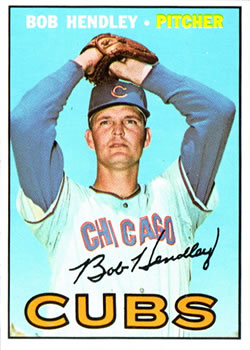
Bob Hendley started for the Cubs. He was not a particularly well-known pitcher. On this night, he pitched the game of his life. Unfortunately for him, it was only the 2nd-best pitched game... in that game.
Neither pitcher allowed a single baserunner until the bottom of the 5th. Cliché Alert: Walks can kill you, especially the leadoff variety. So can errors. Hendley walked Lou Johnson to start the inning. Ron Fairly sacrificed Johnson over to 2nd base. Johnson tried to steal 3rd base. Cub catcher Chris Krug made a bad throw, allowing Johnson to score. Johnson would also get a hit, the Dodgers' only hit: A "Texas Leaguer" double to right field with 2 out in the 7th, but would be stranded.

The Dodgers had 1 run, without a hit contributing to it. That was all Koufax needed: One run. He went to a 3-balls, 2-strikes count on Ernie Banks in the top of the 5th, but struck him out. He went to another full count on Billy Williams in the 7th, but got him to fly out. He struck out the side in the 8th: Ron Santo, Banks, and Byron Browne.

He went into the 9th inning without having allowed a baserunner. Krug led off. He got to a 2-and-2 count, before Koufax struck him out swinging. Joey Amalfitano came up. Koufax struck him out on 3 pitches, the last a swing and a miss.

Cub manager Lou Klein sent Harvey Kuenn up to bad for Hendley, who had pitched 8 innings, allowing 1 run, 1 hit, and 1 walk, striking out 3. Ordinarily, even in that pitching-friendly era of baseball, it would have been enough to win. Not on this night.

Kuenn was 34 years old, and nearing the end of the line. But he was a .303 lifetime hitter, the 1953 American League Rookie of the Year, the 1959 AL batting champion with a .353 average, a 4-time AL leader in hits, a 3-time AL leader in doubles, an All-Star in 8 seasons (including 2 in which there were 2 All-Star Games, so he's sometimes listed as a 10-time All-Star), and, while not really a power hitter, topping off at 12 home runs in 1956, he was certainly capable of driving in runs, topping off at 88 RBIs that same year. He had spent most of his career with the Detroit Tigers, but had helped the San Francisco Giants win the 1962 NL Pennant.

No less than Casey Stengel had said that Kuenn was "one of the most dangerous hitters in baseball. The guy can hurt you a million ways. He has no weakness at the plate that I have ever noticed." However, he was now batting just .217. He had previously made the last out in Koufax's 2nd no-hitter, over the Giants in 1963.

There is no surviving film or videotape of this game, just a recording of Vin Scully's broadcast on radio station KFI, 640 on the AM dial: "It is 9:46 PM. Two and two to Harvey Kuenn. One strike away. Sandy into his windup. Here's the pitch: Swung on and missed, a perfect game!" (Note: That's 9:46 PM Pacific Time, so it was 12:46 AM Eastern Time on September 10.)

The perfect game was also his 4th no-hitter, breaking the record of 3, which had been shared by Larry Corcoran, Cy Young and Bob Feller. Young's 2nd no-hitter was a perfect game.

Koufax threw 113 pitches, 79 of them for strikes. He struck out 14 batters. Home plate umpire Ed Vargo didn't have the chance to make bad calls. His single-game strikeout peak was 18, having done it in 1959 (before he found his control) and 1962. The 14 from this game would be part of a total of 382, a major league record at the time. Nolan Ryan would raise the record to 383 in 1973, a year in which he pitched 2 no-hitters. Koufax's 382 remains a National League record, and a major league record for lefthanded pitchers.

Koufax's 4 no-hitters would be a record until Ryan pitched a 5th in 1981, eventually reaching 7 -- although none of those was a perfect game. In a weird twist of events, Jeff Torborg caught Koufax's last no-hitter, and also caught Ryan's 1st in 1973. That made him the 2nd catcher to catch no-hitters in both leagues, following Gus Triandos. They have since been joined by Darrell Porter, Ron Hassey and Drew Butera.

Torborg also caught Bill Singer's no-hitter for the Dodgers, in 1970, so he was the 1st catcher to catch 3 no-hitters. Jason Varitek now holds the record, with 4.

The Dodgers went on to win the World Series. Koufax would be the story of that Series, in more ways than one.

Harvey Kuenn would go on to manage the Milwaukee Brewers to their 1st Pennant, in 1982. He died in 1988. Ed Vargo died in 2008. Lou Johnson, who got the Dodgers' only hit, died in 2020. Vin Scully died in 2022. Jeff Torborg died early this year. As of September 9, 2025, Sandy Koufax and Bob Hendley are still alive.

*

September 9, 1965 was a Thursday. Future basketball star Dan Majerle was born. This was also the day that both the U.S. Department of Housing and Urban Development and Gatorade made their debuts.

Tuesday, August 5, 2025

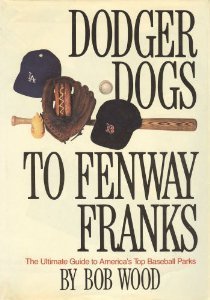
August 5, 1985: The "Dodger Dogs to Fenway Franks" Tour Is Completed

August 5, 1985: Bob Wood sees a baseball game. It's not a particularly noteworthy game. But it does complete a journey: He had set out to visit all 26 Major League Baseball stadiums then in use in one Summer, and had now done it.

Born in 1959 in Kalamazoo, Michigan, he started out as a Detroit Tigers fan. But a visit to Boston in 1975 converted him to the Boston Red Sox, and, while still retaining an affinity for the team that won him the World Series when he was 9 years old, he became one of the Fenway Faithful.

He went to Michigan State University, saw them win the Big Ten Conference title in football in 1978, and became a teacher. By 1985, he was teaching history at a junior high school in Seattle, and going to Mariners games at the Kingdome.

In 1977, he and a friend, Bob Matyas, drove from the MSU campus in East Lansing to Comiskey Park in Chicago, to watch the Red Sox play the White Sox. Sitting near them were two men who had gone to all 26 ballparks. Wood decided that, one day, he would do the same thing. Finally, in 1985, at the age of 26, he made out a schedule, and set out to do it.

He even wrote to all 26 teams, telling him of his plan, and asking for free tickets. After all, while it was Summer, and school was out, and he had the time, he still had a teacher's salary, and was going to be spending a lot of money on lodging and gas for his car. Some teams turned him down, though some sent him letters wishing him well on his trip. But he got free tickets from 12 out of 26: Both New York teams, both Los Angeles area teams, both Pennsylvania teams, both Texas teams, the White Sox, the San Francisco Giants, the Kansas City Royals, and the Milwaukee Brewers.

He also decided to grade every ballpark, like a teacher, judging them on certain categories: Layout and Upkeep, Ball Field, Seating, Scoreboard, Food (further breaking that down into accessibility, selection, cost and taste), Ballpark Employees, Facilities, and Atmosphere. Ballparks with artificial turf and, worse, domes suffered for "Atmosphere."

Having started with his adopted hometown of Seattle, he stopped a hotel in Williams, California, and awoke the next morning to find his hatchback's window shattered and his car robbed. The local police recovered his suitcases intact, but his valuable binoculars were too good for the thief to pass up. He got his window fixed, and moved on.

Later on, the threat of a players' strike suggested that he would fall one park short: The strike was to begin on August 6, the day he was supposed to make Atlanta his 26th and final park. And while the strike was settled after 3 days, he had no way of knowing that at the time: For all he knew, that would be the end of the season, as would eventually happen with the Strike of '94.

The day before the Strike of '85 was to start, Cincinnati was supposed to be Number 25. But he found an open date on his schedule, while he was going through the Midwest, and snuck Cincinnati in there, and move Atlanta up to August 5. He was going to make it -- if only there were no rainouts. As it turned out, there were none, and he made it. Here's how it turned out, with the results of the games, and a sampling of his assessments:

1. June 16, Kingdome, Seattle: "Buy a ticket, step inside, then leave. The place is depressing." Mariners 2, Royals 1.
2. June 19, Candlestick Park, San Francisco: "Nobody seems really intent on presenting baseball as it should be... Just the fact that the sky, whatever shade of gray it happens to be turning at the time, is not covered by a dome and the place has real grass, even if it is weird-looking, makes 'The Stick' bearable. And then just barely." Giants 5, Reds 2. Reds player-manager Pete Rose did not put himself into the game.

3. June 21, Oakland-Alameda County Coliseum: "If you like MTV and baseball, you'll love the way they go together in the Coliseum." (This was before "Mount Davis" was built in 1995-96.) A's 9, Indians 1. Don Sutton started for the A's, and collected his 286th career win. He would go on to win 324.

4. June 23, Dodger Stadium, Los Angeles: "I the custom that Arthur's Knights of the Round Table maintained, true to their principles even amid all the glory showered upon them, Dodger Stadium remains virtuous. In all its elegance it remains in touch with those simple qualities so necessary to the game." (Virtuous? It only exists because of Walter O'Malley's greed!) Dodgers 6, Astros 2.
5. June 24, Anaheim Stadium (now named Angel Stadium of Anaheim): "All the doubts I had rolling into Dodger Stadium -- the glitter, that Hollywood hollowness, that baseball just wouldn't be baseball -- hit home in Anaheim." Indians 2, Angels 1. Bert Blyleven was the winning pitcher.

6. June 26 and 27, Jack Murphy Stadium, San Diego: "Southern California's summer high finds a good friend in San Diego. A mixture of hot sun, fans that finally get up off their butts and cheer, and a scoreboard of such magnitude that it dwarfs all else inside make a game in Jack Murphy California's most energetic."

Padres 10, Dodgers 4; Padres 5, Dodgers 4. This was the 1st time on the trip that he saw 2 games in 1 park. The crowd jumped from 36,113 to a then-sellout of 47,482 for his 2nd game, because Fernando Valenzuela was starting for the Dodgers, and the facility originally known as San Diego Stadium and later as Qualcomm Stadium was only 19 miles from the Mexican border. (Its replacement, Petco Park, is 15 miles from the border.) But the Padres won. In 1996, Fernando started and won the 1st regular-season MLB game in Mexico, pitching for the Padres against the Mets.

7. July 2 and 3, Arlington Stadium, outside Dallas: "Something in the heart, a special sincerity, fights the head and makes the Rangers' home a happy one." Angels 7, Rangers 2; Angels 3, Rangers 2. This 2nd game was his 1st extra-inning game on the trip, going 11 innings.

Wood had been set to watch games in Houston on July 3 and 4, but was so taken with the Rangers' hospitality, they talked him into sticking around for a 2nd game there. After all, while the old Arlington Stadium was a frying pan, he knew that he wouldn't get cheated out of a game in Houston: It was impossible to get a rainout at the Astrodome. (With one exception, a 1976 game when the city was flooded.)

8. July 4, Astrodome, Houston: "To the baseball world Houston's tomb provides a new low in charisma, a bottom-of-the-ballpark barrel." It just didn't seem right to him to spend the 4th of July indoors. Expos 9, Astros 3, in 12 innings.

9. July 6, Royals Stadium (now named Kauffman Stadium), Kansas City: "A totally professional atmosphere makes Royals Stadium one of the majors' best... A first-class sight brings on that first-class air. Together they create a first-class feeling." Orioles 8, Royals 3.
Royals Stadium as it appeared in 1985

10. July 7, Busch Memorial Stadium, St. Louis: "A fiery excitement flows through Busch. It can be found in many places. Loud and red, enthusiastic fans have fun under the push of the big city." Cardinals 7, Dodgers 1. This turned out to be a preview of the National League Championship Series, which the Cardinals also won, before losing the World Series to the cross-State Royals in controversial fashion.

11. July 9 and 10, Wrigley Field, Chicago: "As thick as they ivy that hugs its red brick walls, the very essence of baseball hangs in the atmosphere of Wrigley. Not only the ballpark itself, with its vine-covered walls and hand-operated scoreboard, but the folks that grace the place are why Chicago's North Side park is the purest in baseball." Cubs 7, Padres 3; Cubs 4, Padres 3.

After this one, he took a little decompression break, which included the All-Star Break, and visited his family in Kalamazoo, their house being a convenient home base for his Midwestern trips, not to mention free.

12. July 16, Hubert H. Humphrey Metrodome, Minneapolis: "Maybe the next time Minneapolis decides to put something up in their lovely city they won't mind adding in a few options, paying a few more dollars, and buying something other than the stripped-down economy model."

This was the All-Star Game: National League 6, American League 1. Jack Morris, a St. Paul native then with the Tigers, started and lost for the AL. But he would pitch a 10-inning shutout for the Twins in Game 7 of the 1991 World Series, the greatest moment in the Metrodome's history.

When Wood wrote Big Ten Country, and had to visit the Metrodome again to see a University of Minnesota home game, he doubled down: "Now, don't get me wrong. It's not that I don't like Minneapolis. How can you not like Minneapolis?... No, Minneapolis is lovely. It's the Metrodome that sucks!" He got his wish: UM moved back on-campus with Huntington Bank Stadium in 2009, the Twins built Target Field in 2010, and the Vikings played the 2014 and '15 seasons at UM's stadium while the Metrodome was demolished and U.S. Bank Stadium was built on the site. All 3 were vast improvements.

13. July 18, Milwaukee County Stadium: "Beer, bratwurst, and baseball -- what a combination!... From the players' rousing introduction to the organist's clap-alongs, a ball game at County Stadium is a treat for all the senses." Mariners 5, Brewers 2.

14. July 19, Comiskey Park, Chicago: "Like an enchanted castle, Comiskey infects those who pass through. It makes them a little crazier, a little looser, a little more fun-loving. It touches its visitors with a light heart and offers the kind of magic that only 75 years of good hard living can create."

White Sox 1, Indians 0. The only run came on a home run by one of Wood's former Boston heroes, Carlton Fisk. Tom Seaver outpitched Bert Blyleven, for his 298th career win. Both pitchers went the distance, despite Seaver being 40 years old, and Blyleven 36. Between them, they would win 598 games, and strike out 7,341 batters.

15. July 20, Riverfront Stadium, Cincinnati: "Talk about a transition. Comiskey bubbled with excitement. A full-housed Riverfront was almost soundless... Instead of a let-it-all-hang-out kind of spirit, we found a place that only a librarian could appreciate.... Their attitude, while commendable at the public library, was weird for a baseball game." Phillies 10, Reds 6. Despite being at home, Rose did not put himself into this game, either.

16. July 21, Tiger Stadium, Detroit: "At its heart, the park's a classic beauty. Entering through its gates, you make a special pact with baseball. The graceful spirit of Tiger Stadium makes up for all the frustrations along the way." Rangers 7, Tigers 5.

17. July 23, Canadian National Exhibition Stadium, Toronto: "Somehow, someway, baseball in Exhibition Stadium survives. On a silly-looking football field, surrounded by cold aluminum benches, the Blue Jays keep on winning. Blue Jay fans keep on coming. And the sea gulls keep on munching. All three should be awarded baseball's congressional medal of bravery -- players and fans for an iron will in taking on such an ugly place, and the gulls for having iron stomachs." Blue Jays 4, Mariners 2.

18. July 24, Olympic Stadium, Montreal: "Shaped like a spaceship, overhung by a death-ray concrete eye, surrounded inside by that silly-looking sprint-lined warning track, and filled with plastic seats and silent fans, in a strictly baseball sense... it's a disaster. Other factors are at work, though... I relished the idea that major league baseball was fortunate enough to enjoy the flavor of Montreal... as only it could be, both in French and English." Expos 3, Braves 1.

19. July 26 and 27, Fenway Park, Boston: "Boston's charming ballpark is surviving, and it does so without sacrificing integrity. Despite a little cosmetic primping, the very heart of the game, the people, and the park itself remain caught in time. Fenway today is baseball as it was in years past, and as pure as it will ever be again in the future." (This was, of course, before not just the various renovations that brought Fenway into the 21st Century, but before the cheating scandals that brought the Red Sox World Series glory at last, but also shame and scandal.)
Fenway Park as it appeared in 1985

His adopted "home team" and his adopted favorite team played each other, and each won a game: Red Sox 6, Mariners 2; Mariners 10, Red Sox 3.

20. July 28, Veterans Stadium, Philadelphia: "Despite an ugly ball field, housed by an ugly stadium, surrounded by an ugly parking lot, the game goes." Phillies 7, Braves 3.

21. July 29 and 30, Memorial Stadium, Baltimore: "Baseball in Baltimore is fun. A solid tradition, enjoyed by nice people, both sitting and serving, the game gets the sincerity it deserves." Blue Jays 4, Orioles 3; Orioles 4, Blue Jays 3. Both games went 10 innings.

22. July 31, William A. Shea Municipal Stadium, New York: "What the Queens park fails to do, and what Yankee Stadium, in a nastier section of town, does so well, is leave New York's ill feelings on the outside streets. Shea's not immune to the problems of the world, it's immersed in them." Mets 5, Expos 2.

23. August 2, Yankee Stadium, New York: This was the ultimate challenge -- not just for a Red Sox fan, but for any baseball fan: Yankee Stadium in The Bronx, during the bad old days of the Ed Koch Eighties in New York. Wood wrote: "Comiskey's neighborhood is nasty. Tiger Stadium has plenty of dangerous places nearby. And Oakland is a dive. The Bronx, though, is worse. It's slime... Yankee Stadium is a beauty, an oasis thriving in the ugliness of city slums, as well planned as any the burbs have... Yankee Stadium has it all: Sky, green grass, and good hard-core fans. Had it no history, I'd still have had a grand time. But the place adds something intangible, a spark that can't be bought by any ballpark. That great Yankee tradition hangs in the air."
I remember the game he saw. I had a nasty headache when it began, and, watching it on WNBC-Channel 4 -- a rare non-Saturday broadcast for the Peacock network -- it didn't get any better. In the bottom of the 7th inning, with the game tied 3-3, Rickey Henderson singled, but Bobby Meacham, not sure if the ball would be caught or not, got caught coming off 2nd base, and he ran for 3rd too late. Both he and Dale Berra, who had been on 1st, ran through the stop sign of 3rd base coach Gene Michael, allowing both of them to be tagged out by Chicago White Sox catcher Carlton Fisk, making for the strangest double play I've ever seen.

It cost the Yankees the game: Despite 2 home runs by Don Mattingly and another by Dave Winfield, the White Sox won, 6-5 in 11 innings. The winning run was scored by Ozzie Guillén, the ChiSox' shortstop and future manager, a genius/maniac every bit as much as the Yankee manager in this game, Billy Martin (on his 4th go-round). Attendance: 27,118.

24. August 3, Three Rivers Stadium, Pittsburgh: "Just another three-level plastic clone, this one with a lousy team and hardly any fans around to watch 'em lose, the spirit inside Three Rivers challenges the Kingdome as baseball's biggest bore." Expos 6, Pirates 5.

25. August 4, Cleveland Municipal Stadium: "Baseball anywhere can be beautiful, even in a clumsy-looking, empty warehouse on the shores of Lake Erie." Orioles 5, Indians 4.

On this day, pitching for the White Sox against the Yankees at Yankee Stadium, Tom Seaver collected his 300th win. Across the country, playing for the Angels against his former team, the Twins, Rod Carew collected his 3,000th hit.

26. August 5, Atlanta-Fulton County Stadium, completing the journey: Noting that it was one of the 1960s multipurpose jobs, Wood was surprised to see real green grass and real red dirt. "After the dirt, though, the place deteriorates and its charm evaporates, drowned out in a circus of garbage and smoke. Well-planned walkways fill up with crap; well-ordered rest room ooze with wastepaper. Chain-smoking employees plod about like the junk isn't even there. Meanwhile, circus music fills the air. Clanging away, turned to only God knows what fake instrument, the organist's preludes seemed more in tune to high-wire trapeze acts than a baseball game. And the fans, the just quietly sat around like they didn't know the difference."
And the home team, the Atlanta Braves? They lost to the Los Angeles Dodgers, 6-1. Ken Landreaux hit a home run for the Dodgers. Jerry Reuss, who'd pitched a no-hitter for the Dodgers in 1980, outpitched Len Barker, who'd pitched a perfect game for Cleveland the following year. Barker was relieved by Rick Camp, who, a month earlier, had stepped to the plate in the bottom of the 18th inning, with a lifetime batting average of .060, because he was the last player on the roster, and hit a game-tying home run against the Mets, before losing in the 19th.

It was over. He'd done it: 26 ballparks, 31 games, 11,636 miles in 51 days. In the end, he ranked Dodger Stadium and Royals Stadium tied for 1st, and the Astrodome and Exhibition Stadium tied for last. After Royals Stadium, which no longer has the plastic stuff, the Olympic Stadium, 15th, was the highest-ranking artificial turf stadium; Candlestick Park, 24th, the lowest-ranking one with real grass. Yankee Stadium was 13th, Shea Stadium 19th. His beloved Fenway, 6th; his original home park, Tiger Stadium, 12th.

Aside from the All-Star Game in Minneapolis, with a sellout crowd of 54,960, the largest crowd on his trip was in San Diego: 47,482. The smallest was in San Francisco: 8,490. Even Cleveland had more, with their game being on a Sunday.

Wood completed his tour 3 days later, just ahead of the strike that began the next day, lasting 3 days. In 1988, he published his account of the trip, "Dodger Dogs to Fenway Franks." That year, the Michigan State University graduate went to all the Big Ten schools' football games, and, 2 years later, published "Big Ten Country." Now 66, he is retired from teaching.
Bob Wood, attending a Washington Nationals game
at Nationals Park in Washington, in 2008.
Neither the team nor the stadium existed during his 1985 trip.

Since his trip, the Colorado Rockies, the Miami Marlins, the Arizona Diamondbacks and the Tampa Bay Rays have been added; and the Montreal Expos have moved, becoming the Washington Nationals. Of the 26 ballparks he went to, only 6 are still in use: Fenway, Wrigley, Royals/Kauffman Stadium, the Oakland Coliseum, and both Los Angeles-area stadiums. The Astrodome is still standing, but no one is using it. (UPDATE: The Athletics moved out of Oakland after the 2024 season, though the Coliseum still stands.)

And the various multipurpose stadiums of built in the 1960s and '70s have been replaced by "retro" ballparks designed to look like the ones built early in the 20th Century, and even the ones built with retractable roofs and end up looking like airplane hangars have old-timey touches like hand-operated scoreboards. Artificial turf has fallen out of fashion. And instead of being built on the outskirts of cities, or in the suburbs, downtown, making for non-car accessibility, has been the way to go, for all the major sports. Since Camden Yards opened in Baltimore in 1992, both comfort and atmosphere have been in.

Wood's book was not a best-seller, but it sold enough copies to inspire several fans to make their own journeys to all 26 ballparks -- after 1993, to all 28; and then, after 1998, all 30 -- and, in some cases, all in one season. A few rich and foolhardy souls who don't mind getting on a lot of planes have attempted 30 parks in 30 days. In the 2005, '06 and '07 seasons, the YES Network took 4 lucky fans (different ones each season) to see all 162 Yankee games, home and away, for a series titled Ultimate Road Trip.

I, myself, took Wood's book with me on my visits to Baltimore, Boston, Montreal, Toronto, Cleveland, Detroit, Chicago and Milwaukee, to use as a reference, despite it already being out of date. (In the cases of Toronto and Cleveland, the stadiums in question had already been replaced.)

Since there are 92 "clubs," in 4 Divisions, in England's Football League, some fans there have managed to "Do the 92." Despite the large number, it's not as hard as it sounds, because of the traveling: England is a considerably smaller country, and so, instead of 3,092 miles from Fenway Park in Boston to Oracle Park, current home of the San Francisco Giants, the longest roadtrip in English football is from Newcastle United's St. James' Park to Plymouth Argyle's Home Park, and that's only 408 miles. And England has better public transportation, whereas some U.S. sports venues have poor public transit links. And, since the schedule (or "fixture list," as they'd say over there) makes it impossible, nobody tries to do it all in one season.

Monday, June 2, 2025

Yanks-Dodgers Series Raises Questions

Going into last night's game at Dodger Stadium in Los Angeles, the 3 worst games the Yankees had played in this decade are the last 2 games they've played against the Los Angeles Dodgers. Game 5 of last year's World Series, and the Friday and Saturday games of this series.

Friday night's game, and Saturday night's game, were each one of those games that makes a 16-4 run, like the one that preceded it, look meaningless.

As with that Game 5, the Yankees had an early lead, 5-2 after 3 innings. Aaron Judge, Austin Wells, Trent Grisham and Paul Goldschmidt all hit home runs. Max Fried was on the mound, so it looked safe. But in the 5th, Fried had his 1st Yankee meltdown, including the 1st of 2 home runs by Shohei Ohtani, and the Dodgers ended up winning, 8-5.

The Saturday game was over early. Will Warren had a horrible first inning, allowing 4 runs and leaving the bases loaded, and Aaron Boone just sat there like a bump on a log, leaving him out there to squirm.

Will Warren allowed 4 runs in the 1st inning. Manager Aaron Boone left him in. He let Warren pitch to 4 batters in the 2nd inning: Walk, walk, groundout, 3-run homer. Finally, he took Warren out, having left him in for 1 & 1/3rd, 7 runs on 6 hits and 4 walks. That might be the worst start for a Yankee pitcher I've ever watched. It didn't have to be that way.

The 1st reliver, Brent Headrick, was no better. End of 2: Los Angeles 10, Yankees 0. And that was with both innings ending on an Ohtani K.

I know the Yankees' failures are more general manager Brian Cashman's fault than anyone else's, but I can't defend Boone for much longer.

Ten-nothing after two innings. Pardon my French, but... Oy gevalt.

My grandfather was a Jewish Yankee Fan from The Bronx. He told me that using the word "gevalt" twice in one day was bad luck. Well, that ship had sailed -- and it was the Lusitania.

The Dodgers scored 4 runs in the 1st, 6 in the 2nd, 9 in the 3rd, 0 in the 4th, and 4 in the 5th. 46004. That's a ZIP Code in Fort Wayne, Indiana.

When the carnage was over, the Dodgers had won, 18-2. Judge had hit 2 home runs, but so had Max Muncy. To put this in perspective: Counting his home runs, Judge reached base 3 times; the rest of the Yankees combined, hits and walks combined, 8.

The Friday night game was on Amazon Prime, which I don't have on my cable system. So I couldn't watch it. I was still better off than on Saturday, when I watched on Fox.

This made last night's game, the ESPN Sunday Night Baseball game, a must-win. This time, the Yankees took the initiative, scoring 1 run in the 1st inning, 3 in the 3rd, and 2 in the 5th. That's a linescore of 10302. That's a ZIP Code in Staten Island. Ben Rice hit a home run.

Ryan Yarbrough gave the Yanks a strong start: 6 innings, 1 run, 4 hits, no walks, 5 strikeouts. Ryan's hope led to a bullpen that hung on, and the Yankees salvaged the finale, 7-3. They went 6-3 on the combined Los Angeles roadtrip, Angels and Dodgers.

*

We are now in June, 36 percent of the way through the regular season. The Yankees are 36-22, for a .620 winning percentage, a 100-62 pace. They lead the American League East by 5 1/2 games over the Toronto Blue Jays, 6 1/2 over the Tampa Bay Rays, 8 1/2 over the Boston Red Sox, and 14 over the Baltimore Orioles. Cliché Alert: In the all-important loss column, they lead the Jays by 6, the Rays by 7, the BoSox by 10 and the O's by 14.

They have done this with no Gerrit Cole, with no Luis Gil, with Clarke Schmidt out for the 1st month, with DJ LeMahieu and Jonathan Loáisiga out for the 1st month and a half, and with Jazz Chisholm out for the last 2 weeks. Except for Cole, no key player is, as yet, out for the season. The defending AL Champions are, with little doubt, still the best team in the AL.

And yet, the Dodgers managed to make them look very ordinary. Baseball doesn't work this way, but the Dodgers took the series 29-14 on aggregate. While these games officially meant no more than any other regular-season games, they had the atmosphere of postseason games, and they showed that maybe, just maybe, the Yankees are no better mentally prepared for the postseason than they were last season.

Sure, they won the Pennant, beating the Kansas City Royals 3 games to 1 and then the Cleveland Guardians 4 games to 1, but neither of those teams was much of a challenge: The Royals won 86 games; the Guardians, 92 -- to the Yankees' 94, and the Dodgers' 98. It's entirely possible that, had the Dodgers lost the National League Championship Series to the Mets, the Mets might have give the Yankees a lot of trouble, and possibly even reversed the result of the 2000 World Series. We have never let their fans live that down, and they would give us the same treatment.

So, clearly, something must be done, because we can't presume that the AL Playoffs will be as easy this time. And, since the Dodgers are likely to make the Playoffs again, we have to be prepared for them.

How do we do that? That is the question, possibly encompassing several sub-questions, that Boone and Cashman must answer between the start of June and the start of October.