Declaration of Independence, painted by John Trumbull in 1819.
The Committee of Five: Left to right, John Adams, Philip Livingston,
Roger Sherman, Thomas Jefferson and Benjamin Franklin.
John Hancock, President of the Continental Congress, receives it.
July 4, 1776, 250 years ago: The Continental Congress approves the declaration by the United States of America of its independence from the Kingdom of Great Britain. Ever since, the 4th of July has been celebrated by the U.S.A. as its Independence Day.
The sequence of independence often gets confused. Here goes:
* April 19, 1775: The Battles of Lexington and Concord are fought outside Boston. This is the beginning of the War of the American Revolution.
* January 10, 1776: Thomas Paine publishes his pamphlet Common Sense, arguing for independence from British rule in the Thirteen Colonies: New Hampshire, Massachusetts, Rhode Island, Connecticut, New York, New Jersey, Pennsylvania, Delaware, Maryland, Virginia, North Carolina, South Carolina and Georgia. No part of what eventually became Canada took part in this process.
* March 26: South Carolina adopts its own constitution, effectively breaking away from British royal authority.
* April 12: North Carolina produces the Halifax Resolves, making it the 1st of the 13 Colonies to officially authorize its delegates to the Continental Congress to vote for independence from the Kingdom of Great Britain. (The Kingdom was officially renamed "The United Kingdom of Great Britain and Ireland" in 1801, and "The United Kingdom of Great Britain and Northern Ireland" in 1922.)
* May 4: Rhode Island becomes the 1st Colony to specifically renounce its allegiance to King George III of Great Britain.
* June 7: Richard Henry Lee, a delegate from Virginia, proposes to the Continental Congress, meeting in Philadelphia at the Pennsylvania State House, which would later be renamed Independence Hall, "these united colonies are, and of right ought to be, free and independent states." This becomes known as the Lee Resolution.
The Lee family arrived in Virginia in 1639. Richard Henry would serve as President of the Confederation Congress from late 1784 to late 1785, and was 1 of Virginia's 1st 2 Senators. His brother Francis Lightfoot Lee, signed both the Declaration of Independence and the Articles of Confederation.
A first cousin, Henry Lee III, a.k.a. Light-Horse Harry, served in the Confederation Congress and the U.S. House of Representatives, and as Governor. He eulogized George Washington as "First in war, first in peace, and first in the hearts of his countrymen." His son was Robert E. Lee, who became the leading General of the Confederate States of America.
* June 11: The Continental Congress appoints a Committee of Five to draft a Declaration of Independence: Benjamin Franklin, John Adams, Roger Sherman, Robert Livingston and Thomas Jefferson.
Adams, from Quincy, Massachusetts, who had been the biggest advocate for independence, told Jefferson, from Charlottesville, Virginia, that he should write it: "Reason first, you are a Virginian, and a Virginian ought to appear at the head of this business. Reason second, I am obnoxious, suspected, and unpopular. You are very much otherwise. Reason third, you can write ten times better than I can."
* June 12: The Virginia Convention of Delegates adopts the Virginia Declaration of Rights, written by George Mason.
* June 15: The Delaware General Assembly votes to suspend government under the British Crown.
* June 28: Jefferson finishes writing the Declaration.
* July 2: The Continental Congress adopts the Lee Resolution. Adams wrote of the 2nd of July:
I am apt to believe that it will be celebrated, by succeeding Generations, as the great anniversary Festival. It ought to be commemorated, as the Day of Deliverance by solemn Acts of Devotion to God Almighty. It ought to be solemnized with Pomp and Parade, with shews, Games, Sports, Guns, Bells, Bonfires and Illuminations from one End of this Continent to the other from this Time forward forever more.
* July 4: The Continental Congress approves the Declaration of Independence, as written by Jefferson. This turned out to be the day the country honored as its Independence Day, possibly due to the date being printed in the document's heading: "In Congress, July 4, 1776." It begins:
When in the Course of human events, it becomes necessary for one people to dissolve the political bands which have connected them with another, and to assume among the powers of the earth, the separate and equal station to which the Laws of Nature and of Nature's God entitle them, a decent respect to the opinions of mankind requires that they should declare the causes which impel them to the separation.
We hold these truths to be self-evident, that all men are created equal, that they are endowed by their Creator with certain unalienable Rights, that among these are Life, Liberty and the pursuit of Happiness.--That to secure these rights, Governments are instituted among Men, deriving their just powers from the consent of the governed, --That whenever any Form of Government becomes destructive of these ends, it is the Right of the People to alter or to abolish it, and to institute new Government, laying its foundation on such principles and organizing its powers in such form, as to them shall seem most likely to effect their Safety and Happiness.
Key words: "From the consent of the governed." Britain's Parliament and its King did not have the consent of the people of British America. Jefferson continued:
Prudence, indeed, will dictate that Governments long established should not be changed for light and transient causes; and accordingly all experience hath shewn, that mankind are more disposed to suffer, while evils are sufferable, than to right themselves by abolishing the forms to which they are accustomed.
But when a long train of abuses and usurpations, pursuing invariably the same Object evinces a design to reduce them under absolute Despotism, it is their right, it is their duty, to throw off such Government, and to provide new Guards for their future security.
Such has been the patient sufferance of these Colonies; and such is now the necessity which constrains them to alter their former Systems of Government. The history of the present King of Great Britain is a history of repeated injuries and usurpations, all having in direct object the establishment of an absolute Tyranny over these States. To prove this, let Facts be submitted to a candid world.
Jefferson then listed several grievances, some of which would be addressed later on in the Constitution of the United States, or which he was in Paris, as U.S. Minister to France, and had nothing to do with writing, although one of his protégés, James Madison, did; and its Bill of Rights, of which he, in a letter to Madison after receiving his mailed copy of the Constitution, was one of the major recommendors.
It is shocking to see how many of Jefferson's grievances mirror those that we have, today, against Donald Trump. The actions of the British troops in America in 1775 and 1776 have been mirrored by those of ICE in 2025 and 2026. People being held without trial? Trump has done that, too, in his detention centers -- or, as we would have called them after World War II, his concentration camps.
Jefferson wrote that the colonial leaders had written to Parliament and to George III, asking for a peaceful compromise. They got war instead. So independence truly was a last resort. He concluded:
We, therefore, the Representatives of the united States of America, in General Congress, Assembled, appealing to the Supreme Judge of the world for the rectitude of our intentions, do, in the Name, and by Authority of the good People of these Colonies, solemnly publish and declare, That these United Colonies are, and of Right ought to be Free and Independent States; that they are Absolved from all Allegiance to the British Crown, and that all political connection between them and the State of Great Britain, is and ought to be totally dissolved; and that as Free and Independent States, they have full Power to levy War, conclude Peace, contract Alliances, establish Commerce, and to do all other Acts and Things which Independent States may of right do.
And for the support of this Declaration, with a firm reliance on the protection of divine Providence, we mutually pledge to each other our Lives, our Fortunes and our sacred Honor.
Only one man signed the Declaration that day: The President of the Continental Congress, John Hancock of Massachusetts. His large signature has led to a signature, or an autograph, being known as a "John Hancock" ever since. However, the great story that he signed it overside on purpose and said, "There! George III can read that without his spectacles, and double the price on my head!" is apocryphal, and developed long afterward.
* July 8: The Declaration is read in public for the first time, at Independence Hall. The State House Bell is rung in celebration. It becomes known as the Liberty Bell.
* July 9: The Declaration is read in public at Bowling Green in what is now considered Lower Manhattan, in New York City. The mob hearing it tore down the statue there, of George III on horseback. The statue's metal was melted down to make musket balls for the Continental Army.
* August 2: The Declaration is actually signed by most of the men who would end up signing it.
* August 15: British troops sail into New York Harbor. As difficult as it was to get all 13 Colonies to agree to independence, the real hard part now begins: Securing that independence through war.
*
This is what the world was like in 1776:
The men we now call "The Founding Fathers" liked to talk about freedom and liberty. My edition of Webster's New World Dictionary, published in 1982, defines "freedom" as, "1. The state or quality of being free; esp., a) exemption or liberation from the control of some other person or some arbitrary power; liberty; independence" followed by a b) through i)" and "2. A right or privilege."
It defines "liberty" as, "1. Freedom or release from slavery, imprisonment, captivity, or any other form of arbtrary control; 2. The sum of rights and exemptions possessed in common by the people of a community, state, etc." and so on.
There was very little of that in the world at the time, especially in America, where many of the Signers, mostly in Southern States, owned slaves.
The biggest cities in the country were Philadelphia, with about 40,000 residents; New York, about 25,000; Boston, 15,000; Charleston, South Carolina, 12,000; Baltimore, 10,000; and Newport, Rhode Island, 7,000. Georgetown was a town in Maryland, but there was no city of Washington, and no District of Columbia, both of which would absorb it. Fort Pitt existed, but Pittsburgh, as a city, did not. Nor did Buffalo, nor Cleveland, nor Atlanta.
Maine was still part of Massachusetts. West Virginia was still part of Virginia. Even with independence, Britain still controlled what are now the States of Ohio, Kentucky, Tennessee, Michigan, Indiana, Illinois, Wisconsin, parts of Minnesota and North Dakota, and the States of Oregon and Washington still belonged to Britain.
What are now the States of Louisiana, Arkansas, Missouri, Iowa, Oklahoma, Kansas, Nebraska and South Dakota; and most of Minnesota, North Dakota, Colorado, Wyoming and Montana belonged to France. What are now the States of Florida, Alabama, Mississippi, Texas, New Mexico, Arizona, Utah, Nevada and California belonged to Spain. Alaska belonged to Russia. And Hawaii was an independent kingdom.
Spain still controlled what is now Mexico, and of most Central America and South America. Portugal controlled Brazil, parts of India, and some Pacific islands. Britain controlled the rest of India, and most of Oceania. Britain, France and Portugal dominated Africa. The Ottoman Empire controlled most of the Middle East, including present-day Israel. And Prussia, Russia and Austria had already begun to partition Poland.
Sports, as we know it now, did not exist. Who had time to watch them? Who had time to play them? Who had the money to afford the equipment? Only the rich. There's a reason horse racing is called "the sport of kings." There was boxing, golf, tennis, and early forms of cricket, soccer and field hockey -- but no baseball, American-style football, basketball or ice hockey. And competitive Winter sports were completely limited to cold-weather countries.
People worked from Sunrise to Sunset, Monday through Friday. They worked half a day on Saturday -- which is why sports as we know them developed on Saturdays. Sunday was The Lord's Day. Doing things on Sunday was seen by the people in charge as wrong.
Voting rights for women, black people, and men who didn't own land? A 40-hour, 5-day work-week? Workers' protection? Protection for food and drugs? Banking insurance? Government sponsored health care? Letting women have abortions? Letting people of the same gender marry, or be seen as together? You would be told whatever was the 1776 American version of "Get outta heah, ya bum!"
Roi Louis XVI was on the throne of France. Czarina Ekaterina II, a.k.a. Catherine the Great, was on the throne of Russia. Kaiser Friedrich II a.k.a. Frederick the Great, was on the throne of Prussia. Edward Gibbon wrote The Decline and Fall of the Roman Empire. Adam Smith wrote On the Wealth of Nations. Johann Wolfgang von Goethe wrote Stella. Johann Sebastian Bach had been dead since 1750, but his sons Johann Christian Bach and Carl Philipp Emanuel Bach were still alive and composing. So were Wolfgang Amadeus Mozart, his not-really-a-rival Antonio Salieri, and Joseph Haydn.
James Madison was 25 years old. Alexander Hamilton was 21. James Monroe was 18. Andrew Jackson was 9. John Quincy Adams was about to turn 9. Arthur Wellesley, the 1st Duke of Wellington, was 7. Napoleon Bonaparte was about to turn 7. Ludwig van Beethoven was 5.
The tallest building in the world was Strasbourg Cathedral in France. Reaching a height of 466 feet, it held that title from 1439 until 1874. There were no computers, no television, no radio, no motion pictures, no telephones, no telegraphs, no airplanes, no automobiles, no railroads. The fastest method communication was a man on a horse. It took about 5 weeks for a copy of the Declaration of Independence to reach the British Parliament and King George III.
Medicine was rudimentary. Artificial organs were not
yet possible. Transplantation of organs was not possible. The distribution of
antibiotics was not possible: If you got any kind of infection, you could
easily die. There were no vaccines of any kind.
In 1776, in events unconnected to the American Revolution, the Presidio of San Francisco was founded by the Spanish, the start of the City By the Bay. The Boshoi Ballet was founded in Moscow. Adam Weishaupt founded the Illuminati in Ingolstadt, Bavaria. Captain James Cook left Britain on what turned out to be his last voyage to the Pacific. The Domínguez–Escalante Expedition made the first exploration of what is now the American Southwest. A hurricane killed 6,000 people on the French Caribbean island of Guadeloupe.
Scottish philosopher David Hume, whose writings heavily influenced the Founding Fathers, died. So did King Yeongjo of Korea and King Hsinbyushin of Burma. Canadian explorer Simon Fraser was born.
That's what the world was like in 1776.
*
No, things did not get any easier after the Declaration of Independence was approved:
* August 27: General George Washington and his troops lose the Battle of Long Island, in what is now Brooklyn. They escaped across the East River to Manhattan.
* September 20: Washington and his troops have to evacuate the City. They make it to White Plains. The British burn New York to the ground. This is why there are very few pre-independence buildings in Manhattan.
* September 22: Nathan Hale is hanged by the British for espionage, at the Park of Artillery in Manhattan, roughly at present-day East 66th Street and 3rd Avenue. The Connecticut native and Yale College graduate was 21. British Captain John Montresor recalled that Hale's last words were, "I only regret, that I have but one life to lose for my country."
* October 11: A British fleet routs an American one off Valcour Island in Lake Champlain. The losing commander is General Benedict Arnold.
* October 28: Washington loses the Battle of White Plains.
* November 20: Washington and his troops evacuate New York, crossing the Hudson River into New Jersey. In 1931, the George Washington Bridge would open at that location.
* December 8: Having successfully retreated (for want of a better phrase) across New Jersey, Washington and his troops cross the Delaware River into Pennsylvania. The commander knows that most of his men's enlistments will run out on December 31, New Year's Eve, and that most of them will not want to go through any more of this. And it's getting cold.
* December 19: Thomas Paine publishes again. Embedded (as we would say today) with Washington's troops, his pamphlet The American Crisis is printed in nearby Philadelphia:
THESE are the times that try men’s souls. The summer soldier and the sunshine patriot will, in this crisis, shrink from the service of their country; but he that stands it now, deserves the love and thanks of man and woman. Tyranny, like hell, is not easily conquered; yet we have this consolation with us, that the harder the conflict, the more glorious the triumph. What we obtain too cheap, we esteem too lightly: it is dearness only that gives every thing its value.
He wasn't kidding. Washington, America, the cause, all needed a win. Now.
* December 25, Christmas Day: Figuring that the Hessian troops, Germans hired by the British to fight for their side, occupying Trenton, New Jersey would be too hungover and stuffed from their holiday dinner to fight back, Washington begins getting his troops back across the icy Delaware, between 6:00 PM and 3:00 AM. Trenton is 9 miles to the south, along what is now New Jersey Route 29.
* December 26: At 8:00 AM, Washington's troops surprise the Hessians. The Battle of Trenton is exactly the victory that the man, the cause, and the country needed.
The hard part was far from over. But Washington and the Continental Army would hang on, winning by merely keeping the war going. On October 19, 1781, with French troops and ships aiding them, they beat the British at Yorktown, Virginia. With Ben Franklin negotiating, the Treaty of Paris was signed on September 3, 1783. It then had to get across the Atlantic Ocean, and be approved by our side. On January 14, 1784, meeting temporarily at what is now the Maryland State House in Annapolis, the Confederation Congress approved the Treaty.
But we don't celebrate the 3rd of September or the 14th of January as our Independence Day. We celebrate the 4th of July.
Of the 56 Signers:
* John Morton of Pennsylvania was the 1st to die, on April 1, 1777.
* Button Gwinnett of Georgia lost a duel, and died from his wound 3 days later, on May 19, 1777.
* Philip Livingston, of one of New York's most distinguished families, was already ill at the time of the Declaration, and died in 1778.
* Thomas Lynch Jr. of South Carolina boarded a ship heading for Sint Eustatius in the Caribbean in 1779. The ship never arrived, and likely sank. Joseph Hewes of North Carolina had died a few days earlier. John Hart of New Jersey, who had lost his farm to a British raid, died earlier in that year. So did George Ross of Pennsylvania.
* Richard Stockton of New Jersey was captured by the British, and released, but developed cancer, and died in 1781. His house in Princeton, named Morven, served as the Governor's Mansion from 1956 to 1981, and is now a museum. George Taylor of Pennsylvania also died in 1781.
* Caesar Rodney was elected President (Governor) of Delaware, and lived until 1784.
* William Whipple of New Hampshire served as a General in the Continental Army, and lived until 1785. So did Stephen Hopkins of Rhode Island.
* Thomas Stone was elected to the Maryland Senate, and died in office in 1787. Arthur Middleton of South Carolina also lived until 1787.
* John Penn of North Carolina lived until 1788.
* Thomas Nelson Jr. was elected Governor of Virginia, and lived until 1789.
* Dr. Lyman Hall was elected Governor of Virginia, and lived until 1790. So did William Hooper of North Carolina. And so did the most important American who never became President, Benjamin Franklin.
* Francis Hopkinson of New Jersey became a federal Judge. He designed the 13-star, 13-stripe American Flag. Not Betsy Ross. She did something more important than that: She sewed uniforms for the Continental Army. Hopkinson lived until 1791. So did Benjamin Harrison, was elected Governor of Virginia. His son, William Henry Harrison, was a General in the War of 1812, and was elected President in 1840. William Henry's grandson, Benjamin Harrison, was a General in the American Civil War, and was elected President in 1888.
* John Hancock became Governor of Massachusetts. Roger Sherman was elected to the U.S. Senate from Connecticut. Each died in office in 1793.
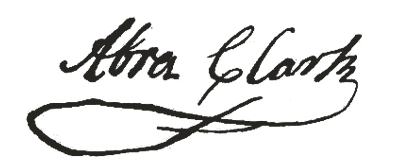
* The Rev. John Witherspoon was already President of the College of New Jersey, which became Princeton University, and held that office for the rest of his life. Another New Jerseyan, Abraham Clark, was elected to the U.S. House of Representatives, and died in office. Richard Henry Lee was elected U.S. Senator from Virginia. Dr. Josiah Bartlett was elected Governor of New Hampshire. All four of these men lived until 1794.
* Samuel Huntington was elected Governor of Connecticut, and died in office in 1796.
* Francis Lightfoot Lee and Carter Braxton, both of Virginia, lived until 1797. So did Oliver Wolcott, who died in office as Governor of Connecticut, having succeeded Huntington.
* James Wilson of Pennsylvania was appointed to the U.S. Supreme Court. George Read was appointed Chief Justice of Delaware. Each of them died in office in 1798. Also dying that year was Lewis Morris of New York, for whom the Morrisania section of The Bronx was named.
* William Paca was elected Governor of Maryland, and lived until 1799.
* Edward Rutledge was elected Governor of South Carolina, and died in office in 1800.
* Francis Lewis of New York lived until 1802.
* Samuel Adams, John's cousin, served as Governor of Massachusetts. He lived until 1803. So did Dr. Matthew Thornton of New Hampshire.
* George Walton was elected U.S. Senator from Georgia, and lived until 1804.
* Robert Morris of Pennsylvania became the great financier of the war, was elected U.S. Senator from Pennsylvania, and lived until 1806. So did James Smith of Pennsylvania and George Wythe of Virginia.
* Thomas Heyward Jr. lived until 1809.
* Samuel Chase of Maryland was appointed to the U.S. Supreme Court. He remains the only Justice ever impeached, although he was acquitted. He lived until 1811. So did the Rev. William Williams of Connecticut.
* Dr. Benjamin Rush, regarded as America's leading physician, was appointed Director of the U.S. Mint, and died in office in 1813. George Clymer, also of Pennsylvania, also died that year.
* Elbridge Gerry was elected Governor of Massachusetts, and served as James Madison's Vice President. He died in office in 1814. Robert Treat Paine was also from Massachusetts, and also lived until 1814.
* Thomas McKean of Delaware became Pennsylvania's Chief Justice, and then its Governor. He lived until 1817.
* William Ellery was appointed Chief Justice of Rhode Island, and lived until 1820.
* William Floyd was elected to the U.S. House of Representatives from New York, and lived until 1821.
* John Adams of Massachusetts, became the 1st Vice President, and was elected President in 1796, defeating Jefferson. He died on July 4, 1826, the 50th Anniversary of the approval of the Declaration, at the age of 90. His last words were, "Thomas Jefferson still lives. Independence forever."
* Thomas Jefferson became the Governor of Virginia, U.S. Minister to France, the 1st Secretary of State, the Vice President, and was elected President in 1800, defeating Adams. Their split was acrimonious, but their friendship was later restored by letter. After leaving office, Jefferson founded the University of Virginia, the 1st university in the world not officially affiliated with any religion.
What Adams didn't know was that Jefferson, too, had died on the 50th Anniversary of the Declaration of Independence he'd written, at 83. A few times, on the night of July 3, he regained consciousness long enough to ask, "Is this the 4th?" Told no, he would lose consciousness again. Finally, once more, he asked, "Is this the 4th?" Unable to bear his disappointment any further, they lied to him, and said yes. With a smile on his face, he lost consciousness for the last time. He breathed his last at 12:50 PM on the 4th; Adams, at 6:20 PM.
* And the last surviving Signer was Charles Carroll, who was elected U.S. Senator from Maryland. He died on November 14, 1832, 56 years after the Declaration of Independence.