Wednesday, April 1, 2026

April 1, 2001: Major League Baseball In Puerto Rico

April 1, 2001, 25 years ago: For the 1st time, a regular-season Major League Baseball game is played in Puerto Rico. The Toronto Blue Jays beat the Texas Rangers, 8-1 at Hiram Bithorn Stadium in San Juan.

The 1st at-bat was the Jays' Esteban Loaiza hitting the Rangers' Rusty Greer with a pitch. He was then erased in a double play. But Alex Rodriguez, playing his 1st game for the Rangers after signing a record $252 million contract, singled, and Rafael Palmeiro doubled him home.

That would be the highlight for the Rangers. In the 3rd, Shannon Stewart hit Puerto Rico's 1st regular-season MLB home run. Tony Batista would also hit a home run for the Jays.

Built in 1962, the stadium was named for Hiram Gabriel Bithorn Sosa, the 1st Puerto Rican to play in the major leagues. Light-skinned enough to be considered "white" in that segregated era, "Hi" Bithorn debuted with the Chicago Cubs in 1942, and led the National League in shutouts in 1943 with 7, then served in the U.S. Navy in World War II, missing the Cubs' Pennant season of 1945.
He returned to the Cubs in 1946, and pitched with the Chicago White Sox in 1947. His major league record was 34-31, with a 3.16 ERA. In 1951, still in professional baseball, he was murdered by a Mexican policeman who falsely accused him of being a Communist. Bithorn was only 35 years old. The policeman served 8 years in prison.

In 1973, an arena, the Roberto Clemente Coliseum, opened next-door to Bithorn Stadium. This was appropriate, not just because of all that Clemente, who had died a few weeks earlier, did for Puerto Rico, but because he had played for the team that still plays its home games at Bithorn Stadium, Cangrejeros de Santurce (the Santurce Crabbers).

The Expos played 11 "home games" at Bithorn Stadium in 2003, and again in 2004, but between San Juan and Montreal, they were unsuccessful in 3 languages, and were moved to become the Washington Nationals for 2005.

In 2010, Major League Baseball returned to the stadium, as the Florida Marlins faced the New York Mets in a 3-game series during the regular season. Known as the Miami Marlins since 2012, they were to play the Pittsburgh Pirates on May 30 and 31, 2016 in honor of Roberto Clemente Day. However, on May 6, 2016, it was announced that the Puerto Rico games would be postponed due to the Zika virus outbreak, and moved to Marlins Park in Miami.

The Cleveland Indians and the Minnesota Twins played a 2-game series at Hiram Bithorn Stadium on April 17 and 18, 2018. Another series, between the Marlins and the Mets, was scheduled for April 2020, but was canceled as a result of the COVID-19 pandemic.

Bithorn Stadium has also hosted Caribbean "Winter league" games and World Baseball Classic games.

April 1, 1996: An Umpire Dies On the Field

April 1, 1996, 30 years ago: Umpire John McSherry dies of a heart attack while officiating at the Opening Day game between the Cincinnati Reds and the Montreal Expos, at Riverfront Stadium in Cincinnati. He was 51 years old, and listed at 325 pounds. The game was called and postponed.

McSherry had just begun his 26th season as a National League umpire (the 2 Leagues have had a combined umpiring crew since 2000), and was one of the most respected "men in blue." He officiated in 12 postseasons, including the 1977 and 1987 World Series, plus 3 All-Star Games.

Opening Day is a big deal in Cincinnati, perhaps more so that in any other Major League Baseball city. Because it was home to the 1st openly professional baseball team, the 1869-70 Cincinnati Red Stockings -- the current Reds team dates to 1882 -- it was traditional for them to start the day before the rest of the National League teams, and have a parade before the game.

Reds owner Marge Schott was a Cincinnati native, and loved the Opening Day tradition. She expressed concern that the children in the stands saw a man die, which was a reasonable concern. But she made it sound like the tradition was more important than a man's life, saying, "Snow this morning, and now this. I don't believe it. I feel cheated. This isn't supposed to happen to us, not in Cincinnati. This is our history, our tradition, our team. Nobody feels worse than me."

Eventually, the controversies, including several incidents of bigotry, piled up, and the other MLB team owners forced her to sell the team in 1999. She died in 2004.

The game was restarted the next day, with the statistics already tallied thrown out. The Reds won, 4-1.

McSherry was buried at Gate of Heaven Cemetery in Hawthorne, Westchester County, New York – the same cemetery as Babe Ruth.

*

In addition, the Final of the NCAA Tournament was held that day, at the Continental Airlines Arena at the Meadowlands in East Rutherford, New Jersey, at what was then known as the Continental Airlines Arena. Kentucky beat Syracuse, 76-67.

This is the only time the NCAA Final Four has ever been held in New Jersey, and the only time it's been held in the New York Tri-State Area since 1950. And it's the last time the Final Four has been held in a venue with fewer than 40,000 seats.

Tuesday, March 31, 2026

March 31, 2001: The Death of David Rocastle

March 31, 2001, 25 years ago: David Rocastle dies of lymphoma. He was just 33 years old, and was one of the best English soccer players of his generation.

He was born on May 2, 1967 in Lewisham, South-East London, the son of Caribbean immigrants. He was 5 when his father died of pneumonia, and his mother remarried and had 2 more children. He became an expert schoolboy midfielder, to the point where Terry Murphy, a scout for North London team Arsenal Football Club, told team owner Peter Hill-Wood, "I think I saw a Brazilian today." Murphy also discovered centrebacks Tony Adams and Martin Keown, and midfielder Michael Thomas.

Rocastle, nicknamed "Rocky," and Thomas joined midfielder Paul Davis and forward Kevin Campbell to give Arsenal one of the earliest groups of talented young black players in England. He made his debut early in the 1985-86 season, and a replay of the 1987 League Cup Semifinal, away to Arsenal's North London arch-rivals, Tottenham Hotspur, he scored the winning goal as regular time ran out, sending them to the Final, where they beat Liverpool.

He gained a penchant for superb dribbling and passing, and scored some wonder goals. He was a key figure in Arsenal winning the Football League Division One title in 1989, with Thomas' goal in the last minute of play against Liverpool clinching it. But a knee injury in 1990 curtailed Rocastle's career. He was able to help Arsenal win the League title again in 1991, but in the 1992 off-season, manager George Graham, sensing that, despite being only 25, the knee injury had ended his effectiveness, sold him to Yorkshire team Leeds United. This proved to be incredibly unpopular among Arsenal fans.

Leeds fans liked him, but injuries limited his appearances, and after 1 season, he was sold to Manchester City. After a difficult season there, he was sold to West London team Chelsea in 1994. He played 4 painful seasons for them, including loan spells with Norfolk team Norwich City and Yorkshire team Hull City, before closing his playing career in 1999, with a season in Malaysia, for Sabah.

He played 14 matches for England, and never lost: 7 wins and 7 draws. But he was never selected for a major tournament: Not Euro 88, not the 1990 World Cup, not Euro 92, not Euro 96. (England did not qualify for the 1994 World Cup.)

He married Janet, and has son Ryan and daughters Melissa and Monique. His brother Stephen played for Norwich City, and a cousin, Craig, went on to play for several teams, including Yorkshire team Sheffield Wednesday and Manchester-area team Oldham Athletic, and U.S. team Sporting Kansas City.

In October 2000 -- shortly before a previous Arsenal Number 7 with similar skills, George Armstrong, then an assistant coach, died at age 56 -- David Rocastle was diagnosed with terminal non-Hodgkin's lymphoma. He underwent chemotherapy, and announced in February 2001 that he was hopeful of recovery, but he died early in the morning of March 31, 2001.

It was mere hours before Arsenal were scheduled to play Tottenham at the Arsenal Stadium, a.k.a. Highbury. Some of his former teammates were still with the club. And there was the worry that the visiting "Spurs" fans, who hate Arsenal much more than Arsenal fans hate their team, might boo during the minute's silence that would be held in his memory before the kickoff. After debating whether to appeal to the Premier League (founded in 1992) to postpone the game, the Arsenal board of directors decided to go forward with it.

The silence was respected by the visiting fans. The game was a bit slow, taking on the character of the muted atmosphere, until Robert Pires found a goal in the 70th minute. Thierry Henry added one in the 87th, and it ended 2-0. As with Yankee Stadium the night after Thurman Munson's funeral in 1979, this may be the only time Arsenal fans left Highbury in tears after an Arsenal win.

Matching his uniform number, Arsenal fans still sing his song during the 7th minute of home games: "Oh, Rocky, Rocky! Rocky, Rocky, Rocky, Rocky Ro-cas-tle!" In 2006, Arsenal named a training facility at their academy after him: The David Rocastle Indoor Centre. Inside, there is a mural of him, and a quote which, while not originating with him, became associated with him: "Remember who you are, what you are, and what you represent."

March 31, 1976: The Karen Ann Quinlan Case

March 31, 1976, 50 years ago: The Supreme Court of the State of New Jersey rules in the case of In re Quinlan, that Karen Ann Quinlan, a hospital patient in a persistent vegetative state, can be disconnected from her ventilator.

Karen had been born on March 29, 1954 in Scranton, Pennsylvania, and grew up in Roxbury, Morris County, New Jersey. She graduated from Morris Catholic High School in Denville, and worked several jobs, moving to a house in Byram, Sussex County, with 2 roommates.

On April 15, 1975, she attended a friend's birthday party at a local bar. Having eaten almost nothing for 2 days, as part of a crash diet, she got drunk and took a Valium pill. Her friends took her home, and discovered her not breathing. She was taken to a hospital in Newton, Sussex County, but never regained consciousness. Unresponsive, she was taken to St. Clare's Hospital in Denville, which was better able to handle her condition: A persistent vegetative state.

After doctors refused the request of her parents, Joseph and Julia Quinlan, to disconnect her ventilator, her parents filed suit to get her disconnected. They believed that her still being connected constituted extraordinary means of prolonging her life.

Interestingly, both sides used Catholic theology to make their cases: The defense, that life must be preserved at all costs; the plaintiffs, that "extraordinary measures" to preserve life are a contradiction of God's will, citing a Papal message from Pope Pius XII in 1957.

The State Supreme Court ruled in the parents' failure, and the respirator was disconnected. Karen's feeding tube was not: Her parents did not consider that to be "extraordinary measures." As a result, Karen lived on until June 11, 1985. She had been in a coma for 10 years. Her case has affected the practice of medicine and law around the world. A significant outcome of her case was the development of formal ethics committees in hospitals, nursing homes and hospices. 

Sunday, March 29, 2026

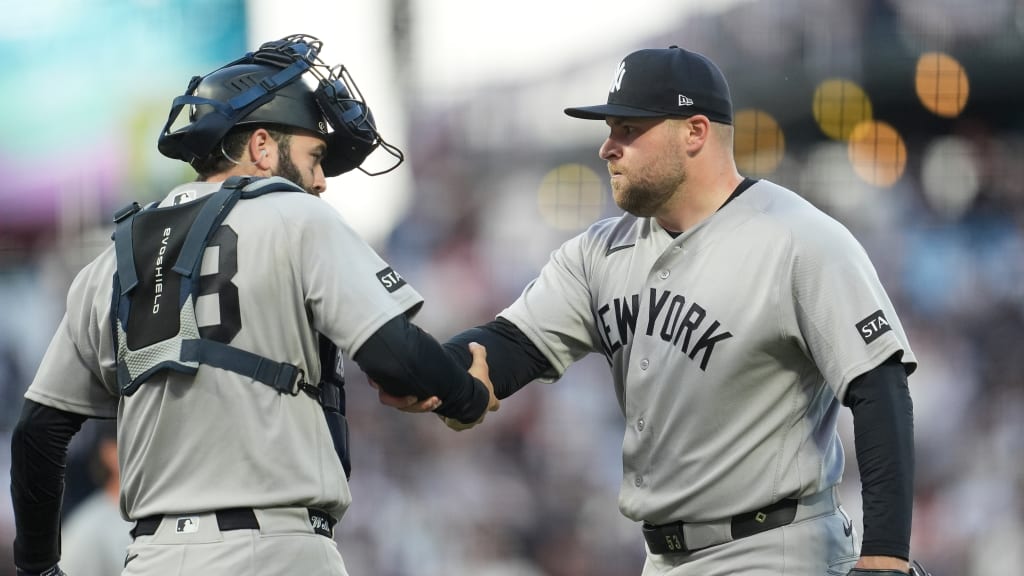
Yankees Start Season With Sweep of Giants

Barring inclement weather, or a more drastic reason for postponement, today will be the last Sunday without Yankee baseball until at least October 4. (That day could have a postseason game.) That gives me plenty of time to summarize the season-opening series away to the San Francisco Giants.

This past Wednesday, the Yankees opened the 2026 season at Oracle Park in San Francisco, and beat the Giants, 7-0. After a day off on Thursday, Cam Schlittler started. Through 5 1/3rd innings, he had allowed just 1 baserunner, a double by Heliot Ramos in the 2nd inning.

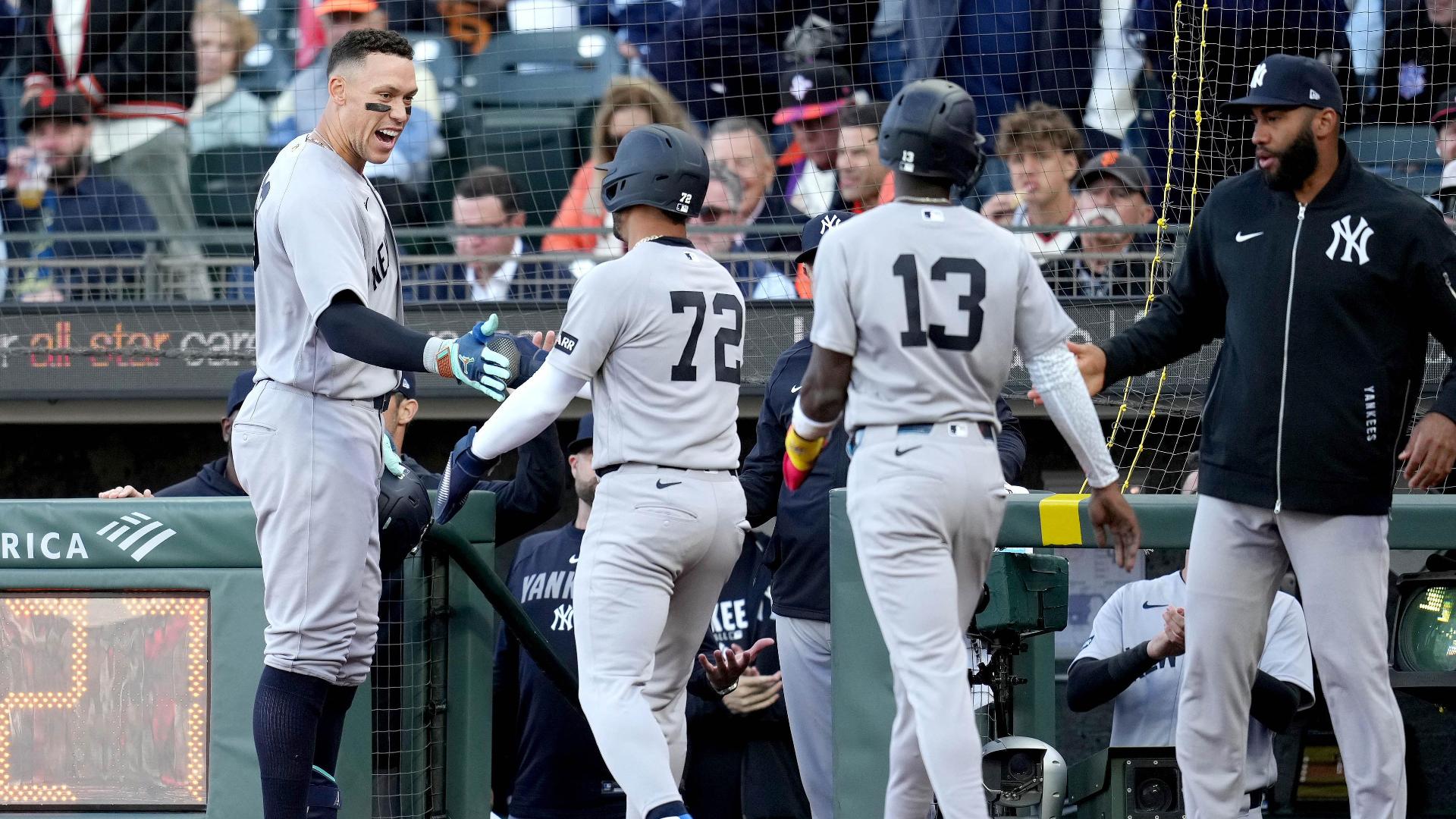
Aaron Judge continued to strike out, but he also hit his 369th career home run, tying him with Ralph Kiner, Todd Helton, and the still-active Manny Machado on the all-time list. And Giancarlo Stanton hit his 454th home run. He is Major League Baseball's active leader.

These homers gave Schlittler a 3-0 lead. He had thrown only 68 pitches, 49 of them for strikes. There was absolutely no good reason to take him out.

Boone took him out, and brought in Fernando Cruz. He walked a batter, but allowed no more baserunners. Tim Hill pitched a perfect 7th, Doval a perfect 8th, and David Bednar survived a leadoff walk and ended the game. So, how many Yankees does it take to pitch a one-hit shutout? This time, 5.

It was the 1st time the Yankees had opened the season with back-to-back shutout wins since 1967. But that wasn't a good sign: The Yankees finished 9th out of 10 teams in the single-division American League that year.

Nevertheless: 18 innings, no runs, 4 hits, 4 walks. Pretty snazzy pitching.

*

And then last night was the Fox Saturday Game of the Week. With Gerrit Cole, Carlos Rodón and Clarke Schmidt unavailable, and 2024 American League Rookie of the Year Luis Gil apparently no longer trusted by Yankee management to be a starter, Will Warren was given the start. Between the game being on Fox, and the Yankees having a pitcher named Warren -- Adam Warren was even worse -- I was not optimistic.

In the top of the 5th, Judge hit his 370th home run, surpassing Kiner, Helton and Machado, and tying Gil Hodges. So far, this season, he is 2-for-13, a batting average of .154, an on-base percentage that is also .154, and 7 strikeouts. But both of those hits are home runs, so he has 3 RBIs, his slugging percentage is .615, and his OPS+ is 122.

Warren got through 4 1/3rd innings, allowing 1 run on 5 hits and 2 walks, the 2nd of those walks having just happened when Boone relieved him. Headrick finished the 5th inning with no damage. Bird pitched the 6th and most of the 7th, Hill pitched the rest of the 7th and all of the 8th, and Bednar allowed a hit and a walk in the 9th, bringing the winning run to the plate, but induced a double play to end it. Yankees 3, Giants 1. Bird was credited with the win.

So: 27 innings, 1 run, 13 hits, 7 walks. Cliché Alert: They say pitching is 75 percent of baseball. If so, then that's a very good reason why the Yankees are 3-0.

*

Next up on the all-time home run list: For Stanton, the next names are José Canseco and Adam Dunn, each with 462; for Judge, his own Yankee teammate, Paul Goldschmidt, with 372, followed by Rocky Colavito, with 374.

This day begans with the Los Angeles Dodgers also 3-0; while the Mets, the Atlanta Braves, the Miami Marlins, the Milwaukee Brewers, the St. Louis Cardinals and the Toronto Blue Jays have started 2-0.

The Yankees head up the coast to face the Seattle Mariners at T-Mobile Park. The Monday and Tuesday games start at 9:40 PM Eastern Time (6:40 Pacific/local), while the Wednesday game is at 4:10 PM (1:10 local). Then, after a day off, on Friday, at 1;35 PM, we have the home opener, against the Miami Marlins.

Let's see how far the Yankees can take this season-opening streak, and this season.

March 29, 1976: College Basketball's Last Undefeated Team

Left to right: Bob Knight, Scott May and Quinn Buckner.
Knight was hardly the only basketball coach to favor
plaid sportsjackets -- it was the 1970s, after all --
but he hadn't yet started wearing his more familiar red sweaters.

March 29, 1976, 50 years ago: Indiana University beats the University of Michigan, 86-68, at The Spectrum in Philadelphia, to win the NCAA Division I Men's Basketball Tournament. The Hoosiers finish the season 32-0. It remains the last undefeated National Championship season in college basketball.

Head coach Bobby Knight -- sometimes listed as "Bob Knight," which he apparently preferred -- always thought his previous season's team was better. They went 31-1, beating teams that were, at the time the Hoosiers played them, ranked Number 7, away to Kansas on December 4; Number 11, away to Notre Dame on December 11; Number 15, home to Kentucky on December 7; Number 17, away to Michigan on January 6; and Number 20, home to Purdue on January 25.

They won the Big Ten Conference title, going a perfect 18-0 in the league, and beat Texas-El Paso and Oregon State in the NCAA Tournament, before Kentucky beat them in the Elite Eight, 92-90 in Dayton, Ohio.

They did this without Larry Bird, who began the schoolyear as a freshman at IU, but found the transition difficult, and transferred to Indiana State University, which he eventually led to an NCAA Final.

With guard Quinn Buckner and forward Scott May returning for their senior years, and center Kent Benson returning as a junior, Knight was more determined than ever to win it all. They opened the season on November 29, 1975, ranked Number 1, playing defending National Champions UCLA, ranked Number 2 but playing with a head coach other than John Wooden for the 1st time since 1949 (Gene Bartow), at the St. Louis Arena, on national television. Indiana won convincingly, 84-64.

It was only the beginning. They beat Number 8 Notre Dame at home on December 11. They beat Number 14 Kentucky in Louisville. In the week between Christmas and New Year's, they won the ECAC Holiday Festival at Madison Square Garden, beating schools from 3 different Boroughs of New York City: Columbia, of Manhattan, 106-63; Manhattan College, which is located not in Manhattan but in The Bronx, 97-61; and Number 17 St. John's, of Queens, 76-69.

They beat Number 19 Michigan away on January 10. They needed overtime to beat Michigan at home at Assembly Hall in Bloomington, but did it, 72-67. They finished the regular season 27-0, again going through the Big 10 18-0.

The NCAA Tournament put them in Notre Dame's Joyce Center in South Bend, Indiana for their 1st round game, but they beat St. John's, then ranked Number 17, again. In Baton Rouge, Louisiana, they beat Number 6 Alabama and Number 2 Marquette, to put them in the Final Four at The Spectrum in Philadelphia. Again, they played UCLA, then ranked Number 5, and beat them, 65-51. In the Final, they had to play Michigan for a 3rd time, and Michigan were ranked Number 9. This time, it wasn't close: Indiana won, 86-68. They were 32-0, undefeated, and National Champions.

None of Knight's "Big Three" became professional stars. Buckner played in the NBA from 1976 to 1986, was a member of the Boston Celtics' 1984 NBA Champions, and later became a broadcaster. May played from 1976 to 1981, mostly for the Chicago Bulls. Benson played from 1977 to 1988, for 4 different teams. Both May and Benson later played in Italy's league.

Knight led Indiana to a 2nd National Championship in 1981, and a 3rd in 1987. They had previously won in 1940 and 1953, both under Branch McCracken. So Knight got the program to where it had won 5 titles. He also became, for a time, the winningest coach in college basketball history, before he was surpassed by a former assistant of his, Mike Krzyzewski of Duke. Eventually, his excesses could no longer be stood by IU administrators, and he was fired in 2000.

March 29, 1976 was a Monday. Tennis star Jennifer Capriati was born.

Friday, March 27, 2026

March 27, 1926: The Death of Georges Vézina

March 27, 1926, 100 years ago: Georges Vézina dies of tuberculosis in his hometown of Chicoutimi, Quebec, Canada. The greatest goaltender the sport of hockey had yet seen, he was only 39 years old.

Joseph Georges Gonzague Vézina was born on January 21, 1887 in Chicoutimi, since absorbed into the city of Saguenay, in the Saguenay–Lac-Saint-Jean region of Quebec, 125 miles north of Quebec City and nearly 300 miles northeast of Montreal. He dropped out of school at age 14 to work in his father's bakery.

In 1908, he married Marie-Adélaïde-Stella Morin. A story spread by his later boss, Montreal Canadiens part-owner Leo Dandurand, said that the couple had 22 children, and that Georges spoke no English. Although both parts were plausible -- the Catholic Church in Quebec heavily encouraged big families, to overcome the Anglophone dominance of their Province through "the revenge of the cradles," and rural Quebec was almost entirely Francophone -- neither part was true: They had just 2 children, and Georges did speak some English.

At the time, transportation and media links being what they were, Chicoutimi was so remote that there was only one way for a player for the Chicoutimi Hockey Club, nicknamed the Saguenéens, could get noticed by those larger cities, and that was to tour the Province of Quebec, playing exhibition games.

The Montreal Canadiens were founded in 1909, and, in their 1st season, on February 17, 1910, they played the Chicoutimi Hockey Club. They lost, and their goaltender, Joseph Cattarinich (later to be a part-owner with Dandurand) suggested that they offer Vézina a tryout. Vézina refused. Later in the year, the teams played each other again, and Chicoutimi won again. Again, the Canadiens offered Vézina a tryout. He accepted on the condition that they also try out his brother Pierre. They did, although Pierre didn't make the team. Georges did, and made his professional debut on December 31, 1910, a 5-3 loss to the Ottawa Silver Seven (the original Ottawa Senators).

It took a while for the Canadiens to get good. In 1914, they finished tied for 1st in the National Hockey Association, with the Toronto Blueshirts, and lost a Playoff for the title and the right to play the Pacific Coast Hockey Association Champions for the Stanley Cup. The Blueshirts ended up beating the Victoria Aristocrats.

In 1916, the Canadiens won the NHA title outright, and beat the PCHA Champion Portland Rosebuds for their 1st Stanley Cup. This was also the 1st time an American-based team had played for the Cup. In 1917, the Canadiens were NHA Champions again, but lost the Stanley Cup Finals to the Seattle Metropolitans, the 1st U.S. team to win the Cup.

The Canadiens joined the new National Hockey League for the 1917-18 season. On February 18, 1918, the Canadiens beat the Toronto Arenas, 9-0, and Vézina became the 1st NHL goalie to record a shutout. On December 28, 1918, again against Toronto, he became the 1st NHL goalie to be credited with an assist, when Édouard "NewsyLalonde, the Canadiens' best attacking player, took a rebound from one of his saves, took the puck up the ice, and scored. The Canadiens won the NHL title, but the worldwide influenza epidemic rebounded in the Spring of 1919, killing Canadiens defenseman Joe Hall, and forcing the abandonment of the Finals between the Canadiens and the Metropolitans.

The Canadiens won the NHL Championship again in 1924, and beat the Vancouver Millionaires for their 2nd Cup. They won the NHL Championship again in 1925, but lost the Finals to the Victoria Cougars, Champions of what was now known as the Western Hockey League. The Cougars became the last team from outside the NHL to win the Cup, as the WHL collapsed after 1 more season, making the Cup an all-NHL affair.

From 1917 to 1925, in NHL play, Vézina won 103 games, lost 81, and had a goals-against average of 3.28. At the time, that was the lowest in the League's young history. What's more, he had played every minute of every game. The attempt to do so was not rare, but actually doing it was. In fact, the Canadiens hadn't played a league (NHA or NHL) game without him since December 1910 -- almost 15 full seasons. He was seen as unflappable on the ice, "cool as a cucumber," and was nicknamed "the Chicoutimi Cucumber."

But when he reported to training camp for the 1925-26 season, he was noticeably ill. He made no mention of it. The season opened on November 28, against an expansion team, the Pittsburgh Pirates. (Named for the city's baseball team, they only lasted through the 1930 season, and have no connection to the Pittsburgh Penguins.) In the intervening 6 weeks, he had lost 35 pounds. When he reported for the opening game, he had a fever of 102 degrees. He insisted upon playing.

He got through the 1st period without allowing a goal. But upon his return to the locker room, he began to vomit blood, a sure sign of tuberculosis. Today, it is curable with antibiotics; but, then, the treatments were not very effective. For the rest of the game, he was replaced by Alphonse Lacroix. Despite his French name, he was an American, and had played for the U.S. in the 1st Winter Olympics in Chamonix, France the year before. The Canadiens lost, 1-0.

Vézina never played again, and the Canadiens finished last in the NHL for 1925-26. Nevertheless, knowing that he was dying and the family couldn't afford his medical expenses otherwise, the team paid his full salary of $6,000 (Canadian). He died on March 27, 1926, just 39.

*

At the start of the 1926-27 season, the Canadiens donated the Vezina Trophy to the NHL, to be awarded to the goaltender of the team that allowed the fewest goals during the regular season. (Note that the Trophy's name does not have the accent over the E in "Vézina.") George Hainsworth, whom the Canadiens signed from the Saskatoon Crescents, one of the teams that went out of business with the Western Hockey League the season before, won the Trophy the 1st 2 times it was awarded.
In 1981, the NHL changed the format: The Vezina Trophy went to the winner of a poll for the best goalie of the year, while the Jennings Trophy was instituted, to go to the goalie with the fewest goals allowed.
Jacques Plante holds the record for most Vezina Trophies won: 7, 6 with the Canadiens and 1 with the St. Louis Blues. Although the Canadiens have retired some uniform numbers for more than one player, they have retired Number 1, the traditional number for a goalie, only for Plante, not for fellow Vezina Trophy winners Hainsworth, Bill Durnan, Charlie Hodge or Gump Worsley; nor for Vézina himself, who became the 1st NHL player to wear Number 1. (Later Canadiens' Vezina Trophy winners have not worn 1: Ken Dryden wore 29, Patrick Roy wore 33, José Théodore wore 60, and Carey Price wore 31.)

In 1945, Vézina and Charlie Gardiner of the Chicago Black Hawks, who also died while still an active player, became the 1st 2 goalies elected to the Hockey Hall of Fame. In 1965, his hometown of Chicoutimi recognized Vézina, as the 1st professional athlete to come from there, by renaming their arena the Centre Georges-Vézina.

In 1998, The Hockey News ranked Vézina 75th on their list of the 100 Greatest Players. In 2017, the NHL named its 100th Anniversary 100 Greatest Players. Vézina was the earliest player selected.

Thursday, March 26, 2026

It WAS a Happy Opening Day!

So it was a Happy Opening Day after all.

Aaron Judge went 0-for-5 with 4 strikeouts last night, and the Yankee Haters are all talking about this.
But the Yankees broke out for 5 runs in the top of the 2nds inning. They tacked on 2 runs in the 4th. Trent Grisham and Ryan McMahon, both mocked for their poor hitting last season, each had 2 RBIs. Giancarlo Stanton and Austin Wells, power hitters but not contact hitters, each had 2 hits. The Yankees scored 7 runs with only 1 extra-base hit, a triple by Grisham. They were neither homer-dependent nor Judge dependent.

Max Fried took the mound, and, through 6 1/3rd innings, had allowed no runs on 2 hits and 1 walk, striking out 4.

How many Yankee pitchers does it take to pitch a 3-hit shutout? Apparently, with Brian Cashman doing his thinking for him, Aaron Boone decided that it took 4. After all, Fried had thrown 86 pitches. There was nobody on base when Boone replaced him with Jake Bird. Nevertheless, Bird got the last 2 outs in the 7th inning.

Nor was there any good reason not to let Bird pitch the 8th. But Boone brought in Brent Headrick. This almost didn't work: He allowed a hit and a walk. But he got out of it. Bringing in a new pitcher for the 9th was, thus, justified. Camilo Doval got the Giants out 1-2-3.

Yankees 7, San Francisco Giants 0. For the 1st time that counts in 169 days, as former Yankee radio announcer John Sterling would say, Ballgame over! Yankees win!
Yes, it's only one game. But when you win on Opening Day, everything looks better, everything sounds better, everything feels better, everything tastes better, everything even smells better.

Today is a day off, before the next game, at Oracle Park in San Francisco, tomorrow afternoon at 4:35 PM Eastern Time. Cam Schlittler starts against Robbie Ray.

*

Yesterday was also Happy Ranger Elimination Day, for people who root for the New Jersey Devils (like me) and the New York Islanders. The New York Rangers lost to the Toronto Maple Leafs, a loss that means they cannot qualify for the Stanley Cup Playoffs.

Both the Devils and the Isles are also unlikely to make the Playoffs, and all 3 teams seem to be going nowhere.

For the Devils, no Stanley Cups in 23 years. For the Islanders, 43 years. For the Rangers, 32 years, and 86 Years 1 Cup.

Maybe New York should stick to baseball.

Except, today, the Mets open, at home, against the Pittsburgh Pirates, a team that seems to have  only one player worth talking about, but it's Paul Skenes, who is probably the best pitcher in the National League right now. So there's a pretty good chance the Mets will start out 0-1.
I can.

*

I haven't done a countdown in almost exactly one year, since March 27, 2025. Here goes:

* Next U.S. soccer team game: 2, this Saturday, at 3:30 PM, vs. Belgium, at Mercedes-Benz Stadium in Atlanta.

* Next New Jersey Devils rivalry game: 5, on Tuesday, March 31, at 7:00 PM, away to the New York Rangers.

* Next Arsenal match: 9, on Saturday, April 4, at 3:00 PM U.S. Eastern Time, away to Southampton FC in the Quarterfinal of the FA Cup.

* Next New York Red Bulls game: 9, on Saturday, April 4, at 7:30 PM, home to FC Cincinnati.

* Next Yankees-Red Sox series: 26, on Tuesday, April 21, at 6:45 PM, at Fenway Park. Less than 4 weeks.

* Next Red Bulls "derby" game: 27, on Wednesday, April 22, at 7:30 PM, home to DC United.

* Next World Cup: 77, on Thursday, June 11, split between the U.S., Canada and Mexico. Just 11 weeks. The Final will be on July 19, at the Meadowlands. It's beginning to look like the U.S. wouldn't have qualified if we weren't a host nation.

* Next North London Derby: Unknown. Arsenal have already played, and beaten, Tottenham Hotspur twice in the Premier League this season. At the moment, we don't even know if "Spurs" will be in the Premier League next season. With 7 League games to go, they are 1 point over the relegation zone. If they manage to avoid it, the 1st game of the 2026-27 season will be on Saturday, August 15, which would be 142 days. But the teams never open the season against each other, so it will probably be longer than that. They have played each other in August, but it's usually once in October or November in N5, then once in February or March in N17, and the occasionally cup tie.

* Next East Brunswick High School football game: Unknown, but if last year's schedule is any indication, it will probably be on the last Friday in August, which would be August 28. That's 155 days, or a little over 5 months.

* Next Rutgers football game: 161, on Thursday, September 3, at 7:30 PM, home to the University of Massachusetts.

* Next East Brunswick-Old Bridge football game: Unknown, but if last year's schedule is any indication, it will probably be on Friday, September 26, at Vince Lombardi Field in Old Bridge. That would be 183 days, or 6 months.

* Next election for the U.S. Congress and for the Governor of New York: 222, on Tuesday, November 3. A little over 7 months. In New Jersey, polls are open from 6:00 AM to 8:00 PM. In New York, they're open from 6:00 AM to 9:00 PM. If Trump is to be held accountable for anything, the voters must give the Democratic Party control of each house of Congress.

* Next Rutgers-Penn State game: 240, on Saturday, November 21, at a time TBA, at Beaver Stadium in State College, Pennsylvania.

* Next Summer Olympics: 841, on July 14, 2028, in Los Angeles. A little over 3 years. Perhaps there will be another boycott. 

* Next election for the President of the United States: 957, on November 7, 2028. A little over 2 1/2 years, or under 32 months. Time to end the Trump Era for once and for all, and to make America good again.

* Next Inauguration for the President of the United States: 1,031, on January 20, 2029. A little under 3 years. And stay out, you fat Fascist son of a bitch.

* Next elections for the Governor of New Jersey and the Mayor of New York City: 1,321, on November 6, 2029. I am fully confident that Governor Mikie Sherrill can govern the State well enough to convince voters to re-elect her. I am not at all confident that Kid Mayor, Zohran Mamdani, who has already screwed up two blizzards, can keep himself popular enough to avoid a primary challenge. He might even open the door for a competent, though probably evil, Republican to win.

* Next Winter Olympics: 1,408, on February 1, 2030. Yes, I know, we just finished a Winter Olympics. The next ones will be in the French Alps, a region that has included the sites of the Winter Olympics in 1924, the 1st one, in Chamonix; 1968, Grenoble; and 1992, Albertville. In fact, a lot of the Winter Olympics have been held in the Alps: 1928 and 1948 in St. Moritz, Switzerland; 1936 in Garmisch-Partenkirchen, Germany; 1956 and 2026 in Cortina, Italy, with the Games that just ended being mainly in Milan but some events in Cortina; 1964 and 1976 in Innsbruck, Austria; and 2006 in Turin, Italy. Indeed, from Grenoble in the west to Milan in the east, it's only 230 miles, or roughly the distance between Midtown Manhattan and downtown Washington, D.C.

Wednesday, March 25, 2026

Happy Opening Day -- I Hope

Today is Opening Day, the earliest in the Yankees' history. The start the season on the road, with an Interleague game: At 8:05 PM Eastern Time tonight, they play the San Francisco Giants at what is now named Oracle Park.

And, of course, the game will not be on the no-longer-free version of what was once known as "free TV," or even "basic cable." It will be on Netflix. Whoever made that decision needs to get slapped.

I wouldn't mind playing the Giants in the World Series, a matchup which has not happened in my lifetime: The last one was in 1962. But, in the regular season, Interleague Play is just wrong, with a hard G: It's wrong-guh.

As usual, the Yankees begin the season with a loaded lineup and, at the same time, an injury crisis:

* Gerrit Cole, perhaps the best pitcher in baseball when healthy, is not expected to return until late May, maybe early June.

* Clarke Schmidt will also be out of the rotation until around that time.

* Shortstop Anthony Volpe, who had an awful season last year because he was playing hurt, is expected back at around the same time.

* Carlos Rodón is also not going to be rejoining the starting rotation anytime soon. Early May is the best guess for now.

Therefore, until at least early May, the rotation will be Max Fried, Cam Schlittler, Will Warren and Ryan Weathers, with a few days off eliminating the need for a 5th starter for the time being. In other words, Fried, Schlittler, and hope the hitters can overcome both Warren and Weathers being lousy.

David Bednar is the closer, and even with Luis Gil, who I thought would be a starter, I don't trust anybody else in the bullpen. And since Yankee management apparently no longer thinks Gil should be starting, we could have a lot of 9-8 games.

With Volpe out, and no classic leadoff hitter, and Aaron Boone following Brian Cashman's orders,  so that the best power hitter in the game won't be batting 3rd or 4th like he's supposed to, this will probably be the starting lineup:

48 1B Paul Goldschmidt
99 RF Aaron Judge
35 LF Cody Bellinger
27 DH Giancarlo Stanton
13 2B Jazz Chisholm 
14 3B Amed Rosario
12 CF Trent Grisham 
72 SS Jose Caballero
28 C Austin Wells

With Ben Rice probably being the first bat off the bench.

Oy.

*

To paraphrase David Byrne of Talking Heads, You might find yourself with this team. And you might ask yourself, How did I get here? This is not my beautiful ballpark! This is not my beautiful team! And you might ask yourself, Why do I do this?

I've been over this before. Nick Hornby, the Arsenal fan who wrote the memoir Fever Pitch, and the screenplay for the original film based on it -- not the U.S. adaptation, the horror film where real-life Yankee Fan Jimmy Fallon plays a Red Sox fan who corrupts Drew Barrymore -- came up with the best answer for "Why do we do this to ourselves?" that I've ever seen -- words that remind me that Arsenal just lost the League Cup Final to Manchester City, ending the dreams of a Quadruple and a Domestic Treble, although the European Treble is still available:

Football has meant too much to me, and has come to represent too many things.

After a while, it all starts to get mixed up in your head. You can't remember whether life is shit because Arsenal is shit, or if it's the other way around.

I've been to far too many games, and spent too much money, fretted about Arsenal when I should have been fretting about something else, and I've asked too much of the people I love.

All right, I accept all of that.

Perhaps it's something you can't understand unless you belong....

It's not easy to become a football fan. It takes years. But if you put in the hours, you're welcomed, without question, into a new family. Except, in this family, you all love the same people, and hope for the same things. What's childish about that?...

The great thing is, it comes again and again. There's always another season. You lose the Cup Final in May? Well, there's the 3rd Round to look forward to in January. And what's wrong with that? It's actually pretty comforting, if you think about it.

And there it is. It comes again and again. You fall flat in the Playoffs in October? There's a new season to look forward to in April. Or, nowadays, late March.

And everybody starts out equal. Everybody is 0-0. Even the Flushing morons have reason to hope.

As the late, great Yankee Fan George Carlin put it, "Baseball begins in the Spring, the season of new life. Football begins in the Fall, when everything is dying!"

That's what Opening Day is all about. As former President Bill Clinton would say, "I still believe in a place called 'Hope.'"

Happy Opening Day. Night. Whatever. I hope.

March 25, 1986: "Perfect Strangers" Premieres

Mark Linn-Baker (left) and Bronson Pinchot,
in American and (fictional) Myposian formal attire, respectively.

March 25, 1986, 40 years ago: Perfect Strangers premieres on ABC. Bronson Pinchot starred as Balki Bartokomous, from the fictional Mediterranean, Greek-influenced but apparently hopelessly underdeveloped island nation of Mypos.

Mark Linn-Baker played Larry Appleton -- always "Cousin Larry" to Balki, even when he was talking about him to somebody else -- the Chicago-based relative who took him in, and did his best to teach him how to be an American, while the immigrant taught him how to be a better person.

David Pomeranz sang the theme song, which was written by Jesse Frederick and Bennett Salvay. They went on to write, and Frederick to sing, the themes to the ABC sitcoms Full House and Family Matters, the latter of which was a spinoff of Perfect Strangers.

The show indulged in all the immigrant-in-America tropes, from the occasional native dress to the frequent mishandling of U.S. slang. With Balki, the expression "Get out of town!" became "Get out of the city!" Telling a woman who appeared to be psychic that she has not ESP, but PMS. And so forth. (This was more recently done on NCIS, with Cote de Pablo and her "Zivaisms.")

After working in a convenience store in the 1st 2 seasons, Larry and Balki got jobs at a fictional newspaper, the Chicago Chronicle. They ended up dating, and marrying, flight attendants: Larry to Jennifer Lyons (played by Melanie Wilson, daughter of Dick Wilson, known for playing Mr. Whipple in Charmin commercials), and Balki to Rebeca Arthur (Mary Anne Spencer). The show lasted 7 seasons, and each couple's baby was born during the series finale, airing on August 6, 1993.

Did I like this show? To use Balki's catchphrase, "Well, of course I did, don't be ridiculous!" Even now, when something good happens, I'll post the video of Balki and Larry doing the Myposian "Dance of Joy!"

Pinchot never found a follow-up sitcom that worked, and turned to doing voiceovers for audiobooks -- in his real voice, not in Balki's fake Myposian accent. Baker moved into directing.
And they remain friends to this day.

Tuesday, March 24, 2026

March 24, 1936: The NHL's Longest Game

His name is Mud. Sort of.
But he made a name for himself in hockey history.

March 24, 1936, 90 years ago: The longest game in National Hockey League history is played, at the Montreal Forum. The Montreal Maroons host the Detroit Red Wings in the 1st game of the Stanley Cup Semifinals, a best-3-out-of-5 series.

The Maroons, founded in 1924, were the defending Stanley Cup Champions. Coached by Tommy Gorman, they included 4 future members of the Hockey Hall of Fame: Reginald "Hooley" Smith, Lionel Conacher, goaltender Alex Connell, and Hector "Toe" Blake, later to win 8 Stanley Cups as head coach of the Montreal Canadiens. They also had All-Stars Jimmy Ward, Herb Cain, Cy Wentworth, Earl Robinson and Lawrence "Baldy" Northcott (who, at the time, had plenty of hair).

The Wings, coached by Jack Adams, once a star player, and founded in 1926, had reached the Stanley Cup Finals in 1934, but hadn't yet won it. They had 4 Hall-of-Famers: Marty Barry, Herbie Lewis, Syd Howe (not related to later Detroit star Gordie) and Ebenezer "Ebbie" Goodfellow. (Yeah, I know: His name makes him sound like Ebenezer Scrooge's "good twin.")

Not in the Hall of Fame were All-Stars, the brothers Wally and Hector Kilrea, and Larry Aurie, whose Number 6 was long believed retired by the team, but it isn't, at least not officially. Wilfrid "Bucko" McDonald was elected to the Hall of Fame -- the one for lacrosse. Modere Fernand "MudBruneteau was elected to the Manitoba Hockey Hall of Fame, though not the Hockey Hall of Fame in Toronto. 

Wings goaltender Normie Smith isn't in the Hockey Hall of Fame, either. But, on this night, he wrote his name into hockey history, much as Connell, who had also won the Cup with the 1927 Ottawa Senators, had already done.

Except Connell wouldn't be the Maroons' goalie in this game. It would be Lorne Chabot, who had won the Cup with the 1928 New York Rangers and the 1932 Toronto Maple Leafs. In 1933, he was the winning goalie in the Leafs' 1-0 win over the Boston Bruins, a game that went to 6 overtimes, and was then the longest game in NHL history.

The puck was dropped at 8:30 PM. After the full 60 minutes of play, the score was 0-0. A full 20-minute overtime period was played. No goals in that, either. A 2nd overtime was played. Still no score. A 3rd overtime was played. And a 4th. A 5th. Nothing. Chabot had done this before. Smith had not.

There is no official record of how many shots and saves were made, but one source suggests that Smith made 92 saves. If so, it would be an NHL record. (In a 2020 Playoff game that went to 5 overtimes, Joonas Korpisalo of the Columbus Blue Jackets made 85 saves, which is recognized as the official record. But the Jackets lost to the Tampa Bay Lightning. The accepted regulation record is 70, set by Ron Tugnutt of the Quebec Nordiques, in a 3-3 tie with the Boston Bruins in 1991.)
Normie Smith. Yes, the NHL allowed goalies
to wear baseball-style caps in those days.

It was a clean game, by the standards of the time. The Wings were penalized only 5 times throughout the long contest; the Maroons, just 4. There were no penalties in the 1st 3 overtimes, and just 1, Hooley Smith at the start of the 4th overtime, thereafter.

Finally, with 3:30 to go in the 6th overtime, after one hundred sixteen minutes and thirty seconds of scoreless hockey, nearly 3 full games, with Smith and Connell turning away all shots, at 2:25 AM on March 25, Bruneteau, only 21 years old, intercepted an errant pass, and put the puck past Chabot. Final score: Red Wings 1, Maroons 0.

Smith shut the Maroons out again in Game 2, and the Wings completed the sweep in Game 3. They beat the Leafs in the Finals, 3 games to 1, to win their 1st Stanley Cup. Had there been a trophy for the Most Valuable Player of the Playoffs, Smith would likely have won it. (The Conn Smythe Trophy for Playoff MVP did not debut until 1965.)

Mud Bruneteau would play 11 seasons in the NHL, all with the Red Wings, winning the Stanley Cup in 1936, 1937 and 1943, and captained the Wings in the 1943-44 season. He scored 139 goals, plus 23 more in the Playoffs. He later won minor-league championships as the head coach of a Wings farm team, the Omaha Knights. He died in 1982, of cancer, at age 67.

Normie Smith played 5 seasons in the NHL. He was also a member of the Wings' back-to-back Cup winners in 1936 and 1937. In 1937, he won the Vezina Trophy as the NHL's best goaltender. He was traded to the Bruins in 1939, and retired rather than report. (That could have been a mistake: With Frankie Brmisek in goal, they won the Cup in 1941.) During World War II, despite having won the Cup in 1943 and reached the Finals the year before, the Wings needed to counter the manpower drain, and coaxed him back for 5 games in 1944 and 1 in 1945. He lived until 1988, age 79.

Friday, March 20, 2026

March 20, 1976: Rutgers Basketball Reaches the Final Four

March 20, 1976, 50 years ago: The men's basketball team of Rutgers, the State University of New Jersey, beats the Virginia Military Institute, a.k.a. VMI, at the Greensboro Coliseum in Greensboro, North Carolina. This advances them to a record of 31-0, and to the NCAA Semifinal at The Spectrum in Philadelphia. Rutgers has reached the Final Four.

One of nine "colonial colleges," which opened before American independence in 1776, Rutgers was best known as the site of the 1st American football game in 1869. But, since then, sports successes had been few and far between.

Now, under coach Tom Young, they had a basketball team that was ready to challenge the rest of the country. The usual starting lineup was guards Mike Dabney and Eddie Jordan, forwards Phil "the Thrill" Sellers and Hollis Copeland, and center "Jammin'" James Bailey, a freshman.

It was one thing to beat regional rivals like Princeton and Seton Hall (also in New Jersey); Columbia, Fordham, Manhattan College and Long Island University (New York City); the University of Pennsylvania and Temple (Philadelphia); Bucknell, Lehigh and Lafayette (Northeastern Pennsylvania); the University of Delaware; the Naval Academy (Maryland); American University (Washington, D.C.); the University of Connecticut; and Boston College.

But beating bigger teams was another thing. On December 4, 1975, they beat Big Ten team Purdue. Between Christmas and New Year's, they went to Greenville, South Carolina to play in the Poinsettia Classic, and beat The Citadel (not a big deal) and Georgia Tech (which was a big deal). They beat West Virginia at Madison Square Garden on February 5.

By this point, home games at the 3,200-seat College Avenue Gymnasium, built in 1931 after a fire burned down the previous gym on the site, roughly on the site of that first college football game, in New Brunswick, Middlesex County, New Jersey, were next to impossible to get into unless you were a student. It got so loud, paint chips fell from the ceiling. (I have had this confirmed by an RU graduate, Class of '76.) The decision to build a new arena was made.
The College Avenue Gym

Rutgers beat the University of Pittsburgh, then Syracuse. On March 1, they closed the regular season at home to St. Bonaventure, still undefeated at 25-0. The Bonnies took an early lead, but the Scarlet Knights came back, and won, 85-80. They entered the ECAC Metro Tournament at Princeton's Jadwin Gymnasium, and beat LIU and St. John's -- schools from Brooklyn and Queens, respectively -- to go 28-0.
It was on to the NCAA Tournament. This was only the 2nd time RU had made the Tournament, having gotten in the year before, and going out in the 1st Round. They had gotten to the Semifinals of the NIT in 1967, with future North Carolina State coach Jim Valvano playing for them.

They played Princeton -- not in New Jersey, but at the Providence Civic Center in Rhode Island. (It's now named the Amica Mutual Pavilion.) It was the closest game of the season, but Rutgers beat their ancient rivals, 54-53.

On to the Regional Semifinal, in Greensboro. Connecticut was not yet the power it would become, and Rutgers won, 93-79. That led to the Regional Final, also in Greensboro, against VMI. This time, Rutgers was solidly favored, and won, 91-75. They were undefeated. They were 31-0. They were ranked Number 4 in the country. And they were on their way to the Final Four.

Hail the Heroes:

* Number 12, a 6-foot-5-inch senior forward from Brooklyn, New York: Phil Sellers.
* Number 20, a 6-9 freshman center from Boston, Massachusetts: James Bailey.
* Number 22, a 6-3 sophomore guard from Washington, D.C.: Stanford Nance.
* Number 24, a 6-7 senior center from Parsippany, Morris County, New Jersey: Bruce Sherer.
* Number 30, a 6-1 junior guard from D.C.: Eddie Jordan.
* Number 32, a 6-4 senior guard from East Orange, Essex County, New Jersey: Mike Dabney.
* Number 34, a 6-5 sophomore forward from Trenton, Mercer County, New Jersey: Hollis Copeland.
* Number 42, a 6-2 junior guard from Queens, New York: Mark Conlin.
* Number 44, a 6-2 senior guard from Queens: Jeff Kleinbaum.
* Number 50, a 6-5 sophomore guard from East Rockaway, Long Island, New York: Steve Hefele.
* Number 52, a 6-7 senior center from Hackettstown, Warren County, New Jersey: Mike Palko.
* And Number 54, a 6-7 freshman forward from Belleville, Essex County, New Jersey: Abdel Anderson.

Since it was 1976, the Bicentennial year, the Final Four, and the All-Star Games for MLB, the NBA and the NHL, were held in Philadelphia. On March 27, against the University of Michigan, ranked Number 9 entering the Tournament, the bubble finally burst. The Wolverines jumped out to an early lead, and the Knights just couldn't get into their game. Michigan won, 86-70, and RU were 31-1.

In those days, there was a 3rd Place Game, and Rutgers lost that, too, 106-92 to defending National Champion UCLA, to finish 31-2. Indiana, coached by Bobby Knight, and featuring future NBA players Kent Benson, Scott May and Quinn Buckner, beat Michigan, and completed an undefeated season, 32-0. There hasn't been an undefeated season in college basketball since.

Calendar year 1976 was magical for Rutgers: In the Autumn, the football team also went undefeated, 11-0, but was not invited to a bowl game.

In 1977, Rutgers moved into the Rutgers Athletic Center, a.k.a. The RAC (pronounced like "rack"), across the Raritan River from New Brunswick, on the Livingston Campus in Piscataway. From 1986 to 2019, it was named the Louis Brown Athletic Center, after a donation from Brown's family.

Now named the Jersey Mike's Arena, it only seats 9,000, and has never been very good. Plans for renovation, or for a new arena in downtown New Brunswick, have been floated, but it looks like the current nondescript chunk of concrete is going to stay.

The College Avenue Gym still stands, and hosts the RU wrestling and volleyball programs.

Rutgers made the NCAA Tournament again in 1979, getting to the Sweet Sixteen. They made it again in 1983, getting to the 2nd Round. In 1989, they made it as Champions of the Atlantic-10 Tournament. They made it again in 1991. Both times, they went out in the 1st Round. They didn't make it again until 2021, but made it again in 2022.

Despite being the team's top player, Phil Sellers played just 1 season in the NBA, with the 1976-77 Detroit Pistons. Hollis Copeland played 2 seasons with the New York Knicks. James Bailey lasted 9 seasons, playing for both the Knicks and the New Jersey Nets, among other teams.

Eddie Jordan had the most successful pro career, playing 7 seasons, 3 of them with the Nets, and 3 with the Los Angeles Lakers, including winning the 1982 NBA Championship. He later coached the NBA's Sacramento Kings, Washington Wizards and Philadelphia 76ers.

Tom Young started at Rutgers in 1973, and coached them until 1985, when he was lured away by Old Dominion University in Norfolk, Virginia. He later served as an assistant to Jordan on the Wizards. He died on March 20, 2022, the 36th Anniversary of his Final Four achievement.

Phil Sellers died on September 19, 2023. The remaining players are still alive.

Thursday, March 19, 2026

March 19, 1966: Texas Western vs. Kentucky

March 19, 1966, 60 years ago: The NCAA hosts the Final of its University Division Men's Basketball Tournament, at Cole Field House, on the campus of the University of Maryland, in College Park, outside Washington, D.C.

The University of Kentucky went into the game 27-1, having lost only to the University of Tennessee. Their players included Louie Dampier, who would team with later Kentucky star Dan Issel to lead the Kentucky Colonels to the 1975 ABA Championship; and Pat Riley, who would play for the Los Angeles Lakers' 1972 NBA Champions, and then coach the Lakers to 4 titles and the Miami Heat to 1.

The Wildcats were coached by Adolph Rupp, known as the Baron of the Bluegrass. He was 64 years old, looked older, and had been their head coach since 1930. He had already coached them to 22 Southeastern Conference (SEC) regular-season Championships, 13 SEC Tournament wins, 6 berths in what would now be known as the Final Four, and 4 National Championships: 1948, 1949, 1951 and 1958. That did not include the 1954 season, when they were undefeated, but chose not to play in the NCAA Tournament, because 2 players were declared ineligible for having already graduated -- a rule since overturned.

Rupp was from Kansas, and was not known to be personally racist. However, Kentucky was a Southern State, and, while the Wildcats' arch-rivals, the University of Louisville, had racially integrated, UK had not.

But the writing was on the wall. The Civil Rights Movement had made great gains. And a black man from Louisville, Muhammad Ali -- born Cassius Clay, and that Sports Illustrated cover shown above still listed him as such, 2 years after he changed his name -- was the Heavyweight Champion of the World.

Rupp had asked University President John W. Oswald to take the program out of the SEC, so that he could recruit black players. At one point during the 1965-66 season, Rupp did some writing of his own. He wrote the top 3 teams in the Associated Press poll on his blackboard at practice:

1. KENTUCKY
2. DUKE
3. VANDERBILT

Duke University is in Durham, North Carolina. Vanderbilt University is in Nashville, Tennessee. Rupp told his players, "Look at that. The top three teams in the country. All Southern. All white. You'll never see that again." He knew that Southern teams that integrated would be able to compete for national honors, and those that were slow to do so would get left in the dust. Not just in basketball, but in football, and in every other sport.

Previous Rupp teams had had nicknames: His 1948 National Champions were the "Fabulous Five." His 1958 team didn't look so good at first, and he complained to the press that they were "just fiddling around." So they were known as the "Fiddlin' Five," but won the title, anyway. His 1966 team was short, and were known as "Rupp's Runts."

At the time, the NCAA Tournament had 24 teams, with only conference champions and a few independents invited. Kentucky were SEC Champions, and got a bye into the round of 16, the Regional Semifinals, where they beat the University of Dayton. They beat Michigan to make the Final Four at Cole Field House. In the National Semifinal, they beat Number 2 Duke 83-79. They figured that was "the real final," because they underestimated their Final opponents.

That team was Texas Western University, based in El Paso, Texas, on the State Line with New Mexico and the national border with Ciudad Juarez, Mexico. Their head coach was Don Haskins, only 36, and despite Texas being a segregated State, he fielded an integrated team. They finished the regular season ranked Number 3, and also entered the Final at 27-1. Their only loss was 74-72 against Seattle University, then famous as the Alma Mater of Laker superstar Elgin Baylor, who led them to the NCAA Final in 1958, but downgraded to the NAIA in 1980, before being restored to NCAA Division I in 2008.

The Miners entered the NCAA Tournament with an all-black starting lineup: Guards Bobby Joe Hill from Detroit and Orsten Artis from Gary, Indiana, outside Chicago; forwards Dave Lattin from Houston and Harry Flournoy from Gary; and center Willie Cager from New York. Willie Worsley and Nevil Shed were also black players from New York.

In the 1st Round of the tournament, Texas Western beat Oklahoma City University. They needed overtime to beat the University of Cincinnati. They needed double overtime against the University of Kansas to make the Final Four. And they beat the University of Utah in the Semifinal.

The Final began at 10:00 PM Eastern Time, and was not broadcast on national television. While Loyola University of Chicago had won the 1963 NCAA Final with a majority-black starting lineup, four out of five, Texas Western was the first team that had dared to start an all-black starting lineup. Kentucky, of course, was all-white.
Cole Field House. It would host the Final Four again in 1970.

Haskins told Lattin to dunk the ball early if he got the chance, to "send a message" to Kentucky. He did, twice. Hill made steals on back-to-back Wildcat plays, putting the Miners up 16-11. They led at halftime, 34-31.

Curry Kirkpatrick covered the game for Sports Illustrated, and said it was "slow, tedious, almost flat." Disagreeing was Gary Williams, then a junior at the host school, the University of Maryland. He was impressed by the Miners' ball movement, recalling, "There were possessions where Texas Western passed it 10 times before taking a shot." He would be Maryland's captain the next season, and coach them to the National Championship in 2002.

Kentucky continually fouled Texas Western, with 2 players fouling out and 2 relegated to the bench after receiving 4 fouls each. Over a stretch of 37 minutes, the Miners went 26-for-27 on free throws. This made the difference: Had they made 2/3rds of their free throws, they would have lost. Instead, they made 96 percent of them. Final score, Texas Western 72, Kentucky 65.

Point totals: For Texas Western: Hill 20, Lattin 16, Artis 15, Worsley 8, Cager 8, Shed 3, Flournoy 2; for Kentucky: Dampier 19, Riley 19, Larry Conley 10, Thad Jaracz 7, Tom Kron 6, Cliff Berger 4; and Bob Tallent, Jim LeMaster and Gary Gamble played without scoring.
On March 13, 1967, just short of 1 full year later, Texas Western University changed its name to the University of Texas at El-Paso, a.k.a. "Texas-El Paso" or "UTEP," though keeping the team name of Miners.

The Miners were less successful in the pro game than the Wildcats. Bobby Joe Hill, Orsten Artis, Harry Flournoy and Willie Worsley went undrafted. Cager was drafted by the Baltimore Bullets, but a heart condition prevented him from playing. Nevil Shed was drafted by the Boston Celtics, but was injured in his 1st training camp, and never played a professional game.

Dave Lattin played the 1967-68 season with the San Francisco Warriors, 1968-69 as an original member of the Phoenix Suns, 1970-71 and 1971-72 with the ABA's Pittsburgh Condors, and 1972-73 with the ABA's Memphis Tams.

Indeed, despite the team's great achievement, the man who turned out to be the most famous athlete at the school at the time was Bob Beamon, who set a stunning world record in the long jump at the 1968 Olympics.

Rupp finally recruited a black player for the 1970-71 season, Tom Payne. But he became a disciplinary issue. He played 1 season in the NBA, 1971-72, for the Atlanta Hawks. Three times, he would be convicted and imprisoned for rape.

Rupp retired in 1972, having won 876 games, more than any college basketball coach before him. He died in 1977, a few months before his former assistant and successor, Joe B. Hall, took Kentucky to its 1st National Championship in 20 years.

Both head coaches now have their names on their respective schools' buildings: Rupp Arena at Central Bank Center opened in downtown Lexington, Kentucky in 1976; and the Special Events Center opened on the UTEP campus in 1977, renamed the Don Haskins Center in 1998.

Haskins never got past the NCAA Tournament's Sweet Sixteen again, but remained at UTEP through the 1999 season. He won 7 regular season titles and 4 Tournaments in the Western Athletic Conference. His career record was 719-353. He was elected to the Basketball Hall of Fame in 1997. In 2006, on the 40th Anniversary of the title, the entire team was elected to the Hall as a unit.

Among the other players Haskins coached at TWU/UTEP were Nolan Richardson, who coached the University of Arkansas to the 1994 National Championship; and Nate "Tiny" Archibald and Tim Hardaway Sr., who have joined Haskins, Richardson and the entire 1965-66 TWU Miners team in the Hall of Fame.

Hill died in 2002, Haskins in 2008, Flournoy in 2016. Artis in 2017, and Cager, despite his heart condition, lived until March 19, 2023, the 57th Anniversary of the epochal game. The rest are still alive.
TWU/UTEP were the only team from Texas to win the NCAA Tournament until Baylor University did it in 2021.