A Halloween Special: The Top 10 Scariest People in Baseball History.
10. David Freese. Especially if you live in Texas.
9. Marvin Miller. The one man who ever scared the baseball team owners.
8. Dual Entry: George Steinbrenner and Billy Martin. How could I not put them together?
7. Bob Gibson. "I didn't throw at a lot of batters, but when I did, I made sure I ht them." Gibson was the man Pedro Martinez only thought he was.
6. Carl Pavano. A zombie for the Yankees, a monster when he played for anyone else.
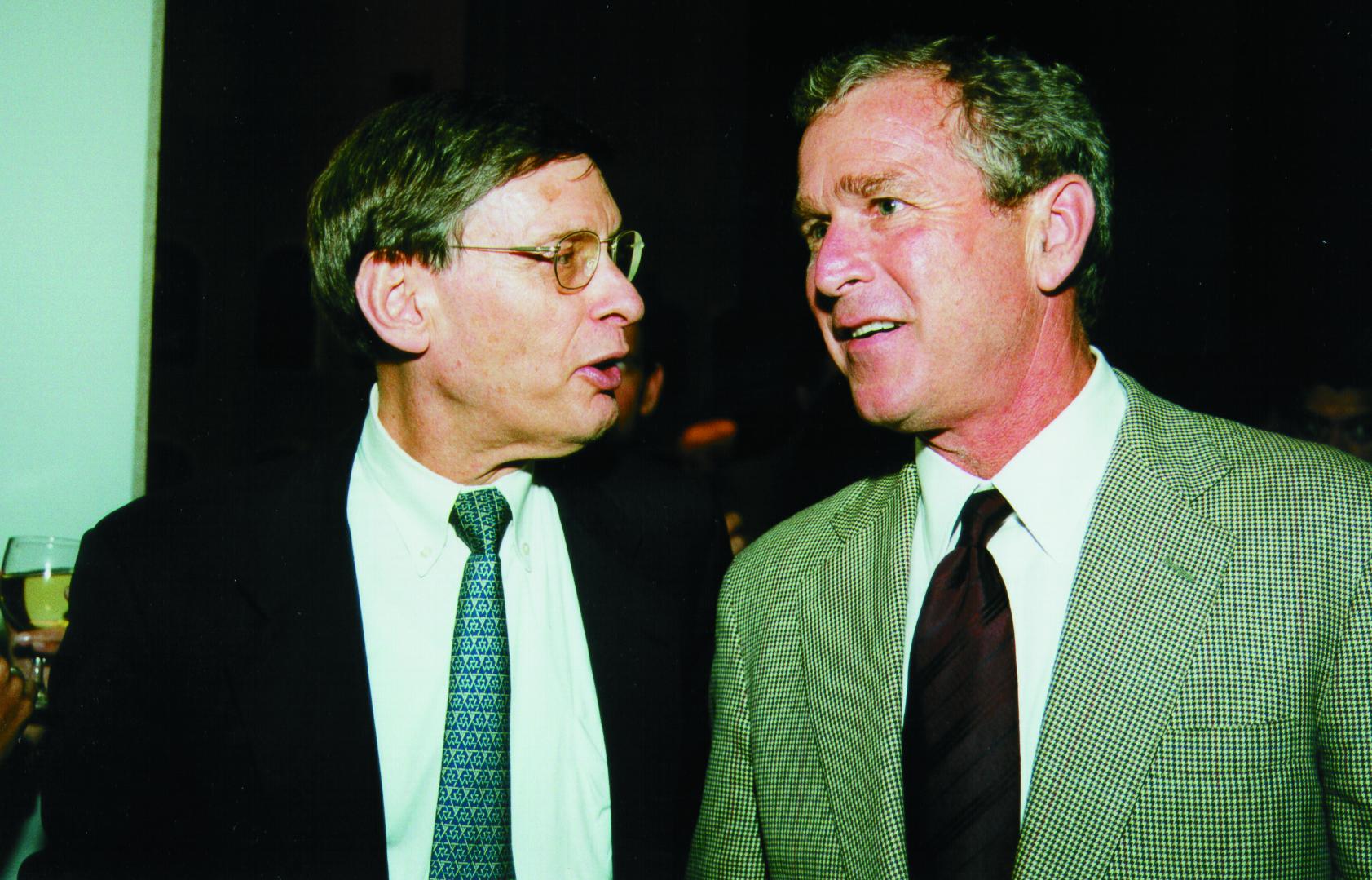
5. Bud Selig. He sucked the blood out of the 1994 postseason and the 2002 All-Star Game.
4. Walter O'Malley. He haunts Brooklyn to this day.
3. Ty Cobb. If you've ever heard of him, you know why.
2. Kevin Mitchell. Not because of the cat incident that Dwight Gooden apparently made up, but because of his curse on the Mets, now 25 years old.
1. Babe Ruth. He's been dead for 63 years, and he still scares the hell out of people, especially Red Sox fans.
*
October 31, 1887: Edouard Charles Lalonde is born. “Newsy” (from working in a newspaper plant) was one of early hockey’s greatest stars, winning 7 scoring titles and Captaining the Montreal Canadiens to their first Stanley Cup in 1916. On December 29, 1917, in the first-ever NHL game, he scored a goal on route to the Canadiens’ 7-4 victory over the Ottawa Senators. In 1922, the Canadiens angered him and a lot of their fans by trading him to the Pacific Coast Hockey Association’s Saskatoon Sheiks, but the Habs got future Hall-of-Famer Aurel Joliat in the deal.
From his retirement in 1927 until Maurice Richard surpassed him in 1954, his 455 goals in all leagues in which he played combined stood as a pro record. He was also the best lacrosse player of his era, and in 1950, he was named athlete of the half century in lacrosse. He was elected to the Hockey Hall of Fame in 1950, the Canadian Lacrosse Hall of Fame in 1965, and the Sports Hall of Fame of Canada. He had lit the torch when the Sports Hall of Fame opened in Toronto in August, 1955. In 1998 he was ranked number 32 on The Hockey News' list of the 100 Greatest Hockey Players, making him the highest-ranking player on the list who had played in a professional league before the founding of the NHL. He was the first Canadiens player to wear Number 4, and Joliat got it after the trade, but it was retired for later star Jean Beliveau.
October 31, 1933: Phil Goyette is born. The center won Stanley Cups with the Montreal Canadiens in 1957, ’58, ’59 and ’60. He was the first coach of the New York Islanders in 1972-73, but was fired due to a poor record midway through the season.
October 31, 1942: Dave McNally is born. He pitched a complete game to clinch the 1966 World Series for the Baltimore Orioles, and won another game and hit a grand slam in it to help them win it in 1970. His career won-lost record was a sterling 184-119. But he’s best known as one of the two pitchers, along with Andy Messersmith, who played the 1975 season without a contract to test the legality of the reserve clause. McNally, by then with the Montreal Expos, had been injured, had a successful ranch in his native Montana, and was ready to retire anyway, so he was an ideal player to make the test, since he didn’t need the money. The clause was overturned.
Also on this day, David Ogden Stiers is born. Best known as Major Charles Emerson Winchester III, the pompous but sometimes surprisingly human surgeon on M*A*S*H, he has spent much of the last few years doing voiceovers for PBS documentaries – in his real voice, not in Charles’ Boston Brahmin accent. I still can't believe "Chahles" wore a Brooklyn Dodger cap in one episode.
October 31, 1943: Brian Piccolo is born. The All-American running back from Wake Forest overcame his natural prejudice to help Chicago Bears teammate Gale Sayers come back from a devastating knee injury, then developed lung cancer at died at age 26.
Shortly before Piccolo’s death, Sayers was given the NFL’s most courageous man award for winning the 1969 rushing title on a knee with no cartilage in it. At the award ceremony, he said he didn’t deserve the award, because Piccolo was showing more courage. “I love Brian Piccolo,” he said, “and tonight, when you get down on your knees to pray, I want you to ask God to love him, too.” The Bears retired Piccolo’s Number 41. In the 1971 film Brian’s Song, Piccolo was played by James Caan, and Sayers by Billy Dee Williams, career-making roles for both men.
October 31, 1946: Stephen Rea is born. He starred in The Crying Game and was nominated for an Oscar for it. He’s best known in the U.S. as Inspector Eric Finch, a good guy who figures out that he’s really working for the bad guys, in V for Vendetta, it was because of that film that he was the only actor besides Colin Firth that I recognized from the original, British soccer, version of Fever Pitch.
October 31, 1947: Frank Shorter is born. He won the Olympic marathon in 1972, and finished second in 1976. Thanks to his ’72 win, the Boston Marathon was reborn as an event the whole country wanted to watch, and the New York City Marathon, which started the year before, took off. It will be run again tomorrow, and nearly 50,000 runners will participate. Along with Jim Fixx and his Book of Running, Shorter is probably more responsible than anyone for the rise of recreational running in America. I leave it to you to decide whether that’s a good thing.
October 31, 1950: John Candy is born. In the closing minutes of Super Bowl XXIII, when the Cincinnati Bengals had just scored to take the lead, the San Francisco 49ers were nervous, when quarterback Joe Montana, pointed out of the huddle to the stands and said, “Isn’t that John Candy?” The question relaxed the players, and Montana drove them for the winning touchdown.
Candy played the Cubs’ broadcaster in Rookie of the Year, and I give him a lot of credit for playing someone similar to, but not a total caricature of, Cubs broadcasting legend Harry Caray. On the other side of Chicago, he also shot a scene at the old Comiskey Park in its closing days for Only the Lonely. Considering his weight, I’m not surprised that he died young (53), but I’m still sorry about it. He gave us a lot, but he had a lot more to give.
Also on this day, Jane Pauley is born. The longtime co-host of The Today Show on NBC, she is married to Doonesbury cartoonist Garry Trudeau.
October 31, 1951, 60 years ago today: Nick Saban is born. The son of legendary coach Lou Saban, he hasn’t yet moved around to as many coaching jobs, but he has moved around with considerably less ethics than his father. He did, however, lead Louisiana State to the 2003 National Championship, and Alabama to the 2009 edition. He now has 'Bama ranked Number 1 again.
October 31, 1953: John Lucas is born. He played both basketball and tennis professionally, and was a member of the Houston Rockets’ 1986 NBA Western Conference Champions. His overcoming of drug addiction led him to become an NBA head coach and an addiction counselor. He is currently an assistant coach under Mike Dunleavy of the Los Angeles Clippers.
Like Dunleavy, he has a son who played in the NBA, John Lucas III, who, unlike his father whose 1974 Maryland team was prevented under the rules of the time from playing in the NCAA Tournament due to its loss in the ACC Final, went to the 2004 Final Four with Oklahoma State. John III played in the NBA with the Rockets, was recently waived by the Miami Heat and is currently a free agent. Another son, Jai Lucas, now plays at the University of Texas.
October 31, 1959: Mats Naslund is born. The left wing was known as Le Petit Viking (the Little Viking) when he played for the Montreal Canadiens, a tenure that included the 1986 Stanley Cup, in which he became the most recent Canadien to score 100 or more points in a season. He helped Sweden win the 1994 Olympic Gold Medal, and as general manager of the team he built their 2006 Gold Medal team.
October 31, 1960: Mike Gallego is born. He was the starting second baseman on the Oakland Athletics’ 3 straight Pennants of 1988-90. In 1993, he was voted the second baseman on their 25th Anniversary team (25 years since they’d moved to Oakland). He briefly played for the Yankees in the early 1990s, and is now back with the A’s as a coach.
Also on this day, Reza Pahlavi is born. He was 18 years old and the Crown Prince of Iran when his father, the Emperor, Mohammed Reza Shah, was overthrown in the Islamic Revolution of 1979. Luckily for him, he was already in the U.S., training as a fighter pilot (much as was his cousin and fellow heir to a throne, now King Abdullah II of Jordan).
He now lives in Potomac, Maryland, outside Washington. Unlike his father, who ran a brutally repressive, unofficially fascist regime, he has been an outspoken supporter of human rights, saying that in order to bring freedom to his homeland, “Idealism and realism, behavior change and regime change do not require different policies but the same: empowering the Iranian people.” His supporters have referred to him as “His Imperial Majesty Reza Shah II” since his father’s death on July 27, 1980, but he officially calls himself “the former Crown Prince,” and admits he has no realistic hope of the monarchy being restored, even when the Ayatollahs are finally and rightfully toppled.
October 31, 1961, 50 years ago today: A federal judge rules that Birmingham‚ Alabama laws against integrated playing fields are illegal‚ eliminating the last barrier against integration in the Class AA Southern Association.
October 31, 1963: Fred McGriff is born. In 1982, the Yankees traded first baseman McGriff, young pitcher Mike Morgan and outfielder Dave Collins to the Toronto Blue Jays for pitcher Dale Murray and third baseman Tom Dodd. Dodd did play one year in the majors, but for Baltimore, and is not the man for whom the ballpark belonging to the Norwich Navigators, a former Yankee farm team, is named. (That was Senator Thomas Dodd of Connecticut, father of current Senator Chris Dodd.) Murray got hurt and never contributed to the Yankees, either. Collins was pretty much finished, but in 2001, 19 years later, Morgan pitched against the Yankees in the World Series for the Arizona Diamondbacks, and McGriff was also still active. By trading him, the Yankees essentially traded 493 home runs for nothing.
Or did they? McGriff was 20 at the time, and did not reach the majors for another 4 years. Had he done so with the Yankees, he would have smacked right into Don Mattingly at his peak. The Yankees may not have had anyplace for him. Still, the trade looks bad. McGriff was involved in some other big trades: The Jays traded him to the San Diego Padres in 1990, a trade which brought them Joe Carter and Roberto Alomar, key figures in their 1992 and ’93 World Champions; and the Padres sent him to the Atlanta Braves as part of their 1993 “fire sale,” a pure “salary dump.”
McGriff hit the first home run at the SkyDome in 1989. With the Jays that season and the Padres in 1982, McGriff became the first player in the post-1920 Lively Ball Era to lead both leagues in home runs. He helped the Braves win the World Series in 1995, and later played for his hometown Tampa Bay Devil Rays. He now works in the Rays’ front office and as co-host for a show on Bright House Sports Network, a Tampa Bay-based outfit, and will be eligible for the Hall of Fame in its next election, this coming January. Despite falling 7 homers short of the magic 500 Club, he will probably make it, if not in his first year of eligibility then within the first couple of years thereafter. He was always popular – ESPN’s Chris Berman took the public-service-announcement character of “McGruff the Crime Dog” and nicknamed McGriff “Crime Dog” – and despite his home-run heroics, he has never been seriously suspected of steroid use. His son Erick McGriff plays football at the University of Kansas.
Also on this day, Carlos Caetano Bledorn Verri is born. The Brazilian soccer player was nicknamed “Dunga” by an uncle, Portuguese for “Dopey,” since he was short and expected to stay that way. But the midfielder starred for several Brazilian teams, with his longest tenure at Internacional (like the Milan club known as “Inter” for short) of Porto Alegre; for Fiorentina in Italy and Stuttgart in Germany. Dunga was a member of Brazil’s 1994 World Cup winners, but bombed as manager of the national team at the 2010 World Cup.
October 31, 1964: Marco van Basten is born. The striker starred for Ajax Amsterdam in his native Netherlands, winning League Championships in 1982, ’83 and ’85 and the Dutch Cup in ’83, ’86 and ’87 – meaning they won “The Double” in 1983. He moved on to AC Milan in Italy, winning Serie A in 1988, ’92 and ’93, and back-to-back European Cups (now the Champions League) in 1989 and ’90. He led the Netherlands to the European Championship in 1988. Three times he was named European Player of the Year, and the magazine France Football placed him 8th in a poll of the Football Players of the Century. He has managed both Ajax and the Netherlands national team.
October 31, 1966: Mike O’Malley is born. The comedian and actor, formerly star of Yes, Dear, is a tremendous Boston Red Sox fan. But he’s funny, so I forgive him.
October 31, 1968: Antonio Davis is born. After going undrafted out of the University of Texas at El Paso (UTEP), he played pro basketball in Athens and Milan before signing with the Indiana Pacers. He was an All-Star for the perennial Playoff contenders and Knick nemeses, although they didn’t reach the NBA Finals until after he left.
October 31, 1970: Steve Trachsel is born. In 1996, the Chicago Cubs pitcher was named to the All-Star Team. In 1998,gave up Mark McGwire’s steroid-aided 62nd home run, but he also won the Playoff for the NL Wild. Since the Cubs only made the Playoffs 4 times in the 62 seasons between 1945 and 2007, this makes him a Wrigleyville hero for all time. He also pitched for the Mets, winning the NL East with them in 2006. He last pitched for the Baltimore Orioles in 2008, but has not officially retired.
October 31, 1972: The Philadelphia Phillies trade third baseman Don Money and 2 others to the Milwaukee Brewers for 4 pitchers‚ including Jim Lonborg and Ken Brett. This was a rare good trade for both teams: Lonborg was a key cog in the Phillies developing a pitching staff that would reach the Playoffs 6 times in 8 years from 1976 to 1983 (though Lonborg retired after ’78), Money helped stabilize the Brewers and make them a contender by 1978 and a Pennant winner in 1982, and trading him allowed the Phillies to make room for the best player in the history of Philadelphia baseball, Mike Schmidt.
October 31, 1973: David Dellucci is born. The outfielder was a member of the Arizona Diamondbacks team that beat the Yankees in the 2001 World Series, and of the Yankee team that won the 2003 American League Pennant. He was released by the Toronto Blue Jays in 2009 and retired.
October 31, 1976: José María Gutiérrez Hernández is born. “Guti Hernandez” is a midfielder who starred for Real Madrid as they won Spain’s La Liga in 1997, 2001, 03, ’07 and ’08; and the Champions League in 1998, 2000 and ’02. He now plays for Besiktas in Turkey.
October 31, 1983: George Halas dies at age 88. He was the founder of the Chicago Bears, for all intents and purposes the founder of the NFL, formerly the winningest coach in NFL history (324), and no coach in the history of professional football has won as many league championships, 8: 1921, 1932, 1933, 1940, 1941, 1943, 1946, 1963. One of his last acts as owner was to hire former Bears star Mike Ditka as head coach, and Ditka would lead them to a 9th World Championship in 1985. When asked by Bob Costas in the locker room afterwards if he thought of “Papa Bear,” he said, “I always think of Coach Halas.”
This, despite a reputation for being cheap, which led Ditka to say, “George Halas throws nickels around like manhole covers.” It was also Halas’ cheapness that kept the Bears in Wrigley Field, with a football capacity of just 47,000, in spite of Soldier Field having over 65,000 seats and lights, because he didn’t want to pay the rent the City of Chicago was demanding; the Bears didn’t move there until 1971, when the money available to teams on Monday Night Football, which couldn’t be played at then-lightless Wrigley, more than offset the cost of the rent. In spite of this, when the aforementioned Brian Piccolo got sick, Halas paid all his medical expenses and for his funeral.
An NFL Films documentary from 1977 showed Halas walking through the Bears’ practice facility at Lake Forest, Illinois (the main building is now named Halas Hall), and announcer John Facenda said it was “like visiting Mount Vernon and seeing George Washington still surveying the grounds.” He had planned to hand the team over to his son George Jr., but “Mugs” predeceased him. His daughter Virginia handed control to her husband, Ed McCaskey. Unfortunately, Big Ed handed a lot of control over to his and Virginia’s son, George’s grandson, Mike McCaskey, who ran the franchise into the ground before Big Ed took it back and handed it over to someone else prior to his own death. Virginia is still alive and the nominal owner of Da Bears.
October 31, 1987: Nick Foligno is born. The center plays for the Ottawa Senators. His brother Marcus Foligno is in the minor-league system of the Buffalo Sabres, for whom their father, Mike Foligno, was an All-Star.
October 31, 1998: Elmer Vasko dies at age 62. “Moose” was an All-Star defenseman for the Chicago Blackhawks, winning the Stanley Cup with them in 1961.
October 31, 2001, 10 years ago today: Game 4 of the World Series. The Yankees trail the Arizona Diamondbacks 3-1 in the bottom of the 9th, and are about to fall behind in the World Series by the same margin of games. This is due in large part to the fine pitching of Curt Schilling, who was asked about the “mystique” of Yankee Stadium. He said, “Mystique, aura, those are dancers in a nightclub.” (Three years later, pitching for Boston, he would prove he was still not intimidated by Yankee Stadium, saying, “There’s nothing like making 55,000 Yankee fans shut up.”)
Byung-Hyun Kim, a “submarine” style pitcher from Korea, tries to close the Yankees out in the bottom of the 9th. But he lets a man on, and Tino Martinez comes to the plate. Tino electrifies the crowd but slamming a drive toward the upper deck. On the video, a fan in the front row of the upper deck tries to catch the ball, but it bounces off your hand. Now, imagine you’re that fan: Are you excited that the Yankees have come back in this World Series game, or are you mad that you were unable to catch this historic homer (and probably hurt your hand in the process)?
As the clock strikes midnight, for the first time ever – due to the week’s delay from the 9/11 attacks – a Major League Baseball game is played in the month of November. It is the bottom of the 10th, and Derek Jeter steps to the plate against Kim. A fan holds up a sign saying, “Mr. November.” (It’s often been asked, “How did he know to hold up that sign for Jeter?” The answer is easy: He didn’t hold it up specifically for Jeter. Jeter was just the batter when the clock struck 12, making him the first batter for whom it could be held up.)
At 12:03 came a typical Jeter hit, an inside-out swing to right-center, and it just... barely... got over the fence for a game-winning home run. Yankees 4, Diamondbacks 3. The Series was tied. The old ballyard was shaking. The “Yankee Mystique” had struck again. It is hits like this that have gotten Jeter the nickname “Captain Clutch.”
The next night, the first game to officially be played in the month of November, a fan made up a sign that said, “BASEBALL HISTORY MADE HERE” on what looked like an ancient scroll. Another fan made up a sign that said, “MYSTIQUE AND AURA APPEARING NIGHTLY.” (Two years later, in the Aaron Boone game, that same fan made up one that said, “MYSTIQUE DON’T FAIL ME NOW.” It didn’t.)
October 31, 2002: The Massachusetts Interscholastic Athletic Association votes 9-6 to prohibit the use of metal bats in the state high school tournament in 2003. Twenty five of 40 leagues will switch to wood for the regular season. The State is the first to outlaw metal bats. In this particular case, Massachusetts is ahead of the curve in baseball.
October 31, 2009: Alex Rodriguez's Game 3 fly ball in the right-field corner Citzens Bank Park becomes the subject of the first instant replay call in World Series history. The Yankees' third baseman hit, originally ruled a double, is changed by the umpires to a home run after the replay clearly shows the ball going over the fence before striking a television camera and bouncing back to the field.
Figures that A-Rod's first World Series home run would be controversial. But it does help make the difference, as the Yankees win, 8-5.