Showing posts with label uefa cup. Show all posts

Thursday, October 20, 2022

October 20, 1982: The Luzhniki Stadium Disaster

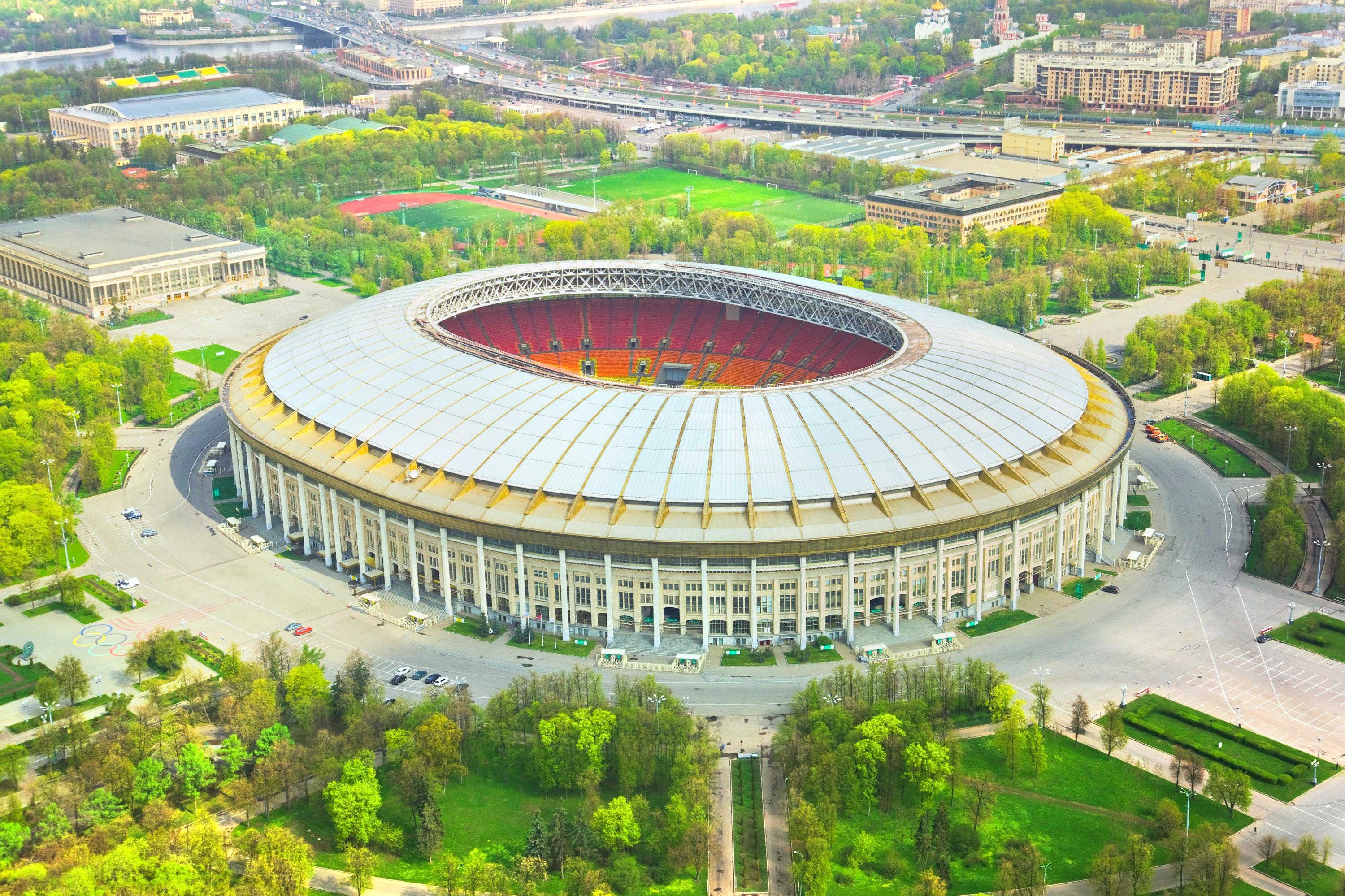
October 20, 1982, 40 years ago: A UEFA Cup match was scheduled for the Grand Sports Arena of the Central Lenin Stadium, now named the Luzhniki Stadium. Spartak Moscow, the most popular sports team in the Soviet Union, hosted Dutch club HFC Haarlem. (In 2010, the UEFA Cup was rebranded as the UEFA Europa League.)

Unlike some other soccer disasters, including the Hillsborough Disaster in Sheffield, England in 1989, the problem this time wasn't errors or overreactions by the police, despite the reputation of law enforcement under Communism. Nor was it, as was also the case at Hillsborough, due to too many tickets being sold. Even by Russian standards, this was a cold day for October: 14 degrees below zero, Fahrenheit. As a result, a stadium that could then hold as many as 102,000 people sold only 16,643 tickets.
Lenin Stadium, as it appeared at the time

Contrast that with the 1967 NFL Championship Game, known as "the Ice Bowl": It was 13 below at kickoff, but Lambeau Field in Green Bay was still filled to its capacity at the time, 50,861. An NFL Films voiceover covering it for the 1986 video The NFL's Greatest Games said, "It is called 'Russian Winter,' the kind of cold that made Napoleon and Hitler flee in terror from the doorstop of Moscow. But in Green Bay, it is known as 'Packer Weather.'" Are Wisconsans tougher than Russians?

It is believed that only 100 fans had come from the Netherlands to support Haarlem, despite their having a young Ruud Gullit in their ranks. They won the Dutch league, the Eredivisie, in 1946 and had won promotion back into it in 1981 and qualified for the UEFA Cup in 1982. But they were relegated in 1990, and went bankrupt in 2010, and have had to start all over; the new club, named Haarlem Kennemerland, now plays in the Netherlands' 9th division.

Edgar Gess, a Tajik midfielder, scored in the 16th minute. The score remained 1-0 to Spartak nearly the rest of the way, and, not anticipating the poorly-supported visitors to get a late equalizer, hundreds of fans in the East Stand left their seats to leave the stadium and get to the Metro (Moscow's subway).

But in stoppage time, Georgian defender Sergei Shvetsov scored to make it 2-0. The fans leaving heard the remaining fans cheer, and, in what was long believed to be the same setup as the Ibrox Disaster in Glasgow, Scotland in 1971, many of them turned around to head back and see what happened. This led to fans bumping into each other on the stairwell and falling like dominoes.

There is an alternate theory that the reaction to Shvetsov's goal had nothing to do with it: Rather, it was a young woman losing a shoe, going back to pick it up, getting trampled, and a few fans stopping to help her, thus, in trying to make a bad situation better, instead making it far worse: Good Samaritanism gone horribly wrong.

Initially, the Soviet government announced that the number of fatalities was a mere 3. Some had speculated that it was as high as 340. It wasn't until the fall of the Soviet Union, and the declassification of many documents, that the true number of deaths was revealed: 66 -- oddly, the exact same number as the similar Ibrox Disaster. It remains the greatest sporting disaster ever to happen on the European continent.

Four stadium officials, including the stadium's director and its top police officer, were criminally charged. Two of them were never tried, due to illness. The other two were imprisoned for 3 years.

On November 3, the 2nd leg of the UEFA Cup tie was played in Haarlem. Despite Haarlem taking a 1-0 lead, Spartak won the game 3-1, including another goal by Shvetsov, won the tie 5-1, and advanced. On October 20, 2007, the 25th Anniversary, the players gathered at Luzhniki Stadium again, playing a memorial match for charity.

Built in 1956, the Luzhniki Stadium was the main stadium for the 1980 Olympics. Lenin's name was removed in 1992, following the fall of the Soviet Union. In 1996, the stadium was made all-seater, cutting capacity to 81,000, and a roof was added. In 2013, the stadium was demolished, with a new stadium built on the site, opening in 2017, for the 2018 World Cup, whose Final it hosted, with France beating Croatia.
The Luzhniki Stadium today. The building at the left is the Palace of Sport,
which hosted the Soviet side of the 1972 hockey "Summit Series."

*

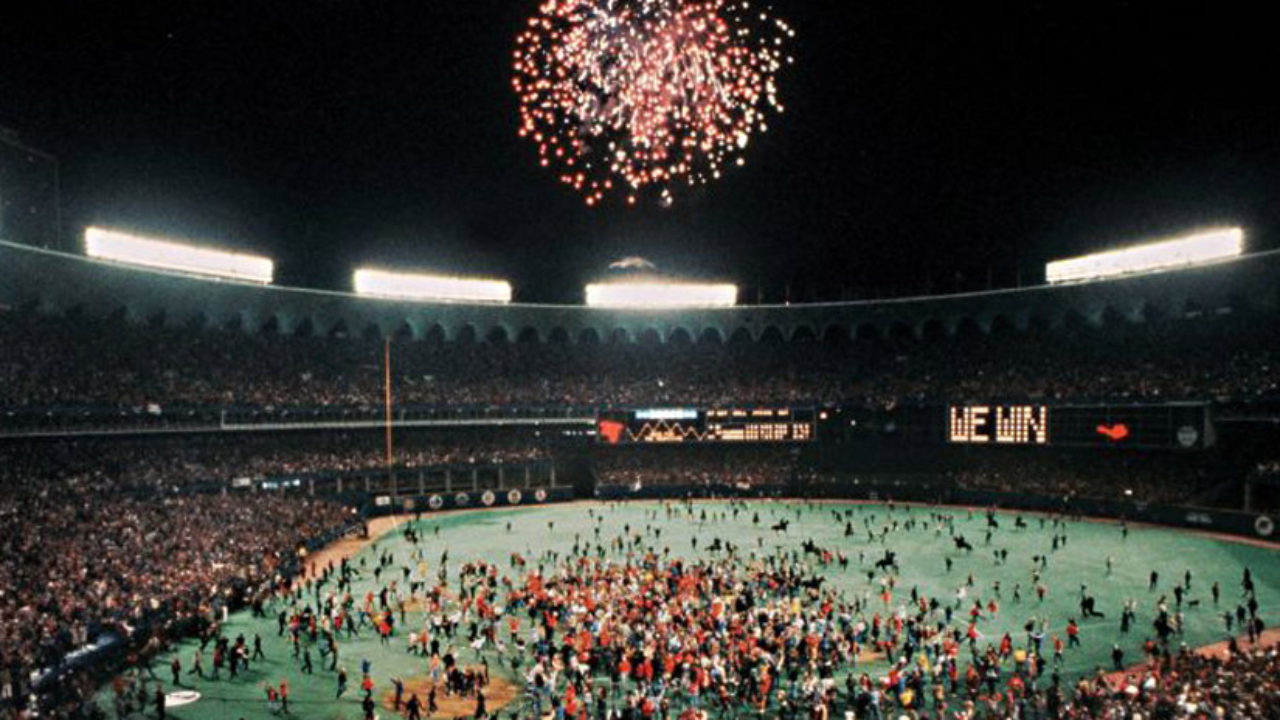
Also on this day, Game 7 of the World Series was played at Busch Memorial Stadium in St. Louis. The Cardinals, including birthday boy Keith Hernandez, rallied for 3 runs in the 6th innings, to defeat the Milwaukee Brewers, 6-3. As far as I know, Hernandez is the only player ever to appear in a World Series-winning game on his birthday.
The Cardinals won their 9th World Series, a total surpassed only by the Yankees. Since then, if you combine their Philadelphia and Oakland titles, it has been matched by the Athletics, although the Cards have now made it 11.

Wednesday, May 29, 2019

List of Arsenal Cup Finals, 1927-2019

Today, Arsenal lost the UEFA Europa League Final, in truly pathetic fashion. For importance of game, divided by performance, it may have been the worst game in the 123-year history of the team.

The team could have added to its long list of glories. They did not.

Arsenal Cup Finals

April 23, 1927, FA Cup Final, at the original Wembley Stadium, West London: Arsenal lose to Cardiff City of Wales, 1-0. In their 1st Cup Final, Arsenal are victimized by a freak play. Hughie Ferguson of Cardiff is stopped by Arsenal goalkeeper Dan Lewis, but the ball squeezes through his elbow and back into the net. This is the only time a team from outside England has won the FA Cup.

April 26, 1930, FA Cup Final, Wembley: Arsenal defeat Huddersfield Town of Yorkshire, 2-0. The goals are scored by Alex James and Jack Lambert -- no relation to the later legendary Pittsburgh Steeler linebacker. It is The Arsenal's 1st major trophy. They win their 1st Football League title the next season.

April 23, 1932, FA Cup Final, Wembley: Arsenal lose to Newcastle United of the North-East, 2-1. Bob John of Arsenal opens the scoring. Newcastle's 1st goal comes when Jimmy Richardson stopped an errant pass at the end line, or over it (thus it was out of bounds, and should have been a goal kick to Arsenal) as many people thought, and crosses it back to Jack Allen, who scores it, and later adds the winner.

This may have been the 1st time in a big game that Arsenal had been robbed by the officials. It would not be the last.

April 25, 1936, FA Cup Final, Wembley: Arsenal defeat Sheffield United of Yorkshire, 1-0. Ted Drake is the scorer.

May 4, 1941, Football League War Cup Final, Wembley: Arsenal and Preston North End of Lancashire play to a 1-1 draw. A replay is necessary.

May 31, 1941, Football League War Cup Final Replay, Ewood Park, Blackburn, Lancashire: Arsenal lose 2-1 to Preston.

May 15, 1943, Football League War Cup Final, Stamford Bridge, West London: Arsenal lose 4-2 to Blackpool of Lancashire.

April 29, 1950, FA Cup Final, Wembley: Arsenal defeat Merseyside club Liverpool, 2-0. Reg Lewis scores both goals.

May 3, 1952, FA Cup Final, Wembley: Arsenal lose 1-0 to Newcastle. Right back Walley Barnes twists his knee in the 35th minute, with the score still 0-0. No substitutes were allowed in English soccer until 1968, so The Arsenal were down to 10 men for the last 55 minutes of the game.

George Robledo, a Chilean playing in England, scores the goal. Arsenal would win the League the next season, but didn't play for a major trophy again for 15 years.

March 2, 1968, Football League Cup Final, Wembley: Arsenal lose 1-0 to Leeds United of Yorkshire. The League Cup began in 1960.

March 15, 1969 League Cup Final, Wembley: Arsenal lose 3-1 to Swindon Town of Wiltshire in extra time. The pitch (field) was a mess because of a previous event. Then, half the Arsenal team was stricken by the flu -- similar to the lasagne story at Tottenham in 2006, although not with sinister implications.

Then it rained. On the day before the game, the Arsenal players who felt well enough to get out of bed went to look at the pitch, and told the officials it was unplayable, and the game should be postponed. It wasn't. The officials screwing Arsenal over did not begin with Arsène Wenger becoming their manager, or even with the start of the Premier League in 1992.

Despite Swindon being a 3rd division team, they led Arsenal from the 35th minute until the 86th, when Bobby Gould scored. But the weakened players couldn't handle extra time on a bad pitch, and allowed 2 goals by Don Rogers, the 1st one on a defensive error by centreback Ian Ure, who would be abused by Arsenal fans for this mistake for the rest of his career.

This may still be the most disastrous loss in Arsenal history, ahead of the famous losses to Walsall in the 1933 FA Cup and the 1983 League Cup, and "The Wrexham Disaster" in the 1992 FA Cup.

April 22, 1970, Inter-Cities Fairs Cup Final, 1st Leg, Stade Constant Vanden Stock, Anderlecht, Belgium: Arsenal lose 3-1 to Anderlecht. Trailing 3-0 in the 82nd minute, Ray Kennedy scoring a goal giving them a lifeline -- or a "Ray of hope," as the newspapers called it. But Arsenal would have to win by at least 2 goals in the home leg to take this trophy -- 3 if Anderlecht got an away goal.

April 28, 1970, Inter-Cities Fairs Cup Final, 2nd Leg, Arsenal Stadium, Highbury, North London: Arsenal beat Anderlecht, 3-0. Eddie Kelly scored in the 25th minute, and then came John Radford in the 75th and Jon Sammels just 1 minute later. Thus, Arsenal won 4-3 on aggregate. Given the away goals rule, Sammels' goal was not necessary, but it was welcomed.

The Fairs Cup began in 1958. It was renamed the UEFA Cup for the 1971-72 season, and the UEFA Europa League for the 2010-11 season.

May 8, 1971, FA Cup Final, Wembley: Arsenal beat Liverpool 2-1. Regulation ended scoreless, and Steve Heighway gave Liverpool the lead in extra time. But Arsenal followed with goals by Eddie Kelly and the iconic blast and lie-on-the-ground celebration by Charlie George. Having already won the League, by beating Tottenham away 5 days earlier, Arsenal thus clinch "The Double."

May 6, 1972, FA Cup Final, Wembley: Arsenal lose to Leeds 1-0. The Centenary Cup Final had a pregame ceremony where many previous Cup Final heroes were introduced. But, having just missed another League title, Arsenal fall short of successfully defending the Cup, losing on a diving header by Allan Clarke.

Starting goalkeeper Bob Wilson was injured, and his replacement, Geoff Barnett, has been blamed for allowing the goal. This is unfair: I've seen the video many times, and it was a great shot. Wilson wouldn't have stopped it, either.

May 6, 1978, FA Cup Final, Wembley: Arsenal lose to Suffolk team Ipswich Town 1-0. Liam Brady is played even though injured, and Roger Osborne scores the only goal, in the 77th minute.

May 12, 1979, FA Cup Final, Wembley: Arsenal beat Manchester United 3-2. Brian Talbot and Frank Stapleton score in the 1st half, and Arsenal lead 2-0 late. But United score in the 86th and the 88th to tie it. Then Alan Sunderland scores in the 89th to win it. Brady assisted on all 3 Arsenal goals. It becomes known as "The Five-Minute Final."

May 10, 1980, FA Cup Final, Wembley: Arsenal lose to East London team West Ham United 1-0. Trevor Brooking scores early, and the Gunners can't equalize. The Hammers remain the last team from outside the top division to win the Cup -- and this remains their last major tropy.

May 14, 1980, European Cup Winners' Cup Final, Heysel Stadium, Brussels, Belgium: Arsenal play Spanish team Valencia to a 0-0 draw, then lose 5-4 on penalties. Brady is soon lured away by the money of Juventus. A year later, Stapleton is lured away by Manchester United.

In 1985, Heysel would host the European Cup Final, at which 39 fans were killed due to a wall collapse inside. The game was played anyway, and Juventus (with Brady already having been sold) beat Liverpool. I've talked to some Arsenal fans who were at the 1980 Final, and they said the stadium was already unsuitable for a major event then.

April 5, 1987, League Cup Final, Wembley: Arsenal beat Liverpool 2-1. There was a daunting statistic: Liverpool had never lost when Ian Rush scored, and, sure enough, he opened the scoring for the Scousers. It looked like Arsenal's bid for a 1st trophy in 8 years would end with a bit of a hangover from their dramatic Semifinal win over arch-rival Tottenham.

But Charlie Nicholas, one of the highest-profile, and thus most disappointing, acquisitions in Arsenal history, justified the team's 1983 faith in him by scoring twice, netting the winner in the 83rd minute.

April 24, 1988, League Cup Final, Wembley: Arsenal lost 3-2 to Luton Town of Bedfordshire. In one of their few seasons in the top division, Luton won their only major trophy, as a ghastly mistake by backup Arsenal centreback Gus Caesar gifted Danny Wilson an equalizer in the 82nd minute, and Mark Stein got the winner at the death.

As with Ian Ure in the League Cup Final 19 years earlier, Caesar was never forgiven by Arsenal fans. As with Ure, Arsenal would find some glory in the next few years -- in this case, the League title in 1989 and 1991 -- but he wouldn't be a part of it.

April 18, 1993, League Cup Final, Wembley: Arsenal beat Sheffield Wednesday of Yorkshire, 2-1. This was the 1st match in the history of European soccer in which players wore uniform numbers of their own choosing and their names on the back. Previously, numbers were assigned to positions, not players, and thus putting names on the back would have been cost-prohibitive.

John Harkes of Wednesday, a native of Kearny, Hudson County, New Jersey, becomes the 1st American to score a goal at Wembley, and gives the Owls the lead in the 8th minute. But Paul Merson equalizes in the 20th, and Steve Morrow wins it in the 68th.

Ironically, Morrow did not receive his winner's medal at the postgame ceremony. Arsenal Captain Tony Adams tried to pick him up and carry him off the pitch on his shoulders, but slipped, and Morrow landed on his arm and broke it. He was given his medal at the FA Cup Final the next month.

May 15, 1993, FA Cup Final, Wembley: Arsenal and Wednesday play to a 1-1 draw. By a weird turn of events, the only time this has ever happened, the opponents for the FA Cup Final are the same opponents as were in the League Cup Final. Arsenal take a 1-0 lead on an Iran Wright goal, but Wednesday find an equalizer. The game goes to a replay. It will be the last time: From the 1993-94 season onward, if the Final is still tied at the end of extra time, it will go to a penalty shootout.

May 20, 1993, FA Cup Final Replay, Wembley: Arsenal beat Wednesday 2-1. As he had in the 1st game, Ian Wright opens the scoring. Former Tottenham star Chris Waddle equalizes for Wednesday. Extra time is played, and just when it looks like there will be penalties, in the 119th minute, Arsenal take a corner, and rarely-used centreback Andy Linighan heads the ball into the net.

His partner in central defense was David O'Leary, making his 722nd and last appearance for The Arsenal, still a team record.

May 4, 1994, European Cup Winners' Cup Final, Parken Stadium, Copenhagen, Denmark: Arsenal beat Parma of Italy, 1-0. Given the presence in the Parma lineup of Gianfranco Zola, Faustino Aspirlla and Thomas Brolin, and the absence from the Arsenal lineup of Wright, suspended due to yellow card accumulation, Parma were solidly favored.

But a mistake in the 20th minute led to an Alan Smith goal, and "the famous back four" of right back Lee Dixon, centrebacks Tony Adams and Steve Bould, and left back Nigel Winterburn held on for the quintessential "One-nil to The Arsenal" victory. Along with the League title win over Liverpool in 1989, this is considered manager George Graham's masterstroke.

May 10, 1995, European Cup Winners' Cup Final, Parc des Princes, Paris: Arsenal lose 2-1 to Real Zaragoza of Spain. The worst Arsenal season in 19 years included a 12th-place finish, and Graham being fired, not for poor performance but for managerial improprieties. Arsenal were still in the CWC, due to being defending Champions. The game went to extra time, but Zaragoza's Turkish midfielder Mohamed Ali Amar, who went by the nom de soccer Nayim, lobbed the ball over Arsenal goalkeeper David Seaman in the last minute.

Nayim played 5 seasons for Tottenham. To this day, Tottenham fans sing Nayim's name, because his goal defeated and embarrassed Arsenal, even though the game in question had nothing to do with Tottenham.

May 16, 1998, FA Cup Final, Wembley: Arsenal beat Newcastle 2-0. Having already won the League, this clinches The Double. There would be no repeat of the upset wins of 1932 and 1952 for "The Toon," as Paul Merson in the 1st half and Nicolas Anelka in the 2nd dusted them.

This was Arsenal's 1st cup final under manager Arsène Wenger. Under him, Arsenal would play in 13 cup finals. Under all other managers combined: 24, not counting replays and 2-legged finals.

It would also be their last game at the old Wembley. The old stadium, which opened in April 1923, the same month as the original Yankee Stadium, was closed in 2000, demolished, replaced with a new one, and opened in time for the 2007 FA Cup Final.

May 17, 2000, UEFA Cup Final, Parken Stadium: Arsenal lose to Galatasaray of Istanbul, Turkey, 4-1 on penalties following a scoreless game. The Copenhagen stadium, site of the 1994 Cup Winners' Cup Final, would not be the site of a 2nd great Arsenal win on this occasion.

May 12, 2001, FA Cup Final, Principality Stadium, Cardiff, Wales (then named the Millennium Stadium): Arsenal lose to Liverpool, 2-1. With Wembley having been closed, this was now the biggest stadium in the United Kingdom, and thus, for the 1st time, the Final was held outside England, and wouldn't return until the new Wembley opened in 2007.

As with Arsenal against Newcastle, Liverpool found the 3rd time against Arsenal to be the charm. Liverpool committed some blatant handballs, but they weren't called. Still Freddie Ljungberg gave Arsenal the lead in the 72nd minute. But Michael Owen scored in the 83rd and the 88th, giving Liverpool the win.

May 4, 2002, FA Cup Final, Principality Stadium: Arsenal beat Chelsea of West London, 2-0. As with the year before, the game was scoreless well into the 2nd half. As with the year before, Arsenal broke the deadlock, this time with a screamer by Ray Parlour in the 70th minute. But unlike the year before, Arsenal managed to get a 2nd, by Ljungberg in the 80th, and that that iced it. Four days later, Arsenal beat Manchester United at Old Trafford, and won their 3rd Double.

May 17, 2003, FA Cup Final, Principality Stadium: Arsenal beat Southampton of Hampshire, 1-0. Robert Pires, who seemed to specialize in scoring against Southampton, did so again, in the 38th minute, and Arsenal held on.

May 21, 2005, FA Cup Final, Principality Stadium: Arsenal beat Manchester United, 5-4 on penalty kicks after a 0-0 draw. The season before, Man U had beaten Arsenal in the Semifinal before winning the Final and taking the Cup away. Earlier this season, they had cheated their way to ending Arsenal's 49-game League unbeaten streak.

This was a very rough game, as were most AFC-MUFC games, but Arsenal held on, and extended the game to penalties. Ruud van Nistelrooy and Lauren traded successful conversions, but Jens Lehmann stopped Paul Scholes, and that made the difference. Ljungberg scored for Arsenal. Both 3rd round shooters made theirs, Cristiano Ronaldo and Robin van Persie. So did both 4th round shooters, Wayne Rooney and Ashley Cole. Roy Keane made his in the 5th round, but Patrick Vieira, in his last act as an Arsenal player, made his, and Arsenal got the Cup back.

May 17, 2006, UEFA Champions League Final, Stade de France, Saint-Denis, outside Paris: Arsenal lose 2-1 to FC Barcelona. Arsenal's 1st game for the European Cup was ruined in the 18th minute, when goalkeeper Jens Lehmann was wrongly sent off for how he stopped Samuel Eto'o, making him the 1st player ever sent off in a European Cup/Champions League Final.

Then Wenger made a key mistake: He had to take an attacking player off, so that he could sent in backup keeper Manuel Almunia, but he chose Pires, instead of a younger, less-proven player like Cesc Fàbregas or Aleksandr Hleb.

Incredibly, Arsenal took the lead in the 37th minute, on a goal by a defender, no less, Sol Campbell. The 10 Gunners held the lead against the 12 Blaugrana until the 76th minute, when Eto'o scored a goal that was clearly offside. In the 80th, Juliano Belletti scored the winner.

This was probably the most crushing defeat in Arsenal's history, and it was the end of the era: Not only was it the final season for Highbury, but it was the final game in Arsenal's colors for Campbell (though he would briefly return in 2010), Pires, Cole and Dennis Bergkamp. Henry remained for 1 more year.

February 25, 2007, League Cup Final, Principality Stadium: Arsenal lose 2-1 to Chelsea. As was his habit, Wenger started mostly kids in a League Cup match: The only players in his starting XI who were in his usual XI were Fàbregas and Kolo Touré. In contrast, Chelsea manager Jose Mourinho had all of his usual starters at the start.

It almost worked: Theo Walcott scored in the 12th minute. But Didier Drogba, the diving master from the Ivory Coast, equalized in the 20th. In the 63rd, Abou Diaby went for the ball, and accidentally kicked Chelsea captain John Terry in the jaw. As Terry is one of the most execrable people in the sport in the last 20 years, this earned Diaby goodwill that his performance never did. Drogba scored the winner in the 84th.

February 27, 2011, League Cup Final, new Wembley Stadium, London: Arsenal lose 2-1 to Birmingham City. It wasn't Arsenal's 1st visit to the new Wembley: That was the 2009 FA Cup Semifinal, a 2-1 loss to Chelsea.

For once, Wenger went against his kids-in-the-League-Cup policy, and went for it. Like everyone else, he had heard the whine of "Arsenal haven't won a trophy in X years" reach 6, and he wanted it.

But Fàbregas was unavailable due to injury, and Arsenal really could have used him. Birmingham City, known for being a dirty team -- their Martin Taylor had infamously broken Diaby's leg in 2006 -- were terrible, and would be relegated at the end of the season. Even a half-strength Arsenal team should have handled them.

But Nikola Zigic scored for the Brummies in the 28th. van Persie scored in the 39th, and it remained 1-1 until the 89th, when Zigic shot, and, in attempt to block it, goalkeeper Wojciech Szczęsny
collided with centreback Laurent Koscielny, allowing a loose ball that Obafemi Martins fired into the net.

It was probably the most humiliating Arsenal loss since the 1969 edition of the event, against Swindon Town. And it was the beginning of the idiotic #WengerOut movement.

May 17, 2014, FA Cup Final, Wembley: Arsenal beat Hull City of Yorkshire, 3-2 in extra time. The trophy drought had reached 9 years. And when Hull scored 2 goals in the 1st 8 minutes, it looked as if it would be extended to a 10th season, and perhaps be the end of the line for Wenger.

But Santi Cazorla scored in the 17th. A long lull followed, including halftime. Koscielny scored in the 71st to tie it. It went to extra time, and, in the 109th minute, off a cheeky backheel by Olivier Giroud, Aaron Ramsey scored. He copied Charlie George's 1971 celebration, sliding on the (new) Wembley turf and lying on his back.

The last 12 minutes of the game were agony for Arsenal fans, especially those of us in America who had joined, thanks to the growth of satellite TV, since the last trophy, and had never won one with the team. When it was over, there was so much joy and relief. And yet, Wenger looked happier than any of us.

May 30, 2015, FA Cup Final, Wembley: Arsenal beat Aston Villa of Birmingham, 4-0. I watched this game at Mulligan's in Hoboken, New Jersey, just across the Hudson River from Manhattan. There, the TV screens are on the ground floor and the bathroom is in the basement. I was trying to hold it until halftime, but I couldn't make it. I was finishing up, washing my hands, in the 40th minute, when a huge roar went up. Since there were about 100 Arsenal fans in the place, and only 6 people wearing Villa colors, I knew it was an Arsenal goal.

As I got up the stairs, I yelled, "Who scored it?" The answer came back: "Walcott!" Perfect: The previous season, in the 3rd Round game against Tottenham, Theo Walcott had scored, but had also gotten injured, and missed the rest of the season. That injury cost Arsenal dearly in the League, but not in the Cup. Still, he missed it. Watching the halftime highlights, I saw the goal, and the look of elation on his face. It was easy to see just how much this meant to him.

The 2nd half started a little nervy. It looked like "a movie I'd seen before": An Arsenal player (sometimes Walcott) would score in the 1st half, and they'd hang on for dear life before allowing an equalizer. Not this time: Alex Sanchez scored a beauty in the 50th, Captain and centreback Per Mertesacker scored in the 62nd, and Giroud finished it off in the 90th.

The pressure was off -- but then, having won it the season before, there wasn't as much pressure anyway. This win was nice, and I'm glad Arsenal got it. But it would never mean as much to me as the one before did. It sure meant a lot to Theo, though.

May 27, 2017, FA Cup Final, Wembley: Arsenal beat Chelsea, 2-1. Chelsea had been a "bogey team" for Arsenal since the 2004 Champions League Quarterfinal: It seemed, the bigger the game, the better Chelsea was, and the less effectiveness Arsenal had. Not this time: Alexis scored in the 4th minute to settle our nerves early.

But, again, it seemed like one of those hang-on-for-dear-life games. Sure enough, in the 76th minute, Diego Costa, who had succeeded Drogba as Chelsea's Master of Cheating, equalized. It looked like a game of "Name Your Poison": Would you rather lose in regulation, in extra time, or on penalties?

What do we say to the God of Defeat? Aaron Ramsey, once again, said, "Not today." As in 2014, he took a Giroud pass and put it into the net, this time a header in the 79th. Chelsea were completely deflated, and it was 3 FA Cups in 4 years.

February 25, 2018, League Cup Final, Wembley: Arsenal lose 3-0 to Manchester City. Every previous Arsenal cup final defeat had been by 1 goal or on penalties. Sergio Aguero scored in the 18th, but it was still only 1-0 as the hour mark approached, so there was hope. But Vincent Kompany scored in the 58th, and that was it. David Silva's goal in the 65th was just a cherry on their sundae.

May 29, 2019, UEFA Europa League Final, Bakı Olimpiya Stadionu, Baku, Azerbaijan: Arsenal lose 4-1 to Chelsea. In spite of having an obvious penalty denied early on, Arsenal were the better team in the 1st 35 minutes, but began to break down.

New manager Unai Emery needed to straighten them out at halftime. He didn't: Former Arsenal forward Olivier Giroud scored in the 49th, and it was all downhill from there. Alex Iwobi scored in the 69th to make it 3-1 and give some hope to those Gooners who somehow made it to Baku against long odds, but it wasn't going to happen.

Overall: Won 17, lost 21, drawn 1. 2-6 in European Finals, 15-15-1 in domestic ones.

Thursday, September 14, 2017

How Long It's Been: Arsenal Played a Europa League Match

Top row, left to right: Ray Parlour, David Seaman,
Dennis Bergkamp, Martin Keown, Emmanuel Petit.
Bottom row: Patrick Vieira, Lee Dixon, Tony Adams,
Marc Overmars, Thierry Henry and Sylvinho.

Today, at 2:45 PM U.S. Eastern Time, Arsenal Football Club will host 1. Fußball-Club Köln 01/07 e. V., the German soccer team commonly known as simply 1. FC Köln, of the city usually printed as "Cologne" in English-language media, at the Emirates Stadium in North London.

It will be Matchday 1 of the UEFA Europa League for the 2017-18 season.

Every season since 1997-98, Arsenal had qualified for the larger, more prestigious continental tournament, the UEFA Champions League, formerly known as the European Cup.

But in the 2016-17 season, Arsenal only finished 5th in the Premier League, and only the Top 4 teams qualify for the next season's Champions League. Therefore, Arsenal only qualified for the Europa League.

This tournament was known as the Inter-Cities Fairs Cup from 1955 to 1971, and Arsenal won it in 1970. It then became the UEFA Cup, and in 2011 the name was changed again, to the Europa League.

The last time Arsenal played a match in it was in the 1999-2000 season. They only finished 3rd in their Champions League group, which dropped them into the UEFA Cup. They got to the Final, playing Galatasaray of Istanbul, Turkey, at the Parken Stadium in Copenhagen, Denmark. This location was considered a good sign, as it was the site of the last European Final of any kind won by Arsenal, the 1994 European Cup Winners' Cup, for defending champions of each country's national cup tournament.

(That tournament was phased out, and, since 1999, national cup winners, as Arsenal were last season, qualify for the Europa League. Arsenal would have done so had they not finished 5th or 6th in the Premier League.)

There was tension in the air. In the Semifinal, Galatasaray had beaten another English club, Leeds United. But in the Istanbul leg of the Semifinal (each side gets a home game in the knockout stage), Gala hooligans had stabbed 2 Leeds fans to death. Rumors ran rampant that an English "superfirm" of all the major club-oriented gangs would team up to take the Turkish fans down. They were doing it more for Leeds than for Arsenal, as the other English clubs hate Arsenal (though many, under their breath, admire them). In the end, there were a few skirmishes, but nothing major.

The game ended the 90-minute regulation scoreless, and it remained scoreless after the 30-minute extra time, as Claudio Taffarel, the goalkeeper on Brazil's national team, stopped Arsenal cold. The game went to penalties, and Taffarel stopped by Davor Šuker and Patrick Vieira, while Gala went 4-for-4 to take the tournament.

And for 17 years, Arsenal played only in the Champions League, never in the UEFA Cup/Europa League. They were too good for it. A tribute to manager Arsène Wenger.

Until now. Tonight (7:45 PM their time), they will play a Europa League game. It will be their 1st since May 17, 2000. That's 17 years and almost 4 months. How long has that been?

*

Except for Swedish winger Freddie Ljungberg, injured in the team's Semifinal win over French club RC Lens, Wenger started what was then Arsenal's best XI. David Seaman was in goal. The defense was Lee Dixon, team Captain Tony Adams, Martin Keown, and the Brazilian left back Sylvio Mendes Campos Júnior, better known by the nickname Sylvinho. The midfield was Ray Parlour (in Ljungberg's place), Emmanuel Petit, Patrick Vieira and Marc Overmars. The forwards were the men voted in 2008 as the 2 greatest players in Arsenal's history, Thierry Henry and Dennis Bergkamp.

In the 75th minute, Wenger took Dutch master Bergkamp off, and substituted the Nigerian Nightmare, Nwankwo Kanu, who had been spectacular during the tournament. (As had Parlour, probably the least talented of these players, but who had scored the 1st hat trick of his 9-year career in the Quarterfinal, away to German club Werder Bremen.) In the 115th minute, with 5 minutes left in extra time, Wenger took Overmars, his other Dutch star, off for the Croatian Sensation, Davor Šuker.

It turned out to be the last game in Arsenal's colors for Šuker, sold to East London club West Ham United; and for Overmars and Petit, the Frenchman with the blond ponytail. Spanish giants FC Barcelona bought both of them. Not getting into the game was veteran left back Nigel Winterburn, who had been a part of 7 trophy wins for Arsenal, but would also be sold to West Ham.

By the time Arsenal won the Premier League and FA Cup "Double" in 2002, 2 years later, Sylvinho would also be gone, and Adams and Dixon would be about to retire. New stars would be purchased, like Sol Campbell, Robert Pires, Kolo Touré and Laurent Etame Mayer, or grown into the Arsenal system, like Ashley Cole.

Arsenal have since moved out of Highbury, a stadium first used in 1913 and whose main stands were constructed in the 1930s, limiting them to 38,000 seats, to the nearby Emirates Stadium, whose 60,000 seats generate a lot more revenue and allow them to buy much more expensive players. Adams, Bergkamp and Henry now have statues outside the Stadium.

In the 1999-2000 season, the Premier League included Aston Villa, Bradford City, Coventry City, Derby County, Leeds United, Middlesbrough, Sheffield Wednesday, Sunderland and Wimbledon. None of those teams is in the Premier League in 2017-18, all of them having been relegated at least once since then.

Arsenal have since won 2 Premier League titles and 6 FA Cups. The League has also since been won 7 times by Manchester United, 5 times by West London's Chelsea, twice by Manchester City, and once by Leicester City. The FA Cup has also since been won by Chelsea 4 times, Manchester United twice, Liverpool twice, and once each by Portsmouth, Manchester City and Wigan Athletic.

As the 21st Century dawned, most American sports fans were aware that there were club teams, in addition to the national teams they occasionally saw on television, but most couldn't name any of the clubs, except maybe for Manchester United (a.k.a. Man United, Man U and ManUre, for having fans who are full of shit), who had won so many times, Americans would have considered them the Yankees of soccer. More accurately, given their arrogance and their willingness to cheat, they're the New England Patriots. Or maybe the Dallas Cowboys -- then again, maybe Ted Lasso was right: Since they haven't won in a long time, maybe the Cowboys are American football's Liverpool.

Regardless, now, Americans can see the Premier League as often as the English do, and choose their teams accordingly. And Arsenal have a huge following, although not as big as those of Man U and Liverpool, both of whom market themselves better, partly due to their histories.

English soccer legends Tom Finney, Nat Lofthouse, Bill Foulkes, Jimmy Hill, Don Howe, Alan Ball, Gerry Byrne, Ron Springett, Brian Labone, Howard Kendall, Peter Osgood, Emlyn Hughes, Dave Sexton, Graham Taylor and Bobby Robson, were all still alive on that date. So were John Charles and Gary Speed of Wales; Jimmy "Jinky" Johnstone, David Herd, Dave Mackay and Ian Porterfield of Scotland; and George Best of Northern Ireland.

So was Raymond Kopa of France. So was Ignacio Zoco of Spain. So were Eusébio and Mário Coluna of Portugal. So were  Johan Cruijff and Piet Keizer of the Netherlands. So were Helmut Rahn, Helmut Haller, Ottmar Walter, Bert Trautmann and Udo Lattek of Germany. So were Giacinto Facchetti, Giorgio Chinaglia and Enzo Bearzot of Italy. So were Nils Liedholm and Bengt Gustavsson of Sweden. So were Ferenc Puskás, Nándor Hidegkuti, László Kubala, Gyula Grosics, and Jenő Buzánszky of Hungary's 1950s "Mighty Magyars." So was Fyodor Cherenkov of Russia.

So were Vavá, Djalma Santos, Gilmar, Nilton Santos, Hilderaldo Bellini, Carlos Alberto, Telê Santana, Sócrates, Zito and Waldir Peres of Brazil. So were Alfredo Di Stéfano and Omar Sívori of Argentina. So were Alcides Ghiggia and Luis Cubilla of Uruguay.

They're all gone now.

Thierry Henry, Gianluigi Buffon and Carles Puyol were 22 years old, and Henry was wrapping up his 1st season with The Arsenal. Tim Howard was 21, and Andrea Pirlo would be 2 days later. Steven Gerrard and John Terry were 19; Iker Casillas, Hope Solo, Zlatan Ibrahimović and Landon Donovan were 18; Carli Lloyd, Clint Dempsey and Frank Ribery were 17; Luis Robles was 16; Wayne Rooney, Heather O'Reilly, Cristiano Ronaldo and Bradley Wright-Phillips were 15; Megan Rapinoe, Mario Gómez and Manuel Neuer were 14; Olivier Giroud, Jamie Vardy, Luis Suarez, Leonardo Bonucci and Dax McCarty were 13; Lionel Messi was 12; Sergio Agüero, Robert Lewandowski, Diego Costa, Mesut Özil and Alexis Sánchez were 11; Alex Morgan, Gareth Bale and Toni Kroos were 10; Aaron Ramsey, Eden Hazard and Antoine Griezmann were 9; Jack Wilshere, Neymar and Mario Götze were 8; Paul Pogba was 7; Harry Kane was 6 (and was already concerning grownups with the fact that he was still licking windows), Dele Alli and Alex Iwobi were 4; Gedion Zelalem was 3; Christian Pulisic and Gianluigi Donnarumma were 1; and Reiss Nelson was 5 months old.

Current New York Rangers head coach Alain Vigneault was the head coach of the Montreal Canadiens, Todd Bowles of the Jets was coaching their defensive backs, Mets manager Terry Collins was managing in the Tampa Bay Rays' minor-league system, John Hynes of the Devils was an assistant coach at Boston University, Ben McAdoo of the Giants was coaching high school football in Pennsylvania, Jeff Hornacek of the Knicks was wrapping up his playing career with the Utah Jazz, Joe Girardi of the Yankees was playing for the Chicago Cubs, Doug Weight of the Islanders was playing for the Edmonton Oilers, and Kenny Atkinson of the Nets was playing in France's basketball league, 


Manchester United won that season's Premier League title, Chelsea the FA Cup, and Real Madrid the Champions League. D.C. United were the holders of the MLS Cup, and the Rochester Rhinos were the holders of the American version of the FA Cup, the U.S. Open Cup.

The defending World Champions in North American sports were the Yankees, the St. Louis Rams (now back in Los Angeles), the San Antonio Spurs (soon to be replaced by the Los Angeles Lakers) and the Dallas Stars (soon to be denied back-to-back Stanley Cups by the Devils). The Heavyweight Champion of the World was Lennox Lewis -- and we haven't had an undisputed heavyweight champ since.

The Olympic Games have since been held in America, Greece, Italy, China, Canada, Britain and Russia. The World Cup has since been held in Japan, Korea, Germany and South Africa. And both have since been held in Brazil.

The President of the United States was Bill Clinton. Vice President Al Gore and Governor George W. Bush of Texas were running to succeed him. George H.W. Bush, Ronald Reagan, Jimmy Carter, Gerald Ford, their wives, and the widow of Lyndon Johnson were still alive.

Barack Obama was a State Senator in Illinois, and had just lost the Primary for the U.S. House of Representatives -- the only election he has ever lost. Donald Trump had just gotten divorced for the 2nd time, and the idea that he would one day be the star of a TV series, let alone the President of the United States, was patently ridiculous.

The Governor of the State of New York was George Pataki, the Mayor of the City of New York was Rudolph Giuliani, and the Governor of New Jersey was Christine Todd Whitman. Andrew Cuomo was U.S. Secretary of Housing and Urban Development. Bill de Blasio was managing First Lady Hillary Clinton's campaign for the U.S. Senate. Chris Christie was legal counsel for the New Jersey portion of the Bush Presidential campaign. Ken Livingstone had just taken office as Mayor of London, the city in question.

The idea that "money = speech" was discussed only by political conservatives, and not taken seriously by rational people, let alone treated as the law of the land by the U.S. Supreme Court. Gay marriage was, similarly, only on a few people's radar at the time. Four Justices then on the U.S. Supreme Court are still on it now: Anthony Kennedy, Clarence Thomas, Ruth Bader Ginsburg and Stephen Breyer.

There were still living veterans of World War I, the Bolshevik Revolution, and the Irish War of Independence. (The last surviving veteran of the Easter Rising of 1916 died in 2000, but I can't find an exact date.) There were still living survivors of the Galveston Hurricane of 1900, the General Slocum disaster of 1904, the San Francisco Earthquake of 1906, the Triangle Shirtwaist Factory Fire of 1911, and the sinking of the Titanic.

The organization Doctors Without Borders was the holder of the Nobel Peace Prize. The Pope was John Paul II. The current Pope, Francis, then Jorge Mario Bergoglio, was Archbishop of Buenos Aires, and a few months away from being named a Cardinal.

The Prime Minister of Britain was Jean Chrétien, and of Britain Tony Blair. The head of state of both nations was Queen Elizabeth II -- that hasn't changed. Current Prime Minister Theresa May was in her 1st term in Parliament. There have since been 4 Presidents, 4 Prime Ministers, and 3 Popes.

Major novels of 2000 included The Blind Assassin by Margaret Atwood, Angels & Demons by Dan Brown, The Amazing Adventures of Kavalier & Clay by Michael Chabon, The Human Stain by Philip Roth, and Blonde, Joyce Carol Oates' novel about Marilyn Monroe.

George R.R. Martin published A Storm of Swords, the 3rd novel in his series A Song of Ice and Fire, although it would not be until 2006 that he was approached about turning it into a TV series, and 2011 before Game of Thrones reached the airwaves. (Do we still call TV broadcasts "the airwaves"?) J.K. Rowling published the 4th book in her series, Harry Potter and the Goblet of Fire; the 1st film in the series, Harry Potter and the Philosopher's Stone, was now filming. (As with the book, it was titled Harry Potter and the Sorcerer's Stone in America.)

Stephen King published The PlantDavid Auburn premiered his play Proof. Peter Ackroyd published London: A Biography; Dave Eggers a memoir pretentiously titled A Heartbreaking Work of Staggering Genius; and Bruce Wilkinson The Prayer of Jabez, about the blasphemous idea of "the prosperity gospel."

Major films that premiered in the Spring of 2000 included Gladiator, Mission: Impossible 2, 28 Days, American Psycho, Love & Basketball, U-571, Where the Heart Is, The Virgin Suicides, Road Trip, Shanghai Noon, Big Momma's House, the remake of Gone In 60 Seconds, Samuel L. Jackson's (Sequel? Update? Reboot?) of Shaft, John Travolta's calamitous version of L. Ron Hubbard's science fiction story Battlefield Earth, and Frequency, a sort-of time travel story that used the Mets' win in the 1969 World Series as a plot point.

George Lucas was receiving lots and lots of money, and lots and lots of criticism, for the previous year's Star Wars Episode I: The Phantom Menace. Voyager was now the only Star Trek series running, and the Next Generation film Insurrection had done poorly the previous year. Pierce Brosnan was still playing James Bond. Superman was still stuck in limbo, as various ideas for a new film, none of them good, were in "development hell." Batman was also stuck between the Joel Schumacher and Christopher Nolan periods, and one idea was a "Batman vs. Superman" film that might actually have been worse than the one we got.

The day of the UEFA Cup Final, the last first-run episode of Beverly Hills 90210 aired. One week later, on May 24, 2000, The WB Network aired the 3rd season finale of Dawson's Creek, in which Jack McPhee (Kerr Smith) and Ethan (Adam Kaufman) have the 1st male gay kiss on U.S. prime time TV. The episode also produced the James Van Der Beek "Dawson Leery Crying" meme.

In addition to BH90210, other shows that ended that Spring were Sliders, Chicago Hope, The Pretender, Malcolm & Eddie, Early Edition, Party of Five and Boy Meets World. The Nineties were over. Recently debuting were Malcolm in the Middle, Survivor and Jackass. Big Brother was soon to follow. The George W. Bush era had already begun.

The Number 1 song in America was "Maria Maria," continuing the comeback of Carlos Santana. The day before, Britney Spears released her album Oops!... I Did It Again. Metallica sued Napster. Curtis Jackson was shot 9 times on Sutphin Boulevard in South Jamaica, Queens. He survives to become the rapper 50 Cent. My grandmother grew up in that neighborhood in the 1930s, and had been back since, and had seen what had happened to it. When I was visiting her, and a commercial for 50's film Get Rich of Die Trying came on, I told her who he was and what happened to him. She didn't bat an eye, saying, "I'm not surprised."

Pink had recently debuted. Alicia Keys had yet to do so. Katy Perry was 15, Lady Gaga and Lea Michele 13, Rihanna 12, Taylor Swift 10, the oldest member of One Direction (Louis Tomlinson) was 8; Selena Gomez, Demi Lovato and Miley Cyrus were 7; Justin Bieber was 6.

Nathan Fillion played a priest in Dracula 2000, and hadn't yet been cast as Mal Reynolds, let alone Richard Castle. Kate Hudson and Pauley Perrette were in Almost Famous. Hayden Christiensen, Tom Hiddleston and Jessica Alba were 19; Natalie Portman, Chris Evans, Hayley Atwell, Cobie Smulders, Kirsten Dunst, Matt Smith and Jodie Whittaker were 18; Lupita Nyong'o, Henry Cavill, Andrew Garfield and Chris Hemsworth 17; Adam Driver 16, Scarlett Johansson and Gal Gadot 15, all of the Pretty Little Liars younger than that, Robert Pattinson 14; Emilia Clarke, Kit Harington and Rose Leslie 12; Jake Lloyd and Emma Stone 11; Daniel Radcliffe, Emma Watson, Kristen Stewart and Dakota Johnson 10; Sara Hyland 9, John Boyega and Daisy Ridley 8, Jack Gleeson was about to turn 8, Cara Delevingne was 7, Dakota Fanning and Saoirse Ronan were 6, Sophie Turner was 4; Maisie Williams, Tom Holland and Zendaya 3; Ariel Winter 2, and Rico Rodriguez and Nolan Gould 1.

Most Americans had never heard of Osama bin Laden. And if they knew of any of the Kardashians, it was likely to be Robert, O.J. Simpson's close friend and part of his legal "Dream Team."

Inflation was such that what $1.00 bought then, $1.43 would buy now. A U.S. postage stamp cost 33 cents, and a New York Subway ride $1.50. The average price of a gallon of gas was $1.56, a cup of coffee $1.96, a McDonald's meal (Big Mac, fries, shake) $6.49, a movie ticket $5.34, a new car $21,047, and a new house $202,400. The Dow Jones Industrial Average closed that day at 10,769.74.

The tallest building in the world was the Petronas Towers in Kuala Lumpur, Malaysia. We had the Internet, and cellular phones (mostly still flip-open); and DVDs, although most people still used VHS cassettes. There was no Wikipedia, no Skype, no MySpace, no Facebook, no YouTube, no Twitter, no Tumblr, no Pinterest, no Instagram, no Vine. There was no iPod, no iPad, no iPhone. The original Sony PlayStation was the leading home video game system of the time.

In the Spring of 2000, Microsoft was ruled to have violated U.S. antitrust laws. Federal agents freed 6-year-old Elián González from his Cuban-exile family in Miami, and returned him to his father, who took him back to Cuba. (Now 23, he is a college graduate, engaged to be married, and works as a technology specialist for a company that makes large water tanks.) Adam Petty, not quite 20 years old, the 4th generation of his family to compete in NASCAR, was killed in a crash in a practice run for a race in New Hampshire, just 37 days after the death of his great-grandfather, dynasty founder Lee Petty. The population of India surpassed 1 billion. And, in the city in question, London, the Tate Modern Gallery opened.

Hafez al-Assad, and John Gielgud, and Maurice "the Rocket" Richard died. Jackie Evancho, and Morgan Lily, and Ryan Sessegnon were born -- in the Fulham left back's case, 1 day after the game in question.

May 17, 2000. Arsenal lost the UEFA Cup Final to Galatasaray. They haven't played a game in the tournament now known as the UEFA Europa League since.

Within 2 hours of my posting this, they will again, at home, against Köln. Does the tournament matter to me? Not much. I just want them to win, and have the players who take the field show me that they can be trusted to give their all in matches of the Premier League, FA Cup, and, God willing, next season and for many seasons thereafter, the UEFA Champions League.

Monday, August 3, 2009

Munson and Melky; Bobby Robson, 1933-2009

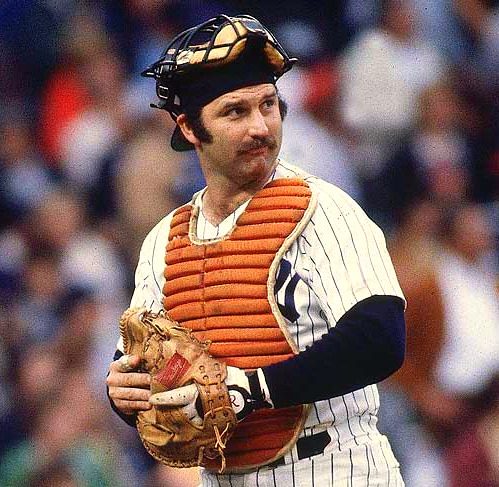
August 2, 1979. 6:28 PM. I'm nine years old, and watching Channel 9. I don't remember what program they were airing, only that it was a rerun of some classic show. The Channel 9 News Brief came on, as scheduled, and Sara Lee Kessler came on looking very grim.

"Good evening," she said, looking for all the world like it couldn't possibly be a good evening. "Yankee catcher Thurman Munson was killed today, when... "

I didn't hear any of the rest of it. I literally fell out of my seat.

He wasn't considered good-looking, except maybe by his beloved wife Diane. He was out of shape. He had enough injuries for an entire lineup. He'd been playing first base and DH'ing as much as catching lately.

I've often tried to imagine what his life would have been like if he'd lived, and decided that he would've been done by 1983 anyway, at 36, the writing on the wall being a young first baseman name of Mattingly. Coaching? Managing? A studio analyst in the early days of ESPN? Part of George Steinbrenner's managerial merry-go-round? Back to the Cleveland area as a college coach? If the University of Michigan, with Jim Abbott (but not, since he blew his eligibility by signing with the Yankees, Derek Jeter), could reach the College World Series, why not, with Thurman Munson as head coach, their arch-rivals, THE... Ohio State University?

Even if he had lived and played until he just couldn't do it anymore, he, like another pretty good catcher, Joe Torre, would simply not have had the career stats, and probably would have needed a superb managing career to get into the Baseball Hall of Fame.

Still, Monument Park at Yankee Stadium was his destiny. Just not after dying in a plane crash at age 32. As Mickey Mantle would later say, "When I died, I wanted on my tombstone, 'A Great Teammate.' But I didn't want it this soon." Those words are on Mickey's Monument out there beyond center field, but they can't compare to the words on Thurman's, apparently written by George Steinbrenner himself.

*

Flash forward 20 years. August 2, 1999. Fresh from my conquest of Fenway Park (and, really, all of New England) the preceding weekend, I decided to go to The Stadium. I figured there would be some sort of special ceremony on the anniversary of Munson's death.

And it was scheduled to be a great pitching matchup: For the Yankees, Andy Pettitte, who has since become the pitcher I've seen more than any other; for the visiting Toronto Blue Jays, David Wells, whom we'd sent over the border along with Homer Bush and Graeme Lloyd for Roger Clemens. It was also a chance for revenge: The Jays had ruined my first trip to The Stadium, and three other games since. In 21 years, the Yanks had never beaten the Jays with me in attendance: They were 0-3. (The current record still isn't very good: 2-6, and that's 2-4 in The Bronx and 0-2 in Canada.)

As expected, there was a video tribute to Thurman before the game, and Mrs. Munson threw out the ceremonial first ball. The game was every bit what I'd hoped it would be: Both Pettitte and Wells made it into the 8th, and Derek Jeter homered off Wells -- fittingly, into Monument Park. Final score, Yankees 3, Blue Jays 1. Nice night at the old ball yard.

*

Flash forward a few years. I don't remember the exact date, but it was almost certainly in 2005 or 2006 -- if it had been in 2004, what was said wouldn't have had nearly the same resonance. But I was in the upper deck, and in front of me were these two young women (I won't call them "ladies") wearing T-shirts with Alex Rodrgiuez's name and Number 13 on them. And when A-Rod came to the plate, they screamed. One said, "Oh my God, he is soooooooo hot."

That ticked me off, because this was after the 2004 Playoffs, with his disappearing act and his dopey slap play. He now officially had a reputation for not winning anything. I said, "Are you kidding? He's never won anything. He's a loser."

One of the women turned around, and gave me a look that could kill, and said, "So what? He's hot!"

At that moment, I looked out toward Monument Park, saw Munson's Number 15, and wondered if he was turning over in his grave.

If memory serves me correctly, the Yankees won that game. But what does it tell you when the defining memory of a baseball game is not who won, but that somebody thought that being sexy was better than being successful?

I've felt bad in stadiums and arenas, and joked about feeling sick as a result of terrible performances. This was the closest I ever came to actually throwing up in one. (Though there was that Devils-Islanders game earlier this year at the Nassau Coliseum where I was actually, literally, barfed on.)

*

The Yankees played the Chicago White Sox on the 30th Anniversary of Munson's death -- a coincidence, but not an inappropriate one, as the old Comiskey Park was where the Yankees played their last game with Munson. It was August 1, 1979, Yankees 9, White Sox 1, before their emotion-laden 4-game set at home against the Baltimore Orioles, where they lost the 1st 2 before winning the last 2, including the finale, in which they came back from the funeral, and eulogist Bobby Murcer drove in all the Yankee runs in a 5-4 win.

The ChiSox almost swept the Yanks 4 straight in Chicago for the first time since 1964, but the Yanks managed a tough 8-5 win that included Melky Cabrera hitting for the cycle (single, double, triple and home run in the same game), a feat that's even rarer than a no-hitter.

The last Yankee to do it was Tony Fernandez on September 3, 1995, before the Torre Dynasty began. It seems so long ago now, and yet the things that Thurman and Reggie and Guidry and the rest did seem like only yesterday. How can the perception of time be so strange like that? As Yankee Fan Paul Simon wrote, "Time, time, time, see what's become of me... "

*

I was in New York yesterday, watching the big screens at Nevada Smith's as Arsenal defeated Glasgow Rangers to win the Emirates Cup. When I got back to Port Authority, there was this guy wearing a Mets cap and headphones, singing along with whatever he was hearing.

The 1st 2 times I saw him, I couldn't make out what he was singing. The 3rd time, though, I could make it out: "And I try, and I try, I can't get no... I can't get no... " Of course, the Rolling Stones.

Sometimes, God has a sense of humor, and provides you with a glorious chance. I yelled out, "Of course, you can't get no satisfaction: You're a Met fan!"

Best baseball-related moment in Port Authority since that day I was going to The Stadium to see the Yanks play the Minnesota Twins, and a guy in a Twins cap, apparently from Minnesota, saw my Yankee cap and figured I was a good guy to ask, and asked me, "Excuse me, how do you get to Yankee Stadium?"

Ever since I'd first heard the question, "How do you get to Carnegie Hall?" I'd been waiting for someone to ask me that, and I gave him the answer: "Practice!"

Fortunately, he laughed. So I told him, "Just follow me." Unfortunately, the Twins won that game. That was in 1991, and the Yanks were beginning their long climb back up from the gutter, and the Twins were going from worst-to-first on their way to an amazing World Series.

*

Speaking of soccer, Bobby Robson died of cancer 3 days ago, at the age of 76. His name wouldn't have meant much to me a year ago, but it certainly does now.

Robert William Robson was born on February 18, 1933 in Sacriston, County Durham, in the North-East of England. The son of a coal miner, he grew up in a house without indoor plumbing. But "football" was a way out of the mines for him, and for so many other young men, just as baseball and American-style football were in this country.

Although such clubs as Sunderland and Middlesbrough weren't much further away, his father took him to St. James Park in Newcastle-upon-Tyne, 17 miles from home. He became a fan of Newcastle United Football Club, and, in particular, of Jackie Milburn. He tried to copy "Wor Jackie" ("Our Jackie" in the Newcastle accent, which, like a person from Newcastle himself, is called "Geordie"), and even played the same position: Inside forward.

But it would be a London club, Fulham, that would offer him a professional contract. He played with them from 1950 to 1956, with West Midlands club West Bromwich Albion from then until 1962, and Fulham again until 1967. In 1967 and '68, he closed his playing career in North America, with the Vancouver Royals of the old North American Soccer League.
Robson playing for WBA, a.k.a West Brom or "The Baggies"

He played for England in the 1958 and 1962 World Cups, alongside his West Brom teammate, right back Don Howe. This forged a friendship that would have consequences for future England teams.

In 1968, only 35 years old, Robson returned to Fulham as their manager, but was lured by Suffolk club Ipswich Town only a year later. In 1973, he led "The Tractor Boys" to the Texaco Cup, a competition for teams from England, Scotland, the Republic of Ireland and Northern Ireland who had not otherwise qualified for European play.

In 1978, he shocked England by advancing all the way to the FA Cup Final at the old Wembley Stadium, and beating heavily-favored Arsenal, then managed by Terry Neill, assisted by Neill's former defensive partner, Robson's old friend Don Howe. In 1981, he guided Ipswich to 2nd in the Football League behind Aston Villa, and won the UEFA Cup, beating Saint-Etienne of France in the Quarterfinal, Cologne of Germany in the Semifinal, and the club now known as AZ Alkmaar of the Netherlands in the Final at the Olympic Stadium in Amsterdam. It remains Ipswich Town's greatest achievement.

In 1982, after England were knocked out of the World Cup, the FA hired Bobby Robson to straighten out the national side. He chose Don Howe as his assistant, even though Howe was still an assistant manager at Arsenal -- and, from late 1983 to early 1986, full manager.

Immediately, Bobby let everyone know who was in charge: For his 1st game as England boss, he dropped Kevin Keegan of Newcastle, the country's most glamorous star. England failed to qualify for Euro 84, and Bobby offered to resign, on the condition that the FA hire Nottingham Forest manager Brian Clough. They refused, not so much because they believed in Robson, but because they despised Clough, who infamously stated that the FA would never hire him because they thought, correctly, he would do what he, rather than what they, wanted.

But Bobby got England into the 1986 World Cup, and into the Quarterfinal, where they lost to Argentina on a handball goal by Diego Maradona. Dismissing the cheat's description of his action as "The Hand of God," Robson said, "It wasn't the hand of God, it was the hand of a rascal. God had nothing to do with it... That day, Maradona was diminished in my eyes, forever."

England crashed out of Euro 88 in the group stage, and, again, Bobby offered his resignation. Again, it was refused -- because the obvious choice to succeed him would still have been his fellow North-East man Clough, whom they still considered unacceptable. It almost paid off: Bobby and Don got England all the way to penalties of the Semifinal at the 1990 World Cup, the country's best performance in any major tournament since the 1966 World Cup -- except this was the opposite result of that one, as they lost to West Germany.

In both World Cups in which he managed, 1986 and 1990, the Captain of the England squad was the Captain of Manchester United, Bryan Robson. And, both times, Bryan was injured and unable to play in the games in which England were knocked out. Bobby and Bryan were not related, although Bryan got his start at one of Bobby's former clubs, West Brom.

Bobby then left the England side, and, with Clough having made himself briefly radioactive with intemperate remarks following the Hillsborough Stadium Disaster of April 15, 1989, former Watford manager Graham Taylor was hired as England manager, with poor results; after this, Clough had taken himself out of the running because he'd lost his touch.

Bobby Robson had not: He won the Dutch league with PSV Eindhoven in 1991 and 1992, the Portuguese cup with FC Porto in 1994 and the Portuguese league with them in 1995 and 1996, and the Spanish Copa del Rey and the European Cup Winners' Cup in his only season managing FC Barcelona, 1996-97. This success made him highly admired in Europe, even more than he already was after the 1990 World Cup (in Italy). Unfortunately, his time at Porto and Barcelona led to the rise of his translator and assistant manager, Jose Mourinho, one of the most despicable men in the history of sport, something Bobby didn't see at the time.

In 1999, Bobby finally got his dream job, managing his boyhood club, Newcastle United. He saved them from what looked like a sure relegation in the 1999-2000 season, and took them to 4th place in 2002 and 3rd in 2003, qualifying them for the UEFA Champions League in back-to-back seasons. He was knighted in 2002.
Apparently, Newcastle owner Freddy Shepherd thought less of him than Queen Elizabeth II did, because Shepherd fired him early in the 2004-05 season. Newcastle have been a troubled club ever since, and, like Jackie Milburn, Kevin Keegan and Alan Shearer, he has achieved nearly godlike status on Tyneside ever since, the most popular manager in the club's history.

What is a club, in any case? Not the buildings, or the directors, or the people who are paid to represent it. It's not the television contracts, get-out clauses, marketing departments or executive boxes.

It's the noise, the passion, the feeling of belonging, the pride in your city. It's a small boy, clambering up stadium steps for the very first time, gripping his father's hand, gawping at that hallowed stretch of turf beneath him, and, without being able to do a thing about it, falling in love.

He was married for 53 years to Elsie Gray, a nurse and teacher. They had 3 sons: Andrew, Paul and Mark.

Bobby Robson survived cancer 3 times, establishing the Sir Bobby Robson Foundation along the way, before losing his 4th battle, on July 31, 2009. Just 5 days earlier, the Sir Bobby Robson Trophy match was played at St. James Park, between members of the 1990 England and West Germany teams, to raise money for the foundation. Fittingly, the winning goal was scored by a Newcastle legend, Shearer. Ironically, given the teams' respective histories, it was a penalty (although not in penalty kicks). The match was his last public appearance.

Sir Bobby Robson was admired, and even loved, all over the world. Even fans who don't necessarily like Newcastle as a team loved him. His contributions to the game will long outlive him.

UPDATE: There are now statues of Robson outside both Ipswich's stadium, Portman Road, and Newcastle's, St. James Park. He is buried at Langley Park in Durham.

*

Days until the next Yankees-Red Sox series: 3, this Thursday at The Stadium. Huge series.

Days until the next Premier League season begins: 12.

Days until Rutgers plays football again: 35.

Days until East Brunswick plays football again: 39.

Days until the Devils play hockey again: 61.

Days until the next East Brunswick-Old Bridge Thanksgiving clash: 116.

Days until the 2010 World Cup begins: 312.

Days until the World Cup Final: 342.

Days until the Rutgers-Army football game at Yankee Stadium: 831.