Showing posts with label newcastle united. Show all posts

Tuesday, July 21, 2026

Kevin Keegan, 1951-2026

That's Life was the title of a satirical consumer affairs "programme" on British TV network BBC1 from 1973 to 1994. "That's Life" was also the title of a song written by Dean Kay and Kelly Gordon, best known in its 1966 version by Frank Sinatra.

This might surprise some of you, who know I'm a Yankee Fan, and might expect it to be "Theme from New York, New York," but my favorite Frank Sinatra song is "That's Life":

I've been a puppet, a pauper, a pirate, a poet, a pawn and a king.I've been up and down and over and out, and I know one thingEach time I find myself flat on my faceI pick myself up and get back in the race!

Sinatra knew. So did Kevin Keegan, a man who was called "King."

Joseph Kevin Keegan was born on February 14, 1951 in Armthorpe, South Yorkshire, England. It's about 4 miles east of central Doncaster, 28 miles northeast of Sheffield, 87 miles east of Anfield in Liverpool where he would one day ply his trade, 125 miles south of St. James' Park in Newcastle where he would later ply it, and 175 miles north of Central London.

But it might as well have been on the other side of the world from one of the world's great capitals. The reason he was born in Armthorpe was because his aunt lived there, and her house had something his parents' house didn't have: Electricity, thus making it safer for childbirth. In the last full year of the reign of King George VI, nearly 6 years after V-E Day, and with television coming into homes in the developed nations of the world, electricity was still an issue in some parts of Great Britain.

His father's parents emigrated from Ireland to Newcastle, in the North-East of England. This made the Keegans "Geordies." Theories as to where the name comes from varies, the most popular being that the local miners used "Geordie safety lamps," designed by George Stephenson. "Geordie" is also the name of the dialect, which sounds a bit like Scottish. Charles Culpepper, an American sportswriter who wrote a book about English soccer, Bloody Confused!, said that Newcastle is "where England starts to think about turning into Scotland." (But don't tell any Englishman, even a Geordie, that. And absolutely don't tell a Scotsman that!)

At the age of 15, Keegan had impressed a player for Scunthorpe United, in Lincolnshire. He played for them at a senior level from 1968 to 1971, when Liverpool FC bought him. Manager Bill Shankly paired him up with Welsh forward John Toshack, and it was a brilliant choice: Together, they helped Liverpool win the Football League First Division and Europe's secondary tournament, the UEFA Cup (now known as the UEFA Europa League), in 1973; and the FA Cup in 1974, with Keegan scoring 2 goals in the Final.

This put Liverpool in the annual season-opening exhibition game, the FA Charity Shield (now known as the Community Shield), which annually pits the winners of the previous season's League title and FA Cup against each other at Wembley Stadium in London. Liverpool defeated title holders Leeds United, but not before a brawl broke out, which resulted in both Keegan and Leeds Captain Billy Bremner were sent off, both of them taking their shirts off as they left the pitch. Both were fined and suspended.

Having already planned to do so before that display of poor sportsmanship, Shankly then retired, and handed the team over to his top assistant, Bob Paisley. With Keegan and Toshack leading the line, the Mersey Reds won  the League and the UEFA Cup again in 1976; and the League again, and Liverpool's 1st of 6 European Cups (the tournament now known as the UEFA Champions League) in 1977. But a loss to Manchester United in the FA Cup Final denied them what would have been England's 1st-ever "European Treble." (United would win that in 1999, and Manchester City have since won it in 2023.)

Like a lot of sports stars, Keegan thought he should be paid more. English teams weren't willing to go high enough. German team Hamburger SV paid £500,000 for him, a new transfer record for both countries. He got his hair restyled in a "poodle perm" that set a trend among English footballers.
In 1978, and again in 1979, France Football magazine awarded Keegan the Ballon d'Or (Golden Ball) as World Footballer of the Year. In 1979, he led Hamburg to the championship of the German league, the Bundesliga. That same year, with his celebrity higher than ever, he recorded "Head Over Heels In Love." As songs sung by athletes go, it's not bad. It reached Number 31 on the British chart, and Number 10 on the German one. The Bundesliga title qualified Hamburg for the 1979-80 European Cup, and they got all the way to the Final, but lost it to an English side, defending Champions Nottingham Forest. Hamburg fans, noting that he was just 5-foot-8 but very talented, nicknamed him "Mighty Mouse," after the cartoon character.

(Liverpool didn't miss him much: They bought Kenny Dalglish from Glasgow team Celtic FC, gave him Keegan's former Number 7 shirt, and had the greatest era in their history -- "King Kev" replaced by "King Kenny." Liverpool's Number 7 has subsequently been worn by such stars as Peter Beardsley, Vladimír Šmicer, Harry Kewell, Luis Suárez and James Milner.)

But he fell into dispute with Hamburg's manager, a Croatian named Branko Zebec. Rumors abounded that he would be sold, including one that would have brought him to America with the Washington Diplomats, which would have made him a teammate of Dutch superstar Johan Cruijff.

Instead, he was sold back to England, to Southampton FC in Hampshire on the South Coast. There, he was a teammate of team star Mick Channon, former Everton star Alan Ball, and former Arsenal star Charlie George, who had famously, if temporarily, traded in his long locks for a poodle perm. In 2 seasons with Keegan, the "Saints" finished 6th and 7th.

He played 63 matches for England, scoring 21 goals, but England failed to qualify for the 1974 and 1978 World Cups, or for Euro 76. He played in Euro 80, and captained England at the 1982 World Cup.
The 1982 World Cup edition remains my "favourite" England "kit."

In 1982, he joined the team his family had loved, Newcastle United FC. They had fallen into the Second Division in 1978, but in just 2 seasons, Keegan guided them to promotion back to the First. He said that it felt like coming home, despite the distance between Doncaster and Newcastle, and said no one had ever made him feel more welcome. He had lost a step, and decided to retire after the promotion, before he could go into a noticeable decline.
After appearing as an analyst for ITV soccer broadcasts, he went into management, taking over at Newcastle in 1992. They had gotten relegated again in 1989, but he got them promoted to the newly-created Premiere League in his 1st season. The club had not finished 1st in the 1st division, under any name, since 1927. But on February 10, 1996, with forward Alan Shearer leading them, they were in 1st place, having lost only 3 League games all season. They were 9 points ahead of Manchester United, and had a game in hand.

Then came an 8-game stretch where they won 2, drew 1 and lost 5. They bounced back, winning 3 straight. Man U now led them by 3 points, although Newcastle still had a game in hand: 2 games remaining, to Man U's 1.

On April 29, after beating Leeds, Keegan was interviewed on Sky Sports, and went on an epic rant about Man U's manager, the master of mind games, Alex Ferguson. Ferguson stoked tensions when he cast doubt on the commitment of the likes of Leeds and Nottingham Forest to try as hard against Newcastle as they did against his Manchester United team, suggesting that Forest, who were due to play the Magpies for Stuart Pearce's testimonial, might even "let Newcastle win." Keegan was incensed, and said:

When you do that with footballers, like he said about Leeds, and when you do things like that about a man like Stuart Pearce, I've kept really quiet, but I'll tell you something, he went down in my estimation when he said that.

We have not resorted to that, but I'll tell you, you can tell him now if you're watching it, we're still fighting for this title, and he's got to go to Middlesbrough and get something, and -- and -- I'll tell you, honestly, I will love it if we beat them, love it!
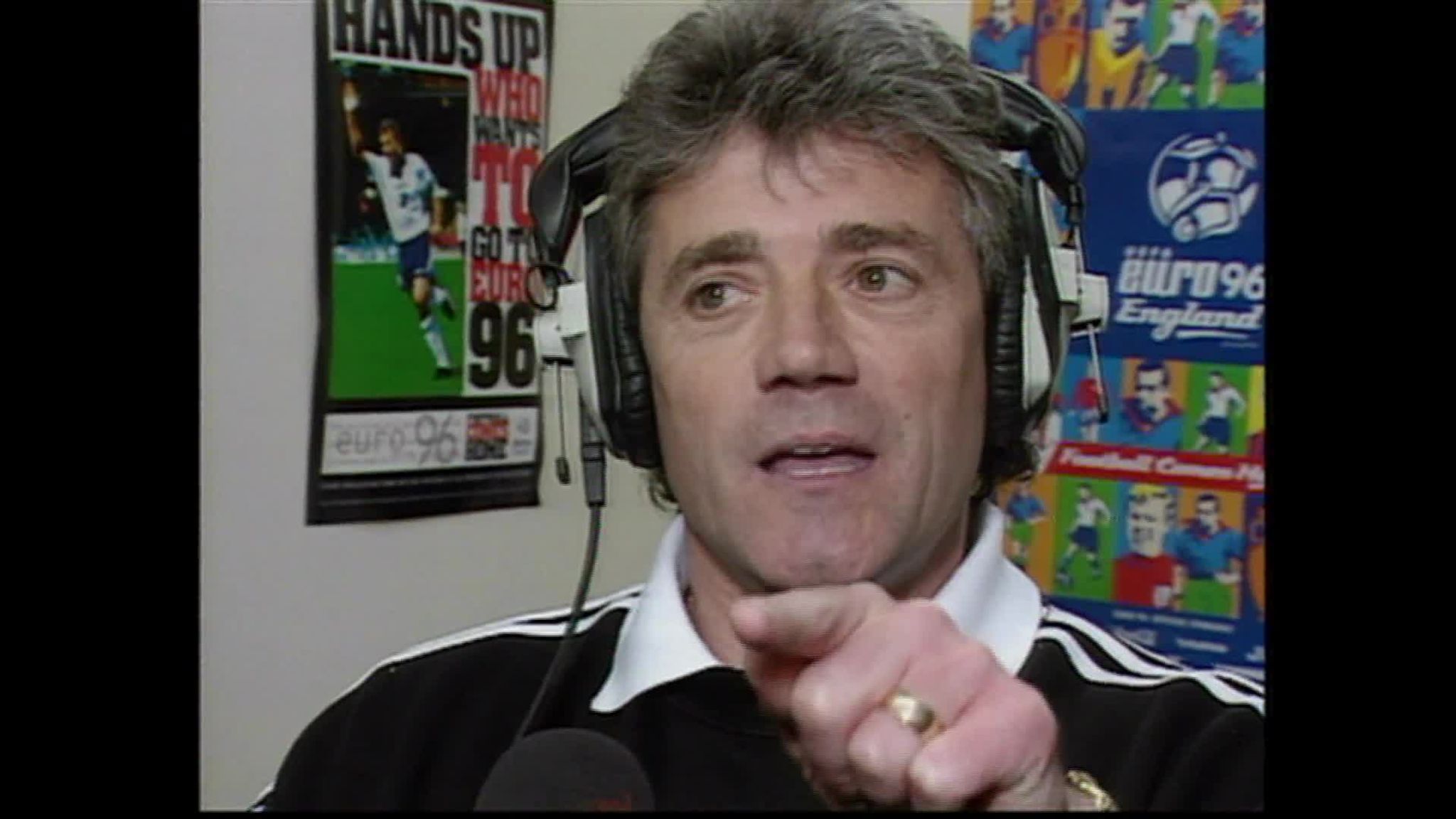
Pretty much everybody who didn't love Man United loved hearing him say it. But pretty much everybody, regardless of how they felt about Man United, thought that King Kev had fallen victim to Fergie's mind games -- that he had, as they say in England, "lost the plot." On May 2, Newcastle could only manage a 1-1 draw with Nottingham Forest, handing the League title to the idle Man United. They won the title by 4 points, and went on to win "The Double" by winning the FA Cup Final on May 11, beating Liverpool, 1-0 at Wembley Stadium in West London.

Once again, the words of the Sinatra song come to mind: "That's life, that's what all the people say. You're riding high in April, shot down in May."

Keegan was still one of the most popular figures in NUFC history, but the club fired him after 1 more season. He went to West London team Fulham, and got them promoted to the Premier League in 1999. He was then named manager of England, but couldn't get out of the Group Stage in Euro 2000.

Afterward, England played Germany in the last event at the old Wembley, before it was demolished so a new stadium could be built on the site. Germany won, 1-0. Afterward, the media cornered him in the bathroom of the dressing room, and he resigned. And so, Wembley's history as the home of English football ended with "Keegan quits in the toilet." (In England, "the toilet" is the entire rest room, not just the bowl.) Although Keegan has had a few managing jobs since, he has never again managed any national side.

He got Manchester City promoted to the Premier League in 2002, but left in 2005. In 2008, Newcastle owner Mike Ashley, famously despised by the team's fans, quickly hired as manager, clashed with, and fired the 2 most popular figures in the club's recent history: Keegan and Shearer. The "Magpies" were relegated, and no one blamed either Keegan or Shearer. Number 7 and Number 9 remained beloved in "The Toon" (Geordiespeak for "The Town"). Everyone blamed Ashley.

Fans of opposing teams serenaded both Keegan and Shearer with "Stayed on the telly, you should have stayed on the telly." Both went back to punditry, Shearer on the BBC, and Keegan on ITV.
As the song goes, "But I'm gonna change that tune, when I get right back up, right back up in June."

Keegan remained there until earlier this year, when he was diagnosed with stomach cancer. He died yesterday, July 20, 2026, at the age of 75, leaving behind his wife of nearly 52 years, Jean Woodhouse, and their 2 daughters.

That's life, that's life and I can't deny it.
Many times I've thought about quittin', baby, but my heart ain't gonna buy it.
But if there's nothing shaking come this here July
I'm gonna roll myself up in a big ball and die.
My, my.

Liverpool FC said his "indomitable spirit" would be "forever etched in our history. His later club called him "the beating heart of Newcastle United." The President of the Football Association, William, Prince of Wales, called him "a truly remarkable footballer and manager." And Alan Shearer called him "My hero. My manager. My friend. Sleep easy Boss."

King Kev wasn't the only player to have the nickname "King." Indeed, it's also been given to Pelé, Denis Law, Kenny Dalglish, French stars Eric Cantona and Thierry Henry, Liberia's George Weah, and Japanese star Kazuyoshi Miura. But, in England, Kevin Keegan was the most popular of all of these.

As Mel Brooks once said, "It's good to be the King."


Wednesday, April 29, 2026

April 29, 1996: Kevin Keegan Would Love It If Newcastle Beat Manchester United

April 29, 1996, 30 years ago: Newcastle United defeat Leeds United, 1-0 at Elland Road in Leeds, Yorkshire, to remain in the race for the Premier League title. Newcastle had a huge lead in the table (or, as we would say, the standings) over Manchester United, but had blown it.

In January, "The Toon" -- that's "The Town" in the "Geordie" dialect of the North-East of England -- got knocked out of both the FA Cup and the League Cup. But, as of February 10, they had lost only 3 League games all season, all away: To Southampton, Chelsea, and Manchester United. They were 9 points ahead of Man U, and had a game in hand.

Then came an 8-game stretch where they won 2 (beating West Ham United and Queens Park Rangers at home), drew 1 (away to Manchester city), and lost 5 (away to West Ham, Arsenal, Liverpool and Blackburn Rovers, and, at home on March 4, 1-0 to Man United). They had now bounced back, winning 3 straight, home to Aston Villa and Southampton, and away to Leeds. Man U now led them by 3 points, although Newcastle still had a game in hand: 2 games remaining, to Man U's 1.

Interviewed on Sky Sports after the Leeds game, Newcastle manager Kevin Keegan, once one of the club's greatest players, went on an epic rant about Man U's manager, the master of mind games, Alex Ferguson. Ferguson stoked tensions when he cast doubt on the commitment of the likes of Leeds and Nottingham Forest to try as hard against Newcastle as they did against his Manchester United team, suggesting that Forest, who were due to play the Magpies for Stuart Pearce's testimonial, might even "let Newcastle win."

Keegan was incensed, and, when the opportunity arose after his side's hard-fought win over Leeds, he could not contain his fury:

When you do that with footballers, like he said about Leeds, and when you do things like that about a man like Stuart Pearce, I've kept really quiet, but I'll tell you something, he went down in my estimation when he said that.

We have not resorted to that, but I'll tell you, you can tell him now if you're watching it, we're still fighting for this title, and he's got to go to Middlesbrough and get something, and -- and -- I'll tell you, honestly, I will love it if we beat them, love it!

Pretty much everybody who didn't love Man United loved hearing him say it. But pretty much everybody, regardless of how they felt about Man United, thought that King Kev had fallen victim to Fergie's mind games -- that he had, as they say in England, "lost the plot."

On May 2, Newcastle went to the City Ground in Nottingham, and could only manage a 1-1 draw with Nottingham Forest, handing the League title to the idle Man United. On May 5, at home at St. James' Park, they closed the season by drawing 1-1 with Tottenham Hotspur, while Man United beat Middlesbrough, 3-0 at the Riverside Stadium.

United won the title by 4 points, and went on to win "The Double" by winning the FA Cup Final on May 11, beating Liverpool, 1-0 at Wembley Stadium in West London. But it wouldn't have mattered if Newcastle had won those last 2 games, giving them 82 points, the same number as United: United would have won the title on the 1st tiebreaker, goal difference, +38 to +29 -- or, more accurately, +31, had Newcastle won those last 2 games by 1 goal each.

They would have needed a net improvement of 10 goals over those last 2 games to win the title, unless United had dropped points at Middlesbrough, who were in 12th place. Barring a tremendous upset by Boro, the title had already been lost in that February 21 to April 8 run.

Keegan was one of the great British soccer players of his generation, but he never reached the same heights as a manager. For many fans, this postgame rant symbolized his time as a field boss. And this was before the American football coaches Jim Mora, Herman Edwards and Dennis Green did their famous press conference rants. (Respectively: "Playoffs?" "You play to win the game!" and "They are who we thought they were!") 

Saturday, December 21, 2024

George Eastham, 1936-2024

George Eastham

American baseball had Curt Flood, who dared to attack the reserve clause, unsuccessfully; and Andy Messersmith, who provided the death blow to it.

English soccer had George Eastham, who killed its maximum wage.

George Edward Eastham was born on September 23, 1936 in Blackpool, Lancashire, England. His father, George Richard Eastham, played as a forward for hometown team Blackpool F.C., and also for Manchester-area team Bolton Wanderers. George Richard's brother Harry Eastham, also played forward for Blackpool, but spent most of his career on Merseyside, playing for Liverpool F.C. and Tranmere Rovers. The younger George became a forward, and starred for North-East club Newcastle United, starting in 1956.

Jimmy Hill had starred as a midfielder at West London team Fulham F.C., and later became Chairman of the Professional Footballers' Association, the players' union. At the time of the case, Hill was the manager of Midlands team Coventry City. Despite now managing a team, he recognized that the players and the managers had a common "enemy" in the team owners.
Jimmy Hill

The maximum wage was £20 per week -- with inflation, equivalent to about £357 in 2024, or, with the current exchange rate, about $449. That's not even enough to rent your own apartment, not in the suburbs of New York or London, let alone in either city.

And Eastham fell out with Newcastle management, and wanted to be sold, but they didn't want to sell. As with baseball's reserve clause, English soccer's version, known as "retain-and-transfer," bound a player to a team for life unless the club wanted to sell, and NUFC didn't. They didn't care if he was happy: The wanted him available and compliant.

Like Curt Flood would in baseball a decade later, Eastham compared it to slavery:

Most people called it the "slavery contract." We had virtually no rights at all. It was often the case that the guy on the terrace not only earned more than us – though there's nothing wrong with that – he had more freedom of movement than us. People in business or teaching were able to hand in their notice and move on. We weren't. That was wrong.

Eastham went on strike at the end of the 1959-60 season, moving south to work for an old family friend, selling cork in Guildford, Surrey, a venture which earned him more money than his Newcastle contract paid. Finally, in October 1960, Newcastle relented, and sold Eastham to North London team Arsenal F.C. for £47,500, an enormous sum for the time.

But Eastham had only gotten one thing he wanted, and considered the rest, freedom of movement and the abolition of the maximum wage, worth fighting for. Hill convinced the PFA to provide £15,000 to pay for Eastham's legal fees, and he took NUFC to the High Court.

In Eastham v. Newcastle United, Eastham argued that retain-and-transfer was an unfair restraint of trade, and that Newcastle owed him £400 in unpaid wages and £650 in unpaid bonuses. The judge, Richard Wilberforce, later a Baron, ruled that, since Eastham had gone on strike, he was not entitled to the money. So Eastham did not gain personally, other than getting the transfer he wanted, which he already had.
Mr. Justice Wilberforce

But Mr Justice Wilberforce ruled that the retain-and-transfer system was unreasonable, and struck it down. Eastham had won. This makes him English soccer's Curt Flood and its Andy Messersmith.

Eastham starred for Arsenal for 6 years, although it was a down period for the team. He, Joe Baker, Geoff Strong and Alan Skirton formed a great attack, but they had a poor defense. It would take a complete rebuilding process for Arsenal to become a power again. Indeed, having lost back-to-back League Cup Finals in 1968 and 1969, fans began to point out that, "Arsenal haven't won a trophy since the Coronation." It was true. Queen Elizabeth II was crowned a month after Arsenal won the 1953 Football League title, and their next trophy was the 1970 Inter-Cities Fairs Cup, before winning the League and the FA Cup, "The Double," in 1971.

Eastham was the only Arsenal player named to the England team that won the 1966 World Cup on home soil, although he didn't play in the tournament. He did play for England in the 1962 World Cup. After the '66 edition, he was sold to Staffordshire club Stoke City, and, along with fellow '66 England hero Gordon Banks in goal, helped the club win their only major trophy in their 161-year history, the 1972 League Cup.

He later moved to South Africa, set up a sportswear business, and defied the apartheid government by teaching the game to black kids. He even brought his father George with him to coach, and he did so until his death in 2000. George the son became the chairman of the South African Arsenal Supporters' Club.

He died yesterday, December 20, 2024, at the age of 88. News reports of his death have made no mention of survivors, including a wife or children.

His death means there are only 3 surviving players from the England team that won the 1966 World Cup. Geoff Hurst is the only one who played in the Final. The other two, Terry Paine and Ian Callaghan, like Eastham himself, were on the team, but did not play in the tournament at all.

Hill went into broadcasting, working on ITV's The Big Match from its 1968 premiere until 1973, moving to the BBC for Match of the Day until 1988. He died in 2015.

Monday, November 28, 2011

All Thumbs With Football; Gary Speed, 1969-2011

Thumbs down to East Brunswick. I knew my Dear Old Alma Mater was going to lose the Thanksgiving game to the Purple Scum, probably badly... but 40-7 after 3 quarters? No, the final score of 40-20 does us no favors. Come on, have some pride.

Thumbs down to Rutgers. All the Scarlet Knights had to do was beat Connecticut, hardly a great team, to claim at least a share of the Big East title and have a shot at a Bowl Championship Series berth. It was almost identical to the EB-Old Bridge game: 40-10 after 3 quarters, before closing to 40-22.

A few years ago, Greg Schiano told us, "It's time." But, as Keith Sargent said in the Home News Tribune, the future never comes. Schiano has had more time to build a champion than Rex Ryan has had, so when does he start to get questioned? The fact that RU had the chance this season, after a losing season last year, speaks well of Schiano. The fact that this seems to be the furthest he can take the program does not.

Thumbs up to the Jets. They beat the Buffalo Bills 28-24. This was a character-testing game, and they came through, especially Mark Sanchez. Whatever his problems are, they do not include a lack of guts. I can question his intelligence, his judgment, and his execution; but not his poise or his courage. (UPDATE: The Jets ended up losing their last 3 games to finish 8-8 and miss the Playoffs.)

Thumbs up to the Green Bay Packers. They beat the Detroit Lions on Thanksgiving, 27-15, to advance to 11-0. If Sports Illustrated doesn't name Aaron Rodgers their 2011 Sportsman of the Year, they're going to have a lot of explaining to do.

(UPDATE: They split it between the coaches of college basketball's National Champions, Mike Krzyzewski of Duke and Pat Summitt of Tennessee. This was understandable. The defending champion Packers finished 15-1, but were knocked out of the Playoffs by the Giants.)

Thumbs up to the Detroit Lions. Yes, the Packers beat them pretty badly, but they're moving in the right direction. They even acted quickly to punish Ndamukong Suh, which is a good sign: They not only want to win, but also to win in the right way. Some teams (the Pats of the last few years, the Raiders of the 1970s and '80s) wanted to win in the worst way; the Lions want to win in the best way. (UPDATE: They finished 10-6 and made the Playoffs.)

Thumbs down to Ndamukong Suh. You're a great talent, and you're ruining it. You could become the new Mean Joe Greene. Instead, you're becoming the new Albert Haynesworth -- and as Dick Smothers would say, "That was not a compliment!"

Thumbs down to the people behind the BCS. Regardless of whether Louisiana State wins or loses the Southeastern Conference Championship Game, you're going to have Alabama in your BCS National Championship Game -- and they didn't even win their Division of the SEC!

Thumbs up to the University of Kentucky. The Wildcats beat Tennessee and claimed the Old Bourbon Barrel for the first time in 26 years.

Thumbs up to the University of Wisconsin. The Badgers beat Penn State 45-7, and advanced to the 1st-ever Big 10 Championship Game. Any time Paterno State loses, it's good. This time, they got their asses kicked. Of course, as they now know, there are worse things that can happen to a young male's rear end at Penn State.

Thumbs down to all this conference realignment. Although it's making rivalries that always could, and perhaps should, have been, like Nebraska vs. Iowa (the States do border each other), it's also breaking up good ones, like Nebraska vs. Oklahoma and the "Backyard Brawl" between Pittsburgh and West Virginia. But if Florida vs. Florida State, Georgia vs. Georgia Tech, South Carolina vs. Clemson, and Oklahoma vs. Texas can survive realignments, maybe others can as well.

Finally, thumbs up to the British Columbia Lions, who won the Grey Cup, Canada's "Super Bowl," on their home field in Vancouver, BC Place, beating the Winnipeg Blue Bombers. This was their 6th Canadian Football League Championship.

And, unlike when the Vancouver Canucks lost the Stanley Cup Finals earlier this year, the locals did not riot. So that's 6 titles for the BC Lions, while Vancouver has not won a Stanley Cup since 1915.

*

Two days ago, soccer figure Gary Speed appeared on the BBC One TV show Football Focus, and joined his former Newcastle United teammate Alan Shearer to watch that team play Manchester United at Man U's Old Trafford. No one seemed to think anything was wrong.

Yesterday, his wife Louise found him dead in the garage at their home in Huntington, Cheshire, England. He had hanged himself.

Gary Andrew Speed was born on September 8, 1969 -- making him 3 months older than I am -- in Mancot, Flintshire, Wales. He grew up on the street where Kevin Ratcliffe, then captain of Liverpool-based team Everton FC, lived. As Liverpool is near Wales, many people in the Principality support Everton, and many others support Liverpool FC. Also from Wales, and on the great Everton teams of the 1980s, were goalkeeper Neville Southall and left back Pat Van Den Hauwe. So was midfielder Barry Horne, a star (along with Southall) of their 1995 FA Cup winners.

A midfielder, with pace to match his name, Speed was signed by Yorkshire club Leeds United, and helped them win the Football League Division One title in 1992 -- the last title under the old banner, before the English top flight became known as the Premier League.
Note the White Rose of the House of York,
still the symbol of Yorkshire, on Leeds' badge.

In 1996, he was sold to the club he loved growing up, Everton. A year later, Howard Wilkinson, his manager at Leeds, became his manager again, but their relationship soured. In 1998, he was sold to Newcastle United, and helped them reach the FA Cup Final that year (although they lost to North London team Arsenal) and the next (losing to Man United). In 2002, he helped Newcastle qualify for the UEFA Champions League.

He was sold to Lancashire team Bolton Wanderers in 2004, and stayed with them until 2008. They sold him to Yorkshire team Sheffield United, and he played the last 2 seasons of his career with them. He scored 104 goals in his career, and was known for scoring with headers.

He appeared 85 times for the Wales national team between 1990 and 2004, eventually serving as their Captain 44 times. Rarely troubled by injury or suspension, at the time of his retirement, he held the record for the most appearances in the Premier League at 535, until it was surpassed by David James; and only his Everton teammate Southall had made more appearances for Wales.

He retired as a player when Sheffield United named him manager. Only 4 months later, on December 11, 2010, he was named manager of his national team. As usual, Wales struggled, and by August 2011, they were ranked 117th in the world (out of 211 "nations" recognized by FIFA, the world's governing body for soccer). But 2 wins in the Autumn got them up to 45th.
Speed as Wales manager,
with one of his successors as team Captain,
Aaron Ramsey of Arsenal.

He married Louise in 1996, and had sons Tommy and Eddie. In 2010, he was awarded an MBE: Member of the Order of the British Empire. He was still manager of Wales at the time of his death. He was 42 years old.

No one has been able to explain why a man who seemed to have so much to look forward to, and so much respect among his peers, and so many friends, would take his own life.

UPDATE: He didn't leave a suicide note, so no one really knows why he did it. It has been suggested that he was depressed. It is also possible that, with his reputation for heading the ball, he may have sustained brain damage, similar to American football players, and a few other British soccer stars. He was cremated, so there is no gravesite.

Monday, August 3, 2009

Munson and Melky; Bobby Robson, 1933-2009

August 2, 1979. 6:28 PM. I'm nine years old, and watching Channel 9. I don't remember what program they were airing, only that it was a rerun of some classic show. The Channel 9 News Brief came on, as scheduled, and Sara Lee Kessler came on looking very grim.

"Good evening," she said, looking for all the world like it couldn't possibly be a good evening. "Yankee catcher Thurman Munson was killed today, when... "

I didn't hear any of the rest of it. I literally fell out of my seat.

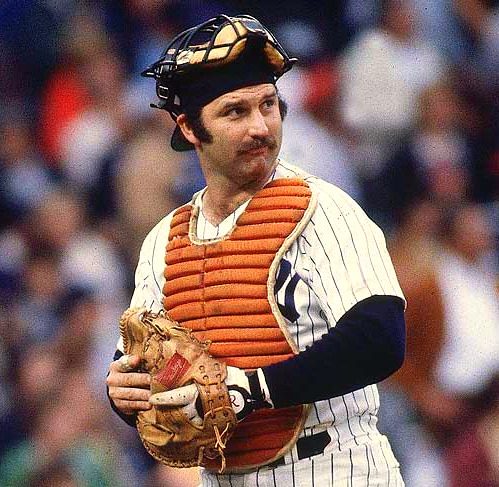
He wasn't considered good-looking, except maybe by his beloved wife Diane. He was out of shape. He had enough injuries for an entire lineup. He'd been playing first base and DH'ing as much as catching lately.

I've often tried to imagine what his life would have been like if he'd lived, and decided that he would've been done by 1983 anyway, at 36, the writing on the wall being a young first baseman name of Mattingly. Coaching? Managing? A studio analyst in the early days of ESPN? Part of George Steinbrenner's managerial merry-go-round? Back to the Cleveland area as a college coach? If the University of Michigan, with Jim Abbott (but not, since he blew his eligibility by signing with the Yankees, Derek Jeter), could reach the College World Series, why not, with Thurman Munson as head coach, their arch-rivals, THE... Ohio State University?

Even if he had lived and played until he just couldn't do it anymore, he, like another pretty good catcher, Joe Torre, would simply not have had the career stats, and probably would have needed a superb managing career to get into the Baseball Hall of Fame.

Still, Monument Park at Yankee Stadium was his destiny. Just not after dying in a plane crash at age 32. As Mickey Mantle would later say, "When I died, I wanted on my tombstone, 'A Great Teammate.' But I didn't want it this soon." Those words are on Mickey's Monument out there beyond center field, but they can't compare to the words on Thurman's, apparently written by George Steinbrenner himself.

*

Flash forward 20 years. August 2, 1999. Fresh from my conquest of Fenway Park (and, really, all of New England) the preceding weekend, I decided to go to The Stadium. I figured there would be some sort of special ceremony on the anniversary of Munson's death.

And it was scheduled to be a great pitching matchup: For the Yankees, Andy Pettitte, who has since become the pitcher I've seen more than any other; for the visiting Toronto Blue Jays, David Wells, whom we'd sent over the border along with Homer Bush and Graeme Lloyd for Roger Clemens. It was also a chance for revenge: The Jays had ruined my first trip to The Stadium, and three other games since. In 21 years, the Yanks had never beaten the Jays with me in attendance: They were 0-3. (The current record still isn't very good: 2-6, and that's 2-4 in The Bronx and 0-2 in Canada.)

As expected, there was a video tribute to Thurman before the game, and Mrs. Munson threw out the ceremonial first ball. The game was every bit what I'd hoped it would be: Both Pettitte and Wells made it into the 8th, and Derek Jeter homered off Wells -- fittingly, into Monument Park. Final score, Yankees 3, Blue Jays 1. Nice night at the old ball yard.

*

Flash forward a few years. I don't remember the exact date, but it was almost certainly in 2005 or 2006 -- if it had been in 2004, what was said wouldn't have had nearly the same resonance. But I was in the upper deck, and in front of me were these two young women (I won't call them "ladies") wearing T-shirts with Alex Rodrgiuez's name and Number 13 on them. And when A-Rod came to the plate, they screamed. One said, "Oh my God, he is soooooooo hot."

That ticked me off, because this was after the 2004 Playoffs, with his disappearing act and his dopey slap play. He now officially had a reputation for not winning anything. I said, "Are you kidding? He's never won anything. He's a loser."

One of the women turned around, and gave me a look that could kill, and said, "So what? He's hot!"

At that moment, I looked out toward Monument Park, saw Munson's Number 15, and wondered if he was turning over in his grave.

If memory serves me correctly, the Yankees won that game. But what does it tell you when the defining memory of a baseball game is not who won, but that somebody thought that being sexy was better than being successful?

I've felt bad in stadiums and arenas, and joked about feeling sick as a result of terrible performances. This was the closest I ever came to actually throwing up in one. (Though there was that Devils-Islanders game earlier this year at the Nassau Coliseum where I was actually, literally, barfed on.)

*

The Yankees played the Chicago White Sox on the 30th Anniversary of Munson's death -- a coincidence, but not an inappropriate one, as the old Comiskey Park was where the Yankees played their last game with Munson. It was August 1, 1979, Yankees 9, White Sox 1, before their emotion-laden 4-game set at home against the Baltimore Orioles, where they lost the 1st 2 before winning the last 2, including the finale, in which they came back from the funeral, and eulogist Bobby Murcer drove in all the Yankee runs in a 5-4 win.

The ChiSox almost swept the Yanks 4 straight in Chicago for the first time since 1964, but the Yanks managed a tough 8-5 win that included Melky Cabrera hitting for the cycle (single, double, triple and home run in the same game), a feat that's even rarer than a no-hitter.

The last Yankee to do it was Tony Fernandez on September 3, 1995, before the Torre Dynasty began. It seems so long ago now, and yet the things that Thurman and Reggie and Guidry and the rest did seem like only yesterday. How can the perception of time be so strange like that? As Yankee Fan Paul Simon wrote, "Time, time, time, see what's become of me... "

*

I was in New York yesterday, watching the big screens at Nevada Smith's as Arsenal defeated Glasgow Rangers to win the Emirates Cup. When I got back to Port Authority, there was this guy wearing a Mets cap and headphones, singing along with whatever he was hearing.

The 1st 2 times I saw him, I couldn't make out what he was singing. The 3rd time, though, I could make it out: "And I try, and I try, I can't get no... I can't get no... " Of course, the Rolling Stones.

Sometimes, God has a sense of humor, and provides you with a glorious chance. I yelled out, "Of course, you can't get no satisfaction: You're a Met fan!"

Best baseball-related moment in Port Authority since that day I was going to The Stadium to see the Yanks play the Minnesota Twins, and a guy in a Twins cap, apparently from Minnesota, saw my Yankee cap and figured I was a good guy to ask, and asked me, "Excuse me, how do you get to Yankee Stadium?"

Ever since I'd first heard the question, "How do you get to Carnegie Hall?" I'd been waiting for someone to ask me that, and I gave him the answer: "Practice!"

Fortunately, he laughed. So I told him, "Just follow me." Unfortunately, the Twins won that game. That was in 1991, and the Yanks were beginning their long climb back up from the gutter, and the Twins were going from worst-to-first on their way to an amazing World Series.

*

Speaking of soccer, Bobby Robson died of cancer 3 days ago, at the age of 76. His name wouldn't have meant much to me a year ago, but it certainly does now.

Robert William Robson was born on February 18, 1933 in Sacriston, County Durham, in the North-East of England. The son of a coal miner, he grew up in a house without indoor plumbing. But "football" was a way out of the mines for him, and for so many other young men, just as baseball and American-style football were in this country.

Although such clubs as Sunderland and Middlesbrough weren't much further away, his father took him to St. James Park in Newcastle-upon-Tyne, 17 miles from home. He became a fan of Newcastle United Football Club, and, in particular, of Jackie Milburn. He tried to copy "Wor Jackie" ("Our Jackie" in the Newcastle accent, which, like a person from Newcastle himself, is called "Geordie"), and even played the same position: Inside forward.

But it would be a London club, Fulham, that would offer him a professional contract. He played with them from 1950 to 1956, with West Midlands club West Bromwich Albion from then until 1962, and Fulham again until 1967. In 1967 and '68, he closed his playing career in North America, with the Vancouver Royals of the old North American Soccer League.
Robson playing for WBA, a.k.a West Brom or "The Baggies"

He played for England in the 1958 and 1962 World Cups, alongside his West Brom teammate, right back Don Howe. This forged a friendship that would have consequences for future England teams.

In 1968, only 35 years old, Robson returned to Fulham as their manager, but was lured by Suffolk club Ipswich Town only a year later. In 1973, he led "The Tractor Boys" to the Texaco Cup, a competition for teams from England, Scotland, the Republic of Ireland and Northern Ireland who had not otherwise qualified for European play.

In 1978, he shocked England by advancing all the way to the FA Cup Final at the old Wembley Stadium, and beating heavily-favored Arsenal, then managed by Terry Neill, assisted by Neill's former defensive partner, Robson's old friend Don Howe. In 1981, he guided Ipswich to 2nd in the Football League behind Aston Villa, and won the UEFA Cup, beating Saint-Etienne of France in the Quarterfinal, Cologne of Germany in the Semifinal, and the club now known as AZ Alkmaar of the Netherlands in the Final at the Olympic Stadium in Amsterdam. It remains Ipswich Town's greatest achievement.

In 1982, after England were knocked out of the World Cup, the FA hired Bobby Robson to straighten out the national side. He chose Don Howe as his assistant, even though Howe was still an assistant manager at Arsenal -- and, from late 1983 to early 1986, full manager.

Immediately, Bobby let everyone know who was in charge: For his 1st game as England boss, he dropped Kevin Keegan of Newcastle, the country's most glamorous star. England failed to qualify for Euro 84, and Bobby offered to resign, on the condition that the FA hire Nottingham Forest manager Brian Clough. They refused, not so much because they believed in Robson, but because they despised Clough, who infamously stated that the FA would never hire him because they thought, correctly, he would do what he, rather than what they, wanted.

But Bobby got England into the 1986 World Cup, and into the Quarterfinal, where they lost to Argentina on a handball goal by Diego Maradona. Dismissing the cheat's description of his action as "The Hand of God," Robson said, "It wasn't the hand of God, it was the hand of a rascal. God had nothing to do with it... That day, Maradona was diminished in my eyes, forever."

England crashed out of Euro 88 in the group stage, and, again, Bobby offered his resignation. Again, it was refused -- because the obvious choice to succeed him would still have been his fellow North-East man Clough, whom they still considered unacceptable. It almost paid off: Bobby and Don got England all the way to penalties of the Semifinal at the 1990 World Cup, the country's best performance in any major tournament since the 1966 World Cup -- except this was the opposite result of that one, as they lost to West Germany.

In both World Cups in which he managed, 1986 and 1990, the Captain of the England squad was the Captain of Manchester United, Bryan Robson. And, both times, Bryan was injured and unable to play in the games in which England were knocked out. Bobby and Bryan were not related, although Bryan got his start at one of Bobby's former clubs, West Brom.

Bobby then left the England side, and, with Clough having made himself briefly radioactive with intemperate remarks following the Hillsborough Stadium Disaster of April 15, 1989, former Watford manager Graham Taylor was hired as England manager, with poor results; after this, Clough had taken himself out of the running because he'd lost his touch.

Bobby Robson had not: He won the Dutch league with PSV Eindhoven in 1991 and 1992, the Portuguese cup with FC Porto in 1994 and the Portuguese league with them in 1995 and 1996, and the Spanish Copa del Rey and the European Cup Winners' Cup in his only season managing FC Barcelona, 1996-97. This success made him highly admired in Europe, even more than he already was after the 1990 World Cup (in Italy). Unfortunately, his time at Porto and Barcelona led to the rise of his translator and assistant manager, Jose Mourinho, one of the most despicable men in the history of sport, something Bobby didn't see at the time.

In 1999, Bobby finally got his dream job, managing his boyhood club, Newcastle United. He saved them from what looked like a sure relegation in the 1999-2000 season, and took them to 4th place in 2002 and 3rd in 2003, qualifying them for the UEFA Champions League in back-to-back seasons. He was knighted in 2002.
Apparently, Newcastle owner Freddy Shepherd thought less of him than Queen Elizabeth II did, because Shepherd fired him early in the 2004-05 season. Newcastle have been a troubled club ever since, and, like Jackie Milburn, Kevin Keegan and Alan Shearer, he has achieved nearly godlike status on Tyneside ever since, the most popular manager in the club's history.

What is a club, in any case? Not the buildings, or the directors, or the people who are paid to represent it. It's not the television contracts, get-out clauses, marketing departments or executive boxes.

It's the noise, the passion, the feeling of belonging, the pride in your city. It's a small boy, clambering up stadium steps for the very first time, gripping his father's hand, gawping at that hallowed stretch of turf beneath him, and, without being able to do a thing about it, falling in love.

He was married for 53 years to Elsie Gray, a nurse and teacher. They had 3 sons: Andrew, Paul and Mark.

Bobby Robson survived cancer 3 times, establishing the Sir Bobby Robson Foundation along the way, before losing his 4th battle, on July 31, 2009. Just 5 days earlier, the Sir Bobby Robson Trophy match was played at St. James Park, between members of the 1990 England and West Germany teams, to raise money for the foundation. Fittingly, the winning goal was scored by a Newcastle legend, Shearer. Ironically, given the teams' respective histories, it was a penalty (although not in penalty kicks). The match was his last public appearance.

Sir Bobby Robson was admired, and even loved, all over the world. Even fans who don't necessarily like Newcastle as a team loved him. His contributions to the game will long outlive him.

UPDATE: There are now statues of Robson outside both Ipswich's stadium, Portman Road, and Newcastle's, St. James Park. He is buried at Langley Park in Durham.

*

Days until the next Yankees-Red Sox series: 3, this Thursday at The Stadium. Huge series.

Days until the next Premier League season begins: 12.

Days until Rutgers plays football again: 35.

Days until East Brunswick plays football again: 39.

Days until the Devils play hockey again: 61.

Days until the next East Brunswick-Old Bridge Thanksgiving clash: 116.

Days until the 2010 World Cup begins: 312.

Days until the World Cup Final: 342.

Days until the Rutgers-Army football game at Yankee Stadium: 831.

Wednesday, September 3, 2008

Fraud vs. Fraud

I've been saying all along that the Tampa Bay Rays, formerly the Devil Rays, would be proven to be "frauds." I used as evidence the 2-game series against the Yankees in July, where they played 19 innings and scored a whopping 1 run.

Yankees 7, Rays 2. So now, in their last 28 innings against the Yankees, the Deviled Eggs have scored 3 runs. That's a shade over 1 per game against the Yankee pitching staff, which, "as everybody knows," "isn't good enough."

Of course, it's probably too late. The Rays' remaining schedule is a killer that will likely allow the Boston Red Sox to repeat as American League Eastern Division Champions, and the Chicago White Sox-Minnesota Twins loser in the AL Central Division to be the AL Wild Card.

But it doesn't help the Yankees, even with Mike Mussina winning his 17th game (Number 267 for his career, surpassing Bob Feller, and notching career strikeout Number 2,786), and Joba Chamberlain and Dan Giese coming off the Disabled List to pitch solidly in relief of the Moose.

So now that the Yankees appear to be out of it, now is when they start playing like champions again. Swell. It's Fraud vs. Fraud.

Speaking of frauds, Alex Rodriguez hit home run Number 548 last night. That ties him with Mike Schmidt for 12th on the all-time list -- 8th if you take out steroid users. Then again, if you take out steroid users, then A-Rod gets taken off as well.

Schmidt was often booed by his home fans. But he also won a World Series. In fact, he won a World Series MVP award, a.k.a. the Babe Ruth Award. And he did that at age 30.

Ahead of A-Fraud on the home run list are Hank Aaron, who won a title at 23; Willie Mays, also 23; Frank Robinson, 31; and Reggie Jackson, 26. A-Fraud is title-less, and 33 and not getting any younger.

True, also ahead of him are Ken Griffey Jr, who's never won one (but has another decent shot now with the White Sox), and Harmon Killebrew, who never won one (although he got to Game 7 of a World Series). But if it's a late inning and there's 1 out and 2 men on and you're down by a run, who would you choose? If the pitcher is a righthander, I'm going with Junior. If it's a lefty, I'll take the Killer. A-Fraud? A-in't gonna happen.

*

Another fraud was the Rutgers Scarlet Knights, losing their season opener at Rutgers Stadium to Fresno State University of California, 24-7.

Apparently, our order from the NCAA Bakery of a season-launching cupcake didn't arrive.

I'm not surprised Fresno State scored 24 points on the road. But RU should've done better than a measly 7 in Piscataway. I mean, now that Ray Rice is a Baltimore Raven, who's the top running back, Alex Rodriguez?

Next game, Thursday night, September 11, at home against North Carolina, a team not to be overlooked. September 11. Let's hope Rutgers doesn't go down in flames like the World Trade Center did that day in 2001. Of course, if it does, the difference will likely be that it's self-inflicted. Maybe Greg Schiano should've gotten out while he could. (No, that's just the frustration talking. Stay, Greg, stay.)

*

My Premier League picks didn't turn out any better. I got these right: Arsenal 3-0 over Newcastle, Portsmouth 3-0 over Everton (I guess the real Everton was the one that choked against Sunderland), Middlesbrough 2-1 over Stoke City, and West Ham 4-1 over Blackburn.

I got these wrong: Wigan 5-0 over Hull City and Manchester 3-0 over Sunderland. And while these were ties, I have to count them as losses. I haven't yet earned the right to say that a team that I picked to win on the road, and then managed a draw on the road, counts as a "win." So I have to count as losses the scoreless ties West Bromwich Albion managed against Bolton and Liverpool got against Aston Villa. Still, after losing David Gerrard to injury for at least this game, the Reds have to feel good about coming out of Birmingham with a point.

Then there was the real shocker: Chelsea 1-1 Tottenham Hotspur. Even though they're in the same city, it's got to be embarrassing for Chelski to not get a win at home against Spurs. Though an Arsenal fan would prefer to see Tottenham lose every game, such Gooners have to be realistic and accept that any game Chelski walks away with less than 3 points is good for the Gunners.

Manchester United and Fulham were not scheduled for the weekend.

Total for the week: 4-5. Total for the season: 14-15. For someone like me, who's never paid attention before, it's no disgrace. But it needs to get better.

And in Glasgow, at Celtic Park, Celtic 2-4 Rangers. Loss, though it doesn't count in the records above. I don't care: All teams called "Rangers" suck!

*

Days until Rutgers plays again: 8.

Days until East Brunswick kicks off: 9.

Days until the last regular-season game at Yankee Stadium: 18. (10 home games left.)

Days until the Yankees' season ends: 26. (Barring a miracle.)

Days until the Devils drop the puck: 37.