Showing posts with label the who. Show all posts

Wednesday, December 25, 2024

A Rock and Roll Christmas

I wrote this in 2018, and forgot about it, until it showed up on my "Facebook Memories" this morning:

A Rock and Roll Christmas:

12 drummers drumming: Keith Moon of The Who.

11 pipers piping: Ian Anderson of Jethro Tull, who plays the flute.

10 lords a-leaping: Iggy Pop, master of the stage dive.

9 ladies dancing: Tina Turner.

8 maids a-milking: Mariah Carey, who milks the holiday with her song every year.

7 swans a-swimming: Buddy Holly, rock's "ugly duckling."

6 geese a-laying: Elvis Presley, rock's "golden goose," who, as he sang himself in "King Creole," would lay down a beat like a ton of coal.

5 golden rings: Elton John.

4 calling birds: Roger McGuinn of The Byrds.

3 French hens: Eric Clapton, take a guess as to why.

2 turtle doves: John Lennon of The Beatles, as doves are a symbol of peace.

and a partridge in a pair tree: David Cassidy, a.k.a. Keith Partridge.

I originally had Madonna for "8 maids a-milking," because she was still milking it, but, I figured, what the heck: Mariah is better on every level.

Saturday, May 18, 2024

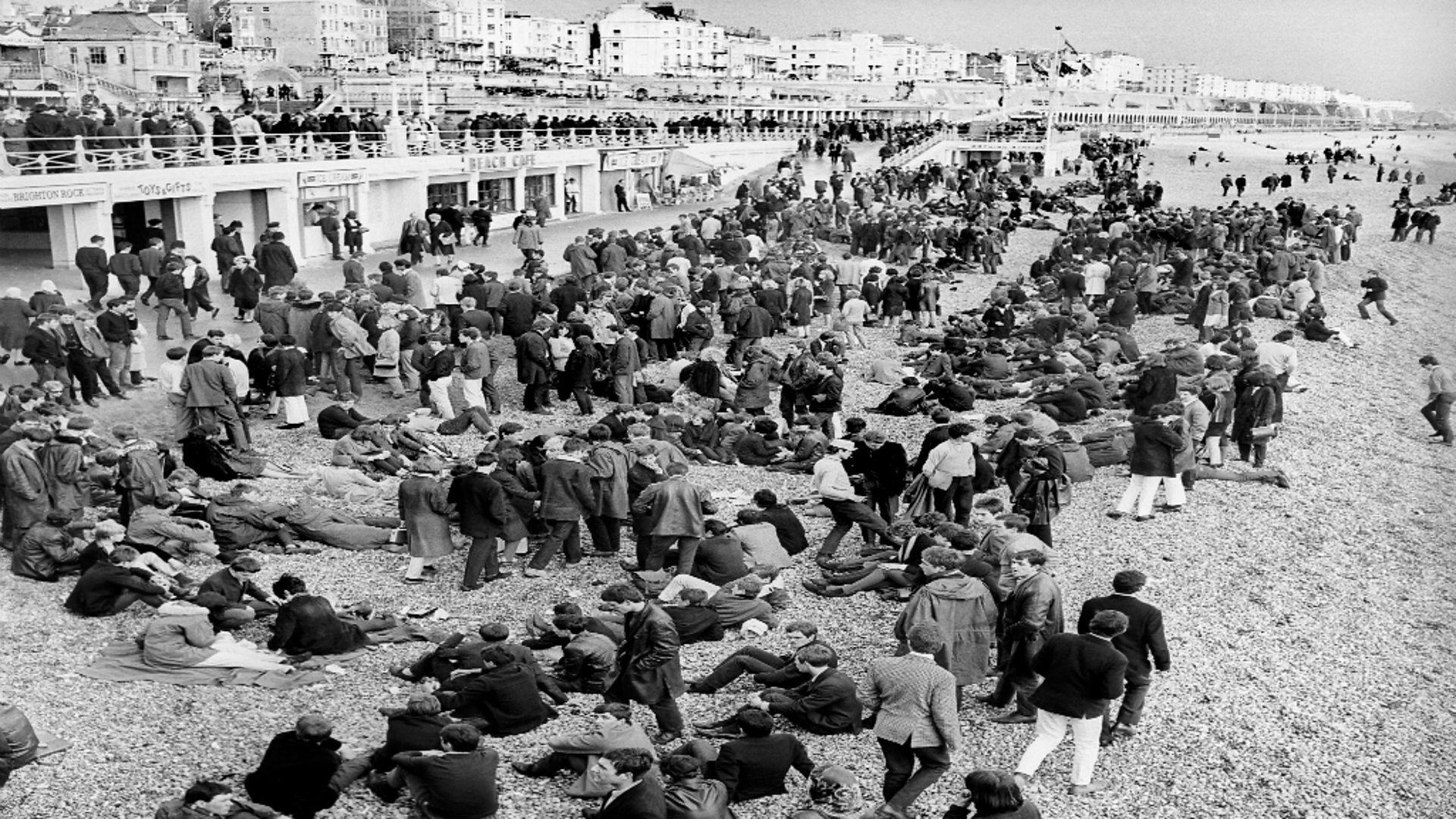
May 18, 1964: Mods vs. Rockers In Brighton

May 18, 1964, 60 years ago: Great Britain's 2 leading youth cultures square off, and it is a mess.

National Service for men aged 18 to 20 ended gradually from 1957. Britain has had an all-volunteer military ever since, just as America has had with the post-Vietnam ending of the draft in 1973. Both countries have found that having an armed forces staffed entirely by men and women who want to be there works far more effectively than having one with men who were forced to give up their lives to fight for a cause they didn't always understand.

But having so many more men ages 17 to 21 out on the streets, without an equivalent of America's G.I. Bill to send them to college, led to unintended consequences, including the creation of some subcultures that became nationally infamous, and then world-famous.

This was around the time that England's first rock and roll bands were being formed. It is no coincidence that 1957 was also the year that 17-year-old John Lennon met 15-year-old Paul McCartney in Liverpool; and that, early in 1958, they met 15-year-old George Harrison. By that point, 17-year-old Richard Starkey was already drumming in a band, and would begin calling himself "Ringo Starr" a year later.

After The War, young men in delinquent gangs who had adopted Edwardian-era fashion -- in the style of the years from 1901 to 1910, when the King was Edward VII, or "Good Old Teddy" -- were sometimes known as "Cosh Boys" or "Edwardians." On September 23, 1953, the national newspaper the Daily Express shortened "Edwardian Boy" to "Teddy Boy," and the name stuck.

By the early 1960s, that fad had ended the way most fads do: The originators grew out of it, and moved on. But 2 new subcultures took the Teddy Boys' place: The Mods and the Rockers. The Rockers were based on motorcycle culture, inspired by Marlon Brando in the 1953 film The Wild One. (Brando played a character named Johnny, which caught John Lennon's attention. And the film included a motorcycle gang named the Beetles. But The Beatles were named as a play on Buddy Holly's band, The Crickets.)
The Rockers wore leather jackets, leather pants or blue jeans, and leather boots, and generally made nuisances of themselves everywhere they went. Their choice of music was that of the early rockers who had toured Britain: Bill Haley, Chuck Berry, Little Richard, Buddy Holly, Eddie Cochran and Gene Vincent. (Cochran and Vincent had completed a tour of Britain in 1960, and were heading home to London's Heathrow Airport when their driver crashed, killing Cochran and badly injuring Vincent.)

The Rockers were leather-clad slobs. The Mods were different. They dressed up. The play The Odd Couple wasn't staged until 1965, and the movie and the TV show based on it came a few years after that; but if the Rockers were "Oscars," the Mods were "Felixes."

And instead of big motorcycles, like the kind produced in Britain and America, they preferred scooters, small and efficient enough for getting around streets in the countries that were producing them, Italy and France. If the scooters could work well in the streets of Rome and Paris, it was reasoned, they could work well in the streets of London. They would have multiple lights, or "lamps" in British parlance, on them. But, what was more, you could show up to work dressed like a Mod, and keep your job. It was "respectable."
Their musical tastes were different as well. They were originally called "mod" because they preferred "modern jazz," instead of "traditional jazz," whose fans became known as "trad." But they also embraced rock and roll, not the harder stuff of Elvis and Chuck Berry, but vocal groups with the black and Italian "doo-wop" sound. 

Pete Townshend, the lead songwriter and the lead guitarist for The Who, defined the Mods for Americans in an interview with Rolling Stone magazine for their September 28, 1968 issue:

It was a movement of young people, much bigger than the hippie thing, the underground and all these things. It was an army, a powerful, aggressive army of teenagers with transport. Man, with these scooters and with their own way of dressing.

It was acceptable, this was important; their way of dressing was hip, it was fashionable, it was clean and it was groovy. You could be a bank clerk, man, it was acceptable. You got them on your own ground. They thought, "Well, there's a smart young lad." And also you were hip, you didn't get people uptight. That was the good thing about it.

To be a mod, you had to have short hair, money enough to buy a real smart suit, good shoes, good shirts; you had to be able to dance like a madman. You had to be in possession of plenty of pills all the time and always be pilled up. You had to have a scooter covered in lamps. You had to have like an army anorak to wear on the scooter. And that was being a mod and that was the end of the story.

There was another difference in there, mentioned by Townshend: The pills, amphetamines, as opposed to the Rockers' drugs of choice, tobacco and alcohol. That's why Who lead singer Roger Daltrey purposely stuttered on their signature song, "My Generation": As Townshend explained, he's under the influence of the pills.

The Mods seemed like the perfect counterweight to the Rockers and their predecessors, the Teddy Boys. They launched the 1960s culture that became known as "Swinging London." But, soon enough, it would be fists that would be swinging, between the Mods and the Rockers.

On May 18, 1964, the 1st warm weekend of the calendar year, it came to a head in several seaside communities in England. The worst of the Mod vs. Rocker violence was in Brighton in Sussex, where, as all surviving sources agree, the Mods started it, not the Rockers with what was then the more aggressive reputation. The fighting moved along the coast, to Hastings, which led to the media calling it "the Second Battle of Hastings."

There were also beach and beach-town battles in Margate, Kent; and Clacton, Essex. Newspapers called the groups "vermin" and "louts." The Birmingham Post warned that Mods and Rockers were "internal enemies" who would "bring about disintegration of a nation's character." The members of The Who -- Daltrey, Townshend, bass guitarist John Entwistle and drummer Keith Moon -- were not directly involved in the fighting. But Townsend would write the rock opera Quadrophenia about the events, releasing it in 1973. It became a film in 1979.

The Beatles' film A Hard Day's Night was filmed in March and April 1964, a few weeks before the Brighton violence, but not released until after: July 6 in Britain, and August 11 in America. If Americans had heard about the violence in Brighton at all, they had quickly forgotten about it. In the film, a female reporter asked Ringo, "Are you a Mod or a Rocker?" And with the "cheeky humour" for which the group was then known, he answered, "I'm a Mocker!"

Every so often, as with other fads, the British youth subcultures come back. The Teddy Boys had a revival in the Glam Rock period of the 1970s. The subsequent rise of punk rock in 1976 brought the Rocker subculture back. The "Northern Soul" movement of the 1980s, centered around Manchester, revived interest in the Mods. And The Stray Cats, an American retro-rock band of the early 1980s, proved more popular in Britain, and, wittingly or not, was another revival of the Rockers.

Wednesday, October 20, 2021

October 20, 2001: The Concert for New York City

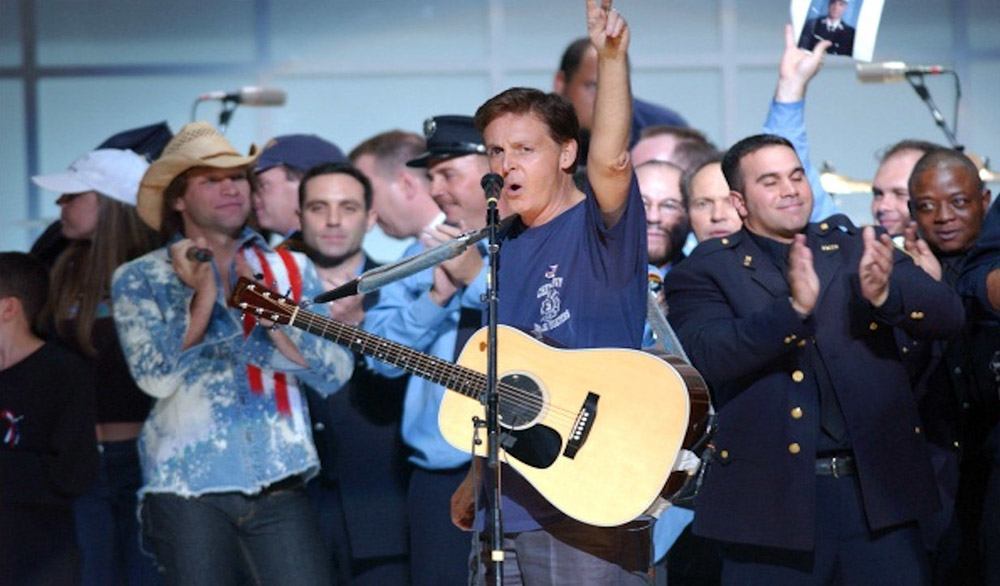
Sir Paul with cops and firemen

October 20, 2001, 20 years ago: The Concert for New York City is held at Madison Square Garden. Played just 6 weeks after the 9/11 attacks, emotions were still running deep. Most of the audience was cops, firemen, rescue workers, and people who had lost family members in the attacks, many of them holding up photos of the victims. Billy Crystal was the master of ceremonies.

David Bowie opened the show with Simon & Garfunkel's "America," then did his own "Heroes" with a full band. Also on hand: Bon Jovi, Jay-Z, Goo Goo Dolls, Destiny's Child (including Beyoncé), Eric
Clapton & Buddy Guy, the Backstreet Boys, Macy Gray, James Taylor, John Mellencamp & Kid Rock, Five For Fighting, and Janet Jackson.

Billy Joel showed up drunk, and went into rehab not long thereafter. Of course, he played "New York State of Mind." But first, he played "Miami 2017." On September 10, 2001, it looked like the apocalypse he'd predicted for The City in 1976 had been prevented. But on the 11th, it came far too close to reality: "I watched the mighty skyline fall" -- although it was the World Trade Center, not the Empire State Building, that he saw "laid low." He later joined Elton John, who had played his New Yorker-themed "Mona Lisas and Mad Hatters," for a performance of Elton's "Your Song."

Melissa Etheridge's microphone went out during her acoustic performance of "Come to My Window," but everybody was singing along anyway, and none of those hard-edged, blue-collar cops and firemen gave a damn that she was openly gay. Her mike went out again as she did an acoustic version of Springsteen's "Born to Run" -- and nobody flinched as she sang lines of love and passion to a woman named Wendy.

Mick Jagger and Keith Richards of the Rolling Stones sang "Salt of the Earth" and "Miss You" (with its reference to walking through Central Park in the '70s). When they were done, Mick said, "If there's one thing we've learned from all this, it's that you don't fuck with New York!" True.

The Who came out, with Ringo Starr's son Zak Starkey filling in on drums for the late Keith Moon, and it turned out to be bass player John Entwistle's last performance. They did a nasty "Who Are You," an intense "Baba O'Riley," a melancholy "Behind Blue Eyes," and a roaring "Won't Get Fooled Again." Crystal said, "I'd never seen The Who live before. It was great to see these middle-aged men get out on stage and kick ass."

With Elvis Presley dead and unavailable, it was appropriate that the show closed with a surviving Beatle, Paul McCartney, who played, among others, "Yesterday," his new song "Freedom," and "Let It Be."

Tuesday, December 3, 2019

December 3, 1979: The Riverfront Coliseum Disaster

December 3, 1979, 40 years ago: Disaster strikes a concert by The Who at the Riverfront Coliseum in Cincinnati.

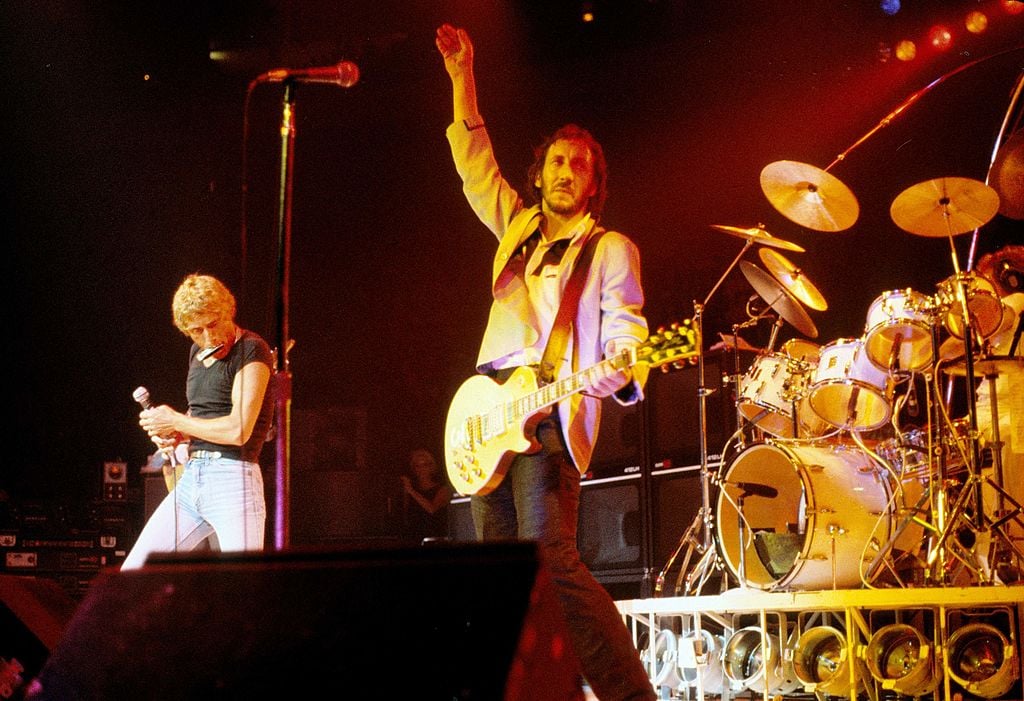
From 1964 to 1978, The Who were Roger Daltrey on lead vocals, Pete Townshend on lead guitar and doing most of the songwriting, John Entwistle on bass guitar, and Keith Moon on drums. On September 7, 1978, Moon's substance abuse reached its inevitable conclusion, and he died. He was replaced on drums by Kenney Jones, formerly of another renowned British rock band, The Faces.

Officially, The Who were recognized by The Guinness Book of World Records as the loudest musical act of all time. Unofficially, many people considered them the best rock band in the world, especially in the early 1970s, when Moon was still mostly functional and possibly the greatest drummer rock and roll has ever known, Townshend was writing some of his best work, The Beatles had broken up, The Rolling Stones were believing their hype a little too much, and Led Zeppelin were still a bit too far out there for mainstream American audiences.

The Who were among the first acts to destroy their instruments at the end of a performance, which sometimes looked like a riot onstage. But there had never been a riot at any of their shows.

They had played the Monterey Pop Festival outside San Francisco in 1967, and Woodstock outside New York City in 1969. They hadn't invented the concept of, well, the concept album. Nor had they invented the concept of the "rock opera." But they had written the 1st truly successful opera to incorporate rock and roll music, Tommy, in 1969. And they had played it at the Metropolitan Opera House at New York's Lincoln Center in 1970. So they were immensely talented and widely respected: They had beaten both rock's best and rock's haters at their respective own games.

Their 1979 tour was their 1st without Moon. Jones was healthier, smarter, and very good. But a lot of the camaraderie had been lost with Moon. Still, they were giving it their best, and had already had a sellout stand at Madison Square Garden.

The Riverfront Coliseum had been built in 1975, on the Ohio River, nearly adjacent to Riverfront Stadium, home of baseball's Cincinnati Reds and football's Cincinnati Bengals. The Cincinnati Stingers of the World Hockey Association had played at the Coliseum, but stopped when the league folded and they weren't invited into the National Hockey League. The Coliseum was hosting selected basketball games of the University of Cincinnati, and the Cincinnati Kids of the Major Indoor Soccer League. And it hosted rock concerts.
The Riverfront Coliseum, now named
the Heritage Bank Center

The Who were scheduled to play there on December 3, 1979. At 5:00 PM, a crowd had formed outside the gate for General Admission seating. At 7:15, 45 minutes before the curtain was due to go up, someone thought they'd heard The Who playing. It could have been a sound check. Or, it could have been a section of a documentary film about them that had recently been released, The Kids Are Alright. Whatever it was, some fans were sure that the band was already playing their show.

And the crowd outside the gate surged, and pushed toward the doors. This caused some people to get trampled. Many were crushed against each other and asphyxiated. It was a situation similar to the one that would happen at Hillsborough Stadium in Sheffield, England before an FA Cup soccer game 10 years later. There were 11 deaths, and 26 other injuries.

The promoters and the arena operators, desperate to keep the money they were going to make, decided not to tell the band members what had happened. Roger, Pete, John and Kenney played their regular show, not knowing. Only afterward were they told.

This was before the age of social media. News of the similar event that took place at the Astroworld complex in Houston in 2021 swept across the world in minutes. But in 1979, that kind of mechanism for delivering information through mass communication simply wasn't there. Many people didn't even read about it in the newspaper the next morning.

It was only when they saw the network evening news on December 4 that they realized the magnitude of what had happened. The band looked very bad for playing after the tragedy, but that wasn't their fault: They didn't know there was a tragedy. Indeed, of the 18,348 paying ticketholders on the night, most of them weren't in the crowd crush, and they didn't know until the next day, either.

The Who continued their tour. On December 4, at the Buffalo Memorial Auditorium, Daltrey told the crowd, "We lost a lot of family last night. This show's for them."

The families of the victims filed a class-action lawsuit against the band; the promoters, Electric Factory Concerts; and the City of Cincinnati, operators of the arena. The case was eventually settled out of court, with each of the families of the deceased receiving around $150,000 -- about $604,000 in 2022 money.

The City banned "unassigned festival seating" on December 27. This was reflected in an episode of the CBS sitcom WKRP in Cincinnati, set at a radio station that had, in that fictional version of the world, promoted the concert. The episode, "In Concert," aired on February 4, 1980.

The Who announced their farewell tour in 1982. But in 1989, they went back on tour, this time with Zak Starkey, son of Beatles drummer Ringo Starr, on drums. In 2001, with the lineup of Daltrey, Townshend, Entwistle and Starkey, the played The Concert for New York City at Madison Square Garden. It was Entwistle's last performance: He died in his hotel room in Las Vegas, just before their 1st show of a planned 2002 tour. Daltrey and Townshend are still alive, and have occasionally reunited with other musicians making up "The Who."

The Riverfront Coliseum still stands, although it's gone through some name changes. In 1997, it became The Crown; in 1999, the Firstar Center; in 2002, the U.S. Bank Arena; and in 2019, the Heritage Bank Center. It has hosted minor-league hockey, mostly the Cincinnati Cyclones of the ECHL; college and minor-league basketball, indoor soccer, arena football -- and, of course, concerts.

Sunday, September 17, 2017

September 17, 1967: Television Goes Psychedelic

The Doors on The Ed Sullivan Show, September 17, 1967.
Front: Jim Morrison. Behind him, left to right:
John Densmore, Robbie Krieger, Ray Manzarek
Note the actual doors suspended from the ceiling.

September 17, 1967, 50 years ago: Television goes psychedelic, as CBS caps "the Summer of Love" with 2 explosive variety shows -- one figurative, one literal.

From 1948 to 1971, "The Tiffany Network" aired The Ed Sullivan Show on Sunday nights at 8:00 Eastern Time. Ed was progressive in some ways, willing to air rock and roll acts, and black performers of all kinds, when most variety-show hosts wouldn't.

But there were, occasionally, issues. In 1956, he said he wouldn't have the hot newcomer of the moment, Elvis Presley, on his show, until rival Steve Allen brought him to his show on NBC. Ed saw Allen's ratings, too the hint, and had Elvis on his show 3 times, the last time showing him only from the waist up, to hide his gyrations.

In 1963, Bob Dylan was scheduled for the show. He wanted to sing his song "Talking John Birch Paranoid Blues." The censors, afraid that he would look like a Communist, told him after the 1st rehearsal to drop it. He refused. Ed backed him up. And Ed usually got what he wanted. This time, they overruled him. Dylan never appeared on the show, but he kept Ed's respect.

In 1964, Ed booked The Beatles, and 73 million people watched. At the time, it was the biggest audience in U.S. TV history. That led to several other British bands being booked, one of them The Rolling Stones.

But on January 15, 1967, mere hours after Super Bowl I, the Stones wanted to sing their song "Let's Spend the Night Together." Trying to avoid a conflict with the censors, Ed's producer, and also his son-in-law, Bob Precht, suggested a slight change: "Let's Spend Some Time Together." The Stones did it that way, but their anger is obvious on the tape.

At that point, The Doors had just released their self-titled debut album, a groundbreaking opus that helped bring "psychedelic rock" into the mainstream, including the song "Light My Fire," which had hit Number 1. Ed booked them, but their biggest song contained the line, "Girl, we couldn't get much higher." You couldn't say the words "get high," or any variant, on prime-time U.S. TV in 1967, because it would be taken as a drug reference.

Ray Manzarek, the organist and spokesman for the group, told Precht, "We'll think of something." So they discussed it.

John Densmore, drummer: "What are we gonna do?"

Robbie Krieger, guitarist, who had written the lyrics: "It's my lyric, I don't care. Whatever you guys want to do, I'll do it."

Jim Morrison, lead singer, who usually wrote the lyrics, and sang them: "I'm not gonna change the lyric."

Manzarek: "Then let's not change the lyric." And, presuming they would get caught breaking the rules, they settled on their story.

Also on this show that day were comedians Jack Benny, Rodney Dangerfield and Flip Wilson; married singers Steve Lawrence and Eydie Gorme; the singing Kessler Sisters, Alice and Ellen; and actor Yul Brynner, who did a classical guitar routine. All of it live, coast-to-coast, from CBS Studio 50 at 1697 Broadway, between 53rd and 54th Street in Midtown Manhattan. The building had recently been renamed the Ed Sullivan Theater.

The Doors opened the show with a song from their 2nd album, "People Are Strange." When it was over, there was a pause, as Ed's usually straitlaced audience wasn't sure what to make of them. Even the teenagers, usually put in the balcony of the theater to scream at the rock bands, didn't applaud at first. The applause that followed was tepid.

At the end of the show, The Doors played "Light My Fire." Jim didn't change the lyric. (Unlike in the 1991 film The Doors, directed by Oliver Stone and starring Val Kilmer, Jim did not stick his face in the camera and make a point of it. He just sang it as if nothing out of the ordinary was going on.) They played a short version, similar (but not identical) to the single version, rather than the album version, which has gone down in music history as "The Long Version."

As the song ends, the camera shifts to Ed, who looks mad. To hide this, the director quickly fades to black and goes to commercial.

Afterward, Precht walked up to the band, and rips them for saying, "higher."

Manzarek presented the story the band agreed on: "Sir, it's The Ed Sullivan Show, we were nervous, and we just did the song the way we've done it a thousand times, we didn't think about it, and we're sorry!"

Precht told them, "We were gonna book you for 6 more shows. But now, you'll never do The Ed Sullivan Show again!"

The members thought they'd blown it. But Morrison said, "Hey, man, we just did The Ed Sullivan Show."

True to his word, Precht made sure The Doors were never on the show again. The show last aired on June 6, 1971. Within a month, Jim Morrison was dead. Three years later, so was Ed Sullivan.

However, Precht inherited control of the Ed Sullivan Show recordings, and had no qualms about lending the performance of "Light My Fire" back to CBS for TV specials commemorating the show. Various nostalgia networks now air the show on cable, and the September 17, 1967 episode is in regular rotation.

One more note: On Christmas Eve, December 24, 1967, a little more than 3 months later, George Carlin was a guest on The Ed Sullivan Show. He did his Al Sleet, the Hippy-Dippy Weatherman routine. Referring to a symbol on his weather map, he said, "This is a Canadian low, which is not to be confused with a Mexican high." It was his 4th appearance on the show. Since it was played for laughs, and Al Sleet was clearly not someone the average viewer would want to emulate, Carlin got away with it, eventually making 11 appearances.

*

The night was still young. On February 5, 1967, CBS debuted The Smothers Brothers Comedy Hour. Tom and Dick Smothers had been a big comedy act for a while, and had been a hit on Ed Sullivan. They went for a hipper-than-thou vibe. And, apparently, it was Ed who had a problem with The Doors, not CBS: They appeared on the "Smos Bros" on December 15, 1968, singing "Wild Child" and "Touch Me." (Come to think of it, George Carlin was on that episode.)

On September 17, 1967, at 9:00 Eastern Time, while Ed Sullivan and Bob Precht were still steaming over "Girl, we couldn't get much higher," the Smothers Brothers went on the air, albeit on tape rather than live. In addition to show regulars, comedian Pat Paulsen and singer Jennifer Warnes, the show featured acting legends Bette Davis and Mickey Rooney.

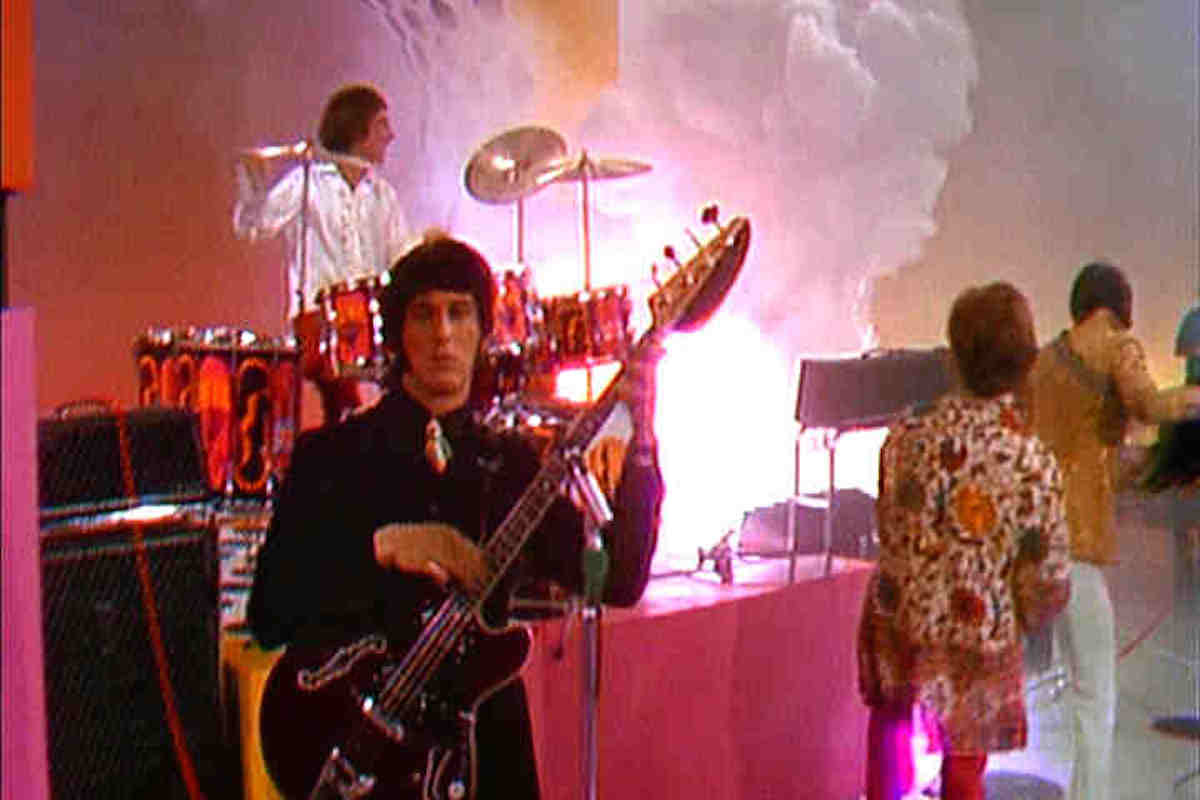
And British rock band The Who.

Ed Sullivan was just short of his 66th birthday, making him old enough to be the grandfather of the eldest Door, Manzarek, 28. In contrast, Tommy Smothers was 30 years old, Dick was 27. So they were only a few years older than The Who: lead singer Roger Daltrey was 23, bass guitarist John Entwistle was about to turn 23, guitarist and main songwriter Pete Townshend was 22, and drummer Keith Moon was 21. The Brothers could relate to their guests a lot more easily than Sullivan could, and while the bandmembers were a bit more far-out than the Brothers were, the Brothers did handle things better.

The Who were already known for destroying their instruments onstage, having done so 3 months earlier at the Monterey Pop Festival in California. They were also known for destroying other things, like hotel rooms, and even cars: Moon had drunkenly driven one into a hotel pool.

The Who played their signature song, "My Generation," with Daltrey stuttering the lyrics because, as Townshend explained, the character is so hopped up on amphetamines (the drug of choice for British "Mods," as The Who's members had been). The key lyric seemed to be, "Things, they do look awful c-c-cold, I hope I die before I get old."

At the end of the performance, the members did wreck their instruments. This included Moon setting off an explosion in his bass drum. Unfortunately, Townshend got too close to it, and it wrecked his hearing. Now, like Brian Wilson of the Beach Boys, he was practically deaf in one ear.
Died before they got old: Jim Morrison, 1971, from a drug-induced heart attack, age 27; Keith Moon, 1978, from a drug-and-booze combination, 32; and John Entwistle, 2002, from a drug-induced heart attack, 57.

Lived to be old: Ed Sullivan, 1974, from cancer, 73; Ray Manzarek, 2013, from cancer, 74; and the following, all still alive at this writing: Tom Smothers, 79; Dick Smothers, 76; Roger Daltrey, 72; Pete Townshend, 71; John Densmore, 71; Robbie Krieger, 70. (UPDATE: Tom Smothers died in 2023, at 86.)

Monday, February 8, 2010

Saints Alive!

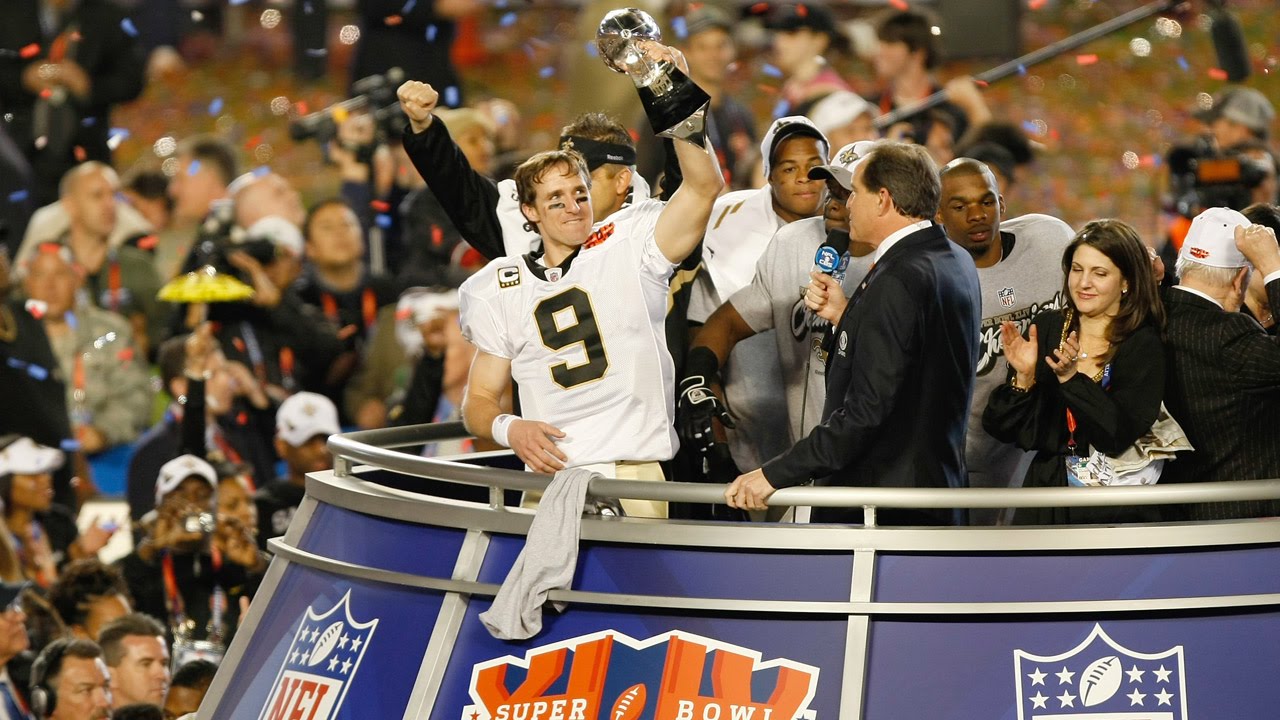
It's easy for any team's fans to say, "We deserved this." But, possibly not since the Detroit Tigers won the 1968 World Series, a little over a year after the most notorious race riot in American history happened within walking distance of Tiger Stadium, has a place needed a big win more than New Orleans needed the Saints winning Super Bowl XLIV.

Sure, New York needed the World Series wins of the Yankees in 1977, '78 and '96 -- though it didn't get the one in 2001, when it needed it a lot more -- and the Mets in '69 and '86. But, aside from the NBA's Hornets, the Saints are all New Orleans has in terms of big-time sports. Unless, that is, Tulane University has won something big in the last few... decades. The Sugar Bowl and the Bayou Classic are one day a year, while the Super Bowl and the NCAA Final Four are events they host every few years, but generally don't play in.

Sean Payton must have titanium testicles (which are even more solid and powerful than "brass balls") to have called for the onside kick to start the 2nd half. It was a message: "I'm afraid of Peyton Manning, so screw him, I'm taking the ball."

And I didn't notice at the moment, shocked as I was by the gutsiness of the call, but the Colt player who touched the ball, making it live even though it didn't go the otherwise necessary 10 yards, was former Philadelphia Eagle Hank Baskett, who is now best known as the husband of reality-show star Kendra Wilkinson. I suspect that the next time Kendra gets together with fellow E! show stars Kourteney and Khloe Kardashian, sisters of Kim, girlfriend of the Saints' Reggie Bush, that they'll have something to talk about.

But this game was not lost, it was won. Don't blame the Colts for "choking" or "folding": The Saints took it to them, hit them hard, made their own breaks, and didn't screw up. Besides, most of those Colts already have rings from 3 years ago. This is not a loss on the scale of the one their Baltimore forebears had in Super Bowl III, which was, as we tend to forget, avenged 2 years later when they beat the Cowboys.

I went up to get a drink from the fridge, and when I came back, I saw a commercial with a middle-aged woman saying, "I still worry about his health." I thought it was an anti-smoking ad. Turned out to be Tim Tebow's mother.

If those hypocritical gasbags at "Focus On the Family" were as smart as they think they are, they wouldn't have announced they were sponsoring that ad. They would've just bought it, and let it air. Had they done that, I think there would have been no controversy whatsoever.

And yet, after the game, when Drew Brees was holding his 1-year-old son, with headphones on the boy's ears to protect him from the noise, to me, that was a better statement about the joy of parenthood and "the sanctity of life."

The Who used to be great. Now they are washed up. The spirit was willing, but, Roger, I'm sorry, your voice is not what it was. Pete's fingers still work, but it's time to make this their farewell appearance -- no, no, really, they should mean it this time.

By contrast, Queen Latifah was great on "America the Beautiful," and, unlike fellow East Orange, New Jersey native Whitney Houston, XIX Super Bowls ago, she didn't need to lip-synch. And Carrie Underwood did a fine job on "The Star-Spangled Banner."

Amazing: She got to the Super Bowl before her former "Cowboy Casanova" Tony Romo did. What kind of putz cheats on a woman like Carrie Underwood? Good thing he didn't cheat on Queen Latifah, or she'd have creamed him. And not just because he plays for the Dallas Cowboys, although that's reason enough.

And how about this: The only Dallas Cowboy we saw at the Super Bowl was Ed "Too Tall" Jones during one of the Geico commercials. And, in another, the Cavemen finally come off looking good in one of them. I guess, if Jay Leno and David Letterman can make peace, so can Geico and the Cavemen.

How about 88-year-old Betty White, talkin' trash and takin' names? And Abe Vigoda, about to turn 89, in the same ad. Not only is he still alive (contrary to varying reports since 1982, apparently), but he hasn't aged a day in 35 years. You go, Sue Ann and Detective Fish!

Congratulations to the Saints, to the people of the City of New Orleans and the State of Louisiana. As was said after another championship -- one this New Jersey Devils fan wanted to end differently -- "This one will last a lifetime!"