Showing posts with label shibe park. Show all posts

Sunday, May 24, 2026

May 24, 1936: Tony Lazzeri "Pooshes 'em Up"

Manager Joe McCarthy and Tony Lazzeri

May 24, 1936, 90 years ago: The New York Yankees trounce the Philadelphia Athletics, 25-2 at Shibe Park in Philadelphia. The strange part is, the A's scored their 2 before the Yankees scored any of their 25.

The Yankees scored 5 runs in the 2nd inning, 5 in the 4th, 6 in the 5th, 1 in the 6th, 2 in the 7th, and 6 in the 8th.

Ben Chapman ses a major league record for a 9-inning game by reaching base safely 7 times, on 2 doubles and 5 walks. But Chapman was already making a name for himself as a bigoted piece of trash. Let's talk about Tony Lazzeri.

Anthony Michael Lazzeri was born on December 6, 1903 in San Francisco. Like a lot of kids in San Francisco, especially Italians, like the DiMaggio brothers, he had both the love of baseball and the talent at it to play professionally. And he did play in the Pacific Coast League. But not for his hometown's teams, the San Francisco Seals or the Mission Reds. And not for the Oakland Oaks across the Bay.

Rather, another San Francisco native, former Boston Red Sox star left fielder Duffy Lewis, was managing the PCL's Sale Lake Bees, and Lazzeri convinced Lewis to sign him. Due to the Western weather, the PCL was able to schedule a lot more games than the majors, or, as the PCL's fans called them, "the Eastern leagues." In 1925, Lazzeri played 197 games, batted .355, hit 60 home runs, and had 222 RBIs. It made him the 1st player in any professional league to hit 60 or more in a season, and the RBIs remain a professional record.

But Lazzeri had epilepsy. And so, the Chicago Cubs, with whom the Bees had an early farm-system-style agreement, refused to call him up. Bill Essick, a scout for the New York Yankees, who were among the earliest Eastern teams to mine the PCL for talent, signed him.

The Rookie of the Year awards were not started until 1947, but Lazzeri would surely have won the American League's award for 1926: .275, 18 homers, 117 RBIs. He helped the Yankees win the Pennant. Unfortunately, in Game 7 of the World Series, in the bottom of the 7th inning, with the bases loaded and 2 out, facing Grover Cleveland Alexander of the St. Louis Cardinals, Lazzeri became the most famous strikeout victim in baseball history. (Unless you want to count Casey at the Bat.) The Yankees lost that Series.

Lazzeri didn't let it affect him: He was a big part of the Yankees' "Murderers' Row" offense, helping them win the 1927 and 1928 World Series, becoming the best 2nd baseman in the American League. In 1929, though the Yankees did not win the Pennant, he batted a career-high .354. Italian-American fans, noting his ability to drive runners home, leading to 7 seasons of 100 or more RBIs, shouted, "Push them up, Tony!" In their accent, it became "Poosh 'em up, Tony!" And so, he became known as Poosh-em-Up Tony.

The Cubs realized their mistake when the Yankees swept them in 4 straight games in the 1932 World Series. Tony had 2 home runs and 5 RBIs in the 4 games. In 1933, he was the starting 2nd baseman for the AL in the 1st MLB All-Star Game.

Here is what Lazzeri did against the A's on May 24, 1936:

* Top of the 2nd inning: Hit a grand slam home run.

* Top of the 3rd: Struck out.

* Top of the 4th: Walked.

* Top of the 5th: Hit another grand slam. This made him the 1st player ever to hit 2 grand slams in 1 game. (Through the 2021 season, it's happened 13 times. But no other Yankee has done it.)

* Top of the 7th: Led off the inning with a home run, his 3rd of the game.

* Top of the 8th: Tripled, driving in 2 runs.

So: 6 plate appearances, 5 at-bats, reached base (hitting home runs counts) 5 times, 4 hits, all of them for extra bases, 3 home runs, 16 total bases, 11 runs batted in.

For some players, that's a month's work. Tony Lazzeri did it in the space of 7 innings. (The 2nd through the 8th.) And 11 RBIs still remains the AL record for 1 game.

Rookie center fielder Joe DiMaggio and shortstop Frank Crosetti, Lazzeri's fellow San Francisco Italians, also hit home runs. Lou Gehrig went 2-for-4 with 2 walks and an RBI. The only Yankee starter who didn't get a hit was 3rd baseman Red Rolfe, although he did draw 3 walks.

Indeed, every Yankee starter reached base at least 3 times, including Monte Pearson, the pitcher, who not only went the distance, allowing 2 runs on 7 hits and 3 walks, striking out 3, but went 3-for-5 with a walk and 2 RBIs.

This was just short of 4 years since Gehrig had hit 4 home runs in a game for the Yankees at Shibe Park. In that same June 3, 1932 game, Lazzeri hit a single, then a double, then a triple, and then a home run. Not just all 4 in 1 game, a.k.a. "hitting for the cycle," but doing them in order, a "natural cycle." He was the 4th player to do it. As of the 2021 season, it's been done 15 times, but Lazzeri remains the only Yankee to do it.

The other New York City baseball teams unloaded the lumber on this day, too. The New York Giants beat the Philadelphia Phillies, 13-5 at the Polo Grounds. Bill Terry, the Giants' manager, in his last season as a player, did not put himself into the game. Mel Ott went 0-for-4 with 2 walks. Sam Leslie went 5-for-5 with a walk and 2 RBIs, Hank Lieber went 4-for-5 with 2 RBIs, and Burgess Whitehead, Gus Mancuso and Travis Jackson each had 3 hits, with Jackson having 3 RBIs. Hal Schumacher was the pitching beneficiary of all of this.

And the Brooklyn Dodgers beat the Boston Bees, 11-2 at Ebbets Field. Having lost 115 games the year before, the Boston Braves "rebranded" as we would say today, but the fans never accepted it, and they reverted to the previous name in 1940. For the Dodgers, Danny Taylor went 3-for-4 with a home run and 5 RBIs.

So, on this day, between them, the New York teams won 49-9 on aggregate, or an average of 16-3.

The Yankees won the World Series in 1936, and in 1937. After that 1937 World Series, in which Lazzeri hit .400, the Yankees released him. He was only 34 years old. But it's not what it sounds like: Phil Wrigley, owner of the Cubs, wanted to do what his father William didn't, and bring Lazzeri to the Cubs. Since the Cubs didn't have anyone the Yankees wanted, but Tony had batted only .244 during the regular season, and 2nd baseman Joe Gordon had a great season helping the Newark Bears win the International League Pennant, general manager Ed Barrow told Tony that the Cubs wanted him, and gave him his release, so he could sign with the Cubs as a player-coach.

As it turned out, the Yankees and the Cubs each won their Leagues' Pennants, and faced each other in the World Series. Again, the Yankees swept in 4 straight. Lazzeri briefly played for the Brooklyn Dodgers, then the New York Giants, in 1939. The Toronto Maple Leafs of the International League, whose name was adopted by the city's hockey team, signed him as player-manager for the rest of 1939 and all of 1940. He went back home, and finally played for the San Francisco Seals in 1941.

He settled in the San Francisco Bay Area, in Millbrae, California. In an interview for Chicago sportswriter John P. Carmichael's 1945 book My Greatest Day In Baseball, Grover Cleveland Alexander mentioned that he'd recently seen Lazzeri on the street in San Francisco. Alexander, like Lazzeri, had epilepsy. Unlike Lazzeri, it was a factor in Alexander becoming an alcoholic. He would trade his story of striking Lazzeri out for a free drink. Alexander told the interviewer that he told Lazzeri, "Tony, I'm getting tired of fanning you!" And he said Tony said back, "Maybe you think I'm not."

On August 6, 1946, at his home in Millbrae, Tony Lazzeri had a heart attack, causing him to fall down the stairs. He broke his neck, making surviving the heart attack academic. It wasn't an epileptic seizure that caused it, as has been so often told. He was only 42 years old. Alexander died 4 years later, at 63, from the effects of his alcoholism.

Lazzeri played so long ago that, when Yankee Fans are asked to name the team's greatest 2nd baseman ever, his name doesn't come up very often. He does not have a Plaque in Monument Park at Yankee Stadium. The Number 6 that was his most frequent number has been retired, but for Joe Torre. And the YES Network, founded in 2002, has never done a Yankeeography for him, since there is so little film footage of him, and, by 2002, hardly any of his former teammates were still alive to be interviewed about him.

But in 1991, he was elected to the Baseball Hall of Fame. He has also been elected to the Bay Area Sports Hall of Fame, along with fellow former Yankees Joe DiMaggio, Lefty Gomez, Lefty O'Doul, Jackie Jensen, Jim "Catfish" Hunter, Billy Martin, Reggie Jackson, Jerry Coleman, Gaylord Perry, Dave Righetti and Rickey Henderson. However, Catfish, Reggie and Rickey were elected for what they did with the Oakland Athletics; and O'Doul, Jensen and Perry were elected for what they did with other teams.

Lazzeri has also been elected to the Italian American Sports Hall of Fame, along with former Yankees DiMaggio, Crosetti, Martin, Righetti, Torre, Yogi Berra, Ping Bodie, Phil Rizzuto, Vic Raschi, Joe Pepitone, Ralph Branca (yes, he was briefly a Yankee), Sal Maglie (him, too) and Rocky Colavito (him, too). 

Monday, September 30, 2024

September 30, 1964: The Phillie Phlop Is Completed

Unused game program from the 1964 World Series,
which was to be sold at Connie Mack Stadium,
with the other flag blank, since the opponent was yet to be determined.

September 30, 1964, 60 years ago: The Philadelphia Phillies complete what remains the most stunning regular-season collapse in Major League Baseball history, losing their 10th straight game, 8-5 to the St. Louis Cardinals at Busch Stadium (formerly Sportsman's Park) in St. Louis. 
Going into the games of September 21, the Phillies led the National League by 6 1/2 games. There were 12 games left. Their Magic Number to clinch the Pennant was 6: All they had to do was win half of their remaining games, 6 out of 12, and it wouldn't have mattered what any other team did. The Phils would have won the Pennant.
Unused 1964 World Series press pin for the Phillies
Instead, the following happened:
* 1. September 21, at Connie Mack Stadium in Philadelphia: Cincinnati Reds 1, Phillies 0. The only run came in the top of the 6th inning, when Hiraldo "Chico" Ruiz stole home plate, while Frank Robinson, the greatest power hitter the Reds franchise has ever had, was at the plate. It would have been an incredibly dumb move had it failed. But it worked. "The Chico Ruiz Game" has haunted Phillies fans ever since.
* 2. September 22, at Connie Mack Stadium: Reds 9, Phillies 2. This time, Robinson did hit a home run, and Chris Short, 17-7 going into the game, didn't get out of the 5th inning.
* 3. September 23, at Connie Mack Stadium: Reds 6, Phillies 4. This time, it was Ruiz hitting a home run, and Vada Pinson 2 of them.
* 4. September 24, at Connie Mack Stadium: Milwaukee Braves 5, Phillies 3. Jim Bunning came into the game 18-5, but lost.
* 5. September 25, at Connie Mack Stadium: Braves 7, Phillies 5. Manager Gene Mauch seemed to have pushed the right buttons all season long, until now. In this game, he started Short on just 2 days' rest, and he pitched 6 shutout innings, but allowed 2 runs in the 7th and 1 in the 8th. Johnny Callison homered for the Phils in the bottom of the 8th, momentarily saving them.
Both teams scored 2 runs in the 10th, the Braves on a home run by Joe Torre, the Phils on an inside-the-park home run by eventual NL Rookie of the Year Richie Allen (who hadn't yet begun to insist upon being called "Dick Allen"). But a bad throw by catcher Clay Dalrymple on a stolen base by Gene Oliver allowed the Braves to win it the 12th.
* 6. September 26, at Connie Mack Stadium: Braves 6, Phillies 4. The Phils led 4-0 after 2 innings, and 4-3 going into the 9th, with Art Mahaffey putting in a good start on full rest. But Bobby Shantz, the former Philadelphia Athletics ace back in his hometown, couldn't hold the lead, due in part to an error by 2nd baseman Tony Taylor, and Rico Carty hit a bases-loaded triple. It was Shantz's 39th birthday, and he made only 1 more big-league appearance, 3 days later. Hank Aaron went 2-for-5. Joe Torre went 3-for-4.
* 7. September 27, at Connie Mack Stadium: Braves 14, Phillies 8. Callison hit 3 home runs, helping to cement his case as the NL Most Valuable Player, should the Phils win the Pennant. But Bunning, sent out by Mauch on 2 days' rest, didn't get out of the 4th inning. He and his replacement 7 allowed straight hits, and allowed runs to score on 6 straight plays. Torre hit a home run (although not in the 4th).

There was a small omen for the Phillies: The pitcher who relieved Bunning would go on to become one of the most important figures in team history. He was a 20-year-old righthander from nearby Newport, Delaware. His name was Dallas Green.

* 8. September 28, at Busch Stadium in St. Louis: Cardinals 5, Phillies 1. Again, Mauch sent Short out on 2 days' rest, against Bob Gibson. Future Yankee broadcaster and NL President Bill White went 3-for-4 with an RBI. Future Cardinal broadcaster Mike Shannon went 1-for-3 with 3 RBIs.

* 9. September 29, at Busch Stadium: Cardinals 4, Phillies 2. Dennis Bennett was fully-rested, but didn't get out of the 2nd inning. For the Cards, Ray Sadecki got his 20th win of the season.

* 10. September 30, at Busch Stadium: Cardinals 8, Phillies 5. Tim McCarver hits a home run for the Cards, while Alex Johnson hits one for the Phils. Ironically, the winning pitcher for the Cards is Curt Simmons, whose drafting into the Korean War in 1950 cost him the chance to pitch for the Phils in their last World Series to this point, in 1950. Simmons also turned out to be the last surviving player from those 1950 Phillies "Whiz Kids."

None of it would have mattered if the Reds hadn't won 9 straight from September 20 to 27 (3 of them over the Phillies); and the Cardinals hadn't won 8 straight from September 24 to 30 (the last 3 over the Phillies). The Cards' Ken Boyer ended up winning the MVP.

Now, despite a Rookie of the Year season from Allen, a near-MVP season from Callison, and a near-Cy Young Award season from Bunning, they are 2 1/2 behind the Cardinals, while the Cincinnati Reds are 1 game back. The Phils have 2 games left, the Cards 3, the Reds 4. The Phils could still win the Pennant if they win their last 2 games, although a 3-way tie for the Pennant is still possible.

It was not to be. And, for those people in the Delaware Valley old enough to remember the Phillie Phlop of '64, not even the World Series wins of 1980 and 2008 could erase the scar on their hearts with "1964" branded onto it.

*
September 30, 1964 was a Wednesday. These other baseball games were played that day:
* The New York Yankees swept a doubleheader from the Detroit Tigers at Yankee Stadium. This was crucial, because the American League race was also coming down to the wire with multiple teams still in it. The Yankees would end up winning the Pennant by just 1 game over Chicago and 2 over Baltimore.
The Yankees won the opener, 7-6. Mickey Mantle and Joe Pepitone hit home runs for the Yankees, Al Kaline for the Tigers. Ralph Terry was the winning pitcher, in relief of Al Downing. The Yankees won the nightcap, 11-8. Kaline homered for the Tigers again, and Bill Roman also hit one. But Tom Tresh hit one for the Pinstripes. Jim Bouton, later the author of Ball Four, started and won.
* The New York Mets lost to the Milwaukee Braves, 6-5 at Milwaukee County Stadium. Denis Menke won the game with a home run off Willard Hunter in the bottom of the 12th inning. Hank Fischer started, Warren Spahn pitched the 9th and 10th innings in relief, and Clay Carroll, later a bullpen mainstay of the Cincinnati Big Red Machine, was the winning pitcher. Hank Aaron went 0-for-4, but he did draw 2 walks. Joe Torre went 1-for-6 with an RBI. Jim Hickman went 5-for-6 with an RBI for the Mets, and Charley Smith went 3-for-6 with 2 RBIs, but it wasn't enough.
* The Cleveland Indians shut the Boston Red Sox out for the entirety of a doubleheader at Fenway Park, 5-0 and 3-0. A young Luis Tiant, later to pitch so well for the Red Sox, allowed them just 4 hits in the 1st game, 2 of them by Félix Mantilla.
Carl Yastrzemski went 0-for-4 in the 1st game, and didn't play in the 2nd; while Tony Conigliaro, just 19 years old, didn't play in the 1st game, and went 2-for-4 in the 2nd. But the rest of the Red Sox only got 5 hits off Sam McDowell in that 2nd game.
* A doubleheader was split at Memorial Stadium in Baltimore, but the 2 teams then in the Chesapeake region. The Baltimore Orioles won the 1st game, 8-4, with Jerry Adair hitting 2 homers. The Washington Senators won the 2nd game, 6-3. Brooks Robinson went 2-for-4 in each game, and had an RBI in the 1st one.
* The Pittsburgh Pirates beat the Cincinnati Reds, 1-0 at Crosley Field in Cincinnati. Jerry May singled home future Met World Series hero Donn Clendenon with the winning run -- in the top of the 16th inning. Roberto Clemente did not play. Nor did Willie Stargell. Jerry May got 3 hits, the entire rest of the Pirates only 2 -- in 16 innings. Chico Ruiz went 4-for-8, but the rest of the Reds lineup got only 5 hits. Pete Rose went 0-for-7. Frank Robinson went 1-for-4, and drew 3 walks.
The Reds' Jim Maloney, who would go on to take 2 no-hitters into the 10th inning the next season, keeping 1 but losing the other game in the 11th inning, here went 11 innings allowing no runs on 3 hits. The Pirates' Bob Veale went 12 1/3rd, allowing no runs on 7 hits. Veale struck out 16 batters, Maloney 13. The winning pitcher was Al McBean, the losing pitcher Lou Tsitouris.
* The Minnesota Twins beat the Kansas City Athletics, 6-1 at Metropolitan Stadium in the Minneapolis suburb of Bloomington, Minnesota. Harmon Killebrew went 0-for-4, but Jimmie Hall and Don Mincher homered for the Twins.
* The Los Angeles Dodgers beat the Chicago Cubs, 2-0 at Dodger Stadium in Los Angeles. A 2-hit shutout was pitched by -- no, not Sandy Koufax, and not Don Drysdale, but John Purdin. It was his 1st major league win. There would be only 5 more. Both Cub hits were by catcher Dick Bertell.
* The San Francisco Giants beat the Houston Colt .45s, 2-1 at Candlestick Park in San Francisco. Houston 3rd baseman Bob Aspromonte made an error on Jim Davenport's grounder in the bottom of the 11th, allowing Tom Haller, who had homered earlier, to score the winning run. Willie Mays went 0-for-4, but did draw a walk. The next season, the Colt .45s would rename themselves the Houston Astros.
* And the Chicago White Sox and the Los Angeles Angels were not scheduled for this day. The White Sox won their last 9 to finish within 1 of the Yankees, but it wasn't enough.
And in one of the best things that could have happened on any day, Italian actress Monica Bellucci was born.

Tuesday, December 19, 2023

December 19, 1948: The Snow Bowl in Philadelphia

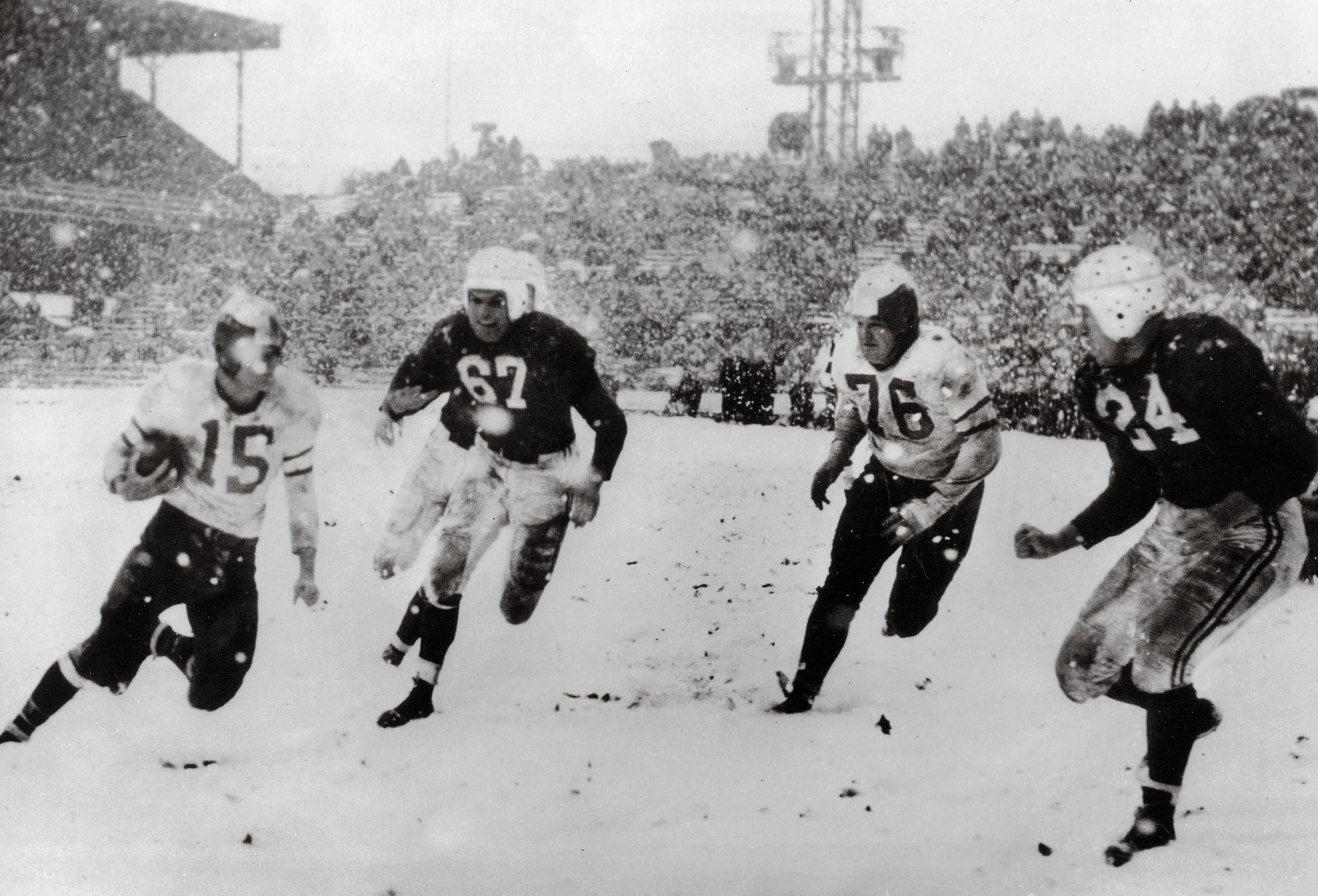
15: Steve Van Buren of the Eagles. 67: Corwin Clatt of the Cardinals.
76: Bucko Kilroy of the Eagles. 24: Red Cochran of the Cardinals.

December 19, 1948, 75 years ago: The snowiest game in football history was played. The timing couldn't have been worse: It was the day of the NFL Championship Game.

It was a rematch of the previous season's title game: The Philadelphia Eagles won the NFL Eastern Division, while the Chicago Cardinals won the Western Division. The year before, since it was an odd-numbered year, the Western Champion hosted, and the Cardinals won, 28-21 at Comiskey Park in Chicago.

Both teams were arguably better than they were the season before. Coached by former pro quarterback Jimmy Conzelman, the Cardinals had improved from 9-3 to 11-1, their lone loss being in Week 2, 28-17 at home to the crosstown Bears.

They achieved this with their "Dream Backfield" of quarterback Paul Christman, halfbacks Charley Trippi and Elmer Angsman, and fullbacks Marshall Goldberg and Pat Harder. Christman was injured, and replaced at quarterback by Ray Mallouf. And Goldberg was limited to defensive duty. But each of the others had a better season, statistically speaking, in '48 than he did in '47.

The Cardinals achieved this despite losing two-way tackle Stan Mauldin in their opening game, a 21-14 win over the Eagles at Comiskey. Mauldin, a 28-year-old Texan, was starting his 3rd season in the NFL, when he had a heart attack during the game, and died. The Cardinals retired his Number 77.

Coached by Earle "Greasy" Neale, who had played in both the NFL and what would later be called Major League Baseball, the Eagles went 8-4 in 1947, and improved to 9-2-1 in '48. They followed their opening loss to the Cardinals with a 28-28 tie away to the Los Angeles Rams, then won 8 straight before dropping a 37-14 decision to the Boston Yanks (yes, a team with that name actually existed) at Fenway Park -- just 3 weeks after beating them 45-0 at home at Shibe Park.

They were led by NFL rushing champion Steve Van Buren, end Pete Pihos, and quarterback Tommy Thompson. They also had two-way tackle Frank "Bucko" Kilroy, who may have been the dirtiest player ever. He even took cheap shots at his teammates in practice. Chuck Bednarik, the Hall of Fame center-linebacker who joined the Eagles the next season, was one of the toughest, hardest-hitting players in the game's history, but was so offended by Kilroy that he later said he wouldn't even speak to him off the field.

The Cardinals were listed as 3 1/2-point favorites for the Championship Game, until a weather forecast suggested rain or snow for game day, and bookmakers stopped taking bets. Conzelman said, "We are a tired club that has been going at top speed since July. The Eagles have been able to coast for the last couple of weeks, and they will have the advantage of playing on their home grounds, which should be worth one touchdown, at least. Statistics lean to them, too, and I just can't see how we have been installed as favorites."

Neale was not predicting victory, either: "I believe we are as strong as the Cardinals, along the ground and in the air. The weather might force the breaks."

ABC, which had just started in the television business that year, and had only been founded as a radio network in 1943, made this the 1st NFL Championship Game to be televised, but only their Northeastern affiliates would see it, including WJZ-Channel 7 in New York and WFIL-Channel 6 in Philadelphia. (WJZ would become WABC in 1953. The WJZ call letters would be given to Channel 13 in Baltimore. WFIL would become WPVI in 1971.) Harry Wismer was the play-by-play announcer, and would later be the disastrous 1st owner of the team that became the New York Jets. His color commentator was one of the greatest players of all time, Red Grange.

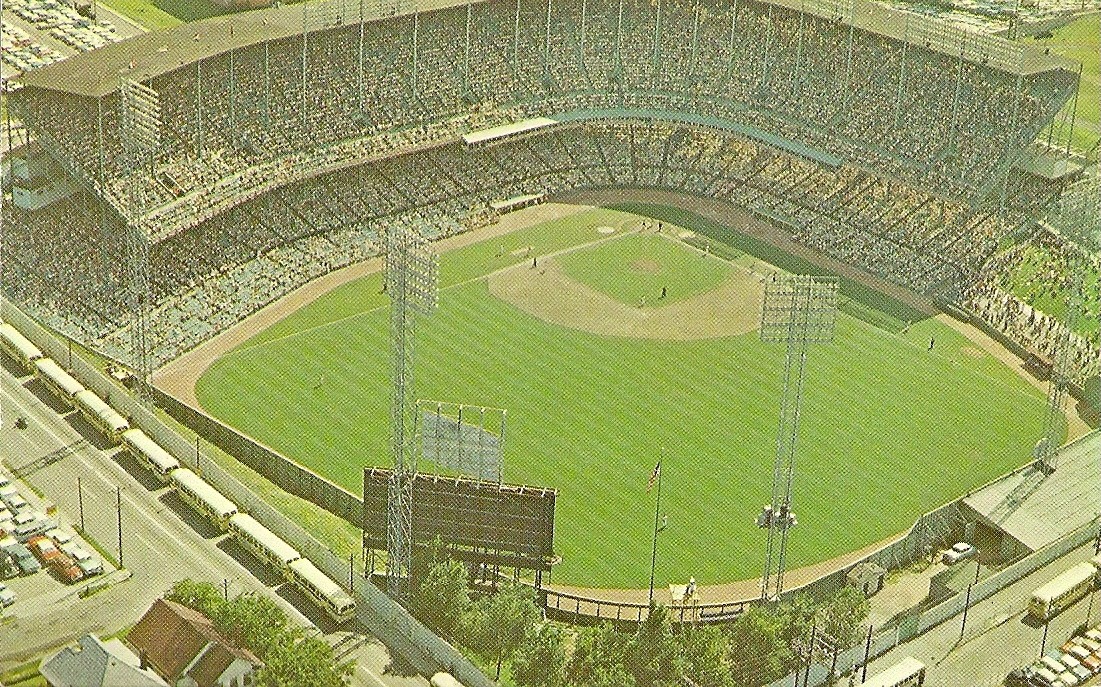
If home-field advantage made a difference, then the Eagles were glad that they would be hosting this time, at Shibe Park, which they shared with baseball's Athletics from 1944 to 1954, and with baseball's Phillies from 1944 to 1957. (The ballpark was renamed Connie Mack Stadium in 1953.) A total of 36,309 people paid for tickets.
$5.25 in 1948 = roughly $66.47 in 2023.
A very fair price, given regular-season ticket prices
in today's NFL.

But it started snowing at 7:00 AM, and by 12:00 Noon, there were 10 inches of snow on the field. The temperature was 27 degrees, not as cold as the year before, but the snow was going to be an issue. Neale remembered how the field at Comiskey was frozen the year before, and wanted to postpone the game.

Fortunately, the Commissioner of the NFL was Bert Bell, who had been the founding owner of the Eagles in 1933, and still kept the NFL's offices in Philadelphia. (His successor, Pete Rozelle, moved them to New York in 1960.) Fortunately, Bell was willing to listen to both Neale and Conzelman.

Neale said it was foolish to work for a championship all season long, only to have it decided partly by the weather. But he was sporting enough to say that, if the Cardinals insisted on playing, the Eagles would play.

Conzelman said his team was ready, and made the point that the conditions would be the same for both sides. After all, both teams were used to cold weather in their hometowns. But no NFL team had ever played in this much snow.

Bell was born and raised in Philadelphia. He had played quarterback in the city at the University of Pennsylvania. He had founded and coached the Eagles. But he had to be impartial. He thought of the people who had taken the trouble to get to the game: The fans, the stadium workers, and the broadcasters. He said the game would go on. Neale told his players, "Can you believe it? They want to play. Let's go beat the hell out of them."

Two concessions were made. The game was supposed to start at 1:30 PM, but kickoff was pushed back to 2:00, to give the maintenance crew time to clear the field and the seats of snow. And the lights were turned on.

(Shibe Park was the 1st ballpark in the American League with lights. Interestingly, the next time the Eagles hosted the Championship Game, it was at Penn's Franklin Field, which didn't have lights, and still doesn't, so, to account for overtime and to keep it out of darkness, the starting time was moved up, from 1:00 PM to 12:00 noon.)

When the grounds crew pulled the tarp off the field, they discovered that the chalk used to mark the yard lines had stuck to the tarp. In those days, every NFL game had 5 officials: A referee, an umpire, a head linesman, a back judge and a field judge, plus 3 alternates on hand in case of emergency. (The back judge had been added only in 1947. The line judge was instituted in 1965, and the side judge in 1978.) For the 1st time in NFL history, all 3 alternates were called into service. Bell talked Neale and Conzelman into not questioning referee Ron Gibbs on matters of down and distance.

As if all this wasn't enough, with an hour to go -- before the originally-scheduled 1:30 kickoff, that is -- Steve Van Buren still wasn't inside Shibe Park. He woke up that morning, saw the snow, guessed that the game would be postponed, and went back to sleep.

An hour later, he was awakened by a phone call. It was Neale, telling him the game was on. But he couldn't get his car out of his driveway. He took a bus, a trolley, and finally the Broad Street Line subway to Lehigh Avenue, and walked the last 7 blocks (through the snow, mind you) to 21st Street and the ballpark. He got there a little after 1:00.

There were 28,864 clicks of the turnstile, suggesting that 7,445 people had tickets but didn't go because of the weather.

Just after 2:00, the game began. In the 1st quarter, on the Eagles' 35-yard line, defying the still-falling snow, Thompson threw a bomb that Jack Ferrante caught at the Cardinal 20. He went down, but, since he hadn't been touched, he was allowed to get up again, and keep going, and he crossed the goal line. Touchdown.

No, not a touchdown. Ferrante recalled: "The play was called back because of an offside penalty. I was really steaming about that. I went up to the ref and said, 'Who the hell was offside?' You know, I was really going to line out the guy that cost us the six points. The ref said, 'You.' That shut me up!"

Later in the 1st quarter, the Eagles threatened again, but not much. Cliff Patton attempted a 44-yard field goal. On that playing surface, in that weather, from that distance, a field goal attempt was folly, and it was missed. The Cardinals got close enough for Harder to attempt a field goal from 37 yards. It had the distance, but it was wide left.

Early in the 2nd quarter, the Eagles got to the Cardinals' 5-yard line, but Chicago's defense held. Patton had a much closer field goal attempt, but he missed that one, too. The Cardinals drove to the Philadelphia 39 as the half wound down, but could get no closer. It was still 0-0.

With the choice for the 2nd half, the Cardinals chose to have the wind at their backs for the 4th quarter, in case the game came down to a field goal (or perhaps a mishandled long punt), and kicked off. The Eagles drove, but Van Buren fumbled and Goldberg recovered. The Cards drove to the Eagle 31, but on 4th and 2, their "Dream Backfield" failed to get the 1st down.

Near the end of the 3rd quarter, Mallouf fumbled a snap, and Kilroy recovered on the Cardinal 17. As the quarter ended, the Eagles had advanced the ball to the 11. Two plays into the 4th quarter, they got to the 5. The Eagle fans chanted, "Give it to Steve!" (In 2012, Philadelphia-based writer Will Bunch would publish a biography of Van Buren, with Give It to Steve! as the title.) Kilroy and Joe Muha opened a big hole in the Cardinal defensive line, and Van Buren got into the end zone untouched, nonetheless slipping on the snow. Patton kicked the extra point, and the Eagles led, 7-0 with 14:07 left to play.

The Cardinals could do little thereafter. Patton attempted another field goal, from 34 yards out, with 5 minutes to play, but missed. The last Cardinal drive ended in an interception, and the Eagles managed to reach the Cardinal 2 as time expired.

For the 1st time in their 15 seasons, the Philadelphia Eagles were World Champions. It was the 1st NFL Championship for Philadelphia since the 1926 Frankford Yellow Jackets, who folded due to the Great Depression in 1931, which, along with Pennsylvania eliminating the "blue law" that prevented professional sports on Sundays, made the Eagles' 1933 debut possible (and also did the same for the Pittsburgh Steelers).

The Championship Game of the All-America Football Conference was played the same day, in considerably better weather. The Cleveland Browns beat the Buffalo Bills, 49-7 at Cleveland Municipal Stadium. The Browns joined the NFL in 1950. The Bills didn't, and the name would be used on the American Football League team that began play in 1960. That team did join the NFL, in 1970.

The Eagles returned to the NFL Championship Game the next year, and, for the 3rd straight season, were hit by bad weather: First cold, then cold and snow, and now, in 1949, pouring rain. This was odd, because it was in Los Angeles. They beat the Rams for back-to-back titles.

In contrast, the Cardinals didn't reach the Playoffs again until 1974, by which point they were in St. Louis; and didn't reach another NFL Championship Game under any name until Super Bowl XLIII in 2008, by which point they were in Arizona.

From the Eagles: Steve Van Buren, Pete Pihos, Alex Wojciechowicz and coach Greasy Neale would be elected to the Pro Football Hall of Fame. From the Cardinals, Charley Trippi was the only player who would be elected, although coach Jimmy Conzelman also was.

Trippi turned out to be the last living player from the 1947 and 1948 NFL Championship Games. Jack Myers was the last surviving Eagle, living until December 24, 2020. Van Buren lived until 2012, dying just after Bunch's book was published.

Although there have been many colder games in NFL history, the 10 inches of snow has been topped only once: On December 1, 1985, 15 inches fell on Lambeau Field. The Green Bay Packers were used to cold and snow, and the Tampa Bay Buccaneers were not. The Packers won, 21-0.

Tuesday, April 12, 2016

Living Former Philadelphia Athletics & 1950 Phillies "Whiz Kids"

September 19, 1954: The Philadelphia Athletics play their last home game, at Connie Mack Stadium (formerly Shibe Park). They lost 4-2 to the Yankees. They close their season with 3 games in Boston and 3 in New York.

April 12, 1955: The Kansas City Athletics play their 1st home game, at Kansas City Municipal Stadium. They beat the Detroit Tigers 6-2.

The last active player who had played for the Philadelphia Athletics was Vic Power, who lasted until 1965. The last one who had played for the Kansas City Athletics? My man, Reggie Jackson, who lasted until 1987.

There are 19 living former Philadelphia Athletics, the youngest of whom is 83 years old. They are:

* Carl Miles, 98, from northern Missouri. A pitcher, his entire career consists of 2 appearances for the 1940 A's. He is the 2nd-oldest former Major League Baseball player, behind former Boston Brave, Chicago White Sock and Cleveland Indian Eddie Carnett.

* Fred Caligiuri, 97, from Western Pennsylvania. A pitcher, he was a September callup for the A's in 1941 (5 games) and 1942  (13 games), and never appeared in the majors otherwise.

* George Yankowski, 93, from the Boston suburbs. A catcher, he appeared in 6 games for the A's in 1942, and 12 for the Chicago White Sox in 1946, his career interrupted by World War II.

* Bill "Buster" Mills, 96, from Boston. A catcher, his entire major league career consisted of 4 appearances for the 1944 A's.

* Dick Adams, 96, from California's Sierra Nevada region. A 1st baseman, he played 37 games in the major leagues, all with the 1947 A's.

* Billy DeMars, 90, from Brooklyn. A shortstop, he was with the A's for 18 games in 1948. He is also a surviving St. Louis Brown, appearing in 61 games for them in 1950 and 1 in 1951. He remained with their organization as they became the Baltimore Orioles. He won the 1964 Midwest League Pennant, managing the Fox Cities Foxes. He was a coach on the 1980 World Champion Philadelphia Phillies.

This leaves only 6 living men who had played for Connie Mack as Philadelphia Athletics manager.

* Ed Samcoff, 91, from Sacramento. A 2nd baseman, his entire career consisted of 6 games with the A's in April 1951.

* Eddie Robinson, 95, from Paris, Texas. Played in the majors from 1942 to 1957, including 1953 with the A's. The last survivor of the Cleveland Indians' 1948 World Champions, and oldest living ex-Yankee, playing in the 1955 World Series.

* Neal Watlington. A catcher, he made 21 appearances for the A's in 1953.

* Tommy Giordano, 90, from Newark. A 2nd baseman, his only big-league experience was in 11 games as a September callup in 1953.

* Ozzie Van Brabant, 89, from near Windsor, Ontario and Detroit. A pitcher, he made 9 appearances for the A's in Philly in 1954, and 2 for them in K.C. in 1955. They were the extent of his big-league experience.

* Carl Scheib, 89, from the Harrisburg area. A pitcher, he debuted with the A's on September 6, 1943, making him 16 years and 8 months old. He is still the youngest player in American League history, and 2nd-youngest behind Joe Nuxhall of the next year's Cincinnati Reds. He had a 45-65 record from 1943 to 1954, all with the A's except for the end, with the St. Louis Cardinals.

* Bill Oster, 83, from Manhattan. A pitcher, he was a late-season callup in 1954, and didn't appear in the majors again after the move.

* Bill Wilson, 87, from central Nebraska. A center fielder, the A's picked him up in 1954, he made the move with them, and he hit the 1st home run in Kansas City Athletics history on Opening Day 1955. But that was his last year in the major leagues.

* Art Ditmar, 87, from the Boston suburbs. A pitcher, he came up to the A's in 1954, moved with them, and was sent to the Yankees along with Bobby Shantz in 1957. He won Pennants with the Yankees in 1857, 1958 and 1960, and has a 1958 World Series ring. Traded back to the A's, he finished his career in Kansas City in 1962.

* Bobby Shantz, 90, from nearby Pottstown. A pitcher, he was the longest-lasting and most accomplished player on this list. He was with the A's from 1949 to 1956, including on either side of the move. The 5-foot-6 "little lefty" was a 3-time All-Star, and in 1952 he went 24-7 for a mediocre A's team, earning him the American League's Most Valuable Player award.

An injury late that season robbed him of his speed, but he was converted to a reliever. He pitched for the Yankees in the 1957, 1958 and 1960 World Series, winning it in 1958. When the Gold Glove Award was founded in 1957, he won it 8 straight times. In 1962, he was an original member of the Houston Colt .45's. (They changed their name to the Astros in 1965.)

In 1964, he was sent by the St. Louis Cardinals to the Chicago Cubs as part of the Ernie Broglio for Lou Brock deal. The Cubs then sent him back home, to the Philadelphia Phillies, where he closed his career with that ill-fated team (although the infamous Phillie Phlop was hardly his fault). He then retired with a career record of 119-99. He is the only surviving A's player who is a member of the Philadelphia Baseball Wall of Fame.

* Bill Harrington, 88, from Sanford, North Carolina. A pitcher, he was with the A's from 1953 to 1957, including the move, and no other teams.

* Hal Raether, 83, from southern Wisconsin. A pitcher, he made 2 appearances, both for the A's, 1 in Philly in 1954, 1 in K.C. in 1957.

* Joe DeMaestri, 87, from San Francisco. A shortstop, and like DeMars a surviving former St. Louis Brown, "Froggy" played for the A's from 1953 through 1959, including the move. He was an All-Star in 1957. He was a throw-in in the trade that brought Roger Maris to the Yankees. He was sent in to replace Tony Kubek after his injury in Game 7 of the 1960 World Series, and his last major league appearance was on the next year's Series, winning a 1961 World Series ring.

*

For comparison's sake, there are only 4 members of the Phillies' 1950 National League Pennant winners, "the Whiz Kids," are still alive, 66 years later:

* Ralph "Putsy" Caballero, 88, from New Orleans. An infielder, he was with the Phillies from 1944 to 1952, but could never win the starting job at 3rd base from Del Ennis or at 2nd base from Mike Goliat. He is, however, the last surviving Phils player who appeared in the Pennant clincher of October 1, 1950 against the Brooklyn Dodgers, won by Dick Sisler's 10th inning home run.

* Bob Miller, 89, from Detroit. A pitcher, he spent his entire career with the Phillies, from 1949 to 1958, with a record of 42-42. He coached the University of Detroit Mercy baseball team from 1965 to 2000, winning nearly 900 games.

Robert John Miller should not be confused with Robert Lane Miller and Robert Gerald Miller, who roomed together on the famously bad 1962 Mets, and each answered the phone by saying, "Hello, Bob Miller here."

* Paul Stuffel, 89, from Canton, Ohio. A pitcher, he was called up to the Phils in September 1950, too late to make the World Series roster. He also appeared for the Phils in 1952 and 1953, but that was it for his major league career.

* Curt Simmons, 86, from Egypt, Pennsylvania; and Whitehall, Pennsylvania. A pitcher, he was drafted into the Korean War in September 1950, nearly costing the Phils the Pennant, and he could have made a difference in the World Series against the Yankees. He was with the Phillies from 1947 to 1960.

He finally got to appear in a World Series in 1964, ironically at the expense of the Phillies -- and, in said World Series, at the expense of the Yankees. He finished his career with a record of 193-183. He is a member of the Philadelphia Baseball Wall of Fame.
*

On June 6, 2003, the Interleague schedule finally allowed the now-Oakland Athletics to make their 1st appearance in Philadelphia since leaving town, 49 years earlier. They came to Veterans Stadium, and the Phillies invited every living former Philadelphia Athletic. A few showed up, including Bobby Shantz, Eddie Robinson and Carl Scheib. Also attending, but now deceased, were Gus Zernial, Eddie Joost, Joe Astroth and Pete Suder.

Robin Roberts, Hall of Fame pitcher for the Phillies, including their 1950 Pennant season, was also on hand that night, signing copies of his book My Life In Baseball. (He had previously written a book titled The Whiz Kids and the 1950 Pennant. He was universally hailed as a great guy, but was much better at pitching than he was at picking book titles.) He has since died.

A crowd of 29,583, including myself, saw the A's beat the Phils 7-4. It was small consolation for anyone old enough to remember the A's, and to know that, not only had the A's won more in Philly before the move (9 Pennants to 2, 5 World Championships to 0), but had won more since the move (6 Pennants to 3, now 6 to 5, and 4 World Championships to 1, now 4 to 2, and, even at their worst, the Oakland A's have never had a collapse like 1964 or heartbreaking postseason moments like 1977 and 1993).

Although how each family managed its money meant that the Carpenters, who bought the Phillies in 1943, would be the team that stayed, and the Macks, who owned the A's, would have to be the team that left, Mitchell Nathanson suggested in his book The Fall of the 1977 Phillies: How a Baseball Team's Collapse Sank a City's Spirit that, for reasons competitive and cultural, the wrong team moved away. In spite of the Phillies' passionate fan base, their nice new fan-friendly ballpark, and their 2007-11 golden age, he may have had a point.

UPDATE: Three of these men died in 2016: Joe DeMaestri on August 26, Carl Miles on September 9, and Dick Adams on September 24.

Bill Wilson died on July 16, 2017.

In 2018, Carl Scheib died on March 24, Ed Samcoff on March 29, Ozzie Van Brabant on August 18, and Fred Caligiuri on November 30.

In 2019, Tommy Giordano died on February 14, Bill Mills on August 9, and Neal Watlington on December 29.

In 2020, George Yankowski died on February 25, Bill Oster on June 6, Hal Raether on September 26, and Billy DeMars on December 10. DeMars' death left Bobby Shantz as the last living man who played for Connie Mack. In 2021, Art Ditmar died on June 11, and Eddie Robinson died on October 4. And Bill Harrington died on January 21, 2022.

That leaves Bobby Shantz as not just the last living man who played for Connie Mack, but the last living former player for the Philadelphia Athletics. He celebrated his 100th Birthday on September 26, 2025.

Putsy Caballero died on December 8, 2016. Paul Stuffel died on September 9, 2018. Bob Miller died on November 27, 2020. And Curt Simmons, the last living 1950 Whiz Kid, died on December 13, 2022.

Monday, February 8, 2016

Top 5 Reasons You Can't Blame the Philadelphia Athletics for Moving to Kansas City

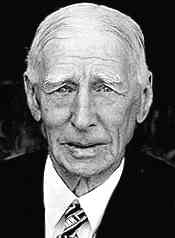
February 8, 1956, 60 years ago: Connie Mack dies in Philadelphia, of "old age and complications from hip surgery." He was 93 years old.

A former major league catcher, occasionally good but never great, he managed the Philadelphia Athletics from their founding in 1901 until 1950 -- 50 seasons. He won American League Pennants in 1902, 1905, 1910, 1911, 1913, 1914, 1929, 1930 and 1931. He won the World Series in 1910, 1911, 1913, 1929 and 1930.

But increase in salaries caused by the arrival of the Federal League in 1914 caused him to break up his 1st dynasty, and the stock market Crash of 1929 wiped out his savings, causing him to break up his 2nd dynasty, as he had no more income outside of the team.

He was never able to rebuild the A's as he had in the 1920s. And, also being the owner, he was not going to be fired as manager, even as he entered his 80s, and began making inexplicable moves, including calling out names of pinch-hitters, players who hadn't been on the A's in years.

Finally, after the 1950 season, his sons ganged up on him. Earle and Roy Mack, his sons from his 1st marriage, did not get along with Connie Mack Jr., his son from his 2nd marriage. The one thing they agreed on was that Connie Sr., at age 87, had to go, as field manager, as general manager, and as owner in all but name.

Their financial management was no better than his, and in 1954, they sold the A's to Arnold Johnson, who ran a Chicago-based trucking business, and he moved them to Kansas City.  Mack was dead in a year and a half, a few months after that scourge of the elderly, a hip-breaking fall.

*

Mitchell Nathanson, author of The Fall of the 1977 Phillies, makes the case that, unlike with the St. Louis Browns and Cardinals, and the Boston Braves and Red Sox, in the case of Philadelphia, the wrong team moved and the wrong team stayed.
He's got a point. The AL's A's not only were more successful than the National League's Philadelphia Phillies -- from 1901 to 1949, winning 9 Pennants to the Phils' 1, in 1915 -- but were the landlords at Shibe Park, while the Phils, who'd the inadequate Baker Bowl a few blocks away, were the tenants. The Phils' stirring 1950 "Whiz Kids" Pennant changed the recent history, but not the overall history.

Here's what the teams did after the A's moved in 1954:

* The Phillies have made the Playoffs 12 times, won the NL Eastern Division 11 times, won 5 Pennants, and won the World Series in 1980 and 2008. Not a bad record, but this includes the near-misses for the postseason in 1964, 1982, 2004, 2005 and 2006; and the terrible postseason chokes of 1977 and 1978, plus losing World Series they had very good chances to win in 1983, 1993 and 2009.

* The A's did nothing in Kansas City, but since moving again, to Oakland, in 1968, they've made the Playoffs 18 times, won the AL Western Division 16 times, the Pennant 6 times (although not since 1990) and the World Series 4 times (1972, 1973, 1974 and  1989). Indeed, the A's won more World Series in 3 seasons (1972 to 1974) than the Phils have won in the competition's entire history (1903 to 2015).

* Just since the A's moved to Oakland, 1968 to 2015, they've won nearly as many Pennants, 6, as the Phils have in their entire history (1883 to 2015), 7.

So, in hindsight, Philadelphia and its fans might have been better off keeping the A's and losing the Phils.

And in the 25 years between the Crash of '29 and the A's move, not only the Phils' on-field fortunes as futzed-up as those of the A's, but so were their finances. Gerry Nugent had to get a loan from the other NL owners in 1943, just so he could send the team to spring training. He sold them to William D. Cox, who had plenty of money and was willing to spend it, but was caught betting on the Phils, and so was banned from baseball. A new owner stepped in.

So if the Phils were in that bad a shape, why did they stay, and not the A's? Did the 1950 Pennant really matter all that much?

Not really. It would be a "Best of the Rest" in a list of...

The Top 5 Reasons You Can't Blame the Philadelphia Athletics for Moving to Kansas City

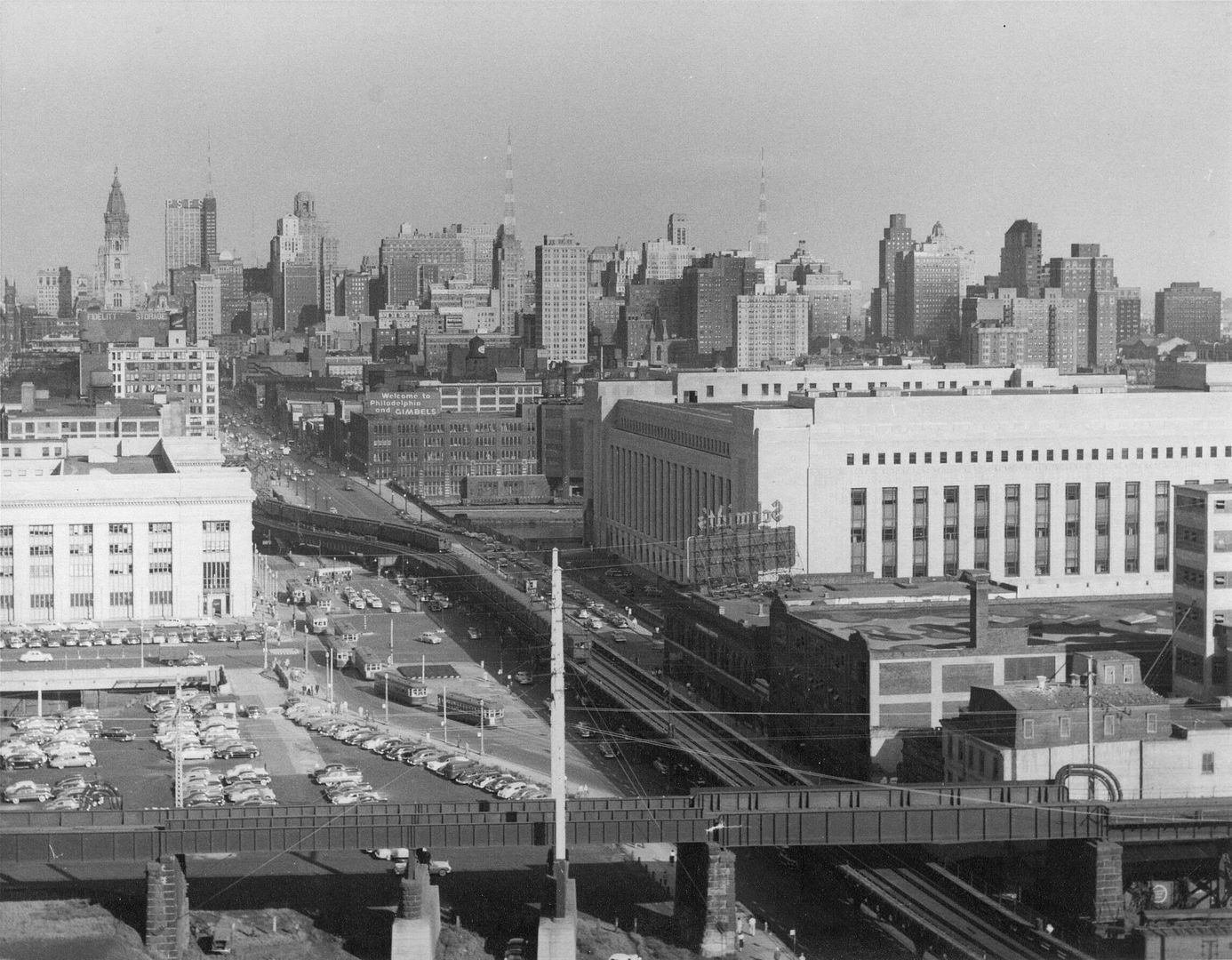
5. Demographics. In the 1950 Census, Philadelphia was cited as having just under 2.1 million people. This was the most it would ever have. Indeed, the population was already going down. It would be a shade over 2 million in 1960, a little under that in 1970, under 1.7 million in 1980, under 1.6 million in 1990, and bottom out at just over 1.5 million in 2000. It's now believed to be about 1,553,000.
Philadelphia, 1950. Prior to the 1980s,
they really didn't have skyscrapers.
In the foreground, that's 30th Street Station on the left,
and the main post office on the right.

Meanwhile, the suburbs boomed, so that the Philly region, a.k.a. the Delaware Valley -- Eastern Pennsylvania, South Jersey and Northern Delaware -- has about 7.1 million people, making it the nation's 7th-largest market. This suburban boom will be revisited in Reason Number 3.
A more recent photo, taken from a similar angle.
As you can see, the city has grown up. Way up.

Ahead of Philly in metropolitan population are New York (23 million), Los Angeles (18 million), Chicago (almost 10 million) and San Francisco (8.6 million), all with 2 MLB teams, although San Fran may lose the Oakland Athletics in the next few years.

Also ahead of Philly are Boston (just over 8 million) and Dallas (7.2 million). And nobody is credibly suggesting that Boston, whose Red Sox are no longer selling out every game, or Dallas, a football-first city which barely supports the Texas Rangers as it is, should get a 2nd Major League Baseball team.

When the Phillies were winning 5 straight NL East titles from 2007 to 2011, and Citizens Bank Park was full 81 times a year -- even after the economic Crash of 2008, the worst since the Crash of 1929 that wiped Connie Mack out -- there was talk that Philly might get a 2nd team, either through expansion by the AL or a moved team, playing at CBP until they could get their own ballpark built. There was even talk that, after over half a century away, the A's might "come home." But the Phils' 2012 collapse, and their subsequent nosedive in attendance, put an end to that talk, before it could reach an even remotely serious stage.

Philadelphia could support 2 major league baseball (capitalized or otherwise) teams before World War II. But not afterward. As with Boston and St. Louis, 1 of the 2 teams was going to have to go.

4. The Deaths of the Shibe Brothers. When Ben Shibe, Connie Mack's co-owner and the man for whom their ballpark was named, died in 1922, his shares of the team went to his sons. Thomas F. Shibe became team president, and John F. Shibe became vice president.
Tom Shibe, left, with Ty Cobb,
who closed his career with the A's in 1927 and '28.

Tom and Jack Shibe were "sportsmen" in the old sense, also interested in hunting and speedboat racing, respectively. Tom essentially ran the ballpark, while Mack ran the team, filling the roles of manager and what we would now call "general manager."

Tom died in 1936. Jack replaced his brother Tom as president, and Connie installed his son Roy Mack as vice president. All seemed fairly stable. But Jack got sick shortly after becoming president, dying the next year. Connie, club treasurer from day one, installed himself as president, and bought out the brothers' widows, making himself the majority owner for the first time.

Why not promote one of the next generation of Shibes? Because neither Tom nor Jack had children, while Ben's daughters (Tom's and Jack's sisters), being women, were not seriously considered for team leadership roles, even though they had stock in the club.

One of Ben's sons-in-law, Ben MacFarland, was named traveling secretary. His brother, Frank MacFarland, was named assistant treasurer. But the MacFarlands were frozen out of management decisions regarding the team or the stadium, neither of which got proper maintenance. In essence, they had titles, but no power.

Connie set Roy, Earle and Connie Jr. up to run the team after him, frequently citing "The House of Mack." (Even that wasn't correct: His full name was Cornelius Alexander McGillicuddy. He only shortened his name to "Mack" as a young player so that it would fit in a box score without being abbreviated into something like "M'Cuddy.")
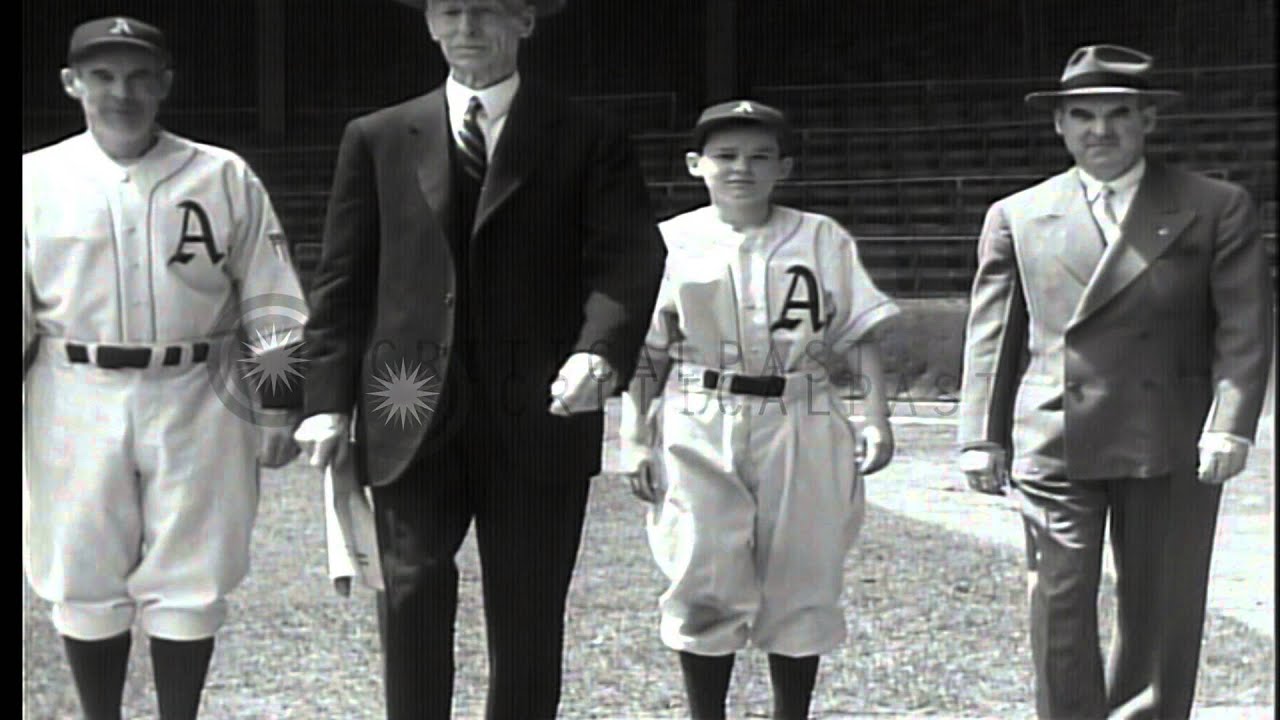
L to R: Earle Mack, Connie Mack, Connie Mack Jr., Roy Mack

In 1937, and again in 1939, at ages 74 and 76, Connie Sr. got sick, and Earle, who had played a little for the A's from 1910 to 1914, filled in as manager. If either of the Shibe brothers had still been around at the time -- Tom was 70 when he died, and Jack was 65, both of them thus younger than Connie Sr. -- they might have talked some sense into "The Grand Old Man of Baseball,"

(Roy Mack died in 1960, only outliving his father by 4 years. Earle lived on until 1967, and Connie Jr. until 1996. His son Connie III became a U.S. Senator from Florida, and Senator Mack's son Connie IV was elected to the House like his father, but has failed in his only Senate bid thus far.)

3. Ballparks. Part of the problem was Shibe Park itself. Opening on April 12, 1909, it was the 1st concrete and steel stadium in Major League Baseball. The Shibe brothers expanded it in 1925, and eventually seating capacity would reach... 33,608. This made it smaller than any ballpark in use in MLB today. When it finally closed on October 1, 1970, 3 months after the end for Crosley Field in Cincinnati and Forbes Field in Pittsburgh, only Fenway Park in Boston was similarly small.
And losing his money in the Crash of '29 and buying out the Shibe widows had tapped Connie Mack out. He tried adding more seats, but he couldn't afford the maintenance on Shibe Park. When his sons pushed him out, they took out a tremendous mortgage on the ballpark, and couldn't make the payments on it, so they couldn't keep the place up either.

Access was a big problem, too. Although North Philadelphia hadn't yet descended into urban blight, there was no major highway nearby. Public transportation? The trolleys had been cut back, so to get to Shibe Park, you either had to take the Broad Street Line subway to North Philadelphia, or the Pennsylvania Railroad to Germantown Junction (now SEPTA's North Philadelphia commuter rail station), or the Reading Railroad to North Broad Street Station; and then take a bus 7 blocks down Lehigh Avenue. Even if you weren't afraid of the neighborhood (and by the time the Phillies made their 1964 Pennant run, lots of people were), that was a hassle.

In contrast, the Kansas City Municipal Stadium, built in 1923, was being double-decked in the 1954-55 off-season, doubling its seating capacity to 35,020, and while its neighborhood soon deteriorated as well, it had better access roads and more parking.
When the A's were sold, the Macks sold Shibe Park to the Phillies, even though their owner Bob Carpenter said, "I need Shibe Park like I need a hole in the head."

He renamed it Connie Mack Stadium in honor of the Grand Old Man, and spent the rest of the 1950s and nearly all of the 1960s trying to get it replaced, finally convincing the city to build what became Veterans Stadium for the Phillies and the NFL's Eagles, who left Connie Mack Stadium for the University of Pennsylvania's Franklin Field in 1958, before groundsharing with the Phils again from 1970 to 2003, when each had a new stadium built adjacent to the Vet at the South Philadelphia sports complex.

2. Kansas City. It had been a very good baseball town, with the minor-league Blues (a Yankee farm team from 1936 to 1954) and the Negro Leagues' Monarchs each winning multiple Pennants. If the A's didn't move there for 1955, another major league team would have done so. If that hadn't happened by 1960, surely, they would have gotten an expansion franchise.
It worked, sort of: Although their attendance in Kansas City was never great, in each of the A's 1st 7 seasons there, they got more fans than in each of their last 5 seasons, and in 24 of their last 25 seasons, in Philadelphia. Even their worst seasonal attendance in K.C. was better than 4 of their last 5 years in Philly.

Once the A's moved to Oakland, and were replaced by the Royals, fans who had never warmed to Charlie Finley, who'd bought the A's after the death of Arnold Johnson in 1960, came out in better numbers than the A's franchise would ever see until the 1980s.

The Royals' recent success, including last year's World Series and the last 2 AL Pennants, shows that Kansas City was a sleeping giant as far as baseball markets was concerned. All they needed was to show that ownership cared. It took ownership a while to show it, but they have, and the fans are coming out.

But the A's might never have moved to Kansas City -- and the Phillies might have, or might have moved somewhere else -- if the right man hadn't stepped in to buy the Phillies.

1. The Carpenters. No, not the singing siblings of the 1970s. In November 1943, Robert Ruliph Morgan Carpenter bought the Phillies from the banned William D. Cox.

Known as Ruly, he could afford it: The Carpenters were one of the oldest and wealthiest families in Philadelphia and in neighboring Wilmington, Delaware. Ruly married into the family in Delaware, the du Ponts, giving him control of more money. He became an executive at E.I. du Pont de Nemours and Company (a.k.a. simply "DuPont," although the family has never capitalized the D in their names), and made even more money.

He was a strong supporter of the University of Delaware, including its athletic department. But he didn't really want to run the Phillies. So he left that to his son, Robert Ruliph Morgan Carpenter Jr. Known as Bob Carpenter, he totally reorganized the team, giving it a real front office, a real farm system, and a real scouting department, all for the first time. The result was the 1950 Pennant, featuring Hall-of-Famers Robin Roberts and Richie Ashburn, Most Valuable Player Jim Konstanty, and Dick Sisler, whose home run on the final day of the season clinched the flag.
Bob Carpenter

Eventually, Bob's moves stopped working, especially since he was so focused on getting the ballpark replaced. In 1972, that task done, he turned control of the team over to his son, Robert Ruliph Morgan Carpenter III, known as Ruly like his grandfather. Ruly, at 32 then the youngest controlling owner in MLB, made Paul Owens the general manager, and they built the Phillies team that dominated the NL East from 1976 to 1983, including the 1980 World Championship.
Ruly Carpenter, now 75, with his copy of the Commissioner's Trophy
for winning the 1980 World Series

The Carpenter family sold the Phillies soon thereafter, and is no longer involved with the team, but retains a small ownership, and still supports University of Delaware athletics. But once they bought the Phillies, and put to work money that the Mack and Shibe/MacFarland families simply didn't have, the A's, despite the huge advantages in ownership and history with the Phillies, were doomed as far as Philadelphia was concerned.

VERDICT: Not Guilty. As many mistakes as the Macks made, there were circumstances beyond their control that put an end to the Athletics' tenure in Philadelphia.

The A's had to go. And it worked out. For a while. Why did they leave Kansas City after only 13 seasons? That's a blog post for another time.