Showing posts with label randy white. Show all posts

Thursday, January 21, 2021

Top 5 Reasons You Can't Blame Jackie Smith for the Dallas Cowboys Losing Super Bowl XIII

January 21, 1979: Super Bowl XIII is played at the Orange Bowl in Miami. The Dallas Cowboys, NFC Champions and winners of Super Bowls VI and XII, faced the Pittsburgh Steelers, AFC Champions and winners of Super Bowls IX and X -- and beat the Cowboys themselves in Super Bowl X.

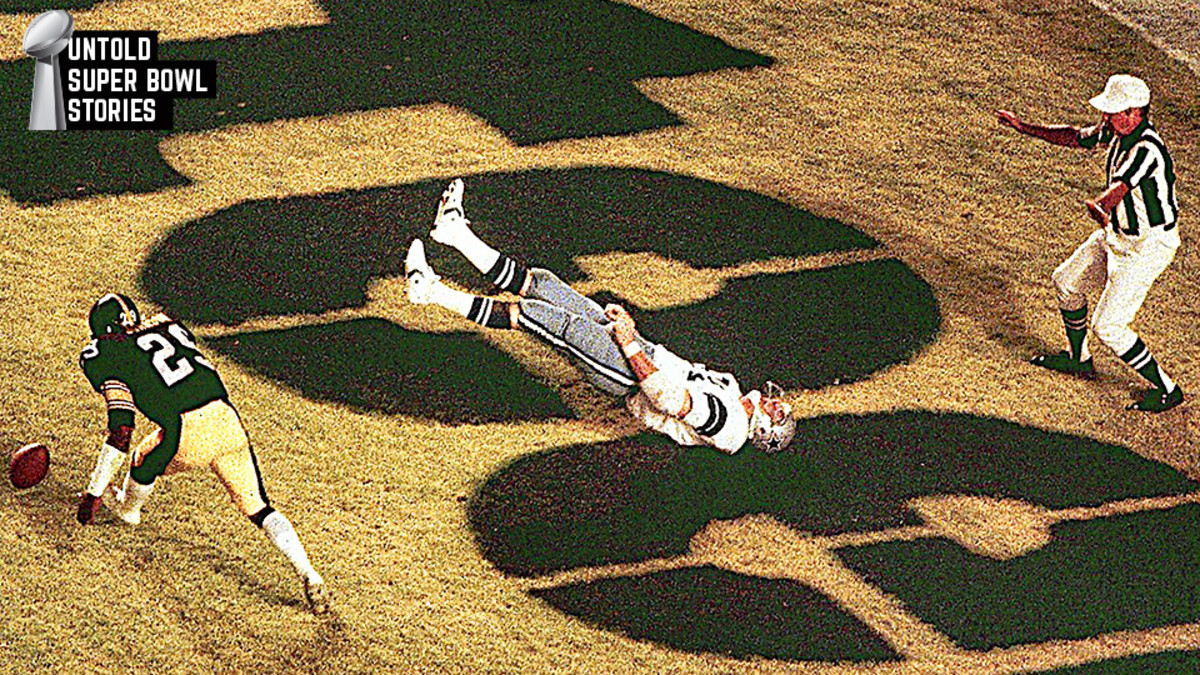
With 2:46 left in the 3rd quarter, the Pittsburgh Steelers were leading the Dallas Cowboys 21-14. But the Cowboys were driving. It was 3rd and 3 on the Steeler 10, and Cowboy quarterback Roger Staubach faded back to pass. He saw tight end Jackie Smith wide open in the end zone.

Smith had played 15 seasons for the St. Louis Cardinals -- the football team that now plays in Arizona, not the baseball team of the same name -- and made 5 Pro Bowls. He had retired after the 1977 season, but accepted an offer from the Cowboys, who were dealing with injuries at his position. He didn't catch a pass all season long, but was praised for his blocking.

In a Playoff game against the Atlanta Falcons, he did catch a touchdown pass from Danny White, who was filling in for an injured Staubach. Although the Cardinals had gone 9-5 in 1963 (his rookie season), 9-3-2 in 1964, 9-4-1 in 1968, 10-4 to win the NFC Eastern Division in 1974, and 11-3 to win the NFC East, that game against the Falcons was the 1st winning postseason game in which he'd ever played.

Now, with less than 18 minutes in regulation to play in a game for the World Championship, and with his team down by 7 points, Jackie Smith was wide open in the end zone, and the target of a pass by one of the greatest quarterbacks who had ever played.

He dropped it. It looked like he slipped, his legs collapsing underneath him, and the pass popped out of his hands.

Verne Lundquist, then the Cowboys' main radio announcer, said, "Aw, bless his heart, he's got to be the sickest man in America!"

Had he caught the pass, the Cowboys would have been a successful extra-point attempt from tying the game. Instead, the Cowboys had to settle for a 27-yard field goal by Rafael Septién, whose father Carlos Septién had played for Mexico in 2 World Cups. The Cowboys were trailing 21-17, the same score by which the Steelers beat them in Super Bowl X.

They could not build momentum on this. Franco Harris added to the Pittsburgh lead with a touchdown run halfway through the 4th quarter. On the ensuing kickoff, Roy Gerela slipped, causing him to squib the kick. This should have been a lucky break for the Cowboys.

Instead, Randy White, a future Hall-of-Famer and co-Most Valuable Player with Harvey Martin in the previous year's Super Bowl, tried to pick it up at the 24-yard line, but was wearing a cast to protect his broken left hand, and fumbled it. Dennis Winston recovered it, and the Steelers had the ball at the Dallas 18. On the very next play, Terry Bradshaw threw to Lynn Swann, and he didn't drop it. That made it 35-17 Pittsburgh with less than 7 minutes to go.

The Cowboys didn't give up. Staubach threw a touchdown pass to Billy Joe DuPree with 2:27 left. They recovered an onside kick, and with 22 seconds on the clock, Staubach threw another touchdown pass, to Butch Johnson.

It was 35-31. Had they gotten the Smith touchdown instead of the Septién field goal, presuming Septién had made all the extra points, it would have been 35-35. But they couldn't recover the last onside kick, and the Steelers had won.

It was Jackie Smith's last game, and the last pass he was ever thrown. He caught 480 passes for 7,980 yards, the latter a record for tight ends that stood until 1990. But it took 11 tries after becoming eligible for the Pro Football hall of Fame for him to be elected. It certainly looked as though the voters held it against him.

Today, Smith is 80 years old, and is also a member of the Louisiana Sports Hall of Fame, the Missouri Sports Hall of Fame, the St. Louis Sports Hall of Fame, and the St. Louis Walk of Fame. He still holds the record of most yards per catch for any tight end, 16.1.

And yet, people remember him most for a pass that he dropped. He was the Bill Buckner of football, nearly 8 years before Buckner's moment under a cloud.

To their credit, something I don't often give them, Cowboy fans generally don't blame Smith for losing the game.

Who should they blame? 

Top 5 Reasons You Can't Blame Jackie Smith for the Dallas Cowboys Losing Super Bowl XIII

First, a couple of reasons that didn't make the cut: The Best of the Rest.

The Officiating. Cowboy fans are like Notre Dame fans: They believe that they never lose, time just runs out on them. And when they do lose, it's because the officials screwed them. As if they haven't gotten the benefit of dozens of dodgy calls over the years.

Cowboy fans point to two moments, early in the 4th quarter, with the score 21-17 in Pittsburgh's favor, after the Smith drop. Bradshaw threw a pass to Swann, who collided with Cowboy cornerback Benny Barnes, and didn't catch the ball. Referee Fred Swearingen called pass interference on Barnes.

The instant replay suggested that the contact might have been incidental, but there was then no provision for challenging a play through instant replay. Even if there had been, it has to be conclusive that the call was wrong. It was too close to be considered conclusively wrong. The play would have stood.

Swearingen was also the referee in the 1972 Playoffs when the Steelers beat the Oakland Raiders on a play known as the Immaculate Reception. Anybody who wasn't a Steeler admirer wanted to believe that Swearingen got that call wrong, and that he got the one 6 seasons later wrong as well.

Two plays after the interference call, the Steelers had 3rd-and-4 on the Cowboy 17. Cowboy linebacker Thomas "Hollywood" Henderson, who had predicted a 31-0 Dallas win, and had told the media, already inclined to believe that Bradshaw wasn't very bright, "Bradshaw is so dumb, he couldn't spell 'cat' if you spotted him on the C and the A" -- sacked him for a 12-yard loss.

Except Swearingen had blown his whistle before the snap, and called a delay-of-game penalty on the Steelers. The replay showed that not only had the whistle been blown, but pretty much everybody on both sides had heard the whistle, except Henderson -- hence, the comparative lack of protection for Bradshaw.

So now, instead of 4th and 16, at a spot where a field goal attempt would have been 51 yards, it was 3rd and 9. And Harris scored a touchdown.

Cowboy fans complained about these 2 calls. But the 1st was inconclusive, and the 2nd was absolutely correct. That's why "The officials screwed us" doesn't make the Top 5 here. It rarely does, even when it appears to be true. Here, it appears to be a big stretch, at best.

Age. Smith was 38. And Staubach, who had led the Cowboys to win the Super Bowl the year before, was about to turn 37. Plenty of quarterbacks have done well at that age and higher, but perhaps he had also begun to decline.

Now, the Top 5:

5. Jackie Smith. By the admission of most anybody in the Cowboy organization at that time, they wouldn't have gotten into that Super Bowl without him.
4. Expectations. It wasn't just that Smith was old for a receiver. While he did catch a touchdown pass from Danny White in the Playoff game against the Falcons, Staubach was quarterbacking again, and had hardly thrown to him all year. Now, in the biggest game of them, all, Staubach was throwing to him? He shouldn't have expected himself to receive that pass, and nobody else should have been expecting him to receive it, either.

3. Randy White's Injury. If he hadn't been hurt, he wouldn't have fumbled the Roy Gerela kickoff. If he had simply held onto the ball anyway, it would have been 28-17 Steelers with 7 minutes to go. Would the Cowboys have scored twice more anyway? Maybe. But he didn't.
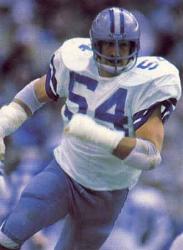
Nobody talks about this play. Maybe if it had happened first, they would. But all anybody remembers is the Smith drop.

2. The Doomsday Defense. Until this very game, which the Steelers won despite allowing 31 points, the most points any team had allowed in an NFL championship game, under any name, and still won, was the 28 that the 1950 Cleveland Browns allowed to the Los Angeles Rams. It would take until Super Bowl LII, in 2018, the Philadelphia Eagles, for a team to allow more than 31 points in an NFL championship game and still win.

Face it, the Cowboys' vaunted "Doomsday Defense" failed. If they had done their job, Smith's drop wouldn't have mattered.

1. The Steelers Were Better. They had already won back-to-back Super Bowls in the decade, including beating the Cowboys just 3 years earlier. The Steelers were 14-2, and beat a pair of 10-6 teams to get into the Super Bowl: The Denver Broncos and the Houston Oilers. The Cowboys were 12-4, and while they beat a 12-4 Los Angeles Rams team in the NFC Championship Game, their previous Playoff win was against the 9-7 Atlanta Falcons.

The Cowboys had 6 players who have been elected to the Pro Football Hall of Fame: Roger Staubach, Tony Dorsett, Randy White, Rayfield Wright, Cliff Harris and... Jackie Smith. Many observers would argue that Drew Pearson and Charlie Waters should also be in. That would be 8. (UPDATE: Pearson was elected a few days after I posted this, raising the total to 7.)

The Steelers have 10: Terry Bradshaw, Franco Harris, Lynn Swann, John Stallworth, Mike Webster, Mean Joe Greene, Jack Lambert, Jack Ham, Mel Blount and Donnie Shell. So even with the Cowboys' "should" players, the Steelers have more. And that's without considering the Steelers' own "shoulds," such as Larry Brown, Jon Kolb and L.C. Greenwood.
And while it's true that their own Steel Curtain defense didn't exactly get the job done either, their offense scored 35 points, tying what was then a Super Bowl record. Not since the 1961 Green Bay Packers had a team scored more points than that in an NFL Championship Game, under any name. Look at the number of Hall of Famers that each team had, or should have.

VERDICT: Not Guilty. The problem wasn't that Jackie Smith dropped a key pass. The problem was that the Pittsburgh Steelers of the 1970s may have been the best football team ever assembled. The problem wasn't that the Cowboys, or anybody thereon, failed. It's that they were beaten by a better team.

After the game, Bradshaw told the media, "Ask Hollywood how dumb I am now." He was named MVP of that Super Bowl, and the next year's, with the Steelers going into the 4th quarter trailing the Rams and coming back to win. Henderson's drug problem drove him out of football, just as an elbow injury and clinical depression ended Bradshaw's career. Both men recovered, and can laugh about it now.

But don't laugh at Jackie Smith. And don't blame him, either.

Friday, August 10, 2018

Dallas' 10 Greatest Athletes

Troy Aikman and Roger Staubach

This weekend, the Yankees are hosting the Texas Rangers, the Major League Baseball team for the Dallas-Fort Worth "Metroplex."

Dallas' 10 Greatest Athletes


Honorable Mention to Texas Rangers in the Baseball Hall of Fame, each of whom would be a lot higher on this list if he'd been in Arlington longer than the following number of seasons: Bert Blyleven (2), Ferguson Jenkins (6), Gaylord Perry (4), Goose Gossage (1), Vladimir Guerrero (1), and, most notably, Nolan Ryan (5).

In those 5 seasons in Arlington, Ryan was 51-39, for a .567 winning percentage, which was better than he was in Flushing, Anaheim or the Astrodome. But though he led the American League in strikeouts twice and WHIP twice, and was 12-6 with a no-hitter as late as 1991 (age 44), let's be honest: The Rangers wouldn't even have acquired him if he hadn't been from Texas... and he was from the Houston side of Texas. Which didn't stop an earlier Ranger management team from acquiring David Clyde, with disastrous results.

Dishonorable Mention to Ivan Rodriguez, Juan Gonzalez and Rafael Palmeiro. All 3 of these Rangers could have made the Hall of Fame. The 1st did, the 2nd and 3rd didn't. None should have, and you know why.

Honorable Mention to Dallas Cowboys in the Pro Football Hall of Fame, who did not otherwise make this Top 10: Mel Renfro, Bob Hayes, Rayfield Wright, Mike Ditka, Michael Irvin, Larry Allen, Charles Haley and Deion Sanders. Ditka, Haley and Sanders would have made this Top 10 had they spent most or all of their careers with Dallas.

When The Sporting News named its 100 Greatest Football Players in 1999, Sanders was ranked 37th. When the NFL Network named its 100 Greatest Players in 2010, Sanders was ranked 34th, Irvin 92nd, and Allen 95th.

Honorable Mention to Jason Kidd and Steve Nash, both of whom would have made this Top 10 if they'd spent most of their careers, or even their best years, with the Dallas Mavericks. Newly elected to the Basketball Hall of Fame, they were the 1st 2 players to have played more than 1 season for the Mavs to make it.

Honorable Mention to Dallas Stars in the Hockey Hall of Fame, who did not otherwise make this Top 10: Ed Belfour, Brett Hull, Joe Nieuwendyk. Any of them would have made the Top 10 had they played all or most of their careers with the Stars.

Honorable Mention to John Best, Ilija Mitic, Kenny Cooper Sr. and Kyle Rote Jr., who starred for the Dallas Tornado in the old North American Soccer League in the 1970s.

Honorable Mention to Jason Kreis, still the all-time leading scorer for FC Dallas.

10. Adrian Beltre, 3rd base, Texas Rangers, 2011-18. As far as I know, he's been clean. He's had 3 of his 4 All-Star seasons with the Rangers, has won 3 of his 5 Gold Gloves for them, has batted .306 for them, has 190 of his 468 home runs for them, has 3 of his 5 100+ RBI seasons for them, and has 1,243 of his 3,132 hits for them. (All of these career stats are correct as of  last night's game between the Rangers and Yankees.)

He was with the Boston Red Sox when the Rangers won the 2010 American League Pennant, but he was with the Rangers when they won their 2011 Pennant, and has helped them reach the postseason again in 2012, '15 and '16.

9. Jere Lehtinen, right wing, Dallas Stars, 1995-2010. A 2-time All-Star, he was a 3-time winner of the Frank Selke Trophy as the NHL's best defensive forward. He was a member of the Stars' 1999 Stanley Cup winners and their 2000 finalists. The Stars retired his Number 26. He is eligible for the Hockey Hall of Fame, but is not yet in it.

8. Troy Aikman, quarterback, Dallas Cowboys, 1989-2000. 8th? When he quarterbacked 3 Super Bowl wins? Well, it does match his uniform number, and it can be argued that he was never the best player on his own team, or even the 2nd-best.

A 6-time Pro Bowler, he led the Dallas Cowboys to win Super Bowls XXVII (he was named the game's Most Valuable Player), XXVIII and XXX. UCLA retired his Number 8. The Cowboys don't retire numbers, but they haven't given his 8 out since he retired, and they named him to their Ring of Honor.

In 1999, The Sporting News ranked him 95th on their 100 Greatest Football Players. In 2010, the NFL Network ranked him 80th on their 100 Greatest Players.

7. Mike Modano, center, Dallas Stars, 1993-2010, plus 1988-93 with the team as the Minnesota North Stars. A 7-time All-Star, he is the North Stars/Stars all-time leader in games, goals, assists and points. No American-born player has more regular-season goals (561), regular-season points (1,374), or Playoff points (146), and no American-born forward has played more regular-season games (1,499).

He led the Stars to the 1999 Stanley Cup and the 2000 Finals. His Number 9 was retired. He was named to the Hockey Hall of Fame and the NHL's 100th Anniversary 100 Greatest Players.

6. Dirk Nowitzki, forward, Dallas Mavericks, 1998-present. More than any player on any Dallas team -- more than Nolan Ryan, Mike Modano, or even Roger Staubach -- he is the face of his franchise. He is a 13-time All-Star, led the Mavs to their 1st Western Conference title in 2006, and won the NBA's Most Valuable Player in 2007.

But the joke was that the Mavs always had a great offense, but were poor on defense. "No D," leading to jokes about "Allas" and "Irk." Finally, in 2011, Dirk led the Mavericks to the NBA Championship, defeating the Miami Heat of LeBron James, Dwyane Wade and Chris Bosh. He was named Finals MVP, now known as the Bill Russell Award.

He is the greatest NBA player from Europe, and will no doubt be named to the NBA's 75th Anniversary 75 Greatest Players in 2021. He can look forward to the retirement of his Number 41 and election to the Basketball Hall of Fame -- if he ever retires. At 40, he shows neither inclination nor reason to do so.

5. Tony Dorsett, running back, Dallas Cowboys, 1977-87. The 1976 Heisman Trophy winner at the University of Pittsburgh followed up his National Championship season with a Rookie of the Year and Super Bowl winning-season. A 4-time Pro Bowler, he rushed for 12,739 yards, caught 398 passes for an additional 3,554 yards, and scored 90 touchdowns.

Pitt retired his Number 33. The Cowboys don't retire numbers, but they haven't given Number 33 back out since, and they named him to their Ring of Honor. He was elected to the College and Pro Football Halls of Fame. He and Marcus Allen are the only 2 players ever to win the Heisman, the National Championship and the Super Bowl, and to be elected to both the College and the Pro Football Halls of Fame.

When The Sporting News named its 100 Greatest Football Players in 1999, he was ranked 53rd. When the NFL Network named its 100 Greatest Players in 2010, he was ranked 77th.

His son Anthony Dorsett played 8 seasons as an NFL defensive back, appearing in 2 Super Bowls, but winning neither.

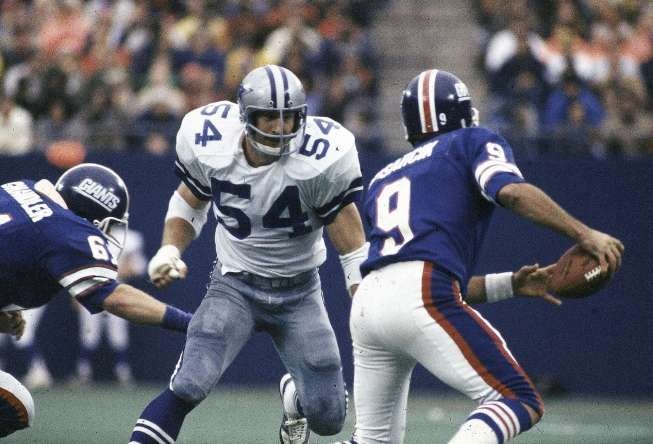
4. Randy White, linebacker, Dallas Cowboys, 1975-88. As a defensive tackle at the University of Maryland, he was nicknamed "Manster": Half-man, half-monster. A 9-time Pro Bowler, he and Harvey Martin were named Co-MVPs of the Cowboys' dominant victory over the Denver Broncos in Super Bowl XII.

He was named to the College and Pro Football Halls of Fame, the NFL's 1980s All-Decade Team, and the Cowboys Ring of Honor. The team has, however, given his Number 54 back out. When The Sporting News named its 100 Greatest Football Players in 1999, White was ranked 51st. When the NFL Network named its 100 Greatest Players in 2010, he was ranked 62nd.

3. Roger Staubach, quarterback, Dallas Cowboys, 1969-79. To rank the man known, for quarterbacking "America's Team," as "Captain America" only 3rd seems like sacrilege. Well, it's kind of hard to put him ahead of the top 2 guys on this list.

After winning the Heisman Trophy at the U.S. Naval Academy in 1963, he fulfilled his military commitment, during the Vietnam War, and played on service teams until his commitment was complete. The Cowboys had drafted him, and he was able to join them in 1969. They won the NFC Championship in 1970, with Craig Morton as quarterback, but lost Super Bowl V. He was handed the starting job, and led them to win Super Bowl VI, being named the game's MVP.

A 6-time Pro Bowler, and the 1971 NFL MVP, he became known as Roger the Dodger -- due to his scrambling, as he certainly hadn't dodged the draft, military or NFL. He led the Cowboys to 3 more NFC Championships and victory in Super Bowl XII in the 1977 season.

The Academy retired his Number 12. The Cowboys don't retire numbers, but they haven't given 12 out since he retired after the 1979 season, and they named him to their Ring of Honor. He was named to the College and Pro Football Halls of Fame, and the NFL's 1970s All-Decade Team. When The Sporting News named its 100 Greatest Football Players in 1999, Staubach was ranked 29th. When the NFL Network named its 100 Greatest Players in 2010, he was ranked 46th.

2. Bob Lilly, defensive tackle, Dallas Cowboys, 1961-74. An All-American at Texas Christian University (TCU) in Fort Worth, he became the 1st Cowboys star, making 11 Pro Bowls. He put the Cowboys' original "Doomsday Defense" on his back, and got them into 6 NFL or NFL Championship Games, losing Super Bowl V and winning Super Bowl VI.

"Mr. Cowboy" was named to the Cowboys Ring of Honor, the College and Pro Football Halls of Fame, and the NFL's 1960s and 1970s All-Decade Team and its 75th Anniversary Team. The Cowboys do not retire numbers, but no other Cowboy has worn his Number 74.

In 1999, The Sporting News listed him 10th on their list of the 100 Greatest Football Players, the highest-ranking defensive lineman, and behind only Dick Butkus and Lawrence Taylor among all defensive players. In 2010, the NFL Network ranked him 26th on their list of the 100 Greatest Players.

1. Emmitt Smith, running back, Dallas Cowboys, 1990-2002. The University of Florida star was named NFL Rookie of the Year in 1990. He made 8 Pro Bowls. Before the 1992 season, no player had ever led the NFL in rushing and won the Super Bowl in the same season. With the Dallas Cowboys, Emmitt did it 3 times, winning Super Bowls XXVII, XXVIII and XXX, being named MVP in XXVIII. In the 1993 season, he became the 1st, and remains the only, player ever to win the rushing title, the Bert Bell Award as regular-season MVP, and the Super Bowl MVP in the same season.

He holds the NFL rushing records for most attempts, 4,409; yards, 18,355; and touchdowns, 164. He and Jerry Rice are the only non-kickers to have scored more than 1,000 career points. While still active, in 1999, The Sporting News listed him at 68th on their list of the 100 Greatest Football Players. In 2010, by which point he had already been named to the Florida Football and the Dallas Cowboys Rings of Honor, the NFL's 1990s All-Decade Team, and the College and Pro Football Halls of Fame, the NFL Network ranked him 28th on their 100 Greatest Players. It doesn't seem fair that the NFL's all-time leading rusher should only be 28th, but that's where they put him.

Neither UF nor the Cowboys officially retire numbers. While his Number 22 remains in circulation in Gainesville, the Cowboys have not given it out since he retired.

Thursday, December 7, 2017

Top 10 Athletes From Delaware

December 7, 1787: Delaware becomes the 1st State to ratify the Constitution of the United States -- making it forever "The First State."

Top 10 Athletes From Delaware

All of these are from Wilmington, unless otherwise stated.

Honorable Mention to William "Judy" Johnson. Since Negro League records are sketchy, and he never got a chance to show what he could do in the white majors, I can't list him in the Top 10. But he is in the Baseball Hall of Fame.

Honorable Mention to Dallas Green of Newport. He wasn't much of a pitcher, although the 1964 Philadelphia Phillies' collapse cannot be blamed on him. But in 1980, he managed the Phillies to their long-awaited 1st World Series win. He became the general manager of the Chicago Cubs, and built the teams that won National League Eastern Division titles in 1984 and 1989. He later served as a consultant for the Phillies, and helped build their 2008 World Champions.

10. Val Whiting. Born in East Orange, Essex County, New Jersey, she moved to Wilmington during her school years, and became perhaps the greatest basketball player of either gender produced by Delaware. A forward, she won National Championships at Stanford University in 1990 and 1992, and was Pac-10 Player of the Year in 1992 and 1993. She played 6 seasons of pro ball, 1 in the ABL and 5 in the WNBA.

9. Vicki Huber. One of the many legends in track & field at Philadelphia's Villanova University, the middle-distance runner won the 1988-89 Honda-Broderick Cup as the best female collegiate athlete of the schoolyear. But her best Olympic performance was 6th in the 3,000 meters in 1988 in Seoul.

8. Delino DeShields of Seaford. He was good enough in high school basketball to be offered a scholarship by Villanova, but chose baseball after being drafted by the Montreal Expos. He played 13 seasons as a major league 2nd baseman, reaching the postseason with the Los Angeles Dodgers in 1995 and 1996. However, he may be best known for the Expos trading him to the Dodgers for Pedro Martinez, which may have cost the Dodgers the Pennant both times.

His son Delino DeShields Jr. is a center fielder for the Texas Rangers. His daughter Diamond DeShields played basketball at the University of Tennessee.

7. Ed Michaels. A guard, he was nearly deaf, which kept him out of World War II, but he played pro football for 11 years, including with the 1937 NFL Champion Washington Redskins.

6. Frank Shakespeare. He was the 1st Delaware resident to win an Olympic Gold Medal, in rowing in 1952 in Helsinki, Finland.

5. Dionna Harris. A 2nd baseman (basewoman?), she was the batting average leader on the U.S. team that won the Gold Medal in softball at the 1996 Olympics in Atlanta.

4. Steve Watson. A 1981 Pro Bowler, he reached Super Bowls XXI and XXII with the Denver Broncos.

3. Creighton Miller. A running back, he helped Notre Dame win the 1943 National Championship, leading the nation in rushing and finishing 4th in the Heisman Trophy voting. (His quarterback, Angelo Bertelli, won it.) Doctors told him not to play pro football because of high blood pressure. Good thing he went to law school.

Born in Cleveland, he played his high school football in Wilmington, before returning to Cleveland, coaching with the Browns' 1946 AAFC Champions, then helped found the NFL Players Association, serving as their legal counsel from 1956 until they were recognized by the NFL in 1968.

2. Vic Willis of Newark. He threw his last pitch in 1910. He was elected to the Baseball Hall of Fame in 1995. Even given that the Hall didn't hold its 1st election until 1936, that's still his 59th year of eligibility.

He was 249-205 in a 13-season big-league career. He pitched a no-hitter for the Boston Beaneaters (forerunners of the Atlanta Braves) in 1899. He led the National League in earned run average in 1899 and in strikeouts in 1902. He won the World Series with the Pittsburgh Pirates in 1909.

1. Randy White. Nicknamed "Manster," because he was half-man, half-monster. He's the best football player the University of Maryland has ever produced, winning the 1974 Lombardi Trophy as the nation's best lineman, and the year's Outland Trophy as the nation's best interior lineman. The school retired his Number 94.

The Dallas Cowboys traded up to draft him, and moved him from defensive tackle to linebacker. A 9-time Pro Bowler, he helped them win Super Bowl XII, and was named Co-Most Valuable Player along with Harvey Martin. He also helped them reach Super Bowls X and XIII, and 6 NFC Championship Games.
Randy White, ordering a Pisarcik sandwich to go.

The Cowboys don't retire numbers, and Jaylon Smith currently wears his Number 54. But they did elect him to their Ring of Honor. He was named to the College and Pro Football Halls of Fame, and the NFL's 1980s All-Decade Team.