Showing posts with label paul waner. Show all posts

Thursday, November 16, 2017

Top 10 Athletes From Oklahoma

November 16, 1907: Oklahoma is admitted to the Union as the 46th State.

Top 10 Athletes From Oklahoma

If you think that I, as a Yankee Fan, will automatically place Mickey Mantle at Number 1, think again.

Honorable Mention to Heisman Trophy Winners from the University of Oklahoma, who didn't make the Top 10: Billy Vessels of Cleveland (1952), Steve Owens of Miami (1969), Jason White of Tuttle (2003) and Sam Bradford of Oklahoma City (2008).

It is a little weird that Vessels was from a town named Cleveland, and Owens from one named Miami, both names of pro football cities, but their hometowns were considerably smaller. The original Miami was in Ohio, not Florida or Oklahoma. Vessels was born on March 22, 1931, the same day as William Shatner; and Vessels was born on December 9, 1947, in Gore, 2 days after Johnny Bench was born 200 miles to the east in Binger.

Honorable Mention to Will Shields of Lawton. A 12-time Pro Bowler, the guard was named to the College and Pro Football Halls of Fame, the Kansas City Chiefs Hall of Fame, and the NFL's 2000s All-Decade Team.

Honorable Mention to 3 Yankee Legends. Allie Reynolds of Bethany was the ace of the pitching staff that won 5 straight World Series from 1949 to 1953. He has a Plaque in Yankee Stadium's Monument Park. Ralph Terry of Chelsea won 107 games, including 16 in 1961, helping the Yankees win the World Series; and 23 in 1962, plus Games 5 and 7 of the World Series.

And Bobby Murcer of Oklahoma City turned down a chance to play quarterback for Bud Wilkinson at the University of Oklahoma, to become a 5-time All-Star, helping to bridge the painful gap between the Mantle Era and the Munson-Jackson Era, before becoming a beloved broadcaster.

Honorable Mention to Lester Lane of Purcell. A guard for the Sooners, he was a member of the U.S. basketball team that won the Gold Medal at the 1960 Olympics in Rome, a team which, in its entirety, was elected to the Basketball Hall of Fame. However, he never played in the pros, and had just been named the Sooners' head coach in 1973, when he died of a heart attack at age 41.

Honorable Mention to Wayman Tisdale of Tulsa. The forward was a 3-time Big 8 Player of the Year for the Sooners, who retired his Number 23. He was a member of the U.S. team that won the Gold Medal at the 1984 Olympics in Los Angeles, succeeding the 1960 team as the best amateur basketball team ever assembled.

Unlike Lane, he did play in the NBA, 4 seasons with the Indiana Pacers, 5 with the Sacramento Kings, and 3 with the Phoenix Suns. While still an active player, he began a music career in 1995, as a bass guitarist, titling his 1st album Power Forward. He recorded 8 albums before dying of cancer in 2009, only 44.

10. John Smith of Del City. Winner of the 1990 James E. Sullivan Award as America's outstanding collegiate athlete of the year, and Olympic Gold Medals in wrestling at Seoul in 1988 and Barcelona in 1992, he is now the head coach at his alma mater, perhaps the greatest of all college wrestling programs, Oklahoma State University.

9. Joe Carter of Oklahoma City. He has been elected to the College Baseball Hall of Fame, having been named College Player of the Year in 1981, for Wichita State University. A 5-time All-Star, he led the American League in RBIs in 1986, leading to Sports Illustrated putting him and his Cleveland Indians teammate Cory Snyder on the cover of their 1987 Baseball Preview Issue, saying, "Indian Uprising: Believe It: Cleveland Is the Best Team in the American League!" The Indians lost 101 games.

Carter survived that, though, and became (and remains) the only man ever to participate in the final play of the World Series as both a fielder making the final out and a hitting driving in the winning run: In 1992, he took a throw at 1st base for the last out for the Toronto Blue Jays; in 1993, he hit the home run that won the Series for the Jays.

He retired after the 1998 season, with 2,184 hits and 396 home runs, not quite Hall of Fame levels, but certainly with the status of a baseball legend. The Jays named him to their ring of honor, or, as they call it, their Level of Excellence, although they have not retired his Number 29.

8. Paul Waner of Harrah. One of the top hitters of his era, he played in 4 of the 1st 5 All-Star Games, won 3 batting titles, had a .333 lifetime batting average, and was the only man to cross the 3,000-hit barrier between 1925 and 1958.

He just missed being a member of the Pittsburgh Pirates' 1925 World Champions, but he did help them win another National League Pennant in 1927. The Pirates retired his Number 11, and he was named to the Baseball Hall of Fame and The Sporting News' 100 Greatest Baseball Players, ranking 62nd.

Honorable Mention to Lloyd Waner of Harrah. Along with 1869 Cincinnati Red Stockings Harry and George Wright, the Waners are 1 of only 2 pairs of brothers in the Hall of Fame. Lloyd, who played center field alongside Paul in right, is often called one of the least worthy Hall-of-Famers, but he was no slouch: He batted .316 lifetime, and collected 2,459 hits. He also helped the Pirates win the 1927 Pennant, and was an All-Star along with his brother in 1938, when they nearly won it again. His Number 10, however, has not been retired.

Once, when the Pirates were playing away to the Brooklyn Dodgers, a reporter heard someone with a Brooklyn accent call them "a big person and a little person." From that point onward, Paul was known as "Big Poison" and Lloyd as "Little Poison." Paul was the older brother and the bigger hitter, but Lloyd was actually taller.

7. Lee Roy Selmon of Eufaula. The 1st player drafted by the Tampa Bay Buccaneers, after a career in which he and his brothers Dewey (also drafted by the Bucs) and Lucious helped lead Oklahoma to the National Championship in 1974 and 1975.

A 6-time Pro Bowler at defensive end, in 1979 he was named the NFL's Defensive Player of the Year, and helped the Bucs reach the NFC Championship Game, just 2 years after ending a franchise-beginning 26-game losing streak.

He was named to the College and Pro Football Halls of Fame, the NFL's 1980s All-Decade Team, and the Buccaneers' Ring of Honor. His Number 63 was the 1st to be retired in the history of Tampa Bay major league sports.

He later served as athletic director at the University of South Florida, founding its football program. A highway in Tampa was named the Lee Roy Selmon Expressway in his memory.

6. Steve Largent of Oklahoma City. The greatest athlete in the history of the University of Tulsa, he was a 7-time Pro Bowler, and helped the Seattle Seahawks reach the AFC Championship Game in 1983, a feat they wouldn't achieve again for 22 years (by which point they were in the NFC). His 819 catches, 13,089 receiving yards and 100 receiving touchdowns were all records, since surpassed.

Tulsa retired his Number 83. The Seahawks retired his Number 80, and named him to their Ring of Honor. He was named to the Pro Football Hall of Fame, the NFL 1980s All-Decade Team, and The Sporting News' 100 Greatest Football Players in 1999.

In 1994, he was elected to Congress from his home district in Oklahoma. He was re-elected until 2002, when he decided to run for Governor, getting the Republican nomination, but losing by less than 7,000 votes.

5. Carl Hubbell of Meeker. A lefthanded pitcher specializing in the screwball, he was the National League's starter in the 1st 2 All-Star Games, and appeared in each of the 1st 6, and 9 of the 1st 10. In the 1934 All-Star Game, he struck out Babe Ruth, Lou Gehrig, Jimmie Foxx, Al Simmons and Joe Cronin, all in a row.

He helped the New York Giants win the 1933 World Series. He also helped them win the 1936 and 1937 National League Pennants, with a 24-game regular-season winning streak straddling the seasons. winning Game 1 of the '36 Series but losing its Game 4. He won 253 games in his career, and the Giants made his Number 11 the 1st ever retired for an NL player. He was elected to the Baseball Hall of Fame, and The Sporting News named him to its 100 Greatest Baseball Players.

By a sad twist of fate, Hubbell and his Hall of Fame teammate Mel Ott died in car crashes, exactly 30 years apart: Ott on November 21, 1958 in New Orleans at age 49; and Hubbell on November 21, 1988 in Scottsdale, Arizona at age 85.

4. Troy Aikman of Henryetta. Born in Southern California, but grew up in Oklahoma, he started at the University of Oklahoma, but went "home" to UCLA, quarterbacking them to win the 1989 Cotton Bowl.

A 6-time Pro Bowler, he led the Dallas Cowboys to win Super Bowls XXVII (he was named Most Valuable Player), XXVIII and XXX. UCLA retired his Number 8. The Cowboys don't retire numbers, but they haven't given his 8 out since he retired, and they named him to their Ring of Honor.

In 1999, The Sporting News ranked him 95th on their 100 Greatest Football Players. In 2010, the NFL Network ranked him 80th on their 100 Greatest Players.

3. Johnny Bench of Binger. Let's get something straight: Comparing him to Johnny Bench does not embarrass Thurman Munson. Comparing him to Mike Piazza, a born designated hitter who never should have been placed behind the plate, that embarrasses Munson. And Bench.

A 14-time All-Star, and a 10-time Gold Glove, Bench was named National League Rookie of the Year in 1968, NL Most Valuable Player in 1970 and 1972, and World Series MVP in 1976. He helped the Cincinnati Reds reach 6 postseasons, winning 4 Pennants and the 1975 and 1976 World Series. He hit 389 home runs, and at his retirement had more home runs at the position of catcher than anyone.

The Reds retired his Number 5, and erected a statue of him outside Great American Ball Park. He was elected to the Baseball Hall of Fame, was ranked 16th on The Sporting News' 100 Greatest Baseball Players (1 ahead of Mickey Mantle, which is a joke), and was named to the Major League Baseball All-Century Team.

2. Mickey Mantle of Commerce. The most popular baseball player of his generation, he has always been compared to his predecessor as Yankee center fielder, Joe DiMaggio; and to the other great center fielder of his generation, Willie Mays.

Mantle had a better base-stealing percentage than either one, was not much below them defensively, and with the bat? Here's their statlines: Batting average, on-base percentage, slugging percentage, OPS+:

DiMaggio: .325/.398/.579/155
Mays: .302/.384/.557/156
Mantle: .298/.421/.557/172

Mantle doesn't have the batting average that either does, and is beneath DiMaggio for slugging; but has a much higher on-base percentage and OPS+ than either one. Put it bluntly: Mickey Mantle was a better all-around baseball player than Joe DiMaggio or Willie Mays.

He was a 16-time All-Star. He won the American League Most Valuable Player award in 1956, 1957 and 1962, and was arguably robbed of it in 1955 (I don't think he was bothered that it went to his teammate, Yogi Berra), 1958 (Jackie Jensen) and 1964 (Brooks Robinson).

Only once did he win a Gold Glove, in 1962, although it should be noted that the award didn't begin until 1957. He won the MVP in 1956 by winning the Triple Crown, making him the last player to this day to lead both Leagues in batting average, home runs and runs batted in.

He hit 536 home runs, 3rd all-time at the time of his retirement. He won 12 Pennants and 7 World Series: In 1951, 1952, 1953, 1956, 1958, 1961 and 1962. He hit 18 home runs in World Series play, a record. And, despite all his injuries, he retired as the Yankees' all-time leader in seasons (18) and games played (2,401, both records later broken by Derek Jeter).
The Yankees retired his Number 7 and gave him a Plaque for Monument Park in 1969, and replaced it with a Monument in 1996, after his death. He was named to the Baseball Hall of Fame, and to The Sporting News' 100 Greatest Players (ranked 17th) and the Major League Baseball All-Century Team in 1969.

Outside the new Triple-A ballpark in Oklahoma City, Chickasaw Bricktown Ballpark, there are statues of Mantle and Bench, and streets named for them and Joe Carter. There's also a statue of Warren Spahn, who married an Oklahoma native and lived most of his adult life in Oklahoma, but was from Buffalo, and was included on this list for New York State.

1. Jim Thorpe of Prague. People in the 21st Century hear that Thorpe was honored as "the greatest athlete of the 1st half of the 20th Century," and "the greatest athlete who ever lived," and they find it hard to imagine.

They might know that Burt Lancaster played him in the 1951 film Jim Thorpe -- All American, and may even have seen it, but might also acknowledge that movies made in those days and "based on a true story," particularly sports stories, were often full of crap. (Certainly, this was the case with The Babe Ruth Story in 1948 and Knute Rockne, All-American in 1940.)

So let me put this into today's context. Imagine a good hitter and a fast runner -- say, Brett Gardner. Now, imagine a somewhat talented professional basketball player -- say, Tim Hardaway Jr. Now, imagine the best running back in the NFL today -- say, Le'Veon Bell. Now, imagine the best defensive back in the NFL today -- say, Aqib Talib. Now, imagine the best placekicker in the NFL today -- say, Stephen Gostkowski. Now, imagine the man who won the Olympic decathlon last year -- which would be Ashton Eaton, who also won it in 2012.

Now imagine that 1 man had done what all 6 of these men have done. And that's Jim Thorpe.

He had a "barnstorming" basketball team called "The World Famous Indians" in the mid-1920s. He played Major League Baseball from 1913 to 1919 -- and it was playing minor-league baseball that got him ruled a "professional," even though it wasn't the same sport, and got his Olympic Gold Medals taken away. (They were restored long after his death.)

In 1917, Fred Toney of the Cincinnati Reds pitched a 10-inning no-hitter. His opponent, Jim "Hippo" Vaughn of the Chicago Cubs, also took a no-hitter into the 10th -- the only double no-hitter in MLB history -- but lost the game on an RBI single by Jim Thorpe. That was the highlight of a career in which his lifetime batting average was .252.

The sport for which Thorpe would be best known was track & field. At the 1912 Olympics in Stockholm, Sweden, he won both the pentathlon (no longer contested, and not to be confused with the event called "the modern pentathlon") and, an event contested for the 1st time in 1912, the decathlon. That's 10 events, over 2 days, a true test of strength, speed, agility and endurace: 4 running, 3 jumping, 3 throwing. He won them both.

When he was presented with his Gold Medal, it was by King Gustav V of Sweden. The King told Thorpe, in English, "You, sir, are the greatest athlete in the world." Thorpe told the King, "Thanks, King."

Ever since, just as the winner of the final of the Olympic 100 meters is unofficially designated "the fastest man in the world," and the winner of the Gold Medal in heavyweight weightlifting is called "the strongest man in the world," the winner of the Olympic decathlon has been called "the world's greatest athlete."

Even before Stockholm, Thorpe was already considered the best football player in America. He played for the Carlisle Indian Industrial School, and led them to upsets of Harvard (18-15) in 1911 and Army (27-6) at West Point in 1912.

This win over Army was bigger emotionally than competitively: Not only was the Army squad, like Harvard's, one of the best in the country, but this was only 22 years after the Wounded Knee Massacre. It would be like sending poor American college kids who learned about 9/11 from their fathers to Saudi Arabia, and beating the al-Qaeda academy on their home field in their best sport. Ironically, in 1918, the Army bought the school, land and buildings, and it's now the U.S. Army Heritage and Education Center.

Legend has it that future President Dwight D. Eisenhower played in this game, tried to tackle Thorpe, and got his leg broken as a result. The truth is far less romantic: "Ike" did play in the game, and almost certainly tried to tackle Thorpe at some point (there's no surviving film, so we can't prove it), but his career-ending injury came in Army's next game, and wasn't nearly so severe. And he wouldn't have played pro football anyway, due to his military commitment. Besides, there would be no NFL to play in for another 8 years.

Thorpe played professionally for several teams, most notably the Canton Bulldogs, the leading team of the 1910s. When the American Professional Football Association was founded in 1920 -- the name was changed to the National Football League 2 years later -- the Bulldogs were admitted, and Thorpe was named President. After a single season, he realized he was just a figurehead, a name used to drum up publicity, and resigned.
The most familiar image of Thorpe,
later used for the U.S. postage stamp in his memory.
With the Canton Bulldogs, 1915.

As with his basketball team, he formed a traveling team of Native Americans, based in Marion, Ohio -- hometown of the man who was then President, Warren Harding -- and called them the Oorang Indians, playing in 1922 and 1923. In 1925, the New York Giants' 1st season, he played 3 games for them. He closed his career in 1928, with the Chicago Cardinals, at age 41.

Early NFL records are sketchy: Pro-Football-Reference.com lists only fragmentary kicking stats for him, and no rushing or defensive stats. They also don't cite any uniform number he might have worn, although the NFL was the 1st major pro sports league to use them. I've seen photographs showing him wearing 1 and 21, but, of the 6 NFL teams for which he played, only the Giants and Cardinals still exist, and he hardly played for either one, and they may not have a number for him in their records.

After he retired, he was broke: As with so many other minority athletes who made it big, he gave so much to his own people that he had nothing left for himself. He did odd jobs, and appeared in a few movies, mostly playing Indian chiefs, and was also in the "pass it along" prison scene with James Cagney in White Heat.

He lived long enough to be saluted on Milton Berle's Texaco Star Theatre and The Ed Sullivan Show (then known as Toast of the Town), to see the Lancaster movie, to be elected to the College Football Hall of Fame, and to learn that the Associated Press had named him "Athlete of the Half-Century."

He died of cancer in 1953, before the establishment of the Pro Football Hall of Fame, his induction as the 1st player in it (not counting George Halas, who did play but was elected as the NFL's founder), the dedication of his statue in its gallery, his being named to the NFL's 1920s All-Decade Team (despite already being 32 when the decade began), or the establishment of the Jim Thorpe Award as college football's defensive back of the year.

In 1999, AP ranked him 3rd on its Athletes of the Century list, behind Babe Ruth (who, like Thorpe, had done nothing to change his achievements in the intervening 49 years) and Michael Jordan (but ahead of Muhammad Ali). In 2008, ESPN named ranked him 6th on their list of the Top 25 College Football Players of All Time.

Was Jim Thorpe the greatest athlete who ever lived? In his time, he was the best in the business at 2 of them, and played well in 2 others. The competition may not have been what it later became. But I have no doubt that he would loom every bit as large as Justin Verlander, Tom Brady, LeBron James and Sidney Crosby do today.

Monday, March 24, 2014

Dallas' All-Time Baseball Team

The Texas League featured the Dallas Eagles and the Fort Worth Cats, before 1965 when Turnpike Stadium was built in Arlington, and became home to the Dallas-Fort Worth Spurs. It seated 10,000, with room for expansion, in the hope of landing a moving major league team.

After failing to convince Charlie Finley to move the Kansas City Athletics there (before he eventually moved them to Oakland for 1968), Turnpike Stadium was expanded to 20,000 in 1970. With the announcement that the "new" Washington Senators were coming, under the Texas Rangers name, it was expanded to 35,000 in 1972, renamed Arlington Stadium, before a final expansion to 43,000 in 1978.

The new stadium, previously known as "The Ballpark in Arlington" and Ameriquest Field before the insurance company bearing that name went to the last roundup, opened in 1994, right next to Arlington Stadium, which was demolished. The new ballpark hosted the All-Star Game in 1995 and the Rangers' home games in the 1996, '98 and '99 American League Division Series -- all of them won by the Yankees.

This was before the Rangers won the AL West in 2010 and finally beat the Yankees in the AL Championship Series, but lost 2010 and '11 World Series (the latter in crushing fashion), and choking away the 2012 AL West title.

23. Dallas' All-Time Baseball Team

This is a powerful team, with Hall-of-Famers at every position but 1st base (and even that comes pretty close), and 1st base and the outfield are particularly deep. The pitching is quite strong, with 2 starters whose careers were sadly cut short, but one made the Hall of Fame anyway and the other could have. It also includes the former all-time saves leader.

For all players mentioned below, their hometowns are in the State of Texas, unless otherwise specified.

1B Joe Carter of Oklahoma City, Oklahoma. He starred for the San Diego Padres and Cleveland Indians before becoming a 5-time All-Star with the Toronto Blue Jays, hitting 396 home runs with 10 100-RBI seasons. In 1992, he caught the final out as the Jays won the World Series. He was also involved in the final play of the 1993 World Series, hitting a home run off Mitch Williams to take the Jays from a 6-5 deficit against the Philadelphia Phillies to an 8-6 win in Game 6 to clinch.

Baseball-Reference.com has him at 87 on its Hall of Fame Monitor, where a "Likely HOFer" is at 100; and a 32 on its Hall of Fame Standards, where the "Average HOFer" is at 50, so he'll probably never make it. But you'd have to be a Phillies fan who still hasn't gotten over '93 to not like Joe Carter. The Jays have only retired one number to date (Roberto Alomar's 12), but Carter's Number 29 is on their "Level of Excellence," a sort of combined Jays and CFL Toronto Argonauts hall of fame on the luxury boxes of the Rogers Centre.

Honorable Mention to Norm Cash of Post. He was a rookie on the 1959 American League Pennant-winning Chicago White Sox, but general manager Frank Lane then traded him to the Detroit Tigers for Steve Demeter.

Bone. Head. Trade. Stormin' Norman became a 4-time All-Star for the Tigers, winning the batting title with a .361 average in 1961 (he later admitted to having corked his bat that season) and helping them win the 1968 World Series, also coming close in 1961, '67 and '72. He finished with 377 home runs and a career OPS+ of 139. Sadly, he drowned in a boating accident near Detroit in 1986, shortly before his 52nd birthday.

Honorable Mention to Mike Hargrove of Perryton. Actually, Perryton is at the northernmost edge of the Texas Panhandle, almost exactly halfway between Dallas and Denver, so, theoretically, I could have made him the manager of the Colorado Rockies' all-time regional team. But his ties to the Rangers solidify his case for this team.

He was the AL Rookie of the Year in 1974, and an All-Star for the Rangers and Indians, batting .290 lifetime. Unfortunately, as a player, he is best remembered for all his fidgeting with his equipment at the plate, giving him the nickname "the Human Rain Delay."

He is also the manager of this team, leading the Indians to Pennants in 1995 and 1997, making him the only living human ever to do so. (Tris Speaker in 1920, Lou Boudreau in 1948 and Al Lopez in 1954 are all dead.) He managed the Tribe to the AL Central Division title 5 straight seasons, 1995 to '99. He later managed the Baltimore Orioles and Seattle Mariners, and is now a special advisor in the Indians' front office.

Honorable Mention to Chris Davis of Longview. He just turned 28, but the Oriole made his 1st All-Star team last season, leading the AL in home runs with 53 and RBIs with 138, finishing 3rd in the AL Most Valuable Player voting. His career OPS+ is 120, and the Rangers are going to look dumber and dumber for dumping him after 3 injury-plagued seasons that he definitely seems to have shaken off.

2B Rogers Hornsby of Fort Worth. He was a rotten person: A grouch, a snob, a member of the Ku Klux Klan, and on more than one occasion was nearly suspended from baseball due to his compulsive gambling. And, as it turned out, Rogers Hornsby the manager was lousy when he didn't have Rogers Hornsby the player in anything resembling his prime.

He may also have been the greatest right-handed hitter who ever lived. He batted .358. For his career. That's 2nd all-time behind Ty Cobb, and 1st among righthanders and among players who played mainly in the National League. He averaged .402 from 1921 to 1925. That's (roughly) 2 hits in every 5 at-bats for 5 years. In 1924, he set a 20th Century record (or just one for the NL, depending on whose stats you believe) with a .424 average. He won the Triple Crown in 1922 and 1925, along with Ted Williams one of only 2 men to do it twice (and the only one to do it in the NL).

In 1926, he was the player-manager for the World Champion St. Louis Cardinals. But he could never get along with management anywhere, and was immediately traded to the New York Giants for All-Star Frankie Frisch. It was a great trade for the Cards, and it might've been a great one for the Giants, if they could have hung onto him. Except Hornsby didn't let anyone tell him what to do, not even John McGraw, the imperious manager of the Giants. He did win 2 more Pennants, with the 1929 and 1932 Chicago Cubs.

He didn't quite make it to the 3,000 Hit Club, finishing with 2,930. But he had a career OPS+ of a staggering 175. He hit 301 home runs, 3rd all-time behind Babe Ruth and Lou Gehrig at the time he retired, and 1st among NLers.

He was elected to the Hall of Fame and the All-Century Team -- keeping in mind that, when the ACT was voted on in 1999, he'd had his last good season 68 years earlier, played his last game 62 years earlier, and had been dead for 36 years, so hardly anybody who voted had seen him play, and he didn't live long enough to give a comprehensive interview in the age of baseball nostalgia. Also in that year, when The Sporting News announced its 100 Greatest Baseball Players, he came in at Number 9.

He played most of his career before uniform numbers were worn, and, as a result, the modern Cardinals have honored him on the retired-number display of the wall at the new Busch Stadium with a representation of their "STL" logo instead of a number, instead of the only number he actually wore in a Cardinal uniform, in a return to them in 1933, which was Number 4. (He also wore that number with the St. Louis Browns.)

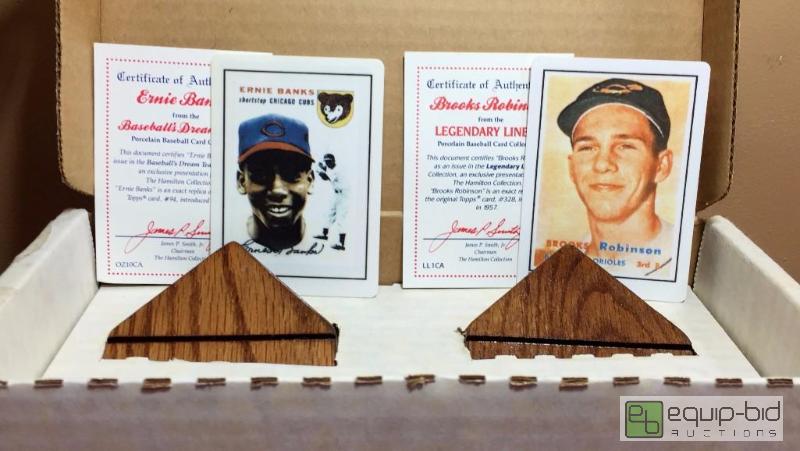
SS Ernie Banks of Dallas. Dallas gets insanely hot in the summer, so Chicago's summers must've seemed cool to him by comparison, enabling him to say, "It's a beautiful day for a ballgame, let's play two!" He was the NL MVP with the Cubs in 1958 and '59, even though they were in the second division. He hit 512 home runs for his career, still the honest record in Chicago. (Sammy Sosa hit 545 as a Cub, and 28 as a White Sock, but in a city noted for official corruption, his homers fit in a lot better than Ernie's.)

He labored so long and so hard to bring Cub fans a Pennant, only getting close in 1969 and '70. (People forget the Cubs actually finished closer in '70, mainly because they finished 2nd to Pittsburgh, not to New York.)

Despite the achievements of Michael Jordan, Walter Payton and Bobby Hull, "Mr. Cub," now 83 years old, remains the most popular athlete in Chicago history -- among Chicagoans, anyway. Hall of Fame, All-Century Team, and his Number 14 was the 1st retired by either Chicago ballclub. When The Sporting News announced its 100 Greatest Baseball Players in 1999, he came in at Number 38.

3B Brooks Robinson of Little Rock, Arkansas. Until Cal Ripken Jr., Brooksie was the most popular athlete in Baltimore history, even more so than Johnny Unitas. He won 16 Gold Gloves. In a row. And gained himself one of the great nicknames, for the way he sucked up grounders and liners: The Human Vacuum Cleaner.

He won Pennants with the Orioles in 1966, '69, '70 and '71, winning the World Series in '66 and '70 (Series MVP in the latter). A 15-time All-Star, and not just for his fielding: He collected 2,848 hits, including 482 doubles and 268 home runs, despite playing his home games in Baltimore's Memorial Stadium.

He went on to become a broadcaster, in effect Baltimore's answer to Phil Rizzuto and Richie Ashburn, although he was a better all-around player than either one of them.  He was named to the Hall of Fame and the All-Century Team. His Number 5 was retired, and he and Frank Robinson were the 1st 2 inductees into the Orioles Hall of Fame. (Frank was born in Texas, but grew up in Oakland, California, and is thus eligible for the A's regional all-time team, not the Rangers'. This is also true of Willie Stargell and Joe Morgan.) When The Sporting News announced its 100 Greatest Baseball Players in 1999, he came in at Number 80.

Honorable Mention to Travis Jackson of Waldo, Arkansas. A lifetime .291 hitter, he played on 4 Pennant winners for the New York Giants, including winning the 1933 World Series. He might not have been an obvious choice for the Hall of Fame, but he's in.

LF Lou Brock of Monroe, Louisiana. While Luis Aparicio, Nellie Fox and Maury Wills reawakened interest in baserunning, Brock took it to another level. He was a better runner than Aparicio and Fox, and better at everything else than Wills.

He set major league records, which still stand as NL records, with 118 stolen bases in a season (1974) and 938 in a career. Lifetime batting average .293, 3,023 hits including 486 doubles, and might have had a lot more than 149 home runs if he'd played most of his career at the last Sportsman's Park (a.k.a. the 1st Busch Stadium) with its 310-foot right-field fence, instead of the spacious Busch Stadium II.

He won World Series with the Cardinals in 1964 and '67, and nearly again in '68. In '67, he became 1 of only 3 players (Bobby Richardson in '64 and Marty Barrett in '86 are the others) to collect 13 hits in a single Series, and stole a record 7 bases in the '67 Series and again in '68.

He was elected to the Hall of Fame, his Number 20 was retired, and has a statue outside Busch Stadium III (previously outside Busch II) dedicated by the Cardinals. When The Sporting News announced its 100 Greatest Baseball Players in 1999, he came in at Number 58.

Dishonorable Mention to Albert Jojuan Belle of Shreveport, Louisiana. Known first as "Joey" and then, after angry protests, as Albert, he brings to mind what Sparky Lyle said about Thurman Munson: "(He's) not moody, he's just mean. When you're moody, you're nice sometimes." And yet, he was an Eagle Scout as a boy.

His lifetime batting average is .295, his OPS+ is a mighty 143, he hit 381 homers including 50 in the strike-truncated 1995 season, and had 9 straight 100-RBI seasons with a peak of 152 in 1998, leading the AL 3 times. He made 5 All-Star teams, finished 3rd in AL MVP voting in '94 and '96 and 2nd in '95, as he helped the Indians win a Pennant.

But his anger issues hurt his reputation, and a hip injury ended his career in 2000, at age 32 -- despite batting .281 with 23 homers and 103 RBI that year. He hit a home run in his last major-league at-bat, and among all players who've done that, only Ted Williams hit more career homers. Baseball-Reference.com's Hall of Fame Monitor has him at 135 to 100, and their Hall of Fame Standards at 36 to 50. Another season or two at the same pace, and he might be in, even with his issues.

CF Tris Speaker of Hubbard. "The Grey Eagle" (always written as "Grey," never "Gray") was regarded as perhaps the greatest defensive outfielder in history until Joe DiMaggio came along, known for playing shallow enough to turn 6 unassisted double plays at 2nd base in his career. He would have been ideal for today's shifts on lefty hitters who won't hit to the opposite field.

And he was as good a hitter as anyone who played in the Dead Ball Era. In 1912, he had over 50 doubles and 50 stolen bases, a feat since matched only by Craig Biggio. He helped the Boston Red Sox win the World Series in 1912 and 1915, then refused to take a salary cut when his batting average dropped, yes, dropped, to .322.

So the Sox traded him to the Indians, and although they also won the Series in 1916 and 1918, this was one of the dumbest trades ever. Speaker became player-manager of the Indians and won the 1920 World Series, also finishing 2nd to the Yankees in 1921, '23 and '26.

He had to resign as Indians manager, and Ty Cobb as Tigers manager, after the 1926 season because they were accused of colluding to fix games; however, when the main witness against them didn't show up at the hearing, they were allowed to remain in the game, but both retired as players 2 years later. Thanks to playing at the same time and in the same League as Cobb, Shoeless Joe Jackson and George Sisler, he only won 1 batting title, in 1916, but (probably unbeknownst to him, as the category wasn't well-known then) he led the AL in on-base percentage 4 times.

He batted .345 lifetime, with 3,515 hits, 2nd all-time to Cobb upon his retirement and still 5th. His 792 doubles (some sources say 793) and 449 outfield assists make him the all-time leader in those categories. Career OPS+ of a whopping 157.

He was elected to the Hall of Fame in its 2nd election in 1937. In 1947, despite (as was Hornsby) having once been a member of the Klan, Speaker accepted an appointment from new Indians manager Bill Veeck to coach Larry Doby, the AL's first black player, on how to play center field, which he hadn't played before. Speaker would assist other black players on the Indians as well, showing no outward signs of racism, and earning praise for this from Doby in his Hall of Fame induction speech.

As an Indians coach, Speaker wore Number 43, and while that number has not been retired by the team, they have honored him with a plaque in their Heritage Park at Progressive Field. When The Sporting News announced its 100 Greatest Baseball Players in 1999, he came in at Number 27, even though he'd played his last game 71 years earlier.

Honorable Mention of Lloyd Waner of Harrah, Oklahoma, who along with his brother Paul forms one of only 2 brother combinations in the Hall of Fame (the others being pioneers Harry and George Wright, the Wright Brothers who invented professional baseball rather than the airplane).

Some people say Lloyd doesn't deserve to be in the Hall, and B-R.com backs them up: 86 out of 100 on their HOF Monitor, 31 of 50 on their HOF Standards. But he wasn't that far behind HOF quality: He batted .316 lifetime, and had 2,459 hits. He also struck out 173 times. In his entire 18-year career. (For perspective: The aforementioned Chris Davis struck out 199 times last year alone, and 169 times the year before.) And, like his brother Paul, he helped the Pittsburgh Pirates win the NL Pennant in 1927, and nearly again in 1938.

Honorable Mention to Bobby Murcer of Oklahoma City, Oklahoma, who wasn't "the next Mickey Mantle" but was something beloved anyway. Beyond his role as a Yankee broadcaster and de facto club ambassador, he was a 5-time All-Star, and had a 124 OPS+. He led the AL in slugging in 1971, and in runs and total bases in 1972. He hit 252 home runs, despite missing 2 early seasons (1967 and '68) serving in the U.S. Army during the Vietnam War (although not in combat).

Although he helped the Yankees get close to the Playoffs in 1972, '73 and '74, and then went to San Francisco and Chicago before being brought back, he did help the Yankees win the AL East in 1980 and the Pennant in 1981. He wore Number 1 the first time around, and it is retired, although for Billy Martin. He wore Number 2 the second time around, and it will be retired, although for Derek Jeter.

Honorable Mention to Torii Hunter of Pine Bluff, Arkansas. One of the best glove men of his generation, he was nicknamed Spider-Man because of his ability to climb walls to make catches, including one of a Barry Bonds drive in the 2002 All-Star Game that is his signature moment. He's made 4 All-Star teams, won 9 Gold Gloves, has a 111 OPS+, 443 doubles, 314 homers, and 8 seasons of at least 90 RBIs (twice reaching 100 and just missing another).

He helped the Minnesota Twins win the AL Central in 2002, '03, '04 and '06, and the Los Angeles Angels of Anaheim the AL West in 2008 and '09. He turns 39 this season, and comes off a year with the Detroit Tigers in which he batted .304, hit 17 homers and had 84 RBIs, on route to the AL Central title and the ALCS.

Honorable Mention to Matt Kemp of Midwest City, Oklahoma. Only 29 years old, "the Bison" (one of the few really good nicknames in baseball these days) is one of the top players in the game at the moment. Already with 2 All-Star berths, 2 Gold Gloves, a .293 lifetime batting average, a 126 OPS+, and 157 home runs despite playing his entire career at pitcher-friendly Dodger Stadium. He led the NL with 39 homers and 126 RBIs in 2011, and has now led them to 3 NL West titles. This could be a future Hall-of-Famer.

By the way, if you're seeing these Oklahoma players, and remembering that Mickey Mantle was from Oklahoma, and that he lived his off-season life in Dallas, and wondering why I haven't mentioned him here, it's because his hometown of Commerce was in the northeastern corner of the Sooner State, which puts him in the Kansas City market, not the Dallas one.

RF Paul Waner of Harrah, Oklahoma. A reporter from Brooklyn called Paul and his brother Lloyd "a big person and a little person." Another reporter overheard this, in the Brooklyn reporter's accent, and started calling them "Big Poison" and "Little Poison." Except that Paul was 5-foot-8 and 153 pounds, and Lloyd was 5-foot-9 albeit roughly the same weight

Unlike Lloyd, there is no doubt about Paul's HOF credentials: He was the NL MVP in the Pennant-winning 1927 season (he came up in '26 and missed out on the Bucs' '25 World Championship), he had a .333 BA, a 134 OPS+, 3 batting titles and 3,152 hits (the only player to crack the 3,000 barrier between 1925 and 1958), including 605 doubles -- 62 in 1932, an NL record until broken by Joe Medwick 4 years later and not surpassed since.

He had 5 seasons batting .360 or above. He was the NL's starting right fielder in the 1st 3 All-Star Games. The Pirates retired his Number 11 -- but have not retired Lloyd's Number 10. When The Sporting News announced its 100 Greatest Baseball Players in 1999, he came in at Number 62.

Honorable Mention to Willard Brown of Shreveport, Louisiana, a powerful slugger who starred in the Negro Leagues for the Kansas City Monarchs in the 1930s and '40s, before playing 21 games in the majors, all with the St. Louis Browns in 1947. For his Negro League contributions, he is in the Hall of Fame, included in that making-up-for-lost-time election of 2006.

Honorable Mention to Hunter Pence of Arlington. He's about to turn 31, but he's already got a 120 OPS+, made 2 All-Star teams, and hit 165 home runs. He now plays for the San Francisco Giants, having helped them win the 2012 World Series after getting to the postseason the year before with the Philadelphia Phillies.

C Johnny Bench of Binger, Oklahoma.  He was the NL Rookie of the Year in 1968, and its MVP in 1970 and '72. He won NL Pennants in '70 and '72, and the World Series in '75 (he was named Series MVP) and '76. His 389 homers made him the all-time leader among catchers until passed by Carlton Fisk.

His manager on the Reds, Sparky Anderson, may not have been intentionally slighting Thurman Munson by saying this after the '76 Series, in which Munson got hits in his last 6 at-bats but Bench hit 2 homers in the Game 4 clincher, but, insulting or not, Sparky had a point: "Don't ever embarrass anybody by comparing them to Johnny Bench."

Late in his career, he hosted the kids' TV series The Baseball Bunch as a warmup act for NBC's Saturday Game of the Week. He was named to the Hall of Fame and the All-Century Team. The Reds have retired his Number 5. When The Sporting News announced its 100 Greatest Baseball Players in 1999, he came in at Number 16 -- the highest-ranking catcher, and the highest-ranking Oklahoman, ahead of Mantle.

Honorable Mention to Sherm Lollar of Durham, Arkansas. A 9-time All-Star, he was the catcher for the 1959 "Go-Go White Sox," Chicago's only Pennant-winner from 1945 to 2005.

Honorable Mention to Louis Santop of Tyler. Because he played before the founding of the original Negro National League, he was sort of lost by history, before the 2006 Hall of Fame election to find great black players from the pre-Jackie Robinson era who were deserving of a long-overdue election. Starring in both Philadelphia and New York, he appears to have been one of the most sensational hitters of the 1910s and '20s, black or white.

Whether he was as good as Negro League catchers Biz Mackey and Josh Gibson, let alone Negro Leaguer-turned-big-leaguer Roy Campanella, or big leaguers such as the aforementioned Bench, we may never know. But he's in the Hall, and he should have been in decades before.

SP Jay Hanna “Dizzy” Dean of Lucas, Arkansas, born in 1910. Or is that Jerome Herman Dean of Hodgenville, Oklahoma, born in 1911? Or was he born in Jackson, Mississippi in 1912? (The first set of name, birthplace and year of birth is officially, legally true.) One time-honored story is that Dean gave conflicting information to 3 different reporters, in quick succession, as to his name and birthplace. A teammate questioned him about that, and he answered, "I wanted to give each of them fellers an exclusive story!"

He reached the Cardinals' rotation in 1932, along with his brother Paul, known as Daffy Dean (who, unlike Diz, was not particularly odd and hated his nickname). In 1934, Diz said, "Me an' Paul are gonna win 50 games this season." He was almost right: Diz won 30 (losing only 7) and Daff won 19, leading the "Gashouse Gang" to the Pennant. Then Diz said, "Me an' Paul are gonna win this here World Series." He was completely right: Not only did he and Paul each win 2 games of the Series, but Diz pitched a shutout against the mighty Tigers in Game 7.

He remained, with Carl Hubbell and Satchel Paige, one of the 3 best pitchers on the planet, until the 1937 All-Star Game, when he took a line drive off his toe (supposedly telling the doctor, "Fractured, hell, the damn thing's broken!"), and began to favor the toe by changing his motion, thus wrecking his elbow. Despite a favorable trade to the Cubs in 1938 and a memorable "last stand" against the Yankees in Game 2 of that year's World Series, Diz was done after the 1941 season, only 31 years old. (He made a one-game comeback in 1947, which is a hell of a story.)

Although injury limited him to 150 wins, he lost only 83 for a .644 winning percentage. ERA+, 131. "Only" 1,163 strikeouts, and never topped 200 in a season, but led the NL 4 times. Hall of Fame, Number 17 retired and a statue dedicated by the Cards, and since he lived his adult life in Mississippi, a Dizzy Dean Museum was built next to Smith-Wills Stadium in the State capital of Jackson, now a part of the Mississippi Sports Hall of Fame. When The Sporting News announced its 100 Greatest Baseball Players in 1999, he came in at Number 85.

He went on to become a legendary broadcaster, mangling syntax and pronunciations. A teacher wrote him a letter, saying he shouldn't use the word "ain't" on the air, because children would copy him. He said, on the air, "Teach, a lot o' folks that ain't sayin' 'ain't' ain't eatin'. So you learn 'em English, and I'll learn 'em baseball." I wonder if, while growing up in St. Louis, Yogi Berra's speech was affected by listening to Diz call Cards and Browns games?

Diz was the Terry Bradshaw of his time: A great athlete turned star pundit of his sport, and since people already thought of him as a dumb, even "dizzy" redneck, he decided to use it to his advantage. "The Good Lord was good to me," Diz said. "He gave me a strong right arm and a weak mind."

SP Lon Warneke of Mount Ida, Arkansas. While Diz was the ace of the Cards, "the Arkansas Hummingbird" was the ace of the Cubs, pitching them to Pennants in 1932, '35 and '38 -- including '35 when the Cubs won 20 straight games, most since 1916 (since tied by the 2002 A's), and caught the Gashouse Gang for 1st. The Cubs lost the Series to the Tigers in 6, but both of their wins had Warneke as the winning pitcher. Strangely, he was traded to the Cards in '37 and became Diz' teammate, although only for a year or so; effectively, if not officially, Diz and Lon were traded for each other.

He finished his career 192-121 for .613, an ERA+ of 119. He's not in the Hall of Fame, but according to Baseball-Reference, of his 10 most statistically similar pitchers, 4 are: Jack Chesbro, Dazzy Vance, Stan Coveleski and Bob Lemon; 2 others should be, Urban Shocker and Carl Mays; and the other 4 aren't that far off, Art Nehf, Dave McNally, Mike Cuellar and Jimmy Key.

SP Allie Reynolds of Oklahoma City, Oklahoma. I thought about cheating a little with Allie, because while he was a great starter, Yankee manager Casey Stengel frequently used him in relief. If he’d been born later, and reached the majors in the 1970s onward, instead of being born in 1917 and reaching the majors in 1942, he probably would have been one of the greatest relievers ever, because he had the speed and the guts for it.

He played on 6 Yankee World Championship teams: 1947, '49, '50, '51, '52 and '53. He formed the "Big Three" with fellow righthanded fireballer Vic Raschi and lefty junkballer Steady Eddie Lopat. He went 182-107 for his career, and while he only won 20 once (in 1952), he also saved 49 games in his career. Of those 182 wins, 36 were shutouts, and 2 were no-hitters, both in 1951, the latter a Pennant-clincher against the Red Sox.

He went 7-2 in World Series play, including a 1-0 duel against Don Newcombe in Game 1 in '49, and 3 clinchers: Game 5 in '49, Game 4 in '50, and Game 7 in relief in '52. Had Casey left him as a starter, he would've had well over 200 wins and he'd be in the Hall of Fame.

The Yankees have honored him with a Plaque in Monument Park, although his Number 22 remains in circulation. His alma mater, Oklahoma State University (known as Oklahoma A&M until 1958), named their baseball stadium after him. Due to his Creek heritage, he was called "the Indian," "the Big Indian," and "the Superchief," which was also a reference to his fastball and the fast Chicago-to-Los Angeles train of the same name on the Santa Fe Railroad, which went through his home State.

He was also responsible for negotiating the first players' pension fund. This he did not have to do, since investing in Oklahoma oil made him richer than most players, and enabled him to retire following a 1954 back injury, only 37, since he didn't need baseball income anymore. So for him to help out his fellow players like that makes him a bigger hero than most players of his era.

SP Johnny Sain of Havana, Arkansas. In 1948, the Boston Braves won the Pennant, their last until moving to Milwaukee, with a superb rotation, with Sain, Warren Spahn, Vernon Bickford and Bill Voiselle. Both Bickford and Voiselle had better ERAs than Spahn that year, but Gerald V. Hern of the Boston Post coined the phrase "Spahn and Sain and two days of rain." (It's frequently been incorrectly printed as "Spahn and Sain and pray for rain." In 1999, Dan Shaughnessy of the Boston Globe would say the Red Sox rotation should be "Pedro and Lowe and three days of snow.")

Sain was later traded to the Yankees, and won the World Series with them in 1952 and '53. As with Reynolds, Casey used him as a reliever, and he led the AL with 22 saves in 1954, a big total for that era. Sain went on to become one of the best pitching coaches ever, winning Pennants with the Yankees in 1961, '62 and '63, and with the '65 Minnesota Twins and the '68 Tigers.

SP Vida Blue of Mansfield, Louisiana. He made his major league debut on July 20, 1969, the day of the 1st Moon walk, although it would be his Oakland Athletics teammate, Johnny Odom, who would (for a reason that escapes me) be known as Blue Moon. In 1971, Vida Blue had one of the most sensational years any pitcher has had in the Divisional Play Era (which is also the post-1968, 10-inch-high pitcher's mound era), going 24-8 with a 1.82 ERA and a 0.952 WHIP, to win both the AL Cy Young Award and MVP.

(This led to a trick question: Who was the last switch-hitter to win the MVP? People who asked that tended to forget that Pete Rose was a switcher, or that he won the NL MVP in '73. Five have done it since, most recently Jimmy Rollins.)

Then Blue demanded a big raise, which was a bad idea, as he pitched for the A's while they were owned by Charlie Finley. He held out for a while, and went 6-10 in '72. But he won 77 for them in the next 6 years, as he helped them with the 1972, '73 and '74 World Series. In 1978, 2 years after his sale of Blue to the Yankees for $1.5 million was vetoed by Commissioner Bowie Kuhn, Finley finally traded him, across the Bay to the San Francisco Giants, and he went 18-10. He was 28 and had a nice career record of 142-96.

Then cocaine began to take its toll, and not only would he never again top 14 wins in a season, but he would miss the 1984 season due to prison and suspension. In 1986, at 36, he was done: 209-161. On Baseball-Reference's HOF Monitor, he's at 114 of 100; on its HOF Standards, 35 of 50; of the 10 Most Similar, only 3 are in. (Catfish Hunter, Hal Newhouser and Don Drysdale. The others, all good but not quite good enough for Cooperstown, were Billy Pierce, Orel Hershiser, Bob Welch, Milt Pappas, Luis Tiant, Kevin Brown and Bucky Walters. At his peak, Blue was better than any of those 7 except maybe Hershiser in '88.) What a waste, but he has spent his post-playing days in charitable causes, and promotes youth baseball in the Bay Area.

Honorable Mention to Lynwood “Schoolboy” Rowe of El Dorado, Arkansas. He won 62 games for the Tigers from 1934 to '36, and opposed Dean in the '34 Series (lost) and Warneke in the '35 Series (won). An injury at age 27 curtailed his career, but he still went 16-3 for the Pennant-winning Tigers in 1940, and 14-8 and 11-4 for weak Phillies teams later in the Forties, hanging on until age 39. He went 158-101 for his career.

Honorable Mention to Cliff Lee of Benton. Now 35, he's had a very inconsistent career. His record currently stands at 139-86, but 18-5 of that was in 2005, 22-3 of it in 2008. Take out that 40-8, and he's 99-78, not especially noteworthy. His ERA+ is a neat 119, his WHIP a nifty 1.189. He's a 4-time All-Star, and won the 2008 AL Cy Young.

He reached the postseason with the Phillies in 2009 and '11, and the Rangers in '10, but was not placed on the postseason roster by the Indians in '07 -- meaning that, just 1 year before he went 22-3, he wasn't good enough to help them win the 1 more game they would've needed in the ALCS to win the Pennant.

Clearly, there's reasons why 4 different teams have acquired him (including the Phillies twice) -- but there's also got to be a reason why 4 different teams have let him go (including the Phillies once). Also, it should be noted that, despite playing on 4 teams that reached the postseason in a span of 5 years, he hasn't won a World Series ring.

Honorable Mention to Clayton Kershaw of Highland Park. He just turned 26, but he might be the best starting pitcher in baseball today. He's won the last 3 NL ERA titles, including a miniscule 1.83 ERA last year; and he just missed winning the last 3 NL Cy Youngs. He's 77-46 for his career, has already led the NL in strikeouts twice, and has helped the Dodgers win 3 NL West titles. If he doesn't get hurt, he could be one of the best pitchers we'll ever see.

Very Honorable Mention to Andy Cooper of Waco. Another Negro Leaguer elected in the 2006 vote, he was one of those rare players who batted right but threw left. He starred for the Detroit Stars in the 1920s, and in the 1930s was both pitcher and manager of the Kansas City Monarchs -- which means he had to both share a rotation with and manage Satchel Paige. Unfortunately, a stroke ended his magnificent career and his life in 1941, at just 43 years old.

RP Lee Smith of Castor, Louisiana. The former all-time saves leader with 478, an ERA+ of 132, but only reached the postseason twice, with the 1984 Cubs (infamously giving up a walkoff homer to Steve Garvey in Game 4 of the NLCS) and the 1988 Red Sox (swept). He's eligible for the Hall of Fame, but with Trevor Hoffman and now Mariano Rivera having taken away his all-time saves leader status, I'm not sure he'll ever make it.

Honorable Mention to Fred "Firpo" Marberry of Streetman. Nicknamed for his resemblance to Luis Firpo, the Argentine boxer who nearly knocked out heavyweight champion Jack Dempsey at the Polo Grounds in 1923, he was one of the first real relief pitchers in the game.

The Washington Senator led the AL in games pitched 6 times, and, although it wasn't an official statistic yet, in saves 5 times, with a peak of 22 (then a record) in 1926. He helped the Senators win their only World Championship in 1924 and another Pennant in 1925. In 1929, pitching as both a starter and a reliever for a Senator team that won only 71 games, he went 19-12. He helped the Tigers win a Pennant in 1934 and a World Series in 1935. His career record was 148-88, and his 101 saves were a record upon his 1936 retirement.

Honorable Mention to Lindy McDaniel of Hollis, Oklahoma. A career save total of 172 isn't all that impressive these days, but he led the NL 3 times, with the Cardinals and Cubs. His 987 appearances once made him 2nd on the all-time list to Hoyt Wilhelm, and in 1973 he went 12-6 with 10 saves for the Yankees.

Then he got traded to the Kansas City Royals for Lou Piniella, and it was a great trade: McDaniel was pretty much done but was able to be an extra pitching coach for the Royals' bright young staff, and if you're a Yankee Fan then you know what Sweet Lou did.

Tuesday, August 10, 2010

Dallas' All-Time Baseball Team

The Yankees begin a 2-game series tonight against the Texas Rangers, at what is currently named Rangers Ballpark, in Arlington, right between Dallas and Fort Worth, roughly 18 miles from the downtowns of each.

The Texas League featured the Dallas Eagles and the Fort Worth Cats, before 1965 when Turnpike Stadium was built in Arlington, and became home to the Dallas-Fort Worth Spurs. It seated 10,000, with room for expansion, in the hope of landing a moving major league team. After failing to convince Charlie Finley to move the Kansas City Athletics there (instead of to Oakland, as it turned out), Turnpike Stadium was expanded to 20,000 in 1970, and, with the announcement that the "new" Washington Senators were coming, to 35,000 in 1972, renamed Arlington Stadium, before a final expansion to 43,000 in 1978.

The new stadium, previously known as "The Ballpark in Arlington" and Ameriquest Field before the insurance company bearing that name went to the last roundup, opened in 1994, right next to Arlington Stadium, which was demolished. The new ballpark hosted the All-Star Game in 1995 and the Rangers' home games in the 1996, '98 and '99 Division Series -- all of them won by the Yankees.

Dallas' All-Time Baseball Team

For all players mentioned below, their hometowns are in the State of Texas, unless otherwise specified.

1B Joe Carter of Oklahoma City, Oklahoma. Starred for the San Diego Padres and Cleveland Indians before becoming a 5-tie All-Star with the Toronto Blue Jays, hitting 396 home runs with 10 100-RBI seasons. In 1992, caught the final out as the Jays won the World Series. He was also involved in the final play of the 1993 World Series, hitting a home run off Mitch Williams to take the Jays from a 6-5 deficit against the Philadelphia Phillies to an 8-6 win in Game 6 to clinch.

Baseball-Reference.com has him at 86 on its Hall of Fame Monitor, where a "Likely HOFer" is at 100; and a 32 on its Hall of Fame Standards, where the "Average HOFer" is at 50, so he'll probably never make it. But you'd have to be a Phillies fan who still hasn't gotten over '93 to not like Joe Carter. The Jays do not retire numbers, but his Number 29 is on their "Level of Excellence," a sort of combined Jays and CFL Toronto Argonauts hall of fame on the luxury boxes of the Rogers Centre.

Honorable Mention to Norm Cash of Post. He was a rookie on the 1959 American League Pennant-winning Chicago White Sox, but general manager Frank Lane then traded him to the Detroit Tigers for Steve Demeter. Bone. Head. Trade. Stormin' Norman became a 4-time All-Star for the Detroit Tigers, winning the batting title with a .361 average in 1961 (he later admitted to having corked his bat that season) and helping them win the 1968 World Series, also coming close in 1961, '67 and '72. He finished with 377 home runs and a career OPS+ of 139. Sadly, he drowned in a boating accident near Detroit in 1986, shortly before his 52nd birthday.

2B Rogers Hornsby of Fort Worth. He was a rotten person, a member of the Ku Klux Klan, and on more than one occasion was nearly suspended from baseball due to his compulsive gambling. He may also have been the greatest right-handed hitter who ever lived.

He batted .358. For his career. That's 2nd all-time behind Ty Cobb, and 1st among righthanders. He averaged .402 from 1921 to 1925. In 1924, he set a 20th Century record (or just one for the National League, depending on whose stats you believe) with a .424 average. He won the Triple Crown in 1922 and 1925, along with Ted Williams one of only 2 men to do it twice.

In 1926, he was the player-manager for the World Champion St. Louis Cardinals. But he could never get along with management anywhere, and was immediately traded to the New York Giants for All-Star Frankie Frisch. It was a great trade for the Cards, and it might've been a great one for the Giants, except Hornsby didn't let anyone tell him what to do, not even John McGraw, the imperious manager of the Giants. He did win another Pennant with the 1932 Cubs.

He didn't quite make it to the 3,000 Hit Club, finishing with 2,930. But he had a career OPS+ of a staggering 175. He hit 301 home runs, 3rd all-time behind Babe Ruth and Lou Gehrig at the time he retired, and 1st among NLers.

He was elected to the Hall of Fame and the All-Century Team. He played most of his career before uniform numbers were worn, and, as a result, the modern Cardinals have honored him on the retired-number display of the wall at the new Busch Stadium with a representation of their "STL" logo instead of a number, instead of the only number he actually wore in a Cardinal uniform, in a return to them in 1933, which was Number 4.

SS Ernie Banks of Dallas. Dallas gets so hot in the summer, so Chicago's summers must've seemed cool to him by comparison, enabling him to say, "It's a beautiful day for a ballgame. Let's play two!" He was the NL Most Valuable Player with the Cubs in 1958 and '59, even though they were in the second division. He hit 512 home runs for his career, still the honest record in Chicago. (Sammy Sosa hit 545 as a Cub, and 28 as a White Sock, but in a city noted for official corruption, his homers fit in a lot better than Ernie's.)

He labored so long and so hard to bring Cub fans a Pennant, only getting close in 1969 and '70. People forget the Cubs actually finished closer in '70, mainly because they finished 2nd to Pittsburgh, not to New York.

Despite the achievements of Michael Jordan, Walter Payton and Bobby Hull, "Mr. Cub," now 79 years old, remains the most popular athlete in Chicago history -- among Chicagoans, anyway. Hall of Fame, All-Century Team, his Number 14 was the first retired by either Chicago ballclub.

3B Brooks Robinson of Little Rock, Arkansas. Until Cal Ripken Jr., Brooksie was the most popular athlete in Baltimore history, even more so than Johnny Unitas. He won 16 Gold Gloves. In a row. And gained himself one of the great nicknames, for the way he sucked up grounders and liners: The Human Vacuum Cleaner.

He won Pennants with the Orioles in 1966, '69, '70 and '71, winning the World Series in '66 and '70 (Series MVP in the latter). He was a 15-time All-Star, and not just for his fielding: He collected 2,848 hits, including 482 doubles and 268 home runs despite playing his home games in Baltimore's Memorial Stadium.

He went on to become a broadcaster, in effect Baltimore's answer to Phil Rizzuto and Richie Ashburn, although he was a better all-around player than either one of them. Hall of Fame, All-Century Team, Number 5 retired -- the 1st Baltimore athlete ever so honored, and he and Frank Robinson (also born in Texas but grew up in Oakland, California) were the 1st 2 inductees into the Orioles Hall of Fame.

Honorable Mention to Travis Jackson of Waldo, Arkansas. A lifetime .291 hitter, he played on 4 Pennant winners for the New York Giants, including winning the 1933 World Series. He might not have been an obvious choice for the Hall of Fame, but he's in.

LF Lou Brock of Monroe, Louisiana. While Luis Aparicio, Nellie Fox and Maury Wills reawakened interest in baserunning, Brock took it to another level. He was a better runner than Aparicio and Fox, and better at everything else than Wills.

He set major league records, which still stand as National League records, with 118 stolen bases in a season (1974) and 938 in a career. Lifetime batting average .293, 3,023 hits including 486 doubles, and might have had a lot more than 149 home runs if he'd played most of his career at the last Sportsman's Park (a.k.a. the first Busch Stadium) with its 310-foot right-field fence, instead of the spacious Busch Stadium II.

He won World Series with the St. Louis Cardinals in 1964 and '67, and nearly again in '68. In '67, he became one of only 3 players (Bobby Richardson in '64 and Marty Barrett in '86 are the others) to collect 13 hits in a single Series, and stole a record 7 bases in the '67 Series and again in '68.

Hall of Fame, Number 20 retired and statue outside Busch Stadium III (previously outside Busch II) dedicated by the Cardinals.

Dishonorable Mention to Albert Jojuan Belle of Shreveport, Louisiana. Known first as "Joey" and then, after angry protests, as Albert, he brings to mind what Sparky Lyle said about Thurman Munson: "(He's) not moody, he's just mean. When you're moody, you're nice sometimes." And yet, he was an Eagle Scout as a boy.

He had a lifetime batting average .295, OPS+ a mighty 143, 381 homers including 50 in the strike-truncated 1995 season, and 9 straight 100-RBI seasons with a peak of 152 in 1998, leading the AL 3 times. He made 5 All-Star teams, finished 3rd in AL MVP voting in '94 and '96 and 2nd in '95 as he helped the Cleveland Indians win a Pennant.

But his anger issues hurt his reputation, and a hip injury ended his career in 2000, at age 32 -- despite batting .281 with 23 homers and 103 RBI that year. Homered in his last major-league at-bat, and among all players who've done that, only Ted Williams hit more career homers. Baseball-Reference.com's Hall of Fame Monitor has him at 134 to 100, and their Hall of Fame Standards at 36 to 50. Another season or two at the same pace, and he might be in, even with his issues.

CF Tris Speaker of Hubbard. "The Grey Eagle" (always written as "Grey," never "Gray") was regarded as perhaps the greatest defensive outfielder in history until Joe DiMaggio came along, playing shallow enough to turn 6 unassisted double plays at 2nd base in his career. (He would have been ideal for today's shifts on lefty hitters who won't hit to the opposite field.)

And he was as good a hitter as played in the Dead Ball Era. In 1912 he had over 50 doubles and 50 stolen bases, a feat since matched only by Craig Biggio. He helped the Boston Red Sox win the World Series in 1912 and 1915, then refused to take a salary cut when his batting average dropped, yes, dropped, to .322. So the Sox traded him to the Cleveland Indians, and although they also won the Series in 1916 and 1918, this was one of the dumbest trades ever. Speaker became player-manager of the Indians and won the 1920 World Series, also finishing 2nd to the Yankees in 1921, '23 and '26. 

He had to resign as Indians manager, and Ty Cobb as Detroit Tigers manager, after the 1926 season because they were accused of colluding to fix games; however, when the main witness against them didn't show up at the hearing, they were allowed to remain in the game, but both retired as players 2 years later. Thanks to playing at the same time and in the same League as Cobb, Shoeless Joe Jackson and George Sisler, he only won 1 batting title, in 1916, but (probably unbeknownst to him, as the category wasn't well-known then) he led the AL in on-base percentage 4 times.

He batted .345 lifetime, with 3,515 hits, 2nd all-time to Cobb upon his retirement and still 5th. His 792 doubles (some sources say 793) and 449 outfield assists make him the all-time leader in those categories. Career OPS+ of a whopping 157.

He was elected to the Hall of Fame in its 2nd election in 1937. In 1947, despite having once been a member of the Ku Klux Klan (as had Hornsby), Speaker accepted an appointment from new Indians manager Bill Veeck to coach Larry Doby, the AL's 1st black player, on how to play center field, which he hadn't played before. Speaker would assist other black players on the Indians as well, showing no outward signs of racism, and earning praise for this from Doby in his Hall of Fame induction speech. As an Indians coach, Speaker wore Number 43, and while that number has not been retired by the team, they have honored him with a plaque in their Heritage Park at Progressive Field.

Honorable Mention of Lloyd Waner of Harrah, Oklahoma, who along with his brother Paul forms 1 of only 2 brother combinations in the Hall of Fame (the others being pioneers Harry and George Wright, the Wright Brothers who invented professional baseball rather than the airplane); Bobby Murcer of Oklahoma City, Oklahoma, who wasn't "the next Mickey Mantle" but was something beloved anyway; and to 2 of the best glove men of our time, Torii Hunter of Pine Bluff, Arkansas and Vernon Wells of Arlington.

RF Paul Waner of Harrah, Oklahoma. A reporter from Brooklyn called Paul and his brother Lloyd "a big person and a little person." Another reporter overheard this, in the Brooklyn reporter's accent, and started calling them "Big Poison" and "Little Poison." Except that Paul was 5-foot-8 and 153 pounds, and Lloyd was 5-foot-9 albeit roughly the same weight.

Lloyd is one of the more dubious HOF selections: While his lifetime batting average is a strong .316, in his era it wasn't great, and his career OPS+ is 99, making him slightly less than average. But his 2,459 hits is nothing to sneeze at, and he did help the Pirates win the NL Pennant in his rookie year of 1927.

There is no doubt about Paul's HOF credentials, though: He was the NL MVP in that '27 season (he came up in '26 and missed out on the Bucs' '25 World Championship), a .333 BA, 134 OPS+, 3 batting titles and 3,152 hits including 605 doubles. The Pirates recently retired his Number 11 -- but have not retired Lloyd's Number 10.

Honorable Mention to Willard Brown of Shreveport, Louisiana, a powerful slugger who starred in the Negro Leagues for the Kansas City Monarchs in the 1930s and '40s, before playing 21 games in the majors, all with the St. Louis Browns in 1947. For his Negro League contributions, he is in the Hall of Fame, included in that making-up-for-lost-time election of 2006.

C Johnny Bench of Binger, Oklahoma. NL Rookie of the Year in 1968, and MVP in 1970 and '72. Won NL Pennants in '70 and '72, and the World Series in '75 (he was named Series MVP) and '76. His 389 homers made him the all-time leader among catchers until passed by Carlton Fisk.

His manager on the Reds, Sparky Anderson, may not have been intentionally slighting Thurman Munson by saying this after the '76 Series, in which Munson got hits in his last 6 at-bats but Bench hit 2 homers in the Game 4 clincher, but, insulting or not, Sparky had a point: "Don't ever embarrass anybody by comparing them to Johnny Bench."

Late in his career, he hosted the kids' TV series The Baseball Bunch as a warmup act for NBC's Saturday Game of the Week. Hall of Fame, All-Century Team, Number 5 retired.

Honorable Mention to Sherm Lollar of Durham, Arkansas. A 9-time All-Star, he was the catcher for the 1959 "Go-Go White Sox," Chicago's only Pennant-winner from 1945 to 2005.

Honorable Mention to Louis Santop of Tyler. Because he played before the founding of the original Negro National League, he was sort of lost by history, before the 2006 Hall of Fame election to find great black players from the pre-Jackie Robinson era who were deserving of a long-overdue election. 

Starring in both Philadelphia and New York, he appears to have been one of the most sensational hitters of the 1910s and '20s, black or white. Whether he was as good as Negro League catchers Biz Mackey and Josh Gibson, let alone Negro Leaguer-turned-big-leaguer Roy Campanella, or big leaguers such as the aforementioned Johnny Bench, we may never know. But he's in the Hall, and he should have been in decades before.

SP Jay Hanna "Dizzy" Dean of Lucas, Arkansas, born in 1910. Or is that Jerome Herman Dean of Hodgenville, Oklahoma, born in 1911? (The former name, birthplace and year of birth are officially, legally true. Had the latter been true, he still would have been geographically qualified for this team.) One time-honored story is that Dean gave conflicting information to 3 different reporters, in quick succession, as to his name and birthplace. A teammate questioned him about that, and he answered, "I wanted to give each of them fellers an exclusive story!"

He reached the Cardinals' rotation in 1932, along with his brother Paul, known as Daffy Dean. In 1934, Diz said, "Me an' Paul are gonna win 50 games this season." He was almost right: Diz won 30 (losing only 7) and Daff won 19, leading the "Gashouse Gang" to the Pennant. Then he said, "Me an' Paul are gonna win this here World Series." He was completely right: Not only did he and Paul each win 2 games of the Series, but Diz pitched a shutout against the mighty Tigers in Game 7.

He remained, with Carl Hubbell and Satchel Paige, one of the 3 best pitchers on the planet, until the 1937 All-Star Game, when he took a line drive off his toe (supposedly telling the doctor, "Fractured, hell, the damn thing's broken!"), and began to favor the toe by changing his motion, thus wrecking his elbow. Despite a favorable trade to the Cubs in 1938 and a memorable "last stand" against the Yankees in Game 2 of that year's World Series, Diz was done after the 1941 season, only 31 years old. (He made a one-game comeback in 1947.)

He went on to become a legendary broadcaster, mangling syntax and pronunciations. A teacher wrote him a letter saying he shouldn't use the word "ain't" on the air, because children would copy him. He said, on the air, "Teach, a lot o' folks that ain't sayin' 'ain't' ain't eatin'. So you learn 'em English, and I'll learn 'em baseball." I wonder if, while growing up in St. Louis, Yogi Berra's speech was affected by listening to Diz call Cards and Browns games?

Diz was the Terry Bradshaw of his time: A great athlete turned star pundit of his sport, and since people already thought of him as a dumb, even "dizzy" redneck, he decided to use it to his advantage. "The Good Lord was good to me," Diz said. "He gave me a strong right arm and a weak mind." Although injury limited him to 150 wins, he lost only 83 for a .644 winning percentage. ERA+, 131. "Only" 1,163 strikeouts, and never topped 200 in a season, but led the NL 4 times.

Hall of Fame, Number 17 retired and statue dedicated by the Cards, and since he lived his adult life in Mississippi, a Dizzy Dean Museum was built next to Smith-Wills Stadium in the State capital of Jackson, now a part of the Mississippi Sports Hall of Fame.

SP Allie Reynolds of Oklahoma City, Oklahoma. I thought about cheating a little with Allie, because while he was a great starter, Yankee manager Casey Stengel frequently used him in relief. If he'd been born in the 1950s and reached the majors in the 1970s or later, instead of being born in 1917 and reaching the majors in 1942, he probably would have been one of the greatest relievers ever, because he had the speed and the guts.

He played on 6 Yankee World Championship teams: 1947, '49, '50, '51, '52 and '53. He formed the "Big Three" with fellow righthanded fireballer Vic Raschi and lefty junkballer Steady Eddie Lopat. He went 182-107, and while he only won 20 once, in '52, he also saved 49 games in his career. Of those 182 wins, 36 were shutouts, and 2 were no-hitters, both in 1951, the latter a Pennant-clincher against the Red Sox. He went 7-2 in World Series play, including a 1-0 duel against Don Newcombe in Game 1 in '49, and 3 clinhers: Game 5 in '49, Game 4 in '50, and Game 7 in relief in '52. Had Casey left him as a starer, he would've had well over 200 wins, and he'd be in the Hall of Fame.

The Yankees have honored him with a Plaque in Monument Park, although his Number 22 remains in circulation. His alma mater, Oklahoma State University (known as Oklahoma A&M until 1958), named their baseball stadium after him. Due to his Creek heritage, he was called "the Indian," "the Big Indian," and "the Superchief," which was also a reference to his fastball and the fast Chicago-to-Los Angeles train of the same name on the Santa Fe Railroad, which went through his native Oklahoma. He was also responsible for negotiating the first players' pension fund.

SP Johnny Sain of Havana, Arkansas. In 1948, the Boston Braves won the Pennant, their last until moving to Milwaukee, with a superb rotation, with Sain, Warren Spahn, Vernon Bickford and Bill Voiselle. Both Bickford and Voiselle had better ERAs than Spahn that year, but Gerald V. Hern of the Boston Post coined the phrase "Spahn and Sain and two days of rain." (Sometimes printed as "Spahn and Sain and pray for rain"; in 1999, Dan Shaughnessy of the Boston Globe would say of the Red Sox' rotation, "Pedro and Lowe and three days of snow.")

Sain was later traded to the Yankees, and won the World Series with them in 1952 and '53. Casey used him as a reliever, and he led the AL with 22 saves in 1954, a big total for that era. Sain went on to become one of the best pitching coaches ever, winning Pennants with the Yankees in 1961, '62 and '63, and with the '65 Minnesota Twins and the '68 Tigers.

SP Vida Blue of Mansfield, Louisiana. In 1971, he had one of the most sensational years any pitcher has had in the Divisional Play Era, going 24-8 with a 1.82 ERA and a 0.952 WHIP, to win both the AL Cy Young Award and MVP. (This led to a trick question: Who was the last switch-hitter to win the MVP? People who asked that tended to forget that Pete Rose was a switcher, or that he won the NL MVP in '73. Five have done it since, most recently Jimmy Rollins.)

Then he demanded a big raise, which was a bad idea, as he pitched for the Oakland Athletics, who were owned by Charlie Finley. He held out and went 6-10 in '72. But he won 77 for them in the next 6 years, as he helped them with the 1972, '73 and '74 World Series. In 1978, Finley finally traded him, across the Bay to the San Francisco Giants, and he went 18-10. He was 28 and 142-96. Then cocaine began to take its toll, and not only would he never again top 14 wins in a season, but he would miss the 1984 season due to prison and suspension. In 1986, at 36, he was done: 209-161.

On Baseball-Reference.com's Hall of Fame Monitor, he's at 114 of 100; on its HOF Standards, 35 of 50; of the 10 Most Similar, only 3 are in. What a waste, but he has spent his post-playing days in charitable causes and promotes youth baseball in the Bay Area.

SP Greg Maddux of San Angelo. A bit of a cheat here, since his father was in the U.S. Air Force and Greg lived with his father while he was stationed in Madrid, Spain, before moving to Las Vegas, where Greg attended high school.

With 355 wins, he is the winningest living pitcher, 1 ahead of Roger somebody. 3,371 strikeouts. Career ERA+ of 132 and WHIP of 1.143. 8 All-Star Teams, 4 Cy Young Awards (and just missed 3 others), and a record 18 Gold Gloves. (OK, he's a pitcher, but, still... ) Number 31 retired by both the Cubs (NL East title 1989) and the Atlanta Braves (World Champions 1995, NL Pennants in 1996 and '99). Eligible for the Hall of Fame in 2014.

Honorable Mention to SP Lon Warneke of Mount Ida, Arkansas. While Diz was the ace of the Cards, "the Arkansas Hummingbird" was the ace of the Cubs, pitching them to Pennants in 1932, '35 and '38 -- including '35 when the Cubs won 20 straight games, most since 1916 (since tied by the 2002 A's), and caught the Gashouse Gang for 1st. The Cubs lost the Series to the Tigers in 6, but both of their wins had Warneke as the winning pitcher.

Strangely, he was traded to the Cards in '37 and became Diz' teammate, although only for a year or so; effectively, if not officially, Diz and Lon were traded for each other. Finished his career 192-121 for .613, an ERA+ of 119.

He is not in the Hall of Fame, but according to Baseball-Reference.com, of his 10 most statistically similar pitchers, 4 are, Jack Chesbro, Dazzy Vance, Stan Coveleski and Bob Lemon; 2 others should be, Urban Shocker and Carl Mays; and the other 4 aren't that far off, Art Nehf, Dave McNally, Mike Cuellar and Jimmy Key.

Honorable Mention to SP Lynwood "Schoolboy" Rowe of El Dorado, Arkansas. He won 62 games for the Tigers from 1934 to '36, and opposed Dean in the '34 Series (lost) and Warneke in the '35 Series (won). An injury at age 27 curtailed his career, but he still went 16-3 for the Pennant-winning Tigers in 1940, and 14-8 and 11-4 for weak Phillies teams later in the Forties, hanging on until age 39. He wjnt 158-101 for his career.

Very Honorable Mention to Andy Cooper of Waco. Another Negro Leaguer elected in the 2006 vote, he was one of those rare players who batted right but threw left. He starred for the Detroit Stars in the 1920s, and in the 1930s was both pitcher and manager of the Kansas City Monarchs -- which means he had to both share a rotation with and manage Satchel Paige. Unfortunately, a stroke ended his magnificent career and his life in 1941, at just 43 years old.

RP Lee Smith of Castor, Louisiana. The former all-time saves leader with 478, he had an ERA+ of 132, but only reached the postseason twice, with the 1984 Cubs (infamously giving up a walkoff homer to Steve Garvey in Game 4 of the NLCS) and the 1988 Red Sox (swept). He's eligible for the Hall of Fame, but with Trevor Hoffman having taken away his all-time saves leader status, I'm not sure he'll ever make it.

Honorable Mention to Fred "Firpo" Marberry of Streetman, Texas. Nicknamed for his resemblance to Luis Firpo, the Argentine boxer who nearly knocked out heavyweight champion Jack Dempsey at the Polo Grounds in 1923, he was one of the first real relief pitchers in the game.

The Washington Senator led the AL in games pitched 6 times, and, although it wasn't an official statistic yet, in saves 5 times, with a peak of 22 (then a record) in 1926. He helped the Senators win their only World Championship in 1924 and another Pennant in 1925. In 1929, pitching as both a starter and a reliever for a Senator team that won only 71 games, he went 19-12. He helped the Detroit Tigers win a Pennant in 1934 and a World Series in 1935. His career record was 148-88, and his 101 saves were a record upon his 1936 retirement.

Honorable Mention to Lindy McDaniel of Hollis, Oklahoma. A career save total of 172 isn't all that impressive these days, but he led the NL 3 times, with the Cardinals and Cubs. His 987 appearances once made him 2nd on the all-time list to Hoyt Wilhelm, and in 1973 he went 12-6 with 10 saves for the Yankees. Then he got traded to the Kansas City Royals for Lou Piniella, and it was a great trade: McDaniel was pretty much done but was able to be an extra pitching coach for the Royals' bright young staff, and if you're a Yankee Fan then you know what Sweet Lou did.

MGR Mike Hargrove of Perryton. Actually, Perryton is at the northernmost edge of the Texas Panhandle, almost exactly halfway between Dallas and Denver, so, theoretically, I could have made him the manager of the Colorado Rockies' all-time regional team. But his ties to the Rangers, having played 1st base for them, solidify his case for this team.

He was the AL Rookie of the Year in 1974, and an All-Star 1st baseman for the Ranges and Cleveland Indians, batting .290 lifetime. Unfortunately, as a player, he is best remembered for all his fidgeting with his equipment at the plate, giving him the nickname "the Human Rain Delay."

He managed the Indians to Pennants in 1995 and 1997, making him the only living human ever to do so. (The aforementioned Tris Speaker in 1920, Lou Boudreau in 1948 and Al Lopez in 1954 are all dead.) He managed the Tribe to the AL Central Division title 5 straight seasons, 1995 to '99. He later managed the Baltimore Orioles and Seattle Mariners, and now runs a semi-pro team in Kansas.