Showing posts with label andrew cuomo. Show all posts

Wednesday, June 17, 2020

The Comebacks Begin, But Baseball Is Still in the Balance

Slowly but surely, the impact of the Coronavirus is being reduced, and things are starting to open up again.

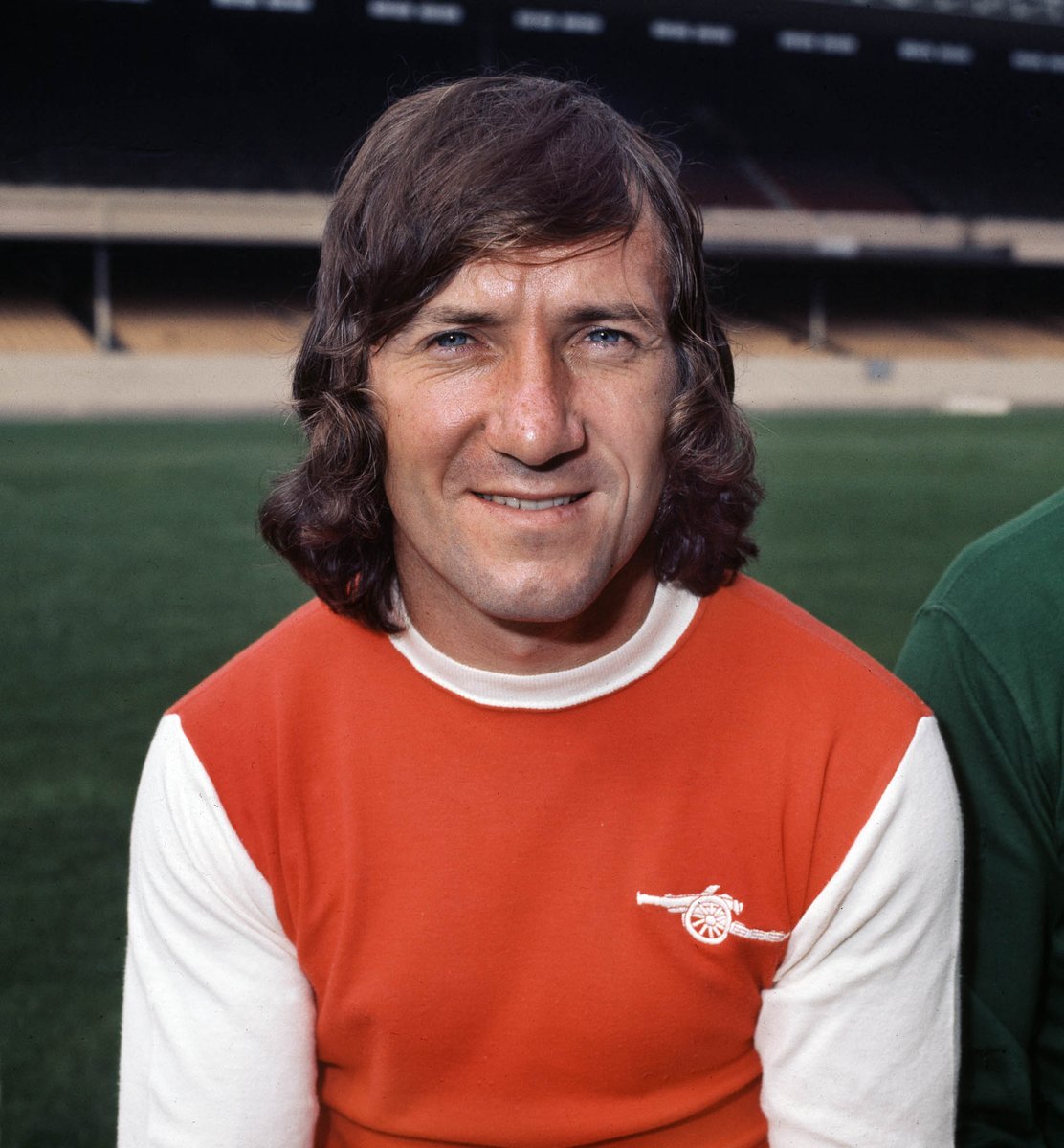
In New Jersey, restaurants are permitted to open with properly-spaced outdoor seating. Next week, barbershops can reopen. Which is good, because my hair is now long and puffy enough to resemble that of a 1970s Arsenal player.

The above example: George Armstrong, who played with the North London team's 1st XI from 1962 to 1977. His hair is so long in this photo, it obscures the Elvis-esque sideburns he grew. He was only 5-foot-6, but a fantastic player, a key figure on their 1971 League and Cup "Double" team. Sadly, he is no longer with us: After coaching with the team for most of the 1990s, he collapsed at the team's training center in 2000, and died, only 56.

Today, Premier League action resumes in England, with games being played "behind closed doors," meaning no fans admitted, a.k.a. "ghost games." Arsenal, whose manager and former star player Mikel Arteta survived the virus, plays away to Manchester City. Major League Soccer returns on July 8.

The NBA will also soon restart, with teams already eliminated from Playoff competition having their seasons declared over, and the remaining 22 teams going into training camps, and then, starting on July 30, jockeying for seeds in a standard 16-team Playoff.

The NHL will also soon restart, with the top 24 teams -- the Devils not being one of them -- beginning training camps on July 10, and then playing in a staggered Playoff format, with the top 8 teams getting a 1st-round bye.

Both of these leagues usually have their Champions crowned by this time, and will see their Playoffs end later than ever before, possibly even in October, when their new seasons would usually start. We might not seen the 2020-21 season begin until Christmas, or even New Year's.

Football, at every level, looks like it's going to begin on time: College (and, in some States, high school) in the last week of August, and the pros and the high schoolers (at least, here in New Jersey) in the 1st week of September. Whether fans will be permitted to attend remains to be seen.

Thoroughbred horse racing's Triple Crown has not only been postponed, but had its usual order changed: The Belmont Stakes, usually the last of the 3 races, was postponed from June 6 to June 20 (this coming Saturday, definitely behind closed doors), the normally series-opening Kentucky Derby from May 2 to September 5, and the Preakness Stakes from May 16 to October 3.

The Olympic Games have been postponed until next year. So has the European Championship soccer tournament. Wimbledon, originally set to run from June 21 to July 5, was canceled for the 1st time since World War II. The French Open was set to run in Paris from May 24, to June 7, has been postponed to September 20 to October 4.

This will be after the U.S. Open. With the number of new COVID-19 cases continuing to drop, Governor Andrew Cuomo of New York gave the U.S. Tennis Association the all-clear to hold the tournament, albeit behind closed doors, on schedule from August 31 to September 13.

And then there's baseball. Commissioner Rob Manfred, as with all previous Commissioners the tool of the team owners, has been shoveling variations on the same restart deal at the players' union, the Major League Baseball Players Association, over and over again, and the players have rejected all of them as completely unacceptable, because the plans mean the owners will not be honoring their side of the contracts.

Last week, Manfred says there was a 100 percent chance that we would have baseball this season. Yesterday, he said, he was "not confident."

The players make a lot of money. They are not the problem here. They are ready to honor their contracts. The owners are trying to screw them. It doesn't matter that the players make so much more than you do: They are still being screwed. You wouldn't put up with this from your boss, so why should the players put up with it from theirs, regardless of how much they're being paid? They are still being cheated.

One thing is for sure: It looks like the Yankees will be screwed again. But then, what did you expect? I told you that they haven't won a World Series with a Republican as President since 1958, and they still haven't. I told you to vote for Hillary.

*

So, with some kind of schedule once again available, I can, for the 1st time since March 8, update my countdowns. However, Trip Guides are seriously affected. Due to events beyond my control last Autumn, I decided to cut short the NFL ones, and to drop the NBA ones altogether. I still did them for the NHL, and got them done for 30 out of 31 teams before the shutdown, missing only the Minnesota Wild.

Ironically, Minnesota United was 1 of the 3 MLS teams I had already done them for, the others being my home team, the New York Red Bulls, and Real Salt Lake.

Not yet having revised MLB or MLS schedules, I will not do those for 2020. Hopefully, I will be able to do them in 2021.

As for football, the NFL and college games that would apply: These games will probably be played, but it's increasingly likely that they will be behind closed doors, so it would be pointless to do Trip Guides for them. Once I learn for sure, I will have to adjust my schedule accordingly.

According to the schedule I had laid out before my hip replacement surgery on February 19, I had predicted that I would be able to go back to work in 8 weeks, on April 13. Who was I kidding? I might be able to do a data entry job, but I'd still have to get to and from work, and, without a car, and the closest bus stop a mile from my house, that would have been damn near impossible at the time. It would be pretty hard now: It's still twice as far as I've yet walked with the cane.

At any rate, each of the following is tentative, and may not have anyone actually in attendance:

Days until Arsenal play again: 0. They play away to Manchester City, in Premier League action, at 8:15 PM London time, 3:15 PM New York time. They have also advanced to the Quarterfinals of the FA Cup, although they have been eliminated from the UEFA Europa League. So now, their only chance to get into next season's UEFA Champions League is to finish 4th or higher in the Premier League -- or 5th, if Man City's CL ban is upheld, which is by no means a certainty.

Days until the New York Red Bulls play again: 21, in the MLS is Back Tournament, which will be held entirely behind closed doors at the ESPN Wide World of Sports Complex, which is part of the Walt Disney World Resort, in the Orlando suburb of Bay Lake, Florida. Although the schedule has not yet been finalized, they have been put in a group with Atlanta United and the 2 Ohio teams, the Columbus Crew and FC Cincinnati.

Days until the Red Bulls next play a "derby": Given that neither New York City FC, nor the Philadelphia Union, nor D.C. United, nor the New England Revolution are in the Red Bulls' group for the tournament, and who is likely to advance, is anybody's guess, then so is this number.

Days until the next North London Derby: 24, on Saturday, July 11, Arsenal's long-delayed 1st visit to the new Tottenham Stadium, adjacent to the site of the previous White Hart Lane. When they'll play their 1st game there in front of fans, most of them Spurs' mental acrobats, is anybody's guess, since the 2019-20 season is not yet finished. Usually, by this point, the next season's schedule -- or, as they would say in England, fixture list -- would have already been released.

Days until the Yankees' 2020 Opening Day: Unknown. MLB had been talking about a restart date of July 31, which would be 44 days from now, a decent time to have a Summer version of "Spring Training" to get ready. At this point, nobody knows.

Days until the Yankees' 2020 home opener: See the previous answer.

Days until the next Yankees-Red Sox series begins: See the previous answer.

Days until the Democratic National Convention: 61, on Monday, August 17. It was set for the Fiserv Center in Milwaukee, the new home of the NBA's Milwaukee Bucks, a nod to the fact that Hillary Clinton "lost" Wisconsin by such a close vote last time. But the Convention may have to be "virtual." Joe Biden might be the 1st Presidential nominee to not give his acceptance speech on the Convention floor since Franklin Roosevelt was too ill to accept a 4th term in person in 1944.

Days until the Republican National Convention: 68, on Monday, August 24. The Republicans have already moved their convention from Charlotte to Jacksonville, since the Governor of North Carolina (Roy Cooper, a Democrat listening to the medical experts) refused to reopen the State; while the Governor of Florida (Rob DeSantis, a Republican listening to Donald Trump) is happy to risk lives for his lord and master at Mar-a-Lago.

Days until East Brunswick High School plays football again: 79, on Friday night, September 4, against arch-rival Old Bridge, at the purple shit pit on Route 9. 

Days until the next East Brunswick-Old Bridge football game: See the previous answer.

Days until Rutgers University plays football again: 80, on Saturday, September 5, at noon, home to Monmouth University, a Football Championship Subdivision School in West Long Branch, Monmouth County, New Jersey. In other words, if they don't win this game overwhelmingly, especially now that Greg Schiano is back as head coach, it will look very, very bad.

Days until the New Jersey Devils play again: Unknown, since the 2020-21 NHL schedule has not yet been released.

Days until the New Jersey Devils next play a local rival: See the previous answer.

Days until the U.S. national soccer team plays again: Unknown, although the 2nd weekend and 3rd week in October is usually set aside for international games. So, if we presume October 10, a Saturday, then it's 115 days.

Days until the next Presidential election, when we can dump the Trump-Pence regime and elect a real Administration: 139on November 3, 2020. Under 5 months.

Days until the next Rutgers-Penn State football game: 164, on Saturday, November 28, at home.

Days until a fully-Democratic-controlled Congress can convene: 200, on January 3, 2021. Under 10 months.


Days until Liberation Day: 217at noon on January 20, 2021. A little over 7 months. Note that this is liberation from the Republican Party, not just from Donald Trump. Having Mike Pence as President wouldn't be better, just differently bad, mixing theocracy with plutocracy, rather than mixing kleptocracy with plutocracy.

Days until Euro 2020 begins, a tournament being held all over Europe instead of in a single host nation: 359, on Friday, June 11, 2021. Under 1 year.

Days until the next Summer Olympics begins in Tokyo, Japan: 401, on July 23, 2021. A little over 13 months.

Days until Alex Rodriguez and David Ortiz become eligible for the Baseball Hall of Fame: 573, on January 11, 2022. Under 2 years, or under 19 months. We will then find out if it's okay for a Red Sox steroid cheat to be in the Hall, but not for a Yankee steroid cheat.

Days until the next Winter Olympics begins in Beijing, China: 597, on February 4, 2022. Under 2 years, or under 20 months.

Days until the next World Cup is scheduled to kick off in Qatar: 887, on November 21, 2022, in Qatar. Under 3 years, or a little over 29 months.

Days until the next Women's World Cup is scheduled to kick off: 1,118, on July 10, 2023. A little over 3 years, or a little under 37 months. A host nation is expected to be chosen a week from tomorrow. Bids have been put in by Colombia (South America has never hosted), Japan (Asia last hosted in 2007), and a joint bid by Australia and New Zealand (Oceania has never hosted).

Saturday, April 25, 2020

April 25, 1980: What If "Desert One" Had Succeeded?

April 25, 1980, 40 years ago: Operation Eagle Claw is launched. It becomes known by its staging area, codenamed Desert One. It was an attempt to rescue the Americans being held hostage by the Iranian government. It was one of the earliest operations of the U.S. Army's Delta Force special-operations group.

But of the 8 helicopters meant to be involved, one had hydraulic problems, one had a cracked rotor blade, and another was caught in a sandstorm. The field commanders got word back to Washington, saying the mission should be aborted. President Jimmy Carter gave that order.

But as the helicopters withdrew, one crashed into a transport aircraft, killing 8 servicemen. Had that not happened, Carter could have simply not told the country what had happened -- and he could have gotten away with it, because nothing had happened.

During his 1976 campaign for President, Carter told the American people, "I will never lie to you." The words had great resonance in the wake of Richard Nixon and Watergate. If the mission were aborted, and he didn't reveal it, it wouldn't have been a lie, just an omission, necessary due to national security. The story might have remained a secret for years. But Carter couldn't hide this.

And so he addressed the nation early in the morning, U.S. time. He was already in trouble in his bid for re-election. Had the mission succeeded, all the talk of the apparent Republican nominee for President, former Governor Ronald Reagan of California, of the Democrats being weak on national security would have evaporated. Instead, Carter now looked absolutely hopeless. His only hope of winning after this was getting the hostages home before the election on November 4. He didn't.
When President Barack Obama was told of the chance to kill Osama bin Laden in 2011, he knew that if the mission failed, it would be “his Desert One,” and he would probably lose his bid for re-election. Advised to do so by Vice President Joe Biden and Secretary of State Hillary Clinton, he gave the order to go ahead, and it worked spectacularly: The target was eliminated, and none of our people were lost. Obama was re-elected. He was lucky. Carter was not.

Of the 66 people taken hostage on November 4, 1979 -- 52 of whom were still in captivity at the end, on January 20, 1981, spitefully held over a few minutes after Carter left office so he couldn't get the full credit for his hard work in negotiations -- 46 are still alive. Here are their names:

Thomas Ahern, Clair Barnes, Donald Cooke, William J. Daugherty, Robert Englemann, William Gallegos, Duane Gillette, Alan Golacinski, John E. Graves, Kathy Gross, Joseph M. Hall, Kevin Hermening (at 21, the Marine Sergeant was the youngest of the hostages), Donald Hohman, Michael Howland, James Hughes, Lillian Johnson, Moorhead Kennedy, Steven Kirtley, Kathryn Koob, Frederick Kupke, Steven Lauterbach, Paul E. Lewis, John Libert and James M. Lopez.

Also, Ladell Maples, Michael Metrinko, Jerry Miele, Michael Moeller, Elizabeth Montagne, Paul Needham, Gregory Persinger, William Quarles, Regis Ragan, David M. Roeder, Lloyd Rollins, Barry Rosen (the one infamously paraded in a blindfold before the media 3 days after the embassy takeover), William B. Royer Jr., Charles W. Scott, Donald Sharer, Rodney Sickmann, Joseph Subic, Terri Tedford, Victor Tomseth, Joseph Vincent, David Walker and Joan Walsh.

William F. Keough Jr. died in 1985, Leland Holland in 1990, John McKeel in 1991, Robert Ode (at 65, the former CIA officer was the oldest hostage) in 1995, Jerry Plotkin in 1996, Bert C. Moore in 2000, Richard Queen and Malcolm Kalp in 2002, Robert Blucker in 2003, Elizabeth Ann Swift (Cronin) in 2004, Gary Lee and Richard Morefield in 2010, Phillip Ward in 2012, Charles A. Jones in 2015, Thomas Schaefer in 2016, Neal Robinson in 2017, William Belk and Bruce Laingen in 2019, and Bruce German and Westley Williams earlier in 2020.

*

What if the mission had succeeded?

The immediate effect on Iran might have been devastating. Instead of having their faith in the new Supreme Leader, the Ayatollah Ruhollah Khomeini, deepened, those who had given themselves over to him might have lost faith in him, and there could have been a counter-revolution. The monarchy of Shah Mohammed Reza Pahlavi would not have been reinstated, but there could have been a true republic.

With the Ayatollah out of the way, President Saddam Hussein of Iraq, always nervous about the rise of Islamic fundamentalism in his own country, might have been less so. He was the aggressor in the the Iran-Iraq War that began on September 25, 1980. That war might not have happened, saving, on each side, at least half a million military dead and 50,000 civilian dead.

And much of the terrorism of the 1980s would not have happened. Without funding from the Ayatollahs' government ("Ayatollah" is a title meaning "Sign of God," and Khomeini was not the only holder of that title in the government), Hezbollah (meaning "Party of God") might have had to scale back. The Lebanese Civil War might have turned out very differently, and the men America lost in Beirut in 1983, in 2 separate attacks, might not have happened, regardless of who was President at the time.

In America, people would have rallied around Carter. The economy would still have been an issue. But this, plus the rush of patriotism over the Olympic hockey win over the Soviet Union 2 months earlier, would have made Carter the great patriotic symbol, not Reagan. This helps make his boycott of the Olympics in Moscow that Summer look like a principled stand, instead of an act of petulance as it looked to those of us around then. And, since April 25, 1980, he hasn't had to focus on Iran. He can focus on the economy.

In the history that we know, Reagan closed his one and only debate with Carter with a key question: "Are you better off than you were four years ago?" For a majority of Americans, that answer was, "No." But if the hostages had been rescued, how many more would have said, "Yes"?

Carter won just 6 States: His native Georgia, his Vice President Walter Mondale's home State of Minnesota, Maryland, Rhode Island, West Virginia (not shocking for a Democrat then) and Hawaii, plus the District of Columbia. The Electoral Vote was 489 to 49.

Carter did not win normally reliable Democratic States like New York and Massachusetts. And, since 3rd party candidate John Anderson was a Republican (he was a Congressman from Illinois), it's highly unlikely that he swung any State from Carter to Reagan.

If we take every State from which Carter got at least 45 percent of the vote but did not win, and swing it to him, that adds Tennessee, Mississippi, South Carolina, Kentucky, Arkansas, Alabama, North Carolina and Louisiana. Remember: Carter was a Southerner. This would have made the EV count Reagan 417, Carter 121. Not even close to being enough.

But maybe that successful rescue would have completely wiped out Reagan's arguments about competence and strength, and Carter could have thrown them back at Reagan. It's hard to believe, with subsequent Presidential nominations having gone to Bob Dole (73), John McCain (72), Donald Trump (70) and now Joe Biden (77), but, at 69, Reagan was seen as a doddering old man. Of course, that wasn't helped by his never having been seen as all that bright, even when he was a young actor.

So what about the States that Carter didn't win, but still managed to get at least 41.7 percent of the vote? That adds Delaware, Missouri, New York, Wisconsin, Michigan, Pennsylvania, Maine, Massachusetts and Illinois. Now, the count is Carter 280, Reagan 258. Carter wins.
So by the time he's sworn in for a 2nd term on January 20, 1981, he's more popular than he's ever been. And, with President Anwar Sadat of Egypt still alive at this point, and Palestinian Chairman Yassir Arafat not having support from Iran, maybe a deal can be reached for a "two-state solution." Don't be surprised if Prime Minister Menachem Begin of Israel supported it, as long as he didn't have to give up any part of Jerusalem: A Palestinian capital built in the eastern suburbs could have worked then. Sadat might still have been assassinated later that year, but it would have been after yet another triumph for him.

With Iran, Lebanon and Palestine off the table; and inflation, interest rates and unemployment under control, Carter could have initiated his energy policy. By 1984, things would really have been better in America. Although, to be fair, Carter and his Administration would have had no more control over early 1980s music and fashion than did Reagan and his: Those would still have been ghastly.

It is possible that, after 8 years, people would have been tired enough of Carter to not vote for his Vice President in 1984. So even if Mondale still ran (likely), he could have lost. But, with Reagan having been beaten, and "the conservative movement" now discredited twice in a generation (along with Barry Goldwater in 1964), the Republican nominee would not have been from that movement.

It would more likely have been a "country club Republican" like the elder George Bush, or perhaps a "Washington insider" like Senate Republican Leader Howard Baker of Tennessee, than a tax-cut champion like quarterback turned Congressman Jack Kemp of New York. Given Bush's connection to Reagan's defeat, Baker would have been a likelier choice, especially since he could have taken the South from the Democrats, without having the reputation of a racist Southerner. But he might have taken Kemp as his running mate, as a ticket-balancing, a Northerner from the conservative wing.
With Iran a republic, there would have been no need for an Iran-Contra scandal. And while Baker would have supported the Contras in Nicaragua publicly, he would not have broken the law to do so. Building on the work of Presidents from Truman through Carter, he could have worked with Soviet President Mikhail Gorbachev to bring the Cold War to an end. He likely would have been easily re-elected in 1988, and been President when the Berlin Wall came down in 1989, and when the Soviet Union fell in 1991.

Supreme Court nominations matter. Carter never got to make one. He could have nominated the 1st female Justice to replace Potter Stewart in 1981, but it wouldn't have been Sandra Day O'Connor, not even as a compromise choice. Given the record she already had, he could have nominated Ruth Bader Ginsburg, who would now be in her 40th year on the Court, a record.

Baker might well have promoted William Rehnquist from Associate Justice to Chief Justice in 1986, replacing Warren Burger, and Antonin Scalia to take Rehnquist's seat. And he might have nominated David Souter to replace William J. Brennan in 1990.

But there's no way he would have appointed Robert Bork to replace Lewis Powell in 1987, because he'd have known the man who helped President Richard Nixon carry out "the Saturday Night Massacre" in 1973 couldn't be confirmed, given that Baker was the Senator who led off the Senate hearings on Watergate with the famous question, "What did the President know, and when did he know it?" So 1987 might have been the time to appoint O'Connor.

And he might have appointed a black conservative to succeed black liberal Thurgood Marshall in 1991, but it wouldn't have been Clarence Thomas: Regardless of the sexual harassment allegations against him, Thomas was not sufficiently qualified, and Baker, with a fine legal mind, would have accepted this.

With Baker being relatively successful, would his Vice President have won in 1992? Maybe not: There would likely still have been a recession. Then again, it could have been over by the election, and Jack Kemp would have been a harder candidate for Governor Bill Clinton of Arkansas to beat than George H.W. Bush was in the history we know. He would have been harder to paint as a racist, or bad on the environment.

Indeed, Clinton might have been a victim of Carter's success: The health care, environmental and health care arguments might not have worked. Bill might have gone on to be a perennial talk-show guest, and maybe Hillary still could have been elected to the Senate, but neither one ever becomes President in this timeline.

Then again, the alternative to "Hillarycare" in 1993 was essentially what became known as "Obamacare." Maybe Kemp could have gotten that passed in 1994. It would have helped.
With Byron White retiring in 1993 (and Ginsburg, who got that seat in real life, already on the court), and Harry Blackmun doing so in 1994, Kemp gets 2 Justices. One is probably Anthony Kennedy. Does this mean that Roe v. Wade is overturned? Refusing to would have been Ginsburg, Souter, John Paul Stevens, and, given their real-life records, probably O'Connor. So if Kennedy, Baker's 1991 Justice and Kemp's 1994 Justice joined with Rehnquist and Scalia to strike it down, that's 5-4 striking it down.

Abortion laws then go to the States, many of which would ban it outright. This makes the 1996 election, essentially, a referendum on the rights of women. And maybe the Democrats nominate the 1st female major-party nominee. And it isn't Hillary Clinton, who probably never runs for office after Bill's 1992 defeat.

Maybe, instead of waiting until 1990 to do so, Mayor Dianne Feinstein of San Francisco runs for Governor of California in 1986. Which means she serves 2 terms, leaves office early in 1995, and can concentrate on her 1996 campaign, which would also make her the 1st Jewish major-party nominee. God, would I love to have seen a debate between DiFi and "the Republican JFK," both in their primes.

So Feinstein becomes the 1st female President, and the 1st Jewish President. The Republicans try to point out her anti-gun stances (after all, she became Mayor in 1978 because her predecessor, George Moscone, and City Supervisor Harvey Milk were assassinated), and her husband Richard Blum's questionable business practices (a bit overblown, it's not like he's Donald Trump).
Maybe they regain control of Congress in 1998, and there's an impeachment trial in 1999, anyway, with sex having nothing to do with it. (Although she has been married 3 times, Feinstein has never been accused of sexual misconduct.) Or maybe not: There almost certainly wouldn't have been enough evidence, no matter how much "Christian" conservatives would've wanted there to be against the Jewish female President.

Governor George W. Bush of Texas probably still overcomes any issues his father may have had in 1984 as Reagan's 1980 running mate, and wins the 2000 Republican nomination on the backs of the evangelicals. But, with Feinstein running against his intelligence and the Republican Congress, and not having to worry about a sex scandal, like Al Gore worried over Bill Clinton's, she wins going away.

And, in August 2001, she gets that briefing about Osama bin Laden -- the Soviet occupation of Afghanistan still happened and, presumably, with Saddam's army not weakened by 8 years of regional war, the Persian Gulf War of 1990-91 did as well -- and takes preventative measures. On September 11, 2001, she addresses the nation, and tells them what was prevented.

Although she never would have gotten a chance to appoint a Supreme Court Justice -- unless Baker's 1991 appointee, or Kemp's 1994 appointee, died or had to resign before the 2004 election -- Feinstein would have appointed enough federal judges that most of the State bans on abortion would have been overturned. And if Anthony Kennedy or either Baker's '91 Justice or Kemp's '94 Justice got the message, then maybe a "Roe v. Wade II" would have been in place by 2004.

But, by then, there would (as there was in real life) likely have been another recession, and Feinstein wouldn't have had a war to hand off to her successor. Given the flak she would have taken as the 1st female and 1st Jewish nominee, her Vice President probably would have been someone not likely to "push people's buttons." It would have been less somebody like liberal "firebrand" Senator Paul Wellstone of Minnesota, more like moderate Senator Bob Kerrey of Nebraska. Gore probably would have lost his re-election bid for Senator from Tennessee in 1996, so, not him.

But after 8 years of Feinstein, Kerrey, no more charismatic than the similarly-named, similarly-heroic in Vietnam Senator John Kerry of Massachusetts, probably would have lost in 2004, probably to someone who could have canceled out his advantages: Senator John McCain of Arizona. Without the baggage of the Iraq War and a recession, McCain wouldn't have needed the Hail Mary pass of Sarah Palin, who wouldn't have been on the radar yet, anyway. So, Senator Lindsey Graham of South Carolina is his Vice President.
But the economy was never McCain's strong suit. Maybe the recovery from the 2003-04 recession doesn't move much. And by 2007, a new recession begins, just as in real life. And maybe, with McCain having replaced Rehnquist and O'Connor in 2005, possibly with John Roberts and Samuel Alito as George W. Bush actually did, with Feinstein not having gotten the chance to appoint any Justices, this is conservatives' chance to finally kill Roe v. Wade for once and for all.

Stevens, Ginsburg, O'Connor, Souter and Kennedy vote to uphold; while Roberts, Scalia and Alito vote to kill. So it depends on 2 Justices: The one Baker appointed instead of Thomas in 1991, and the one Kemp appointed in 1994 in place of Stephen Breyer. If 1 of those 2 votes to overturn, abortion laws go back to the States, and many ban abortion completely.

And that, and the Crash of 2008 happening right on time, means not only does Senator Barack Obama of Illinois -- who may even have first won office earlier in this timeline -- become President right on time, but it might be a massive blowout, with white women flocking to him in a way that they didn't quite in real life. And Senator Joe Biden of Delaware is elected Vice President.
Right on time, he appoints Sonia Sotomayor to replace Souter in 2009 and Elena Kagan to replace Stevens in 2010. And, with so many doctrinaire conservatives having gone down in 1980, and Newt Gingrich's 1994 "revolution" also not having happened due to Kemp being the incumbent, Obama is the one to finally get universal coverage passed. He gets re-elected over Mitt Romney in 2012. And Merrick Garland is confirmed to replace the late Antonin Scalia in 2016.

So what about the 2016 election? Donald Trump only "won" because of anger against Hillary. Hillary is not on the political map in this timeline. Trump might still get nominated, but the Democratic nominee would take advantage of his flaws in a way that Hillary never tried to do.

Biden? No, his difficulty dealing with his son Beau's death would have stopped him from running that time. Governor Martin O'Malley of Maryland, a former Mayor of Baltimore? No, his hometown's 2015 riots would have knocked him out. Senator Bernie Sanders of Vermont? No, Democrats do not nominate non-Democrats.

It would have opened things up for a different Democrat representing New York. Ladies and gentlemen, the 45th (in this timeline) President of the United States, Andrew Mark Cuomo!
The coronavirus epidemic would still have happened, but he would have known how to handle it, and would probably be leading the likely Republican nominee -- Mike Pence? Ted Cruz? With neither of the George Bushes having won, Jeb wouldn't have a chance.

So here's the Presidents in this timeline:

1977-85 Jimmy Carter
1985-93 Howard Baker
1993-97 Jack Kemp
1997-2005 Dianne Feinstein
2005-09 John McCain
2009-17 Barack Obama
2017-present Andrew Cuomo

A better country, and a better world, all because one more helicopter was ready in Iran 40 years ago today than actually was.

UPDATE: The allegations that forced Cuomo to announce his resignation as Governor of New York on August 10, 2021 would put his Vice President in the White House. So: 

1977-85 Jimmy Carter
1985-93 Howard Baker
1993-97 Jack Kemp
1997-2005 Dianne Feinstein
2005-09 John McCain
2009-17 Barack Obama
2017-21 Andrew Cuomo
2021-present Kamala Harris

Friday, January 2, 2015

Mario Cuomo, 1932-2015

I can't believe Mario Cuomo is gone. I also can't believe I'm typing "2015" as a date. The "future" year in Back to the Future Part II. I'm old enough to not only remember Mario as Governor, but to think of 1990 as "the future."

Mario Matthew Cuomo was born June 15, 1932, in the Jamaica section of New York City's Borough of Queens. His parents, Andrea and Immaculata Cuomo, were immigrants from a village near Naples, Italy, running a grocery store in adjacent South Jamaica. Mario was the 3rd and last of their children.

According to my mother, whose own mother was already growing up in South Jamaica (as would, decades later, rapper Curtis Jackson, a.k.a. 50 Cent), most "Italians" in America are actually from descended from immigrants from Sicily.

However, according to When Pride Still Mattered, David Maraniss' superb biography of Vince Lombardi, that's only partly true. A large amount of Italian immigration to America came from Naples on south, from the "heel" and "toe" of "the boot of Italy." This included the Lombardis and the Torres (both of whom, Vince's parents and Joe's grandparents, settled in Brooklyn) and the Cuomos.

Italian-Americans -- and New York's were, to use a Latin expression, the ne plus ultra of this -- have always clung to both halves of their identity, the Old Country and the New World. This is not unique to them, of course: Another Democratic giant of the 1980s, House Speaker Thomas "Tip" O'Neill of Cambridge, Massachusetts (definitely "town, not gown"), told people, "I knew I was Irish before I knew I was American."

Sometimes, this dual identity has helped; sometimes, not. In Cuomo's case, it reminded him of where he came from, no matter how far he went in his life's work. Which was rather far, considering he was born in a lower-middle-class neighborhood near the depth of the Great Depression. It was also far, considering that, while he was a fantastic public speaker, he had, as the old expression goes, "a face made for radio."

(Face it, if George H.W. Bush, who was not a natural politician but looked like a President and knew how to smile and sound friendly, could beat the short, homely son of Greek immigrants Michael Dukakis in 1988, he might have been able to pull out a win against Mario Cuomo in 1992, the way he never really had a chance to do against Bill Clinton.)

But Mario had 2 things going for him: Parents whose belief in the American Dream, and in their children, was unshakable; and one of the keenest minds ever to enter American public life.

*

In 1952, having starred in baseball and basketball in high school, and having attracted attention for his play at St. John's University in Queens, he was signed by the Pittsburgh Pirates for $20,000. Mickey Mantle liked to say that the Yankees got him for $11,000, while the Pirates got Cuomo for $20,000. How'd that work out? Well, unlike Cuomo, Mantle reached the top of his profession, the Hall of Fame... but the Pirates (sans Cuomo) beat the Yankees in the 1960 World Series, the most devastating defeat of Mantle's career.

For all his life, Mario loved baseball. He was interviewed by Ken Burns for his miniseries Baseball, calling it a fair game. "I love the bunt," he said. "I love the idea of the bunt. I love the idea of the sacrifice."

How good was he? At the age of 20, a Pirates scout wrote this in his report: "A below average hitter with plus power. He uppercuts and needs instruction. Has an average arm and is a graceful plus fielder... Potentially the best prospect on the club in my opinion and could go all the way if he improves his hitting to the point of a respectable batting average... From a standpoint of proportion and body symmetry, he is one of the best built boys in our organization."

"A below average hitter" was "Potentially the best prospect on the club"? Really? It's worth noting that, in 1952, the Pirates were horrible. They lost 112 games, most of any major league team between the 1935 Boston Braves and the 1962 Mets. Joe Garagiola was a catcher on that team, and in the 62 seasons since, has told anyone willing to listen that they were worse than the '62 Mets.

Ralph Kiner was the left fielder, and Branch Rickey the general manager, and still they lost 112. Rickey traded Kiner, saying, "We finished 8th with you, we can finish 8th without you" -- with the implication of " ...and your high salary."

A pitcher deep in their minor league system, Ron Neccai, did something no other pitcher has ever done in professional baseball: He struck out 27 batters in a single game. Every single out was a strikeout. The game was also a no-hitter. Desperate, and hoping that calling him up would generate publicity and increase attendance, the Pirates brought Neccai up. He wasn't ready: He went 1-5, and never appeared in the majors again. The '52 Pirates were that kind of team.
A retroactive card. He never actually
appeared on one during his career.

The Pirates assigned Mario to the Brunswick Pirates, of Brunswick, Georgia -- what a culture shock that must have been -- in the Georgia-Florida League, Class D (roughly equivalent to day's Rookie Leagues). He played 81 games for them, batting just .244, with 10 doubles, 2 triples and a home run -- RBIs appear not to be recorded for that league -- and surviving accounts suggest that he couldn't hit a curveball. Then he was beaned. Although he recovered, he never played another professional game.

*

Later, another man who would represent New York State in politics, Jack Kemp, would say, "I sustained 11 concussions while playing football. Nothing left to do but to go into politics!"

Mario Cuomo went back to St. John's, and studied law. He married a fellow St. John's student, Matilda Raffa, and the marriage lasted for the rest of his life, 62 years. And, like Frank Sinatra, he rejected advice that he adopt a less-ethnic-sounding surname. He would make it as Mario Cuomo or not at all. (Even if he never quite tested a line from a song Sinatra would eventually record: He made it there, but he never found out if he could "make it anywhere.")
Matilda & Mario

Up until 1967, when the U.S. Supreme Court ruled the death penalty unconstitutional (a decision reversed a few years later), the State of New York executed its Death Row prisoners via the electric chair, a device nicknamed Old Sparky. Twice, Cuomo defended men sentenced to such an execution. This, combined with the Catholic Church's opposition, turned him against the death penalty forever.

However, when abortion became an issue as the 1970s arrived (it became legal in New York State in 1970, 3 years before it did so nationally), Cuomo split with the Church and supported reproductive rights. This dichotomy -- pro-choice but anti-death penalty -- would endear him to liberals and cause blood-spitting fury among conservatives.

He grew up among people often overlooked, or outright oppressed by the wealthy, including real-estate developers, such as Queens natives Fred and Donald Trump. In the late 1960s, he took up the cause of families in danger of losing their homes in the Queens neighborhood of Corona, near Shea Stadium, to make way for a school. He won, and became a hero in his home Borough.

In 1972, Mayor John Lindsay asked him to mediate a dispute in another Queens neighborhood, Forest Hills. Middle-class residents, proud of their neighborhood being an oasis from the pit of poverty and crime that The City was becoming, opposed the building of low-income housing there. He settled that issue as well.

That led to his first run for office, in 1974. He entered the Democratic Primary for Lieutenant Governor, but lost. But that got the attention of Congressman Hugh Carey of Brooklyn, who was elected Governor at that time, and the following January, Carey appointed Cuomo Secretary of State for the State of New York.

In 1977, with The City's finances still in the process of being settled (largely thanks to Carey), but crime seemingly out of control, the school system a mess, and poverty implacable, Mayor Abe Beame was under siege as he ran for a 2nd term.

There were many candidates for Mayor. Carey asked Cuomo to be his candidate, to run as both a thinking man's candidate and a man of the people, the guys and gals on the streets, especially of the Outer Boroughs. Manhattan Borough President Percy Sutton ran as The Black Candidate. Herman Badillo of The Bronx, the 1st Puerto Rican elected to Congress, ran as The Hispanic Candidate.

Former Manhattan Congresswoman Bella Abzug, who had lost the previous year's Senate Primary to Pat Moynihan, thought she had it made, since she was The Feminist Candidate, The Jewish Candidate and The Liberal Candidate. She thought that all these constituencies would win her the election.

Somebody forgot to tell any of this to Ed Koch, who also represented a Manhattan district in Congress. He also ran as The Jewish Candidate. But he also ran as The Tough Guy, promising to fight crime and to bring the death penalty back to New York -- which, constitutionally, the Mayor couldn't do, but Koch figured some people would let their anger overcome their thinking. Koch certainly didn't look like a tough guy; he looked more like a glad-handing Jewish lawyer, which he certainly was.

Beame, every bit as Jewish as Koch and Abzug, just 5-foot-4 and seeming to shrink with every headline -- including the riot following the blackout of July 13 and the fear of the serial killer calling himself the Son of Sam, who was caught on August 10 -- was left as the candidate of the old bosses and The City's old Democratic Party machine.

That was not something that the people wanted. He was abandoned by the electorate. Sutton and Badillo, the minority candidates, didn't really have a chance, especially after the blackout. That also killed Abzug's chances, which, despite her reputation as something of a flake, had been considered at least good enough to force a runoff election.

Koch was all over the map, politically speaking. His stances on crime and Israel (never mind that foreign policy isn't the responsibility of the Mayor) made him look conservative, and allowed him to appeal to Jews and ethnics in Queens, Brooklyn and Staten Island in ways that Cuomo couldn't, or wouldn't. But his support of civil rights, feminism and gay rights made him look liberal to many voters. When he first ran for Congress in 1972, he called himself "Just a plain liberal." In 1977, running for Mayor, he called himself "a liberal with sanity."

His stance on gay rights could have cost him: He was 52 and had never been married. And someone -- we still don't know who, but both Mario and his son Andrew always denied having anything to do with it -- made up fliers to hand out at political events, saying, "Vote for Cuomo, not the homo." Koch held a grudge against both father and son for the rest of his life.

But he was also smart: He started appearing in public with Bess Myerson, a civil rights activist and, in 1945, the 1st Jewish Miss America. Signs began to appear at Koch rallies: "Bess for First Lady." Speculation began of a wedding at Gracie Mansion. (Bess, who is still alive at age 90, was twice divorced. She never married Koch or anyone else after that, and Koch never married.)

(UPDATE: It was revealed on January 5, 2015 that Bess had died on December 14, 2014, in Santa Monica, California, where she had retired to be close to her daughter. But the general public didn't know this when I wrote this essay.)

As time went by, and his refusal to address the AIDS crisis made gay activists discount his previous support, Koch was "outed" several times, but he always denied that he was gay. Maybe being seen in public with Bess defused the issue, but Koch also said many times that most voters didn't care one way or the other. Or maybe, in liberal New York City, the number of people driven away by the possibility was simply canceled out by the number of people who considered it a bonus.

In the Democratic Primary on September 8, Koch got 19.8 percent of the vote, and Cuomo 18.7, but that was enough to make them the top 2. Beame got 18.0, Abzug 16.6, Sutton 14.4 and Badillo 11.0. Since no candidate got 40 percent, Koch and Cuomo went into a runoff, set for September 19.

Koch won the runoff with 55 percent, and got the Democratic nomination. But the race wasn't over: While State Senator Roy Goodman had defeated radio talk show host Barry Farber for the Republican nomination, New York's four-party system meant that the defeated runners-up could stay in the race: Cuomo was nominated by the Liberal Party, Farber by the Conservative Party.

And then came a deep indignity for Cuomo: Governor Carey, who'd asked him to enter the race in the first place, asked him to drop out for the sake of party unity, and endorse Koch. Cuomo refused. Carey then endorsed Koch, and that settled it: The big argument in Cuomo's favor was that he was Carey's man. Now, Koch was Carey's man. In the general election on November 8, Koch got just under 50 percent of the vote, Cuomo 41, and Goodman and Farber got 4 percent each.

(With the recent deaths of Goodman, Badillo and Cuomo, the only candidate from this epic Mayoralty race still alive is Farber, who's still got a radio show at age 84.)

*

Unlike Koch, however, Cuomo and Carey did not hold grudges. In 1978, Carey ran for a 2nd term, and Cuomo was his running mate, and they were elected Governor and Lieutenant Governor. Carey stepped aside for 1982, and everyone presumed the Governor's Mansion was Cuomo's to lose.

But Koch, overwhelmingly re-elected Mayor in 1981, ran what was essentially a spite campaign for the office. Koch knew The City cold: Within it, he could be brilliant. But, outside The City, he had the tinniest of tin ears imaginable, calling the State capital of Albany "a small town" and the suburbs of New York City "sterile."

He had a point: Albany's population, then as now, was about 100,000, and he was neither the first person nor the last to think of suburbia as boring. But you can't say those things and get elected Governor.

Cuomo won the Primary in a landslide. If Koch was bothered by to whom he lost, he wasn't bothered by what he lost: In his concession speech, he said, "It's not so bad," and, with the silence of the crowd being deafening, went back into full "How'm I doin'?" mode by saying, "And I'm still the Mayor!" The crowd cheered. Cuomo would later say, "New York is the only city in America where the Mayor wants to be Governor, and the Governor wants to be Mayor."

In the fall, in a close race, Cuomo won 50.9 percent of the vote, to beat the Republican nominee, businessman Lew Lehrman, who got 47.5 percent. Stan Lundine, a Congressman from Western New York (to balance the ticket geographically), was elected Lieutenant Governor.

Cuomo never ran for Mayor again -- Koch won a 3rd term in 1985, but was denied a 4th in 1989 -- but was easily re-elected Governor in 1986, against Westchester County Executive Andrew O'Rourke (64 percent to 32), and in 1990 against businessman Pierre Rinfret (51 to 23, with a 3rd-party Conservative getting 20). Lundine remained on his ticket.

Mario's inner circle included 2 names that would have far-reaching political impact: His son, Andrew, who followed his father's lead in becoming a lawyer fighting for poverty and housing issues; and Tim Russert, who would later become a reporter with NBC News and serve as moderator of its Sunday morning news show Meet the Press.

Russert was a native of Buffalo, and a proud fan of the city's football team, the Buffalo Bills. Knowing that everyone knew him as a native of The City, but also that he had to appeal to the entire State, Cuomo learned how to pander to the old industrial towns of Western New York: Buffalo, Rochester, Syracuse, et al.

With the Giants having moved to the Meadowlands of New Jersey in 1976 (before he was Governor) and the Jets having followed them in 1984 (during his 1st term), he frequently referred to the Bills as "the only pro football team in the State of New York." He remained popular in Western New York.

He was popular through most of the State because of his fights for education and environmental issues, and because he fought the policies of President Ronald Reagan that hit the State's industrial North and West hard. This set up the most famous of his renowned speeches, the keynote address at the 1984 Democratic National Convention, at the George Moscone Convention Center in San Francisco. (Moscone was that city's Mayor in 1978, when he and openly gay Supervisor Harvey Milk were assassinated by another Supervisor -- think "City Councilman" -- Dan White.)

Reagan, the foremost Republican President since Theodore Roosevelt, liked to speak of America as what John Winthrop, the 1st colonial Governor of Massachusetts, wanted Boston to be: "A shining city on a hill." Cuomo's response was epic, and proved that Reagan's "Morning Again In America" included a whopping hangover as a result of his pro-rich, anti-everybody-else policies:

A "shining city" is perhaps all the President sees from the portico of the White House and the veranda of his ranch, where everyone seems to be doing well. There’s another part of the city, the part where people can’t pay their mortgages... and middle-class parents watch the dreams they hold for their children evaporate.

This nation is more a tale of two cities than it is just a shining city on a hill. There is despair, Mr. President, in the faces you don't see, in the places you don't visit in your shining city...

We believe we must be the family of America, recognizing that at the heart of the matter, we are bound one to another; that the problems of a retired schoolteacher in Duluth are our problems; that the future of the child — that the future of the child in Buffalo is our future; that the struggle of a disabled man in Boston to survive and live decently is our struggle; that the hunger of a woman in Little Rock is our hunger; that the failure anywhere to provide what reasonably we might, to avoid pain, is our failure...

We Democrats still have a dream... We believe in only the government we need, but we insist upon all the government we need.
Thirty years ago, that speech convinced many Democrats, inside the Convention hall and outside, hoping to see former Vice President Walter Mondale defeat Reagan, instead believe that they nominated the wrong guy, that the right guy wasn't even running. His profile was raised to the point where Brooklyn-born talk show host Larry King made him his first guest on CNN's Larry King Live the next year. I can't say for sure that Cuomo was King's most frequent guest, but he was a regular guest up to the end of his life.

Governors of New York, once the largest State of the Union and still the 3rd-largest, historically have been considered for President: Martin Van Buren in 1836 (by then the Vice President), William Seward in 1860 (by then a Senator), Horatio Seymour in 1868, Samuel Tilden in 1876, Grover Cleveland in 1884, Theodore Roosevelt in 1900, Charles Evans Hughes in 1916 (by then a Justice of the Supreme Court), Alfred E. Smith in 1928, Franklin D. Roosevelt in 1932, Thomas E. Dewey in 1944 and '48 (nominated twice), Averell Harriman in 1956, and Nelson Rockefeller in all 3 elections of the 1960s.

But it's worth noting that only Van Buren, Cleveland and the Roosevelts won. (And even TR didn't actually run for President: He was nominated for Vice President, and assumed the office when William McKinley was assassinated. Tilden won, too, but was cheated out of his victory.)

So as Reagan's 2nd term wound down, and none of the potential Democratic candidates for 1988 looked all that appetizing, many people wanted Cuomo. But early in 1987, he took himself out of the running. After former Senator Gary Hart of Colorado had to drop out due to a sex scandal in May 1987, the clamor for Cuomo returned. Again, he refused.

There was a former college baseball star elected President in 1988, but it was the sitting Vice President, George H.W. Bush, a 1st baseman who had helped Yale reach the Final of the College World Series in 1947 and '48 (but lost both times).

In the wake of the Persian Gulf War, Bush's approval rating was 91 percent, and big-name Democrats announced they weren't running, including basketball star turned Senator from New Jersey, Bill Bradley. As the weeks and months of 1991 went by, and the nasty recession caused Bush's poll numbers to plummet, Cuomo made no announcement, other than to say, "I have no plans, and no plans to make plans."

As the year drew to a close, one national poll had him easily leading the Democratic field, and trailing Bush just 48 percent to 43. And it was rumored that he was considering a run. He was mocked as "Hamlet on the Hudson" for this indecisiveness.

But the State legislature, with the Democrats controlling the Assembly and the Republicans the Senate, was deadlocked over the State budget. The filing deadline for the New Hampshire primary was December 20, 1991, and the law said that a candidate was required to hand in a ballot application in person.

Cuomo kept an airplane waiting on the tarmac in Albany as he decided whether to fly to New Hampshire to enter the race. He worked to find a budget agreement -- New York State was long notorious for not getting its budget done on time, and still is -- and, at 3:30 PM, Mario announced, "I cannot turn my attention to New Hampshire while this threat hangs over the head of the New Yorkers I have sworn to put first."

The new frontrunner was Governor Bill Clinton of Arkansas. But a sex scandal hung over him, and many Democratic activists encouraged New Hampshire Democrats to write Cuomo's name in. He ended up getting 4 percent of the vote, while former Senator Paul Tsongas, whose home of Lowell, Massachusetts was just over the State Line from New Hampshire, edged Clinton. It was seen as a victory by Clinton over the "local" candidate.

With Cuomo's support, Clinton won the New York Primary, which ended doubts among Democrats that he could weather the sex, draft and marijuana-use scandals that, in retrospect, were ridiculous as far as judging his fitness for the office. Cuomo even gave Clinton's nominating speech at the Convention, held at Madison Square Garden.

Cuomo did the math, and knew that, in 2000, after 2 terms for Clinton, he'd be 68, and unlikely to win due to his age. While he did get the budget finished, he knew he had missed his best opportunity for the Presidency, and he never ran. He asked Clinton to not consider him for the Vice Presidency. As was widely rumored, Clinton did offer him a seat on the Supreme Court, but he turned it down, recommending instead a fellow New Yorker, Ruth Bader Ginsburg.

Clinton and Cuomo's friendship broke down in 1994, but was repaired in 1997 when Clinton appointed Andrew Cuomo to be U.S. Secretary of Housing & Urban Development. That would lead to Andrew's election as the State's Attorney General in 2006, and as Governor in 2010 and again this past November, making the Cuomos the only father-son pair ever to serve as Governor of New York.

*

But the political tide turned. A nationwide conservative reaction to Clinton's liberal policies -- which were proven successful, but that was not yet obvious in November 1994 -- led to a Republican landslide that swept away several liberal icons, including House Speaker Tom Foley of Washington State. Mario Cuomo's bid for a 4th term as Governor ended with his defeat to State Senator George Pataki, 49 percent to 45.

Pataki ended up serving 3 terms, before realizing that his own 4th term, were he to seek one in 2006, might end at the hands of the son of the man he beat.

Instead, Andrew ran for Attorney General, and it was the holder of that office, Eliot Spitzer, who won the Governorship. But Spitzer had to resign, and Lieutenant Governor David Paterson realized he couldn't get re-elected, opening the door for Andrew, and for the completion of Mario's vindication, which had been moved forward by the successes of Presidents Clinton and Barack Obama, and by the State's voters finally waking up to the realization that, while a nice guy, Pataki had proven himself to not be up to the job.
Andrew and Mario

Mario Cuomo died yesterday afternoon, mere hours after Andrew was sworn in for his 2nd term, after dealing with heart trouble for 2 months. He was 82. He is survived by Matilda and their 5 children.

Andrew became a member of a 2nd great political family, as he married Kerry Kennedy, daughter of RFK and niece of JFK. That marriage produced 3 daughters -- 2 named Mariah and Cara, for New York-born singer Mariah Carey, and 1 named Michaela. But it ended in divorce, with Kerry becoming the 1st female Kennedy involved in a sex scandal. He now lives with chef and Food Network show host Sandra Lee, although due to his faith, which would not allow him to remarry in a Catholic church, he has not married her.

However, in spite of his re-election, many New Yorkers have soured on Andrew, and his chances of becoming President someday are, for the moment, not good. Though I am curious to see what people would think of a potential President whose potential First Lady was not actually married to him.

Mario's other son, Chris Cuomo, is a journalist, formerly with ABC, and now with CNN. Daughter Maria runs HELP USA, a charitable foundation founded by Matilda, and is married to fashion designer Kenneth Cole. Daughter Margaret Cuomo Maier is a physician, radiologist, and activist in the fight against cancer. And daughter Madeline Cuomo O'Donoghue is an attorney, specializing in family law.

Mario Cuomo was the Governor of the State of New York from the time I was 13 to the time I was 25. Ed Koch was the Mayor of the City of New York from the time I was 8 to the time I was 20. As a result of living in the New York Tri-State Area, I saw them on television just about every day, and I continued to see them on TV long after they left office. They were iconic figures, in ways that the Governors of New Jersey in my childhood -- Brendan Byrne and Tom Kean -- simply weren't, no matter how many times I may have seen them on TV. So it's hard for me to imagine them gone.

They were both great communicators, but in very different ways. Mario Cuomo spoke from the mind and the heart, while Ed Koch spoke from the gut. Each had his way of doing things, and each made his way work -- though not always. When they worked together, it was often a beautiful thing. When they opposed each other, it got ugly.

Ed Koch died a little less than 2 years ago. Now, Mario Cuomo is dead. Life, especially in the New York Tri-State Area, will be a little less inspiring, and a little less fun, without them.

UPDATE: Mario Cuomo was buried at Saint John Cemetery in Middle Village, Queens.