Showing posts with label 1982 world cup. Show all posts

Wednesday, December 9, 2020

Paolo Rossi, 1956-2020

Sports is a ruthless endeavor -- and not just because Babe Ruth has been dead since 1948. But it takes a special brand of ruthlessness to be a soccer player and title your autobiography I Made Brazil Cry.

Paolo Rossi was such a ruthless man.

He was born on September 23, 1956, in Prato, outside Florence, in Italy's Tuscany region. A forward, he made his professional debut in 1973, for Juventus of Turin. Due to being funded by the Agnelli family, owners of Fiat Motors, Italy's biggest employer, they are the country's most successful team, which makes them its most popular, and also its most hated. Much like the Yankees, the Lakers, Notre Dame, Manchester United, Real Madrid and Bayern Munich. A common slogan in Italy is "Amo il calcio, quindi odio Il Juve" -- "I love football, therefore I hate Juventus."

But knee injuries kept Rossi from becoming a regular player for Juve, and he was loaned out to Lombardy team Como. In 1976, he was sold outright to Vicenza, the largest team in Veneto and thus the closest major team to Venice. There, he blossomed, helping them win Serie B in 1977, gaining them promotion to Serie A, Italy's highest league.

In 1977-78, he led Serie A in scoring with 24 goals, and helped Vicenza to nearly pull off a miracle, finishing 2nd in their 1st season in the league. That got the attention of the Italian national team, and he was selected for the 1978 World Cup in Argentina.

It all fell apart in 1979, as Vicenza was relegated. He was sold to Perugia, in Umbria. He did well for them, but 1980 was the year of the Totonero match-fixing scandal. Two of Italy's biggest teams, A.C. Milan and Rome team Lazio, were punished by relegation to Serie B. Some others, including Rossi's Perugia, were docked 5 points. Rossi was punished more than any individual player, suspended for 3 seasons.

He always insisted he was innocent, but he missed his age 23 and 24 seasons. His suspension was lifted after the 2nd season. Juventus, known for their corruption (they were not charged in Totonero, but would be relegated and stripped of 2 titles in the 2006 Calciopoli scandal), didn't care that people still thought Rossi was guilty, and scooped him up for the 1981-82 season.

He helped them win the League in 1982, and he was once again selected for the national team. Despite there being no blue in Italy's national flag, their national team wears blue (this is also true for Japan), due to it being the color of their former ruling family, the House of Saovy, and are known as Gli Azzurri (The Blues). 

Italy's sporting press is notorious for making bigger deals out of things than they should -- for a big team like Juve, the Milan teams (A.C. Milan and Internazionale) or the Rome teams (Roma and Lazio), a 3-game winless streak is a "crisis" and talk that the manager should be fired begins. So there was some fuss about Rossi being chosen for the World Cup.

*

The tournament was held in Spain, and 2 teams seemed to be the popular favorites, Brazil and France. Brazil, in particular, because, for the 1st time since their 1970 win, they seemed to have a team that was not only greatly talented, but stylish. Like most Brazil teams, they were led by men using single names, and the names still echo through the history of the game: Sócrates, Zico, Falcão, Éder. (Some of these names had been used for popular players before, and would again.) And one man who used 2 names, serving as a nickname: Roberto Dinamite.

Brazil had beaten Italy in the 1970 World Cup Final, and the contrast between the national teams' reputations couldn't have been more stark: While they had a high-scoring team in 1970, Italy's best club teams had been notable for defense, with a style known as catenaccio, or "padlock."

Gianni Brera, the legendary writer for La Gazzetta dello Sport -- effectively, Italy's Grantland Rice -- had said that the perfect soccer game would end 0-0. Most Americans would find this boring, but Italian fans of the 1960s and '70s tended to agree with him.

Not surprisingly, Juventus were known for a strong defense, and had 6 players on Italy's team for the 1982 World Cup: Rossi, midfielder Marco Tardelli, goalkeeper Dino Zoff, and 3 defenders: Antonio Cabrini, Claudio Gentile and Gaetano Scirea.

Fiorentina, of Florence, had 5: Backup goalkeeper Giovanni Galli, defender Pietro Vierchowod, midfielder Giancarlo Antognoni, and forwards Daniele Massaro and Francesco Graziani. Inter Milan had 5: Backup goalkeeper Ivano Bordon, defender Giuseppe Bergomi, midfielders Giampiero Marini and Gabriele Oriali, and forward Alessandro Altobelli.

A.C. Milan had 2 players, both defenders: Franco Baresi and Fulvio Collovati. And 1 player each came from 4 other clubs: Forward Franco Selvaggi from Cagliari on Sardinia, midfielder Bruno Conti from A.S. Roma, midfielder Giuseppe Dossena from Turin team Torino, and midfielder Franco Causio from Udinese. The manager was Enzo Bearzot.

Italy excited no one in the First Group Stage, gaining 3 draws, all in the northwestern Spanish city of Vigo: 0-0 with Poland, 1-1 with Peru, and 1-1 with Cameroon. The Italian media ripped their own boys, singling Rossi out, with one writer calling him "a ghost aimlessly wandering over the field." But it was enough to finish 2nd to Poland in Group 1, and advance to the Second Group Stage.

They were put in Group C, with Brazil and Argentina. The latter were not only the defending champions, but had added a new star, Diego Maradona. Italy seemed like lambs being led to the slaughter. The term "Group of Death" was not yet in use in 1982, but, in 2007, with a quarter-century of hindsight, British newspaper The Guardian called this "the deadliest-ever Group of Death in World Cup history."

All the games in this Group were played at Estadi de Sarrià, home of RCD Espanyol in Barcelona. On June 29, Italy stunned Argentina -- a country which, despite having Spanish as its official language, has Italians as their largest ethnic group -- with 2nd-half goals by Tardelli and Cabrini within 10 minutes. Argentina pulled one back, but it wasn't enough, as Gentile and Scirea marked Maradona out of the action, and Italy were 2-1 winners.

On July 2, Brazil beat Argentina, their arch-rivals, 3-1 in a masterclass of what they called, in Portuguese, O Jogo Bonito: The Beautiful Game. Argentina were out, and the July 5 match between Brazil and Italy would decide one of the teams for the Semifinal.

Bearzot decided that keeping Zico from attacking was the answer. He sent Gentile to mark Zico, and it worked, but at a price: Gentile was called for a foul, and granted a yellow card. Due to accumulation of cards, he would be suspended for the Semifinal, should Italy qualify.

Rossi scored only 5 minutes in, with a header off a Cabrini cross. Sócrates answered in the 12th minute. In the 25th, Rossi stepped in front of Júnior, intercepted a pass from Cerezo, and scored a 2nd goal. It was 2-1 Italy at the half. Falcão tied it in the 68th. Had that 2-2 score held, Brazil would have advanced to the Semifinal on goal difference.

But in the 74th, Italy had a corner kick. Brazil did a poor job of clearing it. Rossi took the ball at the six-yard line, and drilled a shot to complete a hat trick. Antognoni seemed to score in the 86th, but it was disallowed for offside -- incorrectly, as an instant replay later showed. In stoppage time, Oscar nearly equalized for Brazil, but Zoff made an amazing save, clinching the 3-2 win for Italy.

Brazilian fans could be seen crying in the stands. Not since the Maracanazo of the 1950 Final, which they lost on home soil to Uruguay, had their team sustained such an impactful defeat. This one would also be named after the stadium where it was played: A tragédia do Sarrià. And Rossi, approached after the tournament to write a book, titled it Ho fatto piangere il Brasile: "I Made Brazil Cry."

It has been suggested that this loss was the end of O Jogo Bonito for Brazil: The attacking philosophy that had served them so well was scrapped for a defense-first approach. It paid off in 1994, when they won the World Cup -- beating Italy in the Final, on penalties after 120 minutes of goalless soccer. But the country practically revolted against this approach: Never was a team that won the World Cup less loved in its homeland. So they went back to the old approach, led by Ronaldo and Ronaldinho, reaching the Final in 1998 and winning it all in 2002.

But the 1982 tournament was not over. On July 8, at the Camp Nou, the already-storied home ground of FC Barcelona, Italy faced Poland in the Semifinal. Rossi was the star again, scoring in the 22nd and the 73rd minute, leading Italy to a 2-0 win. The Final would be on July 11, at the home of Real Madrid, Estadio Santiago Bernabéu. It would be against West Germany, which shocked France in what was widely seen as a dirty match.

In the World Cup, matches are usually refereed by a man from neither team's home continent, in the hopes of avoiding any bias. The referee for this match was Arnaldo Cézar Coelho -- from Brazil. Despite Rossi and his teammates having "made Brazil cry," in the end, he was not accused of showing any bias against Italy, and is generally considered one of the best referees in the sport's history.

The 1st half was scoreless. Italy were awarded a penalty, but Cabrini missed it. In the 57th minute, Rossi struck again, heading in a cross from Gentile. Tardelli scored in the 69th, and later said that he saw his life flashing before his eyes thereafter. Altobelli added a goal in the 81st. Paul Breitner scored for West Germany in the 83rd, but it was too little, too late. Italy won, 3-1.

Having previously won the World Cup in 1934 and 1938, this was their 3rd, tying Brazil for the most. Through 2018, the count is Brazil 5, Italy 4, Germany 4 (but only 1 since reunification with East Germany), France 2, Argentina 2, Uruguay 2, Spain 1, England 1.

Rossi was awarded the Golden Ball as the player of the tournament, and, in The Guardian, Peter Mason wrote that, for Italy, the World Cup "was a cathartic moment for the nation, which had been subject to significant social and political unrest for a number of years and, despite being regarded as one of the world's premier footballing nations, had not won a World Cup since 1938... With the victory came an incalculable lift to the nation’s spirits, and Rossi was at the centre of the celebrations."

Rossi became an icon wherever veins carried Italian blood. There was a pizzeria in my neighborhood, on the New York side of New Jersey. Before the tournament, all the pictures were of the New York Yankees, Frank Sinatra, Sophia Loren (including posters from their movies), and the Godfather films. After it, the posters were of the Azzurri, and of Rossi in particular.

At his 25th birthday, he was a genius with a cloud over his head. At his 26th, he was an all-time legend.

*

How do you follow up a World Cup win? By doing the best you can. In 1983, Juventus finished 2nd, but won the Coppa Italia (Italy's version of the FA Cup), and reached the Final of the European Cup (the tournament now named the UEFA Champions League), losing to German team Hamburger SV. In 1984, Juve won Serie A and the European Cup Winners' Cup (a tournament phased out in 1999).
In 1985, they won the European Cup for the 1st time, defeating Liverpool at Heysel Stadium in Brussels, Belgium, despite an accident before the game that led to the deaths of 39 people. The incident became known as the Heysel Disaster, and, for UEFA's decision to let the game go forward, it became known as the Cup of Blood.

Before the next season, Rossi was sold to A.C. Milan. He was selected for the 1986 World Cup, but had to miss it due to injury. He played 1 more season, with Hellas Verona, and retired at 31.

He went into the real estate business, and served as a studio pundit, including for Italy's top sports network, RAI Sport. He married twice, and had 3 children.
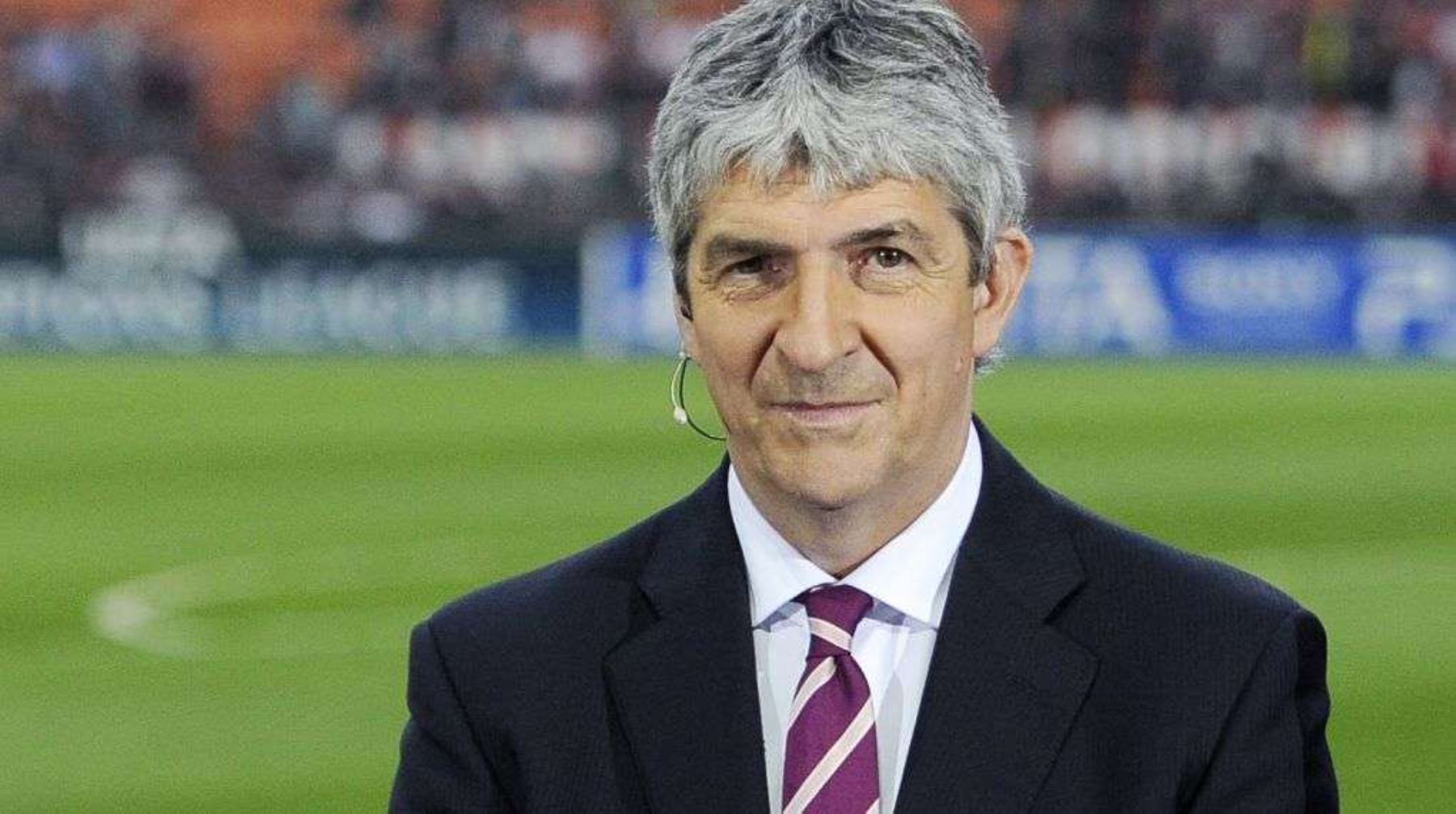
But he was a smoker, and today, December 9, 2020, he died of lung cancer, at the age of 64.

Now, Italy cries. But because he had once made Brazil, then Poland, then Germany cry, Paolo Rossi made Italians -- and many neutrals -- smile.

Wednesday, December 7, 2011

New Jersey's NBA Goodbye Is Set; Dr. Sócrates, 1954-2011


And another awkward goodbye for sports in this area: The revised, post-lockout NBA schedule has been released. The Knicks open at Madison Square Garden on December 25 -- you may know it as "Christmas Day" -- at noon against the Boston Celtics. These are, of course, the only two remaining 1946 charter members of the NBA still playing in their original cities.

Also playing on Christmas Day (all times Eastern):

* 2:30, a rematch of last season's (and the 2006 season's) NBA Finals, the Miami heat at the Dallas Mavericks.

* 5:00, the two most successful franchises of the last 25 years, the Chicago Bulls at the Los Angeles Lakers.

* 8:00, two of the up-and-coming teams of the league, the Orlando Magic at the Oklahoma City Thunder.

* 10:30, the Los Angeles Clippers at the Golden State Warriors in Oakland -- two teams that could have been arch-rivals, but instead are notorious underachievers.

*

The Nets open the next day, at the Verizon Center in D.C., against the Washington Wizards. Formerly known as the Washington Bullets. And the Capital Bullets. And the Baltimore Bullets. And the Chicago Zephyrs. And the Chicago Packers. They may the Los Angeles Angels of Anaheim look like a paragon of nomenclatural stability.

The last Nets home opener in New Jersey will be the next day, December 27, against the Atlanta Hawks at the Prudential Center.
The Nets' New Jersey finale -- barring the Playoffs, but who's kidding who -- will be on Monday night, April 23, at the Prudential Center. Somewhat appropriately, it will be against the team to whom the New York Nets had to sell Julius Erving just to get into the NBA in 1976, the Philadelphia 76ers. Instantly, they went from being the best team in the ABA to being the worst team in the NBA, moved to the Rutgers Athletic Center in 1977, changing their name to the New Jersey Nets, to the Meadowlands in 1981, and to the Prudential a year ago.

The last day of the NBA regular season will be Thursday, April 26, and the Nets will play their last game as the New Jersey Nets at the Air Canada Centre against the Toronto Raptors. Come November 2012, it will be home games at the Barclays Center in Brooklyn, as the Brooklyn Nets.
Damn you, Bruce Ratner. R.I.P. New Jersey Nets, 1977-2012.

*

Sócrates is dead. No, not the ancient Greek philosopher. Well, yeah, him, too, but he's been dead for 2,410 years. I mean the Brazilian soccer legend.

Sócrates Brasileiro Sampaio de Souza Vieira de Oliveira was born on February 19, 1954 in Belém, in the State of Pará, in northern Brazil, far from the huge cities of the country's south, Rio de Janeiro and São Paulo. He began playing professionally as a midfielder for Botagfogo-SP Ribeirão Preto in the State of São Paulo -- not to be confused with Botafogo de Futebol e Regatas (football and rowing), of Rio, one of the most-supported clubs in the world.

In 1978, he signed São Paulo club Corinthians, and he became a legend. He led them to the São Paulo State Championship in 1979, 1982 and 1983. In the 1982 World Cup in Spain, wearing the Number 8, he was the biggest star on a Brazil team that thrilled the world with its stylish play, much as the 1970 Brazil team led by Pelé did. Sócrates was their main playmaker, a two-footed shooter known for his white headband, and for making blind heel passes to teammates like Zico, Éder Assis and Roberto Dinamite.

As the man himself said, in words that would be agreed upon by Dutch visionary Johan Cruijff and Arsenal manager Arsène Wenger, "Beauty comes first. Victory is second. What matters is joy."

However, this was the era of the World Cup being decided by 2 group stages, and, despite a goal by Sócrates, Italy knocked them out thanks to a hat trick by Juventus star Paolo Rossi -- who titled his memoir I Made Brazil CryThat Brazil team is often called the best team not to make a World Cup Final.

Sócrates also played for Brazil in the 1986 World Cup in Mexico (now wearing Number 18 and, like Chicago Bears quarterback Jim McMahon at the same time, making his white headband iconic), but they lost to France on penalties in the Quarterfinal.
The Italians must have seen something in Sócrates, because in 1984, he was signed by Florence-based Fiorentina. But he may have gotten homesick, because he returned to Brazil after just 1 season, playing for Rio's Flamengo (winning the Rio State Championship in 1986) and São Paulo's Santos (Pelé's old club), before concluding his career in 1989 with the club with whom he started, Botafogo-SP.

He later managed them, and also Ecuador's leading club, LDU Quito, and Rio club Cabofriense. In 2004, at 50, he made a 1-game (12-minute, as it turned out) comeback with Yorkshire side Garforth Town.

His father was a prominent civil servant, and so, unlike most Brazilian boys of his generation, Sócrates was able to go to college. He went to medical school, and became a practicing physician, and was known in the public imagination as Doctor Sócrates.

I know: It sounds like the name of a comic-book supervillain. But he was a hero. When the Brazilian military coup happened in 1964, he was 10 years old, and saw his father get rid of the thing he valued the most: His large book collection.

Knowing that wasn't right, Sócrates spent much of his soccer career also engaging in political agitation, founding the Corinthians Democracy movement (possibly in tribute to the ancient Greeks, inventors of democracy and originators of the names both he and his club bore). On March 15, 1985, an elected government took office, and Sócrates and the others who opposed the military dictatorship were vindicated.

Soccer writer Adrian North compared him to one of his political heroes, Argentine revolutionary Ernesto "Che" Guevara, who was no hero: "Che believed to change the world, he needed a voice and a gun. Socrates believed he could change his country by amplifying his voice through football."
"I smoke. I drink. I think."
Ernest Hemingway would have loved him.
So would Jack Kerouac, until the subject turned to politics.

Ironically, this brilliant man who was also a physician smoked, and it led to a few ailments that combined to lead to his death 3 days ago. He was only 57, and left behind a wife and 6 children.

Dilma Rousseff, President of Brazil: "On the field, with his talent and sophisticated touches, he was a genius. Off the field... he was active politically, concerned with his people and his country."

Ronaldo (the bald Brazilian, not the gel-haired Portuguese): "Sad start to the day. Rest in peace Dr. Socrates."

Paolo Rossi: "His death is piece of our history that's broken off and gone away."

We call our sports stars "heroes." Doctor Sócrates really was a hero, for his country and for the world, for his time and for all time.

Wednesday, December 29, 2010

Devils Going to Hell In a Handbasket; Enzo Bearzot, 1927-2010

Let me get my thoughts on the blizzard out of the way: We got 17 inches where I live, and other areas got more. Elizabeth, New Jersey was the "winner" in the New York Tri-State Area with 31 inches -- which tops the 30 inches that set a record for me on January 6-8, 1996 -- and Toms River topped the Philadelphia metro area (even though it, sort of, belongs to both areas) with 28 inches. Cape May got 26.

It was nice to see Mayor Mike shoveling a citizen's driveway on the news. But it was Mayor Michael Nutter of Philadelphia. Mayor Michael Bloomberg of New York doesn't even seem to be aware that there are FIVE Boroughs. Mayor Moneybags can't be bothered to attend to an actual emergency, while Mayor Nutter -- not aptly named -- literally too matters into his own hands!

As for my own town, a lot of side streets, including mine, remain inadequately plowed. I swear, what's the point in voting for Democrats if they're going to care as little as the Republicans do?

*

Tonight, the New Jersey Devils host The Scum, a.k.a. the Manhattan Muggers, a.k.a. the Broadway Boozehounds, a.k.a. the New York Rangers, at the Prudential Center in Newark.

I don't know if you're aware of this, but I hate the fucking Rangers.

Right now, the Devils rank 30th out of the NHL's 30 teams with just 20 points. Dead last. The pathetic New York Islanders are 29th, so they're not quite as pathetic. The Rangers rank 10th.

The Devils have lost 9 of their last 10. They are just 5-12 at home. (I'm counting an overtime or shootout loss as a loss, even though you still get 1 team point for it.)

The Devils can be summed up in 2 letters: P.U.! This is the worst Devils team since 1987, when Alain Chevrier was the main goalie, and the top 3 scorers were Aaron Broten, "Captain Kirk" Muller and... John MacLean. To borrow a line from a movie about another sport, "What are these boys thinkin' about? 'Cause it sho' ain't hockey!"

Last Thursday, John MacLean was fired as Devils head coach. After waiting for years to get this chance, including winning a minor-league title and serving as a Devils assistant, he lasted just 33 games.

As The Who would say, "Meet the new boss, same as the old boss." Jacques Lemaire, who coached the Devils from 1993 to 1997, including the 1995 Stanley Cup, and coached them last season as well before "retiring" (that may have been his intention at the time), has been installed for the rest of this season.

One of the greatest players of his era, scorer of 366 goals in the regular season and another 61 in the Playoffs (including an overtime winner that clinched the 1977 Stanley Cup, though it was a sweep), winner of 8 Stanley Cups from 1968 to 1979 with the Montreal Canadiens, a member of the Hockey Hall of Fame before his 40th birthday, the man who turned the Devils from pretenders to contenders to champions, and the man who turned the Minnesota Wild from an expansion franchise to a Western Conference Finalist in just 3 seasons, Lemaire is now 65 years old, and he looks it.

Brought in as his assistant is Larry Robinson, his former Canadiens teammate, one of the best defensemen who ever lived. Robinson was his assistant on the 1995 Cup, coached the Devils to the 2000 Cup, and assisted him again last season. (Sadly, with the recent death of Pat Burns, a reunion of all 3 Devils Cup-winning coaches is no longer possible.)

To be totally fair, I'm sorry for Johnny Mac, who finally got his chance to be an NHL head coach and deserved better than to run into an absolute buzzsaw.

There's the injuries. Martin Brodeur had an elbow injury, although he's back. And Zach Parise, who has a chance to become the greatest offensive player in team's history -- assuming he doesn't get hurt again, and he doesn't get let go in yet another salary dump, he should surpass MacLean's team record of 374 career goals in 2017 or so -- has been hurt all year, and may not come back at all this season. MacLean has already dressed 33 different players, 9 of whom made their NHL debuts this season.

And speaking of salary dumps, there's also the matter of general manager Lou Lamoriello, who seems to be following the Charlie Finley model: Bald and cheap. You could make a pretty good starting lineup out of players the Devils let go just since the 2004-05 lockout: Center, Scott Gomez or John Madden; right wing, Brian Gionta; left wing, Sergei Brylin (still playing in the Russian league); defensemen, Brian Rafalski and Brad Lukowich; goaltender, Scott Clemmensen. Then there's the cheapies that Lou Lam has NOT gotten rid of, the Colin Whites, the Sheldon Brookbanks, the Dainius Zubruses.

Ilya Kovalchuk got a lot of money? Doesn't mean there's nothing left to spend on anybody else. You know, Jeff Vanderbeek is not crying poverty.

Of course, there is the matter of the salary cap, the result of which is that Kovalchuk's contract had to be seriously restructured so he could get all that money and not have all of it counted against the cap.

Still, Lamoriello has let too many good players go, and not gotten players good enough to replace them.

For a few years, the Devils were resembling the Atlanta Braves. Well, guess what: Division Titles are not enough.

The Devils are starting to more closely resemble Arsenal. Same red shirts, same weak passing, same fear to get off a good shot, same laziness. Same willingness to go just so far (Playoffs for the Devils, 4th place or higher and thus guaranteeing UEFA Champions League play for the following season for Arsenal), and not willing to take a risk to go for it all.

Except I can't say THAT anymore, either: On Monday, Arsenal beat Chelsea! They go into tonight's game against Wigan on a tremendous high. They will go into the New Year no worse than 3rd in the Premier League, and still alive in all 3 cup competitions (FA Cup, Carling Cup, Champions League).

Besides, Arsene Wenger still has all his hair. It's all white, but it's still all there. Lamoriello? I don't know what's going on in that geodesic dome of his.

UPDATE: Devils blew a 1-0 lead and lost to The Scum, 2-1.

*

However, as long as we're being totally fair, John MacLean he took the hand he was dealt and played it very poorly. So, in spite of MacLean facing the old line, "Be careful what you wish for, you may get it," I say... Thank you, Santa!

Maybe we can make it up to him by trading Jamie Langenbrunner, assigning the Captaincy to someone more deserving, and retire Number 15 for MacLean.

Come on, Jacques Lemaire, get this team going again. Remember the pride you and your teammates felt in Montreal. Remember the pride you built in this team in the Meadowlands era. Bring it back in Newark.

*

Enzo Bearzot died last week. A native of Aiello del Friuli near Udine, Italy, he became a star soccer defender, playing for several teams from 1946 to 1964, including Internazionale of Milan and Torino of Turin. He played 1 game for the Italian national team, in 1955.

He went into management, and in 1975 was named manager of the national team. He got them to 4th place in both the 1978 World Cup and Euro 1980. After poor performances in their 1st 3 matches of the 1982 World Cup in Spain, he ordered Silenzio Stampa -- media silence, not talking to the press.

It worked, as a team led by Juventus (the main team in Turin) stars Dino Zoff, Gateano Scirea, Claudio Gentile, Antonio Cabrini, Marco Tardelli, and the hero of heroes, Paolo Rossi, knocked out defending Champion Argentina, a much-hyped Brazil squad, Poland in the Semifinal, and West Germany in the Final.
Italy didn't qualify for Euro 1984, and crashed out of the 1986 World Cup in the Round of 16. Bearzot faced criticism for relying on the older players (not the first time an Italy manager would be so criticized, nor the last), and he resigned in disgust. Still, his 104 matches are the most of any Italy manager. He died last week at age 83.

*

Hours until the Devils play another local rival: 9, tonight, against the Rangers at the Prudential Center. Next game against the Philadelphia Flyers, Saturday, January 8 at the Wells Fargo Center in Philly. Next game against the Islanders, Monday, January 17, at the Nassau Coliseum.

Days until the next North London Derby: 59, Saturday, February 26, at White Hart Lane. Under 2 months.

Days until the next Yankees-Red Sox series begins: 100, Friday, April 8, 2011, at Fenway Park.

Days until Derek Jeter collects his 3,000th career hit: 178. Under 6 months. (estimated: June 14, 2011)

Days until Rutgers plays football again: 246, on Saturday, September 3, although nothing else is known. Apparently the Big East Conference hasn’t set its conference schedule for 2011, meaning only 4 nonconference games are yet set: At North Carolina on September 10, home to Ohio University (thank God it’s not Ohio State) on September 24, home to Navy on October 15, and against Army at the new Yankee Stadium on November 12. In fact, aside from the Yankee Stadium date, every date is in flux, due to the whims of the TV networks: September 3, 10, 17 and 24; October 1, 8, 15, 22 and 29; November 5, 19 and 26; and December 3.

Days until East Brunswick High School plays football again: 252, on Friday night, September 9, 2011, and the opponent and location are TBD.

Days until the Rutgers-Army football game at Yankee Stadium: 319.

Days until the next East Brunswick-Old Bridge Thanksgiving clash: 330.

Days until the last Nets game in New Jersey: 481 (estimated).

Days until the 2012 Olympics begin in London: 537.

Days until Alex Rodriguez collects his 3,000th career hit: 885 (estimated).

Days until Alex Rodriguez hits his 700th career home run: 1,007 (estimated).

Days until Super Bowl XLVIII at the Meadowlands: 1,132.

Days until Alex Rodriguez hits his 756th career home run to surpass all-time leader Hank Aaron: 1,627 (estimated).

Days until Alex Rodriguez hits his 763rd career home run to become as close to a "real" all-time leader as we are likely to have: 1,741 (estimated).