
May 8, 1945: Nazi Germany surrenders, ending the European Theater of World War II. It becomes known as V-E Day: Victory in Europe. V-J Day, Victory over Japan, came on August 14.
Top 10 Myths About World War II
1. It Began On September 1, 1939. That's the date on which Nazi Germany invaded Poland, beginning what became known as "the European Theater" of the war. But "the Pacific Theater" had begun earlier. Japan had been attacking China since 1931, when they invaded and annexed the province of Manchuria.
2. It never would have happened without Hitler. Adolf Hitler became Chancellor of Germany on January 30, 1933. He wanted revenge on Britain, France, Russia, and their client states Poland and Czechoslovakia. And he wanted revenge on the Jews, whom he blamed for a "stab in the back" that caused Germany to lose World War I.

He wasn't the only one who thought so. Had he never become Chancellor, there were others willing to step into the breach of chaos Germany was in during the early 1930s. Another such figure might not have been as eager to go to war. But it would have happened. And such a figure might have been a more competent commander-in-chief, allowing Germany to hold out longer, and maybe even to negotiate a peace that would have allowed it to continue as a fascist nation.
3. The French were cowards who surrendered too early. They were overwhelmed by the Nazis, unaware that their defenses, such as the Maginot Line, would be terribly ineffective. What were they supposed to do? Surrendering allowed them to stay alive as a country.
And they had a Resistance, and it kept fighting for 4 years, until the Allies came in and turned the tide. That sounds like "surrender" was a half-truth.

French Resistance flag, with the Cross of Lorraine
4. FDR knew Pearl Harbor was going to be attacked, and let it happen. This charge has been leveled at Franklin Delano Roosevelt, the greatest President ever produced by the Democratic Party, by Republicans who don't want to give a Democrat credit for winning the war.

They want the credit for winning the war to go to Republicans like Generals Dwight D. Eisenhower (who was elected President in 1952 and 1956, solely on the basis of his wartime command, as he'd never held elective or even civilian appointive office) and Douglas MacArthur (whom the hard right really wanted in the elections of 1948 and 1952).
The argument is that FDR couldn't convince Congress to declare war on Nazi Germany, because so many of them were either big-city Democrats, with large Irish constituencies that didn't want to go to war on behalf of Great Britain, and Italian constituencies that didn't want to go to war against Italy; or Midwesterners, of both parties, in America's largest ethnic group, which, then as now, was German, and didn't want to go to war against Germany.

Therefore, the only way to get America into a war against Germany was to get it into a war with Germany's ally, Imperial Japan. So, in their theory, FDR provoked Japan by instituting an embargo on exports to them, including oil; freezing Japanese assets in U.S. banks; and supplying Japan's enemy, China, through Britain.
Every surviving document that discussed the possibility of Japanese retaliation for these measures suggests a direct countermeasure, such as economic sanctions; or an attack on a considerably closer U.S. military base, such as one in the Philippines. Which did happen: On December 7 and 8, 1941, one or the other, Japan attacked pretty much every base America had in the Pacific Ocean, and some British targets, too. As he said in his address to Congress on December 8, asking for a Declaration of War:
Yesterday, the Japanese Government also launched an attack against Malaya.
Last night, Japanese forces attacked Hong Kong. Last night, Japanese forces attacked Guam.
Last night, Japanese forces attacked the Philippine Islands.
Last night, the Japanese attacked Wake Island.
And, this morning, the Japanese attacked Midway Island.
Last night, Japanese forces attacked Hong Kong. Last night, Japanese forces attacked Guam.
Last night, Japanese forces attacked the Philippine Islands.
Last night, the Japanese attacked Wake Island.
And, this morning, the Japanese attacked Midway Island.
Malaya (Malaysia) and Hong Kong were then under British control. Congress granted the Declaration of War. America was at war with Japan. But it still was not at war with Germany. Three days later, on December 11, to aid its ally, Germany declared war on America. Only then did Congress declare war on Germany.
But the surviving documents that suggest that the Japanese would attack a U.S. military base directly mentioned the Philippines -- not the Hawaiian Islands, still a U.S. Territory. (Hawaii gained Statehood in 1959.) The idea that the Japanese were even capable of an attack on Hawaii appears not to have been considered by the U.S. Department of War. It was a complete surprise. It wasn't just that FDR didn't know: Nobody on our side knew.
5. Churchill was an incorruptible good guy. Using the term "corrupt" suggests that the subject was willing to be bribed with something -- money, power, or something else -- to achieve his goals. In that regard, calling Winston Churchill "corrupt" is ridiculous. He was always filthy rich, and could not be bought.
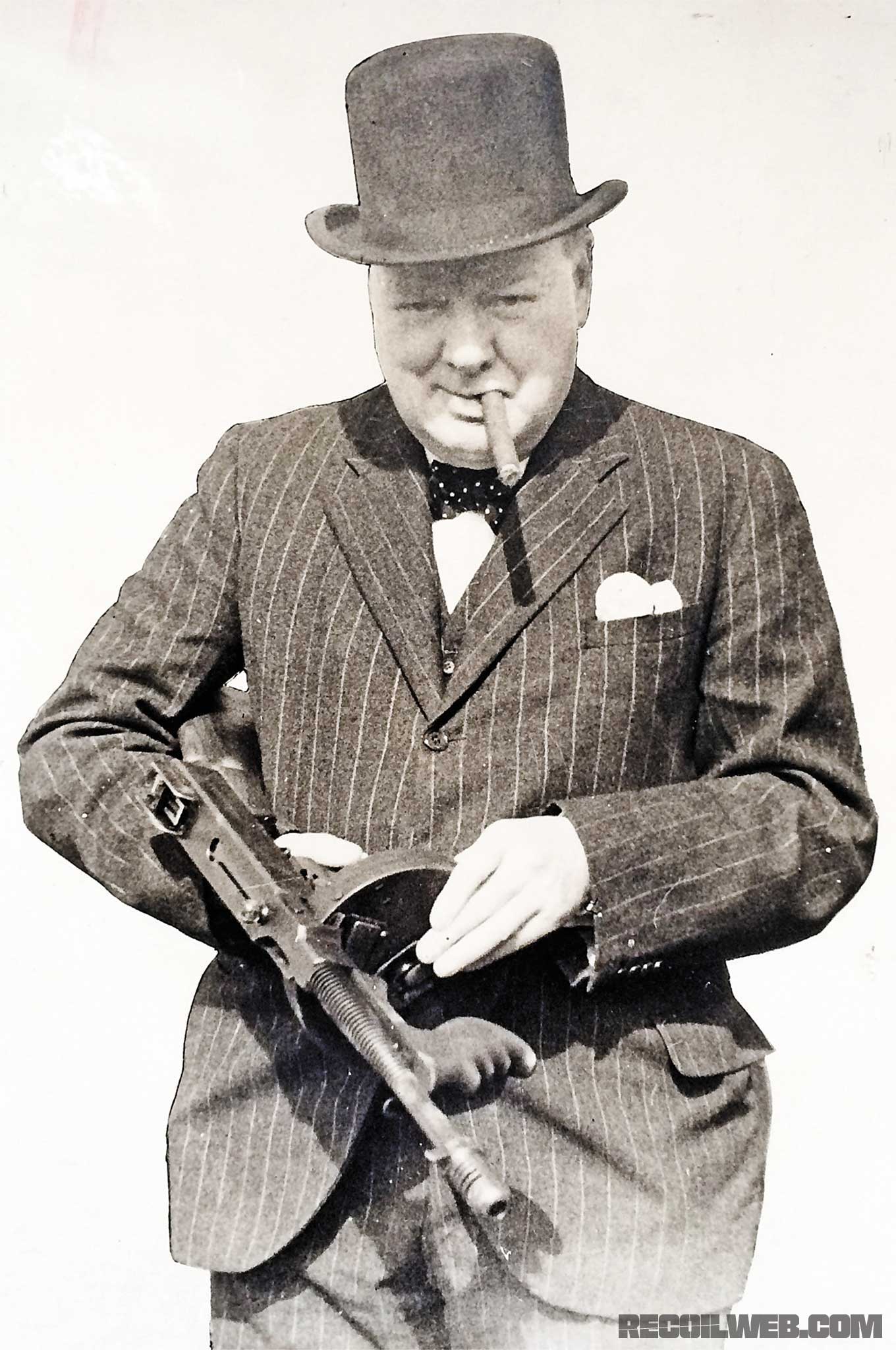
"You've got to ask yourself one question: 'Do I feel lucky?'
Well, do you, you old sod?"
But... "Good guy"? He hated Nazis, which was a plus, especially when few others were willing to oppose them publicly. He hated Communists, which was a plus. But he was also an Englishman of the Victorian era: He was first elected to Parliament in 1900, the last full year of Queen Victoria's life. He was a big believer in the British Empire, and no fan of the natives of its colonies.
In 1919, as Secretary of State for Air, he agreed to the Royal Air Force's request to use mustard gas in Iraq: "I am strongly in favour of using poisoned gases against uncivilised tribes." The Versailles Conference was going on at the time, and Churchill said, "The democratic principles of Europe are by no means suited to the development of Asiatic and African people."
This was while the Irish War of Independence was going on. As in opposition to Margaret Thatcher and the paramilitary terrorists she supported in the early 1980s, there were hunger strikers in Ireland then, too. Of them, Churchill said, "Hunger strikers will be allowed to die in jail, the more the merrier. Some of them have died already, and a damn bad job they were not all allowed to die." And this was a man who had spent part of his childhood in Ireland: His father, Lord Randolph Churchill, served as the island's Lord Lieutenant, and his brother, Jack, was born there.
Winston also wanted to maintain control of the Indian subcontinent, saying in 1942, "I have not become the King's First Minister in order to preside over the liquidation of the British Empire." That same year, he wrote, "Eventually, the Moslems will become master, because they are warriors, while the Hindus are windbags. Yes, windbags! Oh, of course, when it comes to fine speeches, skilfully balanced resolutions and legalistic castles in the air, the Hindus are real experts! They're in their element! When it comes to business, when something must be decided on quickly, implemented, executed -- here the Hindus say 'pass.' Here they immediately reveal their internal flabbiness."
It got worse. Of Hindus, Churchill once said, "They are a beastly people with a beastly religion." Famine struck the Bengal province, including present-day Bangladesh, in 1943, and over 3 million people starved to death, more than in the Irish potato famine of 100 years earlier. Churchill didn't lift a finger to send them food. For this reason, Indians, especially Bengalis, accuse Churchill of genocide, the very thing he was trying to stop the Nazis from committing.
In 1931, he said this of Mohandas Gandhi, who became world-famous with his Salt March the previous year: "It is alarming and nauseating to see Mr. Gandhi, a seditious Middle Temple lawyer, now posing as a fakir... striding half-naked up the steps of the Vice-regal Palace."
Not that Gandhi was a saint. His activities with, and feelings toward, women were unacceptable to present-day sensibilities. And on July 23, 1939, he wrote this letter to Hitler. I have not changed a word, or corrected a misspelling (as with "deliberately"):
Dear friend,
Friends have been urging me to write to you for the sake of humanity. But I have resisted their request, because of the feeling that any letter from me would be an impertinence. Something tells me that I must not calculate and that I must make my appeal for whatever it may be worth.
It is quite clear that you are today the one person in the world who can prevent a war which may reduce humanity to the savage state. Must you pay the price for an object however worthy it may appear to you to be? Will you listen to the appeal of one who has seliberately shunned the method of war not without considerable success? Any way I anticipate your forgiveness, if I have erred in writing to you.
That's right: Gandhi called Hitler "friend." At best, this was incredibly naive. Forty days later, Hitler invaded Poland.
6. The Western Democracies won it. If it wasn't for the 27 million deaths, military and civilian combined, of citizens of the Soviet Union, the Nazis wouldn't have lost nearly as many men as they did.
In the years to come, America and Britain didn't want to admit anything good about the Communist nations, so they came to believe that they won the war, without Soviet help. The British like to take it a step further: They like to claim that they stood alone for 2 years until America came in, and that America has hogged the glory ever since.
It gets taken even further than that. When England play Germany in soccer, England fans sing this, to the tune of "She'll Be Comin' 'Round the Mountain":
There were ten German bombers in the air. (In the air!)
There were ten German bombers in the air. (In the air!)
There were ten German bombers
Ten German bombers
Ten German bombers in the air. (In the air!)
And the RAF of England shot one down. (Shot one down!)
And the RAF of England shot one down. (Shot one down!)
And the RAF of England
RAF of England
RAF of England shot one down. (Shot one down!)
There were nine German bombers in the air...
And so on, until there's no German bombers in the air, 'cause "the RAF of England shot them down." This overlooks the fact that, during the Battle of Britain in 1940 and '41, before America got into The War, in addition to Englishmen, the Royal Air Force had Welshmen, Scotsmen, Irishmen, Canadians, Australians, New Zealanders, Indians, Africans, expatriate Americans, and exiles from all over the Nazi-controlled lands of Europe, but especially France and Poland. The French and the Polish actually exceeded those from elsewhere in the British Empire. If it had only been Englishmen in the RAF, those German bombers would have won. And the English footie fans can't even bring themselves to admit that.
7. If Hitler had only (pick your move that he could have made), he would have won the war. Unless you mean "If he hadn't invaded the Soviet Union," or "If he hadn't declared war on America." If he had never opposed the 2 strongest nations on Earth other than his own, he might have lasted long enough to get a stalemate with the 3rd of the 3 strongest other than his own, Britain, and the Third Reich might have lasted a lot longer. It wouldn't have been "The Thousand-Year Reich" that he proclaimed, but it would have lasted longer than the 12 years that it did.
But once he invaded the Soviet Union on June 22, 1941, he was doomed. Even if America hadn't gotten into the "European Theater" of the war, it would have been a matter of time before the Soviets got to Berlin. And then, Britain and France would have been faced with a Red Europe, as Stalin would have been more than happy to add the formerly Nazi-controlled countries, including France, to his Union of Soviet Socialist Republics.

8. Roosevelt "sold out to Stalin" at Yalta. The last meeting between FDR, Stalin and Churchill was at Yalta, in the Crimea, on the Black Sea -- part of the territory of Ukraine that Vladimir Putin annexed to Russia -- from February 4 to 11, 1945.

Ever since, conservatives have claimed that FDR "betrayed" Eastern Europe by leaving it to Stalin. Well, what was FDR supposed to do? Send American troops into Poland, Czechoslovakia, Hungary, et al.? In other words, provoke Stalin?
The war was not over. Germany was still fighting, even if the end, there, was in sight. Japan was still fighting, with no end in sight. The Battles of Iwo Jima and Okinawa were yet to come. FDR needed the Soviet Union in that fight. He also knew that the United Nations would be stronger after the war if the Soviets were in it. Roosevelt agreed to some concessions at Yalta, for the same reason he cut his social programs short, telling a reporter, "Dr. New Deal had to give way to Dr. Win the War."
My father, of Polish descent, was a Kennedy Democrat, but he never forgave Roosevelt, the President when he was born, for how he handled the Polish situation at Yalta. But David Reynolds, a professor of history at Cambridge University, has written:
The so-called "Yalta myths" have been a great part of Republican mythology ever since the 1940s. They were a way of attacking Roosevelt and the Democratic party and it’s been brought up at various times since. The assumption behind it is that Roosevelt "sold out" Poland and Eastern Europe to the Soviet Union. It’s hard really to square that with the realities of 1945. The Red Army is in control of most of Poland by the time they meet at Yalta. So unless you embarked, say, on a war to evict the Red Army from Poland, there really is nothing you can do about that.
In other words, Poland and Eastern Europe were not Roosevelt's to "sell." Stalin already had them.
If FDR "sold out to Stalin at Yalta," then so did Churchill. Because of Stalin's promises, Churchill believed that he would keep his word regarding Poland and remarked, "Poor Neville Chamberlain believed he could trust Hitler. He was wrong. But I don't think I am wrong about Stalin." He was.
9. Dropping the atomic bombs on Japan was not necessary to end the war. The closer the U.S. got to the Japanese home islands, the harder the Japanese army fought. With victory at Okinawa on June 22, 1945, the U.S. got as close to the home islands as could be gotten without building new, closer islands. But that battle took 12 weeks. There were 12,500 Americans killed.
Compare that total with the 4,500 killed in 8 years in Iraq. Those 12,500 were more men, in 12 weeks, than America lost in Vietnam in any single year except 1968. The Japanese lost 110,000 men, and even more civilians on the island may have been killed.
President Harry S Truman, who didn't even know about the atomic bomb project until his 2nd day in office -- that's right: FDR did not tell his own Vice President about it -- was given these figures. He asked for figures of how many soldiers would die in an invasion of the Japanese home islands, and how long it would take. He was told over 1 million Japanese, half as many Americans, and it would take at least 6 months of fighting to get Japan to surrender. Given that "X-Day," the day the invasion was set to begin, would have been November 1, 1945, that meant that the "Pacific Theater" of the war would still have been in progress by May 1, 1946.
Truman asked when the atomic bomb would be ready. He was told that the 1st test would be on July 16, and that, if successful, more would be ready to go at a moment's notice. He knew that, if the invasion happened, and the predictions for it came true (and he believed that they would), and then it came out that America had the bombs that would have ended the war before the invasion, and Truman didn't use them, the American people would blow their stacks. He knew it would destroy his reputation as a strong leader who cared about the country. He cared more about that than he did about the Democratic Party losing the 1946 Congressional elections or the 1948 Presidential election.

He gave the order to proceed. Hiroshima was bombed on August 6. On August 9, Nagasaki was bombed, and the Soviet Union invaded Manchuria. The Japanese knew it was only going to get worse, much worse, and surrendered on August 14, which became known as V-J Day.
10. Black men serving in the war made the desegregation of baseball possible. The line was, "If we can stop bullets, why not balls?" In 1945, Albert "Happy" Chandler, a former Governor of Kentucky and U.S. Senator, was appointed Commissioner of Baseball. (He said he took the job because he loved baseball, and because it paid better than serving in the Senate.) He cited black men serving in the war as a reason to allow them in the professional ranks of baseball.
But there was a reason Chandler was appointed to the post: It was vacant. It was vacant because the 1st and only man, to that point, to hold it, Kenesaw Mountain Landis, had died in 1944. And he was a racist. While he publicly denied that there was any reason why black men couldn't play in the major leagues, there was no way he was ever going to allow it. And he loved being Commissioner, so he was never going to resign, even though he was 78 years old when he died.

And he looked old when he was
considerably younger than that.
Branch Rickey, president of the Brooklyn Dodgers, signed Jackie Robinson to a contract on October 23, 1945. Had Landis still been alive and on the job on that date, there is no way in hell that he would have allowed that contract to stand. Not even if a black American soldier had shot Hitler, or if a black American pilot had dropped the bomb on Hiroshima, or even if a black man had, by whatever means, saved Landis' own life.

Lieutenant Jack R. Robinson, U.S. Army.
Don't bother looking for a picture of Kenesaw Mountain Landis
in a military uniform: He never served, and so it doesn't exist.
If Landis were still alive in 1945, then, today, Jackie Robinson would be remembered, if at all, as a good running back for UCLA in 1940. And God only knows when a black man would have played in Major League Baseball. But it wouldn't have been while Landis was still alive.
Of course, Rickey was a lawyer. And a brilliant man. He could have sued, and argued the case very well. But Landis had been a federal Judge, meaning he was also a lawyer. He could have tied the case up for years.
If Landis had still been alive and Commissioner in 1954, when the U.S. Supreme Court decided Brown v. Board of Education, he still would have held firm, until the Supreme Court got the case of Brooklyn National League Baseball Club, Inc. v. Kenesaw Mountain Landis, and Chief Justice Earl Warren would have done what he did in Brown v. Board, and gotten a unanimous ruling in favor of the plaintiff, granting great joy to black Americans, and giving the elderly Landis a terrible public humiliation.
But it still would have been, at the minimum, the Summer of 1954, before that ruling was issued. Which means the debuts of Robinson, Roy Campanella, Don Newcombe, Larry Doby, Satchel Paige, Monte Irvin, Willie Mays, Ernie Banks and Hank Aaron all would have been delayed -- and, given the ages of some of them, possibly prevented entirely.





/arc-anglerfish-arc2-prod-tronc.s3.amazonaws.com/public/EW6GNIQUWXID7KB2EW4QOAR4YE.jpg)
/arc-anglerfish-arc2-prod-tronc.s3.amazonaws.com/public/VDKJXHZDWSJN7HIMO7VH7KLYQI.jpg)



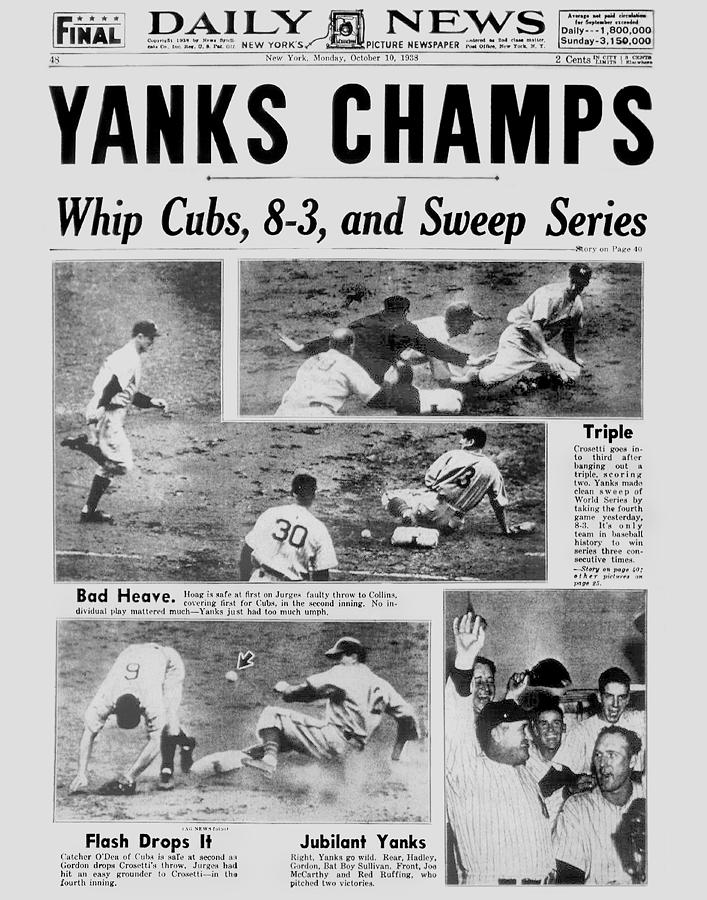

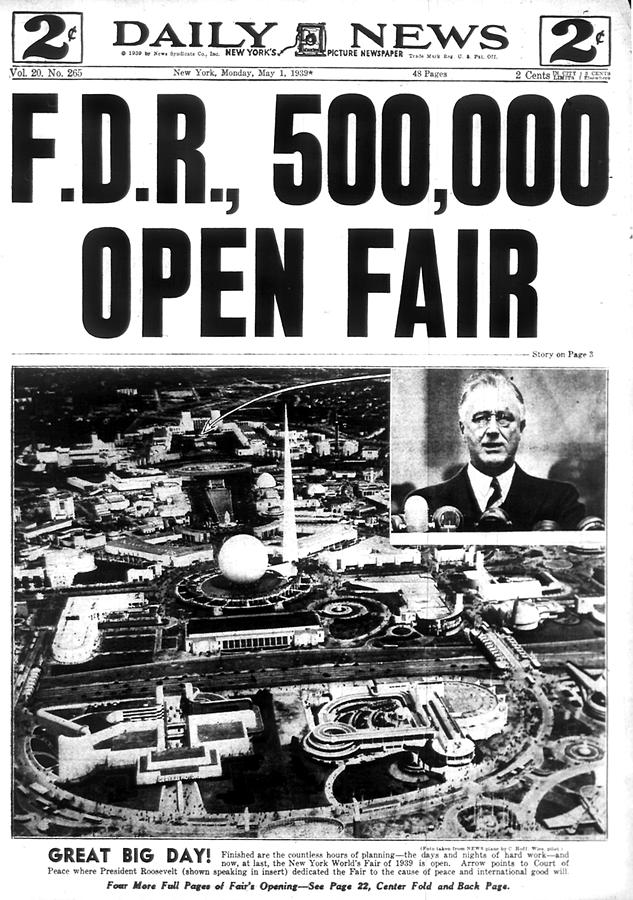


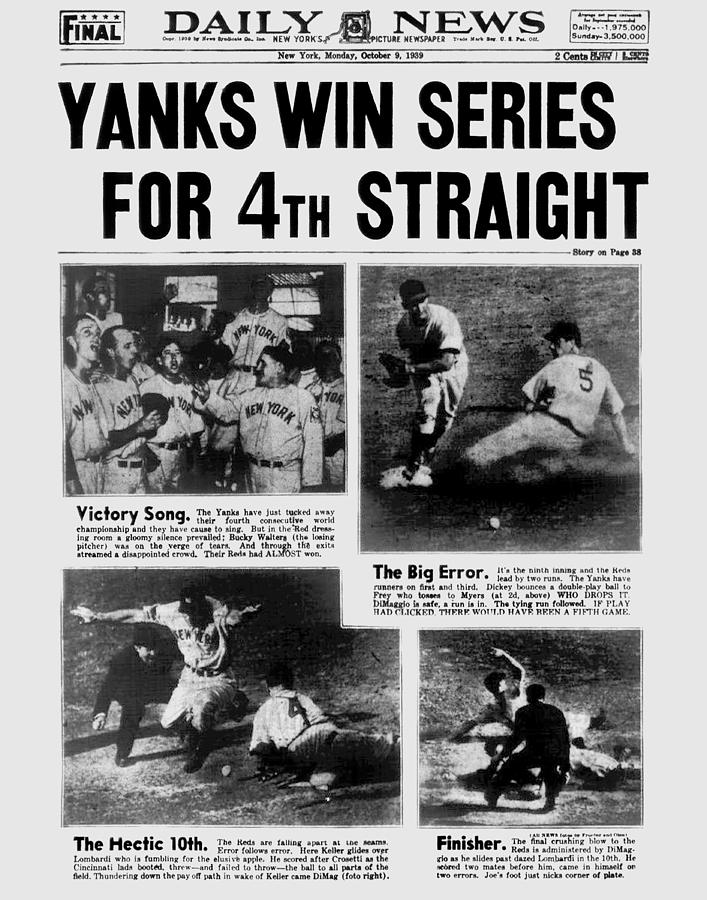
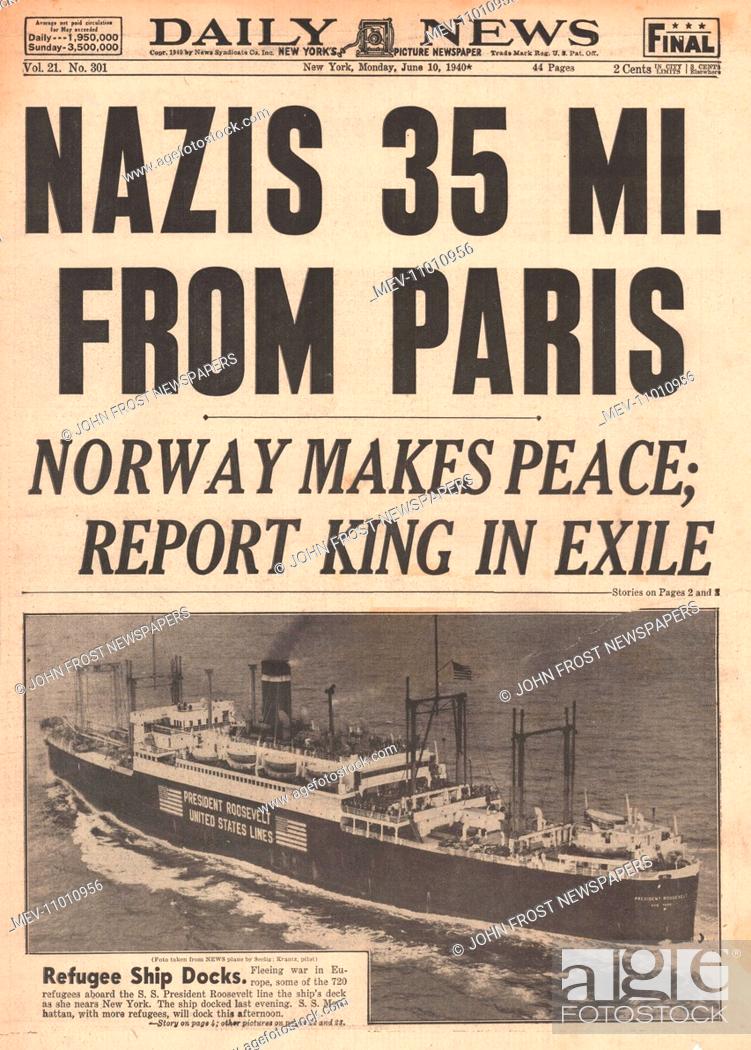


/arc-anglerfish-arc2-prod-tronc.s3.amazonaws.com/public/WQKNC3QU3DU7V25Z53FRQIDQGU.jpg)


