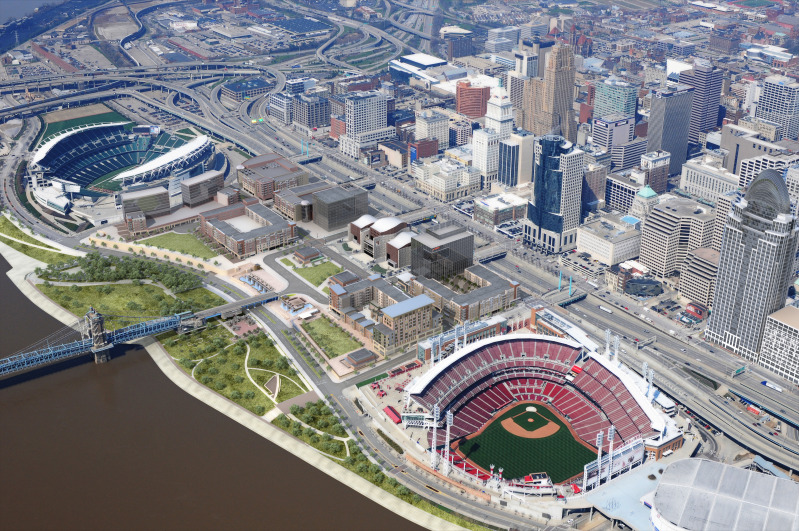
Sunday, August 17, 2014

Jeter a Hero, Maddon a Zero (Which Is Not Much Less Than the Rays' Attendance)

Yesterday's game against your 2018 Montreal Expos (known, for the moment, as the Tampa Bay Rays) looked like it was going to be one of those games. Where the Yankees got good pitching and it didn't matter because they didn't score enough runs.

Shane Greene pitched 6 innings, allowing just 2 runs on 7 hits and 1 walk, striking out 10. And Shawn Kelley actually pitched a scoreless 7th inning.

But Drew Smyly, whom the Rays got in the David Price deal, was equal to the task, as the only runs he allowed came on a Martin Prado home run in the 2nd inning (his 2nd as a Yankee).

Dellin Betances pitched a scoreless 8th, but the game went to the 9th tied.

Brett Gardner led off the top of the 9th by beating out a grounder that Rays 2nd baseman Logan Forsythe -- a soap opera character's name if I ever heard one -- threw away, allowing Gardner to get to 2nd.

Then some guy named Derek Jeter singled Gardner home. 3-2 Yankees.

I like this Jeter guy. He could be a big star for the Yankees. Maybe even a Hall-of-Famer.

David Robertson closed the Rays down in the bottom of the 9th. WP: Betances (5-0). SV: Robertson (32). LP: Jack McGee (3-1).

For those of you old enough to remember the late 1970s and early 1980s, as I am: Jack McGee was also the name of the reporter, played by Jack Colvin, who chased The Incredible Hulk, the Lieutenant Girard to Bill Bixby's/Lou Ferrigno's Dr. Kimble: "Mr. McGee, don't make me angry. You wouldn't like me when I'm angry."

The attendance was 31,042. According to Tropicana Field's official regular-season capacity, that's
91 percent.

The problem is, most of them were Yankee Fans. And Rays manager Joe Maddon didn't like that:

Yeah it's great. It's great that it's sold out. And I understand that the people like Derek Jeter. But you've got to come out and root for the Rays, too, you understand. I mean, I totally understand what's going on. But I'm not going to sit here and defend all of that noise in the Yankees' favor in our ballpark. I'm not going to defend that. So we're going to come out and root for the Rays. We'd appreciate that.

The greatest per-home-game attendance the Rays have ever had was 23,147, in 2009, the year after they won their one and only Pennant. They are now averaging less than 18,000, and that's counting games against the Yankees.

The locals will not support a winning team, never mind the mediocre one they have now. Having a bad stadium in downtown St. Petersburg, instead of in or near downtown Tampa, is no excuse.

The San Diego Padres have won 2 Pennants in over 40 years, and used to play in a football stadium out in the suburbs, and they did better at the box office.

The Kansas City Royals have done the same (at least they've won 1 World Series), and still play in a ballpark out in the suburbs, and they've nearly always done better.

The Texas Rangers took almost 40 years to win their 1st Pennant, and their stadium is in the middle of nowhere (halfway between Dallas and Fort Worth, with poor public transportation), and they did better even before they started winning.

The Miami Marlins have a new stadium, fairly close to downtown, and while their attendance is bad, it's not as bad as their cross-State "rivals"; indeed, they did better than the Rays when they were playing in the Dolphins' stadium out in the suburbs.

Even when the San Francisco Giants were playing at Candlestick Park, the most hated stadium in baseball history, in the 1990s, they had better attendance.

The excuses that the few Rays fans use to explain their pathetic attendance do not hold up to scrutiny. They need to stop telling me their excuses, and start telling their friends to come to a game with them. Make me look like the idiot, not themselves.

If not for people coming to The Trop and rooting for the Yankees, the Rays would almost have to move. (They should, anyway. The Montreal Olympic Stadium is a less ridiculous ballpark -- and that's saying something.)

The series concludes this afternoon. Hiroki Kuroda starts for the Yankees, Jeremy Hellickson for the Expos -- I mean, the Rays.

Saturday, August 16, 2014

What the Yankees Are Doing Is Unacceptable

Losing 5 straight is bad enough. But losing 5-0 to the dessicated husk of the Tampa Bay Rays? The ghost of Mickey Mantle demands an explanation for this bullshit!

I don't blame Brandon McCarthy (4-2 since coming to the Yankees). He got into the 7th inning, and allowed only 2 earned runs. But a pair of Yankee errors made him the losing pitcher. (Alex Cobb was the winner for the Rays, 8-6.)

I blame the hitters, and hitting instructor Kevin Long, who really must go. He's been holding the Yankees back, especially from early 2012 onward.

The Yankees went down 1-2-3 in the 1st and the 6th. They wasted leadoff singles by Mark Teixeira in the 2nd and the 7th, Stephen Drew in the 3rd, Derek Jeter in the 4th and Chase Headley in the 5th. Thanks to a wild pitch, Jeter actually reached 2nd with nobody out. It was only 2-0 Tampa at that point, and the Yankees were very much in the game.

The Yankees had the bases loaded with 1 out in the 8th, when it was 4-0 and a home run would have tied the game, and had Jacoby Ellsbury and then Teix coming up. But both of them struck out. And then they went down 1-2-3 in the 9th.

Rays 5, Yankees 0. Do I credit the opposition here? No, because it isn't any good anymore. The Rays have had to struggle to get back to .500. (Soon, the Yankees will, too -- from the other direction!)

So who's to blame? Joe Girardi? Kevin Long? Larry Rothschild? Brian Cashman? Hal Steinbrenner? Hank Steinbrenner?

Something must be done. This is unacceptable.

The series continues today, a 4:10 PM start for the Fox Game of the Week broadcast. Shane Greene starts against Drew Smyly.

Friday, August 15, 2014

How to Be a Met Fan In Los Angeles -- 2014 Edition

Interleague play has messed many things up, including the Mets' trips to the West Coast. The matchups, both in New York and in California, against the former New York teams in the National League, the Brooklyn/Los Angeles Dodgers and the New York/San Francisco Giants, used to be highlights of the season for Met fans, especially in the 1960s when the Mets did not yet have anything of their own to be proud of (unless they were proud of Shea Stadium, ha ha) and the Dodgers and Giants still had some players from their New York days.

But Interleague play no longer brings 2 trips a year to the West Coast for the New York teams, it brings 3 trips West that include 1 of the West coast teams. The Mets went to San Francisco in early June, as part of a roadtrip that also included Philadelphia and Chicago. They went to San Diego right after the All-Star Break, and then went on to Seattle (which is, at least, also on the West Coast), and then to Milwaukee (which is only on the "coast" of Lake Michigan). And, next week, they'll take another trip that begins in Oakland (again, on the West Coast) before finally hitting L.A., not visiting the home of the former "Dem Bums" until August 22. Last year, due to this unbalanced schedule -- mentally unbalanced -- the Mets' first trip to L.A. didn't take place until August 12, while the Yankees visited 2 weeks later.

Since when does baseball make sense?

Perhaps Met fans should be glad that the Dodgers left Brooklyn after the 1957 season, and that the Giants left Manhattan at the same time.  After all, if they hadn't, the Mets never would have been created, and the fans of the 2 former clubs, the Capulets and Montagues of baseball (or the Hatfields and McCoys, if you prefer), would not have been united in the love of a new club, the canonization of the National League, and hatred of the Yankees.

DISCLAIMER: I have never been to the Pacific Coast, so all of this information is secondhand at best, but much of it does come from the opposing team's website.

Before You Go. Unlike the Seattle and San Francisco Bay Areas, the Los Angeles area has very consistent weather. It’s a nice place to visit. If you don’t mind earthquakes. And mudslides. And wildfires. And smog. Check the weather forecast on the Los Angeles Times' website before you, so you'll know what to bring.

Los Angeles is in the Pacific Time Zone, which is 3 hours behind New York. Adjust your timepieces accordingly.

Tickets.  With basketball legend Earvin "Magic" Johnson having bought the Dodgers, settling their ownership situation, and injecting some much-needed cash into what had been one of the wealthiest baseball teams from their last few years in Brooklyn until owner Frank McCourt's spectacularly messy divorce, the Dodgers are in 1st place in the National League Western Division.

And, as in days of old (specifically, the 1960s through the 1980s), they currently have the best attendance in baseball, averaging 46,986 fans per home game, at the stadium with the largest current capacity in the major leagues, an even 56,000 seats. (In recent times, there have been a few stadiums with larger capacities that hosted Major League Baseball teams, including the old Yankee Stadium, but all have been replaced, except for nearby Anaheim/Angel Stadium, which has been remodeled and now has a much lower capacity.)

So getting tickets could be tough.  But compared to most teams, including the Angels down the freeway, they're relatively inexpensive. Field Boxes are $120, Infield Boxes $85, Infield Loge Boxes $60, Preferred Loge Boxes (down the baselines) $35, Infield Reserve $25, Preferred Reserve $20, Pavilion (what they call Bleachers) $23. The top deck -- infield-only seats, although they may be the highest in baseball history, even higher than the upper decks at the old Yankee Stadium and Shea -- go for $18.

Getting There. It’s 2,779 miles from Times Square in New York to City Hall in downtown Los Angeles, and 2,789 miles from Citi Field to Dodger Stadium. In other words, if you’re going, you’re flying.

After all, even if you get someone to go with you, and you take turns, one drives while the other one sleeps, and you pack 2 days’ worth of food, and you use the side of the Interstate as a toilet, and you don’t get pulled over for speeding, you’ll still need over 2 full days. Each way.

But, if you really, really want to drive... Take Interstate 80 West across New Jersey, Pennsylvania, Ohio, Indiana, Illinois, Iowa and Nebraska. Just before leaving Nebraska for Colorado you’ll get on Interstate 76, and shortly before reaching Denver you’ll get on Interstate 70 West. You’ll take that all the way to its end in Utah, where you’ll take Interstate 15 South. You’ll go through a short strip of Arizona before getting into Nevada (where you’ll see THE Strip, Las Vegas), before getting into California.

Assuming you're not going to a hotel first (and you really should), either in Los Angeles or near the stadium or Disneyland in Anaheim), you’ll get off I-15 at Exit 109A, and get on Interstate 10 West, and almost immediately onto U.S. Route 101 North, the San Bernardino Freeway.  Take that road's Exit 3 to State Route 110, the Pasadena Freeway, and Exit 24 will drop you off at Dodger Stadium. The official address is 1000 Elysian Park Avenue.

Given an average speed of 60 miles an hour, you’ll be in New Jersey for an hour and a half, Pennsylvania for 5:15, Ohio for 4 hours, Indiana for 2:30, Illinois for 2:45, Iowa for 5:15, Nebraska for 6 hours, Colorado for 7:15, Utah for 6 hours, Arizona for half an hour, Nevada for 2 hours, and California for 3 and a half hours hours; for a total of 46 hours and 30 minutes. Factor in rest stops, you’ll need more like 3 full days. And, remember, that’s just one way. And if you end up using Las Vegas as a rest stop, well, you might end up missing the series and end up, yourself, as what “stays in Vegas.”

That’s still faster than Greyhound (about 68 hours, changing buses twice, $528 round-trip, but it could drop to as little as $378 with advanced purchase, station at 1716 E. 7th Street at Lawrence Street) and Amtrak (over 77 hours on the Crescent to New Orleans and then the Sunset Limited to Los Angeles, $574 round-trip, Union Station at Alameda & Arcadia Streets).


Flights will be a lot more expensive, around $1,000, and you'll almost certainly have to change planes at least once, probably in Chicago or Dallas. The LAX2US bus will take you, as its name suggests, from Los Angeles International Airport to Union Station, taking 45 minutes and costing $8.00; from there, bus and subway connections can be made to downtown. 

Once In the City. Los Angeles was founded in 1781 by Spain as a Catholic mission, and means "The Angels" -- hence that was the name of the Pacific Coast League team, and the subsequent American League team: The Los Angeles Angels. The city continues to grow by leaps and bounds, and is now just under 4 million people, making it the 2nd-largest city in North America, behind New York. (Unless you count Mexico, and thus Mexico City, as "North America" instead of "Central America.")

The metro area has about 22 million people, and may soon end up passing New York and all others in that regard. The "centerpoint" of the city, where east-west and north-south addresses begin, is 1st Street and Main Street. Numbered streets are east-west.

The Los Angeles Times is the leading (most-circulated) newspaper in the Western United States, and has long been known for a great sports section. The legendary columnist Jim Murray has been dead for some time now, but if you watch ESPN's Around the Horn, you'll recognize the names of Bill Plaschke and J.A. Adande.

The sales tax in the State of California is 7.5 percent, in the City of Los Angeles 9 percent. A single ride on a bus or subway is $1.50, and a day pass is $5.00. And, yes, L.A. has a subway now, the Metro, with Red, Blue, Green, Gold, Purple and Expo lines. (Expo? It goes from Los Angeles all the way to Montreal? No.)

Going In. Public transportation in L.A. is a lot better than it used to be, with the addition of the Metro -- and now, the Dodger Stadium Express bus. It will pick up fans at the Patsaouras Bus Plaza adjacent to the east portal of Union Station and continue to Dodger Stadium via Sunset Blvd. and Cesar Chavez Avenue. Service will be provided starting 90 minutes prior to the beginning of the games, and will end 45 minutes after the end of the game. Service will be provided every 10 minutes prior to the start of the game and run approximately every 30 minutes throughout the game. Dodger tickets will be honored as fare payment to ride the service. Those without a ticket will pay regular one-way fare of $1.50.


Dodger Stadium is one of those 1960s-70s stadiums that is an island in a sea of parking. Parking will cost you $15 at the gate, but only $10 if you purchase online.

Dodger Stadium points away from downtown, but -- all jokes about L.A.'s infamous smog aside -- on a clear day you'll get a view of the San Gabriel Mountains. It was built in 1962 and is thus more than half a century old -- meaning it has now lasted longer than Ebbets Field, which hosted 45 seasons of baseball. But its age is hidden well, with its architectural style (that zig-zaggy roof over the bleachers can be seen on a few New Jersey public schools built in the JFK years) giving it away much more than its condition.

The Dodgers have usually been nuts on maintenance, including cleanliness. The old saying is, "You can eat off the floor at Dodger Stadium." Begging the question, "Even if you can, why would you want to?"

You’ll most likely be going into the stadium through the home plate entrance. From this angle, the stadium may look odd, due to not being very tall. This is an illusion, as the stadium was built into the side of Chavez Ravine. Along with the Oakland Coliseum, up the coast, this is the only active ballpark where you can walk in the front gate and go downstairs to your seat. (Ironically, this was once true for the Dodgers' arch-rivals: It could be done for Giants games at the Polo Grounds.)

Being in the California sunshine, the natural grass field has nearly always looked good. But Walter O'Malley's old policy of no advertising inside the stadium, save for the two 76 logos (for the gasoline station chain now owned by ConocoPhillips) on the scoreboards, is long gone. It doesn't make the place look tacky, though. (Tommy Lasorda can do that, if he shows up.)

The field is symmetrical: 330 feet to the poles, 360 to "Medium Left-Center" and "Medium Right-Center," 375 to "True Left-Center" and "True Right-Center," and 400 to center -- although that 400 mark is not shown, instead there are 395s to either side of dead center.

For a long time, the stadium's status as a pitcher's park, aiding such stars as Sandy Koufax, Don Drysdale, Tommy John, Don Sutton, Fernando Valenzuela and Orel Hershiser, led to suggestions that the Dodgers were cheating: That the pitcher's mound was really closer than the required 60 feet, 6 inches, perhaps as much as 4 feet closer. This has never been proven, and the fact that the Dodgers' pitching hasn't been as good the last 25 years (until Clayton Kershaw came along, that is) suggests 1 of 2 things: Either something happened to change the park's conditions to make it less unfriendly to hitters (what that would be, I dont know); or the Dodgers realized that, sooner or later, someone was going to prove the too-close-mound claim, and the game was up, and they had to move it back.

Oddly, from the park's opening in 1962 to 1970, there were 5 no-hitters pitched there, 3 by Koufax, and all by home pitchers (including Angel Bo Belinsky in '62 and Dodger Bill Singer in '70); from 1971 to 1989, none at all, in spite of all the good Dodger pitching, from 1990 to 1995, 5 more, 3 by Dodgers (Fernando, Kevin Gross and Ramon Martinez) and 2 by opponents (Dennis Martinez and Kent Mercker).
 In spite of its pitcher's park status, 4 home runs have been hit completely out of the stadium. Willie Stargell of the Pittsburgh Pirates did it twice, in 1969 and 1973, the first of these measured at 507 feet, still the park's longest. Mike Piazza hit one all the way out in 1997, and Mark McGwire roided one out in 1999.

Because of its proximity to Hollywood, Dodger Stadium can be seen in lots of movies, including Superman Returns, where the Big Red S safely deposits a distressed airliner on the field. But while it filled in for Anaheim Stadium in The Naked Gun (Reggie... must kill... the Queen), Rookie of the Year had a scene set at Dodger Stadium, but because they were filming all in Chicago, they used the White Sox' U.S. Cellular Field as a stand-in for Dodger Stadium.

It hosted an NHL Stadium Series game earlier this year, a local rivalry game, with the Anaheim Ducks beating the Los Angeles Kings 3-0.

Food.  The Dodgers' hot dogs, the Dodger Dog, is renowned as one of the best in baseball. Last season, they introduced the Brooklyn Dodger Dog. After what O'Malley did to Brooklyn, the natives old enough to remember could say, "Youse got some noive, pal!" (You are showing a considerabout amount of nerve, sir.) This variation has lots of garlic and spices, so an Italian Brooklynite (or otherwise New Yorker, or New Jerseyan) could appreciate it.
 Keeping with the "Dodger Blue" motif, they also have the Big Blue Burger. Despite the name, there isn't bleu cheese on it. Rather, it has tomatoes, caramelized onions (so far, so good), chipotle aioli and pasilla chili peppers (you had me and then you lost me). They serve classic grilled cheese, and "Street Style Carne Asada Tacos" (presumably in the style of L.A. taco trucks).

As for team-themed stands: Campy's Corner (named after Roy Campanella) is behind Section 4, Think Blue at 5, Brooklyn Dodger Pizza (because you can't get a decent pizza in L.A., "California Pizza Kitchen" be damned) at 8 and 130, and Dodgertown Deli (named for their longtime spring training home in Vero Beach) at 47.

Fast-food chain Carl's Jr. is at 10 and 140. And while their arch-rivals, the Giants, were the first to sell them at a ballpark, the Dodgers have stands seling garlic fries. As you might imagine in California, they have Veggie Dogs at Sections 22, 23 and 108, and Healthy Cart at 30.

When the stadium opened, O'Malley had it built without water fountains, so there would be no free water. The old bastard didn't want to give anything away. The team website says that they have been installed since.


Team History Displays. The outfield fence has notations for the Dodgers' retired numbers: 1, Harold "Pee Wee" Reese, shortstop, 1940-58; 2, Tommy Lasorda, pitcher, 1954-55, and manager, 1976-96; 4, Edwin "Duke" Snider, center field, 1947-62; 19, Jim "Junior" Gilliam, 3rd base, 1952-66, and coach, 1967-78 (making him the first black coach in MLB); 20, Don Sutton, pitcher, 1966-80 (with a brief comeback in 1988); 24, Walter Alston, manager, 1954-76; 32, Sandy Koufax, pitcher, 1955-66; 39, Roy Campanella, catcher, 1948-57; 42, Jackie Robinson, 2nd base (mostly), 1947-56; and 53, Don Drysdale, pitcher, 1956-69.

Robinson grew up in nearby Pasadena, but he never actually played for the Dodgers in Los Angeles. Neither did Campy, who was paralyzed in a car crash in the off-season when the move happened, although he was kept employed by the Dodgers until his death in 1993. Reese barely played in L.A. But Snider, born in L.A. and raised in adjoining Compton (that's right, the Duke of Flatbush was straight outta Compton), was a member and indeed a key cog of their 1959 World Championship team in his hometown, as were Brooklyn "Boys of Summer" Gil Hodges and Carl Furillo.

Aside from Gilliam, who died while he was their 1st base coach (they wore Number 19 patches on their sleeves in the 1978 World Series against the Yankees), all of these men are in the Hall of Fame. Aside from team owner Walter O'Malley (at least part-owner 1942-79, sole owner 1950-79), all of the Dodgers' Hall-of-Famers from the Los Angeles move onward have had their numbers retired.

This could be why they have not officially retired Number 34 for Fernando Valenzuela (pitcher 1980-91, number not issued since), or Number 6 for Steve Garvey (1st base 1969-82, only briefly issued since including for Joe Torre while he managed the Dodgers), neither of whom is in the Hall, and to be fair each is at least a step short of it. Oddly, while 23 is not retired, Don Mattingly chose to wear 8 instead when he became a Dodger coach under Torre -- presumably, in Yogi Berra's honor -- and still wears it as a manager. The Dodgers do not have a team Hall of Fame.

The Dodgers' 6 World Series Championships are also shown on the outfield walls: 1955 (in Brooklyn), 1959, 1963, 1965, 1981 and 1988. Pennants and Division titles without going all the way are not shown.

Robinson and Koufax were named to the Major League Baseball All-Century Team in 1999. The same year, they, Snider, Campanella, and 1890s Brooklyn star Willie Keeler were named to The Sporting News' 100 Greatest Baseball Players. At 5-foot-4 and maybe 140 pounds, Wee Willie was the earliest and smallest player so honored.

Stuff. The Dodgers have a "Top of the Park Gift Store" in the upper deck behind home plate. On non-game days, it's open 10 AM to 5 PM.

Contrary to its image as a city whose idea of culture is yogurt, there is a Los Angeles literary tradition. Much of it is in the "hard-boiled detective story," as pioneered by Raymond Chandler and his private eye Philip Marlowe. Writers influenced by the city include Nathanael West, Charles Bukowski, James Ellroy, Michael Connelly, Walter Mosley and Bret Easton Ellis. And the Los Angeles Times has produced many fine sportswriters. But as for books about the Dodgers? Uh...

Lasorda and Hall of Fame broadcaster Vin Scully recently collaborated on The Dodgers: From Coast to Coast, as they are 2 living links to the club's Brooklyn days. (Lasorda pitched for them there, although not well; and Scully is the longest-serving broadcaster in baseball history, having begun at Ebbets Field in 1950.) Plaschke wrote I Live For This: Baseball's Last True Believer for Lasorda. Robinson (I Never Had it Made), Campanella (It's Good to Be Alive), and Drysdale (Once a Bum, Always a Dodger) all wrote good memoirs, although remember that Jackie and Campy never played for them in Los Angeles.

Arnold Rampersad's Jackie Robinson: A Biography is highly regarded, and Jane Leavy's Sandy Koufax: A Lefty's Legacy is fantastic. So is Tom Adelman's Black and Blue: The Golden Arm, the Robinson Boys, and the World Series That Stunned America, which covers the 1966 season (and its leadup), culminating in the shocking World Series upset of the defending World Champion Dodgers by the then-upstart Baltimore Orioles, and is an excellent examination of both cities in that turbulent time (and is nearly as superb as Leavy's work in its discussion of Koufax). Paul Haddad, who grew up in the Seventies and Eighties like I did, recently published High Fives, Pennant Drives and Fernandomania: A Fan's History of the Los Angeles Dodgers' Glory Years. (He was referring to 1977-1981, including outfielder Glenn Burke and his claimed invention of the high five -- and Burke's struggle as the closest thing MLB has yet had to an openly gay player.)

But if you read any of the books that try to justify O'Malley's move of the team out of Brooklyn, you have only yourself to blame when your head explodes due to the ingestion of bullshit through your eyes. The truth is, O'Malley did have a choice. If he was "visionary" enough to see that Los Angeles was a great baseball market, he wasn't the first to have that vision (though he was the first to truly act on it), and he should also have had the vision to get around New York's Mayor Robert Wagner and construction boss Robert Moses.

As for videos, of particular interest to Met fans is Gil Hodges: The Quiet Man, about the Dodger 1st baseman who became the Mets' first baseman and the manager who brought them the 1969 "Miracle." The Dodgers also have a collection of the official World Series highlight films of their 5 L.A. titles, a collector's edition DVD set of the 1988 World Series, which remains their last Pennant. (This drought, currently 26 years, is their longest period out of the Series since the Series began in 1903. The previous longest was 1920 to 1941.)

Los Angeles Dodgers: From Coast to Coast - The Official Visual History of the Dodgers is available on DVD. So are various pieces on Jackie Robinson, including the recent film 42 starring Chadwick Boseman as the pioneer and Harrison Ford as Branch Rickey. However, as yet, there is no Essential Games of the Los Angeles Dodgers or Essential Games of Dodger Stadium.

During the Game. The Dodgers' greatest rivals, in California as in New York City, are the Giants. Their fans go from laid-back Southern Californians to rabid dogs when the Giants are in town. But they have no ill will toward the Mets. Sure, they want to beat New York.  Los Angeles always wants to beat New York -- doesn't everybody? And it's been so long since their last World Series against the Yankees, in 1981, that the animosity of that time (which was quite real) has long since dissipated. Most likely, they will not initiate violence against you. Just don't speak well of the Giants, or ex-owner Frank McCourt, and you should be fine.

The Dodgers don’t have a guy in a suit to act as a mascot, not even unofficially, as the Dodger Sym-Phony Band dressed like "Dodger Bums" in the last 20 or so years in Brooklyn. (The Dodgers don't really need a mascot, as long as Lasorda is still alive.) Like the Yankees, the Dodgers play "God Bless America" before "Take Me Out to the Ballgame" during the 7th Inning Stretch. In the middle of the 8th inning, they play "Don't Stop Believin'" by Journey. This pissed off Journey lead singer Steve Perry, who is from Hanford, about halfway between L.A. and San Fran, and is a big Giants fan. He recently got the last laugh, as the Giants invited him to sing the song during their 2010 victory parade.

Speaking of music, the Beatles played their next-to-last concert at Dodger Stadium on August 28, 1966, before concluding their last tour up the coast at Candlestick Park the next night.

After the Game. Because it's an island in a sea of parking, you won’t be in any neighborhood, much less a bad one. That's the good news. The bad news is, if you're looking for a postgame meal, snack, or even a pint, you won't find any nearby. At least, as I said, there will be cabs waiting in Parking Lot G.

The closest thing I could find to a New York fan-friendly bar nearby is O’Brien’s Irish Pub, at 2226 Wilshire Blvd. in Santa Monica, which is the home of the local fan club of the New York Giants football team, but that's 17 miles west. The local Jets fan club meets at the Federal Bar, at 5303 Lankershim Boulevard at Weddington Street in Sherman Oaks, 13 miles northwest.

Sidelights. The Los Angeles metropolitan area, in spite of not having Major League Baseball until 1958, has a very rich sports history. And while L.A. is still a car-first city, it does have a bus system and even has a subway now, so you can get around.

* Site of Wrigley Field. Yes, you read that right: The Pacific Coast League’s Los Angeles Angels played at a stadium named Wrigley Field from 1925 to 1957, and the AL’s version played their first season here, 1961.


The PCL Angels were a farm team of the Chicago Cubs, and when chewing-gum magnate William Wrigley Jr. bought them both, he built the Angels’ park to look like what was then known as Cubs Park, and then named this one, and then the Chicago one, Wrigley Field. So this ballpark was Wrigley Field first. The Angels won 12 PCL Pennants, the last 5 at Wrigley: 1903, 1905, 1907, 1908, 1916, 1918, 1921, 1926, 1933, 1934, 1947 and 1956. Their rivals, the Hollywood Stars, shared it from 1926 to 1935. It hosted a U.S. soccer loss to England in 1959 and a draw vs. Mexico the next year.
Its capacity of 22,000 was too small for the Dodgers, and the AL Angels moved out after one season. Torn down in 1966, it lives on in ESPN Classic rebroadcasts of Home Run Derby, filmed there (because it was close to Hollywood) prior to the 1960 season. Mickey Mantle was a fixture, but the only other guy thought of as a Yankee to participate was Bob Cerv (then with the Kansas City A’s). Yogi Berra wasn’t invited, nor was Moose Skowron, nor Roger Maris. And while Willie Mays, Duke Snider and Gil Hodges were on it, and all did briefly play for the Mets, the Mets hadn't gotten started yet, so no one on the show will be wearing a Met uniform.

42nd Place, Avalon Blvd., 41st & San Pedro Streets. Metro Red Line to 7th Street/Metro Center station, transfer to Number 70 bus. Be careful: This is South Central, so if you're overly nervous, you may want to skip this one.

* Gilmore Field. Home to the Hollywood Stars, this 13,000-seat park didn’t last long, from 1939 to 1957. A football field, Gilmore Stadium, was adjacent. The Stars won 5 Pennants, the last 3 at Gilmore: 1929, 1930, 1949, 1952 and 1953. CBS Television City was built on the site. 7700 Beverly Blvd. at The Grove Drive. Metro Red Line to Vermont/Beverly station, then either the 14 or 37 bus.

* Los Angeles Memorial Coliseum. Probably the most famous building in the State of California, unless you count the HOLLYWOOD sign and San Francisco's Golden Gate Bridge as "buildings." The University of Southern California has played football here since 1923. The University of California at Los Angeles played here from 1928 to 1981, when they inexplicably moved out of the Coliseum, and the city that forms their name, into a stadium that could arguably be called USC’s other home field.

The Coliseum was the centerpiece of the 1932 and 1984 Olympic Games. It was home to the NFL’s Rams from 1946 to 1979 and the Raiders from 1982 to 1994, and to a number of teams in other leagues, including the AFL’s Chargers in 1960 before they moved down the coast to San Diego.

The Dodgers played here from 1958 to 1961 while waiting for Dodger Stadium to be ready, but the shape of the field led to a 251-foot left-field fence, the shortest in the modern history of baseball. They got the biggest crowd ever for an official baseball game, 92,706, for Game 5 of the 1959 World Series; 93,103 for Roy Campanella’s testimonial, an exhibition game against the Yankees on May 7, 1959; and the largest crowd for any baseball game, 115,300, for a preseason exhibition with the Red Sox on March 29, 2008, to celebrate their 50th Anniversary in L.A.

A crowd of 102,368 on November 10, 1957, for a rivalry game between the Rams and the San Francisco 49ers, stood as a regular-season NFL record until 2005 (when a game was played at the larger Estadio Azteca in Mexico City). Ironically, the first Super Bowl, held here on January 15, 1967 (Green Bay 35, Kansas City 17) was only 2/3rds sold. Super Bowl VII (Miami over Washington) was sold out.

Because of its closeness to Hollywood, many movies with a football theme have filmed at the Coliseum. It also stood in for Baltimore's Memorial Stadium when Billy Crystal made 61*, about the 1961 Yankees.

It has hosted 20 matches of the U.S. soccer team -- only Robert F. Kennedy Stadium in Washington has hosted more. The U.S. has won 9 of those games, lost 7 and drawn 4.

Officially, the Coliseum now seats 93,607, and would likely be a stopgap home for a new or moved NFL team until a modern stadium could be built. Oddly, since both teams moved away after the 1994 season, the Oakland Raiders seem to be the most popular NFL team in Los Angeles County, but the San Diego Chargers -- at 122 miles from downtown L.A., easily the closest -- are the most popular team in Orange County. Both teams have been rumored to be among those moving to Los Angeles, and, like the Raiders, the Rams have also been rumored to be interested in moving back. The Jacksonville Jaguars have also been mentioned as a possibility.

* Los Angeles Memorial Sports Arena. Next-door to the Coliseum, it opened in 1959, and hosted the Democratic Convention the next year, although John F. Kennedy gave his acceptance speech at a packed Coliseum, debuting his theme of a “New Frontier.”

The NBA’s Lakers played there from 1960 to 1967, the NHL’s Kings their first few home games in 1967 before the Forum was ready, the NBA’s Clippers from 1984 to 1999, the American Basketball Association’s Los Angeles Stars from 1968 to 1970, the World Hockey Association’s Los Angeles Sharks from 1972 to 1974, the 1968 and 1972 NCAA Final Fours (both won by UCLA, even though it was USC's home court, the 1st over North Carolina, the 2nd over Florida State), USC basketball from 1959 to 2006, and UCLA basketball a few times before Pauley Pavilion opened in 1965, and again in 2011-12 due to Pauley’s renovation.

Due to its closeness to the Hollywood studios, the Sports Arena has often been used for movies that need an arena to simulate a basketball or hockey game, a fight (including the Rocky films), a concert, or a political convention. Lots of real rock concerts have been held here, and Bruce Springsteen, on its stage, has called the building “the joint that don’t disappoint” and “the dump that jumps.”

3900 Block of S. Figueroa Street, just off the USC campus in Exposition Park. The California Science Center (including the space shuttle Endeavour), the Natural History Museum of Los Angeles County, and the California African American Museum are also there, and the Shrine Auditorium, former site of the Academy Awards, is but a few steps away. Number 40 or 42 bus from Union Station. Although this is on the edge of South Central, you will probably be safe.

* Rose Bowl. Actually older than the Coliseum by a few months, it opened in 1922 and, except for 1942 (moved to Durham, North Carolina for fear of Japanese attack right after Pearl Harbor), it has hosted the Rose Bowl game every New Year’s Day (or thereabouts) since 1923. As such, it has often felt like a home away from home for USC, Michigan and Ohio State.

UCLA has used it as its home field since the 1982 season. It hosted 5 Super Bowls, including the first ones won by the Raiders (XI) and Giants (XXI), plus the all-time biggest attendance for an NFL postseason game, 103,985, for SB XIV (Pittsburgh over Rams, the "home" field advantage not helping the Hornheads). It hosted the Army-Navy Game in 1983, with Hollywood legend Vincent Price serving as the referee. The transportation of the West Point's entire Corps of Cadets, and of Annapolis' entire Brigade of Midshipmen, was said to be the largest U.S. military airlift since World War II.

It's hosted 17 games of the U.S. soccer team, and several games of the 1994 World Cup, including a Semifinal and the Final. It also hosted several games of the 1999 Women's World Cup, including the Final, a.k.a. the Brandi Chastain Game.

Rose Bowl Drive & Rosemont Avenue. Number 485 bus from Union Station to Pasadena, switch to Number 268 bus.

* Edwin W. Pauley Pavilion. Following their 1964 National Championship (they would win it again in 1965), UCLA coach John Wooden wanted a suitable arena for his ever-growing program. He got it in time for the 1965-66 season, and it has hosted 9 more National Championships, making for 11 banners (10 coached by Wooden).  The building was named for an oil magnate who was also a Regent of the University of California system, whose donation to its building went a long way toward making it possible.  Edwin Pauley was a friend of, and appointee to several offices by, Presidents Franklin Roosevelt and Harry Truman, but the student protests of the 1960s led him to switch sides and support Ronald Reagan for Governor.

Pauley Pavilion was the site of the 2nd debate of the 1988 Presidential campaign, where CNN anchor Bernard Shaw asked the question that shattered the campaign of Governor Michael Dukakis – not that the Duke helped himself with his answer. Oddly, Dukakis chose to hold held his Election Eve rally there, despite being a Bostonian. (In contrast, Boston’s JFK held his Convention in the Coliseum complex but his Election Eve rally at the Boston Garden.)


Metro Purple Line to Wilshire/Normandie station, switch to the 720 bus, then walk up Westwood Plaza to Strathmore Place. (“Westwood” is the name of the neighborhood that UCLA is in; Wooden was known as “the Wizard of Westwood.”) I should point out that a recent water main break flooded the building, ruining the court, so you may not be allowed inside.

A few steps away is Drake Stadium, the track & field facility that was home to 1960 Olympic Decathlon champion Rafer Johnson and another UCLA track star you might’ve heard of, named Jackie Robinson. On the way up Westwood Plaza, you’ll pass UCLA Medical Center, now named for someone who died there, Ronald Reagan. (Wooden, Michael Jackson and John Wayne also died there.) The UCLA campus also has a Dykstra Hall, but I’m 99 percent sure it wasn’t named after Lenny Dykstra.

* The Forum. Home of the Lakers and the Kings from 1967 to 1999, built by their then-owner, Jack Kent Cooke, who went on to sell them and buy the NFL’s Washington Redskins. Known from 1988 to 2003 as the Great Western Forum, after a bank. The Lakers appeared in 14 NBA Finals here, winning 6, with the Knicks clinching their last title over the Lakers here in 1973.  The Kings appeared in just 1 Stanley Cup Finals here, in 1993, losing it to the Montreal Canadiens.

Now owned by the Madison Square Garden Corporation, thus run by James Dolan, which means it’s going to be mismanaged. Elvis Presley sang here on November 14, 1970 and May 11, 1974. The Forum is not currently being used by any professional team, but was recently the stand-in for the Sunshine Center, the arena in the ABC sitcom Mr. Sunshine. 3900 W. Manchester Blvd. Hollywood Park Racetrack is on an adjacent site. Metro Silver Line to Harbor Transitway station, switch to Number 115 bus. (Be careful, this transfer is in South Central.)

* Staples Center. Home of the Lakers, Clippers and Kings since 1999, and usually the home of the Grammy Awards. The Lakers have won 5 Championships here, to go with the 6 they won at the Forum, and the 5 they won in Minneapolis. The Kings finally won a Stanley Cup in 2012, although, as a Devils fan, I'm trying to put that fixed Finals out of my mind. They've now won another, although, if you're a Ranger fan, you may want to do the same.

According to a recent New York Times article, there is not one place where the Clippers are more popular than the Lakers. Not in the City of Los Angeles, not in the County of Los Angeles, not in Orange County, not even in the Clippers' former home of San Diego (City or County). In fact, there are places in Southern California where the Chicago Bulls, as a holdover from the 1990s, have almost as many fans as the Clippers -- but not, despite all LeBron James achieved, the Miami Heat.

The Staples Center holds the Grammy Awards every other year (alternating with New York), and hosted the 2000 Democratic Convention, which nominated Al Gore. It is at 1111 S. Figueroa Street, Los Angeles. The nearest Metro stop is Westlake/MacArthur Park, 8 blocks away.

(Yes, that MacArthur Park, the one where songwriter Jimmy Webb used to take the girlfriend who ended up leaving him and inspiring the song of the same title recorded by Richard Harris and later Donna Summer. Their relationship also inspired Webb to write “By the Time I Get to Phoenix” and "Where's the Playground Susie" by Glen Campbell, and “The Worst That Could Happen” by Johnny Maestro's later group, the Brooklyn Bridge. The worst that could happen there now, you don’t want to know: Since the 1980s the park has been a magnet for gang violence, although this was significantly reduced in the 2000s.)

* Angel Stadium of Anaheim. Home of the Angels since 1966, and of the Rams from 1980 until 1994, it was designed to look like a modernized version of the old Yankee Stadium, before that stadium's 1973-76 renovation. The football bleachers, erected in 1979, were demolished in 1997 and replaced with a SoCal-esque scene that gives the place some character. Unfortunately, the old "Big A" scoreboard that stood in left field from 1966 to 1979 was moved out to the parking lot, and now stands as a message board.

It was known as Anaheim Stadium from 1966 to 1997, and Edison International Field of Anaheim from 1998 to 2003. 2000 E. Gene Autry Way at State College Boulevard. Metrolink's Orange County Line and Amtrak share a train station just to the north of the stadium.

* Honda Center. Previously known as the Arrowhead Pond of Anaheim, it is across the railroad, the Orange Freeway and Katella Avenue from Angel Stadium. It has been home from the beginning of the franchise in 1993 to the NHL’s Anaheim Ducks – formerly the Mighty Ducks of Anaheim, and I still tend to call them the Mighty Dorks and the Mighty Schmucks.

The Clippers, with their typical luck, had to move one of their few home Playoff games there in 1992 during the South Central riot. 2695 E. Katella Avenue. Anaheim Metrolink stop.

* Titan Stadium. On the campus of California State University, Fullerton, this 10,000-seat facility is better known for soccer, having been used for NCAA Tournament games, U.S. Open Cup matches by the Los Angeles Galaxy, and 8 games by the U.S. national team -- which is undefeated there, winning 4 and drawing 4. 800 N. State College Blvd. Metrolink Blue Line from L.A. to Buena Park, then Number 24 bus. Or Number 57 bus from Angel Stadium.

* StubHub Center. Formerly the Home Depot Center, this 30,500-seat stadium is the only one in MLS shared by 2 teams, the Los Angeles Galaxy (since it opened in 2003) and Chivas USA (since 2005). It's hosted 11 games by the national team, winning 7, losing 2 and drawing 2. It hosted 6 games of the 2003 Women's World Cup, including the Final, in which Germany beat Sweden. 18400 Avalon Blvd. in Carson, adjacent to Cal State-Dominguez Hills. Metro Silver Line to Avalon/Victoria, then Number 130 bus.


* Hollywood Bowl. This 17,376-seat outdoor amphitheater in the Hollywood Hills, with the HOLLYWOOD sign in the background, is one of the best-known concert venues in the world. Opening in 1922, it should be familiar to anyone who’s seen the original 1937 version of A Star Is BornDouble Indemnity, Xanadu, and Monty Python Live at the Hollywood Bowl.


The Beatles played here on August 23, 1964, and again on August 29 & 30, 1965. 2301 N. Highland Avenue. Metro Red Line to Hollywood/Highland Station, then walk almost a mile up Highland.

* Academy Award ceremony sites. The Oscars have been held at: 1929, Hollywood Roosevelt Hotel (7000 Hollywood Blvd.). 1930-43, alternated between the Ambassador Hotel, 3400 Wilshire Blvd.; and the Biltmore Hotel, 506 S. Grand Avenue, downtown. 1944-46, Grauman's Chinese Theater (more about that in a moment). 1949-60, Pantages Theatre, 6233 Hollywood Blvd., Los Angeles. 1961-68, Santa Monica Civic Auditorium (which also hosted The T.A.M.I. Show in 1964), 1855 Main Street, Santa Monica (Number 10 bus from Union Station). 1969-87, Dorothy Chandler Pavilion, 135 N. Grand Avenue, downtown. 1988-2001, Shrine Auditorium, 665. W. Jefferson Blvd., Los Angeles. (Metro Silver Line to Figueroa/Washington, transfer to Number 81 bus; Elvis sang here on June 8, 1956.). 2002-present, Kodak Theater (which also hosts American Idol), 6801 Hollywood Blvd (Metro Red Line to Hollywood/Highland).

All of these still stand, except the Ambassador, demolished in 2005. The site of a legendary nightclub, the Cocoanut Grove, and filming site of a lot of movies, the last movie filmed there was Bobby, in honor of the building's real-life most tragic event, the assassination of Robert F. Kennedy on June 5, 1968. (Directed by Emilio Estevez, one of its stars was his father Martin Sheen, who may be the only actor ever to play both Jack and Bobby Kennedy, although he didn't play either in this film.)

In addition to the above, Elvis sang at the Long Beach Municipal Auditorium on June 7, 1956, the Pan Pacific Auditorium on October 28 & 29, 1957; the Swing Auditorium in San Bernardino on November 12 & 13, 1972, and May 10 & 13, 1974; the Long Beach Arena on November 14 & 15, 1972 and April 25, 1976; and the Anaheim Convention Center on April 23, & 24, 1973 and November 30, 1976.

The Los Angeles area is home to a few interesting museums, in addition to those mentioned at Exposition Park. The Getty Center is an art museum at 1200 Getty Center Drive, off I-405. The Autry National Center, 4700 Western Heritage Way, was founded by the Singing Cowboy and Angels founder-owner to celebrate and study the Western U.S. and Native Americans. (Metro Red Line, Hollywood/Western.) Also at Griffith Park, the Griffith Observatory, at 2800 E. Observatory Avenue, should be familiar from lots of movies (including Rebel Without a Cause) and TV shows.

The Hollywood section of town (not a separate city) has a few interesting sites, and the studio tours may be worth it, but do yourself a favor and skip the tours of stars’ homes. You’re probably not going to see any of the celebrities. You’ve got a better chance of seeing one back home on the streets of New York.

And you don't need to see the HOLLYWOOD sign. You might remember the shot of it in the ESPN film The Bronx Is Burning, when the Yankees went out to L.A. to play the Dodgers in the 1977 World Series, their shot of the sign was accurate: In 1977, it was falling apart, a genuine ruin. A year later, it was restored, but it’s still no big deal up close. It was meant to be seen from afar.

Grauman’s Chinese Theater, with its cemented signatures and footprints of stars, is the centerpiece of the Hollywood Walk of Fame at the legendary intersection of Hollywood Blvd. & Vine Street (6931 Hollywood Blvd., also at the Hollywood/Highland Metro stop).

If you’re interested in American history, especially recent history, Southern California is home to 2 Presidential Libraries. Richard Nixon’s is not far from Anaheim, built adjacent to the house where he was born in 1913 at 18001 Yorba Linda Blvd. in Yorba Linda, Orange County. Metrolink Orange County Line from Union Station to Fullerton, then Number 26 bus to Yorba Linda.

Nixon's “Western White House” at San Clemente can be reached by I-5 or by Amtrak’s Pacific Surfliner to San Juan Capistrano (the former Spanish mission where, as the song goes, the swallows return on the first day of spring), and then transferring to the Number 191 bus. However, the house, which Nixon called La Casa Pacifica, is privately owned (not by the Nixon family), and is not open to the public. So unless you're a major Tricky Dick fan, I'd suggest skipping it, as you'd only be able to stand outside it.

Ronald Reagan’s Library is at 40 Presidential Drive in Simi Valley in Ventura County. (Reagan was born in Tampico, Illinois, about 130 miles west of Chicago.) Unfortunately, the Reagan Library is next to impossible to reach without a car. Reagan’s Western White House, Rancho del Cielo outside Santa Barbara, is owned by a private foundation that can be contacted for tours. Nancy Reagan, now 92, still lives at their post-Presidential home in the Bel Air section of L.A., and while I’m no fan of the Reagans, I’ll respect her privacy and not list the address (or how to get there) even though it’s been published elsewhere. It’s been remarked that the ranch was his home, whereas anyplace they lived in “Hollywood” was hers.

The tallest building on the West Coast, for now, is the U.S. Bank Tower, formerly the Library Tower. It stands at 1,018 feet at W. 5th Street & Grand Avenue downtown. The Wilshere Grand Tower will surpass it in 2017, at 1,100 feet -- unless a tower planned for San Francisco the same year ends up taller -- at 900 Wilshere Blvd. at Figueroa.

However, the two most famous tall buildings in Los Angeles are 444 S. Flower Street, at 5th Street, famous as the location for the law firm on L.A. Law; and City Hall, recognizable from LAPD badges, the early police series Dragnet, and as the stand-in for the Daily Planet building on the George Reeves Adventures of Superman series in the 1950s.  200 S. Spring Street at Main Street.

Did I forget anything important? Oh yeah, Southern California's original tourist destination, outside of the Hollywood studios. Most people I've talked to who have been to both Disneyland in Anaheim and Walt Disney World outside Orlando, Florida have said that the Florida one is a LOT better. Anyway, the address is 1313 S. Harbor Blvd. in Anaheim, and if you're staying in Los Angeles, just drive down I-5. Public transportation is possible, but it's a mile and a half from the closest bus stop to Disneyland's gates.

*

So, if you can afford it, go on out and join your fellow Met fans in going coast-to-coast, and enjoy the Mets-Dodgers matchup, and enjoy the sights and sounds of Southern California. In spite of the fact that these 2 weeks may be one of those rare occasions where New York’s weather will be just as good.

Thursday, August 14, 2014

How to Be a New York Sports Fan In Cincinnati

This Saturday night, the Jets will play an exhibition game in Cincinnati against the Bengals, while the Mets are 3 weeks away from going there to play the Reds.

Last season, due to circumstances beyond my control, the Reds were the only MLB team I didn't get to do an updated edition for. I was able to do 28 teams in 2012, and 29 in 2013. This year, the Reds will be the 28th. They were supposed to be the 30th and last, but with New York teams in 2 different sports going there in such a short period of time, I decided to do both at once. Having just started doing it for other sports, this will be the first time I've done it for 2 sports at once.

Disclaimer: While I have been to Cleveland, and I have seen games at Jacobs/Progressive Field, I have never been to Cincinnati, so none of this information is firsthand. But some of it comes from the Reds' and Bengals' own websites, so I would tend to believe it.

Before You Go. Cincinnati can get really hot in the summer -- and, football game or not, August 16 is still in summer. The Cincinnati Enquirer website is predicting mid-80s for Saturday afternoon, and mid-60s for the evening, with a 15 percent chance of rain. So it should be great baseball weather; football weather, maybe at night.

Cincinnati is in the Eastern Time Zone, so you won't have to set your clocks back.

Tickets. Great American Ball Park -- yes, 4 words -- seats 42,319 people. The Reds are averaging 31,334 per home game this season, a slight increase over last season. So tickets should be available; whether they're good tickets is for you to decide.

Despite their frequent claims of a "family atmosphere," the Reds' tickets are not cheap. Infield Boxes will go for $86, Field Boxes (down the foul lines) for $59, Mezzanine and View Box seats for $49, and View Level (uppermost in the stadium) for $39. The right field bleachers go for $51. In honor of a similar section at the old Reds' ballpark, Crosley Field, these bleachers are known as the Sun Deck for day games and the Moon Deck for night games. Terrace Outfield (left field) are $46, and the upper deck of the left field bleachers are $313.

The Bengals averaged 63,297 fans last season, close to a sellout. But, this being a preseason game, tickets should be available. In the 100 level, sideline seats will go for $103, and end zone seats for $88. In the 200 level, sidelines will be $88 and end zones $73. In the 300 level, there are only sideline seats, and they go from $72 to $88.

Getting There. It's 641 miles from Times Square in New York to Fountain Square in Cincinnati, and 650 miles from Citi Field to Great American Ballpark.

Flying may seem like a good option, and don't let the fact that Cincinnati-Northern Kentucky International Airport is in Florence, Kentucky fool you, it's just 13 miles southwest of downtown, a little closer (and in the same direction) than Newark Airport is to Midtown Manhattan. And you can get a round-trip ticket for under $800. But you'd have to change planes, possibly in Charlotte, possibly even in Chicago -- meaning you'd have to overshoot Cincinnati to get there.

Greyhound's run between the 2 cities is not good, a 16-hour ride that costs $257 round-trip (but it can be dropped to $142 with advanced-purchase) and forces you to change buses in either Cleveland or Columbus. The terminal is at 1005 Gilbert Avenue, less than a mile northeast of Fountain Square. Take the Number 11 bus to get downtown.

Amtrak's run to Cincy is problematic as well, as it only offers service out of Penn Station to Cincinnati every Wednesday, Friday and Sunday, and it'll take over 18 hours, from 6:45 AM until 1:13 AM outbound and from 3:27 AM to almost 9:56  AM back, and cost a whopping $728 round-trip -- you'd be better off flying, even if you did have to change planes in Chicago. Union Terminal, now also a museum and shopping mall, is at 1301 Western Avenue, about a mile and a half northwest of downtown. And you'd have to walk 5 blocks to Linn & Clark Streets just to get to the closest downtown bus (Number 27).

If you decide to drive, it's far enough that it will help to get someone to go with you and split the duties, and to trade off driving and sleeping.

You'll need to get on the New Jersey Turnpike. Take it to Exit 14, to Interstate 78. Follow I-78 west all the way through New Jersey, to Phillipsburg, and across the Delaware River into Easton, Pennsylvania. Continue west on I-78 until reaching Harrisburg. There, you will merge onto I-81. Take Exit 52 to U.S. Route 11, which will soon take you onto I-76. This is the Pennsylvania Turnpike, the nation's first superhighway, opening in 1940.

The Turnpike will eventually be a joint run between I-76 and Interstate 70. Once that happens, you'll stay on I-70, all the way past Pittsburgh, across the little northern pandhandle of West Virginia, and into Ohio all the way to the State Capitol of Columbus. Then leave I-70 at Exit 99 and get on Interstate 71 south to Cincinnati.

If you do it right, you should spend about an hour and 15 minutes in New Jersey, 5 hours and 30 minutes in Pennsylvania, 15 minutes in West Virginia, and about 3 hours in Ohio. That’' about 10 hours. Counting rest stops, preferably halfway through Pennsylvania and just after you enter Ohio and around Columbus, and accounting for traffic in both New York and Cincinnati, it should be no more than 14 hours, which would save you time on both Greyhound and Amtrak, if not flying.

Once In the City. Founded in 1788, Cincinnati was named by Arthur St. Clair, then Governor of the Northwest Territory. He was a member of the Society of Cincinnati, an organization that was a tribute to George Washington, then called "the New Cincinnatus." Cincinnatus was, like Washington, a farmer who had previously led his country in battle, in his case ancient Rome, and was called back to lead the nation as a whole. He did, and defeated the Aequians in battle, and then, just 16 days after he took charge, resigned and retired to his farm.

Germans were among the first settlers, which explains why the city had a strong brewing tradition, and why the 1882 version of the Cincinnati Red Stockings founded the original American Association, known as "The Beer and Whiskey League" because, unlike the National League, they refused to prohibit the selling of alcohol in their stadiums. Even in the early 20th Century, sportswriters would refer to that team's descendant, the Reds, as "the gingery Germans of Zinzinatti." Like Notre Dame's nickname of "The Fighting Irish," the nickname no longer has much ethnic relevance; unlike "The Fighting Irish," however, it's not still used.

Cincinnati is one of the smallest markets in the major leagues, with the city being home to just 298,000 people -- if you count Tampa and St. Petersburg as one city, it's the smallest in the major leagues. The metropolitan area is home to only 2.2 million people, making it the 2nd-smallest, ahead of only Milwaukee. It's 28th in the NFL.

Cincinnati also got hit hard by "white flight": It was 84 percent white in 1950, 72 percent in 1970, 61 percent in 1990. Today, it's 48 percent white, 45 percent black, 3 percent Hispanic and 2 percent Asian.

Cincinnati has a bit of a crime problem. The city had race riots in 1829, 1836 and 1841, and was one of many stricken with them in "The Long Hot Summer" of 1967, from June 12 to 15, in the Avondale neighborhood north of downtown. Another took place from April 9 to 13, 2001, something rarely seen in America since the 1960s until the recent rash of police brutality protests.

Despite this, and despite having lost their NBA team in 1972 and never regained it, Cincinnati has never been in serious danger of losing either the Reds or the Bengals. While the Reds were targeted by cities looking to get into MLB in the 1950s and '60s, the city was proactive in stopping them, and the construction of Riverfront Stadium made sure the teams were set to stay for the rest of the 20th Century. The construction of replacements for Riverfront has made sure the teams are set to stay for at least the 1st half of the 21st.

In spite of the city's willingness to drink, it's one of the most conservative cities in America, home to the Taft political family that has now seen 5 straight generations achieve high office. Alphonso Taft was Attorney General under Ulysses S. Grant. His son, Charles Phelps Taft, was a Congressman who owned the Philadelphia Phillies and later the Chicago Cubs. Another son, William Howard Taft, was Secretary of War under Theodore Roosevelt, was elected to replace TR as President in 1908, and became the only President also to serve on the Supreme Court, as Chief Justice no less. His cousin, Kingsley Taft, was Chief Justice of the Ohio Supreme Court.

His son, Robert Taft, was a power in the Senate, so conservative he was known as "Mr. Republican" in opposition to Franklin Roosevelt and Harry Truman, serving as Majority Leader at the time of his death in 1953. Another son of William Howard, Charles Phelps Taft II, was Mayor of Cincinnati in the 1950s, and became known as "Mr. Cincinnati." Robert's son, Robert Taft Jr., served in both houses of Congress. Another son, William Howard Taft III, was U.S. Ambassador to Ireland in the 1950s. William III's son, William IV, was a Deputy Secretary of Defense, and his wife Julia was an Assistant Secretary of Defense. And Robert Jr.'s son, Bob Taft (Robert Alfonso Taft III), was Governor of Ohio in the 2000s.

Cincinnati's conservatism is reflected in the Reds' long-standing policy banning facial hair, considerably stronger than that of George Steinbrenner in liberal New York, who at least allowed mustaches.

And if you watched the TV show WKRP in Cincinnati (1978-82), you noticed that station owner Mama Carlson (Carol Bruce) only made the switch from "beautiful music" to rock and roll in 1978 because the station was losing money, and even her son, Arthur "Big Guy" Carlson (Gordon Jump), while willing to manage a rock station, was hopelessly square -- though not as square as newsman Les Nessman (Richard Sanders). Things hadn't changed much in the century or so since Mark Twain remarked that if the world came to an end, it would take Cincinnati 20 years to notice.

Vine Street is the street address divider between East and West, with the North-South streets' addresses increasing as you go north from the Ohio River. The "beltway" is Interstate 275, and it goes into Kentucky and Indiana, as well as Ohio. The sales tax in the State of Ohio is 5.75 percent, rising to 6.5 percent in Hamilton County, including the City of Cincinnati.

The Tyler Davidson Fountain, a.k.a. "The Genius of Water," is located in Fountain Square, 5th & Vine Streets. Henry Probasco, a Cincinnati businessman, had the statue and fountain made to honor his late brother-in-law and business partner.

It was dedicated in 1867, with a base reading, "TO THE PEOPLE OF CINCINNATI," and is turned off in the Winter, being turned back on for the Reds' Opening Day. It can be seen in WKRP's opening sequence, although a renovation led to its being moved elsewhere in the square in 2006.
ZIP Codes for Cincinnati start with the digits 452, and the Area Code is 513. Cincinnati Gas & Electric (CG&E) runs the electricity.

Cincinnati does not have a subway: Construction of a system began in the 1910s but was abandoned in the 1920s, and occasional attempts to try again, using the existing tunnels, have never gotten anywhere. Cincinnati Metro buses have a one-zone fare of $1.75, and $2.65 outside the City but within the County.

Going In. Reds. Great American Ball Park ("ball park" as 2 words, and named for the insurance company owned by former Reds owner Carl Lindner Jr.), opened in 2003, is separated from downtown by I-71/U.S. Route 50, and is right on the Ohio River. Although, like Arm & Hammer Park in Trenton, the park is close enough to the river that a very strong player could hit a fair ball into it, unlike in Trenton as of yet this has not happened in an official game.

The Southbank Shuttle leaves from 5th & Vine Streets in Fountain Square, although the park is basically close enough to walk to from anywhere in downtown. The park's official address is 100 Joe Nuxhall Way, named for the 1950s-60 Reds reliever and longtime broadcaster who died in 2007. Officially, the streets around it are 2nd Street (3rd base) to the north, Broadway Street (left field, and, no, that's not "Broadway," it's "Broadway Street") to the east, Mehring Way/U.S. Route 27 (right field) to the south and Main Street/Joe Nuxhall Way (1st base) to the west. Extending from the 1st base side is Pete Rose Way. The official address is 100 Joe Nuxhall Way.

Parking in Cincinnati is cheap. Most parking meters are free after 6:00 PM, and there's a garage on 6th Street between Broadway & Sycamore that charges only $2.00.

You'll be most likely to enter by 2nd Street or Pete Rose Way. You'll see a limestone carving of a kid in a baseball uniform looking up at grownup players. These statues are known as The Spirit of Baseball. They also have a mosaic paying tribute to the 2 most famous baseball teams from Cincinnati, which I'll get to when I discuss Team History Displays.

The ballpark faces southeast, away from downtown and the city's skyscrapers. But the park's openness does provide a nice view of the river and the Kentucky shoreline beyond. The scoreboard has a steamboat motif known as the Power Stacks. The field is natural grass. The foul lines are rather close, 328 to left and 325 to right. However, the alleys have respectable distances, 379 to left and 370 to right, and center field is 404.

Adam Dunn hit the longest home run in the park's history, a 535-foot shot in 2004. Mark McGwire hit the longest at Riverfront Stadium, a 473-foot shot in 2000. The longest at Crosley Field isn't clear, but most sources cite a 1967 drive by Jimmy Wynn, a native of nearby Hamilton, Ohio: Then with the Houston Astros, "the Toy Cannon" (he was only 5-foot-9 but had a lot of power) cranked one over the left-center-field scoreboard (58 feet high), and it landed on Interstate 75, the Mill Creek Expressway. This was probably at least 475 feet.

Bengals. Like most football stadiums, Paul Brown Stadium (nicknamed PBS, named for the franchise's founder, 1st owner and 1st head coach, and before that the legendary coach of the Cleveland Browns) runs (more or less) north-south. Since it's right on the river, you're most likely to come in at the north end. Parking can be found nearby for as little as $3.00. Tailgating is permitted in these lots.

The stadium is bounded by Pete Rose Way, Elm Street, Mehring Way and Central Avenue. The official address is 1 Paul Brown Stadium. It is almost fully-enclosed, and doesn't offer much of an outside view. The field is artificial: The Bengals haven't played a home game on real grass since 1969.

UPDATE: On August 9, 2022, the naming rights were sold to a payroll company. It's now named Paycor Stadium. The address is still 1 Paul Brown Stadium.  

UPDATE: On September 12, 2017, Thrillist had an article ranking all 31 NFL stadiums. Paul Brown Stadium ranked 19th, in the bottom half, but 1 ahead of arch-rival Cleveland:

A game at PBS has to be contextualized with the experience of attending a game at its predecessor, Riverfront Stadium, a Soviet-style concrete and artificial turf dual-sport monolith that hosted a decade and a half of execrable play from the home team. (Mike's note: Meaning the Bengals, not the Reds.) By contrast, the new place offers pigskin perestroika. Sight lines are good, the tailgating is on point, and by NFL standards, tickets and concessions are relatively inexpensive. 

FURTHER UPDATE: On November 4, 2020, a Moneywise article by Ethan Rotberg rated Paul Brown Stadium the 3rd-worst in the NFL:

The fun factor depends on whether the Bengals have enough talent to draw fans — and often they don't. The Bengals' stadium gets a poor grade for atmosphere from SeatGeek, which also gives the it bottom-of-the-barrel rankings for its food and bathrooms.

The only saving grace is the prices. Paul Brown Stadium is among the most affordable for tickets, beer, concessions and parking.

FURTHER UPDATE: It has been selected by the U.S. Soccer Federation as a finalist to be one of the host venues for the 2026 World Cup.

Food. Being in Big Ten Country, where tailgate parties are practically a sacrament, you would expect the Cincinnati ballpark and stadium to have lots of good options. In the Reds' case, not really: The options are plentiful, but I wouldn't recommend them. That traditional Midwestern favorite, the bratwurst, is sold at Queen City Brats, behind Section 514 in the upper deck. A stand called State Fair is at Section 130, and sells tradition state/county fair stuff like corn dogs, fried doughnuts and funnel cake -- check that, "funnel cake fries."

If your stomach is strong enough for that stuff, you may be prepared for this: Not only does Cincinnati, like Detroit, favor the "cheese coney," a hot dog with chili and cheese on it, but they like chili over… spaghetti. Huh? Cheese coneys are sold at Skyline Time stands at Sections 103, 116, 130, 519 and 534.

The 4192 Bar, named for Rose's record-breaking hit, is behind Section 306. Another section named for Rose, Pete's Head First Dogs, is at 512. (Apparently, MLB can prevent Rose from working for the Reds, or any other team, but they can't control who the Reds name facilities after.) Doggy's Dogs, a hot-dog stand named for the nickname of Tony Perez, is behind 525. Frank's Franks, named for Frank Robinson, are at 113, 143 and 531. Roebling Dogs, named for the family that built the old suspension bridge near the ballpark before moving to New York and building the Brooklyn Bridge, is at 112 and 130.

There's a Bob Evans restaurant (the chain is headquartered in Ohio) at 516. And the Machine Room, named for the 1970s "Big Red Machine," is at Suite Level -- which you're unlikely to even see. What you may see, at 130 or 514, is a stand called Penn Station, but this is no reference to New York. Indeed, it's closer to a Philadelphia-style stand, selling cheesesteaks.

As for the Bengals, they also have the usual ballpark fare, and cheese coney stands on all levels. At Section 104 is the Pigskin Pub, a bar with an Irish theme.

Team History Displays. The Bengals' history has been erratic: They've been good the last couple of years, and were usually good in the 1970s and '80s. But for most of the 1990s and 2000s, they were downright dreadful. And they don't do a very good job of showing their history.

They've retired only 1 number, that of the first player the team ever signed, and who lasted the franchise's 1st 12 seasons: Number 54, center Bob Johnson. The 7 of Long Island native (and childhood Jet fan and later Jet quarterback) Boomer Esiason and the 78 of Hall of Fame offensive tackle Anthony Munoz are not currently being worn, but are not officially retired, either. Munoz remains the only player to have played at least 5 seasons with the Bengals and be elected to the Pro Football Hall of Fame.

In 2007, the Bengals asked their fans to select a 40th Anniversary Team. For better or for worse, they chose:

Offense: Quarterback Carson Palmer, running backs James Brooks and Ickey Woods, receivers Chad Johnson and T.J. Houshmandzadeh, tight end Dan Ross, center Rich Braham, guards Max Montoya and Dave Lapham, and tackles Anthony Munoz and Willie Anderson.

Defense: Ends Justin Smith and Ross Browner; tackles Tim Krumrie and Mike Reid; linebackers Reggie Williams, Takeo Spikes and Brian Simmons; cornerbacks Ken Riley and Lemar Parrish; and safeties David Fulcher and Solomon Wilcots.

Special Teams: Kicker Shayne Graham and punter Lee Johnson.
Munoz was named to the NFL 75th Anniversary Team in 1994, and to the NFL Network's 100 Greatest Players in 2010 -- Number 12, the highest-ranking offensive lineman. He and receiver Charlie Joiner (better known as a San Diego Charger) were named to The Sporting News' 100 Greatest Football Players in 1999.

The Bengals have had 2 Heisman Trophy winners. Drafting running back Archie Griffin of Ohio State, the only 2-time winner of the Trophy, in 1974 and '75, made sense from a public relations standpoint. But his pro career was limited by injury, lasting from 1976 to 1982, although he did help them reach Super Bowl XVI. From 2003 to 2010, the Bengals' starting quarterback was Carson Palmer, USC, 2002.

The Reds display their history much better. Outside the park is The Mosaic, honoring Cincinnati's 2 most famous baseball teams: The 1869 Red Stockings, baseball's 1st openly professional team (though the current Reds have no official connection to this club, which was disbanded after the 1880 season) and the 1970s Reds, the Big Red Machine of Rose, Perez, Johnny Bench, Joe Morgan, Dave Concepcion and manager Sparky Anderson. A tribute to Rose is on the back of the left-field scoreboard, known as the 4192 Mural for his record-breaking 4,192nd career hit, which he notched at Riverfront Stadium on September 11, 1985. (A revision of records shows that Ty Cobb actually had 4,189 career hits, not 4,191, and this was known as early as 1981; however, MLB hadn't yet official changed it by 1985. If they had, Rose would have broken the record earlier, on the road.)

The Power Stacks have 7 bats on them, totaling 14, a way of acknowledging Rose's Number 14, even though the Reds are not permitted to retire that number due to Rose's banishment. (It's only been issued once since, in the brief 1997 callup of Pete Rose Jr., who's had his own problems but has never been banned from the game. The street named Pete Rose Way is outside the ballpark, and MLB and Commissioner Bud Selig have no say in what the street can be named.)

The team's officially retired numbers are shown behind home plate, at press box level: Bench's 5, Morgan's 8, Anderson's 10, Concepcion's 13, Robinson's 20, Perez's 24, the 1 of 1961 Pennant-winning manager Fred Hutchinson (who died of cancer in 1964 shortly after nearly leading them to another Pennant), the 11 of 1990s-2000s shortstop Barry Larkin, and the 18 of 1950s slugger Ted Kluszewski.

Phillies legend Mike Schmidt grew up in nearby Dayton, Ohio, while Robinson was starring for the Reds in the late 1950s and early 1960s, and wore 20 in tribute to him. Along with Willie McCovey and Reggie Jackson wearing 44 in honor of Hank Aaron, and Al Kaline wearing 6 in honor of Stan Musial, as far as I know it's the only number in baseball retired in honor of a player who wore it in tribute to another player's number that ended up retired. (Troy Tulowitzki has admitted to wearing Number 2 in honor of Derek Jeter, but he is currently still active, and it remains to be seen whether the Colorado Rockies retire it for him.)

Logos of microphones in honor of broadcasters Waite Hoyt, Joe Nuxhall and Marty Brennaman are placed alongside the retired numbers.  Nuxhall, like Jimmy Wynn a native of Hamilton, was in high school, just short of his 16th birthday, when the manpower shortage of World War II made the Reds desperate enough to sign him, and make him the youngest player in major league history, on June 10, 1944. It didn't go so well: He got shelled in his one and only appearance. This did not deter him, though: After graduation, he remained in the Reds' minor-league system, worked his way back, and pitched for them from 1952 to 1960, including their near-miss season of 1956, when he made his 2nd straight appearance on the NL All-Star team. But they traded him, and he missed their 1961 Pennant. He came back, retiring in 1966, and went into the broadcast booth.

Nuxy wore Number 39 for most of his Reds career, but the number has not been retired for him; it is currently worn by backup catcher Devin Mesoraco. Nuxy would conclude a broadcast by saying, "This is the Old Lefthander, rounding third and heading for home." Kind of an odd signoff, considering he was a pitcher... and is best remember outside of Cincinnati not for being old (he wasn't quite 38 when he pitched his last game), but for being in a major league game when he was 15 years old.

Hoyt was also signed to his first pro contract at age 15, by the New York Giants out of Brooklyn's Erasmus Hall High School. He made his big-league debut with the Giants in 1918, shortly before turning 19. But they sent him to the Red Sox, who made him one of several players they sent to the Yankees, and he became a Hall-of-Fame pitcher throughout the 1920s. He would return to the Giants in 1932, and closed his playing career with his "hometown" Dodgers in 1938. He won 237 games, but after he joined Alcoholics Anonymous -- one of the first pro athletes to admit having done so -- he said he would have won 300 if not for his drinking. I believe him. He broadcast for the Reds from 1942 to 1972, and was so popular that the team released 2 record albums of his rain-delay stories, The Best of Waite Hoyt in the Rain. Born in 1899, he died in 1984.

Brennaman, who was recently honored with the Hall of Fame's Ford Frick Award for broadcasting, actually started in the Mets' organization, doing 3 years with the team then known as the Tidewater Tides, as he is a native of the Norfolk area. He has been the Reds' main voice since 1974, the middle of the Big Red Machine years. His postgame tagline, in the event of a Cincinnati victory, is "And this one belongs to the Reds!" His son Thom Brennaman has joined him as a Reds broadcaster, after having been part of the inaugural broadcast team of the Arizona Diamondbacks.

Outside the main entrance is Crosley Terrace, a reference to Crosley Field, with statues of Crosley-era stars Nuxhall, Kluszewski, Robinson and 1930s-40s catcher Ernie Lombardi, a Hall-of-Famer and one of the best-hitting catchers ever, but whose Number 4 has never been retired by the Reds.

The team has a Cincinnati Reds Hall of Fame and Museum, located on the west side of the park on Main Street. Oddly, the Reds have more players in their team Hall of Fame than any other – in fact, more than any team in the 4 North American major league sports except the Green Bay Packers: 85.

Two of the 1869 Red Stockings are in, the brothers Harry and George Wright (not to be confused with the Wright Brothers from Southern Ohio who invented the airplane in 1903, these Wright Brothers invented professional baseball). They are in the Baseball Hall of Fame in Cooperstown, as are 2 of the 6 other players in the Reds Hall from the 19th Century, Bid McPhee and Sam Crawford. So is turn-of-the-20th-Century 1st baseman Jake Beckley. Not in the Cooperstown Hall is Billy "Dummy" Hoy, a deaf player who was supposedly the inspiration for umpires' hand signals for balls and strikes, and who threw out the first ball at a 1961 World Series game between the Yanks and Reds, at age 99, then the oldest ex-player ever. (Sadly, he didn't quite make it to 100.)

The Reds Hall has 8 members of their 1919 World Champions, including Cooperstowner Edd Roush, possessor of the most lauded outfield arm of his era, and who lived until 1988 insisting that the Reds would have beaten the Chicago White Sox in that World Series even if the "Black Sox" had played on the level. (He had a case: The Reds won 95 games that season, the White Sox only 88.)

The Reds that won the 1939 Pennant and the 1940 World Series have 13 members in the team Hall, including Lombardi. Between the 1940 and 1961 Pennants, their honorees Ewell Blackwell, who won 16 straight games including a no-hitter and nearly a 2nd straight in 1947, and later pitched for the Yankees; and Kluszewski and Nuxhall.

From the 1961 Pennant, they have 13 members, including Robinson, Hutchinson, and Gus Bell, who became an original Met the next season and whose son Buddy and grandson David became big-league stars as well.  (Each of them had David as their real name.)

Lee May, in this Hall but not the Cooperstown one, was on their 1970 and 1972 Pennant winners but not the 1975 & '76 World Champions; that team has 16 members, including Rose, Bench, Morgan, Perez, Concepcion, Anderson and future Yankees Don Gullett and Ken Griffey Sr.

Between the 1976 and 1990 World Championships, they honor 2 pitchers: Yes, Met fans, Tom Seaver is in the Cincinnati Reds Hall of Fame, and Mario Soto; shortstop Ron Oester and outfielder Dave Parker, a Cincinnati native. From the 1990 champs there are 5 honorees: Barry Larkin, Eric Davis, Tom Browning, Jose Rijo and Chris Sabo. They've also inducted more recent players Ken Griffey Jr. and Sean Casey.

Robinson, Rose, Bench, Morgan, Seaver and Griffey were named to The Sporting News' 100 Greatest Baseball Players in 1999. The same year, Rose, Bench and Griffey (then still active and not yet having played for the Reds) were named to the Major League Baseball Hall-Century Team.

A statue of Bench is at the entrance to the Reds Hall of Fame, calling him "Baseball's Greatest Catcher." To turn Sparky Anderson's words from the 1976 World Series about Thurman Munson on their head, Don't embarrass anybody by comparing him to Yogi Berra.

As far as I know, there is no notation in the seating area for the Reds' 10 Pennants: 1882 (in the American Association, the rest in the National League), 1919, 1939, 1940, 1961, 1970, 1972, 1975, 1976 and 1990; or for their 5 World Series wins: 1919, 1940, 1975, 1976 and 1990.

Stuff. Clubhouse stores are located all over GABP. The usual items that can be found at a souvenir store can be found there.

With the 1970s nostalgia wave in full flower now, books about the Reds teams of that decade, known as the Big Red Machine, have come out. Tom Adelman's The Long Ball tells of the 1975 season, and how the Reds and the Boston Red Sox went through them on their way to their meeting in an epic World Series. There's The Machine: A Hot Team, a Legendary Season, and a Heart-Stopping World Series: The Story of the 1975 Cincinnati Reds, by Joe Posnanski; and The 1976 Cincinnati Reds: Last Hurrah for the Big Red Machine, by Doug Feldmann, a tribute to the only team ever to go undefeated in a baseball postseason of more than 1 round (7-0; the 1999 Yankees went 11-1).

There's also Before the Machine: The Story of the 1961 Pennant-Winning Reds by Mark J. Schmetzer and Greg Rhodes, issued on the 50th Anniversary of that team. A contemporary book about that team, Pennant Race, was written by one of their pitchers, Jim Brosnan, who had previously written about a less successful season with the St. Louis Cardinals in The Long Season. Jim Bouton's Ball Four was clearly influenced by Brosnan, who died a few weeks ago.

Available DVDs include Cincinnati Reds Memories, the official World Series highlight films of 1975, '76 and '90 (1919 and '40 preceded the establishment of official films), and a box set of the 1975 Series, including every Series game (yes, including the legendary Game 6 that the Red Sox lost) and a few bonuses from that era.

As for the Bengals, in 2008 Mary Schmitt Boyer published Welcome to the Jungle: Everything You Need to Know to Be a Bengals Fan.

During the Game. You do not have to worry about wearing Met gear in Great American Ball Park. Just because the sight of the Reds' "Wishbone C" logo still makes Met fans remember the 1973 NLCS fight that Rose picked with the far smaller Bud Harrelson doesn't make Reds fans hate the Mets. Though they do tend to not like New York, for reasons beyond baseball. But unless you're wearing Cleveland Browns gear to a Cincinnati Bengals game, University of Michigan gear to an Ohio State University sporting event, or gear of either side of the local college basketball rivalry -- the University of Cincinnati or Xavier University -- to the other school's home game, people from Cincinnati aren’t going to go out of their way to be obnoxious to you, let alone violent.

The Reds don't have any notable in-park fans, although Harry Thobe, a sharp-dressed man who wore a straw hat and carried a megaphone, was a longtime denizen of Crosley Field, sort of a Midwestern Hilda Chester, Freddy Sez or Cow-Bell Man. Nor do they have many celebrity fans, although George Clooney is one, coming from Lexington, Kentucky, 83 miles away. True, that's about as close as Northeast Philadelphia is to Midtown Manhattan, but the Reds are still the closest major-league team, unless (as is incredibly unlikely) Louisville gets back into the majors for the first time since 1899.

The Reds were one of the first teams to have a mascot, Mr. Red. He served as the team's logo for a long time before becoming a man in a costume on the field. There is a retro version called Mr. Redlegs, which matches the team's logo from the 1950s when, due to McCarthyism, being called "Reds" was considered un-American. This version had a 19th Century-style mustache, reminding people that Cincinnati was the birthplace of professional baseball (though, again, this Reds team, which began in 1882, is not the same team as the 1869 one). A female mascot, Rosie Red, and a furry red… thing called Gapper have joined Mr. Red.

During the 7th Inning Stretch, following "Take Me Out to the Ballgame," the Reds play "Twist and Shout" -- the Beatles' version, possibly in honor of their 1966 concert at Crosley. This is a little odd, since the vocal group that originated the song, the Isley Brothers, were from Cincinnati. James Brown and some other big-time musicians were also associated with Cincy-based record companies. And George's aunt Rosemary Clooney got her start there as well. But Cincinnati is simply not a very hip town – and those rural natives of Southern Ohio, Northern Kentucky, Southeastern Indiana and Western West Virginia like it that way.

UPDATE: A 2019 Thrillist article on the NFL's most obnoxious fans ranked Bengals fans 21st, in the top half of less-obnoxious fans:


Talking to Bengals fans these days is perplexing: After a few straight Andy Dalton-led playoff appearances, they carry themselves like they're on the verge of something. They expect big things. But then it's the same old, same old -- it took this team 16 years to get rid of Marvin Lewis and his remarkably mediocre 131-122-3 record, which included seven years of losing the first game in the playoffs. The fans have learned to be mostly unobtrusive. Except... when you start yelling “Who Dey." Look, whether it started with the Saints or Bengals, no one cares -- it’s dumb either way.
The Bengals have a chant: "Who dey? Who dey? Who dey think gonna beat dem Bengals?" It appears to have debuted during the 1980 season, possibly a reflection of "Hudy," a product from the Cincinnati-based Hudephol Brewing Company. However, New Orleans Saints fans claim their "Who Dat?" predates Cincinnati's "Who Dey?" Cincinnati fans say otherwise. It's not clear who is right. The Bengals' man-in-a-tiger-suit mascot is named Who Dey. Their cheerleaders are called the Ben-Gals.

According to the Bengals' website, when troublesome fans threaten to ruin Cincinnati's self-proclaimed family atmosphere, there's a Jerk Line to report them: "Fans wishing to report poor fan behavior during Bengals games at Paul Brown Stadium may do so by calling the Jerk Line at 513-381-JERK. Fans using too much foul language will first get a warning from stadium security. Those who continue could be ejected and have their season tickets and personal seat licenses revoked. More serious offenses could lead to arrest."

They were reminded of this during a 1989 game at Riverfront Stadium. Bengals fans began throwing stuff onto the field. Bengals coach Sam Wyche got a microphone, and told the fans, "Will the next person that sees anybody throw anything onto this field point 'em out? And get 'em outta here! You don't live in Cleveland! You live in Cincinnati!" and got a standing ovation.

UPDATE: From September 1 to 7, 2017, during the NFL National Anthem protest controversy, FiveThirtyEight.com polled fans of the 32 NFL teams, to see where they leaned politically. Bengals fans were said to be split right down the middle, with only 6 teams -- Tennessee, Buffalo, Jacksonville, Dallas, Houston, and, most conservative of all, Tampa Bay -- being more conservative.

After the Game. Downtown should be safe, but stay downtown. As I said earlier, Cincinnati does have a bit of a crime problem. 

I can find no references to well-known postgame bars, or to places where New Yorkers gather in or around Cincinnati. The sites that usually list bars for football fans in exile don't seem to have references to where Yankees, Mets, Giants or Jets fans go when they live near Cincy.

If you visit Cincinnati during the European soccer season, which is about to get underway, the main "football pub" in town is Rhinehaus.119 E. 12th Street and Clay Street, in the neighborhood called Over-The-Rhine, or OTR, just north of downtown. Bus 19, or Streetcar to Washington Street. 

Sidelights. Cincinnati may have only 2 major league teams now, and one of those (the Bengals) has been a joke for most of the last 20 years.

UPDATE: With the promotion of FC Cincinnati to Major League Soccer, the city now has 3 major league teams. On February 3, 2017, Thrillist made a list ranking the 30 NFL cities (New York and Los Angeles each having 2 teams), and Cincinnati came in 25th, in the bottom quarter:

All the forced niceness of a good Midwestern upbringing combined with just a hint (or more than a hint, depending on who you're dealing with) of Kentucky redneck that made its way across the river... Any place where the local cuisine of note is meat-like nightmare sludge with notes of cinnamon can only climb so high.

But it's a pretty good sports town, and here's some of the highlights:

* Site of Riverfront Stadium. The home of the Reds from 1970 to 2002 (known as Cinergy Field in its final years) and the NFL's Bengals from 1970 to 1999 was across Main Street from its baseball replacement, bounded also by 2nd Street, Mehring Way and Vine Street. Here, the Reds reached the postseason 9 times, winning 5 Pennants and 3 World Series. The Bengals made the Playoffs here 7 times, winning the AFC Championship in 1981 (beating the San Diego Chargers in what is officially listed as the coldest game in NFL history) and 1988 (on both occasions, going on to lose the Super Bowl to the San Francisco 49ers). Riverfront was a pioneer in artificial turf, the first outdoor stadium in either MLB or the NFL to have it, and the first to host either league's postseason on it.

The National Underground Railroad Freedom Center is now on the site. And just beyond it is the John A. Roebling Suspension Bridge, opened in 1866 and named for its designer, who used it as the basis for his greatest achievement, the Brooklyn Bridge. The bar and restaurant district on the Covington, Kentucky side of the bridge is known as Roebling Point.

* U.S. Bank Arena. Formerly known as the Riverfront Coliseum, this building went up across Broadway from Riverfront Stadium (and can be seen from Great American Ball Park) in 1975, and has hosted minor league hockey ever since, including the current Cincinnati Cyclones.

The Cincinnati Stingers of the World Hockey Association played here from 1975 to 1979. They reached the Playoffs in 1977 and 1979, but were not invited to join the NHL. Hall-of-Famers Mark Messier and Mike Gartner made their "major league" debuts here, and, as such were named to the WHA All-Time Team.

The University of Cincinnati basketball team played home games here from 1976 to 1987 -- though, contrary to what I had previously posted, rivals Xavier University never used it as a home court. It hosted the NCAA's hockey Final Four, a.k.a. the Frozen Four, in 1996. Elvis Presley sang there on March 21, 1976 and, just before his death, on June 25, 1977.

Unfortunately, the arena is best known for the tragic events of December 3, 1979, when 11 fans were killed and 26 others were injured, when fans rushed in for "festival seating" for a concert by The Who. This event was immortalized shortly thereafter in an episode of WKRP in Cincinnati, ordinarily one of the funniest situation comedies of its time and easily the best TV show set in the city.

It's unlikely that Cincinnati will get a new team for this arena anytime soon. The metro area would rank 26th in population among NBA markets, and 23rd in the NHL. (UPDATE: The arrival of Las Vegas for the 2017-18 season means hey would be 24th.)

* Crosley Field. Three different ballparks were at a location bounded by Findlay Street, Western Avenue, Liberty Street and Dalton Avenue, a convenient location for teams coming into the city through the Union Terminal: League Park from 1884 to 1901, the elaborate Palace of the Fans from 1902 to 1911, and third from 1912 to 1970. First named Redland Field, appliance executive Powel Crosley renamed it for himself when he bought the Reds in 1934.

Here, the Reds won the Pennant in 1919, 1939, 1940 and 1961, winning the World Series in 1919 and 1940. The Yankees clinched World Series wins here in 1939 and 1961. Bush Stadium, the former home of the Triple-A team in Indianapolis, stood in for it and Comiskey Park in Eight Men Out, the film about the Black Sox scandal.

Best known as the first big-league ballpark with lights, in 1935, it had an infamous incline, a.k.a. the "terrace," that was trouble for left fielders; a building behind left field with an ad for the Superior Towel and Linen Service, nicknamed the Laundry Roof, which was torn down in 1960 to make way for Interstate 75 and a rerouted U.S. Route 52, the Mill Creek Expressway; and a right field bleacher section known as the Sun Deck for day games and the Moon Deck for night games.

Crosley was also home to an NFL team named the Cincinnati Reds in 1933 and '34. There was also a Cincinnati Celts, pronounced with a hard C unlike the Boston basketball team, that played in the NFL from 1920 to 1923, but they were a traveling team, playing no home games.

The Beatles played at Crosley on August 21, 1966, and the Cincinnati Pop Festival was held there on June 13, 1970, featuring Iggy & the Stooges, Mountain, Grand Funk Railroad, Alice Cooper, Traffic, Bob Seger and Mott the Hoople.

The park was demolished in 1972. An industrial park now stands on the site, a 15-minute walk from Union Terminal. The Number 27 and 49 buses will get you Linn and Findlay, a 7-block walk (counting I-75) from the site.

As for the original 1869 Red Stockings, they played at the Union Cricket Club Grounds, a field with a stand for about 4,000 people. The Union Terminal was built on the site, so if you do come into Cincinnati by train, you're already on the birthplace of professional baseball.

* Nippert Stadium. Home to the University of Cincinnati's football team since 1924, and the original home (1968-69) of the Bengals, this ground has been extensively remodeled, so that it has few of the difficulties of being an old stadium, but also none of the look and atmosphere of one. 99 W. Corry Street, at Backstage Drive, on the UC campus. Number 17 or 19 bus.

UPDATE: On August 15, 2015, pro soccer came to the Queen City of the Midwest, as Reds owner Carl Lindner founded FC Cincinnati. They use Nippert as their home field, and their manager is John Harkes, a native of Kearny, New Jersey, mainstay of the U.S. soccer team in the 1980s and '90s, and a star at English club Sheffield Wednesday. They play in the United Soccer League, the 3rd tier of American soccer. For now, the closest Major League Soccer team to Cincinnati is the Columbus Crew, 111 miles from Fountain Square.

RE-UPDATE: FC Cincinnati was promoted to MLS in 2019. Also that year, on June 9, the U.S. national team made its Cincinnati-area debut, at Nippert, but it was a disaster, a 3-0 loss to Venezuela.

ADDITIONAL UPDATE: Nippert Stadium has hosted 1 U.S. national team game, a 3-0 loss to Venezuela on June 9, 2019.

ADDITIONAL UPDATE: TQL Stadium, May 16, 2021. It seats 26,000, and has natural grass. The address is 1501 Central Parkway. The naming rights are held by Total Quality Logistics, a freight brokerage firm headquartered in the Cincy suburbs.

Fifth Third Arena (formerly the Myrl H. Shoemaker Center), new home of the UC basketball team, is adjacent. It seats 13,176 and opened in 1989. The baseball stadium is also adjacent, and it's named after former Reds owner, cheapskate and Nazi sympathizer Marge Schott. Apparently, the University thought her money was as good as anyone else's. Then again, they also stood by coach Bob Huggins for years, despite his recruiting violations and drunken driving.

UPDATE: In 2020, 16 years after Schott's death, her name was taken off the facility. As of the 2021 college baseball season, its name is simply "UC Baseball Stadium."

* Cintas Center. Opening in 2000, this is the new home of Xavier University basketball. Its tight quarters, seating only 10,250, make it one of the toughest arenas in the country. And when the Xavier Musketeers and the UC Bearcats play each other, well, let's just say you should pick another game to attend. Since there's no other intracity rivalry of any consequence (unless you count high school football), this game gets the kind of treatment that Duke-North Carolina, Louisville-Kentucky, and English soccer "derbies" get. As the great college football broadcaster Keith Jackson would say, "These two teams just... don't... like each other." 1624 Herald Avenue at Clenay Avenue, on the XU campus. Number 4 bus.

* Cincinnati Gardens. Seating 10,208 people, this is now one of the oldest surviving indoor sports arenas in North America, opening in 1949 and hosting the NBA's Cincinnati Royals from 1957 to 1972. Oscar Robertson and Jerry Lucas went from here to Hall of Fame careers, although neither won a title with the Royalj. (The Big O did so with the 1971 Milwaukee Bucks, Lucas with the 1973 Knicks.) The Royals moved to Kansas City (and, due to the baseball team having the same name, became the Kansas City and eventually Sacramento Kings). The Gardens hosted the 1st nationally-televised NBA game, on January 3, 1965. with the Royals losing to the Boston Celtics, 89-85.

A succession of minor league hockey teams has played here, and it has hosted arena football, too. Heavyweight Champion Ezzard Charles, a city native known as the Cincinnati Cobra, defended the title here against Nick Barone on December 5, 1950. The Gardens played host to the Beatles on August 27, 1964; and to Elvis on November 11, 1971 and June 27, 1973.

2250 Seymour Avenue at Langdon Farm Road, on the northeast side of town, near the Seymour Plaza, Swifton, and Hillcrest shopping centers. Number 43 bus.

UPDATE: The Gardens was demolished in 2018.

Currently without an NBA team, a recent New York Times article shows basketball allegiances around the country. Since most people in Southern Ohio would rather vote for a Democrat than support a Cleveland-based team, the Cavaliers are not popular here, and probably won't be even with LeBron James back. The Miami Heat, Los Angeles Lakers and Chicago Bulls are the top 3 choices, although the Heat will probably fall off a bit without LeBron. The closest NBA team is the Indiana Pacers, 112 miles from Fountain Square. The closest NHL team is the Columbus Blue Jackets, 107 miles away, and, like the Cavaliers but unlike the Pacers, at least in Ohio. The closest Major League Soccer team is the Columbus Crew.

It's 109 miles from downtown Cincinnati to Ohio State, 82 miles to the University of Kentucky, 103 miles to the University of Louisville, and 130 miles to Indiana University. And it's 52 miles from downtown Cincinnati to the University of Dayton, whose 13,435-seat University of Dayton Arena (I know, not a very imaginative name), opened in 1969, has hosted more NCAA Tournament games that any other building: 107. (No Final Four has ever been held in Ohio, and none probably ever will, unless they end up putting a dome on Paul Brown Stadium, FirstEnergy Stadium in Cleveland, or Ohio Stadium in Columbus.)

In 1856, the 1st university owned and operated by African-Americans was founded: Wilberforce University in Wilberforce, Ohio, about 60 miles northeast of Cincinnati, 20 miles east of Dayton, and 60 miles southwest of Columbus. Central State University, another historically black college and university (HBCU), was founded in Wilberforce in 1887.

Central State is currently in NCAA Division II. Wilberforce has dropped all the way into the NAIA. Wilberforce won the National Championship of black college football in 1931. Central State has won it 8 times: 1948, 1983, 1986, 1987, 1988, 1989, 1990 and 1992.  

Elvis sang at the University of Dayton's old Fieldhouse on May 27, 1956, and at its "new" Arena on April 7, 1972; October 6, 1974; and October 26, 1976. He also sang at the Hobart Arena in Troy, 77 miles north of Cincinnati and 23 miles north of Dayton, on November 24, 1956.

The Dayton Triangles were an early pro football team, playing from 1913 to 1929, first in the Ohio League -- winning the title in 1913, 1914, 1915 and 1918 -- and then from 1920 to 1929 in the NFL. They were named for Triangle Park, at the confluence of the Stillwater and Miami Rivers, where they erected a 5,000-seat stadium. The Jim Nichols Tennis Center is now on the site. 2424 Ridge Avenue.

But from 1923 onward, they only won 5 games, as the better players didn't want to go to a city as small as Dayton. (Green Bay, the only surviving small city from the NFL's early days, had... other forms of entertainment to lure players.) Then they became... a New York team, being bought by Bill Dwyer, owner of hockey's New York Americans, moved to Ebbets Field and becoming the NFL version of the Brooklyn Dodgers.

Through a convoluted series of transactions, today's Indianapolis Colts are descended from the Dayton Triangles, though not officially recognized as such by the NFL. In other words, if the Colts tried to put up banners saying "World Champions 1913, 1914, 1915, 1918," the NFL wouldn't count it.

* Spring Grove Cemetery. If you're a visiting Met fan, you won't care about this. But if you're a visiting Jet (or Giant) fan and a Yankee Fan, Spring Grove is the final resting place of Yankee Hall-of-Famers Miller Huggins (a Cincinnati native who played for the Reds) and Waite Hoyt (who broadcast for the Reds.)

Also buried there: Several Generals of the American Civil War, including Joseph Hooker; 4 U.S. Senators, including Salmon P. Chase; 3 Justices of the U.S. Supreme Court, including Chase, who served as Chief Justice; Nicholas Longworth, Speaker of the U.S. House of Representatives and husband of Alice Roosevelt Longworth, daughter of President Theodore Roosevelt; several members of the Taft family, including both of President William Howard Taft's parents, Alphonso and Louise, and his brother, Mayor Charles Taft II; Charles Fleischmann, founder of the yeast company that bears his name; Bernard Kroger, founder of the supermarket chain that bears his name. William Procter and James Gamble, founders of the Cincinnati-based company that bears their names, and several members of their families, including Nippert Stadium namesake James Gamble Nippert.

4521 Spring Grove Avenue. Number 20 bus to Winton Road & Froome Avenue, then a left on Gray Road.

Weeb Ewbank, the only man to coach the Jets to a Super Bowl win, is buried at Oxford Cemetery in Oxford, home to his alma mater, Miami University. (Not the one in Florida -- this Miami came first.) 4385 Oxford Millville Road, about 40 miles northwest of Cincinnati.

This Miami is known as "The Cradle of Coaches," because so many big football coaches got their starts there, as either coaches or players, among them Army's Red Blaik, Ohio State's Woody Hayes, Notre Dame's Ara Parseghian, Michigan's Bo Schembechler (played there under Hayes, then was head coach there before Michigan), Indiana's Bill Mallory, Ohio State's Jim Tressel, the New Orleans Saints' Sean Payton, the Baltimore Ravens' John Harbaugh, and the Los Angeles Rams' Sean McVay.

Miami plays at the 24,286-seat Yager Stadium, at 700 Weeb Ewbank Way in Oxford, 40 miles northwest of downtown Cincinnati, 42 miles southwest of Dayton, 117 miles southwest of Columbus, and 92 miles southeast of Indianapolis. Reaching it by public transportation from Cincinnati is possible, but you'd need 4 buses, taking around 4 hours.

A 2019 Moneywise article on the worst college football stadiums ranked Yager Stadium 10th, citing a commonly-held opinion that "calls the stadium one of 'the blandest' in the Midwest." Put it this way: It's no Ohio Stadium.

Cincinnati isn't a big museum city, but it is a Presidential birthplace, very nearly a Presidential birthplace twice over, and a Presidential burial place. The William Howard Taft National Historic Site, where the 27th President of the United States and the 10th Chief Justice of the Supreme Court of the United States was born and lived the first 25 years of his life, is at 2038 Auburn Avenue on the north side of town. The same Number 43 bus that would take you to Cincinnati Gardens would take you there.

The tomb of William Henry Harrison, the 9th President, who famously won the Battle of Tippecanoe against Indians (not the Cleveland variety) in 1811 and died only a month after becoming President in 1841, is 16 miles west of downtown in North Bend. A 10-minute walk from the Tomb is a house at Symmes & Washington Avenues, where "Old Tippecanoe" lived, and his grandson Benjamin Harrison, the 23rd President (1889-93), was born. The Number 50 bus will get you within 2 miles of these sites.

The 1856 Democratic Convention was held at Smith and Nixon's Hall, at 10th & Vine Street downtown. The Renaissance Cincinnati Downtown Hotel is on the site today. Former Secretary of State James Buchanan was nominated for President, and he won, but his Administration was possibly the most disastrous in the nation's history.

The 1876 Republican Convention was held at Exposition Hall. Ohio's sitting Governor, Rutherford B. Hayes, was nominated for President, and "won" the election in "The Fraud of the Century." But the Hall had a bad roof, and was replaced. Cincinnati Music Hall opened in 1878, and in 1880 the Democrats held their Convention there, nominating Civil War General Winfield Scott Hancock, who lost an incredibly close race to Congressman James Garfield. Music Hall still hosts concerts. 1241 Elm Street at 14th Street, downtown, across from Washington Park.

As I mentioned, the Underground Railroad Museum is on the site of Riverfront Stadium, between the ballpark and the football stadium. Since Cincinnati was on the north side of a river between the free State of Ohio and the slave State of Kentucky, it was a major point on the Underground Railroad. The Cincinnati Museum Center is on the grounds of the Union Terminal.

The Cincinnati Art Museum is at 953 Eden Park Drive, in Johnston Park. The Taft Museum of Art is closer to downtown, at 316 Pike Street. The Number 1 bus will take you to each of them.

The tallest building in Cincinnati is the Great American Tower at Queen City Square, at 660 feet and opening in 2010. 301 E. 4th Street. It surpassed the Carew Tower, a 574-foot Art Deco building at 441 Vine Street, which had been the tallest in town since 1931.

The transmission tower seen at the beginning of WKRP in Cincinnati belonged to the city's NBC affiliate, WLWT-Channel 5, even though the show was on CBS. The tower has since been dismantled. The building shown as the home of WKRP and referred to on the show as the Osgood R. Flimm Building is the Cincinnati Enquirer Building at 617 Vine Street, just off Fountain Square, so it was (and remains) a media center in real life.

The show was created by Hugh Wilson (who also wrote the opening theme song, sung by Steve Carlisle, and directed the Police Academy movies), and was based upon his experiences working in advertising sales at an Atlanta Top 40 station, with the Gary Sandy character of Andy Travis based on himself. The New WKRP in Cincinnati, which ran in syndication from 1991 to 1993, featured some of the original characters, while the others were each brought back as guest stars at least once.

Cincinnati did have, and still has, a radio and a TV station with the call letters WKRC. CBS owns it now, but didn't when WKRP was running. WKRC's AM frequency is 550.) In 2008, an unrelated independent TV station in Cincinnati, WBQC-LD, took advantage of local nostalgia for the sitcom, promoting its conversion to digital broadcasting by rebranding as "WKRP-TV in Cincinnati."

As far as I can tell, the only other TV show set in Cincinnati has been Harry's Law, starring Kathy Bates as lawyer Harriet "Harry" Korn, which was recently canceled after 2 seasons. Aside from Eight Men Out (filmed, as I said, in Indianapolis), the best-known movie set in the city was Rain Man. A few other movies had scenes filmed there, including the sports-connected films Summer Catch, Seabiscuit and Mr. 3000.

On The West Wing, White House Press Secretary, and later Chief of Staff, Claudia Jean "C.J." Cregg is from Dayton, Ohio. So is her portrayer, Allison Janney. So is Martin Sheen, who played the President on the show, Jed Bartlet.

*

Cincinnati calls itself the Queen City of the Midwest, and thinks of itself as a good, solid, family town. Read: They'd rather slit their economic throats and condemn their women to no say in if and when to have a child than vote for a liberal. After all, the last time they elected a liberal Mayor was… Jerry Springer. (No joke.)

But it's a good sports town, and a Reds or Bengals game is well worth the trip.