This coming Monday night, the 1-7 New York Giants will travel to play away to one of the few NFL teams that are having a season nearly as bad as theirs, the 2-7 San Francisco 49ers.
Once, the 49ers stood for all that was good in football. Not just good as in successful, but good as in classy. That day is long gone: After the 2016 season, the Niners dumped Colin Kaepernick, who quarterbacked them to Super Bowl XLVII just 4 years ago, because of his protest. That hasn't worked out too well for them. They, and every other NFL team, have proven that they would rather go 0-16 than sign a proven winner at quarterback who happens to question white supremacy.
Before You Go. The San Francisco Bay Area has inconsistent weather. San Francisco, in particular, partly because it's bounded by water on three sides, is the one city I know of that has baseball weather in football season and football weather in baseball season. Or, as Mark Twain, who worked for a San Francisco newspaper during the Civil War, put it, "The coldest winter I ever spent was a summer in San Francisco."
The websites of the
San Jose Mercury News and the
Oakland Tribune, and
SFgate.com, the website of the
San Francisco Chronicle, should be checked before you leave. For game day, they're predicting the high 60s for daylight, and the low 50s for evening. You might want to bring a jacket.
San Francisco is in the Pacific Time Zone, 3 hours behind New York. Adjust your timepieces accordingly.
Tickets. The 49ers are averaging 68,672 fans per game this season, close a sellout every game. They are a team that is struggling now, but they are an iconic franchise, whose new stadium has yet to see its novelty worn off. So tickets might be hard to come by.
Considering how lousy the team is, they sure charge a lot for tickets. In the lower level, the 100 sections, tickets are $228 on the sidelines and $149 in the end zones. In the 200 level, they're $178 and $99. In the 300 and 400 levels, they're $90 and $80.
Getting There. It's 2,906 miles from Times Square in Midtown Manhattan to Union Square in downtown San Francisco, and 2,928 miles from MetLife Stadium to Levi's Stadium. This is the longest Giants or Jets roadtrip there is, and will remain so, unless the clueless Roger Goodell or some future Commissioner decides to put a franchise in London. In other words, if you're going, you're flying.
You think I'm kidding? Even if you get someone to go with you, and you take turns, one drives while the other one sleeps, and you pack 2 days' worth of food, and you use the side of the Interstate as a toilet, and you don't get pulled over for speeding, you'll still need over 2 full days. Each way.
But, if you really, really want to drive... Get onto Interstate 80 West in New Jersey, and – though incredibly long, it's also incredibly simple – you'll stay on I-80 for almost its entire length, which is 2,900 miles from Ridgefield Park, just beyond the New Jersey end of the George Washington Bridge, to the San Francisco end of the San Francisco-Oakland Bay Bridge.
If you're driving directly to Santa Clara (i.e., if your hotel is there), then, getting off I-80, you'll need Exit 8A for I-880, the Nimitz Freeway – the 1997-rebuilt version of the double-decked expressway that collapsed, killing 42 people, during the Loma Prieta Earthquake that struck during the 1989 World Series between the 2 Bay Area teams. From I-880, you'll take Exit 8A, for Great Mall Parkway.
Not counting rest stops, you should be in New Jersey for an hour and a half, Pennsylvania for 5:15, Ohio for 4 hours, Indiana for 2:30, Illinois for 2:45, Iowa for 5 hours, Nebraska for 7:45, Wyoming for 6:45, Utah for 3:15, Nevada for 6:45, and California for 3:15. That's almost 49 hours, and with rest stops, and city traffic at each end, we're talking 3 full days.
That's still faster than Greyhound and Amtrak. Greyhound does stop in downtown San Francisco, at 200 Folsom Street at Main Street. But the trip averages about 80 hours, depending on the run, and will require you to change buses 2, 3, 4 or even 5 times. And you'd have to leave no later than Thursday morning to get there by Sunday gametime. Round-trip fare is $698, but it can drop to $488 with advanced purchase.
On Amtrak, to make it in time for a Monday night kickoff, you would leave Penn Station on the
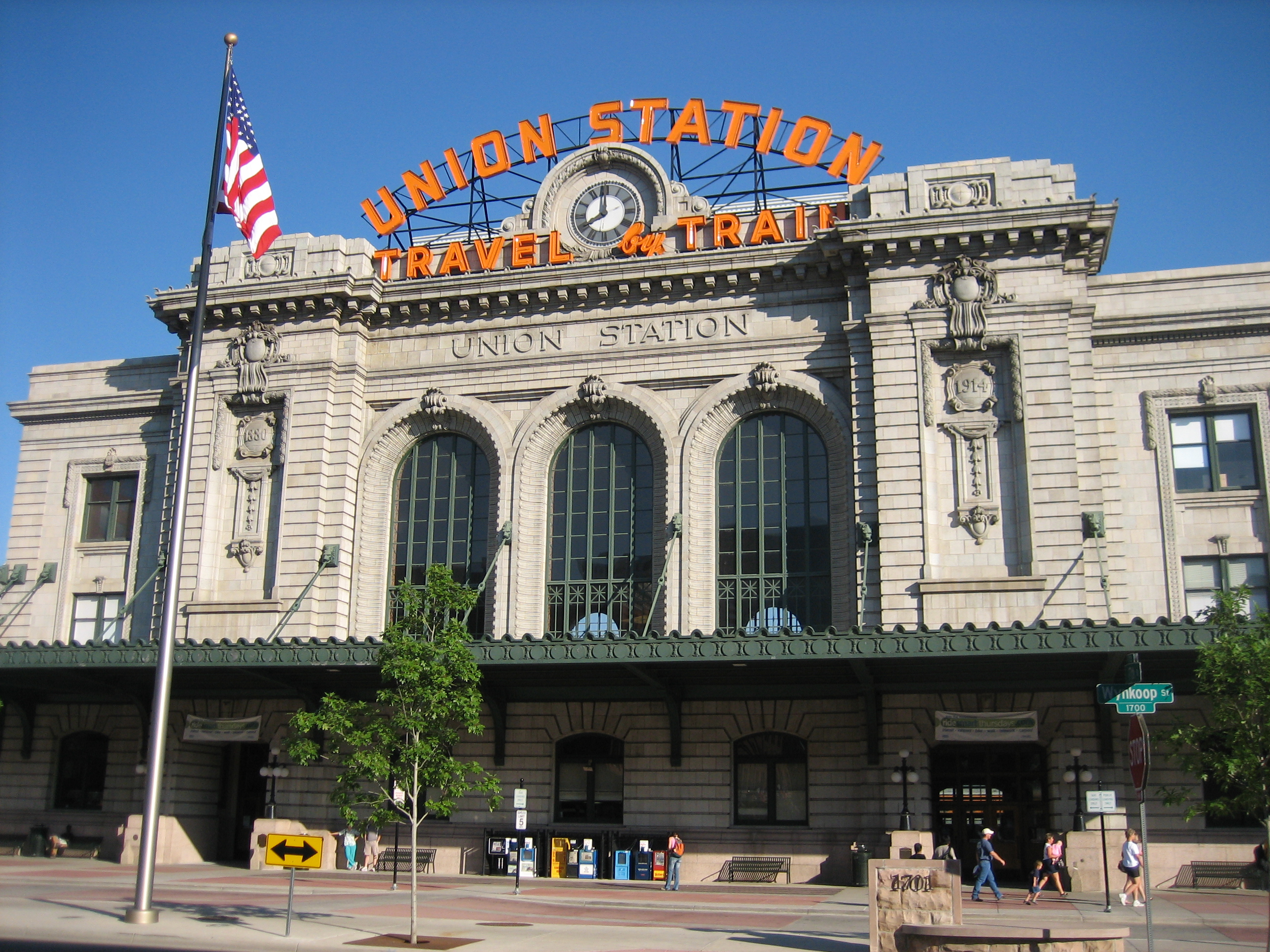
Lake Shore Limited at 3:40 PM on Friday, arrive at Union Station in Chicago at 9:50 AM Central Time on Saturday, and switch to the
California Zephyr at 2:00 PM, arriving at Emeryville, California at 4:10 PM Pacific Time on Monday. Round-trip fare: This week, a whopping $910, more than flying. Then you'd have to get to downtown San Francisco or San Jose.
Amtrak service has been restored to downtown Oakland, at 245 2nd Street, in Jack London Square. Unfortunately, it's a half-mile walk to the nearest BART station, at Lake Merritt (8th & Oak). For A's and Raiders games, the station at the Coliseum site, which is part of the BART station there, might be better. 700 73rd Street. And yet, for either of these stations, you'd still have to transfer at Emeryville to an Amtrak Coast Starlight train.
Getting back, the
California Zephyr leaves Emeryville at 9:10 AM, arrives in Chicago at 2:50 PM 2 days later, and the
Lake Shore Limited leaves at 9:30 PM and arrives in New York at 6:23 PM the next day. So we're talking a Friday to the next week's Friday operation by train.
Newark to San Francisco is a relatively cheap flight, considering the distance. You can get a nonstop flight for a round-trip fare of under $800. You'd have to then take BART into the city. BART from SFO to downtown San Francisco takes 30 minutes, and it's $8.65. San Jose's Norman Y. Mineta International Airport, named for a local former Congressman, might be more convenient for the 49ers, but getting a nonstop flight from the New York Tri-State Area will be next to impossible.
Once In the City. San Francisco was settled in 1776, and named for St. Francis of Assisi. San Jose was settled the next year, and named for Joseph, Jesus' earthly father. Both were incorporated in 1850. Santa Clara was settled in 1777 and incorporated in 1852. It was named after St. Clare of Assisi, one of St. Francis' 1st followers. Oakland was also founded in 1852, and named for oak trees in the area.
California was admitted to the Union as the 31st State on September 9, 1850. If you've noticed a few mentions of the early 1850s, there's a reason: The discovery of gold in Sutter's Mill, in Coloma, near Sacramento, in 1848 set off the California Gold Rush, with lots of men heading west to get rich in 1849 -- known as "Forty-Niners," and inspiring the name of the pro football team nearly a century later.
With the growth of the computer industry, San Jose has become the largest city in the San Francisco Bay Area, with a little over 1 million people. San Francisco has about 870,000, Oakland 420,000, and Santa Clara, the new home of the 49ers, 120,000. Overall, the Bay Area is home to 8.7 million people and rising, making it the 4th largest metropolitan area in North America, behind New York with 23 million, Los Angeles with 18 million, and Chicago with just under 10 million.
San Francisco doesn't really have a "city centerpoint," although street addresses seem to start at Market Street, which runs diagonally across the southeastern sector of the city, and contains the city's 8 stops on the Bay Area Rapid Transit (BART) subway system.
Most Oakland street addresses aren't divided into north-south, or east-west. The city does have numbered streets, starting with 1st Street on the bayfront and increasing as you move northeast. One of the BART stops in the city is called "12th Street Oakland City Center," and it's at 12th & Broadway, so if you're looking at a centerpoint for the city, that's as good as any. San Jose's street addresses are centered on 1st Street and Santa Clara Street. Interstates 280 and 680 form a "beltway" for San Jose, but San Francisco and Oakland don't have them.
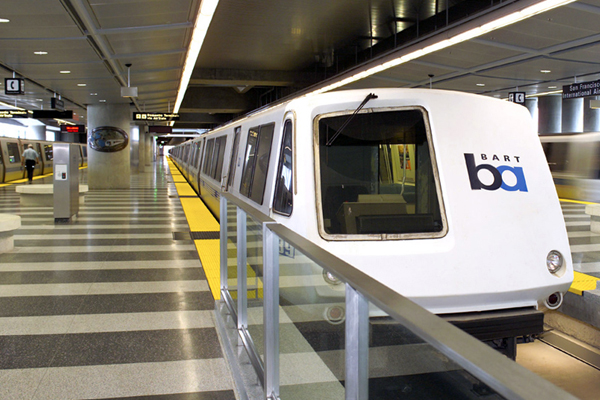
A BART train
BART rides are accessed with a Clipper Card. An initial purchase fee is $3.00. A BART ride within San Francisco is $2.10; going from downtown to Daly City, where the Cow Palace is, is $3.50; going from downtown SF to downtown Oakland is $3.70, from downtown SF to the Oakland Coliseum complex is $4.50; and from downtown SF to Berkeley is $4.35.
The maximum fare, if you stay on the West side of the Bay, is $5.05 from Embarcadero to Millbrae. The highest fare, other than for trips to San Francisco and Oakland International Airports, is $8.85. The BART system switched from subway tokens to farecards in 2005.
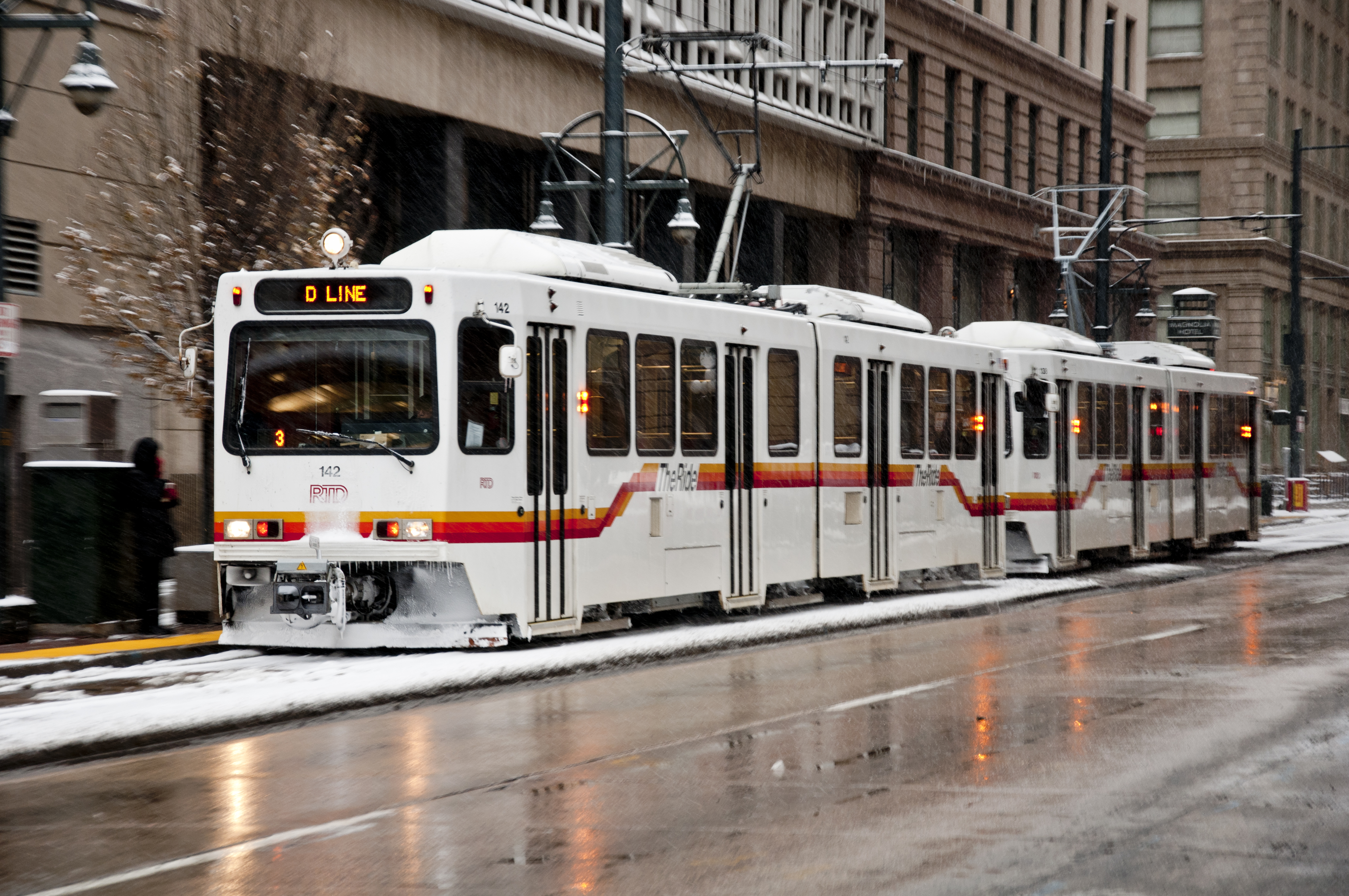
In addition to BART, CalTrain and ACE -- Altamont Commuter Express -- link the Peninsula with San Francisco and San Jose.
The sales tax in California is 6.5 percent, and it rises to 8.75 percent within the City of San Francisco and the City of San Jose. It's 9 percent in Alameda County, including the City of Oakland. In San Francisco, food and pharmaceuticals are exempt from sales tax. (Buying marijuana from a street dealer doesn't count as such a "pharmaceutical," and pot brownies wouldn't count as such a "food." Although he probably wouldn't charge sales tax -- then again, it might be marked up so much, the sales tax would actually be a break.)
ZIP Codes for San Francisco start with the digits 940 and 941, and the Area Code is 415, overlaid by 628. ZIP Codes for the South Bay area, including San Jose and Santa Clara, start with the digits 943, 944, 950, 951 and 954. The Area Codes are 408 and 831, overlaid by 669.
San Francisco's electric company is called Pacific Gas & Electric (PG&E). In addition to being the wealthiest metro area in the country, ahead of New York and Washington, the Bay Area is one of the most ethnically diverse, with 32 percent of the population being foreign-born.
Of the 9 Counties usually included in "the Bay Area," 42 percent of the population is white, 24 percent Hispanic (the vast majority of those being of Mexican descent), 18 percent East Asian (highest in the world outside of Asia, except for Vancouver), 7 percent black, 4 percent South Asian, 4 percent Middle Eastern, and half a percent each Native American and Pacific Islander.
San Francisco became well-known for its Chinatown, as Chinese and Chinese Americans are the largest ethnic group in San Francisco itself, with 21 percent. Daly City, just south of the city, home to the Cow Palace arena, is 58.4 percent Asian, the highest percentage in the U.S. outside of Hawaii. San Jose has more Filipinos than any city outside the Philippines, and more Vietnamese than any city outside Vietnam. In total numbers of Asians, New York ranks 1st in the nation, Los Angeles 2nd, San Jose 3rd and San Francisco 4th.
The City also became well-known for its North Beach neighborhood, which became its "Little Italy," and the West Coast hub of the Beat Generation in the 1950s. The Mission District, once mostly Irish, is now mostly Central American, particularly Salvadoran and Guatemalan.
Despite its name, Russian Hill hasn't had much of a Russian presence in over 200 years. That was not the case with the Castro District, where even after Russia sold Alaska to the U.S. in 1867, there were significant numbers of people from the Russian Empire, including, at the time, Finland. In the early 20th Century, it was known as Little Scandinavia, because Norwegians, Swedes and Danes joined the Finns there.
During the Great Depression, just as Southerners went to Southern California in search of work, working-class people of Irish, Italian and Polish descent went to San Francisco, especially the Castro. And many closeted soldiers and sailors, returning from the Pacific Theater of World War II, decided to stay instead of going home, and built the largest gay village in America except for New York's Greenwich Village. Just as Haight-Ashbury led the way for the Hippies, for gay America, the Seventies were their "Sixties."
Oakland has a black majority, and became known as the birthplace of the Black Panther Party and, along with South Central Los Angeles, the West Coast rap scene. As recently as 1970, 1 out of 7 San Franciscans was black, but as the black middle class grew, they were able to afford better places to live, and, in recognition of Oakland's role, abandoned "The Harlem of the West," once the home of a thriving jazz scene (part of what attracted the Beat writers), and headed for the East Bay. San Jose has a Hispanic plurality, which may be a big reason why Major League Soccer put a team there, instead of in San Francisco or Oakland.
Despite its image as a city of peace and love, San Francisco, and the surrounding Bay Area, have had their share of civic strife. There were riots in Watsonville, outside Santa Cruz, against Filipinos in 1930; the Berkeley Police crushing the People's Park movement in 1969; the "White Night" in 1979, after the acquittal-on-lesser-charges of former San Francisco Supervisor Dan White for his assassination the year before of Mayor George Moscone and openly gay Supervisor Harvey Milk; and a riot in Oakland in 2009.
San Francisco has always been a parochial city. I don't mean in a religious sense. I mean that it has always looked down on Oakland and the East Bay, which have always resented the more established city because of it, more than New Jersey has ever resented New York.
This even extends to sports: Because Orlando Cepeda, Willie McCovey and Juan Marichal reached the major leagues in San Francisco, and Willie Mays was an established star brought in from another city, he has never been as loved by Giants fans as those others. Frank Conniff of the New York Journal-American, perhaps the only man ever to interview both men, wrote, "This is the damnedest city. They cheer Khrushchev and boo Willie Mays." (Khrushchev had visited San Francisco as part of his 1960 U.S. tour.)
Important to note: Do not call San Francisco "Frisco." They hate that. "San Fran" is okay. And, like New York (sometimes more specifically, Manhattan), area residents tend to call it "The City." For a time, the Golden State Warriors, then named the San Francisco Warriors, actually had "THE CITY" on their jerseys. They will occasionally bring back throwback jerseys saying that.
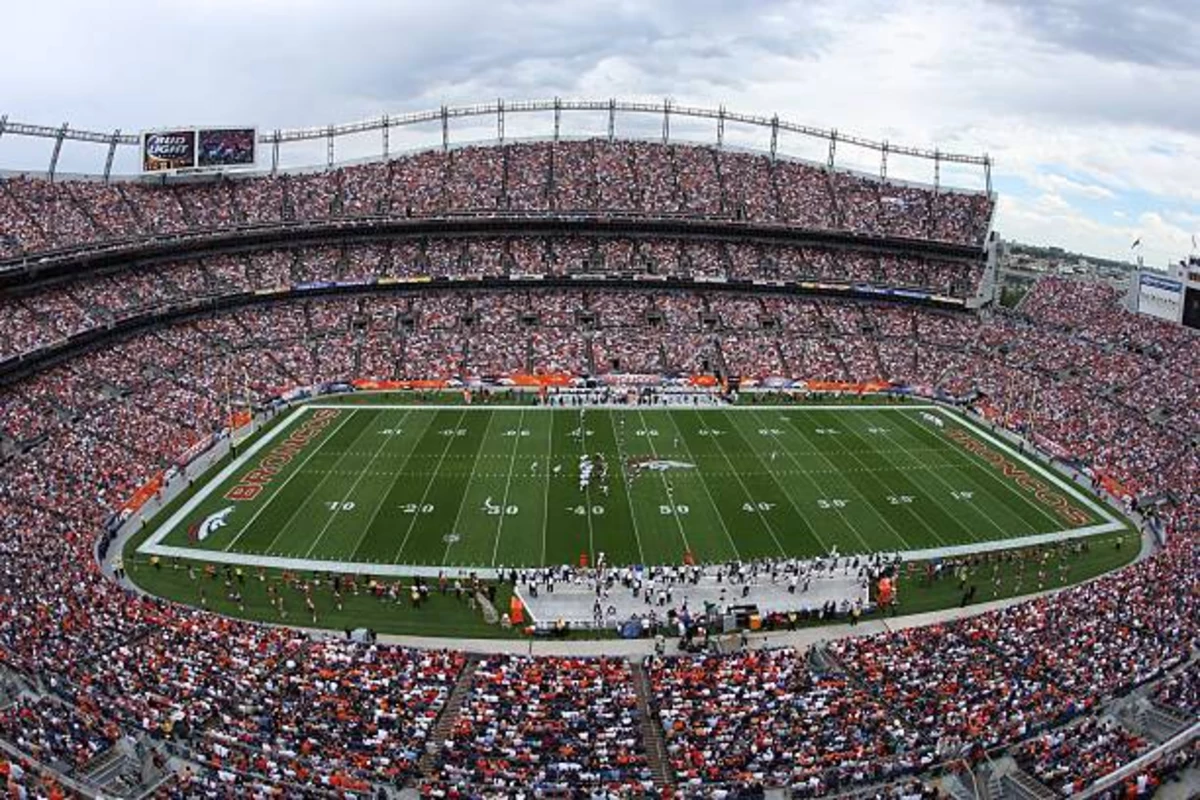
Going In. Before construction, the address of the site was 4701 Great America Parkway. Now, the official address of Levi's Stadium is 4900 Marie P. DeBartolo Way, after the mother of former 49ers owner and newly-elected Pro Football Hall-of-Famer Eddie DeBartolo. (If you're going to apply to the U.S. Postal Service to make it 4900, why not 4949?) The intersection is Marie P. DeBartolo Way and Tasman Drive. It's 46 miles southeast of downtown San Francisco, 39 miles southeast of downtown Oakland, and 9 miles northwest of downtown San Jose.
If you're driving in, parking is $30. There is plenty of room for tailgating, and 49er fans have been known to have, shall we say, more refined tailgate party palates. You're as likely to find wine as beer, fancy French cheeses as Cheese Whiz, and sushi as bratwurst.
If you're taking public transportation, you take CalTrain, from downtown San Francisco to Santa Clara station. California's Great America theme part is next-door. From downtown San Jose, take the 916 trolley.
Naming rights to the stadium were bought by Levi Strauss & Company, the San Francisco-based clothing giant that popularized blue jeans all over the world. I'm against corporate names on stadiums and arenas, but if you're going to put one on a Bay Area stadium, that's as good a choice as any. It is known as "The Field of Jeans."
The field runs north-to-south (well, northwest-to-southeast), and is real grass. The 49ers played on artificial turf at Candlestick Park from 1971 to 1978, but have otherwise played all their home games on real grass. It annually hosts the Pacific-12 Conference Championship Game, and in 2019 (for the 2018 season) it will host the College Football Playoff National Championship.
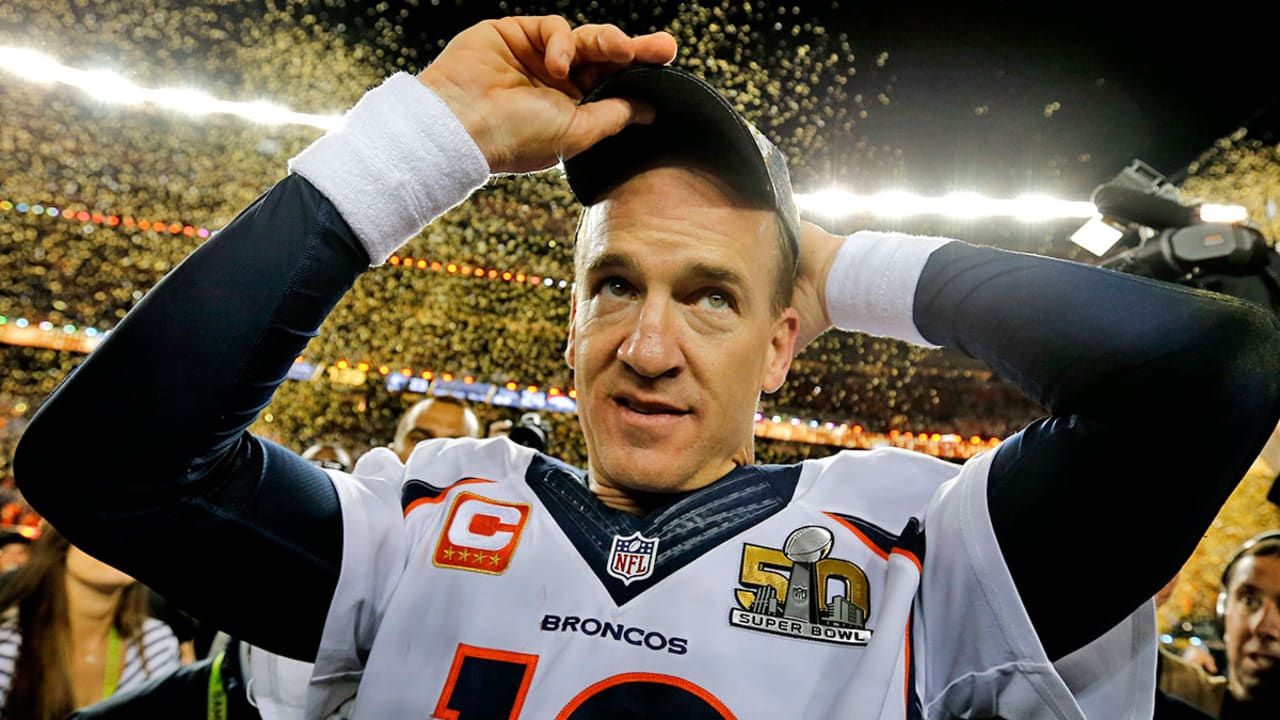
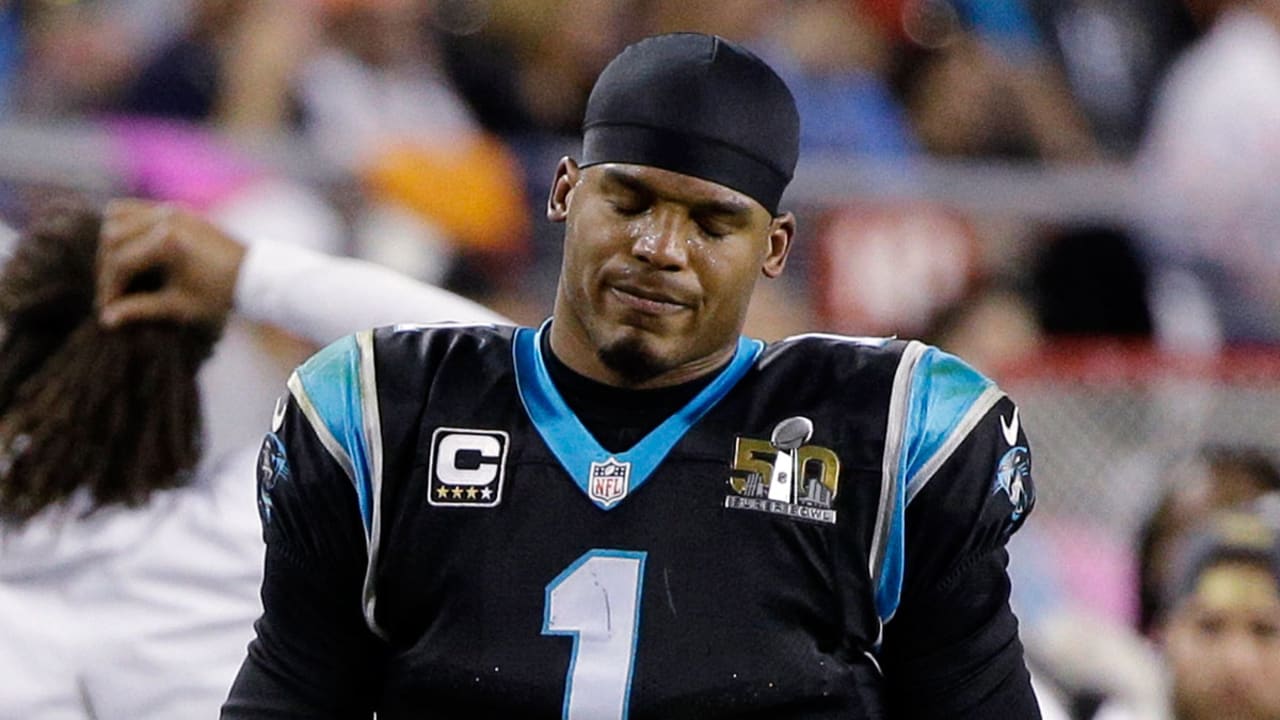
On February 7, 2016, it hosted Super Bowl 50, with the Denver Broncos beating the Carolina Panthers; and an NHL Stadium Series outdoor hockey game there on February 21, 2015, with the Sharks losing to their arch-rivals, the Los Angeles Kings. On June 3, it hosted a game of the 2016 Copa America, its 1st match by the U.S. national soccer team, but we lost 2-0 to Colombia.
It is contracted to host 1 San Jose Earthquakes game per year, Manchester United beat Barcelona there in 2015, and it hosted games of the 2016 Copa America. The stadium's largest crowd was 76,976, for WrestleMania 31 in 2015. Coldplay played the Super Bowl 50 halftime show, and returned to the stadium in September. One Direction and Taylor Swift have both played it. It has been selected by the U.S. Soccer Federation as a finalist to be one of the host venues for the 2026 World Cup. (UPDATE: It was chosen.)
One would think that a shiny, new $1.3 billion stadium like Levi's Stadium that's the greenest stadium in the NFL and the most high-tech stadium in the world would be higher up on this list. And all of the 49ers fans that spent thousands on their SBLs wish it were. Alas, despite excellent Wi-Fi, tasty food (including a $18 crab sandwich), a tap room with 30 varieties of craft beer, full bars (you need liquor if you're watching the Niners), and scoreboards that rank among the largest in the world, Levi's still sucks. It’s sterile, soulless, and unlike its foggy namesake, unbearably hot (a fan died from heat-induced heart attack at the first pre-season game in 2014). It’s also a long 45 miles from San Francisco. And the team on the field went from one of the best in the NFL to one of the worst in just two short years. Cue a Jed York shrug. He’s laughing all the way to the bank.
(UPDATE: On November 4, 2020, MoneyWise had an article ranking the Worst NFL Stadiums, and Levi's Stadium was ranked 9th, making it 22nd out of 30. It quotes a fan saying, "This seems more like a Costco, and I was expecting a Whole Foods" -- mainly due to the prices of tickets and concessions.)
Food. San Francisco, due to being a waterfront city and a transportation and freight hub, has a reputation as one of America's best food cities.
Levi's Stadium benefits from this:
Centerplate, which will be handling most of the stadium's concessions, boasts that they'll have one food and beverage point of sale for every 86 fans, cutting down on line times. And if you're a vegan or vegetarian, you'll be particularly excited to hear that the stadium will have the best meatless options in the NFL.
Over 180 different food items will be served at Levi's Stadium, with 17 types of quick-service concepts that will be named for exactly what they're selling. They include Franks (nitrate-free, with a vegan option), Burgers (with American Kobe beef and vegan burgers), Curry (Indian-style, with spiced naan, cassava chips, and varieties like Rajisthani lamb and vegan navy bean and kale), Tortas, Soft Serve, Barbecue (pulled pork or pulled jackfruit), Panini and Steamed Buns (Asian-style bao in Peking duck, pork belly, and vegan portobello varieties).
All the menus will be on digital screens, and AT&T Park regulars will find familiar favorites like garlic fries and Ghirardelli ice-cream sundaes. All told, there are 14 vegan and 26 vegetarian food options (though the latter figure includes a few types of ice cream). 13 of the 36 stands will offer kid's meals, with a choice of pizza, hot dogs, or chicken tenders.
In addition to the standard quick-service offerings, the stadium will feature an outpost of Santa Cruz's Mondo Burrito on the upper concourse, and a tap room at the 50-yard line with 42 different drafts (most of which are from Anheuser-Busch, but with some bigger craft options like Lagunitas IPA, Speakeasy Prohibition, 21st Amendment Brew Free or Die, and, in a coup for small SOMA upstart Cellarmaker, Dobis Pale Ale).
Aiden Winery's kegged chardonnay and pinot noir will be on tap throughout the stadium, with another 12 or so wines from local producers scattered here and there.
Team History Displays. Named for the formative event in California's history, the 1849 Gold Rush and the men who went West in search of riches, the 49ers have made the Playoffs 26 times, most recently in 2013. They've won the NFC West 19 times: In 1970, '71, '72, '81, '83, '84, '86, '87, '88, '89, '90, '92, '93, '94, '95, '97, 2002, '11 and '12. They've won 6 NFC Championships: in 1981, '84, '88, '89, '94 and 2012. And they've won 5 Super Bowls: XVI in 1981-82, XIX in 1984-85, XXIII in 1988-89, XXIV in 1989-90, and XXIX in 1994-95. But there appears to be no notations for any of these inside Levi's Stadium.
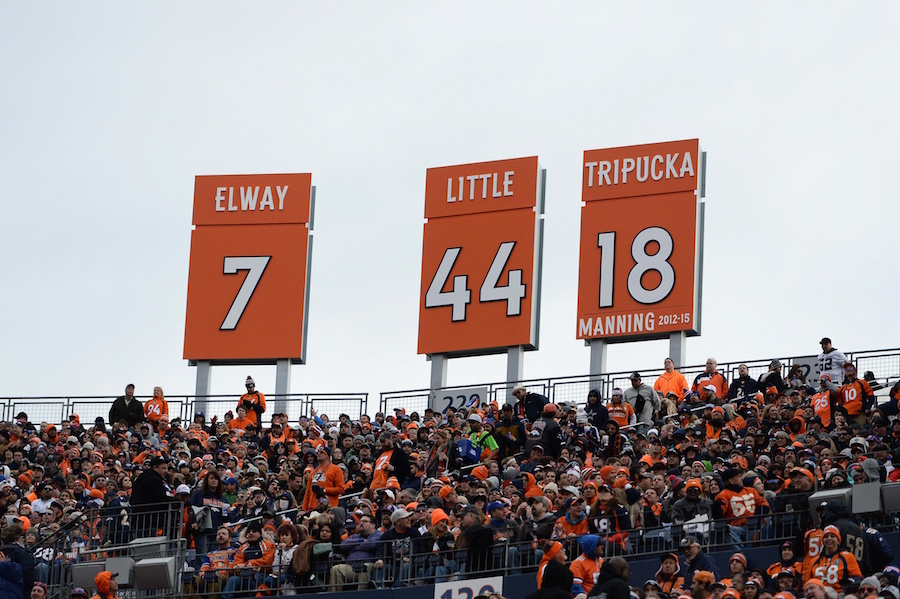
The 49ers have retired 12 numbers, plus notations for former owner Eddie DeBartolo and the late former head coach Bill Walsh:
* From the 1957 team that tied for the NFL Western Division title, but lost a Playoff to the Cleveland Browns: 34, running back Joe Perry; 39, running back Hugh McElhenny; 73, defensive tackle Leo Nomellini; and 79, offensive tackle Bob St. Clair. Quarterback Y.A. Tittle also played for this team, but his Number 14 has not been retired by the 49ers. (It has been retired by the Giants.) Nor has the Number 35 of John Henry Johnson, who left the 49ers the season before. Tittle, Perry, McElhenny and Johnson formed the only all-Hall-of-Fame backfield ever (playing in San Francisco from 1954 to '56).
* From the 1970 and '71 teams that reached back-to-back NFC Championship Games, losing both to the Dallas Cowboys: 12, quarterback John Brodie; 37, cornerback Jimmy Johnson (no relation to the Cowboy coach of the same name, or to John Henry Johnson); and 70, defensive tackle Charlie Krueger. Brodie is not in the Hall of Fame. Linebacker Dave Wilcox is, but his Number 64 has not been retired.
* From the Super Bowl XVI and XIX winners: DeBartolo and Walsh; 16, quarterback Joe Montana; 42, cornerback Ronnie Lott; 87, receiver Dwight Clark. Clark is not in the Hall of Fame. Defensive end Mean Fred Dean is, but his Number 74 has not been retired. Also not in the Hall of Fame, but should be, is Number 33, running back Roger Craig.
* From the Super Bowl XXIII and XXIV winners: DeBartolo, Walsh, Montana, Lott; 80, receiver Jerry Rice. Craig was still there. Linebacker Charles Haley also was, and is in the Hall, but his Number 94 has not been retired. Steve Young was a backup, and while he got 2 rings, he barely played.
* From the Super Bowl XXIX winners: DeBartolo and Rice; 8, quarterback Steve Young. Linebacker Rickey Jackson, a Hall-of-Famer for his service to the New Orleans Saints, was on this team. So was defensive end Richard Dent, one for his service to the Chicago Bears. So was cornerback Deion Sanders, whose best years were with the Atlanta Falcons and Dallas Cowboys.
* From since the Super Bowl season of 1994-95: No one. Receiver Terrell Owens, Number 81, is now in the Hall of Fame. So is receiver Randy Moss, Number 84, who was on the 2012 NFC Championship, but that was his only season as a 49er.
The 49ers' retired numbers, as they appeared at Candlestick Park,
including the 5 Vince Lombardi Trophies for Eddie "Mr. D" DeBartolo
The 49ers also have a team Hall of Fame, whose inductees include: DeBartolo, Walsh, Young, Brodie, Tittle, Montana, Craig, Perry, both Johnsons, McElhenny, Lott, Wilcox, Krueger, Nomellini, Dean, St. Clair, Rice, Haley; founding owners Tony and Vic Morabito, 1950s receiver Gordy Soltau (Number 82), 1960s cornerback R.C. Owens (27), 1980s running back Tom Rathman, Super Bowl XXIV- and XXIX-winning coach George Seifert, and 1980s and '90s executive John McVay -- whom Giant fans might remember as the head coach who was fired after the 1978 "Miracle of the Meadowlands" game against the Philadelphia Eagles. (UPDATE: Terrell Owens, no relation to R.C., was elected in 2019.)
Montana, Rice and Lott were named to the NFL's 75th Anniversary Team in 1994. They and Young were named to
The Sporting News' 100 Greatest Football Players in 1999, and to the NFL Network's 100 Greatest Players in 2010.
The Bay Area Sports Hall of Fame (BASHOF) is unusual in that its exhibits are spread over several locations, including Levi's Stadium. The 49ers honored include Walsh, DeBartolo, Brodie, Tittle, Montana, Craig, Perry, both Johnsons, McElhenny, Lott, Wilcox, Nomellini, St. Clair, Rice, Soltau, McVay, 1940s and '50s coach Buck Shaw, 1940s quarterback Frankie Albert (Number 16, the NFL's 1st great lefthanded quarterback, long before Young), 1970s quarterback Jim Plunkett (16, a San Jose native elected mainly on his performance with the Raiders), 1980s and '90s general manager Carmen Policy, 1980s and '90s tight end Brent Jones (84), 1980s and '90s offensive tackle Harris Barton (79), and a San Francisco native who closed his career with the 49ers, but is now far better known for something else: O.J. Simpson.
The 49ers have had 9 Heisman Trophy winners on their roster; only the Detroit Lions have had more. None, however, was one you would want to remember in San Francisco Red & Gold: Any pro success they had was elsewhere.
Three were running backs: John David Crow, 1957 Texas A&M, with the 49ers 1965-68; O.J. Simpson, 1968 USC, 1978-79 at the end of his career; and Reggie Bush, 2005 USC, 2015 near the end of his career. Of the 2 USC Heisman winners to play for the Niners, Bush was controversial, and O.J. should have been no worse.
The others were quarterbacks: Steve Spurrier, 1966 Florida, 1967-75, before going on to become one of the great collegiate coaches; Jim Plunkett, 1970 Stanford, 1976-77, before winning 2 Super Bowls with the Raiders; Gino Torretta, 1992 University of Miami, 1995-96, never made it in the pros; Ty Detmer, 1990 Brigham Young, 1998, never really caught on in the pros, either; Chris Weinke, 2000 Florida State, 2007 after a few years as a decent backup in Carolina; and Troy Smith, 2006 Ohio State, 2010, never made it in the pros.
The rivalry between the 49ers and the Los Angeles Rams was an epic one, but it lost something when the Rams were in St. Louis. But now, the Rams are back in L.A. The 49ers lead the all-time series 69-66-3 -- but it's 50-44-2 Rams if you don't count the St. Louis years, when it was 25-16-1 in the Niners' favor.
Stuff. The 49ers' flagship team store is inside Gate A of Levi's Stadium. They also have team stores throughout the Bay Area.
As a historic team, there are lots of books written about the Niners. In 2014, Brian Murphy -- putting team owner Jed York (Eddie DeBartolo's son-in-law)'s name on it to gain inside access -- published San Francisco 49ers: From Kezar to Levi's Stadium. A few months earlier, Matt Maiocco and team legend Dwight Clark collaborated on San Francisco 49ers: The Complete Illustrated History.
In 2016, Dave Newhouse published Founding 49ers: The Dark Days Before the Dynasty. After the 4th Super Bowl win in 1990, Bill Walsh got together with San Francisco Chronicle writer Glenn Dickey and wrote Building a Champion: On Football and the Making of the 49ers, the ultimate inside look at the greatest football organization of the past 35 years. (Yes, ahead of the Patriots of the last 17 years: The 49ers have won as many Super Bowls, and they haven't had to cheat.)
In 1990, the NFL put out
San Francisco 49ers: Team of the '80s. It's now out on DVD. In 2006, in time for the team's 60th Anniversary (this coming year is the 70th), the League put out
San Francisco 49ers: The Complete History. With another Super Bowl appearance and a new stadium, it's no longer so complete, but it's the best video history of the team available.
During the Game. A
recent Thrillist article
on the NFL's most obnoxious fans ranked 49ers fans 11th, in the 2nd-highest quartile of obnoxiousness:
·
Oh,
man. The Niners would actually be much higher on this list a couple of years
ago, when you really started to bring back that '80s/'90s level of
cockiness during the Harbaugh era, and all of you were Kaepernick-ing on
your Tumblr pages and starting to debate whether he would overtake Joe
Montana as the greatest QB in Niners history. And then Jed York happened. In
one fell swoop, the best coach SF has had since Bill Walsh was forced out,
everyone on defense retired or moved teams, Kaepernick got Kaepernick-ed out of
the league, and -- oh, yeah -- the team moved to SANTA CLARA, which
is about as close to San Francisco as Sacramento.
Jed
York now has a state-of-the-art stadium perfect for the terrible tech class,
who go to the games for upscale chef-driven sandwiches and craft beers and the
ability to charge your phone at different docking stations, and could give two
shits about the product on the field because none of you are actually from San Francisco anyway. The actual Niners fans left
behind in, you know, San Francisco have now softened their obnoxiousness, and
mostly spend their days conflicted as to whether they should cheer on their
squad or hope they actually lose all the rest of their games as a rebuke to
their stupid owner, who, OF COURSE, went to Notre Dame. The worst part? There's reason for the Silicon Valley
bros to snap up luxury boxes after the heist of Jimmy Garoppolo.
This is not a Raider game, where people come dressed as pirates, biker gangsters, Darth Vader, the Grim Reaper, and so on. Nor is this a San Francisco Giant game, where you, as a visiting fan, might be wearing Dodger gear. This is a 49ers game, where fans have tailgated with picnic tables, tablecloths, and even candlesticks -- and not just because they once played at Candlestick Park. These people are as likely to drink California wine as Wisconsin beer at their tailgates. They are more refined, and for all their success, they're not particularly arrogant. You will be safe wearing your Giant or Jet colors.
This game against the Giants will be the 49ers' annual Salute to Service game. Which brings up this point:
From September 1 to 7, 2017, during the NFL National Anthem protest controversy, FiveThirtyEight.com polled fans of the 32 NFL teams, to see where they leaned politically. Not surprisingly, given San Francisco's past as a city of many cultures, labor unions, an iconoclasts from the 1920s bohemians to the 1950s Beat Generation to the 1960s hippies and Black Panthers to the 1970s gay rights movement, it was found to have the most liberal fanbase in the NFL: 22.0 percent more liberal than conservative.
The 49ers hold auditions for National Anthem singers, instead of having a regular. This season, there has been no kneeling before the Anthem, nor is there likely to be at the start of this game.
Since the 1980s, "We're the 49ers" has been the team's theme song. Before that, they had a "Touchdown, 49ers" fight song. The 49ers were named for the Gold Rush prospectors that made Northern California possible in 1849, and their mascot resembles one of them, named Sourdough Sam, as sourdough bread was, long before Rice-a-Roni, the actual "San Francisco treat." Naturally, he wears Number 49.
After the Game. Again, Niner fans are not Raider fans. And the Santa Clara stadium is far from any crime issues. Don't antagonize anyone, and you'll be fine.
If you want to go out for a postgame meal or drinks, David's Restaurant, across Tasman Drive from the stadium's north end, is described as a "traditional American restaurant." But it's part of the Santa Clara Country Club, so it might be a bit expensive. A little bit east on Tasman, Butter & Zeus sells fast-food sandwiches and salads. Giovanni's New York Pizzeria is 4 miles to the west, at 1127 Lawrence Expressway (it's really just a suburban divided highway), but I can't say that its "New York pizza" is authentic.
There are 4 bars in the Lower Nob Hill neighborhood of San Francisco that are worth mentioning. Aces, at 998 Sutter Street & Hyde Street in San Francisco's Lower Nob Hill neighborhood, is said to have a Yankee sign out front and a Yankee Fan as the main bartender. It's also the home port of Mets, NFL Giants, Knicks and Rangers fans in the Bay Area.
R Bar, at 1176 Sutter & Polk Street, is the local Jet fan hangout. The Wreck Room, at 1390 California Street at Hyde Street, is also said to be a place for Jet fans. And Greens Sports Bar, at 2239 Polk at Green Street, is also said to be a Yankee-friendly bar.
Lefty O'Doul's, named for the legendary ballplayer who was the longtime manager of the Pacific Coast League's San Francisco Seals, was at 333 Geary Street, corner of Powell Street, just 3 blocks from the Powell Street BART station and right on a cable car line.
A
dispute between the operators of the restaurant and the owners of the building closed the original location on February 3, 2017. On June 7, 2018, the last operator, Nick Bovis, announced a deal for a new Lefty O'Doul's, to open at Fisherman's Wharf, at 145 Jefferson Street. Light Rail E or F to Jefferseon & Powell.
The Kezar Pub was rated by a recent
Thrillist article as the best sports bar in San Francisco. It's at 770 Stanyan Street, at Waller Street, in the Haight-Ashbury, across from Golden Gate Park and the new version of the stadium from whence comes its name. Number 7 bus.
The Kezar Pub is also rated as one of the best bars to watch European soccer games. If you visit the Bay Area during that sport's season (which is in progress), these San Francisco bars are also recommended, due to their early openings: Maggie McGarry's, 1353 Grant Avenue, Bus 30; The Mad Dog in the Fog, 530 Haight Street, MUNI N Line or Bus 6; and Danny Coyle's, 668 Haight Street, MUNI N Line or Bus 6.
Sidelights. The San Francisco Bay Area, including the East Bay (which includes Oakland), has a very rich sports history.
On February 3, 2017, Thrillist made a list ranking the 30 NFL cities (New York and Los Angeles each having 2 teams), and San Francisco came in 7th, in the top 1/3rd. Oakland came in 14th, in the top half.
UPDATE: On November 30, 2018, 23 days after I posted this,
Thrillist published a list of "
America's 25 Most Fun Cities," and, as you might expect from the nation's 4th largest metropolitan area, the San Francisco Bay Area came in 4th.
Here are some of the Bay Area's sports highlights:
* AT&T Park. Home of the Giants since 2000, it has been better for them than Candlestick -- aesthetically, competitively, financially, you name it. Winning 3 World Series since it opened, it's been home to The Freak (Tim Lincecum) and The Steroid Freak (Barry Bonds).
It's hosted some college football games, and a February 10, 2006 win by the U.S. soccer team over Japan. 24 Willie Mays Plaza, at 3rd & King Streets.
UPDATE: In 2019, it was renamed Oracle Park.
* Oakland Coliseum complex. This includes the stadium that has been home to the A's since 1968 and to the NFL's Oakland Raiders from 1966 to 1981 and again since 1995; and the Oracle Arena, a somewhat-renovated version of the Oakland Coliseum Arena, home to the NBA's Golden State Warriors on and off since 1966, and continuously since 1971 except for a one-year hiatus in San Jose while it was being renovated, 1996-97. This is, however, looking like the Raiders' last season in Oakland, as owner Mark Davis wants to move them to Las Vegas.
The Oakland Clippers, the only champions the National Professional Soccer League would know, played there in 1967 and 1968, beating the Baltimore Bays 4-1 in the 2nd leg of the 1967 NPSL Final to win 4-2 on aggregate, before the NPSL merged with the North American Soccer League the next year. The Bay Area's former NHL team, the Oakland Seals/California Golden Seals, played at the arena from 1967 to 1976.
The Oakland Coliseum Arena opened on November 9, 1966, and became home to the Warriors in 1971 -- at which point they changed their name from "San Francisco Warriors" to "Golden State Warriors," as if representing the entire State of California had enabled the "California Angels" to take Los Angeles away from the Dodgers, and it didn't take L.A. away from the Lakers, either.
The arena also hosted the Oakland Oaks, who won the American Basketball Association title in 1969; the Oakland Seals, later the California Golden Seals (didn't work for them, either), from 1967 to 1976; the Golden Bay Earthquakes of the Major Indoor Soccer League; and select basketball games for the University of California from 1966 to 1999. It's also been a major concert venue, and hosted the Bay Area's own, the Grateful Dead, more times than any other building: 66. Elvis Presley sang at the Coliseum Arena on November 10, 1970 and November 11, 1972.
In 1996-97, the arena was gutted to expand it from 15,000 to 19,000 seats. (The Warriors spent that season in San Jose.) This transformed it from a 1960s arena that was too small by the 1990s into one that was ready for an early 21st Century sports crowd. It was renamed The Arena in Oakland in 1997 and the Oracle Arena in 2005.
(UPDATE: On November 28, 2018, the A's announced that they'd chosen the Howard Terminal as the site for a 34,000-seat ballpark, which, presuming they clear all the necessary permissions, and come up with all the funding themselves as they say they will -- no government money and therefore no taxes -- they can begin construction in time to open for the 2023 season. 1 Market Street, 3 blocks west of the Clay Street Ferry Terminal, 5 blocks west of Jack London Square, and 8 blocks south of downtown. From Oakland City Center: Bus 72 to Jack London Square. By BART: Lake Merritt Station, then Bus 62 or 72 to 7th & Market, then 8 blocks south.)
* Chase Center. The new home of the Warriors is expected to open for the 2019-20 season -- that is, next year. It will seat 18,064, and be located off the Central Basin of San Francisco Bay, on land bordered by South Street, 3rd Street (north-south), 16th Street (east-west) and Terry A. Francois Blvd., across from the campus of the University of California at San Francisco, and 8 blocks south of the Giants' AT&T Park. Light Rail K or T to UCSF/Mission Bay.
* Seals Stadium. Home of the PCL's San Francisco Seals from 1931 to 1957, the Mission Reds from 1931 to 1937, and the Giants in 1958 and 1959, it was the first home professional field of the DiMaggio brothers: First Vince, then Joe, and finally Dom all played for the Seals in the 1930s. The Seals won Pennants there in 1931, 1935, 1943, 1944, 1945, 1946 and 1957 (their last season). It seated just 18,500, expanded to 22,900 for the Giants, and was never going to be more than a stopgap facility until the Giants' larger park could be built. It was demolished right after the 1959 season, and the site now has a Safeway grocery store.
Bryant Street, 16th Street, Potrero Avenue and Alameda Street, in the Mission District. Hard to reach by public transport: The Number 10 bus goes down Townsend Street and Rhode Island Avenue until reaching 16th, but then it's an 8-block walk. The Number 27 can be picked up at 5th & Harrison Streets, and will go right there.
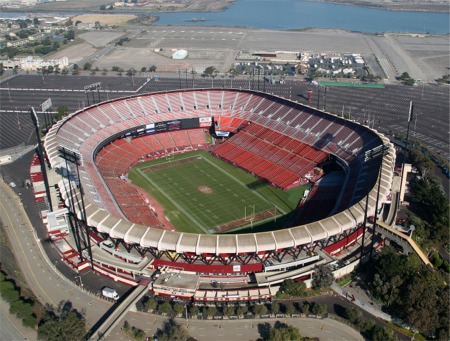
* Candlestick Park. Home of the Giants from 1960 to 1999, the NFL 49ers since 1970, and the Raiders in the 1961 season, this may be the most-maligned sports facility in North American history. Its seaside location (Candlestick Point) has led to spectators being stricken by wind (a.k.a. The Hawk), cold, and even fog.
It was open to the Bay until 1971, including the 1962 World Series between the Yankees and the Giants, and was then enclosed to expand it from 42,000 to 69,000 seats for the Niners. It also got artificial turf for the 1970 season, one of the 1st stadiums to have it – though, to the city's credit, it was also the 1st NFL stadium and the 2nd MLB stadium (after Comiskey Park in Chicago) to switch back to real grass.
It is easily the most-hated venue in the history of North American sports. But its finest hour came on October 17, 1989, just before Game 3 of the World Series, when the Loma Prieta Earthquake struck. Over 60,000 people were inside the stadium, and they all got out okay, because the stadium's reinforced concrete held, with only minor damage.
The Giants only won 2 Pennants there, and never a World Series. But the 49ers won 5 Super Bowls while playing there, with 3 of their 6 NFC Championship Games won as the home team. The NFL Giants did beat the 49ers there in the 1990 NFC Championship Game, scoring no touchdowns but winning 15-13 thanks to 5 Matt Bahr field goals. ABC and ESPN hosted
Monday Night Football at Candlestick 36 times, the most of any stadium.
The Beatles played their last "real concert" ever at the 'Stick on August 29, 1966 – only 25,000 people came out, a total probably driven down by the stadium's reputation and John Lennon's comments about religion on that tour. The Giants got out, and the 49ers have now done the same, with Levi's Stadium ready for the 2014 season.
The U.S. national soccer team played their 4th and final match there in 2014, a win over Azerbaijan. MLS' San Jose Earthquakes are scheduled to do so on July 27, which ended up being the last competitive sporting event held there. On July 12, nearly 30 years after their Super Bowl XIX matchup, legendary quarterbacks Joe Montana of the 49ers and Dan Marino of the Miami Dolphins led teams in a flag football game there, with the proceeds going to charity. And Paul McCartney, having played its 1st concert with the Beatles 48 years earlier, played its last concert on August 14, the last scheduled show before the place was demolished.
A plan to build retail and housing units on the site has stalled, and it remains vacant. Ironically, since it replaced the original Kezar Stadium, 5,000 of Candlestick's seats went to the new Kezar.
The best way by public transport isn't a good one: The KT light rail at 4th & King Streets, at the CalTrain terminal, to 3rd & Gilman Streets, and then it's almost a mile's walk down Jagerson Avenue. So unless you're driving/renting a car, or you're a sports history buff who
has to see the place, I wouldn't blame you if you crossed it off the list.
In spite of the Raiders' return, the 49ers are more popular -- according to
a 2014 Atlantic Monthly
article, even in Alameda County. This is also true for the Giants, more popular in Alameda County than the A's. The Raiders remain more popular in the Los Angeles area, a holdover from their 1982-94 layover, and also a consequence of L.A. not having had a team since, although that has since change.
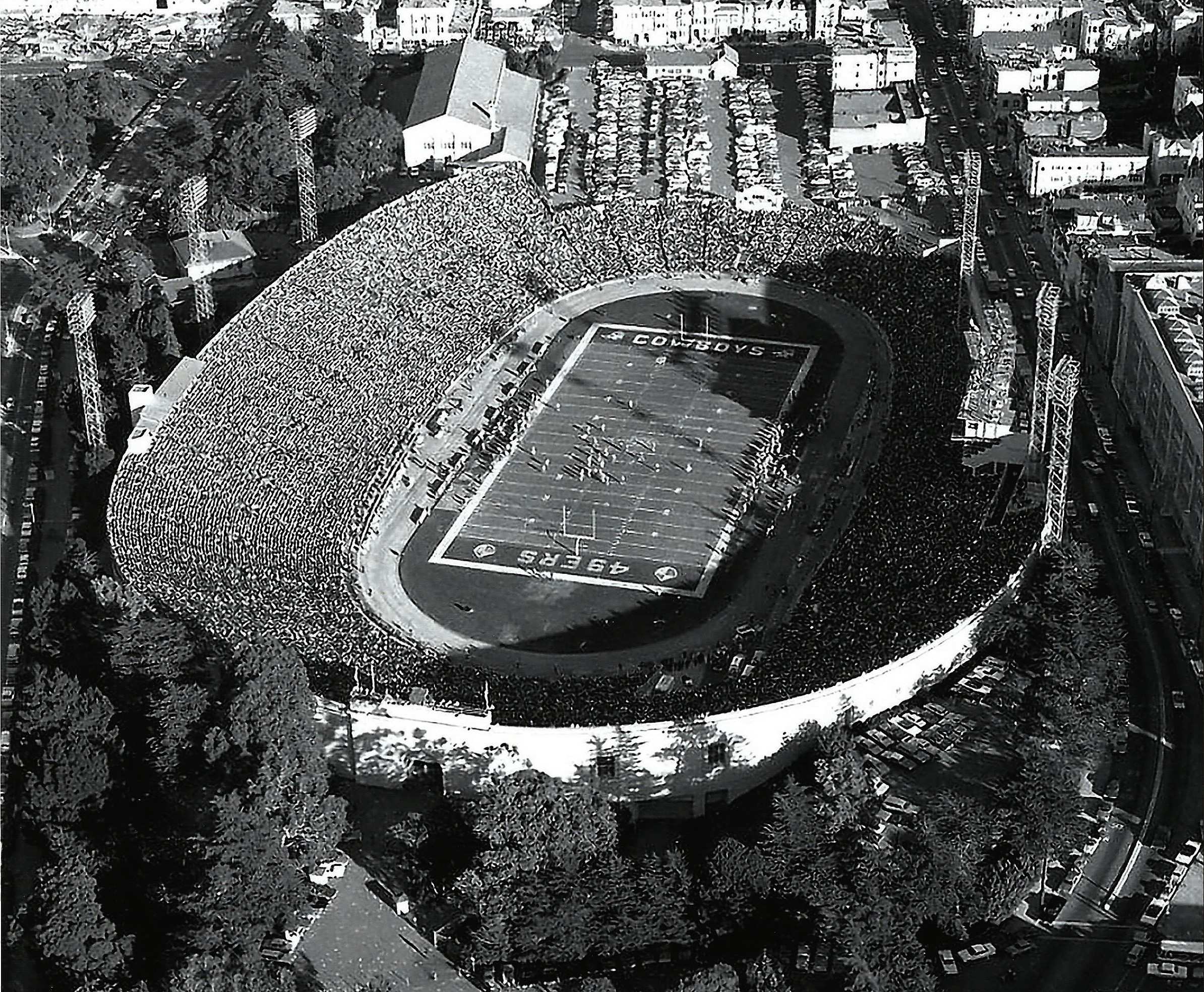
* Kezar Stadium. The 49ers played here from their 1946 founding until 1970, the Raiders spent their inaugural 1960 season here, and previous pro teams in the city also played at this facility at the southeastern corner of Golden Gate Park, a mere 10-minute walk from the fabled corner of Haight & Ashbury Streets.
High school football, including the annual City Championship played on Thanksgiving Day, used to be held here as well. Bob St. Clair, who played there in high school, college (University of San Francisco) and the NFL in a Hall of Fame career with the 49ers, has compared it to Chicago's Wrigley Field as a "neighborhood stadium."
After the 49ers left, it became a major concert venue. Rocky Marciano defended the Heavyweight Championship of the World there on May 16, 1955, knocking British fighter Don Cockell out in the 9th round.
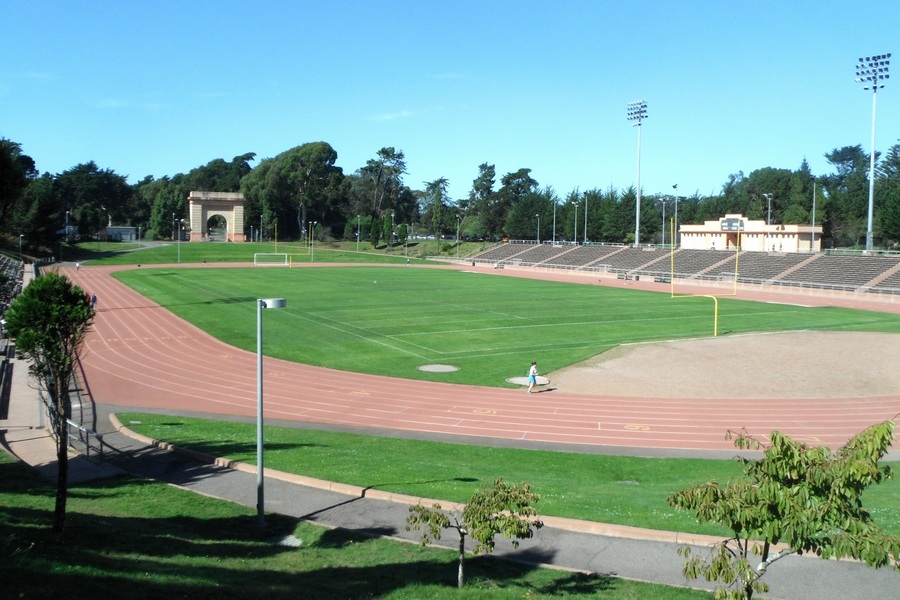
The original 60,000-seat structure was built in 1925, and was torn down in 1989 (a few months before the earthquake, so there's no way to know what the quake would have done to it), and was replaced in 1990 with a 9,000-seat stadium, much more suitable for high school sports. The original Kezar, named for one of the city's pioneering families, had a cameo in the Clint Eastwood film
Dirty Harry. Frederick & Stanyan Streets, Kezar Drive and Arguello Blvd. MUNI light rail N train.
The new Kezar Stadium
* Emeryville Park. Also known as Oaks Park, this was the home of the Pacific Coast League's Oakland Oaks from 1913 until 1955. The Oaks won Pennants there in 1927, 1948, 1950 and 1954.
Most notable of these was the 1948 Pennant, won by a group of players who had nearly all played in the majors and were considered old, and were known as the Nine Old Men (a name often given to the U.S. Supreme Court). These old men included former Yankee 1st baseman Nick Etten, the previous year's World Series hero Cookie Lavagetto of the Brooklyn Dodgers (an Oakland native), Hall of Fame catcher Ernie Lombardi (another Oakland native), and one very young player, a 20-year-old 2nd baseman from Berkeley named Billy Martin. Their manager? Casey Stengel. Impressed by Casey's feat of managing the Nine Old Men to a Pennant in a league that was pretty much major league quality, and by his previously having managed the minor-league version of the Milwaukee Brewers to an American Association Pennant, Yankee owners Dan Topping and Del Webb hired Casey to manage in 1949. Casey told Billy that if he ever got the chance to bring him east, he would, and he was as good as his word.
Pixar Studios has built property on the site. 45th Street, San Pablo Avenue, Park Avenue and Watts Street, Emeryville, near the Amtrak station. Number 72 bus from Jack London Square.
* Frank Youell Field. This was another stopgap facility, used by the Raiders from 1962 to 1965, a 22,000-seat stadium that was named after an Oakland undertaker – perhaps fitting, although the Raiders didn't yet have that image. Interestingly from a New York perspective, the first game here was between the Raiders and the forerunners of the Jets, the New York Titans.
It was demolished in 1969. A new field of the same name was built on the site for Laney College. East 8th Street, 5th Avenue, East 10th Street and the Oakland Estuary. Lake Merritt BART station.
* Cow Palace. The more familiar name of the Grand National Livestock Pavilion, this big barn just south of the City Line in Daly City has hosted just about everything, from livestock shows and rodeos to the 1956 and 1964 Republican National Conventions, nominating President Dwight D. Eisenhower for a 2nd term and Senator Barry Goldwater of Arizona for a 1st, respectively. (Yes, the Republicans came here, not the "hippie" Democrats, although they did hold their 1984 Convention downtown at the George Moscone Convention Center, 747 Howard Street at 4th Street, nominating Walter Mondale.)
The '64 Convention is where New York's Governor Nelson Rockefeller refused to be booed off the podium when he dared to speak out against the John Birch Society – the Tea Party idiots of their time – and when Goldwater was nominated, telling them, "I would remind you, my fellow Republicans, that extremism in the defense of liberty is no vice! And I would remind you also that moderation in the pursuit of justice is no virtue." (Personally, I think that extremism in the defense of liberty is no defense of liberty.)
Built in 1941, it is one of the oldest remaining former NBA and NHL sites, having hosted the NBA's Warriors (then calling themselves the San Francisco Warriors) from 1962 to 1971, the NHL's San Jose Sharks from their 1991 debut until their current arena could open in 1993, and several minor-league hockey teams. It hosted 1 fight for the Heavyweight Championship of the World, with Ezzard Charles defending the title by beating Pat Valentino on October 14, 1949.
The 1960 NCAA Final Four was held here, culminating in Ohio State, led by Jerry Lucas and John Havlicek (with future coaching legend Bobby Knight as the 6th man) beating local heroes and defending National Champions California, led by Darrall Imhoff.
The Beatles played here on August 19, 1964 and August 31, 1965, and Elvis sang here on November 13, 1970 and November 28 & 29, 1976. It was the site of Neil Young's 1978 concert that produced the live album
Live Rust and the concert film
Rust Never Sleeps, and the 1986 Conspiracy of Hope benefit with Joan Baez, Lou Reed, Sting and U2. The acoustics of the place, and the loss of such legendary venues as the Fillmore West and the Winterland Ballroom, make it the Bay Area's holiest active rock and roll site. 2600 Geneva Avenue at Santos Street, in Daly City. 8X bus.
In addition to the preceding, Elvis sang at the Auditorium Arena (now the Kaiser Convention Center, near the Laney College campus in Oakland) early in his career, on June 3, 1956 and again on October 27, 1957; and the San Francisco Civic Auditorium (now the Bill Graham Civic Auditorium, 99 Grove Street at Polk Street) on October 26, 1957. It was at the Civic Auditorium that the Democratic Convention of 1920 nominated James M. Cox for President, losing to Warren Harding
While Fresno is nearly 200 miles southeast, it's closer to San Francisco than it is to Los Angeles. Elvis sang at Fresno's Selland Arena on April 25, 1973 and May 12, 1974. 700 M Street at Ventura Street.
* SAP Center at San Jose. Formerly the San Jose Arena and the HP Pavilion, this building has hosted the NHL's San Jose Sharks since 1993. The Warriors played here in 1996-97, while their Oakland arena was being renovated. If you're a fan of the TV show
The West Wing, this was the convention center where the ticket of Matt Santos and Leo McGarry was nominated.
The Three Tenors -- Luciano Pavarotti, Placido Domingo and José Carreras -- sang there on December 29, 1999. 525 W. Santa Clara Street at Autumn Street, across from the Amtrak & CalTrain station.
* Avaya Stadium. The brand-new home of Major League Soccer's San Jose Earthquakes, it is soccer-specific and seats 18,000 people. It hosted its 1st U.S. national team game on March 24, 2017, a 6-0 win over Honduras.
UPDATE: On February 2, 2019, it hosted a 2-0 USMNT win over Costa Rica. In 2020, its name was changed to PayPal Park.
1123 Coleman Avenue & Newhall Drive; 41 miles from downtown Oakland, 46 from downtown San Francisco, 3 1/2 from downtown San Jose. ACE (Altamont Commuter Express) to Great America-Santa Clara.
This is actually the 3rd version of the San Jose Earthquakes. The 1st one played in the original North American Soccer League from 1974 to 1984, at Spartan Stadium. This has been home to San Jose State University sports since 1933, it hosted both the old Earthquakes, of the original North American Soccer League, from 1974 to 1984. It was a neutral site hosting Soccer Bowl '75, in which the Tampa Bay Rowdies beat the Portland Timbers 2-0. It's hosted 3 games of the U.S. national team, most recently a 2007 loss to China, and games of the 1999 Women's World Cup.
1251 S. 10th Street, San Jose. San Jose Municipal Stadium, home of the Triple-A San Jose Giants, is a block away at 588 E. Alma Avenue. From either downtown San Francisco or downtown Oakland, take BART to Fremont terminal, then 181 bus to 2nd & Santa Clara, then 68 bus to Monterey & Alma.
UPDATE: On November 19, 2018,
Moneywise compiled a list of their
Worst College Football Stadiums, the bottom 19 percent of college football, 25 out of 129. Spartan Stadium, now named CEFCU Stadium, came in 5th: The article called the New Deal era stadium "tired," and cited bad concessions and the fact that the field was Astroturf, the original artificial turf that has proven so dangerous, and not a more modern, safer synthetic grass like FieldTurf.
San Jose State was also the alma mater of Tommie Smith and John Carlos, the Gold and Bronze Medalists in the 200 meters at the 1968 Olympics in Mexico City, who then gave their glove-fisted salute for civil rights (most people still don't understand that it wasn't a "Black Power" salute) on the medal platform, to short-term anger and long-term praise.
In 2005, SJSU dedicated a statue commemorating the occasion, with the Silver Medal part of the platform, where Australian runner Peter Norman would have stood, empty so people can pose with the Smith and Carlos figures. Outside Clark Hall, where 6th and San Antonio Streets would have met.
Smith and Carlos at their statue
The 2nd version of the Quakes played at Spartan Stadium from 1996 to 2005, but ran into financial trouble, and got moved to become the Houston Dynamo. The 3rd version was started in 2008, and until 2014 played at Buck Shaw Stadium, now called Stevens Stadium, in Santa Clara, on the campus of Santa Clara University. Also accessible by the Santa Clara ACE station.
Despite all its contributions to women's soccer, the Bay Area no longer has a professional women's team. The San Jose CyberRays of the Women's United Soccer Association (WUSA), captained by 1999 penalty hero Brandi Chastain, played at Spartan Stadium from 2001 to 2003, winning the 2001 league title.
FC Gold Pride won the 2010 title in the league named Women's Professional Soccer (WPS), but couldn't sustain itself financially, and folded immediately thereafter. Pioneer Stadium, Hayward. 25800 Carlos Bee Blvd., on the campus of California State University-East Bay, in Hayward. About 28 miles from San Francisco, 19 from Oakland, 28 from San Jose. BART to Hayward, then Bus 60.
* Stanford Stadium. This is the home field of Stanford University in Palo Alto, down the Peninsula from San Francisco. Originally built in 1921, it was home to many great quarterbacks, from early 49ers signal-caller Frankie Albert to 1971 Heisman winner Jim Plunkett to John Elway. It hosted Super Bowl XIX in 1985, won by the 49ers over the Miami Dolphins – 1 of only 2 Super Bowls that ended up having had a team that could have been called a home team. (The other was XIV, the Los Angeles Rams losing to the Pittsburgh Steelers at the Rose Bowl.)
It also hosted San Francisco's games of the 1994 World Cup, a game of the 1999 Women's World Cup, and the soccer games of the 1984 Olympics, even though most of the events of those Olympics were down the coast in Los Angeles. It hosted 10 games by the U.S. national team, totaling 4 wins, 2 losses, 2 draws.
The original 85,000-seat structure was demolished and replaced with a new 50,000-seat stadium in 2006. Arboretum Road & Galvez Street. Caltrain to Palo Alto, 36 miles from downtown Oakland, 35 from downtown San Francisco, 19 from downtown San Jose.
No President has ever been born, or has ever grown up, in the San Francisco Bay Area. But Herbert Hoover, 1929-33, was part of the 1st class at Stanford, from 1891 to 1895, and he and his wife, Lou Henry Hoover, maintained a home there from 1920 until her death in 1944, at which point he moved to the Waldorf Towers in New York. The house is now the official residence of the president -- of Stanford. It is not open to the public. 623 Mirada Avenue, across the campus from the stadium.
Stanford runs a think tank named for the 31st President, the Hoover Insitution, and exhibits inside the Hoover Tower on campus. 550 Serra Mall.
* California Memorial Stadium. Home of Stanford's arch-rivals, the University of California, at its main campus in Berkeley in the East Bay. (The school is generally known as "Cal" for sports, and "Berkeley" for most other purposes.) Its location in the Berkeley Hills makes it one of the nicest settings in college football.
But it's also, quite literally, on the Hayward Fault, a branch of the San Andreas Fault, so if "The Big One" had hit during a Cal home game, 72,000 people would have been screwed. With this in mind, the University renovated the stadium, making it safer and ready for 63,000 fans in 2012. So, like their arch-rivals Stanford, they now have a new stadium on the site of the old one.
The old stadium hosted 1 NFL game, and it was a very notable one: Due to a scheduling conflict with the A's, the Raiders played a 1973 game there with the Miami Dolphins, and ended the Dolphins' winning streak that included the entire 1972 season and Super Bowl VII. 76 Canyon Road, Berkeley. Downtown Berkeley stop on BART; 5 1/2 miles from downtown Oakland, 14 from downtown San Francisco, 48 from downtown San Jose.
* Mechanic's Pavilion. Knowing that the drying up of the Gold Rush had put many of the original "Forty-Niners" out of work, with no educational background to support them, a group of charitable San Franciscans opened the Mechanics' Institute in 1854. It offered classes in woodworking, mechanical drawing, industrial design, electrical science, applied mathematics and ironwork. It is often said to be the predecessor of the University of California system.
In 1865, the adjoining Mechanic's Pavilion was built, hosting several major events, including a speech by President Theodore Roosevelt on his 1902 tour of the country.
This also included 4 fights for the Heavyweight Championship of the World, each time with a Californian defending the title: "Gentleman Jim" Corbett against Tom Sharkey on June 24, 1896 (a draw, thus allowing Corbett to retain the title); Jim Jeffries against Gus Ruhlin on November 15, 1901; Jeffries against Corbett on August 14, 1903 (the 10th-round knockout turning out to be Corbett's last fight); and Jeffries against Jack Munroe on August 26, 1904 (after which Jeffries retired, only to return and get clobbered by Jack Johnson in Reno in 1910).
The 1906 earthquake and fire destroyed Mechanic's Pavilion, but the men running the Mechanics' Institute kept it going and helped with the rebuilding of the city. Today, membership in the Institute is still open to the pubic, offering the full services of the library, and to the chess room, home of the oldest continuously operating chess club in the Western Hemisphere. 57 Post Street, off Kearny Street, downtown.
Yankee Legend Joe DiMaggio, who grew up in San Francisco and later divided his time between there and South Florida, is buried at Holy Cross Cemetery in Colma, on the Peninsula. 1500 Mission Road & Lawndale Blvd. BART to South San Francisco, then about a 1-mile walk.
The Fillmore Auditorium was at Fillmore Street and Geary Boulevard, and it still stands and hosts live music. Bus 38L. Winterland Ballroom, home of the final concerts of The Band (filmed as
The Last Waltz) and the Sex Pistols, was around the corner from the Fillmore at Post & Steiner Streets. And the legendary corner of Haight & Ashbury Streets can be reached via the 30 Bus, taking it to Haight and Masonic Avenue and walking 1 block west.
San Francisco, like New York, has a Museum of Modern Art (SFMOMA), at 151 3rd Street, downtown. The California Palace of the Legion of Honor is probably the city's most famous museum, in Lincoln Park at the northwestern corner of the city, near the Presidio and the Golden Gate Bridge. (Any of you who are Trekkies, the Presidio is a now-closed military base that, in the Star Trek Universe, is the seat of Starfleet Command and Starfleet Academy.)
The Palace of Fine Arts isn't just an art museum, it has a theater that hosted one of the 1976 Presidential Debates between Gerald Ford and Jimmy Carter -- the one where Ford said, "There is no Soviet domination in Eastern Europe." 3301 Lyon Street. Bus 30.
Fort Mason, on the north shore of the city, includes the Fort Mason Center for Arts & Culture. Which includes the San Francisco Museum of Modern Art. The park's Great Meadow was the site of James Brown's last concert, on August 20, 2006.
And don't forget to take a ride on one of them cable cars I've been hearing so dang much about.
Oakland isn't much of a museum city, especially compared with San Francisco across the Bay. But the Oakland Museum of California (10th & Oak, Lake Merritt BART) and the Chabot Space & Science Center (10000 Skyline Blvd., not accessible by BART) may be worth a look.
The tallest building in Northern California is the iconic Transamerica Pyramid, 853 feet high, opening in 1972 at 600 Montgomery Street downtown. If all goes according to schedule, it will be superseded next year by the Salesforce Tower, also downtown, at 415 Mission Street, rising 1,070 feet. Another skyscraper will open around the same time in Los Angeles, slightly higher, so the Salesforce Tower won't be the tallest building in California, much less the American West.
While San Francisco has been the setting for lots of TV shows (from Ironside and The Streets of San Francisco in the 1970s, to Full House and Dharma & Greg in the 1990s), Oakland, being much less glamorous, has had only one that I know of: Hangin' With Mr. Cooper, comedian Mark Curry's show about a former basketball player who returns to his old high school to teach. The 2010-15 NBC series Parenthood, loosely based on the 1989 film of the same name, was set in Berkeley.
In contrast, lots of movies have been shot in Oakland, including a pair of baseball-themed movies shot at the Coliseum:
Moneyball, based on Michael Lewis' book about the early 2000s A's, with Brad Pitt as general manager Billy Beane; and the 1994 remake of
Angels In the Outfield, filmed there because a recent earthquake had damaged the real-life Angels' Anaheim Stadium, and it couldn't be repaired in time for filming.
Movies set in San Francisco often take advantage of the city's topography, and include the
Dirty Harry series,
Bullitt (based on the same real-life cop, Dave Toschi);
The Maltese Falcon, starring Humphrey Bogart; Woody Allen's Bogart tribute,
Play It Again, Sam; The Lady from Shanghai, the original version of
D.O.A., Alfred Hitchcock's
Vertigo and
The Birds,
48 Hrs., and
Star Trek IV: The Voyage Home -- with the aircraft carrier USS
Ranger, at the Alameda naval base, standing in for the carrier
Enterprise, which was then away at sea.
The Fan, about a fan's obsession with a Giants player, filmed at Candlestick Park. So did
Experiment In Terror, Freebie and the Bean, and
Contagion.
The 1936 film
San Francisco takes place around the earthquake and fire that devastated the city in 1906. And
Milk starred Sean Penn as Harvey Milk, America's 1st openly gay successful politician, elected to San Francisco's Board of Supervisors in 1977 before being assassinated with Mayor George Moscone the next year.
Movies set in San Francisco often have scenes filmed there and in Oakland, including
Pal Joey, Mahogany, Basic Instinct, the James Bond film
A View to a Kill, and
Mrs. Doubtfire, starring San Francisco native Robin Williams.
For legal reasons, the CBS medical drama
Trapper John, M.D., starring former Bonanza star Pernell Roberts as Dr. John McIntyre, was said to be a sequel to the film version of
M*A*S*H, where Trapper was played by Elliott Gould, not the TV show, where he was played by Wayne Rogers. Thus we have the oddity of Trapper working in a hospital in San Francisco, the hometown (well, the neighboring suburb of Mill Valley, in Marin County, was) of the man who replaced him at the 4077th MASH, B.J. Hunnicutt (Mike Farrell).
Wayne Rogers did play a doctor in a series set in San Francisco, after leaving
M*A*S*H, starring with Lynn Redgrave in the 1979-82 sitcom
House Calls, set it what was then the present day. Other series set in San Francisco include (separated by category, then by chronological order) the police dramas
Ironside, The Streets of San Francisco, McMillan and Wife, Hooperman, Nash Bridges and
Monk; the sci-fi/fantasy shows
Sliders and
Charmed; the family drama
Party of Five; and the sitcoms
Phyllis, Too Close for Comfort, My Sister Sam, Suddenly Susan, Dhrama & Greg, and Disney's
That's So Raven.
The 1957-63 CBS
Western Have Gun - Will Travel established the Hotel Carlton in San Francisco as the base of operations for the man known only as Paladin (Richard Boone). Today, there is a hotel by that name in the city, at 1075 Sutter Street in the Nob Hill section.
*
So, if you can afford it, go on out and join your fellow Giant or Jet fans in going coast-to-coast, and take on the legendary, but now-struggling San Francisco 49ers. After all, the Giants have won more NFL Championships, if not yet as many Super Bowls. The Jets? Well, their 1 is still more iconic than any of the Niners' 5.